❌

Reading view

Europe races to contain energy crisis with patchwork measures

European governments are racing to blunt a fuel shock that even some analysts now refuse to forecast, as Brent crude holds near $100 a barrel and diesel prices climb across Europe.

The international oil market has been expensive for months. What has changed is the confidence of the people paid to explain it. JPMorgan told clients on Sept. 17 that, for the first time since fighting began around Iran about seven months earlier, its commodities team no longer has a baseline view of how the disruption ends. 

“We simply don’t know how to model the endgame,” the bank’s analysts wrote, after several economic thresholds they once assumed would force a diplomatic off-ramp, including oil above $100 a barrel, had already been crossed.

The bank said a Brent price near $90 would have been consistent with known supply and demand in September. Futures instead traded around $100 and higher as traders priced the risk of further losses that no one can yet measure. By Monday, front-month Brent was still hovering near $99 a barrel.

Inventories are doing little to cushion the blow. The U.S. Energy Information Administration has said prices are likely to stay elevated until Middle East oil trade is restored and stocks can be rebuilt. The International Energy Agency’s September report put the scale of the drain in starker terms: observed global inventories fell another 95 million barrels in August, taking the cumulative draw since February to 507 million barrels, or about 2.8 million barrels a day. World oil supply is now projected to average 100.7 million barrels a day in 2026, down 5.7 million from a year earlier.

Diesel shortages are acute

In some countries, such as Hungary, there is a major imbalance in terms of available energy sources. Crude held in strategic storage remains ample, but diesel is quickly running out. Data from the Hungarian Hydrocarbon Stockpiling Association show gas oil stocks at 520.3 kilotons at the end of January and about 390 kilotons at the end of both July and August. That thinner diesel cushion matters in a country where more than 1.3 million passenger cars run on the fuel and the regional market is competing for the same scarce imports.

Pump prices have already moved. Official and commercial trackers put Hungarian diesel around 701 forints a liter in late September on some official series and closer to 730 forints on daily station averages — well above the roughly 593 forints recorded at the end of June. The original worry in Budapest was not whether prices would rise, but how quickly 800 forints would stop looking like a distant ceiling.

That speed is not a mystery to central bankers. Bank of Slovenia research covering euro-area data from 2005 through 2026 found that a 10% rise in Brent lifts pretax diesel and gasoline prices by about 6.5% and 6.2%, respectively, over the longer term. A large share of the increase shows up at stations within the first two weeks — faster than the physical chain of shipping, refining and wholesale delivery would suggest. 

The European Central Bank has reached a similar conclusion and added an unwelcome twist: refinery margins can amplify the shock. During the spring spike, Brent briefly reached $138 a barrel while diesel at the refinery gate jumped to $197. ECB staff later estimated that refining margins were contributing about 41 euro cents a liter to euro-area retail diesel in mid-September, and they told reporters those diesel margins may not peak until October.

The way down is slower than the way up. Taxes, refining and transport costs, inventories, margins and local competition all delay relief when crude finally eases. That asymmetry is why governments are acting now, before higher fuel bills work through freight, food and services and lift broader inflation.

Europe-wide crisis

The policy dilemma is the same from Lisbon to Warsaw: protect households and trucking firms without writing a blank check for fossil-fuel consumption. Europe has answered with a patchwork rather than a single rule. Some governments cap retail prices. Others cut excise taxes, sometimes below the European Union minimum. A third group aims help at farmers, haulers and other heavy users. A few still let global prices hit consumers with no cushion at all. The result is that the same barrel of oil can produce pump prices that differ dramatically at the pump across Europe.

Here are just a few examples of what Europe looks like in this regard.

  • Austria has been running a mineral-oil tax cut of 1.9 euro cents a liter into the end of September. 
  • Belgium has implemented an official price ceiling. 
  • Croatia cut diesel excise duty by another 3 cents, taking it 10 cents below the EU floor; Zagreb says the average diesel price is 1.91 euros a liter instead of 2.26 euros without the intervention. 
  • Cyprus is offering an 8.33-cent discount through Nov. 30. 
  • Luxembourg is absorbing 5 cents of the pump price from July through December. 
  • Malta is using direct state aid to keep prices below the euro-area average. 
  • Portugal decided on Sept. 17 to recycle extra value-added tax receipts from more expensive fuel into tax relief worth about 1.3 billion euros through year-end. 
  • Slovenia posted official maxima of 1.748 euros for gasoline and 2.012 euros for diesel in the week of Sept. 22-28. 
  • Spain has kept an excise cut below the EU minimum through Sept. 30. 
  • Italy reduced and capped diesel duty into early October. 
  • Montenegro and Serbia combine retail caps with lower excise taxes.

Targeted aid is running in parallel

  • Greece extended a 10-cent-a-liter diesel subsidy into October and is preparing a heating-oil package. 
  • France steered relief to agriculture, high-mileage workers and construction rather than a blanket cut. 
  • Ireland is rebating duty for commercial haulers and bus operators. 
  • Spain added a 402 million-euro program for truckers on top of its general tax reduction. 
  • Italy is offering carriers a tax credit for earlier extra costs.

Larger packages are still moving through parliaments

Germany will cut energy tax by 14 cents a liter from Oct. 1 through year-end, about 17 cents once lower VAT is counted, in a 2.5 billion-euro package. 

Chancellor Friedrich Merz said drivers who depend on a car every day “are reaching their breaking point.” 

Berlin is also talking with the oil industry about a temporary price cap modeled on Luxembourg or Belgium, aimed at Jan. 1, 2027. 

The Czech government will restore a station-margin ceiling from Oct. 1, cut diesel duty to the EU minimum and cap retail margins at 2.50 koruna a liter. 

Poland has floated a 60% levy on oil companies’ extra profits to finance about 4 billion zlotys of price relief, though the plan faces parliamentary and constitutional hurdles.

The International Energy Agency has described the response as global, not merely European. In a matter of months, the number of countries applying fuel subsidies rose from 16 to 38, and the number cutting energy taxes rose from 40 to 57. Pew Research Center, drawing on IEA tallies from mid-June, counted 113 countries that had taken at least one energy-cost measure after the Iran war, including tax changes in 55 countries and fuel subsidies in 32. The agency’s own warning is implicit in those numbers: governments are treating the symptom at the pump because they cannot reopen the Strait of Hormuz from a finance ministry or end the war in Ukraine.

The post Europe races to contain energy crisis with patchwork measures appeared first on Remix News.

  •  

“PRIESTS vs GENOCIDE, DOMINANT ZIONISM and ARMED BANKS“. Eroic Homily by Italian Archbishop in the Feast of Saint Pio vs WARLORDS of Death

“I am the way, the truth, and the life. No one comes to the Father except through me.”

Jesus Christ – Gospel of Saint John the Apostle (14:6)

“Do not fear them, then, for there is nothing hidden that will not be revealed, and nothing secret that will not be made known.What I tell you in the darkness, speak in the light; and what you hear whispered in your ear, proclaim from the housetops.”

Jesus Christ – Gospel of Saint Matthew the Apostle (Mt 10:26-28)


In the cover image the Arcbishop of Saint Pio, father Franco Moscone, and the Zionist rulers Netanyahu and Trump

The Heroic Homily of the Archbishop of San Pio on Genocide, Rampant Zionism, and Banks Profiting from Arms

by Fabio Giuseppe Carlo Carisio

VERSIONE IN ITALIANO

In an era when Catholic progressivism is obscuring the diamond-bright light of the Word of God with diabolical worldliness, there remain Shepherds who have the courage to challenge wolves in sheep’s clothing to save their flock.

One of them is undoubtedly Monsignor Franco Moscone, Archbishop of Manfredonia, Vieste, and San Giovanni Rotondo—home to the Shrine of Saint Pio of Pietrelcina. Yesterday, during the Solemn Mass marking the liturgical feast of the Franciscan friar, the prelate—originally from the Piedmont region of Saint John Bosco and the Langhe (home of the philanthropist Servant of God Giulia di Barolo)—delivered a homily that was not only moving and courageous but truly heroic.

The SAINT, the KING and the SATANIC FREEMASONRY. St. John Bosco’s Prophecy and Fight of to Defend Christianity by the Italian Masons Persecutions

Just as those authentic Christians of the 19th century had to defy Freemasonry in a Turin inflamed by a sham *Risorgimento* in order to defend Gospel values, Archbishop Moscone did not hesitate to use the whip of rhetoric to proclaim the truth as taught by Jesus. Thundering from the virtual pulpit of the modern, magnificent church dedicated to the Saint of the Stigmata, he railed against the dangerous drift of “a narrative leading us straight toward war.”

Gospa News has dedicated three previous articles to the battle waged by this high-ranking prelate of the Archdiocese of Manfredonia, for—just as Gospa News points an accusing finger at the profiteering of… The Weapons Lobby and death.

WEAPONS LOBBY – 20. HUGE BUSINESS OF ZIONIST TRUMP’s WARMONGERS. How a German Industry Became the Golden Goose for the US

Indeed, every one of his statements is borne out in detail by the investigations we have linked to them.

Yesterday, he stood in solidarity with the “Priests against the Gaza genocide”—with whom he had demonstrated in Rome the day before, subsequently having to explain to some of the faithful why his seat was empty at the overnight vigil for the Feast of Saint Pio—but above all, he boldly exposed “dominant Zionism” and the “armed banks” that profit from “ethnic cleansing in Palestine.”

In an era when every public authority is terrified of discussing Jewish extremism for fear of being branded antisemitic, Monsignor Franco displayed a fortitude and intelligence truly bestowed by the Holy Spirit; he used unequivocal words to condemn the Tel Aviv regime, while tempering them by citing the book by Israeli historian Omar Bartov:

“Into the Abyss: From Zionism to Genocide. Israel’s Moral Defeat” (Laterza),

DEVIL NETANYAHU’s HOLOCAUST. Explosive UN findings: “Israel DELIBERATELY TARGETED Gaza CHILDREN”

He did so in a speech challenging—and calling for the “disarming” of—all “theologies of fundamentalism,” such as that of the Boko Haram terrorists: heirs to ISIS and Al-Qaeda, groups created by Anglo-American intelligence to invade the Balkans, Afghanistan, Iraq, and Syria—a connection certainly not made by the priest himself, but one argued in his books by former Interpol official Antonio Evangelista, whom I have interviewed on several occasions.

The prelate cited the theological fundamentalism found among Hindus, as well as among Evangelical Christians and xenophobic Catholics. He concluded with two resounding remarks—delivered before the final blessing of the Mass—regarding the “wars spread by NATO” and the possibility of reviving in Italy the concept of conscientious objection to military spending, as was done during the Cold War.

The Grim NATO’S JIHADs. How Atlantic Intelligence “14 Eyes” uses ISLAMIC TERRORISTS: from Italy to Libya, Ukraine and Syria

I have summarized in a few lines a homily lasting about twenty minutes; it must be heard in its entirety to fully grasp the Gospel narrative that began with the blood of Padre Pio’s stigmata and now extends to Gaza—to the 300 children killed during the sham truce—as well as to Lebanon and the 145 others who died during yet another bogus ceasefire.

For this reason, I will limit myself here to transcribing only those sentences containing the aforementioned key points.

The Empty Chair at the Saint Pio Vigil: Standing with “Priests Against Genocide”

«Someone rightly wrote to me this morning saying, ‘Last night there was an empty chair at the vigil for Saint Pio’—and it was mine, the local bishop’s! It was empty here because I sought to embody the spirit of prophecy, solidarity, and peace that Padre Pio always brought through his life and continues to urge upon us: a most urgent cry in this historic moment to which we are all witnesses». 

St. Pio’ Prophecy on Christians’ homelands, NWO Rockefeller’s Abortion law and Masons war

Thus begins Father Franco’s homily, which seems to encapsulate two years of impassioned denunciations against the holocaust of children in Palestine and Lebanon.

«Yesterday, I attended a demonstration called ‘Priests Against Genocide’; it is an international network of priests that emerged just over a year ago in response to a cry for help from an African nun—a plea heard and taken up by a dedicated priest from Sicily. The network currently brings together over 2,600 priests from 57 nations, as well as 27 bishops and three cardinals. Yesterday, we walked a route through Rome, starting at the Jesuit Curia, passing the embassies to the Holy See for Palestine and Lebanon, and arriving at Piazza Mazzini, where Leonardo’s administrative headquarters is located» the priest continued (hereafter, we will not specify that the italicized text comes from his homily).

ZIONISTS’ Neverending WAR CRIMES, as GENOCIDES. Iran: “US, Israel GUILTY of gravest MASSACRES since 1949”. Children’s Murdering in Lebanon, Qeshm, Minab

«We arrived at this point through prayer, by listening to the Gospel, and by reflecting on the words of Pope Leo’s *Magnifica Humanitas* and those of the Israeli historian Omar Bartov, who published a book titled *Into the Abyss: From Zionism to Genocide—Israel’s Moral Defeat*».

The Stigmata of the Holy Land: 445 Children Killed During False Truces, Christians Driven Out

«I look at the wounds of Padre Pio—at the signs of his identification with Christ Crucified and the blood he shed alongside Jesus’s for fifty years—and I ask myself: where is the blood of the Lord’s stigmata and Padre Pio’s stigmata today? Where is it being shed?»

«It is certainly found in the stigmata borne by the population of Gaza, 97% of whom are left without homes or means of subsistence—a place where a truce is said to exist, yet a genocide quietly continues. Yesterday, we recited the names of 300 children killed in Gaza since the truce began.Padre Pio’s wounds are also found in the ethnic cleansing taking place in the West Bank and southern Lebanon; there, too, we counted 145 children killed since a peace plan was supposedly in place». 

HORRIFIC! Children Killed in Gaza as ISIS-Style by IDF (100 only During Truce). Shot in the head and chest. Investigation by BBC Africa. The best VIDEO of the week

«In those lands, our Christian brothers—representing the oldest churches in history—are particularly being driven away; only one Christian village remains under the administration of the Palestinian Authority. All the others have been wiped out.»

The Archbishop of San Giovanni Rotondo went on to mention the “stigmata” visible in Africa: the wars in the Sahel and Sudan, the massacres committed by Boko Haram terrorists in Nigeria and the abduction of girls, and the repression in Myanmar and across the Middle East.

“The CHRISTIAN ZIONISM Threatens CHRISTIANITY in HOLY LAND”. As in WEST! Apocalyptic Analysis on Jerusalem Orthodox Patriarch’s Prophetic Alarm

He added: «And here in our own Europe, too, Ukraine and Russia continue to send their finest youth to the front lines to be sacrificed. These open, bleeding wounds—akin to the stigmata of Christ—persist in the humiliation of the Venezuelan people and the starving of the Cuban people.»

«I urge everyone to make praying for peace our primary commitment; it was a central focus of Padre Pio’s thoughts and heart throughout his life.»

WARS in VIDEO (until August 2026) & 14 ESCLUSIVE MILITARY INVESTIGATIONS. Zelensky is WASTING EU-funded Drones to KILL Russian Civilians. Putin’s Missiles are WIPING out Military Assets in Kiev

Monsignor Moscone noted that, in the past, prayer groups did not succeed in halting wars as the “greatest Saint of the last century” had hoped: «It was not effective then, yet we must believe it can be effective today, preventing these scattered conflicts from escalating into a world war.»

Father Franco Moscone: “Disarming Fundamentalist Theologies: From Dominant Zionism to Catholic Xenophobia”

«From Padre Pio, we also learn how to properly interpret Sacred Scripture—the words of the entire Bible, and the Gospel in particular. Let us, therefore, call for the disarming of the theologies that fuel fundamentalism of every kind. Jewish theologies that fuel the dominant Zionism; Islamic theologies that foment terrorism and fundamentalist groups; Hindu theologies—but also Christian theologies, particularly of an evangelical bent as well as within our own Catholic Church—that spread division and violence and stoke xenophobia and racism».

FREEMASONRY & ZIONISM – 4. How SYNAGOGUE OF SATAN was LICENSED to KILL! It arose from Conspiracy behind the Heretical Catholic text “Nostra Aetate”

“Arms multinationals and ‘armed banks’ that invest in death.”

«Let us, therefore, pray and read the Word of the Lord and the values ​​of our religion—and all religions—with authenticity and integrity. And let us not be afraid to speak out against what is wrong in this regard. Prayer must translate into action—action that speaks truth and denounces injustice. We cannot settle for a narrative that aims for and leads directly to war—serving solely to boost the interests of major arms multinationals, ‘armed banks,’ and anonymous investment funds that invest only in death—thereby denouncing a form of capitalism and power that makes the rich ever richer and the poor ever poorer, while also—even in our developed West—wiping out the middle class and social mobility, driven by a mindset that leads only to death and injustice».

WEAPONS LOBBY – 21. NATO’s WarCrimes! Attack to Moscow, SCHOOLGIRLS’ Massacre by DRONE of Ex CIA Chief POMPEO. Behind UAV FP-1 the Satanic Kiev Gang of Corruption funded by SOROS too

At the conclusion of Holy Mass—following the reading of the prayer for Civil Protection, of which Saint Pio is the patron—the Archbishop of Manfredonia added a pointed remark that struck like a dart aimed at European armament plans, which he had already severely condemned in previous public statements…

“Wars Spread by NATO and Tax Objection to Arms Spending”

«This is the security we need and desire: the security of Civil Protection, of environmental stewardship… This is true deterrence—not that of armaments and NATO, an alliance that, since its inception, has only brought and spread war across four continents»—a fact confirmed by the recent geopolitical “Mediterranean Sea: Same Blood, Same Mud”) by Interpol official Antonio Evangelista.

“NATO’s LIES ON MEDITERRANEAN WARS FOR GAS”. Exclusive Interview to Former Interpol EU Officer

«A form of deterrence that is essentially cost-free, requiring no massive financial outlay. It makes me wonder if the time has come to revisit a concept discussed during the Cold War—in the 1970s and 80s—namely, not merely conscientious objection to military service, but objection to military spending itself: a tax objection regarding that 5% of funds they want us to divert to entirely different purposes. I take personal responsibility for what I have said; let us now receive the Lord’s blessing—a blessing that is surely one of Peace, and nothing else».

Invoking Saint John Paul II, a heroic fighter against war

In a gesture reminiscent of the greatest, most heroic crusader against conflict and weaponry—Pope Saint John Paul II—the Mass concluded with the moving hymn “Jesus Christ, You Are My Life,” composed by Monsignor Marco Frisina for the World Youth Day held at Tor Vergata, Rome, during the Jubilee of 2000.

From Fatima to Ukraine. The Useless Lesson of Peace by Pope Wojtyla to Christians who want Weapons and War

Every Christian must give praise to God, Jesus Christ, and Saint Pio for sending us another courageous prelate—a bishop—like Karol Wojtyła: the Bishop of Kraków during the Soviet communist regime’s political occupation who later became the Bishop of Rome and succeeded in bringing down the USSR dictatorship through the consecration of Russia to the Immaculate Heart of Mary, in obedience to the secret messages received at Fatima by the visionary Lucia.

Suffice it to recall that it was not the assassination attempt against him on May 13, 1981, nor the military regime imposed by General Wojciech Jaruzelski, but rather the Solidarity trade union—fueled by the Christian spirit instilled by John Paul II himself—that managed to triumph, much like David against Goliath.

IL MIRACOLO NELL’ATTENTATO A PAPA GIOVANNI PAOLO II. Proiettile Deviato dalla Madonna di Fatima e da Suor Rita in BILOCAZIONE come San Pio

That is why, in these recent times that carry an apocalyptic air—as foretold by the secrets of Medjugorje—the prayers of devout Christians and the messages of Our Holy Lady are not enough; heroic bishops are also needed who know how to translate the Gospel and prophecies into action.

A heartfelt thank you, Father Franco!!!

Fabio Giuseppe Carlo Carisio – Founder and Director of Gospa News


RELATED POST

New PANDEMIC and Third WORLD WAR by Now Inevitable… Only Christ Can Help Us in Tribulations of Prophecies by Apocalypse and Medjugorje

Carlson & Waters (VIDEO): “HOW US, UK, EU and NATO are Triggering WORLD WAR III”. The BOJO Fake-Peace Plan in Ukraine to Provoke Russia

FREEMASONRY & ZIONISM – 1. Apocalyptic “Cataclysms” by Synagogue of Satan: Genocides in Palestine & Plotted Pandemic for Lethal Vaccines.

45th Medjugorje Anniversary – MISTERY in VATICAN! Late Cardinal Ruini Certified the Holy Lady’s Apparitions as Authentic (Video). Then “Masonic Clergy” Hid this

Holy Lady’s Victory against Freemasonry in Lourdes. Miracles’ Cave reopened by the Christian Empress thanks Shepherdess Bernadette

FREEMASONRY & VATICAN – 2. Cardinals, Bishops kneeling before Satan at the Masonic Summit in Italy

WEAPONS LOBBY – 19. EU’s MAD REARM by VON DER LEYEN to ENRICH GERMAN DEFENSE INDUSTRY. Rheinmetall 202 % in one Year, + 52 % in two Weeks



  •  

IN HONOUR of SAINT PIO: The Friar who Bore the Marks of Christ – 3 VIDEOS, Exclusive Reports on his Fights vs Devil

by Gospa News Editorial Staff

VERSIONE IN ITALIANO

To best honor the extraordinary and radiant Christian life of Padre Pio of Pietrelcina—whose feast day is celebrated today, September, 23, in the Catholic Church’s liturgical calendar—Gospa News presents three exceptional video documentaries of varying lengths and some exclusive reports.

Gospa News is an Italian and international news outlet focused on Christian —and specifically Marian—information; the name “Gospa” (used in Medjugorje, the site of the Queen of Peace’s apparitions) signifies “Our Holy Lady.”

The Italian articles linked below can easily be read in English and other languages ​​by activating the automatic translation feature via the flags at the top left.

Enjoy the videos and articles, courtesy of Gospa News—founded by Fabio Giuseppe Carlo Carisio, who holds deep devotion and gratitude toward the Friar of the Stigmata.


3 EXCEPTIONALS VIDEOS ON PADRE PIO DA PIETRELCINA

VIDEO 1 – St. Pio of Pietrelcina, The Friar Who Bore the Marks of Christ

VIDEO 2 – This Was the Life of Padre Pio: The Mystery Behind His Wounds and Miracles – 29 minutes

VIDEO 3 – The Extraordinary Life of Padre Pio – The Origins and The Stigmata – 63 minutes


4 EXCLUSIVES REPORTS ON SAINT PIO

St. Pio’ Prophecy on Christians’ homelands, NWO Rockefeller’s Abortion law and Masons war

St. Pio’ Prophecy on Christians’ homelands, NWO Rockefeller’s Abortion law and Masons war

Saint Pio: “Holy Priest and Perfect Victim for Jesus.” Charity and Supernatural Gifts of the Stigmatized Franciscan Friar.

SAN PIO: «SACERDOTE SANTO E VITTIMA PERFETTA PER GESU’». Carità e Doni Soppranaturali del Padre Francescano con le Stimmate

“THE POWERFUL FIRE OF SAINT PIO”: A recollection by his spiritual son, Father Guglielmo, on the 70th anniversary of his priesthood at the age of 97.

“IL POTENTE FUOCO DI SAN PIO“. Ricordo del Figlio Spirituale Padre Guglielmo nel 70° del Sacerdozio a 97 anni (VIDEO)

“STOP GENOCIDES, STOP WEAPONS”. The SAINT PIO’s BISHOP THUNDERS vs EU for REARM Plan: “I am Ashamed to be European…”

“STOP GENOCIDES, STOP WEAPONS”. The SAINT PIO’s BISHOP THUNDERS vs EU for REARM Plan: “I am Ashamed to be European…”


RELATED POSTS

45th Medjugorje Anniversary – MISTERY in VATICAN! Late Cardinal Ruini Certified the Holy Lady’s Apparitions as Authentic (Video). Then “Masonic Clergy” Hid this

Holy Lady’s Victory against Freemasonry in Lourdes. Miracles’ Cave reopened by the Christian Empress thanks Shepherdess Bernadette

The SAINT, the KING and the SATANIC FREEMASONRY. St. John Bosco’s Prophecy and Fight of to Defend Christianity by the Italian Masons Persecutions


  •  

NAZA FILM ON GENOCIDE: Filmmakers targeted by Israeli Ministers and IDF after Venice award. Zionists’ Riots before Parents’ Home (video)

Political Threats and Zionist Protests – VIDEOS

VERSIONE IN ITALIANO

Yuval Abraham and Rachel Szor find themselves at the center of a political clash involving the Israeli Prime Minister, two government ministers, and top intelligence officials. The catalyst is *Naza*, the documentary they presented at the 83rd Venice International Film Festival—a film that, in just a few days, transformed them from acclaimed filmmakers into targets of accusations of treason.

After declaring he would seek to revoke their Israeli citizenship, Israeli Culture Minister Miki Zohar made a fresh appeal to Shin Bet chief David Zini, urging him to investigate how various materials were obtained. The film features testimony from 24 anonymous Israeli intelligence soldiers denouncing the techniques used by the Israeli military to kill civilians in Gaza.

Israel has rejected the film’s content, reiterating that it makes every effort to avoid civilian casualties despite many previous UN reports on war crimes and genoicide.

DEVIL NETANYAHU’s HOLOCAUST. Explosive UN findings: “Israel DELIBERATELY TARGETED Gaza CHILDREN”

In a letter to Zini, Zohar asks the agency to investigate whether there was any illegal use of sensitive or classified information.

“When anonymous sources are used to spread serious, false accusations against the State of Israel and the IDF during wartime, it is imperative to establish who is behind these allegations,” Zohar stated. “I have asked the head of the Shin Bet to investigate the source of the material, who provided it, and whether hostile elements were involved,” the minister added.

Following the political controversy, various Zionist extremists gathered in a threatening manner outside the filmmaker’s parents’ home.

Reactions from Israeli officials following the Venice screening

Immediately after the documentary film was presented in Venice, Culture Minister Miki Zohar called the film “vile” and announced plans to “act immediately” to revoke the Israeli citizenship of Abraham and Szor.

He accused them of “treason against the State” and of a “self-loathing” that drives them to harm their own homeland in order to garner applause from “antisemites around the world.” Zohar stated that he had contacted senior officials at the Ministry of the Interior and the Population Authority to evaluate revoking their citizenship on the grounds of a breach of loyalty to the country.

Joining the chorus of accusations were Army Chief of Staff Eyal Zamir—who claimed the film relied on “blood libels and deliberate distortions of reality”—and National Security Minister Itamar Ben-Gvir, who called on the pair to leave the country.

Finally, Prime Minister Benjamin Netanyahu linked the case to broader “antisemitic incitement” and lashed out at opposition political forces.

ZIONISTS’ Neverending WAR CRIMES, as GENOCIDES. Iran: “US, Israel GUILTY of gravest MASSACRES since 1949”. Children’s Murdering in Lebanon, Qeshm, Minab

The Israeli military largely rejected the documentary’s content, maintaining that it could not verify the identities or military roles of the anonymous sources and reiterating that it does everything possible to avoid civilian casualties.

IDF chief floats legal action against ‘NAZA’ film, orders probe of leaked material

IDF Chief of Staff Lt. Gen. Eyal Zamir on Monday instructed the military’s top legal official to examine legal action against the film “NAZA” and those involved in it, saying it defamed the military, and separately ordered an investigation into the leaking of classified material used in its production.

His comments came shortly after IDF Spokesperson Brig. Gen. Effie Defrin issued a statement inviting the documentary’s filmmakers to allow military officials to view the film in full so that the IDF could respond in a “substantive manner.” So far, the military has only reacted to clips of the movie posted online, and has not yet seen the full documentary.

GAZA GENOCIDE: even a MILITARY TEST for GLOBAL SURVEILLANCE as during Pandemic. UN Report on Big Tech, Zionist Weapons Lobby (Elbit, Lockheed) Plots with Netanyahu-Trump

The 80-minute film by Yuval Abraham and Rachel Szor — whose title is a Hebrew acronym meaning collateral damage — claims to explore AI-powered strikes by Israel in the Gaza Strip it alleges have led to civilian deaths, including testimonies from 24 purported Israeli intelligence soldiers.

The risks of returning to Israel

In the days following the award, Yuval Abraham recounted deleting his social media profiles after being inundated with offensive photomontages targeting both him and his mother; he openly admitted his fear: “Israel is my home… but now, obviously, I am afraid I won’t be able to return.” Abraham had also rejected the idea of ​​positioning himself as a voice of moral superiority, explaining that, as Israelis, they all feel—to some extent—co-responsible for what occurred in Gaza.

The process of stripping Abraham and Szor of their Israeli citizenship—which they hold by birth—is neither swift nor within the sole authority of the Minister of Culture, who lacks the legal power to order it.

Under Israeli law, citizenship can only be revoked in limited cases involving a proven “breach of loyalty” to the State—as established by a 2022 Supreme Court ruling. The procedure requires the Minister of the Interior to submit a request to the Minister of Justice, followed by final approval from a panel of judges. It is, therefore, a lengthy and uncertain process—one that has never before been applied to a case involving journalism or filmmaking.

A more immediate prospect, at least from an investigative standpoint, is Zohar’s request for the Shin Bet to investigate the origins of the material used in the film.

HORRIFIC! Children Killed in Gaza as ISIS-Style by IDF (100 only During Truce). Shot in the head and chest. Investigation by BBC Africa. The best VIDEO of the week

Such an inquiry could lead to investigations into potential offenses related to the disclosure of classified information, carrying criminal consequences not only for the filmmakers but also for the military sources who collaborated anonymously.

Compounding this is the immediate concern for the two creators’ personal safety—a fear fueled by past incidents, such as the assault on Hamdan Ballal following the Oscar win for *No Other Land*.


RELATED POSTS

FREEMASONRY & ZIONISM – 4. How SYNAGOGUE OF SATAN was LICENSED to KILL! It arose from Conspiracy behind the Heretical Catholic text “Nostra Aetate”

“ISRAEL added in the UN’s BLACKLIST of Perpetrators of SEXUAL VIOLENCE in WAR”. Ambassador said (VIDEO). France urges to investigate on Flotilla abuse by Israel

“GENOCIDE IN GAZA WITH ISRAELI RAPES EVEN TO CHILDREN”. Chilling UN Dossier on Netanyahu’s Army supported by Zionist Trump

ZIONIST TERRORISM. 50 % of Palestinian Children Detained without Charges. IDF Soldiers cleared of Raping a male Prisoner

NETANYAHU’s SATANIC MILITARY RAPISTS & PORN BUSINESS. Chilling Dossier: Dozens Prisoners Sexually Tortured even with Dogs and Filmed


  •  

Diesel price explodes to record highs across Europe

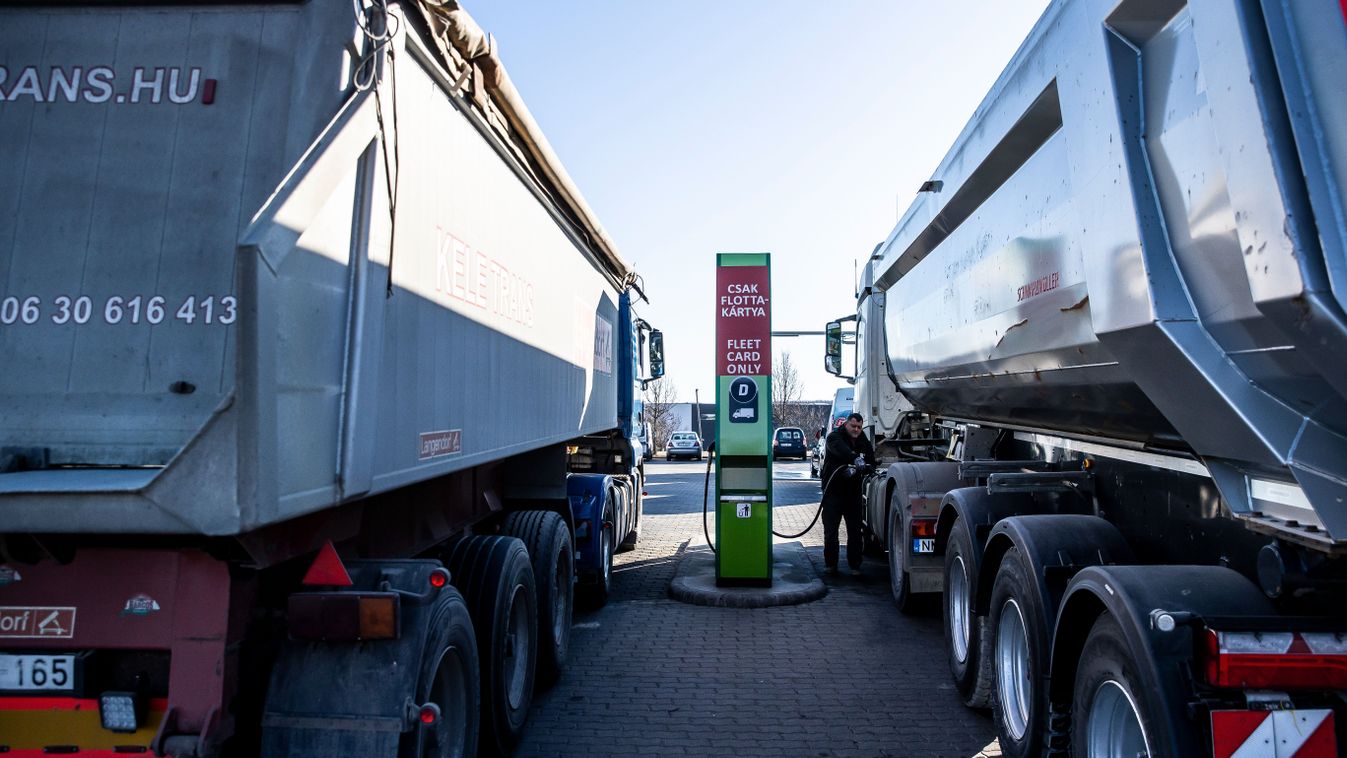
Diesel prices have climbed to record or multiyear highs in several European countries this week, squeezing truckers, farmers and households already strained by months of elevated energy costs tied to the Middle East conflict, the war in Ukraine, and tight global fuel supplies.

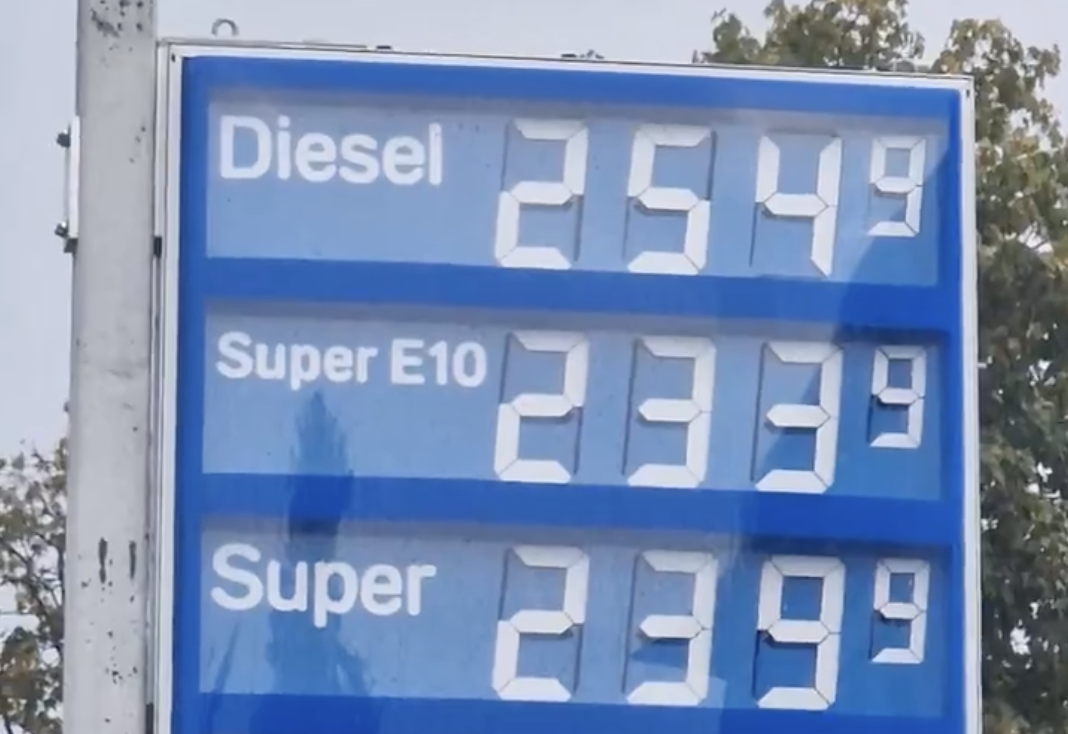
Germany posted a new all-time high of €2.471 per liter on Wednesday, according to the ADAC motoring club, as reported by German news outlet t-online. This price has left motorists paying about €0.71 more per liter than before the war began. Gasoline prices also set a nationwide record. 

Alternative for Germany (AfD) politicians are going on the offensive.

“Fuel price: Merz government is done for! Incredible €2.55 per liter for diesel and €2.34 for super here at the gas station. In Germany, the highest taxes on fuel are paid. Two days ago, I filled up for €176.00 and my car wasn’t even full,” wrote German MP Dr. Ingo Hahn.

Spritpreis: Merz-Regierung hat fertig! ✅

Unglaubliche 2,55 € für den Liter #Diesel und 2,34 € für SUPER hier an der #Tankstelle. In Deutschland werden die höchsten Steuern auf den #Sprit bezahlt. Vor zwei Tagen hatte ich für 176,00 € getankt und mein Auto war nicht voll. pic.twitter.com/fgHfK1CMy0

— MdB Prof. Dr. Ingo Hahn AfD (@IngoHahnAfD) September 18, 2026

Finland led the European Union at €2.505 per liter in the latest official weekly data, followed closely by Denmark at €2.502 and the Netherlands at €2.494. The EU-wide average stood at €2.075 per liter as of mid-September.

Some individual stations in Germany, France and Italy have even approached or exceeded €2.90 per liter. The weighted average across eight major markets reached €2.172 per liter on Thursday.

One AfD politician, Martin Hess, even highlighted one gas station where prices reached €3.00 per liter for the first time.

Erstmals kostete Diesel gestern an einer Tankstelle im Kreis Göppingen (Baden-Württemberg) über 3 Euro pro Liter, Super 2,859 Euro.

Und was macht Merz? Kurz vor den Wahlen in Mecklenburg-Vorpommern und Berlin kündigt er Entlastungen an, statt endlich zu handeln. Die Bürger… pic.twitter.com/fSgtbHB2qk

— Martin Hess (@Martin_Hess_MdB) September 17, 2026

Physical wholesale diesel prices in northwest Europe and the Mediterranean hit record or near-record levels earlier this week before easing slightly.

The surge in energy costs stems from disruptions to shipping through the Strait of Hormuz, along with advances by Houthi forces in Yemen, Russia’s extended ban on diesel exports, depleted inventories, high refining margins, and seasonal demand. With winter heating season fast approaching, experts warn the energy crisis could worsen.

“Supply disruptions, depleted inventories and strong refining margins highlight an increasingly severe shortage of middle distillates,” Ole Hansen, head of commodity strategy at Saxo, wrote in a note Sept. 16.

Crude prices have remained elevated above $100 a barrel, but the price of refined diesel has risen at a much faster rate compared to crude barrels, which is also the case across the Atlantic in the United States.

Electricity wholesale prices vary widely across Europe. Italy has seen day-ahead prices well above €200 per megawatt-hour in some zones, while Nordic markets have managed to remain much lower.

European Commission President Ursula von der Leyen told the European Parliament on Wednesday that the Hormuz crisis has added €90 billion to the EU’s fossil-fuel import bill since the conflict started “without a single molecule of energy added.”

She urged faster investment in grids, storage and clean power, saying Europe cannot remain an industrial powerhouse with structurally high energy prices.

“Let’s make Europe’s future electric,” she said, calling for electricity’s share of energy consumption to double by 2040.

The Commission’s AccelerateEU package, launched in April, emphasizes closer coordination on gas storage filling and possible oil stock releases, a new Fuel Observatory to track supplies, and a temporary state-aid framework (METSAF) running through Dec. 31 for agriculture, fisheries, transport and energy-intensive industries.

Member states are encouraged to use targeted, time-limited tools such as income support, energy vouchers, social tariffs and lower electricity taxes for vulnerable households rather than broad fossil-fuel subsidies.

Meanwhile, EU governments are scrambling to contain the crisis.

German Economy Minister Katherina Reiche proposed a temporary cut in fuel VAT from 19 percent to 7 percent, saying it “could address the burden where it is felt directly: at the gas pump and it would take effect immediately.”

Chancellor Friedrich Merz has pledged action against “price gouging” but has not announced specific actions. German Finance Minister Lars Klingbeil and other officials pressed on Friday for discussion of windfall taxes on energy companies, arguing these companies are “exploiting the situation.”

EU Economic Commissioner Valdis Dombrovskis said Brussels has no current plan for an EU-wide levy and that taxation remains a national competence.

Industry groups warn that high diesel costs are raising freight rates and threatening competitiveness, particularly for road transport, which remains heavily dependent on the fuel.

EU and national officials say winter gas storage is on track and there is no immediate supply emergency, but they acknowledge prices will stay elevated until geopolitical risks ease and more homegrown clean energy comes online.

The post Diesel price explodes to record highs across Europe appeared first on Remix News.

  •  

European Parliament backs EU health workforce crisis plan

The European Parliament has backed calls for an EU-wide strategy to tackle worsening shortages of healthcare professionals, including an ambition to increase the health workforce by one million, as doctors, nurses, pharmacists and dentists urged the European Commission to turn the recommendations into concrete action.

The own-initiative report, led by MEPs Loucas Fourlas (EPP, Cyprus) and Ruggero Razza (ECR, Italy), warns that shortages of doctors, nurses, carers and other professionals are becoming structural, driven by ageing populations, rising demand for care and persistent burnout...

  •  

Von der Leyen’s State of the EU: best of times for businesses, worst of times for working class

It is rarely a good sign when European politicians open their speeches by quoting Charles Dickens. So alarms should have sounded the moment European Commission President Ursula von der Leyen declared this to be the best and the worst of times at the start of her State of the European Union address on September 16.

Things went downhill from there: the EU leader painted a picture of the region that stands in complete contrast to the general experience of its people, amounting to a summary of the bloc’s worst achievements.

“Von der Leyen has achieved the feat of not mentioning a single measure to help Europeans cope with the soaring cost of living across Europe, at a time when an ever-growing number of people are now forced to choose between housing, food and transport,” said Manon Aubry, Co-President of The Left in the European Parliament.

“Fiscal sustainability” and concern for businesses

In the lengthy address, von der Leyen laid out what she considered the EU’s successes, including raising military spending by almost 80% over the past five years and “reducing dependence” on Russian fossil fuels. However, this interpretation does not correspond to what people are experiencing, as outlined by The Left in a dedicated dossier. Growing military spending benefits only the arms industry. And attempts to replace cheaper Russian gas have essentially boiled down to committing to more expensive and environmentally devastating US LNG imports.

While recognizing growing energy prices, von der Leyen offered no tangible response to this problem plaguing EU households. On the other hand, she demonstrated notable concern for businesses, signaling the continuation of eroding labor and environmental protections along the lines implemented by right and far-right parties at the EU level.

Read more: Peter Mertens: “Don’t be afraid, seize the opportunities of 2026 with both hands”

The likelihood of maintaining the status quo was also noticeable when von der Leyen turned to the deadly wildfires that hit Europe this summer, devastating communities from Belgium and France to Spain and Greece. Trade unions and progressive analysts have warned for years that fire preparedness is severely impaired by a lack of planning and, specifically, shortages of firefighters. Yet there was no commitment in the address to invest more in essential public service workers. Instead, the EC President referred to the ongoing need for overall “fiscal sustainability” – meaning Europeans should expect no relief from austerity programs.

“The best of times is clearly reserved for billionaires, multinational energy companies, and war profiteers,” remarked Member of the European Parliament Marc Botenga from the Workers’ Party of Belgium (PTB-PVDA). “The other side of the coin for workers: austerity and rising prices.”

The EU’s failed foreign affairs policy

Based on the vision tabled by von der Leyen, there is also little to look forward to in Europe’s international and trade policy. “It’s hard to think of an area where the EU has been more inactive and less effective than in foreign affairs,” The Left wrote, referring to the union’s ongoing disregard of international law in relation to the genocide in Gaza and its approach to the Trump administration. 

“The President has praised Saudi Arabia’s war on Yemen, she has stood with Trump as he bombed Tehran and the European Commission has sided with the USA as they brought the global economy to a standstill in the Strait of Hormuz,” the progressive bloc warned.

The EU’s relationship with the US has continued to be one of submission, with elected regional leaders going to great lengths (unsuccessfully) to appease Donald Trump. Even when the region announced it would stand firm against US threats – in Greenland or on tariffs – this did not translate into practice.

In the context of von der Leyen’s speech, this boiled down to announcing Canada would become the “first associate member of the EU” and listing trade agreements signed with India, Mercosur, and Indonesia – met by the people of these countries with understandable concern.

Read more: Indian left opposes free trade agreement with EU, calls it “wholesale surrender” of country’s economic interests

Von der Leyen’s speech showed no sign of breaking with disdain towards nations outside the West. In addition to continuing animosity toward China, it offered a glimpse into plans involving countries rich in critical materials. The EC President announced the launch of a European Corporation on Critical Raw Materials – designed to secure and stockpile supplies for Europe’s industry and defense – with obvious implications for mineral-rich territories like Ukraine, Greenland, and several African countries. For the more skeptical listeners, this also carried weird echoes of the East India Company.

The State of the EU’s vision, it goes without saying, comes with further promises of an even stricter migration framework – on the pretext of situations like the one experienced in Ceuta earlier this year – that allow the erosion of basic human rights like asylum. Von der Leyen’s speech pledged even more finances for Frontex and suggested that outsourcing migration enforcement to third countries will continue, as endorsed by recent EU legislation.

“This policy of externalizing migration control has contributed to grave human rights violations, arbitrary detentions and systematic violence against people on the move,” The Left warned, calling for a union rooted in solidarity rather than violence and militarization.

  •  

EU Kids Act targets social media’s impact on children’s mental health

The European Commission unveiled its EU Kids Act on Thursday (17 September), proposing sweeping restrictions on children’s access to social media and new obligations on technology companies to address growing concerns over young people’s mental health and online safety.

The proposal would prevent children under 13 from accessing social media, while 13- and 14-year-olds could use restricted “mini accounts” under parental supervision. From the age of 15, teenagers would be able to open their own social media accounts. The legislation also requires platforms to prove their services are safe for minors, reversing the burden of proof from regulators to technology companies....

  •  

EU Parliament approves sweeping customs reform targeting e-commerce imports

Trade Commissioner Maroš Šefčovič and MEP Dirk Gotink (EPP, Netherlands) Photographer: Mathieu Cugnot © European Union

The European Parliament has approved a major overhaul of the EU’s customs system, tightening requirements on e-commerce platforms, introducing a new handling fee for goods ordered from outside the bloc and creating a central EU customs authority.

“This is the biggest reform of European customs since 1968, supporting trade and the enforcement of EU rules,” said MEP Dirk Gotink, (EPP, Netherlands) who steered the legislation through Parliament. Gotink said European customs authorities had been overwhelmed by a “tsunami of Chinese parcels” and that the reform would give customs officers stronger tools to enforce EU standards.

Under the new rules, e-commerce platforms and sellers shipping goods directly from non-EU countries to European consumers will be treated as importers. That will make them responsible for providing customs data, handling applicable charges and ensuring products comply with EU law.

The reform also introduces an EU-wide handling fee on goods ordered directly from non-EU countries, with member states required to begin collecting it no later than 1 November, 2026. The European Commission will determine the amount and review it every two years.

Companies that repeatedly breach EU customs rules could face fines ranging from at least 1% to as much as 6% of the value of goods they imported into the EU during the previous 12 months.

The overhaul will also establish an EU Customs Data Hub, designed to replace at least 111 existing customs IT systems. A new EU Customs Authority, based in Lille, France, will manage the hub and coordinate customs cooperation and risk management across the EU.

The Council has already given the reform its final formal approval, making Parliament’s vote the final step in the legislative procedure.

  •  

‘Europe has chosen to forge its own path’: Von der Leyen sets out agenda for the year ahead

European Commission President Ursula von der Leyen at the podium Photographer: Dati Bendo © European Union

European Commission President Ursula von der Leyen used her State of the Union address on Wednesday (16 September) to make the case for a more independent Europe, confronting war, economic competition, AI disruption and climate change — while proposing Canada become the EU’s first associate member.

Opening her #SOTEU speech with Charles Dickens’ “best of times, worst of times”, von der Leyen described a Union stronger but also more exposed to external threats.

“The state of our Union is the strongest it has ever been,” she said, while acknowledging it could feel “as precarious as it has ever been”. “Europe has chosen to forge its own path. And a stronger, independent Europe is now emerging.”

Competitiveness and energy

Von der Leyen called kickstarting Europe’s economy her “number one priority”, promising faster permitting, less red tape and further integration of the Single Market.

The Commission will propose a new Banking Package and create a European Corporation on Critical Raw Materials to secure supplies needed for chips, batteries, clean technology and defence.

With high energy costs weighing on European industry, von der Leyen called for faster electrification and investment in grids, renewables and nuclear power to reduce dependence on imported fossil fuels.

Climate after a 'summer of truth'

After a summer of fires, drought and extreme heat, von der Leyen promised a climate resilience framework focused on 100 of Europe’s most vulnerable territories, alongside a Climate Insurance Alliance, European Heatwave Plan and Water Initiative.

She also floated a future European Firefighting Fleet, declaring that Europe “can, must and will stay the course” on its climate targets.

AI: Opportunity and threat

AI was presented as both an economic opportunity and an emerging security threat. Von der Leyen warned that advanced models could enable hacking “on a level we never thought possible” and pledged closer cooperation with Canada, the UK and others on AI security.

At the same time, Europe will expand computing capacity and push AI into health, transport, agriculture, manufacturing, defence and space. “Above all, we want AI with human agency,” she said.

Jobs, housing and social rights

The Commission plans a Quality Jobs Act before the end of the year and a European Care Deal, alongside measures tackling housing pressures.

Von der Leyen said technological change must benefit workers, while strongly defending women’s rights and Europe’s social model.

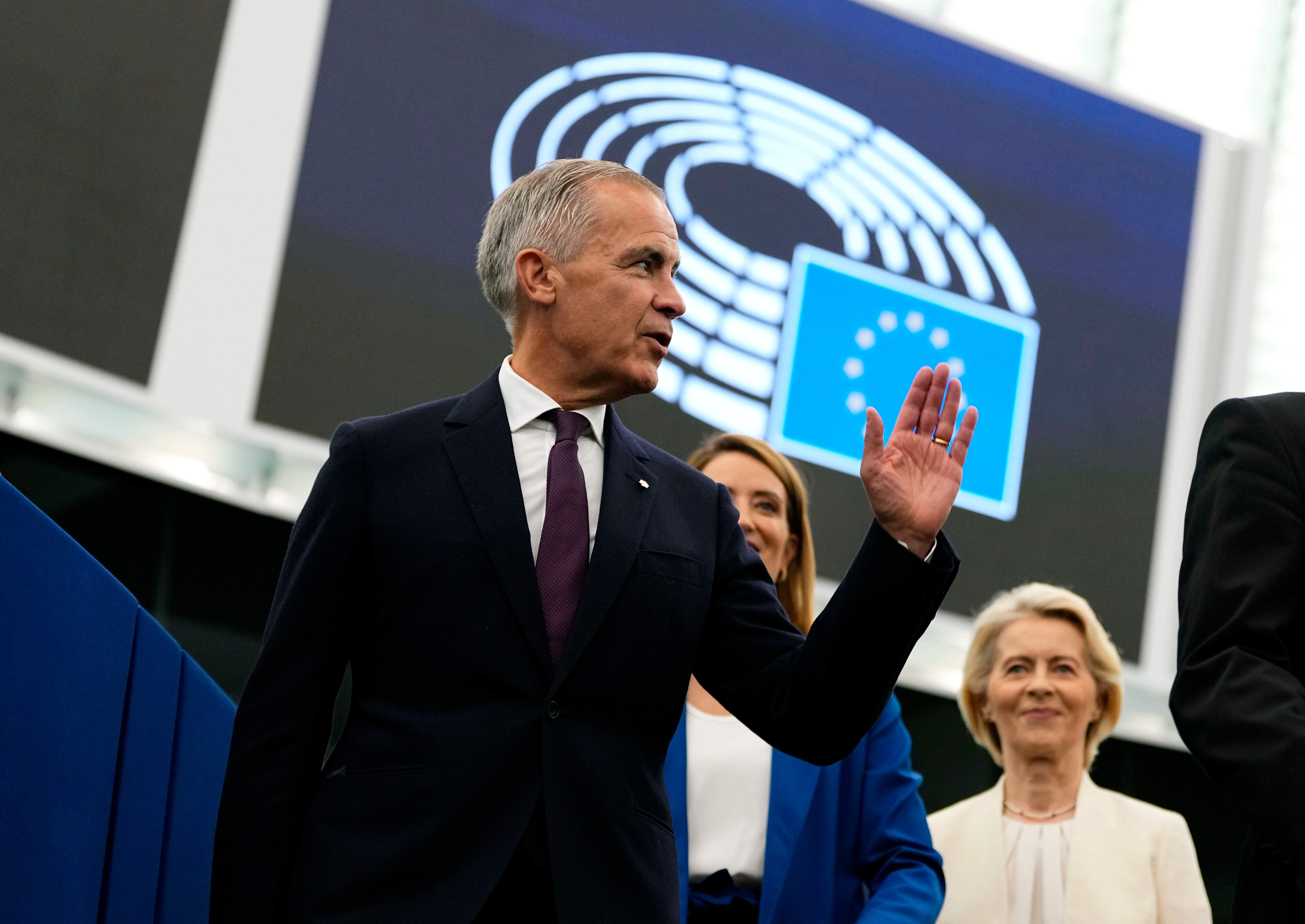
PHOTO  European Commission President Ursula von der Leyen and Canadian Prime Minister Mark Carney at the podium Photographer: Dati Bendo © European Union

Canada moves closer

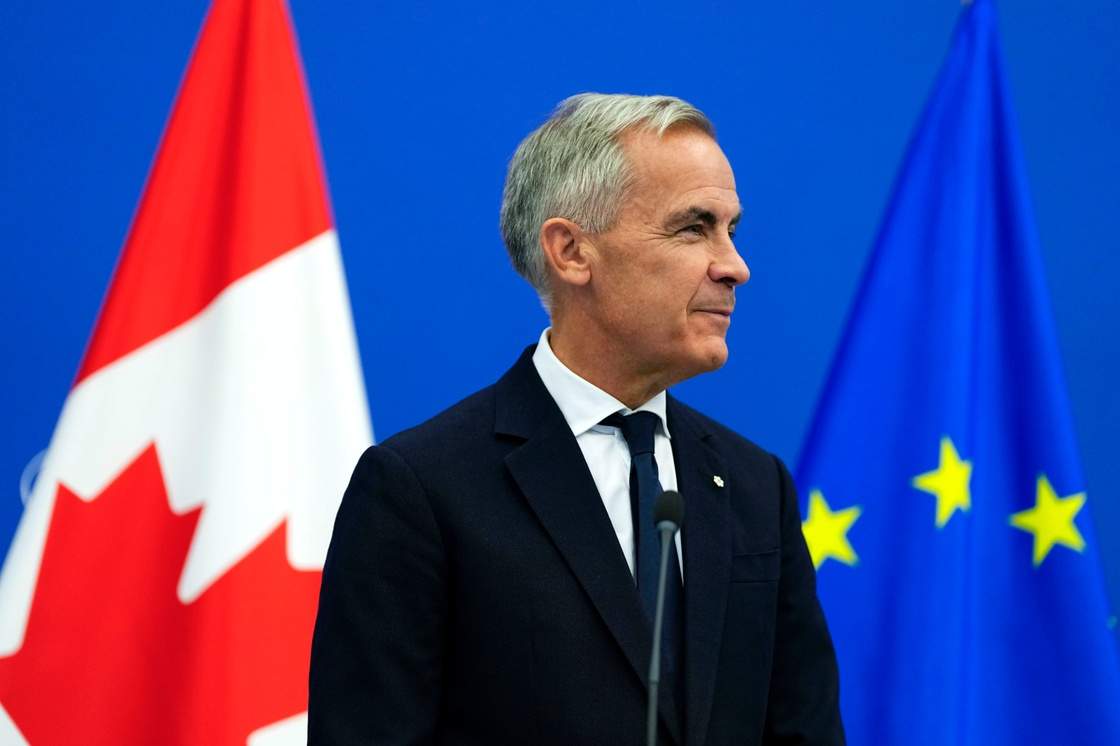
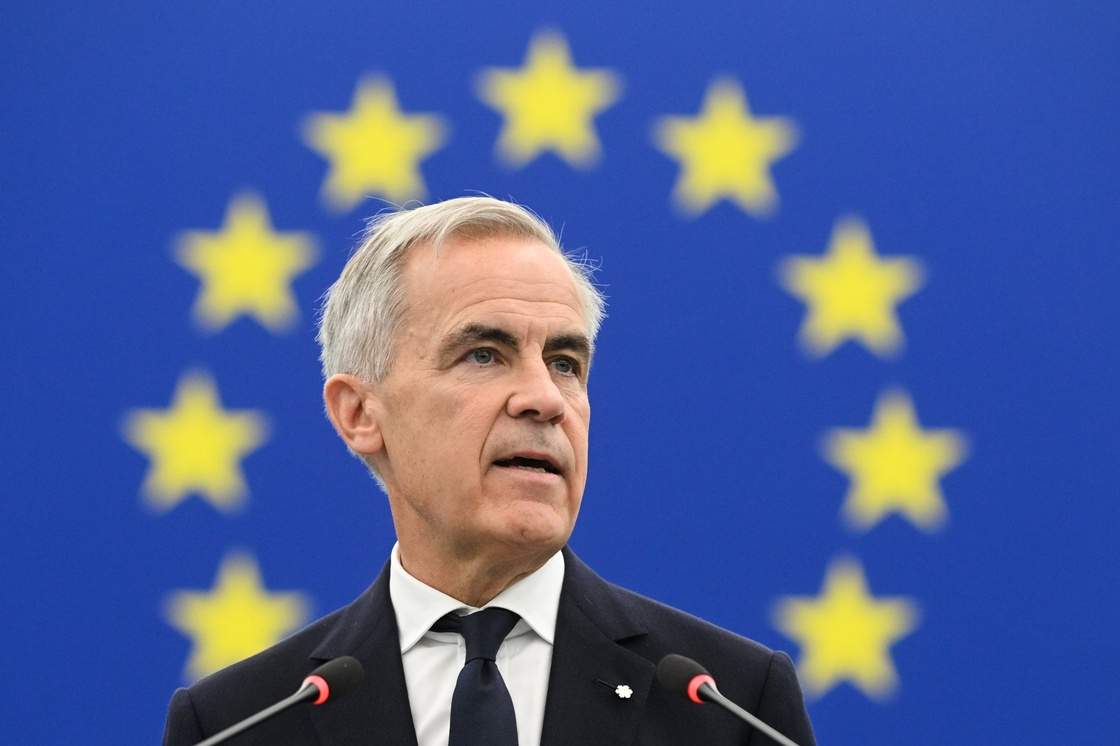
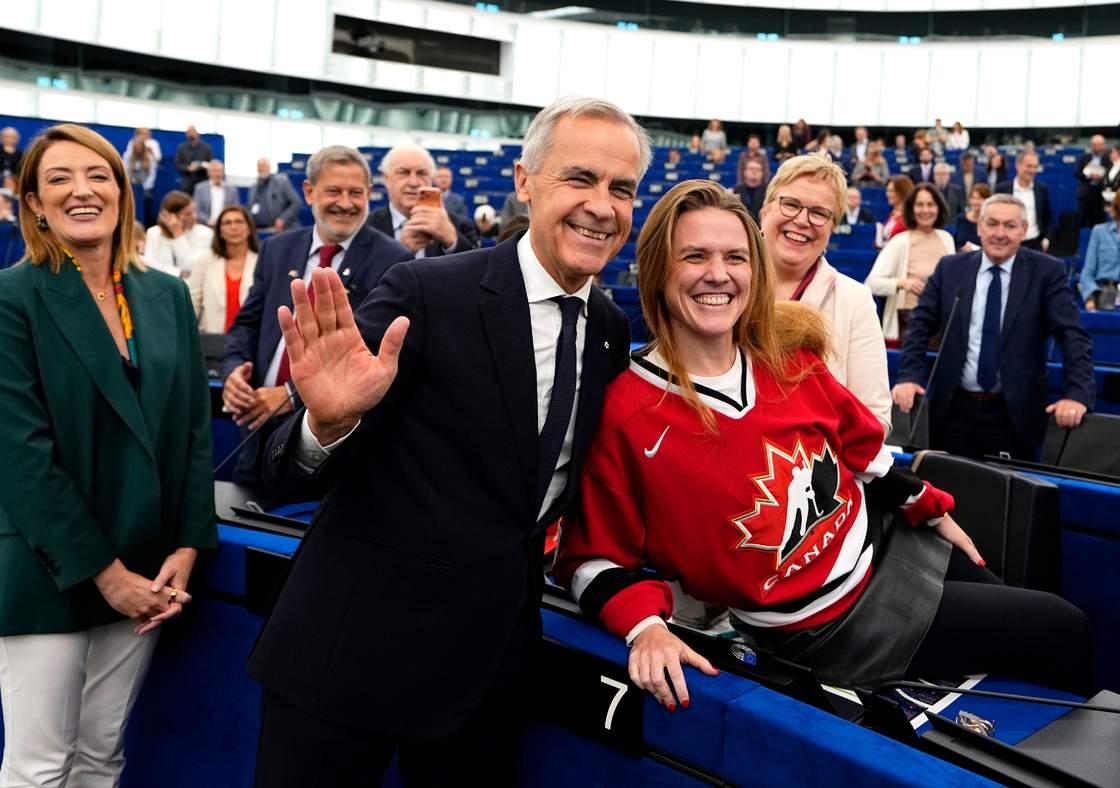
One of the biggest surprises came with Canadian Prime Minister Mark Carney in the chamber.

Von der Leyen proposed an “Alliance for the Future” spanning technology, defence, energy, critical minerals, AI and the Arctic — before going further.

“I would like to work with you on opening the door for Canada to be the first associate member of the EU,” she told Carney. “We share one ocean, one set of values, one way of seeing the world.”

Security, defence and Ukraine

With drone incursions, cyberattacks and sabotage raising security concerns inside the EU, von der Leyen proposed a new European security strategy and an Emergency Security Protocol for incidents falling below the threshold of armed aggression.

She also wants to establish a European Security Council and strengthen joint European defence capabilities.

Ukraine faces what von der Leyen called the “toughest winter of the war”. She promised humanitarian and energy support, stronger air defences and deeper defence-industrial cooperation with Kyiv.

Borders, democracy and children online

The Commission will propose an Emergency Response Framework for exceptional migration crises and strengthen Frontex, while launching a Mediterranean Youth Skills and Jobs initiative.

Von der Leyen also announced an EU KIDS ACT, including no social media for under-13s and restrictions for children under 15, followed by a broader Digital Fairness Act.

Political groups draw battle lines

EPP leader Manfred Weber backed the focus on AI, defence and competitiveness but pushed against restrictive climate policies. “Climate change is a reality,” he said, arguing Europe needed “innovation and not bans.”

S&D leader Iratxe García Pérez demanded that von der Leyen turn “words into action”, backing climate investment, housing and worker protections while warning that simplification must not become deregulation.

Renew Europe leader Valérie Hayer made a pointed appeal for the Parliament’s pro-European majority, as the EPP has increasingly worked with parties further to the right on some legislation. “There’s only one possible majority. It’s our pro-European majority,” she said. “We need to do more. We need more Europe, and we need it more quickly.”

Greens/EFA co-chair Terry Reintke accused EU leaders of failing to respond urgently enough to extreme heat and wildfires. “We are in the middle of a climate emergency,” she said, demanding stronger Green Deal implementation while insisting: “We are not powerless. Europe is strong, and Europe can be even stronger.”

ECR co-chair Patryk Jaki struck a sharply different note, attacking the Commission over bureaucracy, energy costs and industrial competitiveness. Europe, he argued, was “as weak as it’s ever been.”

Von der Leyen closed on the central theme running through the speech: European sovereignty in an increasingly hostile world.

“The fate of Europe,” she said, “must remain in the hands of Europeans.”

  •  

Von der Leyen’s State of the Union: Europe’s push for independence faces a delivery test

European Commission President Ursula von der Leyen during her speech in 2025 Photographer: Dati Bendo © European Union, 2025

Ursula von der Leyen is expected to make the case for a more independent and resilient Europe in her State of the European Union address on Wednesday (16 September). But analysts and political groups in the European Parliament are demanding something more concrete: evidence that the Commission can turn its expanding ambitions into results Europeans can see.

The State of the European Union address, commonly known in Brussels as the “SOTEU”, is the Commission president’s annual speech to Parliament setting out priorities for the year ahead. Modeled in part on the US president’s State of the Union address to Congress, the EU version began in 2010 under then Commission president José Manuel Barroso. Von der Leyen will deliver this year’s address at 9:00 tomorrow morning (16 September).

The speech comes as Europe is confronted with an ongoing war in Ukraine, a fragmenting global trading system and the challenge of strengthening defence while reviving competitiveness and financing the green transition. At home, von der Leyen must reconcile political groups that broadly agree on the need for a stronger Europe but differ over what that means.

For Manfred Weber, chairman of von der Leyen’s centre-right European People’s Party group, the focus should be on voters’ economic and security concerns.

“Europe’s priorities must reflect people’s concerns: jobs, the cost of living and economic security,” Weber said. He called for a stronger economy and well-paid jobs, tighter control of Europe’s borders, leadership on AI, continued support for Ukraine and “a strong European defence pillar”.

On the centre-left, Iratxe García Pérez, president of the Socialists and Democrats group, argues that the Commission has relied too heavily on deregulation.

“Europe needs more than announcements,” García Pérez said. “It needs concrete policies backed by the necessary resources.” The S&D wants greater emphasis on affordable food, housing and energy, quality jobs and climate action, alongside European sovereignty in defence and digital technologies.

Renew Europe is also making delivery the benchmark, calling on von der Leyen to present “a credible plan turning European ambition into visible results” and framing the choice as one between united European action and fragmentation.

Analysts at the European Policy Centre see the same challenge extending to Europe’s position in the world.

“Von der Leyen will tell us that the EU is forging new partnerships around the globe,” said Almut Möller, the EPC’s director for European and Global Affairs. Canadian Prime Minister Mark Carney’s attendance will reinforce the geopolitical dimension of the speech.

But strategic autonomy goes beyond defence and trade. Georg Riekeles, the EPC’s head of political economy, identifies financial dependence as an overlooked vulnerability. With the international financial system becoming less stable, Europe cannot assume Washington and the US Federal Reserve will play the stabilising role they did in previous crises. Von der Leyen “must therefore address financial sovereignty as a core element of European security”, he argues.

Technology poses another test. Elizabeth Kuiper, the EPC’s head of health and societal resilience, says von der Leyen should “reject the trade-off between competitiveness, technological progress, and the EU’s social model”, particularly as AI affects employment, income security and social cohesion.

Climate policy presents a similar collision between ambition and resources. Stefan Šipka, the EPC’s head of sustainable prosperity, argues that Europe needs “a robust delivery mindset, no more strategies” as it tries to combine defence, decarbonisation and economic security.

The common thread is delivery. Von der Leyen has no shortage of strategic objectives. The harder task on Wednesday will be explaining how they fit together, how Europe will finance them and what takes priority when they conflict.

For EPC policy analyst Eric Maurice, von der Leyen “must provide strategic focus and political clarity”.

“As the midterm in her second term approaches,” Maurice said, “it is time for von der Leyen to present a vision and deliver.”

  •  

EU moves to speed up recognition of qualifications and make skills more portable

Executive Vice-President Roxana Mînzatu presents Fair Labour Mobility package © European Union

The European Commission has unveiled what it calls an ambitious “Fair Labour Mobility” package aimed at making it easier for people to work across EU borders while strengthening protections against exploitation and fraud.

The proposals would allow workers to prove social security and health insurance entitlements digitally and make qualifications easier to understand and recognize. The Commission estimates the measures could generate €6 billion in benefits by 2040.

Central to the package is a European Social Security Pass, or ESSPASS, enabling people to request and receive documents such as the European Health Insurance Card and the A1 certificate for posted workers online. Documents could be stored in the EU Digital Identity Wallet and verified by national authorities.

Brussels is also proposing faster recognition of professional qualifications. Procedures for regulated professions, including doctors and nurses, with the aim of reducing the target processing time from three months to five weeks.

Recognition of qualifications obtained outside the EU would also be streamlined, with common standards intended to cut average processing times from 14 months to four months.

The European Federation of Nurses Associations (EFN) has welcomed the Commission’s plans for recognising qualifications from outside the EU, arguing that they bring greater transparency to a labour market already heavily reliant on internationally recruited healthcare professionals.

EFN Secretary General Paul De Raeve said recruitment from third countries was already well established and frequently organised through bilateral arrangements between governments. Denmark, he noted, has gone considerably further, establishing a school in Delhi to prepare Indian nurses for work in Denmark, including Danish-language training.

“This is going on,” De Raeve said, arguing that international mobility cannot simply be prevented when European health systems need staff and qualified professionals want to move. In the short term, he said, overseas recruitment is also difficult to avoid given that educating a nurse takes around four years.

For De Raeve, an important improvement in the Commission proposal is therefore not simply facilitating recruitment, but putting it within a clearer European framework. The proposed directive would establish common rules for recognising qualifications obtained outside the EU, including aligned documentation requirements.

It would also provide stronger mechanisms for checking whether qualifications are genuine and meet European standards. Training programmes and institutions seeking access to automatic recognition would undergo EU-level assessment, potentially including independent review, site visits and direct examination of training environments.

De Raeve particularly welcomed this approach, pointing to the risks of fraud in diploma accreditation. Having universities and training institutions formally assessed and certified would give regulators and employers greater confidence that somebody arriving with a qualification has been trained by a legitimate institution to an appropriate standard.

He also welcomed plans to reduce administrative delays for individual professionals.

For nursing, De Raeve argued, faster recognition and stronger verification could help Europe recruit internationally without lowering professional standards, while replacing opaque bilateral arrangements with more consistent EU-level rules.

The proposals still require approval by the European Parliament and EU governments. Key measures would then be phased in over several years, with improvements to the Labour Authority expected during 2028–2030.

  •  
❌