From displaced Dalit farmers in Andhra Pradesh to water-stressed communities elsewhere, India’s data centre boom is advancing with weak safeguards and little public scrutiny. It’s time to set rules before more land and resources are committed.
Gandhi dismissed Kamaraj’s Congress as a clique and trusted Rajaji instead, but by the measure of Gandhi’s own talisman, it was Kamaraj who served the poorest best.
Space is becoming an increasingly contested domain as major powers expand military capabilities, satellite infrastructure, and counterspace systems, while the U.S. Golden Dome initiative reshapes strategic stability and raises new questions about the future of space governance. On 14th September 2026, US Secretary of the Air Force Troy Meink confirmed that the US has “on-orbit” […]
Imperialism, considered by public intellectuals to be a thing of the past, has been resurrected; this time, the actions of the American President Donald Trump clearly reflect that. Defined as the raw exercise of power in order to conquer territories and appropriate resources for the establishment of an empire, imperialism has had a long and […]
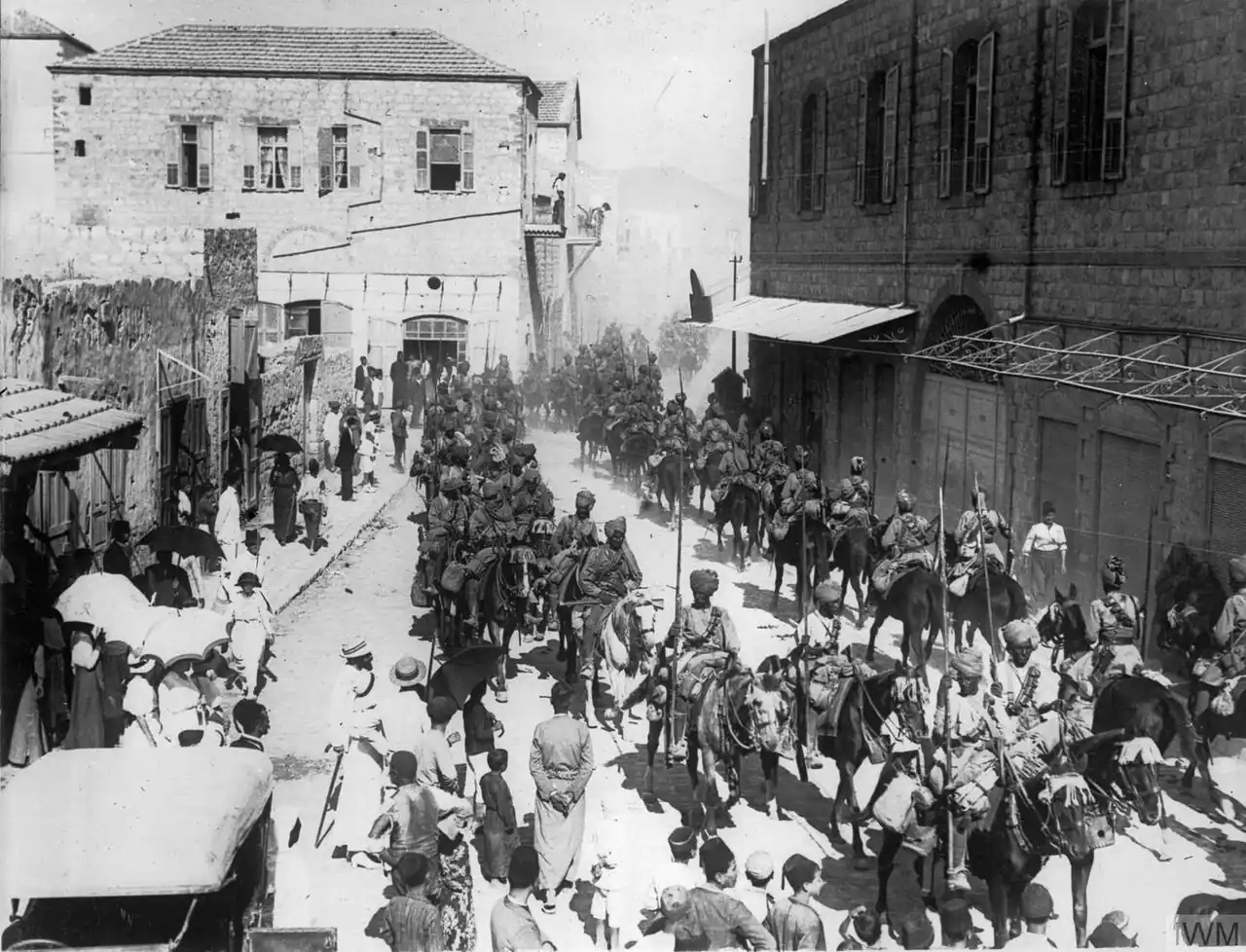
India calls it Haifa Day. The regiments that get the credit are the lancers of Jodhpur, Hyderabad and Mysore — cavalry units raised not by Britain directly, but by India’s semi-autonomous princely states, which supplied their own troops to the British war effort. Grouped into the 15th Cavalry Brigade and led into the final charge […]
Cada 23 de septiembre se celebra en Nueva Delhi y Jaipur un curioso evento histórico-militar: el Día de Haifa, en el que el ejército indio conmemora su protagonismo en la batalla homónima de la Primera Guerra Mundial, cuando los regimientos de lanceros de Jodhpur, Hyderabad y Mysore, integrados en la 15ª Brigada de Caballería y […]
This article is not designed to skip the facts, just because its author is simply pro-BRICS. It’s an honest, realistic, friendly, and necessary analysis, that readers interested in a summarized diagnosis of the current state of geopolitical affairs need to know. Each summit requires a theme, and this year’s BRICS leaders chose an honest one […]
India’s central challenge is not the existence of contradictory partnerships. Great powers routinely manage competing relationships. The deeper problem is the absence of a clearly articulated geopolitical vision capable of reconciling those relationships with India’s claims to defend multipolarity, sovereignty, and a Global South leader. India’s multi-alignment policy has given New Delhi more diplomatic flexibility, […]
The 18th BRICS Summit, which took place on September 12-13 in New Delhi, reflected the world order’s transition to multipolarity. Türkiye, though sharing this ideology, was not among the summit’s participants. The list of participants in the Indian BRICS summit is noteworthy, including leaders and representatives of the BRICS core (Brazil, Russia, India, China, South […]
Tharangambadi is a fishing village on India’s Coromandel Coast, in the state of Tamil Nadu. Its name means “place of the singing waves,” a nod to the Indian Ocean lapping at its shore. It isn’t much of a tourist stop, and fishing is still its main trade, but anyone who walks its streets runs into […]
Tharangambadi es un pueblo del estado indio de Tamil Nadu cuyo nombre significa «sitio de las olas cantarinas», en referencia al oceáno Índico al que se asoma. Aunque no se trata de un lugar turístico y su principal actividad económica es la pesca, a un visitante le resultará llamativo el aire europeo de parte de […]
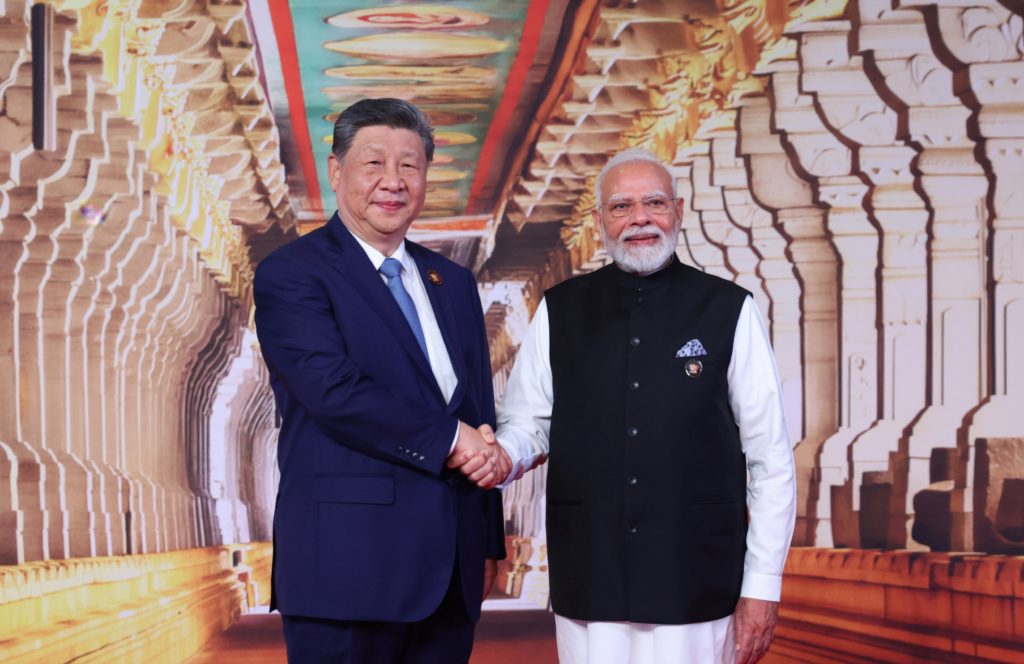
Cover image: picture alliance / ZUMAPRESS.com | Pib Handout/Press Information
Problem
The BRICS summit concluded in New Delhi on Sunday, with Indian prime minister Narendra Modi having hosted the two-day gathering as chair. As with many meetings of the group of emerging economies, this edition brought together the leaders of China, India and Russia and featured plenty of anti-Western rhetoric. This was also Chinese leader Xi Jinping’s first visit to India for more than six years, in the latest example of Sino-Indian normalisation following a sustained period of tensions.
New Delhi’s normalisation with Beijing over the last year looks like more of a tactical de-escalation than a realignment. Nevertheless, India has over that time begun to agree more measures to provide greater access to Chinese investment in manufacturing and climate technology, both areas important for India’s development. This should act as a warning for Europeans. If India cannot source technology and capital from partners in Europe, it will seek to do so from China even while remaining suspicious of Beijing from a security point of view.
Solution
New Delhi continues to view Beijing as a threat and seeks deeper security and economic ties with Brussels, as well as with Washington, despite the difficulties President Donald Trump presents. Modi has thus worked to prevent the BRICS from tipping into a purely anti-Western vehicle, since this would run against India’s interests.
Europeans also see India as an increasingly vital partner, following the EU-India trade deal agreed earlier this year, as Europeans diversify geopolitically in the face of tense transatlantic relations. But India’s bilateral agreements with China, including on the sidelines of the BRICS meeting, show that the EU must not take the mutual benefits of closer ties for granted.
Ahead of Modi’s anticipated visit to Brussels later this year, the EU should accelerate its plans further to strengthen Europe-India ties. For instance, it should enhance the existing Trade and Technology Council to drive cooperation in areas like AI, while also moving forward cooperation on defence and security, and making faster progress on India’s plans to join the Horizon Europe funding programme for research and innovation.
Context
The EU and India signed a landmark free-trade agreement in New Delhi in January, alongside a new security and defence partnership. Both sides aim to build on these with wider cooperation initiatives to encourage greater cooperation and investment in areas like semiconductors, AI and clean-tech supply chains.
India supported moves at the 2023 BRICS summit to agree on a major membership expansion. The group began as a much smaller coalition of just Brazil, Russia, India and China, and South Africa—hence “BRICS”—but has since grown to eleven members, including Egypt, Ethiopia, Iran, Saudi Arabia and the UAE as well as a wider grouping of observer and partner countries that attend summits and align themselves loosely with the bloc’s agenda. The group is internally divided, and not just in terms of China and India. Both Iran and the UAE are members, for instance, despite longstanding regional tensions. This year’s summit produced a limited declaration including vague promises to enhance cooperation.
Along with India’s rapprochement with China, the New Delhi BRICS Summit showed that the group is no longer content to remain a platform for the Global South’s protest; it is beginning to build institutions, economic networks, and diplomatic alternatives of its own. A summit held during a period of international turmoil The 18th BRICS Summit, […]
On 11 September, the European Commission has put forward its proposals to the Council for the signature and conclusion of Free Trade Agreement (FTA) between the European Union and India, seeking authorization for its signature and conclusion. If authorized by the Council, this will be the largest trade agreement ever concluded by both the EU and India.
Once adopted and entered into force, the agreement will improve market access, reduce tariffs, tackle unnecessary barriers to trade, as well as provide predictable rules for trade and investment between the EU and India. The EU and India already trade over €180 billion worth of goods and services per year, supporting close to 800,000 EU jobs. This deal will eliminate or reduce tariffs on 96% of EU goods exports to India. Overall, the tariff reductions will save around €4 billion per year in duties on European products. It will make it easier for European companies to access the Indian market and compete on a more level playing field, while it will ensure consumers can benefit from increased choices and more competitive prices.
The proposal put forward today represents a key step towards ensuring that consumers and businesses can start reaping the benefits of this deal as soon as possible. This is in line with the fast-track procedure laid out by Commissioner for Trade and Economic Security,Maroš Šefčovič earlier this year. The procedure aims at speeding up the implementation of FTA's, which is crucial at a time of geopolitical uncertainty and growing pressure on the global trading system.
The EU-India FTA reflects the EU's commitment to strengthen economic ties with key partners in the Indo-Pacific region. With its proposals, the Commission is seeking Council's approval to sign the agreements which will then require European Parliament's consent, before conclusion and entry into force. The Indian authorities are in parallel going through their own internal ratification procedures.
As India hosts the 18th BRICS Summit in New Delhi, its policy of multi-alignment is under crucial scrutiny: whether New Delhi can achieve a balance between strategic autonomy and a real commitment to the Global South, or whether BRICS is simply another instrument of transactional, multi-alignment diplomacy? India is presenting its term as president of […]
The strategic choice facing India, the UAE, Saudi Arabia, and other large developing economies does not just boil down to choosing between BRICS and the West. These countries continue to follow a multi-vector policy, aiming to simultaneously reap the benefits of cooperation with BRICS, the G7, the EU, and regional institutions. However, it is important […]
Orangutans are native only to Borneo and Sumatra, two islands in southeast Asia and are distinct for their sparse reddish-orange fur and long, powerful arms.
Orangutans are native only to Borneo and Sumatra, two islands in southeast Asia and are distinct for their sparse reddish-orange fur and long, powerful arms.
THE HAGUE: The Permanent Court of Arbitration has ordered India to uphold the Indus Waters Treaty with Pakistan and suspend work on its hydroelectric projects, a major legal victory for Islamabad in the dispute over the agreement. The Hague-based tribunal issued the award on the status of the treaty and interim measures concerning India’s Ratle ... Read more

 Login