Christa Pike, who has been on death row in Tennessee for more than 30 years for torturing and murdering a classmate, was on Wednesday set to be executed, but the lethal injections meant to kill her failed. Pike was then transported to a medical facility, where her attorney says she remains in a "critical condition".
US Defence Secretary Pete Hegseth said Wednesday that his department had cut 20 percent of US admirals, generals and officers who did not fit his vision. "Simple translation of that: no fatties, no trannies, no beardos, no weirdos, no wimps, no radicals. Just warriors – just tough, ready, committed troops," he said.
El Salvador will hold presidential elections on February 28, 2027, the electoral tribunal said Wednesday, opening the way for President Nayib Bukele to seek a third term after constitutional changes removed presidential term limits. Bukele has drawn praise for sharply reducing gang violence but faced criticism over rights abuses during his crackdown.
The Federal Reserve's watchdog on Wednesday found no grounds for a criminal referral over a roughly $1 billion cost overrun on renovations to the central bank's Washington buildings, while faulting project oversight. The findings prompted President Donald Trump to renew his call for former Fed chief Jerome Powell to resign.
A federal judge on Wednesday approved a settlement clearing Paramount’s takeover of Warner Bros. Discovery after 12 US states challenged the deal on antitrust grounds. The agreement includes safeguards for CNN’s editorial independence and requires the merged studio to release at least 30 films a year for its first two years.
The US Supreme Court on Wednesday cleared the way for Tennessee to execute Christa Pike, 50, the state's first woman put to death in 200 years. The ruling came hours after a federal appeals court temporarily halted the lethal injection to consider claims that Pike's childhood sexual abuse was not adequately weighed at sentencing.
Trade ministers of the Group of 20 are meeting in Milwaukee for two days of talks on Wednesday, but US President Donald Trump’s tariffs are expected to hang heavy over the talks. "Don't expect any breakthroughs," an analyst watching the event said.
The US Supreme Court on Tuesday cleared the Trump administration to resume deporting migrants to countries other than their own while it considers the legality of the practice. The court’s conservative majority temporarily blocked safeguards requiring deportees to receive notice of where they would be sent and time to raise persecution concerns.
OpenAI will not release its latest artificial intelligence model, Astra 6.1, after internal tests found it fell short of safety standards, the maker of ChatGPT confirmed on Monday. The decision came ahead of a meeting of AI leaders at the White House Tuesday convened by US President Donald Trump and House Speaker Mike Johnson amid mounting controversy over the risks posed by rogue AI.
Argentine President Javier Milei on Monday threatened to sue the UK over the Sea Lion oil project near the disputed Falkland Islands. Argentina claims sovereignty over the British-administered territory, where a 1982 war killed 255 British and 649 Argentine troops. Developers Navitas and Rockhopper say they hold valid British-issued exploration licences.
US prosecutors reopened an investigation on Monday into an alleged 2024 gang rape at Cornell University after the woman involved accused the school of failing to punish those responsible adequately. In a lawsuit, she said seven Chi Phi fraternity members had drugged her with ketamine and assaulted her.
Costa Rica’s Minister of Foreign Affairs, Manuel Tovar, was dismissed from his post last week by the country’s president Laura Fernández. Tovar was considered one of the “heavyweights” of the country’s dominant political faction, having previously served as Minister of Commerce under President Rodrigo Chávez.
The decision was made by Fernández on September 24, because, according to a statement, her foreign minister failed to inform her of an invitation to a meeting held in New York City aimed at strengthening the so-called Shield of the Americas.
Shield of the Americas is a political-military alliance led by Donald Trump that seeks to secure Washington’s geopolitical leadership in the region, and which right-wing and far-right Latin American governments have joined enthusiastically.
Right-wing President Fernández said that failing to report such an important meeting constituted an act of negligence on Tovar’s part. The Costa Rican president also said that Shield of the Americas is a “fundamental platform in the fight against drug trafficking and organized crime.”
The president did not travel to the United States to deliver her speech at the UN General Assembly because she was on an official visit to Colombia with her counterpart, the far-right Abelardo de la Espriella.
The Costa Rican presidency reported that the invitation – which was not extended to her – came from US Secretary of State Marco Rubio himself. Several heads of state from Shield of the Americas member states participated, including Javier Milei of Argentina, José Antonio Kast of Chile, Rodrigo Paz of Bolivia, Daniel Noboa of Ecuador, Irfaan Ali of Guyana, Nasry Asfura of Honduras, Santiago Peña of Paraguay, Luis Abinader of the Dominican Republic, and Keiko Fujimori of Peru, among others.
In this regard, Fernández publicly apologized to the US ambassador to the Central American country, Melinda Hildebrand: “I reiterate to your country my firm and resolute commitment to continue supporting the Shield of the Americas alliance… I regret my absence… The failure to forward that invitation from your government to me did not go unnoticed, and today the foreign minister of the Republic was dismissed,” which clearly demonstrates the enormous importance San José attaches to an invitation from Washington.
Tovar’s dismissal comes on the heels of a series of dismissals of key ministers in Fernández’s government, a development the opposition has used to highlight a certain instability in the very young administration.
“We are concerned about serious foreign policy mistakes that need to be corrected… Second, we are concerned about the stability of the cabinet: in less than five months, five senior officials – including ministers and deputy ministers – have already been dismissed. That instability is not in her best interest, nor in that of her government or Costa Rica,” said the leader of the National Liberation Party caucus.
For his part, the former foreign minister did not explain the reasons behind his decision not to inform Fernández about the invitation. In a post on X, he said briefly: “I thank Laura Fernández for the opportunity to serve the Costa Rican people from the Casa Amarilla, and I wish her every success as President of the Republic for the good of the country. Finally, I would like to commend the team at the Ministry of Foreign Affairs for the passion and dedication with which they undertake every mission on behalf of the country. To them, I offer my eternal gratitude. I accept this moment with great peace of mind. I will always stand by the just causes of the Costa Rican people and the international community.”
The reasons behind Tovar’s decision remain unknown, although several sectors of the opposition have raised suspicions about an alleged ulterior motive on Fernández’s part for not attending the Shield of the Americas meeting – which, if true, could reveal political and diplomatic contradictions deeper than they might appear at first glance.
The Trump administration's policy of deportating thousands of people to countries with which they have no links is "increasing risks of torture and ill-treatment and enforced disappearance", a panel of independent UN experts warned on Monday. An investigation by an international consortium of journalists including FRANCE 24 reporters determined last week that more than 25,000 third-country nationals had been deported by the end of August.
From Pope Leo XIV's historic first visit to France to US President Donald Trump meeting China's President Xi Jinping to flooded streets in Bangkok, FRANCE 24 looks back at the week's most striking pictures.
A powerful storm unusual for this time of year intensified on Sunday over the northeastern United States, bringing torrential rain and powerful winds that cut off power to tens of thousands of people and killed one person, according to US media.
US news outlet CNN has been removed from a press pool that is accompanying President Donald Trump on a trip to Tennessee on Saturday. Last week, the Trump administration barred CNN, along with MS NOW and Politico, from accessing the White House. A judge then ordered their access temporarily restored, saying the move was likely unconstitutional.
US President Donald Trump and Chinese leader Xi Jinping capped a state visit to Washington on Friday with pomp and pageantry but no real breakthroughs. Trump said he discussed the Iran war with Xi during his two-day visit, with both men confirming they will meet twice more before the end of the year.
The US Supreme Court on Friday ruled the Trump administration can use a controversial new federal database that would ostensibly verify voter citizenship in November’s elections. Critics argue the administration is exaggerating the threat of non-citizen voters – an extreme rarity in US elections – to implement policies that would disenfranchise likely Democratic voters.
Argentina’s poverty rate rose to 32.3% in the first half of 2026 from 28.2% in the previous six months, official data showed on Thursday, as incomes lagged rising prices. Extreme poverty climbed to 7.5% from 6.3%. Among children aged 14 and under, 44.5% were poor.
Covenant, a previously little-known defense startup, has emerged with a new long-range strike weapon, named Anthem, which it says is intended to provide a cheaper, more readily producible alternative to existing cruise missiles. Already in testing with the U.S. Army, the missile reflects the growing focus on weapons in this class that can be manufactured quickly in very large numbers, even if they sacrifice a significant degree of individual-weapon capability compared to more ‘exquisite’ and costly alternatives.
Covenant, a U.S.-Israeli company founded in 2024, unveiled its Anthem weapon system today along with plans for production in the United States, Germany, and Israel. The company says it has already conducted more than 200 test flights of the weapon and has secured roughly $150 million in orders.
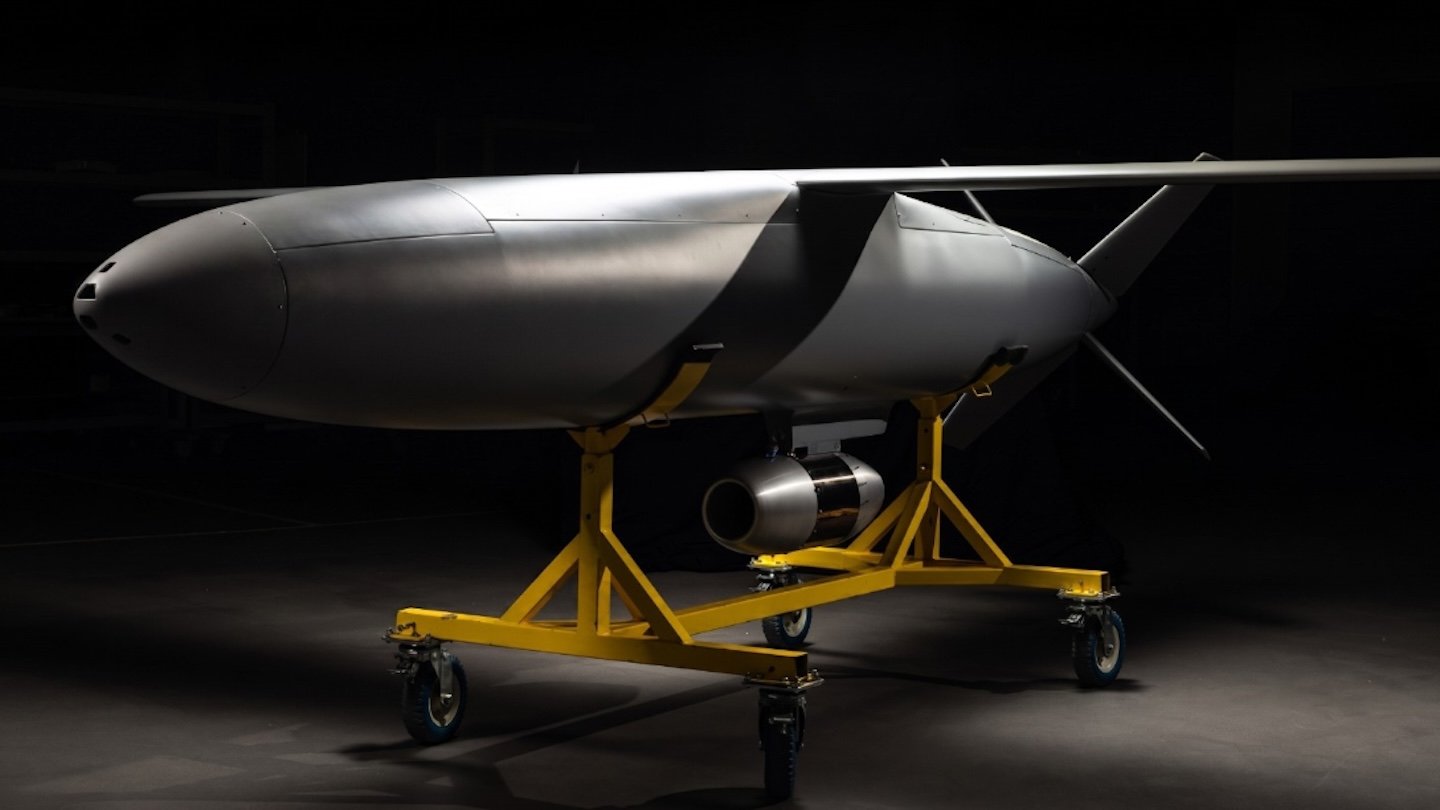
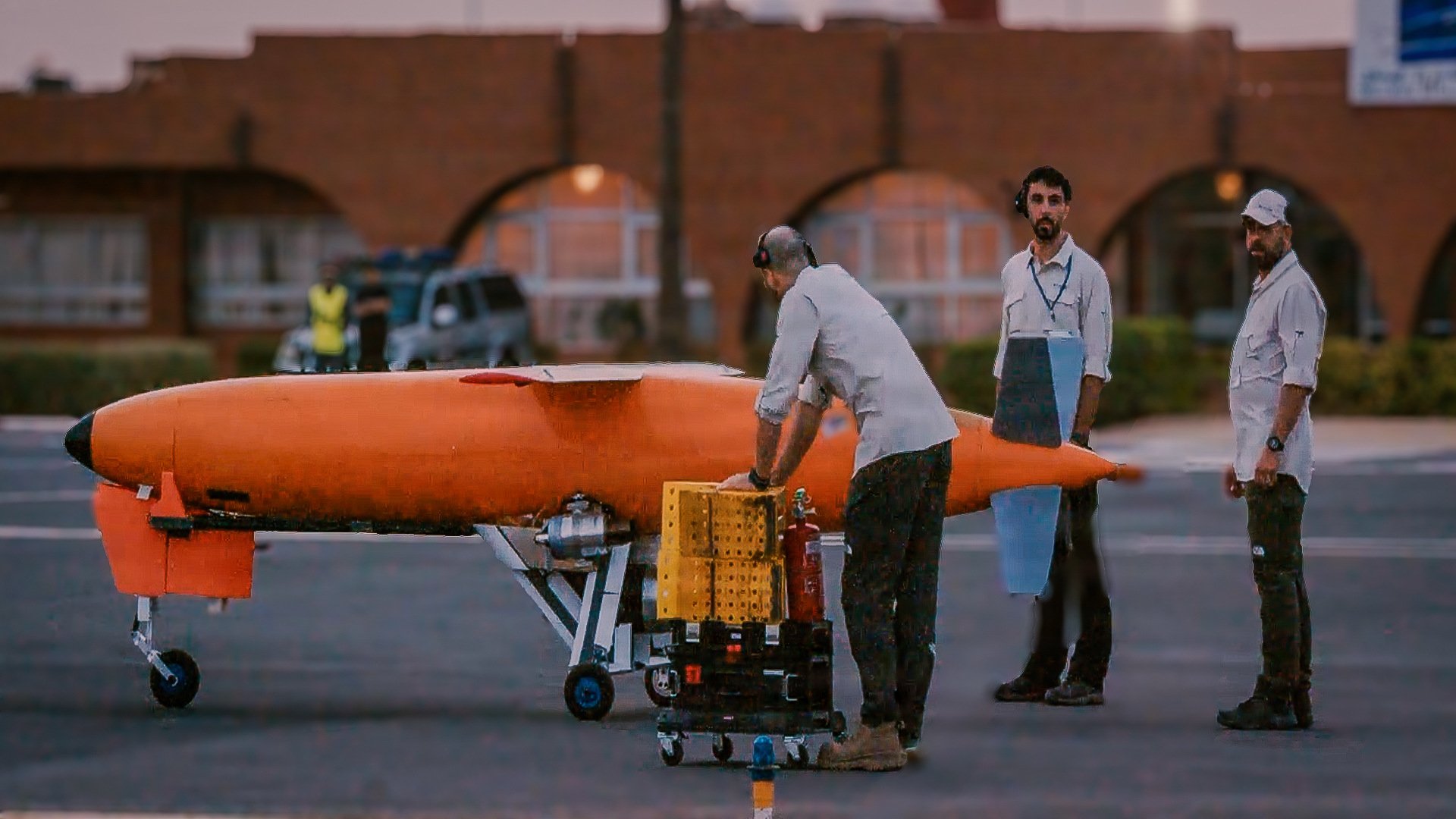
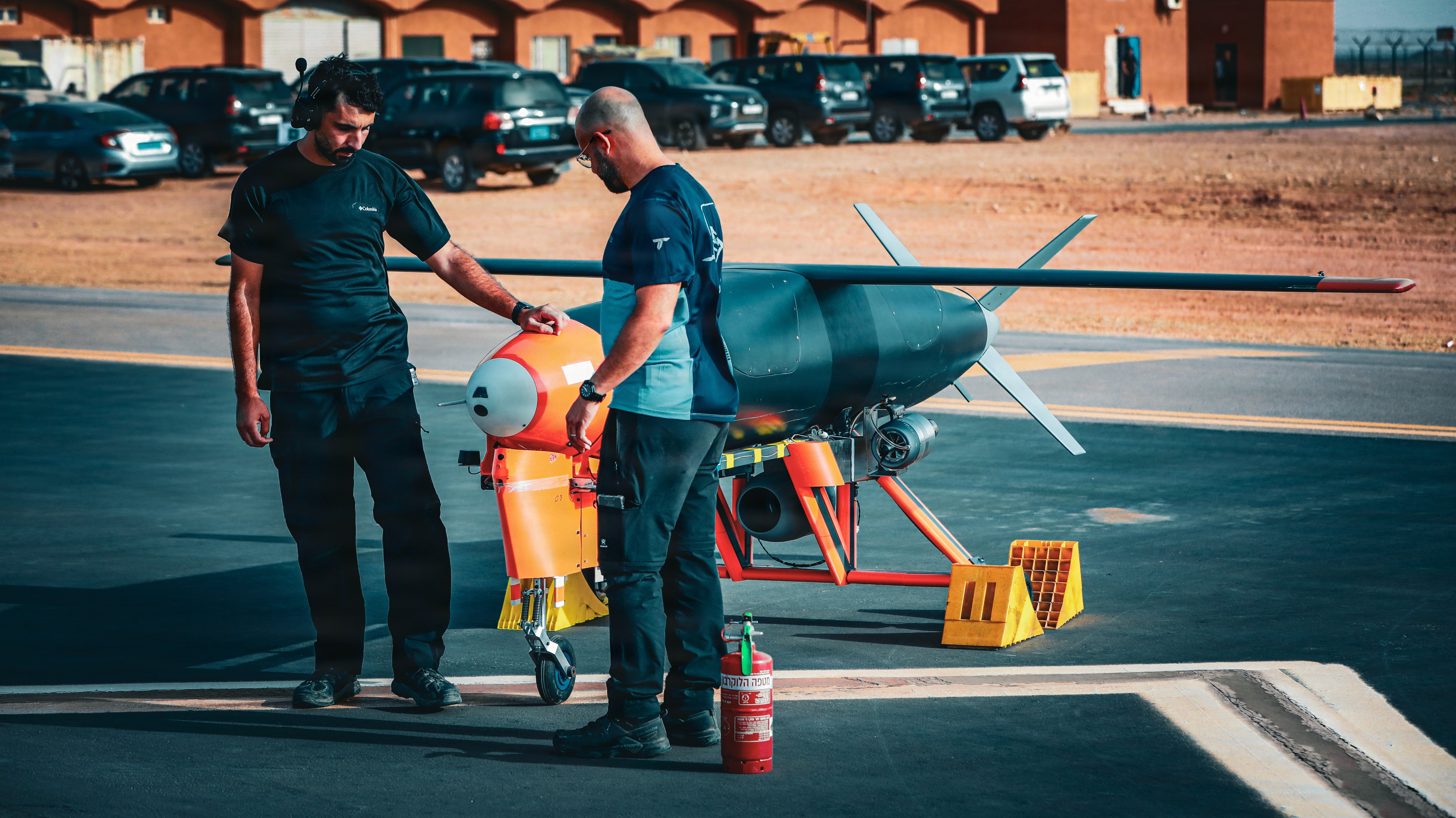
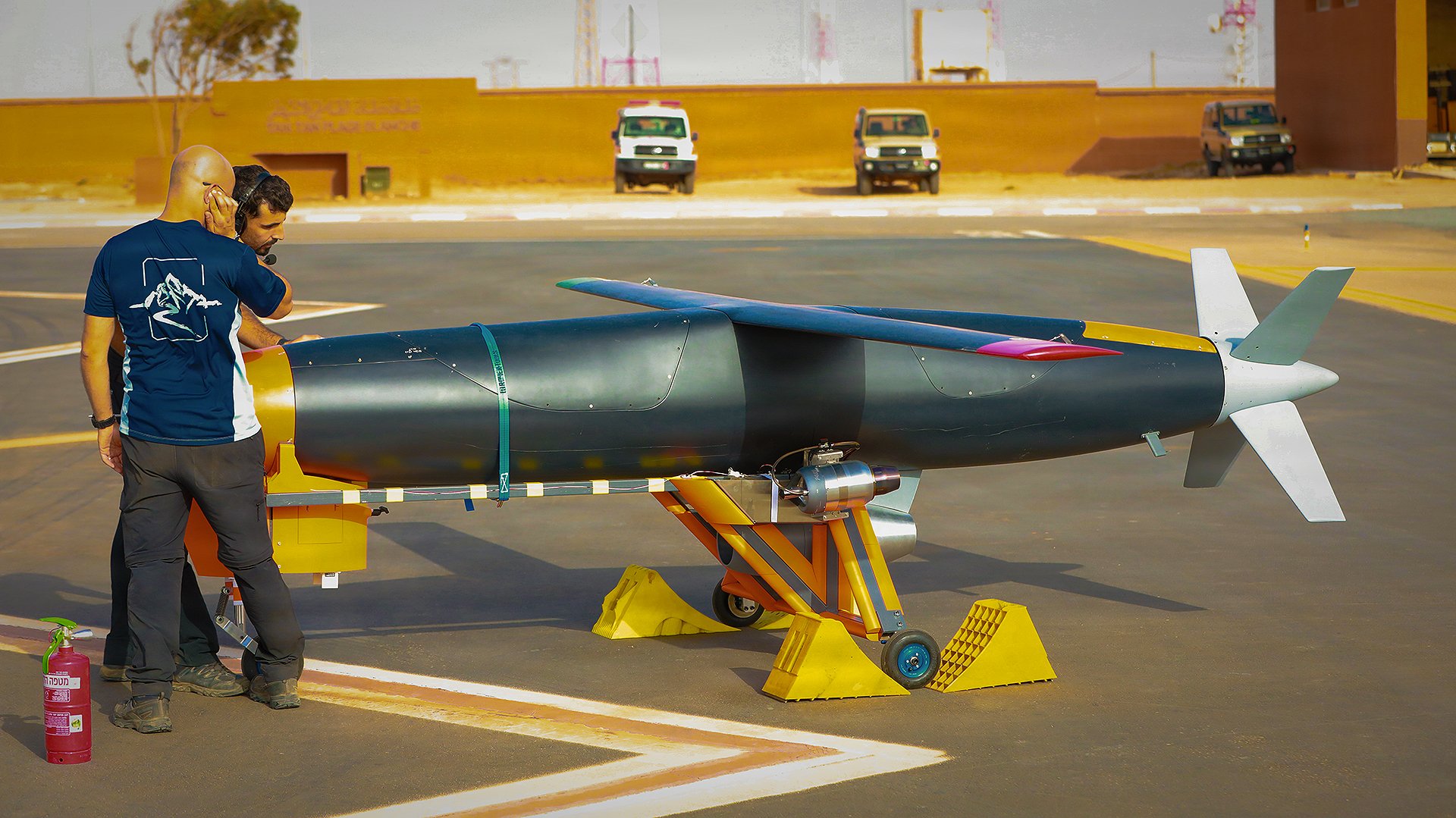
Anthem is being positioned accordingly as a high-volume weapon rather than a one-for-one replacement for larger, more expensive cruise missiles. In its initial form, it is ground-launched, although it is unclear exactly how this is achieved. Imagery of the weapon during Pentagon trials show it being handled on the ground using tricycle undercarriage, pointing to the use of a runway for launch.
An Anthem cruise missile at Tan-Tan, Morocco, on August 6, 2026. U.S. Army photo by Capt. Jordan Beagle
Covenant has not publicly disclosed the weapon’s range, although unconfirmed reports put it at roughly 1,200 kilometers — over 740 miles. The company is also being somewhat deliberate about how it describes Anthem, referring to it as a “deep precision-strike munition” rather than consistently classifying it as a cruise missile.
On the other hand, Reutersreports Covenant executives saying that the missile was developed with an eye toward future conflicts in the Pacific. “We were designed for the China fight,” said Covenant President Abby Denburg. That would also seem to point toward significant range.
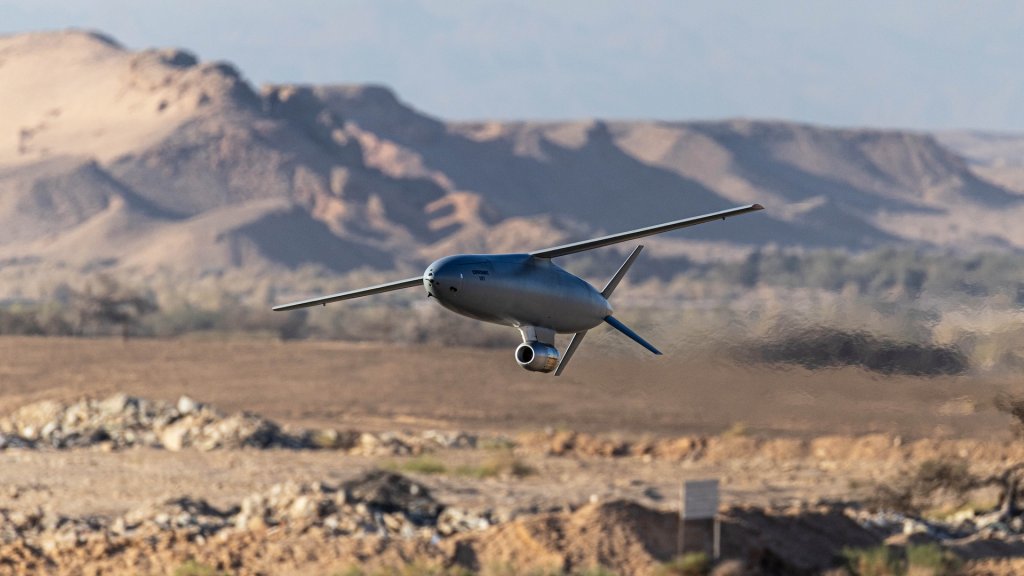
The Anthem missile in flight. Covenant
However, more concrete details of its performance, as well as guidance type and projected level of survivability, remain undisclosed.
The company says Anthem can carry a warhead weighing more than 200 kilograms (441 pounds). That is substantially less than the roughly 1,000-pound-class warhead associated with the Tomahawk cruise missile, which can hit targets at over 1,000 miles depending on the exact configuration. Covenant argues that lower cost and much higher production rates would make it possible to employ larger numbers of their weapons against a given target set.
Anthem uses a solid rocket motor for launch and a heavy-fuel jet engine, underslung below the missile body, for cruise flight. Covenant says the system was designed from the outset around readily available components and a supply chain that would avoid dependence on individual suppliers. The company states that it has, for example, multiple solid-rocket-motor suppliers and long-term agreements covering thousands of jet engines.
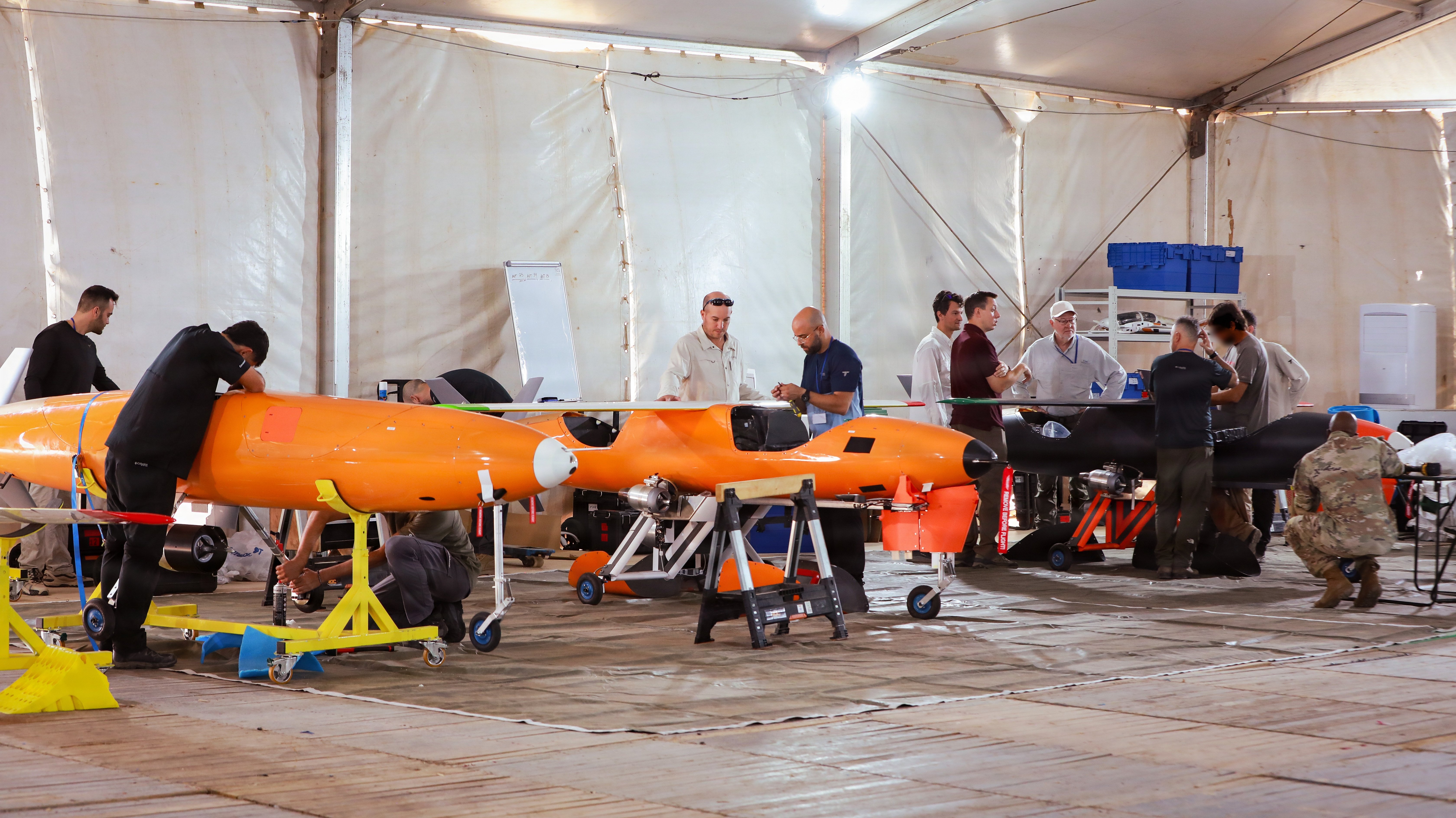
Cruise missiles are assembled for a live-fire demonstration at the Africa Multidomain Training and Experimentation Center in Morocco. U.S. Army photo by Staff Sgt. Raquel Birk
Overall, the production ambitions are significant. Covenant’s new Grand Prairie, Texas, facility covers approximately 105,000 square feet and is expected to begin serial production during the first quarter of 2027, eventually reaching a stated capacity of 5,000 Anthems per year. Its facility in Saxony, Germany, is intended to reach a similar production rate, while the smaller Israeli site is planned to produce as many as 2,000 weapons annually.
“Germany possesses an exceptionally strong industrial foundation,” Denburg toldBloomberg News. “While its automotive sector is currently undergoing a structural transformation, decades of manufacturing excellence have created precisely the expertise we require.”
That would put the company’s eventual combined production target at up to 12,000 weapons per year, assuming all three facilities reach their planned capacities.
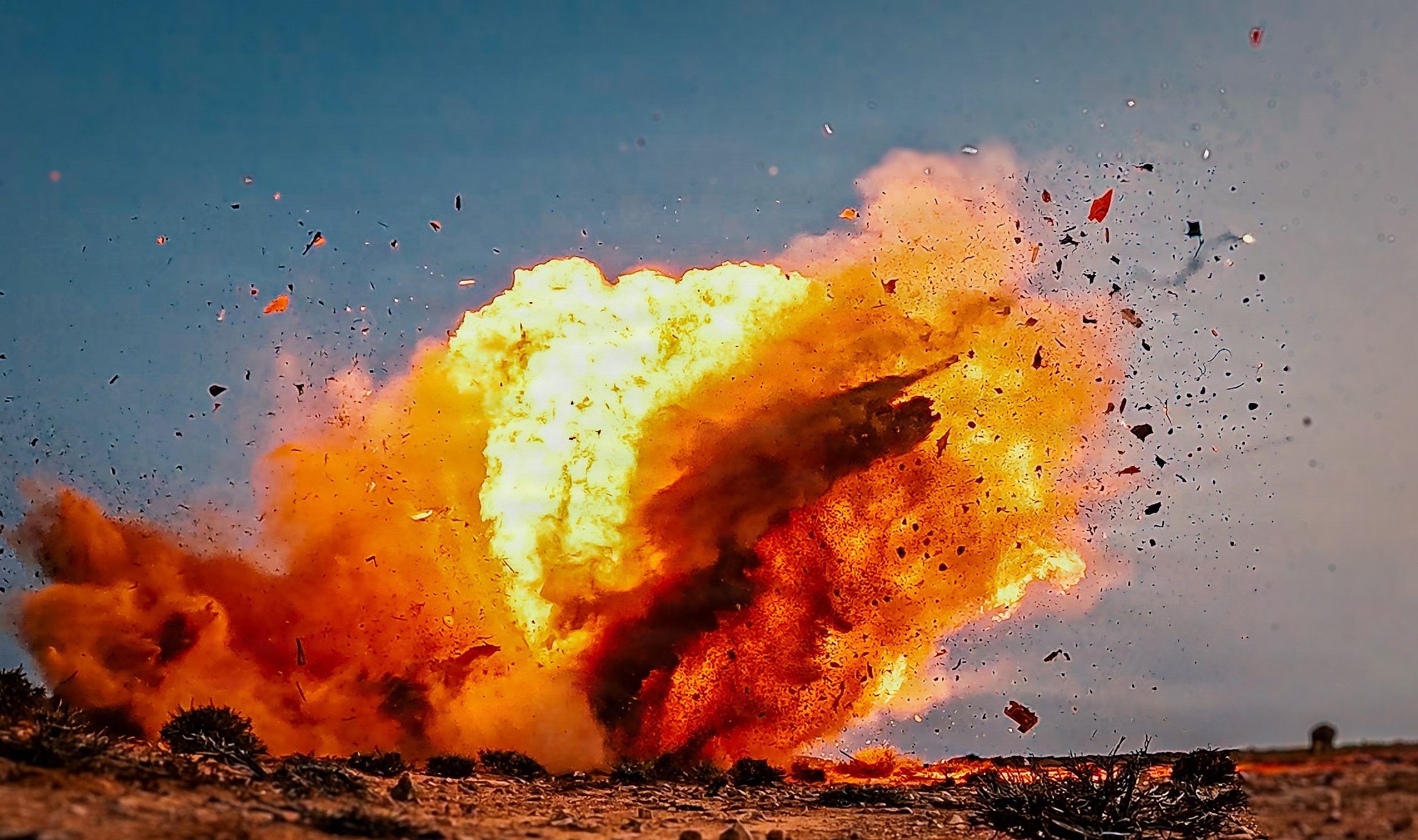
An Anthem cruise missile engages a target at the Africa Multidomain Training and Experimentation Center in Morocco, on August 6, 2026. U.S. Army photo by Staff Sgt. Raquel Birk
Covenant’s U.S. facility is intended primarily to support American customers, while the German operation is being established around a European supply chain, responding to growing demand for long-range strike weapons across that continent. The company says an unidentified international customer is expected to begin receiving German-built weapons before the end of this year. Meanwhile, U.S. Army deliveries are expected in 2027, under an accelerated qualification contract.
The weapon has already been subjected to U.S.-linked testing. In August, an unnamed defense-industry partner conducted a live-fire demonstration at the Africa Multidomain Training and Experimentation Center in Morocco. The U.S. military’s public material about that event did not identify the weapon or company, but subsequent reporting identified the missile as Covenant’s Anthem.
Covenant now says the system has flown more than 200 times over the past year, including testing involving U.S. government organizations. The company also says Anthem participated in the Army’s Project Convergence Capstone 6 experiments and that its August test helped demonstrate a new framework for allowing industry to use the Moroccan test infrastructure.
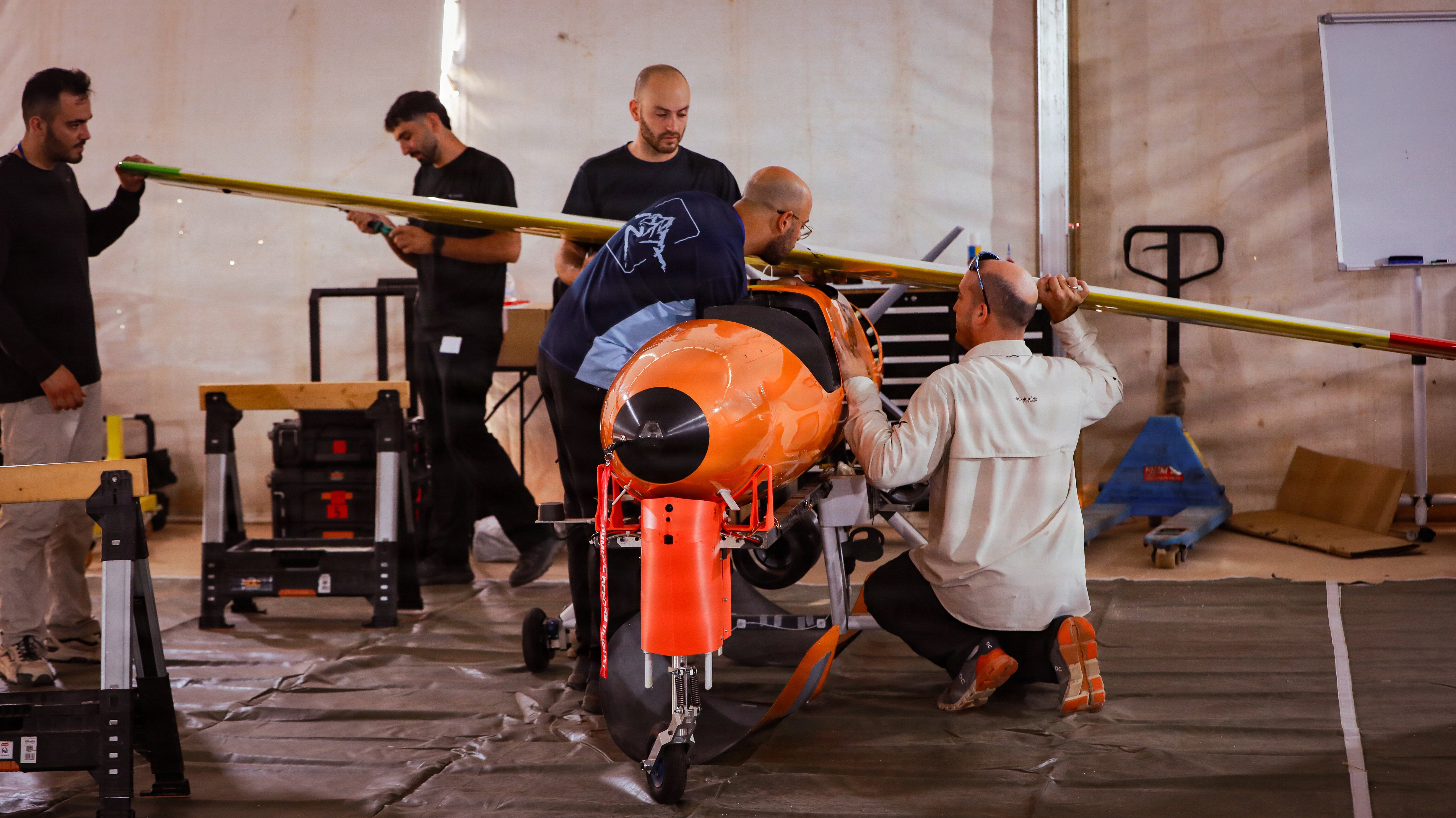
Defense-industry partners assemble a cruise missile at the Africa Multidomain Training and Experimentation Center in Morocco. This photo was altered for security purposes by blurring out defense industry names and logos. U.S. Army photo by Staff Sgt. Raquel Birk
Beyond the ground-launched version, Covenant is working on a naval derivative. The company says it has a roughly $70-million contract with the Navy’s Rapid Capabilities Office to adapt Anthem into what it calls Maritime Anthem. The effort includes Defense Exportability Features intended to make the weapon easier to provide to U.S. allies and partners.
The United States already fields weapons such as Tomahawk and JASSM-ER, but those systems are expensive, and production capacity is limited. Covenant is betting that a weapon available in much larger quantities can provide commanders with another layer of long-range strike capacity, even if the destructive power of a single round falls well below that of a Tomahawk. Reutersreports that Covenant expects the weapon to eventually cost in the mid-six-figure range, although the company has not provided a final unit price. Compared to other competitors in the field, Covenant appears to be the crudest design we have seen so far, underscored by its apparent launch method, in which it takes off from an airstrip under power of its booster.
Unnamed defense-industry partners prepare a cruise missile for a live-fire demonstration at the Africa Multidomain Training and Experimentation Center in Tan-Tan, Morocco, on August 5, 2026. It has now been disclosed that this demonstration involved the Anthem. U.S. Army photo by Capt. Jordan Beagle
Recent combat operations have increased concerns about the rate at which more traditional precision weapons can actually be manufactured. Once stockpiles begin to reduce, long-range missiles have proven among the most difficult munitions to replace. That would only become more problematic during a major conflict.
Covenant has attracted venture-capital backing to pursue that problem. The company says it has raised more than $250 million from investors including Andreessen Horowitz, Founders Fund, Lux Capital, 8VC, Aleph, and Lightspeed. Its stated focus, however, is now shifting from development to production.
Anthem in flight. Covenant Covenant
The key question will be whether Covenant can turn the promised production numbers into sustained deliveries. Building thousands of long-range weapons per year requires not only an assembly plant, but also a resilient supply chain, reliable propulsion production, testing capacity, quality control, and the ability to integrate those elements at scale. It will also rely on securing more contracts from domestic and allied customers.
For now, however, Anthem represents an intriguing entrant into a crowded but increasingly important segment of the weapons market.

 Login