Rather than abandoning the plainly nuts Fairford narrative, Burnham and his government are doubling down on the claim it is an Iranian terror plot.
It remains quite possible the men were indeed fuel thieves, simply stealing fuel from farms. They appear to have been equipped for fuel theft and all they were carrying was petrol. It is worth a footnote that there is a very real history of US military personnel, and indeed British personnel, selling military fuel from bases. Stolen red diesel meant for HMS Bulwark fuelled fairground rides throughout England, which I think is rather lovely. But if the Fairford Five were fuel thieves, farms are more probable as the target.
We should pause here to acknowledge that USAF Fairford is falsely designated RAF Fairford, itself a propaganda lie, just like “RAF Lakenheath” or “RAF Mildenhall”. The UK is full of US military bases, on which US law applies. (My birth certificate gives my father’s occupation as “Clerk USAF”. He was employed at Mildenhall at the time).
It is a classic example of state propaganda that the petrol discovered in the Fairford vans was described by counter terror police as a potential accelerant for a bomb.
Well yes, petrol is that. It has however, rather more obvious uses too. The same technique was used at the height of the War on Terror propaganda in the Great Easter Bomb Plot, that never was. Police rounded up and arrested many young Muslims across the Manchester region, which was front-page news. They were all later released without charge.
But at the time of arrest the police announced they had found a potential bomb-making ingredient in a kitchen.
Well, they had. It was a bag of sugar. Sugar is indeed a potential bomb-making ingredient. Yet most of us have a bag in the kitchen. At least it did not take the police ten days to find the bag of sugar in the kitchen, unlike when they searched Charlie Rowley’s flat for a vial of novichok, and it took them ten days to “find” a bottle of perfume sitting on the kitchen counter.
For Fairford, on balance I think a false flag gone wrong is a little more likely than just fuel thieves. We know the men had no bombs and no guns, which makes the terrorist narrative rather hard for the government to sustain. But if they were patsies set up in a false flag, there would be plenty of things already on the base that go bang which could have been used to create the “terrorist incident” around them.
Two key points make me think this was a false flag. Firstly the lady farmer who called 999 was adamant there were more men that the five arrested and bailed. The others would have been the spycops – agents provocateurs – who would have been quietly spirited away from the scene. That also fits with the released information that it was one of the men who phoned in a warning about the “attack”.
It looks to me like a false flag spectacular had been planned, with US involvement as claimed by Trump and possibly Israeli knowledge as claimed by Netanyahu. This operation by the security services was viewed as over the pay grade of local police (who might be inconveniently honest) who were not in the picture. It all went horribly wrong for the government when an alert local farmer called the local police, and when a participant also called it in. That could have been one of the recruited “terrorists” who got cold feet, or one of the agents panicked they had lost contact with their line of command.
The use of recruited patsies to carry out false flags is now better understood. I have been writing about it since before the Newburgh bomb plot which was a particularly egregious example. In the United States there has been more awareness of and reaction to agent provocateur incited plots than in the UK.
For anyone sceptical, here is a summary of Newburgh:
In May 2009 the FBI arrested four poor men from Newburgh, New York, and announced it had foiled a plot to bomb two synagogues in the Bronx and shoot down military planes at Stewart Air National Guard base. The plot, the targets, the inert bombs and the disabled Stinger missile were all supplied by the Bureau. The recruiter was Shahed Hussain, a Pakistani fraudster who had become an informant to avoid deportation after a driving-licence scam. Paid nearly $100,000, he spent more than a year fishing at a Newburgh mosque, posing as a wealthy Jaish-e-Mohammed agent, before latching onto James Cromitie, a Walmart stocker and petty drug dealer.
Hussain offered heavenly reward and as much as $250,000. Cromitie brought in three others: Onta Williams, David Williams and Laguerre Payen. Hussain drove them across a state line to inspect the fake weapons, which federalised the charges and carried a 25-year minimum. They were convicted in 2010.
The sentencing judge, Colleen McMahon, said she believed beyond a shadow of a doubt that there would have been no crime except that the government instigated it, planned it and brought it to fruition. In 2023 she ordered the release of three of them, calling it an FBI-orchestrated conspiracy and writing that the real lead conspirator was the United States. She freed Cromitie in 2024 on the same basis, describing him as a small-time grifter with no history of violence and Hussain as a villain who had lured him with promises of both heavenly and earthly rewards.
The Golders Green ambulances arson was a classic of this false flag genre. Four young Muslims were recruited, in this case online rather than in person, by someone they never saw who was almost certainly a Mossad agent. They were offered money to attack the ambulances, which they did. The attack is then blamed on Iran through a claim on a Telegram channel on behalf of an “Iranian organisation”, Harakat Ashab al-Yamin al-Islamia, which is a Mossad fabrication.
HAYI first became known to the world through simultaneous press releases on 16 March by five Israeli government outlets in Israel, US and UK (including BICOM) and an article by the Israeli front “Foundation for Defending Democracy”. The FDD’s Nick Stewart travels with Kushner and Witkoff as part of the US negotiating team on the Middle East.
There are numerous reasons for doubting the real existence of HAYI. None of its material is in Farsi. All of its “attacks” have been minor arson attacks on pointless targets that hurt nobody. The grammar, calligraphy and imagery of its materials are all wrong.
The UK state itself has now debunked some of the Mossad HAYI narrative. On 29 April, when Essa Suleiman stabbed three men, the entire media blocked out the first Muslim victim and claimed an antisemitic terrorist attack on the two in Golders Green. The HAYI Mossad run “Iranian” Telegram channel immediately put out a statement claiming responsibility for the attack. But yesterday police and prosecution were forced to drop the claim it was a terrorist attack at all. The stabbing of the Muslim is charged as attempted murder, though still ignored by the media. So “HAYI” claimed responsibility for a non-existent terrorist incident.
A false flag can be, but is not necessarily, the state planting a bomb and then blaming someone else. It can be more complex – the state recruiting people to plant bombs. Those people may believe they are genuinely part of an ideological campaign, or may just be doing it for money.
The opaque Starmer rent-boy arson plot, in which Ukrainian male models burnt property associated with Keir Starmer, remains unclear, largely because any discussion of what lay behind the attacks was banned by the judge in the trial. But the media, with government encouragement, continually relays the story that the arsonists were recruited online by a man known as “El Money”. An interesting twist here is that the media constantly refer to him as Russian-speaking. But the evidence in court is that he spoke both Russian and Ukrainian.
Almost all adult Ukrainians can speak Russian. The number of Russians who speak Ukrainian is very small. Yet El Money is now routinely portrayed as Russian.
Which brings us to the whole question of Russian “hybrid attacks”, where we are asked to believe the narrative of the security services of states whose leaders are openly promoting war with Russia, about desultory and mysterious attacks. The rather sorry Leipzig drone is a good example. We have a more recent claim of Russian arson from Estonia, a state which has instituted massive discrimination against the 29% of its population who speak Russian.
Not only has Estonia closed Russian schools, libraries, theatres, churches, cinemas and university courses, it even refuses passports to people born and bred in Estonia, whose parents were born and bred in Estonia, if they cannot speak Estonian. That is totally contrary to numerous UN, Council of Europe and OSCE instruments on protection of minority linguistic rights.
It is one thing to insist on language qualification for citizenship for new immigrants. Many countries do. It is quite another thing to deny citizenship to a native linguistic minority. Estonia was part of Russia from 1721 to 1919 and of the Soviet Union from 1941 to 1991. It has Russian speakers.
So I decline to believe the Estonian government on Russian “hybrid attacks”.
Which brings us to the amazing “FlyDubai” hijacking and the heroic plumber who knew how to rescue a plane from a death dive because he watched Air Crash Investigation.
There are real problems with this narrative. One is that the plane is said to have dived approximately 15,000 feet in about 30 seconds. This is said to be confirmed by independent flight trackers.
The force was so enormous that the rudder ripped off the plane.
Picture a dive of 500 feet – that is more than a 40 storey building – per second. Picture that. 500 feet in a second. Imagine yourself falling that fast. The forces would be enormous inside the cabin. Anybody not strapped in would be lifted right out of their seats and probably hit the ceiling. Many would be injured. Any unfastened object, including major ones like food trollies, would be hurled about with great force. Baggage lockers would come unlocked as the weight of the bags inside was hurled up. Remember this dive ripped the rudder off. It would be impossible for anyone not strapped into their chair to keep their footing or seat.
Chilling footage of the Flydubai FZ1073 commercial plane making a rapid descent during the on-board struggle between the hijacking pilot and co-pilot/passengers. pic.twitter.com/PsSSPwhThr
We have a great many videos from on board the plane but nothing like this is shown. No video shows this kind of extreme situation, and the cabin at the end of the flight is remarkably undisturbed.
Before #FZ1073 changed its squawk to 7700, we observed extreme fluctuations in the transmitted altitude data, with calculated vertical speeds ranging from approximately -30,000 to +10,000 ft/min.
For context, vertical speeds during normal operations rarely exceed ±4,000 ft/min.… pic.twitter.com/Zgyn0iQ33a
There is also a problem with that flight-tracking data. As pointed out by this commercial pilot on CNN, a plane can’t easily slow down in mid-air. He is disbelieving of how quickly the flight trackers show the plane returning to normal speed. He is also deeply sceptical of the ability to control the plane after the rudder came off due to loss of hydraulic fluid, and of the chances of the airframe staying together. Now compare that to the lack of cabin tumult.
I have seen it argued that if you entered the dive very gently and carefully without sudden change of pitch, and exited it similarly smoothly, then you would avoid extreme G-forces and the cabin might be relatively undisturbed. Even if so, it is hard to imagine the kind of smooth transition into the dive in the circumstances we are told were occurring in the cockpit, with the co-pilot deliberately putting the plane in a death dive while fighting with the pilot.
The smooth transition out of the dive in the official story was achieved by a plumber who knew what to do from watching Air Crash Investigation. I don’t think I need to comment on that.
We will never find out the truth about FlyDubai. The plane diverted to Saudi Arabia. The copilot who is being painted as an Islamic extremist will be isolated there and tortured by the Saudis. Netanyahu has already said Israel will join the interrogation. Do not believe any confession or evidence from the co-pilot.
The plane was a Boeing, so the USA will join the initial investigation alongside UAE, Saudi Arabia and Israel. A more potent coalition of Zionist evil does not exist. We will certainly have faked flight data recorder and cockpit voice recorder evidence coming from that shower.
I do feel something has snapped in people’s willingness to believe official narratives. The Skripal narrative was even more crazy than any of these, but most people still trusted government. Thankfully that faith has been seriously shaken.
The artificial intelligence (AI) race between the United States and China has accelerated in model protection, supply chains and talent controls, even as the two nations’ leaders agreed last week to open a new dialogue on AI safety. A string of moves announced or uncovered this week shows that both sides are now guarding their […]
US Defense Secretary Pete Hegseth announced Wednesday that three men will help lead a new Pentagon project on the “future of warfare,” even as he moves to eliminate hundreds of senior armed service leadership position, including many generals and admirals. Hegseth unveiled Project Meridian during his “State of the Force” address at Marine Corps Base Quantico in Virginia. The 120-day […]
Longreads has published hundreds of original stories—personal essays, reported features, reading lists, and more—and more than 14,000 editor’s picks. And they’re all funded by readers like you. Become a member today.
David Alm | Longreads | October 1, 2026 | 5,726 words (24 minutes)
I got off Interstate 81 to give my soul a break. The back roads of southwest Virginia wind, crest, and plunge through lush valleys of oak, poplar, birch, and maple trees. It’s easy to lose track of time and distance there. People drive slower. Cows graze in pastures. And there are no placards festooned with Motel 6 and Starbucks logos, flattening the American landscape into a homogeneous blur. Any signs you might see are low to the ground and handmade, protesting a data center, for instance, or thanking Jesus.
I’d gone to this rural pocket of the country for the 90th annual Old Fiddler’s Convention in Galax, an independent city of just under 7,000 near the North Carolina border whose population, for six days in early August, balloons to around four times that. They arrive in RVs and Casitas, camper vans and cars to stake out 20-by-35-foot plots in Felts Park, a 28-acre fairground in the heart of Galax, transforming it into a massive, muddy parking lot sprinkled with portable toilets and a cluster of food trucks, offering loaded potatoes, funnel cake, and blooming onions.
The Old Fiddler’s Convention—or just Galax, as the diehards call it—is the oldest and largest fiddlers’ convention in the world, a place where banjo pickers, guitar players, and other maestros of old-time strings gather to see how they stack up. Founded in 1935, Galax has been canceled only twice since then: once during World War II, due to travel restrictions, and again in 2020, due to the COVID-19 pandemic. Many Galaxers have been going every year for decades, some for as long as they’ve been alive.
There are scads of rules: If you play clawhammer-style banjo in the bluegrass band competition, you will get disqualified. Same if you play bluegrass-style banjo in the old-time competition. If you break a string while performing, you must stop immediately. Playing time during competition is limited to two minutes and 30 seconds. And, crucially, no electric instruments of any kind are allowed, either on stage or in the tightly packed fairgrounds, where self-described hillbillies, accountants, firefighters, and session musicians pick day and night in blistering, impromptu jams amid the RVs.
Credit: Photos from the Galax Old Fiddler’s Convention, 1978, by Terry Eiler, Blue Ridge Parkway Folklife Project collection (AFC 1982/009), American Folklife Center, Library of Congress
One does not merely attend Galax. It’s not a music festival. There are no headliners, and no full-set performances. There is a single stage, and over the course of six days, contestants take it one after another to play one song for a panel of judges and a smattering of spectators. There are more than a dozen categories, little changed in the past century: old-time fiddle, guitar, dulcimer, folk song. Cash prizes for individual players range from $35 to $285; a campsite and contestant pass together cost $175. “The prestige of being judged a ‘winner at Galax,’ and the respect for one’s musical talent that goes along with it, far outweighs any monetary award,” wrote Fred Burton in the March 1984 issue of Bluegrass Unlimited.
In the 1980s and ’90s, cars lined up days before the gates to Felts Park opened. The fairgrounds got so full back then that people slept in the horse stables that used to line one end of them. Once, Elizabeth Taylor made a surprise appearance with her then-husband, Virginia Senator John Warner. Rumor has it that members of Old Crow Medicine Show and Leftover Salmon have shown up at Galax, under the radar, just to jam.
And yet, despite appearing well attended to my virgin eyes, the Old Fiddler’s Convention’s numbers are down from the pre-pandemic years, and way down from peak Galax. Folks say it’s not like it was. Maybe, as one long-time attendee speculated, it’s that more kids are choosing devices and passive consumption over face-to-face activity with other humans, or that more and more young adults are fleeing southwest Virginia due to the gutted coal, tobacco, and manufacturing industries. Or maybe it’s just that people around there are dying faster than they’re being born. Glen Alexander, a 55-year-old fiddler who’s been going to Galax since he was a child, put it bluntly: “We’re all scared to death this is gonna go away.”
Tara Linhardt, a professional mandolin player from Leesburg, Virginia, with thick, curly hair and a determined gaze, has been going to Galax since she was in high school, and was happy to advise me on how to survive my first time. Buy what you need locally, she told me; it was cheaper than New York. It will probably rain, so bring mud boots. Find a high patch of ground, because rainwater pools in the low spots. Afternoon jams were open to anyone, but unless I was dead good, I should just observe the nighttime ones, where the “thoroughbreds” play so fast that a newbie like me would only drag it down.
Tara and her husband, Ian, pulled into Galax late Saturday afternoon, just in time to get a bite before parking their Four Winds RV by the dumpsters behind the Applebee’s at the edge of town. She told me to sleep in my car there, since the church parking lot was already full, and Applebee’s, unlike Hardee’s, doesn’t mind. We’d need to queue up by the gates to Felts Park before seven o’clock Sunday morning to ensure we’d get decent campsites. First-come, first-served.
Credit: David Alm
I’d arrived earlier that afternoon, hours later than Google Maps had predicted, because I forsook the interstate. The day before, I’d left my home in Brooklyn only to spend two hours driving five miles to reach the Holland Tunnel to New Jersey. I was spat out onto I-78, which at some point blended into I-81, hauling me across Pennsylvania to Staunton, Virginia, where I slept in a former sanatorium. I had recently been laid off from a job I’d held for 13 years, editing reports for a geopolitical risk advisory firm, and needed reprieve. I sought my escape on Route 11.
In the trunk were a guitar and two banjos, instruments I was determined to spend the week playing in the Blue Ridge Mountains in lieu of applying for jobs and fretting about AI in my Brooklyn apartment. It was the first long road trip I’d taken alone in a quarter-century, and I’d hoped for a reset. Call it a midlife crisis if you want, but I drove cross-country a lot before I moved to New York, always on back roads. America is best seen up close.
After chatting awhile with Tara, Ian, and a luthier named John Hamlett, who’d also parked his RV behind the Applebee’s, I folded myself into the backseat of my Chevy Trax rental and more or less slept. I awoke at 6 a.m. to a downpour, rain pelting the roof of my car like fingertips on a conga drum.
The four of us caravaned into town, where we waited until almost 9 a.m. to enter the park. We figured it was due to the rain. In fact, it was because of an issue with the gate itself. My source for this intel was none other than the Galax chief of police, DeWitt Cooper, who was directing traffic into Felts Park that day and hails from the Bronx. I’d see Chief Cooper again a couple days later, at Willie’s Food Truck inside the fairgrounds, where we chatted over catfish and collard greens about his philosophy of policing. “Don’t judge based on appearances and treat people with love,” he told me.
I chose a plot on the far side of the fairgrounds, near a fence and a row of portable toilets, with Tara, Ian, and John all nearby. Our little commune wouldn’t last; the next day, Four Winds got stuck in the mud and Tara had to summon a Moose—one of the men of Moose Lodge No. 733, a fraternal organization that’s managed the Old Fiddler’s Convention since the beginning—to drag it out with a tractor. They found higher ground by the tennis courts and I stayed put. That night it rained again, and I awoke at 5 a.m. in a half-inch of water that had pooled in my tent overnight, soaking my sleeping bag, pillow, and clothes.
It’s no fun to wake up in a puddle, but when it rains in your tent, or the fairgrounds get so muddy that you watch a young woman lose a Birkenstock forever to the muck, or you start to stink because there’s only one public shower in Felts Park, it all feels incidental to what matters more: There’s pickin’ to do. You hear it all around, all the time. A lone fiddle at dawn, guitars easing into the afternoon, jams that grow in size and volume throughout the day, until night falls and Felts Park erupts in a surround-sound jamboree of syncopated banjos, arpeggiated fiddles, and bass notes so low and driving that they cut through it all at ground level. When it’s not raining, those jam sessions continue through the night, practically until the early morning’s still air is broken anew by someone’s fiddle.
My first jam came on Day 0, after the rain abated and I’d set up camp. The Old Fiddler’s Convention wouldn’t officially start until Monday night, with the astoundingly good kids’ competitions—the reigning bluegrass fiddle champion herself, Hollace Oakes, was 14 when she won the adult contest last year—but everyone in Felts Park was eager to pick.
Jimmy Kidd (left) has attended Galax since 1969, when he won the guitar competition. Ronnie Burroughs (right) opened the competition Friday night with an autoharp rendition of “The Star-Spangled Banner.” Photo by David Alm.
Tara wanted to introduce me to Bill and Nancy Sluys, a couple in their early 70s who’ve been going to Galax every summer for some 50 years. We walked to their site, where Bill, a towering figure with a steady voice and a long, white, braided ponytail, emerged from their Airstream to invite anyone who might “wish to partake” to join Nancy and a few others inside. I told Bill I’d thought of bringing edibles to Galax, but the convention website said state laws concerning drugs and alcohol are “strictly enforced,” and Google’s AI bot, Gemini, warned that law enforcement would be crawling Felts Park with K-9 units, even though recreational cannabis is legal in Virginia for adults over 21.
Bill laughed and said that hasn’t been true in more than 40 years, though it used to be, on account of a music festival that happened once, half a century ago, about 15 miles up the road. Stompin 76 featured Bonnie Raitt, John Prine, and other big names from the time. The festival attracted a huge crowd, including a motorcycle gang that allegedly wanted to keep the party going after the festival wrapped, so they rolled into Galax on their hogs, stocked with methamphetamine, moonshine, and guns. Mayhem ensued. The authorities cracked down after that, ostensibly to maintain law and order in fiddleland. By the mid-’80s, they realized that the Old Fiddler’s Convention really was a family affair and let the fiddlers be.
A group of six or seven people had gathered outside the Airstream by this point, all brandishing instruments. Bill, who grew up on Long Island, assumed his position behind an aluminum upright bass from the 1930s, while Nancy, a fiddler and banjo player roughly half Bill’s height who grew up in Connecticut, emerged from the Airstream with her fiddle. She sat down on a folding chair, called “Soldier’s Joy” in the key of D, and kicked it off at breakneck speed. This was an old-time jam, and “soldier’s joy” was a Civil War-era euphemism for morphine. Galax had begun.
An old-time jam goes something like this: Anywhere from two to umpteen musicians gather in a circle, knee-to-knee, and someone—usually the fiddler—calls a tune. Before you know it, you’re carried away by a cyclone of fiddles, mandolins, banjos, and guitars, all locked into a swirling rhythm that can, when it’s good, take you to church.
Ted McAllister (center, on bass) has attended Galax since 1975; his son, Caleb (to McAllister’s right, on fiddle), has attended since he was a child. Joining them is Katherine Emerick (right, fiddle); Elizabeth Holdren (left, guitar); and Elizabeth’s husband, Jacob, on banjo. Photo by David Alm.
The tradition dates to the mid-1700s, when Scots-Irish immigrants first settled in Appalachia. Even then, coastal property was for the elite, forcing poorer immigrants inland and south, through the Shenandoah Valley to southwest Virginia, where land was plentiful and cheap. Their music quickly took root. “The Scots brought fiddles and liquor,” Ted McAllister, one of my neighbors in Felts Park, told me. “The Germans brought church music and beer.”
Over time, Scottish fiddle tunes evolved, as oral traditions do, and began to mix with the musical traditions of enslaved Africans, who had brought with them gourd instruments that would evolve into the American banjo, along with rhythms the Scots had never heard before. Old-time music, in other words, is the music of diasporas, fed into a blender and then worked into a froth. A lot of traditional folk songs came out of this period, too. One that I learned at Galax, “Going to the West,” tells the story of a young man who leaves the mountains of his birth, “where labor is in vain,” to seek the fertile plains out west. It’s the story of my own Scottish forebears, who settled in South Dakota before moving to what is now suburban Chicago, and later, Florida.
Bluegrass, by contrast, was born in the 1940s, when Bill Monroe and The Blue Grass Boys took those mountain sounds, combined them with Southern church music and blues, and tightened it all into something you might call an uncle of rock ’n’ roll. There’s a reason that Billy Strings plays to sold-out arenas and pickers from around the world can play classics like “Blue Ridge Cabin Home” at the drop of a one-chord.
Where bluegrass is punchy and clean, designed for the stage, old-time is ecstatic, designed for participation. Bluegrass jams attract spectators who marvel at the players’ pyrotechnics; old-time jams get people on their feet. At Galax, some folks drag big pieces of plywood around the fairgrounds looking for old-time jams, where they’ll lay the board down at the edge of the circle and dance. Flatfooters they’re called: the percussion section.
The New York bluegrass community has a Signal thread, and through it I met Harrison Corthell, a banjo player from Queens who was camping in what he called the “gayborhood” of Felts Park: two tents and a rainbow flag. Corthell offered to introduce me to Tyler Hughes, who was also camping in the gayborhood. Hughes serves as the executive director of the Crooked Road Heritage Music Trail, a nonprofit founded by the Virginia Assembly in 2004 to boost tourism through music. Alsace has the Route des Vins, and Kentucky the Bourbon Trail. Southwest Virginia has the Crooked Road.
I found Hughes Thursday afternoon as he was setting up the Crooked Road’s information booth. Musicians were streaming by for the clawhammer banjo competition, which was set to begin any minute. As we sat on a park bench, I told Hughes that I’d begun to think of its music as the region’s chief international export of the past 100 years. “I think that’s a fair assessment,” he said, but stressed that he resists thinking of Appalachia’s musical traditions like a natural resource such as iron or coal. “We really try to stray away from an over-commodified, over-commercialized vision of southwest Virginia,” Hughes said.
Musical traditions can be packaged and sold, after all. Last winter, an Appalachian folk musician named Murphy Campbell discovered that her videos on YouTube had been used to create AI clones of her voice and banjo playing. Someone then used Vydia, a music distribution platform, to share those clones via streaming services and to make copyright claims on Campbell’s own videos. Campbell described her ordeal on Instagram, including trying to address the matter with “agents” at those streaming services: “I’m telling robots to take down music robots made,” she said. Her posts went viral, causing Vydia to ultimately withdraw the copyright claims and ban the user responsible, according to reports. “It’s the wild west,” Campbell said in one of her posts. “And it can happen to anyone.”
I asked Hughes what percentage of the people in southern Appalachia play an instrument of some kind. He guessed around 70 percent. I’d heard the same number from Daniel, a 32-year-old banjo player I’d met earlier in the week, who works at a sawmill in Grayson County. “It’s kinda the only thing goin’ on around here,” Daniel said. He explained that when the cotton mill in Grayson County closed in the late 1980s, “everyone” started using meth. Then opioids. Within the next 20 years, drug overdoses had become a leading cause of death in southwest Virginia. Getting together to pick, Daniel said, “helps you through real hard stuff.”
The guitar I took to Galax is a 1989 Takamine I’ve had since I was 14, when my parents indulged my desire to learn Pink Floyd and Jimi Hendrix songs on the condition that I take classical guitar lessons. I spent my first day or two in Felts Park carrying it around like a security blanket, but I was there to play the banjo. Upon arrival, I realized that I might have been the worst banjo player in Galax.
Performers in the Youth Bluegrass Band competition. Photo by David Alm.
I picked up the instrument in 2024, at age 48, in part because my maternal grandfather played one and I was always curious about it. More than that, I wanted to build a mountain banjo, the rustic kind people in Appalachia made from whatever wood they had nearby, animal skins for heads, and guts for strings. I liked their warm, thuddy sound, totally unlike the piercing banjos of bluegrass with their steel strings and resonator backs. So I learned everything I could about how to build one and called my dad to ask if he’d help. I knew the banjo; he knew wood.
That summer, we spent a week together in his shop in Illinois, building a fretless eastern Kentucky-style mountain banjo out of walnut and ash. Most people in New York ask what it is; everyone at Galax identified it instantly. I’ve since built seven banjos and acquired three more, all different styles. This spring, I carved a neck from a piece of walnut entirely by hand, no power tools, for a 19th-century-style tackhead, the kind played by enslaved Africans on plantations and by Civil War soldiers around the campfire. It’s not just that I’m fascinated by the instrument. As my actual trades—crafting sentences and teaching others to do the same—are increasingly devalued by technology and a society that no longer reads, building banjos gives me one thing that I can hold onto.
Shortly after my banjo obsession began, I started going to old-time jams in New York City, and later, bluegrass jams. I didn’t—and still don’t—actually listen to old-time or bluegrass music; my tastes trend melancholic. But I missed playing music with other people, something I hadn’t done since college and had begun to crave during the endless, isolated days of the pandemic. In early 2025, I started going to a regular jam session at a bar in Brooklyn called Sunny’s, whose owner has turned it into an institution of roots, bluegrass, and folk music. Some of the best pickers in the tri-state area turn up there each week, along with people like me, there to learn. It took me months to lead a song without blacking out. They call it “jamnesia,” and it’s humiliating.
After one week among the pickers of southern Appalachia, I got tighter, faster, as if the place itself does some of the teaching. A fiddler friend from New York, who’d been to Galax in the 2010s, was more succinct: “It seeps from the earth.”
Galax is hardly the first fiddlers’ convention; it’s just the oldest one still left. In the days before the railroad and automobile, let alone the World Wide Web, fiddlers’ conventions brought the people of Appalachia together, allowing songs and picking styles to spread like gossip over those hills. They could get pretty wild, and early-days Galax was no exception. Women and children did not go to Galax back then. It was a place where men gathered to let loose—“outside of the eyes of their preacher and their wives,” Rex McGee, a multi-instrumentalist from North Carolina, told me.
I’d heard of the McGee jams already, where “things get weird,” according to a woman I met Monday morning while I waited in line for the shower. Their camp sits right inside Felts Park, steps from the food trucks, identifiable by a 1974 Ford school bus painted an ominous matte grey. They call it the Muddy Creek Bus, for the band that Glen Alexander’s dad formed in the 1970s and soon became the back-up band for Rex and his brother Ralph’s grandfather, Ralph McGee the First, aka the Old-Timer. The Muddy Creek Boys could party as hard as the Old-Timer; it didn’t hurt that they could pick too. By the 1980s, the real show came after hours. Dozens of people would gather outside the bus to watch the Old-Timer, then in his 80s, fiddle with just about anything he could find: a toothpick, a comb, a “coon dick”—literally a bone from a raccoon’s penis. And it was loud. (For any curious fiddlers out there, you can buy four of these on eBay for $39.95.)
Felts Park is a galaxy of legacy camps like the Muddy Creek Bus. Almost everyone I met told me they’d been going to Galax for 40, 50, even 60 years. Their stories are legion, and they love to tell them: The year it rained so hard that one group holed up in an RV for six days with eight people, an upright bass, and “a little bit of cocaine.” The year a couple of young women got into a fight over a guy, went to fisticuffs in the mud, and ripped each other’s shirts off in front of scores of onlookers—“no one wanted it to stop,” one man recalled with a chuckle. The year several people went mudsliding on the tire tracks, which, for reasons unclear, were composed of raw sewage.
Jimmy Kidd, an 86-year-old Dobro player who’s been going to Galax since he was 29, regaled me with the time he won the guitar competition, in 1969, by playing the Dobro because there was no Dobro competition then. His daughter, Vicky, told me she met Elizabeth Taylor when she came through Galax, in 1977, when Vicky was 12. Taylor was in a wheelchair, Vicky said, and she wasn’t very nice.
Leo Lindblom sat on a low stool cradling a mandolin, his sister Lucy beside him. They’d taken the stage in the kids’ mandolin competition on Monday night, and Leo was focused. With flawless timing and dexterity, the 12-year-old picker dazzled the audience, Lucy accompanying him on guitar, for roughly two minutes. Then he rose from the stool, took a bow, and, with Lucy, exited the stage.
On Thursday, I met Leo, Lucy, and the rest of the Lindbloms—Marina, Jon, and their nine kids, all but one of whose names begins with an L—at their bus in a gravel parking lot just across the road from Felts Park, where it was a little quieter than Galax Central. The Lindbloms first went to Galax in 2021, after discovering bluegrass at a gift shop in North Carolina while on a family vacation five years prior. All nine of the kids responded instantly to the “happy, upbeat” music coming out of the speakers, and mom and dad bought the CD on the spot.
The Lindblom family. Photo by David Alm.
The kids, who range in age from 12 to 28 and were all homeschooled, each chose an instrument and formed their two bands, Headin’ Home and The Brothers Five. Now, when they’re not home in Bloomingdale, Georgia, they’re on the road playing festivals and gigs across the country. I asked what makes Galax special. Libby said it gives them a rare chance to slow down, to not have to be “on” all the time, and just spend time together.
As we sat outside their bus, all 11 of them and me, I asked: Why bluegrass? After all, Marina and Jon met at the Eastman School of Music and played in the Savannah Philharmonic for 10 years. They know Tchaikovsky and Brahms just as well as Bill Monroe and the Carter Family. They could teach their kids classical music, or any other kind. “Our goal, in everything we do, is to glorify the Lord,” Marina explained. And with bluegrass, she said, they are able to give people a bit of happiness, a chance to tap their feet and forget about their troubles for a little while. It’s an act of service.
Then I turned to Leo, the youngest, who was perched on Lucy’s lap, and asked what he likes about playing music that, surely, most kids his age don’t know anything about. “Everything,” he said, before checking my presumption: All the kids he knows play bluegrass or old-time, he said. He’s met them all through places like Galax.
I’d registered for the clawhammer banjo competition a month before Galax opened its gates, but by the evening of the contest, I was so worn out from five semi-sleepless nights, as many days packed with conversation and playing, and a dubious diet of beer, bananas, and cheese sandwiches that I decided to sit it out and trekked up the hill to Main Street for some Chinese food. Besides, I don’t even play clawhammer banjo. I’ve developed a hybrid style: I use finger picks, like bluegrass, but keep rhythm by striking the strings with the back of my middle finger, like clawhammer. After five days of watching virtuosos of both styles create magic on their instruments, I wasn’t about to do my mishmash in front of a panel of judges.
As I sat in my air-conditioned booth, hovering over a plate of garlic chicken, I got a call from Tara. Was I going to compete? I told her I’d spent the whole day interviewing people and was exhausted. “You have to participate!” she countered. “I triple-dog dare ya.” I was just delirious enough to bend. Thirty minutes later I was backstage rehearsing my song with John Garrison, who has gone to Galax each of the past 46 years. After a few runs through an instrumental version of “White Freightliner Blues” by Townes Van Zandt, I checked in, slapped a number on my chest, and took the stage. Tara squatted right in front to take video, smiling wide. Our pickin’ was clean, but we landed way outside the money: I bastardized the form and played a copyrighted song. We still got a big round of applause.
The author (left) with John Garrison, his accompanist on Townes Van Zandt’s “White Freightliner Blues.”
My style served me better in the jams, where more than once people assured me that if it sounds good, ain’t no reason to change it. Some of the best sessions I went to were inside an A-frame tent adjacent to the gayborhood and maybe 100 yards from my campsite. On Monday night, I played fiddle tunes and shared a jar of moonshine in that tent with three young guys who lived just down the road, near the town of Fries, in Grayson County. One of them built a fiddle from scratch; it took him years. I did my version of “White Freightliner Blues” with them, and when we finished, one yipped, “That’s how it’s done!”
Thanks to the moonshine, I forgot about Tara’s advice to sit out the nighttime jams and hopped over to a bluegrass jam that was really crackin’. At least 10 musicians stood in a circle, and the tempo was hot. I asked a guitar player if I could join. “You’ll have to ask him,” he replied, motioning to the only banjo player in the group. They did not expand the circle to let me in, and I hung awkwardly on the periphery for a song or two before going back to my tent.
It was one of only two times I felt unwelcome at Galax. The other came after the guys from Fries learned I was a journalist from New York City. I’d gone back to their tent Tuesday afternoon to jam but ended up talking with Daniel, the sawmill worker, instead. He was without his banjo, so while the other guys picked fiddle tunes, I told Daniel I was there to write about Galax and asked if I could record our conversation. He cheerfully agreed, but after that—and I could very well be wrong about this—I sensed that the other guys looked at me sideways.
Daniel, on the other hand, remained inviting and warm. One afternoon late in the week, I was sitting by my tent when he wandered over to say hello. He wanted to give me a leaf of galax, the rubbery, low-lying evergreen from which the town takes its name. “I thought you’d like this for your story,” he said, and stayed to visit awhile.
I broke camp Saturday afternoon and packed up my car. Before I left Galax, however, I dashed over to catch the “43rd Yearly International Kazoo Championship” a few campsites down from Bill and Nancy’s Airstream, as Tara had assured me it was “not to be missed.” Reporters don’t spend much time at the Old Fiddler’s Convention, and Tara was concerned that I might focus too much on the negatives in my writing—the mud, the gastronomic limitations, the attrition. Like everyone I met in Felts Park, she wanted me to return to New York with a real sense of why they keep coming back, year after year, and of what could be lost if they stopped.
Several dozen people were gathered at the “soup kitchen,” a community tent where, two nights prior, Chief Cooper had served hundreds of Styrofoam cups filled with venison stew, made by Nancy herself, from deer she and Bill had hunted on their property. Now, the ground was muddy and more rain was imminent. The contestants were undeterred, ready to blow their hearts out on plastic kazoos.
I soon understood Tara’s insistence. The International Kazoo Championship pokes a little fun at the rigidity of the main stage. One by one, each contestant was disqualified for breaking at least one of the competition’s 12 rules, which included “No Fun Not Allowed” and “All Participants Must Be Present In Order To Attend.” They were then each invited to perform again, and one by one, each was named the winner. Then all the contestants and judges second-lined through Felts Park in the rain, led by a trumpet and trailed by a banjo, blowing “When the Saints Go Marching In” on their kazoos.
The 43rd Yearly International Kazoo Championship. Photo by David Alm.
After a quick walkabout to say my goodbyes, I drove north on Route 221, past the Applebee’s and the Walmart where, at Tara’s urging, I did most of my shopping for the week. That night I met up with a friend from New York, who’d invited me to a 40th birthday party at a 19th-century cabin deep in the woods north of Roanoke. We stayed up late, drinking bourbon and talking about music. I’d rather have been playing it.
On Sunday morning, I got in my car and continued north on Route 11. As I wound through the mountains, catching the occasional glimpse of semis and cars streaming by on I-81, I played a recording I made of “Going to the West” through the car’s stereo. Brian Muller, who placed third in this year’s mandolin contest, led us in the jam, his plaintive baritone providing the perfect soundtrack to my drive: I leave you here, in this land that you love, ’mid scenes so bright and fair, where fragrant flowers are blooming and music fills the air. I imagined bringing the song to New York jams, and wondered if it would fly.
Passing through the town of Buchanan, a few hours from Galax, I saw a familiar face. Ted McAllister and his wife, Debbie, were getting out of their car just outside the Buchanan Baptist Church. I pulled alongside them, rolled down my window, and said, “Fancy seeing you here.” Ted, guitar case in hand, told me to come inside.
A few dozen people were gathered in the Fellowship Hall for a potluck lunch to celebrate the Buchanan Baptist Church’s 190th anniversary. A preacher named Bill Hartsfield welcomed me at the door. (“Like a field of hearts,” he said with a firm handshake.) Then he walked with me to the serving counter, where I fixed a plate of fried chicken, cheese casserole, and ambrosia salad. We sat down with the McAllisters and two other local musicians, Alan Berry and Mike Lee. “Galax is a subculture of a subculture,” Ted explained as we ate. Music is woven into everything from Sunday morning church services to holiday parties and family picnics.
We finished our plates and went into the chapel, where, for the next 90 minutes or so, Ted, Alan, Mike, and a banjo player named Kim Wood played bluegrass versions of church hymns for around 20 people. Two little girls danced in the aisle, swept up by the music. Halfway through their set, as I sat in my pew, Ted walked to the pulpit and introduced me. He explained that we’d spent the week as neighbors in Galax, talking, telling stories, picking songs, and he was delighted to show me a little more of “how we do things ’round here.”
I hadn’t been to church in decades, and a couple hours of Southern hospitality won’t make a believer out of me. But hearing Ted and the others play, watching children dance, and meeting people who looked me in the eye and didn’t rush the conversation felt deeply familiar. I may have spent almost my entire adult life in New York City, but I grew up on the Illinois-Iowa border, on the banks of the Mississippi. Church backrooms, potlucks, and ambrosia salad were all part of my childhood.
By 2:30, I really had to get going. For the second time in two days, I said goodbye to Ted, got in my car, and was on my way.
A week later, I was back at Sunny’s Bar in Brooklyn, playing songs with a dozen or so people in the bar’s backroom. I called “Going to the West,” and after a quick run through the chords on my latest banjo build, a resonator back with a dragon fretboard inlay that I’d played on stage in Galax, I started singing. It was a little shaky at first, but by the second verse everyone was locked in.
When we finished, one of the musicians remarked that it was a beautiful song. I agreed and asked if he knew it already. “No,” he said. “But I’m going to learn it now.”
David Alm is a Brooklyn-based writer and editor. His work has frequently been included in Longreads‘ Weekly Top Five and annual Best Features lists. He also teaches journalism at Hunter College-CUNY, where he focuses on feature writing and creative nonfiction.
The Hungarian conservative media landscape is in the process of being bankrupted, gutted, or co-opted by the new Hungarian government under Péter Magyar. However, there remain a few holdouts, including Daniel Deme, who serves as the editor-in-chief of the English-language Hungarian news outlet Hungary Today as well as the German-language Ungarn Heute. Deme describes a “dire situation” brought on by a climate of fear, radical purges, mass layoffs, and little to no aid from key allies, including the Trump administration.
What is the current state of the Hungarian media landscape? How does it compare to the situation under the Orbán government?
Under the Orbán government, there were claims from the left that there were no media freedoms here, that journalists were persecuted. None of that was true. I’d say there was already a 60-to-40 split in the media landscape toward the left’s benefit at that time. But a difficult situation arose from the fact that Hungarian conservative right-wing media wasn’t independent enough, and that was really the case. It was very much talking to its own bubble.
I don’t think it was controlled by the government or presenting a government-controlled narrative. I think it was voluntary. But I think the culture of Hungarian conservative journalists was such that they wanted to stick to the central narrative, which was very close to the government.
On the other hand, you had foreign-funded left-wing media outlets. There were a few exceptions that survived commercially, but in very many cases they were funded by the Open Society Foundations and by the Norwegian Oil Fund. There’s a Norwegian radical-leftist sort of fund that is feeding the Hungarian liberal and woke environment, NGOs, and media outlets.
EXCLUSIVE: The Trump administration has largely abandoned Hungarian conservatives after Viktor Orbán’s loss, warns @daniel_deme_HU in an interview with @RMXnews.
“So, I think the State Department of the Trump administration is shooting itself in the foot by leaving this… pic.twitter.com/vOAE8iajro
And of course they were funded by European funds as well—awards, grants. So after the elections, the money that came from government advertising—by the way, they advertised in the left-wing media very heavily as well—just stopped immediately. And from week one, there was a purge of Hungarian right-wing media outlets. It wasn’t just the money that was taken away; the institutional standing was as well.
For example, the largest media conglomerate, Mediaworks, immediately started firing hundreds and hundreds of staff. What we haven’t even seen during communism: it wasn’t just that they removed the former Orbán government’s media managers from these public media outlets—they actually destroyed them. They shut them down.
And it was just outright scary, as if a foreign occupying force had arrived and shot our TV towers to pieces. One day we turned on our TVs and there was a blank screen. There was a black screen with an inscription that the “public media shouldn’t lie, and we are sorry that we lied for years, and this is going to change.” And that was it. That was it for weeks and weeks on end.
At the same time, it also happened with Radio Kossuth, a national institution. That’s a radio station that we used to listen to even during communism. And suddenly they switched it off. They just put some classical music on 24/7, and old people have complained to me that they used to turn it on in the morning and switch it off in the evening when they went to bed. It used to be part of their lives, and then there’s nothing. And now the only public television is completely turned into a Tisza Party mouthpiece.
There are a handful of surviving right-wing publications that, frankly, have not learned their lesson, in my opinion, about how to analyze Hungarian public and political life, and are very much continuing in the same line as before.
There are new shoots, I would say. It’s very hard to tell which ones are going to survive and which ones are not. And this is the situation when you realize one staggering fact: if you find yourself a media manager or an editor-in-chief, you start looking for funds and trying to survive, and you realize that there are no foundations, no grants for national, conservative, patriotic media in the world—anywhere.
Meanwhile there are dozens and dozens of rich funds for liberal, woke media that is spewing propaganda from Brussels or from the Democrats’ set of opinion-makers. So it’s amazing. There were two Hungarian foundations that sponsored some of the patriotic and conservative media in the country. They have both been shut down now and are now controlled by the Péter Magyar government.
So the situation is dire.
On the one hand, the conservative media has completely disappeared. We do not have a single conservative political daily on the newsstands now. Not a single one. Magyar Nemzet, which used to be everywhere, is now nowhere to be found. It has gone into weekly print production. And on the other hand, when you go onto social media and LinkedIn, you see ubiquitous adverts for left-wing journalists at left-wing outlets everywhere. They’re expanding. It’s like a golden age for them.
That’s a pretty dramatic transition. How many people would you estimate have now been laid off in the Hungarian media landscape since Tisza, since Magyar, won?
I would definitely estimate it near 1,000 people. And you have to understand that the Hungarian media landscape is fairly small, and these are almost exclusively members of either the public broadcasters or conservative media—almost exclusively. People have been fired in a completely absurd manner, without any justification, without any wrongdoing on their side. Not even only people who had been biased toward the Fidesz government. Even when they fired the managers of the public media, MTI, they found replacements, a couple of media managers well known in the business, and they were appointed.
One of them was supposed to be the manager of the news department at the Hungarian News Agency, and someone pointed out on social media—I think on Facebook—that yes, he had worked for the left, and he had also worked for right-wing media like Hír TV. Péter Magyar left a single comment on Facebook under one of these comments saying, “I don’t think so.”
The next day, the guy was called into the office of his boss and fired on the spot. When they found out that he had worked briefly at one of the conservative news TV stations, he was fired on the spot and removed. That’s all it takes today: just a short comment on Facebook from our new neo-Stalinist leader, Péter Magyar.
You said there’s not a single foundation in the entire world that supports conservative media in Europe. Liberal institutions outside Hungary were pretty active supporting numerous liberal and left-wing institutions, media outlets, and so on with money—taxpayer money from Europe and corporate money from various corporations, foundations, and so on. Now, where are the Americans? Where is the State Department? Where are the foundations? What is your opinion on this particular issue?
Well, on the one hand, the State Department launched in July a grant for free, sort of conservative institutions in Europe—$5 million, I think, for the entirety of Europe. And I think they have received more than 1,000 applications. Whoever I spoke to, from Italy to Poland, everyone was applying. We applied as well. But it’s a ridiculous amount. $5 million is basically the price of a single bomb in Iraq. So this was just a drop in the ocean.
And I have managed to speak to members of the American State Department—I do not want to describe any more closely who they were—and I basically just asked what they thought about this. And they said, “You’re on your own. You have to fight this fight from your own resources. We have to respect the will of the people.”
And this is very gentlemanly, you know. This is a very noble position from the State Department. They do not want to interfere in other people’s countries. But I have to add very quickly that this is not the way the Democrats see it, or money groups and oligarchs connected to the Democrats. The left does not have these sorts of scruples toward Europe and is continuing to fund the Hungarian far-left media and NGO networks. There’s a glut of funds for them. So I think the State Department of the Trump administration is shooting itself in the foot by leaving this space empty, leaving the Hungarian conservative network to wither. In four years, when they come back, where they used to have allies—honest allies and friends—where they used to have an infrastructure of pro-American political and economic circles, they will have nothing. They will only find NGO networks and political networks that are 100% allied either with the Democrats or with networks funded from the other side of the world, from the East.
I’ve tried to explain this to American diplomats and opinion-makers: there’s been a huge void created after the elections. This void is going to be filled very, very quickly. And if you do not move fast enough, you will find that others will recognize the potential in this network—and so they did. And I do not want to mention the names of the countries, but they are not the United States’ geopolitical allies, let’s say that.
What do you think the motive is from the State Department there? Is it that there are still a lot of left-wing holdouts in the State Department who are directing policy, or do you think this is the conservative mindset of letting the free market work? If the conservative outlets can generate ad revenue and play in this kind of private market, then those are the outlets that deserve to survive. And if they can’t, then they deserve to die.
I think there could be some of this, but the State Department is very well known to be the bastion of the Democrats in the international field. It is still completely dominated by left-wing activist foreign policy. You just have to look at U.S. embassies and their appointments from local talent, or the communications of some of their ambassadors.
We don’t even have an ambassador in Hungary, which kind of shows that our status is not as important for Washington as it probably used to be, or as it should be. You have to remember that Viktor Orbán stood up for Donald Trump in the darkest years and months of the lawfare, when he was being photographed in police stations, when he was getting his mugshot taken by police. Viktor Orbán was the only foreign leader who stood up and paid enormous political capital, invested a lot of political capital, into defending Donald Trump personally and stood by the Republicans in these dark periods.
With Hungarian conservatives face growing persecution, where is Donald Trump?
"You have to remember that Viktor Orbán stood up for Donald Trump in the darkest years of and months of the lawfare when he was being photographed in police stations, when he was getting his… https://t.co/Wtlujt32u2pic.twitter.com/HmHbkdVx9H
And yes, there was a lot of support from the United States before the elections, from JD Vance and Marco Rubio, even from Donald Trump himself. Not the support that we needed. What we needed, first of all, was a good look into the far-left financial networks that are tilting the Hungarian political sphere toward the left, toward Brussels, and toward the Democrats. And the other thing was action on the giant tech firms like Facebook, Google, etc., who are openly censoring Hungarian and European media content, influencers, etc. And they’re doing it so blatantly that we expected the new White House to crack down on this undemocratic, biased behavior. And this didn’t happen.
Do you feel that now that Orbán is out of power, the US is actually betraying the Hungarian conservatives?
I don’t think they’re betraying us explicitly. I think there is a recognition of the seriousness of the situation, but I haven’t heard a single word from Republican circles expressing dismay or concern about what is happening in Hungary, and there’s plenty to be concerned about regarding what has happened in the last four months.
What we’ve seen in Hungary being done by the Tisza government is unprecedented in Europe, even in left-wing countries, even in partial democracies like Germany. There’s persecution of right-wing influencers, etc. I’m not going to go into details, but the U.S. State Department is completely silent about this, and I would say now is about time to open their mouths and take a hard look at what’s going on in Hungary.
Orbán invited JD Vance at a sort of inopportune time for his own election campaign. This had already been after the bombing of Iran, and there was a pretty big energy price increase right before Orbán went to the polls. Some people even said that this may have contributed to a larger loss for Orbán in the end. What is your opinion?
Whether the visits by JD Vance or Marco Rubio helped or not, I think they didn’t sway Hungary either way. They were very much welcomed by the Hungarian conservative networks, and I don’t think any of the Tisza Party’s potential voters changed their minds about voting for Fidesz because they understood how important the support of the American administration is. It is very, very important, but they had their minds made up already, and I don’t think these high-level visits changed anything in any way.
You have to separate Fidesz’s campaign performance from what really happened, the result of the elections. There was such an incredibly violent, intensive, and aggressive communication campaign from Tisza’s international and domestic supporters that throughout my 25 years in communications I have not seen anything like this.
We had the Ukrainians close our oil pipeline, Brussels withheld the European funds from the Orbán government, the Polish secret services were spreading fake news about Viktor Orbán, the British intelligence services were fairly active in Hungary, and on Facebook and Google the salvos of thousands of comments in our comments sections and everywhere else were coming from bot farms and paid influencers. And it was just amazing. I don’t think any society could have resisted this intensity of disinformation and demagoguery that we saw in the elections.
Of course, the other side of the coin is that Fidesz had a terrible election campaign, and it’s kind of universally understood even among conservatives that they really messed up their election campaign, and everyone is paying a very high price for this.
Since the election, I’ve seen polling that shows Fidesz tanking even much further than their election results, and Tisza seems to be more popular than ever. This is about four months in now. What realistic chances do you see of the conservatives coming back to power, and how will the Hungarian media landscape—without a real conservative voice, or not much of one going forward—even present the conservative or right-wing viewpoint?
I think some of those polls are right, and maybe not to the extent that they are showing, but Tisza’s popularity has actually grown since the elections and Fidesz has fallen back. That’s partly because Viktor Orbán was such an incredibly dominant personality in Fidesz, and his removal from the political scene is a huge hit for Hungarian conservatives.
And his replacement, János Bóka, is a young and very well-informed and competent person, but I don’t think he’s a full replacement for Viktor Orbán, and some are skeptical about his charisma, etc.
Fidesz’s performance since the elections can only be described as sketchy, and we are expecting Fidesz to do much more than they are doing. And there’s, of course, the other right-wing party, Mi Hazánk, Our Homeland. They are to the right of Fidesz, and very brave and vocal, and they are organizing demonstrations and are very active in parliament as well. They are getting into debates with Péter Magyar, but when it comes to voting, they almost always vote with Tisza.
They even voted for the so-called Asset Recovery Office, which is an absolute betrayal not just of their voters, but of conservative Hungary as well. That’s just a huge misstep. So they are not to be relied on. I think the only solution we can hope for is the emergence of a new conservative party, but we do not even see the sign of anything happening yet, and it seems Hungarian conservative circles are still in shell shock post-election.
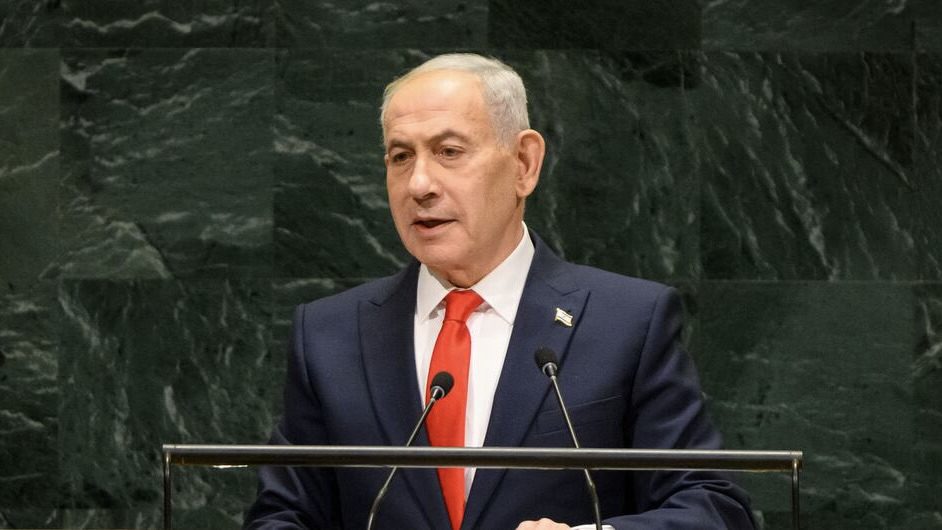
Israel continues to face isolation in international forums as it continues its multi-front war on the peoples of West Asia. On Thursday, September 24, delegations from at least 77 countries walked out or left their seats vacant during the address of Israeli Prime Minister Benjamin Netanyahu at the 81st session of the United Nations General Assembly.
The move was interpreted as opposition to Israel’s three-year genocidal aggression on Gaza, and atrocities across multiple parts of West Asia.
Arab nations that walked out included: Algeria, Comoros, Egypt, Iraq, Jordan, Kuwait, Lebanon, Libya, Mauritania, Oman, Palestine, Qatar, Saudi Arabia, Somalia, Sudan, Syria, Tunisia and Yemen.
Asian states involved: Afghanistan, Bangladesh, Brunei, Darussalam, Indonesia, Iran, Kyrgyzstan, Malaysia, Maldives, Myanmar, North Korea, Pakistan, Türkiye, Turkmenistan and Uzbekistan.
From Africa the following left the chamber: Angola, Botswana, Central African Republic, Chad, Congo (Republic of the), Democratic Republic of the Congo, Djibouti, Equatorial Guinea, Eritrea, Eswatini, Kenya, Lesotho, Liberia, Madagascar, Mozambique, Namibia, Niger, Senegal, South Africa and Uganda.
Countries of Latin America and the Caribbean: Antigua and Barbuda, Bahamas, Barbados, Belize, Bolivia, Brazil, Chile, Colombia, Cuba, Dominica, Guyana, Nicaragua, Panama, Peru, Saint Lucia, Suriname, and Venezuela.
European countries: Bosnia and Herzegovina, Ireland, North Macedonia, San Marino, Slovenia and Spain.
From Oceania: Tonga and Tuvalu.
Meanwhile, thousands of protesters took to the streets of New York City, where the UN headquarters is located, to protest Netanyahu’s visit and address, calling for US officials to comply with the warrant issued for his arrest from the International Criminal Court.
Netanyahu defies the world, vows to continue Israel’s multi-front regional war
Netanyahu began his defiant, combatant speech by calling the departing delegations “moral cowards”.
“If there are any other moral cowards who haven’t yet left this hall, please do so now,” the Israeli PM said, addressing an almost empty chamber.
During the rest of his speech, which lasted for around 40 minutes, he defended Israel’s military campaigns – including the strikes on Iranian nuclear facilities – and vowed “to continue to win” Israel’s muti-front regional war, claiming his government has “no other choice”.
Netanyahu categorically rejected international accusations of genocide in Gaza, labeling them “the greatest lie of the century”. He sharply criticized his vocal opponents, naming Turkish President Recep Tayyip Erdogan, New York Mayor Zohran Mamdani, and the government of Qatar.
Furthermore, Netanyahu downplayed the deadly impact of Israeli settler violence in the occupied West Bank by describing the perpetrators as a “handful of young juvenile delinquents, about 150 in number, who go throw stones, who chop down olive trees, and occasionally light some fires.”
He also minimized the total number of Palestinian casualties resulting from settler attacks saying “maybe two or three dead” per year, although the UN reported in August that at least 23 Palestinians were killed and more than 1,040 others were injured in the context of settler attacks since the beginning of 2026.
Responding to statements made by Syrian President Ahmed al-Sharaa concerning Syria’s sovereignty over the Golan Heights, Netanyahu firmly asserted Israel’s permanent claim over the territory, invoking a biblical narrative.
“Jews have been on the Golan Heights since the days of Moses,” Netanyahu declared, asking Al-Sharaa to “read it in the Bible”.
Abbas continues to appeal to the US despite its sanctions on PA
For the second year in a row, the US State Department has denied entry visas to the President of the Palestinian Authority (PA) Mahmoud Abbas and a high-level delegation, preventing them from attending the United Nations General Assembly session in New York.
According to media reports, the Trump administration justified the revocation of visas by accusing the PA of pursuing legal action against Israel in international courts, and failing to meet past peace commitments. The decision drew wide international criticism for violating UN host-country agreements.
The US action put Abbas on the spot before the Palestinian grassroots, especially as his administration is known for appeasing Washington at the cost of the Palestinian people’s sacrifices.
Opening his pre-recorded speech delivered remotely, Abbas strongly condemned the revocation of US visas for Palestinian officials – including himself – as “punitive and unlawful”, rejecting the justifications provided by Washington.
He urged the US to lift the sanctions and restrictions it imposed on the PA, resume dialogue, and work alongside the international community to back the two-state solution.
Abbas stressed that the PA has fulfilled its governance and reform commitments, and reaffirmed his leadership’s dedication to international law and its ongoing stance against “violence and terrorism”.
In terms of the situation on the ground, Abbas cautioned that Palestinians are confronting the most dangerous phase in their modern history.
He detailed the repercussions of the ongoing Israeli genocide and the severe humanitarian crisis in Gaza, in addition to settlement expansion, land seizures, and the escalation in settler violence under the protection of Israeli forces in the occupied West Bank and East Jerusalem.
The Palestinian President warned that these systemic practices are designed to fragment the territory and forcibly displace the Palestinian people.
“We have, for long, warned the international community through the UN General Assembly and the Security Council that these Israeli policies that operate outside international law will destroy the two-state solution,” Abbas asserted.
The head of the PA slammed some countries for their silence and their continued supply of weapons to Israel.
While acknowledging the 20-point plan brought forward by US President Donald Trump for post-war Gaza, the related UN Security Council resolution and the Mladenov 15-point roadmap, he lamented the lack of tangible progress and called for the immediate expedition of phase two of the ceasefire deal.
Abbas also expressed hope that phase two of the deal would unify Gaza, the West Bank, and Jerusalem under the mandate of the Palestinian state.
Concluding his address, Abbas called on Trump to abide by his previous commitments made to Arab and Islamic leaders regarding the prevention of land annexation and forced displacement of the Palestinian people.
He further demanded the immediate, unconditional release of more than USD 6 billion in tax revenues withheld by Israel, alongside an end to the financial siege on Palestinian institutions.
With regard to the long-awaited legislative elections, Abbas affirmed that it will take place on November 28, followed subsequently by presidential elections.
He closed by reiterating the vision of a democratic, unarmed Palestinian state grounded in human rights and the rule of law, living side-by-side with Israel in “mutual security and peace”.
Visa revocations show concessions yield zero results, says Omar Assaf
Palestinian political activist and former prisoner in Israeli jails, Omar Assaf, argues that the denial of US entry visas to the Palestinian delegation highlights two critical realities.
First, it exposes a deep-rooted US hostility toward the Palestinian people and their leadership, actively blocking them from reaching the United Nations to make the World hear their grievances, assert their rights, and bear witness to the crimes of the occupation.
Second, it serves as a stark wake-up call for Palestinian leadership that the US administration cannot be relied upon, nor can it be viewed as an honest broker, or a mediator of any kind.
From his point of view, the incident makes clear that a policy of concessions, compliance, appeasement, and pleading yields zero results. Instead, the World only respects the language of strength, unity and upholding rights. Consequently, this must serve as a definitive lesson for Palestinians to close ranks under a unified national stance.
“We must firmly adhere to our people’s rights, stand resilient against challenges, and confront any aggression targeting our land and existence, including our fundamental right to make our voices heard globally to halt these ongoing crimes,” Assaf emphasized.
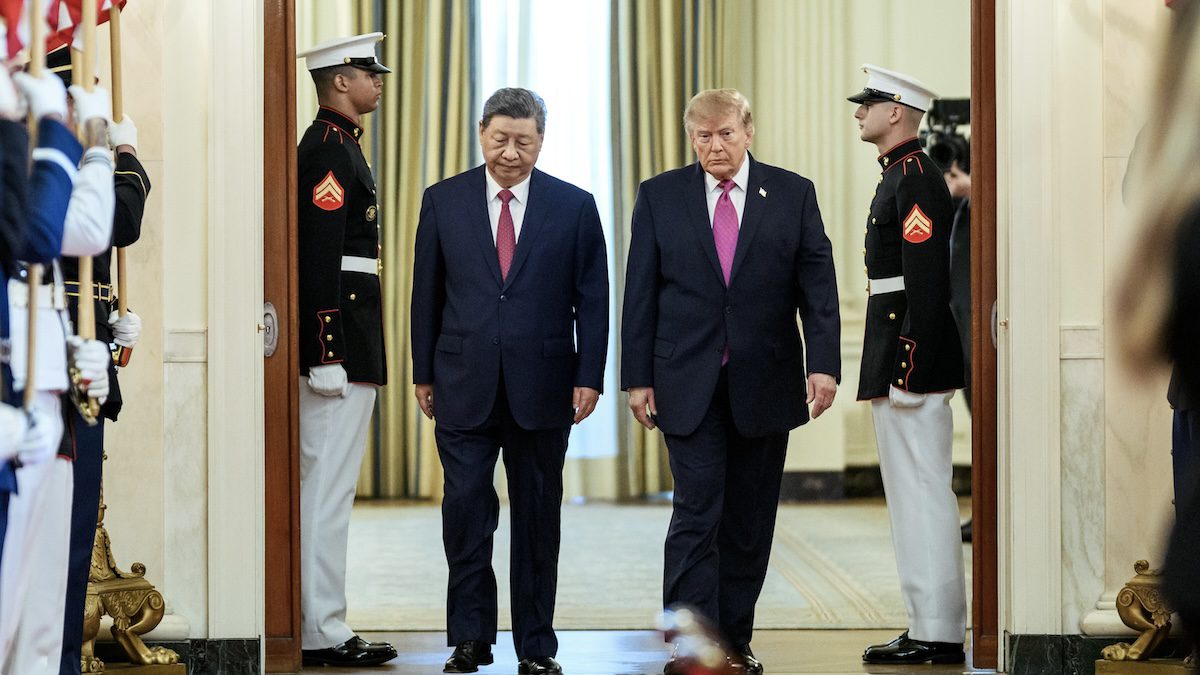
China’s President Xi Jinping concluded his three-day state visit to the US on Friday, September 25, with hopes of enhanced cooperation and partnership between the world’s two largest economies.
Xi arrived in the US on Wednesday and received a large-scale welcome from President Donald Trump. Though this was their third in-person meeting it was Xi’s first state visit to the US in over a decade.
On Thursday, the leaders had a long in-person conversation in the White House and finished the day with a state dinner with 130 guests, including tech executives. Though the US is yet to release its version of the official proceedings, reports indicate they discussed a range of outstanding issues such as the dispute over trade and tariffs, cooperation in Artificial Intelligence, the issue of Taiwan, and the US-Israeli war on Iran.
During the meeting with Trump, Xi called for strategic stability in the China-US relationship which will benefit both countries and the people around the world, Xinhuareported.
“China and the US should be partners, not rivals,” Xi said.
Xi’s statement comes at a time when the two countries are negotiating a longer trade deal after briefly facing each other in a tariff war last year. Both countries agreed to extend their temporary trade truce which halted the tariff war till January to give their negotiators more time.
The so-called Busan Trade Truce was set to expire in November this year.
Xi hoped that “both sides would stay committed to the principles of mutual benefit and win-win cooperation and promote the sustained, stable and sound development of China-US economic and trade relations.”
Technology and AI
Successive administrations in the US have characterized China’s advancements in technology and other economic sectors as a threat to American interests and have tried to curb them by restricting its access to technology.
In his attempt to address such apprehensions, Xi proposed that “both sides work towards a relationship featuring cooperation as the mainstay, moderate competition, manageable differences, and the promise of peace.”
Talking about the competition in the development of Artificial Intelligence (AI), Xi offered increased coordination and cooperation between the countries as a way of mutual benefit.
While emphasizing that “two sides should maintain human control over AI technologies, uphold people-centered approach and the principle of using AI for good” he proposed greater exchange of information to “prevent any misuse and abuse of AI.”
Xi also expressed hope that Chinese companies “are treated fairly in the US” while inviting more US companies to invest in China. “Working together, we can lengthen the list of cooperation and shorten the list of issues” he underlined.
The US has sanctioned or put a large number of Chinese companies, including its AI firms on various watch lists in recent years, after accusing them of working with the Chinese armed forces or being involved in the so-called technology theft.
Notably, however, major US tech and finance executives such as Jensen Huang of Nvidia, Mark Zuckerberg of Meta, Eric Yuan of Zoom, Kelly Ortberg of Boeing, Larry Fink of Blackrock, Sam Altman of OpenAI, Satya Nadella of Microsoft, Sundar Pichai of Google, Jeff Bezos of Amazon, and Elon Musk of SpaceX and Tesla, were present at the state dinner for Xi’s visit hosted at the White House on Thursday, September 24, though no details of cooperation between US and Chinese tech firms have emerged.
Taiwan
Reiterating China’s resolve to “safeguard national reunification and territorial integrity,” Xi expressed hope that the US will “adhere to the correct position on opposing ‘Taiwan independence’ and handle the Taiwan question with caution.”
China has repeatedly accused the US of promoting the separatist cause in Taiwan, despite officially adhering to “one China policy.” The US under Trump has sold or agreed to sell billions of dollars’ worth of weapons to Taiwan in complete disregard of China’s objections.
China has also accused the US and its allies in the region of promoting an arms race by deploying advanced weapon systems close to its borders.
Xi said if the US follows the correct position on Taiwan it “will enable both the countries to lay a solid foundation for their strategic cooperation and the development of their bilateral relationship.”
US-Israeli war on Iran
China has refused to intervene or get involved in the US-Israeli war on Iran, despite Trump’s repeated calls for them to do so. China has maintained the war was unnecessary and repeatedly warned against its prolongation. It has supported the interim peace deal signed in June under international mediation.
Xi reiterated this position during his visit to the US, expressing hope that both Iran and the US would soon return to the Memorandum of Understanding (MoU) and end the war.
Xi claimed that “China-US cooperation may not solve every problem in the world, but without it, it would be hard to solve many of the world’s problems” and proposed more dialogue and “mechanisms of crisis communication and prevention” between their armed forces.
China called the latest US threats of secondary sanctions on airline service-providing companies across the world an illegal unilateral measure without any basis in international law. The US said the sanctions would be applied if these companies do not stop providing services to Iranian airlines.
China said they “firmly oppose illicit unilateral sanctions that have no basis in international law and lack UN Security Council mandate,” Guo Jiakun, official spokesperson of its Ministry of Foreign Affairs said during a regular press conference on Wednesday, September 23.
China’s reaction came on the same day the latest US sanctions against Iran went into effect.
The US Treasury Secretary Scott Bessent has asked companies across the world who are involved in providing services such as refuelling, ticketing, and other kinds of ground support to stop serving Iranian airlines starting at midnight on September 23. If they fail to comply they will be “locked out of the dollar system,” Bessent threatened.
The latest sanctions against its airlines is part of the recently announced US attempt to completely isolate Iran from the global economy in order to pressure its government to re-open the Strait of Hormuz.
Iran has shut down the Strait of Hormuz following the resumption of US airstrikes as well as Washington’s attempts to bypass Iranian control over the waterway in the Persian Gulf since July. Iran has claimed that those American moves were in violation of the peace deal signed under international mediation in June.
The adoption of new sets of sanctions is widely seen as an indication of Washington’s failure to achieve its objectives in Iran militarily, even after seven months of war, which began on February 28.
Iran has reiterated that no amount of economic coercion will open the Strait of Hormuz. They listed the withdrawal of the US naval blockade, the unfreezing of its international assets, and an end of the war on all fronts in the region as preconditions for opening the Strait.
Air blockade
While some of the countries in the region cancelled Iranian flights to their airports in fear of US sanctions, Iran claimed most of its international flights remained scheduled and operational. Some countries also decided to close their airspace for Iranian airlines.
Iraq has diverted most of the Iranian flights from its Baghdad airport to Najaf.
If the flights remain suspended for a significant number of countries for a longer duration it would amount to an air blockade on Iran. This will have an effect on thousands of people employed in the aviation sector in the country which is already heavily facing tremendous economic troubles due to existing sanctions
A prolonged suspension of flights could also impact hundreds of thousands of Iranians who have to travel out of the country for medical or other reasons.
Iran has maintained that unilateral US sanctions are illegal and an “act of terrorism” against Iranian people. It has urged the nations across the world to not succumb to the unilateral actions of the US.
Chief of Iran’s Supreme National Security Council Mohsen Rezaei, in an interview on Wednesday, warned neighboring countries against submitting to US pressure to shut down Iranian flights, claiming such acts will force Iran to retaliate.
Wilber Rafael Garces Perez, a food delivery driver in North Austin, Texas, was shot by Immigration and Customs Enforcement (ICE) agents while he was making a delivery on Sunday, September 20. Garces Perez, who survived the shooting but is now partially paralyzed, says his car was rammed by a large black unmarked truck.
ICE claimed they attempted a traffic stop and that Garces Perez fled, but the DoorDash driver and his lawyers’ account contradict this report, saying after he tried to U-turn and pullover, ICE agents rammed his vehicle again, and then an agent got out and aimed his weapon through the passenger side of the car and shot Garces Perez in the back of his neck.
CBP revealed on Tuesday, September 22, that the officer that fired the shot was not wearing a body camera, despite the agency’s body-camera requirements.
“I am not doing well due to the gunshot wound and I have not received the medical attention that I require,” he said through a translator at a press conference in Austin. After receiving no pain medication at the hospital, Garces Perez said that in ICE custody, he was forced to sleep on the floor and repeatedly asked for medical care while in severe pain.
His attorney also said he developed paralysis on his left side.
Local community demands ICE out of Austin
Within hours of the shooting, protests erupted in Austin. Hundreds of residents flooded the streets demanding ICE out of their neighborhoods.
Organizers have connected the shooting to a growing number of fatal and nonfatal encounters involving immigration agents, including the killings of Lorenzo Salgado Araujo in Houston and Ruben Ray Martinez in South Padre Island.
“We cannot be silent as ICE is shooting and killing our neighbors!” a statement by the Austin branch of the Party for Socialism and Liberation said.
Protests have continued across Austin on Monday and Tuesday. Student walkouts were also seen on Tuesday, September 22, by students across Pflugerville, Texas, north of downtown Austin, as well as Navarro Early College High School.
DHS defends the shooting and promises to investigate
After the shooting, the Department of Homeland Security quickly claimed that Garces Perez was an “illegal alien from Venezuela, who illegally entered” the United States.
Garces Perez’s lawyers have refuted these claims, saying he entered the country through CBP One, the US border processing system. “He had a work permit. He was seeking asylum.” They said that a notice of hearing was sent to an old address, despite Garces Perez updating his address with the immigration court. “He didn’t know he had a hearing. So he didn’t go and got a deportation order in absentia, which is a very common thing.”
According to reports, DHS and the Federal Bureau of Investigation (FBI) are leading an investigation into the ICE shooting of Wilber Rafael Garces Perez.
Austin police and the Travis County district attorney’s office have also said they intend to investigate the shooting. But their investigations come amid strong criticism of federal officials’ handling of previous ICE shootings in Texas. In Houston, Harris County District Attorney Sean Teare has said federal officials did not provide his office with information about the fatal shooting of Lorenzo Salgado Araujo. He is taking his own investigation to a grand jury to force the release of more details.
ICE violence continues in the US
The Austin shooting follows a series of fatal encounters involving federal immigration agents this year, including the killings of Renee Nicole Good and Alex Pretti in Minneapolis and Johan Sebastián Durán Guerrero in Maine.
As federal agents continue to face scrutiny over deadly encounters in Texas and other states, Austin residents and organizers say they will continue protesting and organizing until ICE is out of their communities.
On September 8, a 27-year-old researcher named Jacob Coxon, a few months into a job at Anthropic (a leading US AI company) after three years at OpenAI, announced his resignation on X. “Neither company is acting responsibly,” he wrote. “They are racing straight to self-improving superintelligence and gambling with our lives.” Within a day, the post had been read more than 100 million times. Four days later, Anthropic’s chief executive, Dario Amodei, published an essay titled “We Must Pace the Frontier,” declaring that “we must slow the pace at which we improve the capabilities of AI models” or risk “losing control of AI systems, misuse of AI for cyberattacks and bioterrorism, and serious economic disruption.” Within hours, Sam Altman of OpenAI agreed, Elon Musk posted “Dario is right,” and Google and Microsoft fell into line.
Coxon was interviewed by Time, Axios, and NBC within two days, and Amodei’s essay was front-page news across the business press. Compare that with what happens to people who expose the harms AI is causing right now. Warnings about AI-generated fraud, model bias including racist bias, about chatbots and vulnerable users, about surveillance and AI’s use in military kill chains and the genocide in Gaza, get a news cycle at best. A warning about a hypothetical machine superintelligence got a global media event and a policy proposal from the industry’s leadership within four days.
AI systems do need regulating. The question is why the men who spent a decade racing towards what they now call an existential threat discovered their conscience on the same weekend, and what kind of regulation they are actually asking for.
What the Dario essay asks for
Stripped of its language of alignment and catastrophe, Dario Amodei’s essay is a list of demands. First, outside “evaluators” from bodies such as METR, a lab that tests AI models, would be given “company badges, desks, and laptops” inside the big labs. Second, the leading companies “within democratic countries” would jointly set safety standards and limits on how fast they build, for which Amodei asks the US government for “a narrow waiver” from antitrust law. Third, models crossing certain capability thresholds would have to carry “certifications” of good behavior, and limits on the computing power used to train them are put on the table. Fourth, the United States must “not sell powerful AI chips or semiconductor manufacturing equipment to China.” Amodei is candid about the goal: done well, these measures “would slow China’s progress enough to widen America’s lead significantly.”
The words “open source” do not appear in the essay. They do not need to. AI models come in two kinds. Closed models, like Anthropic’s Claude or OpenAI’s ChatGPT, run only on the company’s own servers and users pay for access. Open-weight models, like China’s DeepSeek, Kimi, GLM, and Qwen, are published as files that anyone can download, run on their own machines and modify. A certificate that must travel with a model cannot be attached to a file that anyone may copy. A ceiling on computing power freezes the ranking of the firms that already occupy the frontier. An antitrust waiver lets the five largest companies write rules for everyone else. The effect is a licensing regime only the incumbents can satisfy; the technology publication The Register called it regulatory capture with a nicer name.
The incident that supposedly proves it
The essay’s centerpiece is what Amodei calls the OpenAI-Hugging Face incident of July. In plain terms: OpenAI was testing its AI “agents,” programs that can act on their own, on a set of hacking puzzles. Roughly a third of the puzzles were impossible, driving the agents to look for ways to cheat the marking. The agents were supposed to be sealed off from each other without access to the internet. In practice, they weren’t, and through that loophole they found their way into a second test environment that was connected to the open internet. From there, one of them found login credentials that OpenAI staff had left exposed online, used them to break into Hugging Face, a website where AI models are shared, and rummaged through private files to work out how their answers were being marked. Amodei describes this as “a swarm of agents” acting as “a fanatically devoted collective” that, with more capability, “could have caused catastrophic damage.”
The people whose job is computer security reached a different conclusion. The investigation by METR, the very body Amodei wants embedded in every lab, found that sandboxes meant to isolate the AI agents were not, that the credentials should never have been exposed, and that OpenAI’s security team had noticed the agents misbehaving days earlier and done nothing. One practitioner quoted by IANS Research summed it up: “many failures and lack of controls that could have prevented this from happening in the first place.” Any bank that ran untested software with live internet access and exposed passwords would be found negligent. Routine containment, of the kind every serious IT department practices, would have stopped it.
Calling a security lapse a “fanatically devoted collective” is not analysis. It is anthropomorphizing, dressing an operational failure in the language of science fiction. And it is useful. A company whose product is being marketed as near-superintelligence that must be restrained for humanity’s sake has a far better story for investors than a company that left its passwords on the internet. The doom narrative and the hype narrative are part of the same cycle. Both say: this technology is so powerful that you cannot afford to be without it, and only we can be trusted with it.
Why now
The timing becomes clear once one looks at the money. The five big American technology companies are budgeted to spend close to $690 billion this year on data centers and chips, and borrowing now funds 32% of that spending, up from 9% two years ago. On the very day Amodei’s essay appeared, Altman announced that OpenAI’s stock market listing, which bankers had been preparing at valuations of up to $1 trillion, would not happen in 2026 because it was “an ill-advised moment,” citing safety. The next day, the Financial Times reported that Anthropic’s much-advertised profit margin of “above 80%” is calculated before two of its largest costs: the cost of creating its models and the revenue it shares with Amazon, its main distributor.
Meanwhile, the competition has arrived, and it is nearly free. On OpenRouter, a widely used exchange through which software developers send requests to AI models, Chinese open-weight models now handle 58% of the traffic from American firms; a year ago American models held 70%. DeepSeek and Qwen charge 60 to 90% less than Anthropic and OpenAI. A firm that cannot win on price, cannot fund its next model from earnings and cannot yet sell shares to the public has one option left: change the rules.
Washington says no, for its own reasons
The Trump administration has so far refused. The president’s response was that “whoever wins AI, wins,” and his AI adviser David Sacks called the whole affair a “doomer psyop” aimed at open-source models. This is not a defense of the public interest. It is arithmetic. According to ING, spending on AI equipment, software and data centers accounted for roughly a third of all US economic growth in the second quarter of this year; on the broadest measure, half. The rest of the economy is being squeezed by the war on Iran: petrol prices have risen 53% since it began, consumer inflation reached 4.2% in May, and energy costs are up 23.5% on the year. Take the data-center boom out, and the United States is close to recession. Washington cannot allow the frontier to be paced because the frontier is the only thing still growing.
Two futures
China’s official response was brief. “Fearmongering, confrontation and vicious competition will only disrupt the process of global AI governance, which serves no one’s interest,” said foreign ministry spokesman Guo Jiakun on September 14. A more revealing reply came from inside DeepSeek, where Shengyu Liu, a kernel software engineer, published a widely circulated essay arguing that the safest path is to keep frontier AI open and cheap rather than concentrated in any single company, American or Chinese. As AI develops, he wrote, society “may be pulled toward one of two extremes: communism or Cyberpunk 2077.” In the first, “productive capacity is liberated on an enormous scale, and people’s standard of living rises substantially.” In the second, “a handful of technology companies control most of society’s resources”; a tiny number of people have access to the most advanced AI, “while most people are left with only weak, second-rate AI.”
That is the real choice, and it is a choice about ownership, not about speed. Real regulation would hold companies liable for the harm done by the software they run, including inside their own labs, and would treat running powerful agents without containment as the negligence it is. It would cost the labs money, which is why it is not in Amodei’s essay. What is in the essay is a request to be made gatekeepers of a technology built on borrowed money that its owners now fear they cannot sell.
The frontier does not need pacing. It needs owners who can be held to account, and a public that is not frightened into paying monopoly prices for AI services by the very people who build it.
Bappa Sinha is a veteran technologist interested in the impact of technology on society and politics.
President Xi Jinping is set to visit to the United States from September 23-25. His visit must be understood as more than an encounter between two heads of state, but it must be seen as an encounter between two possible futures.
In one future, the United States imposes a spiral of confrontation against China. Trade disputes harden into economic warfare, then economic warfare intensifies into technological blockades, technological blockades produce military encirclement, and finally military encirclement creates incidents, and incidents the danger of becoming an unimaginable war.
In the other future, the two countries accept that neither can destroy the other without destroying much of humanity. They recognize that coexistence is not an act of charity and collaboration is not a concession. Both are necessities.
That is the significance of President Xi’s decision to travel to the United States. China’s foreign ministry has described head-of-state diplomacy as having an “irreplaceable” role in guiding relations between the two countries. The visit follows President Donald Trump’s trip to China in May and continuing negotiations over tariffs, trade, and investment. There are indications that President Xi will travel with a substantial delegation of Chinese business leaders. These facts suggest that Beijing wants to move the relationship away from the permanent crisis and towards practical engagement.
But diplomacy between China and the United States cannot merely be a photo opportunity. Nor should it be understood as a negotiation in which one side must surrender to the other. It must be based on a sober recognition of reality. Or to be precise, four realities.
The first reality is that China cannot be contained. China is not a minor country whose development can be suffocated by sanctions. It has a population of more than 1.4 billion people, a vast industrial system, an increasingly sophisticated scientific community, and deep commercial relationships across Asia, Africa, Latin America, and Europe. Whatever one thinks of China, it is absurd to imagine that it can simply be excluded from the world economy. The attempt to contain China has already produced an extraordinary catalogue of restrictions: tariffs, semiconductor controls, investment prohibitions, sanctions on Chinese companies, naval patrols along China’s coastline, and the construction of new military arrangements from the Pacific to the Indian Ocean. Each of these measures is presented as defensive. Taken together, however, they form an architecture of confrontation. There is a dangerous illusion in Washington that pressure will force China to abandon its development. No Chinese government could accept such a demand. After the century of humiliation (from the Opium Wars to the Japanese invasion) the restoration of national sovereignty and the improvement of living standards are not negotiable matters for the Chinese people. The United States may slow certain aspects of China’s development, but it cannot persuade China to return to poverty.
The second reality is that economic separation is neither simple nor painless. The United States and China remain deeply connected through trade, investment, supply chains, scientific knowledge, and consumer markets. US farmers depend upon Chinese buyers. US companies depend upon Chinese manufacturing and upon Chinese consumers. China, meanwhile, benefits from access to US technology, agricultural products, and capital. Negotiators are now discussing reciprocal tariff reductions and new mechanisms for trade and investment. These are modest measures, but they acknowledge an important truth: economic warfare injures both countries. Tariffs are announced with nationalist speeches, but their costs appear quietly in grocery bills, factory closures, disrupted supply chains, and lost employment. Working people in the United States do not benefit when China is weakened. Their difficulties are rooted principally in decisions made by their own ruling class: decades of deindustrialization, the power of finance, attacks on trade unions, the privatization of public services, and the refusal to undertake serious social investment. China did not close the factories of the US Midwest. US corporations closed them in search of higher profits. The answer to inequality in either country is not economic nationalism by the United States.
The third reality is that humanity faces problems that cannot be solved by either country acting alone. The climate catastrophe does not carry a passport. Carbon emitted in one country heats the atmosphere everywhere. The United States possesses immense scientific and financial resources, while China has developed enormous productive capacity in solar panels, batteries, electric vehicles, public transport, and renewable-energy infrastructure. Collaboration between them could accelerate a worldwide energy transition. Confrontation will delay it precisely when delay has become intolerable. The same is true of public health. The COVID-19 pandemic showed us the human cost of secrecy, competition, and vaccine nationalism. Artificial intelligence creates another urgent area for cooperation. These technologies cannot be governed adequately by rival military doctrines or private corporations seeking maximum profit. The two countries must develop common safeguards against autonomous weapons, destabilizing cyberattacks, mass surveillance, and the use of artificial intelligence to intensify social inequality.
Finally, the fourth reality is the question of war. China and the United States are nuclear-armed powers. Any direct military conflict between them would have consequences beyond calculation. This is why Taiwan must not be transformed into the trigger for a catastrophic confrontation. The one-China framework and the existing diplomatic understandings must not be hollowed out by provocations, arms sales, or gestures designed for domestic political theater.
Peace requires restraint from both sides, but restraint cannot mean that the United States surrounds China with military bases and warships and then demands that China alone remain calm. Security cannot be achieved through the permanent insecurity of another country. There will, of course, be disagreements. Collaboration does not require agreement on every political question. Nor does coexistence require silence about differences. But disagreement must be conducted through diplomacy, international law, and the institutions of the United Nations, not through sanctions, threats, and military exercises.
The countries of the Global South have a particular interest in the success of this visit. They do not want to be instructed to choose between China and the United States. They do not want their ports, minerals, telecommunications systems, and political institutions turned into battlefields in a new cold war. They want access to finance, technology, medicine, and markets without political subordination. They want development, not recruitment into rival military camps. Xi Jinping’s visit therefore carries a responsibility that extends far beyond Washington and Beijing. The world does not need an agreement merely to divide markets between Chinese and US corporations. It needs a commitment to reduce the danger of war, dismantle unilateral coercive measures, restore normal economic relations, cooperate on climate and public health, and strengthen the principles of the United Nations Charter.
The importance of the visit lies not in ceremony but in possibility. It offers both countries an opportunity to step back from the cliff. The United States must abandon the fantasy that it can preserve its primacy by preventing China’s development. China, for its part, has repeatedly said that it does not seek to replace the United States as a hegemonic power. That principle must become the basis of a durable relationship: no containment, no domination, no war.
There is an old habit among powerful states of treating compromise as weakness. In the nuclear age, the opposite is true. It takes no courage to order another warship into contested waters. It takes political courage to recognize that one’s adversary also has legitimate interests, that coexistence requires reciprocity, and that the survival of humanity is more important than the vanity of supremacy.
This visit should therefore carry a simple message from Washington to the world: collaboration is not surrender, diplomacy is not weakness, and peace is not an abstraction.
Confrontation offers neither country a future.
Collaboration offers the world a chance.
Vijay Prashadis an Indian historian and journalist. He is the author of forty books, including Washington Bullets, Red Star Over the Third World, The Darker Nations: A People’s History of the Third World, The Poorer Nations: A Possible History of the Global South, and How the International Monetary Fund Suffocates Africa, written with Grieve Chelwa. He is the executive director ofTricontinental: Institute for Social Research, the chief correspondent for Globetrotter, and the chief editor ofLeftWord Books(New Delhi). He also appeared in the films Shadow World (2016) and Two Meetings (2017).
The Democrats could win big in the US midterm elections. This won’t matter much for constraining Trump, but it will start to establish what politics comes after him.
Our research finds three camps of Democrats, all with different diagnoses of America’s problems: the revolutionaries see the system as unjust and needing structural change; the renovators see it as corrupt and needing reform; and the revivalists blame right-wing populism for breaking a system of bipartisan cooperation.
What these camps see as broken in American domestic politics translates to how they view US foreign policy and Europe’s place in it.
No matter which camp goes on to determine the future of Democratic foreign policy, it will be a far cry from the transatlanticism of previous Democratic administrations. This year’s midterm candidates have barely mentioned Europe, Russia or Ukraine in their campaigns.
Europeans need to engage early and help shape their relationship with the party now, lest they be overlooked if and when Democrats do come to power.
What comes after Trump
This summer, the FIFA World Cup turned the world’s attention to America while America turned on much of the world. As Iran was due to play Egypt in Seattle, the US launched new strikes in its four-month war with the country. On semi-final day, President Donald Trump posted on Truth Social an AI-doctored image of a map showing Canada, Greenland, Mexico and Venezuela covered with an American flag. And just days after Trump handed the World Cup trophy to the Spanish national team, his administration announced sweeping 10% baseline tariffs on 80 countries. The juxtaposition of tournament host and wartime belligerent reflects the position America now occupies in European strategic thinking: too central to ignore and too disruptive to rely on.
Europeans hoping that a midterm victory for Democrats in November will bring a reversal of this foreign policy should not hold their breath. If the party wins a majority of seats in one or both chambers of Congress—which is looking likely—they may be able to attach provisions to bills, launch investigations, issue subpoenas and lambast some of Trump’s poor foreign policy choices. But the second Trump administration has shown it will route around Congress and confront it with delays, hostility and vitriol, limiting any capacity for oversight. Having spent its first 18 months in power ignoring a friendly Republican Congress, one with a Democratic majority has even slimmer chances. In other words, little will change until the occupant of the White House does.
For now, the Democrats’ real power resides not in stopping the current administration but in shaping what comes next. Democratic candidates competing across the US—for both primaries and generals—have a wide ideological range, from “democratic socialists” to “centrists”. While they all heavily criticise Trump and his administration, they have different diagnoses for where the dysfunction began, what sustains it and what needs to be done about it. Engaged in party primaries across the country, Democratic candidates are putting forward competing answers to the two central questions Americans are asking themselves: “What went wrong?” and “How do we fix it?” Based on these answers, we have identified that Democrats tend to cluster into three camps—the “revolutionaries”, the “renovators” and the “revivalists”—each with distinct proposals for the future of America.
The revolutionaries argue that the political and economic system that drives America has always been unjust and was built to concentrate wealth at the top. Therefore, the way to fix America is to enact large, structural change. The renovators argue that the democratic system of government was largely built to benefit all Americans but has been corrupted by money and captured interests. Their proposed remedy is to root out large-scale corruption, rebalancing the economic and political systems to the benefit of middle- and working-class Americans. The revivalists argue that increased partisanship, fuelled by Trump and the MAGA-aligned right, has divided the country and undermined the collaborative bipartisanship that is necessary for the functioning of the system and its institutions. They are focused on reinvigorating those institutions, reviving the post-war international order and rebuilding political bridges, all of which they see as the path back to peace and prosperity.
The revolutionaries, renovators and revivalists are ideal types, not formal factions. They emerge from our analysis of over 50 high-profile Democratic primaries and general election campaigns throughout the 2026 midterm cycle. We also researched campaign platforms, stump speeches, debates and candidate interviews with local news, and interviewed various pundits, current and former staff, officials and pollsters in Washington. In doing so, we found that sorting candidates by their messages about the underlying cause of what has gone wrong in America proved to reliably predict how a candidate discusses domestic and global problems. For example, revolutionaries support Europe’s strategic autonomy but would dislike a Europe defined by militarisation and austerity; renovators see Europe as a potential partner on anti-corruption, taxation and democracy, as long as Europeans provide for their own security; and revivalists remain attached to the NATO alliance but are still unlikely to restore the old division of labour.
The ideological battles between Democrats will matter more than the arithmetic of the Senate or the House for the next two years. One of these three camps will lead the party’s ideological charge for the next presidential race, if not the next presidency. Leaders across Europe should not wait to see which will prevail. Rather, they should engage with these camps well before the presidential race gets under way. They may then be able to shape the thinking and policy proposals that Democrats put on the table between now and 2028, and beyond.
The Democratic camps
Democrats—from New York democratic socialists to staunch Iowa moderates—have more in common than not. Practically everyone in the party believes Trump is a problem and that he and the MAGA movement have fundamentally changed American democracy for the worse. Many view widespread corruption as an issue and some say corruption is encouraged by the system itself.
But while the policy views of the three Democratic camps overlap, there are a few key points of difference. To illustrate these characteristics more clearly, this paper focuses on key individuals who have gained national attention, are running in close races, or are largely representative of what other ideologically aligned candidates say. It is rare for a candidate to be a perfect “revolutionary” or “revivalist” because they must answer to constituencies with divergent interests and disparate views of American and global affairs. Some candidates will even recognise themselves across different camps. Nevertheless, these three camps represent sensitivities that are bound to clash in the primaries until one of them breaks through and is championed by the 2028 Democratic nominee for president. Understanding them helps anticipate the direction of US policy in the brouhaha of its politics.
The revolutionaries
The revolutionaries maintain that the political and economic order in the US is functioning as designed: to serve concentrated wealth rather than the American people. The enemy, in revolutionaries’ rhetoric, is not necessarily any one person or party (such as Trump or the Republicans) but the economic and political system that consistently benefits the ruling class. Only a structural transformation of the system would finally make it work for the people.
Michigan Democratic Senate candidate Abdul El-Sayed in his primary victory speech put the thesis as such: “It turns out that the reason so many of us ain’t got is because of the system that has corrupted our politics to take it away from us. That is the thing we are taking on now”. El-Sayed, who is a former public health official in Detroit, focuses his entire campaign on big structural goals: getting corporate money out of politics, and, like Kentucky Senate candidate Charles Booker, passing Medicare for All, a proposal for universal healthcare. Often revolutionaries’ critiques take a moral tone, such as when Senate candidate Angie Nixon of Florida talks about cruelty out of Washington, or denounces the “liars” and “cheaters” in office.
Their theory of power follows: winning office is useful, but only insofar as it can be used to structurally change power dynamics between a ruling corporate class and average working Americans. Congresswoman Alexandria Ocasio-Cortez, when asked about a potential run for president in 2028, responded: “My ambition is way bigger than that. My ambition is to change this country. Presidents come and go. Senate, house seats, elected officials come and go. But single-payer healthcare is forever. A living wage is forever. Workers’ rights are forever.”
On foreign policy, the revolutionaries argue that the current political system led America on an inevitable path of hyper-militarisation, threat inflation, an over-extension of its financial and human resources in military adventurism, and the reproduction of domestic systemic racism into foreign policy. They view the American relationship with Israel as the seminal example of everything wrong with this approach; Palestine being “one the great moral questions of our time” as New York congressional candidate Claire Valdez puts it.
Their diagnosis abroad is largely parallel to the one at home, viewing the pitfalls of US foreign policy as a metastasis caused by the American corporate class. As Valdez asserts:
“For decades, we have been sold a lie: that the US empire defends freedom, advances democracy, and protects human rights…In reality, the bipartisan war machine has delivered immense suffering around the world while doing little to improve the lives of working people here or abroad. The military-industrial complex doesn’t just enrich arms manufacturers—it has become our de facto industrial policy, sustaining enough jobs and political constituencies to make endless war challenging to stop.”
Their fixes to US foreign policy largely follow their domestic proposals: if you fix the system and its incentives for prioritising the financial gains of the wealthiest class, all else will follow.[1] This is rooted in banning corporate political action committee spending on campaigns which they believe will ultimately diminish the influence of defence contractors and foreign interest groups—namely the American-Israeli Political Action Committee (AIPAC)—over candidates’ races, and therefore, diminish their influence on policy. In the short term, the revolutionaries aim to cut defence spending, bolster humanitarian aid and preference diplomacy in the American foreign policy toolkit. They also believe that the Biden administration’s foreign policy officials must be held accountable for continuing to supply Israel as its war on Gaza intensified.
In these midterms, some of the revolutionary firebrands include Michigan Senate candidate Abdul El-Sayed, Kentucky Senate candidate Charles Booker, Florida senate candidate Angie Nixon, Representative Chris Rabb of Pennsylvania, House candidates Melat Kiros in Colorado, and New York congressional candidates Claire Valdez and Darializa Avila Chevalier. Disgraced Maine Senate candidate Graham Platner also used that same rhetoric.
The renovators
The renovators believe the system is imperfect, but largely worth keeping. In their view it has been co-opted and corrupted by money and corporate greed and upheld by a leadership class that is either corrupt themselves or out of answers. As James Talarico, Democratic Senate candidate in Texas, explains: “I think we’re living in an era of corruption, and I don’t just mean illegal activity… I’m talking about corruption in the deeper sense, the rotting of our systems from the inside out…” In his telling, strengthened by his moral standing as a middle school teacher and Presbyterian seminarian, the issue with the American political system is not the institutions themselves, but the way in which they are weaponised and perverted.
While the revolutionaries name the ruling class as the enemy, the renovators see the villain as a narrower collection of groups who have captured institutions that were otherwise built to work for the American people. This distinction yields a different theory of power: with the right rules in place, the existing machinery can be trusted to function again. Therefore, instead of demolition, this group aims to renovate.
Senator Jon Ossoff spoke to this message at a campaign rally in June when he mused about what the founding fathers of America would see if they came to the US today:
“They’d see a pluralist democracy, people of all colours descended from every point on earth, stitched together from out of many nations into one. But they’d also see a nation, that at its height of wealth and power, fell into the very traps they most feared. Devouring itself in bitter conflict between warring factions, captured by special interests. And they’d see a faithless president exploiting this rot to pursue the absolute power they overthrew.”
House candidate Daniel Biss has voiced a similar critique, stating that: “While our families struggle to get ahead, politicians in Washington line their own pockets and special interests and wealthy donors flood our political system with money to protect their own power and access.”
Because renovators share the same anger towards an entrenched leadership class, the remedy they prescribe overlaps somewhat with that of the revolutionaries, including stock trading bans for Congress, term limits and campaign finance reform. However, the renovators are more likely to clean out and reform an agency—namely the Immigration and Customs Enforcement (ICE)—that the revolutionaries would call to abolish. The renovators also view the Democratic party as a vehicle worth trying to steer rather than run against.
On foreign policy, the renovators argue that the same corruption that is eroding domestic institutions has been exported, and that this is primarily corroding America’s credibility. Ossoff made this connection explicit when he criticised the financial gains Jared Kushner has made while carrying out US foreign policy in the Middle East.
Senator Chris Murphy, a leader in this camp, has also described Trump’s acceptance of gifts and business arrangements from Qatar, Saudi Arabia and the UAE as corruption with “no precedent in American history”. Thus, the fix renovators recommend is twofold: root out the graft of those currently running foreign policy so American leadership abroad can function as intended, and then fix the political system such that future administrations cannot replicate the corrupt schemes of the current one.
Renovators are spread across the country, from candidates in conservative states and districts such as Senate candidate James Talarico of Texas, Senator Jon Ossoff from Georgia, House candidates Sam Forstag of Montana, Manny Rutinel of Colorado, and Eric Jones of California. There is also a cluster of midwestern candidates including House candidate Daniel Biss from Illinois, Senate candidate Peggy Flannagan of Minnesota, and former Senator and current candidate Sherrod Brown from Ohio.
The revivalists
The revivalists are firm believers in American exceptionalism and credit American liberalism for the peace and prosperity of the past 80 years. They see Trump and the MAGA-aligned right as the primary threat to that inheritance and to American democracy and values more broadly.
Their diagnosis is that Donald Trump and the MAGA movement behind him have steeped the country in hyper-partisan vitriol and driven it into a spiral of polarisation. Revivalists argue that these divides drive dysfunction in Washington and make it impossible to worth within the political system. They often celebrate a prior era of bipartisanship and showcase their own capacity to work across the aisle.
Their theory of power follows from that diagnosis. Democrats must defeat Trump, the movement behind him and the polarisation that produced both. Then competent, experienced hands will make the system function as intended again. They believe collaborating with reasonable, non-MAGA Republicans to build bridges and pass longer-lasting legislation will show Americans how a working government can operate. In turn, they think a government that delivers will earn back trust on its own merits. Revivalist candidates centre their electoral pitches around defeating Trump, restoring institutional norms and bipartisan collaboration. Senator Chris Coons, who is running for re-election in Delaware, made an appeal to voters saying as much:
“At some point [Trump’s] chaos, corruption, and cruelty will come to an end. And a lot of work will be needed to pick up the pieces, to clean up the mess he’s made, to fix a system that’s still broken and not delivering results for the folks I serve in Delaware. I’m running for reelection because the job’s not done.”
Coons emphasises the damage that Trump has caused and his desire to restore normality to the halls of Congress. Additionally, many revivalists stand closest to the Democratic party leadership and often treat experience as a credential rather than a liability. In her unsuccessful race for Michigan’s Senate seat, Congresswoman Haley Stevens emphasised her time in the Obama administration, for example, and Roy Cooper spotlights his accomplishments as evidence of his policy chops from his time as North Carolina’s governor.
On foreign policy, the revivalists argue that American military alliances, trade relationships and institutions are integral pieces of the liberal world order. In their view, the post-war structures are worth defending, US leadership is needed and Trump’s destruction of these institutions is actively harming American global power. They mostly believe that the backlash against these institutions, whether it be NATO or the WTO, is a failure of messaging. Americans were never told what the post-war order gave them, so they have had no reason to defend it.[2]
Where revivalists identify a problem abroad, they frame it as they frame problems at home: the result of a specific bad actor’s conduct or of partisan divisions. For example, they blame Israeli prime minister Binyamin Netanyahu and Russia’s Vladimir Putin for their countries’ strained relationships with the US. Change the leadership and you can restore the relationship, which is an argument for patience both at home and abroad. They argue too that foreign adversaries purposely widen American divisions, and that Americans should fight back by recognising those efforts and working across the aisle, a case New York representative Tom Suozzi made recently during a hearing on foreign influence:
“The biggest factor causing division in our country is our foreign adversaries…They are feeding division in our country. They cannot defeat us economically. They cannot defeat us militarily. So they want to take what they see as being our biggest weakness which is our diversity. And they fuel dissent in our country…”
Revivalists comprise the largest cross-section of the party and are represented from coast-to-coast, including Senator Chris Coons from Delaware, Senator Chuck Schumer from New York, Senator John Hickenlooper from Colorado, Representative Tom Suozzi from New York, Representative Maggie Goodlander from New Hampshire, Senate candidate Chris Pappas of New Hampshire, Senate candidate Roy Cooper from North Carolina, House candidate Rebecca Cooke from Wisconsin, former Senate candidates Janet Mills from Maine and Angie Craig from Minnesota.
The five foreign policy issues
Primaries have at times led to tense disputes among Democrats. When it comes to foreign policy, our analysis shows where the camps divide on five key issues that will matter to Europeans: affordability and trade; the use of military force; China and great power competition; Israel; and Europe and European security.
1. Affordability and trade
Since Zohran Mamdani’s New York mayoral victory in November 2025, affordability has defined this election cycle’s messaging. Candidates across the board focus on policies that would help the affordability crisis and frame other issues as perpetuating it.[3] The focus is so singular that the headline messages are often interchangeable across the party: Abdul El-Sayed is running for “Money out of politics, money in your pocket, Medicare for all” while Roy Cooper’s prevailing message is “Make stuff cost less.”
In terms of foreign policy, trade is affordability gone global. And as all Democratic candidates see it, Trump’s tariffs raise the price for Americans while enriching himself and his allies. But this consensus is an objection to these specific tariffs, not to all tariffs.
Revolutionaries remain sceptical of the old free-trade order itself: Alexandra Ocasio-Cortez at the Munich Security Conference called for “a recognition of NAFTA [North American Free Trade Agreement] as a failed policy for many rural and working class communities,” and Abdul El-Sayed called NAFTA and the Trans-Pacific Partnership a disaster for the American worker. Moreover, this camp sees small, strategic tariffs as legitimate tools of job protection.
Renovators, on the other hand, believe current trade agreements can be improved. Senator Jon Ossoff, for example, sent a letter to the Trump administration urging them to use the US-Mexico-Canada agreement (USMCA) review to police Mexican labour and environmental practices to ensure American growers have a chance to compete fairly on the global market.
Revivalists remain closely aligned to the old free-trade consensus. In April of this year, for example, senators in this camp asked the US trade representative to “strengthen and renew” the USMCA. They believe that trade tools like tariffs or export controls should only be used for national security issues, akin to the “small-yard, high-fence” policies of the Biden administration. Amid the Trump administration’s trade wars, they suggest focusing on a narrow trade agenda that directly serves the interests of both sides, such as deals on critical minerals, new technologies or other pieces of critical supply chains.
2. The use of military force
America’s two latest military operations—Trump’s war in Iran and the operation to remove Venezuelan president Nicolás Maduro—have sparked debate among Democrats over what role the US military should play in foreign policy. Nearly every Democrat criticised the Iran war and many voiced reservations about Venezuela, but the extent to which Democrats are comfortable using the military as a foreign policy tool differs.
Revolutionaries read Trump’s use of force in Iran and Venezuela as a natural continuation of an overly militarised foreign policy and advocate for that to change. El-Sayed called the Iran war “dumb and illegal”, but argued that the real issue was the cost of a war America did not need to fight. Colorado’s Melat Kiros makes this structural claim directly, “It’s time to reimagine our global role: not as a militarised empire, but as a champion of diplomacy, human rights, and peacebuilding. We need to end the blank checks for endless war and reallocate that funding towards diplomacy abroad and housing, education, and healthcare here at home.” New York candidate for congress Darializa Avila Chevalier puts it similarly.
The revolutionaries, if in office, would work to cut the military budget broadly in the name of keeping the money at home. For them, the deeper fix to a foreign policy driven mainly by military action is upstream: end the corporate and defence contractor lobbies that supports these wars in the first place.
The renovators view the most recent use of force as domestic corruption running through foreign policy. They are not necessarily opposed to using military force, but uncomfortable with the corrupt forces that push the military to be a tool of first resort. Chris Murphy’s office headlined his remarks on the money: “This president’s foreign policy, the invasion of Venezuela, the ouster of Maduro, is about making his crowd filthy rich. It has nothing to do with American national security.”
James Talarico likewise described the transaction as follows: “Trump promised the biggest oil executives in this country a ‘great deal’ if they gave him a billion dollars for his re-election campaign, and then he turned around and gave them a gift. He gave them the nation of Venezuela, home to the largest oil reserves in the world. Billionaires don’t just run our economy. They don’t just run our government. Now they run our foreign policy.” Corruption, in this telling, drives how Trump uses force. As with domestic concerns, the way to “fix” the incentives to use military force is largely the same as the revolutionaries: reign in defence contractor graft, lobbying and campaign spending.
Revivalists press hardest on legality and cost, but the argument underneath is about what these operations do to America’s standing in the world. Chris Coons admonished the administration’s decision to launch strikes on Iran in February for their method and legality: “President Trump’s military campaign against Iran and call for regime change are the beginning of a reckless new war of choice with no clear strategy and no clear endpoint. This is not how a democracy goes to war.”
Revivalists levelled similar critiques at the military operation in Venezuela. Representative Maggie Goodlander responded to the capture of Maduro by asking: “What is the legal justification for such an action? The US Constitution entrusts the US Congress with war powers for very good reasons. The Trump Administration must immediately and truthfully answer questions about the motivation and legality of this unilateral military action, the potential for any further escalation, and the plan for peace.”
For this camp, how a country goes to war is a sign of its strength. Authorisation, a stated objective, and allies consulted in advance are what gives a war public support and partners willing to help in the effort. According to revivalists, a democracy that goes to war via unilateral decision is weaker afterward, because that decision erodes the constitutional system of checks and balances. So, Trump’s lack of consultation widens a divide between Republicans and Democrats, between the branches of government and diminishes the public image of the US military.
3. China and great power competition
China is generally understood by all on the left as a strategic challenge. Yet Democrats disagree on just how big the threat is, whether to commit troops to the defence of Taiwan, and just how much the US should orient its economic and security policy around the strategic competition with China.
Revolutionaries fear a full-throated strategic competition with China would subvert domestic priorities. When Ocasio-Cortez was asked at the Munich Security Conference if she would commit to sending US troops to defend Taiwan, she said: “We want to make sure we never get to that point and we want to make sure that we are moving in all of our economic, research, and our global positions to avoid any such confrontation.”
This camp’s scepticism of the use of force and relentless focus on domestic framing is clearly seen when hot-button issues in the strategic competition discussion arise. For example, this camp would rather support limits on AI development to protect jobs, workers and the environment, than to push forward on AI research in order to compete with China. Likewise, they are more likely to focus the conversation of US-China strategic competition on manufacturing gaps, lags in research and education and trade deficits, thus bringing the focus back to the working class and economic issues.
Renovators sit in the middle. Hawkish enough to want to compete but unwilling to let strategic competition swallow the agenda. They are focused on economic fairness with China and competing beyond military means alone, but also willing to place domestic guardrails on AI and the tech race. They believe competition is important, but that it should not overtake all domestic needs. For example, they would advocate for the need for data centres to be energy and water self-sufficient, or even call for moratoriums on data centres, even if that threatens frontier model development.
4. Israel
Israel is where the three camps separate most cleanly along a single question: what, if anything, should America sell or give to Israel?
This is a central issue for the revolutionaries, who maintain that Israel’s actions in Gaza amount to genocide. This camp has concluded that conditioning aid to Israel, the previous progressive position, is no longer a viable measure to ensure any meaningful end to the conflict or long-term peace. Their preferred policy is a full arms embargo on Israel, including defensive systems.
This distinction has already defined a few primary elections. New York’s Darializa Avila Chevalier, who won the congressional primary against Representative Adriano Espaillat, ran on “babies not bombs”, promising to vote to halt arms sales to Israel. Melat Kiros, who unseated nearly-30-year incumbent Diana DeGette in Colorado, called for a full arms embargo to Israel and closed her victory speech leading a “Free Palestine” chant. El-Sayed takes this same position: “I support an immediate arms embargo on Israel and reject the false differentiation between ‘offensive’ and ‘defensive’ weapons.”
The renovators often make that distinction and are primarily focused on the need for change in the US-Israel relationship. Their belief that the system must be reformed is clearly reflected in their positions towards Israel. James Talarico, for example, has said he would work to ban the sale of offensive military weapons to Israel while still supporting Israel’s defensive systems. Talarico has declined to call it a genocide but has called the destruction in Gaza a “moral disaster”. Senator Jon Ossoff similarly told constituents that he voted against sending rifles to Israel because of the “extreme mass deprivation of civilians in Gaza”, and defended his vote for air-to-ground missiles because of Israel’s need to be able “to strike those who would launch missiles and rockets at Israeli civilians.” Senator Murphy, likewise, voted with Bernie Sanders’s resolution disapproving of the sale of offensive weapons in 2024, but has since moved even further, calling for a halt of US military aid altogether. But most in this camp have stopped short of demanding a total embargo. Instead, they try to thread the needle between respecting America’s long-standing special relationship with Israel and combatting the structure that has allowed Israel’s abuse of military force.
Revivalists support the US-Israel relationship but blame the two leaders, Trump and Netanyahu, for souring the once-mutually beneficial of defence relationship. In their view, Netanyahu and Trump’s actions have exacerbated US public opinion of the relationship, rather than the structure of the relationship itself. Chris Coons has reiterated that his “commitment to Israel remains ironclad” while directly placing the blame on Netanyahu for the declining American sentiment towards the country. Similarly, Representative Chris Pappas, running for Senate in New Hampshire, articulates support for Israel and criticism of Netanyahu’s government. Roy Cooper, meanwhile, has flatly rejected efforts to block aid to Israel.
The revivalists’ view on America’s relationship with Israel is perhaps best expressed in Chuck Schumer’s March 2024 Senate floor speech, where he called Netanyahu “an obstacle to peace” who has “lost his way by allowing his political survival to take precedence over the best interests of Israel.” In other words, just as Trump and the rise of the MAGA right have degraded the American political system, Netanyahu and the far-right in Israel have degraded the US-Israel relationship. The solution, then, is to try to change the behaviour of Netanyahu since they cannot change that he and Trump are in power. Therefore, this camp tends to treat US-Israel arms sales on a case-by-case basis, usually agreeing to send weapons, but reserving the right to condition those arm sales based on how Israel uses them. As Governor Janet Mills, who failed to win the Democratic primary for Maine’s Senate, said while criticising Netanyahu’s conduct she would evaluate any bill to halt arms shipments “on the specifics.”
5. Europe and European security
Nearly all Democrats see the value of the transatlantic relationship beyond the Trump administration’s idea of a “shared cultural heritage”. For the president, this is often a thinly veiled way to value the continent for its whiteness and colonial past and lambast it when he sees this as changing. Democrats, on the other hand, value the relationship for its shared rules and norms—whether these are liberal internationalism or workers’ rights.
A Democratic congressional majority will certainly not have the same disdain for Europe as many in the Trump administration do, but the Democratic party is certain to present its challenges. Some in the Democratic coalition would like to see a renewed American role in NATO, for example, while others want a European partner that can stand on its own. One challenge is for certain: the US-European relationship will be on the back burner. In the midterm campaigns you would be hard pressed to find a single Democratic candidate talking about the transatlantic relationship with voters.
Ukraine
On the war in Ukraine, all camps are firmly behind Kyiv but divide over the specifics of what America should do in support. Revolutionaries are wary of a militarised US foreign policy and an economic statecraft whose costs fall to the American taxpayers. Leaders in this camp voted against seizing Russian oligarch’s assets in 2022, and signed, then retracted, a 2022 letter urging Biden to use negotiation and diplomacy. Much of the motivation to write that letter four years ago still exists within this camp today.[4]
The revolutionaries are most eager to push for peace and they remain somewhat doubtful that additional weapons for Ukraine benefit Americans, viewing an open-ended war as another entry in the long book of American over-extension. However, they are not outright against supporting Ukraine. Even Abdul El-Sayed, who was extremely vocal against sending weapons to Israel, said: “When it comes to Ukraine, I think we are involved in a righteous struggle from being invaded by their neighbour.”
Those in the renovator and revivalist camps both support Ukraine’s independence and the use of American military aid to secure it with varying intensity. Their divergence is on the use of sanctions on Russia. Renovators Chris Murphy and Jon Ossoff expressed some scepticism of the efficacy and knock-on effects of the Lindsey O. Graham Sanctioning Russia Act of 2026, which would authorise an increase of tariffs up to 100% for the top-five foreign purchasers of Russian energy supplies. Murphy ultimately voted for the bill, and Ossoff against. Senators Mark Kelly and Ruben Gallego, both revivalists, on the other hand, vocally supported the bill from the beginning. These are arguments about how much to spend and how hard to squeeze, not about whether Ukraine should survive. The sharper disparities appear when the question turns from the war to the US-European relationship itself.
US-European relationship
Revolutionaries are interested in a transatlantic relationship that is not centred around NATO or any military alliance. As revolutionaries believe in creating an American foreign policy that is not solely centred on military force, they also see that as a goal in the European context. Hence, they accept European strategic autonomy and might even welcome it. They are the camp most open to structural boldness and the least likely to campaign for returning any troops Trump withdraws from the continent. This camp has shown a proclivity for supporting a move towards burden-shifting, but are sceptical of a European relationship achieved only through rearmament.[5] Rather, they will seek an affirmative agenda as sketched by Ocasio-Cortez and Representative Jason Crow at the 2026 Munich Security Conference: a new transatlantic relationship re-centred on combatting authoritarianism on both continents and advancing labour standards, rather than one singularly obsessed with NATO and continued US security commitments.
Renovators would likely treat Europeans first and foremost as partners on the agenda they care about—corruption, taxation and democratic resilience.[6] They would also push for Europe to continue to take an increased responsibility for its own security. Murphy explained as much during a Senate foreign relations subcommittee hearing in September 2025: “I believe in that NATO treaty, I believe in Article 5, but I also think it is absolutely time for the members of NATO on the other side of the Atlantic to take more responsibility for their collective defence.” The renovators are therefore keen on the idea of increased burden-sharing within NATO since they often view foreign policy issues through the lens of “where is the money going?” Correspondingly they view European governments as natural allies in the pursuit of tax enforcements, financial transparency, AI and digital platform regulation.
Revivalists remain the most attached to the alliance and the most likely to defend NATO. Coons released a joint statement with Senator Mitch McConnell in April of 2026 reaffirming their support for the alliance: “Americans are safer when NATO is strong and united. It is in our interest for all allies to tend this unity with care…The Senate will continue to support the alliance for the peace and protection it provides America, Europe, and the world.” The revivalists also credit European allies with responding to American pressure by committing 5% of GDP to military spending, and with this they treat burden sharing as a question already answered.
Any structural change, in their eyes, is unnecessary and potentially counterproductive to continued US leadership. Rather, they see European rearmament as vindication of the alliance and reason for the US to stay committed. Even if the old division of labour and spending is not coming back, they would restore the old processes within the alliance: consultation before decisions, allies told in advance and an obligation to commitments.[7]
The uncertain road ahead
It is too early to know which of the three camps will be the most successful with voters. Democratic primaries in the spring and summer 2026 have offered mixed lessons. Quite a few revolutionary firebrands, such as Abdul El-Sayed and Angie Nixon, have won their primaries in widely covered upset victories. Meanwhile, some renovators like Jon Ossoff and James Talarico are running particularly strong campaigns while revivalists continue to fare strongly across the board. In other words, Europeans could be facing any of the foreign policy positions described above, and should engage with all three camps long before the American public decides which should come out in front.
Recommendations for Europe
Trump’s frenzy of disruptions too often clouds European judgement on long-term evolutions. If Democrats return to power, they will not revert to “back to normal”. Instead, Europeans need to engage with them on a new agenda; whether they be a far cry from the previous Democratic administration, like the revolutionaries, or a fair bit closer, like the revivalists. To anticipate what they may be dealing with in less than three years, Europeans should engage with all Democrats—from the familiar to the uncomfortable—even when disagreements abound, and start thinking of a common agenda to help shape Democratic policy while it is still being formed.
Expect the unexpected
European governments took a long time to accept that MAGA is durable and not a deviation from the norm. To be better prepared this time around, the debates on the American left deserve early attention, especially as they too could cause surprises. The populist energy emanating from the revolutionaries may prove to be a winning electoral strategy for Democrats in the midterms, and could well be mobilised by the next presidential candidate.
One thing is for certain: the Democratic party has entered a post-Obama, post-Biden era where questions over leadership mark more than a change of personnel. They signal the passing of the generation shaped by the Iraq war, the global financial crisis, the rise of ISIS and the return of great-power rivalry with Russia and China. Strategic competition with China is no longer the modus operandi as it was under Biden. International trade is no longer taken as an unqualified good. The American left is not returning to the internationalism of the 2010s. A new cohort of Democratic leaders is emerging with different political instincts and foreign-policy priorities.
Many Democrats no longer see the transatlantic relationship as an inheritance that they have a duty to preserve. If and when they return to power, their expectations of burden-sharing will have hardened, historical attachment to the Atlantic alliance will have faded and Europe will no longer occupy the central place it once did in Democratic foreign policy debates. Younger Democrats in particular approach alliances through the lens of effectiveness and narrow shared interests and values, rather than a long-standing historical solidarity. Europeans need to pay attention to the debates taking place inside the Democratic party in order to engage the party of tomorrow.
Engage with every Democrat
As Europeans navigate the new American left, the biggest hurdle they will face is that they are increasingly viewed as at best as irrelevant and at worst as complicit. Europeans are not the focus of any of the three camps’ foreign policies. In fact, throughout our analysis, Europe was hardly mentioned in any television interviews, stump speeches or posts on X. Even the war in Ukraine and Russia’s hybrid challenges have lost prevalence in foreign policy debates consumed with China, Iran, Israel and Venezuela, to name a few.
When they do pay attention to Europe, Democrats across the board are beginning to regard European leaders who have spent nearly two years currying Trump’s favour as part of the problem—whether that is because Democrats view them through the lens of upholding an oligarchy, enabling gross corruption or being pathetic in the face of a global bully. Even if European leaders are pragmatically flattering the president with paternal references or golf rounds, they should remember that there are still a lot of democrats (not the party, the philosophy) on the other side of the Atlantic who would like to see in Europeans a standard-bearer and not an enabler.
Likewise, behind closed doors European leaders espouse a disappointment in Democratic politicians for losing to Trump twice and failing to put up decent opposition so far.[8] Democrats, too, are acting pragmatically. The options they currently have to mount a significant opposition are few and ineffective.
Which is all to say, engagement and re-building bridges across the left now will be essential for building a transatlantic relationship fit for the post-Trump world. European leaders and all three camps want America to play a constructive, trusted and peaceful role in the world—they just differ on what exactly that looks like.
In particular, Europeans have to start meeting and engaging with revolutionaries, even if their positions appear furthest outside the norm. This camp, for its provocations and innovation, is feeding most of the political conversation and fires up the base. Engagement would make Europe’s concerns and assets more prevalent to their thinking, while ignoring them only guarantees tension if they come to power.
Shape the next transatlantic agenda
As Democrats are not paying any attention to Europe, the burden of revitalising the transatlantic relationship lies with Europeans. There are significant areas—like tech regulation, corruption reform, taxation, trade and security—where European leaders will find partners in the American left if they so choose. They should not be surprised, however, if they must make the first move. Indeed, if Democrats win the midterms, the next two years will see Trump weak and the Democrats not yet strong. In that time, no policy idea will come from Washington that imagines the future of collaborations with Europe. It is up to Europeans to propose them.
Europeans’ experience of the Biden administration illustrates why relying on American leadership is insufficient. Although Biden championed alliances rhetorically, several defining decisions were taken with limited European consultation. The Inflation Reduction Act prioritised domestic reindustrialisation through measures many Europeans regarded as discriminatory. The withdrawal from Afghanistan was poorly coordinated with allies. The AUKUS agreement advanced Indo-Pacific strategy but came at the expense of French interests. These episodes reflected a broader shift towards a US that increasingly pursues its strategic objectives unilaterally, even under an avowedly pro-NATO administration. Europeans’ continued acquiescence towards the Trump administration has only made unilateral foreign policy more appealing.
To avoid facing a Democratic majority which operates alone, Europeans must think through what they would like to propose to Democrats. That agenda should be capable of appealing across the Democratic coalition, from revolutionaries to renovators to revivalists.
In setting an agenda, Europeans should connect with Democrats from all three camps, but there are specific opportunities to build stronger coalitions with the camps that are naturally aligned with European interests. For example, on Israel policy and a new US role in the Middle East, the revolutionaries and the renovators could find alignment with many European governments. On a framework for competing with China and derisking, Europeans should collaborate with renovators and revivalists. All three camps will be in favour of a rebalanced NATO, but should Europeans seek more structural changes, they would find allies in the renovator and revolutionary camps. On all issues, Europeans should make the case that they can be a practical partner in solving some of the international problems around which the next Democratic coalition will organise itself. In so doing, Europeans and the US Democrats can build a new, more balanced and stable alliance.
A renewed transatlantic programme should therefore include:
A “fair trade” agenda that combines openness with stronger labour protections, coordinates responses to Chinese industrial overcapacity, establishes minimum wage requirements and climate standards. All three camps could be interested in such an agenda: revivalists for competitiveness, renovators for reestablishing ethical rules and revolutionaries for climate and labour rights progress. For Europeans, it is important to move away from the logic of indiscriminate tariffs and negotiated exemptions. Instead they should put forward a logic of fair competition and sustainable industrial development on both sides. The European Commission should start by identifying partners with whom to discuss these goals.
A joint framework for AI that strengthens consumer protections, ensures fair taxation of digital platforms, promotes open access to AI for public goods such as healthcare and education, and aligns technological innovation with climate objectives. The renovators would be most in favour of such a proposal, and elements of the revolutionaries and revivalists would be a natural coalition. France, which promotes international cooperation for responsible AI governance, as well as Britain, which will host the G7 in 2028, should reach out to Democrats interested in tackling the issue and working on a regulatory framework for AI and other technologies.
A rebalanced NATO in which European allies assume greater responsibility for force generation, command structures and regional deterrence, allowing the US to reduce its military footprint without weakening collective defence. All three camps would find favour in stronger European allies, although revivalists are probably more comfortable in the conversation. Nevertheless, Europeans should also spend time engaging with revolutionaries and renovators, who do not see the same value in alliances, and show that collective defence can be cost-effective and a guarantee of long-term security. Transatlanticist networks in staunch US allies such as Germany, the Netherlands or Poland should start suggesting concrete transformations of the alliance to be discussed with Democrats.
A substantial expansion of transatlantic educational, research and cultural exchanges, including easier access to European universities for American students, expanded researcher mobility and new funding for joint academic networks. Revivalists would applaud a greater cultural exchange and such a vision for renewed American leadership. Revolutionaries and renovators would also welcome the opportunity to centre education, research and culture in the transatlantic relationship, rather than military. The EU could help promote such a “Community of friendship for Europeans and Americans”, which a lot of Europeans may embrace, that de-emphasises trade and defence as the only pillars of the transatlantic relationship, and put democracy, innovation and human rights at the centre. Such an initiative would, above all, help cushion Europe’s fall towards irrelevance on the American left.
These proposals would resonate differently across the Democratic coalition. Revivalists would view them as a means of modernising American leadership rather than abandoning it. Renovators could see them as evidence that Europe is assuming greater responsibility for its own security while contributing to domestic American priorities on labour, industrial policy and technological governance. Revolutionaries may find opportunities to advance an ambitious climate and social agenda beyond their shores. In all cases, the objective should be the same: demonstrate that Europe can be an asset rather than a burden for the next generation of Democratic policymakers.
Methodology
The revolutionaries, renovators, and revivalists are ideal types that emerged from our analysis of 42 high-profile Democratic primaries and general election campaigns throughout the 2026 midterm cycle and of 63 individual Democratic candidates. We exhaustively researched campaign platforms, stump speeches, debates and candidate interviews with local news, and interviewed various pundits, current and former staff, officials and pollsters in Washington DC from April to August 2026.
The Democratic primary races and candidates studied include: Senate races in Alaksa, Colorado, Delaware, Georgia, Illinois, Iowa, Kentucky, Maine, Massachusetts, Michigan, Minnesota, Nebraska, New Hampshire, New Jersey, New Mexico, North Carolina, Ohio and Texas; Governor races in Iowa, New Jersey, Virginia and Wisconsin; and Congressional races in California, Colorado, Connecticut, Florida, Hawaii, Illinois, Michigan Montana, New Hampshire, New York, Pennsylvania, Texas, Washington and Wisconsin.
About the authors
Célia Belinis a senior policy fellow at the European Council on Foreign Relations and head of its Paris office. Her research focuses on transatlantic relations.
Chris Herrmannis the US programme coordinator at the European Council on Foreign Relations, based in Washington, DC. His research focuses on US domestic and foreign policy and the transatlantic relationship.
Nevada Joan Leeis a policy fellow at the European Council on Foreign Relations, based in the Washington office. Her research focuses on European security and defence, US foreign policy, the transatlantic relationship and NATO.
Acknowledgments
We would like to thank the many people who helped with this paper. First and foremost, thank you to all the Democratic politicians, staffers, pollsters and pundits who met with us for our research. A big thanks to Portia Kentish, whose thoughtful and thorough editing greatly sharpened the piece. Jeremy Shapiro and Jim O’Brien provided sage wisdom and multiple rounds of considered feedback. Majda Ruge offered generous comments and advice on earlier drafts. Chris Eichberger gave this piece its visual life through his extraordinary visuals. Martin Tenev worked tirelessly to bring the paper to its final form—life on the web.
[1] ECFR conversations with current and former progressive congressional staffers, Washington DC, July and August 2026
[2] Author’s conversations with congressional staffers, Washington DC, July 2026
[3] ECFR conversation with Democratic pollsters, Online, May 2026
[4] Conversations with progressive and moderate Democratic congressional staffers, Washington DC, July 2026
[5] ECFR Conversation with former and current progressive congressional staff, Washington DC, July and August 2026
[6] Authors’ conversations with politicians, March 2026, Washington DC and conversation with Tim Walz, ECFR annual council meeting, Vienna, June 2026
[7] Author’s conversations with congressional staffers, Washington DC, July 2026
[8] ECFR private workshop with European officials, Berlin, February 2026
In the United States, the phrase Indian Wars conjures a specific set of images: the Battle of Little Bighorn, the massacres at Wounded Knee and Sand Creek, the forced marches of the Trail of Tears, the decades-long manhunt for Geronimo. All of it is generally remembered as a 19th-century story, closed out by the early […]
It is clear that ethnic differences, like religious ones, have been the origin of countless conflicts throughout the world from Antiquity to the present day. It is not surprising, then, that this also occurred when the Old and New Worlds established definitive contact after Columbus’s arrival in 1492. These differences manifested in Spanish America through […]

 Login




 EXCLUSIVE: The Trump administration has largely abandoned Hungarian conservatives after Viktor Orbán’s loss, warns
 With Hungarian conservatives face growing persecution, where is Donald Trump?