❌

Reading view

Ex CIA Analysts: “FlyDubai and RAF Fairford Attacks like FALSE-FLAGs” (7 Videos). Waiting for OCTOBER, 7 MOSSAD Plot’s Anniversary…

by Carlo Domenico Cristofori

VERSIONE IN ITALIANO

We are approaching the anniversary of one of Mossad’s most meticulously organized plots: the October 7, 2023 attack on Israelis along the Gaza Strip border, carried out with the complicity of Hamas mercenary terrorists directed by Israel. We wrote about many investigations that we summarizez below…

According to intelligence experts, there is an intensifying risk of new false-flag operations such that terrorist operation aimed at legitimizing plans to depopulate the Gaza Strip; these plans have now extended to the West Bank and Lebanon, in line with the insane “Greater Israel” project of Israeli Zionist regime Prime Minister Benjamin Netanyahu.

TOP SECRET Interview 1 – 9/11 & 10/7 AWFUL FALSE-FLAG Intel Plots. Exclusive Analysis by ex Interpol Official in Jordan

That is why serious consideration should be given to the CIA analysts and Iranian politicians who suggest that two suspected terrorist attacks—the one at the Royal Air Force base at Fairford and the incident involving the FlyDubai flight—were FALSE-FLAGE actions.

Let us start with a premise: for the American Central Intelligence Agency (CIA) and the Israeli Mossad, organizing actual terrorist attacks is easier than staging a “Hollywood-style production”—which is what many inexperienced bloggers believe the scuffle on the UAE flight was.

In fact, planning a terrorist plot requires only a few skilled secret agents and a handful of expendable victims, whereas a video production requires dozens of extras who are difficult to blackmail and control.

Spokesman Calls Attempts to Link Flydubai Incident to Iran a ‘False Flag’

«Reacting to claims by Britain and others against Iran over the incident involving the Emirati aircraft, as well as Iran’s warnings about hostile actions, Baqaei said Iran remains fully prepared to defend itself» Iranian Tasnim News agency reported.

“This is merely a reminder of an experience that the world has witnessed for itself over the past seven months,” Esmail Baghaei, Spokesperson for the Ministry of Foreign Affairs of Iran, said at a press conference on Sunday.

The remarks came after a Flydubai flight from Dubai to Tel Aviv was diverted to Saudi Arabia on September 30 after its co-pilot allegedly attacked the captain and attempted to take control of the aircraft. Passengers and crew subdued the co-pilot, allowing a reserve crew to land the plane safely. Investigations into the incident remain ongoing.

Gospa News, in the Daily Wars Diary have suggested the FALSE-FLAG hypothesis already on the same day of the incident (link updates here).

Baqaei said the latest claims should be viewed in light of the Zionist regime’s and some European countries’ history of using false-flag operations. Iran is being accused “solely on the basis of fabricated evidence,” he stated.

The spokesman cited Britain’s allegations concerning RAF Fairford and the Emirati aircraft as an example, saying even children could see how clumsily such anti-Iranian claims have been constructed.

Baqaei said the Israeli regime and its European supporters appear to be seeking to divert attention from the situation in Gaza as well as their own aggression against Iran, while creating the impression that Iran poses a threat to the world. “This is a worn-out tactic,”he said.

«US President Donald Trump has suggested, without providing evidence, that the co-pilot may have been linked to Iran, saying he was responding to what he had been hearing. Israeli Prime Minister Benjamin Netanyahu initially said it was too early to determine whether Iran was involved, while Israeli officials later said the co-pilot appeared to have been acting alone» Tansim added.

«Media reports have identified the co-pilot as an Omani national, with reports alleging that he had previously been barred from flying in Oman over concerns about extremist views» Iranian agency concluded.

Former CIA Official Larry Johnson: “FlyDubai Attack like a FALSE-FLAG”

Excerpt of a long interview published by The Trends Journal YT channel held by Edmund DeMarche with Johnson.

Larry Johnson, the former CIA analyst from Sonar21.com, says there seems to be more questions than answers after the FlyDubai cockpit attack that nearly crashed a plane en route from the UAE to Israel.

He also talks about the reactions from Trump and Netanyahu.

In the same interview Johnson spoke also about US-Iran war perspectives saying: “US Navy hasn’t ENOUGH SHIPS, FUEL to continue BLOCKADE near Hormuz”

WARS in VIDEOs. Ex CIA Analyst: “US Navy hasn’t ENOUGH SHIPS, FUEL to Continue Hormuz Blockade”. Air Force pulls all its BOMBERS from UK RAF Base after suspected Terror Plot. Russia Hit maiors Bridges in Kyiv.

Iran Rejects FlyDubai Incident Link As ‘False Flag’ Operation. Interview to Indian Wounded Pilot

Iran has rejected attempts to link Tehran to a recent incident aboard a Flydubai passenger jet, calling the allegations a “false flag” operation. Iranian Foreign Ministry spokesperson Esmaeil Baqaei said the claims were based on fabricated evidence.

Below is an excerpt from a news report by Firstpost, an Indian news and media website.

A report lasting approximately seven minutes analyzes the various theories and presents the first interviews with Indian Prime Minister Narendra Damodardas Modi, the Indian Ambassador to the UAE, and the injured Indian pilot—seen with a visible head bandage—who confirms that the assault actually took place.

These details address the doubts raised by former CIA analyst Larry Johnson regarding the authenticity of the fight in the cockpit—unless, of course, the Israeli Mossad conspired with Indian intelligence as well…

Former CIA Officer: “RAF Fairford suspected Terrorist Plot: Was it a FALSE FLAG?”

On RAF Fairford suspected terrorist plot ex-CIA Operations Officer Charles Finfrock said:: ‘There’s some aspects of this that remind me of a really successful internal security operation, where they’ve penetrated the cell, where they’re following the investigation, following the operation very closely, and they stop it before it can become dangerous”.

“The FBI has done this wonderfully several times in the US where they’re able to put somebody inside and stop something like this before it even gets close to being active. And so I don’t see it as a false flag. I wouldn’t see what the benefit of a false flag there would be”.

But we have to recall that there certainly would have been an advantage…

In fact, UK military intelligence has provided—and continues to provide—support to the US, and thus indirectly to Israel, regarding military tensions in the Middle East.

Moreover, it is the only European country so far to have begun providing support to the Houthi separatists in Yemen—who, being Shia Muslims, are backed by the theocracy in Tehran.

Therefore, a “false-flag” attack in England could have—and still could—increase the likelihood of UK military intervention in support of Israel and against Iran.

Ex-CIA Operations Officer Charles Finfrock added:

“But this to me strikes me as a real operation that had been covered well on both sides of the Atlantic and now we’re trying to get our story straight about explaining how much we knew about it and when and where and why”.

“And sometimes these things that you’ve seen, they come off looking very ham-handed because we’ve been so involved in the investigation, so we don’t let it evolve to the point of actually having a working bomb”. Afshin Rattansi: ‘And they all get released on bail anyway.’

The Awful “Masterpieces” of False-Flag: from JFK Assasination to WTC Attacks

A “false flag” operation is one carefully premeditated over a long period by a foreign intelligence entity to implicate an enemy nation and discredit it in the eyes of global public opinion.

It is planned down to the finest detail, carrying the risk of causing actual casualties.

In fact, if unforeseen “collateral damage”—such as unexpected deaths beyond the planned injuries or killings—occurs during the operation, the orchestrators are even more pleased, as the resulting bloodshed lends greater credibility to the terrorist attack.

Historically, the CIA (US counter-intelligence) and Mossad (Israeli counter-intelligence) have been recognized masters of such plots, occasionally utilizing partners such as the secret services of other nations or terrorist groups.

9/11 – The Avoidable Massacre Allowed by CIA. Helped Al Qaeda in Balkans, Obstructed FBI Investigations. Tribute to John O’Neill Killed in the Towers

In many of these false flag operations, the recruited and trained perpetrators may be suicide attackers, as was the case with the September 11, 2001 attacks.

In other instances, they may be secret agents unaware that they have been marked for death—as happened to Lee Harvey Oswald regarding his involvement in the fatal assassination of President John Fitzgerald Kennedy in Dallas on November 22, 1963, where other snipers fired the lethal shots.

Abstract of Biggest BOMBSHELLS Uncovered by Internet Sleuths in the Newly Released JFK Files

October, 7, 2023: the Biggest MOSSAD’s Plot

Now, we are approaching the anniversary of one of Mossad’s most meticulously organized plots: the October 7, 2023 attack on Israelis along the Gaza Strip border, carried out with the complicity of Hamas mercenary terrorists directed by Israel.

Update – INTEL DROP by CIA ex Agent: Hamas-Israel Fighting, likelihood “False Flag” to Wipe Gaza Off the Map. Warnings by Egypt Ignored

“The revelation by the daily newspaper *Haaretz* regarding the October 7 massacre is making headlines worldwide and shaking Israel, which is caught between the war in the Gulf and the challenge of next month’s elections”—this is the report from RAI’s mainstream news service, which overlooks the investigations into the matter that were suppressed immediately after the 2023 attack…

“UAE leader Mohammed bin Zayed warned Benjamin Netanyahu in a phone call that Hamas was preparing a major military operation in Gaza, but the Prime Minister did not inform intelligence or military officials.”

In a single day, 859 Israeli civilians, 278 soldiers, and 57 law enforcement officers were killed in towns, kibbutzim, and military bases surrounding the Gaza Strip. Hamas militants also attacked a music festival—the Nova festival—attended by approximately 3,000 young people, killing 364 participants and abducting 44. By the end of the attack, 251 people, including about 30 children, had been abducted and taken as hostages into the Strip.

Subsequent investigations—which were never adequately pursued by the Israeli judiciary due to opposition from the Zionist regime of Benjamin Netanyahu (who is on trial for corruption and other offenses)—have highlighted three pieces of unequivocal evidence regarding the plot:

UPDATED: Israel ADMITS that its Helicopters Opened Fire Killing Israeli Civilians during Hamas Attack On 7 October

In the eyes of many Israelis, all of this legitimized Netanyahu’s plan for the depopulation of Gaza—a plan devised many months prior to the Hamas attack.

Carlo Domenico Cristofori


RELATED INVESTIGATION

ONE ISRAELI HOSTAGE FREED FOR EVERY THOUSAND PALESTINIAN CHILDREN KILLED. Biblical Curse on Trump’s Genocide. CIA orders: Hamas obeys…

INTEL DROPS: The Huge Iranian Geopolitical Mistake on Alliance with HAMAS Terrorists led by CIA-Mossad

FREEMASONRY & ZIONISM – 4. How SYNAGOGUE OF SATAN was LICENSED to KILL! It arose from Conspiracy behind the Heretical Catholic text “Nostra Aetate”


  •  

The Five-Year Fuel Crisis: Why the World Economy Is Paying for a War It Thinks Is Ending

By Larry C. Johnson | SONAR21 | October 4, 2026 

Once again Karl W. Miller has put numbers to a problem that most of the commentariat still treats as a temporary price spike. His latest forward outlook, “The Five-Year Global Energy Crisis,” dated October 3, makes an argument that should alarm every finance ministry from Berlin to Jakarta. The war’s damage to Gulf energy infrastructure is not a disruption that ends when the shooting stops. It is a reconstruction problem measured in years and trillions of dollars, and while it is solved, the world will be short of the fuels that run its economy.

A ceasefire is not a repair crew

Miller’s central insight is simple. A ceasefire can reopen a shipping lane overnight. It cannot manufacture a compressor, mobilize commissioning engineers, or pay a contractor. The next phase of this crisis, he writes, is a competition for cash, equipment, qualified contractors and finished fuel.

His cost model is sobering. In his aggressive case, rebuilding the damaged Gulf energy system requires $1.16 trillion in total program funding. Under prolonged stress, with scarce equipment, rising prices and delays, the bill reaches $2.53 trillion. Even his most favorable case runs to nearly half a trillion dollars. He is careful to say these are model outputs, not contractor quotes, and that the true extent of the damage is the largest unknown. An April assessment put energy-related repair costs at only $34-58 billion. But the direction of his argument doesn’t depend on the exact figure. Every month of delay makes the same repair more expensive, because the global market for specialized equipment and crews is already stretched by LNG expansions, refinery maintenance and power projects elsewhere.

The timeline is just as stark. Weighted by cost, the rebuild averages almost five years from today. Only 60% of the work finishes by 2031, and the longest-lead packages run to seven years.

The money problem comes first

The most original part of Miller’s analysis is about cash. A damaged refinery may be worth rebuilding and technically repairable, and still sit idle because the government that owns it has to pay for food imports, salaries, electricity and water first. Lost export revenue doesn’t stop those bills. When a state borrows to keep paying them, that money can’t also pay an engineering contractor.

Iraq shows the problem in practice. In July, it faced a monthly public salary obligation of about $5.96 billion with a funding shortfall of $2.52 billion. A government in that position rebuilds nothing. It pays its people, and the export capacity that would restore its revenue waits. Miller’s warning is that this trap can stop reconstruction before it starts: without engineering funds and vendor deposits, factory slots go to other customers and delivery dates slip.

The fuel gap is the global transmission belt

For the rest of the world, the damage arrives through diesel and jet fuel. The figures Miller cites are already severe. Gulf diesel net exports in August were just over a quarter of prewar levels. Combined Gulf and Russian diesel exports were 1.6 million barrels a day below February. Global oil stocks had fallen 507 million barrels since February, and global refinery throughput in August was 4.2 million barrels a day below a year earlier.

Looking forward, Miller’s severe case assumes a shortfall of at least 3 million barrels a day of diesel and jet fuel, every year for five years. That’s about 1.1 billion barrels a year and 5.5 billion barrels over the period. He is explicit that this is a deliberate stress test, not a forecast, and that a faster-recovery path closes the gap by the fourth year. But the stress case is a plausible one. Restored capacity can be absorbed by refinery outages, deferred maintenance, recovering demand and delivery bottlenecks. Damaged refineries don’t come back at full capacity on the first day.

Inventories cannot fill a gap of that size for that long. Five and a half billion barrels is far beyond any country’s emergency stocks, which is why drawing down Europe’s reserves now, under pressure from Washington, only buys weeks. Without enough new supply, the balance can close in only one way: by using less fuel.

How the shortage reprices everything

The economic damage extends well beyond the missing barrels. When supply falls short, buyers bid for the marginal cargo, and that bid sets the price for all the fuel still being bought. Miller’s illustration: a $40-a-barrel premium across 10 million barrels a day of purchases adds $146 billion a year to fuel bills. Applied only to the 3 million missing barrels, it would add $43.8 billion and badly understate the real cost.

Scarcity also reprices credit. At $150 a barrel, a buyer purchasing 1 million barrels a day needs $2.25 billion to hold 15 extra days of inventory, and $3 billion at $200. Longer voyages tie up more fuel and more money in transit. A supplier can have the barrels while its customer can’t get a letter of credit. And a cargo that wins a bidding war for one country leaves another short. Competition redistributes the shortage before it eliminates it.

Who absorbs the shock

Diesel carries the crisis into the real economy. It runs road freight, farm machinery, mines, construction fleets and backup generators, none of which can switch fuels quickly. Higher diesel costs pass straight into freight rates and food prices, and when diesel isn’t available at any price, activity simply stops. Jet fuel carries the shock into aviation: higher fares, fewer routes and higher air cargo surcharges. Kerosene hits the households with the least room to adjust, in countries where it is still used for heating, cooking and lighting.

Miller’s regional assessment follows the money:

  • Europe competes for replacement diesel and jet cargoes while running its refineries close to their limits.
  • South and Southeast Asia face higher import bills, currency pressure and greater need for trade credit.
  • Africa and smaller importers are the most vulnerable. Tenders fail, credit lines run out, and small cargoes become uneconomic long before global stocks are exhausted.
  • The United States and other Atlantic suppliers face export demand competing with their own diesel needs, with refineries running so hard they have little tolerance for outages.

The ultimate balancing mechanism is demand destruction: freight deferred, low-margin factories idled, flights cancelled, and poorer importers losing every bidding contest. Miller warns against mistaking that for recovery. Lower consumption caused by rationing through price or credit is not a repaired energy system.

Case study: Europe

Europe shows what Miller’s framework looks like in practice. The continent burns about 5 million barrels of diesel a day, fuel for the trucks that move its goods, the tractors that plant its crops and, as winter approaches, the boilers that heat millions of homes.

How much does Europe produce, and how much does it import? Running flat out, EU refineries can produce roughly 4.5 to 5 million barrels a day of diesel and gasoil, and they are already operating close to their maximum. That leaves Europe roughly 85-90% self-sufficient at best. The remaining 10-15% comes from imports, and that margin sets the price for the entire market. Kepler puts the EU’s diesel imports from outside the bloc at about 580,000 barrels a day this year. Britain, which lost much of its refining capacity over the past two decades, is far more exposed: it imports more than half the diesel it uses.

The origin of those imports has changed dramatically. Russia was long Europe’s largest outside supplier until the EU embargoed Russian diesel in 2023. The Gulf filled much of the gap, until the war cut it off. Since March, the United States has supplied more than half of Europe’s diesel imports, and more than two-thirds in August and September. Europe has traded dependence on Moscow for dependence on Washington, and Washington has just shown it is willing to use that leverage, threatening an export ban unless Europe released its emergency stocks.

Europe’s diesel depends on imported crude as well. Its refineries run almost entirely on foreign oil: the EU imports about 97% of the crude it consumes. But the Gulf was never Europe’s main crude supplier. In 2025, Gulf Cooperation Council states supplied only about 7% of EU crude imports, Iraq another 5.8%. Europe’s crude now comes chiefly from the United States, Norway and Kazakhstan, which together supplied nearly half of EU petroleum imports in the second quarter of 2026. The volume has held steady; the bill rose 56%. But the crude isn’t the crude Europe’s refineries were built for. Much of Europe’s refining capacity was designed around medium sour crudes such as Russia’s Urals, with conversion units that turn the heavier part of the barrel into diesel. American shale crude is light and sweet. It refines readily into gasoline and naphtha, but it yields proportionally less diesel and jet fuel, the very products Europe is short of. As Miller notes, sour crude isn’t uniquely required to make diesel; the replacement barrels work, but not at the same yield or cost. The Gulf supply Europe really lost was finished diesel from Gulf refineries, and that is what the United States has replaced. The result is a double dependence: Washington is now Europe’s largest supplier of both the crude its refineries run and the diesel they can’t make. Even the non-American barrels carry risk. Most Kazakh crude reaches Europe through a Black Sea terminal at Novorossiysk, on Russian soil, a route that has already been hit by Ukrainian drones.

How long can Europe store diesel? This is where Europe’s apparent cushion turns out to be thinner than it looks. Unlike crude oil, which can sit in salt caverns for decades, diesel degrades. Under ideal conditions, conventional ultra-low-sulfur diesel can typically be stored for six to twelve months. With stabilizers, biocides and well-managed tanks, that can be extended to 18 to 24 months. Oxidation forms gums and sediment, water collects, and microbes grow in the fuel.

European diesel has an added problem. The EU standard, EN 590, allows up to 7% biodiesel in road diesel, and biodiesel oxidizes faster than petroleum diesel. Concawe, the European refiners’ research association, recommends a maximum storage time of six months for biodiesel and current blends containing it. Strategic stockholders can extend that by holding biodiesel-free product, but even then the reserve has to be rotated, sold into the market and replaced with fresh fuel on a cycle of a year or two.

That changes what Europe’s reserve really is. EU countries and Britain held about 52 million tonnes of gasoil and diesel in June, including nearly 38 million tonnes of emergency reserves, roughly two months of consumption. But a diesel reserve is not a stockpile Europe can fill once and forget. It is a stock that must be continually turned over, which means continually bought, and bought in the same tight market Miller describes. Every barrel released now to satisfy Washington has to be replaced later, at a higher price, from suppliers who are already short. And because diesel degrades, Europe can’t solve the problem by buying extra while it’s cheap and holding it for years. A reserve with a shelf life of a year or two cannot cover a structural deficit that Miller’s severe case puts at five years.

The conclusion for Europe is stark. It produces most of its own diesel but has no spare refining capacity. It depends on imports for the margin that sets prices, and those imports now come mostly from a single supplier that has shown it will use them as leverage. And its emergency reserve is both perishable and finite. In Miller’s terms, Europe is one of the buyers most exposed to the marginal cargo, and the least able to wait out a five-year shortage.

The implications for the global economy

Put together, Miller’s analysis describes a world economy facing a prolonged supply shock, not a temporary one. Fuel costs feed into nearly everything, so central banks fighting the inflation this crisis has already produced will face pressure for longer than they expect. Emerging-market importers face a combination of high fuel bills, weak currencies and tighter credit that has historically produced debt crises and unrest. And the reconstruction itself will absorb capital, equipment and specialist labor that would otherwise build new energy supply elsewhere, so the shortage may delay the investment needed to end it.

Miller’s strategic conclusion is the one policymakers least want to hear. Ending the conflict removes one source of disruption. It does not repair the energy system, which requires a separate sequence of financing, engineering, manufacturing, construction and commissioning that will take years. Until that is done, reliable fuel and the cash to buy it will determine which economies absorb the burden. Neither will be distributed evenly.

Latest videos

  •  

Trump’s Big Bluff on Iran

By John J. Mearsheimer | October 4, 2026

The Trump administration and its supporters – including the Wall Street Journal editorial page – are working overtime these days to spin the news around the Iran war to make it appear that the US is winning and Tehran had better submit to Washington’s demands before it is wrecked, maybe even “annihilated.” Indeed, Trump is preparing the option of bringing the military hammer down on Iran after the midterm elections if Tehran has not surrendered by then.

In effect, Trump and his supporters are waging a “maximum pressure campaign” against Iran in the mainstream media.

This campaign is sure to fail. If anything, it reflects the Trump administration’s desperation. The president started a war the United States was bound to lose, and there is little he can do now to change that basic fact.

Trump’s propaganda campaign has two dimensions – one economic and the other military.

First, the administration argues that Iran is being economically strangled by the US naval blockade coupled with Operation Economic Outcast, the strategy announced by Treasury Secretary Scott Bessent on 24 August 2026. At the same time, it maintains that oil is once again flowing out of the Gulf at rates not far below those that prevailed on 27 February 2026. The implications are obvious: the economic punishment being inflicted on Iran will force it to capitulate soon, while the US economy – and the international community more generally – is well on its way to recovery.

Second, the US is now building up its military forces for a massive military strike after the mid-term elections, when Trump will be free of electoral constraints. This growing threat of a devastating US attack, coupled with the economic pain being inflicted on Iran, is designed to get Tehran to quit now, before its situation becomes even worse.

There are huge problems with this strategy. It sounds persuasive when the mainstream media dutifully purveys it, but it falls apart when one looks closely at what is actually happening.

Consider the military dimension. The headlines say the US is sending 10,000 additional troops and a third aircraft carrier – the USS Theodore Roosevelt – to the Persian Gulf region, creating the impression that Iran will soon be confronting three American carriers. Moreover, the additional troops – on top of the roughly 50,000 US troops already in the region – are portrayed as evidence that Trump is seriously considering putting boots on the ground.

The aircraft carrier story, however, is quite different from what the headlines suggest. The Roosevelt is reportedly being sent to replace the USS George Washington, while the supposed third carrier, the USS George H.W. Bush, has already left the Middle East and is now in Thailand. Thus, there is presently only one carrier in the region. Indeed, this is the first time during the war that the US has only one carrier in the Middle East, and it is difficult to imagine that there will be more than two – if even that many – after the midterm elections.

The larger problem is that the Iran war is severely straining the US Navy. Its senior leaders warn that the current operational tempo is not sustainable indefinitely. Carriers and other warships are being rotated through extremely long deployments, which cause significant maintenance and readiness problems that will have to be addressed at some point. This problem is compounded by the fact that US ships have lost access to nearby logistics facilities and increasingly depend on a supply chain that reaches back to Diego Garcia, which is about 2,500 miles from the Persian Gulf.

But even if three carriers are available to strike Iran, what could they accomplish in a renewed air campaign that the US and Israel could not accomplish together during the failed 40-day bombing campaign between 28 February and 8 April 2026? Some might argue that the US could finally destroy Iran’s oil infrastructure. The problem, however, is that Iran retains a second-strike capability and could retaliate by wreaking havoc on the oil infrastructure of the GCC states. One shudders to think what the consequences would be for the international economy.

On top of all this, the US faces a serious shortage of high-end weaponry, which is one of the main reasons it ended the 40-day bombing campaign and has shied away in recent weeks from engaging in tit-for-tat bombing exchanges with Iran. One would think that the shortage of critical munitions – both for striking Iran and defending against Iranian retaliation – would limit the scope and intensity of any renewed strategic bombing campaign, thereby reducing its chances of success.

Regarding ground forces, simply counting the number of U.S. military personnel in the Middle East is misleading when assessing the possibility of putting boots on the ground. What matters most in a ground war is the number of troops in actual ground-combat formations. I estimate that, of the roughly 50,000 U.S. military personnel already stationed in the region, about 5,000 belong to such formations: roughly 2,200 Marines and sailors in the 11th MEU, 2,000 soldiers from the 82nd Airborne, and possibly another 800 Army personnel in Kuwait associated with Task Force Spartan. Of the roughly 10,000 additional personnel now being sent to the region, another 2,200 belong to the 13th MEU. Most of the remainder are sailors assigned to the Theodore Roosevelt carrier and its supporting warships. Thus, given present deployment plans, I estimate that by late November the United States will have just under 7,500 personnel in ground-combat formations in the Gulf region—roughly 4,400 in the two MEUs and 2,800 Army personnel.

There is no way a ground force that small provides a promising option against a country with Iran’s population and geography. Even tripling that number to roughly 23,000—which is highly unlikely—would not fundamentally alter the problem. Retired Army General Barry McCaffrey estimates that securing the Strait of Hormuz would require roughly 150,000 troops and three to six months of fighting. For comparison, Russia invaded Ukraine in February 2022 with roughly 190,000 military personnel, and that force proved insufficient to hold much of the territory Russia initially captured. Iran has more than twice the population Ukraine had at the beginning of the Russian invasion, and its geography is considerably more forbidding for an invading army.

Simply put, the United States has not assembled anything remotely resembling the ground force required for a large-scale invasion of Iran. Indeed, from Tehran’s perspective, an American decision to launch such an offensive with anything resembling the forces presently available would present Iran with an opportunity to fight the United States under exceptionally favorable circumstances.

At the risk of beating a dead horse, two further points are in order. First, given how unpopular the Iran war is with the American public, there would almost certainly be a huge uproar if large numbers of US soldiers began coming home in body bags. Second, how are the Marines, who are aboard amphibious assault ships, supposed to land on Iranian territory if the missile and drone threat from Iran is forcing the US Navy to keep those large and vulnerable ships far from the Iranian coast?

Let’s turn to the economic dimension. There is no question that the US is doing great damage to Iran’s economy and inflicting enormous hardship on the Iranian people. But that has been true for a long time. The key question is whether that punishment can coerce Iran into surrendering to American demands.

There is no evidence that Iran is caving in to American pressure, and there are three reasons to doubt that it will. First, it is exceedingly difficult to find a case in the historical record in which an economic blockade by itself caused the target state to surrender. Second, Iran sees the US and Israel as existential threats to Iran – hardly surprising given the genocidal language Trump has used when talking about Iran – and states that believe their survival is at stake are exceptionally difficult to coerce. Third, Iran has a formidable escalation option if the economic pain becomes too great: it can attack the oil and gas infrastructure of the Gulf states and Israel, as well as their highly vulnerable desalination plants.

In short, it is difficult to see economic pressure alone forcing Iran to accept Trump’s terms. That is probably one reason the United States is once again talking about using military force. But, as I argued above, that option holds little promise of producing a favorable outcome.

Finally, there is no question that more oil is flowing out of the Gulf today than was the case in early September. But both Iran and the Houthis are working hard to reverse that trend. Iran is attacking US-escorted tankers on a daily basis, while the Houthis are targeting vital oil infrastructure inside Saudi Arabia. Moreover, despite the increased flow of oil out of the Gulf, gasoline prices remain very high, and a host of other economic problems show no signs of easing anytime soon, including high diesel prices, persistent inflation, elevated mortgage rates, and dangerously high bond yields across much of the West.

All of this is to say that the Trump administration has powerful economic incentives to shut this war down as soon as possible. Indeed, it would hardly be surprising if there were a growing sense of desperation behind closed doors among Trump and his advisers.

This, of course, helps explain why the Trump administration and its allies are waging a media campaign designed to persuade Iran that its days are numbered and that it had better concede to American demands before it is too late. The facts, however, tell a different story. The success of this strategy therefore depends on Trump being able to bamboozle the Iranians into believing that Godzilla is closing in on them. There is little reason to think Tehran will be hoodwinked.

  •  

A Bab al-Mandab Saga: The Gate of Grief from Aksum to the TPLF Part 1

This is a brief designed to locate all the fuses under nearly all the explosive checkpoints, surrounding the chokepoint of grief, called Bab al-Mandab. For five centuries the Red Sea’s front door has been sold as somebody’s “security burden,” and every empire that bought the brochure ended up paying rent. From Aksum’s galleys to the […]
  •  

US backs major offensive as Yemen slides back toward all-out war

Yemen is spiraling back toward full-scale war after its Saudi-backed government launched a major offensive on Sunday to retake territory captured by the Iran-backed group Ansar Allah, also known as the Houthis. President Rashad al-Alimi said the armed forces would seek to retake all Houthi-controlled territory, which is home to about 70% of Yemen’s population, […]

The post US backs major offensive as Yemen slides back toward all-out war appeared first on Asia Times.

  •  

Iran warns US allies in region: Reusing soil for attacks will bring ‘different’ response

Press TV – October 4, 2026

Iran’s Foreign Ministry spokesman, Esmaeil Baghaei, warned on Sunday that any future use of regional countries’ territory to attack the Islamic Republic will provoke a different and decisive response, stressing that Tehran expects its neighbors to uphold the principle of good neighborliness.

Speaking at a press conference in Tehran, Baghaei said countries in the region—especially those that placed their facilities at the disposal of the United States and the Zionist regime during the recent war—must reconsider their actions.

“If in the future we witness another aggression by America and the Zionist regime and their soil is used to attack Iran, certainly the response will be different,” Baghaei said.

He emphasized that all countries in the region have had a bitter experience with US military presence and intervention, adding: “We are eternal neighbors.”

Baghaei said Iran has quickly and clearly conveyed its grievances to regional countries, particularly those that provided territory and facilities to the US and Israeli regime during the military aggression.

He stressed that these countries bear international responsibility for participating in aggressive actions.

He noted that on the sidelines of the UN General Assembly, Iranian officials held good meetings with almost all southern Persian Gulf countries.

The spokesman also addressed the presence of the Israeli prime minister in the UAE, warning that the Zionist regime is seeking to sow sedition in the region.

He called on neighboring states not to allow their facilities and territory to be abused by parties that have shown no regard for regional security and prosperity.

UNGA participation a success

Baghaei described Iran’s participation in the 81st UN General Assembly as one of the country’s most successful international appearances.

A small but highly productive delegation, led by President Masoud Pezeshkian, attended the summit. He said meetings with counterparts, think tanks, and media helped explain Iran’s positions and logic on regional and global issues.

Responding to a US media claim that two members of the Iranian delegation were expelled from the US, Baghaei dismissed it as “pure lies.”

He said Iran’s travel, entry, and exit were fully notified in advance. One diplomat left New York due to US pressure, while the others departed according to the pre-arranged schedule.

“This is an admission by the host government that it violated its obligations,” Baghaei said. “It proves they are not a worthy host for the United Nations.”

He added that the US, having failed to prevent Iran’s participation and isolate Tehran, resorted to such “cheap news-making.”

Seven-day plan

Baghaei said Iran’s seven-day plan was the latest initiative to keep the diplomatic path open, and the world witnessed Iran’s responsible and goodwill-based approach.

He noted that previous experiences show the American side is not committed to diplomacy and has always shirked its obligations.

“That is why, while we speak of diplomacy, we will decisively defend Iran’s national interests and security. Our armed forces are vigilant, powerful, and ready to repel any evil.”

On US proposals conveyed via the Qatari mediator, Baghaei said they largely reflect previous US positions and specifically concern nuclear issues.

“We explicitly announced that our focus at this stage is the Strait of Hormuz,” he said.

He added that restoring security to the Strait requires concrete US steps, including stopping disruption of Iran’s commercial shipping, lifting sanctions, and ending other interventionist measures.

He said all items previously included in the Islamabad understanding, plus new ones added in recent months, must be honored.

“Sanctions imposed by America during this period must be lifted.”

UK envoy summoned over accusations

Baghaei said the British ambassador was summoned on Thursday to receive Iran’s official protest over baseless accusations linking Tehran to an alleged incident at a British airbase.

He described UK accusations against Iran as a “forward escape” because London knows Iran has demanded accountability for Britain’s participation in the military aggression.

“There is no doubt that Britain directly participated in this illegal war by providing its military bases,” he said.

He cited NATO Secretary-General Mark Rutte’s admission that bases in Europe were used during the US-Israeli aggression.

“The British government must be held accountable. It cannot escape responsibility with fabricated claims.”

US withdrawal from Iraq a ‘blessed’ step

Baghaei called the withdrawal of US forces from Iraq a very important and blessed development for consolidating Iraqi national sovereignty, and a sign of American failure.

He recalled the crimes committed during the 23-year occupation, including Abu Ghraib, and said Daesh and takfiri terrorism were products of the occupation.

“Foreign occupation creates the ground for violence, division, and insecurity,” he said. “We hope this step strengthens relations between the two countries and protects Iraq’s national sovereignty and independence.”

  •  

US military withdrawal from Iraq and the collapse of US-Israeli hegemonic project in West Asia

By Iqbal Jassat | Press TV | October 3, 2026

The departure of the final US military forces from Iraq marks a profound turning point in the modern history of West Asia.

For over two decades, the narrative of foreign intervention dictated that regional stability was impossible without Washington’s oversight. Today, that narrative lies broken.

The end of the US-led military mission is not the result of a benevolent diplomatic concession or a calculated policy shift by the Pentagon. It is, undeniably, a hard-fought victory achieved through the unyielding resolve of Iraq’s Islamic Resistance and the enduring steadfastness of its people.

Crucially, the withdrawal of American forces delivers a severe blow to the strategic calculations of the Zionist entity. For decades, Israel’s expansionist ambitions and its destabilising campaign of aggression across the region – from Palestine and Lebanon to Syria – have relied entirely on the foundational guarantee of US military backing.

Washington’s illegal military presence in Iraq served as a vital buffer and logistics corridor designed to fracture the Axis of Resistance and project power on Israel’s behalf. With the American shield removed from Iraq, the regional depth that Tel Aviv exploited to enforce its hegemony is rapidly collapsing.

The end of the US occupation severely limits the capability to isolate regional resistance factions, exposing the fundamental limits of Zionist expansionism when stripped of direct imperial protection.

The balance of power has fundamentally shifted, proving that the era of unpunished aggression across West Asia is coming to an end.

For 23 years, Iraq served as the central stage for a flawed experiment in imposed security. The 2003 invasion promised democracy and stability but instead delivered a legacy of institutional fragmentation, economic exploitation, and a vacuum that fueled regional terrorism.

In charting this path towards absolute liberation, none can deny the blueprint for true sovereignty remains Iran’s historic achievement of complete independence.

By expelling foreign military mandates and dismantling external control over its domestic wealth, Iran proved that a nation can cultivate formidable defensive and scientific capabilities entirely from within.

This self-reliant model stands as a direct contrast to the Arab Persian Gulf sheikdoms, which have long tethered their survival to American protection, effectively trading their strategic autonomy for a fragile security umbrella.

While these neighboring monarchies remain dependent on foreign bases and external guarantees, Iraq’s triumph demonstrates that genuine security cannot be imported or bought.

The reality of the past two decades, stretching from the sudden collapse in Kabul to the gradual eviction from Baghdad, proves that dependence on foreign superpowers is an inherently fragile strategy.

When foreign forces occupy bases under the guise of “protection,” they serve primary external geopolitical interests rather than the security of the host nation. The presence of these military installations frequently exacerbates regional polarization, turning host countries into potential flashpoints for broader wars they cannot control.

Iraq’s transition into a new era demonstrates a vital alternative: security is most durable when it is organically derived from national unity, localized defense capability, and regional cooperation. The resistance infrastructure that stood firm against occupation has demonstrated that an organized, highly motivated regional population can outlast the political will of an external superpower.

This moment serves as a stern warning to those Arab regimes tempted by the illusion of the Abraham Accords. Normalising ties with the Zionist entity under the pretext of economic benefit or strategic deterrence is a fatal miscalculation.

Entangling a nation’s destiny with a decaying occupation framework will neither guarantee security nor provide immunity from regional realities.

For the capitals still hosting US military bases or pursuing compromise with Tel Aviv, the message from Baghdad is clear: true stability is forged through regional integration, resistance to imperialism, and self-reliance—not through the permanent invitation of foreign militaries or treacherous pacts that betray the core causes of the Islamic world.

Most profoundly, this historic milestone radiates a powerful ray of hope to the people of Palestine, who have endured decades of devastating cruelty and brutal subjugation since the creation of Israel.

For a population resisting land theft, apartheid, and relentless military assault, the liberation of Iraq offers undeniable proof that even the most heavily funded occupation is not permanent. It demonstrates that when a people refuse to break, the architecture of oppression can be dismantled piece by piece.

The steadfastness of the Iraqi resistance serves as a direct message to the Palestinian struggle: the path of compromise is a dead end, but unyielding resistance eventually breaks the chains of tyranny.


Iqbal Jassat is an executive member of the Media Review Network, Johannesburg, South Africa.

  •  

Flydubai attack feeds Netanyahu’s ‘protector’ line as polls near

The apparent attempted hijacking of a Flydubai flight carrying 170 mostly Israeli passengers was another reminder to Israelis of the constant threat of terror and war. Only the bravery of the chief pilot and passengers prevented a major disaster. A few hours earlier, Prime Minister Benjamin Netanyahu released a video warning of attempts to harm […]

The post Flydubai attack feeds Netanyahu’s ‘protector’ line as polls near appeared first on Asia Times.

  •  

Iran’s NPT debate moves beyond parliament

After two wars, Iranian lawmakers are pressing for an NPT exit. The argument now extends to whether a bomb would deter another attack.

By Fereshteh Sadeghi | The Cradle | October 2, 2026

After two rounds of US–Israeli attacks in the space of a year, pressure is mounting on Iran’s leadership to withdraw from the Nuclear Non-Proliferation Treaty (NPT). Advocates say the treaty has failed to protect Iran’s civilian nuclear program or its scientists. Their opponents warn that withdrawal could provide Washington and Tel Aviv with a pretext for another assault. The argument now reaches well beyond the Majlis.

“A big decision in the offing” is one way to describe a motion that has sat with the Iranian parliament’s presidium for months. A group of lawmakers has now issued an open statement demanding that the Supreme National Security Council and Foreign Ministry begin the formal process of withdrawal from the NPT. They also want Tehran to end voluntary nuclear commitments beyond its treaty obligations.

The lawmakers argue that the NPT and the International Atomic Energy Agency (IAEA) have failed to safeguard Iran’s right to peaceful nuclear technology. They accuse the agency of allowing information obtained through inspections to reach Iran’s enemies, exposing nuclear facilities and scientists to attack.

Their statement follows years of dispute over the agency’s access to Iranian sites and the use of its findings by western governments. They invoke Article X of the treaty, which permits withdrawal when a state decides that extraordinary events have jeopardized its supreme interests. A withdrawal would require three months’ notice to other parties and the UN Security Council.

A motion awaiting debate

In the wake of that open statement, Isfahan lawmaker Hussein-Ali Haji-Deligani revealed he and his colleagues submitted legislation on Iran’s withdrawal from the NPT months ago, and it is up to parliament Speaker Mohammad Bagher Ghalibaf to put it to debate on the parliament floor. Heji-Delogani reiterated:

“Considering enemies’ wars against Iran on two occasions, the continuation of Iran’s membership in the NPT has no use, especially after the IAEA’s Board of Governors sent Iran’s dossier to the UN Security Council. Therefore, Iran should exit from the treaty to prevent further damage.”

Other lawmakers have turned their criticism on the parliamentary leadership. Tehran representative Kamran Ghazanfari blamed the presidium for keeping the motion off the floor, an accusation aimed principally at Ghalibaf.

Ghalibaf has aligned himself with Iranian President Masoud Pezeshkian on several questions of state policy, drawing fire from former allies among the Principlists. The NPT dispute has become another point of contention between them.

Another parliamentarian, Mohammad-Reza Sabaghian, stated:

“We must use the courage that was shown and the right strategy to close the Strait of Hormuz in the discussion of withdrawing from the NPT. This is the second step that will lead to the failure of America’s plans.”

Mohsen Sani, a member of parliament’s national security commission, went further:

“In our opinion, the NPT no longer has any meaning or significance, whether we want to stay in it or leave it. When one of the NPT member states attacks another member (Iran), it means withdrawing from all these commitments and treaties that have existed in this regard. Recent pressures suggest that we should reconsider enrichment.”

The case for staying

The call for withdrawal has met resistance within Iran’s political establishment. Tehran lawmaker Mohammad Seraj sees no benefit in leaving. Unless Iran intends to build a bomb, he argues, the step would only damage its relations with friendly states.

Khorasan, a newspaper close to Ghalibaf, has criticized lawmakers for “radicalizing the political ambiance of the country and forcing the Islamic Republic to make such a sensitive decision,” describing it as “a gift to Trump.”

The outlet maintains that “any moves towards leaving the NPT give enough justification to Trump and Netanyahu for their future strikes against Iran while it alienates friends such as China and Russia who have always supported Iran’s legitimate right to a non-military nuclear program.”

Rouydad24, a news site with strong ties with the Reformist camp, lambasted lawmakers as “radicals” who “have returned with a controversial and costly prescription.”

The Reformist news site charges that “Pezeshkian’s critics have turned withdrawing from the NPT into a political slogan without considering it is a complicated matter economically, militarily and internationally.”

Where the decision rests

The debate has become a challenge for Pezeshkian, whose government has defended Iran’s continued place in the treaty. But the president is not the only voice in the room. Mohsen Rezaei, secretary of the Supreme National Security Council, has openly raised the possibility of withdrawal.

Rezaei said, “After the United States abandoned the post-war Islamabad Memorandum of Understanding, we reached the conclusion that we must change course. We have yet to take a decision on withdrawing from the treaty, because our withdrawal totally depends on Washington’s behavior.”

The senior general admits that the Islamic Republic is still committed to the late supreme leader Ali Khamenei’s religious prohibition on the use of nuclear weapons and has not changed its nuclear doctrine; however, “nobody can guarantee the future,” he elaborates.

Is Iran seeking a nuclear weapon?

In an exclusive interview with the Republican Party’s mouthpiece, Fox News, Pezeshkian flatly denied Iran is seeking an atomic bomb, adding that his country is even willing to dilute the 440-kilogram uranium stockpile purified at 60 percent and allow the IAEA’s nuclear inspectors to supervise Iran’s nuclear program.

Pezeshkian made those claims while the Islamic Republic does not allow international inspectors to visit its nuclear facilities, which were destroyed by the US and Israel during two wars in June 2025 and February-March 2026.

Pezeshkian’s assurance contrasts with Rezaei’s warning that the country’s future course cannot be guaranteed. Reports in Tehran that Supreme Leader Mojtaba Khamenei has ruled out nuclear talks with Washington remain unconfirmed; they offer no basis for treating such a ban as settled policy.

A decision above the Majlis

Iran’s NPT membership has moved from a technical and legal question into a wider argument over deterrence after the attacks on its nuclear facilities. The parliamentary bill gives that argument a public stage, but lawmakers alone will not settle it.

The final decision would be made at the highest levels of the Islamic Republic’s political and security establishment. A vote in the Majlis could put a formal stamp on a course set elsewhere, as earlier nuclear legislation did.

The 2020 Strategic Action Law to Lift Sanctions, for example, obliged the government to expand nuclear activity and restrict inspections if sanctions relief did not materialize. It sharply constrained the Rouhani administration’s room for maneuver over the 2015 Joint Comprehensive Plan of Action (JCPOA) nuclear agreement. The precedent is relevant because a bill presented as a parliamentary initiative can become a lever for policy agreed across the state’s security institutions.

For now, proposals to leave the NPT and calls to build a bomb circulate side by side. That does not establish that either has been adopted. It does show how far positions once kept at the edges of public debate have entered the argument over Iran’s security.

Lawmaker Ahmad Bakhshayesh Ardestani has advocated building a nuclear weapon first and withdrawing from the NPT afterward, “because only in that case, it can guarantee deterrence against a renewed US-Israeli aggression.”

Even Khorasan, which warns against leaving the NPT now, does not rule out an exit. Its argument is that Iran should first build and test a nuclear weapon. Until then, it says, Tehran would bear the costs of a nuclear-armed state without possessing a nuclear deterrent.

The disagreement in Iran is no longer confined to whether the country should leave the treaty. It is also about when.

  •  

All The Weapons A Single Navy Fighter Squadron Launched During Operation Epic Fury

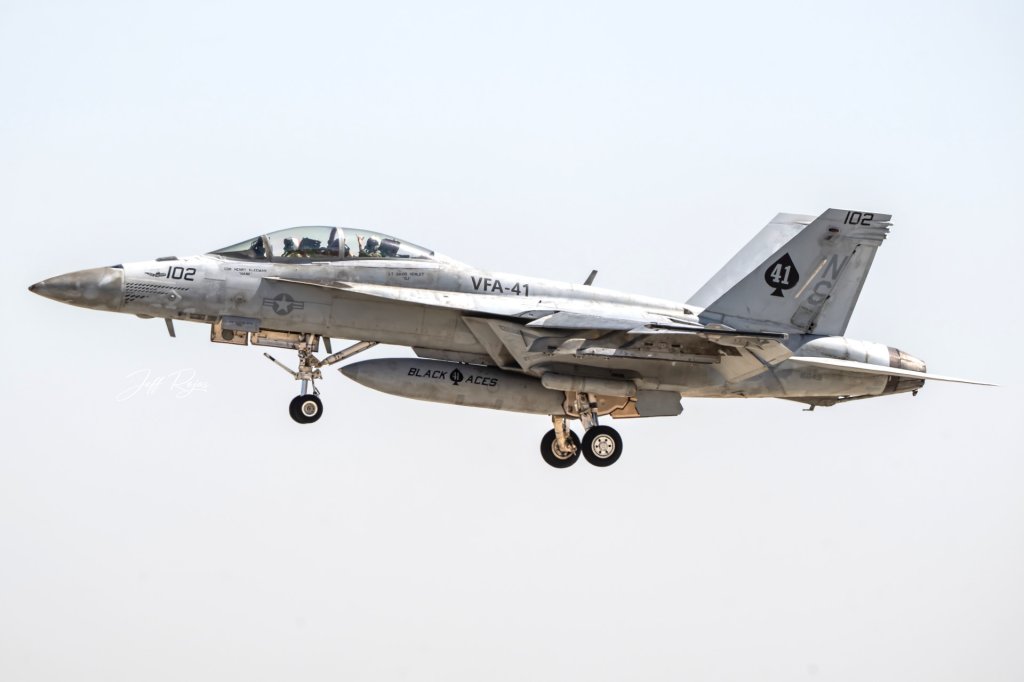
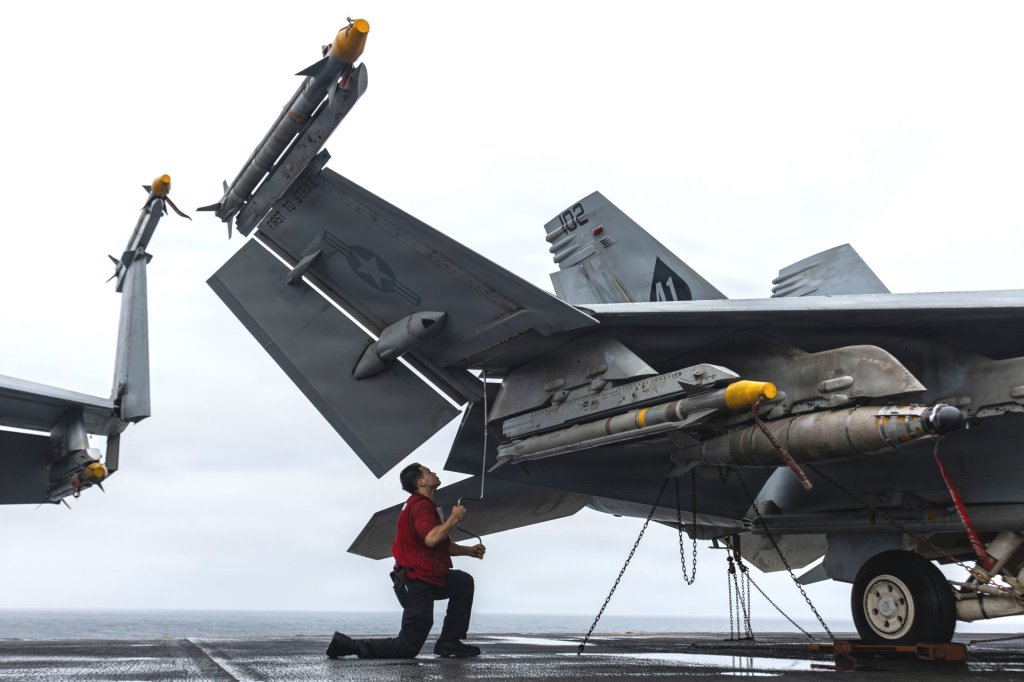
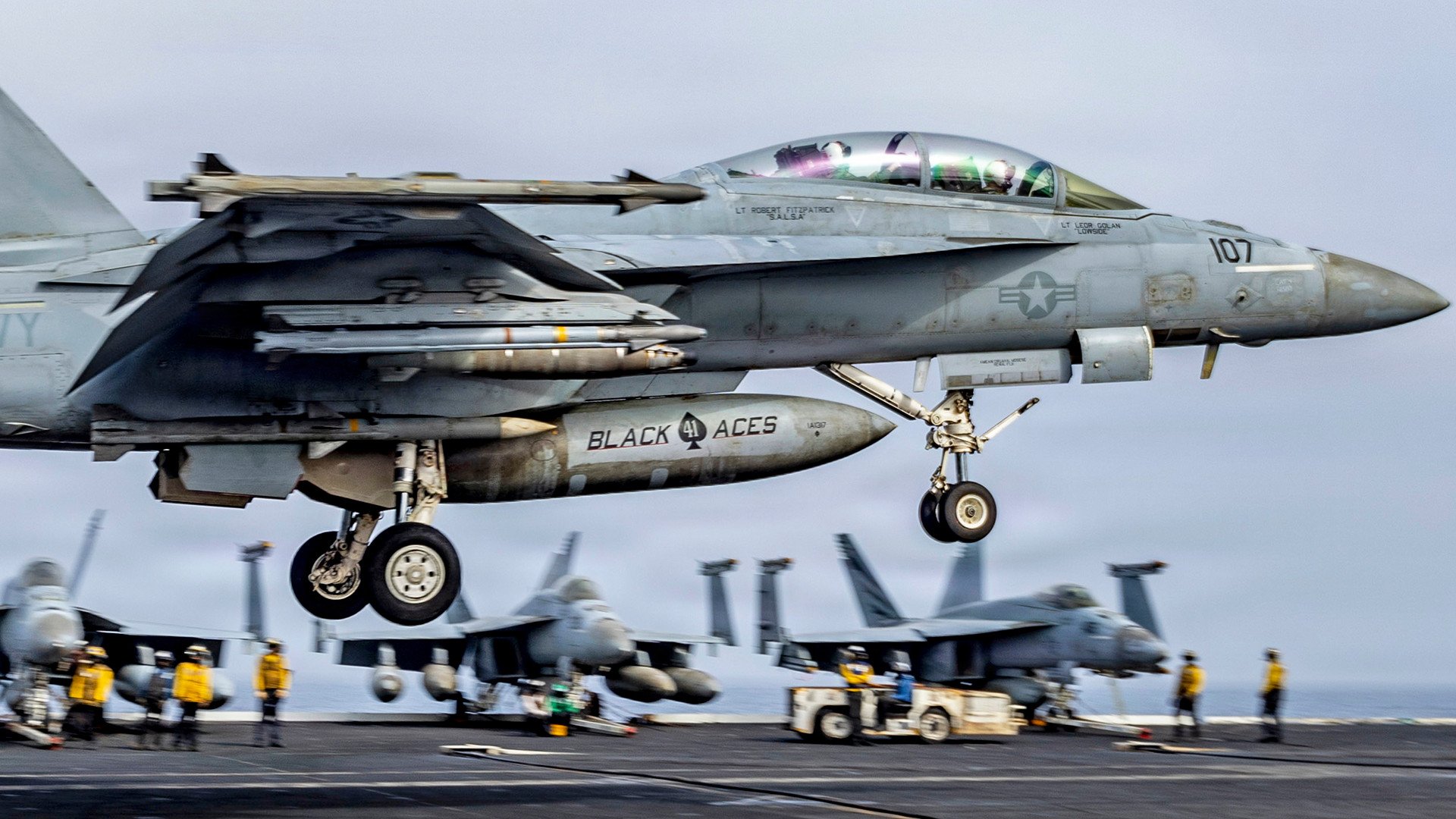
The volume of munitions expended in the course of U.S. operations against Iran this year has been and continues to be a hot topic of discussion, and there has been relatively little official data provided on this front. However, now we know that the F/A-18F Super Hornets of the U.S. Navy’s Strike Fighter Squadron 41 (VFA-41), the “Black Aces,” launched 421 missiles and bombs during their time supporting Operation Epic Fury.

This new insight into VFA-41’s role in the conflict with Iran comes from a photo of a large board listing the squadron’s weapons expenditures during Epic Fury, via Jeff Rojas, who goes by the handle @jro_photography on Instagram. Rojas also shared pictures recently taken of VFA-41’s Super Hornets. The Black Aces were one of the squadrons assigned to the Nimitz class aircraft carrier USS Abraham Lincoln, which has been on a marathon deployment since last year. The carrier only left the Middle East region last month and is now set to formally return home to San Diego, California, within days. Per the Pentagon’s official timeline, Operation Epic Fury began on February 28 and concluded on May 5, though U.S. forces have continued to conduct strikes on Iran, on and off, since then.

One of VFA-41’s F/A-18F Super Hornets spotted recently. Jeff Rojas Jeffrey Rojas

The complete tally of munitions employed as shown on the board, broken down by type, from greatest to fewest, is as follows:

The total cost of all of these munitions, using available data from U.S. military budget documents, is very roughly $43,646,000, at least. Unit costs fluctuate regularly due to a variety of factors. Furthermore, the exact price tag for different JDAMs can be somewhat difficult to calculate given how the individual components are budgeted.

The JDAM is really a family of kits that turn standard unguided ‘iron bombs,’ which can vary significantly in the kinds of effects they are designed to produce, into warheads for precision-guided munitions. This is exemplified by the (V)2 and (V)4 subvariants of the GBU-31/B mentioned here, which are built using standard high-explosive and bunker-buster bombs, respectively. No specific subvariants of the GBU-32, GBU-38, or GBU-54 were mentioned in the information provided. Standard JDAMs can also only be employed against static target coordinates. The LJDAM kits add a laser guidance component (akin to what is found on Paveway-series bombs) that enables strikes against moving targets.

A JDAM, as well as a pair of AIM-9Xs, seen under the wing of a VFA-41 Super Hornet in August. NAVCENT

No specific version of AGM-154 is mentioned, either, but the C and C-1 types, which have multi-stage bunker-busting warheads, are the only ones understood to be in service today. Remaining A variants, which were loaded with 145 small bomblets, were removed from U.S. service in 2008 as a result of new guidelines on cluster munitions issued under President George W. Bush. A planned AGM-154B, which would have contained six “smart” Sensor Fuzed Munition bomblets, was never produced. You can read more about the full JSOW family here.

2/2 https://t.co/DRQuyMTwNa

— Guy Plopsky (@GuyPlopsky) March 8, 2026

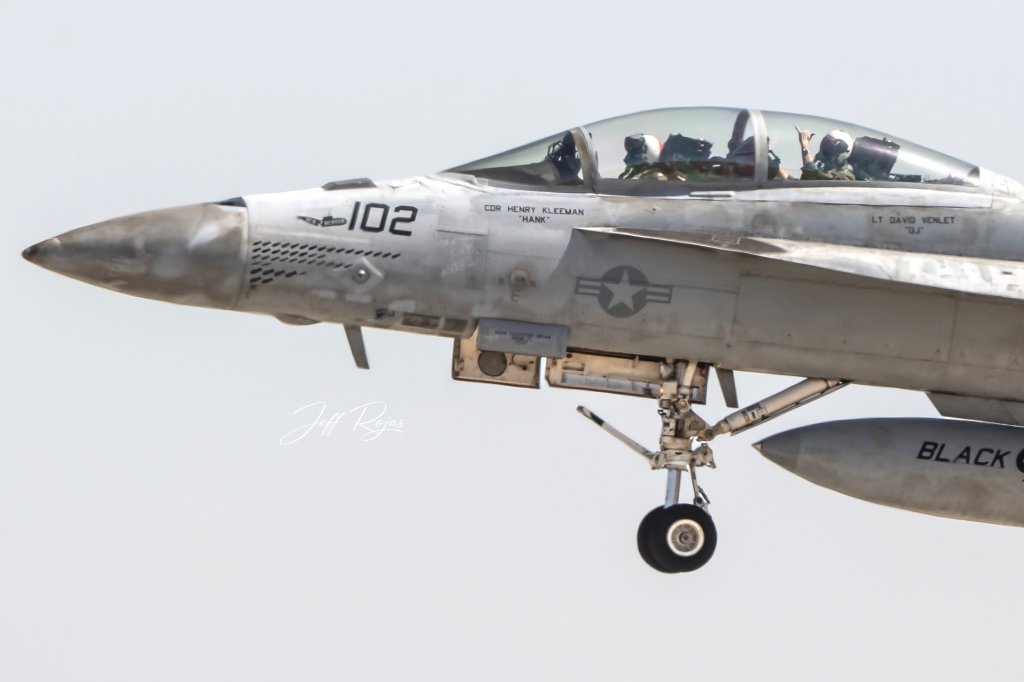
We do not know exactly what targets any of these munitions were employed against. However, a picture that Jeff Rojas grabbed of one of VFA-41’s Super Hornets, seen toward the top of this story and in part below, shows a very interesting broken submarine kill marking, with the added text “Sub Buster.” The jet also has a number of more typical bomb-shaped kill marks.

A close-up look at the broken submarine and other kill marks on one of VFA-41’s Super Hornets. Jeff Rojas Jeffrey Rojas

Iranian naval vessels, including the country’s Russian-made Kilo class and other submarines, were top priority targets during Epic Fury. The U.S. military has previously confirmed that air-launched AGM-114 Hellfire laser-guided missiles (likely fired from MQ-9 Reaper drones) and ground-launched Army Tactical Missile System (ATACMS) short-range ballistic missiles were employed against submarines, specifically.

The video montage in the social media post below includes a clip, starting at 0:13 in the runtime, of a Hellfire missile hitting what looks to be a Ghadir class diesel-electric midget submarine in port.

U.S. forces are degrading the Iranian regime's ability to project power at sea and harass international shipping. For years, Iranian forces have threatened freedom of navigation in waters essential to American, regional and global security and prosperity. pic.twitter.com/gIBN02mowh

— U.S. Central Command (@CENTCOM) March 10, 2026

Bunker-busting JDAMs are also known to have been key munitions employed during strikes on targets in Iran during Epic Fury. TWZ previously called explicit attention to the employment of JSOW in the opening phases of the operation, as well. Navy strike fighter squadrons made significant use of SLAM-ERs in strikes against Iranian-backed Houthi militants in Yemen last year, too.

Honest Abe is burning through the JSOWs like crazy. https://t.co/rQMZPBnwAz

— Tyler Rogoway (@Aviation_Intel) March 1, 2026

1/ Aside from the launch of F/A-18E/Fs armed with JSOW C/C-1s, the video also shows F/A-18Es armed with SLAM-ER ATAs parked on the fligh deck. https://t.co/3TC4kKIn17 pic.twitter.com/OqQBbRrYGY

— Guy Plopsky (@GuyPlopsky) March 16, 2025

It is extremely likely that the AIM-9Xs and AIM-120s were fired at Iranian drones, though they could have been launched at incoming cruise missiles, as well. At the time of writing, there are no known or reported instances of U.S. military jets engaging crewed Iranian aircraft in the course of the conflict to date. In 2024, the Navy carried out a crash program that increased the total number of AIM-9Xs that F/A-18E/Fs could carry per sortie, specifically in response to Houthi drone threats. Super Hornets loaded with nine air-to-air missiles are now referred to as “Murder Hornets.”

Notably absent in VFA-41’s tally is any mention of 70mm laser-guided Advanced Precision Kill Weapon System II (APKWS II) rockets. Air-to-air optimized versions of the APKWS II are now part of the arsenal available to U.S. Air Force F-16C Vipers, F-15E Strike Eagles, and A-10 Warthogs, and have become the service’s go-to aerial weapon for engaging drones. In February, the U.S. Marine Corps disclosed that it was working to integrate this capability onto its legacy F/A-18C/D Hornets. Whether the Navy has any such plans for the Super Hornet is unclear.

It is also important to remember that this is a discussion of the munitions expended by just one Navy strike fighter squadron. Lincoln‘s air wing includes four strike squadrons, three with Super Hornets and one with F-35Cs, as well as units flying other types of aircraft and helicopters. The carrier was just one part of a much larger array of air, naval, and ground forces that participated in Operation Epic Fury and subsequent operations against Iran. For additional context, consider that the entire Eisenhower Carrier Strike Group, including its entire air wing and escorting ships, fired off 770 munitions in total, by the official count, during very active combat operations in and around the Red Sea between November 2023 and June 2024.

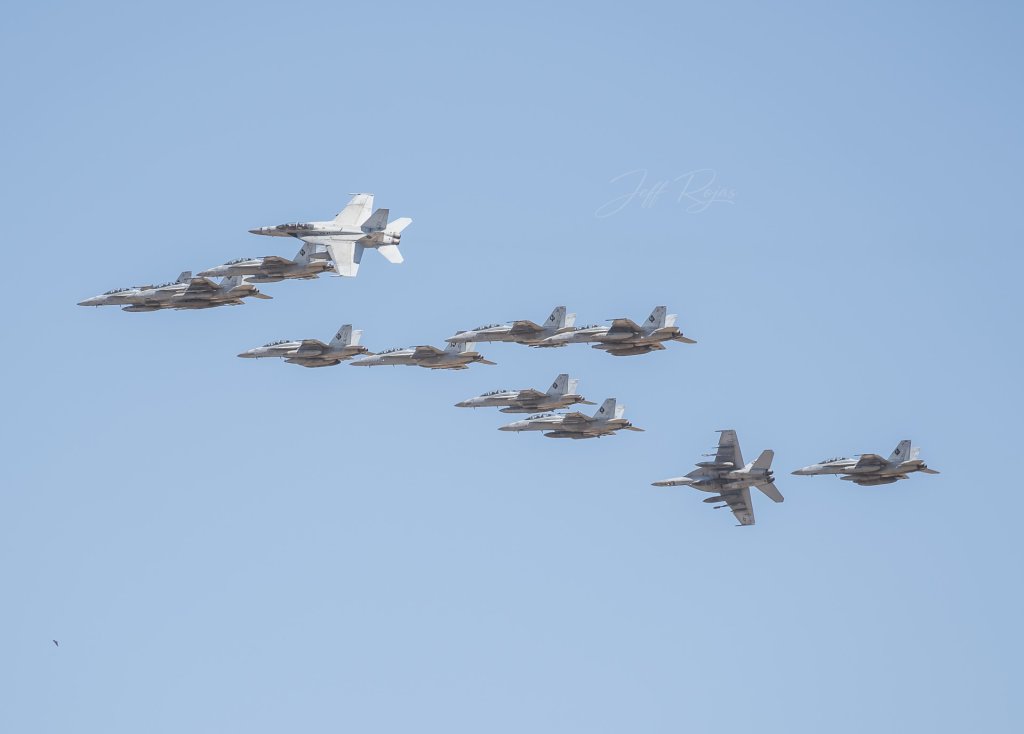
VFA-41 Super Hornets seen flying together recently. Jeff Rojas

All of this speaks to the larger matter of how many munitions the U.S. military has expended in the course of operations against Iran this year, which is now fueling concerns about the sufficiency of remaining stockpiles and what it will take to replenish them.

As such, the tally of munitions launched from VFA-41 Super Hornets offers a very interesting view into that squadron’s contributions to Operation Epic Fury, as well as the full scale and scope of the conflict with Iran.

Special thanks again to Jeff Rojas for sharing the details about VFA-41’s participation in Operation Epic Fury and his pictures with us.

Contact the author: joe@twz.com

The post All The Weapons A Single Navy Fighter Squadron Launched During Operation Epic Fury appeared first on TWZ.

  •  

The China factor behind the Iran war

The war between the United States and Iran is no longer just a confrontation between Washington and Tehran. A second contest is taking shape alongside and behind it. China is not fighting the United States directly, but its economic, technological and diplomatic links to Iran are complicating Washington’s strategy and ability to win the conflict. […]

The post The China factor behind the Iran war appeared first on Asia Times.

  •  

Leaving Iraq while bombing Iran

On September 30, the last American and coalition troops flew out of Erbil Air Base, and the Pentagon declared an “orderly departure.” The White House called it a victory. President Trump, never one for understatement, described the whole enterprise as “a very expensive excursion into Hell.” For once, the hyperbole is closer to the truth […]

The post Leaving Iraq while bombing Iran appeared first on Asia Times.

  •  

Trump and the Multipolar Middle East: Is Washington Unintentionally Creating Space for Its Rivals?

Donald Trump’s return to the White House in January 2025 pushed US Middle East policy toward a familiar mixture of pressure, bargaining, and demands for measurable economic returns. His May 2025 tour of Saudi Arabia, Qatar and the United Arab Emirates made that approach particularly visible: investment, artificial intelligence, defence, aviation, and energy agreements dominated […]
  •  

Claims Swirl Around U.S. Marines Injured Aboard Mystery Vessel Attacked In The Strait Of Hormuz

On Sunday, NBC News reported that Marines were injured during an Iranian cruise missile attack while transiting the Strait of Hormuz on Sept. 14. The network’s sources said the Marines were not on a U.S. Navy ship, but they did not identify which vessel they were on. However, a former Royal Mail vessel that at one point was being converted into a floating armory stands out as a strong possibility.

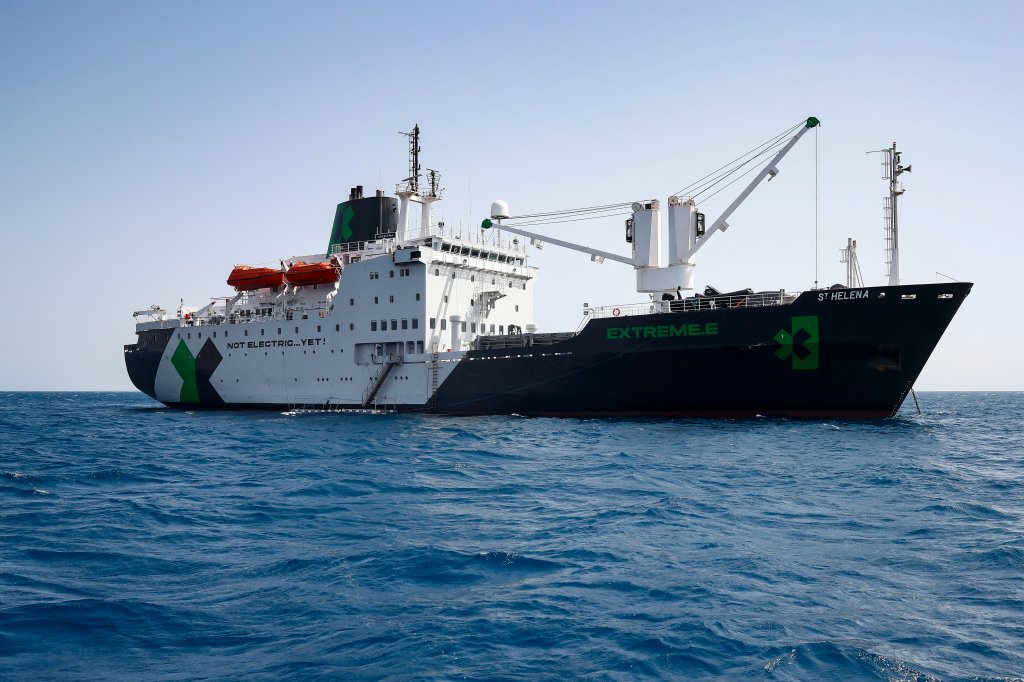
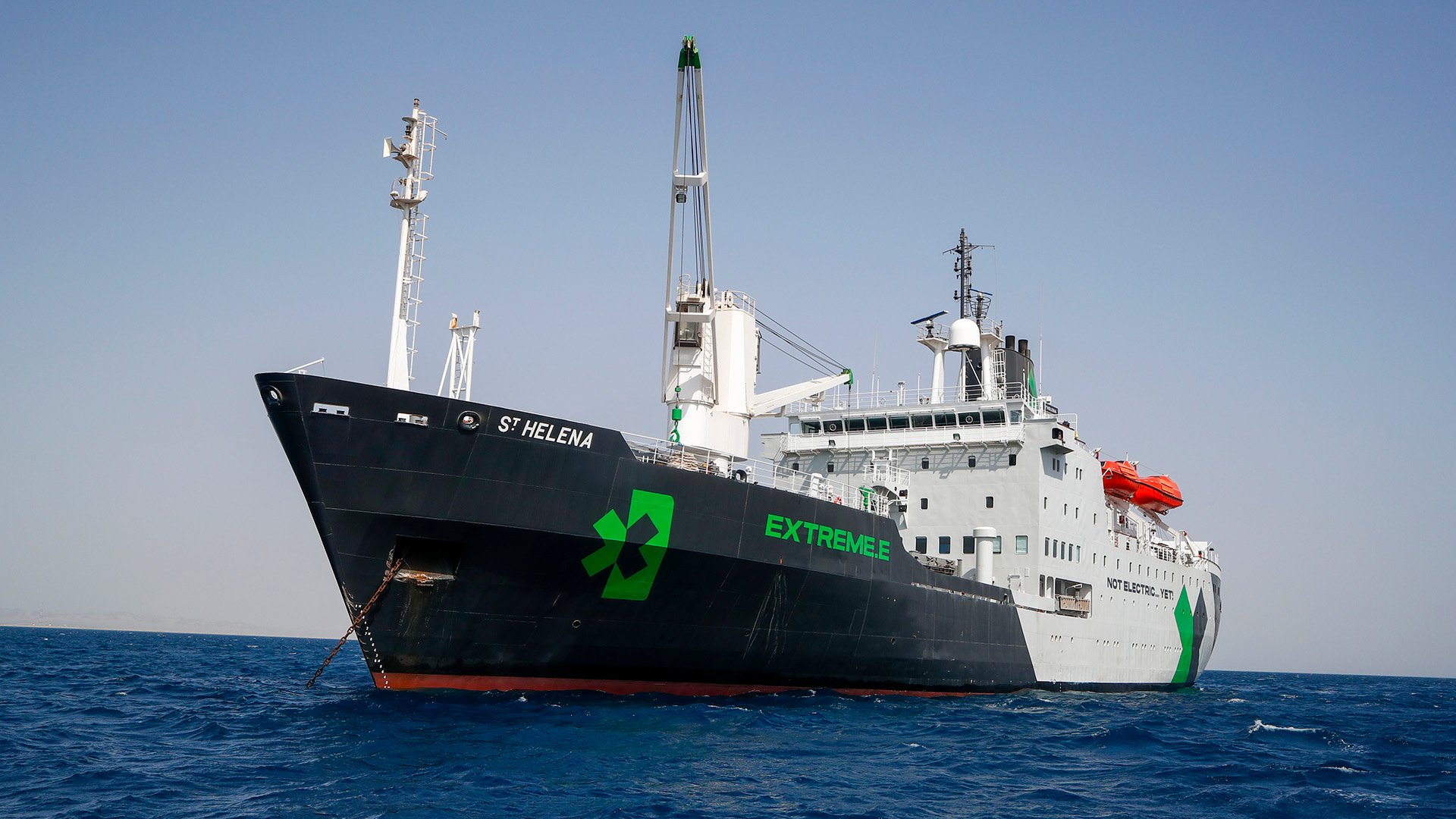
While much remains unclear about the Sept. 14 incident, there was only one vessel known to have been struck that day, according to the United Kingdom Maritime Trade Operations (UKMTO) and a maritime security official we spoke with. The ship was eventually identified by several maritime media outlets as the M/V St. Helena. Again, the St. Helena’s involvement remains unconfirmed, but the ship’s interesting background is of particular note.

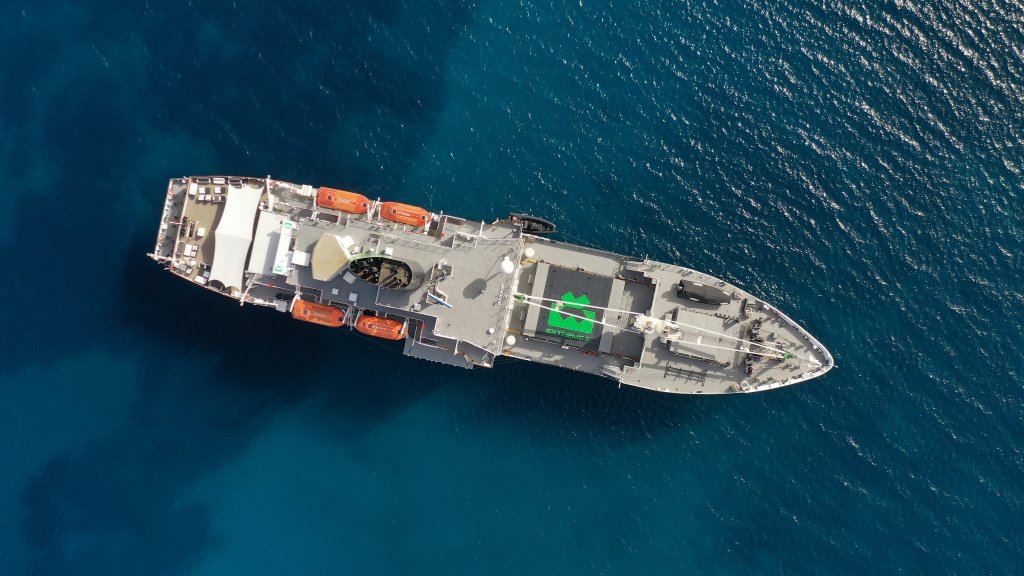
MARCH 30: The St Helena logistics ship during the Saudi Arabia on March 30, 2021. (Photo by Colin McMaster/LAT Images for Extreme E)
The St Helena logistics ship during the Saudi Arabia on March 30, 2021. Photo by Colin McMaster

“Eight U.S. Marines were injured two weeks ago when an Iranian cruise missile attacked the ship they were operating on in the Strait of Hormuz,” NBC reported, citing three U.S. officials. “The Marines were not seriously injured, but they sustained smoke inhalation and possibly traumatic brain injuries, as they had symptoms of concussions, such as headaches, the officials said.”

“The Marines, seven of them enlisted and one officer, all returned to duty soon after the Sept. 14 attack, the U.S. officials said,” according to the network. “The officials said the Marines were operating as part of a battalion landing team during the Iranian anti-ship cruise missile attack.”

TWZ cannot independently confirm that Marines were on board the St. Helena or that they were injured. We reached out to the Pentagon and U.S. Central Command (CENTCOM) for more information. The Pentagon referred us to CENTCOM, and CENTCOM declined comment.

The incident took place amid an uneasy truce between Iran and the U.S. broken up by sporadic Iranian attacks on ships transiting the Strait of Hormuz. At the same time, the U.S. military is enforcing a blockade on Iranian ships, during which it has struck several for trying to bypass that effort as well as in retaliation for Iranian attacks on shipping. Negotiations between Washington and Iran have ebbed and flowed, and U.S. President Donald Trump is once again mulling a choice between continuing talks or renewing large-scale attacks.

As we noted earlier in this piece, after the vessel was struck, several maritime industry trade publications identified it as the St. Helena.

“Iran has attacked a historic former British Royal Mail passenger ship in the Strait of Hormuz,” TradeWinds News reported on Sept. 15, a day after the incident. “Maritime security sources identify the 6,800-gt St Helena (built 1989) as the latest vessel to be hit by an ‘unknown projectile’ in the war-torn waterway. The attack was reported late on Monday, according to UK Maritime Trade Operations, which cited a ‘verified source’ for the incident without identifying the vessel.”

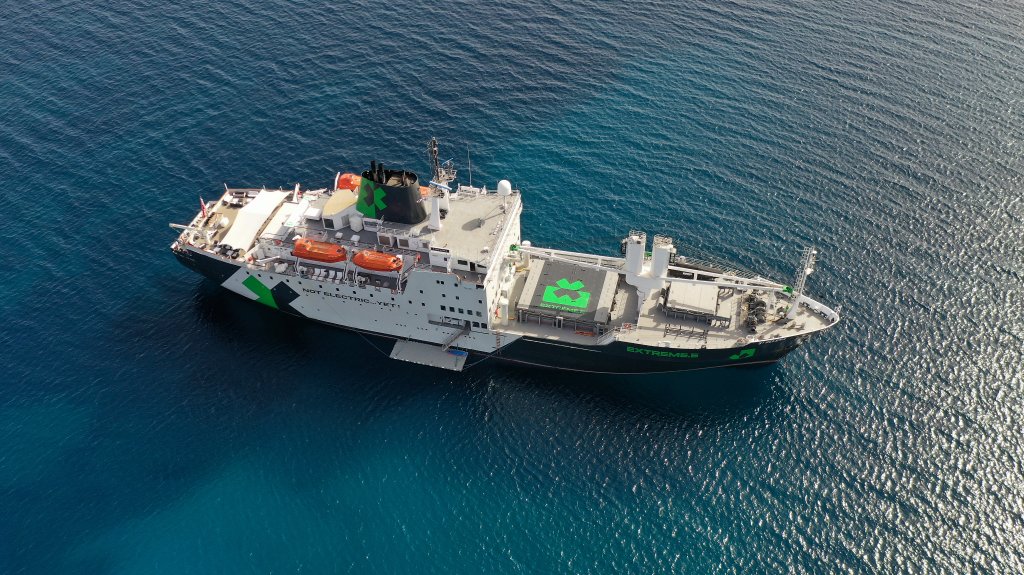
JULY 04: Aerial view of the St Helena transport ship in the sea off Porto Pino during the Sardinia on July 04, 2022. (Photo by Sam Bagnall/LAT Images for Extreme E)
Aerial view of the St Helena transport ship in the sea off Porto Pino during the Sardinia on July 4, 2022. Photo by Sam Bagnall

“UKMTO has received a time late report of an incident within the Strait of Hormuz,” the organization reported on Sept. 15, citing an incident that took place a day earlier. “A verified source has reported that a vessel has been struck by an unknown projectile.”

“There is no reported damage or environmental impact,” UKMTO added. “Authorities are investigating.”

UKMTO WARNING 135-26

Click here to view the full product ⤵https://t.co/VWOyM2oLdj#MaritimeSecurity #MarSec pic.twitter.com/Dfppt86s9b

— UKMTO Operations Centre (@UK_MTO) September 15, 2026

According to Lloyd’s List, the ship was being operated by the Ambrey maritime security firm at the time it was struck. Ambrey declined to comment. 

Shipping expert Sal Mercogliano and open-source investigator Tom Bike were among those suggesting the St. Helena could have been the vessel at the heart of the NBC report.

So piecing together the evidence it appears that the US may have converted St Helena into a armed merchant cruiser.

The Marines looked at putting Armed Guards on board commercial ships three years ago as reported by @USNINews.

Add modular/containerized weapon systems,… https://t.co/48lJ1BDMfs

— Sal Mercogliano (WGOW Shipping) 🚢⚓🐪🚒🏴‍☠️ (@mercoglianos) September 28, 2026
Exactly what the St. Helena was doing at the time it was struck is unclear; however, the ship has had a very unusual past.

The vessel entered into service in 1990 and “sailed between Cape Town, South Africa and Saint Helena and Ascension Islands, carrying both passengers and cargo, some of which was Royal Mail, earning her the rare RMS designation,” according to Cruise Arabia and Africa.

The St. Helena was Britain’s last working postal ship, according to Maritime Executive. After it was retired in 2018 because it was no longer needed for that function, things got really interesting.

Two different organizations took over the vessel, including, as we noted earlier in this story, a company that was planning to use it as a floating armory in the Middle East.

“Renamed MNG Tahiti, the 103-meter (340-foot) ship is being readied by her new owner MNG Maritime to become a floating armory working in the Gulf of Oman,” Maritime Executive wrote on April 22, 2018. “She will deliver security guards and weapons to vessels sailing through the region and is expected to be operational in her new role in the next few months.”

It is unclear what happened to that plan. However, two years later, an off-road racing series called Extreme E said that it “secured exclusive use of the former Royal Mail ship in 2018.” After that, the ship underwent “an extensive refurbishment process, which has included total overhaul of steelwork, engines, generators, propellers, interior and cabin space, and more, making it not only fit for purpose, but also as efficient as possible ahead of its new mission.” 

JULY 04: Aerial view of the St Helena transport ship in the sea off Porto Pino during the Sardinia on July 04, 2022. (Photo by Sam Bagnall/LAT Images for Extreme E)
Aerial view of the St Helena transport ship in the sea off Porto Pino during the Sardinia on July 4, 2022. Photo by Sam Bagnall

The ship was “specifically designed to transport all the infrastructure and equipment the Extreme E needs for their race weekends,” the organization stated. The plan was to have the ship serve “as its freight and logistics hub due to her versatility and ability to carry and unload a mixture of cargo, like all 10 of the championship’s ODYSSEY 21’s [electric off-road racecar], as well as team members and guests. This was also fit with a Science Laboratory so research can be conducted enroute to the race locations.”

Both the St. Helena and MNG Tahiti have the same international shipping identification number of IMO 8716306, according to the MarineTraffic website.

On Sept. 17, 2024, the St. Helena was put up for sale, according to Horizon Ship Brokers. The current ownership is unclear. We reached out to Horizon Ship Brokers for more details.

Horizon Ship Brokers

Last year, the saga of the St. Helena took a new turn. A company called Terra Nova Expeditions chartered the vessel for Antarctic cruises, but those plans were scrubbed last month because the vessel was stuck in the Persian Gulf and was no longer available for the Antarctic sailing season.

It was last tracked via its transponder near Dubai nearly two months ago, according to MarineTraffic.

While we can’t confirm that Marines were onboard when St. Helena was hit, Marines have been training for this exact mission set. USNI News reported in 2023 that a “force of 100 Marines, newly trained by Navy personnel,” stood ready “to respond, if ordered, to provide armed security aboard foreign commercial ships transiting the Strait of Hormuz.”

Those Marines were members of the 26th Marine Expeditionary Unit (MEU) embarked on the three-ship Bataan Amphibious Ready Group (ARG), USNI added at the time.

It is unclear if those plans are still in place and if Marines in the region have actually been ordered to provide armed security for foreign vessels sailing through or near the strait. Regardless, Marines could be quickly trained to take on this mission set and have drilled for ship boarding and searches for years, especially special operations and specially-tasked units. CENTCOM declined to comment when we asked if there are U.S. personnel embarking on commercial ships transiting the Strait of Hormuz.

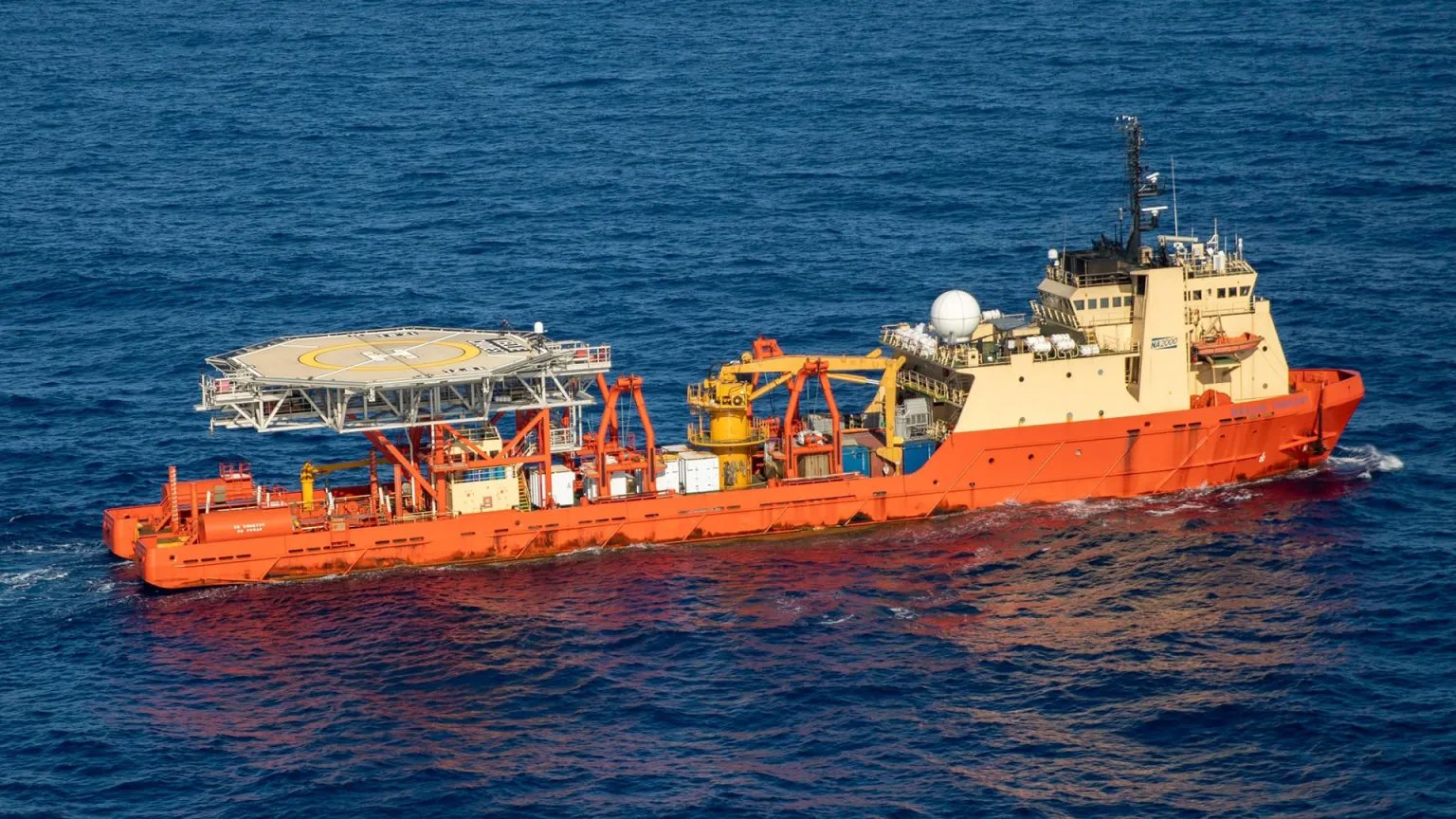
At the same time, it is possible that the unique attributes of St. Helena made it a convenient host ship for sea base operations for U.S. forces in the region specifically for this crisis. Adapting commercial vessels for exactly this purpose has a long history around the Strait of Hormuz, as it was a central facet of the Tanker Wars during the 1980s, that saw U.S. forces operate from barges in the region. Today, commercial vessels remarkably similar to St. Helena operate in similar roles, especially in support of special operations and interdiction operations.

211024-N-KY668-1208
 CARIBBEAN SEA - (Oct. 24, 2021) – The special mission ship U.S. Motor Vessel Kellie Chouest steams in the Caribbean Sea while participating in a passing exercise (PASSEX), with the Dominican Republic Navy and USS Billings (LCS 15) Oct. 24, 2021. Kellie Chouest is deployed to the U.S. 4th Fleet area of operations to support Joint Interagency Task Force South’s mission, which includes counter-illicit drug trafficking missions in the Caribbean and Eastern Pacific. (U.S. Navy photo b
The special mission ship U.S. Motor Vessel Kellie Chouest steams in the Caribbean Sea while participating in a passing exercise (PASSEX), with the Dominican Republic Navy and USS Billings (LCS 15) Oct. 24, 2021. Kellie Chouest is deployed to the U.S. 4th Fleet area of operations to support Joint Interagency Task Force South’s mission, which includes counter-illicit drug trafficking missions in the Caribbean and Eastern Pacific. Photo by Petty Officer 2nd Class Austin C

Once again, we have no idea what the ship’s mission was at the time of the incident and if Marines were simply helping it transit safely out of the Persian Gulf or something more, but the attack did expose the fact that individual Marines are more involved with activities in this tumultuous body of water than it may seem.

Contact the author: howard@twz.com.

The post Claims Swirl Around U.S. Marines Injured Aboard Mystery Vessel Attacked In The Strait Of Hormuz appeared first on TWZ.

  •  

The Geopolitical Balance in the Red Sea: The UAE Being Displaced by New Players

The persistence of current geopolitical alignments, the attention of Eastern actors to the region, the strengthening of Sanaa’s position in the Red Sea, and the expansion of regional opposition to the UAE’s role will diminish Abu Dhabi’s role in the region. UAE approach For the past ten years, the Southern Red Sea has been a […]
  •  

“They Promised Freedom—They Got Bread at the Price of Gold”: How the West Left Syria Alone to Face Catastrophe

Mass protests have swept Syria—from Aleppo to Deir ez-Zor. Two years of empty Western promises, plundered oil fields, Israeli occupation of the south, and rule by a former terrorist whom Washington and London placed on the throne. The Fuel Crisis as a Trigger In mid-September 2026, Syria was gripped by the largest wave of civil […]
  •  

“PRIESTS vs GENOCIDE, DOMINANT ZIONISM and ARMED BANKS“. Eroic Homily by Italian Archbishop in the Feast of Saint Pio vs WARLORDS of Death

“I am the way, the truth, and the life. No one comes to the Father except through me.”

Jesus Christ – Gospel of Saint John the Apostle (14:6)

“Do not fear them, then, for there is nothing hidden that will not be revealed, and nothing secret that will not be made known.What I tell you in the darkness, speak in the light; and what you hear whispered in your ear, proclaim from the housetops.”

Jesus Christ – Gospel of Saint Matthew the Apostle (Mt 10:26-28)


In the cover image the Arcbishop of Saint Pio, father Franco Moscone, and the Zionist rulers Netanyahu and Trump

The Heroic Homily of the Archbishop of San Pio on Genocide, Rampant Zionism, and Banks Profiting from Arms

by Fabio Giuseppe Carlo Carisio

VERSIONE IN ITALIANO

In an era when Catholic progressivism is obscuring the diamond-bright light of the Word of God with diabolical worldliness, there remain Shepherds who have the courage to challenge wolves in sheep’s clothing to save their flock.

One of them is undoubtedly Monsignor Franco Moscone, Archbishop of Manfredonia, Vieste, and San Giovanni Rotondo—home to the Shrine of Saint Pio of Pietrelcina. Yesterday, during the Solemn Mass marking the liturgical feast of the Franciscan friar, the prelate—originally from the Piedmont region of Saint John Bosco and the Langhe (home of the philanthropist Servant of God Giulia di Barolo)—delivered a homily that was not only moving and courageous but truly heroic.

The SAINT, the KING and the SATANIC FREEMASONRY. St. John Bosco’s Prophecy and Fight of to Defend Christianity by the Italian Masons Persecutions

Just as those authentic Christians of the 19th century had to defy Freemasonry in a Turin inflamed by a sham *Risorgimento* in order to defend Gospel values, Archbishop Moscone did not hesitate to use the whip of rhetoric to proclaim the truth as taught by Jesus. Thundering from the virtual pulpit of the modern, magnificent church dedicated to the Saint of the Stigmata, he railed against the dangerous drift of “a narrative leading us straight toward war.”

Gospa News has dedicated three previous articles to the battle waged by this high-ranking prelate of the Archdiocese of Manfredonia, for—just as Gospa News points an accusing finger at the profiteering of… The Weapons Lobby and death.

WEAPONS LOBBY – 20. HUGE BUSINESS OF ZIONIST TRUMP’s WARMONGERS. How a German Industry Became the Golden Goose for the US

Indeed, every one of his statements is borne out in detail by the investigations we have linked to them.

Yesterday, he stood in solidarity with the “Priests against the Gaza genocide”—with whom he had demonstrated in Rome the day before, subsequently having to explain to some of the faithful why his seat was empty at the overnight vigil for the Feast of Saint Pio—but above all, he boldly exposed “dominant Zionism” and the “armed banks” that profit from “ethnic cleansing in Palestine.”

In an era when every public authority is terrified of discussing Jewish extremism for fear of being branded antisemitic, Monsignor Franco displayed a fortitude and intelligence truly bestowed by the Holy Spirit; he used unequivocal words to condemn the Tel Aviv regime, while tempering them by citing the book by Israeli historian Omar Bartov:

“Into the Abyss: From Zionism to Genocide. Israel’s Moral Defeat” (Laterza),

DEVIL NETANYAHU’s HOLOCAUST. Explosive UN findings: “Israel DELIBERATELY TARGETED Gaza CHILDREN”

He did so in a speech challenging—and calling for the “disarming” of—all “theologies of fundamentalism,” such as that of the Boko Haram terrorists: heirs to ISIS and Al-Qaeda, groups created by Anglo-American intelligence to invade the Balkans, Afghanistan, Iraq, and Syria—a connection certainly not made by the priest himself, but one argued in his books by former Interpol official Antonio Evangelista, whom I have interviewed on several occasions.

The prelate cited the theological fundamentalism found among Hindus, as well as among Evangelical Christians and xenophobic Catholics. He concluded with two resounding remarks—delivered before the final blessing of the Mass—regarding the “wars spread by NATO” and the possibility of reviving in Italy the concept of conscientious objection to military spending, as was done during the Cold War.

The Grim NATO’S JIHADs. How Atlantic Intelligence “14 Eyes” uses ISLAMIC TERRORISTS: from Italy to Libya, Ukraine and Syria

I have summarized in a few lines a homily lasting about twenty minutes; it must be heard in its entirety to fully grasp the Gospel narrative that began with the blood of Padre Pio’s stigmata and now extends to Gaza—to the 300 children killed during the sham truce—as well as to Lebanon and the 145 others who died during yet another bogus ceasefire.

For this reason, I will limit myself here to transcribing only those sentences containing the aforementioned key points.

The Empty Chair at the Saint Pio Vigil: Standing with “Priests Against Genocide”

«Someone rightly wrote to me this morning saying, ‘Last night there was an empty chair at the vigil for Saint Pio’—and it was mine, the local bishop’s! It was empty here because I sought to embody the spirit of prophecy, solidarity, and peace that Padre Pio always brought through his life and continues to urge upon us: a most urgent cry in this historic moment to which we are all witnesses». 

St. Pio’ Prophecy on Christians’ homelands, NWO Rockefeller’s Abortion law and Masons war

Thus begins Father Franco’s homily, which seems to encapsulate two years of impassioned denunciations against the holocaust of children in Palestine and Lebanon.

«Yesterday, I attended a demonstration called ‘Priests Against Genocide’; it is an international network of priests that emerged just over a year ago in response to a cry for help from an African nun—a plea heard and taken up by a dedicated priest from Sicily. The network currently brings together over 2,600 priests from 57 nations, as well as 27 bishops and three cardinals. Yesterday, we walked a route through Rome, starting at the Jesuit Curia, passing the embassies to the Holy See for Palestine and Lebanon, and arriving at Piazza Mazzini, where Leonardo’s administrative headquarters is located» the priest continued (hereafter, we will not specify that the italicized text comes from his homily).

ZIONISTS’ Neverending WAR CRIMES, as GENOCIDES. Iran: “US, Israel GUILTY of gravest MASSACRES since 1949”. Children’s Murdering in Lebanon, Qeshm, Minab

«We arrived at this point through prayer, by listening to the Gospel, and by reflecting on the words of Pope Leo’s *Magnifica Humanitas* and those of the Israeli historian Omar Bartov, who published a book titled *Into the Abyss: From Zionism to Genocide—Israel’s Moral Defeat*».

The Stigmata of the Holy Land: 445 Children Killed During False Truces, Christians Driven Out

«I look at the wounds of Padre Pio—at the signs of his identification with Christ Crucified and the blood he shed alongside Jesus’s for fifty years—and I ask myself: where is the blood of the Lord’s stigmata and Padre Pio’s stigmata today? Where is it being shed?»

«It is certainly found in the stigmata borne by the population of Gaza, 97% of whom are left without homes or means of subsistence—a place where a truce is said to exist, yet a genocide quietly continues. Yesterday, we recited the names of 300 children killed in Gaza since the truce began.Padre Pio’s wounds are also found in the ethnic cleansing taking place in the West Bank and southern Lebanon; there, too, we counted 145 children killed since a peace plan was supposedly in place». 

HORRIFIC! Children Killed in Gaza as ISIS-Style by IDF (100 only During Truce). Shot in the head and chest. Investigation by BBC Africa. The best VIDEO of the week

«In those lands, our Christian brothers—representing the oldest churches in history—are particularly being driven away; only one Christian village remains under the administration of the Palestinian Authority. All the others have been wiped out.»

The Archbishop of San Giovanni Rotondo went on to mention the “stigmata” visible in Africa: the wars in the Sahel and Sudan, the massacres committed by Boko Haram terrorists in Nigeria and the abduction of girls, and the repression in Myanmar and across the Middle East.

“The CHRISTIAN ZIONISM Threatens CHRISTIANITY in HOLY LAND”. As in WEST! Apocalyptic Analysis on Jerusalem Orthodox Patriarch’s Prophetic Alarm

He added: «And here in our own Europe, too, Ukraine and Russia continue to send their finest youth to the front lines to be sacrificed. These open, bleeding wounds—akin to the stigmata of Christ—persist in the humiliation of the Venezuelan people and the starving of the Cuban people.»

«I urge everyone to make praying for peace our primary commitment; it was a central focus of Padre Pio’s thoughts and heart throughout his life.»

WARS in VIDEO (until August 2026) & 14 ESCLUSIVE MILITARY INVESTIGATIONS. Zelensky is WASTING EU-funded Drones to KILL Russian Civilians. Putin’s Missiles are WIPING out Military Assets in Kiev

Monsignor Moscone noted that, in the past, prayer groups did not succeed in halting wars as the “greatest Saint of the last century” had hoped: «It was not effective then, yet we must believe it can be effective today, preventing these scattered conflicts from escalating into a world war.»

Father Franco Moscone: “Disarming Fundamentalist Theologies: From Dominant Zionism to Catholic Xenophobia”

«From Padre Pio, we also learn how to properly interpret Sacred Scripture—the words of the entire Bible, and the Gospel in particular. Let us, therefore, call for the disarming of the theologies that fuel fundamentalism of every kind. Jewish theologies that fuel the dominant Zionism; Islamic theologies that foment terrorism and fundamentalist groups; Hindu theologies—but also Christian theologies, particularly of an evangelical bent as well as within our own Catholic Church—that spread division and violence and stoke xenophobia and racism».

FREEMASONRY & ZIONISM – 4. How SYNAGOGUE OF SATAN was LICENSED to KILL! It arose from Conspiracy behind the Heretical Catholic text “Nostra Aetate”

“Arms multinationals and ‘armed banks’ that invest in death.”

«Let us, therefore, pray and read the Word of the Lord and the values ​​of our religion—and all religions—with authenticity and integrity. And let us not be afraid to speak out against what is wrong in this regard. Prayer must translate into action—action that speaks truth and denounces injustice. We cannot settle for a narrative that aims for and leads directly to war—serving solely to boost the interests of major arms multinationals, ‘armed banks,’ and anonymous investment funds that invest only in death—thereby denouncing a form of capitalism and power that makes the rich ever richer and the poor ever poorer, while also—even in our developed West—wiping out the middle class and social mobility, driven by a mindset that leads only to death and injustice».

WEAPONS LOBBY – 21. NATO’s WarCrimes! Attack to Moscow, SCHOOLGIRLS’ Massacre by DRONE of Ex CIA Chief POMPEO. Behind UAV FP-1 the Satanic Kiev Gang of Corruption funded by SOROS too

At the conclusion of Holy Mass—following the reading of the prayer for Civil Protection, of which Saint Pio is the patron—the Archbishop of Manfredonia added a pointed remark that struck like a dart aimed at European armament plans, which he had already severely condemned in previous public statements…

“Wars Spread by NATO and Tax Objection to Arms Spending”

«This is the security we need and desire: the security of Civil Protection, of environmental stewardship… This is true deterrence—not that of armaments and NATO, an alliance that, since its inception, has only brought and spread war across four continents»—a fact confirmed by the recent geopolitical “Mediterranean Sea: Same Blood, Same Mud”) by Interpol official Antonio Evangelista.

“NATO’s LIES ON MEDITERRANEAN WARS FOR GAS”. Exclusive Interview to Former Interpol EU Officer

«A form of deterrence that is essentially cost-free, requiring no massive financial outlay. It makes me wonder if the time has come to revisit a concept discussed during the Cold War—in the 1970s and 80s—namely, not merely conscientious objection to military service, but objection to military spending itself: a tax objection regarding that 5% of funds they want us to divert to entirely different purposes. I take personal responsibility for what I have said; let us now receive the Lord’s blessing—a blessing that is surely one of Peace, and nothing else».

Invoking Saint John Paul II, a heroic fighter against war

In a gesture reminiscent of the greatest, most heroic crusader against conflict and weaponry—Pope Saint John Paul II—the Mass concluded with the moving hymn “Jesus Christ, You Are My Life,” composed by Monsignor Marco Frisina for the World Youth Day held at Tor Vergata, Rome, during the Jubilee of 2000.

From Fatima to Ukraine. The Useless Lesson of Peace by Pope Wojtyla to Christians who want Weapons and War

Every Christian must give praise to God, Jesus Christ, and Saint Pio for sending us another courageous prelate—a bishop—like Karol Wojtyła: the Bishop of Kraków during the Soviet communist regime’s political occupation who later became the Bishop of Rome and succeeded in bringing down the USSR dictatorship through the consecration of Russia to the Immaculate Heart of Mary, in obedience to the secret messages received at Fatima by the visionary Lucia.

Suffice it to recall that it was not the assassination attempt against him on May 13, 1981, nor the military regime imposed by General Wojciech Jaruzelski, but rather the Solidarity trade union—fueled by the Christian spirit instilled by John Paul II himself—that managed to triumph, much like David against Goliath.

IL MIRACOLO NELL’ATTENTATO A PAPA GIOVANNI PAOLO II. Proiettile Deviato dalla Madonna di Fatima e da Suor Rita in BILOCAZIONE come San Pio

That is why, in these recent times that carry an apocalyptic air—as foretold by the secrets of Medjugorje—the prayers of devout Christians and the messages of Our Holy Lady are not enough; heroic bishops are also needed who know how to translate the Gospel and prophecies into action.

A heartfelt thank you, Father Franco!!!

Fabio Giuseppe Carlo Carisio – Founder and Director of Gospa News


RELATED POST

New PANDEMIC and Third WORLD WAR by Now Inevitable… Only Christ Can Help Us in Tribulations of Prophecies by Apocalypse and Medjugorje

Carlson & Waters (VIDEO): “HOW US, UK, EU and NATO are Triggering WORLD WAR III”. The BOJO Fake-Peace Plan in Ukraine to Provoke Russia

FREEMASONRY & ZIONISM – 1. Apocalyptic “Cataclysms” by Synagogue of Satan: Genocides in Palestine & Plotted Pandemic for Lethal Vaccines.

45th Medjugorje Anniversary – MISTERY in VATICAN! Late Cardinal Ruini Certified the Holy Lady’s Apparitions as Authentic (Video). Then “Masonic Clergy” Hid this

Holy Lady’s Victory against Freemasonry in Lourdes. Miracles’ Cave reopened by the Christian Empress thanks Shepherdess Bernadette

FREEMASONRY & VATICAN – 2. Cardinals, Bishops kneeling before Satan at the Masonic Summit in Italy

WEAPONS LOBBY – 19. EU’s MAD REARM by VON DER LEYEN to ENRICH GERMAN DEFENSE INDUSTRY. Rheinmetall 202 % in one Year, + 52 % in two Weeks


  •  

France Sending Forces To Help Defend Saudi Arabia’s Red Sea Oil Facilities

France is sending military assistance to Saudi Arabia to protect the Yanbu oil facilities as the Kingdom battles the Iran-backed Houthi rebels of Yemen. The move comes amid growing concerns about the remaining flow of oil from the region, which France, as well as the rest of Europe, relies upon heavily.

In a live television interview Thursday night Paris time, French President Emmanuel Macron said he was sending an unspecified number of troops and equipment to Saudi Arabia to protect the Yanbu energy hub, located on the Red Sea.

“This is the agreement we have finalized ​with ⁠the Saudis,” Macron explained. “We are going to send ⁠military resources, that is to ​say, soldiers, radar systems and defense ⁠systems, to protect this site — ⁠not ​to get us involved in any conflicts, but to ⁠protect this site.”

The French leader did not elaborate on the exact equipment he would send, how many troops, or when they would arrive. Nor did he address what would happen if French personnel were killed or injured or equipment damaged or destroyed. We have reached out to the French Embassy for further details. Based on his mention of radars and seeing that the threat to Saudi oil infrastructure is almost entirely from aerial attacks from drones and missiles, these will likely be air defense forces.

Nous agissons pour protéger nos compatriotes des conséquences de la crise au Moyen-Orient. Objectifs : sécuriser les approvisionnements et faire baisser les prix à la pompe. pic.twitter.com/kvrgHcV4E4

— Emmanuel Macron (@EmmanuelMacron) September 24, 2026

The decision was prompted by repeated Houthi missile and drone attacks as well as suspected strikes from Iranian-backed militias in Iraq on Saudi Arabia’s oil infrastructure. Yanbu in particular is a key installation. As we have explained in the past, Saudi Arabia has diverted millions of barrels of oil per day through pipelines to its Yanbu port on the Red Sea in an effort to minimize the energy shortages due to the hostilities around the Persian Gulf.

ANKARA, TURKIYE - SEPTEMBER 14: An infographic titled "Saudi Arabia's closure of the East-West Oil Pipeline could lead to a supply shortfall of millions of barrels in the market" created in Ankara, Turkiye on September 14, 2026. (Photo by Murat Usubali/Anadolu via Getty Images)
An infographic illustrating how Saudi Arabia has diverted oil from the Persian Gulf to the Red Sea. (Photo by Murat Usubali/Anadolu via Getty Images) Anadolu

Before Macron’s announcement on Thursday, the Houthis claimed they had carried out two more waves of attacks on Saudi targets, including one on the Saudi Aramco facility in Yanbu, “using a number of ballistic and cruise missiles, as well as drones.”

In addition, the Houthis claimed they struck Riyadh.

There was no immediate Saudi confirmation of an attack on the Saudi capital. Saudi civil defense did not issue an emergency alert for Riyadh on Thursday.

Earlier in the day, the Houthis said they struck “enemy command and control centers, operations rooms, weapon depots, missile launch platforms, and military sites belonging to Saudi-led enemy formations in Jizan,” a Red Sea port city.

“The Saudi-led military coalition in Yemen said on Thursday that it had shot down six ballistic missiles fired by the Iran-backed Houthi militia, in what appeared to be one of the largest cross-border attacks by the group since its conflict with Saudi Arabia [flared back up],” The New York Times reported.

The missiles were aimed at the Saudi cities of Taif and Yanbu, Maj. Gen. Turki al-Maliki, a spokesman for the Saudi-led coalition, claimed on X. “Escalations and violations by the terrorist Houthi militia will be dealt with firmly,” he stated, without specifying where the missiles were intercepted.

TWZ cannot independently verify any of these claims.

Today’s attacks are the latest in the escalating conflict between the Houthis and Saudi Arabia. Earlier this year, the Houthis imposed a blockade on the Bab al-Mandab Strait (BAM) and began striking Saudi ships in the southern part of the Red Sea as well as critical energy terminals on that body of water and Saudi refineries. Iranian proxies have also struck the vital East-West pipeline that carries oil to the Red Sea to bypass the Strait of Hormuz, where Iran vastly curtailed shipping after the launch of Operation Epic Fury. The East-West pipeline reportedly reopened after being shut down following a long-range drone attack.

The Saudi Arabian East-West pipeline after it was damaged by an attack. Satellite image ©2026 Vantor

The stark reality facing Macron is that if Saudi oil infrastructure and transport nodes near the Red Sea are destroyed or the pipeline that feeds it is shut down for months, the last major oil lifeline from the region — and especially to Europe — will be closed off, sparking a deeper energy crisis.

Iran has already severely curtailed the flow of oil through the Strait of Hormuz since the U.S. and Israel attacked it on Feb. 28. The movement of oil has been further impeded by a U.S. blockade on Iranian ports. However, transits have been increasing as of late, thanks in large measure to U.S. military escorts that U.S. Central Command claims have allowed more than a billion barrels of crude to pass through the Strait of Hormuz. Still, the traffic is far below what it was before the war broke out.

Update from CENTCOM Commander: pic.twitter.com/PTX6n9fn56

— U.S. Central Command (@CENTCOM) September 19, 2026

Having both the Strait of Hormuz largely closed and energy exports out of the Red Sea shut down simultaneously is a nightmare scenario. By Thursday evening Eastern time, the per-barrel price of Brent crude oil shot up to nearly $107, according to OilPrice.com. It had fallen below $100 per barrel just two days earlier.

Given all this, the French president sought to offer reassurance about oil supplies, according to France 24.

“He said he had carried out ‘intense diplomatic activity,’ meeting in recent weeks with the leaders of Saudi Arabia, Iraq and Nigeria, all hydrocarbon suppliers, to ensure France keeps receiving the same volumes,” the publication noted.

“We have replenished gas stocks and also oil stocks” for the months ahead, the French president also said.

Macron’s decision follows one by the U.K.’s  Royal Air Force (RAF) on Tuesday to deploy one of its Voyager aerial refueling jets to help Saudi Arabia defend against Houthi attacks. As with the French move, it is a response to concerns about the flow of oil.

“Escalating tensions in the Gulf could have negative consequences here in the UK—such as rising prices, disruptions to energy supplies, and increased costs for British businesses,” the U.K. Defense Ministry (MoD) explained in announcing the deployment. “The Houthis pose a threat to stability in the Middle East; therefore, it is in the UK’s national interest—economically and in terms of security—that they do not succeed in their aims.”

“We unequivocally condemn Houthi attacks on Saudi Arabia, and our position is clear: both Saudi Arabia and the Yemeni government have the right to self-defense,” the ministry added. 

The jet will operate from a U.K. air base in Cyprus and will begin air-to-air refueling operations in the coming days, the BBC reported.

RAF sending voyager to defend against Houthi attacks.
A Royal Saudi Air Force Voyager aerial refueling jet. (Air Tanker)

The French and British deployments contrast decisions by the U.S. and other nations not to get involved with the Saudi-Houthi fight.

Last week, Trump turned down a direct plea from Saudi Crown Prince Mohammed bin Salman, the Kingdom’s de facto leader, to attack the Houthis. Meanwhile, Pakistan and Turkey, which signed the Mecca Joint Defense Agreement with Saudi Arabia, have yet to provide any direct military aid. The pact holds that an attack on one is considered an attack on all; however, it doesn’t stipulate exactly what actions should be taken.

The security situation in Yemen has drastically deteriorated since the launch of Epic Fury after the Houthis joined the U.S.-Iran conflict on the side of their major supporter.

The Houthis have been directly attacking Saudi Arabia over claims that the kingdom has imposed a blockade on them. Beyond that, the mostly dormant civil war between the Houthis and internationally recognized Yemeni government forces, backed by Saudi Arabia, reignited in the wake of Operation Epic Fury. The Houthis have made large territorial gains in the renewed conflict, including capturing the port city of Mokha and two key islands in the Red Sea. This has strengthened the Houthi hold on the BAM. You can read more about that in our story here.

3. The Houthis have reportedly attempted to seize ROYG-controlled islands in the Red Sea from which Houthi fighters could launch attacks on international shipping. Houthi forces reportedly landed on the Hanish Islands in the southern Red Sea on the morning of September 10 after… pic.twitter.com/tiFPgNDOHZ

— Institute for the Study of War (@TheStudyofWar) September 11, 2026

The civil war in Yemen erupted in 2014 and expanded a year later when a Saudi-led coalition joined forces with the government ousted by the Houthis. The fighting between Saudi-led forces and the Houthis largely abated after a tenuous ceasefire took hold in 2022. The Saudis held off on getting involved in the recent Red Sea conflict, which saw the U.S. and coalition warships duking it out with the Houthis and eventually led to a U.S.-led air campaign over Yemen. The United Kingdom was another significant player in that air campaign.

Meanwhile, exacerbating concerns about the flow of oil from the Red Sea, “a senior adviser to Iran’s supreme leader warned Thursday that Iranian forces and their Houthi allies in Yemen could respond to any new U.S. attacks by opening ‘a new front’ in its war with the U.S. by targeting energy supplies in the Red Sea,” CBS News reported.

The statements came after U.S. President Donald Trump on Wednesday once again threatened Iran.

“Will a deal be made with Iran that lets them rebuild and create a far greater country than it ever was before?” Trump asked rhetorically. “Or do I annihilate the Islamic Republic and do it quickly, never giving them a chance to kill and destroy people and countries again?”

Trump added that he believed he would make a peace deal with Iran after the upcoming U.S. midterm elections, which will decide the control of Congress.

Trump to the UN: "Do I annihilate the Islamic Republic, and do it quickly? Do I drive them into hell?" pic.twitter.com/cIYBO1Mp3w

— Aaron Rupar (@atrupar) September 22, 2026

As we noted yesterday, with gasoline and diesel price increases damaging the economy, the war and Trump’s handling of it have been unpopular with voters.

The fact that France is sending forces to Saudi Arabia is an ominous development and another indication that the current spate of unrest that began with Epic Fury does not appear to show any signs of ending anytime soon.

Contact the author: howard@twz.com 

The post France Sending Forces To Help Defend Saudi Arabia’s Red Sea Oil Facilities appeared first on TWZ.

  •  
❌