❌

Reading view

Leaked: Britain’s Covert Iraqi Psyops Network

Kit Klarenberg | Global Delinquents | October 11, 2026

After 23 years, US-led occupation forces are formally leaving Iraq. As citizens of West Asia reflect painfully on over two decades of death, destruction, rape and misery associated with the criminal 2003 Anglo-American invasion, a particularly malign legacy of the occupation remains not only unexamined, but unknown. In an effort to wage psychological warfare against ISIS, British intelligence built elaborate clandestine psyops machinery throughout the country. Leaked documents reveal Baghdad’s youth-oriented “social activism” platform Yalla is a flagship component of Britain’s covert Iraqi propaganda apparatus.

Ostensibly launched by young local journalists in 2015, Yalla is one of Baghdad’s largest news and social media platforms, boasting millions of followers within the country and wider region. Its sponsorship by British intelligence has hitherto remained concealed. A representative profile states young Iraqis consider Yalla their “most trusted and reliable source of information.” In a perverse irony, repeated reference is made to how Yalla “differs from other Iraqi media platforms” by being editorially and financially independent, and the challenges this supposed autonomy poses:

“Yalla now has over 5 million followers. 92% of its followers are inside Iraq and 35% of the followers are women. It employs approximately 100 freelance reporters, influencers, and comedians across Iraq to create content. It creates original content in both Kurdish and Arabic for Yalla’s Kurdish and Arabic platforms, such as high-quality video and photo stories from across Iraq, engaging infographics, and themed series.”

In reality, leaked files reveal Britain’s secret outlay is massive, with £4,300,000 sunk into Yalla in 2019/20 alone, and a further £4 million allocated for the next year. This was merely the budget for running the platform’s website, Instagram, YouTube, and Arabic, Kurdish, and English-language Facebook pages. Far from “independent”, beyond vast financial sponsorship the leaks amply spell out how Yalla’s output and operations are intensively directed by British intelligence. Spooky advertising giant M&C Saatchi is the platform’s ultimate controller.
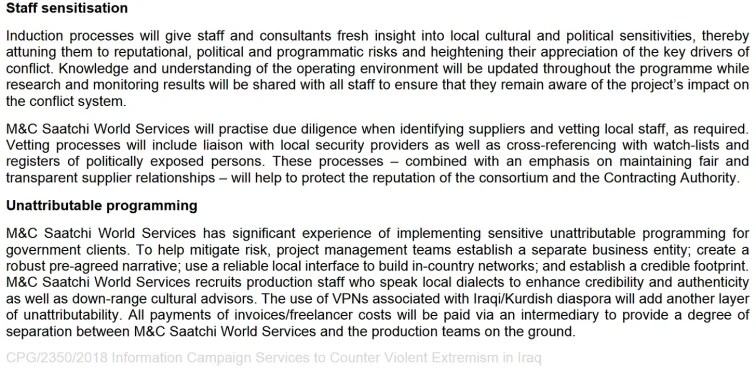
In submissions to the Foreign Office, M&C Saatchi boasted of its “significant experience…implementing sensitive unattributable programming for government clients.” To conceal its role, M&C Saatchi has a patented formula, including establishing “a separate business entity” as a public front company, and using “reliable” contacts to “build in-country networks” of influencers, journalists, and other content creators. “Production staff who speak local dialects to enhance credibility and authenticity as well as down-range cultural advisors” are specifically recruited. In the Iraqi context, M&C Saatchi pledged:

“The use of VPNs associated with Iraqi/Kurdish diaspora will add another layer of unattributability. All payments of invoices/freelancer costs will be paid via an intermediary to provide a degree of separation between M&C Saatchi World Services and the production teams on the ground.”

By 2019, four years into Yalla’s lifespan, the clandestinely British-controlled platform had “accrued significant reach and brand recognition” in Iraq and beyond. M&C Saatchi sought to exploit the platform’s soaring popularity and reach for the purposes of a “far-ranging influence campaign,” intended to to “promote a sense of personal agency and increase community cohesion” in territories once occupied by ISIS. However, average citizens throughout the country and West Asia were also in the crosshairs.

‘Behaviour Change’

M&C Saatchi pledged to bombard target audiences with expansive multimedia psyops, intended to highlight and encourage “personal agency, community cohesion and national unity” among Iraqis young and old. Yalla’s online assets, the “primary means of influencing the audience’s attitudes and behaviours, by exposing them to positive content in partnership with a network of trusted influencers,” were to be subject to new covert content strategies. The objective was to “create a user experience which is similar to mentoring or life-coaching programmes”:

“Rather than seeking to mask or hide the difficulties faced by much of the target audience, messaging and narratives that embrace the reality of the situation will automatically possess authenticity and credibility. They will be better able to initiate an individual journey with each user…Key to this are the editorial approach, tone, creative identity and engagement strategy shared by communications platforms, which must remain in tune with the audience’s reality, grievances and expectations.”

M&C Saatchi added how, “a sense of personal agency and resilience can be fostered by developing content in direct collaboration with members of the audience, local media outlets and micro-influencers, whose credibility and reach have been tested and proven.” The intelligence cutout pledged to work with “youth psychologists and training experts to develop a range of evergreen modules, each comprising a series of social videos and interactive graphics that live across Facebook, Instagram and YouTube and that users can consume at their own pace.”

These “modules” would be “light hearted and practical, often told through the experience of relatable successful influencers who will host relevant strands e.g. ‘10 things I did to become a…’.” For example, “in order to frame the multiethnic history and heritage of Iraq as a potential source of political and economic strength, the creative team will develop a travel series with three comedians from the South, the North and from Baghdad”:

“Each of these influencers will be responsible for designing a travel itinerary for one of the others to explore the region they come from, giving the audience an insight into the lived experience of people in that region as well as its diverse historical and cultural heritage. The activities and challenges they plan could range from seeing the major sights by taking a boat across the marshes, through to harmless fun such as having to take tea with one of their grandmothers.”

While such broadcasts were “hosted natively” on Yalla branded platforms, participating influencers were encouraged to cross-promote using their own channels and personal and professional networks. Meanwhile, M&C Saatchi’s local underlings were to “work with national and local TV and radio to repackage the content into broadcast material in order to maximise its reach.” The intelligence cutout had cultivated “relationships with a wide range of media outlets across the country,” and anticipated leveraging this contact “to good effect”:

“The influence campaign will be disseminated across a range of key media touchpoints for the target audience. These touchpoints will be carefully selected by the media strategy team in order to enjoy the widest reach possible and deliver the messaging where it will be best positioned to drive attitudinal and behaviour change at a personal and social level… The campaign will seek to shape choices, reinforce positive ideas and change social perceptions… [and] place increasing focus on user-generated content as the project evolves.”

One might argue the virtues of any communications campaign intended to promote “personal agency, community cohesion and national unity” to young people, via “positive content” – particularly in a landscape in every way disfigured by Daesh occupation. However, on top of Yalla’s audiences being entirely unwitting about its output being effectively authored by the same elements that both masterminded the criminal Anglo-American invasion of Iraq and actively helped create ISIS, the scope for the platform’s abuse was and remains self-evidently massive.

‘Sustained Messaging’

M&C Saatchi’s project was intended to be deeply personally invasive for all concerned. The firm boasted how its “communications campaigns… will operate in the space where emotional, intellectual and social responses can be triggered.” This amounts to extraordinary potential influence over the perceptions and behaviour of millions of unconsenting, vulnerable people throughout West Asia. Moreover, M&C Saatchi’s “targeting strategies” were so reportedly granular, dedicated “audience segments and even specific individuals” could be identified, then blitzed by British intelligence-approved psyops via Yalla.
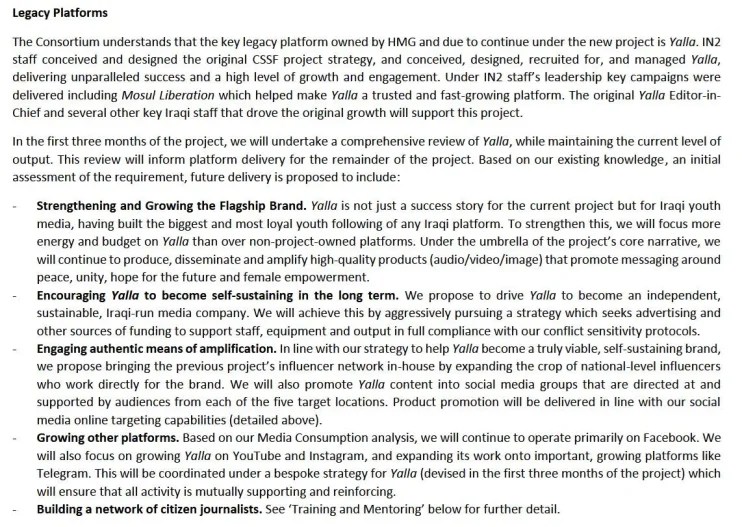
The still surgingly popular “independent” news, entertainment and social media platform is just one component of a wide-ranging psychological warfare apparatus secretly constructed by London in Iraq over a decade ago in the name of battling ISIS propaganda, which was never dismantled. Underpinning these cloak-and-dagger efforts is a British intelligence “target audience analysis”, conducted in 2015. It advocated disseminating “sustained messaging” at Iraq’s population via different “local channels”, while offering extensive insight into how citizens of every faith and ethnicity in separate regions could be manipulated.

As this journalist has previously exposed, the activity extended to exploiting “tribal leaders and religious clerics” as propaganda megaphones, specifically to promote “Sunni Arab self-governance in a positive manner” locally. Strikingly, M&C Saatchi also managed the operation. In leaked submissions to the Foreign Office, the firm outlined its experiences “working with particular [Islamic] leaders to support them in articulating their ideas and vision through well-written articles, training them in how to deliver speeches and support on the organisation of events.”

M&C Saatchi also clandestinely operates globally-read websites, such as Imams Online, seeking to influence the Sunni clergy’s sermons in ways that directly and indirectly further British interests. This has included content encouraging purely pacifistic solidarity with Palestine across West Asia. Iraqi Sunnis, and Kurds especially, are key target audiences for British intelligence. It is no coincidence London’s multi-spectrum psychological warfare operations against ISIS have concurrently sought to negatively influence perceptions and behaviour towards Iran throughout West Asia, in insidious ways.
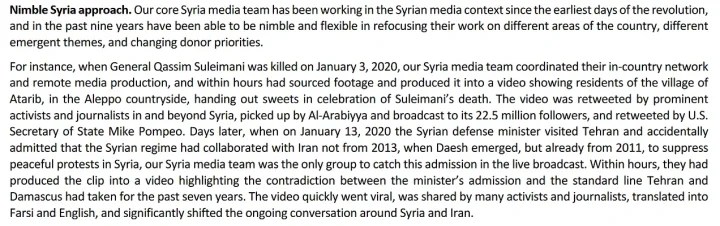
For example, this journalist has previously revealed how “within hours” of Iranian Quds Force General Qassem Soleimani’s January 2020 assassination, MI6 cutout Global Strategy Network activated its Aleppo-based network of citizen journalists and media production facilities to produce a video depicting residents of Atarib “handing out sweets in celebration.” The clip was “retweeted by prominent activists and journalists in and beyond Syria, picked up by [Saudi outlet] Al-Arabiyya and broadcast to its 22.5 million followers, and retweeted by US Secretary of State Mike Pompeo.”

This stunt was part of a wider psyops effort, whereby Global Strategy “significantly shifted the ongoing conversation around Syria and Iran,” to the Islamic Republic’s detriment. Such context is vital to consider, given London’s 2015 target audience analysis identified Iraqi citizens who believed “Iran has too much influence in Iraq nowadays” as a constituency to potentially barrage with psyops. Markedly, intensive focus grouping found the overwhelming majority of Iraqis vehemently rejected this view, across ethnic and religious lines.

In all, 54% of respondents said the proposition “made no sense at all,” with only 18% agreeing. However, 68% of Sunnis surveyed, many of them Iraqi Kurds, concurred. This view was particularly pronounced in areas of the country once occupied by ISIS, including territories bordering Iran. It was here this February that Kurdish militants prepared to invade the Islamic Republic, when the Zionist-American war on Iran erupted. Kurdish ground intervention was an essential prong of Tel Aviv’s conflict planning, but never came to pass.
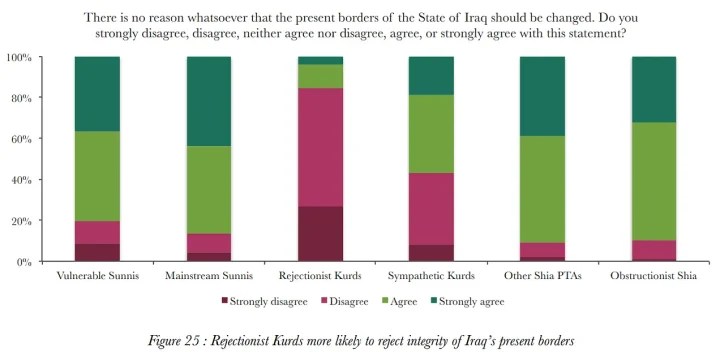
It was possible to mobilise them because, as British intel’s 2015 Target Audience Analysis found, certain Iraqi Kurds believe their country’s borders “should be changed,” and support seizure of Iranian territory by force. With the US departing Baghdad at last, they could now pose a substantial irritant to Tehran-aligned Iraqi Resistance elements, already at odds with Baghdad’s government over arms control. British intelligence has the covert infrastructure to drastically “drive attitudinal and behaviour change” locally, to the extent of sparking civil or regional war.

  •  

The U.S. Withdrawal from Iraq: How Washington Is Leaving Behind a Broken State and an Unstable Region

The withdrawal of U.S. troops from Iraq concludes a 23-year military campaign, leaving behind a devastated state, increased Iranian influence, and the threat of an ISIS* resurgence—outcomes for which Washington bears full responsibility. On September 30, 2026, the last American soldier left Iraq. Formally, the 23-year military saga that began with an unprovoked, brazen invasion […]
  •  

Hormuz and the Looming Economic Catastrophe

The Trump administration is missing the bigger picture

By Philip Pilkington | The American Conservative | October 9, 2026

In the classic martial arts film Enter the Dragon, Bruce Lee’s character is instructing a young, aspiring fighter. Irritated at the lack of progress his student is making, he points to the sky. “It’s like a finger pointing away to the moon,” he says as the student tries to focus on what his teacher is saying. “Don’t concentrate on the finger,” Lee says, slapping him on the head, “or you will miss all that heavenly glory.” The quote is derived from an old Buddhist text called the Śūraṅgama Sūtra, and the point is clear: Sometimes if you focus on what is immediately in front of you, you can miss the point entirely.

Something like this is happening in Washington, DC, right now. For almost two weeks, the debate around the progress or lack thereof in the Iran War has been focused on activity in the Strait of Hormuz. A whole host of maritime experts have emerged suddenly to inform us that the Trump administration has succeeded in reopening the crucial waterway to shipping. Maximalists are claiming that this means the United States has effectively won the war in the Middle East. Others are making the more modest claim that this reopening of the Strait will solve the looming energy crisis.

These were the two perspectives that most people who were not deeply involved in the debate heard. There was, however, a small but vocal minority who questioned whether the Strait had been opened at all. If Iran had effective fire control over the Strait in spring and summer, they asked, then why would they suddenly lose it now? Almost immediately after this question was raised, Iran settled the debate by striking an enormous number of ships: 12 and counting in less than a week.

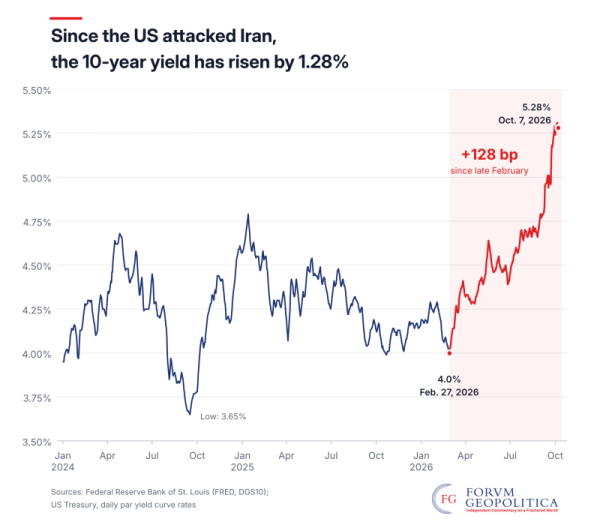
To those of us who were paying attention, the whole exercise felt like looking at Lee’s finger as he points to the moon. As these debates unfolded, the market for U.S. Treasury debt continued an epic sell-off. Bloomberg quoted an investment banker who stated that Treasuries were “trading like a meme stock.” U.S. Treasury bonds have now experienced their worst long-run returns in history.

Treasury bonds are not just any old asset. For one, they are the debt of the U.S. government. If they become uninvestable, the capacity for Washington to live beyond its means through debt issuance is open to question. Treasuries are also the benchmark asset for the entire global dollar system that has allowed the U.S. to run enormous deficits for decades. If this asset starts “trading like a meme stock” and generating awful returns, foreigners will opt for something else. This week, the president of the German central bank stated that “the case for further diversification into gold remains significant.” People are talking.

In mid-September, the speaker of the Iranian parliament, Mohammed Bagher Ghalibaf, posted an equation on X. Unusually for an obscure piece of algebra, the post garnered nearly 7 million views. The equation was a modified version of what economists call the “Taylor Rule,” a method that economists and central bankers use when setting central bank interest rates. In normal times, the equation factors in expected future inflation and how much slack is in the economy. But Ghalibaf’s equation—which he called the “Straits Taylor Rule” —included two new variables: the Strait of Hormuz and the Bab el-Mandeb, the two waterways currently under fire from Iran and the Houthis in Yemen, respectively.

The equation is a stripped-down representation of Iran’s strategy. By controlling these waterways, Iran and its allied groups have gained control over the global energy market. By squeezing these chokepoints, Iran can assert de facto control over America’s financial markets by pushing up expected inflation. Central banks like the Federal Reserve realize that this is no mere bluff and have already started raising interest rates. Ghalibaf’s equation explains, to a very large extent, why American government debt is currently trading like a meme stock.

Meanwhile, at the same time as these pressures are felt in American financial markets, the real economy is undergoing a squeeze too. Recent reports from the Energy Information Agency suggest that American heating-oil bills are expected to rise by 21 percent this winter. Diesel markets are entering into a genuine crisis, with President Donald Trump floating the prospect of banning diesel exports to ensure that there are no shortages. Diesel is the lifeblood of the American logistics chain. If there are shortages, trains and trucks will not run and goods will not be delivered to shelves. Trump has walked back the diesel export ban for now, after strong-arming the Europeans to dump their oil and diesel reserves, but there is every chance that this option appears back on the table as the crisis worsens. Food prices are rising too, with sugar prices looking particularly worrisome.

Once again, Ghalibaf outlined how this is part of Iran’s overall strategy. In an X post this week, the speaker published a rudimentary graph—coupled with a haunting image of a ghost—showing rising commodity prices and interest rates on one side, and falling consumer confidence, foreign interest in U.S. Treasuries, hyperscaler investment, and housing affordability on the other. The Iranians are not just trying to squeeze the American financial system—they are aiming to put extreme stress on the entire economy—and it looks increasingly like they intend on making this pressure felt before American voters go to the polls on November 3.

The Trump administration has become fixated on the Strait of Hormuz, seeing it as a decisive battlefield on which the U.S. can win the war. But the Strait is merely a means to an end. For Iran, that end is to slowly demolish the American economy and financial system until the pressure becomes too much and the U.S. backs off. The idea that you can “win” such a battle is delusional.

The Strait is merely the finger in Lee’s analogy. It is Iran’s overall economic strategy—the moon—that we should focus on. And when we do, we come to the worrying conclusion that by the time the Trump administration cries uncle, the damage done to the American economy and financial system will be so severe that it could take many, many years to recover.

Original article:  www.thea

  •  

America Is Leaving Iraq, Not the Middle East

America’s last troops have left Iraq, but anyone looking for a US withdrawal from the Middle East is looking in the wrong place. The end of the Iraq model On September 30, the United States completed the withdrawal of its forces and equipment from Erbil Air Base, formally ending the mission of Operation Inherent Resolve […]
  •  

USS Abraham Lincoln Comes Home With Its Island Superstructure Covered In Kill Marks

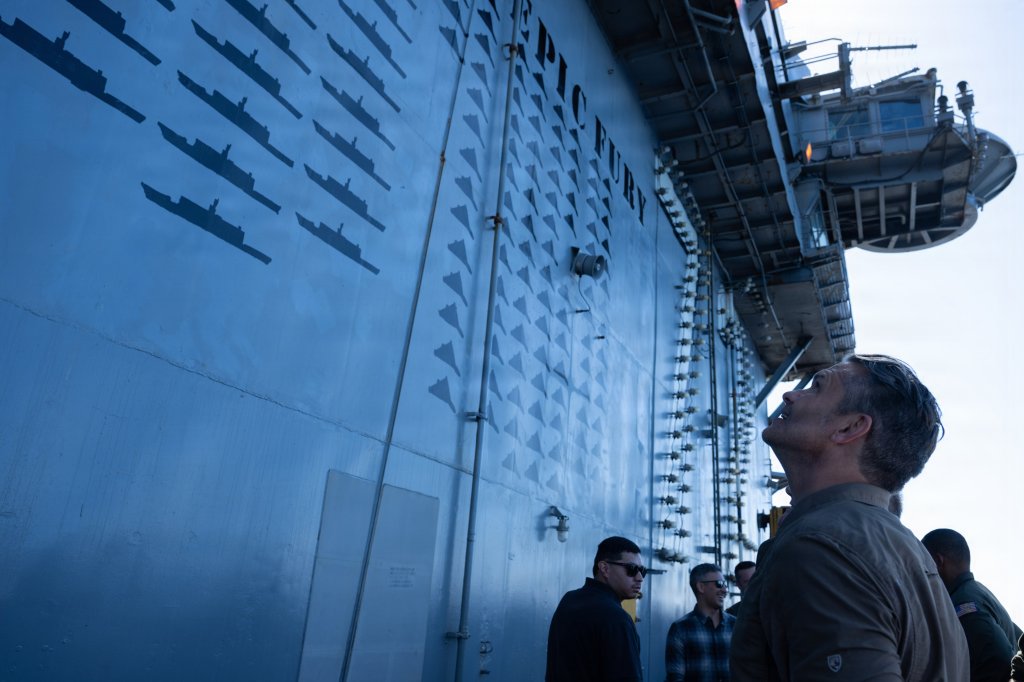
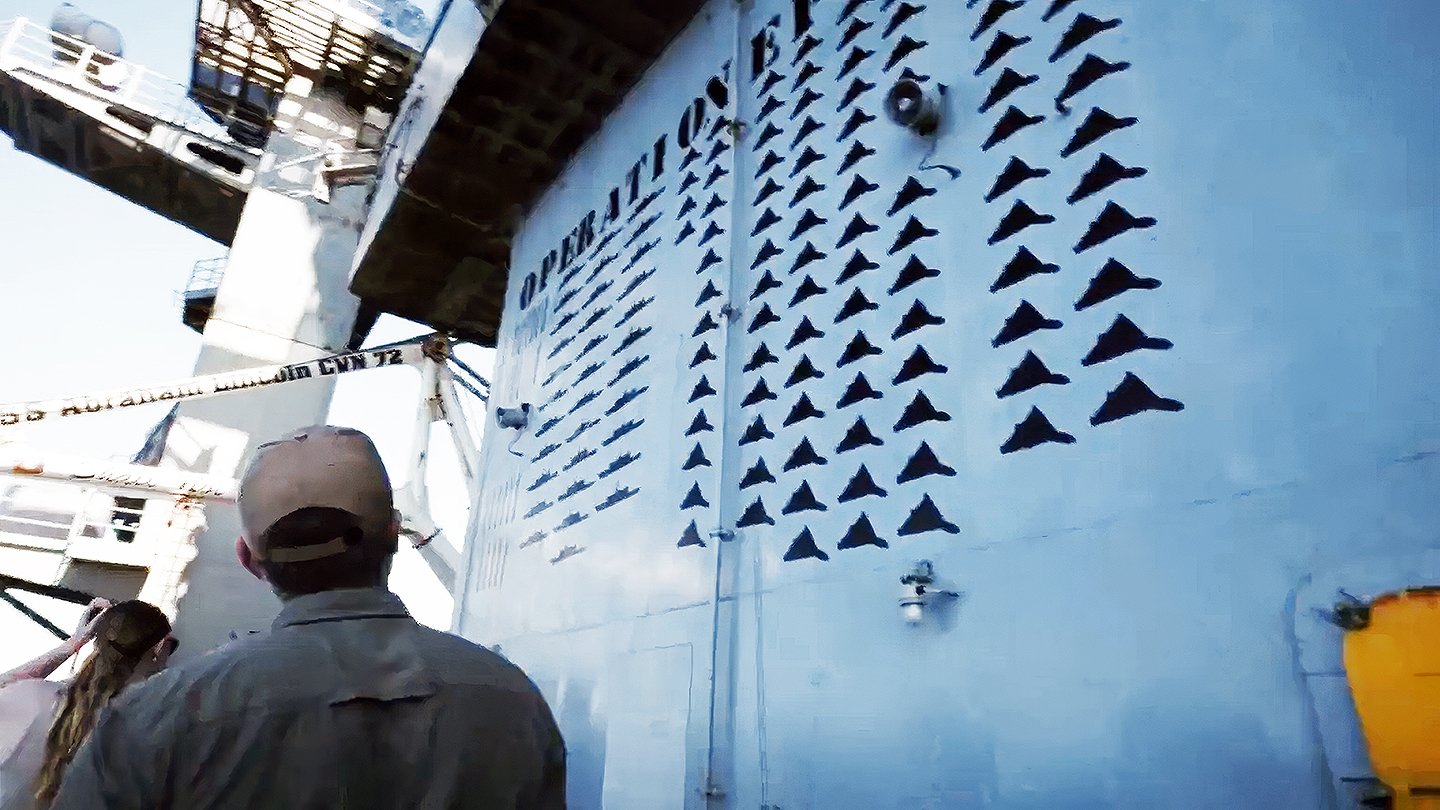
Standing on the deck of the aircraft carrier USS Abraham Lincoln, Secretary Pete Hegseth looked up at the flattop’s superstructure and got a good indication of many of the targets the Lincoln Carrier Strike Group (CSG) destroyed during its six-month fight with Iran. In a photograph shared by the Pentagon’s image distribution site, Hegseth is seen examining a wall of so-called kill marks stenciled onto the superstructure.

By our count from the image and a video taken during Hegseth’s visit, both of which you can see below, there are 103 one-way attack (OWA) drone kill marks and 34 ship kill marks. These represent the number of each the CSG took out. It is unclear whether there are other kill marks we can’t see.

Though they resemble Shahed-136s, which are the most notorious of Iranian OWA drones, these silhouettes would represent all types shot down, and Iran has many. The same holds true for the ships. The photograph shows stencils of frigates or corvettes but these would be a generic symbol for surface craft kills.

Secretary of War Pete Hegseth visits U.S. Navy Sailors aboard the USS Abraham Lincoln (CVN-72) near San Diego, Calif., Oct. 7, 2026. (DoW photo by U.S. Air Force Staff Sgt. Madelyn Keech)
Secretary of War Pete Hegseth visits U.S. Navy Sailors aboard the USS Abraham Lincoln (CVN-72) near San Diego, Calif., Oct. 7, 2026. (DoW photo by U.S. Air Force Staff Sgt. Madelyn Keech) Staff Sgt. Madelyn Keech

To the sailors of the USS ABRAHAM LINCOLN—

WELCOME HOME🇺🇸 pic.twitter.com/AoQymN2yfZ

— Secretary of War Pete Hegseth (@SecWar) October 7, 2026

On board to welcome the ship and its crew as it headed back to its home port of San Diego after a tumultuous and historic deployment, Hegseth extolled the strike group’s accomplishments. Reading from the Presidential Unit Citation awarded to the strike group for its work during Epic Fury, Hegseth noted that it shot down 77 one-way unmanned attack drones and sank 64 Iranian vessels between the start of Epic Fury on Feb. 28 until it departed the region on Aug. 22.

The Lincoln CSG also conducted 3,693 combat sorties, delivered 1.37 million pounds of ordnance, launched 450 Tomahawk Land Attack Cruise Missiles (TLAMs), destroyed 21 anti-ship cruise missiles and defended against four fast-attack craft and explosive-carrying wooden sailing vessels.

Defense Secretary @PeteHegseth awards Presidential Unit Citation to USS Abraham Lincoln pic.twitter.com/DbS5YYu9oB

— CSPAN (@cspan) October 7, 2026

It is unclear at the moment why there are at least 26 more drone kill marks stenciled onto the Lincoln than the number of drones shot down listed in the unit citation and why there are 30 fewer ship kill marks than the tally noted in the citation. The Pentagon referred us to the Navy, and we are waiting for a response from the service.

There is a long tradition of kill marks being stenciled onto aircraft, vessels and other military equipment indicating the destruction of enemy equipment.

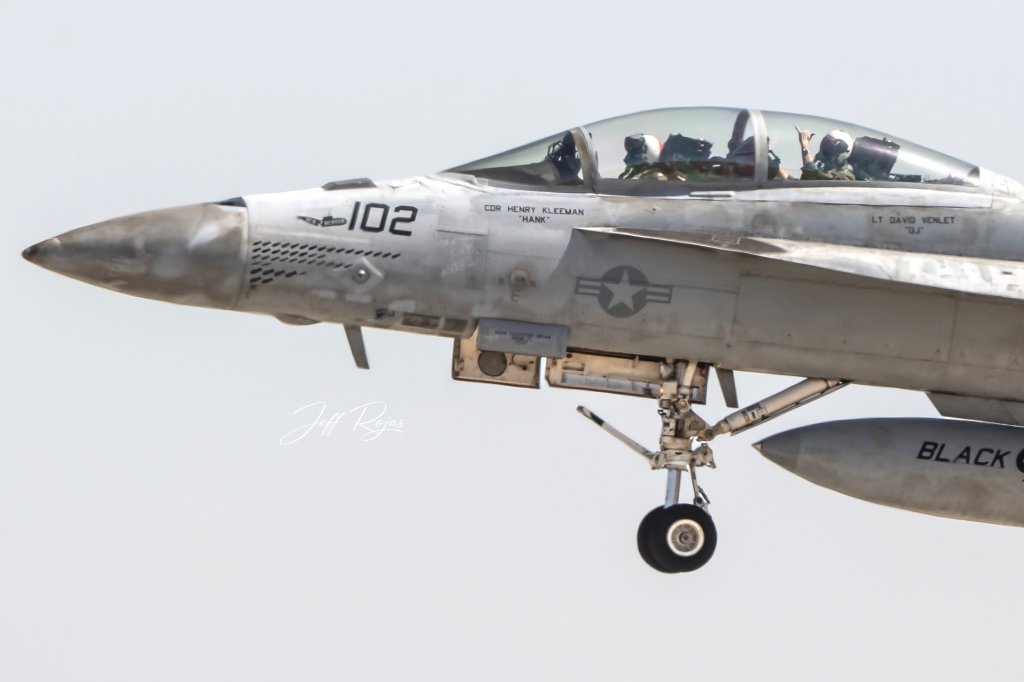
Kill marks on aircraft embarked aboard Lincoln indicate that the carrier strike group also destroyed several Iranian submarines and other weapons. These were not listed in the unit citation or in any kill marks stenciled onto the Lincoln that we could see.

An image provided to TWZ by aviation photographer Jeff Rojas, who goes by the handle @jro_photography on Instagram, shows a submarine kill mark on one of the F/A-18F Super Hornets of the U.S. Navy’s Strike Fighter Squadron 41 (VFA-41), the “Black Aces.” That is one of the aviation squadrons embarked on the Lincoln during Epic Fury.

A close-up look at the broken submarine and other kill marks on one of VFA-41’s Super Hornets. (Jeff Rojas) Jeffrey Rojas

Iranian naval vessels, including the country’s Russian-made Kilo class and other submarines, were top-priority targets during Epic Fury. The U.S. military has previously confirmed that air-launched AGM-114 Hellfire laser-guided missiles (likely fired from MQ-9 Reaper drones) and ground-launched Army Tactical Missile System (ATACMS) short-range ballistic missiles were employed against submarines, specifically.

In total, VFA-41 alone launched 421 missiles and bombs during its time supporting Operation Epic Fury. You can find the details in our story about the squadron here.

In addition, an image published by The Aviationist showed “an extraordinary array of target markings on a VMFA-314 F-35C, apparently representing an oil tanker, three submarines, a surface combatant, a Shahed-type drone, an artillery piece, and several ground-based launchers.”

Marine F-35C Also Sports Three Submarine Kill Markings After Operation Epic Fury

An exclusive image obtained by The Aviationist reveals an extraordinary array of target markings on a VMFA-314 F-35C, apparently representing an oil tanker, three submarines, a surface combatant, a…

— The Aviationist (@TheAviationist) October 5, 2026

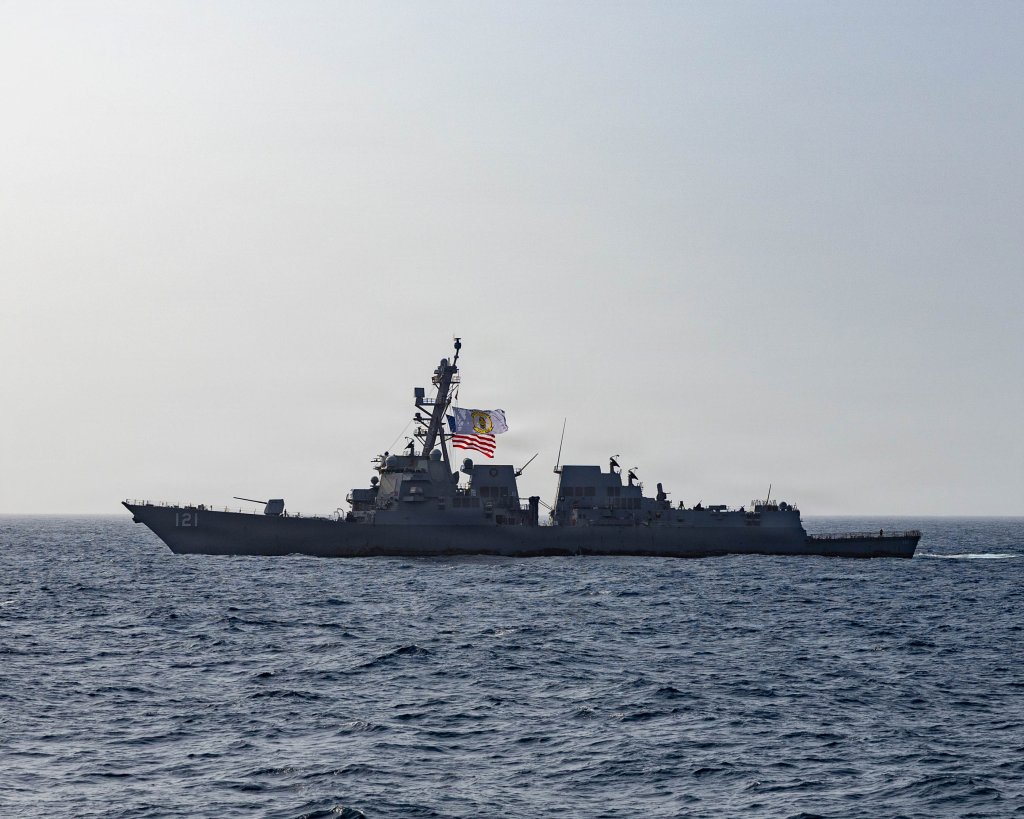
It should also be noted that some of the drone kill marks seen on the Lincoln could have been the result of shootdowns by the carrier’s escorts. The Arleigh Burke class guided missile destroyers USS Frank E. Petersen Jr, USS Spruance and USS Michael Murphy all serve as critical air defense platforms for the carrier strike group. Those vessels were also the ones launching the TLAMs, as well as potential submarine involvement.

Arleigh Burke-class guided-missile destroyer USS Frank E. Petersen, Jr. (DDG 121) transits the Arabian Sea, June 27, 2026. Rafael Peralta is deployed to the U.S. 5th Fleet area of operations to support maritime security and stability in the Middle East. (U.S. Navy photo)
Arleigh Burke class guided-missile destroyer USS Frank E. Petersen, Jr. (DDG 121) transits the Arabian Sea, June 27, 2026. (U.S. Navy photo) U.S. Central Command Public Affa

Late Thursday morning local time, Lincoln finally returned home. The carrier departed San Diego on Nov. 21, 2025, and an arrival closed out a total deployment of 321 days, by our count. That’s just shy of the 326-day record USS Gerald R. Ford set in May, representing the second-longest deployment in the modern carrier era.

USS Abraham Lincoln returns to San Diego https://t.co/0eEnTqJZdU

— Reuters (@Reuters) October 8, 2026

In addition to racking up successes against Iran, the marathon deployment drew scrutiny over the grueling conditions sailors and Marines experienced aboard. In August, crew families described supply shortages and difficult living arrangements, as TWZ reported at the time. The accounts led to widespread media coverage, which Acting Secretary of the Navy Hung Cao called dishonest while also acknowledging that “a small number of mental health cases were treated with no loss of life, meal plans were adjusted when fresh resupply was unavailable, without a single meal being missed, calls home were limited when the operational threat was too high.” At least eight personnel across the strike group attempted suicide during the cruise, Cao wrote in a letter sent to Sen. Kirsten Gillibrand that was obtained by CNN.

The kill mark stencils weren’t the only symbols of Lincoln’s deployment. On Wednesday, Hegseth used symbology to push back against concerns raised about the long journey.

“There were a few folks in the media who tried to turn the USS Abraham Lincoln into some sort of a symbol,” Hegseth said. “A symbol of dysfunction, or a symbol of low morale, or a symbol of a failed mission. And what I look out right here or when I talk to your leadership, and I haven’t had a chance to talk to a number of you, I know it’s the exact opposite.”

UPDATE: 5:59 PM Eastern –

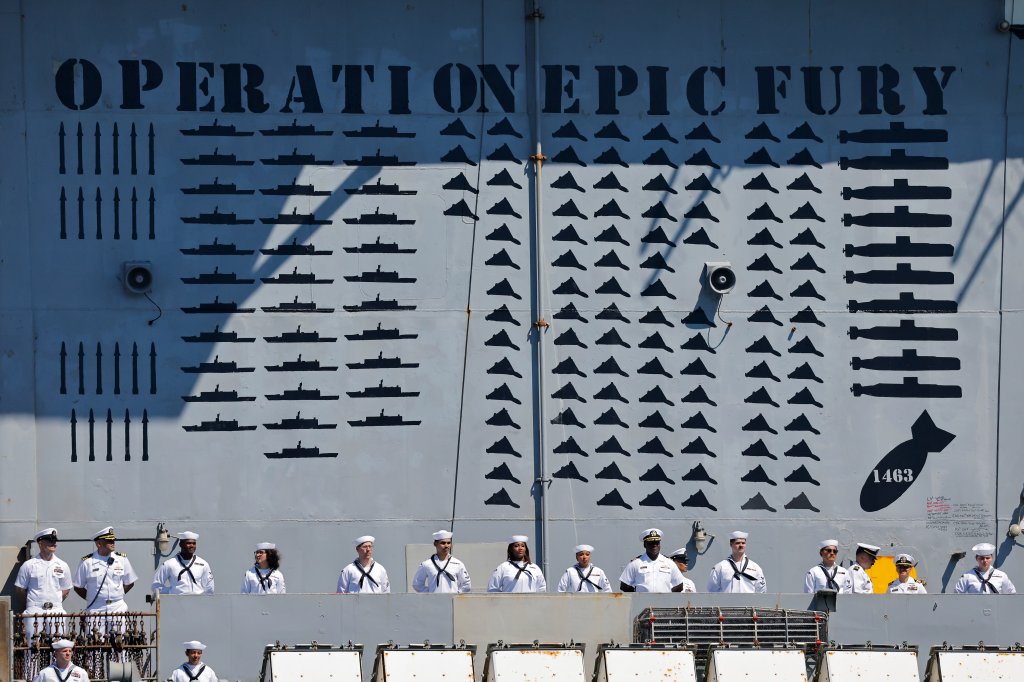
After the Lincoln pulled into its home port, new images emerged. The following picture shows additional kill marks, including 10 of submarines.

CORONADO, CALIFORNIA - OCTOBER 08: Sailors aboard the USS Abraham Lincoln Nimitz-class aircraft carrier look on as the ship docks at its homeport at Naval Air Station North Island on return from a historic 10-month deployment on October 8, 2026 in Coronado, California. The USS Abraham Lincoln (CVN 72) set a U.S. Navy record spending over 260 days consecutively at sea without a port call while playing a key role in Operation Epic Fury and regional maritime security operations in the Middle East. (Photo by Mario Tama/Getty Images)
Sailors aboard the USS Abraham Lincoln look on as the ship docks at its homeport at Naval Air Station North Island on return from a historic 10-month deployment on Oct. 8, 2026 in Coronado, California. (Photo by Mario Tama/Getty Images) Mario Tama

Contact the author: howard@twz.com

The post USS Abraham Lincoln Comes Home With Its Island Superstructure Covered In Kill Marks appeared first on TWZ.

  •  

Calculating Iran’s Losses in Op. Epic Fury as CRS Nearly Doubles the U.S. Aircraft Count From 42 to 81

A newly updated Congressional Research Service (CRS) report counts 81 US military aircraft as lost or damaged in the ongoing conflict with Iran. EurAsian Times analyzes the losses Tehran sustained during the ongoing conflict. 

The latest figure is nearly double the 42 aircraft the Congressional Research Service tallied in a May 2026 report, as the EurAsian Times reported at the time.

The jump from 42 to 81 most likely reflects updated reporting and newly available public information.

In addition to the Congress research figures, two other reports published by the Congressional Budget Office and the Pentagon’s inspector general had earlier provided deep insights into the war. The latest CRS report reportedly cited that data.

“As of August 1, 2026, the armed conflict with Iran has cost DoD approximately $38 billion. That amount reflects the costs of replacing expended munitions and equipment lost in battle, increased flying hours, other operations, and increased fuel costs,” the Congressional Budget Office (CBO) stated in the report last month.

Meanwhile, the Pentagon’s IG report estimated the US campaign cost $33.4 billion between February 28 and June 30, with at least $22.3 billion spent on munitions alone.

Citing information published by the CBO, the latest CRS states that the overall cost of the lost aircraft is between $1.9 billion and $3.3 billion, depending on the Pentagon’s replacement costs. However, CNN News was informed by some unidentified sources that the cost of the war is much higher–at least $45 billion–excluding damage to US infrastructure and bases spread across the Gulf, repeatedly struck by Iranian forces.

The revised losses in the Congress report include manned aircraft, helicopters, and drones, though it clarifies that the total is not a count of destroyed aircraft, adding that some damaged aircraft may have returned to active service after repairs.

It lists 12 F-15E jets as destroyed/damaged, up from four F-15E Strike Eagle Fighter jets listed in the May 2026 report. The US lost three F-15E fighters in a friendly-fire incident related to the Kuwait Air Force aircraft, whereas the fourth was downed by Iran using shoulder-mounted air defense systems, as previously noted by the EurAsian Times. 

Image
Wreckage of the USAF’s F-15E published by Iranian media after downing the jet in April 2026 (Via X)

Both CBO and IG reports also earlier listed just four F-15E losses. Therefore, the eight F-15Es mentioned in the new report are likely the jets that were damaged in an Iranian strike on the Muwaffaq Salti Air Base in Jordan in September 2026. Citing an unidentified US official, Reuters earlier reported that Iran had struck an A-10 Warthog, leaving it with a missing wing, while eight F-15s sustained light damage and were returned to service.

The latest list also includes the F-35A, the US Air Force’s most prized and expensive stealth fighter. The CBO report had earlier noted that replacing/repairing the aircraft would cost $120 million, without saying whether it would be written off or repaired.

Although some OSINT observers at the time believed this acknowledged the F-35 loss, others warned that the CBO was only recording the repair cost while leaving room for a potential replacement.

Furthermore, the latest list also reiterates the loss of the E-3 Sentry Airborne Warning and Control System (AWACS), which was struck and damaged while on the ground at Prince Sultan Air Base, Saudi Arabia, during an Iranian missile and drone attack.

However, instead of merely reporting the loss, it expressed concern about losing this highly specialized aircraft and the far-reaching effects it could have on the USAF.

“Congress may assess whether losses in certain high-demand platforms that are aging and limited in number, such as the E-3 Sentry, create capability gaps or increase risk in other theaters,” it stated.

Image
A USAF E-3 Sentry damaged in Iran’s strikes

Notably, the US Air Force has only 16 of these critical AWACS remaining in its inventory, and losing each could disproportionately affect American combat posture in the Western Pacific, where the threat of war with China is never off the table.

Another newly listed loss on the updated CRS is the US Navy’s MH-60S Sea Hawk helicopter, which did not appear in the May 2026 list. On July 1, an MH-60S Sea Hawk from a George H.W. Bush aircraft carrier made an emergency landing in the Arabian Sea, although the Navy ruled out hostile action at the time.

Most of the rise since May is attributed to drones. The report now counts 45 MQ-9 Reapers lost, up from 24 in its May report. This is also a considerable increase from the 30 Reaper losses cited in the IG report. Furthermore, a US Army AH-64 Apache that was shot down over the Strait of Hormuz in June 2026 has also found its name on the list. 

Notably, the newly published report raises several issues for Congress to address, including whether the Pentagon provides enough detail about the losses for lawmakers to assess the consequences and potential solutions.

CRS notes that the Department of Defense’s reporting on the losses has been limited or vague, especially since even the September 2026 Lead Inspector General report relied in part on earlier CRS open-source tallies rather than providing a fully independent, comprehensive public accounting.

What Did Iran Lose In The War?

Iranian authorities have offered only limited, selective figures on their own military and civilian casualties and have not published a comprehensive accounting of equipment destroyed during Operation Epic Fury launched by the US in coordination with Israel.

Iran has nothing equivalent to the CRS list. Open-source counts already disagree: one tracker puts Iranian aircraft losses above 90 airframes, mostly transports and tankers, while a narrower documented list counts 43.

Open-source trackers have recorded dozens of Iranian aircraft—combat jets, transports, tankers, trainers, and helicopters—destroyed primarily on the ground at air bases early in the campaign, although a few were downed in air.

In the initial days of the war, two Iranian fighters, a Northrop F-5 and a F-4 Phantom II, were destroyed in an Israeli strike at Tabriz Shahid Madani International Airport. Around the same time, the US destroyed two Iranian Sukhoi Su-22 aircraft at Shiraz Shahid Dastgheib Airport, along with two Lockheed C-130 Hercules and an Il-76 transport aircraft.

CENTCOM released footage of the two Su-22s. Satellite imagery was later cited for the two C-130s and the Il-76 at the same airfield. Further Phantom losses have been reported at the 3rd Tactical Air Base in Hamadan, but not documented to the same standard.

A Qatari Air Force Boeing F-15QA shot down two Iranian low-flying Sukhoi Su-24 tactical bombers on March 2, 2026, after they failed to react to radio warnings.

In the second week of March 2026, Israel said it had destroyed multiple IRIAF F-14 Tomcats in a massive air strike on Isfahan Airport, and 16 aircraft used by the IRGC Quds Force at Mehrabad International Airport were also struck. At the time, experts posited that these strikes may have wiped out the entire Tomcat fleet, particularly since some of these jets had already been destroyed in the 12-day war between Israel and Iran in June 2025.

Historian Tom Cooper estimated that only about 10 Tomcats were flyable when the war began, compared with roughly 35 still listed on paper.

Satellite imagery confirmed at least two, and probably three, destroyed at Isfahan; some higher counts include airframes later described as wooden decoys. Iranian state media released footage on June 10 of an F-14 returning from a mission, so the “fleet finished” claim did not hold.

At Mehrabad, imagery after the Israeli strikes showed damage to at least 17 aircraft, including a Boeing 747 and a Harbin Y-12. Separate open-source lists also record Boeing 707 and 747 tankers destroyed at airfields between March and April.

An Israeli Air Force F-35I “Adir” stealth fighter jet shot down an Iranian YAK-130 aircraft over Tehran on March 4, as the EurAsian Times reported. On March 10, videos documenting the demolition of a Lockheed C-130 Hercules, a Lockheed P-3 Orion, and an Il-76 at Ayatollah Hashemi Rafsanjani Airport in Kerman, Iran, were released by CENTCOM.

Later that month, reports also surfaced of Iranian J-7 fighter jets and Bell 214 helicopters. In addition to these, several Iranian drones–deployed on a large scale–were shot down by US forces, although these were mainly one-way attack platforms.

Those drone losses are the hardest to count. Many were expendable one-way airframes, and neither side has published a reconciled total. Iran also claimed shootdowns of Israeli drones, including Heron and Hermes airframes, in early March; those claims are likewise unreconciled.

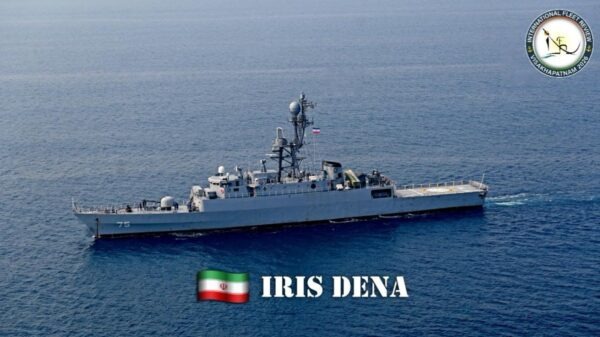
Iran has not released an official inventory of destroyed ships, but the sinking of IRIS Dena in the Indian Ocean became one of the starkest and most unforgettable symbols of the US war against Iran, especially since it was the first such sinking since World War Two.

Dena was a Moudge-class frigate, sunk on March 4 about 19 nautical miles off Galle, Sri Lanka, while returning from India’s International Fleet Review. The US said the Los Angeles-class submarine USS Charlotte fired two Mark 48 torpedoes and one hit. Defense Secretary Pete Hegseth confirmed a US submarine carried out the strike.

Sri Lanka recovered 32 survivors; Iran later put the dead at 104. Some reports said the ship carried no operational armament because of the exercise, and that its Bell 212 was not aboard.

The accurate historical marker is narrower than “first sinking since World War Two”: first ship sunk by a US submarine since 1945, and first submarine sinking in combat since ARA General Belgrano in 1982. India and Sri Lanka both joined the search.

Furthermore, the US forces destroyed 17 Iranian warships, including a submarine, in the early days of the conflict, as the EurAsian Times reported at the time. These numbers likely climbed in the weeks leading up to the April 7 ceasefire and may have risen further after hostilities broke out in July 2026.

In fact, The Aviationist recently published photos of an F-35C that returned from the theatre bearing markings of three submarines, a surface combatant, a Shahed-type drone, an artillery piece, and several ground-based launchers.

Those markings record claimed engagements. They are not a confirmed naval order of battle.

Over the months, US forces have repeatedly endorsed destroying or damaging Iranian Navy and coastal targets, with Donald Trump alleging that the whole force had been wiped out.

Open-source reporting has suggested that a large portion of Iranian air defenses that are part of a meticulously built layered network, including the S-300, Bavar-373, Khorad-15, to name a few, were also destroyed in US and Israeli strikes. Additionally, both the US and Israel claimed to have destroyed several ballistic missile launchers in the initial days.

Israel said one early wave put more than 25 fighters against over 35 missile storage and launch sites around Tabriz and Kermanshah. Without a pre-war inventory or a public battle-damage assessment, none of these claims can be turned into a share of the force destroyed. Mobile launchers are the largest gap: a struck site is not proof the missile was in it.

That said, these figures are not fully confirmed, as Tehran has not officially published its losses.

Nonetheless, despite suffering major losses throughout the war, Iran has survived, dealing a blow to joint US-Israeli aspirations of completely destroying its ballistic missile or even the Nuclear program.

The post Calculating Iran’s Losses in Op. Epic Fury as CRS Nearly Doubles the U.S. Aircraft Count From 42 to 81 appeared first on EURASIAN TIMES.

  •  

Pakistan Fighter Jets Bombing Houthis “Fake & Fabricated”. Islamabad Rejects NYT Report

Pakistan has outrighty rejected a New York Times (NYT) report that claimed PAF fighter jets were involved in strikes against Houthis, calling the claim “fake and fabricated.”

“The claim in the above-referenced NYT report that Pakistan Air Force aircraft are being used against the Houthis is fake and fabricated,” Pakistan’s Information Ministry said.

In an X post, Pakistan’s Ministry of Information & Broadcasting wrote: Fact Check | Ministry of Information & Broadcasting NYT above referred story attributing employment of PAF aircraft against Houthis is fake and fabricated. International Media houses are again asked to avoid speculative reporting with regards to employment of Pakistan’s Military Forces under Makkah Joint Defence Agreement. Details of any employment, if necessary will be given by concerned authorities. Truth Prevails over Falsehood.

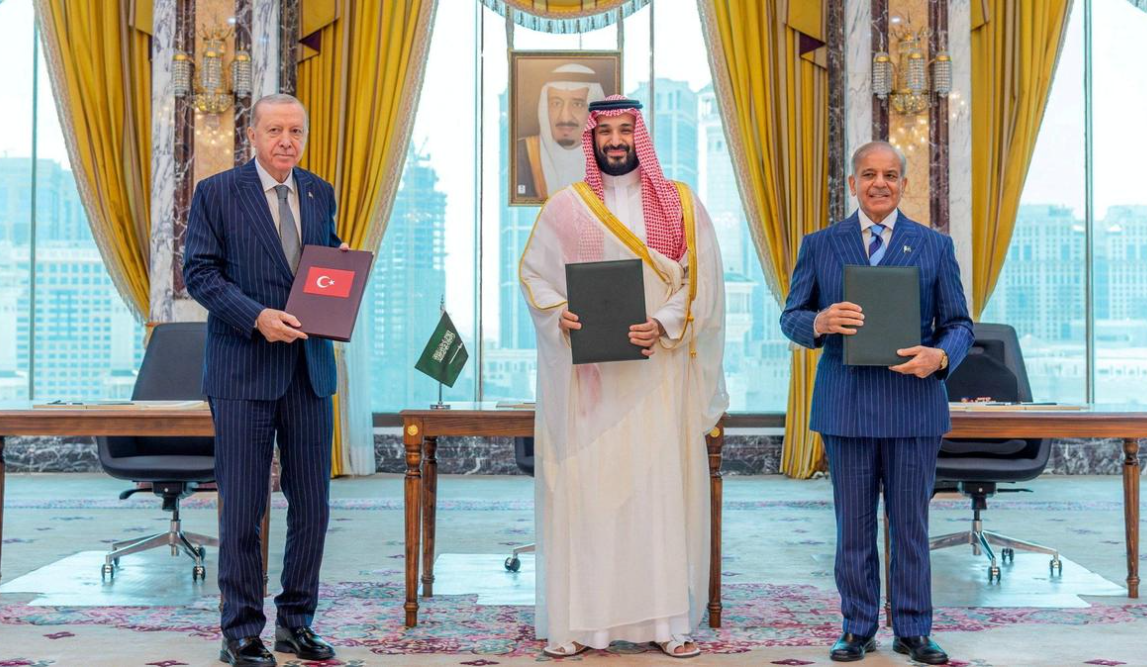
The report came days after Pakistan and Turkey agreed to deploy troops to Saudi Arabia under the Mecca Joint Defense Agreement.

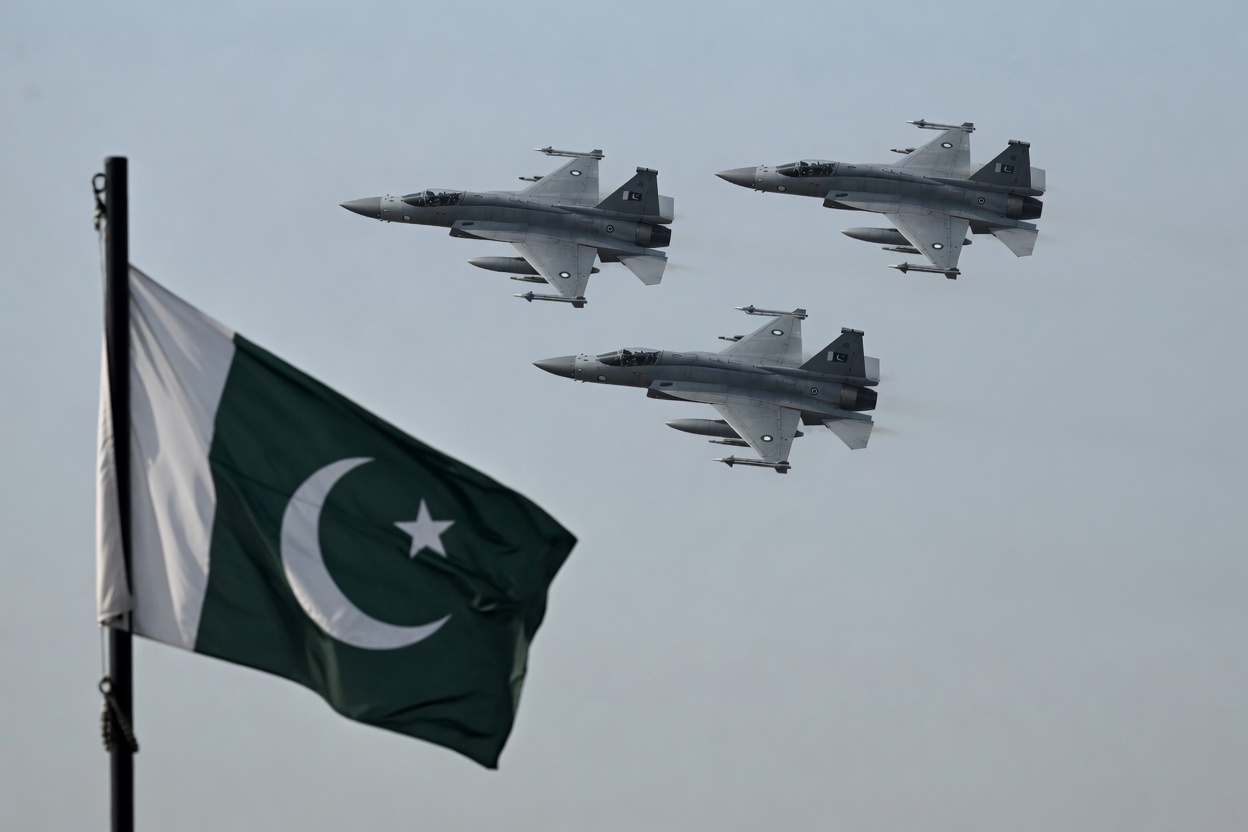
File Image: JF-17 Jets

Earlier, a senior Pakistani military official, speaking on condition of anonymity, told NYT that Pakistan Air Force jets were being used in strikes against the Houthis.

Another Pakistani official said Islamabad’s role was aimed at degrading Houthi drone and missile threats through air support rather than a ground offensive in Yemen, the NYT claimed.

Col. David O. Smith, a former U.S. Army attaché in Pakistan and former Defense Intelligence Agency analyst, said he had no classified figures, but that the analyst consensus was about 8,000 Pakistani troops deployed in Saudi Arabia. He said the force included a Pakistan Air Force contingent and Army air-defense units, that they would likely help secure oil infrastructure, and that Pakistani soldiers were unlikely to fight the Houthis directly because Islamabad is trying to preserve its relationship with Iran.

Pakistan’s military spokesman, Lt. Gen. Ahmed Sharif Chaudhry, confirmed to CNN that Pakistani troops are already in Saudi Arabia and described any role as defensive, without saying whether they would operate across the border in Yemen.

Interestingly, Pakistan earlier furiously denied a social media buzz that claimed Pakistan had lost three JF-17 fighter jets due to a Houthi missile attack that targeted King Abdulaziz Air Base in Saudi Arabia.

“This is absolutely fake. No credible or official source has also reported any sort of damage to PAF JF-17s,” the Ministry of Information reportedly said in its statement. The “deliberate fabrication of damage to PAF aircraft and their alleged evacuation is only blatant Indian propaganda, part of Hindutva deceit and a deceptive mindset,” the Ministry said.

The Pakistani Air Force jets and support aircraft, including JF-17 jets, arrived in April 2026 under the Strategic Mutual Defense Agreement that Pakistan and Saudi Arabia signed in September 2025.

Meanwhile, Turkey’s foreign minister has rejected sending troops to Yemen, despite the “Mecca pact” with Saudi Arabia.

“This is a defense agreement,” said Hakan Fidan, adding: “If one of the countries is attacked, you support its defense. This is not an offensive agreement.” Turkey “will not send its troops to another country’s territory to launch an attack”, he emphasized.

Fidan said Turkish and Saudi military delegations would work together to assess what defensive measures might be needed, without giving details.

  • By ET Desk
  • Mail us at editor (at) eurasiantimes.com

The post Pakistan Fighter Jets Bombing Houthis “Fake & Fabricated”. Islamabad Rejects NYT Report appeared first on EURASIAN TIMES.

  •  

Baghaei to Rubio: Distorted narratives cannot erase US record of broken commitments

Press TV – October 7, 2026

Iranian Foreign Ministry spokesman Esmaeil Baghaei has dismissed claims by US Secretary of State Marco Rubio that Tehran has repeatedly squandered chances for an agreement, saying the inversion of historical facts cannot erase Washington’s pattern of treaty-breaking from public memory.

Baghaei, responding to an IRNA question on Rubio’s assertion that “Iran has missed opportunities for an agreement multiple times,” stated on Wednesday, “The inversion of historical truths cannot remove the reality of America’s repeated breaches of commitment from the mind of public opinion.”

He pointed to Washington’s successive acts of bad faith, including its unilateral withdrawal from the nuclear deal on May 8, 2018, the sabotage of diplomatic tracks, military aggression against Iran while negotiations were underway, and the subsequent violation of the Islamabad Memorandum of Understanding Iran reached on June 18.

Baghaei held the United States responsible for the insecurity prevailing in the region and for the economic consequences felt in America and worldwide.

“Blame-shifting and contradictory statements cannot overshadow the demand of American and global public opinion that those responsible for the illegal war and the crimes committed be held to account,” he said.

On the latest developments in contacts with the United States, the spokesman said the Islamic Republic’s considerations and conditions for ending the imposed war on all fronts and restoring security to the Persian Gulf and the Strait of Hormuz have been set out explicitly and decisively.

The necessary response to the other side’s proposals will be conveyed through intermediaries. “The exchange of messages between Iran and the US is being conducted through intermediaries,” he added.

On diplomatic efforts related to regional peace and security, including commercial shipping in the Strait of Hormuz, Baghaei stressed that the security of navigation in the waterway matters more to the Islamic Republic of Iran than to any other party. Iran, in consultation with Oman as the other littoral state, has spared no effort to restore security to the Strait.

“The consultation process between Iran and Oman has proceeded successfully. In addition to agreeing on the geographical coordinates of safe two-way routes in the Strait of Hormuz, the two sides have reached an understanding on how the matter will be presented to the relevant international body, a step that will, God willing, be taken soon,” he said.

Asked about the possibility of a joint meeting involving Iran, Oman, and other Persian Gulf states, Baghaei said Iran will continue its efforts to strengthen trust and engagement among the region’s countries.

“Defenders of the homeland, in both the diplomatic arena and the field, stand shoulder to shoulder, resolute and steadfast in defending Iran’s sovereignty and securing the nation’s interests and security,” he concluded.

  •  

Yemen’s Red Sea Gambit: A New Regional Power Struggle

Operation Dawn has opened a new chapter in Yemen’s long-running war, bringing the strategically vital Bab al-Mandeb Strait back to the centre of the conflict, as Iran, the United States, Pakistan and Türkiye are increasingly drawn into a wider struggle. On 4th October, Yemeni President Rashad al-Alimi said in a televised address, “Today, I announce […]
  •  

Israel votes again but the arithmetic hasn’t changed

TEL AVIV – Every Israeli election of the past decade has been sold as the last chance to save the country, and every one has ended in the same place: a long night of counting, followed by weeks of bargaining among men who swore they would never sit together. The vote on October 27 has a stronger […]

The post Israel votes again but the arithmetic hasn’t changed appeared first on Asia Times.

  •  

Hezbollah, Hamas & Houthis Cannot Be Disarmed With a Single Deal: U.S. & Israel Need New Mechanism: OPED

OPED by Rear Admiral Girish Kumar Garg, VSM (Retd)

The difficulty in ending the Iran war is not identifying the ingredients of peace. The nuclear issue, missiles, sanctions, regional armed groups, freedom of navigation, and Israel’s security concerns are all well known. The harder question is: how adversaries who deeply distrust each other can take the first step without believing that they are making themselves more vulnerable.

Military action can change the battlefield, but it cannot by itself create a durable political settlement. The longer the conflict continues, the greater the danger that military calculations become disconnected from the strategic objective.

The answer may not lie in one grand bargain, but in a sequence of reciprocal bargains, each limited in scope, independently verifiable and linked to the next. The objective should not be to create trust between Iran, Israel and the United States. That is unrealistic in the foreseeable future.

The objective should be to create a system that can function despite the absence of trust.

The broad issues are already clear. Iran wants recognition of its sovereignty, sanctions relief, and protection from military attack.

Israel wants assurance that Iran cannot acquire a nuclear weapon and that Iranian-supported groups cannot threaten its population. The United States wants to prevent nuclear proliferation, protect regional stability and avoid another open-ended war.

These objectives are not necessarily irreconcilable. The difficulty lies in sequencing them.

Iran fears that surrendering strategic capabilities before receiving meaningful concessions will leave it exposed. Israel fears that sanctions relief before Iranian capabilities are constrained will simply give Tehran resources to rebuild. Washington fears that concessions without Iranian compliance could be interpreted as weakness.

This is the classic security dilemma: each side sees its own actions as defensive while viewing the other’s actions as a threat that must be countered.

A successful peace process must therefore address not only what is negotiated, but how concessions are exchanged.

Replace the Grand Bargain with Reciprocal Bargains

The first step could be a time-bound Strategic Pause, perhaps lasting 30 days. During this period, the parties would freeze specified offensive operations, avoid attacks on civilian infrastructure and commercial shipping, and suspend actions that materially escalate the confrontation.

Compliance would need independent monitoring. More importantly, neither side should have to make a leap of faith. Each concession should trigger a corresponding concession by the other side.

A verified Iranian reduction in a specified category of nuclear activity could trigger suspension of particular sanctions. A verified reduction in attacks by regional armed groups could trigger defined relaxation of maritime or economic pressure. A verified violation would automatically suspend the corresponding benefit.

The settlement would therefore be built incrementally, with each step creating the conditions for the next.

Address Israel’s Security Dilemma

No settlement can succeed if it ignores Israel’s fundamental security concerns. From Israel’s perspective, Iran’s nuclear program is only one part of the threat. Iranian support for Hezbollah, Hamas and the Houthis has created a network of armed actors capable of imposing military pressure on Israel and disrupting regional security.

The practical approach would be to negotiate capabilities and behavior rather than political allegiance.

Iran could progressively restrict the transfer of specified advanced weapons, particularly long-range missiles, precision-strike systems and sophisticated drones, and commit to preventing attacks that deliberately target civilians or expand the conflict beyond agreed limits. In return, Iran would receive progressively stronger security assurances against direct attack.

The exchange is straightforward in principle: Iran reduces the forward military pressure it generates through its regional partners, while its security becomes less dependent on maintaining that forward deterrence.

For Israel, the benefit would be reduced military pressure on its territory. For Iran, the benefit would be a reduced perceived need to maintain an extensive regional deterrence architecture.

Hezbollah, Hamas & Houthis Need Different Solutions

These three groups should not be treated as one problem.

For Hezbollah, the central issue is Lebanon’s sovereignty and the presence of a heavily armed non-state actor on Israel’s northern frontier. A settlement should strengthen the Lebanese state’s authority and provide for a phased reduction or relocation of heavy weapons from sensitive areas. The immediate objective need not be the disappearance of Hezbollah as a political organization, but preventing any non-state actor from initiating a major interstate conflict without the Lebanese state’s consent.

Hamas presents a different challenge because it is inseparable from the unresolved Palestinian question. Requiring Hamas simply to disappear is unlikely to be realistic. A more viable pathway would involve Hamas relinquishing governance in Gaza, progressively reducing heavy weapons and transferring administration and security responsibilities to a legitimate Palestinian structure supported by the international community.

That process would need reconstruction and a credible political horizon for Palestinians. Otherwise, disarmament could simply create a vacuum for another armed movement.

The Houthis should be addressed through a separate Red Sea security arrangement. Iran could restrict the transfer of specified missile, drone, and maritime-strike capabilities, while a Yemeni political process provides the Houthis with a legitimate political future.

The objective would be to separate Yemen’s internal conflict from the wider Iran-Israel confrontation and restore freedom of commercial navigation.

A fighter loyal to the Houthi authorities, brandishes his weapon during a rally to recruit more fighters, in Sanaa on September 10, 2026. The country relapsed into war in July after years of calm, drawn into the regional conflict triggered by the US-Israeli offensive against Iran that began at the end of February. (Photo by Mohammed HUWAIS / AFP)

Turn sanctions into an instrument for peace

Sanctions relief should also be redesigned. Iran is unlikely to make major concessions today in exchange for benefits that may arrive years later.

A Peace Escrow Mechanism could address this problem. Sanctions would be suspended in stages rather than simply lifted. Oil revenues, access to frozen funds, and selected financial channels could be released automatically when independent monitors verify specified Iranian actions.

The same principle would operate in reverse. If commitments are violated, the corresponding benefits would automatically pause.

Iran would therefore not have to trust that sanctions relief will eventually materialize; the economic benefit would be directly linked to verified compliance. At the same time, the United States and its partners would retain leverage until Iran demonstrated its commitments.

Sanctions would cease to be merely punishment or bargaining leverage and become an instrument for implementing the settlement.

Make Hormuz The First Test

The Strait of Hormuz offers an immediate opportunity for confidence-building because its security affects the entire international community.

Iran could provide a verifiable commitment to the safe passage of commercial shipping, while the United States and its partners could suspend specified maritime pressure measures during the Strategic Pause. An independent mechanism could investigate incidents and determine responsibility.

If commercial vessels can move safely while military forces exercise restraint, it would demonstrate that reciprocal commitments can work even when the parties remain deeply hostile.

That lesson could then be applied to the nuclear program, missiles and regional armed groups.

Peace Through Managed Distrust

The central mistake would be to expect trust to precede the agreement. Trust is more likely to result from repeated compliance.

The settlement should therefore rest on four principles: reciprocity, verification, gradualism and automaticity. Every concession should have a corresponding benefit; important commitments should be independently verifiable; major concessions should be broken into manageable stages; and agreed rewards or penalties should operate automatically rather than depend on renewed political bargaining.

This approach also gives each government a politically defensible narrative. Iran can present the process as an exchange of specific military concessions for tangible economic and security benefits rather than capitulation. Israel can demonstrate that its security concerns are being addressed through enforceable restrictions rather than political assurances. The United States can retain leverage while reducing the risk of another prolonged regional war.

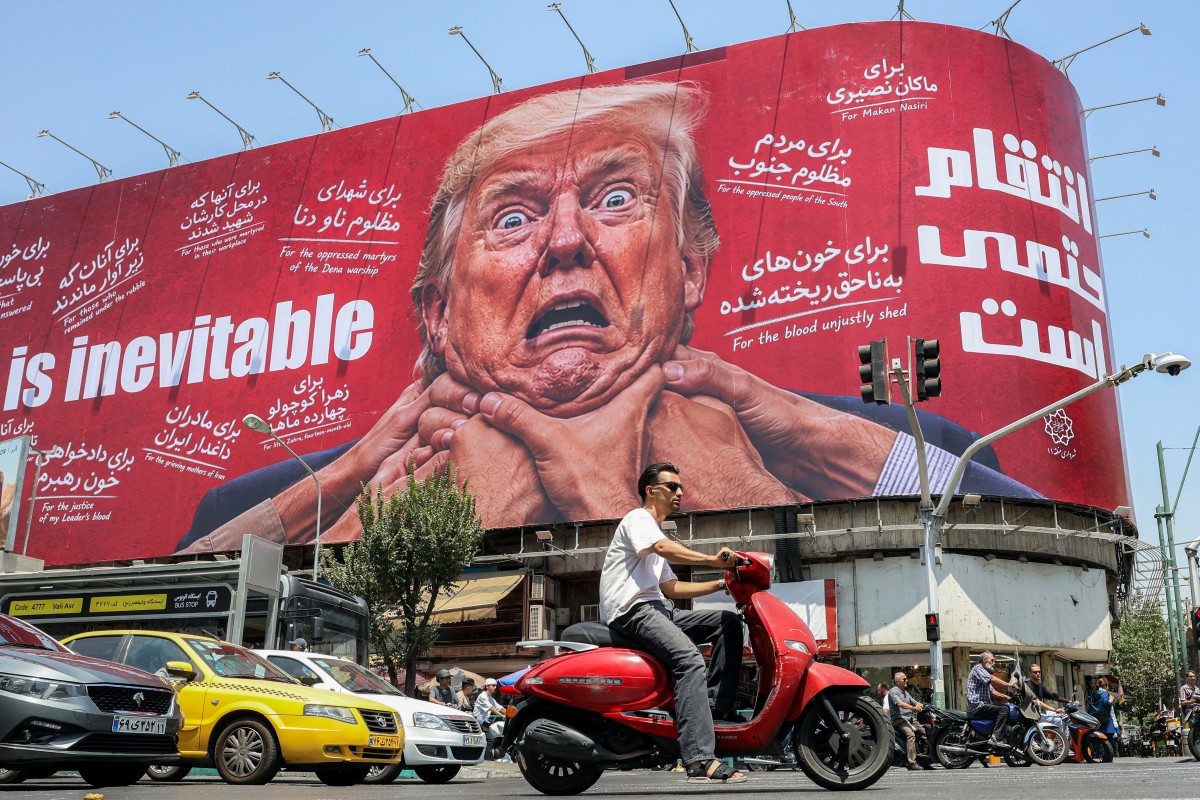
Motorists drive past a large billboard pledging revenge against US President Donald Trump along Jomhouri Street in central Tehran on July 27, 2026. Iran’s foreign ministry said on July 27 that the US was not involved in recent talks with Oman over the administration of the strategic Strait of Hormuz. Traffic through the vital global shipping route has been under Iranian control since the outbreak of war with Israel and the United States on February 28. (Photo by AFP) /

Most importantly, the framework recognizes a basic reality of international politics: peace does not always begin with trust. Sometimes it begins with managing distrust.

The parties do not have to agree on history, ideology or regional ambitions. They need only agree that certain actions are too dangerous to continue and that restraint can produce tangible benefits.

A durable peace is therefore unlikely to emerge from one dramatic handshake or a single comprehensive treaty. It is more likely to emerge from a chain of smaller agreements in which each side discovers, step by step, that restraint produces greater security than escalation.

The real diplomatic breakthrough would not be an agreement that ends all disagreements. It would be an agreement that makes continued disagreement less dangerous, more predictable and progressively less dependent on the use of force.

The ultimate test of diplomacy will not be whether Iran, Israel and the United States learn to trust one another. It will be whether they can construct a system in which they do not need to trust one another to stop fighting.

  • OPED By Admiral (R) Girish Kumar Garg
  • This is an Opinion Article. Views Personal of the Author
  • The writer is a retired Rear Admiral and was the Naval Officer-in-Charge (A&N Islands)

The post Hezbollah, Hamas & Houthis Cannot Be Disarmed With a Single Deal: U.S. & Israel Need New Mechanism: OPED appeared first on EURASIAN TIMES.

  •  

Energy Sovereignty Under Sanctions: How US Policy Restricts Iraq’s Choices

How Iraq’s energy sovereignty can be measured and achieved? How do the geography and sanctions matter? What is the U.S.’ impact in this area? And who determines Iraq’s energy choices? Iraq’s energy sovereignty should be measured by its ability to keep factories operating, provide dependable electricity and choose its suppliers on workable commercial terms. Yet, […]
  •  

Why Yemen Could be a Graveyard for Turkish & Mecca Pact Soldiers: History Has The Answers: OPED

After hesitating for weeks amid a deteriorating security situation in the Red Sea, Saudi Arabia, Pakistan, and Türkiye (Turkey) have finally agreed to activate “deterrence measures” under the mutual security agreement, the Makkah (Mecca) Pact.’

Under the agreement, Pakistan and Türkiye have agreed to “rapidly deploy forces” in Saudi Arabia to counter the attacks by Yemen’s Houthi rebels.

This is the first time that the ‘Mecca Pact,’ signed in August, has been invoked.

“The committee agreed to activate collective deterrence measures, within the framework of the Alliance, in response to the attacks and all those responsible for them,” Khalid bin Salman, Saudi Arabia’s defense minister, said.

The ‘Mecca Pact’ has a mutual defense clause, similar to NATO’s Article 5, that an armed attack against one country would be considered an attack on all three.

Under the agreement, Ankara could deploy its soldiers in the southern Arabian peninsula for the first time in over a century.

The last time Turkish soldiers served in Yemen was in 1919 under Ottoman rule. After the Ottomans’ defeat in the First World War, Ankara agreed to surrender garrisons outside Anatolia under the Armistice of Mudros.

After the Armistice, signed between the Ottomans and Allied nations in 1918, Ottoman garrisons in Yemen surrendered to the British forces one by one.

Therefore, activating the Mecca Pact could see Turkish forces return to the southern Arabian Peninsula after more than a century.

In fact, while the Mecca Pact was signed only in 2026, Turkey has been waiting for an opportunity to return to Yemen for over a decade.

The Mecca Pact was signed in August 2026.

In 2015, when Saudi Arabia intervened militarily in Yemen against the Houthi rebels for the first time, President Recep Tayyip Erdogan said that “Depending on the course of events, we may consider providing logistical support.”

However, Ankara should not celebrate too soon, as history holds a sobering lesson for the Turks.

The mighty Ottoman Empire once ruled across the three continents of Asia, Africa, and Europe; controlled three of Islam’s holiest sites, including Mecca, Medina, and Jerusalem; and controlled a huge territory in the European lands of the Balkans and southern Europe.

Ottomans, however, could never fully subjugate the Zaidi tribesmen of Yemen, the historical ancestors of today’s Houthi rebels.

Yemen, in fact, was frequently called the “graveyard of Anatolia” or the “graveyard of Ottoman soldiers”.

Yemen – The Graveyard of Turks (Ottomans)

Victoria Clark, in Yemen: Dancing on the Heads of Snakes (2010), writes that by the 1890s Yemen was already “renowned as the ‘graveyard of the Turks'” during Ahmed Feyzi Pasha’s campaigns.

She also quoted an Ottoman official: “Yemen has become now the graveyard of Muslims and money.”

Turkish journalist and author Mustafa Balbay titled his book ‘Türkler Mezarlığı Yemen,’ which means “Cemetery of the Turks”.

In fact, describing Yemen as a “graveyard of Turkish soldiers” is a recurring theme in Ottoman (Turkish) historical memory.

Yemen Türküsü is a famous Turkish folk song that serves as a tragic lament for Ottoman soldiers who marched off to fight in Yemen during World War I and never returned.

Another Turkish folk song remembers the difficulties faced by Ottoman soldiers in Yemen and pays homage to Turks who went to Yemen but never returned.

“There are no clouds in the sky, what is this smoke?
There is no death in the neighborhood, what is this commotion?
These lands of Yemen are so treacherous
Oh, Yemen, its rose is a meadow
Why do those who leave not return?”

Ayşe Hür, in her article “The largest Ottoman cemetery: Yemen,” recounts that the Ottoman rule in Yemen was fiercely opposed by Zaydis, the ancestors of Houthi rebels.

According to the Zaydis, the Ottomans were ‘turbaned infidels’.

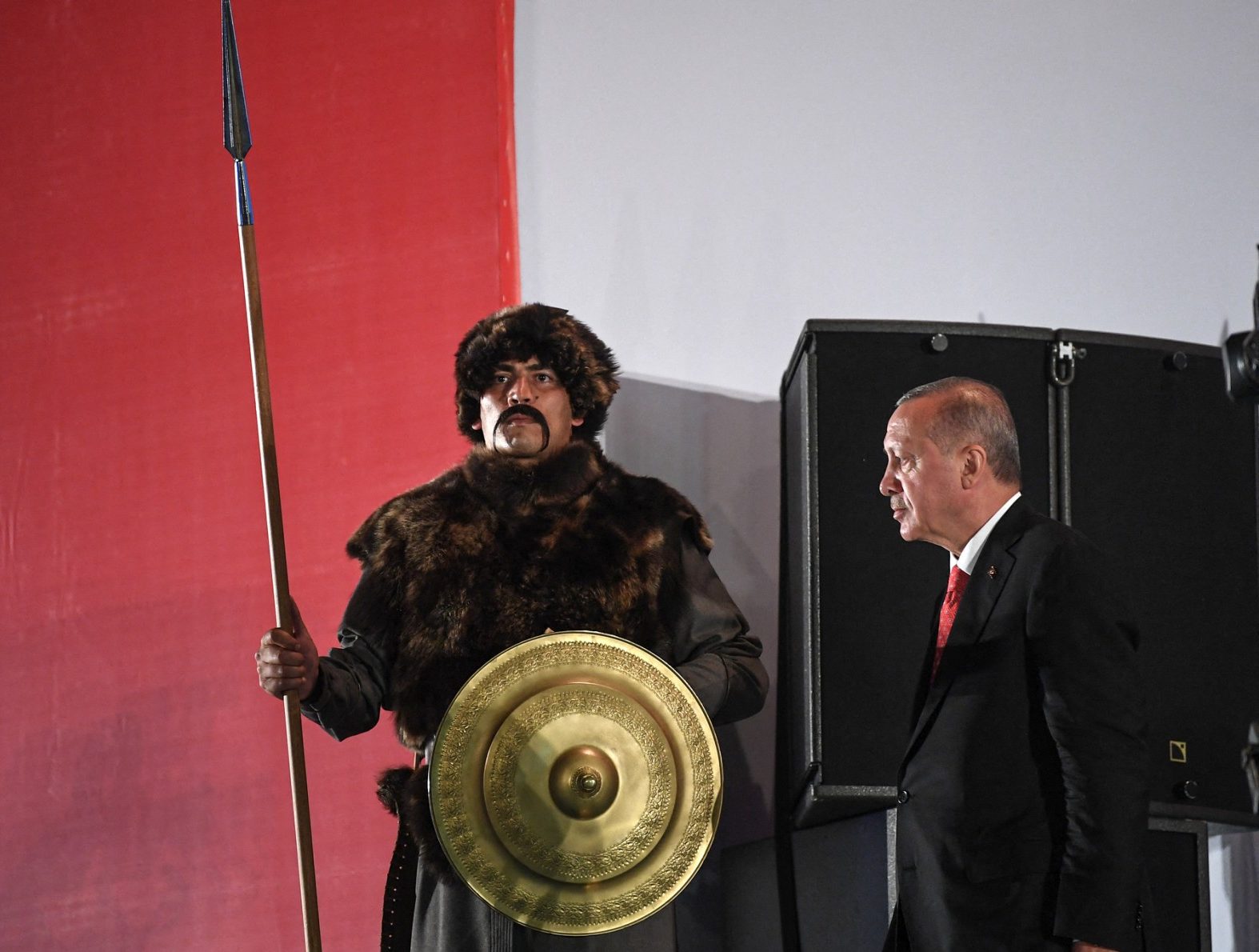
Turkish President Recep Tayyip Erdogan (R) passes next to a Turkish soldier wearing an Ottoman uniform during a third-anniversary commemoration rally at Ataturk International Airport in Istanbul on July 15, 2019. Turkey commemorates, on July 15, 2019, the third anniversary of a coup attempt which was followed by a series of purges in the public sector and changes to boost the Turkish President’s powers. (Photo by Ozan KOSE / AFP)

In his work titled “My Lament,” Ahmet İzzet (Furgaç) Pasha, who was sent to Yemen in early 20th century to supress a Zaydi revolt against the Ottomans described the period of Ottoman struggle in Yemen (1635-1840) in following words: “After a century of conflict in Jabal, with internal revolts and constant wars against the Zaydi imams, which continued until the year 1045 AH (1635), the entire Yemen region fell under the rule of the Zaydi imams due to the siege and pressure exerted on Haydar Pasha, who was forgotten and left in Jabal by the central government.”

Ottoman sources do not specify how many people died in the wars with the Zaydis during these 100 years, merely stating that “thousands of people died.”

“Going to Yemen and not returning” has been the fate of Ottoman soldiers since the 16th century, Ayşe Hür wrote in her article.

In the article titled “The Situation in Yemen” in the 15th issue of the Ottoman Newspaper dated 1316 (1900), it was stated: “As a result of Ahmet Fevzi Pasha’s wrong policies, approximately 4,000 soldiers died every year.”

Ayşe Hür also quoted an Ottoman official in her article who said that 1,30,000 Ottoman soldiers were buried in the Hijaz and Yemen between 1871 and 1894.

Marshal Galip, who served as a captain in Yemen in the 19th century, wrote: “Since I worked under the General Staff, all the general staff records passed through my hands. In these records, I noticed a wide and terrible gap between the new soldiers joining the army and those who were replaced or disabled… Yemen was a permanent war zone at that time.

“I compared the number of those who joined their factions or were mobilized en masse and sent away due to rebellions with the number of those who survived and returned to their homeland. The conclusion I reached was this: In the 22 years that had passed, a total of 130,000 Anatolian youths had been buried in the deserts of Hejaz and Yemen.”

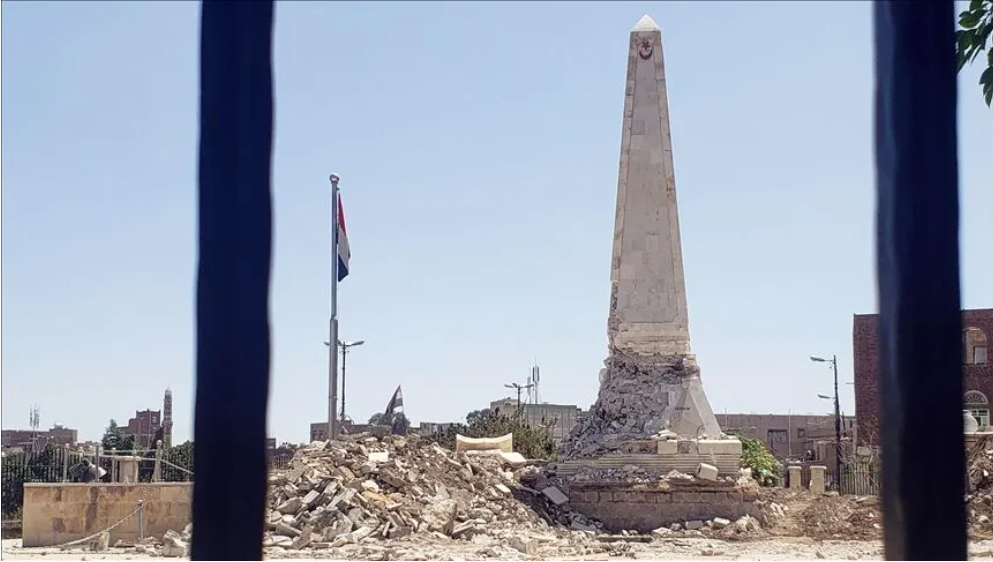
In 2011, then-Turkish President Abdullah Gül renovated and inaugurated a Turkish Memorial Cemetery (Yemen-Türk Şehitliği) in Sanaa to commemorate the Ottoman soldiers who died in Yemeni campaigns.

Just one year later, in 2012, Houthi rebels demolished part of the memorial.

For centuries, the memorial has symbolized the Ottoman presence in Yemen. The deliberate attack on this memorial serves as a reminder of how the Houthis recall Ottoman campaigns in Yemen.

The damaged memorial for Turkish Martyrs in Yemen in the Yemeni capital Sanaa.

It was also a clear message to Ankara that they would not accept any Turkish involvement in Yemen.

Writing in Politics Today, Ahd Yaseen Al-Tamimi said: “History textbooks, which were adopted after 1962, presented a positive view of the Ottoman Empire and its rule over Yemen. Nevertheless, this did not prevent Zaydi supporters from maintaining their strict and extremist position on the Ottoman Empire.”

Of course, Turkey is a strong military power, and its influence extends in Yemen as well.

It has achieved remarkable military success in Syria, Libya, and in combating Kurdish insurgents in Iraq. Its military support to Azerbaijan was perhaps the deciding factor in its war against Armenia.

However, Yemen is a different ballgame altogether.

And if history is anything to go by, then Yemen, often described as a “graveyard of the Ottomans,” could once again become a quagmire for Turkey.

  • Sumit Ahlawat has over a decade of experience in news media. He has worked with Press Trust of India, Times Now, Zee News, Economic Times, and Microsoft News. He holds a Master’s Degree in International Media and Modern History from the University of Sheffield, UK. 
  • He can be reached at ahlawat.sumit85 (at) gmail.com

The post Why Yemen Could be a Graveyard for Turkish & Mecca Pact Soldiers: History Has The Answers: OPED appeared first on EURASIAN TIMES.

  •  

The Middle East Breathes a Sigh of Relief

The withdrawal of American troops from Iraq is a watershed moment in the geopolitics of the Middle East. There comes a moment in global politics where imperialism loses and the world clings to the hope of a better future, a future based on prosperity, inclusivity, and promotion of human dignity. This moment has found its […]
  •  

How Yemen’s renewed civil war could set the whole region ablaze

The Middle East has seen many explosions of violence in recent years. But while the US-Iran war has grabbed the headlines this year, the rapidly escalating conflict between the Houthis and Yemen’s internationally recognized government and Saudi Arabia risks becoming just as consequential for the region. The complexity of Yemen’s internal conflict cannot be underestimated. […]

The post How Yemen’s renewed civil war could set the whole region ablaze appeared first on Asia Times.

  •  

Morocco’s 1st F-16 Block 72 Fighter Jet Completes Maiden Flight. F-35 Bid Reaches Nowhere

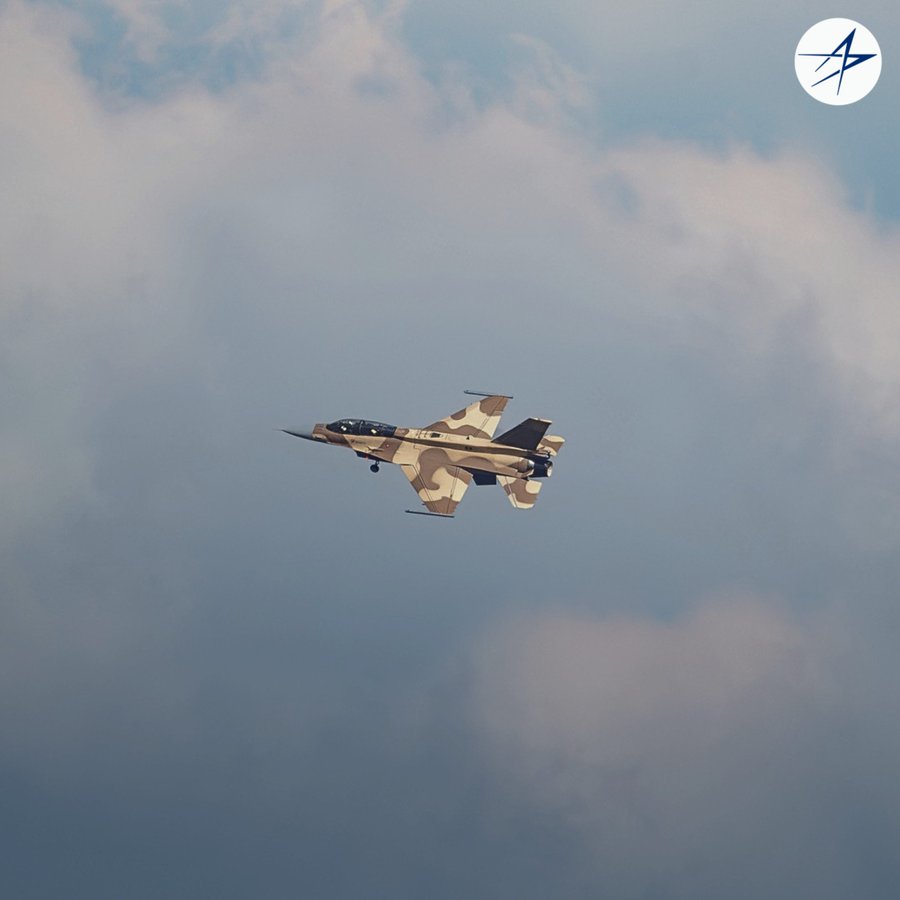
US defense giant Lockheed Martin said the Royal Moroccan Air Force’s (RMAF) first F-16 Block 72 had completed its maiden flight, a test milestone as the fighter jet moves toward delivery.

The company said the Block 72 is the newest variant of the F-16 Fighting Falcon, with updated avionics, sensors and mission systems, and changes intended to improve safety and reliability. Morocco was the launch customer for the configuration when Washington approved the purchase in March 2019.

“This first flight reflects meaningful progress on Morocco’s F-16 Block 72 program and is a critical step in strengthening Morocco’s future airpower,” Mike Shoemaker, vice president and general manager of Lockheed Martin’s Integrated Fighter Group, said. “The F-16 remains a vital component of today’s and future air defense, and we’re proud of the role it will continue to play in supporting Morocco’s sovereignty and contributing to regional stability for decades to come.”

The U.S. Defense Security Cooperation Agency notified Congress of two related sales on March 25, 2019.

One covered 25 new Block 72 aircraft, plus weapons, equipment and services, at an estimated $3.8 billion. The other, valued at more than $985 million, covered upgrades for Morocco’s 23 existing F-16C/D Block 52+ jets to the F-16V standard, which is broadly similar to the new Block 70/72 aircraft, along with related equipment and support.

F-16

If both go ahead, the Royal Moroccan Air Force’s F-16 fleet would roughly double and be built around a common, modernized standard.

“The purchase will improve interoperability with the United States and other regional allies and enhance Morocco’s ability to undertake coalition operations, as it has done in the past in flying sorties against ISIS in Syria and Iraq,” the agency said of the new-aircraft sale. “Morocco already operates an F-16 fleet and will have no difficulty absorbing this aircraft and services into its armed forces.”

The Block 70 and Block 72 differ mainly in the engine. The Block 70 uses General Electric’s F110-GE-129; the Block 72 uses Pratt & Whitney’s F100-PW-229. Morocco’s existing Block 52+ jets already use F100 engines, so the new aircraft fit the support setup already in place.

Morocco’s F-35 Bid

Morocco was looking to acquire U.S. F-35 fighter jets since 2020–22, after normalizing ties with Israel under the Abraham Accords and as Algeria reportedly moved to acquire Russia’s Su-57.

Israeli intelligence firm Jafaj said King Mohammed VI raised tensions with Algeria in a private meeting with Israeli Defense Minister Benny Gantz during his 2021 visit.

Algeria and Morocco have not had diplomatic ties since August 2021.

The firm, citing an unnamed European source, said Rabat wanted Israeli help tracking Algerian troops and militia deployments and was also seeking Israeli surveillance and strike drones.

F-35: Image via US Embassy, New Delhi

Jafaj said Defense Minister Abdellatif Loudiyi told Gantz that Morocco needed more combat aircraft for a possible war with its neighbor, that the F-35 was the preferred choice, and that Israel’s help lobbying the Biden administration would be welcome.

An F-35 was displayed at the 2024 Marrakech Air Show.

In August 2026, the International Institute for Strategic Studies, a London-based think tank, said there had been “little concrete progress” and described the F-35 purchase as hypothetical.

Meanwhile, Lockheed is again exhibiting at the Marrakech Airshow, which runs from Oct. 7 to 10.

Its stand includes an F-35 cockpit demonstrator, with demonstrations for invited guests, and scale models of the F-35A, F-16 and C-130J Super Hercules.

The post Morocco’s 1st F-16 Block 72 Fighter Jet Completes Maiden Flight. F-35 Bid Reaches Nowhere appeared first on EURASIAN TIMES.

  •  

Did he really invite Iran to take out California cities?

“Keep our city out of your reckless war talk,” said San Diego’s mayor, Todd Gloria, Monday night after President Donald Trump’s rambling speech at a rally in Nebraska included a particularly violent mention of the California city. Gloria was among several Democratic political leaders who were incensed after Trump – moments after predicted the Republican […]

The post Did he really invite Iran to take out California cities? appeared first on Asia Times.

  •  
❌