
❌

Reading view

Apple, Nvidia, Ergen each give $25M for Trump project

Apple, Nvidia and EchoStar chair Charlie Ergen reportedly committed $25 million each for the construction of US President Donald Trump’s White House ballroom project, which has raised $333 million to date in private donations.

The Washington Post reported “the vast majority of the funds raised came from companies and wealthy individuals with interests before the federal government” after obtaining an internal spreadsheet used to track contributions for the fundraising effort.

The Post noted more than three-quarters of the funding was pledged in amounts of at least $5 million, with Amazon, Comcast, Microsoft, and T-Mobile US among the largest corporate donors.

It stated Nvidia and Ergen, among others, requested their donations be kept anonymous

The news site noted companies or executives of firms that have had contracts with the federal government during Trump’s second term accounted for about half of the total funds raised for the project which also includes office space and an underground military facility.

According to internal contractor documents obtained by the Post, the total cost of the project is now $600 million after Trump initially stated he and wealthy donors would pay the estimated $400 million project, although Reuters reported he later unsuccessfully asked Congress for $1 billion. The Post noted Trump’s name did not appear on the list of 67 donors who contributed $10,000 or more to the project.

The funds for the project are administered through a complex, multi-step pipeline involving a private nonprofit, federal agencies and direct oversight by the Trump administration.

The news agency reported Nvidia became “a top contributor to the ballroom in October 2025, nearly three months after it struck a groundbreaking pact with Trump to sell advanced microchips to China despite national security concerns”.

“As an American company, our support for the United States is paramount, and independent of any business interests,” a representative for Nvidia told Mobile World Live. “We were proud to be able to make a donation to a nonpartisan trust that serves all Americans and have said so publicly since the donation was made.” 

Apple and EchoStar did not reply to requests for comment on their contributions.

The post Apple, Nvidia, Ergen each give $25M for Trump project appeared first on Mobile World Live.

  •  

Nvidia plans to splash $2B on European AI deals

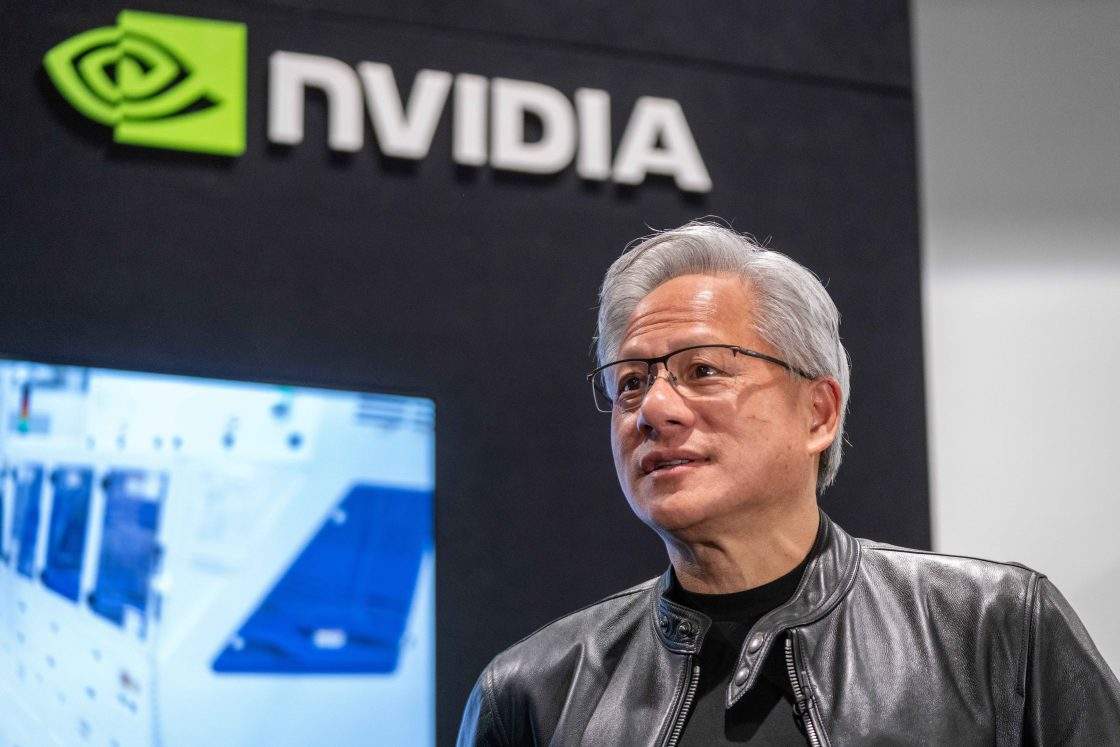
Nvidia CEO Jensen Huang (pictured) reportedly outlined plans to invest $2 billion across Europe to ramp adoption of AI technology and the company’s products.

Bloomberg reported Huang revealed the plan yesterday (13 October) during an event in Paris, which is part of a tour including stops in London and Berlin.

Huang said the fresh investments, to be announced in the next week, are on top of $8 billion the company previously committed to the continent, according to the news agency.

He also announced new funding for French start-ups Doctolib, Genesis AI, Pigment and Entalpic.

Nvidia’s founder also promoted open-source models, arguing their lower costs and greater flexibility could help Europe close the gap with the US on advanced AI.

The chipmaker is a major partner of French company Mistral AI, which develops open-weight AI models. It has invested in Mistral and supplies accelerators for its data centres.

“Open models are important as they can be customised for languages and for your own sovereignty,” he said, according to Bloomberg.

Nvidia’s GTC Berlin conference is schedule for 20-22 October.

The post Nvidia plans to splash $2B on European AI deals appeared first on Mobile World Live.

  •  

Nvidia weighs Reflection AI acquisition

Nvidia is reportedly in talks to either acquire or increase its investment in open-source start-up Reflection AI, as it seeks to strengthen its position in open-weight AI models and challenge lower cost Chinese rivals.

Sources told the Financial Times (FT) discussions remain at an early stage and could lead to a full acquisition, further equity investment or a deal covering chips and computing capacity. An acqui-hire, under which Nvidia would recruit staff and license technology, is another option.

A deal could apparently be reached in the coming weeks, though the terms under discussion remain unclear.

According to the report, Nvidia has already invested $800 million in Reflection AI, which was valued at $25 billion in a March funding round. Founded in 2024 by former Google DeepMind researchers, the start-up develops AI models and tools for software development.

Reflection launched its first open-weight model, Beam, last week, targeting coding and agentic tasks as it looks to compete with Chinese models such as DeepSeek and Kimi.

Open-weight models allow businesses and developers to customise AI systems and run them on their own infrastructure, potentially cutting costs compared with closed services such as OpenAI’s ChatGPT and Anthropic’s Claude.

Although Nvidia has its own Nemotron family of open-weight models, FT said it lacks a frontier-scale model of its own. In an essay published in July, CEO Jensen Huang called for a domestic open-weight “ecosystem” across the US, arguing it was essential for “creating opportunities for innovation and prosperity across the country”. “In fact, openness may be one of the most important paths to AI safety and security,” he argued, adding “relying solely on closed models is not inherently safe” as “they can be breached, misused, or fail in ways that outsiders cannot detect”.

Reflection AI has also secured substantial computing capacity from SpaceX. The deal, struck in June, gives the start-up access to Nvidia’s GB300 chips at SpaceX’s Colossus 2 facility in Memphis, Tennessee, for $150 million per month through 2029.

The post Nvidia weighs Reflection AI acquisition appeared first on Mobile World Live.

  •  

What the AI boom is actually doing for Americans

Paul Krugman is the greatest econ writer in the world, and also a legendary economist. But I sometimes feel that he has a blind spot when it comes to the value of new technologies. In 1998 he famously wrote: The growth of the Internet will slow drastically, as the flaw in ‘Metcalfe’s law’—which states that […]

The post What the AI boom is actually doing for Americans appeared first on Asia Times.

  •  
❌