European Council president António Costa gets to work this week rewriting the EU’s seven-year budget, after the bloc’s leaders binned the long-term plan proposed by the Irish council presidency last week.
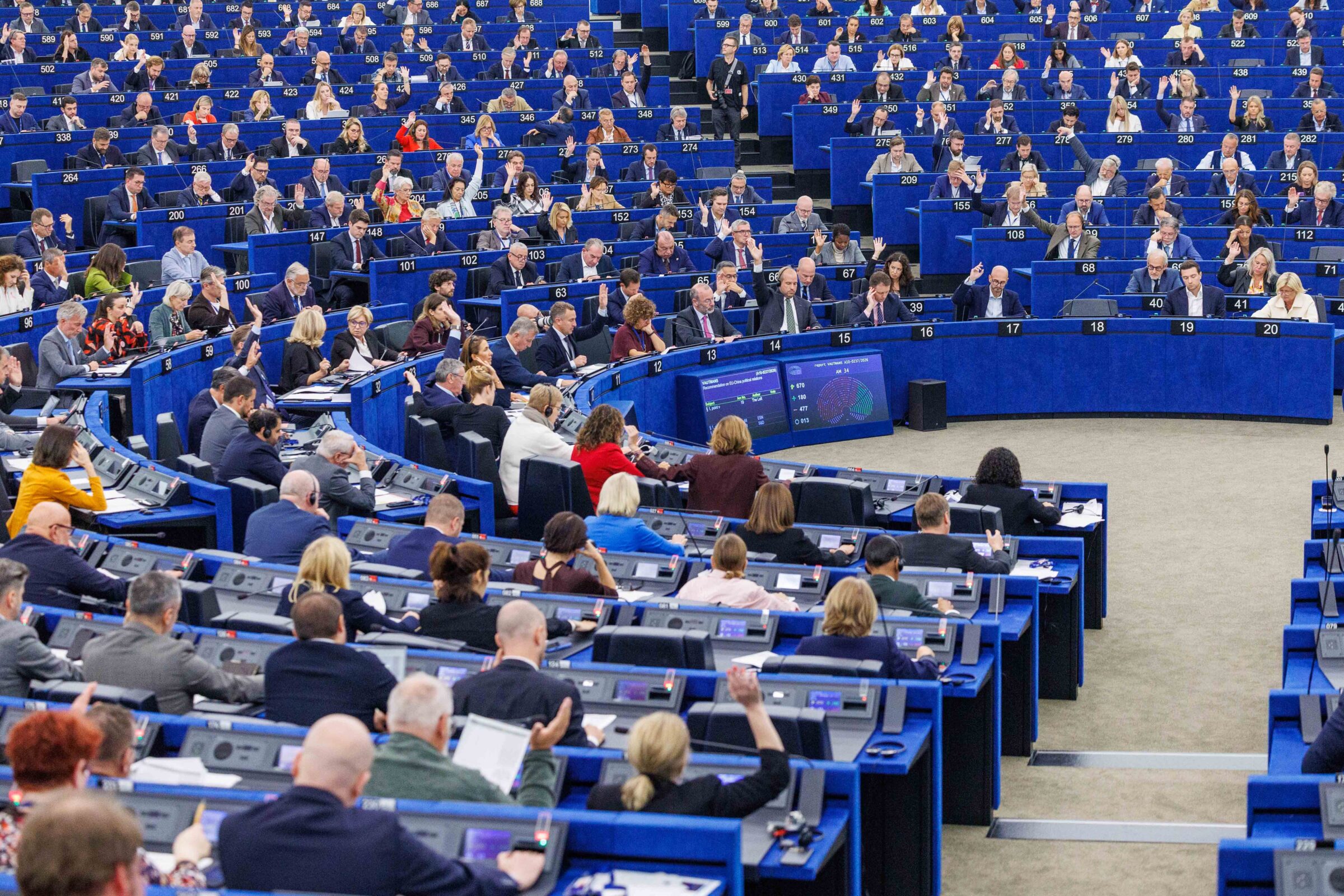
The budget will be debated by MEPs at the plenary in Strasbourg on Wednesday (21 October), when European Parliament will also vote to allocate €47bn for Erasmus+ instead of the €40bn planned on Thursday (22 October).
A separate vote on Wednesday (21 October) will decide parliament’s position on the EU’s short-term 2027 budget, when MEPs will decide whether or not to ask for €2.7bn more than what council proposed in summer, with extra monies proposed for expanding Erasmus+, agriculture and responding to climate disaster.
Further, MEPs will also decide on disbursing €489m to Mediterranean member states ravaged by storms and flooding, and €1.1m to retrain hundreds of workers laid off in Finland’s paper industry cuts – both on Wednesday (21 October).
This comes after last week in Brussels, where national leaders at their summit binned a long-term budget proposed by the Irish Council presidency. While most wanted to keep budget headroom, a minority of big spending countries wanted to save cash. So while European Council president Antonio Costa gets to work rewriting the 2028-2034 funding plan, MEPs will also make their views on the matter clear.
A debate will also ensue on Tuesday (20 October) on how to respond to escalating Russian provocations off Bulgarian and Romanian coasts where drones have repeatedly violated EU airspace, followed by a vote on Thursday (22 October). MEPs will also ask the commission to explain why it decided to unlock sanctions on luxury Russian furs shortly after it imposed them.
This article continues, but the full version is available only to EUobserver.com subscribers. Visit account.euobserver.com/membership
Britain is expected to push for a new post-Brexit trade deal and increased information-sharing on immigration at a UK-EU summit in Brussels next month.
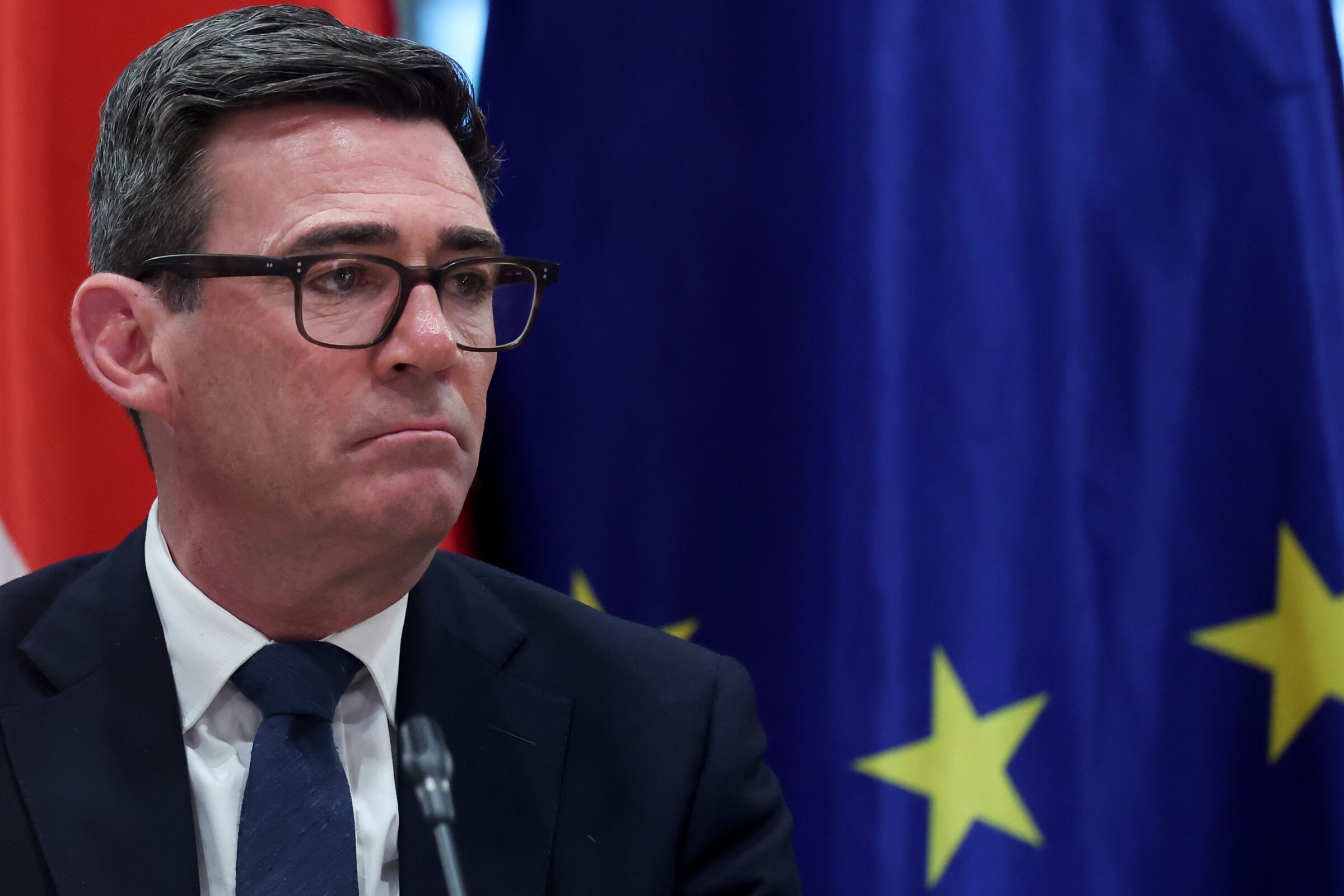
This comes as Andy Burnham, the country’s prime minister, says the post-Brexit “status quo is not good enough for Britain”, in a hint that he might seek to rejoin the European Union.
And, more than a decade after the Brexit vote, he also accused Russia of having meddled in the 2016 British referendum.
The UK leader will meet European Commission president Ursula von der Leyen and European Council president António Costa in Brussels on 20 November.
And Costa has also said that European and British security and prosperity are “closely intertwined”, while a closer relationship could “promote stability in Europe and beyond”.
Made in Europe and immigration
The November summit will be an opportunity to “raise concerns” about ‘Made in Europe,’ Burnham told members of UK MPs on Monday (12 October).
The ‘Made in Europe’ proposal in the Industrial Accelerator Act would require companies to source a certain number of parts from within the EU to be eligible for public money in strategic sectors.
But UK officials are worried the law could hurt British manufacturers, with Burnham expected to seek concessions.
But the British premier also wants to go further in renegotiating his country’s ties with the EU.
“On the table is a trade deal on food and drink products, a deal on emissions trading, progress towards linking our energy systems, a new youth experience scheme, and deeper cooperation on immigration,” he said.
Burnham aims to address an EU import ban on UK meat, seed potatoes, and shellfish and wants to reduce costs for shipping other goods to mainland Europe.
He also hopes for closer work between European and UK border forces on immigration.
“On immigration, we could link up our law enforcement efforts once again [since brexit], sharing more data and criminal records of foreign nationals,” Burnham said.
He may aim to rejoin the Schengen Information System, a database for border management and law enforcement cooperation in Europe.
And he could also pursue greater freedoms for UK citizens to live in the 27 member states.
“It would be a major dereliction of duty to turn away [from the EU]” the UK leader told parliament.
10 years on from Brexit vote
The last EU-UK summit, held in London in 2025, was already branded as a reset in relations across the English channel, with a new defence and security partnership, reciprocal access to fishing waters, and expansion of student exchanges.
And leaders are expected to build on the previous agreements by discussing defence, energy, and climate, as well as trade and migration, at their meeting next month.
But under the terms of the EU and UK’s legal divorce in 2020, the two sides remain bound by complex limitations.
And Burnham told MPs on Monday that renegotiating Britain’s relations with the EU could add over £10bn (€11.8bn) per year to the UK economy by 2040, “with the potential to add significantly more,” even if it did not rejoin.
Russian meddling?
Burnham also told a podcast on 11 October that Russia had meddled in the country’s Brexit vote 10 years ago.
Upon assuming office in July, Burnham asked officials if there had been Russian interference in the 2016 referendum, he told The Rest is Politics, and officials gave him a “clear answer that yes, there was.”
“We haven’t informed people [the general public] sufficiently,” he added, amid similar Russian electoral interference in France, Germany, and further afield in Europe.
For his part, British foreign secretary Stephen Doughty subsequently told the LBC broadcaster: “I don’t think [Russia] succeeded in their efforts to undermine our election”.
And Burnham also rowed back in the parliament debate on Monday when pressed by opposition MPs, by saying the outcome of the Brexit vote remained legitimate.
But he added that Russia’s meddling in the UK’s 2019 general election was a matter of record and that it was “inconceivable that this was the first time”.
Appetite for EU re-entry
Burnham also dropped hints on Monday that Britain could rejoin the European Union.
“One thing I think is true is that public opinion has moved more quickly than political opinion. I think the political class is behind the public on this issue,” he said.
“At every stage, the British public will be the boss,” he added, while promising a “pragmatic approach” to the hot-button issue, which has the potential to enflame right-wing anger in England.
“We need to draw a line on a decade of drift and division [from Europe],” he said.
But questions of a holding second referendum were “jumping ahead too far” according to Burnham.
The Westminster debate came after YouGov polling commissioned by Best for Britain, a pro-EU lobby group, indicated that pushing for closer EU ties would be politically advantageous for Burnham’s ruling Labour party.
The organisation also claimed Britain could reenter the union within five years.
Brexit was “not a sacred cow”, said Emily Thornberry, a fellow Labour MP, on Monday.
Sandro Gozi, an Italian liberal MEP and chair of the UK-EU parliamentary partnership assembly, also said in a statement: “As a former member, and with much of the regulatory framework already in place, I personally do not see any serious reason why an application from the UK would not be achievable.”
“When countries are already closely aligned to EU rules, such as was the case for Sweden and Finland, the process for accession is faster than for applicants essentially starting from scratch,” he said.
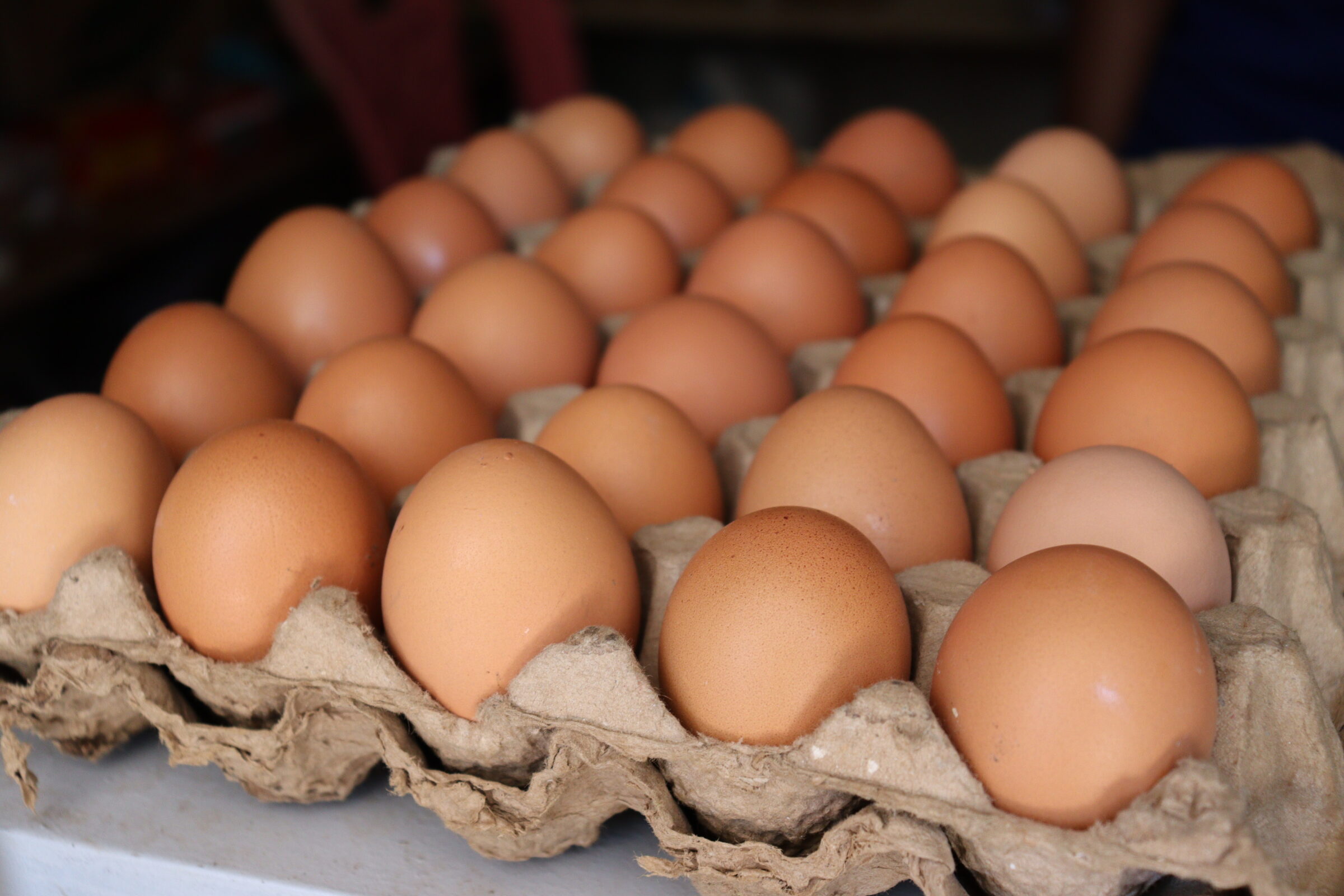
More than half of Europeans believe hens should no longer be caged, according to new data released on Tuesday (13 October).
And 75 percent of Europeans wanted the last hen in the EU out of its cage by 2035 at the latest, according to a poll conducted by Savanta on behalf of Humánny pokrok, an animal rights non-profit.
Pollsters asked 25,080 adults across 25 member states for their views on keeping hens in cages.
The results show that 16 percent of people were not sure when or if putting hens in cages should be banned, while 7 percent of Europeans supported hen-caging until at least 2045.
The survey comes five years after 1.4 million citizens signed the European Citizens’ Initiative (ECI) to ‘End the Cage Age’ and the European Parliament voted to endorse it.
‘Now is the time’
“This data shows millions of Europeans care about animal welfare,” said Barry Andrews, an Irish Renew MEP.
“Over 1.4 million signed the ECI, which was also supported by MEPs. Now is the time for the Commission to finally make a legislative proposal,” he added.
The delay in tabling legislation came after Copa Cogeca, a farming lobby group, insisted that banning hen cages could take up to 15 years.
But the new data says 52 percent of Europeans wish a hen cage ban was already in place.
The country most supportive of a hen cage ban was Austria, where 65 percent of people believed the last hen should have already left its cage, and 2 percent said cages for hens should never be banned.
Thomas Waitz, an Austrian Greens-group MEP, said an EU ban on animal cages is “long overdue” and urged Olivér Várhelyi, commissioner for health and animal welfare, to deliver an “ambitious timeline”.
“This long period of indecision is not just an affront to the European consumers who want better Animal Welfare, it also harms European farmers and producers who need reliable information for their investments,” Waitz said.
In Bulgaria, the member state which polled as least supportive, 33 percent of people believed the last hen should have already left its cage whereas 9 percent said cages should never be banned.
This article continues, but the full version is available only to EUobserver.com subscribers. Visit account.euobserver.com/membership
A new law aimed at protecting children could kill off old video games and threaten small developers, industry trade groups have warned.
The EU Kids Act was unveiled by commission president Ursula von der Leyen last month as a chance to “give childhood back to our children” and put parents “in the driving seat”.
It would require videogames to be catered to children by default with stringent requirements including an eight-hour nighttime lock-out, a ban on screenshots, and guardian supervision.
Gamers wanting to play the full version of games would have to pass age verification checks to access features, like multi-player tournaments or mystery boxes.
The European Commission is gathering feedback on the act with respondents quick to criticise the threat posed to videogame makers.
Stop Killing Games, a campaign to protect videogames, has opposed the act.
“This could turn the EU into a pariah state for videogames,” said Ross Scott, the consumer group’s founder. He reckons the regulation could spark a race to update games or deactivate them.
MEPs have also joined in sounding the alarm bell.
Proposed law could kill games
If the law passed, developers would need to make a child mode version of games and gate the full games behind a verification step.
“This is going to bury developers with compliance steps, and a whole lot of cost,” said Scott.
Age verification with zero-knowledge proof (meaning developers cannot collect data) will likely be required. “In practice, providers would likely need to engage a third-party age assurance provider,” also said Lauro Fava, partner at law firm Pinsent Masons.
The Commission’s impact assessment claims that third-party age verification apps would reduce costs, but failed to provide estimates.
Fava called it “strange” that these were missing, and thinks the commission “arguably downplayed” the cost of compliance.
Gamer’s Voice, an advocacy group, asserted that small games would struggle to pay for age-verification and other compliance measures, likely to inlclude game redesigns.
The Kids Act would outlaw features ‘increasing social comparison’ for minors, meaning functions like leaderboards and kill counts could be restricted.
And while the cost to developers is not known, it is feared prices could increase for players.
The wide scope of the draft law means community servers and hobbyist-developed games could be subjected to the new rules. Any game, new or old, would have to follow measures unless strictly offline in a physical format or built only for educational purposes.
And since the rules would apply to games made or consumed in the EU, it is feared game makers could block access to their games on the bloc.
This article continues, but the full version is available only to EUobserver.com subscribers. Visit account.euobserver.com/membership
The European Commission has proposed up to 15 years of post-accession safeguards to punish new member states in case of bad behaviour, in a long-delayed pre-enlargement policy review out on Tuesday (6 October).
The reforms were initially requested by the European Council in June 2024 to be ready by spring 2025, but were delayed several times due to political sensitivities in EU capitals.
They are aimed at frontrunners for future EU membership – Montenegro, Albania, Moldova, and Ukraine – each of whom will get an accession roadmap this month.
EU Commission president Ursula von der Leyen has deemed union enlargement a “geopolitical imperative” amid the war in Ukraine and shift towards a new global order.
By expanding, the EU hopes to promote democracy and strengthen the single market.
But this also comes with fears that countries could misbehave after getting in, prompting the commission’s proposed new guardrails.
The commission suggests that new member states promise “not to oppose EU decisions on future enlargements” due “to bilateral disputes” for an unspecified time.
But Marta Kos, the EU’s enlargement commissioner, said this commitment would be voluntary.
Commissioner dismisses ‘two-tier’ concerns
This article continues, but the full version is available only to EUobserver.com subscribers. Visit account.euobserver.com/membership

 Login