The polished leather of Francisco “Torrinho” Torres’ shoes gleamed as he walked toward the lectern in the plenary chamber of the Pará state legislature in the Brazilian Amazon. The 57-year-old rancher-turned-politician moved unhurriedly as he prepared to deliver a speech that would set in motion a series of events leading to new invasions of the Ituna/Itatá Indigenous Territory. It was June 30, 2026, in what seemed to be a routine session for the state representative from one of Brazil’s largest Amazonian states. Behind his sharp suit and the supportive nods of his agribusiness allies was a track record of environmental fines, a corruption investigation, and land disputes. In a brief speech, Torres defended a bill he’d authored to create a new state-run environmental protection area, APA Bacajaí. He presented the measure as a solution for families struggling to farm and rural families in need of land regulation. Three other state representatives took the stand to support the proposal. They spoke of farmers who had waited decades for land titles, of families unable to access credit without them, and of the uncertainty created by the possibility of an Indigenous land claim. It only took 24 minutes for the chamber to pass the bill into law unanimously. There were no objections and no requests for technical notes — even though it was known that the new 142,400-hectare (about 351,900-acre) reserve would overlap entirely with the Ituna/Itatá Indigenous Territory. The area has been under a land-use protection order since 2011 to safeguard the…This article was originally published on Mongabay
Matt Gaetz resigned from the U.S. House of Representatives in November 2024, shortly before the House Ethics Committee released a report accusing him of having sex with a 17-year-old girl in 2017, when he was 35, and "regularly pa[ying] women for engaging in sexual activity with him." The probe was widely discussed as a sex trafficking probe, but the ethics committee "did not find sufficient evidence to conclude that Representative Gaetz violated the federal sex trafficking statute," per its report.
Now two women have filed a civil lawsuit accusing Gaetz of sex trafficking.
The suit, filed in the U.S. District Court for the Middle District of Florida, says that Gaetz and two other men (Joel Micah Greenberg and Christopher Dorworth) broke federal anti-trafficking laws by using "their public office, power, and wealth to prey on the economic vulnerability" of Jane Doe 1 and Jane Doe 2.
Gaetz, who now hosts The Matt Gaetz Show on One America News Network, said many of the suit's allegations against him are false. "The lawsuit relies almost exclusively on a Congressional Committee report that didn't allow me to confront my accusers," he said. "Now I will finally have that chance."
On X, Gaetz posted an image of three women in bikinis seated next to bottles of beer and looking at the ocean and wrote "Jane Doe Strikes Again! Two adult women sued me today alleging they were sex trafficked to the Bahamas. I'm shocked nobody responded to their repeated cries for help, posted to instagram."
Jane Doe Strikes Again! Two adult women sued me today alleging they were sex trafficked to the Bahamas. I'm shocked nobody responded to their repeated cries for help, posted to instagram. https://t.co/HPvX2xypzs
This does not seem like especially helpful behavior from a public relations perspective, to say nothing of whether it's legally wise to for Gaetz to be posting to social media about the suit against him.
But Gaetz's point isn't entirely off base. The actions described in the suit against him are hardly what most people would consider sex trafficking.
Jane Doe 1 and Jane Doe 2 were adult women willingly advertising on Seeking Arrangement, a site aimed at connecting young women with rich men for mutually beneficial relationships. And by their own account, that is what went down. They were taken on trips and paid thousands of dollars while hanging out, partying, and having sex with Gaetz and his friends.
Needless to say, advertising on a sugar baby website does not make you fair game for forced prostitution or sexual assault. But nowhere in the lawsuit are forced prostitution or sexual assault alleged.
Instead, we get sentences like this: Gaetz and the other defendents "led [Jane Doe 1] to believe they could solve her financial problems as long as she kept performing sexual acts for them and their associates," states the suit. But "the money never came as a single payment that would have solved Jane Doe 1's financial issues."
So…it's sex trafficking because he didn't pay her enough at one time? I don't think that's how the law works.
Overall, it's a stretch to say that Gaetz's actions as described in this suit fall under the scope of the federal Trafficking Victims Protection Reauthorization Act. Under federal law, sex trafficking must involve an element of force, fraud, or coercion, and/or must involve commercial sex involving someone who is under age 18.
In this case, both alleged victims were in their 20s at the time of the alleged trafficking. No element of force or fraud is claimed. And the type of "coercion" alleged seems more appropriate for a college debate than a courtroom.
There was no suggestion that harm would come to the women or their families, that a job or housing would be lost, or that failure to engage in sexual activity with Gaetz and his friends would result in some sort of other (physical, reputational, legal, etc.) harm befalling them. There was nothing on Gaetz's end that would seem to arise to "coercion" under federal trafficking statute, which defines it as involving "threats of serious harm to or physical restraint against any person," a scheme to make someone believe that serious harm will befall them if they don't comply, or abuse or threatened abuse of the legal process.
The suit contains a lot about Greenberg—a former tax collector who is in prison after pleading guilty to charges that include sex trafficking—and comparatively little about Gaetz. It seemingly attempts to make up for the lack of direct allegations against him by noting findings from the Ethics Committee, even though that committee specifically said it could not find evidence of sex trafficking.
Gaetz is accused of having sex with Jane Doe 1 at a party while Jane Done 1 was on MDMA. But the suit does not accuse Gaetz of foisting drugs on her, simply saying "controlled substances circulated at the party, and Jane Doe 1 took MDMA during the evening." Nor does it say that anyone forced Jane Doe 1 to be at the party or to have sex with Gaetz.
Gaetz is also accused of paying Jane Doe thousands of dollars—never directly after sex or as a direct quid pro quo, but during the same time period during which he was having sex with her. The payments were labeled things like "Being my friend," "Being awesome," "Here," and "Just because," the suit says.
And Gaetz is accused, along with the other defendants, of paying to fly Jane Doe 1 and Jane Doe 2—whom Greenberg met through the sugar baby website and introduced to Gaetz—"to Venice Beach, Miami, Las Vegas, the Florida Keys, the Bahamas, and New York City" and paying for their hotel rooms. The suit does not say that they were forced or coerced on these trips, merely that the trips exposed them to "men they would never otherwise have met, and every part of that access, from the flights to the hotel rooms, was paid for by men, including the Defendants, who expected sex in return."
The women's lawyer told the Associated Press that there was "an exploitative power imbalance," because on one side you had a congressman and some other powerful men and on the other "young financially vulnerable women in their early twenties."
Morally speaking, that might be relevant. And for a congressman, it may have been grounds for sanction. But the fact that these women were younger and less financially successful does not make a relationship between them and Gaetz de facto "coercive" or illegal.
Age gaps in relationships—even substantial ones—are not outlawed. And relationships in which an older man is attractive precisely because he has more money and power than the younger female involved, and offers to spend it lavishly, are not uncommon. The idea that this violates federal criminal law simply showcases how distorted our ideas of sex trafficking have become.
In the News
Children have a fundamental right to access the internet, says India's Supreme Court. The Free PressJournalreports:
"The safety of our children and their freedom are not at odds with each other. Our children are entitled to both," the court observed.
The bench explicitly recognised the right to access and use the internet as a fundamental right under Article 21, which protects life and personal liberty, read with Article 19(1)(a), which guarantees freedom of speech and expression.
Meanwhile, in the U.S.: "A federal appeals court panel has ruled that Florida's 2024 law restricting access to social media for teens is likely constitutional and can continued to be enforced while the legal challenge continues," notes the Florida Phoenix.
We were promised REPEATEDLY that age-verification law was narrow, and would ONLY apply to porn. But— as we warned —it was always a ruse.Since conservatives got their ruling in FSC v Paxton, they've pushed to age-gate anything and everything. It's not going to stop with social media or chatbots.
'Appropriate safeguards.' A small change in the language of the Apple App Store's app review guidelines could portend big changes. Via9to5Mac:
Under Section 1.2, which covers user-generated content, the guidelines now read (changes in bold):
Apps that enable users to create, generate, upload, share, or otherwise contribute content present particular challenges, including intellectual property infringement, nonconsensual intimate imagery, and anonymous bullying.
Apple's new terms add that "Developers who fail to implement appropriate safeguards or fail to remediate identified violations after notice may be considered in violation of the Developer Code of Conduct."
The change is being reported as a crackdown on "nudification" apps, and that certainly seems to be part of it. But the language about going after "developers who fail to implement appropriate safeguards"—combined with the broad warning about user-generated content—could signal a broader intent to crack down on social media platforms and other types of apps that don't implement ID verification or engage in more intense content moderation.
On Substack
Don't sacrifice due process to outrage. We can't let anger over allegations of gang rape at Cornell convince us to re-implement old Title IV policies that disregard due process, writes Robert Shipley of the Foundation for Individual Rights and Expression:
There's a groundswell of demand to "do something" in the wake of the sexual assault claims at Cornell. But amid the outrage and concern over the incident, it's critical to remember that one attempted remedy we actually know will not work is to return to a campus justice system in which the burden of proof is on the accused and basic civil liberties are cast aside. That social experiment has already been run. It failed.
Title IX, the law against sex discrimination in federally funded education programs, was passed in 1972. Debates at the time focused on how it would affect single-sex colleges and college athletics. Explicitly aimed at sex discrimination, the text of the law itself mentions neither sexual assault nor sexual harassment. Those became matters for Title IX gradually over the next couple of decades, as courts determined that sexual assault and sexual harassment were both forms of sex discrimination, and therefore covered under Title IX.
The Jane Doe lawsuit against Cornell and the accused students (as well as a fraternity, a sorority, and a local bar) hit national news at nearly the same time that the Trump administration officially removed the Biden-era regulations from the Federal Register. While almost certainly not related, some have connected the two, citing the Cornell incident to argue that regulations surrounding Title IX need to be changed again to reduce due process protections for the accused.
Not to pick on Sam here, but this is a useful point to highlight some of the impossibility of trust & safety work. Meta actually used to have a program *exactly* like this, BUT it became a central feature of Frances Haugen's Facebook Files as an example of Meta being evil.I'll explain…
• A new pair of high-tech sunglasses from Meta "can read your mail, describe the person in front of you, tell you what is on a restaurant menu, and help you find your way home," writesReason's Reem Ibrahim. "For the approximately 700,000 Americans who are blind, it is potentially life-changing."
• "The Supreme Court of Canada has upheld a decision ordering new trials for two people facing human trafficking and sexual services offences, after concluding they should have been able to cross-examine a complainant about the commercial aspect of her prior sex work," reportsThe Canadian Press. "The case looked at the application of section 276 of the Criminal Code, known as the rape shield law, which limits use of evidence about a complainant's sexual history in court proceedings."
• Markets in everything:
This website lets you attend the wedding of complete strangers
Couples list their weddings and users can buy a ticket to attend https://t.co/8b7EawyFod
• The People First Transportation Alliance has been campaigning against robot taxis in D.C. "But just who is behind the group remains unclear, even as it has sought to sway the outcome of a contentious issue with vast sums of money and thousands of jobs at stake across the country," reportsThe Washington Post.
Il gala per il 51° anniversario della National Italian American Foundation (Niaf), svoltosi sabato al Washington Hilton, ha riunito alcuni dei principali protagonisti del mondo imprenditoriale italiano, rappresentanti politici e personalità di spicco della comunità italoamericana, mettendo in evidenza i due pilastri su cui poggiano le relazioni tra Italia e Stati Uniti: cooperazione politica e partnership economica.
L’evento ha offerto una rappresentazione concreta del ruolo della Niaf come ponte transatlantico, capace di collegare istituzioni, industria e una comunità la cui influenza va ben oltre la dimensione culturale. In una fase segnata da incertezze geopolitiche e trasformazioni industriali, la diplomazia economica assume un’importanza sempre più paragonabile a quella del dialogo politico nel sostenere il rapporto bilaterale. La serata di Washington ha mostrato come queste due dimensioni si rafforzino reciprocamente.
La presenza delle imprese ha rispecchiato l’ampiezza degli interessi economici italiani sulle due sponde dell’Atlantico. Tra i principali protagonisti figuravano Fincantieri, Leonardo, Intesa Sanpaolo, Ferrovie dello Stato, Almaviva, Terna, Italgas, GE Healthcare, SHRO, Colavita, Ferrero e Campari Group, espressione di settori che spaziano dalla difesa alla cantieristica navale, dall’energia alle infrastrutture, dalla finanza alla tecnologia, fino alla sanità e ai beni di consumo. Il gala ha ricevuto inoltre il sostegno di HHH – Hospital Healthcare Holdings, parte di GKSD Investment Holding, a ulteriore conferma del coinvolgimento del settore privato.
Questa dimensione economica si inserisce in un contesto più ampio di dialogo transatlantico, al quale contribuisce anche l’American Chamber of Commerce in Italy (AmCham), impegnata a favorire i collegamenti tra imprese, investitori e istituzioni dei due Paesi. Le partnership industriali assumono infatti un peso crescente per la sicurezza nazionale, la competitività tecnologica e la resilienza economica. Per Italia e Stati Uniti, il coinvolgimento delle aziende garantisce continuità e sostanza operativa a una relazione tradizionalmente costruita sulla diplomazia e sulla condivisione di priorità politiche.
Altrettanto significativa è stata la partecipazione politica e istituzionale, rafforzata dal videomessaggio della presidente del Consiglio Giorgia Meloni, che ha inquadrato l’anniversario nel contesto dei 250 anni dell’indipendenza americana e del contributo storico della comunità italiana alla costruzione degli Stati Uniti.
“La storia degli italoamericani è la storia stessa dell’America”, ha affermato Meloni, ricordando una nazione costruita attraverso il coraggio, il sacrificio e la ricerca di un futuro migliore. La premier ha richiamato anche la figura di Filippo Mazzei e la sua influenza su Thomas Jefferson come esempio del contributo italiano alla nascita degli Stati Uniti.
“Da oltre cinquant’anni, la Niaf rappresenta un ponte essenziale tra Italia e Stati Uniti”, ha aggiunto, descrivendo un legame fondato sulla storia condivisa, sui rapporti familiari, sulla cultura e sui valori comuni.
Il suo intervento ha assunto anche una dimensione geopolitica più ampia. “In questi tempi di crisi, il legame tra Italia e Stati Uniti rimane cruciale”, ha sottolineato Meloni, richiamando la necessità per i due Paesi di continuare a difendere la libertà e la democrazia.
La rappresentanza politica comprendeva l’ex segretario di Stato americano Mike Pompeo, l’ex ministro degli Esteri Angelino Alfano, il vicepresidente della Camera Giorgio Mulè e i parlamentari Carlo Fidanza, Alessandro Cattaneo, Christian Di Sanzo ed Elena Murelli. Tra le personalità diplomatiche e istituzionali erano presenti l’ambasciatore italiano a Washington Marco Peronaci, Damiano Beleffi, Raffaele Cattaneo, Giampiero Zinzi e Antonio Giordano.
Significativa anche la partecipazione delle Regioni, con i presidenti del Lazio Francesco Rocca, della Lombardia Attilio Fontana e del Friuli Venezia Giulia Massimiliano Fedriga. Il programma della Niaf ha inoltre ospitato un confronto sulle relazioni tra Italia e Stati Uniti tra Pompeo e Alfano, moderato dalla giornalista economico-finanziaria Maria Bartiromo.
L’ampiezza della partecipazione politica ha evidenziato i diversi livelli attraverso cui si sviluppa il rapporto bilaterale: dalla diplomazia nazionale agli scambi parlamentari, dalla cooperazione regionale alle partnership industriali. Le parole di Meloni hanno richiamato le fondamenta storiche e politiche di questa relazione, mentre la presenza di rappresentanti istituzionali e imprenditoriali ne ha mostrato la dimensione operativa.
Un’attenzione particolare è stata riservata alla Lombardia, scelta dalla Niaf come Regione d’Onore 2026 per il suo contributo all’industria, al design, alla moda e all’innovazione, oltre che per i consolidati rapporti economici e istituzionali con gli Stati Uniti. Fontana ha ribadito l’impegno della Regione nel rafforzamento delle relazioni transatlantiche, mentre la celebrazione ha offerto l’occasione per valorizzare uno dei principali poli manifatturieri e dell’innovazione europei. Il riconoscimento ha sottolineato come la relazione economica tra Italia e Stati Uniti sia alimentata non soltanto dalle politiche nazionali e dai grandi gruppi industriali, ma anche dagli ecosistemi produttivi territoriali.
Tra i protagonisti della serata figurava Pierroberto Folgiero, amministratore delegato di Fincantieri, insignito del Niaf Dea Roma Special Achievement Award for Outstanding Leadership in the Maritime Industry. Il riconoscimento ha valorizzato il posizionamento internazionale del gruppo e la sua crescente rilevanza strategica, in particolare nella cantieristica avanzata, nelle tecnologie digitali e nelle capacità subacquee.
“Sono orgoglioso di guidare una squadra concentrata sulle navi digitali del futuro e sul dominio subacqueo, facendo leva sull’affidabilità tecnica italiana”, ha dichiarato Folgiero, descrivendo il premio come un ponte tra «Italia e Stati Uniti, tradizione e futuro, ambizione individuale e orgoglio collettivo».
La presenza industriale di Fincantieri negli Stati Uniti conferisce al riconoscimento una dimensione concreta. Attraverso Fincantieri Marine Group, l’azienda opera in quattro cantieri americani, impiega circa 3.000 persone e ha investito oltre 800 milioni di dollari nelle proprie attività statunitensi, anche nell’ambito della collaborazione con la Marina americana.
Il tema della leadership imprenditoriale si è esteso oltre la cantieristica. Anche Anthony Capuano, presidente e amministratore delegato di Marriott International, è stato premiato per la sua leadership nel settore dell’ospitalità, a testimonianza dell’influenza della comunità italoamericana in alcuni dei principali comparti dell’economia statunitense.
Per il presidente e amministratore delegato della Niaf Robert Allegrini, l’anniversario ha rappresentato un’occasione per riaffermare la missione della Fondazione nel collegare generazioni diverse e rafforzare i rapporti tra Italia e Stati Uniti. “Da 51 anni, la Niaf funge da ponte tra l’Italia e gli Stati Uniti”, ha dichiarato, sottolineando come la serata rappresentasse un’espressione concreta della missione dell’organizzazione.
Anche il presidente del consiglio di amministrazione della Niaf John Calvelli ha evidenziato l’importanza di investire nelle nuove generazioni e di preservare i legami che hanno contribuito a plasmare la comunità italoamericana.
Il gala ha così mostrato come un’istituzione nata per valorizzare un patrimonio culturale condiviso possa svolgere anche una funzione di piattaforma per il dialogo politico, le relazioni imprenditoriali e la cooperazione transatlantica.
Il fine settimana di Washington ha ospitato inoltre la quarta edizione degli Italpress Awards, organizzati dall’agenzia di stampa fondata e diretta da Gaspare Borsellino, in collaborazione con la Niaf. La cerimonia ha premiato personalità italiane e italoamericane che contribuiscono alla valorizzazione internazionale delle eccellenze italiane.
Tra i riconoscimenti figuravano quelli assegnati al presidente lombardo Fontana, all’ambasciatore Peronaci, al rappresentante permanente italiano presso le Nazioni Unite Giorgio Marrapodi, al giornalista Gianni Riotta e al presidente di Ferrovie dello Stato Tommaso Tanzilli. L’evento ha riunito rappresentanti della diplomazia, delle imprese, delle istituzioni e dei media. La galleria fotografica pubblicata offre una panoramica degli ospiti e delle personalità presenti alla manifestazione.
Nel complesso, il 51° anniversario della Niaf ha restituito l’immagine di una relazione bilaterale sempre più sostenuta dalla convergenza tra diplomazia politica, cooperazione industriale e legami culturali. I governi continuano a fornire il quadro istituzionale, mentre imprese, economie regionali e reti transatlantiche contribuiscono a tradurre questa partnership in rapporti economici e strategici duraturi.
Just before 1am on Monday morning, two motorbikes carrying one passenger each stopped at a traffic light on a backstreet near rue de Rivoli, one of central Paris’s busiest shopping streets.
“You’ve got to go where there are a lot of people, where they’ve done the shop windows,” said one motorbike rider to another. Minutes later 10 other men, their faces covered with ski balaclavas, came down the street on foot pursued by a police van.
Às vésperas do segundo turno, o ministro da Secretaria de Relações Institucionais do governo Lula, José Guimarães (PT-CE), tem a tarefa de articular essa semana a votação da PEC da Segurança Pública no Senado Federal. A pauta foi retirada de votação pelo presidente do Senado, Davi Alcolumbre (União Brasil-AP), na última quinta-feira, 15 de outubro, sob a justificativa de ter recebido críticas ao calendário especial e para prevenir um pedido de verificação. A proposta segue como uma das prioridades do governo e da oposição.
A votação da PEC da Segurança Pública foi atrapalhada pelo interesse da oposição de incluir a análise da redução da maioridade penal pela Casa Legislativa. O senador Rogério Marinho (PL-RN), coordenador da campanha presidencial de Flávio Bolsonaro (PL-RJ), apresentou uma proposta de emenda que reduz a maioridade penal de 18 anos para 16 anos de forma geral, e em casos de crimes graves, passaria para 14 anos.
Na sequência, o líder do Partido dos Trabalhadores, Camilo Santana (PT-CE), apresentou outra proposta mantendo a imputabilidade penal até os 18 anos, mas com penalização para adolescentes a partir de 16 anos que cometerem crimes hediondos.
O objetivo dos líderes governistas é levar a PEC ao Plenário sem a inclusão da emenda sobre a maioridade penal. Na última tentativa de votar a mudança constitucional, o próprio Alcolumbre relembrou que, caso haja alteração no texto, o texto retornaria para a Câmara dos Deputados.
Debate na Globo fecha encontros entre presidenciáveis
A Rede Globo ficou com a responsabilidade de transmitir o último debate entre os dois principais candidatos da corrida eleitoral de 2026. Tanto o presidente Lula como o senador Flávio Bolsonaro foram convidados pela emissora para apresentarem suas propostas na próxima sexta-feira, 23 de outubro. O encontro será no Rio de Janeiro, com a mediação do jornalista César Tralli e exibido após o Jornal Nacional, a partir das 21h20.
Na próxima quarta-feira, 21 de outubro, o Supremo Tribunal Federal (STF) julgará a Ação Direta de Inconstitucionalidade (ADI) 5059 que questiona o poder do delegado da polícia de requisitar informações e registros de conversas telefônicas sem autorização judicial. A ADI foi proposta pela Associação Nacional das Operadoras Celulares (Acel). A entidade alega que o art. 2º, §2º, da Lei n. 12.830/2013, que “dispõe sobre a investigação criminal conduzida pelo delegado de polícia”, afronta os direitos fundamentais à privacidade e à intimidade, o sigilo das comunicações e a separação de poderes.
Estão na agenda da semana de 19 a 25 de outubro:
TSE:
Pesquisa de Opinião (19/10): Último dia para a realização das pesquisas de opinião pública realizadas em data anterior ao dia do segundo turno, para conhecimento público.
Preso ou delito (20/10): data que inicia procedimento em que nenhuma eleitora ou eleitor poderá ser preso ou detido, salvo em flagrante delito.
IA e impulsionamento pago (22/10): Data na qual fica vedada a publicação e a republicação, ainda que gratuitas, bem como o impulsionamento pago de novos conteúdos sintéticos produzidos ou alterados por inteligência artificial ou por tecnologias equivalentes que utilizem imagem, voz ou manifestação de candidata ou candidato ou de pessoa pública.
Propaganda Eleitoral (22/10): último dia de propaganda eleitoral.
Segundo turno (25/10): Segundo turno das eleições.
STF:
Exclusão do ISS (RE 592616, 21/10, 14h): Ministros avaliam recurso extraordinário que trata da exclusão do ISS da base de cálculo do PIS e da COFINS.
Repasses integrais dos tributos (ADI 7324, 21/10, 14h): Ministros avaliam se as distribuidoras de energia elétrica devem repassar integralmente aos consumidores os valores tributários pagos.
Fundo de Combate e Erradicação da Pobreza (ARE 1493655, 21/10, 14h): Recurso extraordinário sobre o adicional de 2% da alíquota do ICMS destinado ao Fundo de Combate e Erradicação da Pobreza (FECOMP).
Gratificação para policiais penais (ADI 7469, 21/10, 14h): Ministros discutem se há incompatibilidade que veda a gratificação por horas extraordinárias dos policiais penais.
Atribuição do delegado da polícia (ADI 5059, 21/10, 14h): Ministros avaliam a atribuição de poder ao delegado de polícia para ter informações e dados para apurar os fatos durante uma investigação criminal.
Exigência de Ordem Judicial (ADC 91, 21/10, 14h): Ministros julgam a constitucionalidade da exigência de ordem judicial para a disponibilização de registros de conexão e de acesso a aplicações de internet e de dados pessoais e do conteúdo de comunicações privadas.
Agenda da semana daPúblicaé um serviço apresentado aos leitores, concebido com base nas informações dos portais da Câmara, Senado e STF.
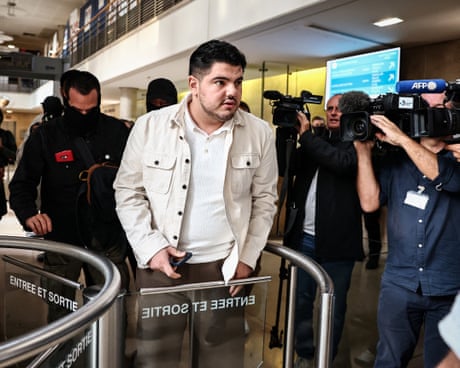
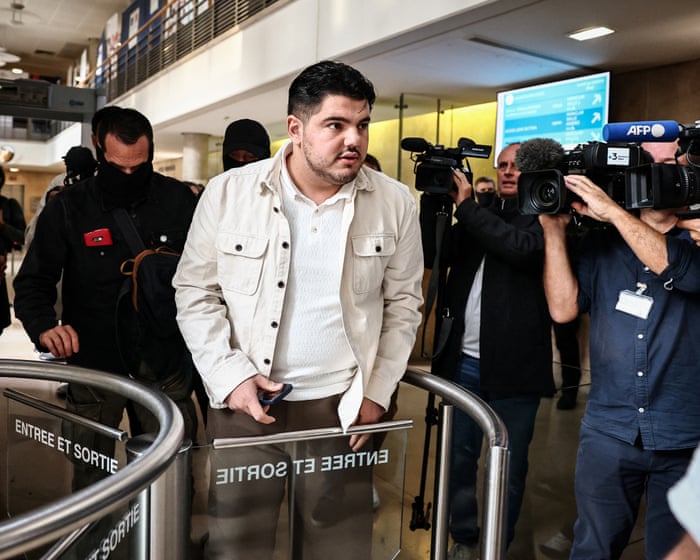
Amine Kessaci, 23, lives under constant threat as trial of five men becomes focus of nation’s battle with mafia-style crime
At 23, he is one of the most heavily protected people in France, constantly sleeping in different locations to escape the threat of contract killers from the country’s biggest drug cartel.
“Narcos and drug traffickers only have one language, one method: violence,” said Amine Kessaci, a young law student from a Marseille housing estate, who, after the murders of his two brothers, has become the most outspoken voice against the Latin American-style narco gangs expanding their reach across France.
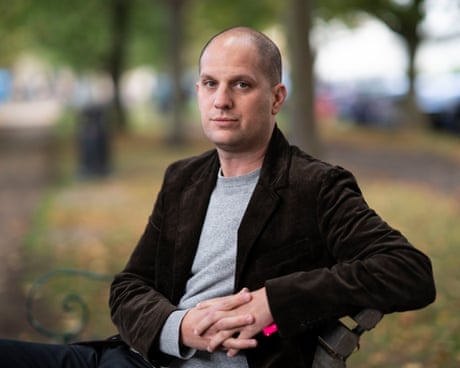
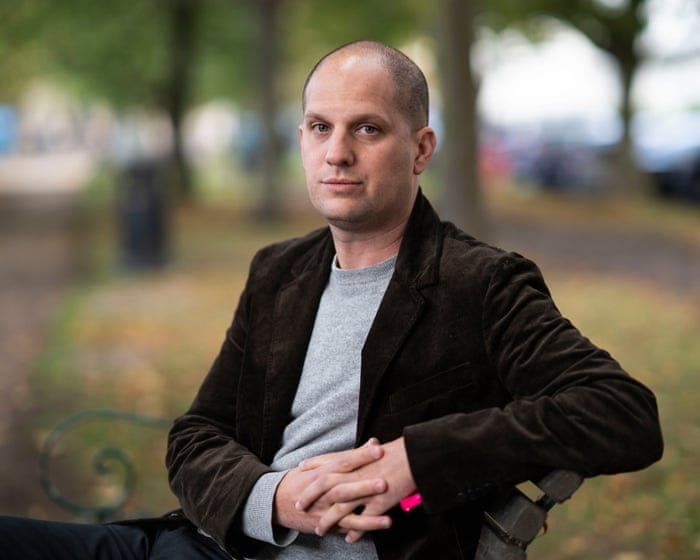
American journalist Evan Gershkovich talks about his arrest by the Russian intelligence services in 2023, his 16-month detention, and the swap deal that eventually took him home. Get in touch at tif.questions@theguardian.com
Evan Gershkovich was in an American-style steakhouse – with fake deer heads on the walls – talking to a contact in an eastern Russian city when masked agents of the Russian intelligence service burst in. ‘It was a trap from the start,’ he says. The American journalist who was working for the Wall Street Journal was detained, beaten and charged with espionage.
Evan talks to Annie Kelly about his arrest, what happened during his detention in a high-security jail, and the swap deal that finally took him home.
For the first time in her career, Cynthia Short let a folder of crime-scene photographs lie untouched on the corner of her desk, because she couldn’t bring herself to look at them. Short had been a criminal-defense attorney in Kansas City, Missouri, for 12 years, and on the payroll of the Missouri State Public Defender’s Office for the past decade. She had spent much of that time immersed in graphic records of the worst human conduct. Even so, the case of Richard DeLong had shocked her.
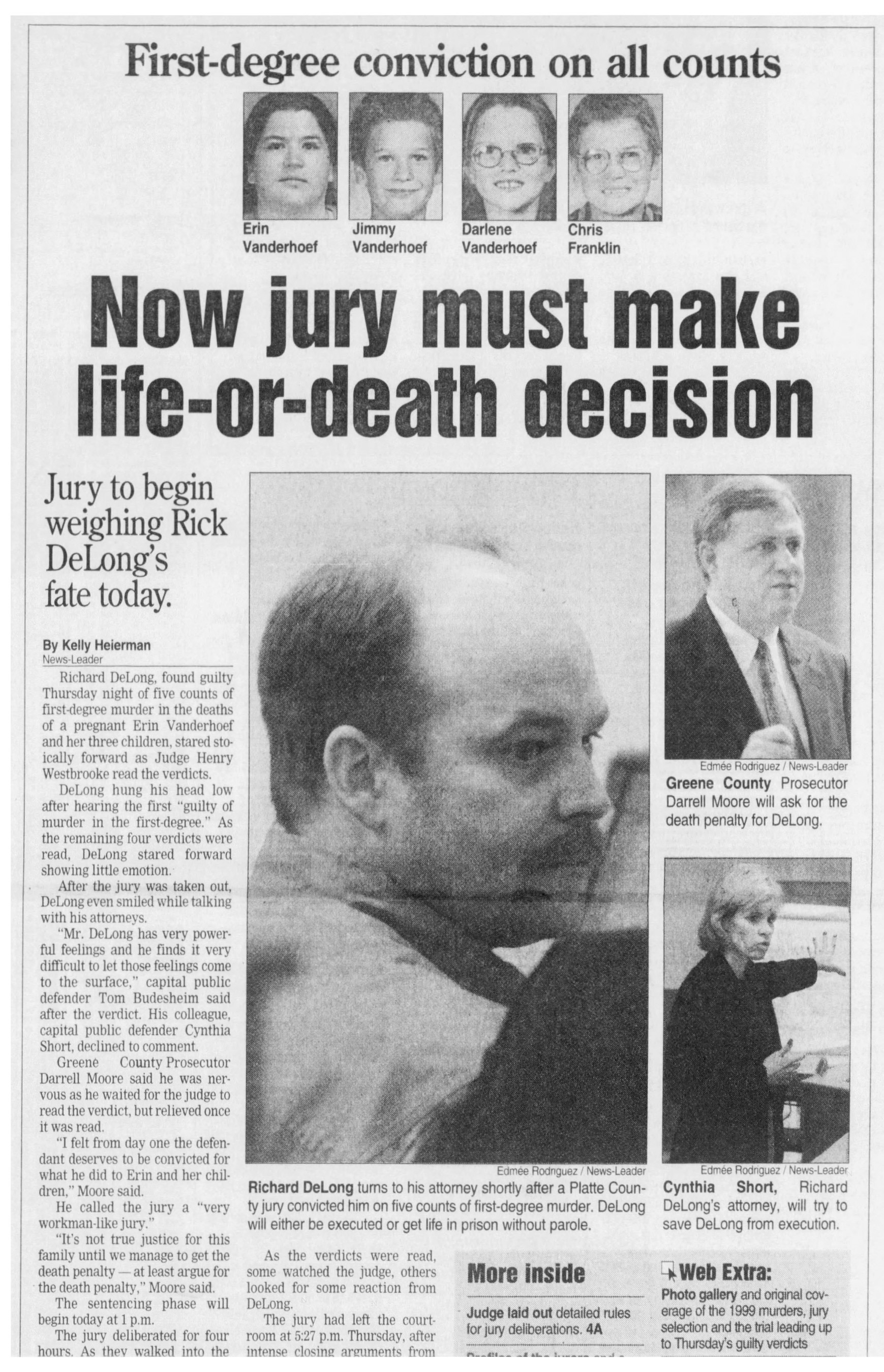
DeLong, 34, was facing capital punishment for five counts of murder. In January 1999, he had killed his ex-girlfriend Erin Vanderhoef—who was shortly due to deliver their child, a daughter they had named Hannah—as well as the three school-age children she’d had with two other men. DeLong had entered their decaying clapboard house in Springfield, Missouri, on the morning of January 19 and strangled each member of the family using scarves and cords, hog-tying Erin and gagging two of the children. When he was arrested several days later, he promptly confessed to each of the murders and immediately became the most hated man in Springfield. Short wished she didn’t have to take the case, but it was her duty as a public defender.
When, after several weeks, she finally forced herself to look at the crime-scene photos, she saw that the bodies of the children were partly hidden by debris—clothes, a plastic lawn chair, an overturned lamp. One of the boys, 10-year-old Chris, was still in bed; the other boy, 11-year-old Jimmy, had been left on the floor. Vanderhoef herself lay on her side on a rug in the living room, her blue top riding up over her pregnant belly. The youngest of the children, 8-year-old Darlene, was found in her sky-blue pajamas, tossed upside down onto a heap of garbage in the corner of her room, a jacket thrown over her face.
Short was then raising two young children of her own, and she wasn’t sure she would be able to hide her revulsion from a jury. “As a public defender, I’d seen all sorts of things, but it was the first time where I thought, I don’t know that I can stand in the courtroom next to him,” she told me when we first spoke by phone, in January. She also doubted that she could do much to help DeLong. He had committed a horrific crime and then admitted to it in a hateful taped confession.
In capital trials in the United States, proceedings are typically split into two phases: The first phase establishes a defendant’s guilt or innocence; if a jury returns a guilty verdict, it then determines in the second phase whether the defendant is sentenced to death or to life in prison. Prosecutors sometimes agree not to pursue capital punishment in exchange for a guilty plea, and on Short’s advice, DeLong did offer to plead guilty and waive all appeals in exchange for life without parole. But the prosecutors had no interest in a deal.
Because DeLong’s guilt was not in question, Short would focus on the sentencing phase. In capital cases, juries are instructed to consider statutorily defined aggravating factors cited by the prosecution—including, for instance, the death of multiple victims or of children, or the use of particularly sadistic methods of killing, all of which applied in DeLong’s case. Juries are told to weigh these aggravating factors against a much broader category of mitigating factors presented by the defense. These may include mental illness, intellectual disability, and a history of significant trauma or abuse. If the jury finds that the aggravators outweigh the mitigators, then it will likely hand down a penalty of death; if the mitigators prevail, then the jury will likely elect a lesser sentence, usually life in prison without parole. DeLong’s fate depended on Short’s ability to investigate his background and determine whether any possible mitigating evidence could be found that might persuade a jury to spare his life.
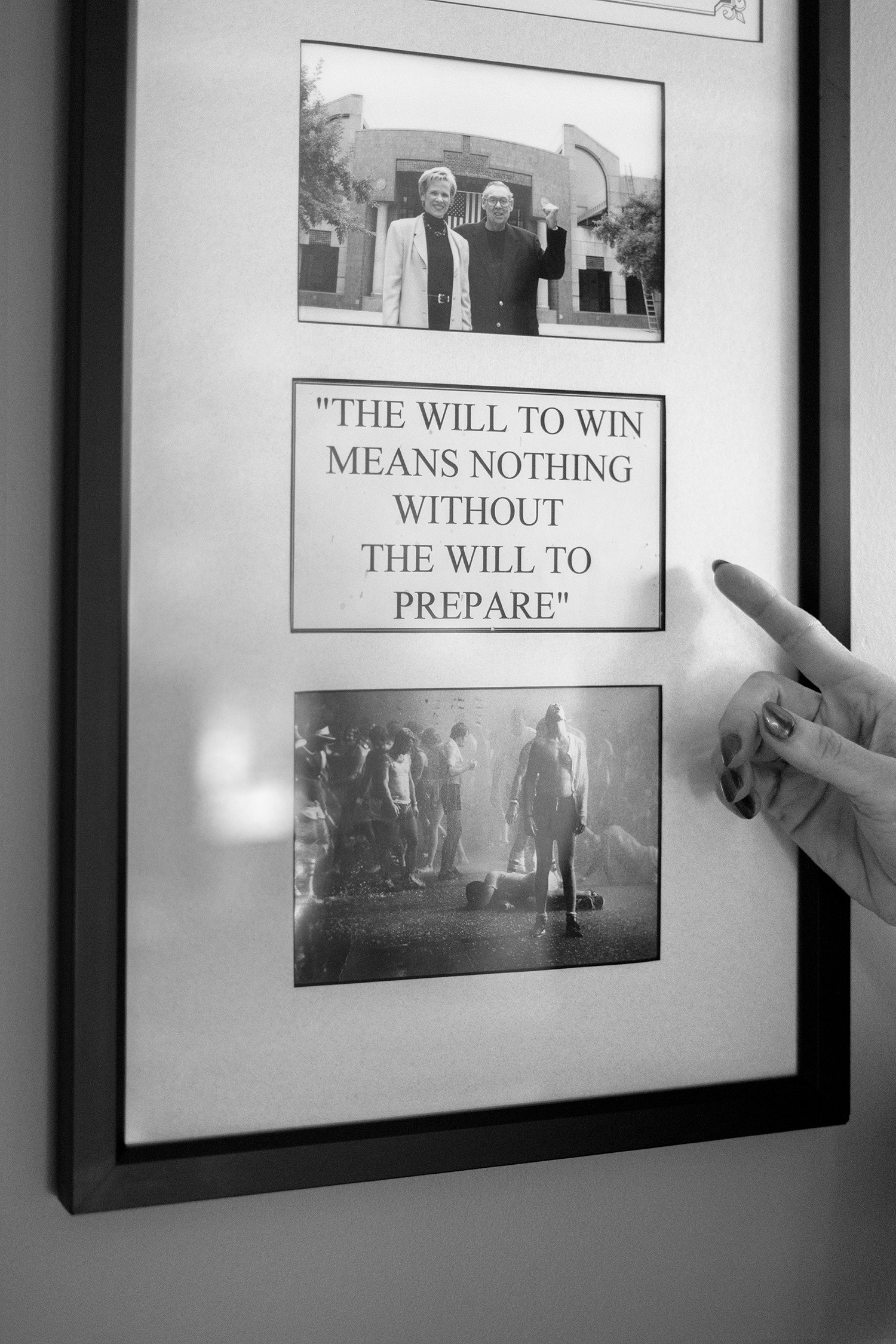
Despite deep misgivings, Short threw herself into the case. She had inherited her work ethic from her father, who helped manage the Apollo program as NASA’s vice president of space operations. His job took the family all around the country, from New Jersey to California, Virginia to Texas. Both she and her husband were attorneys; she’d earned her degree at Saint Louis University School of Law. Short worked grueling hours, spending six days a week at the office and traveling so often that her children became accustomed to her absence. Once, Short startled her 5-year-old son when she arrived home early from a long work trip. Assuming that she had lost her case, he asked, “Is the man dead?”
(Courtesy of Cynthia Short) When she took on Richard DeLong’s case, Short was raising two children of her own, and she wasn’t sure she’d be able to hide her revulsion from the jury.
Short wasn’t opposed to the death penalty when she first started practicing law, but as she gained experience in capital cases, she came to doubt that the criminal legal system was capable of consistently producing fair and equal outcomes. Capital punishment is inherently arbitrary. Some defendants have money and seasoned legal teams at trial; others do not. Some prosecutors favor the death penalty and others don’t, meaning defendants might be executed not strictly because of the nature of their offense but because of the side of a state or county line on which they happened to commit it. As she came to understand the capriciousness of criminal justice, Short changed her mind about capital punishment. The experience of representing several defendants whom she believed had been wrongly accused strengthened her opposition.
To defend Rick DeLong, Short knew, she didn’t need to make the jury believe that he was a good man or that he shouldn’t receive a terrible punishment. In capital trials in Missouri, as in most states, juries must return a unanimous verdict for a death sentence to be handed down, so Short needed only to introduce a shred of doubt in a single juror’s mind that her client had forfeited his right to live.
But even that seemed daunting, given the repugnance that she, DeLong’s own lawyer, could not suppress. Short may have wished that she didn’t have to take this case, but it would ultimately change her perspective on criminal behavior and set her career on a new path, taking her from the public defender’s office to a field known as mitigation, then still developing but now a central feature of every legal defense in capital cases. Mitigators are investigators whose mission, now mandated by law and precedent, is the granular search for circumstances that might convince a jury that their clients deserve a lesser sentence; in their most crucial cases, these specialists are the final advocates for a defendant’s life. Short would help pioneer the field and become one of its foremost practitioners. But in January 1999, all she had was a guilty client and bad odds.
Newspapers.com The front page of the Springfield News-Leader the day after Richard DeLong’s conviction
Doubt is central to mitigation: creating doubt that a person is wholly given over to evil, or doubt that there is no universe—no set of terrible circumstances—in which you yourself might commit a horrific crime. I do believe that there are people who commit acts of perfect evil; a frank appraisal of human nature suggests as much. But those who oppose capital punishment, as I do, oppose the death penalty even for the worst criminals in the worst cases. The reason to stay the executioner’s hand has less to do with the nature of the defendant than it does with the nature of society: Showing mercy is morally beneficial to everyone. The legal system, of course, does not think this way; it needs a solid rationale to hang decisions on, and it must establish that what appears to be abject wickedness, and nothing else, may in fact be more complicated and tragic.
The work of mitigation—searching for reasons a defendant’s life should be spared—is, unsurprisingly, not always well received in the legal community or by the public. As a society, we like to believe that our choices and actions are entirely within our control. Mitigators introduce an element of uncertainty. Their investigations routinely produce information that calls into question whether defendants would have, in better circumstances, committed their crimes at all. To some, this seems like making excuses for criminals.
For Short, now 65, mitigation isn’t about rationalizing crimes. “It is about telling the truth,” she told me. “The crime is real. The harm is real. Nothing I do changes that.” She does not wish to downplay suffering or to pretend that something awful did not happen. The goal of a mitigator, she said, is to understand how a person becomes a criminal. “Every life leaves a trail. Abuse, neglect, poverty, brain injury, trauma, addiction, resilience, acts of kindness, moments of courage—all become a part of that person’s story,” Short told me over email. “Mitigation is not the art of making people less guilty. It is the discipline of making sure we judge them as a whole human being.”
When Short was preparing for the DeLong case, mitigation had only just begun to emerge as a routine component of a legal defense in capital cases. It became formalized not long afterward, with the case of Kevin Wiggins. In September 1988, Wiggins, a Maryland construction worker, was charged with the murder of 77-year-old Florence Lacs. He had been arrested while driving her car and had already used her credit cards and pawned her jewelry. A jury convicted him of murder and sentenced him to death. But Wiggins, who was intellectually disabled and had been sexually abused as a child, appealed the sentence on the grounds that his attorneys had not presented sufficient evidence of extenuating circumstances in his defense. His case went to the Supreme Court, which ruled in his favor in Wiggins v. Smith in 2003.
The Wiggins decision held that capital defendants have a right to an effective defense, including an investigation into circumstances that might explain their crimes—a ruling that fueled the rise of mitigation work. In 2008, the American Bar Association revised its guidelines to direct defense teams in capital cases to include both an investigator, who conducts an independent inquiry into the crime itself, and a mitigation specialist, who is responsible for producing information that might convince a jury that there is something more to a client than their crime suggests.
Mitigators sift through the past and familiarize themselves with all elements of a defendant’s personal history. Fragments of clients’ lives may be strewn across the country or around the world, hidden among scattered documents and scattered memories. Mitigation specialists conduct scores of in-person interviews for each case—with extended family, friends, teachers, coaches, doctors, co-workers—to put the pieces together. The Marshall Project estimates that there may be fewer than 1,000 mitigation specialists nationwide; the majority of them deal with capital cases. About twice that number of people are currently on death row.
Because mitigation specialists often have little time to prepare their cases for trial, they frequently continue their investigations during the long death-penalty appeals process. Legal teams involved in capital cases are typically reluctant to discuss their findings if judicial processes remain ongoing, but at the Mwalimu Center for Justice, a law office in New Orleans that handles capital appeals, mitigation specialists on staff agreed to share information they had uncovered about some of their clients. Benjamin Cole, an Oklahoma man who murdered his infant daughter a few days before Christmas 2002, was found by specialists on his defense team to be schizophrenic; a brain scan revealed a severe lesion. Cole spoke in riddles and frequently broke into song while interacting with his defense team, until his disease became so advanced that he chose to sit in his dark prison cell hoarding religious pamphlets and rotting food while his hair grew matted and his mind decomposed. The mitigators argued that he was too sick to be subject to execution under the Supreme Court’s 1986 decision in Ford v. Wainwright, but state authorities were undeterred. Oklahoma executed Cole in 2022.
Sometimes mitigation, no matter how legitimate, cannot overcome people’s inherent disgust with horrific crimes. Cynthia Short was facing that very possibility.
Sky Maggiore for The Atlantic Mitigators familiarize themselves with all elements of a defendant’s personal history.
Sky Maggiore for The Atlantic Short worked on DeLong’s case throughout much of her third pregnancy.
Short still hadn’t looked at the crime-scene photographs when she first met Rick DeLong, a few days after he was taken into custody in January 1999. But she had watched his maniacal taped confession, which would later be played at trial and shared with the Springfield News-Leader. “Now laugh,” he had reportedly said to 8-year-old Darlene Vanderhoef’s lifeless body as she lay thrown over a piece of bedroom furniture with an electrical cord around her neck. Even so, Short insisted on speaking with DeLong in person, with no partition between them and no shackles to hold him in place. He was much smaller than she had expected, thin and balding, and had a scraggly mullet and a dirty-blond beard.
In Short’s experience, clients facing capital charges sometimes open a first conversation by declaring suicidal intent: The path ahead otherwise leads to either death in a prison cell or death in an execution chamber. But DeLong clearly wanted to live. And surprisingly, he was obsessed with the well-being of another person: Stacie Leffingwell, his long-term partner and the mother of his youngest child. Leffingwell had helped him kill Erin Vanderhoef and her children. And she was dying from AIDS. “Everything in that first conversation was what could I do for Stacie?” Short recalled. “How could I help Stacie?”
In a photograph Short has seen, Leffingwell kneels next to DeLong and their infant son on a sunlit lawn, a mischievous smile flashing across her face. They had met in the early 1990s when DeLong was barbecuing in a friend’s backyard in Springfield and Leffingwell, a neighbor, dropped by and struck up a conversation.
Leffingwell was dark-haired, petite, and funny. Born in California in 1967 to a teenage heroin addict, she had dropped out of high school and never learned to read. DeLong and Leffingwell both used drugs, especially methamphetamines. When they met, Leffingwell was HIV-positive, but she didn’t tell DeLong. He himself was the child of a teenage mother. Born in Springfield in 1964, he grew up in poverty and was subjected to vicious assaults by his stepfather. He began using drugs at the age of 15 and was eventually snorting or smoking meth several times a week. He got by on intermittent jobs as a mechanic and manual laborer.
These details and more were revealed as Short worked with a mitigation specialist and former welfare caseworker named Kathy Schneider. The pair traveled six hours from Kansas City to Springfield and back each week to interview everyone they could find who knew DeLong. They interviewed people in parks and churches, and once went into a drug house in the middle of a snowstorm. Every month, Schneider went to see DeLong in jail, where she also interviewed his mother and sisters. Schneider created a history of DeLong’s family going back three generations, documenting the life of his biological father, a man known as Howard Littles, and his stepfather, Buzz, who had been diagnosed as mentally ill and institutionalized.
DeLong was a twice-divorced father of four when, in 1996, he was introduced to Erin Vanderhoef, who worked at a McDonald’s in Springfield. Vanderhoef had also suffered a life marked by poverty and loss, and she took a liking to DeLong right away, confiding in others that she was interested in him romantically, even though he was already involved with Leffingwell. They formed a close friendship.
DeLong had a child with Leffingwell, a son born in 1997 whom they named Lyle. Leffingwell had tried to stay clean during her pregnancy, but she resumed using drugs after the baby was born. She disappeared for a time, leaving DeLong alone to care for their newborn. Vanderhoef stepped in to help. When Leffingwell came home, she was in treatment for depression. DeLong and Vanderhoef by then were sleeping together. DeLong’s place was often in a state of chaos and frequented by drug users. Despite the infidelity and the strangeness of the arrangement, Leffingwell and Lyle moved in with Vanderhoef and her three children. A volatile love triangle developed.
In February 1998, DeLong and Leffingwell abruptly moved into a motel in Joplin, roughly 70 miles west of Springfield, near the Kansas border. But DeLong still saw Vanderhoef, and by summer she knew she was pregnant. The news sent Leffingwell into a bout of jealousy and deeper into addiction. That July, she was admitted to a hospital for pancreatitis and stayed for three weeks. She weighed less than 90 pounds. Leffingwell and DeLong told family and friends that she had stomach cancer. In fact, she was dying of AIDS. In September, DeLong himself was diagnosed with HIV. He began using meth every day.
In the days leading up to the murders, DeLong and Leffingwell went on a meth binge. On the night of January 18, 1999, Leffingwell was high and distraught, racked with fear that Vanderhoef was going to replace her. DeLong, for his part, was furious with Vanderhoef for messing up his relationship with Leffingwell. The couple came to the shared belief that Vanderhoef presented a problem, and Leffingwell demanded that DeLong fix it—permanently. Early the following morning, DeLong drove from Joplin to Springfield to kill Vanderhoef. Leffingwell rode with him, as did Harold “Bobby” Lingle, a friend and neighbor who had agreed to help carry out DeLong’s plan in exchange for an eight ball of meth.
At around eight that morning, they pulled up to Vanderhoef’s three-bedroom house. Lingle, who had met Vanderhoef before, lured her out of the house on the pretext of a grocery errand so that DeLong and Leffingwell could wait and catch her by surprise when she returned. Then DeLong slipped inside, where he found Vanderhoef’s three children getting ready for school. Wired on meth, DeLong killed them one by one. When Vanderhoef came back, Lingle told her that the children had been sent to their rooms. Then he and Leffingwell helped DeLong subdue and murder Vanderhoef. It was a cold mercy that she died thinking her children were still alive.
DeLong, Leffingwell, and Lingle were quickly apprehended. Leffingwell died of AIDS before the year was out. The lead Greene County prosecutor, Darrell Moore, decided not to seek the death penalty against Lingle, who was said to have an IQ of 72; he was eventually sentenced to life in prison without parole. But Moore was adamant about bringing capital charges against DeLong.
A series of delays pushed DeLong’s trial to June 2001. Public furor in Springfield ran hot, and press coverage was intense. When Short stood before the jurors, the first thing she said was that DeLong was unquestionably guilty. She acknowledged the horror and disgust that they were surely feeling. “There are things that we need to do in this courtroom,” she recalled telling the jury. “And one of those things that you’re going to need to do is, you’re going to need to really look closely at his mental state. That will be your job.”
But it would have to be a job mainly for phase two—the sentencing phase—rather than phase one, the guilt-or-innocence phase. No one was surprised when, on June 28, after a week and a half of testimony and less than four hours of deliberation, the jury convicted Rick DeLong on all five counts of murder.
Sky Maggiore for The Atlantic “Mitigation is not the art of making people less guilty,” Short said. “It is the discipline of making sure we judge them as a whole human being.”
Short knew that the sentencing phase would be difficult. She knew this in part because she had used her own extended family and friends—some of whom were highly conservative and generally skeptical of the defendants she represented—as test subjects, a kind of informal focus group.
When Short and her team had finished their mitigation work, well before DeLong’s trial was scheduled to begin, they collated the findings into spiral-bound books, each more than 100 pages long. Inside were detailed descriptions of DeLong’s crimes, a DVD of his confession, photographs of the crime scene, and a photograph of Vanderhoef and her three children, young and bright and beautiful, posed on a bench in front of their mother, who is holding Lyle in her arms. The books also contained a detailed account of the mitigating factors in DeLong’s case, including his abusive stepfather, his drug addiction, and his HIV status. Scattered throughout were questionnaires asking readers for their reactions at various stages. The prompts had a clinical feel, as though Short were asking for opinions on a company’s new logo or a politician’s campaign slogan, not the killing of three children and a pregnant woman. If you did choose to look at the photographs, please describe what you learned from them. But it was the best simulation of a jury’s deliberation that Short could create.
The responses from her family and friends were not encouraging. At the beginning of the book, readers were asked to gauge their support for capital punishment in general. One reader put her support at a 5 on a scale of 1 to 7, but after reading through the mitigation evidence, this same woman put her support for executing DeLong specifically at a 6. Her views were aligned with those of the prosecutor, Darrell Moore, who told reporters in advance of the sentencing phase that he and the judge had received numerous phone calls from angry citizens who wanted DeLong to die for his crimes. In front of the jury, Moore read a letter written by Vanderhoef’s brother in which he told DeLong, “You do not deserve the right to live, in a prison or any other place. You are not a man, you are a coward and an animal.”
On DeLong’s behalf, Short introduced the array of mitigating information that she and Kathy Schneider had compiled. Some of the material had been presented in phase one—a tactic known as front-loading. The idea was not to try to sway jurors on the question of guilt or innocence—in this instance, there was nothing to be done—but to prepare the jury for arguments that would be presented again, and enhanced, later on. Short was aware that much of the information could be seen as all too familiar: When it comes to defendants facing the death penalty, a life like DeLong’s is normal;very few people guilty of aggravated first-degree murder have peaceful, healthy backgrounds. But two aspects of his story had taken Short by surprise. First, as she combed through the police files, Short had noticed a coincidence: Mark Deeds, the officer who had coaxed the confession out of DeLong and emerged as the hero of the investigation, had encountered her client before.
In 1991, when DeLong was 27, he was arrested for selling cocaine and marijuana to Deeds, who was then working undercover for the Springfield Police Department. DeLong was so deeply enmeshed in the local drug culture that Deeds saw an opportunity. According to the testimony of DeLong’s former defense attorney, who negotiated a plea deal, Deeds threatened DeLong with decades in prison unless he began working as an informant. DeLong agreed. Police and prosecutors paid DeLong for information and granted him leniency on subsequent drug-related charges. At one point, his bond on arrest was reduced from $75,000 to $2,500. At another point, he received a sentence of five years’ probation for charges that ought to have resulted in prison time.
The policies of the Missouri Board of Probation and Parole specifically prohibited offenders on probation from serving as police informants, but the department kept working with him anyway. Because of his protected status, DeLong continued to get little to no prison time when he was caught using. His addiction deepened. By the time of the murders, DeLong had helped Deeds and the Springfield Police Department clear a number of high-profile narcotics cases, even as he himself disintegrated from years of dependence. His career as a police informant came at the expense of any attempt at rehab—the one had simply precluded the other. Given all of this, Short asked, did the police bear any responsibility for DeLong’s condition?
The second discovery that Short and her team made came while going through DeLong’s medical records. A week before the murders, he had begun taking Sustiva, an experimental drug that can help slow the progression of HIV but whose side effects include dizziness, insomnia, confusion, abnormal thinking, amnesia, agitation, and hallucinations. Patients abusing drugs or who have preexisting mental illness are at increased risk of developing neurological symptoms. And the drug’s side effects tend to be most severe when a patient is just starting to use the drug, as DeLong had been.
The witnesses for the defense included an addiction specialist who testified that DeLong’s meth use easily could have contributed to a shattered mental state; a medical specialist who confirmed that Sustiva is known to induce delusions, hallucinations, and psychosis, and that the drug combined with meth could have disastrous results; and a psychiatrist who testified that DeLong had likely been in the grip of a psychotic episode when he carried out the murders.
Short did not know what to expect when the jury began to deliberate. The new information had raised provocative questions about a case whose conclusion had once seemed preordained. In the end, the jury declined to impose the death penalty. It instead sentenced DeLong to life without parole.
Sky Maggiore for The Atlantic In Short’s 23 years as a full-time mitigation specialist, she has worked with approximately 200 clients, none of whom has received the death penalty.
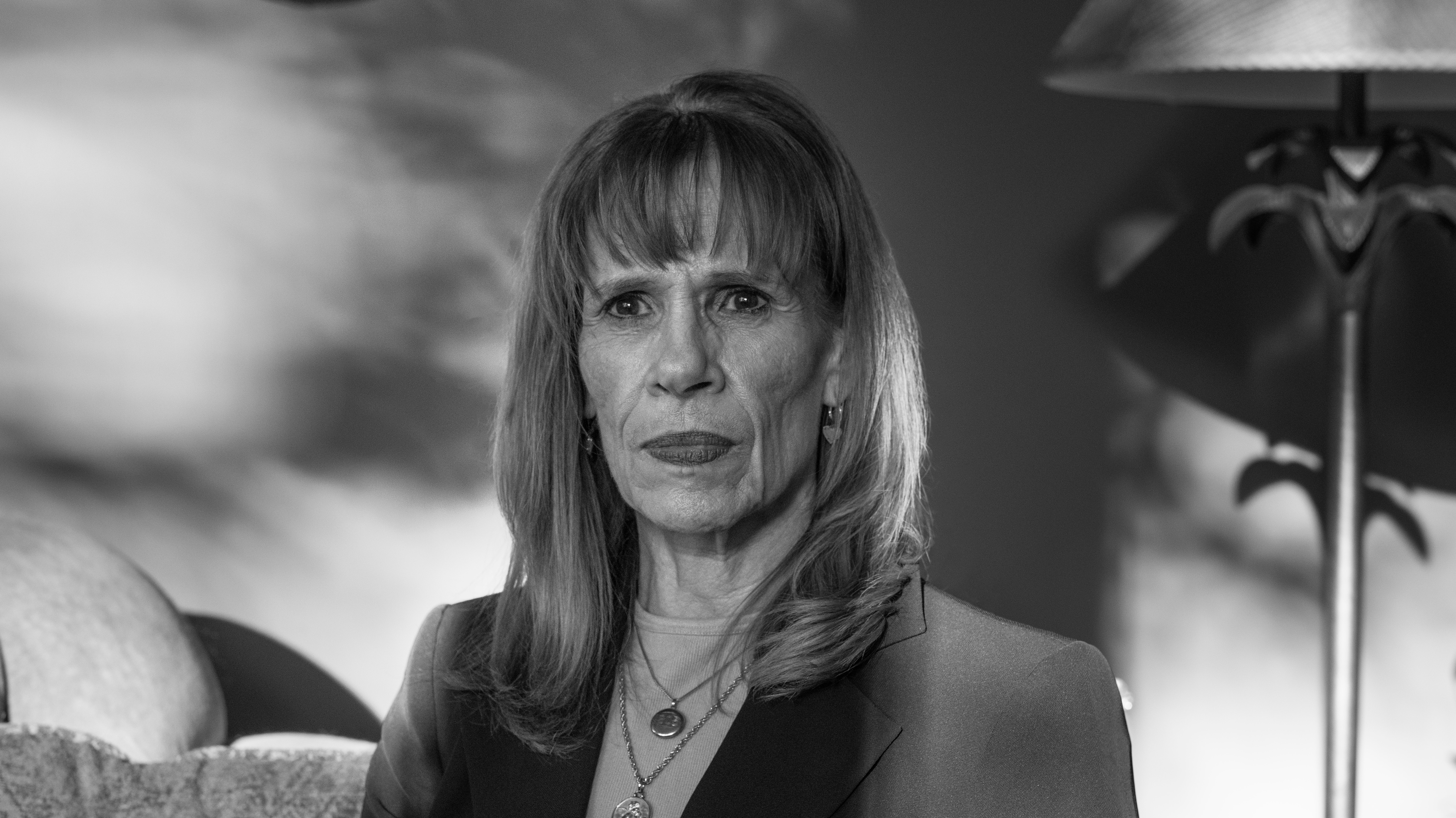
Sky Maggiore for The Atlantic Cynthia Short in her home office in Kansas City, Missouri
In 2003, Short left her job with the Public Defender’s Office due to a round of funding cuts, and decided to become a full-time mitigation specialist. In the 23 years since then, she says that she has worked with approximately 200 clients, none of whom has received the death penalty. Her attitude toward the field, as a practical matter, can be simply put: If mitigators are able to present a full picture of a defendant’s life, then no reasonable jury will return a verdict of death, not even for the most brutal killer. Her job is to persuade jurors to bestow something that she feels everyone deserves. “Mercy is not something that is earned,” she said to the jury during DeLong’s trial. “Mercy is something that is given.” Her words were printed in large display type in the Springfield News-Leader’s front-page story about DeLong’s sentencing.
Short is well aware that much of the public—including thoughtful citizens and community leaders—finds mitigation not only unjustifiable but incomprehensible. Still, she cannot set aside her principles or her obligations: Every defendant deserves a full measure of effort, even if onlookers deem it a waste of time and money for people who deserve nothing. She is sustained by some of those she encounters along the way. Several weeks after DeLong’s sentencing, Short received a note from James Spindler, the Greene County medical examiner. She had cross-examined him on the stand, and had probed him about his own struggles with drugs. Addiction, she suggested, was not something that happens strictly to evil and hopeless people. That resonated with Spindler, who wrote that although he had come across a number of dangerously antisocial defendants in his career whose executions he would by no means oppose, Short had convinced him that DeLong was not a “sociopath beyond redemption.”
The past few years have been among the busiest in Short’s career as a mitigator. After a federal moratorium on new death sentences during the Biden administration—and the mass commutation of most federal death sentences already handed down—the Trump administration has reinstated the federal death penalty. Trump’s former attorney general Pam Bondi encouraged states to aggressively pursue capital punishment and take advantage of foreshortened appeals processes that would fast-track executions. Mitigation specialists have seen their workload increase in volume and urgency.
Short’s determination to try to see beyond the worst of what her clients have done struck me as rare and admirable, and I kept it in mind when I picked up the phone to call the Missouri prison where Rick DeLong is incarcerated. I have spoken with many people who have committed murder, and many people on death row. Capital punishment, and the victims and perpetrators of capital crimes, have long been a focus of my reporting. But I had never spoken with a child killer before.
A prison receptionist answered, and after a pause put DeLong on the phone. His voice was both hoarse and soft; his disease is advanced now, and he has had several heart attacks. He told me what his life had been like before he committed the murders, how he loved working as a mechanic—“There was nothing I couldn’t do to a car,” he said. He recalled his stepfather, and how abusive he was, and how the meth had made the bad moments more bearable. Meeting Leffingwell had made things better, too, because she came from the same world, and for once he felt understood. They had loved going to rodeos and carnivals together, a kind of fantastic escape.
DeLong talked about his five children, only three of whom will speak with him. He also talked about his grandchildren, though he has seen them only in photos. His son Lyle is in prison, convicted of murder in 2022 and now serving a 32-year sentence. DeLong told me he had loved being a father to Lyle—“That’s my joy,” he said. “I took him everywhere.” He recalled bringing him on fishing trips, and once, in a misguided display of devotion, buying a heavy-duty backpack, cutting holes in it for arms and legs—a makeshift infant carrier—and taking him for rides on his motorcycle. Now the boy was a man, and had followed his father behind bars.
As for his own crimes, DeLong told me that he was glad he’d been caught, and that he knows he deserves the sentence he received. I could not forget that the thin voice on the other end of the line belonged to a man who had taken five lives. It was also the voice of a frail 61-year-old slowly dying in prison. DeLong remembered Cynthia Short fondly, though he told me that he had initially doubted that a woman would be able to see past what he had done to a mother and her children. But Short, he admitted, had understood everything: the crime, his life, how he might appear in the eyes of a jury. And she knew what it would take to save him. He didn’t have much of a life anymore, but thanks to this woman, he was alive. “You couldn’t ask for better,” he told me. “There’s no way.”
No primeiro turno das eleições de 2026, a alteração de locais de votação pelo Tribunal Regional Eleitoral do Rio Janeiro (TRE-RJ) impactou mais da metade dos eleitores do Complexo da Maré, na zona norte da capital fluminense. A justificativa do tribunal é que as comunidades da Maré são uma “área de risco” pela dominação de facções e do tráfico de drogas.
“O Estado reconhece que aqui [na Maré] não é seguro para votar e coloca os moradores para votar do lado de fora. Qual o impacto disso? [Que a] gente está sempre no antagonismo”, afirma Tainá Alvarenga, coordenadora da organização Redes da Maré, no eixo direito à segurança pública e acesso à Justiça.
Para Alvarenga, várias instâncias do poder público utilizam a falta de segurança como argumento, mas acabam interferindo no acesso a direitos fundamentais dos moradores das comunidades como transporte, saúde, investigações de crimes e, entre eles, o de “não ter os espaços de votação mudados com o discurso da segurança pública”, declara à Agência Pública.
“A escola oferece menos dias de aula por causa da segurança, a defensoria não pode vir sem uma autorização por causa da segurança, o Ministério Público não pode vir porque é um território conflagrado, não pode ter perícia [pelo mesmo motivo]”, afirma a coordenadora.
Em um artigo publicado no Jornal O Globo, a diretora fundadora da organização Redes da Maré, Eliana Sousa Silva, explica que a Zona Eleitoral (ZE) 161ª é a mais representativa para a Maré porque cerca de 60% de suas seções estão localizadas dentro do território ou em seu entorno.
Um levantamento feito pelo Consultor Jurídico mostra que as nove zonas eleitorais do Rio de Janeiro com locais de votação alterados apresentaram um índice maior de abstenção. Nelas, a média de abstenção foi de 25,83% enquanto o índice nacional ficou em 21,08%. A 161ª ZE foi justamente a que teve o maior número de endereços trocados, segundo a pesquisa, e alcançou o maior índice de abstenção, 28,46%.
No total, 72 locais de votação do Rio de Janeiro foram alterados pelo TRE-RJ, atingindo 20 municípios do Estado e cerca de 200 mil eleitores, segundo Eliana Sousa Silva. No Complexo da Maré, eleitores foram remanejados para locais com até 7 quilômetros de distância do local original.
A fundadora da Redes Maré também aponta em seu artigo que na 161ª ZE, Lula venceu Flávio Bolsonaro por uma diferença de 14 pontos percentuais, alcançando quase 10 pontos a mais do que obteve na cidade do Rio. E, para governador, Eduardo Paes teve 8 pontos percentuais a mais do que a sua média no restante da capital. “Falta transparência sobre quais critérios justificam a retirada de algumas seções e a manutenção de outras na mesma região” avalia Silva.
“Os locais transferidos funcionam em escolas municipais. Se esses prédios recebem crianças diariamente, por que seriam inadequados para adultos votarem por algumas horas? Sem critérios transparentes, a decisão reforça o estigma da favela como território perigoso e desconsidera a sua organização comunitária”, complementa.
Não é a primeira vez que o TRE-RJ transfere eleitores para outros lugares. Em 2024, a Redes da Maré calculou que 50,6% dos eleitores aptos do local foram impactados pelas mudanças de locais de votação. O estudo “Como vota a Maré”, realizado pela organização, ressalta que o alerta sobre o risco de abstenção em função das constantes alterações de endereço feitas pela Justiça eleitoral do estado já era feito na votação anterior.
Segundo a análise, os moradores da Maré que antes votavam dentro do território foram os que mais sofreram com as dificuldades de acessibilidade e mobilidade urbana. “A transferência pode significar aumento do tempo de caminhada, necessidade de atravessar grandes vias como a Avenida Brasil e Linha Amarela, ausência ou inadequação de transporte público, […] o que impacta desproporcionalmente jovens, mulheres chefes de família, pessoas com deficiência e pessoas idosas que vivem na Maré”, detalha.
A pesquisa ainda destaca que, por mais que o transporte público gratuito nos dias de votação seja “fundamental para reduzir barreiras econômicas ao voto”, não é o suficiente para garantir o direito ao voto. “Gratuidade não significa, por si só, acessibilidade territorial. Essa distinção é especialmente importante na Maré, onde o transporte coletivo se concentra nas grandes vias que margeiam o território”, avalia.
A Justiça Eleitoral, neste ano, incluiu a Maré no projeto “Seu Voto Importa”, destinado a auxiliar pessoas com mobilidade reduzida e pessoas com deficiência para se locomover até suas áreas de votação, em Bonsucesso.
En délocalisant leur production dans les pays les plus pauvres, les entreprises multinationales ne recherchent pas seulement une main-d'œuvre à bon marché. La faiblesse des lois sociales et environnementales les protège des poursuites judiciaires. Cette impunité prospère aussi faute d'instances internationales ou de tribunaux compétents en la matière dans les pays consommateurs.
Du 29 mai au 1er juin 2014, la ville de Montréal accueillait la première session canadienne du Tribunal permanent des peuples (TPP) relative à l'industrie minière. Lors d'un procès fictif, des militants et des personnalités de la société civile ont « jugé » de grandes entreprises accusées de violer les droits humains et de détruire l'environnement. Cette démarche à la fois théâtrale et sérieuse visait non seulement à mettre en lumière les dégâts liés à l'extraction de matières premières, mais également à dénoncer l'impunité dont bénéficient les multinationales implantées dans les pays pauvres.
En droit international, la notion de crime économique contre les peuples ou contre l'environnement n'existe pas. La « communauté internationale » n'est pas dépourvue d'instruments juridiques, à l'image de la Cour internationale de justice ou de la Cour pénale internationale, mais ces derniers ne s'appliquent pas aux activités économiques que les entreprises mènent à l'étranger. Les marées noires, les accidents industriels ou la corruption de fonctionnaires locaux ne méritent pas, semble-t-il, de juridiction compétente. Mieux, les pays occidentaux n'ont pas estimé judicieux de doter leurs tribunaux des moyens de juger les agissements de leurs multinationales à l'étranger : il s'agirait d'une forme de violation de la souveraineté nationale des pays qui accueillent lesdites entreprises.
La loi française, par exemple, précise qu'un crime ou un délit commis hors du territoire sera jugé en France si et seulement si « le crime ou le délit est puni à la fois par la loi française et par la loi étrangère, et s'il a été constaté par une décision définitive de la juridiction étrangère ». En somme, pour que les dirigeants de Total soient sanctionnés en France pour leur soutien à la junte birmane, il faudrait qu'ils aient été préalablement condamnés, pour les mêmes faits, par le tribunal de… Naypyidaw, la capitale de la Birmanie. Une perspective qui, jusqu'ici, n'a pas privé de sommeil les « créateurs de richesse » français, et pour cause : grâce au chantage aux délocalisations et aux moyens gigantesques dont disposent les multinationales, une condamnation dans un pays aussi pauvre et corrompu s'avère le plus souvent utopique.
Auchan au banc des accusés
Certaines organisations non gouvernementales (ONG) ne désespèrent toutefois pas de trouver une faille dans ce système d'impunité. C'est le cas de Sherpa, une association de juristes fondée en 2001 à Paris, de Peuples solidaires ou du collectif De l'éthique sur l'étiquette. Ces trois associations ont porté plainte contre Auchan dans l'affaire de l'effondrement de l'usine textile du Rana Plaza, le 24 avril 2013, au Bangladesh (1). « Auchan inscrit son action dans les principes de droit issus de la Déclaration universelle des droits de l'homme de 1948, de la déclaration relative aux principes et droits fondamentaux de l'OIT [Organisation internationale du travail] de 1998 et des principes directeurs de l'OCDE [Organisation de coopération et de développement économiques], explique la société sur son site Internet. Ces textes forment un corpus de droits civils, politiques, économiques, sociaux et culturels qu'Auchan applique à ses partenariats. » Les mille cent trente-cinq morts du Rana Plaza partageront-ils l'analyse ? Des étiquettes d'In Extenso, une marque d'Auchan, ont été retrouvées dans les ruines de cette usine de confection. Mais le groupe a refusé d'indemniser les victimes en contestant tout lien direct ou indirect avec cet établissement. En plaidant la « pratique commerciale trompeuse », les ONG sont parvenues à obtenir l'ouverture d'une enquête préliminaire. Pour M. Gérard Mulliez, fondateur du groupe Auchan et troisième fortune de France, les menottes sont encore loin, mais il s'agit malgré tout d'un coup de semonce.
Au sein des Nations unies, certains Etats tentent également d'infléchir le droit international. En juin 2014, le Conseil des droits de l'homme a examiné un projet de résolution déposé par l'Equateur et l'Afrique du Sud portant sur la responsabilité sociale et environnementale des multinationales. Le texte propose de créer un groupe de travail chargé d'élaborer un « instrument international juridiquement contraignant pour réglementer, dans le cadre du droit international des droits de l'homme, les activités des sociétés transnationales et autres entreprises ». Soumise au vote, cette résolution a été adoptée en dépit de l'opposition des nations les plus riches : l'ensemble des pays de l'Union européenne, le Japon et les Etats-Unis se sont prononcés contre. « La France a préféré une approche progressive qui s'appuie sur les travaux engagés depuis 2011, de façon à pouvoir appliquer concrètement ces mesures plus rapidement », a tenté de justifier Mme Annick Girardin, secrétaire d'Etat chargée du développement et de la francophonie (2). Si les grands patrons du CAC 40 venaient à défiler sur le banc des accusés, les pouvoirs publics soutiendraient-ils les plaignants ?
La voie « plus concrète et plus rapide » voulue par le gouvernement se nomme « principes directeurs des Nations unies relatifs aux entreprises et aux droits de l'homme ». Rédigés en étroite concertation avec les sociétés privées, ils sont non contraignants et tout à fait inoffensifs. Le onzième principe indique d'ailleurs que « les entreprises devraient respecter les droits de l'homme », un conditionnel qui en dit long sur la motivation politique des rédacteurs.
Tout en repoussant ces assauts contre l'impunité des multinationales au niveau des Nations unies, M. François Hollande, M. Manuel Valls et leurs équipes doivent aussi répliquer à des attaques intérieures. En novembre 2013, des députés écologistes et socialistes ont déposé un projet de loi relatif au « devoir de vigilance des sociétés mères et des entreprises donneuses d'ordres ». Le texte, qui tarde à être examiné, introduirait un devoir de prévention des dommages écologiques et des atteintes aux droits fondamentaux, ainsi qu'un régime de responsabilité des maisons mères françaises. Verra-t-il le jour ? C'est peu probable. Le Mouvement des entreprises de France (Medef) s'y oppose déjà avec vigueur, de même que le ministère de l'économie. Selon toute vraisemblance, le sujet sera renvoyé devant la Commission européenne, dont on connaît la grande fermeté — pour ne pas dire la cruauté — envers les lobbies économiques…
Demand for metals has exploded in recent decades, thanks to population growth, technological innovation, and economic development. The volume of metal ores like iron and copper extracted globally quadrupled during the last half-century, and the trillion-dollar industry shows no signs of slowing down. But the growing demand comes with environmental risks. Both metal mines and the storage facilities that hold vast amounts of toxic mining waste, known as tailings, can release pollution into the surrounding environment, contaminating land and water with heavy metals and harmful chemicals. This pollution can eventually wash downstream, affecting coastal communities and marine ecosystems. An analysis recently published in the journal Earth-Science Reviews warns that climate change could exacerbate the risks of metal mining pollution on marine environments. Researchers examined areas where compounding risks from warmer temperatures, rising seas, and changing weather patterns could release more toxic waste into the landscape over the next century, highlighting the need for remediation and monitoring. They identified the six regions where overlapping hazards pose the highest risk: North America, South America, Northern Europe, the Mediterranean, East Asia, and Australia. “We isolate six hotspots, but that makes up a large part of the world,” study lead author Adam Sproson, a research scientist at the National Oceanography Centre in the U.K., told Mongabay. “There’s quite a lot of coastline to cover.” The coastal Levant Mine in Cornwall, U.K., in 2008. This tin and copper mine operated from the 18th century until the 1930s, and its workings extended under the sea. Legacy…This article was originally published on Mongabay
Scientists can’t agree why reefs in the Red Sea have long been immune to bleaching. The answer could be the key to saving these tough corals as climate change begins taking its toll.
**** / ***** (four out of five stars) Set a couple of months before the 2024 election, ANON is not a subtle, sensitive exploration of these, our troubled times. Playwright Anne Washburn and director Anne Kauffman have concocted a ferocious modern tragedy, in which social media serves as an audience for every would-be influencer’s sweaty […]
Although they lost almost all their savings in Bernie Madoff’s multibillion-dollar Ponzi scheme, the marriage of Kevin Bacon, 68, and Kyra Sedgwick, 61, who have been together for 38 years, survived with their New York apartment and their farm in Connecticut intact. It was there that the pandemic lockdown found them, and there that they hatched a film together, with the help of their two children, who came from the West Coast: Travis, a composer drafted into acting by the demands of the script, and Sosie, who has already established herself as a film and television actress.
In a letter, Cornell's president apologized for what happened to the student who alleges she was raped by several men at a fraternity house in 2024 and promised 'meaningful action.'
Investigamos o que importa para os brasileiros além do que passa na campanha eleitoral. Leia mais reportagens como essa clicando aqui.
Os cinco partidos com políticos que mais atuaram em pautas consideradas contrárias aos povos indígenas, segundo a plataforma do Conselho Indigenista Missionário (Cimi), vão ocupar 53 cadeiras no Senado Federal a partir de 2027. São eles o PL, o PP, o Republicanos, o União Brasil e o MDB. O PL conseguiu ocupar a maior bancada do Congresso Nacional, com 121 deputados e 28 senadores eleitos pelo partido.
Como a Agência Pública já noticiou, entre 2019 e 2026, o PL foi o partido que mais votou e propôs propostas legislativas que ameaçavam os direitos dos povos originários, segundo levantamento do Cimi. Luis Ventura, secretário-executivo do Conselho, vê a nova formação do Congresso Nacional como um perigo direto aos povos indígenas.
Na avaliação de Ventura, no Senado, cinco partidos vão poder aprovar sozinhos alterações da Constituição que podem afetar diretamente os indígenas. Na Câmara dos Deputados, entretanto, mesmo em menor número, ainda se espera um campo de resistência, ainda que minoritário. “Há muitos outros parlamentares não indígenas que já aderiram, de forma sistemática, às pautas indígenas. Existe uma frente parlamentar mista de defesa dos direitos dos povos indígenas desde 2019 […] era uma frente parlamentar mista de mais de 150 parlamentares entre senadores e deputados”, explica Luís Ventura.
No Senado, nenhum dos 54 senadores eleitos se autodenomina indígena. Atualmente, na Casa, só dois parlamentares se identificam como indígenas: Wellington Dias (PT-PI) e o ex-vice-presidente de Jair Bolsonaro, Hamilton Mourão (Republicanos-RS), que adotou essa identidade nas eleições de 2022.
Ventura explica que a presença de indígenas no Senado sempre foi mais difícil. “O Senado sempre foi uma Casa totalmente hermética para os povos indígenas e isso porque o sistema eleitoral no Brasil torna muito difícil conquistar uma vaga nesse lugar. As formas de colonialismo político nos estados são muito herméticas e, se você perceber, dos 54 [senadores eleitos], salvando algumas exceções do campo da esquerda, estamos falando de pessoas que pertencem a um espectro político reacionário, conservador, fundamentalista, militarizado”, acrescenta o secretário.
Um Senado com baixa representatividade de povos indígenas, na visão do secretário executivo da Cimi, reforça um movimento que deve retroceder nas pautas centrais para essa população. “O objetivo deles vai ser impedir as demarcações, impor o Marco Temporal e abrir os territórios para a exploração econômica de terceiros. Esses são os grandes três objetivos dessa grande bancada reacionária que entrou no Senado”, prevê.
Indígenas ocuparão menos do 1% do Congresso Nacional
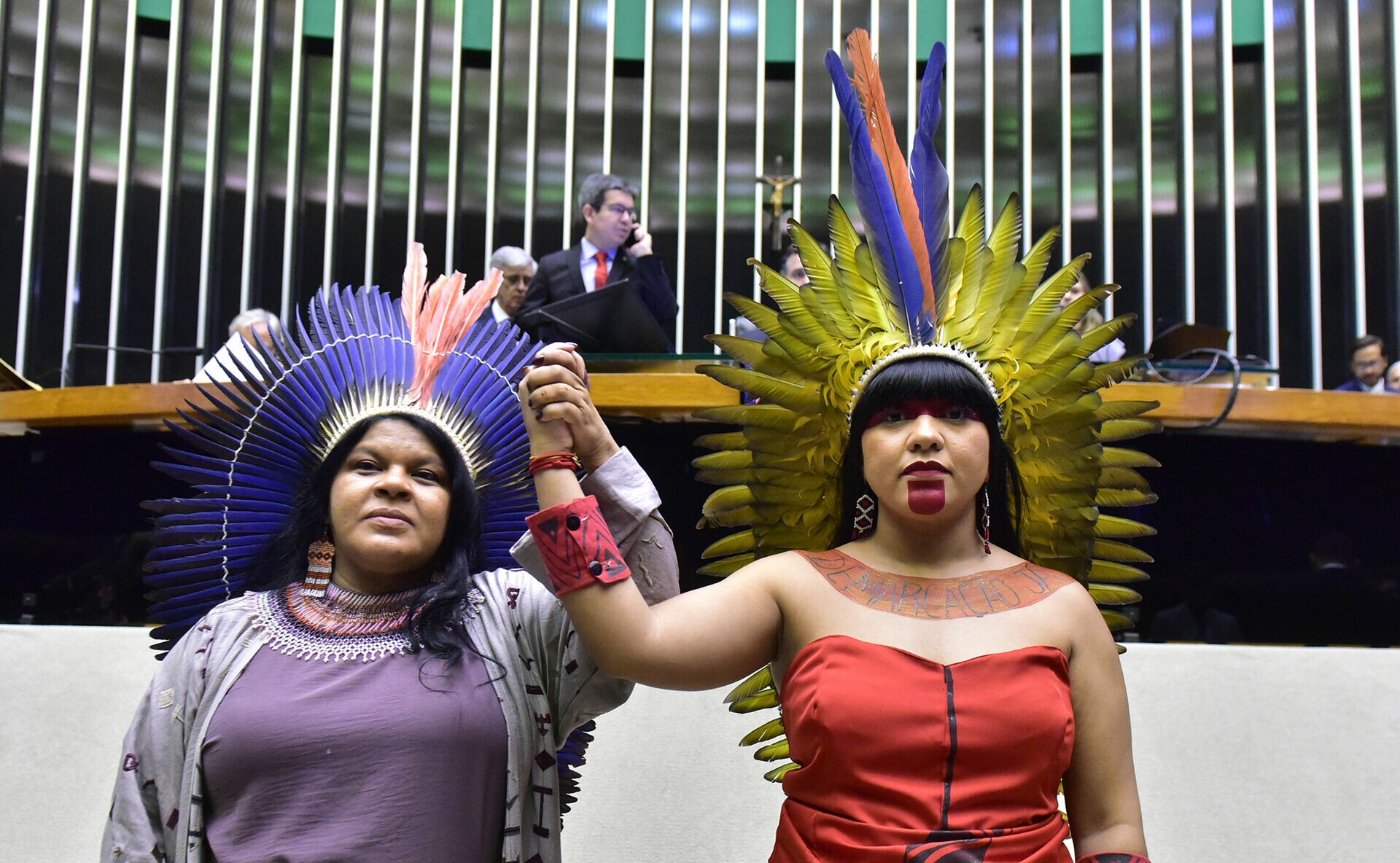
Ex-ministra dos povos indígenas do governo Lula, Sônia Guajajara se reelegeu deputada federal pelo PSOL
Os resultados do primeiro turno mostram que a presença de povos indígenas no Congresso Nacional ficará abaixo de 1% em 2027. Apenas duas das 45 candidaturas indígenas lançadas pela “Bancada do Cocar” foram eleitas no primeiro turno.
A bancada é um movimento iniciado no Acampamento Terra Livre em 2017 e tentou eleger deputados e senadores indígenas para defender suas pautas. Para a Pública, a deputada federal Célia Xakriabá (PSOL-MG), que não retornará à Câmara para novo um mandato em 2027, afirma que o objetivo era eleger entre seis a oito parlamentares federais. Entre os 45 candidatos, apenas Sônia Guajajara (PSOL-SP), com 54.207 votos, e Juliana Cardoso (PT-SP), com 111.904 votos, conseguiram uma cadeira na Câmara.
Outros 21 nomes, de vários locais do país e que participaram do projeto, conseguiram cargos de suplente. Entre todas as candidaturas, o único candidato da bancada do cocar que disputou um cargo majoritário, Isael Munduruku (Rede-AM), não conseguiu se eleger a governador do Amazonas. Ismael (Rede-AM), único candidato a senador do projeto, também não foi eleito.
Isael Munduruku fez parte do movimento Aldear a Política como candidato ao governo do Amazonas, mas não se elegeu
Sônia Guajajara entende que o Projeto Aldear a Política ajudou a ampliar candidaturas, formar lideranças e colocar as pautas indígenas no debate eleitoral. Entretanto, para ela, as eleições foram muito desiguais para indígenas. “Muitas candidaturas indígenas tiveram poucos recursos, pouco tempo de televisão, estruturas partidárias insuficientes e enfrentaram racismo, violência política e dificuldades territoriais”, denuncia.
“O resultado acende um sinal de alerta, mas não representa um recuo da nossa mobilização. Essa força não desaparece quando termina a eleição. É dela que precisamos para combater o desmanche das políticas ambientais e mostrar à sociedade que direitos indígenas e demarcações estão diretamente ligados à preservação das nossas florestas e combate à crise climática”, ressalta.
Para Guajajara, diante de um Congresso majoritariamente anti-indígena, é necessário fortalecer o diálogo, não só com os partidos de esquerda, mas com parlamentares comprometidos com a existência dos povos originários e com a defesa da Constituição. Fora do Congresso, a deputada afirma que é preciso consolidar as organizações indígenas, a comunicação dos territórios e a formação de novas lideranças.
“Precisamos acompanhar as comissões, disputar relatorias, impedir votações apressadas e apresentar projetos que tornem permanentes as políticas construídas nos últimos anos. Quando uma proposta violar direitos constitucionais, devemos acionar os instrumentos jurídicos cabíveis e as instituições de proteção”, conclui.
A possibilidade de alteração na Constituição Federal
“Se na legislatura passada houve um aumento de proposições legislativas contrárias aos povos indígenas, nos últimos quatro anos foram 83 [proposições feitas], o que cabe esperar, nos próximos quatro anos, é que muitas dessas, ou várias dessas, concluam o ciclo legislativo”, diz Ventura.
Ele teme não apenas a sanção de propostas com impacto negativo aos indígenas, mas também o aumento de proposições legislativas no mesmo sentido. Entre todos os prejuízos, o que mais se espera é que haja tentativas e processos para mudar a Constituição Federal de 1988, que protege os direitos fundamentais dos povos originários e comunidades tradicionais.
A alteração da Constituição Federal não é um perigo ilusório. Durante um evento em Goiânia, nesta terça-feira, 6 de outubro, o candidato Flávio Bolsonaro (PL-RJ) decretou que pretende atuar junto com a maioria no Senado e na Câmara dos Deputados para eleger um novo Presidente da Câmara e “mudar a Constituição e redemocratizar o país”.
O Artigo 231 da Constituição Federal de 1988 regula as terras de povos indígenas, proibindo a remoção de suas terras, determina que a posse e o usufruto das riquezas extraídas do território é dos indígenas, além de determinar a competência da demarcação de terras à União.
Ricardo Terena, diretor jurídico da Articulação dos Povos Indígenas do Brasil (Apib), explica que, hoje, o Supremo Tribunal Federal (STF) já entende o artigo 231 como cláusula pétrea, dispositivo imutável da Constituição Federal de 1988, mesmo com emendas parlamentares. No entanto, mesmo que a discussão, juridicamente, não seja válida, a atuação do STF acerca dos direitos indígenas é uma preocupação para Terena.
“Nós temos o Supremo criando alguns entraves no processo de demarcação, aumentando a possibilidade de indenizações nos processos de demarcação das terras indígenas, colocando certas limitações para o que a gente chama de redimensionamento das terras indígenas”, explica.
Advogado Ricardo Terena, da Apib, preocupa-se com a possível guinada à direita no STF
Desde a explosão do Caso Master e a divulgação de conversas entre Daniel Vorcaro e o ministro Alexandre de Moraes, que ocasionou uma crise institucional na Corte, a reforma do STF é um dos principais tópicos da campanha de Flávio Bolsonaro à Presidência da República. O senador do PL do Rio de Janeiro, inclusive, já anunciou que, se eleito, apresentará uma proposta de reforma no Judiciário.
Para Ventura, uma reestruturação do STF significa um caminho tortuoso aos povos indígenas. “Se o Flávio Bolsonaro utilizar suas prerrogativas para transformar o Supremo Tribunal Federal numa corte também reacionária nós estaremos diante de um período que podemos chamar de autoritário dentro de uma forma democrática. E, num período autoritário, os direitos dos povos indígenas não estão, evidentemente, garantidos”, conclui.
Terena entende que não seria necessário uma reforma no Judiciário para gerar um impacto aos povos originários. “O próximo presidente vai ter a indicação de quatro ministros e, dependendo de como é o posicionamento desses ministros, vamos ter muitos problemas com relação ao debate sobre direitos indígenas no Supremo”, avalia.
Em uma possível eleição de Bolsonaro, Terena prevê ministros sem comprometimento direto com os direitos indígenas. Já em um cenário onde Lula é reeleito, o advogado vê mais possibilidades de pessoas comprometidas com os direitos indígenas no STF.
Mesmo assim, as Propostas de Emenda à Constituição (PEC) que tramitam no Congresso Nacional hoje mostram um cenário que coloca a integridade do Artigo 231 em risco. A PEC 48/2023, que muda o Artigo 231 para instaurar o Marco Temporal foi aprovada pelo Senado e tramita agora na Comissão de Constituição e Justiça e de Cidadania (CCJC) da Câmara dos Deputados.
A proposta prevê entraves administrativos para a demarcação de terras, como a limitação de terras apenas para aqueles que já estavam nela e usufruindo do ambiente em 5 de outubro de 1988; também institui indenização a não-indígena. Terena explica que por tramitar como uma emenda constitucional, ela não passa por sanção ou veto do presidente da República.
Pelo menos quatro outras PECs que tramitam no Congresso Nacional, atualmente, propõem que o Artigo 231 seja alterado para determinar a competência da demarcação de terras ao Congresso Nacional, ao invés da União. Para Ricardo Terena, uma mudança para o legislativo ocasionaria um prejuízo ao processo de homologação de terras, que hoje já passa por um processo complexo de estudos.
“Quando a gente chega no momento de homologação, que é o ato do presidente da República, basicamente todo o processo já está feito [e] o Ministério da Justiça já validou. Quando a gente transfere essas competências para outros órgãos, como o legislativo, está sujeitando o direito das comunidades indígenas a certas dinâmicas políticas que prejudicam muito o processo de demarcação”, alega.
Um Congresso com baixa representação indígena, transformaria a demarcação de territórios em um acordo político, onde os movimentos indígenas não alcançariam maioria, analisa o advogado.
Órgãos de defesa aos indígenas em perigo
Além dos direitos descritos por lei, órgãos que são ferramentas para a proteção dos povos indígenas também podem ser afetados pelo aumento da bancada da direita e até por uma eventual mudança na presidência da República. Ainda sem resultados para presidente, o que Ventura vê são dois caminhos, ambos tortuosos, para as entidades como a Fundação Nacional dos Povos Indígenas (Funai).
Em um cenário em que Lula é eleito, Ventura prevê um movimento de resistência dos órgãos públicos, que esbarrarão com um Congresso Nacional que dificultará suas ações. Já em um cenário em que Flávio Bolsonaro seja eleito, o secretário espera um desmonte absoluto da Funai. “Não cabe esperar por uma questão especulativa, o que nós pensamos que poderia acontecer, porque isso já aconteceu no governo Jair Bolsonaro”, alerta.
Durante o Governo de Jair Bolsonaro, a Funai foi transformada em uma ferramenta anti-indígena. O órgão foi militarizado, houve abertura de processos administrativos disciplinares contra servidores de carreira, além de paralisação de processos de demarcação de terras. Com Flávio, Ventura vê um caminho parecido, de desmantelamento e reconfiguração de órgãos indigenistas.
A questão orçamentária também pode ser um entrave. Como o Congresso Nacional é quem decide o orçamento de cada instituição, Terena prevê a incapacidade de agir por motivos financeiros. “Nos últimos tempos, a gente também tem lidado muito com uma circunstância de projetos, de decretos legislativos que, de alguma maneira, suspendem atos, às vezes, do presidente da República. São instrumentos utilizados para tentar, de alguma maneira, atacar a demarcação das terras indígenas”, conclui.
Before the mid-19th century, executions in America were presumptively public. Most prisoners were hanged on a gallows, following an hours-long affair that began with the condemned person’s exit from jail accompanied by ministers, the sheriff and his deputies, and sometimes a military escort. Spectators joined the humiliating procession, gathering by the thousands to watch the noose lowered over the prisoner’s neck. The sheriff would mount the scaffold to read aloud the death warrant, sometimes adding commentary, and at least one minister (often several) would issue sermons. The condemned was offered the chance to give a speech, with spectators standing so close that they could ask the prisoner questions and join him in prayer, or bid him goodbye, if he was a family member or friend.
All of that seemed safely confined to a past that the Trump administration now hopes to revive. President Trump, a consummate showman, has authorized the country’s first public execution in 90 years. The condemned prisoner is Nidal Hasan, a military psychiatrist who murdered 13 people and injured many more during a 2009 mass shooting at Fort Hood, in Texas. Defense Secretary Pete Hegseth has said that the killing, scheduled for December 3, will be conducted by the military and publicly livestreamed. During his trial, Hasan alarmed his standby attorneys when he chose to defend himself, and mounted an argument that the lawyers considered tantamount to seeking his own death. He could still conceivably file civilian appeals, which could delay his execution substantially. If it goes forward, the administration surely hopes to make an example of Hasan to all who might be tempted by his worldview. But this strategy could just as likely result in unintended consequences, and pushback by the public.
Public executions ceased not because those who clamored to witness them found the displays uniformly outrageous, but because politicians in the 19th century associated them with proletarian barbarity. Though these executions were theoretically meant to deter crime and exhort onlookers to practice proper Christian values, they were mostly entertainment, and did not always provoke the desired reactions. Some onlookers cheered and celebrated the killings; others sympathized with the condemned. Public executions of Black prisoners in the South, for instance, became opportunities for community, song, and displays of Black religious authority. Ministers preached sermons of salvation and sometimes protested that the prisoners were innocent.
In that sense, the public nature of executions backfired, and critics took note. Because the attendant crowds were so volatile, vulgar, and unruly, by 1860 all northern states had begun carrying out the killings in jail yards, which were much smaller areas, subject to tight government control. Decades later, the South followed suit. The large crowds soon vanished. Military executions, traditionally carried out by firing squad, were long conducted in small, controlled settings, often witnessed only by military personnel and chaplains. The last military execution in the United States was carried out in 1961.
Trump and Hegseth aim to have it both ways: a small, secure setting and massive crowds. This time, viewers will be watching a livestream on their screens, close enough to see the event but too far to smell the gunpowder. Both Hegseth and Trump seem intent on flexing America’s political power and military might as a message not just to foreign enemies but to the American people, as if to say: This could be you. This method of ruling by fear is central to authoritarian governance, and Trump and Hegseth seem drawn to executions partly for that reason.
But if Trump and Hegseth are hoping for a deterrent effect, they’re unlikely to get it. The idea that executions could deter other killers with political motives seems sorely mistaken; those who carry out such murders already know that they could face grave consequences, and have deemed that outcome acceptable. Nor do executions deter murderers without political motives, because deterrence is generated not by the severity of the punishment, but by the certainty of getting caught. And there is little certainty in American homicide investigations: In 2023, the nationwide case-clearance rate for murder was only 58 percent, meaning that murderers have decent odds of evading justice. Even if they are caught, they have good odds of avoiding the death penalty—only 23 new death sentences were handed down in 2025. Trump’s Department of Justice hopes to boost those numbers, but even if they tripled, they would add up to 69 death sentences spread across some 14,000 murders.
Adding a livestreamed element is perhaps an attempt to intensify the intended deterrent effect, but it might have opposite consequences. Plenty of Americans would surely enjoy the spectacle of a public execution, just as people have historically. One can envision groups of people crowded around their phones, sharing chips and drinks, admiring the military pageantry. But it’s easy to imagine a different effect, too: Other crowds of people, other phones, entirely different impressions—that the death penalty is a disgusting violation of human rights that puts America in league with nations such as Saudi Arabia, Iran, and China. Or that Nidal Hasan is a martyr, and the United States is a savage country not worth defending—which is the narrative presented by Hasan himself. Before the shooting, he told family that he’d turned against the country he served upon hearing horrific stories of war from his psychiatric patients, and grew troubled by the fact that America was killing Muslims abroad. Carrying out his public execution would only credit the notion that this country is barbarous.

 Login