❌

Reading view

Starlink slowdown makes Ukraine’s Shahed-hunting drone maker rethink air-launched interceptors

STING S interceptor

Ukrainian drone maker Wild Hornets is rethinking projects it is currently working on, including launching interceptors from aerial platforms, because of limits on SpaceX’s Starlink satellite internet. Spokesman Mike Orliuk told The War Zone (TWZ) this on 20 October. The company builds Sting interceptors, which it says destroyed over 15,000 Shaheds and Gerberas, a cheaper Shahed lookalike, in a year. Orliuk said Sting’s current operations are unaffected.

The stakes rise as Russia shifts to faster drones. Ukrainian defense technology adviser Serhii Beskrestnov counted more than 2,500 jet-powered Gerans, Russia’s version of the Shahed, in August. President of Ukraine Volodymyr Zelenskyy said on 16 October that these drones fly faster than 400 km/h. He added that some Ukrainian interceptors chasing them work through Starlink. When the link was slowed, Ukraine could not intercept some of them, he said.

How Sting stays connected

“Our own communications system provides the basic connection to our interceptors,” Orliuk said. The company’s remote-control technology can draw on various internet sources, he added, though the military often uses Starlink. Even then, the terminal does not need to move at high speed. It only links the command center to a ground station, which Orliuk compared to a cell tower.

“For these needs, everything is operating normally with Starlink at the moment,” he said.

An air-launch project under review

“Some drones carry a terminal on board and need to fly at high speed with it,” Orliuk said. “In such cases, Starlink’s limitations make their operation impossible.”

That is why the company is rethinking the air-launch project. Wild Hornets has made no clear decision yet but will test alternatives, Orliuk said. He declined to describe them.

“I believe, in any case, depending on a single solution is very risky,” he said.

The Starlink logo on a smartphone screen.
Explore further

Musk pointed at the US military over Ukraine’s satellite limits. Now a US official says the administration had nothing to do with them

Other firms share the concern

Orliuk said he has spoken with other companies that rely far more on Starlink and have expressed concerns. He pointed to growing interest in Europe’s Eutelsat network, though “creating something like Starlink won’t be easy.”

Who ordered the slowdown remains unclear. The order to slow Ukraine’s Starshield service came from inside the White House, two US officials and a Western official said. A US official told TWZ the president never made such a request. US Secretary of State Marco Rubio said on 17 October that the slowdown had “nothing to do with the White House” and called “a report on that” “categorically false,” without saying which report he meant.

  •  

31 in May, 63 now: Ukraine’s arms makers pile into a regime of tax breaks and shielded data

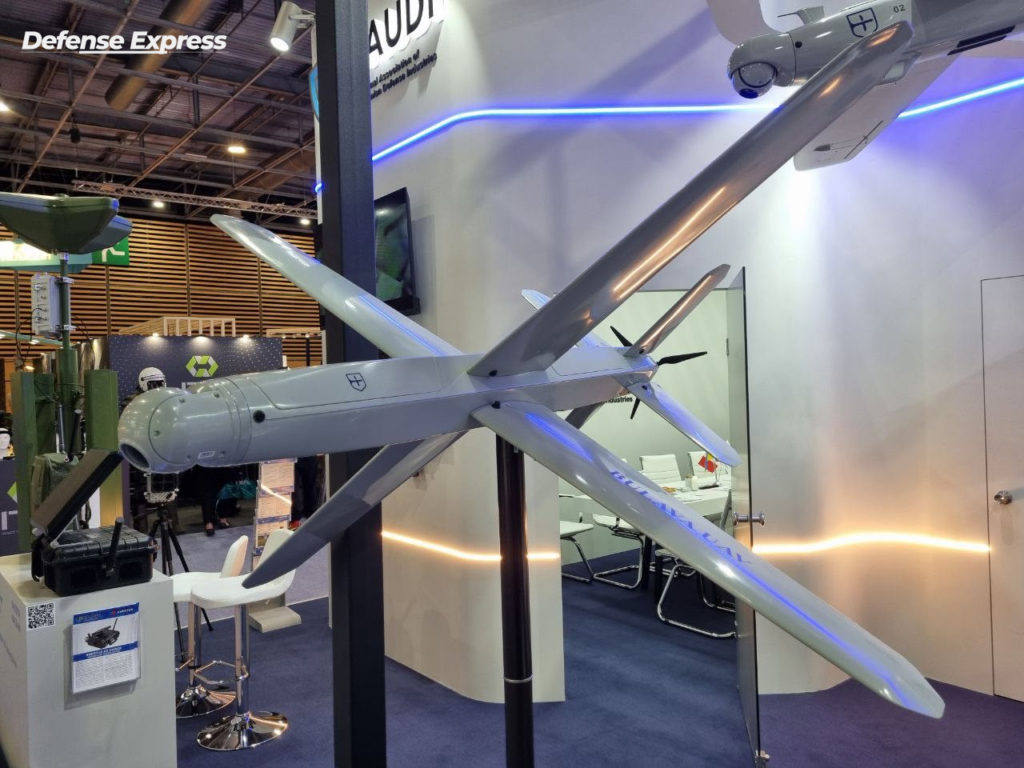
Ukrainian Bulava/Mace loitering munition at the Eurosatory 2024.

Defence City, Ukraine’s special support regime for arms makers, now has 63 member companies, the Defense Ministry said in a 19 October release. That is more than double the late-May count, and Euromaidan Press calculations show the newcomers are, on average, much smaller firms.

Ukraine already buys most of its weapons at home. More than 75% of its 2025 weapons procurement budget went to domestic manufacturers. Most new weapons models cleared for military use are Ukrainian too: 892 of the 1,000 authorized from the start of 2026 to mid-June. Defence City is meant to turn that demand into more production capacity, and our calculations suggest it is now reaching smaller producers too.

Who is joining

Each resident’s figure in the ministry’s count is its qualified income, meaning revenue from selling weapons and military equipment. Applicants file details of their defense contracts for the previous calendar year with their application, the ministry’s guide shows. So the combined total changes as members join. It does not track month-to-month sales.

The 63 current residents have a combined qualified income of nearly $2.47 billion. At the end of May, 31 residents had $2 billion, the ministry reported. By July, 45 residents had over $2.07 billion, it added.

By Euromaidan Press calculations, the 32 companies added since May bring about $15 million each on average. The first 31 averaged about $64 million each. The math assumes all 31 early members remain, with unchanged figures. If they do, the newcomers are smaller producers on average, because each figure reflects a firm’s own prior-year weapons sales.

What residents get

The profit-tax break comes with a condition. Residents choose where their untaxed profit goes, but it must go to purposes the tax code allows, the ministry explained. If the money goes elsewhere, the break does not apply.

Residents also get customs incentives and state support to relocate plants and better protect production sites. They can rent state property without an auction. They can also ask to restrict access to sensitive information about them in public registries. Some defense export procedures are simplified too.

Resident status also makes a company eligible to be designated critically important to the defense industry. That lets it defer up to 100% of its staff liable for military service from the draft, the ministry noted.

To join, a company must confirm it meets the legal requirements and file an application with supporting documents. By law, the ministry has 10 working days to decide. If approved, a ministerial order grants the status, and the company enters the Defence City register.

  •  

No crew, a cargo bed, and pontoons: Ukraine’s MAT1LDA robot is built to cross water with 400 kg

crew cargo bed pontoons ukraine’s mat1lda robot built cross water 400 kg · post amphibious ground video tencore амфібійний нрк у вод ukraine news ukrainian reports

Ukrainian company Nodrics has developed MAT1LDA, an eight-wheeled amphibious ground robot that can carry supplies across water, swamps, and rough terrain, robot-maker Tencore said, Ukrainian military outlet Militarnyi reported on 17 October. The machine joins Tencore’s new family of ground robots, which the company has also shown in the US.

Ukraine’s ground robots now haul supplies and evacuate wounded soldiers through zones where drones make every move deadly, and the Defense Ministry has launched its first competitive tender for them.

500 kg on land, 400 kg afloat

A petrol engine drives MAT1LDA’s eight wheels, and side pontoons keep it afloat, so it can cross water, marshland, and rough ground without preparation, Militarnyi said. Its makers claim it carries up to 500 kg on land and 400 kg on water, with a range of up to 160 km on land and 50 km on water.

Its open frame lets crews swap equipment quickly to suit the task, fitting cargo containers or evacuation stretchers.

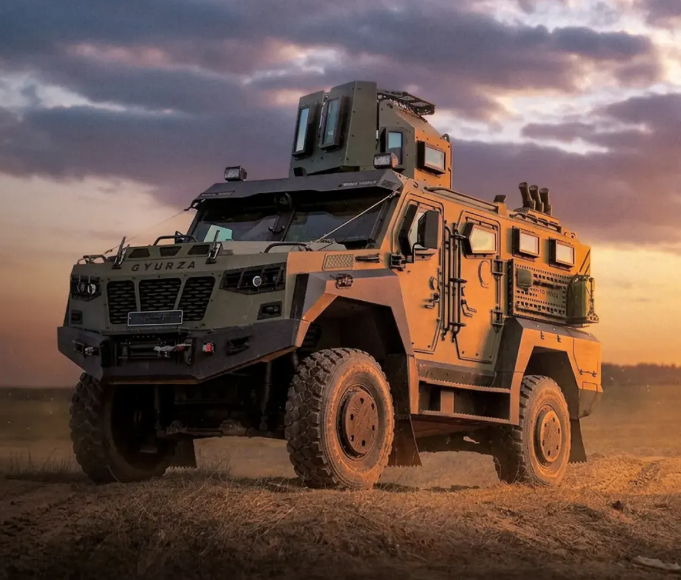
Ukraine's Gyurza-2 armored vehicle. Source: The Ukrainian Defense Ministry
Explore further

Robots won’t replace armored vehicles, says Ukrainian company that builds both. It reveals one job they can’t do

Four robots, one system

MAT1LDA is part of the Tencore Ecosystem, which brings together four classes of ground robots for military and civilian work, Militarnyi reported earlier. Besides the amphibious eight-wheeler, it includes the tracked TerMIT, the wheeled TOR 4×4, and the TRAX Utility firefighting and rescue robot. The company says it has delivered more than 4,000 robots to Ukraine’s armed forces since the full-scale invasion, used across more than 50 brigades.

The amphibious MAT1LDA ground robot
The amphibious MAT1LDA ground robot. Photo: Tencore

Tencore calls it Ukraine’s first integrated ecosystem of its kind. Putting the platforms into one system is meant to make them easier to use, maintain, and fit with extra equipment. One of the first shared add-ons is AI KIT, a hardware and software module that lets a robot keep to its route or drive back on its own after losing contact with its operator.

Ground robots from Tencore, clockwise: TerMIT, 4×4 TOR, 8×8 MAT1LDA, and TRAX
Ground robots from Tencore, clockwise: TerMIT, 4×4 TOR, 8×8 MAT1LDA, and TRAX. Collage: Militarnyi

On show in Washington

Tencore displayed MAT1LDA carrying a TerMIT robot at the Association of the US Army’s annual trade show in Washington this month, Breaking Defense reported.

Other Ukrainian makers have built swimming ground robots too: one switches from land to water in seconds, and another can tow 10 tons, its maker says. In April, Tencore formed a joint venture with France’s Shark Robotics.

  •  
❌