❌

Reading view

Trump rallies in Iowa, where farmers have been hit hard by tariffs and rising fuel prices

President Donald Trump traveled to Iowa on Thursday, looking to energize his base as he touts a financial-support plan to reassure farmers, a key constituency that has been hit hard by rising prices.

It’s another campaign trip to a reliably red state that has become surprisingly competitive. Trump won Iowa three times — carrying it by 13 points in 2024 — but this year several Republicans are in tight races.

Returning to Iowa for the first time in nearly 10 months, Trump campaigned, in part, for Rep. Ashley Hinson, the GOP Senate hopeful who is running to fill retiring Republican Sen. Joni Ernst’s seat. Hinson and her Democratic rival, state Rep. Josh Turek, are almost neck and neck in polling averages from MS NOW/FiftyPlusOne.

“There are a number of Senate seats in play that we did not expect to be in play,” said Whit Ayres, a veteran Republican pollster. “[Trump’s] record and his approach are likely to appeal much more to members of his base than they are to independent or swing voters.”

In Sioux City, Trump sought to appease Americans hurting from high fuel prices by announcing that his administration is using the Defense Production Act to release $150 million to increase U.S. refining capacity to produce more diesel and gas.

Trump spent the first few minutes of the rally railing against familiar political targets he has repeatedly invoked to rile up supporters at recent campaign stops, including Michigan Democratic Senate candidate Abdul El-Sayed and Rep. Ilhan Omar, D-Minn. Speaking to Iowans, Trump claimed without providing evidence that Omar used a different name to get elected and sworn into Congress, a claim the congresswoman’s spokesperson has publicly denied.

As the president attacked Omar and argued she should resign, his supporters chanted, “Lock her up.”

The president also spoke at length about a controversial attack ad by Ohio GOP gubernatorial candidate Vivek Ramaswamy targeting his rival, Democrat Amy Acton. The ad features Acton’s estranged mother saying her daughter lied about being sexually assaulted by her stepfather. Trump told supporters that he asked Ramaswamy to keep running the ad and to “look upstairs and say thank you, God, very much.”

And Trump, who frequently talks about running again in 2028 — despite the Constitution’s two-term limit — again bragged he would beat any opponent if he ran, but acknowledged that, after studying the law, he has learned that there was “not a lot of wiggle room” to allow him to seek another term.

“I think I have the right to run again because they cheated,” Trump said, repeating repeating his false claim that the 2020 presidential election was stolen from him.

Thursday’s rally at Sioux Gateway Airport is the first of at least two planned visits to Iowa by the president in the final stretch of the midterms. The president’s campaign blitz in typically Republican strongholds reflects shifts in the political landscape in a midterm that initially favored the GOP.

“The problem right now is that people perceive that the economy is not better, and inflation has not only not come down, but it’s higher,” Ayres said.

A GOP strategist familiar with Republicans’ thinking in the midterms, granted anonymity to speak freely about internal strategies, told MS NOW the president’s visits to some of the reddest districts in states like Iowa in the final days of the campaign are part of a deliberate strategy to maximize turnout by loyal Trump voters in key races.

“Specifically, the 4th District, where we’re deploying him, is the heart of the base, the heart of Republican support,” the strategist said. “If we can churn out our base voters in that area, Democrats’ path to winning the state just shrinks dramatically.”

Seeking to address the financial hardships hitting major agricultural states like Iowa, the Trump administration has announced an $8 billion relief package for farmers and construction plans for a $15 billion steel plant in the state. The president himself has also touted new foreign trade deals to export American farm products and other efforts to boost farmers and ranchers.

But some farmers MS NOW spoke to say Trump’s trade deals have made little impact on their businesses as their operating costs have increased from rising diesel and fertilizer prices. And the president’s announcement that he would lower tariffs on ground beef from Argentina earlier this year came as a blow to the state’s cattle industry, with both Hinson and Turek calling the policy a bad idea.

Craig Moss, a fifth-generation cattle and hog farmer from Hull, about 50 miles north of Sioux City, told MS NOW the volatile cattle market had been “rough” in the past year, in part because of the president’s lifting of tariffs on Argentine ground beef.

“Trump makes a trade deal with Argentina, and then when he’s questioned about it by reporters, he says, ‘You don’t know anything about what’s going on over there,’” Moss said. “Well, sir, you don’t know anything about the cattle market.”

Moss said the current diesel price “kind of stinks,” adding that the ongoing Iran war was to blame. Still, Moss, who voted for Trump in the past, said he agreed with the president on most issues and did not regret voting for him before.

Julius Schaaf, a corn-and-soybean farmer of more than 40 years based in Fremont County, voted against Trump in past elections and said the current volatility in the farming industry was because of Trump’s trade policies. Schaaf criticized the administration as a “rude and difficult” trading partner.

“A lot of the people that supported him were farmers that have a lot of equity in their property, and they can weather a storm for a while,” Schaaf said. “But you talk to the young guys that are just getting started and trying to buy inputs and inputs have gone through the roof — they’re the ones that are really struggling.”

Vice President JD Vance addressed some of those concerns last month at a rally in the state, telling supporters that the Trump administration’s trade and tax policies have directly benefited farmers and blue-collar workers. He has also sought to show understanding of economic realities, acknowledging the high cost of gas and telling voters “we’re working on it.” Trump, for his part, has at times downplayed those concerns, calling the focus on affordability a “hoax” and insisting that prices would plummet once the Iran war ends.

Many Iowans across the political spectrum whom MS NOW spoke with agreed that their No. 1 concern was the cost of living. And while Trump’s performance got mixed reviews, they still had not decided how they would vote in the Senate and House races.

Tiffany, an Iowa voter who backed Trump in 2024, plans to vote in the midterm races but said she is currently undecided. Her top issue: the cost of living, she said, because “prices keep going up.”

“If you can’t afford to put gas in your car, how can you go to work to make money to put a roof over your head to put food on your table?” said Tiffany, who asked to go by her first name only. “You can only stretch your penny and your dollars so far until you can’t stretch it anymore.”

The post Trump rallies in Iowa, where farmers have been hit hard by tariffs and rising fuel prices appeared first on MS NOW.

  •  

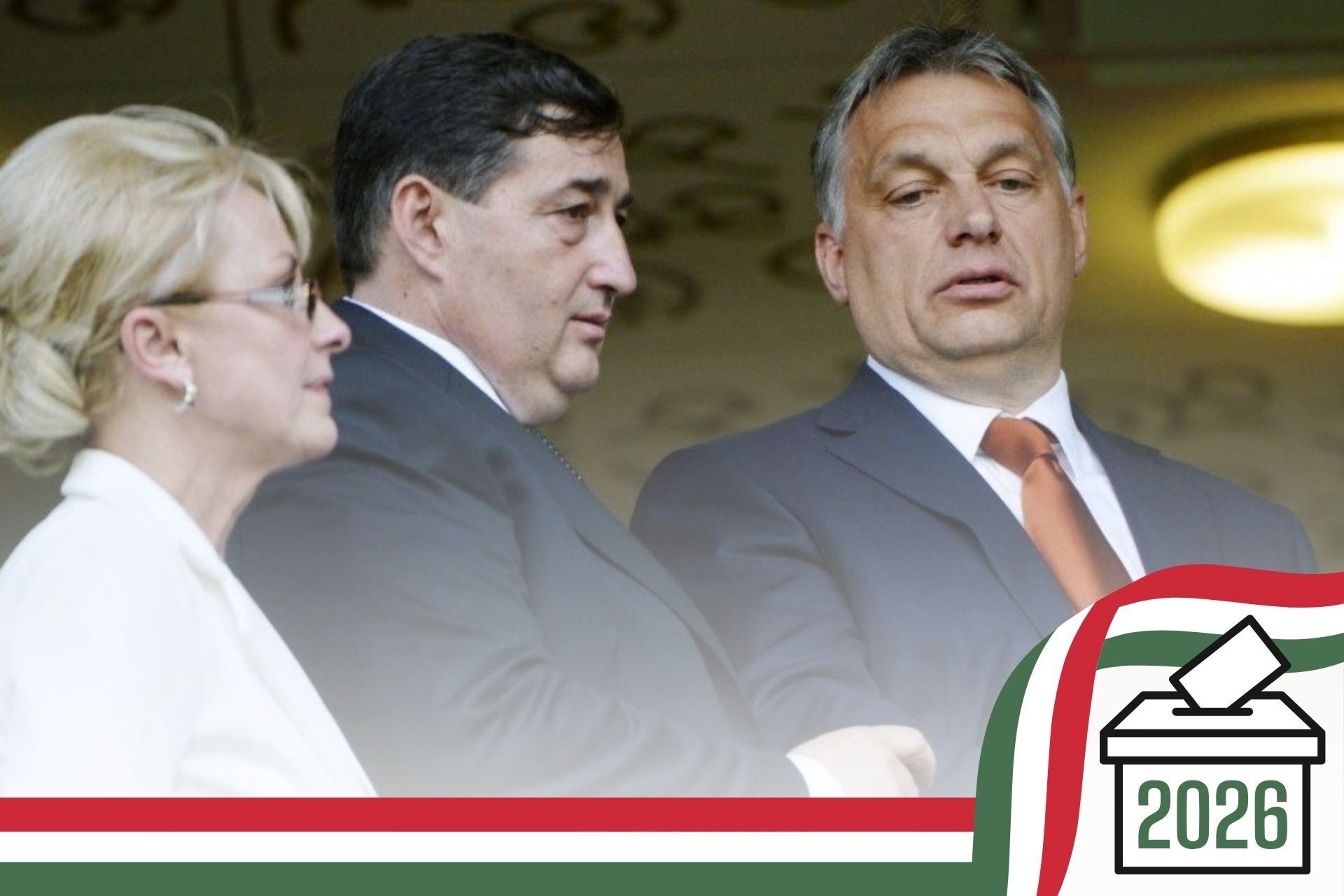
Train contract blow for Hungary’s richest man, plus Orbán will not mark 1956 anniversary (Day 156 of the Tisza government)

The series continues as we report on developments following April’s historic election and on the steps taken since then by the Tisza government. This week, we cover the following topics:

  • Another blow for Hungary’s richest man;
  • New chief prosecutor nominee, plus a former chief prosecutor ready to testify on political pressure;
  • Parliament has adopted the new child-protection law;
  • A state secretary has unexpectedly left the government;
  • Orbán to keep quiet on one of Hungary’s most important national holidays;
  • Ukraine adopts the minority education law;
  • More EU funds and money from the Norway Grants have become available.

Another blow for Lőrinc Mészáros

Last Friday (9 October), prime minister Péter Magyar and Dávid Vitézy, minister for transport and investments, announced that the state was suspending implementation of one of Hungary’s largest rail projects – the Budapest southern circular railway, and will launch a new public procurement procedure.

The works had been carried out by V-Híd, the most profitable company of Lőrinc Mészáros, who became Hungary’s richest man during Viktor Orbán’s premiership.

However, the European Court of Auditors uncovered serious public-procurement irregularities: V-Híd may have colluded with the company that drafted the project plans and thus already possessed information at the time of the tender that its competitors did not have. Because of this, the European Court of Auditors would withdraw EU funding from the project.

The Hungarian government does not want to forfeit the EU money and make Hungarian taxpayers foot the bill for the costs of the project, which is why it is terminating the contract with Mészáros’s company and launching a new tender.

The Hungarian state had already taken away from Mészáros the right to operate a motorway section, and later also terminated the 35-year motorway concession.

Previously, one of his food-industry companies had EU funding already granted to it withdrawn, while his energy company was excluded from a call for proposals financed from the repatriated RRF funds.

New chief prosecutor nominee, plus former chief prosecutor ready to testify

On Monday (12 October), president András Baka nominated a former chief prosecutor, Péter Fejes, for the post of chief prosecutor. His first nominee, Zoltán Szathmáry, was not voted through by the Tisza group in parliament after it emerged that his brother was implicated in the so-called gold convoy case, in which a Ukrainian cash shipment was stopped and confiscated by the Hungarian authorities.

Fejes was dismissed in 2012 from his position as chief prosecutor of Vas county by Péter Polt, the chief prosecutor serving the Orbán system, citing loss of confidence. Since then he has continued to work within the prosecution service and as a university lecturer, and he has no party affiliation. For the time being neither prime minister Magyar nor the Tisza group has stated whether they support Fejes’s nomination.

Since the change of government, another former chief prosecutor, Pál Fürcht, has frequently spoken to the media. Among other things, he has claimed that the gold convoy case was created for political purposes, and that the authorities raided the Ukrainian cash couriers on Orbán’s orders.

On Sunday (11 October), Magyar sharply criticised Fürcht in a Facebook post, reproaching him for having been a servant of the system himself. According to Magyar, Fürcht constructed a criminal case, on political orders, out of the notorious nightclub altercation for which the prime minister is currently under investigation on charges of theft.

It was likewise Fürcht who left former propaganda minister Antal Rogán out of the corruption case known as the Völner–Schadl affair.

In response to Magyar’s criticism, Fürcht said he was ready to make an official statement before any authority. In parliament on Monday, the prime minister was already referring to the former chief prosecutor as a future witness.

Parliament has adopted the new child-protection law

Child protection was one of the most important topics of the campaign and played a major role in Orbán’s downfall. Magyar kept the issue on the agenda even after his government took office; most recently, last Thursday, the prime minister and the state secretary responsible for the field, Szilvia Gyurkó, presented the report on the children’s home in Bicske.

This home had been run by a director who was decorated by Orbán and later convicted of paedophile crimes, together with his deputy, who helped cover up the abuses. The presidential pardon granted to the deputy shook the Orbán government and helped lead to its collapse.

On Tuesday (13 October), parliament adopted an amendment to the child-protection law, which takes a tougher stance against media content accessible to minors that propagates sexual violence, manipulation and exploitation, and would speed up the placement of babies abandoned in hospital.

The amendment removed those homophobic passages that the Orbán government forced into law in 2021, and which the Court of Justice of the European Union also ruled to be contrary to EU law.

Fidesz, the Christian Democratic People’s Party (KDNP) and the far-right Mi Hazánk did not vote for the amendment; Magyar called this a disgrace.

A state secretary unexpectedly leaves the government

On Tuesday, András Tótth, state secretary for energy at the Ministry of Economic Affairs and Energy and minister István Kapitány’s most important aide, unexpectedly resigned.

This article continues, but the full version is available only to EUobserver.com subscribers. Visit account.euobserver.com/membership

  •  

Orbán channelled public money into propaganda through Hungarian billionaire Lőrinc Mészáros (Day 150 of the Tisza government)

More than a year ago, we launched our Hungary Briefing, a weekly round-up of the election campaign. Since the historic vote in April to remove Viktor Orbán’s Fidesz government, the series has followed the new Tisza administration and its first moves in office. This week’s topics:

  • How Viktor Orbán used Lőrinc Mészáros.
  • According to Orbán, they deliberately did not give money to the liberals.
  • Orbán’s brother also has a gold-convoy case.
  • A wealth tax is coming.
  • Support for Hungarian media beyond the borders.
  • This week’s opinion polls: slight drop for Tisza, strong support for the Olympics

How Viktor Orbán used Lőrinc Mészáros.

The investigative outlet Direkt36 revealed important details about the links between Lőrinc Mészáros’s companies and Orbán-era propaganda in a new series of articles. The investigators obtained internal documents from a company called V-Híd, which showed that the firm belonging to the Mészáros portfolio paid out several billion forints between 2022 and 2026 to influencers in the Megafon network.

The oligarch was not stingy.

V-Híd is one of the most important and most profitable companies in the Mészáros empire, primarily engaged in railway construction. It owes its success almost entirely to the fact that it won huge public procurement contracts under Fidesz governments.

In recent years, V-Híd has become the dominant player in railway construction in Hungary, pushing out its competitors. Enormous dividends have been taken out of the company by the Mészáros clan (most recently, despite weaker results, 10 billion forints, or around €25m).

The Direkt36 article also reveals that Orbán-era propaganda was financed directly from the company’s revenue. Donation contracts were leaked showing that V-Híd regularly sent hundreds of millions of forints as “gifts” to Megafon. In 2024 alone, they sent 3 billion forints (around €7.6m at the time) in support to the influencer network.

The path of public money to propaganda

The formula was very simple: through public procurement, the government stuffed the Mészáros group’s companies with public money, and part of the revenue generated was channelled to the propaganda machine.

From 2020, Megafon was a key communication channel for Fidesz, where well-known influencers conveyed the party’s messages and huge sums were spent on online advertising.

The money won through public tenders did not only go towards financing propaganda. Direkt36 also uncovered luxury perks V-Híd and other Mészáros companies offered their staff.

Many would envy V-Híd’s team-building events. In 2024, nine employees of the company travelled by private jet to a château in south-western France, at a cost 62 million forints, or about €150,000, including €500 spent on cigars.

According to Direkt36, V-Híd has spent more than 1 billion forints in total – roughly €2.5m – on foreign trips in recent years.

On one trip to Tajikistan, V-Híd paid out €46,000 – the Central Asian country is a popular destination for exotic hunting excursions, and Mészáros also took part in such a hunting tour.

The Mészáros clan were also keen on yachting and spent money on private jets. One private jet linked to the Mészáros family was used at least once by Orbán himself.

The money did not go to the liberals

Fidesz has tied itself in knots after the arrest of culture minister Balázs Hankó. Hankó is suspected of aggravated breach of fiduciary duty causing particularly significant financial loss, committed in a criminal conspiracy, and the court has placed him in pre-trial detention.

The Hankó case blew up shortly after the elections, when activist Áron Molnár revealed that the National Cultural Fund had disbursed more than 17 billion forints (around €44m) to artists close to Fidesz for the purposes of the party’s campaign.

After a few months of investigation, the authorities reached the former minister, now a member of parliament, who said the allocation of grants had been lawful and that a politically-motivated show trial had been launched against him.

Shortly before he was taken into custody, Hankó told HírTV, a Fidesz-friendly channel, that being a Fidesz member or linked to Fidesz had never been a precondition for receiving NCA funding.

Orbán, however, explained the Hankó case differently in a speech at a closed-door event, from which former state secretary Péter Takács shared a clip. According to Orbán, Hankó was the only culture minister since 2010 who did not give support to the “liberals in Budapest”, and that is why, in his view, he was locked up.

This article continues, but the full version is available only to EUobserver.com subscribers. Visit account.euobserver.com/membership

  •  
❌