❌

Reading view

At least 160 Israeli settler attacks in 2 weeks

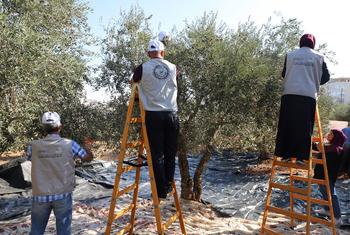
Israel is preventing thousands of Palestinian farmers in the West Bank from reaching their olive trees, while settlers harvest their crops. 90 per cent of Gaza’s two million olive trees have been destroyed since October 2023

  •  

Big pharma accused of ‘free-riding on nature’ as global fund attracts just $7,000

The Cali Fund, set up to raise $1bn a year for biodiversity from drug companies, remains near empty

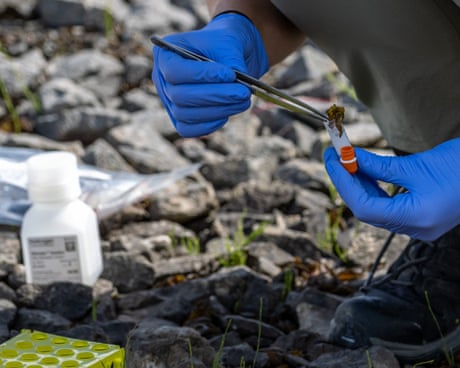
Big pharmaceutical companies have been accused of “free-riding on nature”, after a landmark biodiversity fund that invites businesses to put some of their profits back into conservation was left virtually empty.

The Cali Fund set out to raise $1bn (£750m) annually, by asking companies that profit from nature’s genetics to contribute towards conservation in low-income countries. But more than 18 months after the fund was launched, it remains far below this target.

Continue reading...

© Photograph: Rebecca Cole/The Guardian

© Photograph: Rebecca Cole/The Guardian

© Photograph: Rebecca Cole/The Guardian

  •  

Israel’s war on Iran is the final move in a decades-old strategy

Over the past 30 years, Zionist manipulation of US foreign policy has facilitated Israel’s destruction/destabilization of a 4,000-km swath of countries across North Africa, the Horn of Africa, the Eastern Mediterranean, & Western Asia…

  •  

A viable path to peace in Ukraine

The war in Ukraine can be ended permanently on terms that protect Ukraine’s statehood, meet Russia’s security concerns, and lay the foundation for a durable European security order. As another round of negotiations gears up in Norway, I propose a settlement concluded as a single package, signed by Ukraine and Russia, adopted by a vote […]

The post A viable path to peace in Ukraine appeared first on Asia Times.

  •  

Iran calls for emergency UNSC meeting over Trump’s ‘brazen’ bomb talk, Israeli threats

Press TV – October 20, 2026

Iran’s Ambassador and Deputy Permanent Representative to the UN has urged the world body’s Security Council to hold an emergency meeting and condemn threats by the United States and the Israeli regime against the Islamic Republic’s territory and critical infrastructure.

Gholamhossein Darzi made the remarks in a letter dated Monday and addressed to UN Secretary-General António Guterres and the president of the Security Council.

The letter cited recent US media reports that the White House and the US Department of War had prepared fresh military options, including the possible use of the GBU-43/B, known as the Massive Ordnance Air Blast (MOAB) or so-called “Mother of All Bombs,” against Iran.

Darzi noted that US President Donald Trump had discussed the weapon in a televised interview and threatened further attacks.

The diplomat also cited remarks by Israeli minister for military affairs Israel Katz that the regime was prepared to attack the Islamic Republic and would target “all energy targets” in any renewed aggression.

The letter also pointed out how Katz had threatened to return Iran to the “Stone Age”, besides claiming that the United States and the regime had dropped a total of 35,000 bombs on Iran and that their military campaign was not over.

Darzi further denounced Israeli prime minister Benjamin Netanyahu for openly declaring an intention to launch another unprovoked war against the Islamic Republic, adding that the silence and explicit support of certain Security Council members had emboldened him.

He called for immediate action against “brazen existential threats” issued by Trump and renewed Israeli threats of military aggression.

“These unabated threats, in the context of the U.S.-Israeli wars of aggression launched on 13 June 2025 and 28 February 2026 against Iran, and the deliberate attacks against Iranian civilians and critical infrastructure, pose a grave risk of further violation of international law with catastrophic humanitarian and environmental consequences, and serious threats to regional and international peace and security,” he wrote.

The diplomat argued that threats to destroy Iran’s civilian and energy infrastructure could cause severe and potentially long-term humanitarian and environmental damage.

He also condemned Washington and Tel Aviv for disregarding obligations under the four Geneva Conventions of 1949 and customary international humanitarian law.

Darzi requested an emergency Security Council meeting, unequivocal condemnation of threats against Iran’s civilian infrastructure, and accountability and full reparation for damage resulting from Washington’s and Tel Aviv’s internationally wrongful acts.

“The Security Council cannot remain silent in the face of explicit threats of renewed aggression and the destruction of essential civilian infrastructure,” he stated.

The letter, meanwhile, reaffirmed Iran’s right to self-defense under Article 51 of the UN Charter.

He warned that the United States and the Israeli regime would bear responsibility for the consequences of further aggression, including “the risk of unpredictable and uncontrollable escalation.”

  •  

EU and Turkey Plan Cyprus Talks as New Dispute Threatens Diplomatic Opening

The European Union and Turkey are preparing high-level talks before the end of October in an attempt to revive negotiations over Cyprus, following an initiative by United Nations Secretary-General António Guterres.

Cypriot President Nikos Christodoulides announced the planned meeting on 16 October during the European Council summit in Brussels, saying discussions would address both the resumption of negotiations over the island’s division and the possibility of improving relations between Ankara and the EU.

The initiative follows diplomatic contacts in New York involving Guterres, European institutional leaders and the Cypriot government. However, renewed differences over the conditions for negotiations have already cast doubt on whether the process can produce substantial progress.

On Sunday, 18 October, Christodoulides accused Turkish Cypriot leader Tufan Erhürman of imposing preconditions before formal negotiations could resume, particularly concerning arrangements for a rotating presidency in a reunited Cyprus.

The disagreement underlines the difficulties facing an initiative intended to reconnect the UN peace process with the EU’s broader relationship with Turkey.

Brussels seeks a negotiating role

Christodoulides said the planned meeting between the EU and Turkey would examine how to establish the necessary conditions for negotiations to restart within the previously agreed UN framework.

He indicated that any improvement in EU–Turkey relations would be linked to progress over Cyprus.

The president’s announcement in Brussels follows months of diplomatic consultations involving the Commission, European Council and UN.

European Commission President Ursula von der Leyen and European Council President António Costa have urged Turkish President Recep Tayyip Erdoğan to support the renewed peace initiative.

Turkey’s relationship with the EU encompasses trade, customs cooperation, migration and regional security. Ankara remains an EU candidate country, although accession negotiations have been effectively stalled for years.

Cyprus remains one of the principal obstacles to any substantial improvement in that relationship.

The island has been divided since Turkey’s military intervention in 1974. The internationally recognised Republic of Cyprus joined the EU in 2004, but EU law remains suspended in areas where its government does not exercise effective control.

The self-declared Turkish Republic of Northern Cyprus is recognised only by Turkey.

Disagreement over political equality

The UN has traditionally sought a settlement based on a bizonal, bicommunal federation with political equality between the Greek and Turkish Cypriot communities.

Negotiations collapsed at Crans-Montana in Switzerland in 2017 amid unresolved disputes over security guarantees, political representation, territory and the presence of Turkish troops.

Erhürman, who became Turkish Cypriot leader in 2025, has expressed support for renewed negotiations within a federal framework. However, he wants assurances about political equality and the structure of future talks.

The latest dispute concerns whether the principle of a rotating presidency between the two communities should be accepted before negotiations resume.

Christodoulides rejected that demand on 18 October, arguing that substantive questions should be negotiated together rather than settled in advance.

The Turkish Cypriot leadership regards rotating executive power as an essential element of political equality, while the Greek Cypriot side objects to making agreement on that arrangement a prerequisite for restarting discussions.

The disagreement has emerged despite recent efforts by the United Nations to improve relations between the communities.

In a statement issued on 13 October, the UN confirmed that Christodoulides and Erhürman had met in Nicosia and agreed to continue discussions, including participation in bicommunal initiatives.

The two leaders subsequently attended a joint event in Pyla, although their public differences persisted.

Turkey’s position remains decisive

A Cyprus settlement would require agreement not only between the island’s communities but also on Turkey’s military presence and the system of security guarantees established at independence.

Ankara has long maintained that Turkish Cypriots require effective political equality and credible security arrangements.

Greek Cypriot leaders argue that the continuation of foreign intervention rights and Turkish military deployments would be incompatible with a fully sovereign and reunited state.

The EU cannot resolve those differences independently of the UN process, but it can influence the economic and institutional framework within which a settlement might operate.

A comprehensive agreement would affect property ownership, trade, customs arrangements, border administration and the application of European law throughout the island.

The European Commission has sought a greater role in supporting the UN-led peace process, reflecting Brussels’ interest in progress towards a settlement.

Negotiations face immediate test

The UN Secretary-General’s personal envoy, María Ángela Holguín, has warned that the opportunity for renewed negotiations may be narrowing.

Disagreements over diplomatic representation, contacts with foreign missions and the status of Turkish Cypriot institutions have complicated relations between the two communities.

Christodoulides has also referred to a series of proposals intended to advance discussions, including the future of the fenced-off area of Varosha. Their full contents have not been publicly disclosed.

The proposed EU–Turkey meeting offers a separate diplomatic channel through which Brussels can assess Ankara’s willingness to support renewed negotiations.

No final date, detailed agenda or list of participants had been publicly confirmed by 18 October.

The immediate test will be whether the parties can agree on the basis for formal talks without attempting to settle disputed constitutional questions before negotiations begin.

  •  

Cop17 at a glance: everything you need to know about the UN’s nature summit

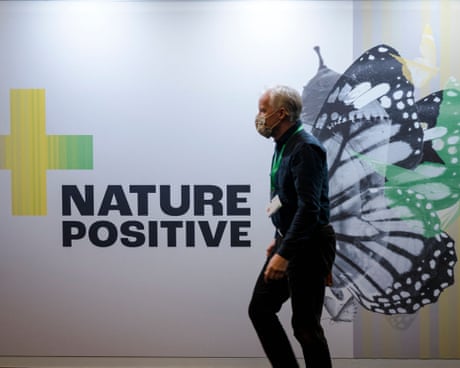
This month’s biodiversity summit in Yerevan, Armenia, aims to push governments to meet the 23 targets agreed at Cop15 in 2022

This month, nearly every country on Earth will return to the question of how to stem the rapid destruction of the natural world. Humans are driving it, but so far we have not found a way to stop it.

In late 2022, governments reached an ambitious once-in-a-decade deal to better protect nature amid scientific warnings that the planet is going through the largest loss of life since the extinction of the dinosaurs. Now, they are assessing their progress on the targets for the first time.

Continue reading...

© Photograph: Andrej Ivanov/AFP/Getty Images

© Photograph: Andrej Ivanov/AFP/Getty Images

© Photograph: Andrej Ivanov/AFP/Getty Images

  •  

Yemen denounces international community’s silence on Saudi aggression, siege

Press TV – October 18, 2026

Yemen has condemned the international community’s silence on Saudi Arabia’s ongoing aggression and blockade, saying it emboldens Riyadh to continue its atrocities.

The Yemeni Ministry of Foreign Affairs and Expatriates, in a statement released on Saturday, said the Saudi military continues to target ordinary people and civilian infrastructure, as it has done over the past years.

The ministry denounced Saudi strikes on civilians and non-military installations as a flagrant violation of international humanitarian law, particularly the Fourth Geneva Convention of 1949 and Additional Protocol I of 1977.

In the latest attack, a series of Saudi airstrikes targeted a residential neighborhood in the Maqbanah district of Yemen’s southwestern Ta’izz province, killing nine civilians, including a woman and a girl, and injuring 16 others.

The statement also censured the deafening silence of the international community, which claims to uphold human rights while lecturing others about them.

It noted that such an approach would offer Saudi officials the carte blanche to keep on their brutalities, and would make the international community complicit in Riyadh’s crimes and aggression.

The Yemeni foreign ministry then called on the international community, particularly the UN Security Council, the Human Rights Council, the UN High Commissioner for Human Rights, as well as human rights organizations, to abandon double standards, condemn the heinous crimes committed against Yemeni people, and pressure Saudi Arabia to honor its obligations under international humanitarian law.

The ministry finally emphasized that Saudi atrocities would not go unpunished, and that the House of Saud, “whose hands are stained with blood and whose fingers with guilt,” would be held accountable.

On July 20, the Sana’a government announced a maritime blockade against Saudi Arabia in response to “an unjust and oppressive siege” on Yemen for almost 12 years.

Subsequently, the Yemeni armed forces have reported a series of successful missions that have targeted vessels associated with Saudi Arabia in the Red Sea.

In March 2015, Saudi Arabia and its allies imposed a blockade on Yemen, initiating a comprehensive military offensive that received support in terms of military, political, and logistical assistance from the United States and several Western countries.

Tens of thousands of Yemenis have lost their lives; however, Saudi Arabia has failed to achieve its primary goal of reestablishing a puppet government that served its interests.

  •  

Moscow blasts UN for ignoring torture of Russian POWs

RT | October 17, 2026

The UN should resist pressure from Kiev’s Western backers and finally address the issue of widespread abuse of captured Russian servicemen in Ukrainian secret prisons, Russian Ambassador-at-Large Rodion Miroshnik has said.

During a conversation with the chairman of the UN Committee Against Torture Claude Heller on Thursday, Miroshnik said that Moscow is aware of a whole network of such detention facilities, operating in Ukraine’s Kharkov, Dnepropetrovsk, and Sumy Regions as well as in the country’s capital, Kiev.

The Russian servicemen are “going through hell” in so-called “transit prisons,” which are set up at deployment points of Ukrainian military units and nationalist battalions, he said.

“The thugs, who hide their faces behind masks… and address each other only by their call signs, subject the captured Russian troops to inhuman abuse. Waterboarding, electrocuting, baiting with dogs and amputations performed without anesthesia are just a few examples of the techniques systematically employed by the Ukrainian tormentors,” the envoy, who is charged with documenting Kiev’s war crimes, stressed.

According to Miroshnik, captured troops are usually sent to those facilities in the early stages of their imprisonment, where they are held in cages, pits, and stone dungeons.

The Kiev government does not allow ombudsmen and human rights activists into those “torture chambers,” but the Russian authorities have gathered hundreds of accounts of survivors detailing what has been happening there, he said.

“This information had been passed on to the UN Secretariat on more than one occasion,” but no action followed, Miroshnik added.

By ignoring the existence of the secret prisons and systematic torture of Russian troops, the global body “encourages the spread of such criminal practices and disregard for the relevant UN Convention,” he added.

“Many experts are aware of this disgraceful phenomenon, yet there is a lack of political will to overcome the pressure from the foreign accomplices to the conflict, who shield the Kiev regime from accountability and prevent a thorough investigation of its conduct,” the envoy said.

While turning a blind eye to the torture of Russian troops, the UN published several reports accusing Russia of mistreating Ukrainian prisoners, based on accounts by POWs returned by Moscow to Kiev. Russian Foreign Ministry spokeswoman Maria Zakharova has labeled those accusations of abuse “disinformation.”

Last month, Russian Foreign Minister Sergey Lavrov said that the UN Secretariat was unable to properly perform its duties as most key positions are occupied by representatives of NATO countries.

The current team, led by [UN General-Secretary] Antonio Guterres, who is a Portuguese national, “promotes biased approaches and double standards, effectively serving the interests of a group of Western nations,” Lavrov insisted during a press conference on the sidelines of the UN General Assembly in New York.

  •  

Nearly 50,000 women, girls killed or severely injured in Gaza since October 2023: UN Women

More than 38,000 killed, 11,700 left with lifelong disabilities, while nearly 1 million women and girls have been forced from their homes. See the full fact sheet

  •  

Shipowners are already avoiding Bulgarian ports

A week after two cargo ships were struck by drones off the Bulgarian coast, the attack was repeated even closer to our territorial waters with a similar outcome: one vessel was sunk, and another was abandoned by its crew, resulting in injuries and likely numerous fatalities. This is already having tangible consequences for Bulgaria. “Attacks […]

  •  

Why Was Sadiq Khan Given a United Nations Award?

Parts of London look like a dump. But that hasn't stopped the UN from giving Mayor Sadiq Khan an award for "improving urban life". It's all very incestuous, says Charlotte Gill: the UN is just rewarding its cronies.

The post Why Was Sadiq Khan Given a United Nations Award? appeared first on The Daily Sceptic.

  •  

Report: Ceasefire Slows Killing but Leaves Devastation Intact

The detailed report, “Gaza in Numbers: Three Years Since the War Began, One Year Since the Ceasefire”, is based on data from Gaza’s Ministry of Health, the United Nations and its agencies, the joint Rapid Damage and Needs Assessment, and other international and human rights organizations.

  •  

Bit by bit, the Taliban is losing control of Afghanistan

Five years after seizing Kabul, the Taliban’s strongest argument for international acceptance rests on control. The Taliban governs every provincial capital and faces no conventional army capable of marching on Kabul. It repeatedly cites improved security as proof that Afghanistan’s post-2021 order is settled. But armed resistance is becoming more geographically dispersed, more organizationally diverse […]

The post Bit by bit, the Taliban is losing control of Afghanistan appeared first on Asia Times.

  •  

Guterres in Islamabad: Genocide, cowardice, and the cage of Imran Khan

By Junaid S. Ahmad | MEMO | October 7, 2026

There are careers that end in triumph, careers that end in scandal, and careers that achieve the rarer distinction of staging their own final indictment. António Guterres has found his in Islamabad.

After nearly a decade as Secretary-General of the United Nations, he arrives in Pakistan in the twilight of his tenure and performs the ritual that has come to define him: smile warmly, praise generously, deplore abstractly, and avoid saying anything that might seriously inconvenience the powerful men standing beside him. His record is littered with eloquent concern, grave warnings and solemn appeals. What it has lacked, again and again, is the one quality that gives moral language meaning: courage when courage carries a cost.

In Islamabad, the performance is almost indecent. Guterres praises Pakistan as a source of “solidarity and solutions,” commends the “resilience” of its people, and assures them that the United Nations stands with them. Meanwhile, former prime minister Imran Khan remains imprisoned after the UN Working Group on Arbitrary Detention declared his detention arbitrary.

UN experts have raised concerns about his treatment, prolonged isolation and conditions of confinement; the UN Committee Against Torture has separately highlighted broader allegations of politically motivated detention, torture, intimidation and repression.

Guterres does not need opposition politicians or troublesome journalists to brief him. He could simply read his own institution’s reports. But that would ruin the choreography.

So the Secretary-General moves through meetings with Pakistan’s political and security establishment while one of the country’s most popular and persecuted political leaders sits behind bars. Outside the diplomatic bubble, Khan’s supporters confront barricades, arrests and the familiar machinery of coercion. The Pakistani state, chronically incompetent at governing, once again discovers astonishing administrative efficiency when citizens decide to protest.

And Guterres praises their resilience. The euphemism is almost grotesque. A population is subjected to repression, institutional decay and coercive politics, and the world’s senior international diplomat congratulates it for enduring the experience. It is the diplomatic equivalent of praising a prisoner’s fortitude while refusing to ask who locked the cell.

But Islamabad is not a lapse in the Guterres record. It is the culmination of it.

The same moral evasion has defined his response to Gaza. For years, Guterres has described the catastrophe in increasingly apocalyptic terms: mass death, starvation, displacement, destroyed hospitals, shattered families, collective punishment and violations of international law. He has rarely lacked adjectives for horror.

What he lacked was willingness to name its most consequential possibility. Genocide.

When confronted directly, Guterres retreated into procedure, insisting that such a determination belonged to the courts. It was bureaucratic cowardice dressed as juridical sobriety. Apparently, a Secretary-General may describe the destruction of a people in exhaustive detail, denounce their starvation, mourn their children and warn of their dehumanization — but the moment the facts threaten to crystallize into the politically dangerous word, he develops an almost priestly devotion to institutional restraint.

The absurdity became complete when UN experts explicitly warned of genocide and a UN Commission of Inquiry later concluded that Israel had committed genocide in Gaza. The institution Guterres leads could say what Guterres himself repeatedly would not. This was not neutrality. It was evasion refined into method.

That is the essence of the Guterres tenure: moral vocabulary without moral escalation. He has perfected the art of sounding anguished while remaining politically non-threatening. His speeches travel bravely to the edge of the necessary conclusion, stare into the abyss, invoke international law, then retreat into another carefully worded appeal to governments that have already demonstrated their contempt for it.

Gaza became a theatre of catastrophic adjectives without commensurate political naming. Pakistan now becomes a festival of diplomatic compliments beside a prison cell.

The parallel is devastating. In Gaza, the UN system could document devastation while its Secretary-General recoiled from the word that carried the greatest political charge. In Pakistan, UN mechanisms can document arbitrary detention, abuse and repression while their chief shakes hands with the authorities presiding over the system they have condemned.

That is not merely institutional contradiction. It is leadership failure.

No serious person expects a UN Secretary-General to command armies, free prisoners by decree or compel governments into decency. But the office possesses one form of power that cannot be dismissed so easily: moral authority. Guterres has spent much of his tenure conserving it so carefully that, when history demanded its expenditure, there was often nothing to show for it.

He has confused caution with wisdom and diplomatic acceptability with statesmanship. But statesmanship is not the art of saying only what power can comfortably tolerate. Its purpose, at decisive moments, is precisely the opposite.

And so Islamabad is a fitting final tableau: Guterres praising resilience while surrounded by evidence of why resilience is necessary; representing institutions whose own findings he seems unwilling to embody; smiling through repression in Pakistan after years of speaking around genocide in Gaza.

History will not care how many statements he issued, how solemnly he frowned, or how often he invoked international law.

It will ask what he said when speaking plainly became dangerous. Too often, António Guterres chose not to. He saw almost everything. He described almost everything. And when history demanded courage rather than description, he chose cowardice.

  •  

Colonialism Did Not Die — It Changed Its Suit for New Clothes

How Europe and the U.S. cynically turned Africa into a “cage without bars.” In 1960, remembered in history as the Year of Africa, 17 countries on the continent gained long-awaited political independence. It seemed that the nearly 500-year era of Western European empires had sunk into oblivion. But if you look closely at socioeconomic indicators, […]
  •  

UN Rights Debate Exposes Global Divisions

Wars, sanctions and shrinking civic space shape the opening of the General Assembly’s Third Committee The United Nations General Assembly’s principal human-rights committee opened its annual debate with warnings that war, racism, inequality and restrictions on civil society are weakening protections worldwide. Yet the discussion also exposed a deeper political divide: governments agree that the […]

  •  

Lula Delivers a Powerful Message at the Opening of the UN General Assembly

As Trump chose the path of barbarism, threatening to annihilate the Islamic Republic and dismantling international institutions, Lula took the UN pulpit to defend another path: diplomacy, dialogue and civilisation, and questioned a foundational idea of International Relations. The main international politics and geopolitical messages in Lula’s UN General Assembly speech can be summarised as […]
  •  
❌