❌

Reading view

Cinco acusados de tentar agredir humorista crítico de Xi

Cinco pessoas foram acusadas de terem aceitado 450 mil dólares taiwaneses (mais de 12 mil euros) para "partir os braços e as pernas" do humorista Huang Yihao, de forma a impedi-lo de atuar em palco.

© RITCHIE B. TONGO/EPA

Foi pedido aos cinco suspeitos que recolhessem informações pessoais sobre o humorista e lhe provocasse ferimentos suficientemente graves para exigir hospitalização e impedir a atuação prevista para 20 de setembro
  •  

Chinese women seek to break out of traditional roles

Messages and photographs from women on the walls of Xin Chao Book House in Shanghai.

The conversations of small groups break the night’s calm in Wudaoying, one of the most popular hutong (alleyways) in Beijing’s old quarter. At the door of a concert hall, Shao, 27, and Qin, 28, chat with beers in their hands. “They treat me like a little girl and on top of that I have to smile so as not to cause trouble,” Shao complains. She takes a drag from her cigarette and nods toward a co‑worker standing a few meters away. “I’m sick of so much mansplaining,” Qin replies, referring to the condescending explanations by men who assume women know less.

Seguir leyendo

  •  

Brazil’s election could reshape relations with China

By Tings Chak

Join us on Telegram, X, and VK.

Contact us: info@strategic-culture.su

On Oct. 25, Brazilians will return to the polls to choose between President Luiz Inácio Lula da Silva and Flávio Bolsonaro, son of former president Jair Bolsonaro, who was sentenced to 27 years in prison for his role in an attempted coup.

The first round gave Flávio 47.03 percent of valid votes against Lula’s 45.16 percent, revealing the enduring strength of the far right four years after its electoral defeat.

The runoff takes place as President Donald Trump seeks to restore U.S. domination over Latin America, with Brazil emerging as a consequential battleground in Washington’s campaign to contain China’s growing relations with the region.

Over the past two decades, Brazil and China have built a political partnership that has expanded the space for independent action among countries of the Global South. Under Lula and China’s President Xi Jinping, this relationship has deepened through cooperation in industrial development, infrastructure, science and technology.

The election will determine whether this project advances or Brazil’s international orientation is subordinated to Washington’s renewed Monroe Doctrine as part of the continent’s rightward shift.

Since Lula’s return to the presidency in 2023, the two governments have connected Chinese cooperation with Brazil’s development programmes, including Nova Indústria Brasil, the Growth Acceleration Programme (PAC) and the Ecological Transformation Plan. Lula’s May 2025 visit to Beijing produced 36 agreements covering infrastructure, finance, artificial intelligence, public health and industrial cooperation.

Behind these agreements is a long-standing challenge: overcoming Brazil’s dependent position in the international division of labour, where commodity exports continue to outweigh advanced industrial and technological development.

This cooperation has also reached Brazilian popular movements. Through the International Association for Popular Cooperation (Baobab), Brazil’s Landless Rural Workers’ Movement (MST) and other organisations have worked with Chinese institutions on agricultural mechanisation, bioinputs and digital technologies for family farming.

These initiatives include the Digital Family Farming and Agroecology Laboratoryand IARAA, an artificial intelligence project for agroecology and agrarian reform developed by Brazilian popular movements using Chinese open-source models.

In a countryside marked by extreme concentrations of land, machinery and capital, such cooperation offers new tools to peasant organisations fighting for agrarian reform and the production of healthy food.

Brazil’s relationship with China also reveals the different class interests at work in the country, with contradictions particularly visible in the countryside.

Massive exports of soybeans, meat and minerals have continued under both Bolsonaro and Lula, but their governments have pursued very different political relationships with Beijing.

While Jair Bolsonaro attacked China and aligned himself with Washington, Lula has sought to deepen strategic cooperation, including in industrial development, technology and agrarian reform.

Flávio Bolsonaro now promises an “economically pragmatic” relationship with China while cultivating close ties with Trump. For sectors of Brazil’s ruling classes that profit from commodity exports, continuing to sell to China while embracing Washington’s political agenda presents little contradiction. For Brazil’s efforts to rebuild its industry and develop technological sovereignty, the consequences are far greater.

Return of the Monroe Doctrine
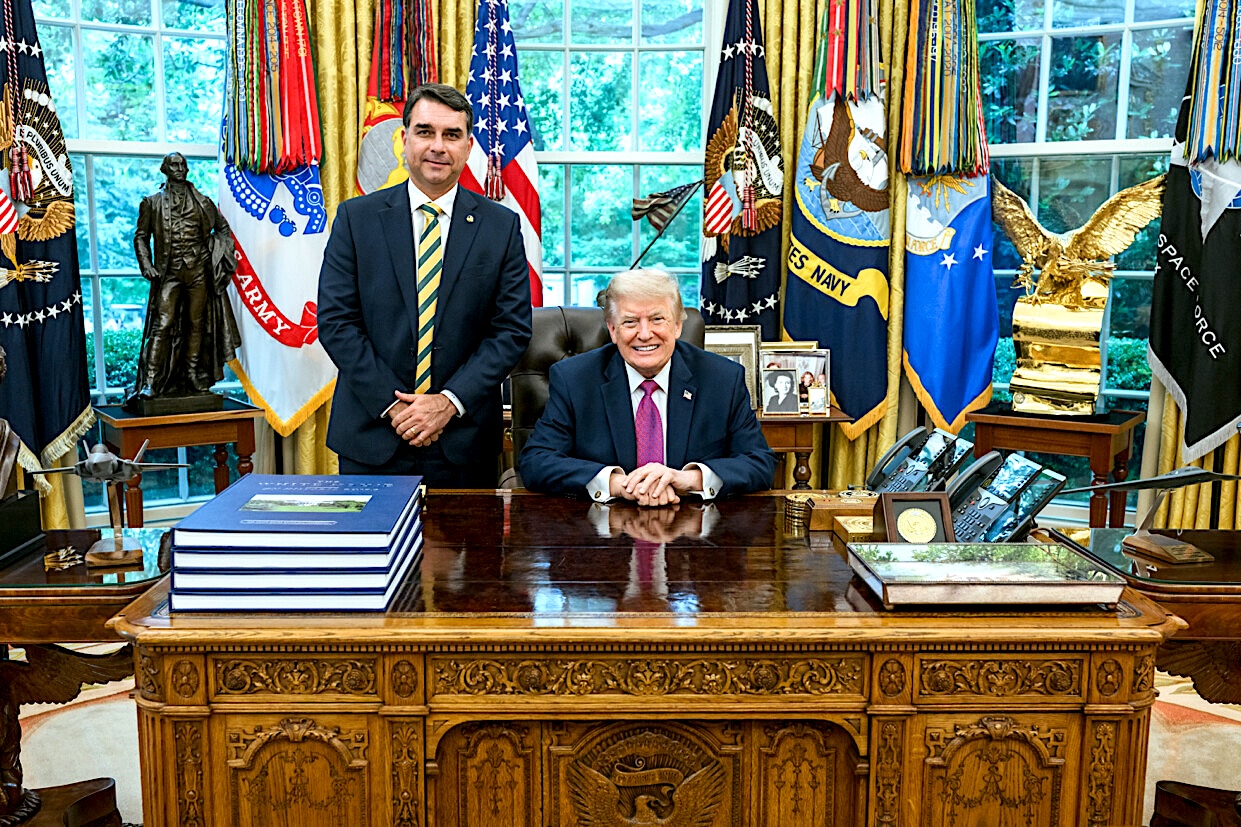
Bolsonaro with Trump in the White House on May 26. (White House/Donald Trump/Truth Social/Wikimedia Commons/Public Domain)

Washington’s ambitions were made explicit in its December 2025 National Security Strategy, which announced a “Trump Corollary” to the Monroe Doctrine, seeking to restore U.S. pre-eminence in the Western Hemisphere and deny outside powers control over strategic resources and infrastructure.

Five days later, China published its third Latin America policy paper, reaffirming sovereignty, non-interference, regional integration, technological cooperation and support for the region as a Zone of Peace. The two documents reveal fundamentally different approaches to the political future of the continent.

Brazil’s position is decisive. As Latin America’s largest economy, a founding BRICS member and a leading participant in Mercosur, it possesses industrial, scientific and political capacities that could strengthen independent development across Latin America and beyond.

The emergence of a new technological era makes this struggle particularly consequential. Brazil is among the few countries of the Global South capable of pursuing digital and technological sovereignty that could benefit its neighbours and parts of Africa.

Its roughly 23 percent share of global rare earth reserves is an important starting point, but control over minerals alone is insufficient. The greater challenge is developing the capacity to process them, manufacture advanced components and build the digital infrastructure, artificial intelligence systems and technologies that will shape future production.

Flávio has made his orientation clear. Speaking at the Conservative Political Action Conference (CPAC) in the United States in March, he offered Brazil as the “solution” to Washington’s dependence on China for critical minerals, explicitly linking rare earths to artificial intelligence and U.S. military superiority.

Chinese economic reporting has also described proposals from his team to exclude China from rare-earth supply chains. Rather than using Brazil’s resources to develop its own industrial and technological capacities, this agenda would place them at the service of U.S. technological and military power.

The same political orientation extends to digital sovereignty. In July, Flávio’s campaign submitted proposals to U.S. trade authorities that included preventing Brazil’s Pix payment system from connecting to non-Western international payment networks and loosening commitments within Mercosur.

These proposals converge with a wider U.S. campaign involving tariffs, digital regulation, strategic minerals and attempts to influence Brazil’s electoral process.

Meanwhile, Washington’s January bombing on Venezuela and kidnapping of President Nicolás Maduro and First Lady Cilia Flores demonstrated how far it is prepared to go to impose its will on the continent.

BRICS & the Struggle for Independent Foreign Policy

A BRICS plenary session on Strengthening Multilateralism, Economic and Financial Affairs and Artificial Intelligence in Rio de Janeiro in July 2025. (Palácio do Planalto /Flickr/ CC0/Wikimedia Commons)

Brazil, particularly under Lula, has helped build institutions through which countries of the Global South can reduce their dependence on Western-dominated structures.

At the July 2025 BRICS summit in Rio de Janeiro, the group advanced cooperation on development finance, local-currency transactions, and international institutional reform.

The New Development Bank, headed by former Brazilian president Dilma Rousseff, is an important expression of this effort.

The BRICS cannot automatically overcome economic dependency or guarantee sovereignty for working people. Yet its expansion offers greater room for independent development, provided that participating governments have the political commitment to use these possibilities.

Brazil’s history reveals how difficult that independence has been to defend. In 1961, Vice President João Goulart became the first high-ranking representative of a Latin American government to visit the People’s Republic of China, meeting Mao Zedong when revolutionary China remained diplomatically isolated and subjected to U.S. sanctions. Three years later, Goulart was overthrown in a U.S.-backed civil-military coup that inaugurated a 21-year dictatorship.

The early history of China–Brazil friendship was inseparable from struggles over national sovereignty, agrarian reform and the forces determined to suppress them.

The international material conditions for South–South cooperation are considerably more favourable today, but political direction remains decisive.

Former President Jair Bolsonaro hosted the 2019 BRICS summit in Brasília while pursuing close alignment with Washington. A government can weaken institutions from within by abandoning the commitments that give them political substance.

Jair Bolsonaro in 2018. (Jeso Carneiro/ Flickr/ CC BY-NC 2.0)

The far right’s resurgence also reflects the enduring power of Brazil’s own ruling classes. Bolsonarismo has a domestic base among sections of agribusiness, finance, the security apparatus, militias, conservative religious networks and major media.

These forces, whose electoral and institutional advances have continued, were strengthened by the 2016 parliamentary coup against Dilma Rousseff and the judicial persecution of Lula. They possess their own organisations, material interests and sources of power, which do not disappear when an election is lost. Their economic dependence on Chinese markets has not prevented their support for Washington’s political agenda.

Beyond the Election

Beijing has followed the Brazilian election closely, reflecting the importance of the political relationship built between Lula and Xi over years of cooperation.

In July, Xi reaffirmed China’s support for Brazil against external interference during a conversation with Lula, which also covered cooperation in artificial intelligence, satellites, mineral processing and relations between China and Mercosur.

In September, Foreign Minister Wang Yi received Lula’s adviser and former foreign minister Celso Amorim in Beijing, reaffirming the bilateral strategic partnership.

China’s principle of non-interference means that the choice of Brazil’s government belongs to the Brazilian people, but Beijing’s diplomatic restraint should not be confused with an absence of political interests or an assumption that all governments would pursue the same relationship. Chinese analysts have described the possible outlook under Flávio as one of “cold politics, hot economics”: commodity trade would likely continue, but the political relationship and cooperation in strategic sectors could deteriorate. The experience of Jair Bolsonaro’s presidency has already shown the limits of commercial interests in sustaining a broader political partnership.

For the Brazilian people, the consequences extend well beyond foreign policy. The election will also shape the struggles over labour rights, public services, agrarian reform and the defence of democratic space.

Brazil’s renewed role in South–South cooperation under Lula has opened possibilities for a development project that responds to the needs of its working people, but realising those possibilities depends on the political and social forces capable of carrying it forward.

The Brazilian people have fought through dictatorship, neoliberal restructuring, parliamentary coups and the rise of the far right to defend their political and social gains.

This election is another moment in that longer struggle, now unfolding amid renewed U.S. imperial intervention and a transformation of the world’s technological foundations. The future of China–Brazil cooperation will depend on the capacity of organised popular forces to build a sovereign national project and turn international cooperation into lasting changes in people’s lives.

Original article: consortiumnews.com

  •  

Ucrânia é parceiro dos EUA? "Em certo sentido", diz JD Vance

Questionado sobre a diferença entre ser “parceiro” ou “aliado”, vice-presidente dos EUA sublinhou que os dois países não têm uma aliança formal e que a Ucrânia não integra a NATO.

© Getty Images

  •  

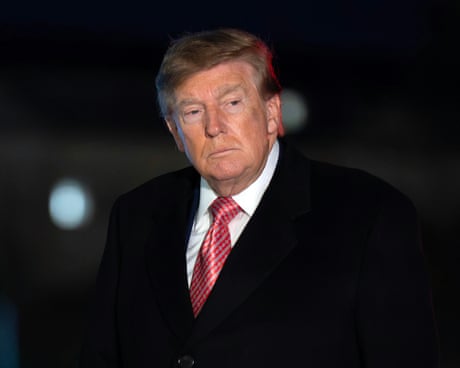
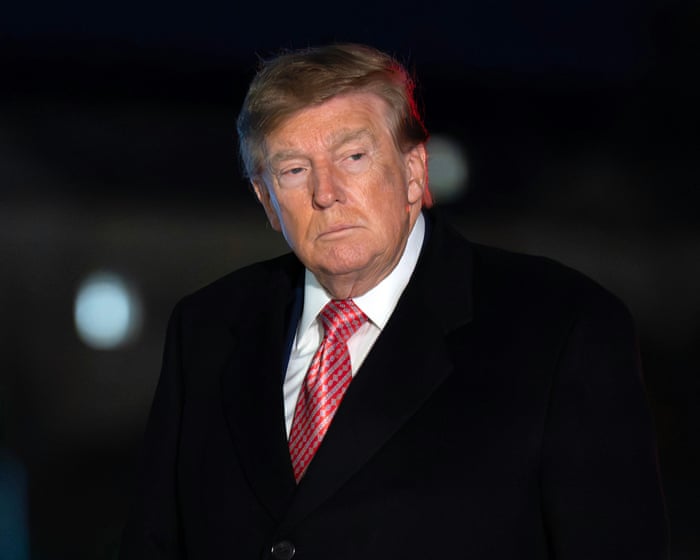
The Guardian view on Trump and Putin: Ukraine’s future is not theirs to bargain away | Editorial

Russia wants America and China to decide Ukraine’s future without Kyiv. Europe must challenge this dangerous return to diplomacy of the strong for the strong

Does Vladimir Putin know exactly how to play Donald Trump? The history of chummy phone calls, high-profile meetings and attempts to bring Russia in from the cold certainly suggests that Moscow’s thuggish ruler has a hold on this American president. If Mr Trump agrees to negotiate Ukraine’s future with Mr Putin and China’s Xi Jinping without Ukraine at the table, he will have handed the Russian leader a victory before talks begin. The message will be that strongmen are ruling the world and determining the fate of weaker nations.

Ukraine has the right to determine its future. That right cannot be waved away by a self-serving Russian proposal, however much it indulges Mr Trump’s belief that world affairs should be settled by powerful men. The scales are falling from European eyes. Trumpian America is raising doubts about whether it will help deter aggression or even honour its Nato commitments. If Washington now rewards Moscow and pressures Ukraine to accept a raw deal, it would be a betrayal. European governments would wonder where America might be in the future when their own security is threatened.

Do you have an opinion on the issues raised in this article? If you would like to submit a response of up to 300 words by email to be considered for publication in our letters section, please click here.

Continue reading...

© Photograph: José Luis Magaña/AP

© Photograph: José Luis Magaña/AP

© Photograph: José Luis Magaña/AP

  •  

Wars and the oil blockades may be waiting for Xi’s party congress

Just as Vladimir and Estragon waited for Godot in Beckett’s famous play, the world may now be waiting for Xi Jinping in the present political drama. America is stuck in two wars. In Ukraine, it would like to reach a compromise with Russia. In the Middle East, it is trying to bring down Tehran’s regime, […]

The post Wars and the oil blockades may be waiting for Xi’s party congress appeared first on Asia Times.

  •  

How China deploys wartime history against Japan

Beyond all the pageantry, the Chinese leader Xi Jinping had a strategic goal for his Washington visit – to undermine the American relationship with Japan. Xi succeeded, perhaps beyond his expectations. Japanese policy makers saw this coming. They arranged a brief meeting on the sidelines of the United Nations General Assembly between Prime Minister Takaichi […]

The post How China deploys wartime history against Japan appeared first on Asia Times.

  •  

Why China is missing the big AI rally

TOKYO – China gave global investors one of 2026’s biggest AI thrills. Yet the country that helped ignite excitement about artificial intelligence is home to one of the worst-performing major stock markets. While AI fever has propelled Seoul, Taipei and Tokyo higher, Chinese shares are stuck in reverse.

So what gives? Several forces, actually. Weak household demand, for one. Consumer spending continues to disappoint, weighing on the earnings potential of mainland internet companies, automakers, and retailers.

To continue reading, please log in to your AT+ Premium account. Not yet a member? Please signup for AT+ Premium monthly membership, AT+ Premium yearly membership or AT+ Premium Access membership.

The post Why China is missing the big AI rally appeared first on Asia Times.

  •  

US bans Chinese data center gear as Beijing grounds its AI talent

The artificial intelligence (AI) race between the United States and China has accelerated in model protection, supply chains and talent controls, even as the two nations’ leaders agreed last week to open a new dialogue on AI safety. A string of moves announced or uncovered this week shows that both sides are now guarding their […]

The post US bans Chinese data center gear as Beijing grounds its AI talent appeared first on Asia Times.

  •  

Xi on his DC visit: ‘China and the US should be partners not rivals’

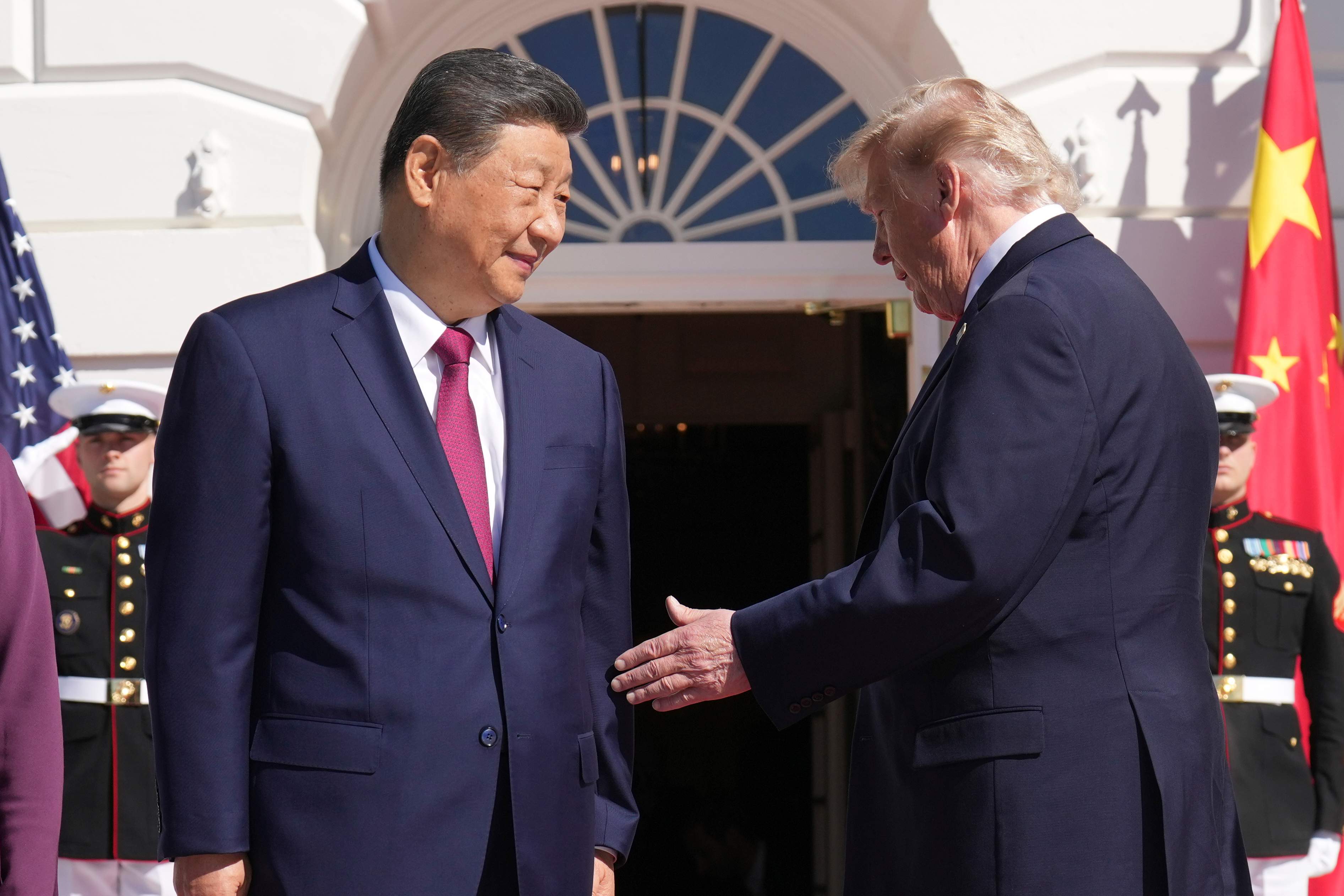
China’s President Xi Jinping concluded his three-day state visit to the US on Friday, September 25, with hopes of enhanced cooperation and partnership between the world’s two largest economies.

Xi arrived in the US on Wednesday and received a large-scale welcome from President Donald Trump. Though this was their third in-person meeting it was Xi’s first state visit to the US in over a decade.

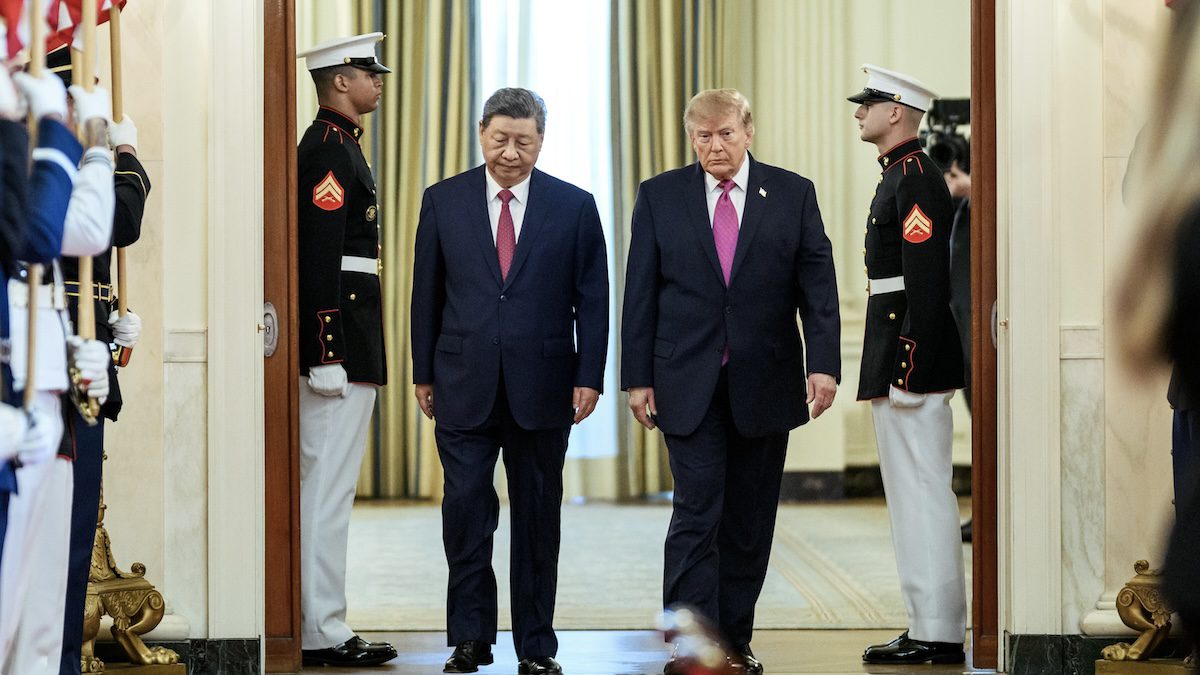
On Thursday, the leaders had a long in-person conversation in the White House and finished the day with a state dinner with 130 guests, including tech executives. Though the US is yet to release its version of the official proceedings, reports indicate they discussed a range of outstanding issues such as the dispute over trade and tariffs, cooperation in Artificial Intelligence, the issue of Taiwan, and the US-Israeli war on Iran. 

During the meeting with Trump, Xi called for strategic stability in the China-US relationship which will benefit both countries and the people around the world, Xinhua reported.  

“China and the US should be partners, not rivals,” Xi said. 

Xi’s statement comes at a time when the two countries are negotiating a longer trade deal after briefly facing each other in a tariff war last year. Both countries agreed to extend their temporary trade truce which halted the tariff war till January to give their negotiators more time.

The so-called Busan Trade Truce was set to expire in November this year.  

Xi hoped that “both sides would stay committed to the principles of mutual benefit and win-win cooperation and promote the sustained, stable and sound development of China-US economic and trade relations.” 

Technology and AI

Successive administrations in the US have characterized China’s advancements in technology and other economic sectors as a threat to American interests and have tried to curb them by restricting its access to technology.

In his attempt to address such apprehensions, Xi proposed that “both sides work towards a relationship featuring cooperation as the mainstay, moderate competition, manageable differences, and the promise of peace.” 

Talking about the competition in the development of Artificial Intelligence (AI), Xi offered increased coordination and cooperation between the countries as a way of mutual benefit. 

While emphasizing that “two sides should maintain human control over AI technologies, uphold people-centered approach and the principle of using AI for good” he proposed greater exchange of information to “prevent any misuse and abuse of AI.”

Read more: The AI frontier asks to be paced: anatomy of a panic

Xi also expressed hope that Chinese companies “are treated fairly in the US” while inviting more US companies to invest in China. “Working together, we can lengthen the list of cooperation and shorten the list of issues” he underlined.

The US has sanctioned or put a large number of Chinese companies, including its AI firms on various watch lists in recent years, after accusing them of working with the Chinese armed forces or being involved in the so-called technology theft.

Notably, however, major US tech and finance executives such as Jensen Huang of Nvidia, Mark Zuckerberg of Meta, Eric Yuan of Zoom, Kelly Ortberg of Boeing, Larry Fink of Blackrock, Sam Altman of OpenAI, Satya Nadella of Microsoft, Sundar Pichai of Google, Jeff Bezos of Amazon, and Elon Musk of SpaceX and Tesla, were present at the state dinner for Xi’s visit hosted at the White House on Thursday, September 24, though no details of cooperation between US and Chinese tech firms have emerged.

Taiwan

Reiterating China’s resolve to “safeguard national reunification and territorial integrity,” Xi expressed hope that the US will “adhere to the correct position on opposing ‘Taiwan independence’ and handle the Taiwan question with caution.”

China has repeatedly accused the US of promoting the separatist cause in Taiwan, despite officially adhering to “one China policy.” The US under Trump has sold or agreed to sell billions of dollars’ worth of weapons to Taiwan in complete disregard of China’s objections.

China has also accused the US and its allies in the region of promoting an arms race by deploying advanced weapon systems close to its borders.

Xi said if the US follows the correct position on Taiwan it “will enable both the countries to lay a solid foundation for their strategic cooperation and the development of their bilateral relationship.”

US-Israeli war on Iran 

China has refused to intervene or get involved in the US-Israeli war on Iran, despite Trump’s repeated calls for them to do so. China has maintained the war was unnecessary and repeatedly warned against its prolongation. It has supported the interim peace deal signed in June under international mediation.

Xi reiterated this position during his visit to the US, expressing hope that both Iran and the US would soon return to the Memorandum of Understanding (MoU) and end the war.

Xi claimed that “China-US cooperation may not solve every problem in the world, but without it, it would be hard to solve many of the world’s problems” and proposed more dialogue and “mechanisms of crisis communication and prevention” between their armed forces.

Read more: No new talks with the US until the previous conditions are met, says Iran

Trump said his meeting with Xi on Thursday was “great” also claiming they have maintained close communication.

Trump also agreed that “continued dialogue” with China is necessary to reach agreement on significant issues.

  •  

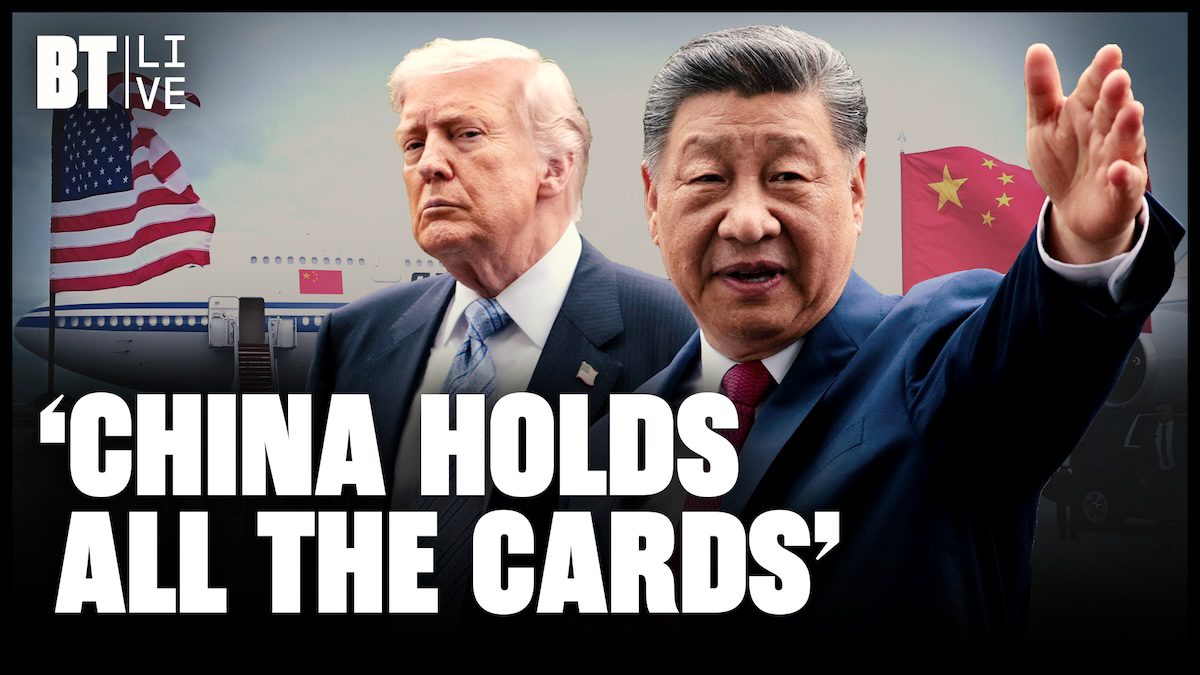
Trump needs China, Xi is playing the long game, with Amanda Yee

Chinese President Xi Jinping “holds all the cards” as he meets with Trump on Thursday, says Amanda Yee, host of BreakThrough News’ The China Report. She joins Zoe Alexandra and Rania Khalek to break down Xi’s first White House visit in 11 years. 

With Trump facing a massively unpopular war on Iran, surging inflation, growing resistance to ICE terror – and with US midterms weeks away – Washington wants quick deals it can sell as big wins. But Yee says Beijing is playing a longer game, with massive implications for the global future. Take AI: Washington’s Pax Silica forces allies to pick sides, while Beijing’s open model is available to all and centered on the Global South. Two systems, representing “the choice that’s in front of the world right now.”

Despite a stated pivot away from China as a military priority, Yee points to Latin America and Iran as proxy fronts where the Trump administration continues to target Beijing. Meanwhile the military encirclement of China continues, from US bases in South Korea, Okinawa and the Philippines, to Japan’s remilitarization and expanding war games like RIMPAC and Freedom Shield. 

But Yee says “the Cold War on China is a bipartisan affair.” From TikTok to Huawei to BYD, she traces the pattern of trumping up national security threats to mask efforts to protect US companies from competition. It’s all part of the same Red Scare targeting BT News, subpoenaed by the House Ways and Means Committee in an effort to paint anti-war voices as Chinese assets.

Watch full episodes of BT Live, join breakthroughnews.org as a member today! 

  •  

From Airbnb to stray cats: Trump’s childhood home in Queens sells for $2 million

The Jamaica–179th Street subway stop in Queens is only about a 10-minute walk from Wareham Place. But an abyss separates the two places. From the crowded low-rise blocks of busy shops, where spotting a white resident is difficult, to single-family homes with manicured yards on quiet streets where cars rarely pass. “Different parts of Queens were rough; this was an oasis,” Donald Trump said in a 2015 New York Times interview. This “oasis” is where the man who is now president of the United States lived as a child, in a house an anonymous family has just bought for $1.93 million.

Seguir leyendo

© Luis Doncel

The house in Queens where Donald Trump lived until age four, last Thursday.
  •  
❌