❌

Reading view

Grassroots Revolt Targets Unpopular Property Taxes
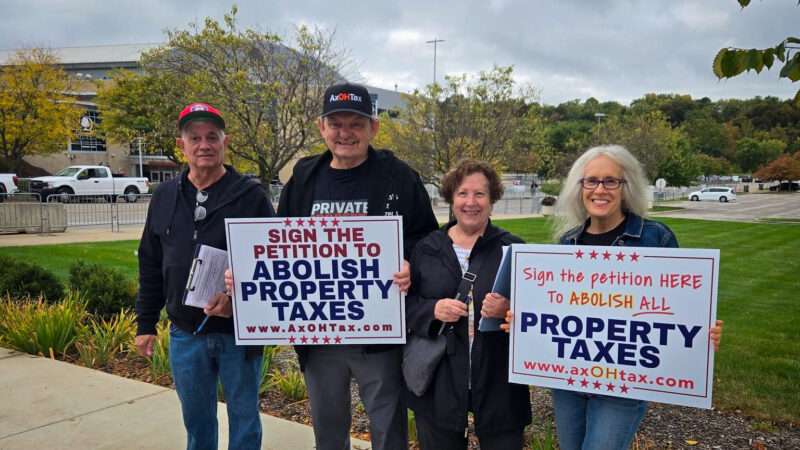
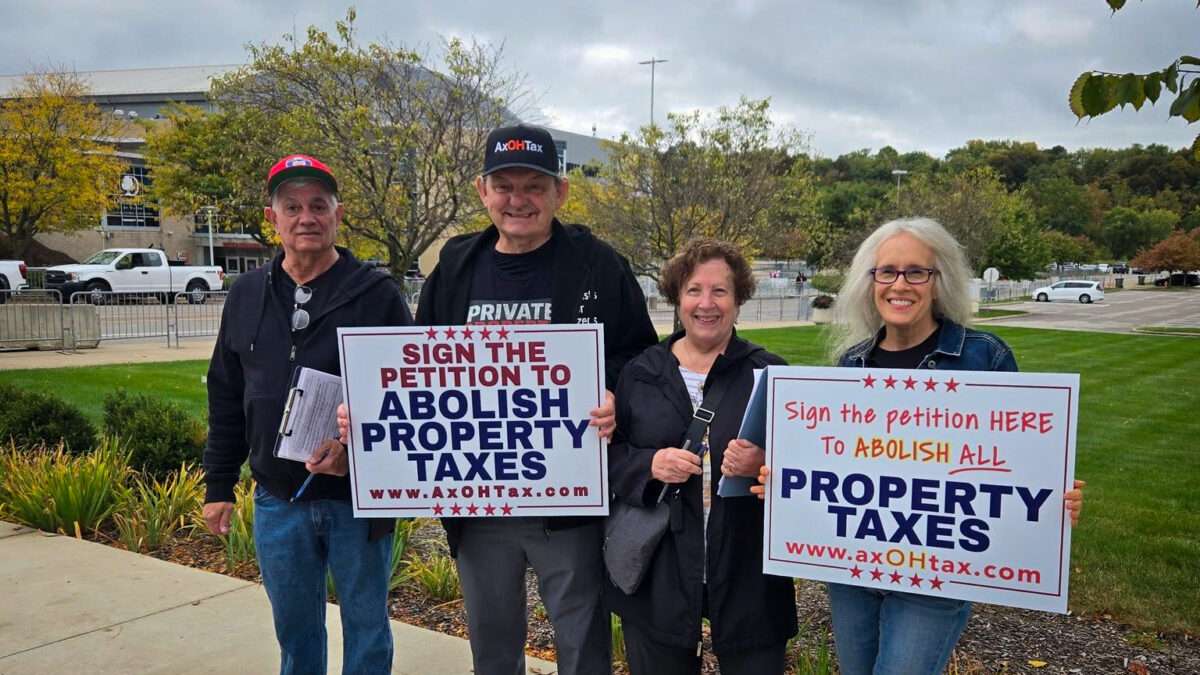
Four elderly protesters hold two signs that say "Sign the petition to abolish property taxes." | Denise DiFabio/Facebook

If you have to pay a regular fee to maintain control and use of a home or other parcel of property, do you really own it? Or are you just renting it from whoever collects the money? That's the question behind a growing movement against property taxes, which is winning support across the country and may see its next big test in the form of a proposed constitutional amendment on the Florida ballot that would significantly trim taxes on owner-occupied homes.


'Property Is the Foundation of Liberty'—and a Big Source of Tax Revenue

Advocates of reform understandably champion the inviolability of private property, which is threatened by continuously rising levies. Opponents predictably include people who fear reduced government revenues, but also those who worry that cutting property taxes will shift power to state governments at the cost of local autonomy.

"Property is the foundation of liberty," argues economist Vance Ginn. "It represents the right to the product of voluntary exchange, investment, and saving—not a privilege granted by government. To tax property again every year after it has been bought with after-tax income is to deny genuine ownership. Property taxes operate like an annual wealth tax or unrealized capital-gains tax, applied regardless of income or ability to pay."

Opposing Ginn's argument in the debate is the Tax Foundation's Jared Walczak, who is not so much a fan of property taxes as a believer that they suck less than the alternatives.

"Spending restraint can reduce property tax burdens," argues Walczak. "But with property taxes accounting for 70 percent of local tax collections nationwide and upwards of 90 percent in some states, any discussion of property tax elimination must grapple with revenue alternatives."

"It is axiomatic that whatever you tax, you get less of," he adds. "Taxing income means less income-producing labor and investment, for instance. But because land is an immobile asset, taxing property does less to distort market decisions than taxing income or even sales."

Walczak also points out that while property taxes are usually imposed by local governments, most alternatives to property taxes come at the state level. That would move power further up the political food chain, away from the property owners worrying about their tax bills.

To this, Ginn responds that governments at all levels cost more than they should and that "the moral and fiscal failure of property taxes lies not only in how the money is raised, but also in how much government spends."

That means the debate over property taxes isn't just a struggle between those who want to trim the state's take and those who prefer larger government, but also between anti-tax activists and their frequent allies among advocates of local power. In a piece this week on the groundswell against property taxes, Politico's Liam Dillon notes that "the uprising's most pitched battles are being fought in Red States where the issue has emerged as yet another dividing line on the right."


Localities Are Dependent on Taxing Property

The debate over property taxes is fierce partially because governments have come to rely so heavily on them. "In fiscal year 2023, property taxes comprised 28.9 percent of total state and local tax collections in the United States, more than any other source of tax revenue, despite being levied almost exclusively at the local (not state) level," Janelle Fritts wrote for the Tax Foundation.

Property taxes in the U.S. range from roughly half a percent to just under 2 percent of assessed home value. States that rely most heavily on them, like New Hampshire (1.5 percent in 2024) and Texas (1.4 percent in 2024), also tend to leave a lot of government responsibility in local hands that might be exercised at the state level elsewhere. It's worth noting that Cato's Freedom in the 50 States ranks New Hampshire as having the second least burdensome tax regime among states, with Texas in fourth place.

The lowest taxed states in property terms are Alabama (0.37 percent in 2024), Arizona (0.48 percent), Hawaii (0.29 percent), and Utah (0.48 percent). Some states, such as Illinois (1.88 percent in 2024) and New Jersey (also 1.88 percent), tax the hell out of many things to support large and intrusive governments. Hawaii, despite low property taxes, is ranked as the most tax-burdened state by Cato.

As mentioned above, economists tend to like property taxes because they are efficient, minimally distort economic decisions, and empower localities relative to state and federal authorities. But as Politico's Dillon emphasizes, "everyone who is not an economist seems to hate property taxes."


Homeowners Don't Like the Insecurity That Comes With Property Tax Bills

Property taxes rise with assessed property valuations that homeowners have no control over, as the market shifts with supply and demand. They require what feels an awful lot like an annual rent payment to keep a roof over people's heads many already paid for. That reduces the sense of security that owners feel in their homes, since their habitation remains conditional on meeting local authorities' demands. The bite of sales taxes can be reduced by buying less, and income taxes are dependent on earning paychecks, but property taxes (with some local exceptions) come due no matter what.

Soaring property valuations in recent years drove property tax bills higher for Americans who did nothing but remain at their established addresses, though localities can and sometimes do adjust tax rates to offset rising values. USA Today reported that "between 2019 and 2023, the median value of annual property taxes increased nearly 25%." That has energized the movement to cut or abolish the taxes.

Efforts to reform property taxes have been effective in more than a dozen states, according to Governing. Most of these efforts involved reducing taxes, though eyes are currently on Florida where Amendment 3, a proposed change to the state constitution, would incrementally raise the homestead exemption to $250,000. It also would require "the Legislature to prescribe a uniform procedure for counties and municipalities, for their respective levies, to increase the homestead exemption up to full assessed value," effectively abolishing property taxes on owner-occupied dwellings.

As a constitutional amendment, the measure requires 60 percent of votes to pass. Polling shows more support than opposition, but not necessarily at the supermajority level necessary for victory.

According to the Tax Foundation, in Florida, "the statewide average sales tax rate would have to rise from 7.02 to 15.34 percent to replace the property tax" with equivalent revenue. Rates could widely vary if localities implemented sales taxes instead of leaving them to the state.

Of course, that assumes state and local governments continue spending and providing services at the same level. But as economist Ginn points out, the problem lies not only in how property taxes raise money "but also in how much government spends." If the property tax revolt represents revulsion not just at the tax, but at the expense of large government, that may require less revenue to fund a smaller Leviathan.

The post Grassroots Revolt Targets Unpopular Property Taxes appeared first on Reason Magazine.
  •  

Hero Oregon Dad Showed the Importance of Defying Restrictive Gun Laws

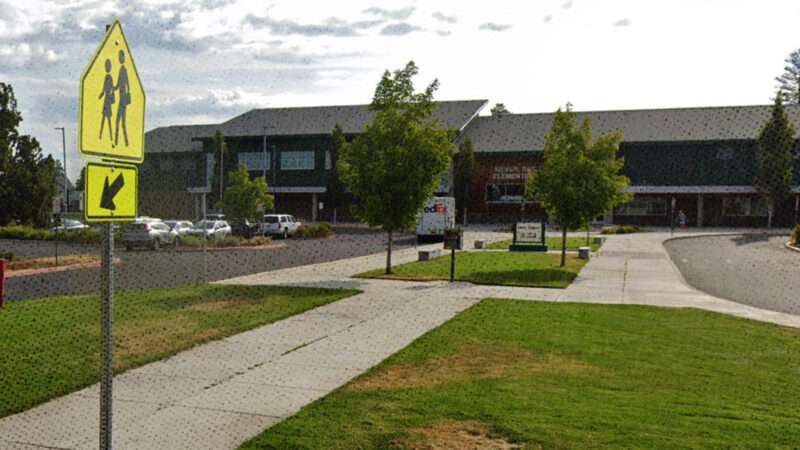
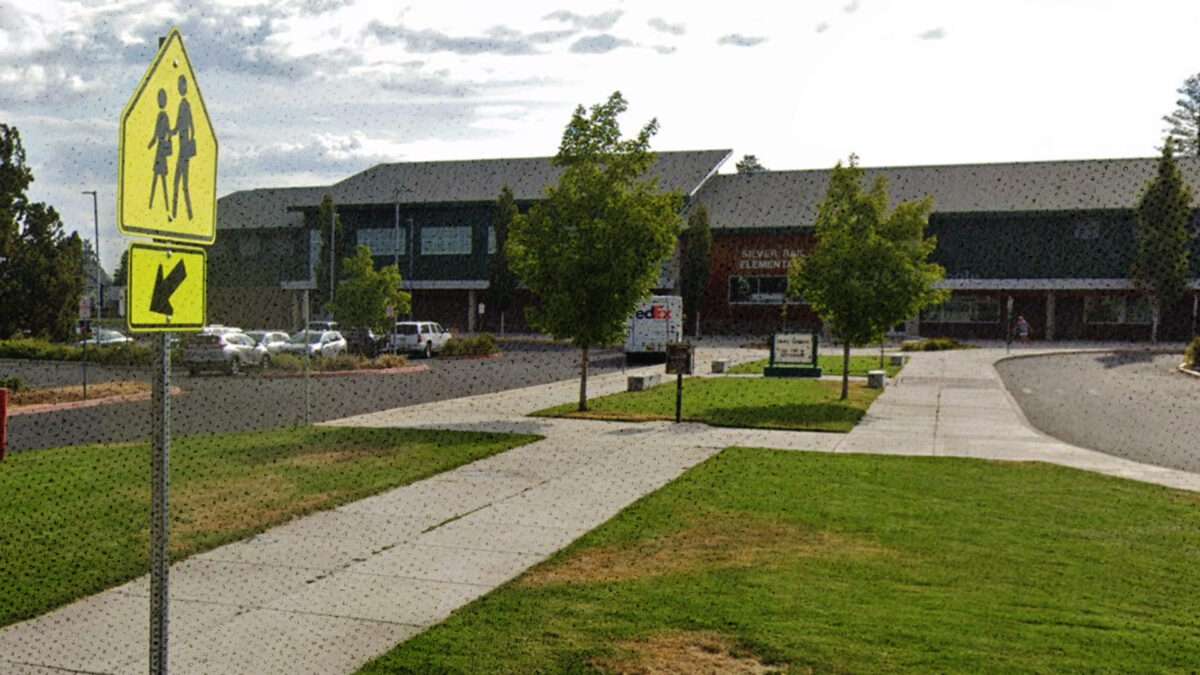
Silver Rail Elementary School | Google Earth

Last week, not only did Oregon's restrictive gun laws fail to stop a shooter intent on killing innocent people, but a passing good Samaritan had to violate those laws to end the murder spree. Fortunately, authorities don't appear intent on prosecuting Kaylub Giamanco, father to two girls who attend the school, for ignoring the ban on guns on school grounds to save lives. But the law is clearly more of a threat to people with good intent than it is to those bent on doing harm. Such laws should and must be defied, but lawmakers need to remove these legal minefields before they do more damage.


A Hero Dad With a Gun Stops a Murder Spree

"I want to start by thanking and praising the quick thinking and courage of the Silver Rail Elementary School staff and parents—and the first responders who rushed to the scene," Oregon Gov. Tina Kotek commented in a press release after the attack by a 16-year-old shooter at Silver Rail Elementary School in Bend, Oregon. "And to the community member who heroically intervened to stop further loss of life, your actions carry a heavy emotional burden—and my thoughts are with you."

That community member was Kaylub Giamanco, who had two daughters at the school. He was reportedly driving past when he saw the shooter approaching Silver Rail with a shotgun in hand. Giamanco parked his vehicle, grabbed his firearm, and followed the shooter, who had blasted his way through the facility's locked doors.

The shooter murdered four people, but Giamanco was able to kill him before he did any more damage. In the incident, the murderer obviously violated the law. But so did Giamanco.


Restrictive Laws That Had To Be Ignored

"Oregon gun laws are rated as the 12th strictest in the nation according to data collected by gun violence prevention group Everytown for Gun Safety, but they didn't stop the shooting of four elementary school children and two teachers at a Bend elementary school on Thursday," wrote Lillian Mongeau Hughes of The Oregonian. (Reports say three children and a teacher were murdered, with two others injured.)

The gun-control group Everytown for Gun Safety boasts that "Oregon has passed a broad range of gun safety laws in recent years, including a requirement that guns be securely stored whenever they are not in their owner's immediate control, a prohibition on guns at the state capitol, and a law that gives universities the authority to prohibit guns on their grounds."

The similarly restriction-oriented Giffords Law Center to Prevent Gun Violence gives Oregon an A- for its laws, ranking the state 11th out of 50. The group notes that the state "allowed local governments to limit firearms in government buildings."

Of specific interest in this case, the state adopted a law in 2021 that, among other things, says "the governing board of a community college or a district school board" may adopt policies banning guns on school grounds, even for those "licensed to carry a concealed handgun."

Importantly, the Bend–La Pine Schools, which include Silver Rail, mandate that "no person on grounds of the schools controlled by the Board of Directors for Bend–La Pine Schools (including in school buildings) shall bring to, possess, conceal or use a weapon or firearm at any property under the jurisdiction of Bend-La Pine Schools, any activities under the jurisdiction of the district, or any interscholastic activities administered by a voluntary organization (i.e., Oregon School Activities Association). This prohibition includes those who may otherwise be permitted by law to carry such weapons or firearms."

The prohibition applies to the Silver Rail murderer, though it was unlikely to be a concern to a person already intent on slaughter. It also applies to Giamanco, who stopped the attack and who must now—probably successfully, given the case's high profile—rely on the authorities to not enforce their own laws.


A Long History of Defensive Use of Firearms

Giamanco is by no means alone in taking the initiative to stop an attack. I've written in the past about Jordan Salinas and others in the Twin Falls incident, as well as Elisjsha Dicken at the Greenwood Park Mall in Indiana. The actions of bystanders are crucial given the evidence that would-be mass murderers must be countered with defensive force within the first 30 seconds to avoid a double-digit body count.

There were 634 active attacks in the United States between 2000 and 2025, according to the Advanced Law Enforcement Rapid Response Training (ALERRT) Center at Texas State University. ALERRT defines an "active attack" as an incident in which "an individual or individuals is actively killing or attempting to kill multiple unrelated people in a public space." Of those, 374 were resolved before police arrived, with 29 concluded by civilians shooting the perpetrator and another 60 attackers otherwise subdued by civilians.

That's certainly not a full count of actions by armed citizens to defend themselves and others. The 2026 National Firearms Survey finds that "guns are used defensively by firearms owners in approximately 2.2 million incidents per year. In most defensive incidents no shot was fired (76.3%), about half (50.8%) involved more than one assailant, and in 70.6% of incidents respondents report that the defensive use was successful, such that no crime remained to be reported to the police."

Undoubtedly, many of those incidents aren't reported to the police because people who have just averted a threat to themselves or others don't want to get entangled with a legal system that is all too often hostile to self defense. If all has ended well, why risk arrest for violating a law that would have prevented you from defending yourself or that you may not even have known about?

As The Oregonian points out, Oregon's "strong laws" didn't stop the shooting. Those laws ban murder, of course. They also specify that "guns be locked, stored in gun safes or in specialized gun rooms as a way to keep children from accessing firearms," according to the report. "Police have not said if those laws were violated." They also ban guns on the grounds of schools with restrictive policies.


Authoritarian Laws Don't Deter Evil and Should Be Defied

The thing about criminals, though, is that they don't obey laws. That's especially true of those who plan murder sprees they don't intend to survive. The consequences the perpetrators anticipate involve death, and if that's not a deterrent, the potential prosecution of their moldering corpses holds little weight.

Unfortunately, legal peril can be a deterrent to good people who intend no harm. The threat of authoritarian laws and malicious prosecutors who enjoy state protection could convince some people to leave the means of self defense at home. Fortunately, Kaylub Giamanco wasn't one of them.

Giamanco's example at Silver Rail Elementary School is one to be emulated. If we're to protect ourselves, our children, and our neighbors, we have a right and a duty to defy laws that seek to disarm us and put us at the mercy of human predators. But we shouldn't have to suffer the threat of such laws to exercise our natural self-defense rights. Given the inability of weapons restrictions to deter crime and the harm they pose for good people, government officials need to eliminate these embarrassing restrictions and get out of our way.

The post Hero Oregon Dad Showed the Importance of Defying Restrictive Gun Laws appeared first on Reason Magazine.

  •  
❌