❌

Reading view

Michael Steele blasts Trump’s ‘11th-hour’ lawsuit targeting Alaska Senate race

MS NOW’s Michael Steele slammed Donald Trump’s “11th-hour move” ahead of the midterm election, as the Department of Justice sued Alaska, seeking to delay certification of the state’s Senate election in the event the Republican incumbent loses.

On Thursday, the department asked a federal court to block certification of the results if Republican Sen. Dan Sullivan loses by fewer votes than another candidate, Daniel J. Sullivan, receives. Alaska courts have allowed the other Sullivan to remain on the ballot. The Justice Department is arguing that voters could confuse the two candidates, and that such confusion could potentially affect the outcome of what is expected to be a close race against Democratic nominee Mary Peltola.

“Every step this administration is taking, all the lies that they have told the American people about their sense of making sure elections are fair and free, have just all led to this,” Steele said Friday, shortly after the lawsuit became public.

“The Weeknight” co-host called Attorney General Todd Blanche “the worst of the worst” and said the Justice Department was doing the president’s bidding. Steele argued that the Constitution leaves election administration to the states and that “the federal government and the Department of Justice have absolutely zero role here.”

Trump has previously criticized Alaska’s “crazy voting system.” The state uses a ranked-choice system, in which voters list their candidates in order of preference. If no one wins a majority of first-choice votes, the last-place candidate is eliminated and those votes go to voters’ next choices until one candidate wins.

Steele said the lawsuit shows that Republicans are “afraid” because they have “done jack to give the voters a reason to vote for them.”

“So now, in the 11th hour, they’re going to go and try to manipulate an outcome that’s already foretold by the voters who started early voting, who are already in the game,” he added.

Steele predicted that voters would see through Republican efforts and that the party would get “their you-know-what’s handed to them” on Election Day.

“They have sown and built mistrust in the system that’s coming back to bite them, because we do not trust them. We do not trust their word. We know you’re lying to us,” he said. “And now you’re going to have to reap what you sowed.”

You can watch Steele’s comments in the clip at the top of the page.

The post Michael Steele blasts Trump’s ‘11th-hour’ lawsuit targeting Alaska Senate race appeared first on MS NOW.

  •  

Turning Point UK’s CEO under scrutiny after being recorded discussing murder-for-hire

The CEO of Turning Point USA’s independent offshoot in the United Kingdom is facing scrutiny after he was recorded discussing murder-for-hire abilities.

The scandal surrounding Jack Ross is inconvenient, to put it mildly, for a conservative movement that has sought to portray liberals as the primary culprits for sowing deadly violence. After TPUSA founder Charlie Kirk was assassinated last year, the MAGA movement shamelessly used the killing to encourage a federal crackdown on liberals and to demonize liberalism itself as a vector for political violence.

According to a new report from Al Jazeera, part of an investigation called “Contract Killers and the Far Right,” Ross was shown on camera discussing his ability to coordinate paid acts of violence with a right-wing extremist named Allan Nesbitt.

According to the report:

Ross made clear that he and Nesbitt had a long history together. Ross was filmed by our undercover reporter agreeing to pay Nesbitt thousands of pounds to stage a fake political rally designed to show support for the lifting of UK sanctions against Zimbabwe.

Ross also told Al Jazeera’s undercover operative that for “a certain amount,” Nesbitt and his contacts could arrange physical attacks, saying they could “kick the f*** out of someone. They can start cutting people’s faces up. That’s another amount. They can stab someone,” Ross said. “They can shoot someone. They could kill someone.”

Al Jazeera reported that Ross “denied our findings ‘completely,’ telling us that everything he said to our undercover reporter was not meant seriously.” Turning Point UK, which was launched by Kirk and operates independently of its U.S. affiliate, and TPUSA didn’t immediately respond to MS NOW’s requests for comment.

Despite the “I was just joking about murder” defense, Ross has already been suspended from the U.K.’s Conservative Party. And according to The Guardian, police in Scotland are looking into the matter.

The silence from Republicans on this is telling. It almost goes without saying that if the CEO for an offshoot of, say, the NAACP or the activist group Indivisible were recorded discussing paid opportunities for murder and other violence, conservatives would be airing the footage constantly.

Yet it seems this macabre story is of little interest to MAGA world. The hypocrisy here is clear as day.

The post Turning Point UK’s CEO under scrutiny after being recorded discussing murder-for-hire appeared first on MS NOW.

  •  

Joe Scarborough: “Covering for pedophiles seems to have become a nasty habit for Trump’s Republican Party”

This is the Oct. 23, 2026, edition of “The Tea, Spilled by Morning Joe” newsletter. Subscribe here to get it delivered straight to your inbox Monday through Friday.

Eleven days.

In 11 days, Americans vote.

People can’t afford their lives right now, whether it’s buying groceries, paying for healthcare, or gassing up the truck. Despite workers struggling more every day, Republicans have picked quite a closing argument for this year’s race.

We expect distractions and October surprises in the final days of a campaign. But I never expected Republican leaders to openly flaunt their status as the party of pedophile protectors.

This week, Republicans smeared Amy Acton — a woman who survived child rape — and Donald Trump called it “pay dirt.” He praised Acton’s mother, the rapist’s wife, for showing “a lot of courage.”

Some courage.

Acton’s mother fled the state with the man charged with raping her 12-year-old daughter. She abandoned her children and never saw them again. But the Republican Party defines that as “courage.”

In Texas, a man sexually abused a young boy, and Attorney General Ken Paxton tried to hand him an Epstein-style sweetheart deal. One day in jail.

James Talarico now calls Paxton a “pedophile protector.” And this week, from Ohio to Texas to the White House, Republicans sided with rapists, pedophiles, and their protectors over the young victims they tortured.

Covering for pedophiles seems to have become a nasty habit for Trump’s Republican Party.

Voters swept them into power partly on their promise to release all of the Epstein files. But the president and Republicans broke that promise and buried the files instead. Congress voted almost unanimously to release them all, but the administration still sits on millions of them — including damning accusations against President Donald Trump himself.

Epstein’s survivors kept begging for the truth to come out. Congress went home.

For years, right-wing conspiracy theorists accused Democrats and Hollywood stars of sex trafficking and pedophilia. Then a jury found their beloved cult leader liable for sexual abuse in a New York courtroom. Then this week, Trump attacked a rape victim, proving again John Heilemann’s rule that most of what the president says is either confession or projection.

Eleven days. Voters are watching.

***

Tonight in Milwaukee, the Brewers and the Rays open a World Series that will crown a first-time champion. The last time that happened was 1980, when Tug McGraw struck out Willie Wilson to end the Phillies’ 97-year wait. Before that, it was 1920, the year Cleveland’s Bill Wambsganss turned the only unassisted triple play in Series history. The Brewers’ own broadcaster is recommending Maalox to make it through.

Here’s what else is going on this weekend:

In Washington tonight, the National Zoo hosts Night of the Living Zoo, a 21-and-over Halloween party. Expect open bars, animal-inspired tarot readings, and after-hours visits with the great cats and reptiles. Tomorrow, the Smithsonian’s Air and Scare brings trick-or-treating, Star Wars characters, and a costume runway show to the Udvar-Hazy Center near Dulles Airport.

In Boston on Saturday, the Doggone Halloween Pet Parade turns Downtown Crossing into a catwalk (so to speak!) for costumed canines. By 3 p.m., expect to congratulate — and pet — the winners in categories ranging from Scariest Costume to Best Dog and Child Duo.

In Brooklyn tomorrow, the Botanic Garden’s Fall Harvest Festival offers peak foliage, live music, pumpkin carvers, a cider garden, and an afternoon costume parade. Dress code: your best flannel.

Philadelphia celebrates Filipino American History Month this weekend with Taste of the Philippines, a free rain-or-shine festival of food, music, and shopping at Cherry Street Pier. Afterward, head to Oaks for the Pennsylvania Chocolate and Coffee Festival and a (bitter)sweet finish.

In Miami, haunted houses have competition. On Saturday night, the Friends of Cape Florida transform a trail at Bill Baggs Cape Florida State Park on Key Biscayne into a Haunted Hike, complete with staged scares, costumed performers, and a carnival for the faint of heart.

Just outside Chicago, the village of Forest Park — where the dead outnumber the living — hosts its 14th annual Casket Races (!). Teams push helmeted riders in coffins on wheels down a 585-foot course, vying for speed, style, and, for the least ambitious, a trophy for “dead last.”

In Los Angeles tomorrow, Hollywood Forever Cemetery hosts its 27th annual Día de los Muertos celebration, with elaborate altars, Aztec and folklórico dancers, and festivities from noon to midnight. ¡Que vivan los muertos!

And in Austin, Formula One rolls into the Circuit of the Americas for the United States Grand Prix. Max Verstappen arrives fresh off a long-awaited Singapore win, but all eyes are on Mercedes’ Kimi Antonelli, who leads the standings by 102 points and could clinch his first championship on Sunday.

LETTERS FROM OUR READERS

Joe, thank you for your brief essay on the history of Western civilization. In a handful of paragraphs, you nicely crystallized the key concepts behind what has led to the successful rise and spread of democracy. Unfortunately, you didn’t have room to expound on the concomitant fragility of the process, the dedication, patience, and constant vigilance necessary to assure its survival. Lately, we have taken our eyes off the ball, and we are now paying the price. Rebuilding will be costly in both financial and human terms, and will require principled rededication to the ideals of democracy. I just hope we still have the fortitude within us to accomplish that!

— Peter H., Rancho Mirage, Calif.

Peter, Hillary Clinton told Mika last week at the Forbes-Know Your Value 30/50 Summit that this republic can be saved, but we’ve got to start turning things around now.

I believe we will. And I know we have much hard work in front of us. But we Americans will do it!

My mother and three older sisters brought me up to respect women. Who in God’s name instilled the disgusting responses supporting Vivek Ramaswamy’s video ad about the abuse of Amy Acton during her childhood? Trump and JD Vance are the ringleaders, and anyone else who is not condemning this ad are all guilty of moral turpitude and of violating the acceptable standards of any society.

— Michael P., Sarasota, Fla.

These Republican leaders have spent the past decade undermining the most basic rules of human decency. What they are doing in Ohio this week is a new low.

I have confidence American voters will show Republicans in 11 days that they have had enough, and will turn back to voting for candidates who hold those traditional values that made America great.

Is there any reliable data that proves that all the hateful political ads we are bombarded with for MONTHS actually work? I know they don’t work for my family, and I think most Americans are smart enough to see through them for what they are — partisan attacks that have nothing to do with how a candidate will perform or what a candidate believes. Listening to political strategists justify these ads as a “story arc” makes me sick — the ads tell us nothing positive about any candidate and honestly make me question the ethics and morals of any candidate that would allow these ads to be run on their behalf.

— Anonymous

We will find out in 11 days.

For the sake of our country, let us pray these hateful attacks, funded by trillionaires and billionaires, do not prove to be more powerful than the good people who volunteer for candidates, knock on doors, and build the framework of successful campaigns.

As I have been listening or reading about the current news, I have become so demoralized with how the Republicans are accepting the same demeanor of vulgarity, falsehoods, and vile comments Trump has stated within the last week. As Mika stated, “Whether it’s in Ohio in the governor’s race or in our foreign policy, we’re seeing moral depravity play out in real time.” How did a good portion of this country become so mean and hateful?

— Peggy R., Santa Fe, N.M.

Peggy, that is a question historians will be asking themselves for generations to come.

With Trump openly siding with Putin and Russia re: Ukraine, why is it not considered aiding and abetting of the enemy, considering we know that Russia is supplying Iran with weapons/info that have killed/injured our troops? It’s mind-boggling that few are talking about his aiding a known hostile country of the U.S. in these terms.

— Sandra S., Lagunitas, Calif.

Earlier this week, I said that if any other president or political aide had said about Vladimir Putin what Donald Trump and Steve Witkoff said this week, they would be considered traitors to America. It is hard to believe that my former party devolved from being champions of Western civilization and democratic freedom to being apologists for the worst tyrants and dictators on the globe. But they have. I believe there will be a political reckoning in 11 days.

I am so disheartened about Ukraine. I believe that Americans would care if someone with money and power could see a video speaking to regular Ukrainians about their daily lives. It needs to be brought home to Americans how inhumane Russia is to Ukraine. Many do not realize that Putin and China’s leader are helping Iran against our troops and our president is coordinating with our enemies. I wish there was a quick way this could be shown to all Americans. I believe that most Americans would understand the crisis. It is a war that is far away and has to be made real by interviews and getting to know the real story. It doesn’t matter what side of politics you are on. Seeing the tragedy in a way that connects would help Ukraine. It would also show that the president does not have our interest at heart, but is working with our enemies.

— Kate K.

Completely agree, Kate!

It seems that throughout this midterm election cycle, we have forgotten that Senate control is vital, at least because many judicial appointments and Supreme Court confirmations may occur in the last two years of the current presidential term. This issue alone underscores the need to vote in the next election.

— Anonymous

I could not agree with you more. While most are predicting the House of Representatives will have Democratic leadership next year, the Senate will remain up for grabs until election night.

Democrats will win Georgia and North Carolina, but need to also do well in Texas, Kansas, Ohio, Alaska, and Maine. We will probably be up late on Nov. 3 to see how many of those races break.

Polls are always misleading. Yes, they show facts as of today but the actual poll is when the voter goes behind the curtain and votes. All other polls before are meaningless. Still 35% are backing the Republicans. When breaking it down, 35% are voting for Trump as most of those up for re-election back the president. So the real poll results will be Nov. 4, when all votes are counted.

— Bruce M., Moncton, New Brunswick

As Tom Brokaw always said, stop looking at polls and let the voters have their say. Then report on what Americans tell you on Election Day!

The post Joe Scarborough: “Covering for pedophiles seems to have become a nasty habit for Trump’s Republican Party” appeared first on MS NOW.

  •  

Miley Cyrus doesn't need popular music to stay a pop diva

Miley Cyrus performs onstage at Bass Persuades Live at Hollywood Bowl
Miley Cyrus performs at the Hollywood Bowl on October 16, 2026.

Kevin Mazur/Getty Images for Live Nation

  • Miley Cyrus' new album, "Bass Persuades," is not selling well compared to her industry peers.
  • Although Cyrus' music has struggled to capture the zeitgeist, she has remained firmly A-list.
  • Her career more closely resembles that of a legacy act, like Cher or Madonna, thanks to her longevity.

Miley Cyrus is oozing star power.

Sporting an electric guitar and the perfect smoky eye in a recent promo video, she strums in the stance of a rock star, putting one leg up on a step and whipping her hair to the music. The clip is black-and-white, with the backdrop completely blank, suggesting Cyrus — who now goes mononymously by Miley — is magnetic all on her own.

The 33-second video, simply titled "MILEY," was designed to tease her big comeback shows at the Hollywood Bowl in October. It worked: Cyrus' two-night run sold out in minutes after 1.5 million hopefuls joined the presale ticket queue. Clearly, people were itching to see Cyrus in the flesh.

That demand, however, lately hasn't translated to people purchasing her music. Cyrus' new album, "Bass Persuades," sold only 61,000 units in its first week. For comparison, Taylor Swift's "The Life of a Showgirl: The Encore," the deluxe version of a year-old album, sold 173,000 units the very next week. Earlier this year, Ariana Grande's new album "Petal" sold 295,000 units in the same timeframe. Aside from Cyrus' titular lead single, which peaked at No. 35, only one more song from "Bass Persuades" cracked the Billboard Hot 100: "Let's Get Married" sneaked in at No. 99.

While Cyrus did sell enough to secure a No. 1 chart debut in a non-competitive release week, "Bass Persuades" also earned a less-flattering distinction when it plummeted to No. 157 on the Billboard 200 the following week: the biggest single-week drop for an album ever recorded.

Yet, somehow, when Cyrus appeared onstage at the Hollywood Bowl, numbers and technicalities melted away. Clad in understated, monochromatic looks with no backup dancers or flashy set pieces to speak of, she proved that her name alone is still a powerful draw.

In the last decade or so, Cyrus has become a celebrity whose creative output is tangential to her status, like a vestigial organ she's evolved to no longer need. Sure, Cyrus still makes and releases music, but she rarely engages with the typical cycle of promotion and performance. She hasn't staged an arena tour since 2014, and, with the sole exception of her Grammy-winning song "Flowers," her music over the past decade has struggled to capture the zeitgeist. (Perhaps if her 2020 rock opus "Plastic Hearts" hadn't been released during the pandemic, it could've broken that curse, but I digress.)

But as her sold-out Hollywood Bowl stint proves, Cyrus has a legion of supporters at her fingertips, whether her recent music is resonating or not. Even when Cyrus drew criticism for not singing every word of some of her songs — especially nostalgic hits like "Party in the USA," "The Climb," "We Can't Stop," and "Wrecking Ball" — the backlash underlined just how little she needs to do to keep her A-list position secure.

"I've learned now through the queue that my calculations are correct and people will come to me," she previously told Apple Music's Zane Lowe of the mini-residency. "I don't need to drive to you."

Miley Cyrus is a pop diva without the pop

Miley Cyrus attends the World Premiere of Disney+'s "Hannah Montana 20th Anniversary Special" at El Capitan Theatre on March 23, 2026, in Los Angeles.
Miley Cyrus attends the world premiere of "Hannah Montana 20th Anniversary Special."

Amy Sussman/Getty Images

Even as Cyrus' music since her last No. 1 album, 2013's "Bangerz," has failed to achieve widespread relevance and popularity, as a name, she remains as relevant and popular as ever.

Part of this is thanks to her longevity. Cyrus has been famous since she was the tween star of "Hannah Montana," a role that led to her being named the youngest-ever Disney Legend in 2024. Earlier this year, Cyrus celebrated the show's 20th anniversary with a Disney+ special, in which Chappell Roan told her, "You literally walked so I could run."

Cyrus and her blonde alter ego have also been cited as major influences by artists like Sabrina Carpenter and this year's breakout star Adéla, whose viral hits like "Ain't in LA" and "Nicole Kidman" have drawn comparisons to "Bangerz."

"Watching 'Hannah Montana' was my introduction to pop stardom," Adéla told Dazed.

As members of pop's new guard look to Cyrus' early work for inspiration, Cyrus remains positioned as a tastemaker and a reference point. The success of her newer albums is a secondary concern.

In recent years, Cyrus has deliberately been out of touch — both figuratively, from trends, and literally, from her audience. Despite fans clamoring for more live performances, Cyrus has declined to satisfy the demand, telling British Vogue that she doesn't want to live her life for "anyone else's pleasure or fulfillment." Cyrus has also been open about her "unhealthy" relationship to touring; she experienced job burnout at a young age and never quite recovered. As a result, she seems wholly unconcerned with chart positions or sales figures. She is more interested in building a legacy that will endure than in instant gratification.

"My life is so beautiful. It never feels like I'm swimming upstream anymore," Cyrus told Variety in March. "I like the way people see me. And when I first left 'Hannah' and put out 'Bangerz,' I did not feel that way." 

Cyrus is acting like a legacy artist, not a modern star

Marquee Sign at the Hollywood Bowl for Cher's Final concert on her "Living Proof Farewell Tour" which ended April 30, 2005 with the last show (325th show on the tour)  at the Hollywood Bowl.
Cher wrapped her farewell tour at the Hollywood Bowl in 2005.

Barry King/WireImage

Videos from the Hollywood Bowl show the crowd singing every word to Cyrus' decade-old favorites. For newer songs like "Orbit" and "Something Beautiful," Cyrus did most of the singing herself.

The gap between her past and present impact has never been more glaring. Cyrus may not have liked her public image as a teenager and young adult, but fans were gratified — and future phenoms were taking notes.

At 33, Cyrus has become a premature legacy act. The way she's navigating her career today resembles that of long-established divas like Cher, who remains a cultural touchstone but hasn't scored a hit in decades, or Madonna, whose most recent album is a callback to her earlier career heights. "Confessions II," the sequel to 2005's dance-pop blockbuster "Confessions on a Dance Floor," has thus far failed to spawn a top-40 hit. Still, Madonna's devoted fan base is ready to swarm a concert venue at a moment's notice.

Leaning on legacy and nostalgia is not necessarily a sign of failure. In fact, for Cyrus, it may be the goal.

With "Bass Persuades," her 10th studio album, Cyrus has dropped her surname in marketing materials. As her dad pointed out, this is a time-honored tradition in the music industry.

"I told @miley yesterday I felt good about her going with her first name," Billy Ray Cyrus wrote on X. "I mentioned Dolly and Cher. Thinkin about it more and more … Elvis .. Prince …and so on. It's a natural progression for an iconic superstar legend."

Like her forebears, Miley is in a league of her own — neither in the lower nor upper echelons of the music industry, but a secret third space, detached from standard markers of success.

In the end, a mononym is less a branding choice than a vote of confidence: the audience already knows exactly who you are.

Read the original article on Business Insider

  •  

Abu Dhabi Peace Talks: Why Putin’s Ambitions May Defeat Trump’s Economic Bargain

Washington is offering Moscow sanctions relief, commercial opportunities and a possible return to European energy markets. Yet the Kremlin’s objectives in Ukraine extend far beyond economic interests, raising questions about whether Vladimir Putin has any intention of accepting a settlement that preserves Ukraine as an independent European state.

The Kremlin has announced plans for renewed negotiations between Russia, Ukraine and the United States in Abu Dhabi during the first half of November, reviving a diplomatic process that has repeatedly failed to produce a settlement to Moscow’s war against Ukraine.

Russian presidential spokesman Dmitry Peskov said on Friday, 23 October, that the discussions would concentrate on post-war security arrangements. He also left open the possibility of eventual European participation, although the initial meeting is intended to remain trilateral.

The announcement follows talks in St Petersburg between Vladimir Putin and Donald Trump’s special envoy Steve Witkoff. Yet the emerging American proposals reveal a fundamental problem: Washington appears increasingly prepared to offer Russia substantial economic incentives, while Moscow has provided little indication that its political objectives in Ukraine have changed.

The economic bargain taking shape

According to details reported on 23 October, citing The Economist, the American proposals involve Ukraine abandoning its ambition to join NATO in exchange for investment, security arrangements and the prospect of European Union membership.

Russia would receive sanctions relief, renewed commercial relations with American companies and potentially the restoration of natural gas exports to Europe. A demilitarised zone in Donbas is also reportedly under consideration.

The commercial dimension extends beyond theoretical proposals.

American and Russian representatives have discussed investment in the Nord Stream pipeline system and possible arrangements involving Lukoil’s international assets. The negotiations surrounding Russian energy infrastructure suggest that Washington regards commercial cooperation as a potential instrument for securing Moscow’s agreement.

There is no established evidence that Witkoff, Jared Kushner or members of Trump’s family would personally benefit from these arrangements. Nevertheless, the involvement of investors in strategically important Russian assets raises questions about whether economic agreements might advance independently of a settlement acceptable to Ukraine.

The Trump administration has already demonstrated its willingness to relax economic pressure. On 16 October, the president waived major provisions of the Graham sanctions legislation, which he had signed into law only four weeks earlier.

As EU Today previously examined, the decision suspended measures designed to increase the economic costs of Russia’s continuing aggression. Washington justified the waiver on the grounds that sanctions could interfere with negotiations.

Why Putin’s objectives are not primarily economic

The central weakness in a settlement built around commercial incentives is the assumption that Putin’s territorial and political demands can ultimately be exchanged for economic advantages.

Russia’s objectives have never been confined to Donetsk, Luhansk or access to Western markets.

In his July 2021 essay on the historical unity of Russians and Ukrainians, Putin advanced a conception of the two nations as belonging to a single historical and cultural space. His interpretation, examined by the Centre for Eastern Studies, challenged the legitimacy of Ukraine’s development outside Moscow’s political influence.

These ideas preceded the full-scale invasion of February 2022. They also followed Russia’s annexation of Crimea in 2014 and its intervention in eastern Ukraine.

Putin’s demands therefore concern more than military geography. They involve the extent to which Ukraine can exercise independent political authority, determine its international alliances and integrate with Western institutions.

Even a settlement granting Moscow substantial territory could leave this larger objective unresolved.

An independent Ukraine, increasingly integrated into the European economy and protected by Western security commitments, would remain outside Russia’s political control. For a Kremlin leadership that has repeatedly questioned Ukraine’s separate historical identity, such an outcome would represent a limitation on its wider ambitions.

Putin reinforced this position on 22 October when he again described Ukrainian territory in Donbas as historically Russian.

The advantages of negotiations without compromise

This creates an apparent contradiction. Why would Moscow return to negotiations if its broader objectives remain incompatible with the proposed settlement?

One explanation is that participation itself offers Russia strategic advantages.

Negotiations can preserve diplomatic engagement with Washington, complicate attempts to introduce additional sanctions and maintain American pressure on Kyiv to accept territorial concessions.

They also provide opportunities to negotiate economic arrangements before fundamental security questions have been resolved.

For Putin, the political timetable in Washington is relevant. Trump’s presidency is constitutionally limited to January 2029. Moscow can seek to exploit the present administration’s interest in a diplomatic agreement while continuing military operations.

None of this establishes that Putin has definitively rejected compromise. However, the Kremlin’s willingness to attend negotiations is not equivalent to a willingness to abandon its demands.

Russia continues attacking Ukrainian cities and energy infrastructure. As EU Today reported on 22 October, Russian forces launched 21 ballistic missiles against Kyiv shortly after Witkoff’s discussions with Putin.

The simultaneous pursuit of diplomatic engagement and military pressure allows Moscow to negotiate while attempting to alter conditions on the battlefield.

Europe cannot be treated as an economic bargaining chip

The proposed return of Russian gas exposes another contradiction in Washington’s approach.

The European Union has already adopted binding legislation to phase out Russian gas imports, with full restrictions taking effect during 2027.

The European Commission reiterated on 19 October that it had no plans to reverse its position. Reopening Nord Stream would also face sanctions, infrastructure and political obstacles, particularly in Germany.

Consequently, Washington cannot independently promise Moscow renewed access to European energy markets.

Nor can it guarantee Ukraine’s accession to the EU. Membership requires agreement among the existing member states, completion of accession negotiations and ratification of the relevant treaty.

A settlement negotiated primarily between Washington and Moscow would therefore depend on European decisions over which neither government has unilateral authority.

This helps explain the significance of Peskov’s remarks about possible European participation. Moscow needs European cooperation to secure meaningful sanctions relief and access to markets, even while seeking to negotiate Europe’s security arrangements principally with Washington.

The unresolved question

Trump’s approach rests on the proposition that economic incentives can make a settlement more attractive to Moscow than continued warfare.

Putin’s position presents a different calculation. The Russian president must weigh the benefits of restored commercial relations against the political implications of recognising Ukraine’s durable independence and Western orientation.

Those objectives may prove incompatible.

A settlement that restores Russian energy revenues without credible guarantees against renewed aggression could reduce Moscow’s economic constraints while leaving the causes of the war unresolved.

The decisive test in Abu Dhabi will therefore not be whether negotiators can agree on investment, pipelines or sanctions relief. It will be whether Russia is prepared to accept a Ukrainian state whose sovereignty, political direction and future European integration remain beyond Moscow’s control.

Until that question is answered, renewed negotiations may offer Washington the prospect of a diplomatic achievement while allowing the Kremlin to pursue objectives it has not publicly abandoned.

  •  

The Memo: Trump backs controversial Ohio ad, pouring fuel on midterm campaign fires

President Trump intensified the furor over a deeply controversial political ad on Thursday, backing the decision by the GOP’s gubernatorial candidate in Ohio, Vivek Ramaswamy, to run the commercial. In doing so, Trump poured fresh fuel on a bitter midterm campaign that has seen the president deride the Democratic candidate for Senate in Michigan, Abdul…

  •  

Analysis: Ukraine, Russia set stage for climax of Battle of Donbas

This autumn, as Russia escalated its total-war-style strike campaign against Ukraine’s critical infrastructure and economy, and relations between Kyiv and Washington hit an all-time low, the daily battles along Ukraine’s vast battlefield have faded into the background of the information space.

Despite the reduced attention in

  •  

Trump faces federal lawsuit over his questionable cryptocurrency empire

A new federal lawsuit looks to drive a stake through the heart of Donald Trump and his family’s questionable cryptocurrency empire.

The Trump family’s crypto ventures brought in more than $1.4 billion in 2025, as his administration has pressed for crypto-friendly policies. This is part of why polling shows that most Americans think Trump is profiting from the presidency in illegal or unethical ways.

And in a lawsuit filed Thursday, a shareholder of Circle Internet Group — a competitor of the Trump family’s World Liberty Financial crypto company — accuses the Trump business of “corruptly profiting” off crypto deals and says the president has violated the Constitution’s foreign emoluments clause. (A spokesperson for Circle said the company “did not initiate, direct, authorize, or participate in the filing.”)

The lawsuit specifically cites the sale of a major stake in World Liberty to an entity involving the United Arab Emirates’ national security adviser — also known as the “Spy Sheikh” — four days before Trump’s inauguration. The suit also details how a UAE-backed firm led by that same official used World Liberty cryptocurrency to make a $2 billion investment in the crypto firm Binance.

The lawsuit comes as some crypto enthusiasts turn on Trump over his profiting off the industry while in office. The president and his representatives have always said his crypto investments are above board, with a White House spokesperson calling the new lawsuit “frivolous” and adding, “There are no conflicts of interest.” A World Liberty spokesperson called the lawsuit “without merit” and has previously said Trump had no role in the company.

Such claims are disputed by people like Protect Democracy’s executive director, Ian Bassin, who has argued that Trump’s crypto dealings are blatantly unconstitutional. And Matt Pelikan, a lawyer whose firm filed the lawsuit, said in a statement:

President Trump has turned his office into a source of private profit on a scale without precedent in American history. The President’s business dealings are not only corrupt, they are illegal.

This lawsuit only stands to fuel voters’ anger over government corruption: A recent Fox News poll showed nearly 9 in 10 voters as extremely or very concerned about corruption. So, with the midterms less than two weeks away, anything that stands to remind the public about Trump’s terrible track record on this issue seems like a threat to Republicans’ electoral hopes.

The post Trump faces federal lawsuit over his questionable cryptocurrency empire appeared first on MS NOW.

  •  

Europe’s Student Protests Spark Debate Over the Muslim Brotherhood’s Influence 


A wave of student protests has spread across several European countries in recent weeks, with France at its centre, where demonstrations over staff shortages, underfunded schools and run-down facilities have continued since mid-September.

The French protests began on September 17th, when teachers at a high school in south-eastern Paris protested over staff shortages and students joined them, Australia’s ABC News reported. Demonstrations followed in Spain, Belgium, Italy, Portugal and Albania, and smaller protests took place in Greece, Austria, Ireland and Germany, according to the same report. What began over education has since widened to include the cost of living and public-sector cuts.

In this context, the Forum of European Muslim Youth and Student Organisations (FEMYSO) has come under the spotlight following its announcement of support for student protests in France and Belgium, and subsequently in Albania.

Several European reports have drawn links between FEMYSO and the Muslim Brotherhood, describing the student forum as the organisation’s youth wing. Among the most notable is a report by a French National Assembly investigative committee, published in December 2025, which points to close ties between the forum and networks linked to the Muslim Brotherhood and characterises its role as contributing to the spread of the movement’s ideas across Europe.

In a parliamentary question submitted in 2025, Germany’s Baden-Württemberg State Office for the Protection of the Constitution was cited as viewing FEMYSO as an umbrella organisation for youth groups with links to the Muslim Brotherhood.

FEMYSO, however, rejects these allegations. In a previous statement, the organisation affirmed that it has no ties to the Muslim Brotherhood.

Statements of Support for Protests Across Europe

On October 9th, the forum announced its solidarity with student demonstrations in France and Belgium. On October 18, it declared its support for student and youth protests in Albania, while also referring to ongoing demonstrations in Spain and Greece in the same context.

On October 15th, 2026, the French Muslim Students Association (Étudiants Musulmans de France, EMF), a member organisation of FEMYSO, went beyond expressing solidarity. It called on students, education workers and the broader social movement to join a nationwide mobilisation scheduled for October 17th, reaffirming its support for demonstrations stretching from Paris to Marseille and from Bordeaux to Strasbourg.

In a statement, EMF stressed the need to build a balance of power through protests. The statement came just two days before large-scale demonstrations took place across France, attracting hundreds of thousands of participants in largely peaceful gatherings before separate groups became involved in acts of violence, looting, arson and attacks on police officers and public buildings. These incidents reportedly resulted in more than 1,000 arrests and injuries to dozens of security personnel.

Such initiatives and calls for participation in demonstrations have raised concerns that political Islamist networks may seek to capitalise on public discontent, particularly when protests are accompanied by public disorder or acts of vandalism. This, critics fear, could turn student and social demands into instruments for expanding organisational influence and securing political leverage.

According to official French data, masked and violent individuals were present at the demonstrations. In several cities, shops were looted, while cars and rubbish bins were set on fire. In the city of Limoges, flames engulfed the historic town hall, a building dating back to 1883.

The same data indicated that 1,800 people had been arrested and more than 500 police officers and firefighters had been injured. In response to the violence and rioting, the French government announced the imposition of curfews in several cities.

Concerns Reach the Heart of European Institutions

These developments come at a time when the activities of organisations suspected of having links to the Muslim Brotherhood are facing increasing political scrutiny.

On September 15th, 2026, French MP Constance Le Grip submitted a written question to the government concerning European funding for projects involving FEMYSO, calling for clarification of funding mechanisms and oversight procedures governing grants.

The question followed recent reports and studies that raised concerns over the continued involvement of FEMYSO in projects benefiting from European funding, despite an earlier announcement by the European Commission that the organisation was no longer receiving direct funding.

FEMYSO has consequently become one of the most contentious issues in the wider European debate.

A recent study published by CERIF and AK Polis in September examined the organisation’s participation in the EmpowerAction project, which forms part of the TACKLE initiative funded by the European Union through its DEAR programme.

According to the study, the funding does not necessarily take the form of a direct EU operating grant to FEMYSO. Instead, it may be channelled through partner organisations, projects and sub-granting mechanisms.

This has raised concerns that European funds could reach an organisation through a project led by another partner or through a consortium and its sub-granting arrangements.

Against the backdrop of FEMYSO’s visibility in the protests, some of which were subsequently accompanied by violence and looting, as well as allegations of links to the Muslim Brotherhood, concerns have emerged over the possibility that the organisation could gain a foothold in current social unrest and convert it into political influence by winning the sympathy of European communities and left-wing parties.

FEMYSO: Background, Membership and European Footprint 

The Forum of European Muslim Youth and Student Organisations (FEMYSO) describes itself as a European umbrella organisation bringing together Muslim youth and student associations.

FEMYSO currently comprises 32 member organisations across 22 European countries. Its roots date back to 1995, when the first meeting of Muslim youth organisations was held in Sweden.

The following year, FEMYSO was formally established at a meeting in Leicester, United Kingdom, which brought together 19 organisations from 11 countries. In 2000, the forum established its headquarters in Brussels.

  •  

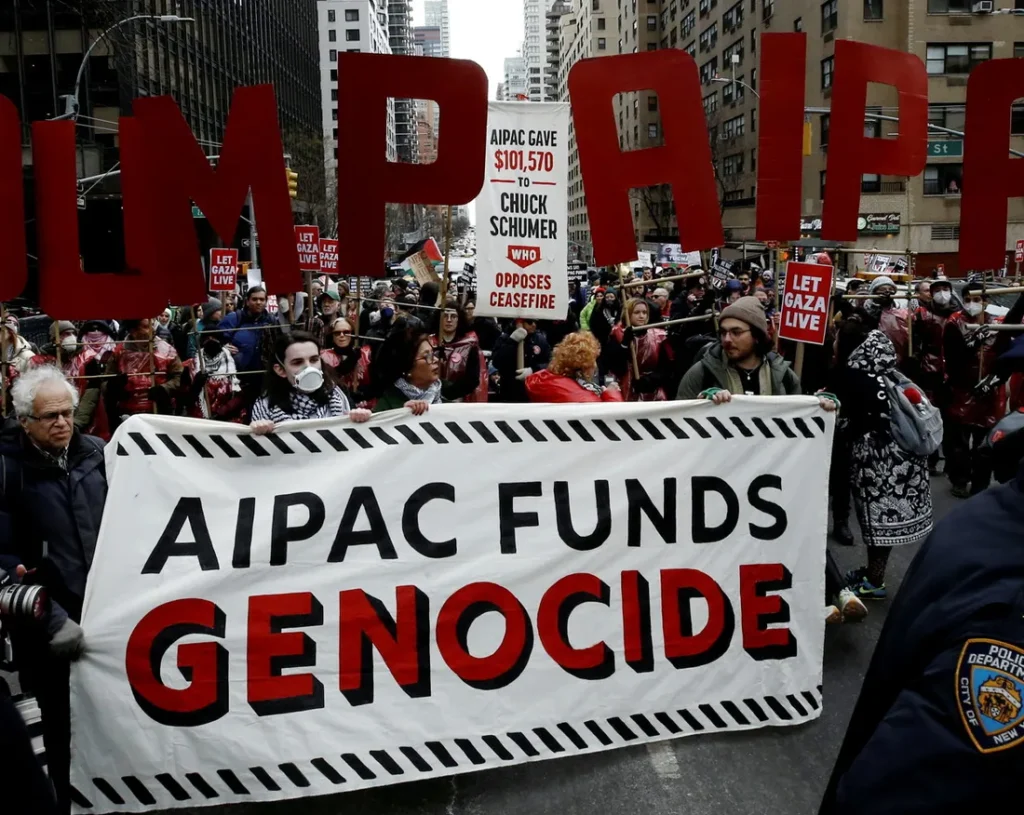
AIPAC has become such a political liability that it’s shifting to a more “nimble” approach to buying politicians

A letter to its supporters announced that instead of high profile endorsements and PAC donations, it will quietly mobilize individual donors for direct contributions

  •  

Inside Israel's deepening ties with Bosnia's Serb separatists

“I think that everything that Israel has done since the 7th of October is justified. Israel should not suffer.”

These words were spoken last month by Milorad Dodik, the de facto leader of Republika Srpska, the Serb-majority entity within Bosnia and Herzegovina (BiH).

This statement was hardly surprising. In recent years, Dodik has been outspoken in his support for Israel and its genocidal war on Gaza at a time in which relations between Republika Srpska and Israel are growing.

From high-level political endorsements and the opening of an Israeli Chamber of Commerce office in Banja Luka to increasingly explicit expressions of mutual solidarity. Such growing alignment speaks to how both leaderships are seeking to bolster their international legitimacy amid mounting political pressures.

For Dodik, deep relations with Israeli Prime Minister Benjamin Netanyahu could strengthen his access to Washington and bolster his long-standing ambitions to expand the Bosnian-Serb entity’s autonomy, while Israel may see the relationship as an opportunity to cultivate new allies and increase its diplomatic leverage in Europe.

The implications, however, extend beyond bilateral cooperation. In BiH, where the fragile constitutional order rests on the 1995 Dayton Peace Agreement, the growing alignment raises questions about the international legitimisation of separatism, the resurgence of ethnic and religious nationalist narratives, and Brussels’ ability to preserve stability in Europe’s “Inner Courtyard.”

Political calculations

Republika Srpska’s mounting tensions with some Western European governments and international institutions provide some of the necessary context for understanding the significance of Israel’s growing engagement with the Bosnian-Serb entity.

According to Dr Asim Mujkić, an associate professor of philosophy at the University of Sarajevo, the sharp decline in international support for Israel’s government has made Tel Aviv more open to unconventional partnerships. 

By engaging with Dodik publicly, Israel demonstrates its ability to maintain existing partnerships while forging new ones. At the same time, Israel’s ties to the Republika Srpska government may provide Tel Aviv with greater leverage in its dealings with European powers.

“I would say the ever-growing lack of international support for [Netanyahu’s] government, the rise of criticism and even boycott by traditionally amicable countries and organisations made Netanyahu open to political adventurism of this kind. For [the] domestic public it is surely advantageous to be able to show that some political leaders in fact visit Israel,” he told The New Arab.

Giorgio Fruscione, a research fellow at the Milan-based Italian Institute for International Political Studies, sees a related but broader set of motivations. He holds that Netanyahu’s government seeks international legitimacy via relationships with political actors that have strong connections to Washington and Moscow.

Fruscione also understands disputes over the interpretation of the Srebrenica genocide as part of the political context shaping Israel-Republika Srpska relations.

Viewed at a regional level, the expansion of Israel’s partnerships with actors in the Balkans serves to counter the influence of Iran, Turkey, Qatar, and Saudi Arabia, which have their own networks in southeastern Europe.

Put simply, while Israeli officials will frequently stress the importance of commercial cooperation, trade, and investment with Republika Srpska, Albania, and other players in the Balkans, there is no denying that the significance of these partnerships goes beyond stated economic objectives.

Dodik’s search for political leverage

Above all these considerations, Dodik’s main motivation for establishing closer ties with Israel seems to be his desire to enhance his access to Washington.

Although Dodik was officially removed from the Republika Srpska presidency last year, he remains the de facto leader in Banja Luka, and the Bosnian-Serb strongman is determined to continue advancing his political agenda at the expense of BiH’s fragile stability. International support, therefore, remains valuable to Dodik as he pursues his political ambitions, even if full independence is not necessarily his ultimate goal.

In terms of cultivating deeper ties with the Trump administration, Dodik has relied on conventional lobbying. But that alone might not suffice for the Bosnian-Serb leader, who can probably count on Netanyahu as a key intermediary in Washington.

Support, or at least accommodation, from the United States and Russia has benefited Dodik’s political position. With an Israeli Chamber of Commerce office opening in Banja Luka and officials from Republika Srpska and Israel increasing their public engagement, Dodik has an easier time presenting his leadership as globally connected instead of isolated.

At the heart of Dodik’s desire to bolster ties with the United States, Russia, and Israel is his interest in obtaining greater bargaining power when dealing with other actors in BiH and internationally. By invoking independence without necessarily attempting to establish Republika Srpska as an independent state (a process that would be extremely challenging and messy in practice), Dodik can gain such leverage.

There are important economic and security dimensions to Israel and Republika Srpska’s deepening ties. Dodik wants greater cooperation with Israel in technology and investment, while Netanyahu’s government is focused on energy and security as key areas of this bilateral relationship.

Yet, given the lack of concrete details available to the general public, the scale and scope of this envisioned economic cooperation remain unclear.

Nonetheless, with Republika Srpska under financial pressure, it is understandable that the leadership in Banja Luka would welcome Israeli capital alongside any political advantages that could come from this growing partnership.

Belgrade's role

Republika Srpska’s growing ties with Israel should be understood in the context of Belgrade’s relationship with Tel Aviv, given Serbia’s influence in Banja Luka. Particularly in the area of defence, Serbia has strengthened its relationship with Israel, underscored by the establishment of a drone assembly plant involving Israeli defence company Elbit Systems and Belgrade’s arms exports to Tel Aviv.

Fruscione holds that Republika Srpska’s foreign policy is not entirely independent and that Banja Luka’s international relationships remain closely connected to Serbia’s priorities on the international stage.

“Republika Srpska does not have an autonomous foreign policy. Although it may appear so, it is aligned with, if not even piloted by Belgrade. Therefore, relations between Israel and Republika Srpska must be understood within this framework,” he explained to The New Arab.

This perspective places Republika Srpska’s growing partnership with Tel Aviv within a broader network of political and economic relationships linking its leadership with Belgrade, Moscow, and Washington.

These relationships reflect overlapping, and at times competing, efforts to secure external support and advance political interests. The relationship with Israel also intersects with political cooperation between Milorad Dodik’s Alliance of Independent Social Democrats and the Croatian Democratic Union of Bosnia and Herzegovina, BiH’s principal Croat nationalist party.

Both parties have sought changes to aspects of BiH’s political arrangements, particularly those affecting entity autonomy, political representation, and the distribution of power, although their objectives and interests are not identical.

According to Dr Mujkić, the Netanyahu government’s engagement with Serb and Croat nationalist leaders risks reinforcing political forces that challenge BiH’s Daytonian balance. Taken together, these relationships could increase pressure on the institutions in Sarajevo and complicate efforts to develop a coordinated Bosnian foreign policy.

They also create a regional dynamic in which developments involving Tel Aviv become increasingly intertwined with Belgrade’s ambitions, internal divisions within BiH, and competing US and Russian interests amid an era of intensifying great-power competition.

"Netanyahu’s government has supported [the Croat nationalist hard-liners of the] ethnic party in Bosnia, HDZ, even economically through the presence of Amir Kabiri, [an] Israeli businessman who not only supported Croat nationalism but also distorted [the representation of the] Bosnian Jewish community. It has supported Serb nationalist hard-liners as well, so of course, such a policy [threatens the] Dayton equilibrium,” he told The New Arab.

According to Dr Mujkić, both nationalist movements have increasingly incorporated Christian nationalism and claims of an “Islamist danger” posed by Bosniaks into their political rhetoric.

The irony of history is that contemporary Croat nationalism is heir to the ideology of the Nazi-allied Independent State of Croatia, which sought to exterminate local Jews. Meanwhile, contemporary Serb nationalism draws on a radical nationalist tradition that, under Milan Nedić’s collaborationist regime in 1941, proudly declared Serbia the first Judenrein country in the ‘new Europe’

"Yet today, these are - and not, for example, [the] Jewish Community of Bosnia and Herzegovina - [who] are the ‘allies’ of [Netanyahu],” Dr Mujkić told The New Arab.

The Dayton order and Bosnia's fragile stability

Republika Srpska’s strengthening relationship with Israel stands to reinforce a political environment in which there is greater acceptance of serious challenges to BiH’s territorial dignity.

This development, as Dr Mujkić explains, fits into a wider geopolitical pattern in which Moscow’s support for local nationalist movements and shifts in Washington’s foreign policy during the Trump 2.0 era risk weakening the European Union’s capacity to respond to instability in the Western Balkans.

As Fruscione told The New Arab, Israeli support is not creating a new secessionist dynamic in BiH. Yet, it might accelerate one already underway, particularly as the EU’s internal divisions serve to complicate Brussels’ engagement with the Balkan country.

The challenges surrounding the appointment of a new High Representative, whose office provides a critical international safeguard for the Dayton framework, highlight the serious issues facing the existing system of oversight.

However, the eventual consequences of the strengthening Republika Srpska-Israel relationship remain uncertain. Tel Aviv’s growing engagement may help Dodik bolster his international standing and bargaining power, but how far Washington or Tel Aviv would go to support him remains unclear.

Giorgio Cafiero is the CEO of Gulf State Analytics

Follow him on X: @GiorgioCafiero

Edited by Charlie Hoyle

  •  

On Borrowed Time: Ukraine's Economy in the War's Fifth Winter – KI Insights monthly briefing

Ukraine is heading into 2027 with a rising fiscal gap. Growth forecasts have been cut, inflation is rising, and the need for external financing seems to just keep going up. The economy is being squeezed by a labor market drained by mobilization and emigration, energy infrastructure has been decimated, and

  •  

US midterms: Where key candidates stand on Israel, Gaza and Iran

Washington, DC - The midterm elections in the United States are in full swing, with early voting starting in most states.

The results will set the tone of US foreign and domestic policy for the rest of President Donald Trump's term. Control of both chambers of Congress - the Senate and the House of Representatives - is at stake.

If the Democrats flip one of the two chambers, which are currently under the control of Trump's Republican Party, they can thwart Trump's legislative agenda.

And if they can gain control of the Senate, they can block his judicial nominees. The upper chamber is also responsible for confirming cabinet appointees, ratifying treaties and holding impeachment trials.

There are 35 seats in the 100-member chamber up for grabs in this year's election, which will conclude on 3 November.

The current makeup of the Senate is now 53-47, so the Democrats need to flip four seats without losing any to reclaim the majority in the legislative body.

In most Senate races, the results are all but known before the votes are cast due to the political makeup of the states where the contests are playing out.

Barring a miracle, Republicans will win in Alabama, and Democrats will win in Massachusetts. That leaves a handful of competitive states that will determine the fate of the Senate.

The New Arab looks at the candidates in five key close races and where they stand on the issues.

Michigan (open seat): Abdul El-Sayed (Democrat) v Mike Rogers (Republican)

The Senate contest in Michigan is one of the most closely watched races in the election. Abdul El-Sayed, a progressive public health advocate, is taking on Mike Rogers, a Trump-backed former Congress member.

In recent weeks, Rogers and his allies have tried to focus the race on El-Sayed's Muslim identity, smearing him with baseless accusations of ties to the Muslim Brotherhood, Hezbollah, Hamas, and Iran.

Trump has repeatedly mocked El-Sayed's name. "His name is actually Abduladadalalala. It's Adulbabababababa Mohammed Al-Sayed," the US president said at a rally last week.

El-Sayed has pushed to refocus the race on the issues - particularly the affordability crisis, tariffs and the rise in the price of gasoline linked to the Iran war and his support for universal healthcare.

The progressive Democrat opposes US aid to Israel and argues that Washington should focus on investing in communities at home.

He has accused Israel of carrying out a genocide in Gaza - an allegation backed by leading human rights groups and United Nations investigators.

"I oppose the illegal and unjustifiable war in Iran and demand an immediate end to the hostilities," El-Sayed says on his platform.

Rogers initially supported the war with Iran, calling the decision to launch the conflict the "right thing to do".

But the former Republican legislator curbed his enthusiasm for the conflict as it dragged on and proved unpopular with voters. "The war with Iran needs to end, and end quickly," he said in a campaign ad in September.

Rogers is a staunch supporter of Israel. "When I get to the United States Senate, I will continue to unconditionally support Israel's right to defend itself," he said earlier this year.

Texas (open seat): James Talarico (Democrat) v Ken Paxton (Republican)

In a sign that highlights the declining popularity of Republicans, Democrats are mounting a competitive Senate challenge in deep-red Texas, which has been a Republican stronghold for decades.

Public opinion polls have shown Democratic State Representative James Talarico neck-and-neck with Republican Attorney General Ken Paxton.

Talarico has focused his campaign on fighting corruption, closing tax loopholes and lowering the cost of living. Paxton has presented himself as a defender of Trump's agenda, emphasising securing the southern border against irregular migration.

On foreign policy, Talarico calls for conditioning US aid to Israel. He broadly backs Israel's right to "defend itself", while focusing his criticism of Israeli atrocities in Gaza and the West Bank on Prime Minister Benjamin Netanyahu.

"As a former teacher, seeing the death and the destruction in Gaza, seeing what’s happening to children in particular, makes me sick to my stomach," he said at a CNN townhall last week.

Talarico has stopped short of calling the atrocities a genocide, saying that the issue is a legal determination that should be made by international courts.

He has pledged to work to "end the forever war in Iran that’s driving up the cost of gas and groceries".

In contrast, Paxton has backed Trump's military action in Iran, but in a recently leaked audio recording he bemoaned the war's impact on gasoline and diesel prices.

"It's the war, it's gas prices, it's diesel," he said when asked about the issues dragging his campaign, according to Axios, which first reported on the leaked remarks.

Paxton is a strong supporter of Israel. As attorney general, he has defended and enforced laws to penalise companies and individuals that boycott Israel.

Maine: Susan Collins (Republican incumbent) v Troy Jackson (Democrat)

Maine generally leans Democratic in presidential elections, but Republican Susan Collins has won five consecutive elections in the northeastern state, earning her a reputation as one of the most tenacious politicians in the country.

This time, Democrats are hoping to use the mounting anger against Trump to finally topple the 73-year-old senator.

But the Democratic push was off to a terrible start after the party's nominee, Graham Platner, stepped down due to allegations of sexual misconduct.

Platner was replaced by former state Senate President Troy Jackson.

Collins, who has shown willingness to break with Trump, has promoted herself as an experienced and hardworking "common sense" leader.

Jackson has focused on his deep roots in the state as a former logger and supporter of workers' rights.

The Democrat agrees that Israel is committing genocide in Gaza. "When I'm in the US Senate, I’ll never vote in favour of US taxpayer-funded military aid to Israel," he wrote in a social media post in July.

Collins is an unflinching advocate for Israel and has backed continuing military aid to the US ally, calling herself a "strong supporter" of the assistance, which totals at least $3.8 billion annually.

On Iran, the Maine senator has been a rare Republican dissenter against the conflict, voting repeatedly with Democrats to curb Trump's war powers.

Jackson, however, has argued that Collins' presence in the Senate tilts the balance in favour of Republicans and enables Trump's agenda, including the Iran war.

"Senator Susan Collins says that she voted against [the war] nine times, but she didn’t have the votes," Jackson said during a debate earlier this month.

"Well that sounds like then we probably ought to have Democrats in charge of the US Senate so that we have the votes."

Alaska: Dan Sullivan (Republican incumbent) v Mary Peltola (Democrat)

Alaska is another traditional Republican stronghold where Democrats are making gains and hoping to stage a big surprise.

The race pits Trump-backed two-term senator Dan Sullivan against former Democratic Congresswoman Mary Peltola. The Democratic candidate's campaign slogan is "fish, family, freedom", focusing on lowering costs in Alaska.

Sullivan is running on his record of helping push large tax cuts and "historic investments" in the US military. The senator has voted consistently against Democratic efforts to restrict Trump's ability to continue the war with Iran.

Last week, he appeared to blame the Democrats' energy regulations for the rising fuel prices in an effort to defend the war with Iran.

"Ladies and gentlemen, the conflict in the Middle East is temporary. The true forever war is the national Democrats’ war against Alaska oil and gas and our jobs. That’s the forever war," he said, according to Alaska Public Media.

Peltola has been overtly critical of the war and Sullivan's votes in support of Trump's military campaign in Iran.

"This war is driving up our energy bills and hurting Alaskans with no end in sight," she said earlier this month.

Both Peltola and Sullivan are staunch Israel supporters. Sullivan has voted repeatedly on pro-Israel measures in Congress, including sponsoring a measure to deepen military cooperation with the US ally.

When she served in the House of Representatives between 2023 and 2025, Peltola was one of the most uncompromising pro-Israel Democrats.

In 2024, she joined Republicans in voting to ban then-President Joe Biden from withholding weapons from Israel. She backed a bill to impose sanctions on the International Criminal Court in response to the arrest warrant against Netanyahu.

Ohio: Jon Husted (Republican incumbent) v Sherrod Brown (Democrat)

Former Democratic Senator Sherrod Brown is attempting to make a comeback in the Midwestern state that has been trending in Republicans' favour over the past decade.

He is taking on Jon Husted, who replaced Vice President JD Vance in the Senate after the Trump administration took office last year.

Beyond the single seat, the contest is of symbolic importance. It would restore the Democrats' competitive edge in the Midwestern state and serve as an early dig at Vance, who is expected to run for president in 2028.

Brown has made his opposition to the Iran war a key theme in his campaign.

"Jon Husted has voted 14 times to continue the reckless Iran war as gas and grocery prices continue to rise," he recently wrote in a social media post. "I’ll vote to end the war the first chance I get."

In March, Husted proclaimed that the war was going "much better than anyone thought it would".

But like other Republicans in competitive races, he has tempered his support for the conflict.

"The war needs to come to an end as quickly as possible so that we can lower gas prices," he told Politico earlier this month.

Husted and Brown are more closely aligned when it comes to Israel. Both are strong supporters of the US ally.

Ali Harb is a journalist based in Washington, DC. His work focuses on US foreign policy, elections, and Arab American communities

Follow him on X: @Harbpeace

Edited by Charlie Hoyle

  •  

Serbia’s election: can a student-led movement of hope overcome Vučić’s hollowed-out political system?

For years, Serbia’s opposition has struggled to turn public discontent into a credible challenge to Aleksandar Vučić’s political dominance. On Sunday (25 October), a student-led movement that began with demands for accountability after a deadly train station collapse will attempt to do what established opposition forces have repeatedly failed to achieve: translate civic mobilisation into political change.

The upcoming parliamentary elections are about more than the (re)distribution of seats. They represent the endeavour citizens want and need in a democratic society.

For several years now, “the students operate according to the principles of direct democracy,” senior research associate at the University of Belgrade, Vasiljević told EUobserver. They gather in “plenums” and make collective decisions.

The motor behind that movement was anger. The lack of accountability after the collapse of a canopy at Novi Sad railway station on 1 November 2024, which killed 16 people was the main trigger.

Since then, protests have been taken place around in the country. Eventually, they grew into a nationwide challenge to the government. The student movement even marched from Belgrade to Brussels and Strasbourg to appeal to the EU institutions.

“It brought some irreversible changes that will have a lasting impact on society,” said Vasiljević.

And these changes could be now transposed into politics. “The country has been held captive for far too long by one ruling party and, in fact, one ruling elite,” Miloje Savić, a volunteering poll observer, told EUobserver.

A protester shows a patch reading ‘Students are winning’ during a mass student-led anti-government rally in Belgrade. Source: EPA/Andre Cukić.

For many Serbs, as for Savić, the students’ organisation represent “a tectonic shift in how society is organised and how it should function.”

The Student List, now the electoral vehicle for the mobilisation, has given people frustrated with established politics a new focus for their demands. The main idea being that political participation can be rebuilt from the ground up.

“It is not a good time to be living in Serbia. And during my life, I can’t remember a time when it was,” Ivan Bartoš, a 31-year-old organiser of student protests in Bački Petrovac told EUobserver.

Serbia, as many European countries, is suffering from an ageing population. It brings to the social debate a generational difference. On one side, the middle-aged and “corrupted” regime led by Vučić, on the other, a proposal of change without real political experience.

And the question that is heard in the run-up to the elections is “does Serbia need a professional politician who has been trained for years in kleptocracy, or is society willing to take a risk?”

Vučić’s ‘men in black’?

Yet the movement’s rise has exposed a fundamental tension: society may be changing faster than the institutions through which change must be delivered.

“The institutions have been captured and controlled by the regime. There is not enough institutional space to accommodate these political changes,” Vasiljević said.

Previous Serbian elections have been accompanied by allegations of vote-buying, voter intimidation and ballot-box stuffing. After the last ones, held in December 2023, European MP’s called for “independent investigations into the irregularities”.

Knowing what is at stake, the Student List is trained an unprecedented number of poll monitors (15,000), seeking to protect the vote and document potential irregularities.

Attacks on opposition representatives by groups of unidentified men dressed in black have repeatedly raised concerns during the rule of Vučić’s Serbian Progressive Party (SNS).

The media are not safe either.

This article continues, but the full version is available only to EUobserver.com subscribers. Visit account.euobserver.com/membership

  •  

How Egypt's Saudi pledge aims to curb Israel's Gulf ambitions

Egypt, a regional military power, has pledged to provide all forms of assistance to defend Saudi Arabia amid escalating Houthi attacks from Yemen, in a move aimed at maintaining its strategic position in the Gulf.

But analysts view another geopolitical objective behind the Egyptian support for Riyadh: countering Israel’s bid to play a security role in a region vital to Cairo’s political and economic interests.

On 17 October, President Abdel Fattah al-Sisi said Egypt would take any necessary measures to protect Saudi Arabia if Riyadh requested assistance. He called an emergency parliamentary session to authorise possible troop deployment.

The following day, the National Defence Council, Egypt’s top security body, pledged to provide all necessary and possible support to safeguard Saudi Arabia’s security, stability, and territorial integrity.

The Egyptian pledge came after US President Donald Trump said on 16 October that Israel had been helping Saudi Arabia counter Houthi attacks from Yemen and suggested Riyadh should accept further Israeli assistance.

It followed Saudi Crown Prince Mohammed bin Salman’s visit to Cairo last month to seek support against the Iran-backed Houthis. The visit highlighted the importance of Egyptian-Saudi coordination on issues affecting the Red Sea and wider regional stability.

For Cairo, which has longstanding strategic ties with Riyadh, the prospect of Israel becoming a more prominent security partner for the kingdom adds urgency to its efforts to reinforce its role in regional security.

“Egypt’s interest lies in doing everything possible to strengthen its ties with Saudi Arabia, or at least to ensure that its relationship with Riyadh is closer than Israel’s,” Ahmed Aboudouh, an associate fellow at Chatham House in London, told The New Arab.

Strengthening ties with Saudi Arabia offers Egypt significant economic and geopolitical benefits as Cairo seeks foreign investment, financial support, and foreign currency. The kingdom is also important for millions of Egyptians working there, whose remittances provide a vital source of foreign currency.

Closer coordination with Riyadh also helps Egypt protect its interests in the Red Sea, particularly shipping through the Bab el-Mandeb Strait, a key route to the Suez Canal and a major source of revenue for Cairo.

During Trump’s first term, the US brokered the Abraham Accords in 2020 to normalise relations between Israel and Arab countries, including Saudi Arabia’s neighbours, the United Arab Emirates (UAE) and Bahrain, allowing Tel Aviv to expand its economic, diplomatic, and security partnerships in the Gulf.

The American president has also pushed for normalising ties between Saudi Arabia and Israel, but Riyadh insists that any normalisation depends on resolving the Palestinian issue, including the establishment of a Palestinian state.

If Riyadh accepts any Israeli assistance against Houthi attacks, cooperation in areas such as intelligence sharing and air defence could expand, potentially giving Israel a greater role in Gulf security.

For Egypt, that possibility raises concerns about a changing regional balance in which Israel could become a more influential security partner for Arab states traditionally linked to Cairo.

Cairo's bid to keep Israel at bay

“Egypt would oppose any attempt by Israel to become a player in the Arab world’s collective security, regardless of who was involved, and Saudi Arabia would certainly stand with Cairo. This means keeping Israel out of regional military and intelligence cooperation,” Egyptian military expert Samir Ragheb told The New Arab.

Egypt was the first Arab country to sign a peace treaty with Israel in 1979, following decades of conflict and several wars, but their relations have remained largely cold despite formal diplomatic ties.

The relationship has been marked by mutual distrust, periodic tensions, and regional competition, particularly over Gaza and broader Middle East security arrangements.

Egyptian political analyst Mokhtar Ghobashi said Egypt’s pledge to defend Saudi Arabia could deter Israel from seeking a security role in the Gulf.

“Relying on Israel as a security guarantor for a country in the Arab world, amid divisions and conflicts between Arab states, is an extremely dangerous proposition,” he told The New Arab.

Since the 2020 Abraham Accords, security cooperation between Israel and some Gulf states has expanded, including arms sales and coordination on air and missile defence amid shared concerns over Iran.

Egypt’s support for Saudi Arabia reflects its interest in preserving its regional influence and maintaining a central role in shaping the security arrangements in the Middle East.

Cairo could face greater competition for influence if Riyadh turns to Israel for certain defence capabilities. While this would not necessarily weaken Egyptian-Saudi relations, it could reduce Egypt’s role in shaping the kingdom’s security policy.

The implications extend beyond bilateral relations. Closer security ties between Israel and Saudi Arabia could give Tel Aviv a greater role in shaping regional responses to threats, from Yemen’s Houthis to Iran.

Protecting Egypt's strategic interests

Red Sea security is another concern for Cairo. A broader Israeli security role in the Gulf could give Tel Aviv greater influence over decisions affecting the Bab el-Mandeb, a vital maritime corridor central to Egypt’s national interests.

Aboudouh said another objective behind Egypt’s pledge to defend Saudi Arabia is to protect its strategic interests in the Red Sea and around Bab el-Mandeb.

“Egyptian officials may have concluded that expanding the country’s regional role is now crucial to protecting maritime traffic through the Bab el-Mandeb Strait against any Houthi attempt to exploit a conflict with Saudi Arabia to disrupt shipping, as they have done in the past,” he told The New Arab.

Egypt has been hard-hit by regional instability following Israel’s war on the Gaza Strip and Houthi attacks on shipping in the Red Sea since 2023, losing an estimated around $20 billion in Suez Canal revenues.

Sisi framed Egypt’s potential role in Saudi Arabia as defensive, saying Cairo had no intention of attacking any party but was prepared to defend Saudi Arabia if requested. “We do not want to fight or attack anyone. We will only defend Saudi Arabia,” he said.

Egypt joined the Saudi-led coalition that intervened in Yemen against the Houthis in 2015, but its role remained limited. A deeper commitment now could expose Cairo to a costly conflict, particularly if operations extend beyond the defence of Saudi territory.

It could also strain Egypt’s resources and increase its exposure to instability along the Red Sea.

The extent and form of any Egyptian assistance will therefore be crucial. Intelligence-sharing, logistical support and maritime security cooperation would carry different risks from deploying troops to Yemen.

Cairo may seek to bolster Saudi Arabia’s defences while avoiding involvement in an open-ended conflict.

Mohamed Sabry is an Egyptian journalist based in Cairo with over two decades of experience covering Egypt, regional politics, foreign policy, and diplomacy. His work has appeared in Al-Monitor and InsideOver

Follow him on X: @MohamedSabry079

Edited by Charlie Hoyle

  •  

The Houthi war machine is evolving. Can Saudi Arabia keep pace?

The Houthis are seeking to manufacture parts of advanced Iranian-designed medium-range ballistic missiles inside Yemen, according to new research that raises questions about how effectively Saudi Arabia can interrupt the group’s ability to sustain its attacks.

In a report published on 14 October and previewed by The Wall Street Journal, Conflict Armament Research (CAR) identified components associated with the Iranian-designed Kheibar Shekan missile family alongside industrial equipment and raw materials in shipments intended for Houthi-controlled territory.

Shipping documents identified a Chinese supplier, suggesting that the group is expanding its procurement beyond Iran-linked networks.

The findings come as Riyadh faces repeated attacks on airports and other critical infrastructure. The strikes have disrupted aviation and exposed the costs of protecting a vast country against an adversary whose arsenal and methods have developed through years of war.

For Saudi Arabia, the concern extends beyond the specifications of an individual missile. A growing ability to source components, manufacture selected parts and adapt how different weapons are used could make the Houthi strike campaign more difficult to contain.

Beyond imported missile kits

The October report concerns four containers documented by Yemeni authorities in July 2026. They had arrived in Aden’s free zone aboard two vessels in June and October 2025, carrying shipments from China whose intended destination was the Houthi-controlled port of Hodeidah.

The cargo included machined components associated with the airframe and rocket motor of the Kheibar Shekan series, one of Iran’s most advanced and longest-range ballistic missiles, together with materials and machinery potentially useful for manufacturing and testing.

Their presence points towards an effort to produce parts locally, beyond reassembling weapons delivered in separate packages.

“Inspection of the cargo revealed Houthi ambitions to at least partially manufacture medium-range ballistic missiles inside Yemen,” Fabian Hinz, a senior analyst at CAR, told The New Arab. “Whether that effort has succeeded, remains a work in progress or has met major obstacles remains difficult to determine.”

Douglas Barrie, senior fellow for military aerospace at the International Institute for Strategic Studies (IISS), outlined a more limited scenario. “Final local assembly with domestic manufacturing of some components I think is most likely,” he told The New Arab.

The systems involved nevertheless represent a substantial ambition. Iran unveiled the original solid-propellant Kheibar Shekan in 2022, with a reported range of 1,450 kilometres. The missile was first used against targets in Syria in January 2024, and later against Israel and US bases in the MENA region.

CAR identifies several related variants in Houthi service, giving the group access to designs intended for long-range strikes and equipped with manoeuvring features that could complicate interception.

Earlier seizures show that the supply chain encompasses both weapons and the means to assemble or produce them. A shipment intercepted in Aden in August 2025, for example, included drone and propulsion-related equipment and advanced control components, according to US Central Command.

A separate CAR briefing, published in September, described missile kits bearing assembly labels that used Iranian rather than Houthi designations, suggesting they were produced in Iran. Broadening the supplier base would loosen that dependence.

“Sourcing components and raw materials from suppliers beyond Iran-linked networks can reduce dependence and potentially eliminate bottlenecks,” Hinz said. He cautioned that independence depends on the weapons involved: small drones built largely from commercial components are easier to manufacture than systems requiring specialised parts.

“For the more advanced weapons, the Houthis will likely continue to rely on the import of key subsystems, but further developing a domestic capability could increasingly allow for the manufacture of less sophisticated guided weapons. This would reduce dependency on external actors,” Barrie added.

Farzin Nadimi, a senior fellow at the Washington Institute, sees the Chinese supply chain as a substitute for “the Iranian one, which has been severely hampered by the US naval blockade”.

The cargo documented by CAR arrived in 2025, before the current blockade, so such channels were already in use; they are likely to matter more now that Iranian routes are under pressure. Replacement has limits, however. “Houthis still depend on Iran for critical missile subsystems and guidance components,” Nadimi told The New Arab. “The Houthis cannot get those from China.”

Chinese suppliers, in other words, can provide raw materials and machined parts, but not the most sensitive components. Nor is the technology itself new. Kheibar Shekan and Fattah technology, Nadimi said, “has been transferred to Houthis for quite some time now”, though he could not say whether the group has incorporated “the latest upgrade kits”.

Iran unveiled the Fattah, which it describes as hypersonic, in 2023. The new evidence therefore concerns ambitions to manufacture parts locally, rather than the first acquisition of those technologies.

The concern predates CAR’s latest findings. On 11 September 2025, the US Treasury sanctioned Hubei Chica Industrial Co., Ltd., accusing the China-based supplier of coordinating with Houthi procurement operatives to provide chemical precursors used to manufacture ballistic missiles, explosives and other weapons inside Yemen.

The US Treasury also accused China-based Shenzhen Shengnan Trading of shipping dual-use electronics to Houthi front companies.

CAR’s evidence requires qualification. Shipping documents identified a Chinese precision-metal producer advertising custom aerospace components, but investigators have not traced the items with the manufacturer or independently verified the documentation. The findings do not establish Chinese government involvement, production volumes or a link to specific attacks on Saudi Arabia.

For Riyadh, this widens the interdiction challenge to commercial suppliers and intermediaries beyond Iran. It also gives the kingdom an incentive to seek Beijing’s cooperation on export controls and end-use checks.

An evolving strike campaign

The industrial investigation coincides with indications that the Houthis are refining how they employ their weapons. According to the Gulf Research Center, as of 15 October, the Houthis have staged at least 42 attacks on Saudi territory, including nine targeting Riyadh and five targeting energy infrastructure in the Eastern Province. At least one third of these raids involved ballistic missiles.

The Associated Press reported on 12 October that regional officials described drones preceding cruise and ballistic missiles in an attack on Riyadh airport. The sequence suggests an effort to combine weapons with different flight characteristics, although it remains unclear whether the drones acted as decoys.

“Houthis and Iranians have both tested hybrid tactics, and I am sure they compare notes too,” Nadimi told The New Arab.

Iran’s April 2024 attack on Israel combined drones, cruise missiles, and ballistic missiles, while its October 2024 attack relied exclusively on ballistic missiles. The strike on Riyadh airport followed the first pattern.

Mixed attacks require defenders to track threats across different altitudes and speeds, while repeated strikes keep personnel and equipment under pressure. Barrie cautioned that Kheibar Shekan-family missiles must be accounted for even if their actual performance falls short of advertised capabilities, “further complicating the challenges facing a defender”.

CAR’s September briefing identified another operational development: a reconnaissance drone helped cue a close-range ballistic missile against a time-sensitive target. This points to improvements in battlefield targeting, alongside the group’s expanding long-range strike capabilities.

Against Saudi Arabia, repeated attacks on airports and energy infrastructure aim to raise the costs of Riyadh’s intervention in Yemen, pressing the kingdom to scale back support for anti-Houthi forces and ease restrictions on Houthi-controlled ports and airports. The goal is bargaining power, without having to defeat Saudi forces directly.

Inside Yemen, the 15 October attack on Aden, which hit the presidential palace, exposed the internationally recognised government’s vulnerability at its own seat of power, while strikes on Marib appear intended to disrupt preparations for counteroffensives.

In the Red Sea, the threat to shipping gives the Houthis leverage over Riyadh and outside powers weighing intervention, on a trade route made more important by insecurity around the Strait of Hormuz. Their declared blockade of Saudi Arabia ties this maritime pressure to the campaign against the kingdom’s airports.

Together, these operations seek to protect Houthi territorial gains while raising the costs of attempts to reverse them. Greater military reach does not guarantee political concessions, however: attacks causing civilian casualties could instead harden Saudi resolve and draw greater external assistance.

Riyadh's containment dilemma

“They are already changing the battlefield around KSA,” Nadimi told The New Arab. For Saudi Arabia, the challenge is both immediate and cumulative: preventing the next strike while reducing the Houthis’ ability to keep launching them.

ACLED reported on 12 October that Houthi strikes and attempted strikes on Saudi territory had more than doubled over the preceding week. An airport need not be destroyed for airlines to suspend services.

Interception also consumes finite resources. Regional officials have reported pressure on Saudi interceptor stocks during the wider Iran war, making replenishment and outside assistance central to sustaining the defensive effort.

Offensive operations face a different problem: airstrikes can destroy launchers, depots and workshops, but suppressing the campaign means repeatedly locating assets that may be mobile, concealed or dispersed. Nor have Houthi air defences closed Yemeni airspace: CTP-ISW assessed on 15 October that the group’s occasional successful engagements had not significantly disrupted the Saudi air campaign.

Wider procurement networks and partial local manufacturing could make replenishment harder to interrupt, even without making the Houthis self-sufficient, while imported subsystems remain a point of vulnerability.

Riyadh’s challenge is to reduce both the group’s ability to rebuild its arsenal and the political leverage it derives from using it.

Francesco Salesio Schiavi is an Italian specialist in the Middle East. His focus lies in the security architecture of the Levant and the Gulf, with a particular emphasis on Iraq, Iran, and the Arab Peninsula, as well as military and diplomatic interventions by international actors

Follow him on X: @frencio_schiavi

Edited by Charlie Hoyle

  •  
❌