Who could have predicted that age-gating large sections of the internet in a crusade to shield children's eyeballs from vaguely defined "harmful content" would have disastrous consequences and wouldn't ultimately protect kids? Apparently, the United Kingdom's online regulator, Ofcom, couldn't.
On Thursday, Ofcom released a report assessing whether the government should make changes to the content categories of the 2023 Online Safety Act, a set of laws which require companies operating in the U.K. to prevent children from "accessing harmful and age-inappropriate content and provide parents and children with clear and accessible ways to report problems online when they do arise." The act's "child safety regime" (Ofcom's words) went fully into effect in 2025, when porn websites in the country began checking IDs. Unfortunately, as Reason's Elizabeth Nolan Brown has pointed out, the age-verification rule has impacted far more than adult websites. Already, the Online Safety Act has age-gated a wide range of content, including war news, the "NoFap" subreddit, and a historic art image, creating a mass chilling effect online.
Ofcom's report, however, says little about these age-gating concerns for adults, and its own findings highlight the act's underwhelming results. In the report, Ofcom notes that "Most children in the UK say they have encountered at least one piece of harmful content online in a four-week period." It adds that "at a total level there was no significant change in the proportion of children encountering harmful content over the first nine months after the children's safety duties came into force in July 2025." So, it appears the act is requiring adults to fork over their IDs to access a wide range of content, some of which is innocuous, while playing a never-ending and unsuccessful game of whack-a-mole trying to eliminate "harmful" online content from kids' feeds.
Instead of suggesting to repeal the Online Safety Act because it does not seem to be working or because it imperils online freedom, Ofcom's report proposes to broaden the law's scope. The regulator recommends adding "body stigma content and depression content, currently identified by Ofcom as kinds of non-designated content, to the category of priority content that is harmful to children." Priority content is defined as "content that services must protect/minimise the risk of children in age groups judged to be at risk of harm from encountering." In other words, online platforms could have more reasons to potentially age-gate, block, or avoid publishing out of fear of violating the law.
The report does not address the U.K. government's plans to ban children under the age of 16 from accessing social media, and Ofcom says it will soon publish an assessment of "what highly effective age assurance looks like" for determining whether someone is 16 or older. But if the social media ban unfolds anything like it did in Australia, where kids are easily circumventing it, it is likely to flop, just as the Online Safety Act has.
There has been much consternation this week about the use of fake polls in the media, with some government officials promising swift, and legally dubious, punishments for broadcasters that use them.
The use of these fake polls came to light on Wednesday, when The New York Timesreported that "well-known polling aggregators," including the paper itself, had been citing fake surveys by Wedgewood Polls. The fake polling scheme was revealed when the outlet FivePlusOne contacted Wedgewood Tuesday for comment about an investigation into the pollster. That night, Wedgewood posted a now-deleted statement declaring that it was an "experimental project to demonstrate the vulnerabilities, lack of oversight, and overall barrier to entry in the modern polling industry." The fake pollster claimed it was "far too easy" to be taken seriously in media and public commentary.
A similar "social experiment" was revealed in August, when the Los Angeles Times reported that a poll by Median Strategies showing Mayor Karen Bass "leading ahead of Councilmember Nithya Raman by a wide margin" was "bogus." An earlier poll by Median Strategies showed Francesca Hong, who lost her race for Wisconsin governor, up by more than 20 percentage points. Median Strategies told the Times that the firm was "created as a short term social experiment to examine how purported polling information could enter and spread through the political information ecosystem without independent verification."
If Wedgewood's polling stunts were in fact social experiments (pollster Nate Silver is very skeptical of this explanation), then the experiment worked. Nobody is completely immune to deceit. And while savvy media consumers have become more attuned to detecting AI writing and video fakes, masses of people still fall for more than fake polls, as they have for a long time.
In 2018, when the word "slop" meant food for pigs and before anyone wrote posts using ChatGPT, the Intelligencerasked the question: "How much of the Internet is fake?" The answer, the outlet concluded, was "a lot."
At the time, Reason's Nick Gillespie noted that the article was a "sobering and obvious revelation that much of what we browse, engage, and interact with is in some fundamental way, total bullshit." Gillespie solemnly observed, "we're living not in the disintermediated, utopian world chronicled in the early days of Louis Rossetto and Jane Metcalfe's Wired, but something closer to the endlessly creative, weird, off-kilter, semi-insane world imagined by Philip K. Dick and, later, Neal Stephenson."
Eight years later, the "semi-insane" world is no less insane, and humans, as they always have, are falling prey to increasingly intricate schemes and hoaxes. In September, Semafor's Max Tani revealed that a large number of YouTube videos—several of which garnered hundreds of thousands of views—were made by "ghost creators." In these videos, presented as news reports, real actors were paid to read AI-written scripts "laced with misleading claims and outright falsehoods." According to Tani, these "accounts appear to be run not by political operatives trying to win, or foreign intelligence efforts seeking to destabilize the US, but by engagement junkies detached from the stakes of politics." While any semi-media-literate person in 2026 could tell you that not all YouTube videos should be taken as fact, the scale of the operation was staggering.
The deception crisis plagues the media as well. Recently, the platform Qwoted, which connects journalists with sources, had to remove a supposed art therapy expert from its website after her "details were found to be false," reported thePress Gazette. According to the Gazette, the fake therapist's insights had been cited in several outlets, including Psychology, Forbes, Glamour, and Vice. I have also raised concerns about news outlets and commentators citing polls published by EduBirdie, a Cyprus-based company that sells human-written academic papers to students for $8 a page (ethics aside, what a bold business model in the AI age).
So what is to be done? As Gillespie wrote in 2018, there are existing legal levers to root out fraud, but any top-down approach to squashing online lies "will be poorly applied, repressive, and ultimately arbitrary." Government-led crackdowns on COVID-19 "misinformation" have proven him right. Outsourcing the arbitration of truth would only diminish our access to information, and no one entity, particularly the government, should be trusted to determine what is true or false. Unfortunately, the Trump administration has not learned much from the pandemic era and has instead repeatedly tried to crack down on media coverage it doesn't like.
Ideally, media organizations would act as B.S. detectors, but clearly, they often fail to do so. So, consumers are left to wade through lies, AI hoaxes, and so-called "social experiments." This may be tedious work, but it is necessary for consumers to evolve as technologies change. This sleuthing for scams may even be enjoyable. Why pay to have your brain scrambled by Nathan Fielder's Elizabeth Holmes documentary when you can drive yourself insane by tracking down and scrutinizing widely cited statistics and polls?
If you're reading this, then the internet still works. But that's something that we shouldn't necessarily take for granted after this week's global cybersecurity meltdown.
"Think of it this way: someone discovered that millions of buildings in the country have the same broken lock, and now everyone knows how to open it," writes Matt Shumer in a lengthy post on X about the situation. "The lock maker has sent out a fix, but every building owner has to install it themselves, and many haven't yet."
This is the world we live in now. In August, more than 100 tech companies signed a letter warning about exactly this possibility. On Thursday, one of Anthropic's top information security officers wrote that cybersecurity threats "are going to get a lot worse before they get better." Major banks are rushing to secure themselves after reports of autonomous agents operating inside accounts (though many of them may have been authorized by account holders).
This is unlikely to be the last incident like this. Cybersecurity firm CrowdStrike says it saw twice as many "agentic intrusions" (hacking done by an autonomous or semiautonomous AI) in August as in July, and then the number doubled again in September.
Scary stuff, for sure. As is usually the case, however, prevention is better than panic.
Shumer's post contains many helpful suggestions for better online security—it is particularly important to secure your email accounts, since that is the gateway to so much of what we do online. Here's a 15-step plan to stay more digitally secure in the AI age. (And if you're really worried about everything falling to bits, Reason's got you covered there too.) If your devices and browsers have updates available, install them. And for the love of digital gods, don't click on random links in strange emails!
The man who (maybe) saved the internet? There is an old XKCD webcomic—and I'm dating myself as a very specific type of millennial by even referencing that—that seems to perfectly sum up what happened this week. Here it is:
Source: https://xkcd.com/2347
Here's the craziest part: That's basically true! Except the one random person lives in Czechia instead of Nebraska. His name is Ondřej Surý, and TheAtlantic's Charlie Warzel found him:
Surý, who lives in Czechia, does not work for the PHP Foundation. But alongside his day job as director of domain-name-system engineering at the nonprofit Internet Systems Consortium, in a volunteer capacity, he maintains and helps automate patches for the coding language. His work, with that of just a handful of others, has allowed countless websites and organizations to fix these vulnerabilities quickly. Over the past 48 hours, he's become arguably the unsung hero of the entire internet—despite the fact that the only compensation he receives is from modest donations. "Ondřej will save the internet today," a user in the PHP Subreddit wrote.
In the war between AI hackers and AI defenders, it's still humans who are the heroes. At least for now.
Art of the steal. Yesterday, in this space, I detailed how voters are fed up with the Trump administration's seemingly endless stream of corruption. But it's been a whole 24 hours, which means there is yet another scandal in the news—thanks to a Vanity Fairarticle about President Donald Trump's son-in-law Jared Kushner.
The article is an excerpt from a forthcoming book. In it, author Matthew Cole claims that Dutch investigators gained access to Kushner's phone with the help of Russian hackers. The evidence from the phone and other sources shows that Kushner has been taking money from the governments of Saudi Arabia and the United Arab Emirates to "push their agenda with Trump."
Kushner says the article's claims are "outrageous and categorically false."
But wait, there's yet another corruption story. The Justice Department is reportedly probing whether Trump ally Corey Lewandowski profited from his role as a top adviser at the Department of Homeland Security (DHS). The Washington Post reports that the investigation is based on a referral from the DHS inspector general and is focused on "contracting fraud."
It may or may not be connected to other allegations that surfaced in September, when The Wall Street Journalreported that Lewandowski approached officials in Qatar and the UAE about being hired to help with "visa issues" and other matters.
In both matters, Lewandowski has denied the allegations. He's no longer working for the department, having been fired earlier this yearamid a messy scandal involving then–DHS Secretary Kristi Noem, who was also canned.
Scenes from Virginia: Federal prosecutors indicted state Sen. L. Louise Lucas (D–Portsmouth), one of the most powerful Democrats in Virginia, on charges of racketeering and money laundering in connection with illegal marijuana sales. (Don't get me started on how dumb it is that recreational marijuana use has been legal here since 2021, but commercial sales are still forbidden. If it's legal to use something, it should be legal to sell it!)
Lucas pushed the failed Virginia redistricting effort and has been an outspoken critic of Trump. She plans to fight the charges. Virginia Gov. Abigail Spanberger, also a Democrat, said in a statement that the timing of the indictment, just days before the midterm elections, "further erodes the trust the American people deserve to have in the Department of Justice."
QUICK HITS
"The last thing José García-Sorto remembers after being shot in the chest is being pulled from his car, pinned to the pavement and handcuffed, his blood pooling around him on a Phoenix interstate. All he could think about was what would happen to his two young children if he died." The New York Times has a harrowing account of a Honduran immigrant who was shot by immigration officers last year. He's never been charged with a crime in connection with the incident, which suggests "the authorities did not find evidence that he had put anyone in danger."
The Cato Institute's annual ranking of "Freedom in the 50 States" is out. Arizona takes the top spot. How did your state do?
Is alchemy real now? A California company claims it has successfully turned mercury into gold.
The World Series begins tonight, and it ought to be terrific. Despite low payrolls, Tampa Bay and Milwaukee were the top teams in their respective leagues this year. They are deep, talented teams full of characters worth cheering—Brewers' star pitcher Jacob Misiorowski is a huge Pokémon nerd; Rays' star hitter Yandy Diaz escaped from Cuba after being imprisoned there. And this is the first World Series since 1980 to match two franchises that have never won a championship.
On eBay Live, livestreaming is for the entrepreneurial everyman. It is a no-frills, decentralized QVC for the modern age.
The interface is clunky, the sellers are unpolished, and the viewer numbers are low. The site is more like a digital garage sale than a Sotheby's auction, but it's just as thrilling to watch a bidder win a rare baseball card as to watch one win a Rothko.
Items for sale include Rolex watches, Funko Pop toys, commemorative coins, and Michael Kors backpacks, which sellers hawk to audiences of anywhere from 10 to 1,000 other souls. These online auctioneers set countdown clocks, sometimes as short as 10 seconds. Bids start as low as $1.
Tuning into a sub-100-viewer eBay Live auction is strangely intimate. Sellers, often in makeshift home sets or nondescript warehouse backrooms, fill the time between auctions with banter and often play music on their own speakers. Sellers also respond to the audience, affectionately referred to as "chat."
One bidding frenzy drew me in. Ten seconds and a flurry of clicks later, I became the proud owner of a $3.81 Dragonite Pokémon card. I know nothing about Pokémon, yet I felt a surge of joy hearing my username declared the winner. There is a simple pleasure in buying and selling real things in a digital auction house.
The call from the president about the Starshield network came after officials in Ukraine reported that they found new limits on the use of military drones in their war against Russia.
The midterms are the first elections in which artificial intelligence is integrated into every major social media platform. Efforts to blunt its harms are uneven.
One in five voters plans to use A.I. to look into a race on their ballot, according a survey released this month by the American Association of Political Consultants.
A series of lawsuits has created a new de facto regulatory regime as courts order companies like Meta and Google to change their business practices — and pay up.
Meta’s chief executive, Mark Zuckerberg. On Wednesday, a New Mexico judge ordered Meta to pay a record $25 billion penalty for abusing consumer privacy.
An uncanny strength of the second Trump administration has been its ability to be involved in so many scandals that no single one seems to become a dominant story.
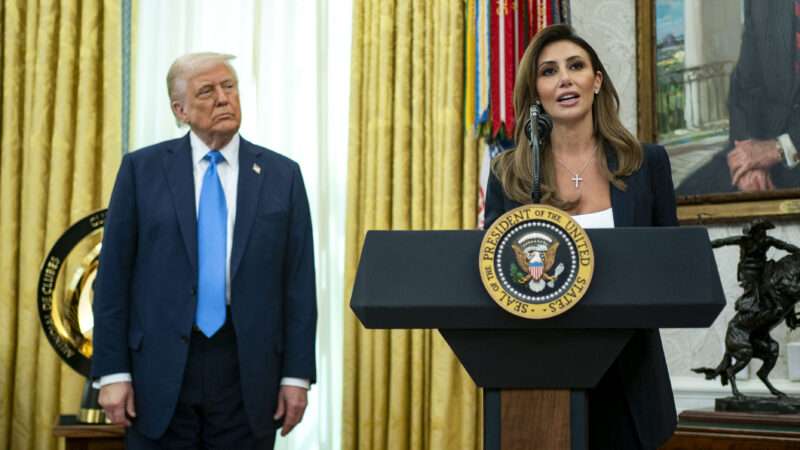
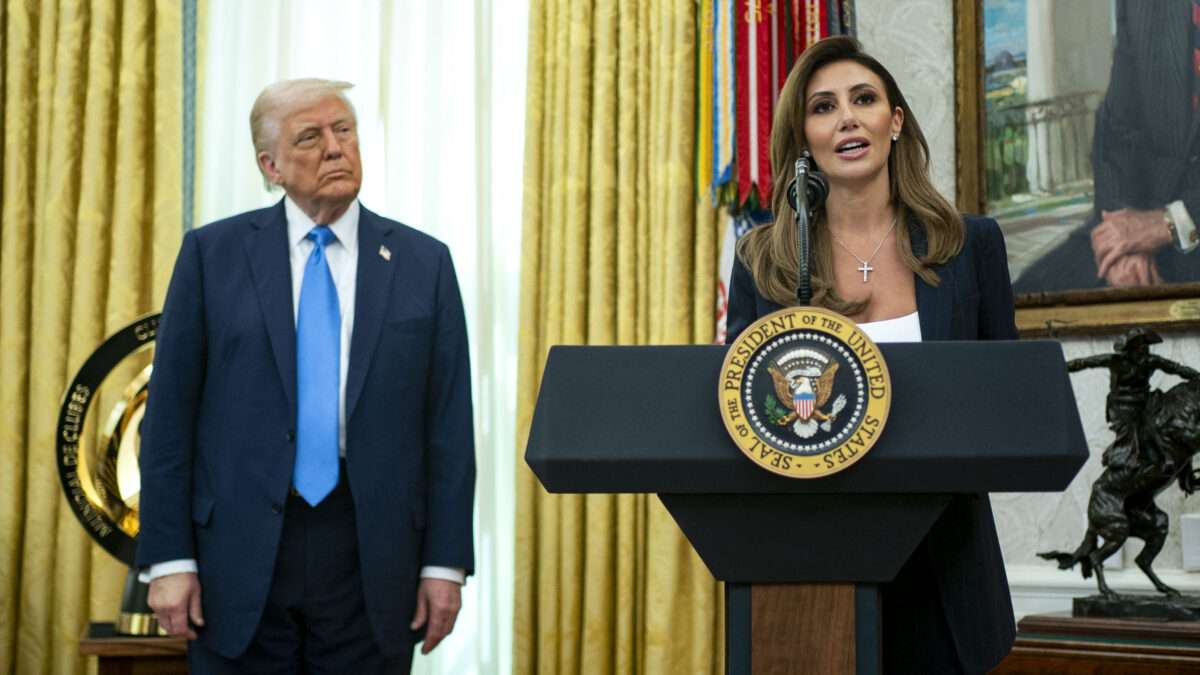
Take the most recent allegations about Alina Habba, Trump's former personal defense attorney, who recently landed a plush gig working for Julio Herrera Velutini, a Venezuelan banker. Habba will get $50 million over five years to do unspecified work for a company that barely exists, according toThe New York Times, while Herrera got a presidential pardon for a 2025 campaign finance charge.
But that constellation of corruption might finally be breaking through to voters ahead of next month's midterm elections.
A recent Fox News poll found that "government corruption" was the top issue for voters, ranking ahead of inflation and gas prices. Conservative commentators are taking notice.
"What they're saying is, 'Look, we're tired of you getting rich and us getting poor,'" former White House Chief of Staff Mick Mulvaney said this week.
Tim Carney, senior columnist at the conservative Washington Examiner, also tabs the corruption issue—along with other "avoidable mistakes" such as the Iran War and tariffs—as one of the major reasons why Democrats are likely to win the midterms:
Trump and his family have enriched themselves in this second term in ways more similar to third-world regimes or Cook County than to any previous administration. He and his family operate a financial company that has received heavy investments from Qatar's government. He's sold access to himself by selling otherwise worthless cryptocurrency. The IRS he controls settled a lawsuit with him, promising to pay him $1.8 billion (this settlement was voided by a judge).
Trump is not directly on the ballot next month, of course. And most voters might not be able to tell you the details of any single Trump scandal in detail. Even so, this may turn out to be the defining narrative of the second Trump administration, and there seems to be a growing consensus that Republicans have allowed (if not aided and abetted) his corrupt behavior, so it's time to give Democrats a shot at reining it in.
The Trump corruption issue is like the Biden cognitive decline issue in one key sense: Everyone around the president or even supporting him professionally from afar should be asked about it, and their lies/claims of ignorance should be hung around their necks like dumbbells.
Vice President J.D. Vance told journalist Mark Halperin this week that he's "never seen any evidence that anybody's selling access to the president." When Halperin pushed back, Vance doubled down: "What I would say is I don't think there's evidence that the Trump family has become enriched by politics," the vice president said.
So either Vance isn't paying attention, or he's deliberately misleading. "Credit to Vance, it's as good an argument as is available to him," writes Daniel Foster at National Review. "The bad news is it's still not very good."
The internet nearly crashed on Wednesday as digital security and website administrators scrambled to patch two vulnerabilities in the PHP programming language that serves as the basis for many websites.
"Since its development in the 1990s, PHP has evolved into an essential scripting language for web development and is used across vast swaths of the internet in websites and software," explainsWired. "Everything from publishing systems like WordPress and Drupal to e-commerce platforms like Adobe's Magento are built on PHP."
The potential hacking abilities of advanced AI agents make these sorts of security risks more serious. In this case, however, the problem was also identified with the help of AI.
"Ryan Austin, a researcher at Calif, uncovered the flaws with help from GPT-5.6 Sol, one of OpenAI's most advanced models, during an audit of PHP's source code in August," The Wall Street Journalreports. Another security researcher had flagged the issue years ago, but it had never been fixed because it was considered "considered too difficult to exploit" by human hackers.
This is the future of humanity's digital landscape. "Given the severity of these flaws and PHP's widespread use, we consider this one of the most impactful security issues in recent memory," OpenAI said in a statement on Wednesday. "It highlights how AI can uncover security flaws with internet-scale impact, but the same capabilities can also help attackers rapidly develop offensive tools and exploits."
(A shoutout to Reason's web development team for keeping us up and running, today and every day.)
"Fanciful fiction." Media outlets also continue to face decidedly nondigital threats over articles and polls that make the president unhappy.
The White House threatened Politico on Wednesday with unspecified "consequences" for publishing "fanciful fiction" in a series of articles earlier this month about White House Chief of Staff Susie Wiles. If the articles are not retracted, it would trigger "an immediate review of Politico's relationship with the White House, and, of course, consideration of all other appropriate and available legal remedies," wrote White House counsel William O. Scharf in a letter to the media outlet's publisher.
Meanwhile, FCC Chairman Brendan Carr issued vague threats to broadcasters who cover what Carr called "Fake Polls" intended to "alter the normal patterns of voter turnout and enthusiasm."
These sorts of threats are an affront to the First Amendment, of course. But they are downstream of a more significant issue: the very existence of the FCC.
It's a problem, obviously, that the FCC is run by an authoritarian jackass. But the bigger problem is that the agency contains so many tempting tools for an authoritarian jackass to wield. https://t.co/Q4IJXntkOy
A judge in New Mexico ordered social media giant Meta (which owns Facebook and Instagram, among other things) to pay $25 billion for misleading users about data privacy. Last month, a jury found that Meta had violated the state's consumer protection laws 43 million times.
The environmental studies for California's high-speed rail line include such absurdities as counting bumblebees "one by one" and considering the train's "acoustic impacts on waterfowl and shorebirds." That's how to spend 16 years and $15 billion building nearly nothing.
Obvious metaphor alert!
A group dispatched by Hegseth's team in February attempted to move the historic globe, said to be used by Eisenhower during World War II.
They lifted it from its home in an Army office in the Pentagon … and dropped it. pic.twitter.com/vTjWdYXn0k
Prime Minister Rob Jetten of the Netherlands in Brussels last week. He said that his cabinet was closely monitoring the online vulnerability caused by a security flaw in PHP.
The tech giant is funding one of the nation’s largest “virtual power plants,” which would pay homes and businesses to adjust their energy use when grids are strained.
Tech companies are painting data centers with gray coatings on top of gray concrete and steel to resist fire, rust and static electricity. That has made data centers a fast-growing market for paint makers.
The website for the French government was temporarily unavailable on Wednesday amid hacking concerns stemming from major bugs in a piece of software used widely across the internet.
The billionaire told Meta’s board that he planned to list his Silicon Valley home for sale. The company remade its stock structure to help him pay the tax if voters pass it.
Mark Zuckerberg, the chief executive of Meta, at his home in Lake Tahoe, Calif. He has another California home in Palo Alto, close to Meta’s headquarters.
The spending has hurt the Silicon Valley giant’s cash flow, which turned negative. Meta said it would issue a new class of stock to help it raise more money.
As SpaceX impacts Ukraine and AI-generated music divides artists and fans, critics are asking what happens when technology has too much control over our lives
This was originally published in TechScape, a newsletter about how technology shapes our lives. Sign up to receive it here
Hello, and welcome to TechScape. I’m Blake Montgomery, US tech editor at the Guardian, writing to you while sitting in front of Roy Lichtenstein’s monumental Drowning Girl, on view in New York City. Today in tech, we’re discussing the perils of Elon Musk’s one-man global infrastructure, AI-generated music and a Guardian AI conference in Paris.
Há algo bastante curioso na forma como muitas empresas abordam o marketing: investem tempo, dinheiro e um esforço considerável para atrair novos clientes, mas, no momento em que alguém finalmente faz uma compra, a relação parece chegar a um fim abrupto. O cliente comprou. A venda está concluída. Missão cumprida! Passemos ao próximo. Bora […]
by Dan Frieth, Reclaim The Net: A law sold as upstream prevention could send age checks, scanning, and speech controls downstream. A “safety net upstream” – that’s how Australia’s Communications Minister Anika Wells described the intent behind the Online Safety Amendment (Digital Duty of Care) Bill 2026, introduced to the country’s Parliament on Thursday. Wells […]
As a free speech absolutist, Elon Musk is making a mistake going after Nitter, says Dr R P. He should instead be praising the site that helps users speak freely, uninhibited by login screens that undermine their privacy.

 Login