❌

Reading view

Border Cops Seize Nurse's Phone Filled With Psychiatric Patient Information
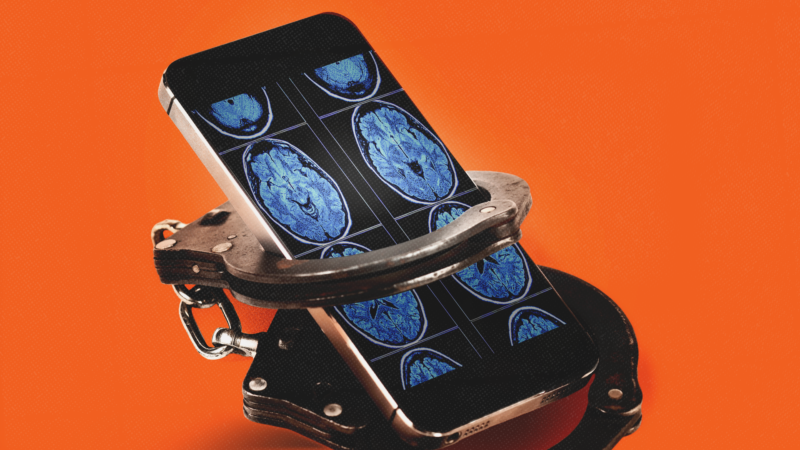
A smartphone in handcuffs | tescka1/Magnific/Cammeraydave/Dreamstime/Mariam Zakaidze

U.S. Customs and Border Protection (CBP) seized a psychiatric nurse practitioner's phone filled with confidential patient information at Washington Dulles International Airport last week, according to a new lawsuit. Muhammad Numaan Imam alleges that CBP agents told him that they could take his electronics the "easy way or the hard way" and refused to let him talk to his lawyer because "we are the authorities at the border."

The lawsuit by the American-Arab Anti-Discrimination Committee (ADC) may be the first time CBP is taken to court over seizing people's medical records. ADC is also helping Palestinian-American lawyer Jay Shehadeh and Jewish-American journalist Max Blumenthal sue over their devices being seized.

"We're seeing a pattern where officers use their border-search authority not to advance any legitimate border-related purpose, but to punish individuals for refusing to provide access to their personal electronic devices and for having expressed views the government didn't approve of," ADC president and legal director Jenin Younes wrote in a statement emailed to journalists.

While Shehadeh and Blumenthal claim that CBP is retaliating for their political views, Imam argues that he faced threats and retaliation with the simple act of asserting privacy rights. Both Imam and Shehadeh were considered "trusted travelers" under the Global Entry program, which allows American citizens who undergo a background check to pass through an automated fast track at airports and borders.

Asked by Reason, a CBP spokesperson did not address any specifics of the case, giving only a generic statement about how "CBP's ability to lawfully inspect electronic devices crossing the border is integral to keeping America safe in an increasingly digital world."

The border exemption to the Fourth Amendment gives U.S. authorities the power to look for "contraband" crossing into the country without a warrant. There is a mess of contradictory court rulings on whether that power includes searching travelers' electronic data, but in practice, CBP can simply seize the physical devices that the data live on.

And the agency often lies outright to travelers whose data that it wants to search, as documents recently released in the case of Atlanta protester Samuel Tunick show. CBP agents gave Tunick a false reason for detaining him and falsely promised that he would be allowed to leave with his phone if he cooperated, even though they were under orders to seize his devices no matter what. Tunick is now on trial for allegedly tricking the CBP agents into deleting his data to avoid a search.

"It's happening to a lot of people, and it's being used in this coercive, inappropriate way," Younes tells Reason.

The problems for Imam, who lives in Virginia, actually began at another border. He was heading to Istanbul on Saturday for a family vacation with his Pakistani wife, Khadijah Mansoor, and their 1-year-old child. Turkish authorities demanded to see Mansoor's U.S. green card, which she had forgotten at home, and wouldn't let her enter on her Pakistani passport alone. The family had to board the next flight back to Washington. On their arrival, CBP naturally wanted to know why they had been turned away and why Mansoor didn't have her green card.

But things took a weirder turn after agents told Imam he had been "flagged" for undisclosed reasons, pulled him into a separate room, and began questioning him about his social media use and group chats, according to the lawsuit. (Imam tells Reason that they asked about group chats in general, not any specific group chat.) When agents asked for the password to Imam's phone, he told them that he uses the phone to communicate with and manage cases for patients at the rehab facility where he works. The Health Insurance Portability and Accountability Act (HIPAA) strictly prevents doctors and other medical staff from sharing patient data without consent, so Imam asked to speak to a lawyer.

"Your lawyer cannot do anything. We are the authorities at the border," Imam recalls one agent saying. A supervisor then told the couple that CBP could take all of their electronics the "easy way or the hard way," and that the devices could take months to get back, Imam and Mansoor claim.

CBP's own internal policy says that devices should "ordinarily" be held for less than five days. The same policy includes vague guidelines for dealing with medical information: "Possibly sensitive information, such as medical records and work-related information carried by journalists, shall be handled in accordance with any applicable federal law and CBP policy." Imam says that the CBP agents claimed to have software for filtering out HIPAA-protected data.

After four hours in detention, CBP took the family's phones and laptops and let them go. The next day, Imam got an email stating, "We regret to inform you that your membership in Global Entry has been revoked for the following reason(s): You do not meet the Trusted Traveler standard." In addition to both Imam and Mansoor losing valuable work data, the lawsuit argues, Imam is now unable to prescribe certain psychiatric medications to his patients, because of federal regulations that require phone verification.

The lawsuit demands the return of the devices and data under Rule 41(g) of federal criminal procedures, which requires the government to hand back property that is no longer necessary for a criminal investigation. ADC has also filed these motions in Shehadeh and Blumenthal's cases. (CBP gave back Blumenthal and Shehadeh's phones almost immediately afterward, but ADC is continuing to press for records of what they did to those phones in custody.) Younes filed a brief on Blumenthal's behalf in support of an upcoming Supreme Court case over whether CBP can continue these electronic searches.

"The devices are neither contraband nor subject to forfeiture, and, to Plaintiffs' knowledge, there is no pending criminal investigation, criminal prosecution, or warrant authorizing their continued seizure or search," Imam's lawsuit states. "The Fourth Amendment does not permit the border-search exception to become a means of coercing compliance through the threatened or actual confiscation of travelers' personal property."

The post Border Cops Seize Nurse's Phone Filled With Psychiatric Patient Information appeared first on Reason Magazine.

  •  

Meta Ordered to Pay $25 Billion Over Cambridge Analytica Privacy Violations

The penalty, one of the largest levied against a tech giant, stemmed from a lawsuit by New Mexico claiming the social media company had misled users about their data privacy.

© Gabriela Bhaskar/The New York Times

Meta’s annual Meta Connect event at the company’s Menlo Park, Calif., campus.
  •  

Homeland Security Lied About Child Porn To Search Activist's Phone

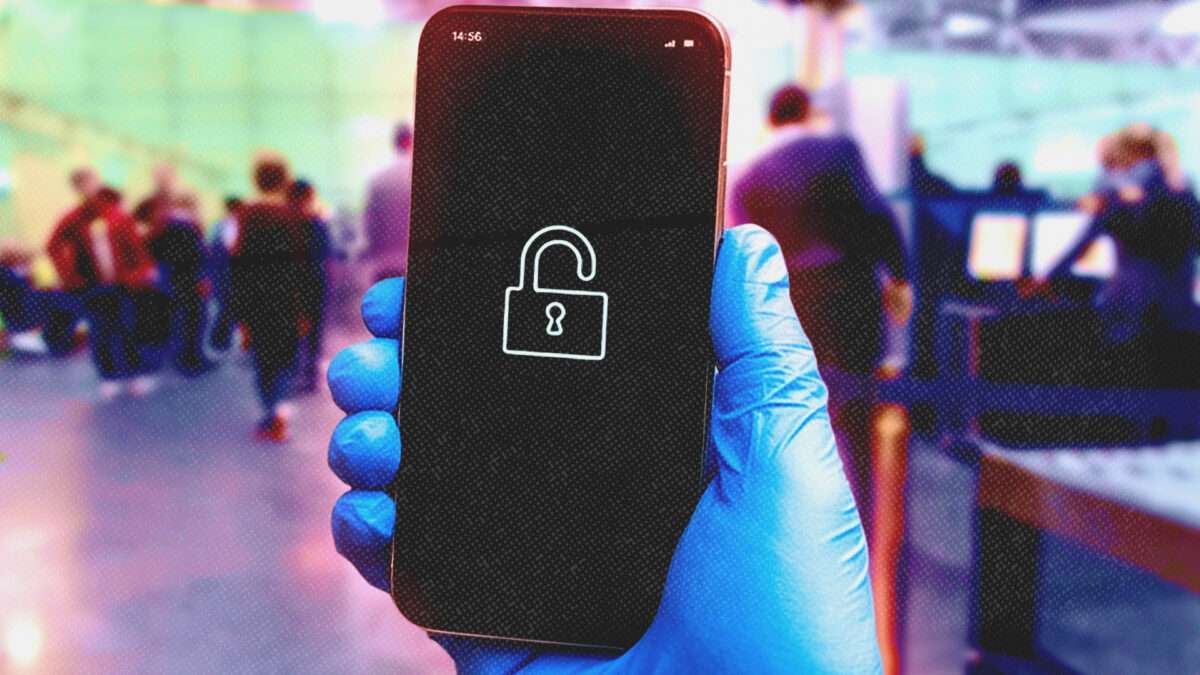
A locked smartphone | Illustration: Africa Images/Envato (AI-modified)/Flowertiare/Dreamstime

One of the unfortunate quirks of the American system is that you can't lie to the government, but the government can lie to you. Samuel Tunick found himself on the receiving end of this setup last year at Atlanta International Airport. When agents from the Department of Homeland Security (DHS) asked for his phone password, he allegedly gave them a self-destruct code that wiped his data. Tunick now faces five years in prison for destroying evidence.

It turns out that the feds were lying to Tunick the entire time. A new court filing, first reported by 404 Media, shows that the DHS had sent out an order to seize Tunick's phone over his involvement in environmentalist protests in Atlanta. When he landed at the airport, however, agents told Tunick that they were looking for "kiddie porn" and he would be allowed to leave with his phone if he cooperated. They also repeatedly denied him access to his lawyer when he asked.

"There can be no real debate that if law enforcement had acted similarly elsewhere in Atlanta, their actions would be unconstitutional. But the government says it was entitled to act this way because Mr. Tunick was returning from an international vacation" in the Dominican Republic, his lawyers wrote in the filing, which includes internal DHS communications and excerpts from his interrogation video.

U.S. law recognizes a "border exception" to Fourth Amendment privacy rights, allowing federal agents to search incoming travelers for contraband. U.S. Customs and Border Protection (CBP) claims that this exemption also allows them to hold travelers for questioning and search their electronic data. Tunick's case reveals just how widely the agency stretches this loophole.

A few hours before Tunick landed, Homeland Security Investigations (HSI) agent Travis Mcghie emailed the CBP station in Atlanta with his photo and information, stating that he is under investigation for "suspected terrorist activities." (Tunick is involved in Save the Atlanta Forest, also known as Stop Cop City, a protest movement against a local police training center.) The email asked CBP to "conduct a 100% baggage exam, retain all electronics and collect passcodes," stating that the HSI will be at the airport to conduct an interrogation.

Pulled into the secondary screening room, Tunick "almost immediately" told CBP officers that "I don't really want to speak without a lawyer any more," according to the filing, which cites the interrogation tape. He would ask for a lawyer multiple times.

The agents asked Tunick if he had "kiddie porn" on his phone and stated that "because you're refusing to talk, we have the authority to go through your phone to see what we're looking for." One of them, Latoya Castro, told Tunick that "either you can give us your password so that we can go through it no problem, or you can refuse to do that, unfortunately, we will have to seize your phone."

Both of those statements were a lie, of course. The HSI's email had asked CBP to take Tunick's phone, whether or not he cooperated.

The lie about child porn may not only have been meant to intimidate Tunick. While there are contradictory lower court rulings about the border search exemption, some courts have ruled that the CBP can only search electronics for "digital contraband," or files that are themselves illegal. A search for child sex abuse material would be on stronger legal ground than a search for mere evidence of other crimes.

Tunick was using GrapheneOS, a secure phone system that allows users to set both a real password and a "duress password" that wipes out all data when entered. The interrogation tape shows his phone appearing to reset after he gave the officers a passcode. HSI agent Nathan Burnham and FBI agent Andrea Coble then entered the room.

"You are not under arrest. Once these gentlemen are done with you, pursuant to your entry into the country, you're free to leave," Burnham said, referring to the CBP officers.

Tunick's lawyers argue that the judge should throw out the phone password Tunick provided and everything that resulted from entering it as an "involuntary" response made under "unlawful interrogation," because the CBP agents did not read Tunick his Fifth Amendment rights and ignored his multiple requests to consult with his lawyer before answering their questions.

The CBP claims that secondary screening at the border doesn't count as a criminal investigation, so detainees don't have the same rights as criminal suspects. "Since the international arrivals inspection is an administrative function, CBP policy and federal regs do not permit the presence of lawyers during secondary examinations," a spokesman told Reason earlier this year.

But Tunick's lawyers insist that his experience was "far outside" a normal border crossing: He was accused of a serious crime to his face, faced an investigation for a different serious crime he didn't know about, and clearly could not leave the situation until he gave information to government agents.

"I hope people understand that the charges against me are meant to intimidate people against protecting their data and their privacy, and the government hopes to set a precedent that no one has the right to privacy," Tunick told 404 Media. 

Defend the Atlanta Forest, the movement that Tunick is involved with, has been a major nuisance for authorities in Georgia. Protesters attacked and burned construction equipment throughout 2022, and police shot a protester in 2023 under unclear circumstances, claiming that they were fired at during a raid.

The Trump administration has brought down the federal government against the movement. In June 2026, the Department of Justice brought federal charges against two alleged arsonists, citing National Security Presidential Memo 7, which directs the feds to go after left-wing domestic terrorism.

But beyond the email line about "suspected terrorist activities," there is no indication of what specific crimes the feds suspected Tunick of, or why they suspected him. And the whole setup of the interrogation was designed to hide those answers. In fact, instead of charging Tunick under typical obstruction or evidence-destruction laws, federal prosecutors chose a rarely-used statute that doesn't require them to disclose what the underlying investigation was about.

"Many times the government wants to highlight what it was trying to investigate because that ups the stakes on what the defendant was doing," former prosecutor Daniel Richman told The New York Times. "This is a case where I think they're trying to avoid exactly that by focusing only on the destruction, and not what the investigation was about." 

The post Homeland Security Lied About Child Porn To Search Activist's Phone appeared first on Reason Magazine.
  •  

Ghana swiftly rejects US health deal, calls it ‘humiliating’

Ghana has rejected a proposed health compact with the United States that would have provided an estimated $109 million in US health funding over five years, with President John Dramani Mahama saying the agreement raised serious concerns over health data, financing obligations, and Ghana’s regulatory authority.

The decision places Ghana among a few African countries that have pushed back against new US health agreements introduced as Washington restructures its foreign assistance following the dismantling of USAID. Zimbabwe has also rejected a similar agreement, while Zambia has raised concerns over provisions in its negotiations with the United States.

Ghana raises concerns over health data

Speaking at the Council on Foreign Relations in New York on September 25, Mahama said the proposed compact was presented to Ghana as a replacement for health funding previously provided through USAID.

He said Ghana’s Ministry of Health reviewed the document before preparing a Cabinet Information Paper.

“Ghana is a sovereign nation, and we have our own processes. We are a democratic country,” Mahama said.

According to the President, the Cabinet identified several provisions that raised concerns, particularly those relating to Ghana’s health information.

“One, it says that we shall give the United States our pathogen profile,” he said, adding that the agreement also required Ghana to provide medical records.

“It also says we should give our medical records. I mean, who takes another country’s medical records? And so that was strange.”

Concerns over health-data sharing have been central to resistance to the new US health agreements in several African countries. 

No FDA inspection

Mahama also raised concerns about the treatment of medicines and other medical products supplied under the proposed arrangement.

He said Ghana would have been required to contribute funding to the program while, according to his account of the compact, the country’s Food and Drugs Authority would not have been able to inspect medicines or other medical products entering Ghana under the program.

“And then it also says that any medications or any medical products that shall be brought into our country, our Food and Drugs Administration has absolutely no right to inspect,” Mahama said.

“I mean, it was humiliating.”

Ghanaian officials had previously cited concerns about the proposed handling of sensitive health information as a reason for rejecting the agreement. Reporting on the negotiations also indicated that the proposed arrangement would have required additional investment from Ghana alongside the US contribution.

Cabinet rejected the agreement

Mahama said the proposal was rejected after the Health Ministry presented its assessment to the Cabinet.

He described the decision as unusually swift.

“It was the compact that was thrown out in record time in our Cabinet. I’ve never seen anything thrown out as fast as that.”

He said the government subsequently instructed the Health Minister to communicate Ghana’s position to the US ambassador.

“And so, of course, we rejected it. And we asked the health minister to inform the US ambassador that we didn’t need it. We’ll manage ourselves.”

The proposed agreement would have provided Ghana with about $109 million in US health assistance over five years. The negotiations had begun in late 2025.

A wider concern over health sovereignty

Ghana’s decision comes as the United States seeks to shift its approach to global health cooperation. The new US strategy places greater emphasis on recipient countries taking responsibility for financing and delivering health programs, while Washington reduces its traditional aid commitments.

Kenya became the first African country to sign the agreement which was challenged in court, followed by similar arrangements with Rwanda, Liberia, Uganda, Lesotho and Eswatini, among other countries. Ravi Ram from the People’s Health Movement (PHM) East and South Africa, told BreakThrough News in December 2025, that  “Bilateral agreements between the US and Kenya and other African countries are meant to limit the ability of any one ‘partner’ country to challenge the terms of implementing the agreement, due to the unequal power relations.”

The concerns among health activists and concerned Africans is the ability of African states to determine their own health priorities, regulate medicines, control sensitive health information, and collectively negotiate the terms of international health cooperation.

  •  
❌