The 44th president sharply criticized Mr. Trump, who hit back later in the day. Mr. Obama also assailed Vivek Ramaswamy, the Republican nominee for governor of Ohio.
On a Sunday morning in October 2019, the chief of the virus ecology unit at the National Institutes of Health’s Rocky Mountain Laboratories emailed a postdoctoral scientist in his lab with an idea.
Vincent Munster and his postdoc, Michael Letko, had spent that year building a system to rapidly test whether dozens of SARS-related bat coronaviruses could infect human cells.
That week, Munster read a new preprint from prominent virologists Vineet Menachery and Ralph Baric’s lab groups showing that the protease trypsin could unlock entry for certain coronaviruses that otherwise would not infect human cells.
Letko had forwarded him the paper two days earlier with the note, “Seems like more groups will be converging on this idea soon.”
“You should be able to make S with a more broader cleavage signature (like furin-like) to enhance infectivity,” Munster wrote back on Oct. 6, 2019. “You can include a motif like this R-X-[K/R]-R↓ Might be cool to get some synthesized.”
In virology parlance, “S” is the coronavirus spike protein, which allows the virus to latch onto the cells it infects, and R-X-[K/R]-R is a furin cleavage site motif, which can make viruses better able to infect cells and spread.
Munster was suggesting that his postdoc engineer a furin site into a coronavirus spike protein to make it more infectious.
Eleven weeks later, a coronavirus carrying a similar furin cleavage site emerged in Wuhan, China, spawning the COVID-19 pandemic. It remains the only known sarbecovirus, the SARS-related group of coronaviruses that Munster and Letko were then screening, to have one.
The email exchange has never been made public before. It appears in a 270-page batch of records recently released by the National Institutes of Health (NIH) to U.S. Right to Know in response to a request made under the Freedom of Information Act.
The request sought specific correspondence from Munster’s lab in Hamilton, Montana, from March 2019 through Jan. 22, 2020, the date when his group published one of the first papers showing that the new coronavirus used a human cell receptor called ACE2 as a doorway into cells.
Two new threads run through the records: Weeks before the pandemic began, a senior NIH virologist proposed in writing to build into a SARS-like spike protein the feature that would become the central argument for COVID-19’s laboratory origin: a furin cleavage site.
And, through the same year, his lab was asking virus hunters for unpublished bat coronavirus spike sequences, and getting them, including from researchers in the U.S.-funded consortium called PREDICT, whose New York-based lead partner, EcoHealth Alliance, had a long-standing collaboration with the Wuhan Institute of Virology (WIV) to collect and study SARS-related viruses.
Each goes to a different key point in the origins debate. The furin cleavage site is the single genetic feature most cited in the arguments that SARS-CoV-2 did not arise entirely in nature.
Unpublished sequences are the other: because the pandemic virus matches nothing in the published scientific literature, most laboratory-origin scenarios depend on some lab having held a virus the rest of the world had never seen.
Nothing in the records shows that Letko followed through on Munster’s suggestion to insert a furin cleavage site in a SARS spike protein, however. In fact, the furin cleavage site found in SARS-CoV-2 differs from the motif, or short sequence of amino acids, that Munster suggested.
Nor do the documents indicate that Rocky Mountain Labs possessed SARS-CoV-2 or a close relative, or that either Munster or Letko directly communicated with researchers in Wuhan while working on their project.
Their research also used synthetic gene fragments, not live viruses, employing particles that cannot replicate or spread. Such work generally poses lower biosafety risks.
The two then-unpublished bat virus spike sequences obtained from PREDICT, one from Malaysia and one from Uganda and Rwanda, are also too distantly related to SARS-CoV-2 to have given rise to it.
Letko, who is now an associate professor at Washington State University, declined to comment for this story, saying in an email “(y)ou will write what you write, regardless of the truth or what I have to say.”
Munster did not respond to requests for comment. He was indicted earlier this year for bringing mpox specimens into the U.S. without proper documentation and giving false statements to law enforcement officials as part of unrelated NIH research. He has pleaded not guilty.
The NIH press office also declined to answer questions about why the agency had not previously told the public that its scientists had solicited and obtained unpublished SARS-like coronavirus spike sequences, or proposed inserting a furin cleavage site into a SARS-like spike, before the pandemic.
Converging on the idea
Munster’s suggestion to add a furin cleavage site is the second known instance of scientists proposing to insert this distinguishing feature into a SARS or SARS-like spike within roughly two years before COVID-19 emerged.
In 2018, EcoHealth Alliance, Baric’s lab and researchers at the WIV had proposed the same kind of modification to the Defense Advanced Research Projects Agency (DARPA), in work that would have used live, replicating viruses. Their application, known as the DEFUSE proposal, was denied.
The concept is notable because the furin cleavage site that helped the virus cause the pandemic has become central to the debate over the pandemic’s origins.
Some proponents of a laboratory origin view DEFUSE as a blueprint for creating SARS-CoV-2, while prominent supporters of a natural origin have argued that deliberately engineering such a feature would have been unlikely and unnecessarily cumbersome. Munster’s email gives the lab-origin supporters another example of such a furin site proposal.
The revelation about Munster’s lab seeking unpublished sequences speaks to a different issue in the COVID-19 origins debate.
Because SARS-CoV-2 descends from no virus previously described in the scientific literature, any scenario in which it was engineered requires assuming that some laboratory held SARS-related sequences that had never been made public.
In a 2021 review of SARS-CoV-2 in Cell by 21scientists called that implausible. “There is no rational experimental reason why a new genetic system would be developed using an unknown and unpublished virus,” they wrote.
But the records show a U.S. government laboratory doing just that two years earlier.
Letko’s platform was a new genetic system, and he sought unpublished sequences precisely because they were unpublished. Sharing them, he wrote in April 2019, “will surely increase the impact of our story by providing a proof of principle with unpublished sequences.”
Researchers in the U.S.-funded virus hunting program supplied two within eight weeks. One of the researchers, Simon Anthony, was also an author of the Cell review.
Alina Chan, a molecular biologist who has advocated for a thorough investigation of laboratory origin scenarios, recently reviewed the Munster-Letko email records at the request of U.S. Right To Know.
“What this shows is that different groups of virologists were converging on the idea of inserting cleavage sites in the spikes of potentially dangerous coronaviruses,” she said.
“Assuming a lab origin of COVID-19, if a lab in Wuhan hadn’t caused the pandemic, it’s plausible that a lab in the U.S. would’ve eventually followed the same path.”
Soliciting sequences
Munster’s emailed proposal didn’t come out of the blue. He and Letko were in the middle of a yearlong research project that the newly released records document from its start.
Seven months earlier, in March 2019, Munster and Letko set out to answer a question: of the hundreds of SARS-related coronaviruses in research databases worldwide, which ones could infect people?
Letko built a workaround that he and Munster described as a “rapid and scalable platform,” according to the records.
Rather than build each virus individually, they took only the receptor-binding domain — the fragment of the spike that grips onto the host cell’s receptor — and spliced it into a SARS-CoV spike backbone.
They then loaded these chimeric spikes onto harmless reporter particles and used them to infect cells expressing hACE2, the receptor SARS-CoV uses to enter the human airway.
A glow from the bioluminescent enzyme luciferase indicated successful cell entry. With Letko’s method, what typically had taken months to test now took about three weeks.
The limiting ingredient to test their method was the spike sequences. Letko had exhausted the SARS-like sequences already published. So, he and Munster started looking for others that hadn’t been, the records show.
On March 8, 2019, Munster emailed EcoHealth Alliance President Peter Daszak, Vice President Kevin Olival and Columbia University virologist Simon Anthony, attaching a confidential abstract with a chart and figures illustrating their project.
“While we have now tested all of the variation(sic) currently published for lineage B beta-coronaviruses for their ability to enter primate cells, we are seeking additional, unpublished lineage B beta coronavirus sequences to test in our platform,” Munster wrote.
He asked them not to circulate the attachment, because the work was “still unpublished and quite competitive.”
Of the three recipients, only Anthony, then one of the core leaders on PREDICT, appears in the released correspondence. He replied later that evening: “Hey! Looks super cool.”
Two months of negotiation followed, the emails show. On April 5, Letko thanked Anthony “for agreeing to share betacoronavirus lineage B spike sequences with us,” adding that unpublished material “will surely increase the impact of our story.”
On May 2, Anthony reported back from a PREDICT meeting in Vancouver, British Columbia. His team had detected “around 5 or 6 novel 2b viruses,” he wrote, but had “only managed to get spikes for 2 of them so far.”
Because neither had been published, Letko’s paper “would be the first report of these viruses in the literature,” so long as he credited PREDICT and its partners as co-authors, Anthony said.
Letko agreed. Two days later, Anthony sent the sequences. He identified them as PREDICT_CoV-51, isolate PDF-0663, from Malaysia (which Anthony described as “SUPER divergent. Could be really interesting,”) and PREDICT_CoV-43, from Uganda and Rwanda.
“Absolutely stellar!” Munster replied. “Will keep you posted on the results!”
Anthony was generally correct. A small fragment of the Malaysian virus had been deposited in GenBank, the NIH’s public sequence database, in 2016, and referenced the following year in a survey paper Anthony co-authored with Daszak and others. But neither its full spike sequence nor its complete genome was public.
Nothing at all was public about the African virus. In neither case could anyone outside PREDICT obtain the spike sequence, the part that determines whether a virus can enter human cells and the only part Letko’s platform could use.
A step further
Five months later, after reading the new preprint about trypsin, Munster proposed taking Letko’s project a step further.
For a coronavirus to infect a host cell, binding the receptor is only the first step. The spike must then be cut open by one of the host’s own enzymes before the virus can fuse with the cell and get inside. These enzymes that cut protein apart are called proteases, and each one targets different spots.
The protease a spike is built for largely determines what tissues it can infect. SARS-CoV depends on proteases that are not available everywhere in the body. Furin, however, is expressed in the cells of most tissues.
The Menachery-Baric preprint that sparked Munster’s idea had shown that adding trypsin from the outside could unlock entry into human cells for coronaviruses that otherwise couldn’t infect them.
Trypsin is a far less selective protease, cutting a protein after common amino acids rather than requiring a particular short sequence, or motif. What Munster proposed to Letko — engineering a furin site into the spike itself — would let the virus cut itself open.
Instead of waiting for an outside enzyme to do the job, a furin site could clear the hurdle in one step to “enhance infectivity,” as Munster wrote.
The idea had been proposed before.
EcoHealth Alliance submitted the DEFUSE proposal to DARPA, under a program called PREventing EMerging Pathogenic Threats, or PREEMPT. Its key partners included Baric’s laboratory at the University of North Carolina (UNC) and Zhengli Shi, the leading coronavirologist at the Wuhan lab.
The proposal aimed to introduce human-specific proteolytic cleavage sites, including furin sites, into SARS-related bat coronavirus spikes to evaluate and enhance their ability to infect human cells. DARPA declined to fund it, faulting the proposal over the risks of “gain-of-function” research.
Munster was not named on the proposal submitted to DARPA. But according to official congressional correspondence, he had been part of the DEFUSE team two months earlier.
In April 2024, Sen. Rand Paul (R-Ky.), then ranking member of the Senate Homeland Security and Governmental Affairs Committee, wrote to the U.S. Department of Health and Human Services (HHS) and DARPA saying he had obtained documents showing that “Vincent Munster of NIAID’s [National Institute of Allergy and Infectious Diseases] Rocky Mountain Laboratory was listed as a partner in the DEFUSE proposal presented at the PREEMPT Proposers Day,” a January 2018 DARPA event at which Daszak pitched the project to representatives of at least 15 federal agencies.
Rocky Mountain Laboratories, Paul wrote, “was at one point listed as a partner” alongside the WIV, UNC, Columbia University’s Lipkin Lab and Duke-NUS, a disclosure Paul said appeared to contradict former National Institute of Allergy and Infectious Diseases director Anthony Fauci’s testimony to Congress that NIH knew nothing of DEFUSE.
By the time the proposal reached DARPA that March, Munster and his lab were off it; the final list of partners included EcoHealth, the WIV, UNC, Duke-NUS, the USGS National Wildlife Health Center and Palo Alto Research Center.
Paul demanded from HHS records of “all communications between Vincent Munster and any individual from EcoHealth Alliance, WIV, University of North Carolina, Columbia University, or Duke-NUS.” Paul has not released his underlying documents, and neither HHS nor DARPA has publicly answered his requests.
The newly released NIH records show that about a year after DEFUSE was submitted, Munster asked EcoHealth for unpublished sarbecovirus sequences; that he received them from a virologist at Columbia’s Center for Infection and Immunity, the center Ian Lipkin directs; and that in October 2019 he proposed building a spike with a furin-like cleavage site to enhance infectivity.
Steven E. Massey, a professor of bioinformatics at the University of Puerto Rico and a researcher with DRASTIC, the independent group that first published the DEFUSE proposal, called Munster’s suggestion “significant,” saying it “shows the [furin site] idea was circulating outside the EHA-WIV-UNC group,” a reference to EcoHealth Alliance, the WIV and UNC.
Munster’s email does not mention DEFUSE. His idea appears instead as a reaction to the Menachery-Baric preprint, framed as a potential next experiment for his and Letko’s work.
And the motif he proposed is not the one found in the pandemic virus that emerged less than three months later. SARS-CoV-2’s site has alanine where Munster’s pattern called for lysine or arginine.
A suboptimal site
That difference is key. The furin site in SARS-CoV-2 substantially improves the virus’s ability to enter human airway cells and is widely regarded as a major contributor to its transmissibility. Its absence from every other sarbecovirus found in nature is also one of the observations lab-origin proponents cite most often.
The 2021 review in Cell also directly addressed whether the site could have been engineered. Its authors, including Kristian Andersen, Robert Garry and Simon, argued that the site’s own sequence weighs against a lab design.
SARS-CoV-2’s motif, RRAR, “does not match its canonical form (R-X-R/K-R),” they wrote, and is “suboptimal” compared with those of other human coronaviruses.
“There is no logical reason why an engineered virus would utilize such a suboptimal furin cleavage site, which would entail such an unusual and needlessly complex feat of genetic engineering,” the paper stated.
The only prior work inserting a furin site at that position in a SARS-CoV spike, they noted, had used an optimal sequence in a pseudotype system.
Massey disputes that framing. He said excessively efficient cleavage can destabilize the spike and reduce the virus’s ability to enter cells, so a site that looks suboptimal on paper may not be suboptimal for the virus.
The newly released records show Munster reasoning along the Cell authors’ lines nearly two years before their review appeared. The motif he proposed matches the canonical form they describe, not the one the pandemic virus carries, and his lab ran a pseudotype system of the kind they cite.
Read one way, the email corroborates their logic: that a scientist contemplating a furin-like site reached for the textbook motif, and SARS-CoV-2 does not have it.
Read another way, it establishes something the review did not address: by October 2019 the idea of adding such a furin cleavage site to a SARS-related spike to enhance infectivity was circulating not only in an unfunded DARPA proposal but also inside an NIH laboratory.
What was published
When Chinese scientists ultimately posted the genetic sequence of the novel coronavirus spreading in Wuhan on Jan. 10, 2020, Letko and Munster had everything they needed to test it in their system.
The platform did not require a live virus, only the sequence of the small piece of the spike that latches onto a human cell. Within hours of the sequence going up, Neeltje van Doremalen, another scientist in Munster’s lab, pasted it into an email to Letko and Munster.
Letko expected results by Jan. 26 or 27. They came back ahead of schedule. On Jan. 21, Munster decided where to send the final manuscript showing their research. “Nature it is,” he wrote to Letko. “Lets(sic) do 2 authors and speed this up.”
The paper went out that afternoon, to Nature and to the preprint serverbioRxiv. Only 12 days had passed since the sequence appeared online.
The lab made the new method’s speed its selling point. Their method “reduces the time from the sequence being published to having real in vitro data to under 12 days,” the cover letter told Nature’s editors, “allowing the scientific community to gain critical information on virus tropism in almost real-time with the outbreak.”
The work drew notice at the top of NIAID.
“First data from my lab confirming ACE2 as the receptor for 2019-NCoV,” Munster emailed an NIAID coronavirus response list that afternoon.
Greg Folkers, then chief of staff to then-NIAID Director Anthony Fauci, replied: “When this hits bioRxiv might be worth a tweet.”
The paper that was submitted gives no sign that Letko took up Munster’s suggestion to engineer a cleavage site into a spike. But it does show that the scientists used the protease trypsin rather than the furin Munster had proposed.
The paper’s second figure is titled, “Trypsin enhances lineage B entry in various cell lines.” It reports that bat coronavirus spikes that could not get into human, primate or pig cells on their own did get in once the particles were bathed in the enzyme.
The trypsin experiments appear nowhere in the project before Munster and Letko’s October exchange about the Menachery-Baric preprint. They are also absent from the abstract that Munster previously circulated in the spring. The published paper cites the Menachery-Baric preprint that sparked their exchange conversation.
Neither of the sequences that Anthony sent in May 2019 appears in the paper, and neither he nor PREDICT are acknowledged. The only trace of PREDICT in the 18-page manuscript is a footnote citation.
The panel of viruses the paper did report testing consisted of 29 receptor-binding domains obtained from a public database administered by the NIH.
One of the two viruses resurfaced a year later, when Columbia’s Center for Infection and Immunity deposited its complete genome in GenBank on July 6, 2020, five and a half months after the preprint that was to have carried it.
In February 2021, the bat coronavirus from Uganda and Rwanda also appeared in the journal Virus Evolution, in a study of how SARS-related viruses acquired the ability to use the human ACE2 receptor.
Letko was second author, Munster was listed near the end, Anthony was the senior author and the Ugandan and Rwandan field scientists and PREDICT leadership were included as co-authors, as Anthony had said in 2019 would be required. Run through Letko’s platform, the virus could not enter human cells through ACE2 at all.
The Malaysian virus, which Anthony had called the more interesting of the two, has never appeared in a published study. Nothing in the records says why. Anthony, now a professor at the University of California, Davis, did not respond to requests for comment.
On May 24, 2021, two years after he emailed the virus’s spike sequence to the Montana lab, Columbia deposited its complete genome in GenBank on behalf of the PREDICT consortium, crediting Malaysia’s Sabah Wildlife Department and EcoHealth Alliance.
Lewis Kamb is an investigative reporter who specializes in using freedom of information laws and public records to uncover wrongdoing and hold the powerful accountable.
orchestrating the pandemic to help usher in the “Great Reset,” a global economic, political and social system promoted by the World Economic Forum.
During oral arguments Thursday, attorney Peter Stassen told a packed courtroom that the COVID-19 vaccines were akin to a bioweapon, developed as part of a broader global effort to strip democratic and individual rights.
Speaking outside the courthouse in Leeuwarden, Netherlands, Stassen said Thursday’s hearing “was about publicly telling what is happening in this courtroom and what is the real case. The real case is that COVID-19 was not a disease but was a project.”
He accused Gates and Bourla of participating in that project, which he said was coordinated and undemocratic. He also accused the defendants of using censorship and propaganda to hide their intentions while promoting the COVID-19 vaccines as “safe and effective.”
COVID-19vaccines were developed and procured as military countermeasures, bypassing the standard development and approval pipeline for such products. By developing the shots as military countermeasures, they bypassed traditional safety regulations, leading to widespread injury, Stassen said.
Stassen said that while this is a civil case, he believes the defendants’ actions constitute serious criminal offenses that violate global treaties and the Nuremberg Code.
“They basically said, like a parrot, that all of Stassen’s accusations were either conspiracy theory or based on medical reports that are from people who are not neutral in this case,” said Ido Dijkstra, a Dutch journalist and the editor-in-chief of De Andere Krant, who attended the hearing.
Dutch attorney Meike Terhorst said the defense did not respond to Stassen’s assertions that COVID-19 was a project. “There was no response to that at all, nothing.”
Journalist Penny Marie, who has reported on the case, told The Defender that Stassen’s arguments “mirror what so many people worldwide say and have experienced and investigated.”
The defendants’ legal team did acknowledge that they were “touched” by the suffering of the vaccine-injured plaintiffs. Terhorst said the five living plaintiffs face “immense problems” with their health.
Dijkstra said the presiding judge on the three-judge panel appeared to “support the mainstream narrative,” but “gave the impression that she wanted to understand Stassen’s reasoning.”
Thursday’s hearing stemmed from a lawsuit filed in 2023 by seven people injured by COVID-19 vaccines — including two who have since died — against Gates, Bourla and 15 other defendants, including former Dutch prime minister and NATO Secretary General Mark Rutte, the Dutch state, and several Dutch public health officials and journalists.
According to Dutch attorney Meike Terhorst, who is not connected to the case but attended the hearing, none of the defendants appeared in court.
A ruling is expected as early as December but may be delayed until February 2027.
Expert witnesses barred from testifying in person
During oral arguments, Stassen addressed the court’s refusal to allow his team’s expert witnesses to testify in person. Earlier this week, the court limited the witnesses to video statements presenting their arguments.
Defense attorneys attacked the credentials of some of the witnesses. For instance, they claimed that Sasha Latypova — a former pharmaceutical research and development executive — has only a bachelor’s degree and is unqualified to provide testimony on scientific and medical matters.
Latypova disputed the claims, telling those gathered outside the courthouse that she has a “graduate degree from Dartmouth College and 25 years of pharmaceutical R&D and regulatory experience” — including interacting with the U.S. Food and Drug Administration, European Medicines Agency and Japanese regulators “on behalf of my clients.”
Catherine Austin Fitts, founder and publisher of the Solari Report and another of the expert witnesses for the plaintiffs, told The Defender that Bourla’s attorneys questioned the credentials of another witness — Mike Yeadon, Ph.D. Fitts said she was “surprised” by their claims.
“Yeadon served as vice-president of Pfizer’s allergy and respiratory research unit and worked for many years at Pfizer. Does Pfizer make it a practice to staff the company with unqualified people in senior positions? Does this explain why Pfizer appointed a veterinarian to be the CEO?” Fitts asked, referring to Bourla.
Terhorst said it is “very strange” for Dutch courts to not allow oral testimony by plaintiffs’ witnesses, as otherwise, “it is not easy to substantiate your claims.”
Despite the limitation, Terhorst said the witnesses bolstered the plaintiffs’ case. “The case is important based on the evidence provided by key witnesses,” she said.
“I think we [gave] a very clear sign to the court that there can be not justice if the court is not willing to look further at this expert evidence, because you can come to a judgment based on truth and a real discussion between the parties,” Stassen said during the press conference.
Vaccine-injured were ‘misled’ about safety of COVID shots
In an interview with journalist Fiona Rose Diamond earlier this week, Stassen said the plaintiffs “felt misled” by the Dutch government and by those who promoted the COVID-19 shots in the media.
“They felt misled by the whole system … And they were misled because they were told that this was a safe and effective vaccine, and in fact, the only way out of [the] crisis,” Stassen said.
At Thursday’s press conference, Stassen added that the plaintiffs sued not just because of their injuries, but because “they want the truth.”
Fitts highlighted the significance of the case, noting that under the Dutch legal system, the vaccine-injured can file lawsuits in response to their injuries — contrasting this with legal restrictions the injured face in the U.S.
Terhorst noted that the vaccine-injured in the Netherlands face other obstacles.
“Vaccine injury is not even recognized in the Netherlands,” she said. She noted that some vaccine-injured people briefly received treatment under public health programs that the Dutch state earmarked for long COVID patients. However, this treatment was later “terminated.”
Terhorst said lawyers for the Dutch state “said nothing” during the hearing about offering compensation to these victims, including the plaintiffs and their families.
This is one of several obstacles the plaintiffs have faced as this case has progressed. Last year, another attorney for the plaintiffs, Arno van Kessel, was arrested “with considerable force,” as part of a nationwide sweep by Dutch police against alleged members of a “sovereign citizen” movement with a “potential intent to use violence” against the Dutch state.
Terhorst said van Kessel spent seven months imprisoned in a high-security prison, lost his license to practice law, is not allowed to leave the country and was fitted with an ankle monitor — which was removed Thursday, in parallel with the hearing.
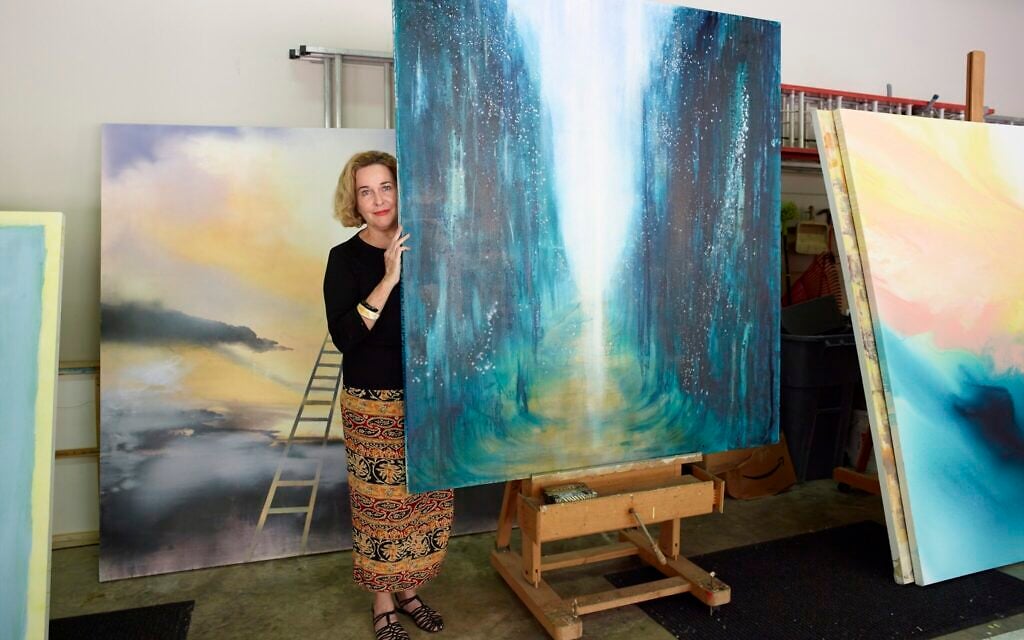
Barbara Hines explored eastern religions before learning that her German-born parents had hidden their Jewish heritage. Her new Jerusalem exhibition reflects her rediscovered people
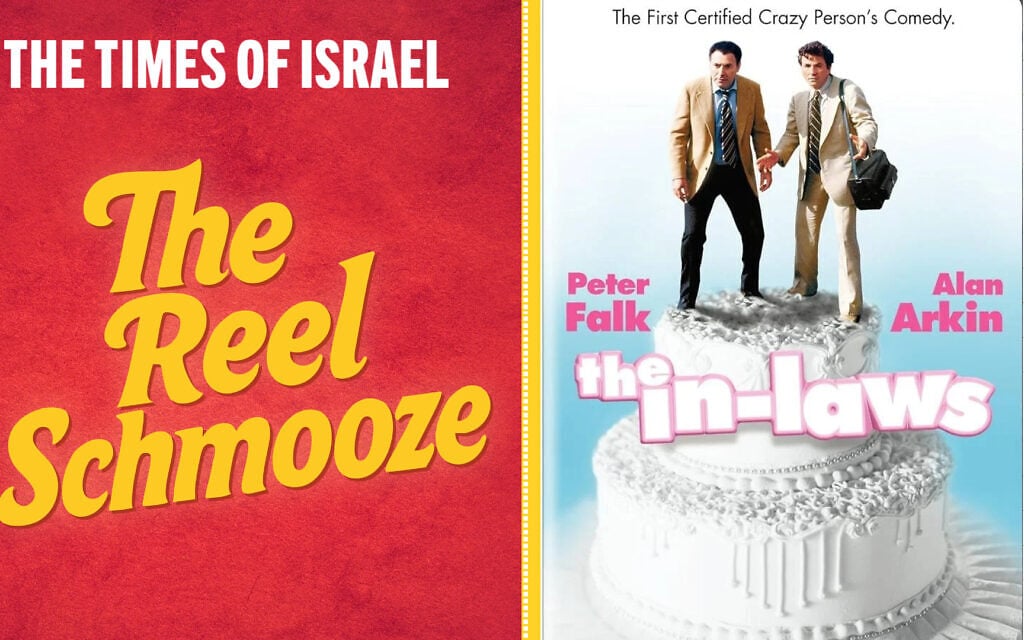
ToI's movie maven and deputy editor agree to disagree -- again -- about the 1979 film starring Alan Arkin and Peter Falk that was immensely foundational to Hoffman's childhood
The Roman Catholic archdiocese might now avoid bankruptcy by reaching a settlement with 1,300 people who said they had been abused by clergy members and lay leaders.
St. Patrick’s Cathedral in Midtown Manhattan. The Archdiocese of New York includes Manhattan, the Bronx, Staten Island and several Hudson Valley communities.
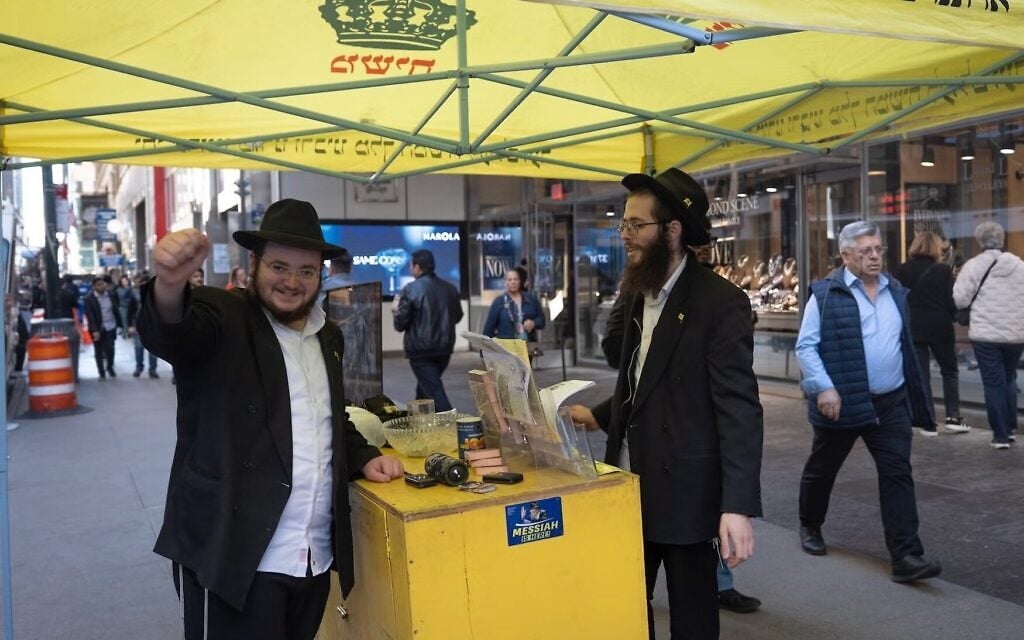
'We can’t allow some hate to stop us,' Yosef tells JTA on same Diamond District street where he was assaulted, stressing message that 'we need more mitzvahs and light in the world'
No obvious legal authority supports a pre-emptive effort to block the certification of Alaska’s Senate election if the Republican incumbent narrowly loses.
"You Can See Everything," the documentary co-directed by Lance Oppenheim and Nathan Fielder, is a breakthrough success. It follows Elizabeth Holmes, the convicted founder of Theranos, just weeks before she goes to prison. The intimate access and the questions it raises are the talk of this fall movie season. Jeffrey Brown sat down with Alissa Wilkinson for our arts and culture series, CANVAS.
The new Elizabeth Holmes documentary is reviving interest in the Theranos scandal.
Hulu, Spotify, and Apple all saw audience growth for titles related to the Silicon Valley saga.
The "You Can See Everything" doc, released on October 16, has quickly become a smash hit.
The new smash-hit documentary about disgraced biotech founder Elizabeth Holmes is fueling a fresh wave of fascination with the saga surrounding one of Silicon Valley's biggest scandals.
Nathan Fielder and Lance Oppenheim's film, "You Can See Everything," follows Holmes, the ex-CEO of blood-testing startup Theranos, in the weeks before she began her 11-year prison sentence for defrauding investors.
Ahead of the October 16 release of the nearly three-hour documentary, viewers flocked to Hulu's 2022 miniseries, "The Dropout," in which actor Amanda Seyfried starred as Holmes.
Streaming hours for the Hulu original show skyrocketed 186% in September over August and then surged 92% the week of "You Can See Everything's" release compared to the week prior, a spokesperson for Disney, which owns Hulu, said.
The eight-episode series, also available on Disney+, has been streamed for over 2 million hours since September, the spokesperson said.
The renewed spotlight on the rise and fall of Holmes' Theranos is also driving listeners back to ABC News' "The Dropout" — the true crime podcast on which Hulu's drama was based.
Plays of "The Dropout" podcast across Spotify and Apple climbed nearly 400% the week the "You Can See Everything" teaser trailer was released, from September 7 to September 13, according to data from ABC News provided by the Disney spokesperson.
Listenership was up more than 900% over the new film's release weekend and has continued to soar, the spokesperson said, adding that Tuesday saw the highest number of plays in a single day since "You Can See Everything" was announced.
A Spotify spokesperson told Business Insider that Wednesday marked the "The Dropout" podcast's biggest streaming day on the platform since the documentary's release, with a 305% uptick in US listeners compared to the average listening volume over the prior 30 days.
The audiobook of "Bad Blood: Secrets and Lies in a Silicon Valley Startup," by journalist John Carreyrou, has also drawn a wave of new listeners. Carreyrou's reporting for The Wall Street Journal exposed Theranos' flawed blood testing devices.
According to the Spotify spokesperson, Carreyrou's audiobook saw its biggest spike Thursday, with a 560% jump in US listeners.
The book sat at No. 6 on Amazon's best seller list for business and money as of Friday.
In January 2022, following a nearly four-month trial, Holmes was convicted of four federal counts of conspiracy and wire fraud in connection with a scheme to dupe investors in Theranos out of hundreds of millions of dollars.
Holmes reported to a minimum-security women's prison camp in Texas on May 30, 2023, after being handed an 11-year-and-three-month sentence.
The onetime Silicon Valley darling repeatedly claimed Theranos — once valued at $9 billion — had developed a revolutionary blood analyzer capable of running hundreds of tests with only a few drops of blood from a finger.
Freelance journalists in Gaza are risking their lives to document the genocide, often with no protections from the news agencies that hire them and rely on their work.
LeBron James' multimillion-dollar real estate portfolio is as impressive as his NBA career.
His portfolio includes a $36.75 million Beverly Hills property where he's building a compound.
He also purchased a home in Coconut Grove. Take a look at the homes he's owned over the years.
LeBron James has had a legendary run on the court. The four-time NBA champion has played for the Cleveland Cavaliers, Miami Heat, Los Angeles Lakers, and now the Philadelphia 76ers, winning titles with his first three teams.
His real estate portfolio has grown alongside his career. James has bought homes near most of the cities where he has played, building a multimillion-dollar collection of properties in the process.
Forbes estimates James' net worth to be $1.4 billion as of publication. Over the years, he has secured lucrative endorsement deals and business ventures with brands including Nike, Beats by Dre, PepsiCo, and Fanatics.
Now, James is reportedly living in a luxury building in New York City and commuting by helicopter to Philadelphia for 76ers games and to the team's practice facility in Camden, New Jersey (the flights are covered through his partnership with Fanatics) — a routine that has drawn criticism from some fans.
Take a look at some of the properties James has purchased over the years, from a custom-built home in Akron, Ohio, to a 13,000-square-foot mansion in Beverly Hills.
The NBA star's first real estate purchase was a home worth more than $ 2.1 million outside Akron, Ohio.
In 2018, LeBron James, in partnership with Akron Public Schools, opened the I Promise School.
Allison Farrand/NBAE via Getty Images
James was born and raised in Akron, Ohio, and the city remains a big part of his life.
In 2003, after the Cleveland Cavaliers drafted him at age 18, he purchased an almost seven-acre property in Bath Township, a community just outside Akron, for more than $2.1 million.
After tearing down the property's existing home, he built a 30,000-square-foot house in its place. The six-bedroom, fourteen-bathroom home includes a recording studio, a full barbershop, a home theater, a sports bar, and a two-lane bowling alley, Robb Report reported.
While James spends much of his time outside of Ohio these days, he's still very connected to Akron.
In 2018, through the LeBron James Family Foundation, he opened the I PROMISE School in partnership with Akron Public Schools. The public elementary and middle school serves at-risk kids, providing them with free meals and transportation. Eligible students also receive free tuition to the University of Akron.
James bought a $9 million home in Coconut Grove before it was cool.
James briefly owned this home in Miami.
Courtesy of Opulence International Realty
In 2010, after seven years with the Cavaliers, James announced during a live, hourlong ESPN special that he would be joining the Miami Heat. The move became one of the most controversial moments in NBA history.
While many Cleveland fans saw it as a betrayal, Miami welcomed James with open arms. That year, he purchased a 13,930-square-foot, six-bedroom home in Coconut Grove for $9 million.
After four years with the Heat, during which James helped bring home two championships along with fellow superstars Dwyane Wade and Chris Bosh, he listed his Miami home for $17 million. After returning to Ohio, the home eventually sold for $13.4 million, Realtor.com reported.
A Realtor.com listing shows the home was last sold for 18.5 million in 2023. It's no surprise its value has climbed. Over the years, Coconut Grove has become one of Miami's hottest and wealthiest neighborhoods, attracting high-profile residents including Citadel CEO Ken Griffin and Google's cofounder and former CEO Larry Page.
James liked Brentwood so much that he bought two mansions in the neighborhood.
Brentwood, a neighborhood in California.
Adam Mustafa/Getty Images
James returned to his hometown to play for the Cavaliers in 2014. But when he bought a $21 million, six-bedroom mansion in Brentwood the following year, it sparked rumors that he could eventually move to the Lakers.
The 9,440-square-foot colonial-style home had eight bathrooms and amenities, including a basketball court, a home gym, and an infinity pool. James eventually sold the home for $19.6 million in 2021, Robb Report reported.
In 2017, James purchased a second Brentwood property for $23 million. The newly built mansion had eight bedrooms, marble floors, 14-foot ceilings, and a rooftop terrace overlooking Los Angeles.
The speculation about James joining the Lakers proved right in 2018, when he signed a four-year, $153.3 million deal with the team. In 2020, he led the team to an NBA title and became the first player in league history to win Finals MVP with three different teams.
James bought a Beverly Hills mansion for $36.75 million and is building a compound in its place.
Lerbonn James bought a $TK home in Beverely Hills.
Alexis Gonzalez/Getty Images
In 2020, James made his biggest real estate purchase to date when he bought a 13,000-square-foot mansion in Beverly Hills for $36.75 million.
The mansion, which sat on 2.5 acres, was built in the 1930s and once belonged to Lee Phillip Bell, the co-creator of the soap operas "The Young and the Restless" and "The Bold and the Beautiful," Realtor.com reported.
In 2023, he demolished the existing home and began building a new compound from the ground up. According to Robb Report, the plans call for two homes: a roughly 16,000-square-foot, two-story main house with a 7,700-square-foot basement garage, pool, spa, and outdoor kitchen; and a 6,550-square-foot, one-story guesthouse with a basement theater and hot-and-cold plunge pools.
James is living in New York during the basketball season, while his wife, Savannah, and their daughter remain on the property as construction continues.
In October, the couple gave Vogue a look inside the property. Among their most treasured features in the home is an OxyHealth hyperbaric chamber, the Vitaeris 320 model, which, according to the health website Regenerated, can cost between $ 18,000 and $23,000.
Solo due partite, tanto basta per capire che LeBronJames non ha voglia di scherzare a Philadelphia. Una media di oltre 15punti, quasi 10 rimbalzi e 6 assist. Andate a vedervi le cifre a fine carriera di alcune tra le più longeve star del passato. Si, gente di “poco conto” tipo KarlMalone, VinceCarter o PatrickEwing. Il Prescelto sta in universo a parte, non solo per le cifre. Anche per condizione atletica e intensità di gioco. Anche JaylenBrown non è partito male, nonostante incastri e gerarchie abbiano ancora bisogno di tempo per acquisire fluidità e automatismi. Joel Embiid? È sembrato rassicurantemente in forma. A rimbalzo può dare sicuramente di più (come cantava qualcuno…), ma le ginocchia sono quelle che sono. Tuttavia, al momento, non sembra esserci discussione alcuna, la stella della squadra è un certo TyresMaxey. E da queste fasi iniziali, i compagni di squadra sembrano anche averlo accettato di buon grado.
Talento irreale, guardia tiratrice “elettrica e veloce”. Fate conto un RobertPack (esplosivo playmaker di Denver degli anni ’90) che corre alla velocità del suono palla in mano per tutto il campo, solo che Maxey ha una completezza offensiva degna di un MitchRichmond nel picco di carriera. Nel ha messi 32 nella rimonta di stanotte contro Cleveland. Ne aveva segnati 28 nella serata di apertura contro NewYork. Sempre il miglior marcatore dei suoi. Somiglia sinistramente ad Allen “The Answer” Iverson per velocità sul primopasso, capacità di superare il difensore dal palleggio, abilità nel segnare in traffico. Fisico scolpito nel granito, grande esplosività, pazzesca velocità di base, eccezionale palleggio. Una superstarfatta e finita. Tyrese “The Second Answer” Maxey?
Ottimo esordio, ma con sconfitta, per Paul George
I Celtics hanno perso contro i DetroitPistons nella prima gara di stagione. Ma PaulGeorge, dopo anni in cui ha spesso arrancato (causa anche frequenti guai fisici), è parso davvero tirato a lucido. Ed è un’ottima notizia per Boston, anche perché sopperire alla dipartita di uno del calibro di JaylenBrown non è certo la cosa più semplice del mondo. Nella serata di apertura, George ha segnato ben 38punti, record per un esordio in maglia bianco verde, con un’interpretazione del gioco dal perimetro di livello “RayAllen”. Per lui 7 su 12 da tre e la sensazione di poter trovare la retina tutte le volte che alzava il braccio dopo uno scarico di un compagno.
Le primavere, ben 36, non sono più cosìpoche e non si può certo sperare che ritornil’iradiddio che era in maglia IndianaPacers. Tuttavia, se rimane sano, PaulGeorge può essere particolarmente efficace nella filosofiaoffensiva di coach Mazulla, alleggerire le spalle di Tatum e White in attacco, garantire un altro punto di riferimento che può essere decisivo quando conta per davvero. Sarà in grado di far dimenticare ciò che Brown faceva in campo? No, quello no. Intanto, dovrebbe iniziare a non farlo rimpiangere. Compito complesso.
Cunningham: il ritorno di Gran Hill?
Ricorda molto GrantHill per il modo in cui attacca il canestro dal palleggio, con (molto) meno stacco da terra, ma più visione di gioco rispetto all’ex stella dei Pistons. Ha letteralmente diretto l’orchestra di Detroit come se fossero alla prima de La Scala, portando la squadra alla vittoria proprio contro i BostonCeltics. Ha chiuso con 22punti e 8 assist. Certo, ha tirato maluccio sia dal campo (8 su 18) che da tre (1 su 6). Mani fredde, cuore caldo. Ha giocato una gara sempre in controllo, ha organizzato l’attacco, messo in ritmo i compagni (Jalen Duren dovrebbe fagli una statua…), leggendo in modoappropriatoritmi e spaziature.
Cade Cunningham non ha bisogno di segnare per incidere, è quel tipo di giocatore davvero poco egoista, che fa rispendere i compagni. All-aroud dalla tecnica sopraffina, tratta bene la palla, può agire in modonaturale come portatore primario, ma sa anche muoversi lontano dalla palla. Il tirodafuori, appunto, continua a essere altalenante. Anche nella sua miglior stagione dal perimetro, non è andato mai oltre il 35%. Se migliora anche in questo fondamentale, può puntare all’MVP, se non come premio in sé stesso (qualcuno tra SanAntonio, OklahomaCity e Denver potrebbe avere qualcosa da ridire), almeno come livello di gioco. Ma Detroit deve continuare a far bene.
The move comes amid increased attention to the worsening humanitarian crisis in the city, which over the past weeks has gained international attention, including from Pope Leo XIV.

 Login