❌

Reading view

Ukraine war briefing: Russian diesel tankers headed for North America, says Moscow, as US tries to revive peace talks

Tankers part of US-Russia deal that could see 500,000 metric tonnes of fuel supplied to world market this month. What we know on day 1,704

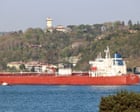
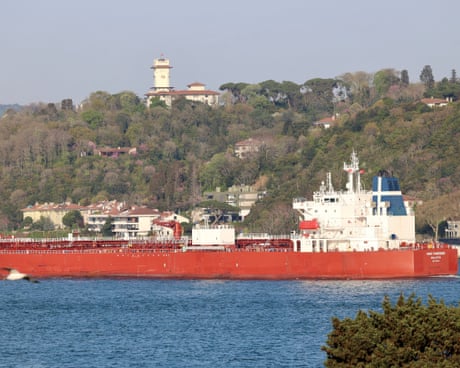
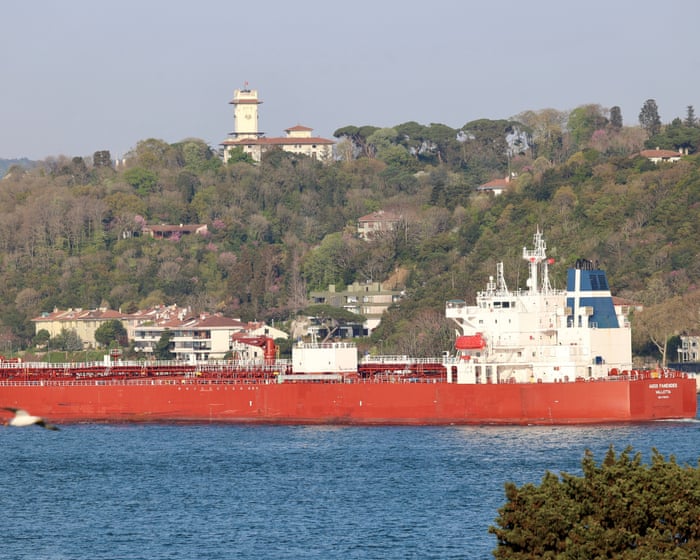
Three tankers carrying Russian diesel are on their ⁠way to North America, Russian deputy prime minister Alexander Novak said ⁠on Friday. In ​a statement quoted by Russian news agencies, Novak said the cargoes were ⁠part of a deal that could see Russian companies supply 500,000 metric tonnes to US and world markets in October. “The first ⁠three fuel tankers are already on their ​way to the eastern ‌coast of ‌the Atlantic Ocean, with significant support from the ‌RDIF (Russian Direct Investment Fund),” Novak said. Under a deal announced this month by US president Donald Trump, Russia agreed ‌to supply diesel to global markets in an effort to lower fuel ​prices in return for Trump temporarily lifting US sanctions on Russian fuel. Reuters reported that the Malta-flagged ⁠medium-sized tanker Agioi Fanendes, loaded with ultra-low sulphur diesel, is expected to arrive in ‌the US on 7 November.

The White House has said that Russia and Ukraine have agreed to a ceasefire in the Russian-occupied city of Oleshky, where a deepening humanitarian crisis has left thousands of civilians struggling to survive. In a statement on Friday, the White House said both sides had agreed to halt all military operations in the city from 27 October to allow humanitarian aid deliveries and preparations for the evacuation of civilians. Residents of the southern Ukrainian city, which has been under Russian occupation since February 2022, have described increasingly desperate conditions amid severe shortages of food, water and electricity. An estimated 2,000 people remain in the city, with some reportedly forced to survive on weeds, boiled grass, bread and meagre rations. Both Russian and Ukrainian officials said all sides were close to agreeing to a ceasefire.

The Oleshky ceasefire comes as the US is trying to organise new talks aimed at ending the war. Ukrainian president Volodymyr Zelenskyy said on Friday negotiators from Ukraine, Russia and the US have agreed to technical-level meetings in the first half of November in Abu Dhabi. A US official later said the three ⁠countries may hold their next talks in a couple weeks in Abu Dhabi or Switzerland. Zelenskyy said he hoped a meeting of the countries’ leaders would follow.

The peace efforts follow a rift between Washington and Kyiv in recent weeks and a series of moves by Trump seen as favouring Russia, including limitations being placed on the Starlink communication system that Ukraine uses to protect against incoming attacks. Trump said on Friday that if Ukraine still faced a problem accessing the system, he would straighten it out ​and, if necessary, speak about the matter to SpaceX CEO Elon Musk.

As the UK government prepares next week for the first budget under Andy Burnham’s leadership, EU leaders have pressed the new prime minister at a summit in Brussels to contribute more to Ukraine’s defence effort. EU officials say Canada and Japan also should do more to support Ukraine.

The UN nuclear watchdog IAEA said ⁠Fiday ​that repairs to key ⁠power infrastructure near Ukraine’s Zaporizhzhia ⁠nuclear power ​plant ‌had been completed ‌under a ‌temporary ceasefire it brokered. The repairs strengthened the plant’s connection ‌to its sole remaining external power ​line, known as Ferosplavna-1, reducing the ⁠risk of another ​loss of ​off-site ​electricity at ​Europe’s largest ‌nuclear ​power ​station.

Continue reading...

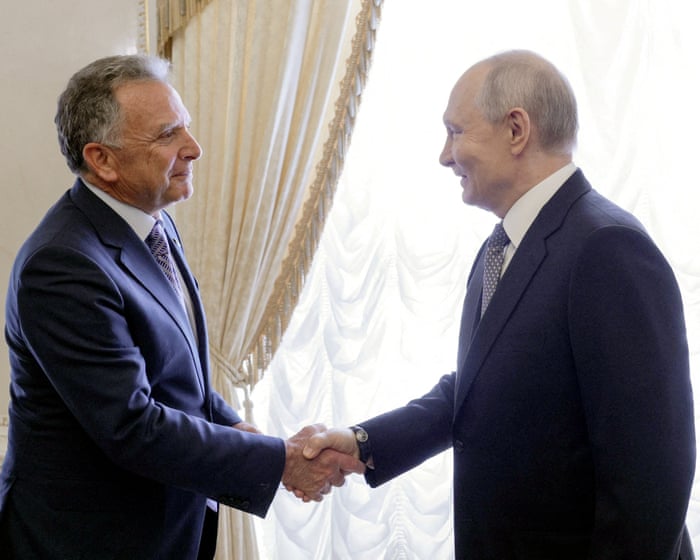
© Photograph: Yoruk Isik/Reuters
© Photograph: Yoruk Isik/Reuters
© Photograph: Yoruk Isik/Reuters

  •  

Ukraine war briefing: Uncertainty over Kyiv’s Starlink access after Trump claims Musk restored service

US president says Starshield military communications system is back, but declines to comment on whether he spoke to Musk on the matter. What we know on day 1,703

Donald Trump has claimed that SpaceX CEO Elon Musk fully restored Ukraine’s Starlink access, restrictions on which have hampered Ukraine’s attack missions and air defence. However, a senior European official told the Associated Press on Thursday that nothing has changed in the operation of the military-grade Starshield service. The Wall Street Journal reported that Trump had called Musk and asked him to lift restrictions on Ukraine’s use of ⁠the system. Trump on Thursday appeared to confirm that the service had been down, but claimed it was once again working at optimal speeds. “You know, whether I called or whether somebody else called, doesn’t make any difference,” he said. “I guess the bottom line, he put it back.”

Questions over who ordered interruptions to Starshield – which plunged relations between Kyiv and Washington to a new low – have ignited a blame game within the Trump administration and its allies. Trump has denied being involved in the decision concerning the slowdown, while US secretary of state Marco Rubio has said that decisions regarding Ukraine’s access to Starlink were up to its parent company SpaceX and Musk, not the White House. Musk last week posted to X: “Starshield systems are owned and controlled by the US government. Any limits on speed or usage are decided by the US military and ultimately POTUS.” President Volodymyr Zelenskyy said ⁠on Thursday – before Trump’s latest comments – that Starlink had not ⁠been fully restored.

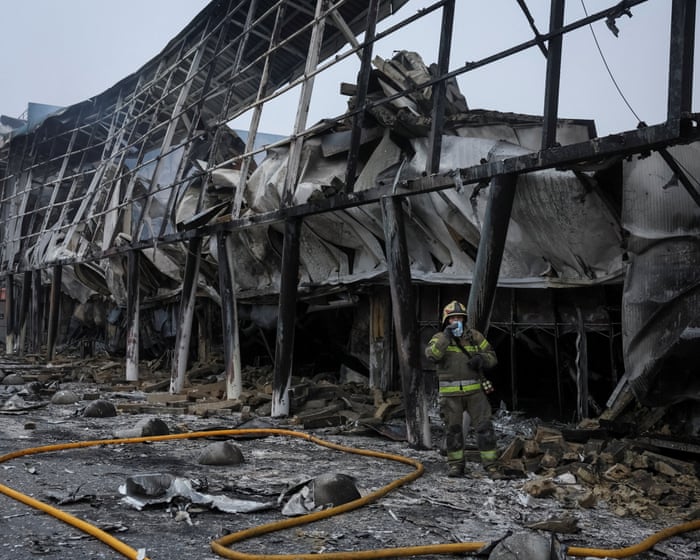
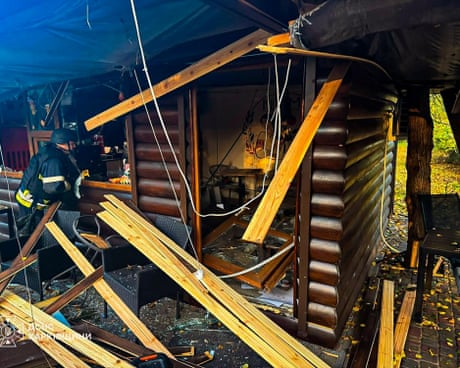
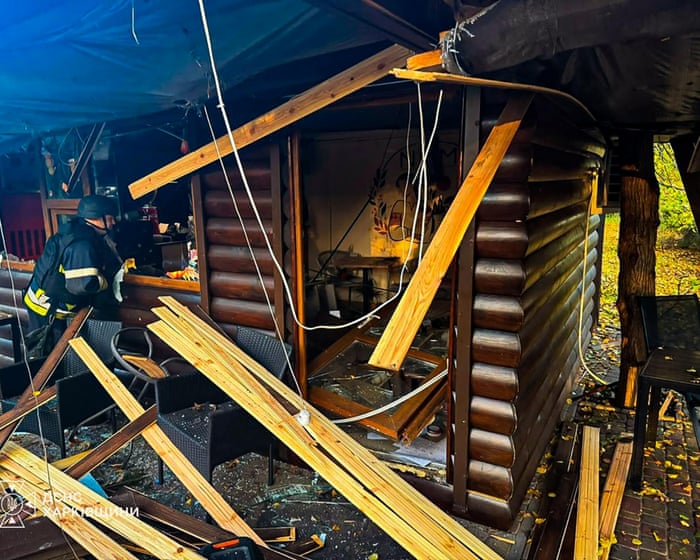
Russia pounded Kyiv with ballistic missiles overnight, after US envoy Steve Witkoff met Vladimir Putin to discuss the resumption of peace talks. Russia’s aerial attacks hit 12 regions of Ukraine, killing at least four people and wounding scores of others, including five children, Zelenskyy said on social media Thursday. Two women, aged 50 and 60, were killed and dozens of other people were wounded in a Russian strike on a market in Lozova, in Ukraine’s northeeastern Kharkiv region, said Oleh Syniehubov, head of the regional military administration. Another person was killed in other strikes on Kharkiv.

Downing Street has rejected the description of Putin as a “humanitarian” made by Witkoff after meeting the Russian president. When asked about the US envoy’s comments, a Downing Street spokesperson said: “We certainly do not recognise that characterisation, and President Putin has killed thousands of people, both innocent Ukrainians and his own Russian people, who he has sent to their deaths on the frontline.” Ukrainian foreign minister Andrii Sybiha chided Witkoff for flattering Putin, saying on social media the latest “brutal” Russian attacks demonstrate “what Russian ‘humanism’ truly sounds like.”

Nato member Denmark said on Thursday it has agreed to buy its first ⁠long-range precision missiles as ⁠it seeks to bolster its security to deter Russian aggression in Europe, drawing condemnation from Moscow. Defence minister Jeppe Bruus said the new missile systems would boost Denmark’s capabilities and enable strikes “behind enemy lines” ⁠if attacked. “We’re in a serious and deteriorating security situation and that ​is why we are ‌building up the defence ‌and strengthening our combat power,” he said. The Russian embassy in ‌Copenhagen said Denmark’s missile policy aimed at confrontation with Moscow and warned of “inevitable disastrous consequences”.

Romania will accelerate development of surveillance capabilities and equipment to counter mines ⁠and drones in the Black Sea after a series of drone attacks on commercial ships off ⁠its coast, its ⁠top defence council ​said on Thursday. At least seven cargo ships have been hit near the coasts of Nato members ⁠Romania and Bulgaria in the past two weeks, with 30 sailors reported dead or missing.

No ⁠deals should ​be made to buy gas from ⁠Russia as long as Moscow’s war ⁠in Ukraine continues, Finland’s prime ⁠minister Petteri Orpo said in Kyiv on Thursday. The EU banned Russian pipeline gas under short-term contracts ​from 17 June, and will ​apply it to long-term contracts from 1 November next year. Senior Russian political and energy officials meanwhile have urged the EU to reconsider plans to ban imports of ⁠Russian LNG, arguing the bloc’s ⁠low storage levels ​had put Europe in a precarious position. “I ‌hope there is still time to reconsider these decisions,” Leonid Mikhelson, the head of Novatek, Russia’s largest liquefied natural ‌gas producer, told an economic forum in Istanbul on Thursday. “Europe should support its industry, in my view. There is still time.”

Continue reading...

© Photograph: Gleb Garanich/Reuters

© Photograph: Gleb Garanich/Reuters

© Photograph: Gleb Garanich/Reuters

  •  

Ukraine war briefing: New peace proposals lack ‘substance’, says Kremlin after Witkoff-Putin meeting in Russia

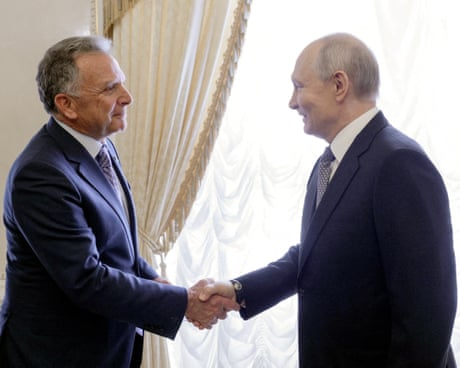
US envoy Witkoff presented Putin with proposals drafted by Zelenskyy and European leaders in Oslo earlier this week. What we know on day 1,702

Continue reading...

© Photograph: Gavriil Grigorov/Reuters

© Photograph: Gavriil Grigorov/Reuters

© Photograph: Gavriil Grigorov/Reuters

  •  

Ukraine war briefing: US envoy Witkoff to meet Putin after ‘constructive’ talks with Zelenskyy in Norway

Talks in Oslo made ‘meaningful progress’ toward engaging Russia, a US official said. What we know on day 1,701

US envoy Steve Witkoff will meet Russian president Vladimir Putin on Wednesday after what a US official called “constructive” talks with Ukrainian president Volodymyr Zelenskyy in Norway. The US official said Ukraine brought forward new ideas and proposals to the Oslo talks, which also involved the leaders of Norway and Finland ⁠and European and Nato representatives, and that participants made “meaningful ⁠progress” toward a coordinated approach to engaging Russia.

The official, who ​spoke to Reuters on the condition of anonymity, said the talks covered “key elements of a comprehensive peace framework”, including security guarantees for Ukraine, a postwar economic plan and a broader European security architecture. Witkoff would aim to “create a pathway toward direct trilateral and broader multilateral negotiations”, the official said. US president Donald ⁠Trump on Tuesday ⁠called ​on Ukraine to make a deal ⁠to settle the war with Russia. “Ukraine has to ⁠want to settle this ​war,” Trump ‌told reporters.

Zelenskyy travelled to Oslo seeking to repair relations with Washington, which have sunk to new lows. Trump’s recent gestures toward Moscow, including a deal to buy Russian diesel and a waiver of new sanctions, have sparked bipartisan pushback in the US Congress and worry in European capitals. Zelenskyy said he had ​discussed “Article 5-like” security guarantees, referring to the Nato stipulation that an attack on one ally is an attack on all. “I am ‌thankful to the American side that they underlined again that it will ‌be strong,” he said.

Elon Musk last week ordered the slowdown of a military-grade ⁠version of SpaceX’s Starlink satellite service that Ukraine relies on, the Wall Street Journal reported on Tuesday, citing US ⁠officials and people familiar ⁠with the ​matter. Musk, SpaceX and the White House did not immediately respond to Reuters requests for comment. Ukraine uses the service – known as Starshield – for battlefield communications and drone operations. Restricting the satellite service hampered the country’s attack and air ⁠defence drone missions against Russia.

US defence secretary Pete Hegseth meanwhile insisted Tuesday that the Pentagon had not directed any changes to Starshield, saying: “We haven’t pulled anything back.” “Nothing’s changed from our view. We haven’t made any directives or anything like that,” he said. On Friday, Trump said he did not request any curbs to Starshield. “It wasn’t me. And I don’t think it was Elon,” Trump said. Musk previously said that “any limits on speed or usage” of Starshield systems were “decided by the US military and ultimately POTUS.”

Nato said Tuesday it was deploying additional planes, drones and radar systems to the Black Sea after a string of attacks on ships near Romania and Bulgaria in the latest spillover from Russia’s war on Ukraine. “Allies have or will send additional maritime patrol aircraft, radar systems, explosive exploitation teams, intelligence personnel, drones, and more to the Black Sea,” said Col Martin O’Donnell, a Nato spokesperson. “The most important thing we can do, however, is to increase our situational awareness in the region through increased sensors and data sharing,” he added.

The ⁠Russian military ⁠struck ​three cargo vessels in Ukraine’s ⁠port of Reni and two ⁠other cargo vessels en ​route ‌to ‌Odesa, Russia’s defence ‌ministry said on Tuesday. Russian forces also hit two logistics hubs in ‌the Volyn region and in the ​city of Khmelnitskiy, it said, adding that ⁠the vessels and hubs ​were ​all being ​used for ​military ‌purposes. Russia also unleashed another missile and drone blitz of civilian areas in Ukraine on Tuesday, killing at least nine people, officials said.

The Kremlin said Tuesday that work was under way to ease ⁠the humanitarian ⁠situation ​in the Russian-controlled town of Oleshky in southern ⁠where residents have reported a worsening food crisis. Kremlin spokesperson ⁠Dmitry Peskov said ‌Putin had ‌discussed the situation in Oleshky with Trump and told him that Russia’s human rights commissioner was engaged on the issue.

Continue reading...

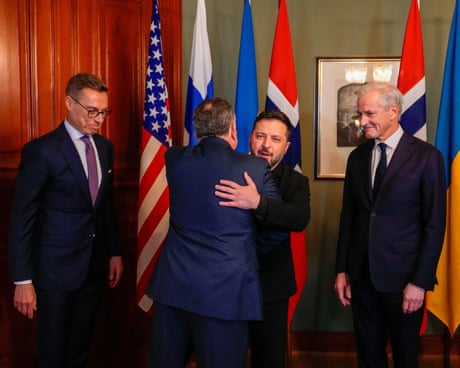
© Photograph: Heiko Junge/Reuters

© Photograph: Heiko Junge/Reuters

© Photograph: Heiko Junge/Reuters

  •  

Ukraine war briefing: Zelenskyy claims US deliberately delaying interceptor missile deliveries to Kyiv

Ukrainian president tells US senators the delayed missiles have already been paid for by European countries, amid growing rift. What we know on day 1,700

Continue reading...

© Photograph: UKRAINIAN EMERGENCY SERVICE/AFP/Getty Images

© Photograph: UKRAINIAN EMERGENCY SERVICE/AFP/Getty Images

© Photograph: UKRAINIAN EMERGENCY SERVICE/AFP/Getty Images

  •  

We need to stop disinformation in UK political adverts. Here’s a chance to do so | Letter

Alex Tait on a proposed amendment to the representation of the people bill, and Dr Joseph Mullen on Russian interference in the Brexit referendum

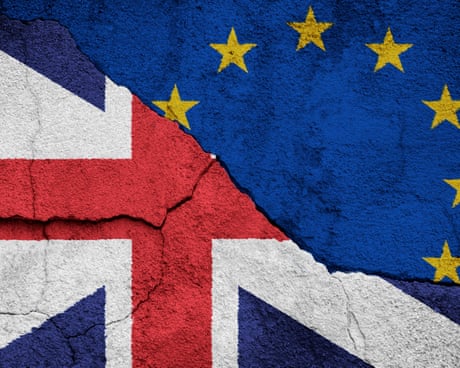
Andy Burnham’s comments about Russian interference in Brexit (Report, 11 October) and the warning by the MI5 chief, Ken McCallum, against exaggerating its impact (Report, 13 October) risk overlooking another serious threat to electoral integrity: disinformation from our own political parties and campaigners.

Foreign interference deserves scrutiny, but misleading factual claims in electoral advertising are unregulated, unlike in commercial advertising. We have four sets of rules to ensure an advert for a packet of sausages is accurate, but none for the most important advertising of all – ads that influence how we vote.

Continue reading...

© Photograph: Tuomas A Lehtinen/Getty Images

© Photograph: Tuomas A Lehtinen/Getty Images

© Photograph: Tuomas A Lehtinen/Getty Images

  •  
❌