❌

Reading view

Latinos Are Now America’s Most Important Swing Voters

Latinos helped fuel President Trump’s return to the White House. But Democrats have won back the trust of many Hispanic voters over the past two years.

© Michael M. Santiago/Getty Images

President Trump made significant inroads with Latino voters in 2024. This year, they appear to be moving back toward Democrats.
  •  

In Alaska, Some Early Voting Sites in Rural Villages Have Not Yet Opened

“There is no legal excuse” for the failure of 18 polling sites to open for early voting, a state lawmaker said.

© Kerry Tasker/Reuters

Senator Dan Sullivan finished second in the primary to Representative Mary Peltola and has trailed her in polls since.
  •  

A 2028 Presidential Poll Finds Vance, Rubio and Several Democrats in the Mix

The Democratic presidential primary race appears to be wide open, while JD Vance and Marco Rubio led among Republican voters, a New York Times/Siena survey found.

© Jillian Vordick/The New York Times

  •  

Why Democrats Could Find It Hard to Win the Senate Despite Their Strong Polls

Democrats are increasingly optimistic about the midterms. But they are being outspent by Republicans. And they are trying to compete in states that favored President Trump by large margins.

© Julia Demaree Nikhinson/Associated Press

  •  

Most Voters Believe the Midterm Elections Will Be Accurate, Poll Finds

But about half expressed concerns that Republicans could try to overturn the results, a New York Times/Siena poll found.

© Allison Robbert/Associated Press

A voters fills out their ballot on the first day of early voting on Thursday in Silver Spring, Md.
  •  

Pete Ricketts’s Wealth Puts Class at the Center of Nebraska’s Senate Race

In a year when the wealth of the rich soared while workers lost ground to inflation, class has become political, especially in the Nebraska Senate race.

© David Robert Elliott for The New York Times

A campaign sign for the Senate candidate Dan Osborn adorns a stretch of farmland in Nebraska.
  •  

About That Contested Elizabeth Holmes Quote to The Times

In today’s Backstory, the new Holmes film takes issue with our profile, Nikole Hannah-Jones unpacks her viral essay and a professor shares why he thinks we apply “conservative” and “liberal” labels inconsistently.
  •  

Just How Much Are Young Voters Backing Democrats Now? See the Shift.

In the new Times/Siena poll, 70 percent of young voters identified as Democrats or leaned that way — a jump from just two years ago.

© The New York Times

  •  

Most Ukrainians reject giving Russia all of Donbas. Support for resistance on rose to 62% after new US pressure, poll finds

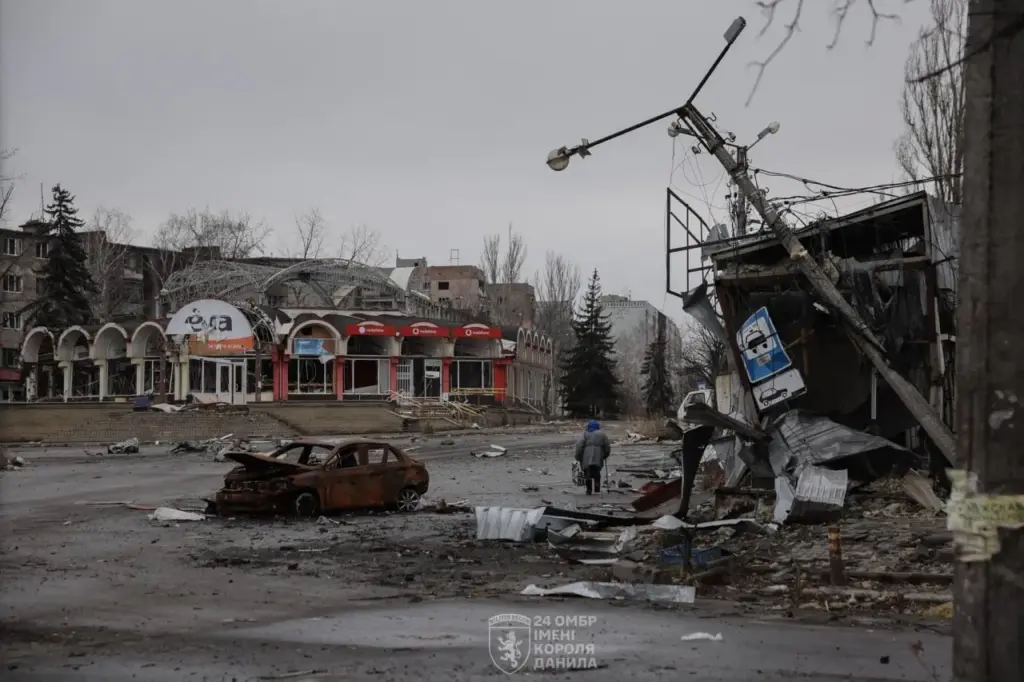
Ruins of a street in Kostiantynivka, Donetsk Oblast, 9 April 2026

A majority of Ukrainians reject handing all of Donbas to Russia in exchange for US and European security guarantees. Some 62% are ready to endure the war for as long as it takes, a survey by the Kyiv International Institute of Sociology shows.

Russia has spent the fall hammering Ukrainian cities, and Washington has eased sanctions on Russian diesel and cut Ukraine’s intelligence and Starlink speed, both apparently aimed at wearing Ukrainians down toward a capitulation. Instead, the majority calls the withdrawal of troops from Donbas categorically unacceptable, with 35% willing to accept it and 4% undecided, a position essentially unchanged since late summer.

The pressure campaign tracked the other way. Among those polled on 8-9 October, before the diesel deal and the pressure that followed, 57% were categorically opposed. Among those polled on 10-16 October, the figure rose to 62% afterward, KIIS reports.

In every region, at least half reject the trade. Resistance is firmest in Kyiv, which has borne a relentless campaign of ballistic and jet-drone strikes, where 66% are categorically against, the highest figure of any region. Even in the east, around Kharkiv, where the most are open to a compromise at 45%, 51% still rule it out.

Bracing for a long war, and ready for it

Few Ukrainians expect a quick end. Only 10% think the war will end by the close of 2026 and 13% in the first half of 2027, while 56% expect it to run into the second half of 2027 or beyond, the institute reports.

Who Ukrainians blame for blocking peace

The poll also measured who is seen as the obstacle. Asked to choose, 78% said Russia’s drive to subjugate Ukraine is what blocks peace, against 12% who blamed an inflexible Ukrainian government, and 92% said Russia strikes economic sites to wreck the economy and force capitulation, not in retaliation.

“The enemy, with its vile strikes by ballistic missiles and drones, is unable to break the spirit and will of Ukrainians,” KIIS executive director Anton Hrushetskyi says.

He argues that what Ukraine needs is “packages of interceptors for Patriot systems,” not an election or one-sided concessions dressed up as peace. The survey polled 1,031 adults across government-controlled Ukraine from 8-16 October.

  •  
❌