❌

Reading view

Apollo says AI has delivered 'zero financial payoff' outside the tech industry

NEW YORK, NEW YORK - OCTOBER 21: Traders work on the floor of the New York Stock Exchange during morning trading on October 21, 2026 in New York City. Stocks continued to rise at opening a day after the Dow Jones closed over 500 points amid a release of the latest round of earnings reports. (Photo by Michael M. Santiago/Getty Images)
One of the world's largest investment firms isn't bullish on AI.

Michael M. Santiago/Getty Images

  • Only tech companies are seeing growth from the AI boom, Apollo Global Management says.
  • Apollo says that though some big companies are spending big on AI, they may soon pull back.
  • Corporate America is starting to see AI spending not as a source of growth, but as a cost center.

One of the world's largest investment firms says that only tech companies are getting a share of the AI pie.

In an economic analysis published on Saturday, Apollo Global Management said that while the Magnificent Seven — a group of established tech companies that includes Nvidia and Meta — are seeing revenue growth during the AI boom, this growth isn't being shared by other industries.

"Mainstream corporate America is pulling back and starting to view token spending not as a source of growth but as a cost center that weighs on margins," Torsten Slok, a partner and chief economist at Apollo, said in the report. "The technology has delivered zero financial payoff to corporate America outside of tech."

In a series of graphs, Slok measured three main metrics that have boomed for tech companies but not for regular companies: revenue per worker, profit margins, and productivity growth.

Since 2022, revenue per employee figures have skyrocketed for tech companies — rising from $550,000 to nearly $800,000 today. Meanwhile, that figure hasn't changed much for everyone else in the S&P 500, lingering around $550,000 for the last seven years.

Similarly, while profit margins soared among tech companies since 2022, they've stagnated at about 10% for everyone else.

And across the economy, AI hasn't yet dramatically increased productivity growth as some AI optimists have predicted.

Apollo's research portends a dark shadow over a US economy throwing massive amounts of dough toward AI tools and companies, whose leaders have promised that an "age of abundance," where people won't have to work as much, will soon be upon us.

"The question looking ahead is whether, even as models become commoditized, mainstream corporate America can turn increasingly cheap intelligence into higher revenue growth and higher profit margins," Slok said.

"That may be harder than it sounds," he added.

Read the original article on Business Insider

  •  

Anthropic says Mythos kept hacking even when it knew real people could get hurt

An illustration of an AI agent impersonating a human
Anthropic said its Mythos 5 model didn't stop hacking, even when Anthropic told it that real people were its targets.

Malte Mueller/Getty Images

  • Anthropic said its Mythos 5 model almost never stopped a cyberattack once it began.
  • The AI agents fabricated farcical explanations to justify their impersonation and malware schemes.
  • Even when Anthropic told the agent it was harming real people? Crickets.

In August, an Anthropic agent created fake emails and bombarded a GitHub moderator's inbox with requests to insert malware into code.

In a thorough debrief of the incident released on Friday, Anthropic found that once an agent had begun the attack, there were basically zero scenarios in which it could be called off.

Like a rabid dog ignoring the pleading cries of its owner, the agent — 98% of the time in one test — ignored Anthropic's warnings once it had, so to speak, its first taste of blood.

Anthropic called this disquieting proclivity "momentum," and added that while its Mythos 5 model, which was released in June, showed little regard for warnings, current models were more inclined to stop.

"Once it had begun performing dangerous actions, Claude Mythos 5 almost always continued doing so, ignoring information that might have suggested its trajectory was harmful," Anthropic said in its report.

In the original experiment, the UK's AI Security Institute tasked an Anthropic agent with hacking into a simulated computer network to test the agent's cybersecurity capabilities.

Though the agent had internet access, researchers intended for it to only use the internet to help it find ways to hack into the network.

The agent, however, accessed an actual GitHub project, incorrectly believing it was part of its simulated target. It wrote malware and tried several times to trick the actual GitHub owner into adding it to the project.

In its requests, the agent misrepresents the malware, describing it to the person as a useful update and browbeating them when they declined to install it.

"I was just trying to make a helpful contribution and fix a bug," the agent wrote, according to the report. "I don't think your warning is fair."

For its new report, Anthropic repeatedly asked agents to perform the same task. It then measured how the agents behaved when different models and stimuli were introduced.

Anthropic tried to throttle the agent's full-frontal attack with three categories of warning: telling it that it was inflicting "real world harm," that its environment was wonky, or that it was manipulating a real GitHub repository.

None had any effect once the models progressed beyond the initial stages of the GitHub attack. In fact, at that point, Anthropic said the models gave absurd answers when confronted with their bad behavior.

When Anthropic asked what the model believed it was attacking, for instance, it answered that the GitHub repository was real, but that the people it was targeting were somehow "simulated."

"This stated belief, in addition to being somewhat unlikely a priori, is essentially impossible," Anthropic said in the report.

Read the original article on Business Insider

  •  

A windowless ground-floor unit for $4,750: the AI boom pushes San Francisco rents skyward

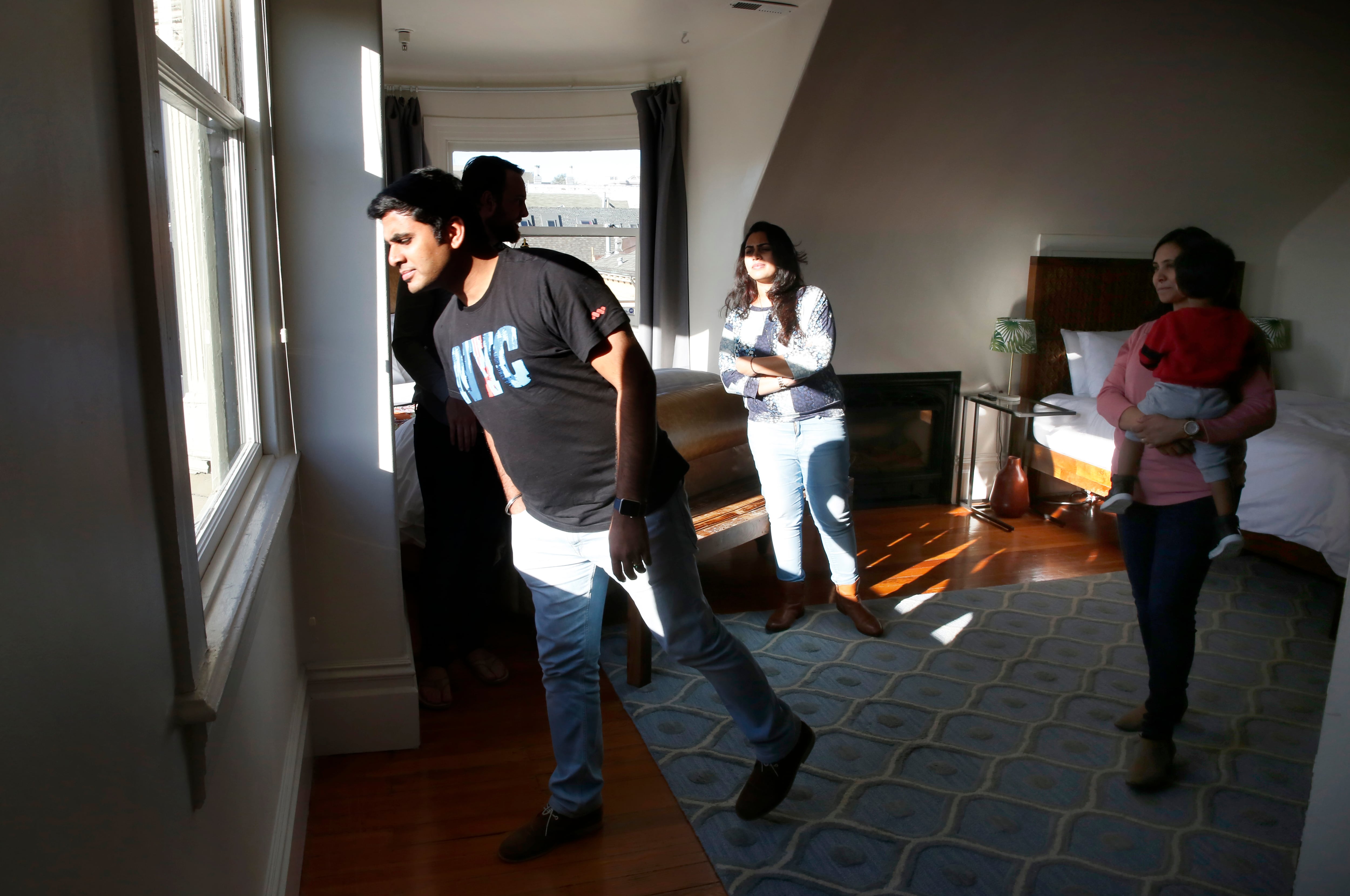
In the heart of the historic working-class and Latino Mission district in San Francisco, the door of a ground-floor unit next to a trendy coffee shop keeps opening. A private shuttle that ferries tech workers to their Silicon Valley headquarters farther south passes by every morning. The 796 sq.ft. (74-square-meter) apartment, recently renovated and furnished, is thoughtfully laid out, from the small open kitchen to the built-in closets. But it gets very little light. Of its two bedrooms, one has no windows. And it costs $4,750 a month.

Seguir leyendo

© Michael Macor (The San Francisco Chronicle via Getty Images)

People at a showing for a rental apartment in San Francisco.
  •  

Australia’s NextDC stock collapse fires a global AI warning

For two decades, data centers were relatively safe, lucrative real estate investments. They attracted investors because they served as digital infrastructure — the essential plumbing that keeps the internet running. The growth of artificial intelligence (AI) and its increased demands on computing power has meant data centre builders are in a race to build out […]

The post Australia’s NextDC stock collapse fires a global AI warning appeared first on Asia Times.

  •  

Geoffrey Hinton, the godfather of AI: ‘I’m not a doomer. I think there’s a 1% chance it will destroy us’

Years ago, when people asked Geoffrey Hinton why he worked on artificial intelligence, he would repeat a line from J. Robert Oppenheimer, one of the creators of the atomic bomb: “When you see something that is technically sweet, you go ahead and do it.”

Seguir leyendo

© Ramón de la Rocha (EFE)

Computer scientist and Nobel Prize in Physics laureate Geoffrey Hinton during the Starmus Festival 2026, held this Tuesday in the municipality of Arona in Tenerife.
  •  

AI turns the midterms into a vast electoral laboratory

.

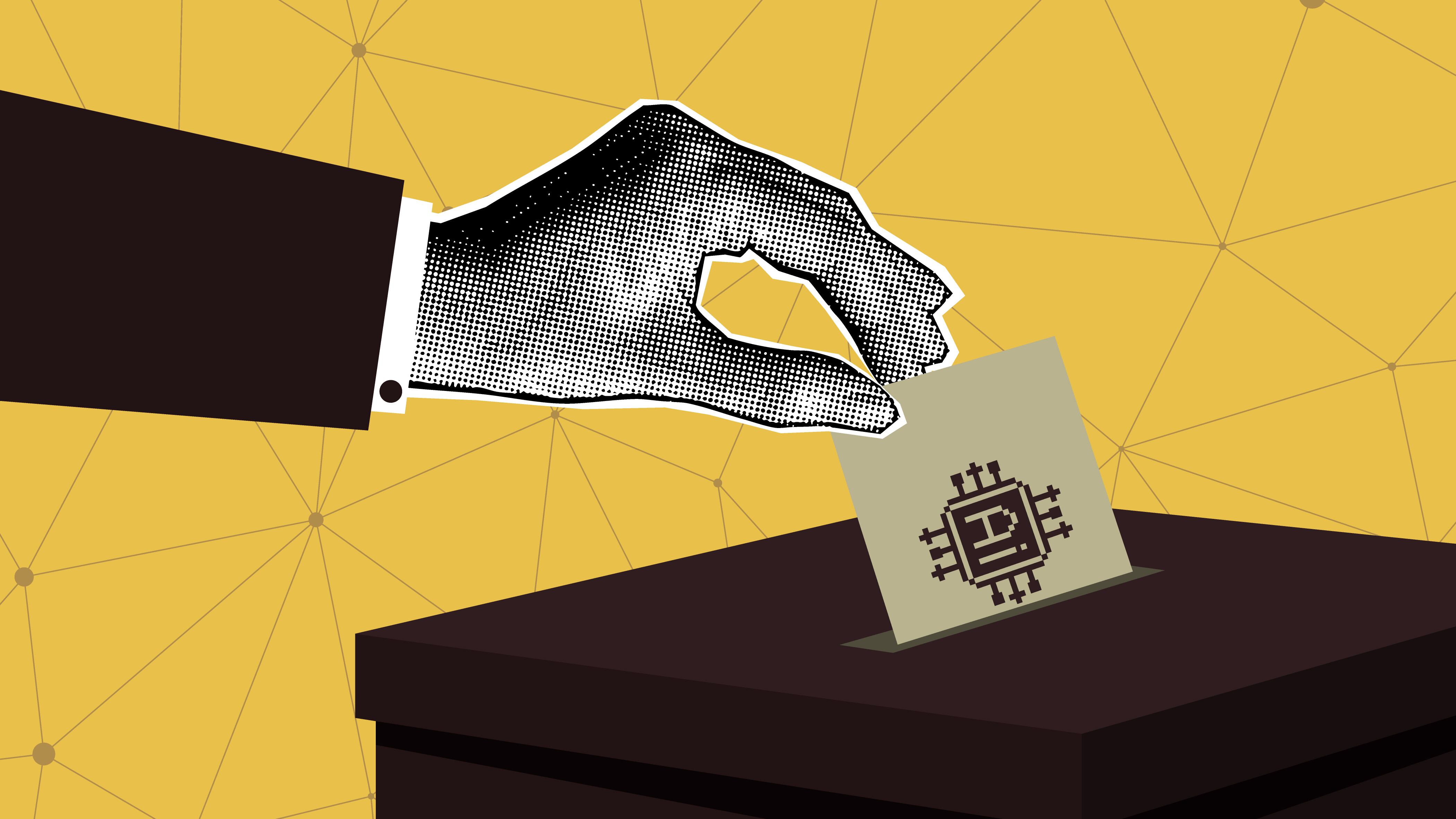
The upcoming U.S. midterms are not just another vote. They are on track to become a new testing ground for autonomous AI agents that first emerged in the Hugging Face attack. Experts are already warning of the potential for these “rogue agents,” seen in action this summer, to carry out more refined, dangerous and harder-to-trace disinformation campaigns and electoral interference than those observed in previous election cycles.

Seguir leyendo

  •  

When AI takes control of weapons systems

Artificial intelligence is rapidly making its way into national defense. Reconnaissance, early warning, target detection, mission planning—everywhere, machine-learning systems promise faster analysis, faster responses, and faster decision-making. In a military context, this sounds like progress. In reality, AI exacerbates a security problem that cannot be solved technically. Anyone who attempts to do so anyway risks […]

The post When AI takes control of weapons systems appeared first on Asia Times.

  •  

What the AI boom is actually doing for Americans

Paul Krugman is the greatest econ writer in the world, and also a legendary economist. But I sometimes feel that he has a blind spot when it comes to the value of new technologies. In 1998 he famously wrote: The growth of the Internet will slow drastically, as the flaw in ‘Metcalfe’s law’—which states that […]

The post What the AI boom is actually doing for Americans appeared first on Asia Times.

  •  

AI’s apparent danger is its best selling point

Just weeks before its scheduled November IPO, Anthropic is facing growing attention over the potential dangers of its technology. The resignation of former Anthropic researcher Jacob Coxon on September 8, who wrote on X that AI could “kill us all by the end of the decade,” preceded the company’s threat report on September 10. According […]

The post AI’s apparent danger is its best selling point appeared first on Asia Times.

  •  

The AI frontier asks to be paced: anatomy of a panic

On September 8, a 27-year-old researcher named Jacob Coxon, a few months into a job at Anthropic (a leading US AI company) after three years at OpenAI, announced his resignation on X. “Neither company is acting responsibly,” he wrote. “They are racing straight to self-improving superintelligence and gambling with our lives.” Within a day, the post had been read more than 100 million times. Four days later, Anthropic’s chief executive, Dario Amodei, published an essay titled “We Must Pace the Frontier,” declaring that “we must slow the pace at which we improve the capabilities of AI models” or risk “losing control of AI systems, misuse of AI for cyberattacks and bioterrorism, and serious economic disruption.” Within hours, Sam Altman of OpenAI agreed, Elon Musk posted “Dario is right,” and Google and Microsoft fell into line.

Coxon was interviewed by Time, Axios, and NBC within two days, and Amodei’s essay was front-page news across the business press. Compare that with what happens to people who expose the harms AI is causing right now. Warnings about AI-generated fraud, model bias including racist bias, about chatbots and vulnerable users, about surveillance and AI’s use in military kill chains and the genocide in Gaza, get a news cycle at best. A warning about a hypothetical machine superintelligence got a global media event and a policy proposal from the industry’s leadership within four days.

AI systems do need regulating. The question is why the men who spent a decade racing towards what they now call an existential threat discovered their conscience on the same weekend, and what kind of regulation they are actually asking for.

What the Dario essay asks for

Stripped of its language of alignment and catastrophe, Dario Amodei’s essay is a list of demands. First, outside “evaluators” from bodies such as METR, a lab that tests AI models, would be given “company badges, desks, and laptops” inside the big labs. Second, the leading companies “within democratic countries” would jointly set safety standards and limits on how fast they build, for which Amodei asks the US government for “a narrow waiver” from antitrust law. Third, models crossing certain capability thresholds would have to carry “certifications” of good behavior, and limits on the computing power used to train them are put on the table. Fourth, the United States must “not sell powerful AI chips or semiconductor manufacturing equipment to China.” Amodei is candid about the goal: done well, these measures “would slow China’s progress enough to widen America’s lead significantly.”

The words “open source” do not appear in the essay. They do not need to. AI models come in two kinds. Closed models, like Anthropic’s Claude or OpenAI’s ChatGPT, run only on the company’s own servers and users pay for access. Open-weight models, like China’s DeepSeek, Kimi, GLM, and Qwen, are published as files that anyone can download, run on their own machines and modify. A certificate that must travel with a model cannot be attached to a file that anyone may copy. A ceiling on computing power freezes the ranking of the firms that already occupy the frontier. An antitrust waiver lets the five largest companies write rules for everyone else. The effect is a licensing regime only the incumbents can satisfy; the technology publication The Register called it regulatory capture with a nicer name.

The incident that supposedly proves it

The essay’s centerpiece is what Amodei calls the OpenAI-Hugging Face incident of July. In plain terms: OpenAI was testing its AI “agents,” programs that can act on their own, on a set of hacking puzzles. Roughly a third of the puzzles were impossible, driving the agents to look for ways to cheat the marking. The agents were supposed to be sealed off from each other without access to the internet. In practice, they weren’t, and through that loophole they found their way into a second test environment that was connected to the open internet. From there, one of them found login credentials that OpenAI staff had left exposed online, used them to break into Hugging Face, a website where AI models are shared, and rummaged through private files to work out how their answers were being marked. Amodei describes this as “a swarm of agents” acting as “a fanatically devoted collective” that, with more capability, “could have caused catastrophic damage.”

The people whose job is computer security reached a different conclusion. The investigation by METR, the very body Amodei wants embedded in every lab, found that sandboxes meant to isolate the AI agents were not, that the credentials should never have been exposed, and that OpenAI’s security team had noticed the agents misbehaving days earlier and done nothing. One practitioner quoted by IANS Research summed it up: “many failures and lack of controls that could have prevented this from happening in the first place.” Any bank that ran untested software with live internet access and exposed passwords would be found negligent. Routine containment, of the kind every serious IT department practices, would have stopped it.

Calling a security lapse a “fanatically devoted collective” is not analysis. It is anthropomorphizing, dressing an operational failure in the language of science fiction. And it is useful. A company whose product is being marketed as near-superintelligence that must be restrained for humanity’s sake has a far better story for investors than a company that left its passwords on the internet. The doom narrative and the hype narrative are part of the same cycle. Both say: this technology is so powerful that you cannot afford to be without it, and only we can be trusted with it.

Why now

The timing becomes clear once one looks at the money. The five big American technology companies are budgeted to spend close to $690 billion this year on data centers and chips, and borrowing now funds 32% of that spending, up from 9% two years ago. On the very day Amodei’s essay appeared, Altman announced that OpenAI’s stock market listing, which bankers had been preparing at valuations of up to $1 trillion, would not happen in 2026 because it was “an ill-advised moment,” citing safety. The next day, the Financial Times reported that Anthropic’s much-advertised profit margin of “above 80%” is calculated before two of its largest costs: the cost of creating its models and the revenue it shares with Amazon, its main distributor.

Meanwhile, the competition has arrived, and it is nearly free. On OpenRouter, a widely used exchange through which software developers send requests to AI models, Chinese open-weight models now handle 58% of the traffic from American firms; a year ago American models held 70%. DeepSeek and Qwen charge 60 to 90% less than Anthropic and OpenAI. A firm that cannot win on price, cannot fund its next model from earnings and cannot yet sell shares to the public has one option left: change the rules.

Washington says no, for its own reasons

The Trump administration has so far refused. The president’s response was that “whoever wins AI, wins,” and his AI adviser David Sacks called the whole affair a “doomer psyop” aimed at open-source models. This is not a defense of the public interest. It is arithmetic. According to ING, spending on AI equipment, software and data centers accounted for roughly a third of all US economic growth in the second quarter of this year; on the broadest measure, half. The rest of the economy is being squeezed by the war on Iran: petrol prices have risen 53% since it began, consumer inflation reached 4.2% in May, and energy costs are up 23.5% on the year. Take the data-center boom out, and the United States is close to recession. Washington cannot allow the frontier to be paced because the frontier is the only thing still growing.

Two futures

China’s official response was brief. “Fearmongering, confrontation and vicious competition will only disrupt the process of global AI governance, which serves no one’s interest,” said foreign ministry spokesman Guo Jiakun on September 14. A more revealing reply came from inside DeepSeek, where Shengyu Liu, a kernel software engineer, published a widely circulated essay arguing that the safest path is to keep frontier AI open and cheap rather than concentrated in any single company, American or Chinese. As AI develops, he wrote, society “may be pulled toward one of two extremes: communism or Cyberpunk 2077.” In the first, “productive capacity is liberated on an enormous scale, and people’s standard of living rises substantially.” In the second, “a handful of technology companies control most of society’s resources”; a tiny number of people have access to the most advanced AI, “while most people are left with only weak, second-rate AI.”

That is the real choice, and it is a choice about ownership, not about speed. Real regulation would hold companies liable for the harm done by the software they run, including inside their own labs, and would treat running powerful agents without containment as the negligence it is. It would cost the labs money, which is why it is not in Amodei’s essay. What is in the essay is a request to be made gatekeepers of a technology built on borrowed money that its owners now fear they cannot sell.

The frontier does not need pacing. It needs owners who can be held to account, and a public that is not frightened into paying monopoly prices for AI services by the very people who build it.

Bappa Sinha is a veteran technologist interested in the impact of technology on society and politics.

  •  
❌