❌

Reading view

I love spending time with my parents and siblings. Our partners and kids aren't invited.

The author with her parents and siblings
The author cherishes time with her parents and siblings.

Courtesy of Melissa Noble

  • My siblings and I are all adults with our own families, careers, and mortgages.
  • Time with just us and our parents is rare, but special.
  • It reminds me of where I came from, and of younger versions of myself.

When my mom was younger and my siblings and I moved out, she really struggled with empty-nest syndrome. Now that I'm a mom of three myself, I can totally appreciate how she must have felt.

As a parent, you pour so much of your love, time, and energy into your kids. And then one day, they leave. I imagine it must feel incredibly strange. I already dread the day my babies leave the nest, to the point where I sometimes cry to my husband about it.

The other day, I was having one of those moments, sobbing on the bed, when my husband found me. I told him how I felt, and he said, "For God's sake, honey, our youngest is four! You have at least another 14 years with her at home." Fair point.

Time with just my parents and siblings is rare

Now that my siblings and I all have families of our own, the time we have with my folks is often chaotic. Inevitably, one of the grandkids is throwing a tantrum, complaining about being hungry, or announcing they need the toilet, and conversations are often start-stop affairs.

But a few years ago, I had an epiphany. It was my sister's 50th birthday, and we were in Bali with all the extended family. To celebrate, we went out for dinner, just the original six of us — Mom, Dad, and the four of us siblings.

It was one of the most incredible nights. We told stories from childhood, talked about getting older, and shared what actually makes us happy and what we love about each other. There were tears and plenty of laughter.

the author and her family outside on a patio at night in Bali
The author and her family spent time together in Bali in 2022.

Courtesy of Melissa Noble

Afterwards, I realized how much I'd missed my original people. The ones who've known me the longest. The people who remember what I was like as a naughty four-year-old who would scream the F-word in the supermarket if I didn't get lollies, or as a pimply teenager going through puberty. The people who knew me before I had a husband, children, a career, a mortgage, responsibilities, or any real idea of who I was or where life would take me.

As adults, we inevitably morph into different versions of our younger selves. We form new identities, build our own lives and our own ideas.

But there's something so incredibly beautiful about being able to return to those younger versions of yourself, if only for a few hours. For me, I've always been the baby of the family, and somehow, if I'm alone with my parents and siblings, I revert straight back into that role. Goo goo, ga ga. Even at 41, I'll always be the baby of the family.

Spending time together is special for all of us

Since that dinner all those years ago, I've made a concerted effort to organize catch-ups with the original clan only. Partners and children know they're not invited, which I'm sure has offended a few people along the way, but nowadays the spouses are used to it.

My sister lives in Africa, and we are all in Australia, so getting us all together can be tricky. But when we do, we have the best time. There's always a lot of reminiscing and laughing. Often, too, a few inappropriate jokes, and inevitably, the occasional argument or two.

I think for my folks, who are now in their 70s and 80s, these moments are golden. There's no doubt they adore the grandkids and partners. But there's something different about having their kids all to themselves for a couple of hours.

No tantrums. No one cartwheeling through the living room as we attempt a conversation. Just us.

At the end of the day, no matter how old we get, we'll always be their kids. You can grow up, move away, become a wife and mother, and build an entirely new life. But when we're all together again, somehow it feels exactly the same.

Read the original article on Business Insider

  •  

My husband swore he wouldn't live with my family. Now we're all neighbors on a 400-acre Oklahoma ranch.

Two people hold hands while walking through a dry grassy field with bare trees in the background.
Hayley and Mo Molina moved onto Hayley's family's 400-acre ranch in Oklahoma.

Courtesy of Hayley and Mo Molina

  • Hayley and Mo Molina built a house on Hayley's parents' 400-acre family ranch in Oklahoma.
  • Now they live steps away from Hayley's parents, grandparents, and brother and sister-in-law.
  • They both enjoy spending time with the family, and everyone has grown closer.

This as-told-to essay is based on a conversation with Hayley and Mo Molina, 30 and 49, a married couple who live on a 400-acre ranch in Claremore, Oklahoma. Hayley's parents bought the ranch in 2021, and now four generations of family live there. The following has been edited for length and clarity.

Hayley: I was born in Bluffton, Indiana. Then my family moved to Oklahoma when I was three.

We always lived in town, and my family knew nothing about ranching. They were golfers; I didn't listen to country music until I was in high school — we were city people. But then my parents sold their house and were looking for something new, something different.

They were actually looking for something smaller and with not as much land to take care of, but we started talking about a family compound, found Hook Ranch, and just jumped in headfirst.

When my parents first found the property, it was about 170 acres, give or take, and they just kept buying more land and growing it bigger and bigger until it landed on what it is now.

When my parents were talking about doing this, the future goal was for me to be out here. For me, it wasn't the goal right away. I wanted that in the future, but I didn't know what the future looked like for me.

My grandparents ended up moving out here and living in the barn, where they live now, because I wasn't planning on moving out there or building anytime soon.

They were like, "OK, well we'll just take your spot then."

Then Mo and I met, and honestly, I don't even know if we ever had the conversation about living out here.

Two people smile and embrace in a sunlit home entryway beneath a circular chandelier.
Hayley and Mo Molina.

Courtesy of Hayley and Mo Molina

Mo: We really didn't bring it up early on. And when we first thought about it, I was like, "There's no way I'm living out there with all them family. There's no way." Not because I didn't like them; it just wasn't in the plan.

But then, as I got to know them, loved them, and we hung out with them almost every weekend, we were like, "Wait a minute, we love it out here."

I proposed out here, and after that, it took off from there. And then it was normal.

It's not weird to be living this close to my family

Hayley: On the property, there's us, my parents, my mom's parents, and then my brother and sister-in-law and their two daughters.

My family's always been so close. We're the type of people who always hung out on the weekends. We always went to my parents' house Friday night. It was so normal to be so close and always together.

Mo: For me, it was just my mom and me growing up, and we lived in the city, but I'm a country boy. I knew I always wanted to be out in the country. But it looked like I was going to be in the city the whole time. But with Hayley being close to her family, it all came together.

Hayley: We actually moved in with my parents first. We sold my house in March 2025, and then moved in with my parents.

Modern farmhouse-style home with an American flag on the front lawn under an overcast sky.
One of the homes on Hook Ranch.

Courtesy of Hayley and Mo Molina

Mo: We lived there while we were building our house.

Hayley: We got married in September, moved in with my parents in March, and lived there for seven months. We moved into our house in October of 2025.

Our house is only about 100 yards away from the barn, which is where my parents and grandparents live.

My brother and sister-in-law are about 200 yards away from the barn — it's like a seven-minute walk. It's literally a one-minute walk from my house to my parents' house.

Mo: I didn't know if there were going to be any benefits to living that close or not, especially when my father-in-law built a trail that goes right from the barn to our house.

It's kind of cliché, but if we don't have any eggs, we can literally walk down there.

Hayley: But honestly, we have so much privacy. You wouldn't think that, but I can't even see my parents' house or my brother's house from my house.

Metal barn with sliding doors stands beside a wooden fence under a leafy tree and blue sky.
Another home on Hook Ranch.

Courtesy of Hayley and Mo Molina

We can be in the backyard, the front yard, and I have no idea what's going on at their houses ever.

We can go weeks without seeing anybody. There's a lot of privacy out here because everybody respects each other's privacy.

Mo: It is weird knowing that we're this close and then a couple weeks go by, and I'm like, "Man, I haven't seen anybody," or "We haven't gone down there," and they're 100 steps away.

We've built closer relationships by living on the same property

Mo: When we first started dating, she was always hanging out with her parents almost every weekend, and I was living my single life, and I was hanging out with my buddies, and we would go out almost every weekend.

Hayley: Friday nights, we know what my parents are doing, because they do the same thing pretty much every Friday night.

So if we don't have anything to do, we are just going to go join them. Sometimes I just want to hang out with people, but I don't want to have to drive anywhere, and I don't want to have to get ready. So we'll have a game night at the barn with the whole family: my grandparents, us, my parents, and my brother and his family.

Mo: Hayley used to come and hang out with my friends, and then it didn't take very long before I went over to her family's place and hung out with them. I was like, "Man, this is kind of cool." They're awesome to hang out with.

At first, I was like, "I'm not hanging out with your parents. This is not a cool Friday night." In less than a month, I would say we were literally hanging out every weekend with her parents.

Hayley: I think we all have gotten so much closer. I have learned so much about my grandparents and gotten closer with my grandma.

Large wedding group poses outdoors near a pond with bouquets, cowboy hats, and a floral arch.
Hayley and Mo's wedding on Hook Ranch.

Courtesy of Hayley and Mo Molina

My grandma comes over to our house every Monday morning and washes our sheets for us. While the sheets are washing and drying, she cleans the floors for me, and while she's doing that, she and I chat.

That's been really nice because I get to connect with her whenever. Before, I couldn't really do that because we only saw them every once in a while. Now I can do that every week. And she goes to my brother's house and does their laundry on Tuesdays.

Mo: Getting to know her family more and seeing how they do things and what they like and what their everyday looks like has been a benefit.

Her family works so hard. Her mom is the hardest worker on the ranch, and I would've never known that when I met her.

Her parents run a business, and her dad is constantly not in the house — except to watch college football.

I've learned so much from him.

I think getting to know that part of her family was huge for me. That's what's different. If we lived where we lived before, I probably would've never learned, or wanted to learn, that. So that was big for me.

Read the original article on Business Insider

  •  

Attention LaMelo Ball: only losers boast about avoiding diaper duty | Arwa Mahdawi

The basketball star seems proud to leave the job to his partner. That’s so last century

Nobody can accuse the basketball star LaMelo Ball of being bad at his job. That said, the Minnesota Timberwolves point guard doesn’t seem to be a huge fan of dribbling.

Ball has a nine-month-old son, LaOne, with his partner Ana Montana (real name: Analicia Chaves) and is apparently uninterested in dealing with all the body fluids that come with a baby.

Arwa Mahdawi is a Guardian columnist

Continue reading...

© Photograph: Matt Krohn/AP

© Photograph: Matt Krohn/AP

© Photograph: Matt Krohn/AP

  •  

Are you a mom who drives for Uber or Lyft? Take our survey

A woman wearing glasses holds the steering wheel of a Kia car while smiling. To her right, a smartphone sits in a holder attached to the inside of the windshield and plugged into a charger.
Business Insider wants to hear from moms who work for Uber and Lyft.

: Jeffrey Greenberg/Universal Images Group via Getty Images

  • Being a mom can be challenging and expensive.
  • Some have turned to apps like Uber and Lyft to make extra money — or as their main source of income.
  • Fill out our survey if you're a mom who does gig work.

Uber and Lyft often talk about the flexibility of working as a driver on their apps.

That aspect of the gig has attracted moms, among other people who often want to earn money outside a 9-to-5 schedule. The job can be appealing to mothers who need to juggle school drop-offs, childcare, and other obligations of parenting.

Others, including single moms, say they feel stuck in ride-hailing work and end up having to drive for Uber or Lyft at set times anyway, depending on when the most passengers need rides.

With costs like childcare and college rising, Uber and Lyft offer some moms a way to make extra money — if they can earn enough on the apps and keep costs like gas and car maintenance under control.

Business Insider wants to speak with moms who drive for Uber, Lyft, or other ride-hailing apps. We want to hear about how you combine the gig with taking care of your kids, including both what's working and what isn't. Please fill out the survey below.

Read the original article on Business Insider

  •  

A simple saliva test could help families avoid cancer. So why aren't more people getting it?

Photo collage of a spit test and a cancer patient
Lynch syndrome, a hereditary condition that increases cancer risk, has no symptoms. Most people don't realize they have it until after a cancer diagnosis.

iStock; Tyler Le/BI

After Bryce Ramsey was diagnosed with stage 3 colon cancer at 33, she learned another piece of shocking news: She had a genetically high chance of developing it from the very beginning.

Ramsey tested positive for Lynch syndrome, a silent, inherited condition that heightened her lifetime risk of being diagnosed with colorectal cancer by up to 56% for her variant. It also put her at greater risk of developing ovarian, uterine, stomach, pancreatic, and other forms of cancer.

Before she learned she had Lynch, Ramsey urged her relatives to also get screened for colon cancer. Since then, her father, brother, and aunt have all been diagnosed with various stages of colon cancer. Like Ramsey, her aunt also tested positive for Lynch.

"I was the whistleblower," Ramsey, 40, based in Mississippi, told Business Insider. Ramsey now wants her two young sons to test for Lynch once they're in their early 20s, the recommended starting age for her specific Lynch mutation.

Bryce Ramsey chemo
Bryce Ramsey only learned she had Lynch syndrome after being diagnosed with colon cancer.

Bryce Ramsey

Like most genetic testing, Lynch syndrome testing is relatively quick, cheap, and non-invasive. It involves a saliva test, a cheek swab, or a blood test, with the latter having the least room for error.

Still, it hasn't caught on: About 1 in 279 Americans (1.2 million people) are estimated to have Lynch syndrome, including between 3 to 5% colon cancer patients. Yet an estimated 95% of Americans with Lynch syndrome have no idea they have it.

All the while, cases of colon, breast, uterine, and pancreatic cancers are rising in young people, with colon cancer the deadliest cancer for adults under 50. "If you don't know, then you can't get help," Ramsey said, including earlier screenings or preventive measures such as hysterectomies.

"Ignorance is not always bliss."

The 'lowest hanging fruit' for cutting down cancer risk

Some experts view broader Lynch syndrome testing as a way to get more people screened for cancer before symptoms arise — and a way to potentially help entire families better understand their cancer risks.

Like Ramsey, the majority of people diagnosed with Lynch syndrome only get screened after they have cancer. In the US, the CDC's general guidelines recommend that colon and uterine cancer patients have tumors biopsied for Lynch, followed by Lynch syndrome screening for the patient if there are abnormal findings.

Some experts believe the lack of early genetic testing is a huge missed opportunity for reducing cancer risk. One 2021 study found that about 16.4% of 713 early-onset colorectal cancer cases could have been prevented if patients knew either their family history or had been genetically screened, and would have subsequently started getting colonoscopies sooner.

Lynch syndrome testing "has got so much potential, but it's not being utilized," Heather Hampel, a professor at City of Hope in California who specializes in clinical cancer genomics and Lynch syndrome, and a co-author of the study, told Business Insider.

While Lynch syndrome remains unknown to most Americans, some health systems are trying to expand testing to the broader population. Helix, a genetic screening company that first started out as a consumer DNA marketplace, started partnering with 17 health systems in 2021 as part of its "Population Genomics Initiative." The goal has been to introduce broader population-scale genomic programs that include testing for Lynch syndrome.

Employees at Helix
Helix offers broad, population-based Lynch syndrome testing through participating health systems.

Helix

Dr. Cassie Hajek, the medical director of Helix, told Business Insider that most patients diagnosed with one of these hereditary conditions by Helix were completely taken aback by the news. "They're kind of operating on the assumption that their risk is just as it is in the general population, but in fact, it's significantly elevated," she said. "The whole goal is to identify these patients hiding in plain sight."

By knowing their genetic predispositions for cancer, they can both more easily start earlier cancer screenings and also inform their family members of their potential genetic risks.

Hampel noted that lowering overall cancer rates is complicated. We still don't know why colon cancer cases are rising so rapidly among young people, and lifestyle factors like sedentary routines and diets high in ultra-processed foods are far more difficult to control for.

"If the lowest-hanging fruit is family history and gene testing, and we can't even prevent those," Hampel said, "how are we ever going to prevent things where we need people to make lifestyle or behavioral changes?"

The ripple effects for families

Michelle York was 33 when she first heard of Lynch syndrome.

Up until that point, all she'd known was that her mom's side of the family had a long cancer history. Her great-grandmother died from colon cancer. Her grandfather had stomach and brain cancer. Her great-aunts died from liver, ovarian, and breast cancer, respectively. Her mother's cousin died from pancreatic cancer.

Michelle York with mother and siblings
York (second from left) with her mother, sister, and brother — all of whom tested positive for Lynch syndrome.

Michelle York

York's mother, a nurse at the time, had come across the term through her work. She tested positive for Lynch, along with York, her two siblings, aunt, uncle, and cousin.

At first, the news caused some anxiety. "Does this mean I'm going to get cancer at a young age?" York, 43 and based in Los Angeles, told Business Insider. "Does this mean every time I don't feel well, I'm going to immediately think I have cancer?"

However, once York and her family started getting routine cancer screenings, including annual colonoscopies, they felt more reassured than afraid, because they knew they could catch cancer early. York's mother had multiple precancerous polyps removed.

"None of us have had cancer yet, but we've had lots of scares," York said. She also wants her kids, ages 17 and 14, to test once they're older.

York's mother triggered something called "cascade testing," in which other family members test for Lynch and can take preventive measures to reduce their cancer risk.

Dr. Sapna Syngal, the director of research at the division of cancer genetics and prevention at the Dana-Farber Cancer Institute in Boston and the founder of its Lynch Syndrome Center, sees cascade testing for Lynch as a "real opportunity" to lower cancer risk, she told Business Insider.

Particularly for young people, if they test positive for Lynch in their 20s and start getting cancer screenings, "there's a really, really good chance that you could prevent that cancer by taking out polyps earlier on," she said.

There are also financial benefits to knowing you have a genetic predisposition to cancer. While insurance coverage for Lynch-related cancer screenings can vary, Hajek said her patients typically have a more "straightforward" experience in getting otherwise expensive screenings like colonoscopies covered. York, for example, said her insurance covered her cancer screenings once she got her Lynch syndrome diagnosis.

Michelle York with family
York, pictured with her family, wants her kids to test for Lynch syndrome when they're old enough.

Michelle York

Ultimately, Hajek said Lynch syndrome testing can help patients get more precise care than simply knowing they have a family history of cancer. Just as testing positive for Lynch can prompt someone to start cancer screenings sooner, testing negative can also relieve a person of anxiety about being at high risk of early-onset cancer and potentially call for less frequent cancer screenings than if they had Lynch.

York said she's ultimately grateful for finding out and knowing she can catch any early signs of cancer by starting annual screenings such as colonoscopies in her 30s — over a decade before the average-risk recommended screening age of 45. Both Ramsey and York also had hysterectomies and oophorectomies unrelated to cancer, which brought extra relief in also reducing their uterine and ovarian cancer risks to essentially zero.

"I think knowledge is power," York said. "Now, it almost feels comforting because I know that I started doing this young."

Lynch needs its Angelina Jolie

Angelina Jolie in 2013
Angelina Jolie appearing on the red carpet a month after her May 2013 op-ed revealing her BRCA1 diagnosis and decision to undergo a preventive double-mastectomy.

LEON NEAL/AFP via Getty Images

In 2013, Angelina Jolie revealed in a New York Times op-ed that she had tested positive for BRCA1, a gene that increases the risks of breast and ovarian cancer.

Her revelation — and subsequent operations to remove her breasts and ovaries — sparked an international drive to get tested for BRCA1/BRCA2. Years later, a study found that 15 business days after Jolie's op-ed went live, BRCA testing rose 64% in the US.

Over a decade later, researchers and patients are working to make Lynch syndrome screening similarly universal.

Getting every person screened comes with its own obstacles.

Lynch could be added to the list of genetic conditions screened for in newborn heel tests. However, critics of the idea believe it can create years of stress when the person with Lynch isn't recommended to start getting colonoscopies until they're in their early 20s.

Other routes, such as including Lynch syndrome testing when people join the military or go to college, would miss broad swaths of the population.

There's also the question of funding. Helix, for example, doesn't bill patients and instead relies on the participating health systems for financial support. Few hospital systems can afford to prioritize testing for a gene condition that impacts a small portion of the population.

Bryce Ramsey in DC
Ramsey's advocacy work includes raising more awareness around colon cancer as well as Lynch syndrome.

Bryce Ramsey

Syngal said one immediate option for getting more people screened for Lynch is to follow York's route: consider getting tested if you have a family history of colon or other relevant cancers.

Since their diagnoses, Ramsey and York have tried to spread the word about Lynch syndrome testing. Ramsey is an official advocate for the non-profit Lynch Syndrome Awareness, while York, a full-time content creator, has shared her story on social media.

"It's scary when you first find out that you have a genetic mutation that predisposes you to cancer," York said. "But at the end of the day, knowing that and taking those precautions could ultimately save your life."

Read the original article on Business Insider
  •  

I thought I'd missed out on being a grandmother. At 67, my great-grandson has given me that experience.

Pat Zawko and her family
Pat Zawko (second from left) raised three adopted children and then her grandson. Now, she helps raise her great-grandson.

Pat Zawko

  • Pat Zawko, a 67-year-old nurse, raised her grandson and now helps raise her great-grandson.
  • Pat adopted three children, facing challenges with their health and legal issues over the years.
  • Pat balances full-time work with supporting her great-grandson, cherishing her role as a grandmother.

This as-told-to essay is based on a conversation with Pat Zawko, 67, who lives in upstate New York and works full-time as a nurse. Zawko raised her grandson from birth, and she is now helping him raise her great-grandson. This interview has been edited for length and clarity.

My husband and I raised our grandson from age 5 months to adulthood. We are now helping him raise his son, whom he raises as a single parent.

I was raised in upstate New York in a very rural area. I was one of nine children, the first girl after six boys. My grandmother helped shape who I am today. I didn't go to college until I was 29, and I became a nurse. I progressed to completing my Ph.D.

All our children are adopted. We made that decision very consciously. I found out that I couldn't have biological children, so in 1982, we adopted our first son. He had lots of health issues, and he was in and out of psychiatric facilities. We paid for all of his rehabs and facilities, and he didn't qualify for any subsidies back then. My husband and I decided to adopt two more children, and both of them are very successful in their adult lives.

We got custody of our grandson when he was an infant

When he was 17, he and a young lady ran away to Florida, and they had a child. They were involved with drugs, and we got custody of their son when he was 5 months old. My son died when he was 23.

Raising our grandson wasn't really a choice, and we had to do what was right. He had special needs, which brought with it an entirely new set of needs medically, psychologically, and educationally. There were many challenges in raising him. We couldn't get him insurance for about six months. My husband didn't grow up with money, and he worked very hard in his life, but he never questioned taking the money that he had saved long before he met me and pouring it into these children.

He went down a similar road to his biological father. He got a young girl pregnant, and he became a single dad. He was left with this baby. We were living in Ohio at the time, and we moved back to New York to help him. The parents of the baby's mother are wonderful people and are very supportive financially, physically, and emotionally. There's never tension between us. My great-grandson's birth mother hasn't seen him in two and a half years.

When we took in our grandson, my other children were 10 and 11. We didn't have any baby stuff. We didn't have day care. We were used to sleeping all night because our kids were pretty independent.

Getting my grandson upset the equilibrium of the family. We had to give our kids the attention they needed, but we also had a baby with different needs.

My grandson is 25 now. Back when we started raising him, nobody was talking about the financial and emotional impact that grandparents raising grandchildren has. Nobody stopped to look at how it impacts family dynamics. We couldn't get help. You're stretching out that time period when you're parenting, where you think that you can't be a grandmother because you have to parent this child.

I see it more frequently in my profession, where grandparents, some of them older than I am, bring in grandchildren, sometimes four or five little ones running around.

My grandson needs a fair amount of support with his autism diagnosis. It's a huge transition for him, and he's needed lots of support and guidance.

I can be a grandmother to my great-grandchild

Now that my grandson has a son, I can finally be a grandmother; before this, we were our grandson's only parents. There were times that I felt robbed of being a grandmother with my grandson, as we had to be parents. I wanted to spoil him and send him on his way, but I couldn't.

Now I am technically a great-grandmother, and being able to be a grandmother for the first time. I am overjoyed and thrilled to finally be a grandma and not a parent. I can spoil him, play with him, teach him old songs, and send him home with his dad.

I still work full-time at 67, partly because raising grandchildren is very expensive. I often put in 12-hour night shifts at the hospital. I also had to pay for cancer treatments that ate through my retirement. We poured much of our life savings into making sure he had everything he could to become a productive member of society. He has a home and a car. He works full-time. He's able to experience success in being a parent, which neither he nor I ever dreamed was possible.

We know we did the right thing, but you don't think about the strain it puts on your finances, especially as you approach retirement in your later years. It takes a village to be successful as grandparents raising grandchildren. We don't have the energy that we did when we were 30.

We raised kids for 35 years

For 35 years, we raised kids, and now we have to take care of ourselves, which is not nearly as easy as one might think. We feel the pinch now with our health. But these kids have been worth the investment.

My great-grandson is 3 years old, and helping raise him is the greatest thing I've ever done. He's the light of our life. They don't live far from us, and the baby often stays with us. We get to impact his life on the level that grandparents should. We're probably more active in his life than the average grandparent. He knows nothing other than absolute unconditional love.

When he comes here, we call him the "hurricane" because he trashes the house. When he leaves, we clean it up and take joy in that. He's able to be a kid. We don't need to worry about his doctor's appointments or getting him into preschool.

My other son came by and saw we had given the baby Cheetos. He said, "You would never let us eat that. How come you're letting him?" I told him it's because I don't have to worry about all the other stuff. I understand that a Cheeto is not going to ruin his life, whereas when you're raising your own children, you are so worried about everything that you're going to make a mistake that's going to derail their life.

I used to say that we can make every generation better. If my great-grandson can have a better life than his father, and his father can have a better life than his father, that's the goal.

Read the original article on Business Insider

  •  

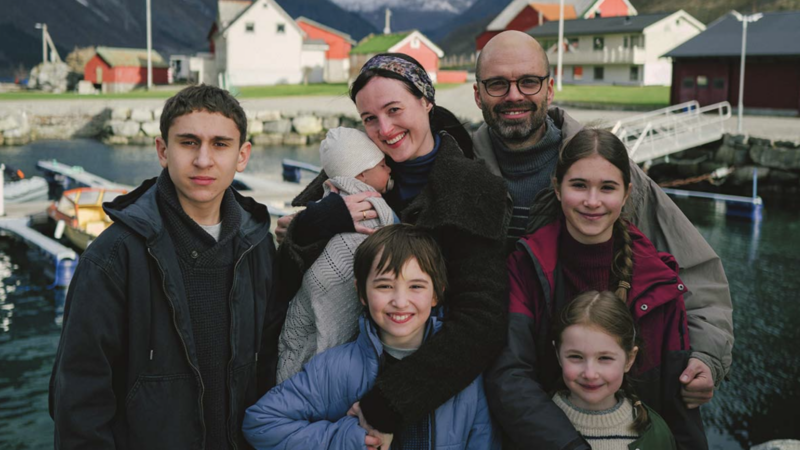
Family Separation Drama Fjord Is a Haunting Depiction of Unchecked State Power

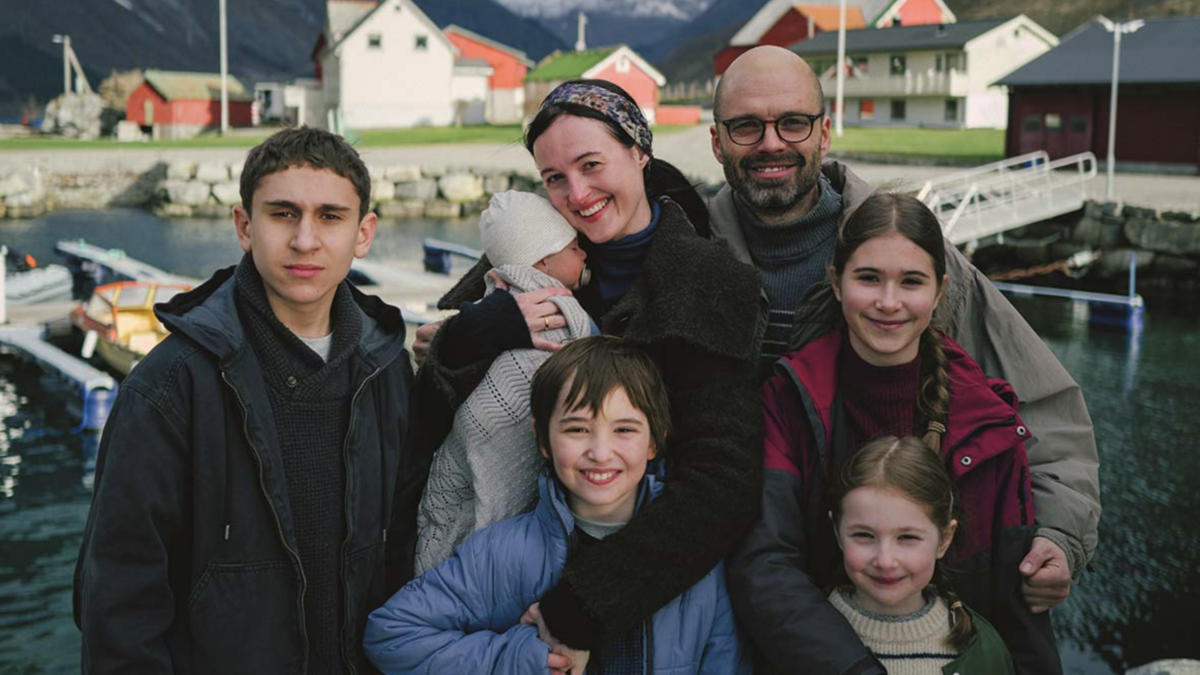
A scene from "Fjord" | Forum Film România

Fjord is a movie about having your children taken by the state. The tone is calm, clinical, measured, and by the books. No violence is depicted on screen. People rarely even raise their voices. Everything unfolds in the distant and impersonal style of bureaucratic procedure. 

But the movie, which won the Palme d'Or at this year's Cannes Film Festival, is utterly enraging, a fierce, ferocious, gut-punch of a film. It's a haunting portrait of the consequences of unchecked state power, especially the kind that purports to be for one's own good.

Much of the film's power comes from the fact that it simply depicts what happens when a person, or a family, comes under suspicion by the state. There's no commentary, no lecturing, no big speech at the end. Instead, writer-director Cristian Mungiu, a Romanian filmmaker whose sympathies are clearly with the family, simply shows us, unblinking, what it's like to lose one's rights and freedoms at the hands of a bureaucracy that respects no power and no authority but its own. 

When the film begins, the Gheorghiu family—a mother (Renate Reinsve), father (Sebastian Stan), and their five children—moves from Romania to a small town in Norway. Soon, school authorities notice the children have bruises. We in the audience know the bruises weren't caused by the parents, but the children, who don't speak Norwegian, give conflicting statements. After being brought in for questioning by the police, the father admits to sometimes spanking or lightly slapping his children on the behind, for correction. In order to go free, he's required to sign a statement that contorts his words, making his admission of spanking sound like something more sinister and violent. 

He's also a conservative Christian, which has caused some social tension: He's played Christian music, without singing the lyrics, on a piano at school, a no-no in a state that strictly curbs proselytizing. School officials are concerned that he requires his children to pray and study the Bible; the children aren't allowed to play video games or watch YouTube. One of his children spoke out against homosexuality in school during a session on gender. There's suspicion among the teachers and administrators that he might be indoctrinating his kids.

So the school authorities alert Child Protection, Norway's powerful family bureaucracy. They remove the kids, including a breastfeeding baby, from their parents' custody and place them in three separate foster homes. At first the parents are allowed no visitation, and they are not told where the children are located.

Then they go to court, initially for a civil trial, but with a criminal trial for child abuse looming in the background. As the legal process proceeds, they are told repeatedly that essentially anything they do to fight for their children will make the outcome worse. The state wants compliance and admission that they wrongly abused their kids. But if they admit to abusing their kids, doesn't that give the state evidence they are unfit to parent? Doesn't that make the criminal trial more likely to go against them? As their own, mostly sympathetic lawyer, informs the two parents, "Frankly unless you convince them that you understand and regret it, the risk of you going to prison is considerable." 

Later, at the trial, a representative from Child Protection calmly says there's no reason to believe children might be better off with their biological parents, noting the family's restrictions on video games, internet, and YouTube. In their view, the state knows what's best for the kids; the culturally backward, religious conservative parents do not. It's not for nothing that one character, a conservative political figure from Romania who has come to help publicize the situation, analogizes the power of Child Protection to the power of the Soviet state. 

Part of what makes Fjord so effective is its lack of sermonizing. You don't have to be a trad, a conservative, a family values evangelical, to see that what's happening to the Gheorghiu family is simply wrong. They are railroaded by an imperious bureaucratic state that distorts reality to turn them into villains, with the goal of separating children from their parents and each other. Who are the real child abusers here? 

The story is fictionalized, but not hypothetical. Fjord is based on the true story of the Bodnariu family, conservative Romanian immigrants whose five children were taken from them by the Norwegian state in the 2010s on similarly flimsy justifications. The family eventually left Norway. After watching Fjord, it isn't hard to see why. 

The post Family Separation Drama <i>Fjord</i> Is a Haunting Depiction of Unchecked State Power appeared first on Reason Magazine.

  •  

My kids used to complain on every trail. These 4 changes made family hiking fun again.

Four hikers pose on a rocky forest overlook with expansive green woodland and distant hills behind them at Konnevesi National Park in Finland.
The author (in blue) with her family as they hiked in Konnevesi National Park in Finland.

Courtesy of Emese Maczko.

  • My husband and I enjoy hiking, but our kids, 7 and 10, often complain along the way.
  • On a visit to Finland, we went hiking with a guide, and my kids were engaged the whole time.
  • It encouraged me to change a few things about the way I approach and plan family hikes.

It was an hour into our hike through Southern Konnevesi National Park in Finland, and neither of my 7- and 10-year-old daughters was complaining. It was glorious.

Normally, within the first hour, I would have already heard the question "How much longer?" One of them would also declare, "It's boring. We're just walking."

So what was different about this hike? Why weren't they complaining? It's because I took a different approach to this hike than I have with past ones — and it worked. Here's what I did.

A stranger motivated them more than I ever could

For this hike, we had a local guide with us, and my kids hung on her every word. They were asking questions non-stop and following her down the trail without a single complaint.

I almost laughed when I saw them literally stepping in her footprints and mimicking every move she made. This is not what my husband and I were accustomed to.

When she leaned on a rock to hear "the whispers of the forest," my kids did the same. When she found edible berries, my kids rushed there to try them first.

I do my best to make hikes interesting for my kids, but I am also a first-time visitor to most of the places we explore. No matter how much I research beforehand, I usually can't predict what they will find interesting along the trail. By contrast, this local guide knew exactly how to keep them excited, which kept them moving along.

Having a job kept them interested

I also noticed that the guide occasionally gave them "crucial" jobs along the trail. Who could find the next patch of berries, who could spot mushrooms growing on a log, or who could hear a bird singing?

When we are alone, I try to do these things too, but I cannot always answer the questions that ultimately follow: "Are these berries edible?" "What kind of mushroom is that?" or "Which bird is singing?"

I know my kids are naturally curious, but I wondered why my kids seem uninterested when it's just us. I began to realize they stopped asking me questions because they knew I didn't always have answers. Since our guide did this time, they asked her. They were eager to learn.

I tailored the goal to their needs

I also noticed they had not asked the dreaded question, "How much longer?" Not even once on our 2.5-mile hike.

I kept thinking about my usual responses. I say things like, "Look at the beautiful forest. Just enjoy the view and breathe in the fresh air," or, "Come on, we're almost there. It'll be worth it when we arrive."

Kids care about what's happening in the next five minutes in a way that's different from how my husband and I approach things. I was expecting them to hike like adults, getting from one point to the next. If they can discover something new at every step, they will relish the journey and won't feel time passing slowly. That's something I'm planning to incorporate into our future family hikes.

On a different trip, we tried forest bathing with a local guide in Austria, which lasted over three hours. When it ended, my kids frowned and said, "That was so short. Can we keep going?"

We allow time for free play along the way

After these experiences, I became much more careful about which trails I choose when hiking with my kids.

I know now that the best trails for my kids are the ones that offer exciting experiences along the way: a lake where kids can swim with tadpoles, a stream to cross, or rocks to scramble over.

I've also learned not to rush the stops. My daughters love spending time throwing rocks into a lake, sending leaf rafts down a stream, balancing on fallen logs, building hearts from flowers, or watching frogs or insects.

The biggest change for me has been to stop measuring a hike's success by how far we get and start measuring it by how much fun we had.

In Finland, I realized my kids already enjoy hiking. They just enjoy different things during a hike than I do as an adult. I should never forget that sometimes the part they remember most has nothing to do with the trail itself.

Read the original article on Business Insider
  •  

SaveFamily | Atrasar a introdução do telemóvel: é a estratégia de 31% dos pais

Com a proibição do uso de telemóveis em contexto escolar até ao 9º ano, o debate sobre a limitação do uso de redes sociais em menores, e o aumento da preocupação com o uso excessivo de ecrãs nos mais pequenos, são cada vez mais os pais que procuram alternativas e, até, restrições em família para […]

  •  

No Ed Davey, You’re a Father, Not a “Carer”

No doubt Ed Davey lovingly cares for his disabled son, says Joanna Gray. But he's not his "carer"; he's his father. It's a distinction Britain is fast losing sight of, to the detriment of us all.

The post No Ed Davey, You’re a Father, Not a “Carer” appeared first on The Daily Sceptic.

  •  

Spain heads for a snap election as youth uprising rocks Europe

“Cannibal capitalism” in Spain, where hundreds of thousands are in the streets demanding an end to the country’s housing crisis that Madrid-based journalist and Canal Red analyst Irene Zugasti says killed 87-year-old Maricarmen Abascal. Zugasti joins Zoe Alexandra and Rania Khalek to explain why more than 1,500 tents now fill Madrid’s Puerta del Sol and unions have called a general strike for November 11 – Spain’s first since 2012: “If we hadn’t been in the streets, Sánchez would have done nothing.”

Zugasti explains why Spain’s housing crisis isn’t about a shortage of homes, but about who owns them, and why Prime Minister Pedro Sánchez called snap elections now, after the right defeated his emergency measures meant to stem the uprising. She says the movement is inseparable from a wave of youth-led revolts across Europe, from student strikes against rearmament and conscription in Germany to French students taking the streets of Paris. And with just 50 days until Spain votes, Zugasti says the choice Sánchez is selling may not be enough to stop the far right without a mass movement behind it.

Watch full episodes of BT Live, join breakthroughnews.org as a member today!

#breakthroughnews

******

Rough transcript follows:
[Host:] Spain has seen massive protests over the past several weeks. Hundreds of thousands of people have taken to the streets to demand urgent measures to address the country’s housing crisis. These protests were sparked in large part by an 87-year-old woman, Mari Carmen, who had been fighting eviction from the home where she had lived for more than 70 years. On September 23, she was forcibly evicted from that home and passed away two weeks later, on October 7.

Mari Carmen’s struggle prompted a nationwide debate about the housing crisis, with activists in the streets demanding measures such as a ban on evicting vulnerable tenants, limits on short-term and room rentals, and a rent freeze. Spanish Prime Minister Pedro Sánchez capitalized on this energy and attempted to push through modest housing reforms in Parliament, but both measures were defeated by the right. In response, Sánchez called for snap elections, which are set to take place at the end of November. So, the political situation in Spain is very heated right now.

Here to break down what has been happening and what to expect from the upcoming snap elections is Irene Zugasti, a journalist and analyst with Canal Red.

[Irene Zugasti:] Hello, Rania. I’m so happy to be here with you at BreakThrough News. Hello from Madrid.

[Host:] We’re very excited to have you here. Your show is incredible, and we’re excited that English-speaking audiences can hear your insight and analysis. A lot is happening in Spain right now, and we have a lot to catch up on and explain to our viewers. As I said in the introduction, mass protests have been taking place, sparked by Mari Carmen’s eviction, but they have also ignited latent anger over the housing crisis. Walk us through how this situation evolved. What is the state of the housing crisis in Spain? How did it get this way? And how did an elderly woman’s struggle against eviction bring hundreds of thousands of people into the streets?

[Irene Zugasti:] I could say that we’re not getting bored in Madrid or Spain these days. We have a lot on the table. But let me introduce Mari Carmen’s story, because some people may not know it. Mari Carmen’s story isn’t unique. There are thousands of Mari Carmens in Spain, but she became a symbol because she embodied the injustice that millions of people in my country—and in many other countries in Europe—face every day.

She was an 87-year-old woman who had lived in the same flat in central Madrid for decades, perhaps 50 years or more. Her parents rented the flat, and she had paid the rent every single month of her life. But eight or 10 years ago, an investment fund—a “vulture fund,” as we call them—bought the whole building. Her rent rose from around €500 a month to €2,650. Obviously, she couldn’t afford that. The goal was to force her out so they could buy the whole building and turn it into high-end luxury flats.

She couldn’t afford the rent. She was elderly, had a disability, and lived alone. She got in touch with the tenants’ union, the housing-rights movement, which is amazing. They helped her with the eviction process, found her a lawyer, supported her, and tried to stop the eviction whenever the police came to her home. They took direct, nonviolent action, blocking her door so the police couldn’t get through.

But finally, on September 23, two or three weeks ago, the police broke down her door. They had to carry her out on a stretcher because she was too old and too frightened to walk. That image was shocking for millions of people in Spain. They thought, “What the hell? How can an 87-year-old woman be taken out of her family home, almost dying, because an investment fund wants to do business with a house that has been her family home?”

From her hospital bed, she recorded a very moving video saying that what had happened to her should inspire people to fight and not stop fighting. Unfortunately, she died on October 7, after 15 days in the hospital.

The day after the eviction, the tenants’ union and many other political organizations—including youth organizations, housing-rights groups, anti-racist movements, and communist and socialist groups—decided to camp in central Madrid, in Puerta del Sol. Today, there are more than 1,500 tents and thousands of people organized there. It’s like a little city, a community. They’re demanding real measures and doing politics there.

Before I continue, I wrote down some figures about the housing crisis, because I’m not sure people have a sense of its scale. The problem isn’t limited to the Global North, but in Spain it’s extreme. It’s not a housing problem; it’s a problem of who owns the houses. The housing crisis is the country’s number-one problem in official polls, year after year. It reflects the failure of capitalism itself, as well as problems with wages, working conditions, and growing inequality.

To give you the full picture: the average age at which people leave home in Spain is 30. It’s hard to live with your parents until you’re 30. Renters earn around €20,000 to €25,000 a year. Landlords who own multiple properties—three, four, five, seven, or 10 houses—earn almost four times as much. Their income comes directly from renters’ pockets. The richest 10% of the country owns more than 40% of all housing wealth in Spain. Large landlords are becoming a majority. Those who own more than 10 properties are effectively taking our wages and salaries.

Imagine that you or I want to live alone in an ordinary flat in Madrid. We would have to spend 98% of our take-home pay—of the average gross salary—to do that. It’s impossible to have a life like that. My country is splitting in two: those who have nothing and those who are accumulating more and more. The gap is growing faster and faster. It’s cannibalism—it’s cannibal capitalism.

Some people say the problem is that we need to build more houses. No, that’s not the problem. There are houses for everyone. There are more houses than ever; the issue is that they’re concentrated in fewer hands. It’s not a crisis of supply. Housing is no longer treated as a human right, even though it’s written into our Constitution. Houses have become financial assets.

Let me end with this: the tenants’ union and the people in the squares are saying that Mari Carmen didn’t die; she was killed. She was killed by this whole machinery: the vulture fund, the courts that ordered her eviction, the police who broke into her home and took her out, and politicians such as Pedro Sánchez, who did nothing and said, “We aren’t strong enough to change the law in Parliament. This is a very difficult, complex problem because many people with different situations are involved.” Come on—you all killed her.

And just as you killed her, many people are suffering and dying. Two people have died by suicide because of evictions in the last two weeks. Many people are dealing with serious mental health problems because they know they may be kicked out of their homes in a couple of weeks. How can you be a healthy person in that situation? You become completely sick. That’s what’s happening. It’s a crisis of capitalism itself, not just a housing crisis.

[Host:] I like the way you described it as cannibalism. In so many ways, that’s what capitalism leads to. I want to ask you to elaborate, because you mentioned the encampment in central Madrid. Yesterday, on Spain’s national holiday, there was a confrontation at Puerta del Sol between far-right activists and people demanding housing reform. Can you talk about the encampment and what happened yesterday?

[Irene Zugasti:] The encampment is beautiful. I wish you could visit it. I think it’s one of the most beautiful things that has happened in Spain in the last five or 10 years, along with the Palestine movement and the feminist strikes.

It began around September 26 or 27, after Mari Carmen’s eviction. It’s in front of the headquarters of Isabel Díaz Ayuso, who leads the right-wing regional government in Madrid. That location is symbolic. In just a few days, the encampment became a small community. They organized an assembly and teams working on different issues, including security, mediation, law, and anti-racism. A lot is happening in that square. They’ve achieved things: every morning, they go out and try to stop an eviction. They’re putting pressure on the government and calling for a general strike.

It’s not just people organized around tenant unions. There’s a large socialist movement, too. People are discussing questions such as whether to expropriate the funds and how to lower rents or impose rent control. The people there are very young. The average age may be 20 or 25, and they’re speaking in terms of class war, which hasn’t been very common in recent years in Spain.

They’ve been criminalized using the same playbook you’ve seen in the United States under Trump: counterterrorism rhetoric and attacks on Antifa. They’ve been accused of being terrorists and having weapons because they were cutting sandwiches with knives. They’ve also been accused of harboring pro-Palestinian radical organizations—which we probably do, of course. The framing is that they’re communists, radicals, and troublemakers. But they represent the feelings of millions of people.

What happened yesterday? Every year, Madrid has an awful event: the October 12 parade for the national day. It celebrates what’s called the “Conquista” of the Americas—the conquest and genocide of Indigenous people—and includes military parades, the king, the president, ministers, and so on.

Many people who came to the parade were fascists. They decided to go attack the encampment in Puerta del Sol because it’s nearby. They came with the aim of attacking the people there. What kind of patriots are you? What kind of national project, what kind of Spain and Hispanidad, do you want to build? If your plan for your national day is to attack people asking for housing rights and social justice, that’s Spanish nationalism at its worst.

The beautiful thing—and I was there and saw it myself—was that people formed a human chain around the camp, chanting, “Here we are. We’re anti-fascists. Here we are.” They were saying, “We’re ready. This is a peaceful protest, but we’re not going to allow these people to break up and destroy what we’ve been building for two weeks here in Madrid.”

They didn’t wait for anyone to protect them. They organized themselves and protected the square. There are many young people, but also older activists and people who are curious, strolling around and talking with the activists. Artists are performing. There are many things happening there, and security matters.

At the end of the day, the fascists spent hours walking around and trying to intimidate people, but eventually they left. It’s important and interesting because that’s basically the project of the Spanish right and far right. They align themselves with Trump’s international far-right movement. They’re violent and irrational, and they decide that their enemy is people fighting for justice and rights. That’s it.

[Host:] It’s quite poignant that fascists are attacking people who are simply asking for housing. That’s where their class interests lie. If you wanted any more clarity, that’s what it is. In a way, it’s helpful for us—but terrifying at the same time.

This struggle hasn’t remained confined to the streets. After these weeks of protests, Pedro Sánchez proposed two bills—albeit very lukewarm ones—to address the housing crisis. As I said earlier, they were defeated in Parliament. After the defeat, he called for snap elections on November 29. This has been controversial. Many people have speculated that the far right could make significant gains in the election. What’s your assessment of where Spain stands politically heading into the elections? And what are the other major issues on people’s minds besides housing?

[Irene Zugasti:] I would say Pedro Sánchez—I don’t like him, but he’s a smart guy. He made some calculations. The majority in Congress isn’t simply a question of right versus left. If you consider Pedro Sánchez to be somewhat left-wing, the majority is made up of landlords and capitalists. There are capitalists on the left and on the right.

It’s true that this bill—a bare-minimum decree—was proposed after the encampment and demonstrations, because of pressure from people in the streets. If we hadn’t been in the streets, Pedro Sánchez would have done nothing. He saw the situation and thought, “Now’s the moment. I’m going to propose a bill.” But of course, he knew neither of the two bills would pass. The right wing wouldn’t support them, and they were put together very quickly, without debate.

Even though the watered-down decree would have banned evictions of vulnerable people in certain cases and tried to extend rental contracts for a couple of years, it did nothing to address the key problem. The housing market has to be intervened in on behalf of working people, not landlords and capital. The market is already being intervened in, but on behalf of capitalists. That’s the only real way to stop this inequality, which is costing people’s lives, like Mari Carmen’s.

Without pressure in the streets, Pedro Sánchez wouldn’t have done this. He’s a handsome reformist, very socially liberal, and he shines in Europe because Europe is so sad, fascist, ugly, and terrible. He’s the lesser evil. A very handsome lesser evil. But he’s far from what a party that calls itself the Socialist Workers’ Party should be doing about this problem.

What little he has done has been aimed at not upsetting renters—I mean, landlords, the owner class. Every time he made a small improvement in rental conditions, he offered tax breaks and incentives for landlords. He never touched property ownership or the dynamics of enrichment in Spain.

The snap election is happening because Sánchez is smart. He turned the defeat in Congress and the anger in the streets into a campaign. He’s saying, “It’s now or never.” If he waits a few months, the far right—with all these Trump-inspired groups and powers now helping the Spanish right, which is already very strong—could take everything. But if he calls elections now, the debate might be about housing or the far right; about him or barbarism.

He’s smart because he has a chance, although a small one. I’ve been obsessively studying the numbers: how votes might go in each region, territory, and city, and whether we can get a small majority. It’s difficult. The results could be similar to those in Colombia or Peru, and the far right is getting stronger. That’s why we have 50 days to go.

There’s also a real, transformative left, an institutional left that is more radical on its terms, and they’ll run in the elections. But even with Sánchez’s Socialist Party and the parties to its left—the real left—the numbers are still very difficult. We have to vote in 50 days, and everyone is a bit anxious because we’ve seen what’s happening in Latin America and in many other countries in Europe. We’ve seen it here, too.

We’re hoping that the general strike organized by the people in the streets, the unions, and the social movements might be a game changer. Maybe it will make people feel that they have a chance to change things. But we’ll see what happens.

[Host:] On that note, as we wrap up, Spanish trade unions representing millions of workers have announced a general strike for November 11. Alongside demands concerning working hours, wage increases, health and safety in the workplace, the eradication of precarious employment, and progress in collective bargaining—all important issues—the unions have also brought housing into the strike. What do you make of this call to strike? Do you see momentum continuing in the streets in the coming days and weeks?

[Irene Zugasti:] My generation—we millennials—are very excited. This is something we thought we would never see again. It’s the first general strike since 2012. There was a feminist strike, but it wasn’t the same, because this is a classic labor strike, even though it was born outside the workplace. It began in the neighborhoods and in the squares, in response to the housing problem.

The smaller unions—the housing-rights unions and more leftist, activist unions, rather than the big ones—are the ones that have pushed them to act. The question is what the strike’s political framework will be. Whatever happens, it’s going to be historic. I’m very optimistic because I’ve never seen so many people talking about a strike in 10 or 15 years. There are strike committees organizing in neighborhoods, universities, schools, and workplaces. That’s always good—like going to the gym. It’s good to exercise.

The demands are still being decided and debated. Of course, they include wages and rent: cutting rents by 50%, getting permanent rental contracts, and expropriating the vulture funds. But many other things are on the table. For example, rearmament is an issue in Europe. I saw your interview with Bolenko; he explains it brilliantly. Europe is preparing for war at the expense of social spending, housing rights, social security, public health, and public education, with NATO’s target of 5% of GDP for each member state.

That’s closely related to the housing crisis. The amount of money the Spanish government spent just this month buying weapons from the United States and Israel is the same amount it promised to spend over the next five years on social housing. One month versus five years. They invest 10 times more in producing things to kill people than in building housing so people can live. It’s crazy.

I think one of the strike’s other goals is to connect struggles across Europe. In Germany, students are holding school strikes against military service and rearmament. In France, people are mobilizing for public education and other social rights. In Spain, the issue is housing. If you put these struggles together, maybe this awful Europe—which is the whole drama—has a chance to change things.

It’s the youngest people who are telling us, “This is over. We’re the generation that has faced the worst of this late-capitalist period, and we don’t want to be discussed as if other people can define who we are and what we want. We know this is a class war. We want to build up minorities and hegemonies to change things in the streets and maybe in institutions, too.” They’re still organizing, but they’re challenging the old structures because those structures have failed them.

They’re the real no-future generation, and they’re proving that they have tools, knowledge, and the ability to organize themselves much better than many people thought. We’ve read a lot about how the youngest generations are far-right and more conservative than ever. That’s not true. Look at Paris. Look at Madrid. There’s hope there. I’m speaking like a grandmother—no, I’m not. I still think I’m young, but I have a lot of hope in them.

[Host:] I think that’s the right direction. It’s quite impressive to see the streets of Europe filled with young people demanding change. We’ve followed the situation in France very closely, as well as the student strikes in Germany and the movement in Spain. It’s very inspiring. I think young people, including you, can turn Europe around in the right direction. Thank you so much for joining us. This has been an absolute pleasure.

[Irene Zugasti:] Let me send my solidarity to you and your colleagues at BreakThrough News. I know your government is also targeting you because you’re doing brilliant journalism. Solidarity from Madrid, from all my colleagues.

  •  

The Unforeseen Something

family portrait of three outside a home with a brick wall and light-colored front door

Mark Johnson | The Atavist Magazine | September 2026 | 2,048 words (7 minutes)

This is an excerpt from issue no. 180, “The Family Plan.”


At first she told no one. Not her twin sister. Not her mother. Not even her father the scientist.

Six-year-old Jenna Smith knew better than to pee when she was in the bath. But on that night in 1992, in her family’s home in Iowa City, the water felt so comfortable against her skin that she didn’t want to get out of the tub. It seemed like such a small thing. Who would know?

Seconds later the water around her waist turned reddish pink. Blood? It had to be. Jenna wondered if she’d hurt herself. “I was six years old sitting in a bathtub, watching a few seconds of my world stop making sense,” she would recall years later.

The Atavist, our sister publication, publishes one deeply reported, elegantly designed story each month. Support The Atavist by becoming a member.

She kept the blood a secret because she didn’t want to admit that she’d peed in the bath. But when it was still in her urine the next time she used the toilet, she went to her mother. Concerned, her mom called her dad, Richard Smith, and he took Jenna to the emergency room.

Richard was an ear, nose, and throat doctor in the University of Iowa’s school of medicine, a researcher who would become one of the world’s authorities on the genetics of hearing loss. His wife, Lynne Lanning, had worked as both a lawyer and a nurse. They had four young children: twins Jenna and Jessica, who were identical, and two boys, Luke and Rion.

At the ER, doctors ran tests on Jenna, but they couldn’t identify the cause of the blood. In the days that followed the bleeding intensified. At her parents’ urging, Jenna collected samples of her urine in Dixie cups for further testing. The doctors remained stumped, however, and after a while Jenna found the whole thing more annoying than worrisome.

The uncertainty was much harder on her parents. It wasn’t that doctors were misdiagnosing their daughter; they were unable to diagnose her at all. “It was horrible,” Richard said. “Imagine seeing your child and you know something is wrong, and you know the doctors treating her have no clue what to do.” Richard called a pediatric nephrologist he knew in Houston, where the family had lived previously. The nephrologist listed several conditions that could be causing the bleeding and said that, to determine which was to blame, Jenna’s parents should take her to Cincinnati Children’s Hospital Medical Center.

In July 1992, Richard, Lynne, and Jenna drove nearly 500 miles to get answers. Doctors in Cincinnati diagnosed Jenna with dense deposit disease, a condition in which proteins clog and damage the kidneys, leading to renal failure in many patients. There was no cure.

The hospital couldn’t tell the family much else—no one could. The disease was exceedingly rare, afflicting between one and three people in a million. Back home, Richard and Lynne spent hours inside the University of Iowa’s quiet medical library, poring over papers in search of information about their daughter’s illness. They could find no evidence that anyone was actively studying the condition.

Although many Americans—roughly one in ten—suffer from a rare disease, the experience can be lonely. Friends and relatives don’t understand the unique miseries such illnesses impose on daily life. Few doctors are likely to have encountered them before. And because there aren’t many patients, drug companies usually don’t invest in research for treatments.

Richard and Lynne feared that their daughter’s life might be tragically brief. Sometimes the mention of weddings would sink Lynne into melancholy; she couldn’t bring herself to watch the movie Father of the Bride. Richard agonized over what to do. His training compelled him to seek answers, but he wanted to be Jenna’s father, not the scientist charged with curing her. He kept his research focused on hearing loss. At first, anyway.

Stories of scientific discovery almost always celebrate individual researchers, consigning the contributions of loved ones, communities, and colleagues to footnotes. There are exceptions―the teams that built the first atomic bomb and deciphered the human genome, for instance. Science also has its share of famous families. Marie and Pierre Curie, along with their daughter Irène and her husband, Frédéric, won five Nobel Prizes between them for discoveries related to radioactivity. For the most part, however, the history of scientific progress has been mythologized as a succession of brilliant, driven individuals—often men—who chose the lab over the dinner table and competition over collaboration.

Some scientists have embraced the role of maverick. “You have to worry about your own work and ignore what everyone else is doing,” the physicist and Nobel laureate Richard Feynman is said to have told a colleague. The decades-long pursuit of a treatment for Jenna’s disease followed a very different path. There was no single hero, no lone scientist seeking glory. The biomedical quest required the efforts of a family and their neighbors in Iowa City, and the work of scientists around the globe. Together they changed an obscure area of medicine.

Richard and Lynne met in 1977, when both were working at Memorial Hermann-Texas Medical Center in Houston—she as a nurse, he as a medical intern. He noticed a run in her nylons and was smitten by her smile. She liked his down-to-earth manner and intelligence, his humor and kindness. They were working in the hospital’s burn unit when he asked her out.

The couple married in 1981, and except for two years in England, they remained in Houston until 1990. That December they moved to Iowa City, where Richard had a job waiting for him leading the pediatric otolaryngology division and running a research lab at the University of Iowa’s medical school. They had been there only a year when Jenna got sick.

Richard and Lynne learned that their daughter’s disease was caused by a malfunction in her complement system. Believed to have evolved long before other parts of our immune infrastructure, the complement system sends proteins to battle foreign invaders. Unlike antibodies, these proteins are not tailored to fight a specific virus or bacteria, but they kick into gear faster when a threat is detected. In people with Jenna’s condition, the complement system is like a runaway train: Proteins become overstimulated and then accumulate in the glomeruli, tiny filters the kidneys use to clear waste from blood.

Blood in the urine is one symptom of the disease. Others include swelling, high blood pressure, inflammation, and fatigue. When Jenna was in the first grade, her body struggled to make growth hormones. Her production of red blood cells slowed, and she grew increasingly tired. During rehearsals for The Nutcracker ballet around Christmas 1993, she’d finish her part and then lie down backstage, completely spent.

Doctors put her on a heavy dose of the steroid prednisone and on blood-pressure medication. The prednisone caused her body to retain water. She woke up each morning with her eyes swollen shut, then waited in bed until the swelling receded. She couldn’t fit into her clothes or shoes. She wore flip-flops and roomy jumpers Lynne sewed for her.

As twins, Jenna and Jessica had always been close. They played together, made up songs and dance moves, explored the woods near their home, and enjoyed pranking friends and family members. “She made a lot of things feel not so heavy,” Jenna said of her sister. Still, she sometimes thought that Jessica “got off scot-free” by not having dense deposit disease. Neither girl liked feeling different from the other. (Years later, Jessica would be diagnosed with type-1 diabetes; Jenna would not.)

The changes to Jenna’s appearance meant the girls were no longer identical. Once, according to Lynne, when a boy at school said that Jenna couldn’t be a twin anymore because of how she looked, Jessica slugged him. Lynne recalled sitting in the principal’s office, politely listening to a lecture—this is not the way we resolve things!—but understanding why Jessica had lashed out. Nothing was so frightening to her daughters as the idea that they’d stop being twins.

About half of those afflicted with Jenna’s disease progressed to kidney failure within a decade of diagnosis; it took her less than a year. She made it through the last day of first grade. Then, as other children departed for summer camp, she went to a clinic. While her classmates practiced archery and did arts and crafts, she learned about the catheter doctors would surgically insert in her body. Through that tube, a machine would pump fluid into her abdomen, where her peritoneum—her abdominal lining—would take over the filtering function kidneys usually perform.

She would take the peritoneal dialysis machine home with her and use it every day for the foreseeable future, possibly for the rest of her life. When a nurse tried to take Lynne aside to show her how to operate it, Jenna stopped her. “I’m the patient,” the seven-year-old insisted. “I’m learning how to run the machine.”

In such moments, Lynne was surprised at the strength she drew from her daughter. She needed it. Her grief could leave her feeling drained. One day she found herself crying into the soil as she gardened.

But Lynne and Richard were determined that sadness would not define their lives. For a long time, they didn’t have a TV in their house—they wanted the family to talk when they were together, and for the children to build forts, learn to sew, be creative. They had painting nights, creating portraits of one another. There were cooking contests, too. Richard and Lynne made sure to spend one-on-one time with each kid. Richard traveled with Luke to Japan, with Rion to the Grand Canyon, with Jessica to Italy, and with Jenna to England. Lynne took trips with the children to Brazil, England, and Guatemala. There were themed birthday celebrations: a James Bond party for Richard, where everyone was armed with Nerf guns, and one for Lynne where Richard dressed as the artist Bob Ross and the guests painted “happy little clouds.” Richard coached the kids’ hockey and soccer teams. He built harps and lyres from scratch, and Lynne played them.

Every day, Richard left for work at 5 a.m., while the children were still in bed. He returned around six at night. The family joked that they could hear him coming from half a mile away in his rust-bucket Isuzu Trooper with the bad muffler and a hole in the passenger footwell. When he wasn’t seeing patients or in surgery, Richard was in the lab. On Saturdays, Luke would go there with him. Sometimes the other kids joined. They liked to refill the communal candy jars and visit the mice used in experiments.

It seemed a wonder to the lab’s staff that Richard squeezed so much into a day. When they began using email to communicate, they received messages from him time-stamped three or four in the morning. “Why don’t you sleep sometime?” a colleague replied once. Indeed, Richard slept little. At night his mind kept running through the mysteries of his daughter’s disease.

Richard had read that it took 10,000 hours—the equivalent of working full-time for about five years—to achieve expertise in a subject. He believed it. In 1995, he began flying to conferences about kidney disease, where he talked to the few doctors who cared for patients like Jenna. Medicine was getting no closer to finding a treatment.

That year the owner of a ranch where Richard and Lynne’s children took riding lessons offered to host a fundraiser for kidney disease research. The family organized Dressage in the Heartland, which featured riding events, fiddle music, and bowls of chili. After raising upwards of $10,000 for the National Kidney Foundation, they held the event again the following year. There are hundreds of kidney ailments, however, and the foundation didn’t allow the money the family raised to be earmarked for the research of dense deposit disease. (The foundation said it now allows monetary gifts to be dedicated to specific conditions.)

Richard and Lynne ran into more disappointment during a visit to the University of Minnesota in early 1997. A specialist they consulted was blunt. “Nobody is looking at this disease,” he told them. “And barring something unforeseen, nothing will be done in the next twenty years.”

It was a four-and-a-half-hour drive back to Iowa City. In the car, Lynne brought up what the doctor had said. Maybe they would have to be that unforeseen something.

  •  

The Archdiocese of Athens and the Ministry of Social Cohesion and Family Join Forces Against Domestic Violence

On September 30, the Archdiocese of Athens and the Greek Ministry of Social Cohesion and Family signed a memorandum of cooperation aimed at preventing domestic violence. The document was signed by Bishop Varnavas of Christoupolis—Protosyncellus of the Archdiocese of Athens and representative of Archbishop Ieronymos—and Deputy Minister Elena Rapti. This new agreement expands the existing […]

  •  

Behind His Great Novels, an Unbearable Family Secret

A few years ago, Sebastian Barry—whose collected literary works, drawn from family history and lore, offer “a loser’s history of 20th-century Ireland”—announced that the final novel in his series would tackle the relationship between his parents. “The declaration seemed to set the table for a feast of disclosure,” writes Giles Harvey, who spoke with Barry for more than a year as the novel took shape. But the feast never arrived. The “career-spanning profile” Harvey once suggested to Barry becomes a study of abuse, memory, and revelation—one Barry’s forte, and now, perhaps, his greatest struggle.

Barry and I corresponded for the next year and a half, during which the novel appeared to be on course. Then, in July of last year, he sent me a surprising email. Something had happened in the time since his father died, Barry explained. “Where there was once a great need to proclaim aloud,” he wrote — neglecting to specify just what it was he’d felt the need to proclaim — Barry now found himself in a different state of mind. “A matter I thought so urgent and in need of saying” had come to seem better served by a “strange new beneficent silence.”

  •  

Still On Its Way to Cleveland

Background of a vintage-style map of the United States with an early internet dial-up window layered atop it

Thoughtful stories for thoughtless times.

Longreads has published hundreds of original stories—personal essays, reported features, reading lists, and more—and more than 14,000 editor’s picks. And they’re all funded by readers like you. Become a member today.

Mark and Betsy Blondin | Longreads | September 22, 2026 | 2,702 words (10 minutes)

We left Boyne City, Michigan, in the fall of 1996 in a 34-foot Coachmen motorhome towing a minivan, with three children, a golden retriever not originally part of the plan, and a desktop computer on a stand bolted to the floor where a chair used to be. We stopped in Flint to say goodbye to family and retrofit the motorhome for the road. Mark’s father had died that June. His mother was devastated, and for a while the question wasn’t which route to choose but whether to go at all. We left Flint on October 4. Five miles later, the motorhome shut down.

A loose fuel line.

A few miles after the fuel line was fixed, we were surprised by a flat tire on the van’s tow dolly, and then, unbelievably, we bent a bumper while putting the van back on the dolly. It was past seven in the evening. We were finally on our way to Cleveland, Ohio.

That was day one. What we built over the following nine months—25,000 miles through 40 states—would go on to earn a Yahoo! Cool Site designation, a presentation at a US Department of Education national conference, and a place in the federal Education Resources Information Center archive. On the road, we filed over 1,500 emails and website dispatches from museum lobbies, hotel reception desks, libraries, and wherever we could find a phone jack and someone willing to let us run a telephone cord to their wall.

Google would not exist for another two years. The word “blog” had not yet been coined. We were doing something that had no name and no manual, and we were doing it over a dial-up modem while living in a motorhome.

Blondins’ Assignment America was both the name of our trip and the website we built in real time as we traveled. We had a partnership with Northwest Academy, a science and technology charter school in northern Michigan in its first year of operation, that made it possible. We had prepared to make the case for why our children—Donald, 14, and twins Kelly and Stacy, 11—would not attend the 1996–97 school year in a conventional sense. The school board didn’t just accommodate us; they encouraged us. Northwest Academy loaned us a laptop and a 1.2 MP digital camera, and we took their curriculum on the road.

Newspaper article from September 26, 1996, in Petoskey News-Review. Article features a family of five and is titled, "On the road: Boyne City family gives new meaning to concept of portable classroom."
An article from September 26, 1996, in Petoskey News-Review.

The idea had been circulating for some time. For over a year, we had been looking at our future and considering ideas for our next step. Watching The Bridges of Madison County and the questions it raises about the road not taken confirmed for us that we could do something unconventional and educational. Our adventure was also, after Mark’s 12-year career run at Coca-Cola, exactly what we needed.

Red flags of risk waved. In Betsy’s 1996 site bio before the trip began, she wrote her own reasons for going: “I hope [the children] learn that although it is not always easy, unconventional choices in life can be made. Quitting my part-time job as a writer for The Citizen in Boyne City for this adventure was not easy for me. Neither is the financial risk, but I believe it will be worth it.”

What emerged was a family travel journal published to the web, which we updated continuously with photographs and written dispatches. On the site we invited visitors to submit their own travel stories and organically grew a readership we couldn’t really see or measure. Blondins’ Assignment America, our family’s online home, resided at blondins.com, running on Microsoft FrontPage 97.

It is still there. We have not updated the code. The link list on the homepage points to AltaVista, HotBot, and WebCrawler. Many of the links are broken. It is an archive, broken links and all—a well-preserved time capsule.

We were doing something that had no name and no manual, and we were doing it over a dial-up modem while living in a motorhome.

This archive holds more than our travel dispatches. Each family member had their own web page. Donald created Donald.com on GeoCities, a web hosting service that allowed users to create and publish websites for free. He dated his site-building career to November 27, 1996—54 days into the trip. One section with links to tutorials existed to teach strangers how to build websites of their own. The note for November 18, 1997, reads: “I have photoshop! Major site changes are coming.” 

The photographs were 640 by 480 pixels, because anything larger would take a reader minutes to load; we could feel our audience’s patience through the phone line. We uploaded our dispatches whenever we could find a connection—this fundamental part of our publishing process was not on a schedule, nor was it guaranteed. Seven weeks in, parked in Sarasota, Florida, Mark wrote in his journal that he hoped to get something on the site before we left. The week before, in Jacksonville, three days had passed with no update.

When we were lucky, we were able to upload our accounts of adventures on the day they happened.

Stacy posted on October 15, 1996: “Dear Journal: Today was not my favorite day, but it was okay. We spent half the day looking for a place to check our e-mail and were successful. Then we went to the Portland Museum of Art where we saw some neat artwork by Winslow Homer, Andrew Wyeth, etc. Later that night we went swimming while Dad and Donald went to Maine Internet Connections. Kelly and I had lots of fun playing at the pool. We slept once again at the college police parking lot.”

Kelly wrote about our hike on the Lost Mine Trail in the Chisos Mountains of Big Bend National Park in Texas on January 9, 1997. “The trail was supposedly five and a half miles, but straight uphill. We made it back down in about 45 minutes. When we got back, we did some laundry. For dinner, we had barbecue chicken in tortilla shells. There was still snow on the Chisos. There is a legend that there is gold in the mountain.”

Our stories traveled unfiltered into the world for anyone anywhere to read. 

In our 34-foot home, the dinette was the flat surface where we spread out school work and projects and wrote in our journals. It also converted to a bed for Donald. When he wanted to sleep before the rest of us, the cry went out to clear the dinette—a plea or a command, depending on the night. Years later we could still hear echoes of “clear the dinette!”

The web of 1996 was not yet monetized in the way it is today. The internet then wasn’t flooded with platforms competing for your attention and harvesting and selling your data, or algorithms constantly tuned to optimize for engagement. At the time, Yahoo! had editors—actual people employed to look at websites and decide which ones were worth surfacing to other people. That web lasted about a decade before it was dismantled, piece by piece, in favor of one that extracts profits from similar interactions. 

We were the beneficiaries of that architecture and didn’t know it was temporary.

Logistics in the physical world were more challenging than in the world online. Six weeks in, we were low on propane, parked in a friend’s driveway in Maplewood, New Jersey, taking the van into New York City on day trips. The only place that filled RV tanks was in Jersey City. We left the van behind and drove the motorhome onto streets built for nothing that long. Following sketchy directions, we stopped several times to ask for help. The horns behind us did not let up. We found the place, got the propane, and worked our way back through the traffic.

It was one of the worst days of our trip. 

Some of our best days resulted from meeting people while finding ways to get online. Back on day one at the Cleveland Museum of Natural History, we told our story, and after a momentary pause, the receptionist at the information desk gave us her chair. We sat at her desk in that major museum and filed our dispatches while visitors walked up to ask for directions to the dinosaurs. We did our best to help. 

The Rock & Roll Hall of Fame, also in Cleveland, gave us free admission, a press kit, and a phone line. The Great Lakes Science Center nearby, and new that year, gave us free admission and a tour by their PR director. We got better at telling the story, and three charming children helped.

A man named Pierre at a Portland, Maine, YMCA spent an hour trying every phone line in the building to help us connect.

In New York City, our communication efforts found us, just a bit embarrassed, walking down the aisle in our travel clothes to seats five rows from the stage at The King and I. Mark had called the box office that afternoon and told a woman named Sandy our story. Our tickets were waiting at will call for a magical theater night.

A 7-Eleven outside Washington, DC, became a nightly ritual: We’d run a 50-foot cord to the backroom, upload the day’s pages, check and send email, and play a trivia game about the museums we’d visited. Correct answers were worth a Slurpee. That is what the technology was for.

Somewhere past the Four Corners Monument on the Navajo Nation, we ran out of gas less than a mile short of a station that had no can to sell us. A man drove past, saw our motorhome stopped on the shoulder, and turned around. He went home for a gas can and brought back enough gas for us to reach the pump. We never learned his name. This is what human kindness did.

We were the beneficiaries of that architecture and didn’t know it was temporary.

Betsy filed a few freelance columns for The Citizen from the road. Her parents mailed printed issues of the newspaper to whatever general-delivery post office or friend’s or relative’s address we could predict two weeks ahead.

The yeses got bigger as the trip went on. At the JFK Presidential Library outside of Boston, which also gave us free admission, Mark asked if we could park the motorhome in the lot overnight. The staff said yes, and after our visit they showed us where to park and locked the gate behind us. One family, one motorhome, one golden retriever, inside the locked grounds of a federal presidential library, with a view of Boston in the dark. Nobody had a policy for that. Someone had a key and decided yes.

When we needed someone to take Buddy for the month we spent in Hawaii, we found him a home through a golden retriever email list. It connected us to a breeder in Morton, Washington, who knew a young man near Seattle raising his own golden for a 4-H project. He needed the money; Buddy needed a yard. The family also had room for the motorhome. Nobody took a percentage. Nobody optimized the match.

No matter where we were, the realities of our past intruded on our adventure. The family parked the motorhome in Pacifica, California, and waited while Mark flew back to Michigan. He had been fired by Coca-Cola Enterprises in March 1995, and his age-discrimination suit had reached the deposition stage. It ran from nine in the morning to 5:30 p.m. His mother waited at the house our family still owned but no longer lived in. With the retirement savings spent down, much was dependent on the court case going well.

One family, one motorhome, one golden retriever, inside the locked grounds of a federal presidential library, with a view of Boston in the dark. Nobody had a policy for that. Someone had a key and decided yes.

We returned home in June 1997, rich in experience and financially broke. A brief exchange at a campground became an unforgettable memory. Betsy had told an elderly man she was worried the children wouldn’t understand or appreciate what the trip had been. He thought about it. “Maybe it’s not a matter of appreciating it as something unique or separate,” he told her. “It will simply become part of who they are.”  

We spent the summer running an ice cream and yogurt business, and planning the future. While researching, we discovered a request for abstracts from the organizers of a US Department of Education conference called “Families, Technology, and Education.” We were accepted as featured speakers and off to Chicago that October.

A PowerPoint to help tell our story and a video our children had made in Big Bend National Park on its plant and animal life fit the conference title in every way. On a stage in front of 400 educators from around the country, we made our presentation. During the Q&A period, Donald fielded several questions like a pro. Our paper, People Make Dreams Come True, and Technology Expands the Possibilities: An Educational Journey across the United States, seemed close to becoming a template for the future of education—and we had played a role.

In June 1998, an email arrived from a stranger in New York.

His name was Ted Sammons, and he worked in the editorial department of Broadway Books. He had seen Blondins’ Assignment America on Yahoo!’s “Cool Site” listing and had been impressed—and, he admitted, a bit jealous. He believed the story of our trip would make a good book, and he wanted to know if we’d thought about writing one. Of course we had.

We made our pitch, but ultimately, the editorial board passed. Their stated reason was not enough tragedy. 

In 1998, our story was: family leaves, family travels, family lands well. We both began new careers. It’s an adventure with an enviable ending. Eventually, Donald went to Berkeley, and Kelly and Stacy went to Harvard.

In December 1997, we put the Boyne City house on the market, loaded the motorhome for its last trip, and landed in Carlsbad, California, one of our favorite cities discovered on our journey. It was there that Betsy began work as a managing editor and Mark went into the technology industry. Our children thrived. 

The household that once ran a 50-foot cord into a 7-Eleven backroom to send the day’s mail now talks on platforms that eavesdrop on what we say.

A decade passed, and the publisher Betsy worked for went under. Cloud computing came for the company Mark worked for, and then for the storage business he started. In 2009, we lost our Carlsbad house.

Getting from Carlsbad to a city on the Portuguese coast took 10 more years and three continents worth of seeking. But that isn’t this story.

Today, the children are grown and our family is scattered across four countries. The household that once ran a 50-foot cord into a 7-Eleven backroom to send the day’s mail now talks on platforms that eavesdrop on what we say.

Our children’s dispatches still live where they filed them, and how they perceive the trip is not a question we have to ask in 2026. We see it in them. In their curiosity, courage, and adaptability that can partly be traced back to Cleveland. The older, wise man at the campground had predicted correctly. It has indeed become a part of each of us.

Recently, we went looking for who still visits the site. The statistics page is a dead link; it has outlived the instrument that measured it.

We both still write, and Betsy still edits, from a town on the Portuguese coast—a domain renewed annually, hosting billed monthly, a newsletter on a platform that takes its percentage. Every function we had for free in 1996, now itemized. The North Central Michigan College server had hosted our website and asked for nothing.  

While the early web afforded us online advantages, the real-world experiences and connections we enjoyed would not have been possible without the human kindness and generosity we found along the way. Both human and online access made our adventure possible.

Our story is a record of an internet that no longer exists: the one with human editors, not algorithms, discovering and surfacing content worth seeing. The one that offered real access and possibility, resulting in a federal agency highlighting our work and an editor at a major publishing house discovering our project. The one that connected us to a host family for our dog and motorhome in rural Washington, no strings attached. That internet—serendipitous, kind, free, and open—is gone.

Nine months, 25,000 miles, 40 states. Three kids who were there for all of it. A golden retriever who died years later in Carlsbad. A motorhome that is long gone. 

And a website that is, in the most literal sense, still on its way to Cleveland.


Mark and Betsy Blondin are living and writing in Vila do Conde, Portugal, currently at work on a memoir of the thirty years that followed Assignment America. Betsy is a longtime writer and editor at WordMetro.com who compiled and published Migraine Expressions: A Creative Journey Through Life with Migraine. Together, they published At Home Abroad: Today’s Expats Tell Their Stories. Mark’s work has appeared in The Humanist, and he writes at markblondin.com and Material Witness.

Editor: Cheri Lucas Rowlands
Fact-checker: Julie Schwietert Collazo
Copyeditor: Krista Stevens

  •  

Murder-in-Law

This story moves chronologically through a marriage that begins to unravel—with fatal consequences. The victim is Dan Markel, the ex-husband of Wendi Adelson, but it’s the involvement of Wendi’s domineering mother, Donna, and her brother, Charlie, that leads to his tragic end. Katherine Laidlaw shows how there were far more than two people in this marriage—and far more than two lives destroyed when it fell apart.

Harvey was nominally the breadwinner, but Donna ruled the family. She had strict ideas about how her children should live, pushing them to earn advanced degrees and build prestigious careers. Rob became a doctor, and Charlie became a periodontist, eventually buying his father’s dental practice. Donna obsessed, too, about her children’s love lives, scrolling through online dating profiles and sending them lists of promising candidates. When Rob started seeing a woman who wasn’t Jewish, Donna interfered so aggressively that he eventually broke it off and briefly married someone else. (He has since married his original non-Jewish girlfriend.) At first, Donna was thrilled that her daughter was seeing Dan, then a lawyer at a boutique firm. She was less thrilled when he left to pursue academia, a path that she felt paid poorly and lacked cachet.

  •  
❌