The trend marks a stark turn from earlier this decade, when sellers often received well above their asking price as home shoppers empowered by rock-bottom mortgage rates fueled a buying frenzy that sent home prices soaring.
They’re trying to build middle-class lives in New York. But many 30-year-olds in the city feel worse off than their parents. Is it average adult angst? Or something more enduring?
At the University of California campuses in Berkeley, Irvine and Santa Barbara, students get an unwitting education in navigating the housing market.
The University of California, Santa Barbara, recently said incoming undergraduates would be guaranteed on-campus housing for just two years, up from one before.
When the 21st Century ROAD to Housing Act was still a work in progress, the Senate briefly inserted a ban on corporate ownership of single-family rental housing so sweeping that it might well have killed off the small but growing build-to-rent sector.
After furious activism by the housing supply boosters, who had been the main advocates for the law's many other provisions, that investor ban was significantly pared back.
The final version of ROAD, which became law in July, prohibits investors who own 350 single-family rental homes from buying new ones. But it also includes a long list of exemptions for large investor purchases of single-family rentals.
The primary exemptions include homes purchased as part of a build-to-rent project and dilapidated homes that the investor spends significant money renovating.
The new restrictions go into effect this coming January. On Thursday, the Treasury Department released a proposed rule that would create definitions for terms that go undefined in the law and clarify the scope of "excepted purchases" of single-family housing that large investors can still make.
Build-to-rent housing that large investors can still buy is defined as a new single-family home that's never been owned by an owner-occupier, is purchased within 18 months of the home receiving a certificate of occupancy, and is occupied by a renter.
Protected "renovate-to-rent" homes are defined as homes that had major building code violations that were fixed by the large institutional buyer and for which the investor spent at least 15 percent of the home's purchase price on improvements.
The rule also provides definitions for rental homes owned as part of a program to boost homeownership, which is another excepted purchase large institutional investors will be allowed to make. Those programs are generally defined as programs in which the renter has the right of first refusal to buy the home and where the rent receives financial support from the homeowner to purchase the home.
Taken together, the clarified exceptions in the Treasury rule still leave a lot of room for large institutional ownership of single-family homes in keeping with the final text of the ROAD to Housing Act. They won't have to sell the homes they already own. They can still add to the supply of investor-owned rental housing through substantial rehabs and build-to-rent projects.
Nevertheless, the Treasury rules will impose numerous paperwork burdens on investors who'll now have to track and report, for example, precisely how much money they've spent renovating a purchased rental house or else risk a huge fine.
Large investors who purchase a single-family home in violation of ROAD are liable for a maximum civil penalty of $1 million per home purchase.
The proposed Treasury rule highlights what a glaring exception the investor restrictions are to the overall spirit of ROAD. Through a variety of means, the law attempts to reduce the regulatory burden on new housing. Now, large investors will have to absorb significant compliance costs just to prove that they're adding new rental housing supply in precisely the right way.
Portugal’s government approved a decree-law today setting out new rules designed to resolve a situation that sees almost half a million homes lying idle, almost half of them ready for
In 2016, the HBO comedian and political commentator John Oliver produced a terrific segment on how TV pundits routinely cite garbage science. After showing clips of newscasters and commentators making absurd claims such as, "A new study showing that drinking a glass of red wine is just as good as spending an hour at the gym," and The TodayShow's Al Roker commenting, "You find the study that sounds best to you, and you go with it," Oliver commented, "No! No, no, no, no, no, no, no! You don't just get to cherry-pick the parts that justify what you were going to do anyway."
Then Oliver added a useful rule: "If they are going to keep saying 'a study says,' they should have to provide sourcing and context or not mention it at all." (Though the segment specifically targeted the misuse of "scientific" studies, all the same principles apply to the social sciences.)
What's so noteworthy about that 2016 segment is that in his other monologues, on issues ranging from SWAT teams to homelessness, Oliver has routinely ignored the principles he laid out. In his overly simplistic takes on complex policy issues (often designed to dunk on his ideological opponents for comedic effect), he often fails to provide appropriate context and appears to be guilty of choosing research "that sounds best," as Roker put it, or at least that supports whatever point he's determined to make.
Oliver is one of America's most influential pundits, so he should be held to the highest of journalistic standards. And Last Week Tonight is indeed more diligent than many TV news programs. The show employs researchers who interview the authors of the studies it cites. Oliver is a comic, not an academic, so we can excuse him for not posting footnotes, and he routinely cites his sources on screen. When we emailed the show's producers to point out problems with their research, to their credit, they sent back a detailed response that we'll quote from in this article. (In a few cases, they pointed to Reason articles using some of the same studies, albeit with full citations and more context. In cases in which their criticisms were correct, we've annotated the original articles.)
Many of the show's researchers are former reporters and editors who abide by journalistic standards. Nevertheless, the show has a long track record of citing social science findings without the appropriate context, massaging them to support whatever point Oliver is trying to make.
Rent
In his excellent 2016 segment on scientific studies, Oliver noted: "There is a lot of bullshit currently masquerading as science. Not all scientific studies are equal. Some may appear in less-than-legitimate scientific journals, and others may be subtly biased because of scientists feeling pressured to come up with eye-catching positive results."
Cut to a 2022 segment titled "Rent," and we find Oliver citing a study that his wiser self would have characterized as "bullshit."
"Right now, there is not a single county in the U.S. where a worker earning minimum wage can afford a modest two-bedroom rental home," he said. He was citing a study designed to produce an "eye-catching" result. It was published not by a reputable journal, but by the National Low Income Housing Coalition, an advocacy group that lobbies for government spending on housing and rent subsidies, including expanding the National Housing Trust Fund and increasing federal appropriations to the Department of Housing and Urban Development.
The biases are not particularly subtle. Why would a minimum-wage worker need a two-bedroom home? In the study, "can afford" doesn't mean "have enough money to buy the cheapest available," as most English speakers would interpret it. The authors use it to mean renting a two-bedroom home at the 40th percentile price point of the local market (that is, a little cheaper than the median unit), using no more than 30 percent of their income, excluding government benefits, pensions, or other nonearned support.
Oliver also didn't mention who these minimum-wage workers are. In 2025, according to the Current Population Survey, a third of hourly workers paid the federal minimum or less lived in a parent's or grandparent's home, a fifth were married and living with a spouse, and only one in eight lived alone.
When we asked the show's producers why they failed to disclose that their source was an advocacy group seeking government funds, they pointed to the onscreen credit and responded: "We trust our viewers' intelligence enough to think they might be able to read it and conclude that the National Low Income Housing Coalition is interested in building low-income housing, nationwide, possibly even as part of a coalition."
I don't share their confidence that most viewers can read the onscreen source line and tell from the organization's name whether it's an advocacy group. There's a double standard here: When Oliver doesn't like what a study says, he's not content to just trust his viewers; he makes it explicit, as he did with the "ethanol lobbying groups" mentioned above.
Oliver's producers wrote us: "When we rely on studies from advocacy groups, we look at the underlying data and speak to researchers to better understand it; we discard many studies as a result."
This one belonged in the trash.
Sports Betting
In a 2025 segment, Oliver cited an eye-catching statistic about how sports betting was driving a spike in bankruptcies. "Unsurprisingly, the rise of online sports betting has been found to correlate with a rise in gambling harms, with one study showing that in states that allowed it, there was a 28 percent increase in bankruptcies, translating to about 100,000 extra bankruptcies a year."
I'll give Oliver credit for saying "correlate with" rather than "cause," but the rest of that sentence ("in states that allowed it, there was a 28 percent increase") implies direct causality.
The bigger problem is that the "100,000" figure is clearly wrong. When I contacted the study's authors, they told me they don't know where that figure came from, and it doesn't appear anywhere in the study. Last Week Tonight's producers told us they pulled it from a Business Insider article, but in the video, Oliver said it came from the study.
If Oliver's researchers had done the same calculation as the authors, multiplying the per-person effect by the at-risk population, they'd have found about 30,000 extra bankruptcies a year, not 100,000, and a 6 percent to 7.5 percent increase, not 28 percent.
Oliver also left out important context: He was citing an unpublished working paper. The peer-reviewed version appeared after the Last Week Tonight segment aired, and it included substantive changes. Working papers from credible researchers, like this one, are valuable, but Oliver should have made it clear he was citing a preliminary draft circulated to other researchers for comment, not a published study.
Homelessness
In 2021, Oliver did a segment making a case for a policy called "Housing First," which includes placing more homeless people in permanent supportive housing. The problem is that building and maintaining these units is expensive, so permanent supportive housing doesn't scale easily. Oliver set out to dismiss that objection by citing research showing the alternative is even more costly.
"One study in Florida," Oliver said, "found that, just between money spent on incarceration and emergency medical treatment, their communities and local governments had spent an average of just over $31,000 per person per year, when the estimated cost of providing them with permanent supportive housing would have only been around $10,000 per year."
The Florida study's finding was an outlier. The Central Florida Commission on Homelessness commissioned it, and Housing First advocates promoted it because it produced the headline they wanted. I give Oliver credit for noting that the study "tracked a decade's worth of spending on just 107 chronically homeless people," but he left out additional context.
In 2018, a committee convened by the National Academies of Sciences, Engineering, and Medicine evaluated permanent supportive housing. It concluded that there is "no substantial evidence that [it] contributes to improved health outcomes" and "insufficient evidence" that it's cost-effective.
Studies exist on both sides of this issue, and we can debate whether permanent supportive housing is more cost-effective than the alternative, but Oliver cited one study and implied it was conclusive.
Oliver also neglected to mention that the paper was written by a consulting firm led by a supportive-housing advocate, though if you looked closely, you could see the organization's name on the screen as he delivered his monologue.
Ethanol
Oliver and I agree that the federal government shouldn't be subsidizing ethanol. But in a 2024 segment titled "Corn," Oliver pointed to a study claiming that ethanol is more harmful to the environment than gasoline and implied that only self-interested lobbyists say otherwise.
"While ethanol lobbying groups have long argued that it slashes greenhouse emissions," he said, "one recent study found that corn ethanol produced under the renewable fuel standard has a carbon footprint at least 24 percent higher than regular gasoline."
What Oliver doesn't mention is that the 2022 study he cited was highly contested. It was challenged not only by "ethanol lobbying groups" but also by the U.S. Department of Agriculture under the Biden administration. The study's claim that ethanol has a higher carbon footprint than gasoline also contradicts a 2010 Environmental Protection Agency projection that ethanol would be about 20 percent cleaner than gasoline. Argonne National Laboratory, running the government's standard model, credits ethanol with cutting greenhouse emissions by more than 500 million tons in 15 years.
The problem isn't that Oliver is wrong; it's how he presented this study. Whether ethanol mandates are good or bad for the environment is a complicated, contested issue, with strong studies on both sides (and plenty of weak ones). Plucking one from the pile and reporting its findings is misleading.
Ethanol subsidies are bad because they involve politicians using mandates to buy farmers' votes, and top-down mandates generally lead to less optimal decision-making. But it's not clear that ethanol increases carbon emissions.
SWAT Raids
In a 2014 segment on police militarization after the fatal shooting of Michael Brown in Ferguson, Missouri, Oliver said, "There has been a massive rise in both the number and the use of police department SWAT teams," and showed a news clip that stated: "The number of SWAT raids has gone up by 1,400 percent since the 1980s. An estimated 50,000 now take place every year." Instead of mocking the clip, as he often does, Oliver cited it approvingly.
So where did the claim of a 1,400 percent increase come from? It's based on a voluntary mail-in survey, which isn't a reliable way to gather data. No official count of SWAT raids exists, and almost nobody tracks them, then or now, so the figure rests on departments' self-reporting of how often they "deployed," with no shared definition of what that means.
The 1980s figures that form the baseline for the 1,400 percent increase in SWAT raids come from a mid-1990s survey, making them especially unreliable. No one was counting SWAT raids at the time, and there's no way to verify them.
Oliver followed that clip by citing another study: "Just keep that clip in mind," he said, "when I tell you that 79 percent of SWAT deployments are now for executing search warrants, and most of those were for drug investigations."
Again, there's missing context. That 79 percent figure comes from a small, nonrandom sample generated by an American Civil Liberties Union records request; the organization could get data from just 20 of America's roughly 18,000 police agencies.
When we pointed out to Oliver's producers that the data on SWAT teams were stripped of their context, they replied that since this segment aired, "We've become more diligent about critically interrogating the sourcing on studies in our shows." They also argued that more "recent studies," if anything, suggest that the studies they cited "understated the true scope of things." And they pointed to instances of Reason citing the same data.
I agree with Oliver's position on SWAT raids, but he really should be agitating for better data. We're permitting state violence without anyone keeping the detailed records that could help us understand the costs and benefits. But that doesn't excuse citing two studies based on weak data and presenting them as fact.
Tipping
In a 2025 segment on tipping, Oliver said, "Recent analyses have found that poverty rates for tipped workers are over twice as high as for nontipped workers."
Twice as high as for which nontipped workers? The analysis he's citing included all nontipped workers in the U.S., including CEOs and neurosurgeons. Oliver, who reportedly makes $30 million a year, also pulled up the nontipped average. The right way to evaluate tipping is to match tipped and untipped workers by job: Waiters have about the same poverty rate as fast-food workers, and hotel maids about the same as other cleaners. If you control for job, age, and hours, the gap closes.
It's another study designed to generate a talking point, which isn't surprising since it was published by the Economic Policy Institute, a progressive, left-of-center think tank. The organization's name appeared onscreen as Oliver delivered his monologue, but, once again, viewers would need to hit pause to look it up and figure out what the Economic Policy Institute stands for.
Oliver's 2016 segment on "scientific studies" shows that he should know better. It's possible to construct arguments by citing good research responsibly, while providing the proper context and sourcing. It's possible to follow research where it leads, instead of retrofitting it to preconceived ideas. You just have to be willing to present data that capture reality in all its messiness, even if that means it won't generate an easy laugh line.
To keep up with our video series Wrong Number featuring Aaron Brown, and to receive bonus content and more, click here to enter your email address.
Against a backdrop of mounting protests over Portugal’s housing crisis, Lagoa Council has approved a planning change which could pave the way for 520 affordable homes in the municipality, as
As protests continue to ripple across European cities, the Italian Green MEP Benedetta Scuderi reflects on her own experiences of police repression, from holding a peace flag near a Brussels protest to facing the fury that followed the flotilla to Gaza. She spoke to EUobserver about the EU’s housing priorities, Italy’s elections, and how the far-right has captured freedom of expression for its own use.
You were detained by police in July, a few hundred meters from a far-right protest calling for “re-migration”. How has the rise of the far-right stalled some key areas, like freedom of speech?
The rise of the far-right is really threatening European democracy as we know it. It has never been perfect, but it allowed people to protest. Now, we only let certain people express their dissent.
In the European Parliament, people can discriminate and use hate speech because of their freedom of expression, but as you go out of parliament with a Palestinian flag, then you’re a terrorist. So, how is it possible that last Strasbourg plenary, I could hear my colleagues saying that Muslims are a threat, and there are no consequences? And then I go out and I say, “Free Palestine,” and I’ll be arrested.
This double standard is extremely problematic. The fact that not allowing fascist symbols within the parliament also meaning that no other symbol can be shown, is not okay. Because we need to be fine to say that certain things are discriminatory and against European values, without having to say that everything else is not allowed.
We also need to be able to accept dissent. What is happening all over Europe, with violence increasing towards activists, we’re seeing it target only a certain kind of activists. In Italy, fascist protests are ignored by police. Farmers can come to the parliament with tractors, and that’s completely fine. And then we have 20 people doing a sit-in for Palestine in front of the parliament, and getting their heads smashed.
This article continues, but the full version is available only to EUobserver.com subscribers. Visit account.euobserver.com/membership
The lack of teachers (particularly in areas where rents are at their highest: viz. Lisbon/ Algarve) has led municipalities to start thinking outside the box. Two town halls (Grândola and
The implicit interest rate on mortgage loans rose again in September, extending the upward trend to 3.194%, reaching its highest level since September 2025, according to data released by INE
The European Parliament has called for more spending to build affordable houses — using funds for regional development that currently make up a third of the EU budget.
Cohesion funds should be used to protect the ‘right to stay’ in rural areas or in small cities, a principle that the parliament wants to write into the new budget legislation.
Peripheral regions often face depopulation due to few job opportunities, according to a parliamentary non-binding report passed with 601 votes in favour, 20 against, and 36 abstentions on Tuesday (20 October).
MEPs are also calling for strong cohesion funds that would allow cities to better prepare for climate emergencies and provide a budget for additional investments in housing.
Cohesion funds, which account for a total of €48.03bn in the existing 2021-2027 EU budget, usually finance infrastructure projects, like bridges, roads, or railways in countries with a lower-than-average per capita gross national income.
The commission proposed significant cuts to reduce regional funds in the next multi-annual budget, set to cover 2028-34, but a group of 16 member states, often benefitting from the funding, opposed the reduction.
Regional development plays a key role in European integration since it is the “only instrument which can unite all of us,” and should not be reduced in the next EU budget, said Left Lithuanian MEP Vytenis Povilas Andriukaitis during a plenary debate on Monday (19 October).
Cohesion funds “could be the response to the radicalisation of Europe,” Fredis Beleris, a German centre-right MEP said.
For that to happen, cohesion funds must be accessible for small and medium-sized cities, who often struggle with formalities linked to EU funds, said Denis Nesci, Italian conservative MEP spearheading the file.
Small municipalities should be able to access cohesion funds “on an equal footing as bigger cities,” he said, echoing the dominant centre-right commission’s position and its aim to simplify regulations.
European Union ministers have adopted a new recommendation calling for stronger measures to prevent homelessness and housing exclusion, as governments face increasing pressure over housing shortages and the cost of accommodation.
The recommendation was approved at a meeting of employment and social affairs ministers in Luxembourg on Monday, 19 October, and forms part of the European Commission’s wider efforts to address Europe’s housing crisis.
It proposes measures ranging from early intervention for households facing eviction to increased investment in affordable housing, improved access to social services and more coordinated support for people without permanent accommodation.
However, the recommendation is not legally binding. Member States will retain responsibility for deciding which measures to introduce, how they should be financed and the extent to which existing national housing policies should be changed.
More than one million people affected
According to the Council’s announcement, more than one million people are estimated to experience homelessness across the European Union.
The problem extends beyond people sleeping on streets or using emergency shelters.
The term housing exclusion also encompasses households living in inadequate accommodation, people facing imminent eviction and those unable to secure stable housing because of financial or personal circumstances.
The Council identifies poverty, unemployment, domestic violence, disability, poor health and insufficient affordable housing among the factors contributing to the problem.
Housing costs have also risen considerably faster than incomes in several European countries.
Between 2013 and 2024, nominal house prices increased by more than 60 per cent across the EU. In some Member States, average increases exceeded 220 per cent during the same period.
These developments have placed additional pressure on households with lower incomes, particularly in cities where rental accommodation is increasingly expensive and social housing is limited.
The shortage affects not only unemployed people but also individuals in paid employment whose earnings are insufficient to cover market rents.
Prevention before eviction
A central element of the new recommendation is the introduction or strengthening of national strategies intended to prevent homelessness before people lose their accommodation.
The Council encourages Member States to establish early-warning mechanisms capable of identifying households experiencing serious financial or housing difficulties.
Proposed interventions include debt counselling, emergency rental assistance, mediation between landlords and tenants, and appropriate safeguards against forced eviction.
The emphasis on prevention reflects the potentially substantial social and financial consequences of losing stable accommodation.
Once a person becomes homeless, obtaining employment, maintaining healthcare arrangements and securing permanent accommodation can become considerably more difficult.
The Council also calls for particular attention to children, young people leaving care and people facing domestic abuse.
Member States are encouraged to ensure that children have access to adequate housing and that young people leaving institutional or foster care are not placed at risk of homelessness because appropriate support arrangements are unavailable.
Greater emphasis on permanent housing
The recommendation promotes a housing-led approach, under which securing suitable and stable accommodation becomes a central element of the response to homelessness.
This differs from policies relying primarily on emergency shelters or temporary accommodation, although such facilities remain necessary for people facing immediate housing difficulties.
Housing-led programmes can include permanent accommodation accompanied by individual support services, depending on the person’s circumstances.
The Council also proposes simplifying access to social and healthcare services through integrated arrangements that allow people to obtain assistance without repeatedly approaching different public authorities.
One suggested model involves providing access to relevant services through a single contact point, with support from social workers, healthcare professionals and other organisations.
However, access to permanent housing ultimately depends on the availability of suitable properties.
The recommendation therefore calls for increased public and private investment in affordable and social housing, renovation of existing accommodation and support for non-profit housing models.
Questions over implementation and funding
The non-binding character of the recommendation remains one of its principal limitations.
European institutions can coordinate policies, provide guidance and support investment, but national governments and local authorities retain substantial responsibility for housing provision and social welfare arrangements.
The recommendation does not automatically establish a new EU housing entitlement or provide dedicated funding to every Member State.
Its effectiveness will depend on whether governments introduce measures capable of increasing housing supply and reducing the number of people entering homelessness.
The European Federation of National Organisations Working with the Homeless, known as FEANTSA, previously welcomed the Commission’s proposal while identifying shortcomings.
In its assessment of the original proposal, the organisation argued that EU policy should place greater emphasis on permanently ending homelessness rather than primarily managing housing exclusion.
It also questioned the adequacy of funding arrangements and the proposed five-year interval for national progress reporting.
Five-year assessment planned
Under the adopted recommendation, Member States are encouraged to provide the European Commission with information on the effectiveness of their national strategies every five years.
The Commission is expected to evaluate national progress and report to the Council five years after the recommendation’s adoption.
The policy follows the European Affordable Housing Plan, presented in December 2025, and the EU’s Anti-Poverty Strategy, introduced in May 2026.
Together, these initiatives seek to expand the Union’s role in coordinating housing policy without transferring national housing responsibilities to Brussels.
The first indication of whether the recommendation will produce measurable results will come from national decisions on social housing investment, eviction prevention and access to permanent accommodation. Without changes to those practical arrangements, the Council’s commitments will remain principally a framework for voluntary cooperation.
When we can’t even afford to rent or buy somewhere to live, we have to ask: did we give the financial sector too much power?
Leilani Farha is the former UN special rapporteur on adequate housing
In the summer of 2021, I visited a homeless community in a park in Toronto, Canada, and spoke to one of the residents. He was living in a tent in the shadow of brand new skyscrapers, and had been homeless for about five years. At one point he swivelled around, pointed up at a crane on the skyline, and said: “Who are they building those for? Definitely not for me.”
He was right. And he captured something experienced by ordinary people around the world: the growing conviction that the housing system is no longer tethered to their needs. What he was pointing at is not just a housing crisis. It is a crisis of democracy.
Leilani Farha is the 2026 CBC Massey lecturer. This piece is based on her new book: Housing Inc.: A Global Takeover and Our Fight for Home. She is the former UN special rapporteur on adequate housing and the global director of the international human rights organisation, The Shift
EUobserver is proud to have an editorial partnership with Europod to co-publish the podcast series “Briefed” hosted by Léa Marchal. The podcast is available on all major platforms.
Find the full transcript below:
Do you remember the Yellow Vests movement that shook France 2018? On TikTok, a young user has called for a national mobilisation on the seventeenth of October against the cost of living, and the video quickly went viral. So could the Yellow Vests make their big return?
“Please, give us a date, we’re ready to protest! We young people are struggling. We just can’t make a living anymore,” that’s what Justine, a TikToker from Normandy in France has posted a few weeks ago, while wearing a fluorescent yellow vest.
The reference to the 2018 Yellow Vests is unmistakable. The French movement, which began in protest at rising fuel prices, has been widely revived on social media in recent weeks, especially by younger users.
Our colleague Romane Lizée from StreetPress, a fellow member of the Sphera Network alongside Europod, spoke to some of them: young people reviving a protest movement they only knew from a distance.
Yves, a 24-year-old TikToker with over 80,000 followers, made a video called “Survival Guide for the Yellow Vests 2026”. He gives would-be protesters practical advice, such as bringing thick ski goggles or writing a lawyer’s phone number on a piece of paper.
So why is the movement resurfacing now? For many, the movement has come to stand for a general sense of being fed up, something they still feel today.
“Eight years ago, France put on the yellow vest because petrol hit 1.50 euros a litre, and now we’re almost at three euros and nothing is happening!” That’s how Saïd, a 23-year-old delivery driver, sees it.
The economic context is indeed worse than it was eight years ago. The price of fuel is now almost 2.40 euros a litre.
Throughout September, a series of protests followed one another, called by different professions and for different reasons: climate action, firefighters, a public-sector strike, the law on sexual violence, and finally the student blockades.
High school students have been protesting for a few weeks now, blockading their schools to demand better conditions. We talked about this in a previous Briefed episode. You can find the link in the description.
Now, will the protest be as big and long-lasting as the one in 2018?
Online, a petition launched by the website 17octobregiletjaune, which calls for the protest, has gathered more than 21,000 signatures. Over a thousand actions across the country have been identified on a map by the same website: mostly protests in several cities, but also actions on roundabouts and at petrol stations.
Youth organisations, students’ unions and education staff have already answered the call. More importantly, the CGT, one of France’s main labour unions, has backed it, as have some political figures, like Marine Tondelier, the Green candidate for the presidential election. Still, the true extent of the movement is difficult to predict.
In other European countries, protests are also multiplying, especially among young people. In Spain, huge demonstrations for the right to housing have been taking place in several cities since mid-September. They went quite far: they pushed Prime Minister Pedro Sánchez to call snap elections.
In Brussels, on October 9th, thousands of protesters, including rail workers, teachers, and university and secondary school students, marched against the federal government’s policies, in particular its socio-economic measures. Here again, precarity is a central grievance.
In Italy, on October 8th, students called for mobilisation, notably by camping in front of universities across the country to protest against the sharp rise in tuition fees and student rents.
The triggers behind these protests are not all the same, and the mobilisations take different forms from country to country. But the goal is broadly the same: to call for better living conditions and to defend basic social rights. And young people are particularly mobilised.
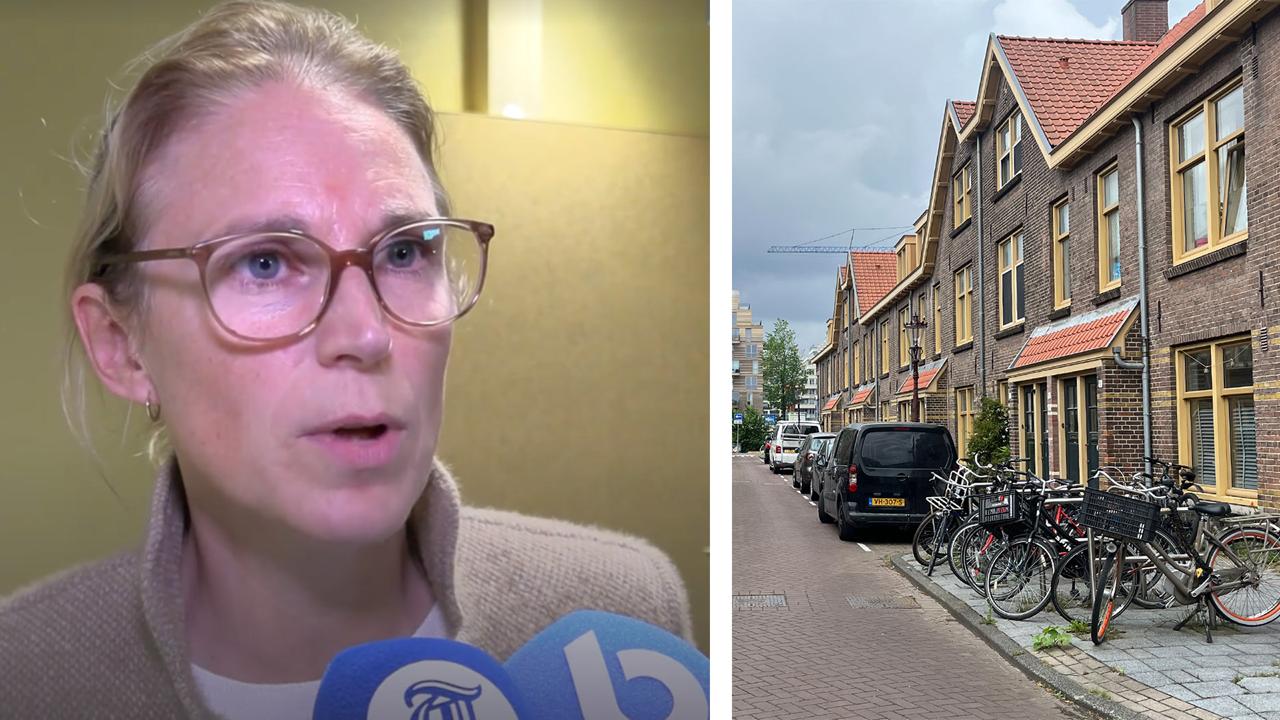
Dutch Housing Minister Elanor Boekholt-O’Sullivan drew sharp criticism this week after defending priority access to scarce social housing for recognized refugees, arguing that many young Dutch first-time home seekers “can still live with their parents.”
In an interview with De Telegraaf, the D66 minister was asked why status holders — asylum seekers granted residence permits — should receive preference for social rental homes while Dutch “starters” face long waiting lists and delayed independence. She responded that “we see that a lot of starters can still, or are allowed to, live with their parents.”
Migrants get affordable housing before Dutch natives.
When asked why migrants receive access to affordable housing before young Dutch people looking for a "starter" home, the Dutch housing minister said that many Dutch first-time home seekers "can still live with their parents."
Mass migration contributed to 60% of the increase in housing demand in the Netherlands since 2015, yet Minister Elanor Boekholt-O’Sullivan still believes in putting migrants first.
"For me, the fundamental principle is that anyone who is allowed to and wants to live in the Netherlands gets a roof over their head," she said.
In the Netherlands, Dutch natives are increasingly relegated to living with their parents while migrants get to skip massive waiting lists and gain "emergency" access to cheap social housing.
Follow: @RMXnews
Dutch commentator and activist Eva Vlaardingerbroek wrote on X that the policy amounted to “systemic racism.”
“And not just the ‘new’ newcomers. A 25-year-old Syrian who came here with his parents years ago jumps the queue for a home when he decides he wants to live on his own. Meaning a 25-year-old white Dutch guy can forget about getting his own place and ends up on waiting lists for 10+ years,” she wrote, adding: “Putting the interests of foreigners above the interests of the native population needs to end.”
Talking about systemic racism: Young Dutch people can barely find a place to live, because migration drove 60% of the housing demand since 2015, regular prices are insane, and migrants get PRIORITY for the affordable social housing.
And not just the “new” newcomers. A 25-year-old Syrian who came here with his parents years ago jumps the queue for a home when he decides he wants to live on his own. Meaning a 25 year-old white Dutch guy can forget about getting his own place and ends up on waiting lists for 10+ years.
But according to our minister of housing that’s fine because they can just continue to “live with their parents.”
Putting the interests of foreigners above the interests of the native population, needs to end.
That’s why with the @SaveEuropeAct, apart from demanding closed borders and Remigration, we also demand Removing social welfare incentives and benefits that function as pull factors for migration.
Boekholt-O’Sullivan, an Irish-born former lieutenant general in the Dutch Air Force who took office earlier this year, claims that anyone who wants to live in the Netherlands should get a roof but does not address the major housing crisis brought on by mass immigration.
“For me, the fundamental principle is that anyone who is allowed to and wants to live in the Netherlands gets a roof over their head,” she said. She noted that status holders typically leave asylum reception centers and argued that alternatives such as remaining in centers, homelessness, hotels or cruise ships were unacceptable, so priority allocation should continue until other solutions exist.
The remarks landed amid fresh data underscoring migration’s outsized role in the Netherlands’ housing crunch. A report released this week by the Economic Institute for Construction (EIB) found that migration accounted for about 60 percent of additional housing demand between 2015 and 2024. Migrants who arrived in that period occupied roughly 435,000 homes by 2024, out of nearly 700,000 homes added to the stock.
The 44 percent figure of social housing units occupied by first or second-generation immigrants has doubled from 22 percent in 2000, and is forecast to rise to 51 percent by 2030.
A total of 92 percent of Syrian first-generation immigrants reside in social housing. In addition, 90 percent of those born in Somalia, Afghanistan, and Eritrea reside in social housing.
Asylum-related migration contributes disproportionately to lasting demand because status holders remain permanently at high rates, unlike many labor or student migrants who leave within a decade.
Critics said the minister’s comments minimized the burdens on young Dutch adults who have already spent years on waiting lists for social housing or who face high private rents and purchase prices that lock them out of independent living.
Social housing waiting lists in major cities often stretch many years; priority rules for status holders allow some recent arrivals to bypass ordinary queues. Dutch population growth in recent years has been driven almost entirely by net migration, amplifying pressure on an already constrained housing market marked by strict planning rules, nitrogen regulations and slow construction.
Spanish trade unions representing millions of workers have announced a general strike for November 11. The announcement comes amid nationwide mobilizations for the right to housing and only days after Prime Minister Pedro Sánchez called early elections for November 29.
The strike was announced by the two largest union organizations, the General Union of Workers (UGT) and the Workers’ Commissions (Comisiones Obreras, CCOO), alongside the General Confederation of Labor (CGT), Basque unions ELA and LAB, and the Galician confederation CIG.
It will be the country’s first general strike in 14 years, excluding the feminist strike of March 8, 2018.
Housing and wages are the same struggle
“A key demand of this strike is to vindicate decent salaries to afford housing,” the Madrid Tenants Union wrote.
In their strike call, unions emphasized several demands that have been on their agenda for months. These include reductions in working hours, wage increases, health and safety measures in the workplace, eradicating precarious employment and progress in collective bargaining – a process that has been obstructed by employers for almost a year.
Yet, echoing the sentiment voiced on the streets, where hundreds of thousands have protested and erected encampments against a predatory housing system, the trade union call links all these demands to the right to housing.
“This is a strike with very clear foundations and labor demands,” CCOO’s Carlos Gutiérrez said. “Is it being called because working families cannot access affordable housing? Yes. But we cannot separate the inability to access affordable housing from the wage situation in our country and what is happening in the workplace.”
Maricarmen Abascal during a protest in June 2026. Source Sindicato de Inquilinas e Inquilinos de Madrid/Facebook
The general strike builds on a protest wave triggered by the eviction of 87-year-old Maricarmen Abascal in late September. After years of battle to keep the home she had been living in for 70 years, Abascal was carried out of the apartment on a stretcher. She remained hospitalized until Wednesday, October 7, when the Madrid Tenants Union announced her death.
“Although a historic agreement was reached that would have allowed her to return to her home, this solution came too late,” the organization wrote. “An absolutely avoidable situation, following an agonizing process.”
A strike against all who “do nothing to solve the housing crisis”
Many of those participating in the protests recognized that Sánchez’s administration failed to implement policies that would truly address the housing crisis. Yet union and civil society statements emphasize the problem goes much further than the behavior of a specific political option.
“It’s important to make clear that this is not a strike against any particular government, but against those who do nothing to solve the housing crisis, and also against the employers, who have kept the Agreement for Employment and Collective Bargaining (AENC) blocked for nearly a year,” Patricia Ruiz from UGT was quoted as saying in Público.
Political parties from the center-left to the left have largely expressed support for the strike. Even PSOE figures who share the responsibility for not addressing the housing crisis signaled support for concerns outlined by trade unions.
While a general strike held only a couple of weeks ahead of an election would usually spell trouble for the incumbent administration, local political analysts say this is a peculiar situation that could swing both ways.
Right-wing options are polling high, but ongoing housing mobilizations could steer the electoral campaign away from scapegoating migrants toward issues of social justice – topics they are generally keen to avoid.
Regulation could be the fastest response for tenants facing their next rent payment, Italian MEP Irene Tinagli said. Measures to moderate rent increases and restrict short-term rentals in neighbourhoods under the greatest pressure could help in the short to medium term.
“In the long term we need structural measures that provide a greater supply of affordable homes,” she told the European Newsroom (enr) on Wednesday. That would however require substantial investment and long-term planning, she added.
Tinagli, who chairs the European Parliament’s Special Committee on the Housing Crisis (HOUS), said residential property “has become an asset” and was increasingly attracting investors and real estate funds. These investors were buying entire buildings and evicting tenants or sharply raising rents, she said, describing a pattern seen in cities across the EU.
One such case was Maricarmen Abascal, whose eviction from her longtime Madrid home made her a symbol of Spain’s housing protests. She died in hospital at the age of 87 on October 7, two weeks after her eviction. She never returned home, despite an agreement with the apartment’s owner, Urbagestión, that would have allowed her to return at roughly her previous rent rate.
In the interview, conducted before news of Abascal’s death emerged, Tinagli described Abascal’s eviction as “a case that we are seeing in many other cities and countries across the European Union” and added: “It tells me that we need to do something.”
European tools, local action
While housing remains primarily a national and local responsibility, the EU could provide authorities with tools to act, alongside guidelines and parliamentary resolutions, Tinagli said.
She pointed to greater use of cohesion funds, “reprogramming them to address housing investments”, and more flexible state-aid rules to support social and affordable housing projects.
Work on an Affordable Housing Act, which the European Commission proposed last month, was intended to give authorities clearer criteria for restricting short-term rentals “where they are becoming increasingly invasive of the dynamics of the city,” the Italian politician said.
Such restrictions could range from limits on licences to outright bans, depending on local housing pressures. Reducing potential returns from holiday lets could curb investors’ interest in driving up property prices, she added.
Politicians need to solve the affordability crisis to stop the far-right, social democratic Portuguese prime minister Luís Montenegro told MEPs on Tuesday (6 October).
Opening a debate in Strasbourg, Montenegro called for more lax regulation as a way to address the housing crisis, defended strict migration policies, and expressed support for funding poorer regions in the next EU budget.
He also stressed the importance of lowering fuel prices and prioritising the energy transition to “solve the real problems that people wrestle with,” adding that “our response … has to be felt in the lives of Europeans” to avoid disappointed voters turning to populism and extremism.
Back at home, Montenegro has the far-right Chega (Enough) party on his tail: in the 2025 parliamentary elections, they won 23 percent of the ballots against the Montenegro alliance’s 33 percent.
Now, polls give Chega 27 percent of declared votes for the next parliament, slightly less than the Socialist Party (28 percent) and ahead of the current government coalition (24 percent).
For his part, a Chega MEP (Patriots for Europe), António Tânger Corrêa, challenged Montenegro on Tuesday for relying on wind and solar energy without enough storage in case of blackouts and shutting down coal power plants.
He also warned Montenegro against agreeing to limit unanimous votes in the European Council in future, as representing a blow to Portugal’s sovereign powers.
From his left-wing opponents, Portuguese MEP Catarina Martins pointed out the high rent costs in the country and criticised the government for failing to support low-earning tenants.
Montenegro said his government simplified the law around housing construction – much in line with the EU’s focus on deregulation – and proposed tax breaks to encourage investors to build more.
An EU-level policy complementing it “would be very useful,” he said, as long as it simplified existing regulations.
The Affordable Housing Act presented by the EU Commission in early September aims to improve the market for tenants by restricting short-term rentals.
Spanish Prime Minister Pedro Sánchez announced a snap election for late November after two housing bills were defeated in a parliamentary vote on Friday, October 2. The bills came amid widespread mass mobilizations demanding urgent action on the country’s housing crisis, following the eviction of an 87-year-old woman in Madrid.
Hundreds of thousands of people took to the streets of approximately 50 cities over the weekend in support of these demands.
“It is true that there are still many injustices to correct, many social goals to achieve, and many problems to solve – above all in the areas of inequality, public services, and access to housing,” Sánchez said in his speech on Monday, as he appealed to voters to give progressive forces more decisive electoral support to allow them to implement reforms more easily.
Real estate speculation drives housing crisis
While Sánchez’s administration has profiled itself as one of the more progressive governments in Europe in terms of international policy, national movements remain frustrated by the lack of decisiveness it has approached making changes at home – including in housing policy.
For years, tenants unions have been warning against the different ways house-owners, particularly real estate speculation funds, have exacerbated housing insecurity for the general population.
Existing anger spilled over as Maricarmen Abascal, an elderly tenant in Madrid, faced eviction from the home she had lived in for 70 years. After the development company Urbagestión Desarrollo e Inversión SL acquired the house Abascal lived in, they imposed a 275% rent increase that she was not able to meet, leading, after a lengthy legal process, to her eviction at the end of last month.
The mobilizations that followed addressed a wider set of problems. “Maricarmen’s situation reflects a housing model that prioritizes real estate profits while abandoning the very people who built our neighborhoods over the decades,” Madrid Tenants’ Union (Sindicato de Inquilinas e Inquilinos de Madrid) warned.
“Most serious of all is that this situation cannot be understood without considering the weight of laws inherited from the Franco regime that denied women basic rights,” the union emphasized in May. “The original contract was signed solely by Maricarmen’s father because the legal system of the time rendered women invisible within the family. Had that same contract been signed today, both parents would have been named as holders, and Maricarmen would remain fully protected.”
“Yet an extremely restrictive interpretation of the regulations has ultimately weighed more heavily than social reality, than the desire to protect those who rent, and more than seventy years of roots in a neighborhood,” they added. “For the Madrid Tenants’ Union, the position is clear: no formalistic interpretation of the law can justify evicting an 87-year-old woman from the home where she has lived her entire life simply to boost the profitability of a real estate investment.”
Unions promise building general strike for housing
The protests formulated several demands to the government, including a ban on eviction of vulnerable tenants where alternative housing is not available; a limit to short-term and room rentals; a rent freeze; and an extension for contracts ending in 2026 and 2027.
Such demands were generally by the public, as well as by trade unions. “Housing and work are not separate struggles,” unions wrote, pledging to work towards a general strike for housing. “The rise in rents is a direct transfer of wealth from the working class to rentierism. Our wages end up, month after month, in the pockets of the rentiers who control our homes.”
The uproar pushed Sánchez’s government to reflect these demands in two bills it presented to parliament. Most considered this a significant breakthrough for the housing movement despite the official texts not fully corresponding to the protesters’ vocabulary and the vote taking place on two separate proposals.
Watered down or not, right-wing and far-right parties voted against both bills.
“We have a democracy held hostage by rentiers and speculators,” the progressive party Podemos wrote as protests rolled out over the weekend. “The housing mobilization must keep growing and move toward a general strike until the speculators and those who defend them in the institutions have nowhere left to hide.”
“Between now and November 29, the voices of all of us who want peace must be heard,” Irene Montero from Podemos added after the snap election announcement. “Those of us who want our sons and daughters to avoid war and to have healthcare and education, instead of money being spent on weapons; who want homes to live in; who want jobs and time to spend with our loved ones; and who want the cost of living to go down.”

 Login
















 Migrants get affordable housing before Dutch natives.
When asked why migrants receive access to affordable housing before young Dutch people looking for a "starter" home, the Dutch housing minister said that many Dutch first-time home seekers "can still live with their parents."
Mass migration contributed to 60% of the increase in housing demand in the Netherlands since 2015, yet Minister Elanor Boekholt-O’Sullivan still believes in putting migrants first.
"For me, the fundamental principle is that anyone who is allowed to and wants to live in the Netherlands gets a roof over their head," she said.
In the Netherlands, Dutch natives are increasingly relegated to living with their parents while migrants get to skip massive waiting lists and gain "emergency" access to cheap social housing.
Follow: @RMXnews