❌

Reading view

Pakistan’s Saima Shahzad wins gold at Asian Masters, World Masters Grand Prix

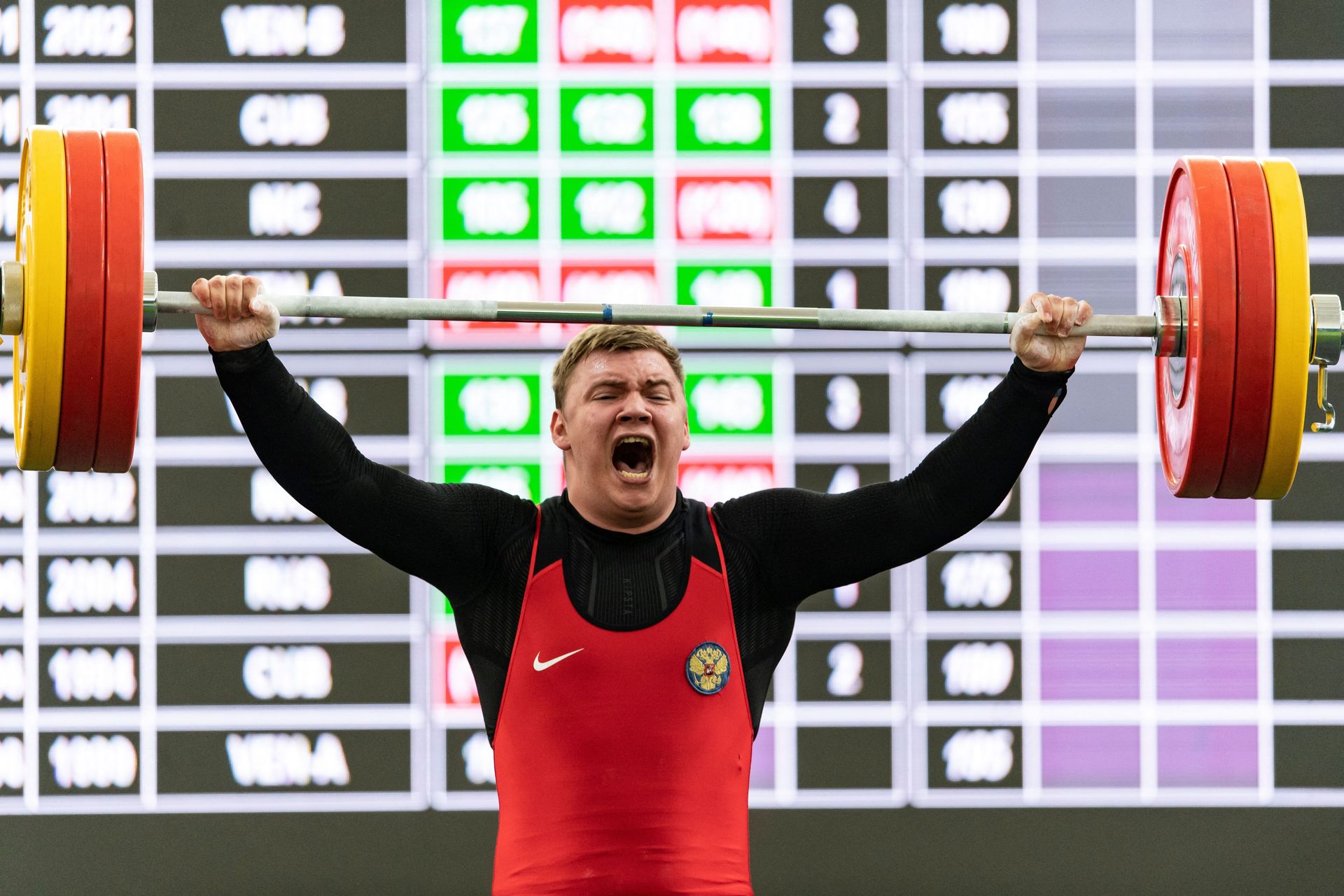
ISLAMABAD – Pakistani weightlifter Saima Shahzad won the gold medal in the 61-kilogram category at the second Asian Masters and World Masters Grand Prix 2026, held in Islamabad.

The six-day event ran from October 20 to 25 at the Liaquat Gymnasium in the Pakistan Sports Complex. It was organised by the Pakistan Masters Weightlifting Association in collaboration with the Pakistan Sports Board. Organisers had expected around 250 athletes from 21 countries to take part.

Saima Shahzad has also previously won a bronze medal for Pakistan in the 55-kilogram category of the weightlifting competitions at the 13th South Asian Games (SAG) in 2019.

The post Pakistan’s Saima Shahzad wins gold at Asian Masters, World Masters Grand Prix appeared first on Daily Pakistan English News.

  •  

Maillots, 'who dat', serviettes jaunes et cheerleaders : Paris aux couleurs de la NFL

Le Stade de France est encore une fois entré dans l'Histoire en accueillant, dimanche, le premier match de saison régulière de NFL, le championnat des États-Unis de football américain. Pour cette rencontre inédite entre les Saints et les Steelers (10-16), les fans sont venus en nombre de la Nouvelle-Orléans et de Pittsburgh, mais aussi de France et d'autres pays européens. 

  •  

Champions of the World: England’s Para Lions Deliver IFCPF Men’s World Cup Triumph to Cherish!

England’s cerebral palsy footballers have captured the IFCPF Men’s World Cup with a dramatic comeback against the United States, delivering a magnificent sporting achievement and a moment of national pride.

England are world champions, and they earned their moment through nerve, quality and an unshakeable refusal to accept defeat. Against tournament hosts the United States, the Para Lions overturned a late deficit to win 2–1 after extra time, bringing a glorious conclusion to their campaign in Georgia.

IFCPF Men’s World Cup

IFCPF Men’s World Cup Final 2026

For head coach Jack Rutter and his players, this was the reward for years of ambition, preparation and persistence. England’s first World Cup title in cerebral palsy football belongs to a squad whose performances deserve a prominent place in the nation’s sporting celebrations.

The final supplied the drama. After a goalless first half, the Americans broke through from a corner in the 56th minute. With regulation time almost exhausted, England faced the prospect of seeing their dream disappear within touching distance of the trophy.

Sam Dewhirst supplied the answer, equalising in stoppage time to force an additional period. Then came David Porcher’s decisive intervention: after Dewhirst’s effort was pushed away, Porcher converted the rebound. England protected their advantage and completed a turnaround worthy of a World Cup final.

Rutter’s assessment captured both the emotion and the work behind the achievement.

“It feels unbelievable,” he said, before praising the sacrifices made by players and staff. Appointed in January, the former England player had guided the team to the summit in his first major tournament as head coach.

His experience gave the occasion particular resonance. Having represented the Para Lions between 2013 and 2018, Rutter understood the long pursuit of international success. He also highlighted goalkeeper Giles Moore’s contribution against the Americans, praising the saves that helped keep England in contention.

England had already demonstrated their credentials throughout the competition. Victories over Japan, Indonesia and the Republic of Ireland brought a perfect group record. The knockout rounds demanded different qualities, with an extra-time victory over the Netherlands followed by a controlled semi-final win against Brazil.

That combination of attacking confidence and competitive resilience made England compelling champions. They could impose themselves when opportunities opened, but also withstand the pressure of matches in which a single moment could settle everything.

The achievement adds a memorable chapter to a sport with deep international roots. The first international cerebral palsy football competition took place in Edinburgh in 1978, during the third Cerebral Palsy International Games. The first World Championships followed in Denmark in 1982.

The International Federation of Cerebral Palsy Football, known as IFCPF, became the sport’s independent governing body in January 2015. Governance transferred from the Cerebral Palsy International Sports and Recreation Association, which had overseen its development for 37 years.

The modern World Cup continues that earlier championship tradition, providing a global stage for elite national teams. England hosted the senior IFCPF World Championships in 2015, while the women’s game reached an important milestone with its inaugural World Cup in 2022, won by the United States.

Men’s CP football features seven players per side, smaller pitches and goals, and two halves of 30 minutes. There is no offside, while players may roll the ball into play instead of using a conventional throw-in. Eligible athletes include players with cerebral palsy, acquired brain injury and stroke-related impairments.

Those adaptations produce an absorbing contest demanding technique, tactical intelligence and teamwork. England’s triumph offers an excellent invitation for new supporters to discover it.

The opportunity now is to turn celebration into lasting attention: fuller coverage, stronger support for development and more chances for young players to find their way into the game.

For children watching these champions, an England shirt can become a tangible ambition. Dewhirst, Porcher, Moore and their teammates have given that ambition faces, names and unforgettable moments.

Above all, this was a victory to savour on its sporting merits. England met pressure with composure and disappointment with determination. When the final demanded something extraordinary, the Para Lions found it—and brought the World Cup home.

  •  

Pakistan eye 3rd Straight Win as England face Do-or-Die Clash in Lahore ODI Today

LAHORE – Pakistan will look to tighten their grip on tri-nation ODI series as hosts take on struggling English side at Gaddafi Stadium in Lahore today (Sunday), with the visitors desperate to end their losing streak and keep their hopes alive in the tournament.

The fourth match of tri-series is slated to start at 1:00 PM, bringing international cricket action back to Lahore after the opening three encounters were played in Rawalpindi.

Pakistan enter contest brimming with confidence after winning both of their opening matches in convincing fashion. The Green Shirts launched their campaign with a 37-run victory over Sri Lanka before crushing England by 87 runs in their second outing, establishing themselves as the team to beat in the three-nation competition.

October 25 clash will carry special message beyond cricket field, as Pakistan’s players will wear pink kits to support a cancer awareness campaign, adding significance to the high-profile encounter.

For England, the situation is becoming increasingly difficult. The visitors have yet to register a single victory in the tournament, having suffered back-to-back defeats against Pakistan and Sri Lanka. After being comprehensively outplayed by Pakistan, England came agonisingly close to bouncing back against Sri Lanka in the third match, only to suffer another heartbreaking defeat as the islanders secured a thrilling two-wicket victory.

The two sides have set the stage for an intriguing showdown in Lahore, where Pakistan will be targeting a third consecutive victory while England will be fighting to revive their campaign.

The tri-nation ODI series, featuring Pakistan, England and Sri Lanka, has now shifted from Rawalpindi to Lahore, with Gaddafi Stadium set to host all remaining matches, including the much-anticipated final.

Pakistan Squad

Shaheen Shah Afridi (c), Abrar Ahmed, Salman Ali Agha, Arafat Minhas, Babar Azam, Faheem Ashraf, Fakhar Zaman, Muhammad Ghazi Ghori (wk), Haris Rauf, Hasan Nawaz, Naseem Shah, Razaullah, Saad Baig (wk), Saim Ayub, Shadab Khan and Sufiyan Moqim.

England Squad

Harry Brook (c), Gus Atkinson, Sonny Baker, Tom Banton, James Coles, Jordan Cox, Mason Crane, Henry Crocombe, Sam Curran, Liam Dawson, Ben Duckett, Will Jacks, Jamie Overton, Adil Rashid, Joe Root and Josh Tongue.

ODI Tri-Series Schedule

Oct 18  Pakistan vs Sri Lanka   Rawalpindi       Pakistan won by 37 runs

Oct 20  Pakistan vs England     Rawalpindi       Pakistan won by 87 runs

Oct 22  Sri Lanka vs England    Rawalpindi       Sri Lanka won by 2 wickets

Oct 25  Pakistan vs England     Lahore Today

Oct 27  Pakistan vs Sri Lanka   Upcoming

Oct 29  Sri Lanka vs England    Upcoming

Oct 31  Final (Top 2 teams)      Upcoming

The post Pakistan eye 3rd Straight Win as England face Do-or-Die Clash in Lahore ODI Today appeared first on Daily Pakistan English News.

  •  

Qui sont les favoris du Ballon d’Or ?

La 70e cérémonie du Ballon d’Or aura lieu lundi soir en Angleterre, au London Palladium Theatre. Ce trophée individuel, décerné par France Football, couronne le meilleur footballeur de la saison 2025/2026. Tour d’horizon des prétendants qui se disputent le graal ultime dans un scrutin qui promet d’être serré.

  •  

Qui était Pengo Bossio Wangi, combattant de MMA, tué par balles lors de l’attentat terroriste raciste à Trappes

Le Français Pengo Bossio Wangi a été la victime de l’attentat terroriste raciste du vendredi 23 octobre à Trappes et La Verrière dans les Yvelines. Ce combattant amateur avait 26 ans et était une figure importante de son club de MMA de l'Atch Academy à Aubervilliers (Seine-Saint-Denis).

  •  

The unexpected costs of my 11-year-old's baseball season caught me off guard. Receipts show that we spent around $8,800.

Two people stand with backs turned wearing bright pink baseball jerseys on a gravel field near parked cars.
The author, shown with one of her sons, said that extras like fan gear, gas for away games, and concession snacks add a lot to the cost of youth sports.

Courtesy of Alexandra Frost.

  • Years ago, I made fun of sports parents who went all out and spent thousands on their kids.
  • Now I'm one of them.
  • Last season cost our family over $8,800. Looking back, I have no regrets and would do it all again.

Ten years ago, I was the mom making fun of select sports parents. I thought they were crazy. Nuts. Over-spenders. People who didn't understand priorities, or budgeting, for that matter. Then I became one of them.

It didn't happen overnight, but gradually. My then-7-year-old son was asked to try out for a team. At the time, it seemed more competitive than the rec league he had been playing in, but not overly so. Practice times doubled. Costs also doubled. The following year, it happened again, and they doubled again. And now, I'm a mom of 5, with an 11-year-old who is obsessed with his select baseball team. Well, career. It's called a career, he's told me.

And that would be fine, but it's the unexpected costs that really caught me off guard. Over time, I got used to the idea that team fees would pass the three-figure mark. I was okay with that, because I saw the joy it brought him and realized that he's a young athlete who is more naturally competitive than rec teams typically allow for.

What I didn't anticipate were the extra costs. Here's how much it really costs to be a select sports family. And as select sports families might note, this isn't even for the most competitive, select travel teams in our area.

The real cost of select sports for our family

Growing up as a competitive gymnast, I look back and realize what it really meant for my single mom to shell out $90 for a competition leotard — and that was 25 years ago. Now, I see just how those extras add up and can tank a budget unexpectedly, one little overpriced concession stand hot dog at a time.

If I sit and add up the cost of the sport, which I do periodically, I find that it's a lot, even if I'm focusing on the more conservative end of our expenses. Here's how last season played out for us:

  • Concession stand spending: $40 per game, estimated at $2,000 for last season. Our family of seven attends 40 to 60 games a season. Yes, we could pack our own food, but here we are, imperfect and flawed parents, just trying to find a uniform 10 minutes before warm-up.
  • Gas: at least $700 per season. Our local practice field is over 20 minutes away so we do our fair share of driving for the sport. We also have tournaments in cities that are hours away, our furthest was about a 5-hour drive. In a season, this accounts for 10 to 12 tanks of gas, which of course varies with the price we pay at the pump. If we drive our large Sprinter van with the whole family tagging along, it's even more.
A baseball bat lies on a dusty infield as players run during a youth baseball game.
The author says the cost of gear can add up, especially once you add in a specialty bat that can cost hundreds.

Courtesy of Alexandra Frost.

  • Gear: around $1,250 last season. I consider myself a slightly scrappy shopper, having grown up on garage sale gear. So as an adult, I try to walk the line of buying new items, such as baseball gloves and pants (used pants at this age are often very worn), cold gear for chilly practices, hats, gloves, catcher gear (used on eBay), cleats, socks, and more. Then, there's gear from the actual team, such as belts and casual wear like hoodies and shorts. None of this includes the overpriced composite bats, which range from $200 to $500 apiece and come with the promise of "hitting bombs." Sure, we don't buy everything new every season, but looking back over my credit card bills reveals this past season was a pricey one.
  • Private lessons: $300 a month for six months. As anyone with a semi-serious athlete knows, regular practice never seems to be enough. When my son became a catcher, we had to, well, catch up and learn catching. When he hit a mental block with hitting, his private lesson teacher scheduled extra sessions.
  • Babysitting: $600 last season. When a game starts at 8 p.m. and ends after 10, parents with little kids need other options. Sometimes, we have our local babysitter chip in and help the other kids maintain a more normal schedule, including bedtimes. This can add up, but sometimes it's just nice to watch your older kid play without toddlers climbing on you with sticky hands. We pay our sitter $25 an hour and used them several times last season.
A spectator in red and white stands at a chain-link fence watching a baseball game on a grassy field.
The author said that siblings often attend games, but she needs to schedule a sitter at $25 an hour when the games run into the night.

Courtesy of Alexandra Frost.

  • Parent gear: $400 last season. Parents are the fan club, and they need to look the part. Even if each parent buys just an item or two from the team pro shop, it adds up. I might have also grabbed the super-cute Bauble Bar Perfect Catch Earring Set this year, along with team-colored HOKA sneakers for lugging gear around the city and getting some steps in during warmups. Finally, with so many kids, we invested in a double-decker wagon that hauls kids, chairs, drinks, snacks, and diaper bags from game to game.
  • Hotel stays: $1,200 for four nights away. I know this is lower than many teams with a heavier travel schedule, but our cost is higher because we need a suite or two rooms for our large family. Teams often require these stays, and hanging out in the hotel pool is a big part of the kids' memory-making that can't be skipped.
  • Registration fees: $900 per season. There are options to fundraise for parts of this, but I very rarely feel good about asking others to pay for my son's sports. I know it works for some people, but for me, going to the same people over and over to chip in feels off (aside from the grandparents who are always down to buy a coupon book).

The total isn't the point

When I say I really don't want to add this list up, I mean it. But for the sake of other parents who feel stressed about so much of their family budget going to sports, or those who need a real look at what it entails, I will.

Before I do, though, I have to acknowledge what all these extras mean for my son. The movement outside instead of getting addicted to screens: priceless. The self-esteem and confidence gained by overcoming stress in a high-pressure game: priceless. The camaraderie and friendships on a team: priceless. The bonding experience of watching the sunset with toddlers screaming their brother's name and number: priceless.

The grand total for the past season landed around $8,850, give or take a bag of popcorn or four. I'm off now to get a second job.

Spring signups are happening soon. I'll do what I can to save, and hope my son doesn't need a new bat, but I know I'll gladly be paying close to this again for yet another season. After all, the popcorn is decent, and my son's joy is contagious.

Read the original article on Business Insider

  •  

Trump’s midterm closing message keeps featuring aging boxers

One group is oddly overrepresented among those whom Donald Trump has trotted out during his recent rallies ahead of the midterms: dudes who used to take blows to the head for a living.

Yes, just like in 2024, Trump is leaning on aging boxers — including some with disturbing histories — in his late-stage voter mobilization push.

Convicted rapist Mike Tyson sang the president’s praises during a recent rally in upstate New York. In turn, Trump touted Tyson’s brutality during his prime, calling him a “very dangerous person.” Floyd Mayweather Jr., who served time for domestic violence, recently touted Trump at a rally in Arizona.

And Evander Holyfield appeared alongside Trump this week at a rally in South Carolina, where the president evoked Holyfield’s name to cheer on a supporter who punched a heckler in the crowd. The retired boxer made headlines in 2014 for making homophobic remarks, which certainly makes me wonder what he thinks about Trump’s lecherous observations about men’s bodies lately.

The racial component here is unavoidable. As his administration wages war on Black America in a host of ways reminiscent of the Jim Crow era, Trump is trotting out old Black boxers during rallies — events filled with bigoted diatribes — in a way that might suggest he’s not actually leading a movement fueled by blatant racism. It’s also easy to see how these kinds of men can be made into pawns in a conservative movement that is steeped in toxic masculinity and displays of bravado.

In reality, Trump’s return to office has done very little for men, substantively speaking. He has failed to make good on his vow to bring back supposedly manly jobs — and, in fact, women have accounted for almost all of the net job creation that has occurred since he returned to office.

It’s a topic MS NOW’s Chris Hayes discussed with journalist Adam Serwer during a recent episode of “Why Is This Happening?” And it seems like at least part of the reason why Trump’s support among men has shown signs of softness.

Given all of that, prizefighters of past and present have basically become shiny objects that can distract MAGA men from the president’s failings. I’ve written previously about Trump’s use of combat sports — both boxing and mixed martial arts — to give his movement an air of toughness that he seems to lack on his own. Journalists like Luke Thomas have excellently homed in on this trend in even greater depth.

And the question for voters is whether they think these alliances serve any purpose other than to stroke fragile male egos. If political expertise were measured in jabs taken to the head, endorsements from Tyson, Mayweather and Holyfield might mean something of value. But that obviously is not the case.

These endorsements seem to me, more than anything else, like favors called in for a wannabe strongman whose clout is waning among a core constituency. In other words: weakness masked as strength.

The post Trump’s midterm closing message keeps featuring aging boxers appeared first on MS NOW.

  •  
❌