Volodymyr Zelensky a confirmé dimanche qu'une réunion entre Russes et Ukrainiens aura lieu en novembre sous médiation américaine pour relancer des négociations de paix au point mort depuis le début de l'année.
Nem no maior viveiro mundial de vídeos feitos por IA as pessoas estão dispostas a pagar bilhete para a ver. O primeiro filme chinês inteiramente gerado por inteligência artificial estreou na sexta-feira, no que promete ser um teste difícil nas bilheteiras para a indústria tecnológica em expansão do país. Mas a venda antecipada de bilhetes está a ficar aquém do esperado. Segundo a plataforma de bilhetes Maoyan, estão marcadas para sexta-feira mais de 10.000 sessões do thriller de ficção científica “Sanxingdui: Future Past“. A recetividade do público tem sido reduzida. As receitas do filme aproximavam-se dos 290.000 yuans (38 mil
Nem no maior viveiro mundial de vídeos feitos por IA as pessoas estão dispostas a pagar bilhete para a ver. O primeiro filme chinês inteiramente gerado por inteligência artificial estreou na sexta-feira, no que promete ser um teste difícil nas bilheteiras para a indústria tecnológica em expansão do
La cheffe de l'opposition vénézuélienne et prix Nobel de la paix, Maria Corina Machado, a annoncé qu'elle était de retour au Venezuela dimanche 25 octobre 2026, après près d'un an d'exil.
En dominant l’Indonésien Mohammad Zaki Ubaidillah en trois manches (21-11, 14-21, 21-13) ce dimanche 25 octobre à Tremblay, Christo Popov a remporté les Internationaux de France de badminton et s’est assuré la place de numéro 1 mondial de la discipline. Une première pour un tricolore en simple messieurs.
« À la suite des événements dans la région », le Dakar 2027, prévu du 1er au 15 janvier 2027, aura bien lieu, mais ne se déroulera pas en Arabie saoudite, ont indiqué ce dimanche 25 octobre 2026 dans un communiqué les organisateurs.
De nouvelles explosions ont secoué Riyad tôt dimanche 25 octobre, après des messages d'alerte des autorités. Les Houthis du Yémen poursuivent leurs attaques contre le royaume où l'aéroport international de la capitale devait rouvrir après deux semaines de fermeture.
La garde à vue de l'assaillant ayant tué vendredi 23 octobre une personne et blessé cinq autres en région parisienne a été suspendue pour raisons psychiatriques, a annoncé dimanche le parquet national antiterroriste (Pnat). Ce dernier a précisé qu’il sera « soumis à une période d'observation psychiatrique susceptible de durer 48 heures ». La famille de la victime a fait part de son étonnement après cette annonce.
Quelque 2 000 Palestiniens ont été chassés de chez eux par l'armée israélienne samedi 24 octobre à Hébron, la plus grande ville de Cisjordanie occupée, dans le cadre d'une vaste opération lancée la veille après une attaque ayant coûté la vie à deux soldats.
Le président iranien Massoud Pezeshkian a déclaré samedi 24 octobre que de nombreux Iraniens avaient du mal à se nourrir, en raison de l'intensification de la pression économique sur le pays liée au conflit avec les États-Unis.
Le Français Pengo Bossio Wangi a été la victime de l’attentat terroriste raciste du vendredi 23 octobre à Trappes et La Verrière dans les Yvelines. Ce combattant amateur avait 26 ans et était une figure importante de son club de MMA de l'Atch Academy à Aubervilliers (Seine-Saint-Denis).
Atingida pelo envelhecimento da população, a aldeia japonesa de Nanmoku tomou uma iniciativa drástica: convidar visitantes de uma região amazónica do Peru para os convencer a mudarem-se para a localidade, que está em risco de extinção. A presidente da câmara da cidade peruana de Belén e duas jovens visitaram recentemente um lar de idosos em Nanmoku, uma aldeia montanhosa no centro do Japão, com 1.300 habitante Cumprimentaram os residentes. Alguns, não esconderam a sua surpresa com a visita. “Nanmoku é uma cidade muito bonita. Desde que cheguei, comecei a admirar tudo”, disse à AFP Wendy Sangama, uma estudante de 19
A duquesa diz ter alertado a polícia britânica já em 2018, mas uma fonte próxima garante que o pai nunca foi investigado. Thomas Markle Sr., 82 anos, nega tudo. A mulher do príncipe Harry, Meghan Markle, declarou esta sexta-feira estar “profundamente consternada” depois de órgãos de imprensa britânicos terem noticiado uma investigação ao pai por alegada posse de imagens de abusos sexuais de menores. “Estou profundamente consternada com as notícias que vieram a público nas últimas 24 horas, e os meus pensamentos estão com todas as crianças que possam ter sofrido danos”, afirma a duquesa de Sussex em comunicado. Harry,
O técnico belga, de 40 anos, já estava debilitado por um vírus e com um problema na anca que o tinham deixado no banco na última jornada. O treinador do Bayern de Munique, Vincent Kompany, foi esta sexta-feira levado para o hospital por uma equipa de emergência médica, depois de ter desmaiado durante um treino, informou o clube. “Vincent Kompany teve de receber assistência médica na sexta-feira, depois de desmaiar durante um treino com a equipa de reservas do FC Bayern”, disse o Bayern no seu site. “Kompany está a fazer exames aprofundados no hospital e vai continuar sob cuidados
À medida que a inflação pesa sobre os orçamentos das famílias japonesas, os grandes espaços de jogos na periferia das principais cidades estão a instalar máquinas de garra com ovos, arroz, detergente para a roupa e outros bens de primeira necessidade. Estes espaços combinam a aquisição de produtos essenciais com o entretenimento, permitindo que as famílias se divirtam sem sentirem que têm de escolher entre comprar os bens de que necessitam e desfrutar de um dia de lazer. Minae Kamata, uma dona de casa de 25 anos, conta que consegui ganhar o prémio após apenas duas tentativas, a 100 ienes
Un juez de Nuevo México ordenó a Meta pagar 25.000 millones de dólares por engañar a los usuarios sobre el uso de sus datos personales, en un caso vinculado al escándalo de Cambridge Analytica, según medios estadounidenses. La compañía calificó la sanción de "impuesto a la libertad de expresión" y anunció que apelará.
Un ataque ruso con misiles dejó seis heridos en Kiev durante la noche de este jueves 22 de octubre, según las autoridades ucranianas, horas después de que Moscú expresara su disposición a reanudar las negociaciones con Ucrania y Estados Unidos. Donald Trump aseguró que el fin de la guerra estaba más cerca que nunca, aunque el Kremlin cuestionó el contenido de las propuestas ucranianas y europeas.
El Atlético Mineiro pasó un susto al firmar un 3-2 global ante el sorprendente Montevideo City Torque y jugará la final de la Copa Sudamericana ante Boca Juniors, en una definición con sabor a clásico entre Argentina y Brasil, el 21 de noviembre.
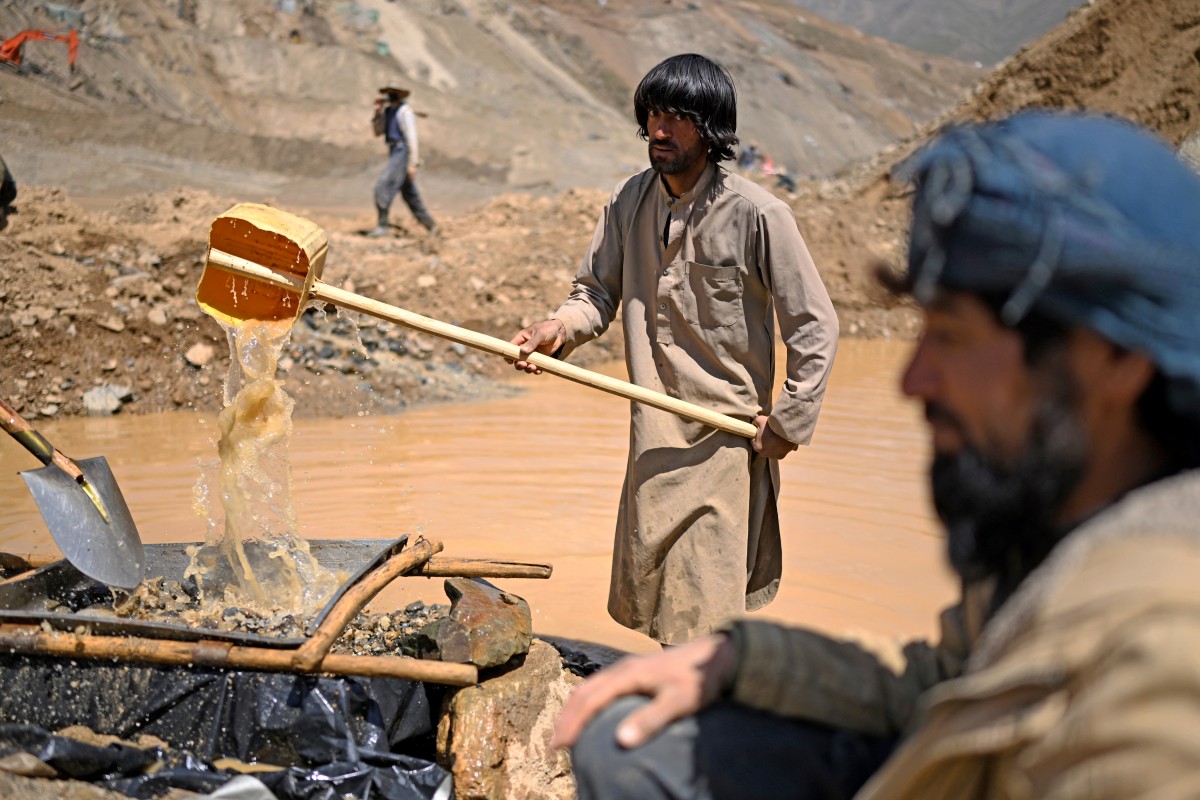
In Afghanistan’s northeastern Badakhshan province, dozens of excavators operate day and night to extract gold from the mountains where villagers and their livestock once roamed.
Thousands of miners are deployed across the Shiwa area, about 50 kilometers (30 miles) northeast of the provincial capital Faizabad, extracting gold for investors nationwide.
Some residents in the area have profited from the gold rush, only to regret it later, such as farmer Muhammad Amin.
“Before, the river was deep, the water was clean,” said the 74-year-old from Pul-e-Ziri Ban valley.
Since mining got underway, “the water of the river is not drinkable; you can’t even wash your body with that water”, he told AFP.
With tears in his eyes, Amin said the grass along the riverbank “has all gone” and farming is no longer possible due to “the wind and dust”.
Now he can only feed up to 15 goats, compared with as many as 40 previously.
Amin said he was paid half the $20,000 for which he agreed to lease his land to a mining firm that failed to fulfil a promise to restore his fields after the work stopped.
The Taliban authorities have expanded the mining sector since returning to power five years ago, aiming to tap into Afghanistan’s vast underground resources to boost state coffers.
Abdul Mateen Rahimzai, head of Badakhshan’s mines department, said they have registered “almost 650 to 700 companies, and there are thousands of people working manually”.
The World Bank said hundreds of mining contracts have been signed since 2021, with “real growth averaging 25 to 30 percent” annually according to a May report.
This photograph taken on July 28, 2026 shows an Afghan miner pouring water over a sieve to separate dirt and stones from gold nuggets at Gulak-Dara valley in Shiwa area of Afghanistan’s northeastern Badakhshan province. In Afghanistan’s northeastern Badakhshan province, dozens of excavators operate day and night to extract gold from the mountains where villagers and their livestock once roamed. (Photo by Wakil KOHSAR / AFP)
– ‘Better than anything else’ –
While mining has temporarily stopped in Amin’s village, not far from his home, in Gulak-Dara valley, dozens of diggers were carving into the mountainside.
With jobs scarce in Afghanistan, the area has drawn workers from across the country.
Mohammad Agha Khwaja Khail, from Kabul, has worked in mining for five years and earns 10,000 Afghanis ($150) a month loading trucks.
“It’s better than anything else… There aren’t many jobs in Kabul,” said the 21-year-old, above the din of diggers.
Shafiullah Ehsas, a father-of-five, transported his excavator hundreds of kilometres from Jalalabad about three months ago.
“In Jalalabad, the gold (mining) work hasn’t started, and it was happening in Badakhshan, so we didn’t have any other option but to bring our machinery here,” said the 32-year-old, who earns 25,000 Afghanis per month.
The Ministry of Mines and Petroleum has sought to regulate the industry, with spokesman Hamayoun Afghan saying resources “used to be extracted erratically; it wasn’t done under supervision” by the previous government.
Gold mining has accelerated in the north, the ministry spokesman said, including in neighbouring Takhar province where an Afghan company was operating with Chinese partners.
Fabrizio Foschini, a researcher at the Afghanistan Analysts Network, said during earlier decades of war “mining mainly benefited insurgent groups, including the Taliban, and local strongmen with links to corrupt government officials”.
Mining firms are now taxed 20 grams of gold per hectare per month, or the equivalent in cash, no matter their profits.
– ‘Reduced to ruins’ –
Mohammadullah Mubariz, the manager of a mining company with about a hundred labourers and 20 diggers, said the team can extract “200 to 300 grams of gold” in a week.
Despite this, he said the firm was operating at a loss because of start-up costs since April.
Rahimzai, head of the provincial mines department, said last year the government collected 112 kilograms (247 pounds) of gold in Badakhshan. According to miners who spoke to AFP, their sale price per gram was around $118.
Rahimzai said that last year, “most of the mines were not registered, and there was no system to collect the fees from them”.
He has also ordered the closure of around 225 sites that caused damage, including in the Shiwa area.
“There was a bridge there, there were shops, and there was a school. All of them were buried under floodwater, mud, and debris. The area has been completely reduced to ruins,” Rahimzai told AFP.
The provincial mining chief also pledged to tackle any corruption, and ensure the “mineral resources of Badakhshan will be utilised properly and for the benefit of the people”.
Some parts of the province remain untouched, including a few kilometres from Shiwa where herder Fazil hoped the miners would stay away.
“Because it’s a place for people, for picnics, for livestock to graze,” he told AFP, giving only his first name for security reasons.
The gold industry “doesn’t benefit the local communities here”, said the 45-year-old, who has brought his herd to the mountains each summer since childhood.
As Japan marks the anniversary of the 1945 atomic bombs, its leaders are pushing for a renewed debate on nuclear weapons in a challenge to the nation’s long-time pacifist stance.
Japan’s constitution renounces offensive military force, and successive governments have maintained a decades-old pledge not to possess nuclear weapons, produce them or permit their introduction into the country.
That commitment is now under pressure as East Asian neighbors — notably China — boost their military capabilities, while doubts persist about the reliability of Tokyo’s biggest security backer, the United States.
Prime Minister Sanae Takaichi has refused to clarify whether she will maintain the stance known as the three non-nuclear principles, and Defence Minister Shinjiro Koizumi called last month for a “discussion without a taboo” on the subject.
In December, an unnamed senior administration official told local media in an off-the-record session suggesting that Japan should possess nuclear weapons.
The remark was widely reported by major Japanese outlets including national broadcaster NHK and Asahi Shimbun, sparking public criticism.
“If I look at it cynically, I can’t help but think that maybe she really wants to change” Japan’s anti-nuclear commitment, 82-year-old Satoshi Tanaka, a campaigner who survived the 1945 attack on Hiroshima, told AFP.
The country marked the 81st anniversary of the Hiroshima bombing on Thursday and will do the same on Sunday to commemorate the attack on Nagasaki.
The August 1945 assault by the United States killed more than 210,000 people, including many from the effects of radiation exposure.
It remains the only time that atomic weapons have been used in warfare, and was one of the last major acts of World War II.
The Takaichi administration is undertaking a major update of the national defense strategy this year in the face of China’s expanding military ambitions.
The prime minister has already lifted Japan’s self-imposed ban on weapons exports and expanded defense spending, while pushing to amend the constitution.
Those policies have drawn rebukes from China, which accuses Japan of “new militarism” and Takaichi of bending to the whims of the far right.
They have also unnerved survivors of the 1945 bombings, who have long helped shape Japan’s post-war pacifist political culture.
Tanaka, the Hiroshima survivor, expressed frustration that current political leaders like Takaichi are focusing on military capacity at the expense of diplomacy.
“There is so much talk about national security. What about building peace through diplomacy?” he said.
Despite winning the 2024 Nobel Peace Prize for their efforts, they are debating whether to continue their national association as their members grow older.
As of March, Japan recognized just over 91,000 survivors of the Hiroshima and Nagasaki attacks, down from over 164,000 a decade ago. Their average age is 86.7.
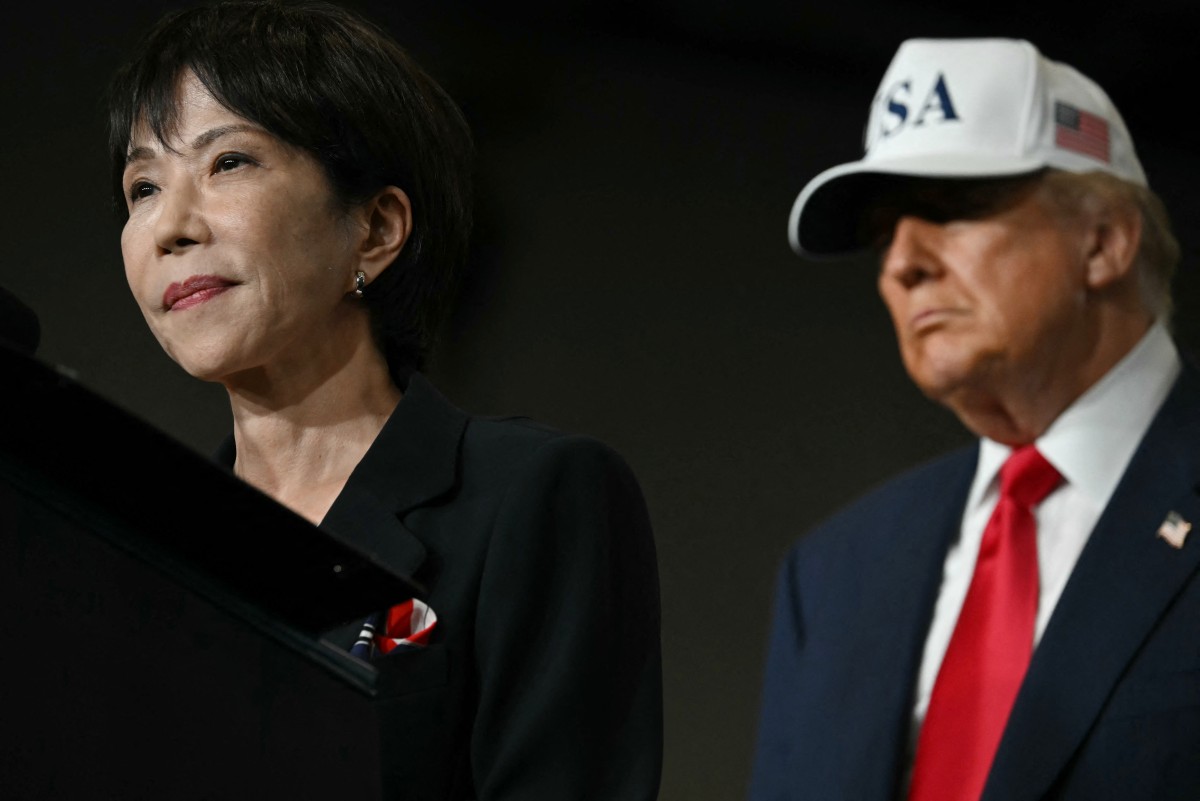
US President Donald Trump (R) looks on as Japan’s Prime Minister Sanae Takaichi speaks in front of US Navy personnel on board the US Navy’s USS George Washington aircraft carrier at the US naval base in Yokosuka on October 28, 2025. (Photo by ANDREW CABALLERO-REYNOLDS / AFP)
The Big Worry
The focus has turned firmly towards the future of the non-nuclear principles, which date to 1967.
Takaichi’s supporters argue that the final clause needs to be changed to allow the United States to bring nuclear arms to Japan and ensure regional deterrence.
Hirofumi Yoshimura, head of the Japan Innovation Party, a coalition partner of Takaichi’s government, said the principle deserved discussion in the context of the US-Japan security alliance.
“Of course, we need to work toward building a world without nuclear arms,” Yoshimura told reporters on the anniversary of the Hiroshima bombing.
“But when considering how to ensure the effectiveness of extended nuclear deterrence within the framework of our alliance with the United States, I believe we should…continue to adhere to the principle of ‘neither possessing nor producing’ nuclear weapons,” he said.
“As for ‘not allowing them to be brought in,’ I do think there is some room for discussion on that point.”
Critics argue that Takaichi’s hawkish approach to defense increases the danger for Japan.
After Takaichi attended the annual ceremony in Hiroshima on Thursday, she sat down for a televised meeting with survivors.
When pressed, Takaichi declined to offer clarity on whether she might change the country’s nuclear course.
“Our nation currently adheres to the ‘three non-nuclear principles,'” she said in response to a direct question from Tanaka, without discussing what she might do next.
“That,” Tanaka told AFP on Friday, “only explains the current situation. It says nothing about the future.
Turkey’s foreign minister said he expected Egypt to join a joint defense agreement with regional partners designed to stabilize the region that is grappling with the Middle East war.
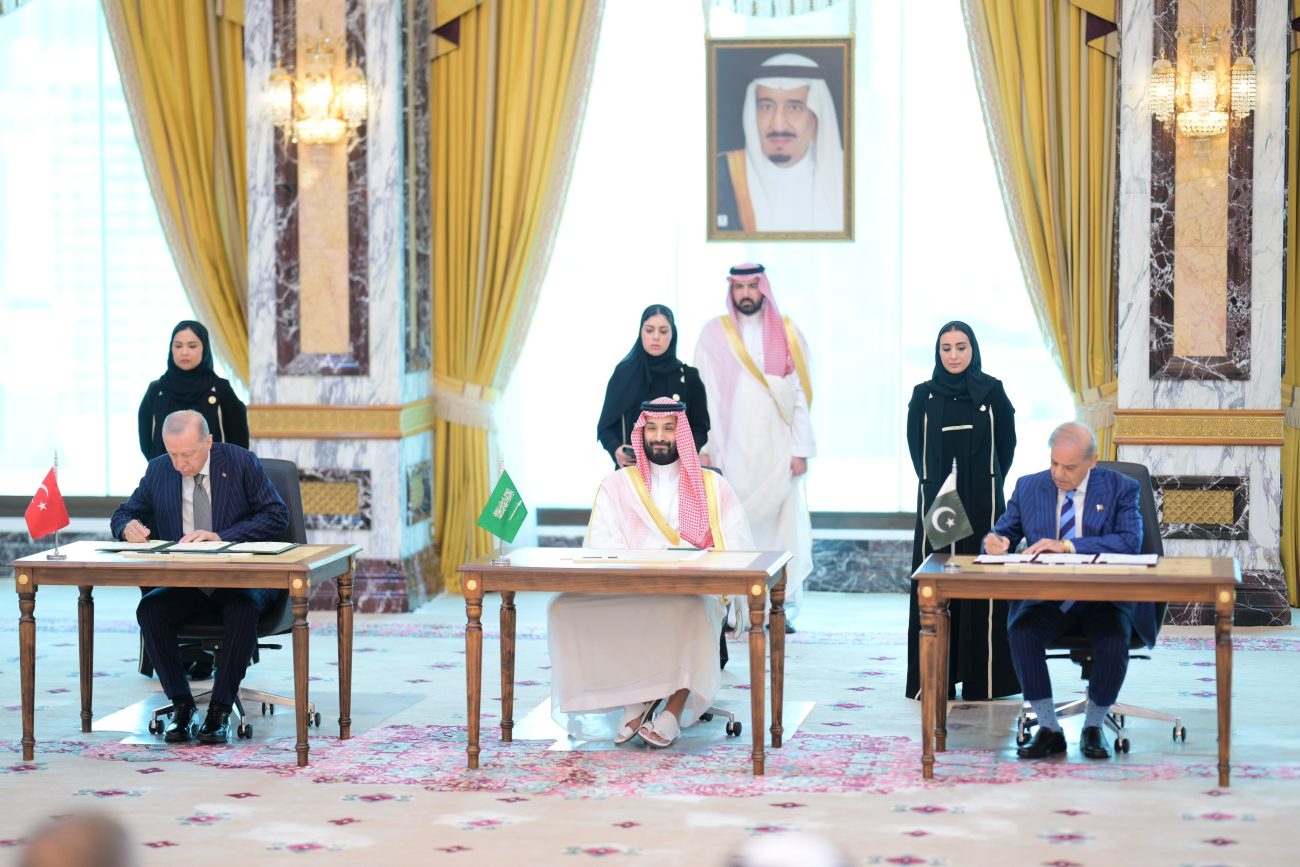
Saudi Arabia, Turkey and Pakistan signed the agreement on Friday against the backdrop of war between the United States and Iran, which has drawn in surrounding nations and disrupted shipping through the Strait of Hormuz and the Red Sea.
The war has emboldened Iran and its Houthi allies in Yemen, both of which have attacked Saudi Arabia, and a drone last month hit US assets at an Egyptian port on the Mediterranean.
Turkish Foreign Minister Hakan Fidan told state news agency Anadolu he expected Egypt to join the “Mecca Joint Defense Agreement”, calling the country a “natural partner on all issues”.
File Image
“I believe that at the next stage Egypt will also be among us in the alliance. We already act toward one another as if we were alliance members,” he said in an interview.
“There are a few technical issues. Once these are implemented, there is no reason for Egypt not to be part of it.”
Fidan said the agreement does not target a specific country.
“There is no common threat that we have put in writing,” he said, according to the news agency.
Pakistan’s foreign ministry said Friday the pact meant an attack on any member would be regarded as an attack on all, adding it was “intended to strengthen collective deterrence”.
In the interview, Fidan said the agreement was “the most important step toward bringing lasting stability to this region”, and suggested the alliance could expand further.
“Under our president’s vision, we should not remain limited to three countries. We should grow and, if necessary, bring all countries under this umbrella,” he said.

 Login