❌

Reading view

DOJ demands California counties separate alleged noncitizen ballots within 48 hours

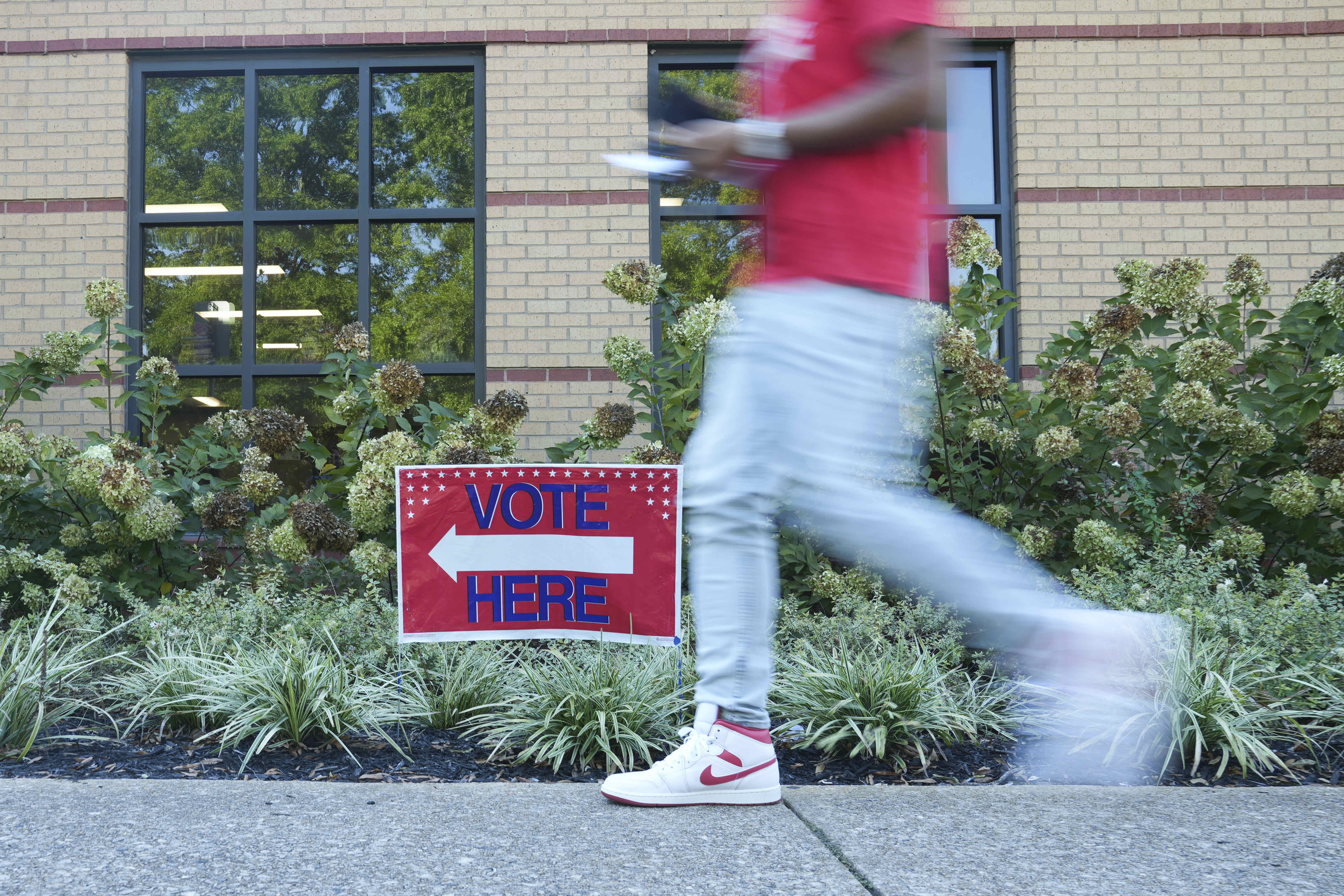
The Justice Department sent threatening letters to California election officials on Friday demanding local registrars immediately sequester ballots from voters the Trump administration alleges are noncitizens.

The letters were hand-delivered to counties across the state in a move that some clerks viewed as an attempt to intimidate state election officials despite ongoing litigation.

In the letter to Contra Costa County Clerk-Recorder Kristin Connelly, a copy of which was obtained by MS NOW, U.S. Attorney Craig Missakian warned Connelly that she will face prosecution if she fails to “segregate” ballots from the suspected noncitizens on the department’s list.

“It’s an unenforceable 48-hour deadline delivered late on a Friday,” Connelly told MS NOW. “There’s nothing about this that is actionable for me at this moment, because I need to follow the state and federal laws.”

The move by the Justice Department marks the latest escalation by the administration as President Donald Trump repeats false claims of widespread voter fraud by noncitizens. Voting by noncitizens is extremely rare, and data from nonpartisan organizations and state audits have shown that those isolated incidents have not changed the outcome of an election.

The Justice Department sent Connelly a list of 407 suspected noncitizens registered to vote in Contra Costa County. That number is a subset of the 20,000 alleged noncitizens the department sent to California’s secretary of state and Los Angeles County last week.

“I write to make unmistakably clear the legal implications of continuing to send vote-by- mail ballots to those people on the list or tabulating ballots cast by them until citizenship can be verified,” DOJ attorney Missakian wrote to Connelly. The DOJ told Connelly to “temporarily set aside” but “not cancel” the mail ballots until “citizenship status can be determined.”

They gave Connelly and other clerks “48 hours” to work with the DOJ and DHS “to identify who on the accompanying list is a citizen and who is not.” The counties must provide social security numbers, a copy of state IDs, a copy of voter registration applications for people on its list, the DOJ ordered in the letter.

“The legal consequences for either facilitating or ignoring federal crimes are significant,” the letter to Connelly and other clerks state.

Asked if she’d afraid of prosecution, Connelly said “no.”

“Because I’m not doing anything wrong. I protect our voter rolls, we’re very meticulous about it,” Connelly said. “We follow the law. Do I want a target on my back? No, I do not. Do I want to get prosecuted? No, I do not.”

The Justice Department directly contacted every county in California, DOJ spokesperson, Kiersten Pels, told MS NOW.

“We are asking each county election official to commit to working with us by providing the necessary information for DHS to quickly verify citizenship status,” Pels said. “With their help, we can ensure the most secure election in California history.”

The latest threats to election officials come after the Justice Department sent similar orders to LA County and California Secretary of State Shirley Weber on Oct. 13, after counties had already begun to mail ballots to voters across the state.

In a message to fellow California clerks and election officials Friday, LA County Registrar Dean Logan said the new letter from the DOJ “misrepresents the facts of their own actions” and “threatens local election officials twelve days before the election.”

“To have them threaten me with prosecution at this hour is not what’s helpful for democracy,” Connelly told MS NOW. “I want to make sure that the voters know that we have safe and secure elections.”

The escalation comes after the Justice Department sued California, asking a judge to block the state from counting roughly 20,000 ballots from people the administration claims are “likely noncitizens.” A hearing on the lawsuit is scheduled for next week, but the DOJ is asking an appeals court to make a decision this weekend.

In Los Angeles County, a preliminary sampling of the suspected noncitizen names sent by the Justice Department found that “approximately 43% had canceled voter registrations, and more than 70% had no voting history,” Logan said in a prior statement. And in a court filing, LA County said some 25.8 percent of the sampled voters listed a “place of birth in the United States, a strong indicator of citizenship status.”

Those findings fit a pattern. In Nevada, state officials reviewed suspected noncitizen lists provided by the Trump administration, only to find zero were noncitizens, according to email exchanges between state and federal officials obtained by MS NOW. And in other states, local officials have told MS NOW that the lists of alleged noncitizens are unreliable and risk disenfranchising eligible voters.

The post DOJ demands California counties separate alleged noncitizen ballots within 48 hours appeared first on MS NOW.

  •  

Just How Much Are Young Voters Backing Democrats Now? See the Shift.

In the new Times/Siena poll, 70 percent of young voters identified as Democrats or leaned that way — a jump from just two years ago.

© The New York Times

  •  

Belize looks to the deep sea to complete its 30% ocean protection pledge

Belize is turning to its deep waters to fulfill its pledge to protect 30% of its ocean and achieve the sixth milestone of its Blue Bond agreement. A draft marine spatial plan submitted on Sept. 8 for government approval proposes closing the final gap to 30% by establishing three offshore marine protected areas (MPAs). Officials say the choice serves two ends at once: protecting distinctive deepwater features the country has never fully safeguarded, and steering clear of the coastal grounds fishers depend on. The decision to protect offshore areas emerged from previously agreed criteria for establishing marine protected areas, according to Samir Rosado, who led the plan’s development as head of marine spatial planning at the government’s Coastal Zone Management Authority & Institute (CZMAI). “These criteria contain social as well as ecological considerations for the identification of the areas,” Rosado told Mongabay in an email. “Overwhelmingly, stakeholders expressed their absolute reluctance to increase protections in nearshore areas as they believe this space was already saturated. A gap analysis was done on the representation of ecosystems within the existing MPA network, and it confirmed this.” With more than 50% of Belize’s corals and nearly 40% of its seagrass already within MPAs, he said the underrepresented features of Belize’s MPA network were in the deep. For local fishers who pushed back hard against earlier proposals to close traditional inshore fishing grounds instead, the new zones, sitting well beyond the waters where they work, are welcome. However, experts say this decision is unlikely…This article was originally published on Mongabay

  •  

Marruecos se compromete a readmitir a todos los migrantes en una carta remitida a eurodiputados

El Gobierno de Marruecos ha remitido una carta a diputados del Parlamento Europeo en la que asegura que se compromete a admitir el retorno de los migrantes que pasaron la frontera de manera ilegal a Ceuta el 30 y 31 de julio pasados. La parlamentaria del PNV, Oihane Agirregoitia, ha revelado en su intervención este martes ante el pleno la existencia del escrito, en el que Rabat asegura que está investigando el papel de la desinformación en redes sociales y de los traficantes de migrantes en la entrada masiva a Ceuta y confirma que se ha comprometido a readmitir a todas las personas que cruzaron el paso.

  •  

La revolución silenciosa de las iraníes contra el velo 4 años después de la muerte de Mahsa Amini: "Son tantas que las autoridades han perdido el control"

Hace tiempo que el paisaje visual de Irán empezó a cambiar. De forma paulatina, los diferentes colores de los pañuelos que cubrían las cabezas de miles de mujeres dejaron de despuntar entre la multitud. Ahora sus melenas rubias, castañas o negras se dejan acariciar por el viento. También sus brazos al aire son besados por el sol. Las calles de Irán se han transformado poco a poco en un lugar menos hostil para las iraníes. Siempre había habido algunas que se atrevían a desafiar las leyes de vestimenta del régimen de los ayatolás, pero ahora cada vez son más. Algunos sitúan el origen de este cambio en una trágica jornada de hace cuatro años cuando la joven Mahsa Jina Amini murió tras ser detenida y torturada por no llevar bien puesto el velo islámico. Su pérdida desató una revolución.

  •  

Una organización israelí denuncia el "proyecto de eliminación" de los palestinos en la Cisjordania ocupada

Cada día en la Cisjordania ocupada, la violencia toma distintas formas, aunque suelen ser las mismas. A diario se registran ataques de colonos a palestinos, redadas militares, tierras expropiadas, nuevos puestos de control, y una acuciante crisis económica que ahoga a las familias palestinas. Este lunes la organización israelí B'Tselem ha publicado un informe donde analiza toda esta violencia para darle un nombre: el "proyecto de eliminación". La investigación más exhaustiva hasta la fecha sobre la política israelí en Cisjordania concluye que "Israel emplea cinco mecanismos que se refuerzan mutuamente para desmantelar la existencia colectiva palestina en la zona".

  •  

Are EU air passenger rights heading forward – or backward?

The European Union is the only area in the world where passengers are protected by a full set of rights – whether they travel by air, rail, ship, or bus and coach.

For air travel, the current EU regulation sets out passengers’ rights when flights are cancelled, significantly delayed, or boarding is denied. In the case of delays, compensation applies once the delay reaches three hours, provided it is not caused by “extraordinary circumstances” beyond the airline’s control – such as severe weather or air traffic restrictions. 

Yet the current regulation dates back to 2004, and much has changed since then – from inflation and the Covid-19 pandemic to a massive rise in air travel. In response, the European Commission proposed a revision in 2013, but disagreements among member states stalled the process until 2025.

In June 2025, EU ministers finally reached a political agreement, and negotiations with the European Parliament resumed in October. However, deep divisions remain over key issues. While the Council’s proposal is seen as less passenger-friendly, the Parliament is pushing for stronger protections.

To that end, MEPs have set a series of red lines, including a pre-filled claim form sent no later than 48 hours after the scheduled departure and the right to carry a hand luggage item without extra charge. But the most controversial issue is the Council’s proposal to raise the compensation threshold from three to four hours for intra-EU flights, and to six hours for long-haul journeys.

On 21 January, the Parliament adopted its second-reading position in plenary, with 97 percent of MEPs voting in favour of its red lines. The ball is now in the Council’s court, which has up to four months to update its mandate in response.

Over the coming months, it will become clear which side prevails – passengers or airlines.

  •  

Germany’s Greens back EU-India trade deal after Mercosur debacle

Berlin (dpa) – Germany’s Greens are backing the European Union’s landmark trade deal with India, days after the party’s lawmakers in the European Parliament played a key role in challenging the bloc’s agreement with the South American Mercosur countries.

Andreas Audretsch, the party’s deputy group leader in the German parliament, said the deal with India, which was announced earlier on Tuesday, was good for businesses and workers in Germany.

In view of the “destructive rage” of US President Donald Trump, Europe must build new alliances for trade and cooperation, Audretsch argued.

The deal was finalised during an EU-India summit in New Delhi, with European Commission President Ursula von der Leyen and Indian Prime Minister Narendra Modi proclaiming the agreement on Tuesday.

“The EU and India make history today, deepening the partnership between the world’s biggest democracies,” von der Leyen said.

The latest agreement will not be as comprehensive as the one recently concluded between the EU and Mercosur countries Brazil, Argentina, Paraguay and Uruguay.

Last week, several Green lawmakers in Brussels voted in favour of referring the bloc’s deal with Mercosur to the European Court of Justice (ECJ), which could result in a substantial delay to ratification. Their votes were decisive in passing the motion, prompting severe criticism for the party in Germany, whose export-led economy stands to benefit from the boost to trade.

In a paper, the Green leadership has said that Germany needs “new economic partnerships” to diversify foreign trade. “That is why it is important to provisionally apply the agreement with the Mercosur countries and then ratify it,” the paper continued. (January 27)

  •  

Thousands of farmers protest Mercosur deal in front of EU Parliament

Strasbourg, France – Several thousand European farmers protested in the French city of Strasbourg on Tuesday against the European Union’s free trade deal with countries in the Latin American Mercosur bloc.

Around 5,000 protesters and several hundred tractors gathered in the city, according to local officials, where the European Parliament is holding a plenary session this week.

EU lawmakers are to decide on Wednesday if they want to seek an opinion from the European Court of Justice (ECJ) on whether the contested Mercosur agreement is compatible with EU law, which could delay the ratification process.

The free trade agreement was signed in Paraguay last weekend and still has to be approved by the European Parliament.

With their protest, the farmers want to keep up the pressure on EU decision-makers. They fear disproportionate competition from cheap imports from South America.

Protesters lit smoke bombs and held up placards with slogans such as “Von der Leyen go home,” directed at European Commission President Ursula von der Leyen.

The demonstration caused major traffic disruption in Strasbourg, with several roads blocked. (January 20)

  •  
❌