Russia attacked Ukraine with 140 drones, including Shahed and Gerbera attack drones and Parodiya decoys, and four missiles overnight on 26 October, the Ukrainian Air Force reported. The missiles were one Kh-31P anti-radiation missile and three Kh-59/69 air-launched guided missiles, launched from occupied parts of Zaporizhzhia and Kherson oblasts.
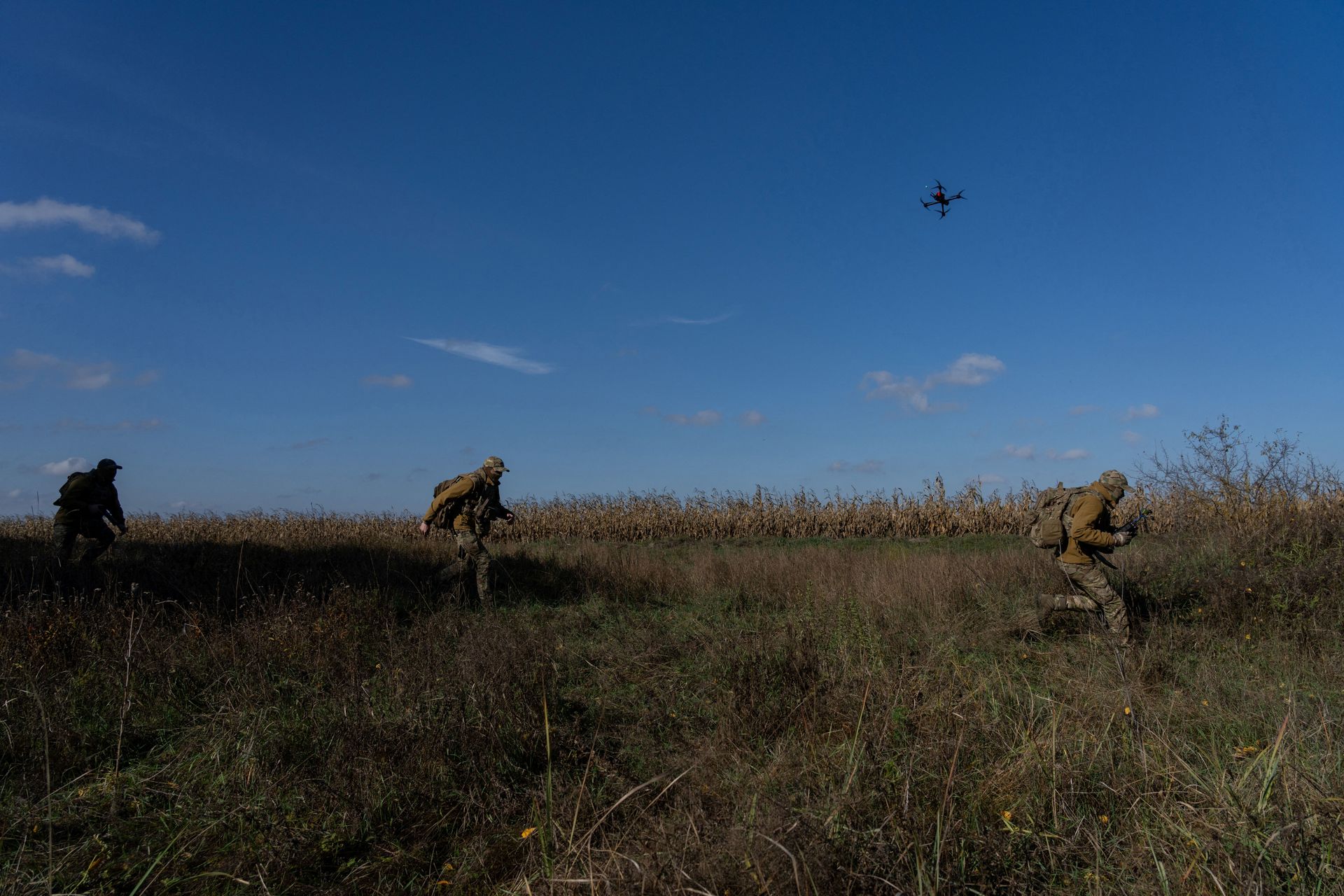
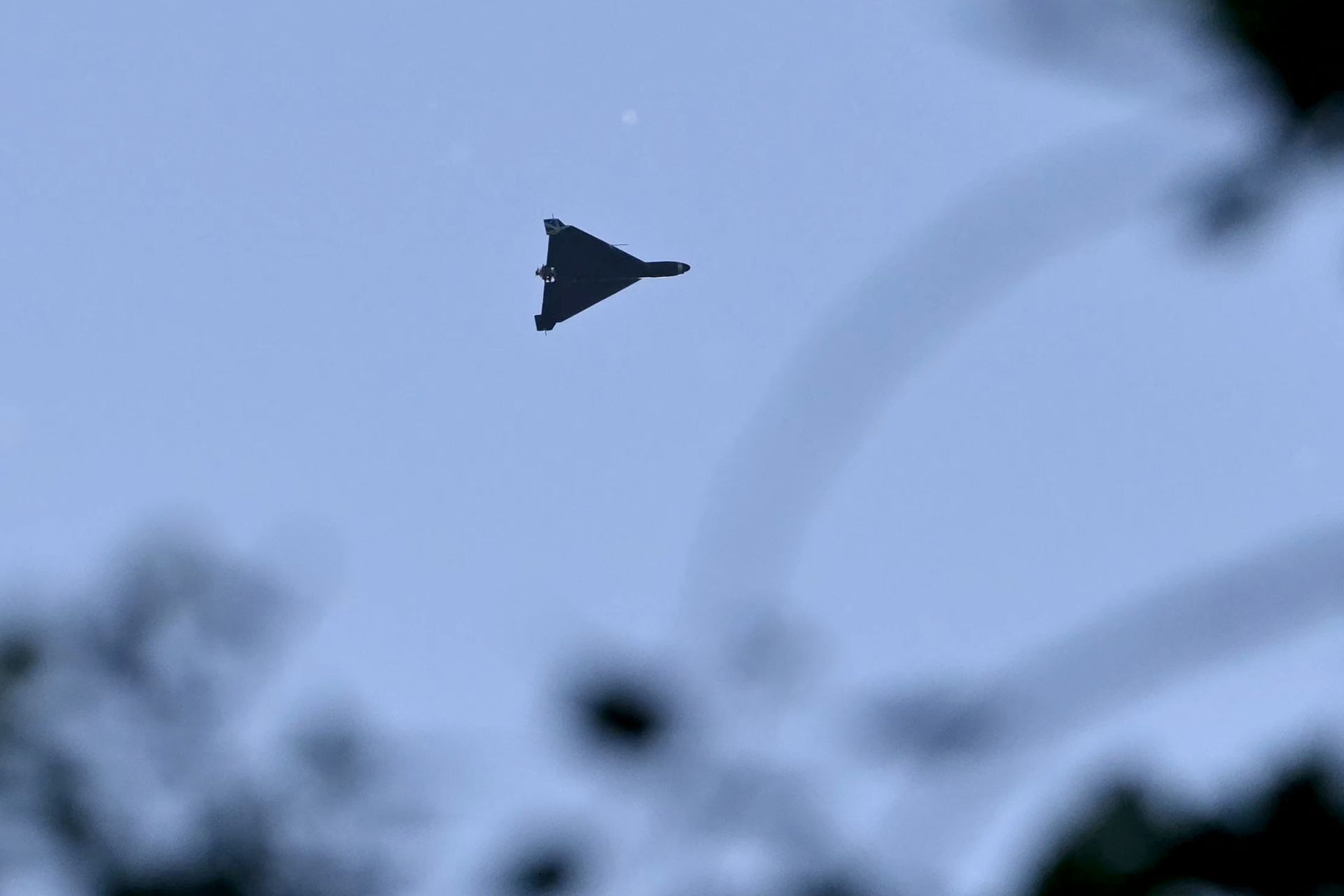
Jet-powered Shaheds are becoming a larger part of Russia’s aerial campaign, challenging Ukraine’s air defenses and prompting efforts to develop faster interceptors. Alongside guided bomb attacks and strikes on energy infrastructure, these attacks add to the pressure on Ukraine’s defenses as winter approaches, and Ukraine says Russia has a plan for it.
Air defenses downed or suppressed 112 drones, including 56 of the 70 jet-powered Shaheds, and three Kh-59/69 missiles, according to preliminary Air Force figures. Hits were recorded at 15 locations, and debris fell at four more.
Four wounded in Zaporizhzhia
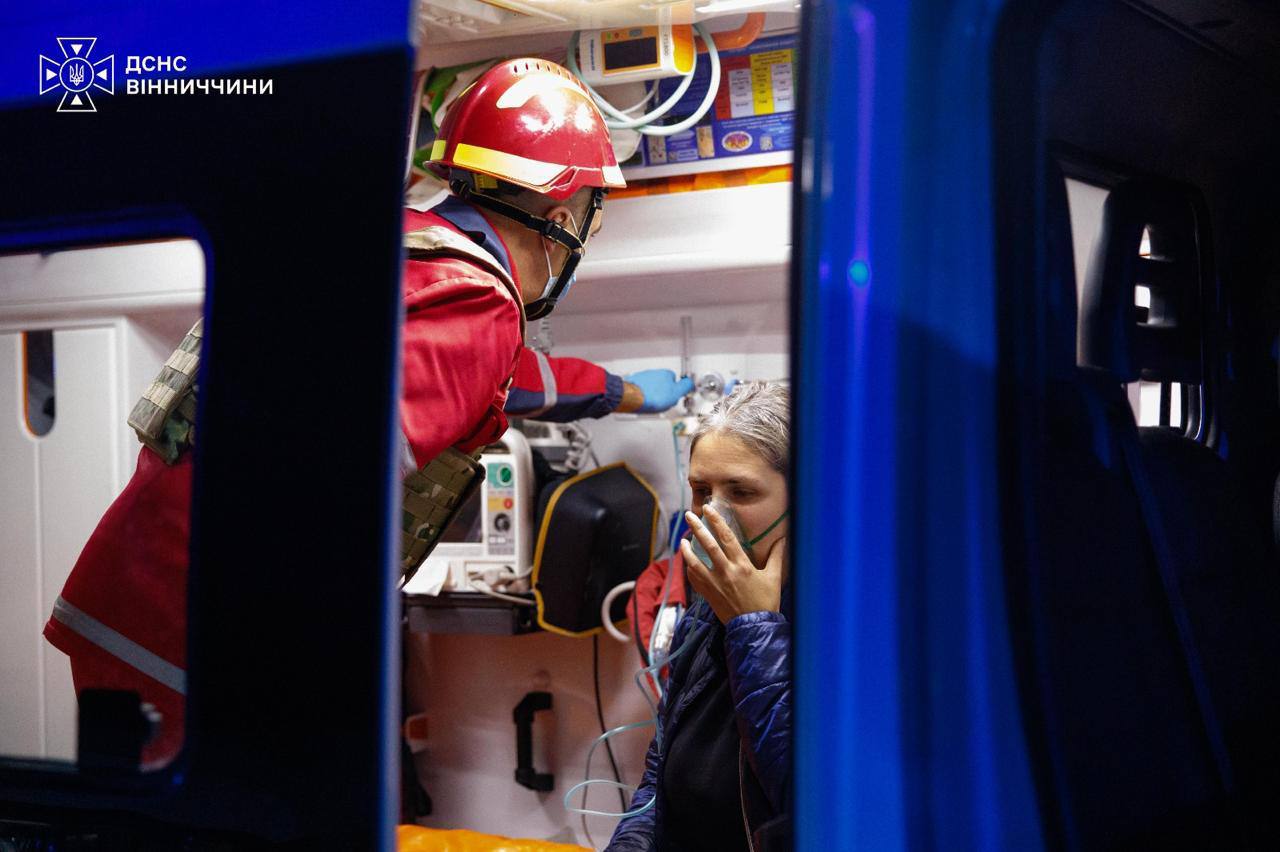
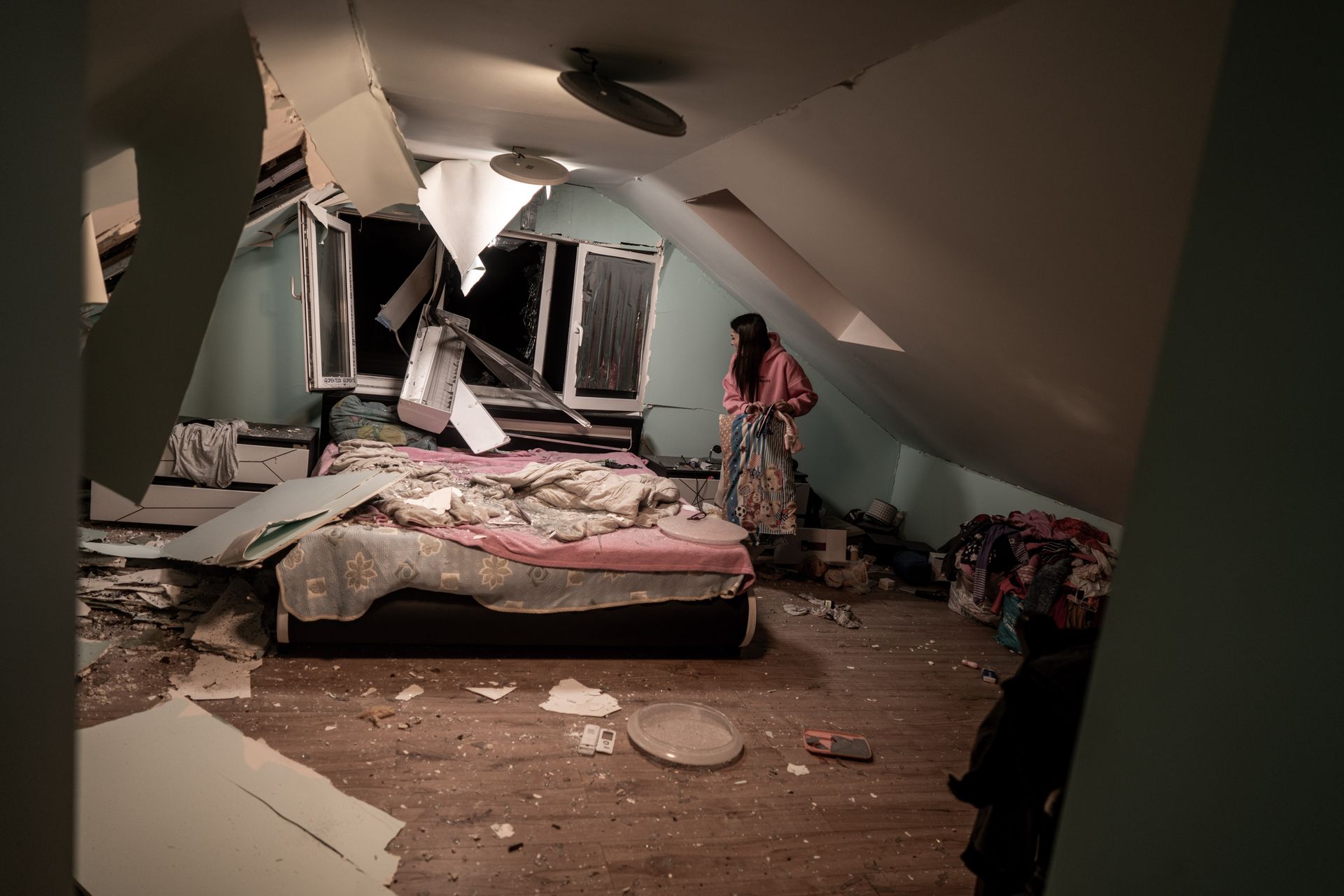
Russian strikes on Zaporizhzhia overnight wounded two women aged 22 and 30, and two men aged 40 and 61, the State Emergency Service (DSNS) said. The strikes damaged the windows of a hotel and two buses, a private house, and four outbuildings, and three cars caught fire. The oblast administration had first reported one wounded.
Russian strikes injured 8 people in Ukraine overnight on 26 October
Russia injured 2 women, aged 22 and 30, and 2 men, aged 40 and 61, in Zaporizhzhia overnight, Ukraine's State Emergency Service said. Russia also shattered windows in a hotel and 2 buses and damaged a house, and… pic.twitter.com/42bvnHt0qk
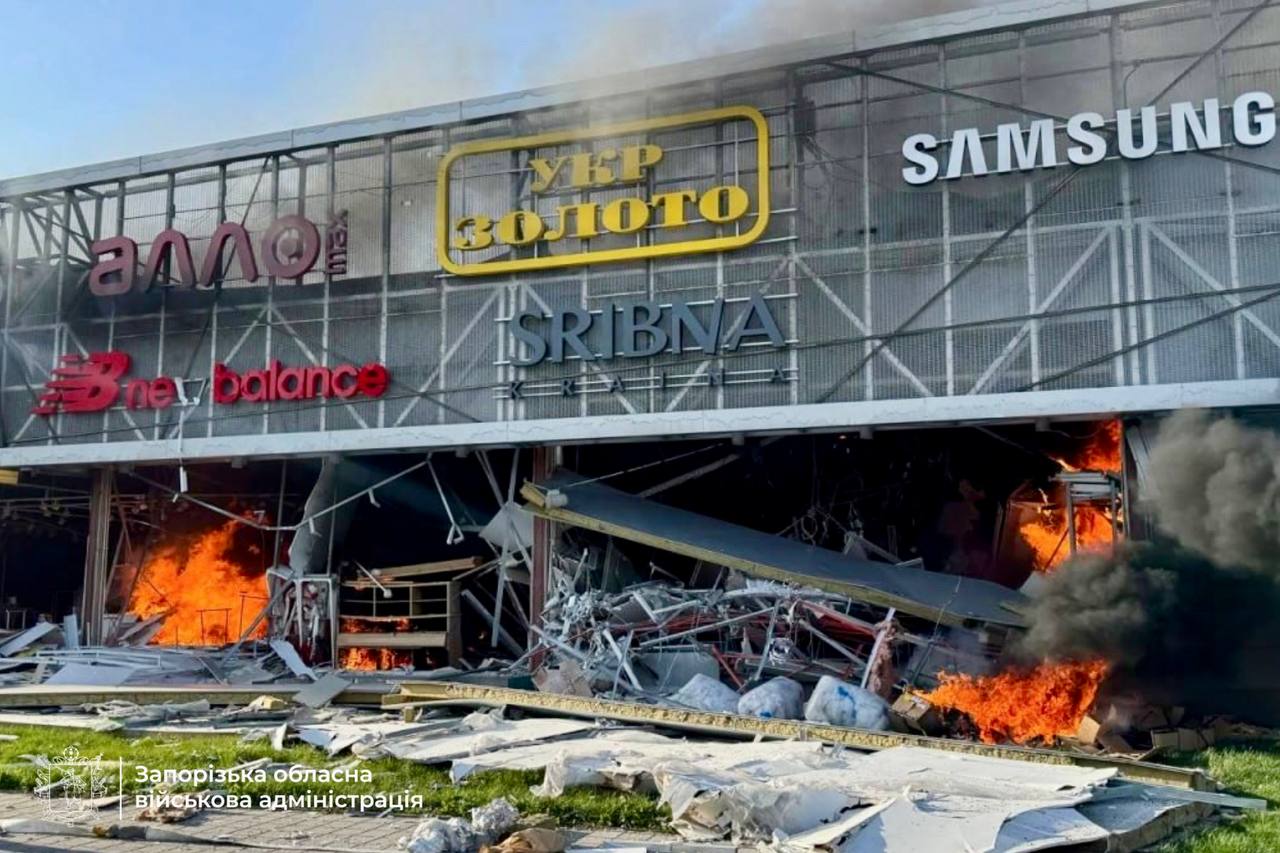
Later in the morning, Russian forces hit a shopping center building that had already closed, the administration said. The building caught fire. According to preliminary information, no one was hurt.
Guided bombs hit two districts of Izium
At about 02:40 on 26 October, Russian forces struck two districts of Izium in Kharkiv Oblast with guided aerial bombs, and three people needed medical help, the city military administration said, as Suspilne Kharkiv reported. More than 10 private houses and a youth sports school were damaged, and several streets lost power and internet.
Russia struck a burning Odesa Oblast plant twice more as firefighters worked
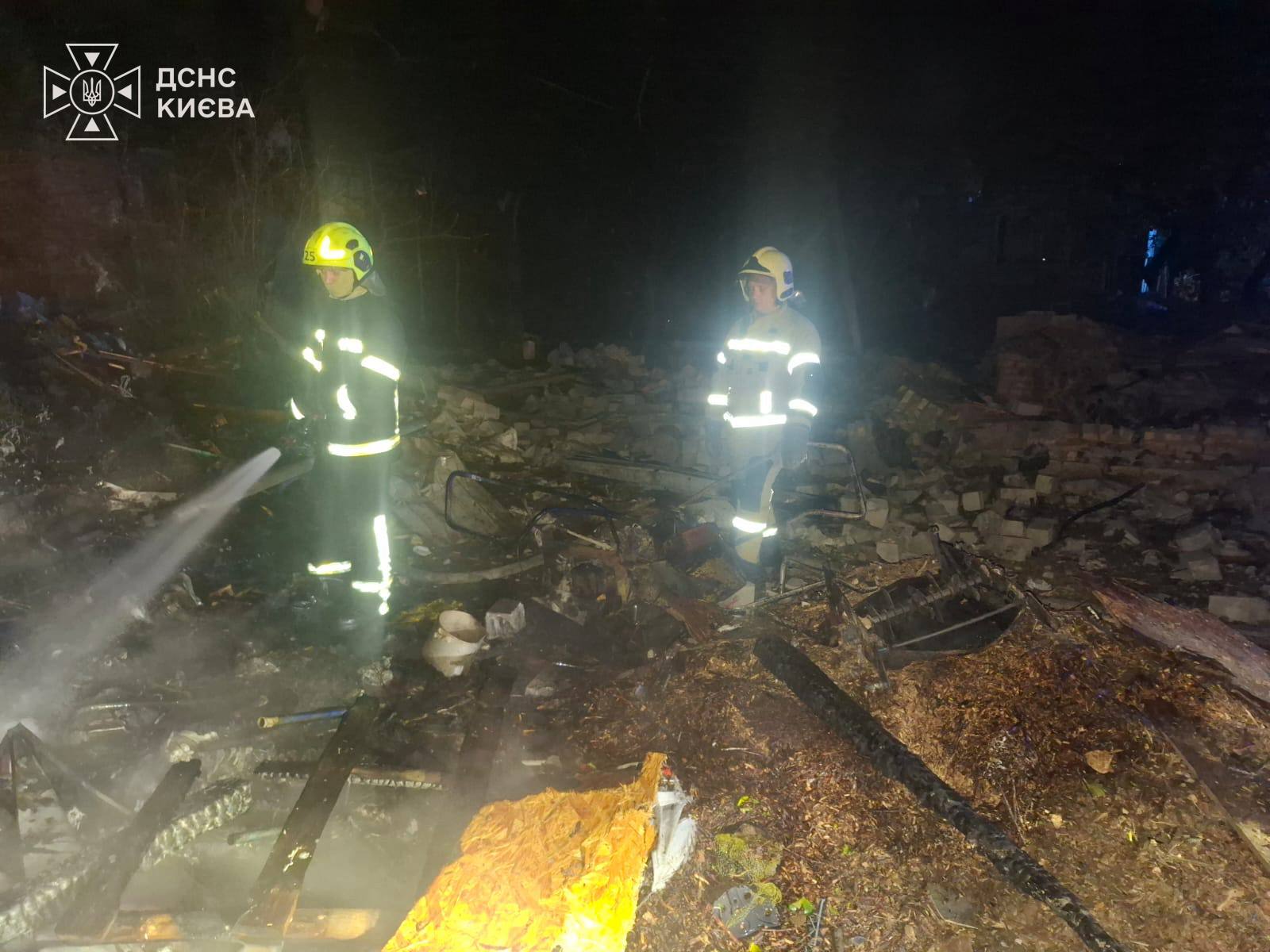
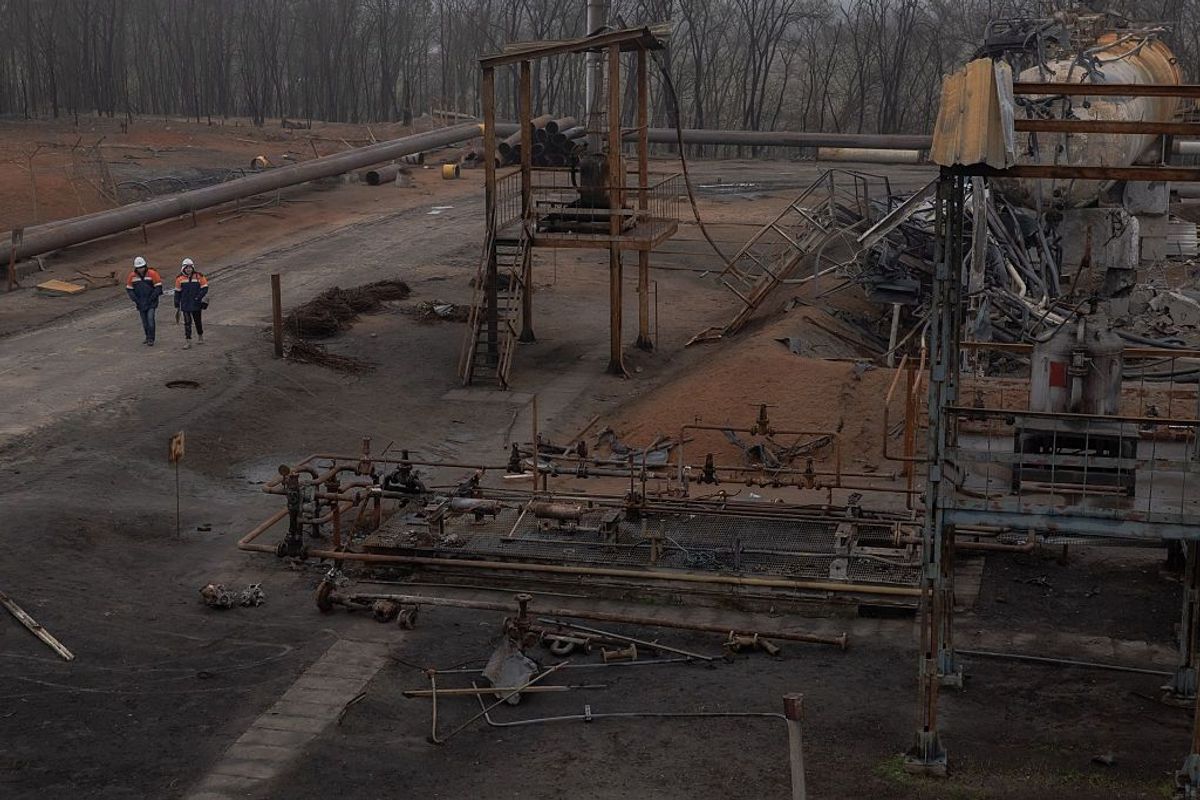
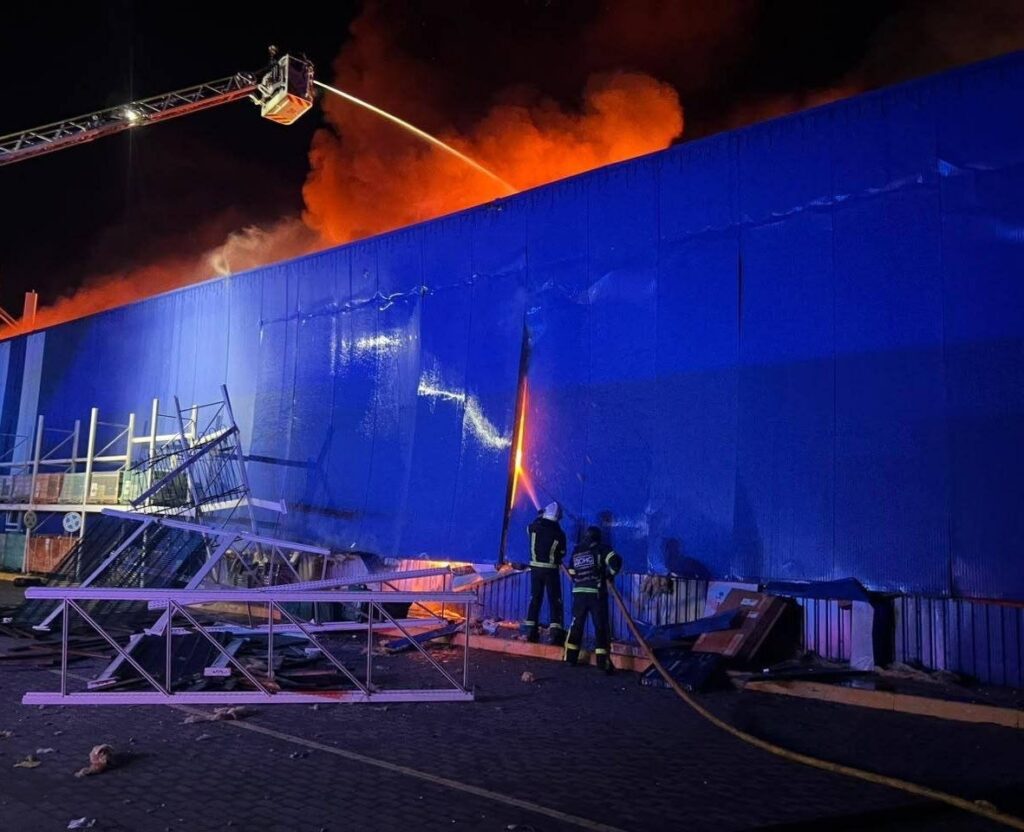
Overnight, a Russian attack destroyed an industrial enterprise in Odesa Oblast and set it on fire, the DSNS reported. As firefighters put out the blaze, Russian forces struck the site twice more. The rescuers were in shelter and were not hurt, but fire equipment was damaged. At another address, four garages were damaged and a car was destroyed. The oblast administration said there were no casualties.
Russia struck a burning Odesa Oblast plant twice more as firefighters worked on 26 October 2026. Photo: State Emergency Service of Ukraine
Energy facility hit in Khmelnytskyi Oblast
On the evening of 25 October, a Russian attack damaged an energy facility in Kamianets-Podilskyi district of Khmelnytskyi Oblast, causing emergency power outages, the oblast administration said. Windows were also damaged in two residential buildings. No casualties were reported.
Meanwhile, Russian drones attacked the Nikopol district of Dnipropetrovsk Oblast more than 10 times overnight, damaging a high-rise and an administrative building, the oblast administration reported. No one was hurt. Mykolaiv Oblast also came under Shahed attack overnight, with no casualties, according to its administration.
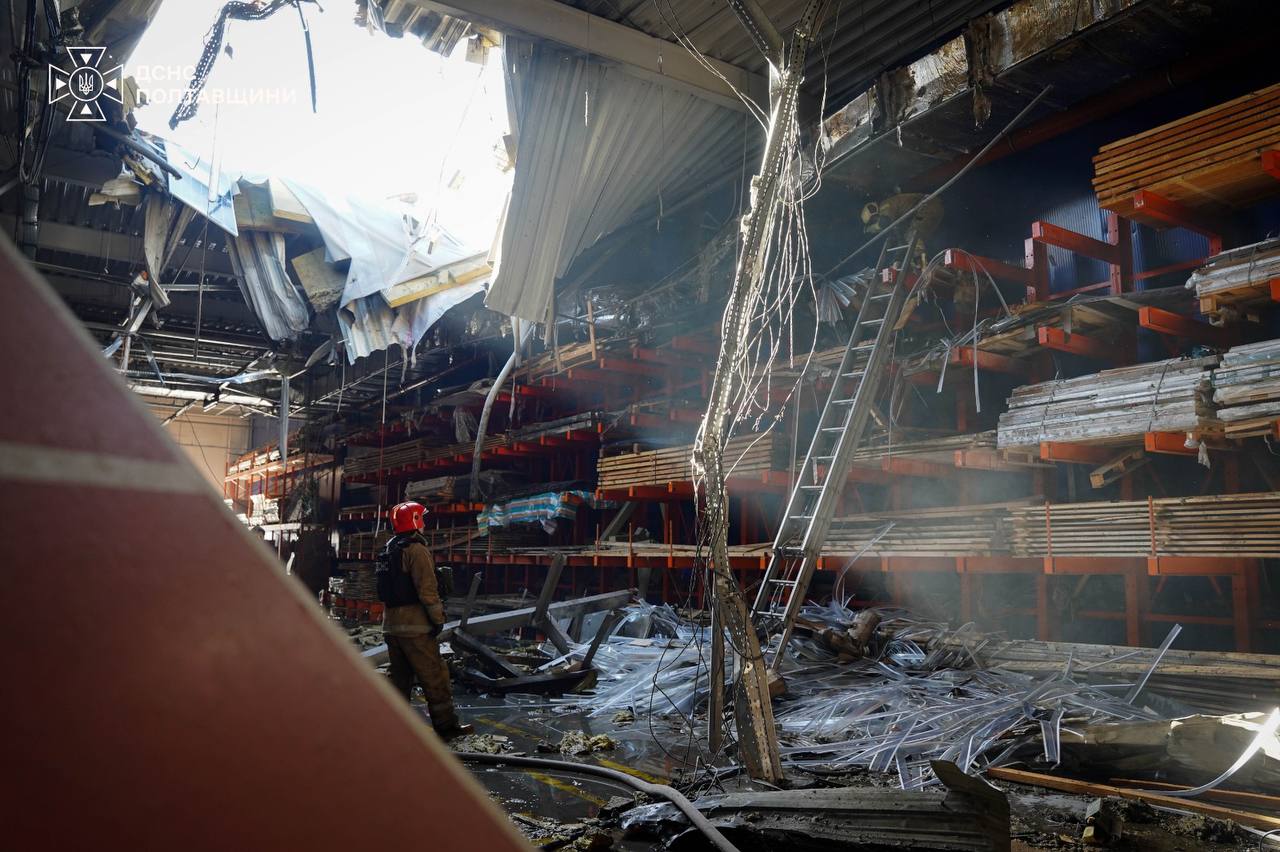
The attack continued into the day. On the morning of 26 October, a Russian strike hit a civilian infrastructure site in Vinnytsia, the oblast administration said. Preliminary reports showed no casualties.
Strikes on 26 October kill three in Donetsk and Dnipropetrovsk oblasts
On 26 October, Russian aircraft dropped four guided bombs on homes and shops in the center of Yasnohirka near Kramatorsk, killing one person and wounding 10, the DSNS said. Among the wounded is a 13-year-old girl, Donetsk oblast head Vadym Filashkin said. In Sloviansk, a Russian airstrike destroyed a private house, and rescuers recovered the body of its owner, the DSNS said.
A Russian drone strike on Pavlohrad in Dnipropetrovsk Oblast killed one person and injured seven, including two children, the DSNS said. The injured include two 10-year-old girls, the oblast administration said.
Six hurt in Kharkiv Oblast over the past day
Over the past 24 hours, Russian attacks hurt six people in Kharkiv Oblast, oblast head Oleh Syniehubov said. In Kharkiv, a 60-year-old man and a 14-year-old boy suffered acute stress reactions. Two women aged 51 and 71 were wounded in Krasnopavlivka. His count lists two wounded men in Izium, aged 72 and 52, while the city administration says three people there needed medical help. Russian attacks also set fire to a house in Kotliary, a production building in Vilshany, a building in Derhachi, a house in Mykolaivka, and a site in Kharkiv’s Kholodnohirskyi district, the DSNS reported.
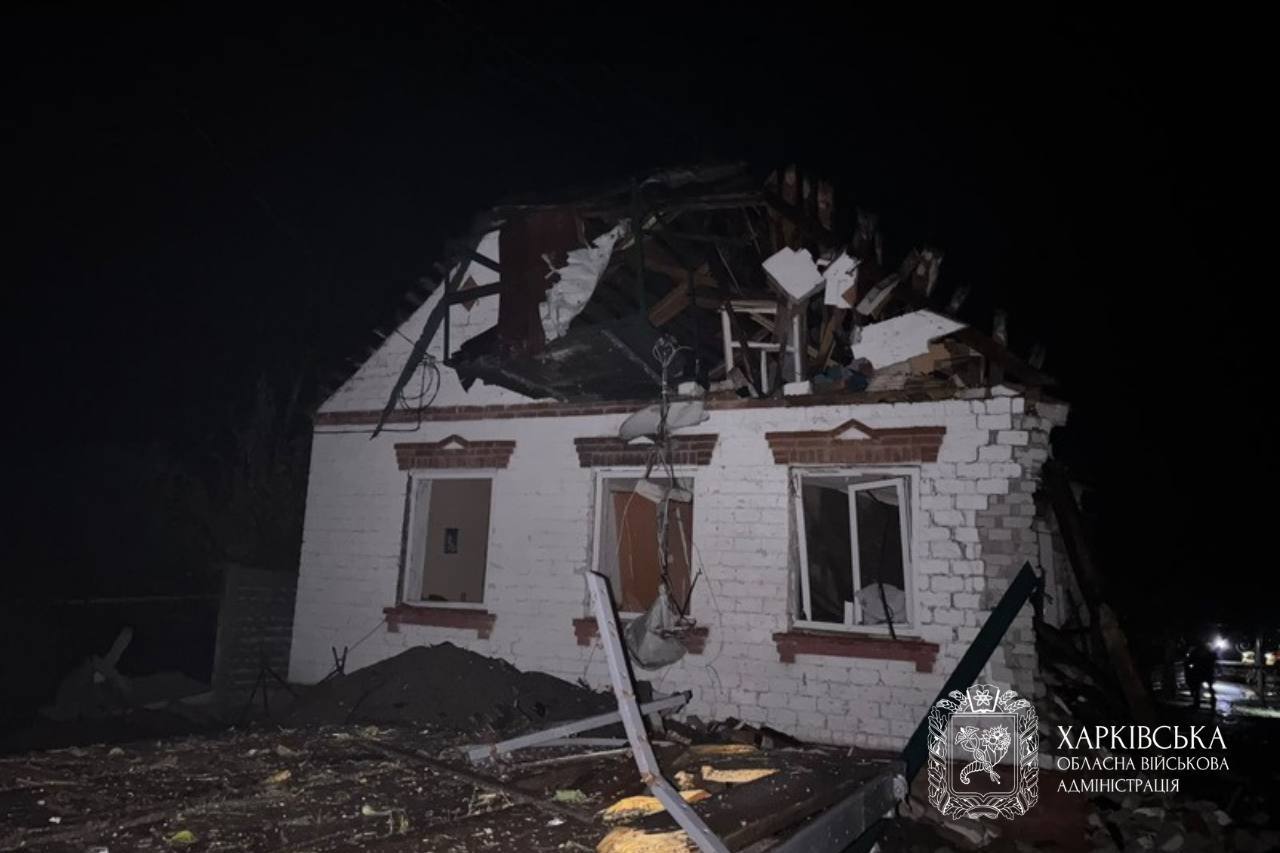
A damaged truck and a crater in Kharkiv Oblast after Russian attacks on 26 October 2026. Photo: Kharkiv Oblast Military Administration
In Sumy Oblast, Russian attacks over the past day injured five people, the National Police said, including two women aged 76 and 56 hit by a drone in Sumy community.
On 25 October: two killed in Kherson and Donetsk oblasts
In Chernihiv Oblast, Russian attacks on 25 October injured a man at a hangar in Pryluky district and a woman at a grain store in the Novhorod-Siverskyi area, the oblast administration said. Drones also damaged a school in a village of Koriukivka community, and a strike destroyed 700 metric tons of potatoes at an enterprise in Mena community, the administration said. A large warehouse fire broke out in Koriukivka district, the DSNS said.
In Kherson Oblast, Russian attacks killed one person and wounded eight in the 24 hours to 06:00 on 26 October, the oblast administration reported. On 25 October, a Russian drone strike on a minibus in Kherson’s Central district killed one person and wounded six, the administration said after one more man sought medical help. Police said the minibus was hit by an FPV drone.
In Donetsk Oblast, Russian forces killed one person in Kramatorsk and wounded 10 across the oblast on 25 October, Filashkin said. Russia hit Kramatorsk with drones and six KAB-250 guided bombs, and 18 hits on Sloviansk wounded four, police said.
On 25 October, a Russian attack on Synelnykove district of Dnipropetrovsk Oblast sent a 30-year-old man to hospital, the oblast administration said. In Vinnytsia, the number of people injured in the Russian attack on the morning of 25 October rose to seven, two of them hospitalized, the DSNS said. In Uman, an 86-year-old woman burned in the Russian attack on 21 October died in hospital, the Cherkasy oblast administration said.
Russian forces attacked Ukraine with a Kh-31P anti-radar missile, three Kh-59/69 guided air-to-ground (air-to-surface) missiles, and 140 attack drones overnight, the Air Force said.
Reports mentioned numerous explosions across the city and thick smoke rising from several locations. Some residents told ASTRA that they had not heard air raid sirens despite the ongoing attack.
Alongside attacks on Vinnytsia, Russia launched 153 Shahed-type drones at Ukraine overnight on Oct. 25, including 92 jet-powered drones, as well as low-cost Banderol cruise missiles, the Ukrainian Air Force said.
Overnight, Russian forces launched 126 drones, 61 of which were jet-powered, while Ukraine's air defense managed to suppress 101 drones, including 50 jet-powered drones, the Air Force said.
For years, Father Joseph Coleman had little ability to influence what happened to his father, Stephen Hubbard, an American retiree imprisoned in Russia after being captured in Izium, a city in Ukraine’s Kharkiv Oblast occupied by Russian forces in 2022.
Ukraine's Defense Forces advanced more than 15 km through underground utility tunnels into Russia's rear on the Kupiansk axis in Kharkiv Oblast, the Khartiia Corps of Ukraine's National Guard reported on 22 October. The corps called it Operation Veles. The underground advance was paired with attacks on the surface and drone strikes, hitting Russian forces from two directions, the corps told Militarnyi.
Russian troops have repeatedly crawled through gas pipelines around Kupiansk to get behind Ukrainian lines, even after Ukraine reported confident control of the city in February. This time, Ukraine went underground itself. The operation took away Russia's chance to get into Kupiansk's rear, the corps said.
The corps reported more than 30 Russian soldiers captured and Russian losses of more than 100. Militarnyi, citing the unit, put the number of Russian troops killed at over 100.
Khartiia studied how Russian troops moved through pipes before going underground itself, the corps commander, Brigadier General Ihor Obolenskyi, said.
"We watched how the enemy works underground and studied how they do it. The Russians intended to use gas pipelines to get into the rear of our troops. So we went underground ourselves. We anticipated the enemy's actions and mastered the tactics of underground combat," he said.
Boots under ground!
Asymmetric breakthrough in the Kharkiv Region: Khartiia Corps conducts the subterranean counteroffensive Operation VELES, advancing 15 km underground.
For the operation, troops trained physically and psychologically to fight in confined spaces, sappers and engineers prepared the underground route, and special communications, navigation, silent logistics, and life-support systems were put in place, Khartiia told Militarnyi. The operation was named after Veles, the Slavic pagan god of the underworld.
Khartiia's brigade, the R.U.H. assault regiment, the Lava drone regiment, the Achilles drone brigade, and units of Ukraine's military intelligence, including the Freedom of Russia Legion and the Russian Volunteer Corps, took part, the corps said.
Russia has used pipelines to infiltrate before
By September 2025, Russian forces had used pipelines to move troops behind Ukrainian lines three times, Ukrainian monitoring project DeepState reported on 12 September 2025. The first was in Avdiivka, the second near Sudzha, and the third near Kupiansk, where groups crossed the Oskil River through a gas pipe.
Near Sudzha in March 2025, Russian special forces walked through a pipeline that until recently had carried Russian gas to Europe, the Associated Press reported. A pro-Kremlin blogger claimed they covered about 15 km and that some spent several days inside.
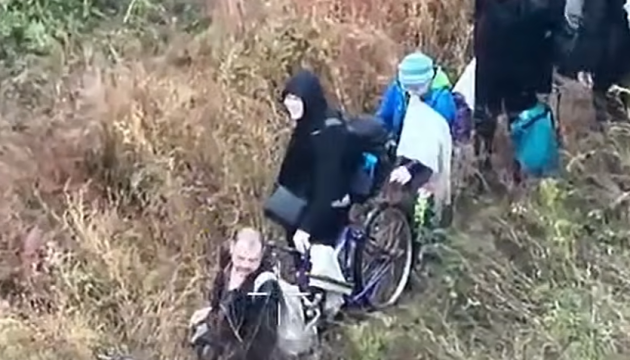
Russian troops kept using the pipeline near Kupiansk this year. On 27 September, Khartiia's reconnaissance drones recorded Russian forces leading nine civilians, including children, elderly people, and a person on crutches, through the gas pipeline out of the Kupiansk community. Men of military age in civilian clothes walked alongside them, and the corps believes they were Russian soldiers using the group as cover to withdraw. Ukrainian troops held fire because of the civilians, the corps said, adding that the case has been documented for a war crimes investigation.
Civilians led through a gas pipeline out of the Kupiansk community, Kharkiv Oblast, by people the Khartiia Corps identifies as Russian forces, 27 September 2026. Screenshot: Khartiia Corps
Why the war is moving underground
Drones, constant surveillance, and AI-assisted targeting have made the battlefield surface transparent and deadly, argue John Spencer, chair of urban warfare studies at West Point's Modern War Institute, and Col. Drew Craig, principal military engineering staff officer at NATO's Allied Rapid Reaction Corps. In an August analysis, they write that soldiers in Ukraine describe a "death zone" of some 30 km, where moving above ground can draw an attack within minutes. When firepower makes the surface too dangerous, armies have historically gone underground, as they did in World War I and Vietnam, and more recently in Gaza and Lebanon.
"Armies that cannot survive above ground must adapt below it," the authors write.
Fighting in tunnels brings its own requirements, the authors write: detecting the enemy by sound and vibration, and specialized unmanned systems that cannot rely on GPS or stable radio links. Long stretches underground also take a severe psychological and physical toll on soldiers.
Western militaries are not ready for this, Spencer and Craig write. No NATO partner maintains even general capabilities for large-scale underground warfare, and US and British efforts focused mainly on detecting and clearing tunnels rather than occupying and operating in them.
Russian forces launched a mass combined attack overnight with Iskander-M, S-400, Zircon, and Onyx missiles, as well as 210 drones of various types, including 110 jet-powered drones, the Air Force reported.
Editor's note: Most of the Ukrainian soldiers and commanders interviewed are identified by their callsigns, in accordance with military protocols.
KHARKIV OBLAST — Ukrainian soldier Oleksandr had already narrowly survived crossing a mine-strewn field and a river in the crosshairs of Russian artillery when the swarm of first-person-view
Acting Naftogaz CEO Serhii Fedorenko said that Russia had struck the company's facilities more than 400 times since the beginning of 2026 — twice as often as during the same period last year.
Russian troops launched attacks against Ukraine overnight with Iskander-K cruise missiles and 186 drones, including Shahed-type ones, the Air Force reported.
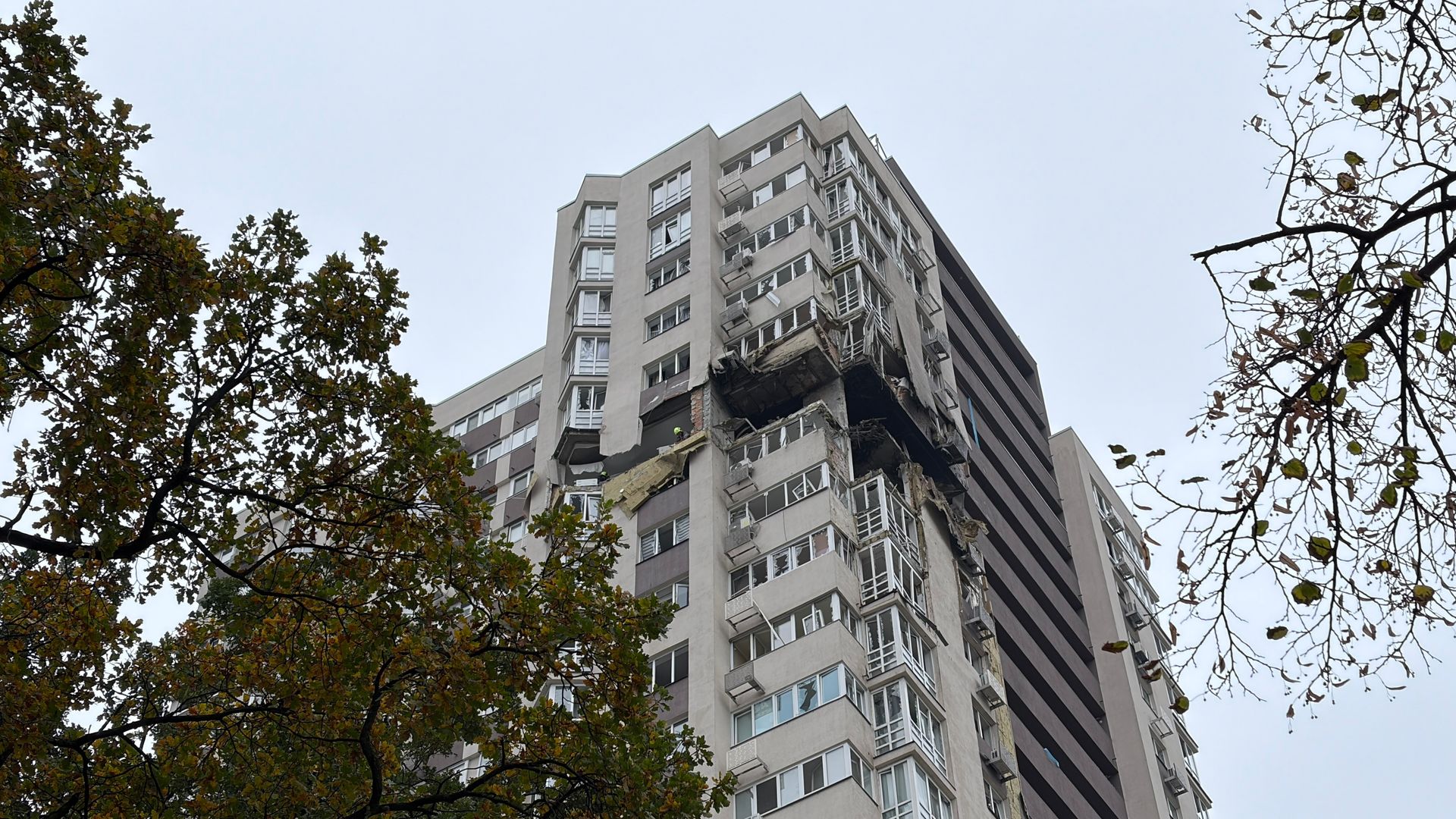
Russian drones struck a 24-story apartment building in Kyiv, a university building in Kremenchuk, warehouses, and hypermarkets overnight on 21 October, killing two people in the capital and an elderly couple near Kharkiv, Ukrainian officials said. The attack went well beyond Ukraine’s power grid, hitting places where people live, study, and shop. Over the past day, Russian strikes also killed three more civilians and injured dozens across several oblasts.
Russia has kept up nightly drone and missile attacks on Ukrainian cities through the autumn, mostly aimed at the energy system. It struck Ukraine’s energy 76 times during a US-declared truce, and fired 39 ballistic missiles at the grid three days after Washington announced it. This time the targets also included homes, a university, warehouses, and shops.
Overnight, Russia launched 186 Shahed-type and other attack drones, 88 of them jet-powered, along with Iskander-K cruise missiles, Ukraine’s Air Force said. Air defenses downed or jammed 150 drones. Hits were recorded at 27 locations, and debris fell at 13 more.
Two killed on the 20th floor in Kyiv
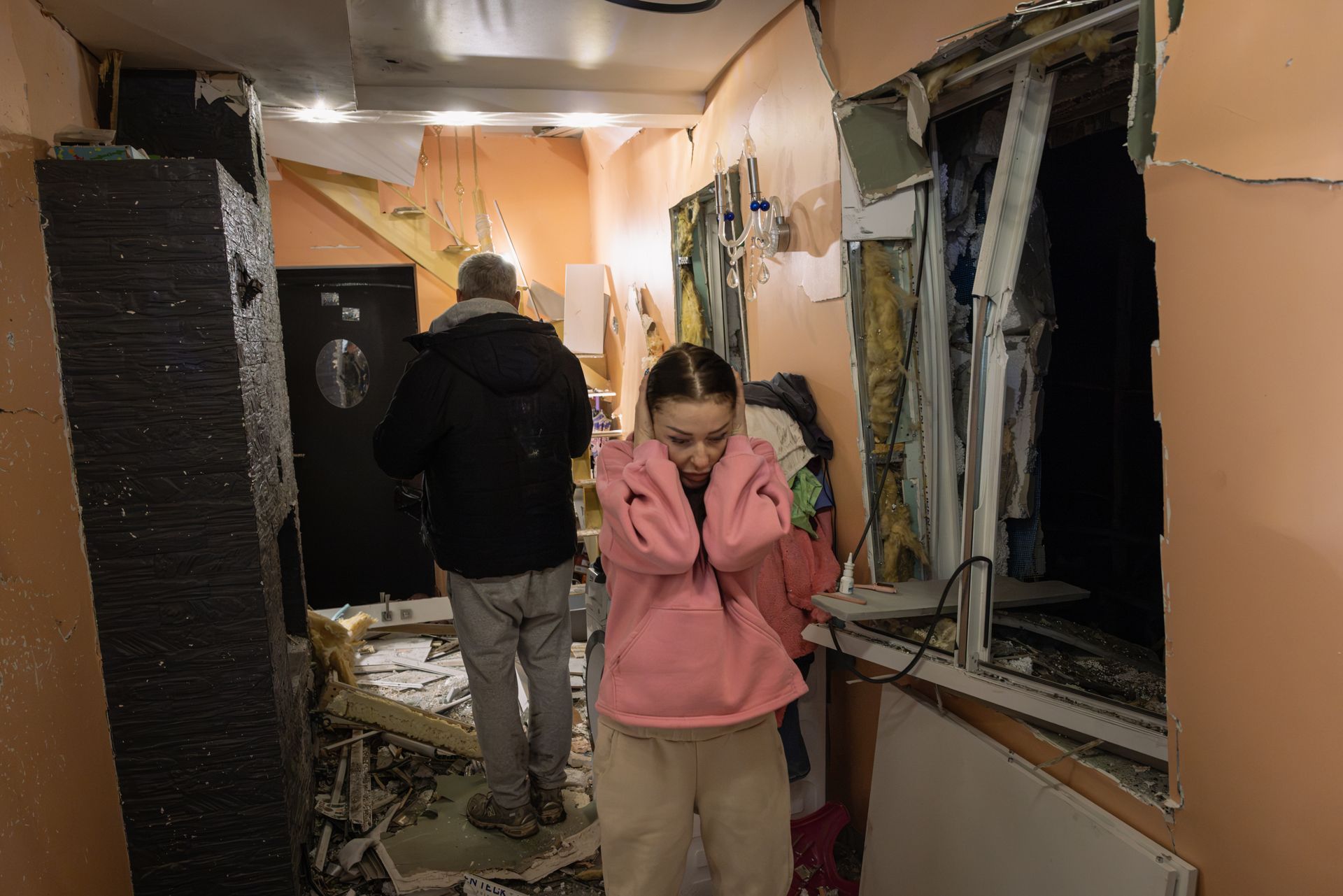
A drone hit a 24-story residential building in Kyiv’s Sviatoshynskyi district at the level of the 20th floor, starting a fire, Mayor Vitali Klitschko said. The fire spread over about 70 square meters, and rescuers found the bodies of two people while clearing debris, the State Emergency Service said. Two people were injured and hospitalized, Klitschko said, including a 46-year-old man who was walking past the building, according to the police.
A rescuer carries a cat out after a Russian drone strike on an apartment building in Kyiv, 21 October 2026. Photo: State Emergency Service of Ukraine
In the Desnianskyi district, seven parked cars caught fire, the State Emergency Service said; police put the number at about 10. The evening before, drones hit a warehouse building in Desnianskyi and a transport facility in Solomianskyi district.
An elderly couple killed near Kharkiv
In the village of Korotych near Kharkiv, Russian drones killed an 81-year-old woman and an 83-year-old man, Kharkiv Oblast Governor Oleh Syniehubov said. Rescuers recovered their bodies from the rubble of their house, the State Emergency Service said. Eleven people, including a two-month-old boy and an eight-year-old girl, were treated for acute stress, and 13 houses were damaged.
A house destroyed by a Russian drone strike in Korotych, Kharkiv Oblast, 21 October 2026. Photo: State Emergency Service of Ukraine
A university, warehouses, and hypermarkets
In Kremenchuk, a drone hit a building of the Mykhailo Ostrohradskyi National University, setting it on fire, the State Emergency Service said. Three people were injured, including a 16-year-old who was hospitalized with a concussion, Poltava Oblast Governor Vitalii Diakivnych said. In the Poltava community, drones damaged an administrative building and warehouses.
Firefighters put out a fire at an enterprise in Lviv district after a Russian attack, 21 October 2026. Photo: State Emergency Service of Ukraine
In Lviv Oblast, an attack set fire to an enterprise in a village in Lviv district and injured two people, while a house was damaged in a neighboring village, the State Emergency Service said. In Uman, drones hit a hypermarket and damaged a hotel, injuring one person, Cherkasy Oblast Governor Ihor Taburets said.
A hypermarket in Uman damaged by a Russian drone strike, 21 October 2026. Photo: Cherkasy Oblast Military Administration
On the evening of 20 October, a drone hit an Epicentr hypermarket in Pervomaisk, Mykolaiv Oblast, injuring eight people, acting Governor Heorhii Reshetilov said. Russia also struck a hypermarket in Rivne Oblast several times that day, injuring four and forcing rescuers to pull back while they fought the fire, the State Emergency Service said.
More dead and injured over the past day
The overnight strikes followed a day of attacks. In Kyiv, Russian strikes on 20 October killed one person and injured 21, three of them seriously, Klitschko said. An administrative building caught fire, rescuers freed four people trapped on its upper floors, and a healthcare facility was damaged, the State Emergency Service said. In Dnipropetrovsk Oblast, two men were killed and seven people injured that day, regional officials said.
In Kharkiv Oblast, Russian attacks over the past day injured 11 more people in Kharkiv, Derhachi, and Shestakove, Syniehubov said. In Kherson Oblast, 13 people were injured, three of them children, the regional administration reported. In the Chernihiv region, an 89-year-old woman and a young woman were hurt in strikes on villages and on Novhorod-Siverskyi, Governor Viacheslav Chaus said, and a 21-year-old woman was injured in the Sumy community, according to the Sumy regional administration.
More than 5,000 subscribers lost power in Volyn Oblast’s Lutsk district, Governor Roman Romaniuk said. In Ternopil Oblast’s Kremenets district, 7,949 subscribers remained without power after earlier Russian strikes on energy facilities, the regional administration reported.
A city stretches out beneath the lens of a Russian drone. Roads, apartment blocks, parks, and office buildings come into view as the weapon closes in on its target.
Footage like this has become all too familiar over the course of Russia's full-scale war, usually captured by small
An 81-year-old woman and an 83-year-old man were killed when Russian drones attacked the village of Korotych, Kharkiv Oblast Governor Oleh Syniehubov reported.
Six people were killed in a Russian strike in the settlement of Nova Vodolaha in Kharkiv Oblast, including girls aged 1 and 11. Another 15 people were injured, including seven children, Kharkiv Oblast Governor Oleh Syniehubov said on 20 October. Russian forces struck a park with a drone while families with children were there, Ukraine’s Minister of Internal Affairs Ivan Vyhivskyi said.
Russian forces continue to attack Ukrainian cities, killing civilians and destroying civilian infrastructure. The Kharkiv Oblast Prosecutor’s Office has opened a war-crime investigation into the strike. The strike was aimed at people, Yurii Yurchenko, head of a police department in Kharkiv Oblast, said in a comment to Suspilne.
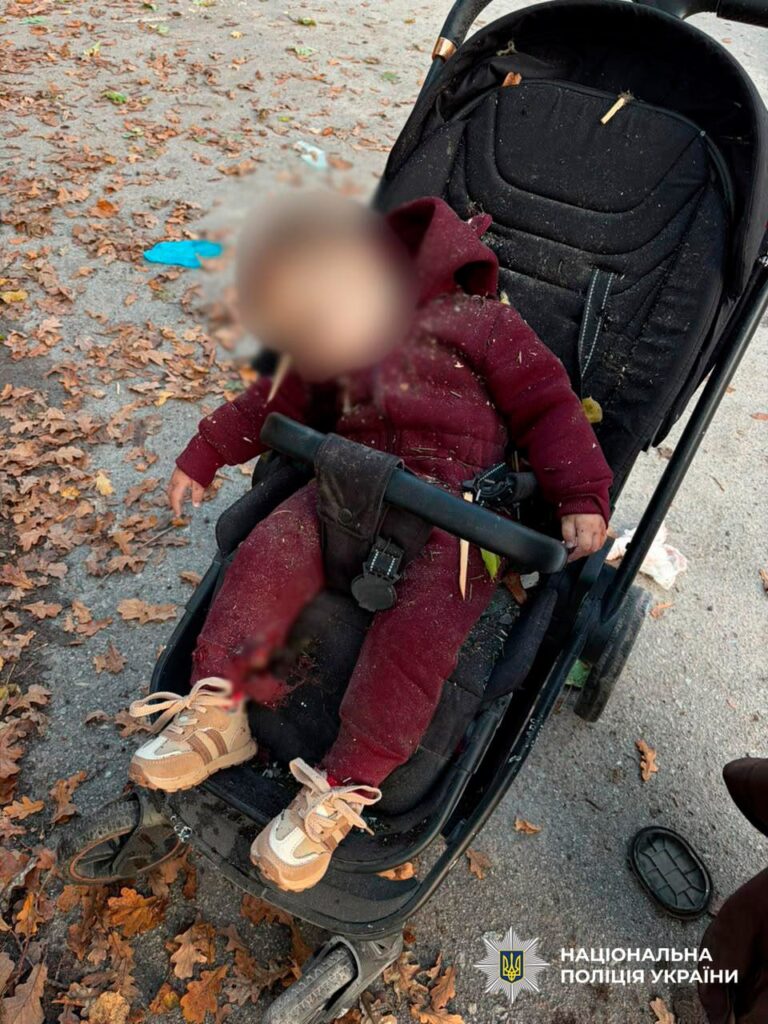
The 14-month-old girl was named Anhelina
The Russian drone circled the park several times before crashing, Yurchenko said. He said the drone struck a tree near a café, and the blast wave and shrapnel hit people at the establishment. The attack came at around 16:30, the prosecutor’s office said, adding that Russian forces had preliminarily used a Geran-3 drone.
The café damaged in a Russian strike on a park in the settlement of Nova Vodolaha, Kharkiv Oblast, on 19 October 2026. Photo: Kharkiv Oblast Military Administration
The Russian strike killed three women, aged 28, 34 and 36, a man around 40 years old, and two girls, aged 14 months and 11 years, Syniehubov said in his statement.
The youngest girl, named Anhelina, was born in August 2025, Ukrainian President Volodymyr Zelenskyy said. Her mother, Inna, died in the hospital, he added.
Zelenskyy shows US senators photos of the aftermath the same day
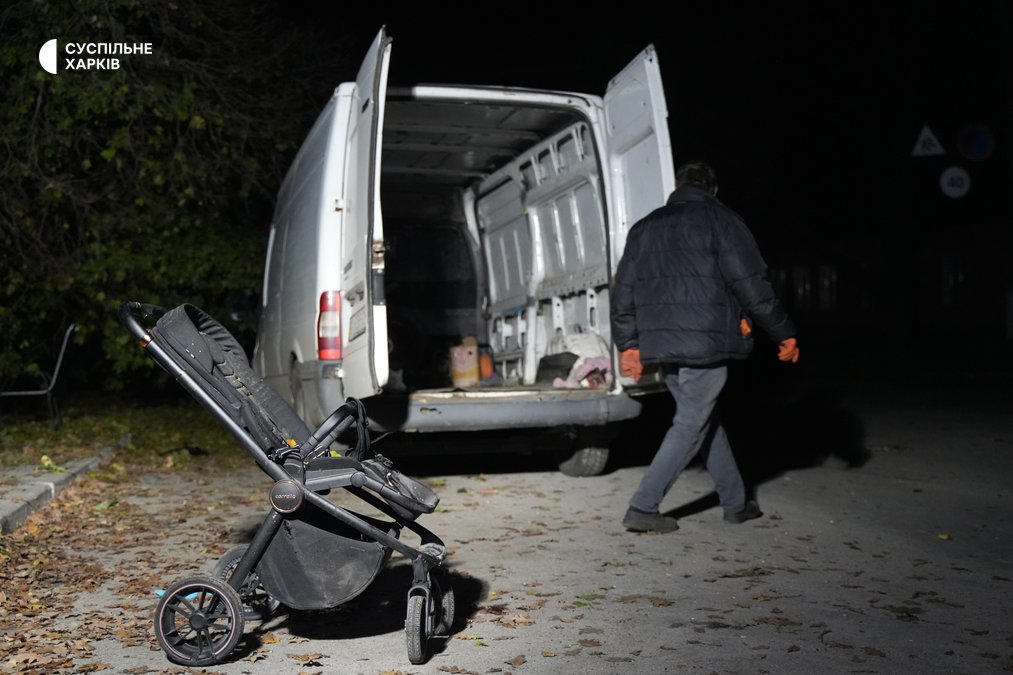
Zelenskyy met with US Senators Richard Blumenthal and Thom Tillis, along with their colleagues from both parties and both chambers of Congress, according to a 19 October post on his social media accounts. During the meeting, he discussed the Russian attack in Kharkiv Oblast and showed lawmakers photographs from the scene, including one of the infant who was killed in a stroller.
“This is how Russia responds to the lifting of sanctions and the easing of pressure,” he said in the post.
The stroller in which 1-year-old Anhelina was killed, Nova Vodolaha, 19 October 2026. Photo: Suspilne Kharkiv/Viacheslav Mavrychev
Zelenskyy said Ukraine needs air defense and that no one should think about making money with Russia while it continues its war. He asked that sanctions on Russia stay in place until the killing stops, urged the US to “be strong” and apply Lindsey Graham’s law, and called on Europe to keep supporting Ukraine.

 Login