❌

Reading view

Trump's Tariffs Are Politically Toxic
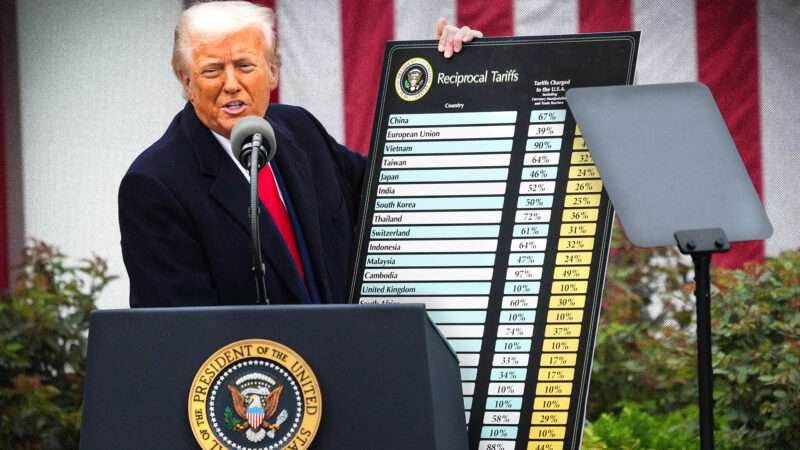
Trump-Tariff-oct-26 | Chris Kleponis - CNP/Newscom

When the White House rolled back tariffs on coffee, fruit, beef, and farm equipment, it was effectively an admission that the tariffs were raising prices—and that Americans, not foreigners, had been paying for them.

Now, in the closing stages of the midterm campaign, the White House is once again rolling back some of those import taxes—and once again making an awkward implicit admission.

President Donald Trump's tariffs have become politically toxic.

The administration announced late last week that it would lift the 50 percent tariffs on some Canadian imports, apparently in an attempt to help Sen. Susan Collins (R–Maine) survive a tough reelection campaign in which the tariffs have played a significant role.

If this is indeed an attempt to sway voters in Maine, it is not a very convincing one. The Trump administration is removing tariffs on some agricultural and mechanical goods, as well as packaging and plywood, The Wall Street Journal reports. But Trump is also imposing new 50 percent tariffs on "other Canadian goods, including carpet, certain valves, and waste products."

Collins issued a statement thanking the White House for the changes. This is what members of the U.S. Senate have been reduced to—begging the president to cast his capricious, tariff-happy eyes toward products that will hurt people in other states more than in your own. (In fairness to Collons, she has voted repeatedly to roll back Trump's tariffs, but not enough of her fellow Republicans went along with it.)

Still, it's worth asking: What exactly is the pitch to voters here? Here's a tariff cut, now vote for Republicans so the president can continue to arbitrarily tax imports whenever the mood strikes?

It's easy to see why Trump's tariffs have become so unpopular. They are a huge and broad tax increase—the Tax Foundation estimates that 54 percent of imports are subject to Trump's tariffs, which are costing the average household about $1,000 annually—that was imposed without congressional authorization or popular support. They create more losers than winners, as downstream businesses and consumers pay the price for the protectionism offered to American manufacturers. Even the supposed "winners" of the tariff policy tend also to be "losers," since so much manufacturing depends on importing raw materials and intermediate goods.

Perhaps more surprising is how unwilling Republicans are to defend the president's signature economic policy. Or to even talk about it.

The Wall Street Journal's Greg Ip crunched the numbers and found that House GOP candidates have not run a single ad talking about the tariffs during this election cycle.

Just such a fun chart here from @greg_ip. If only we could tease out some meaning. Ah, well, nevertheless. 🤣 pic.twitter.com/1X4AWcWQMV

— Scott Lincicome (@scottlincicome) October 23, 2026

That silence speaks volumes. Trump says "tariff" is "the most beautiful word in the dictionary." But it is now "one of the most hated words in politics," writes Ip.

The only Republicans to mention trade or tariffs in a campaign ad, as far as I've seen, is former Rep. Mike Rogers, who is now running for the Senate seat in Michigan (and thus was not included in Ip's analysis). And he's calling for an end to the "tariff war."

There is a lesson here that hopefully will linger beyond the next week: If you support a policy that deliberately and unlawfully raises taxes and prices, voters will not reward you for it.

It's a lesson that the Republican Party learned long ago, but apparently forgot.

Against economists' advice, a Republican-led government in 1930 implemented a huge tariff hike intended to protect American farms and factories at the start of the Great Depression. Instead, those tariffs worsened economic conditions and triggered foreign retaliation.

When voters went to the polls in 1930, the first midterm after the Smoot-Hawley tariffs were passed, they registered their displeasure. The GOP lost 52 seats in the House that year. Two years later, an even larger landslide would sweep Democrats into power in Congress and the White House, ushering in the New Deal era that reshaped the federal government forever. The two lawmakers who lent their names to the legislation were among those who lost their seats, fittingly.

The most notable difference this time around is that Congress didn't actually pass a tariff bill. The trade barriers were instead imposed directly by the executive. Voters don't seem to care. Republicans were too cowardly to stand up to Trump's unilateral power grab, and now they seem too ashamed to try to defend that policy (and their largely complicit response) on the campaign trail.

As they say, those who don't learn from history are doomed to repeat it. And "doomed" may be a fitting way to describe the Republican majority in Congress right now, thanks in no small part to Trump's tariffs.

The post Trump's Tariffs Are Politically Toxic appeared first on Reason Magazine.
  •  

Democrats See a Rare but Fleeting Chance to Shake Up the Senate Map

Democrats are targeting G.O.P. strongholds that could set them up for new majorities. But if they don’t win those races now, it could be a long time before they have another chance.

© Clayton Steward for The New York Times

Protesters outside of an event for Senator Roger Marshall in Topeka, Kan. Soaring fuel costs and economic struggles have made some Republican senators like Mr. Marshall vulnerable on their home turf.
  •  

In Islamophobic Rant, Trump Seeks to Stir Republican Base in Michigan

The president contended that Dr. Abdul El-Sayed, a Muslim, would “invite hordes of jihadis to our shores” as he sought to bolster the G.O.P. candidate in a tight Senate race.

© Haiyun Jiang/The New York Times

President Trump’s comments, coming in a key midterm battleground nine days before the elections, underscored the dark themes and personal vilification he and his allies have embraced as part of their closing pitch.
  •  

In Texas Senate Race, Talarico Leans Into Growing Rivalry With Elon Musk

On the trail, James Talarico, the Democratic Senate nominee, has increasingly gone after Mr. Musk, a critic of his who has given big to a group aligned with the Republican candidate, Ken Paxton.

© Eric Lee/The New York Times; Joel Angel Juarez/Reuters

Elon Musk, left, is in an increasingly tense rivalry with James Talarico, the Democratic Senate nominee in Texas.
  •  

In Alaska, Some Early Voting Sites in Rural Villages Have Not Yet Opened

“There is no legal excuse” for the failure of 18 polling sites to open for early voting, a state lawmaker said.

© Kerry Tasker/Reuters

Senator Dan Sullivan finished second in the primary to Representative Mary Peltola and has trailed her in polls since.
  •  

Obama Issues Searing Attacks on Trump, Ramaswamy in Return to Campaign Trail

The 44th president sharply criticized Mr. Trump, who hit back later in the day. Mr. Obama also assailed Vivek Ramaswamy, the Republican nominee for governor of Ohio.

© Victor J. Blue for The New York Times

Former President Barack Obama sharply criticized President Trump on Saturday in Ohio.
  •  

A 2028 Presidential Poll Finds Vance, Rubio and Several Democrats in the Mix

The Democratic presidential primary race appears to be wide open, while JD Vance and Marco Rubio led among Republican voters, a New York Times/Siena survey found.

© Jillian Vordick/The New York Times

  •  

Why Democrats Could Find It Hard to Win the Senate Despite Their Strong Polls

Democrats are increasingly optimistic about the midterms. But they are being outspent by Republicans. And they are trying to compete in states that favored President Trump by large margins.

© Julia Demaree Nikhinson/Associated Press

  •  

How Vivek Ramaswamy’s Ruthless Ad in Ohio Divided Republicans

The fallout from Vivek Ramaswamy’s brutal spot targeting his Democratic rival in the Ohio governor’s race showed that even in the Trump era, a political attack can be seen as going too far.

© Shannon Stapleton/Reuters

Vivek Ramaswamy, a Republican, is facing a tight race for governor of Ohio against Amy Acton, a Democrat.
  •  

Why Legal Experts See the Justice Dept.’s Alaska Election Challenge as Dubious

No obvious legal authority supports a pre-emptive effort to block the certification of Alaska’s Senate election if the Republican incumbent narrowly loses.

© Kerry Tasker for The New York Times

Senator Dan Sullivan with Mary Peltola, his Democratic challenger, during a debate in Kodiak, Alaska, last month.
  •  

Acton’s mother was convicted of theft, animal cruelty: What to know

A GOP campaign ad featuring the estranged mother of Ohio gubernatorial candidate Amy Acton (D) received blowback this week after it was revealed Acton’s mother stood by her husband after he was charged with sexually abusing Acton as a child. Court records show that the mother, Donna Arthur, has faced legal troubles of her own,…

  •  

What Hundreds of Focus Groups With Trump Voters Revealed

Sarah Longwell has conducted hundreds of focus groups with Trump voters, and many of them are feeling betrayed.

© The Ezra Klein Show

  •  

Big Names Flock to Ruby-Red Florida to Sway Voters in Unexpectedly Close Contests

President Trump will rally on Friday in a Republican state where Democrats have their eye on several House races.

© Joe Raedle/Getty Images

Republicans are favored to win in statewide races in Florida this year, but polls suggest that the contests are closer than expected.
  •  

California Republicans Pushing New Voter ID Law Are Motivated by Trump's 'Stolen Election' Fantasies

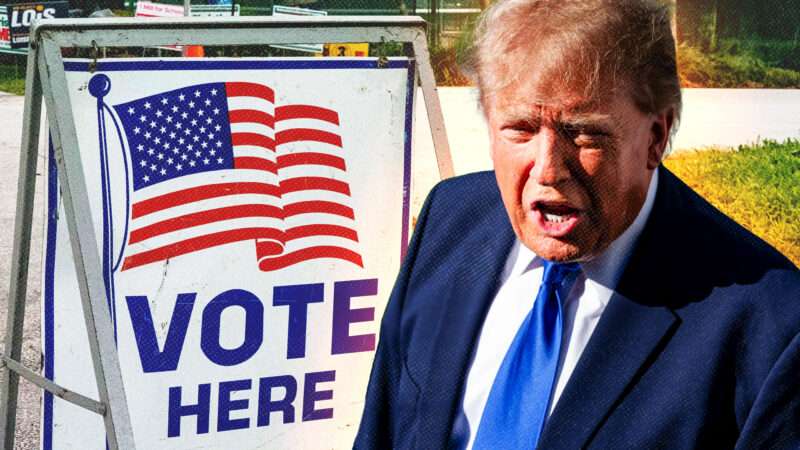
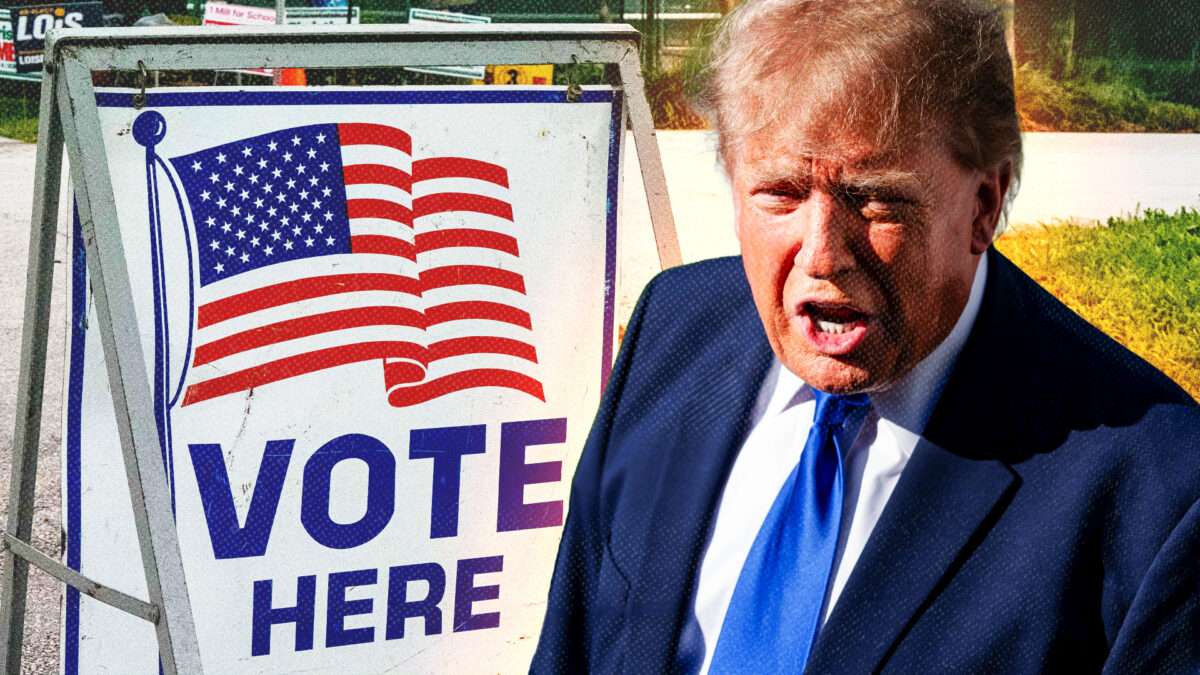
President Trump and a U.S. voting station | Illustration: Sipa USA/Chris Beckett/ZUMA Press/Newscom  Photo: Florin Seitan/Dreamstime.com

Supporters of Proposition 39, the statewide ballot initiative that would implement additional Voter ID requirements for California elections, pitch the measure as a "common-sense reform to increase trust and participation in our elections." Its sponsor, Assembly member Carl DeMaio (R–San Diego), touts widespread support for such measures by Democratic, Republican, and independent voters.

Yet the latest polls show the measure tanking, with a Public Policy Institute of California survey last month showing it losing 55 percent to 43 percent—dismal numbers this late in the election season. The official ballot arguments provide some insight into the reasons. While supporters stick with their "nonpartisan" shtick, opponents tie the measure to President Donald Trump's election denialism.

"Stop Trump from rigging our elections. Don't believe the lies. Prop. 39 MAKES VOTING HARDER, MORE EXPENSIVE, AND LESS SAFE for Californians," per the "no" argument. It refers to the measure's funding from "MAGA rightwing billionaires." That point was reinforced by a recent CalMatters report showing large donations from "deep-pocketed Republican donors." The publication says it's a "signal that conservatives view Prop. 39 as a test of support for future battleground states in the broader push by…Trump to tighten voter restrictions."

That's a fair assessment. In a Democratic state where the president's approval ratings are 24 percent in one poll, it's hard to imagine that most voters will spend much time thinking about the ins and outs of election policy and analyze the measure based on its specifics. They'll no doubt see it for what it largely is: a Republican Party effort to aid and abet Trump's unfounded election conspiracies. That said, its requirements aren't overly obtrusive, only unnecessary.

Currently, Californians must show a state identification or provide the last four digits of their Social Security Number when registering. No identification is needed to vote in person, but election officials use signature verification for vote-by-mail envelopes. Around 90 percent of Californians vote that way, so the main issue involves the requirement that voters add the last four digits from their government IDs on the outside of the envelope—thus adding an additional checkpoint (and sadly an additional opportunity for identity theft).

There's no need to worry about compliance costs for election agencies, as it's their job to administer elections. The measure likely will marginally reduce voter participation (by increasing disqualified ballots, even from legal voters if they forgot the ID they used when they registered), while marginally increasing security. It would force many Californians to re-register, which is a hassle. It would no doubt burden our excruciatingly slow ballot counting.

I don't have any theoretical problem with requiring an identification before voting, but California's elections are remarkably secure. There's no evidence of widespread fraud. Basically no one risks prison time by pretending to be someone else on a ballot. It's not about fixing a problem.

Since his defeat in 2020, Trump has traded in election conspiracy theories. The new GOP game is to trot out evidence-free election-fraud claims whenever they lose. We shouldn't play along. Despite the nonpartisan rhetoric, Proposition 39 is the state GOP's way of leaning into Trump's priorities and, as that CalMatters article noted, build momentum for less-defensible nationwide restrictions—apparently the only way Republicans think they can build a lasting majority. The measure won't do much damage in California as it's fairly modest, but it energizes the party's worst instincts.

Consider what DeMaio wrote in 2024 about his seven-point plan to overhaul the state GOP: "Do you remember a time when Republicans controlled a majority of statewide offices in California and were competitive in the state Legislature and congressional delegations?" He rightly blames the party itself, then offers his first item on a platform to revive it: "Make election integrity CAGOP's top ballot priority." I, too, would prefer more competitive California elections, but my first point would be for the GOP to make a better case for fixing California's messes.

Others see the measure as a means to gin up Republican turnout for a November election that's going to be a referendum on Trump by giving them some high-excitement issue to rally around. But some savvy political observers think that it might backfire. We'll see, but it reminds me that the California GOP has too long relied on cute strategies rather than good candidates.

What about supporters' main claim that Voter ID is necessary because it will restore voters' flagging trust in election integrity? Well, Republicans are the ones who don't trust our elections—and that's precisely because Trump spent the last six years poisoning the well. Do you really believe the people who think MAGA Republican Spencer Pratt could have only lost a Los Angeles mayoral primary (where only 15.9 percent of voters are Republicans) because of fraud will have their faith restored if Proposition 39 becomes law? Doubtful.

Republicans can restore their fortunes by acting normal again. The rest of us needn't enable them by backing a measure based on an election-integrity fantasy.

This column was first published in The Orange County Register.

The post California Republicans Pushing New Voter ID Law Are Motivated by Trump's 'Stolen Election' Fantasies appeared first on Reason Magazine.

  •  
❌