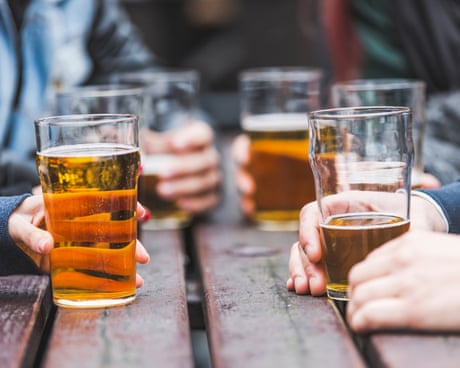
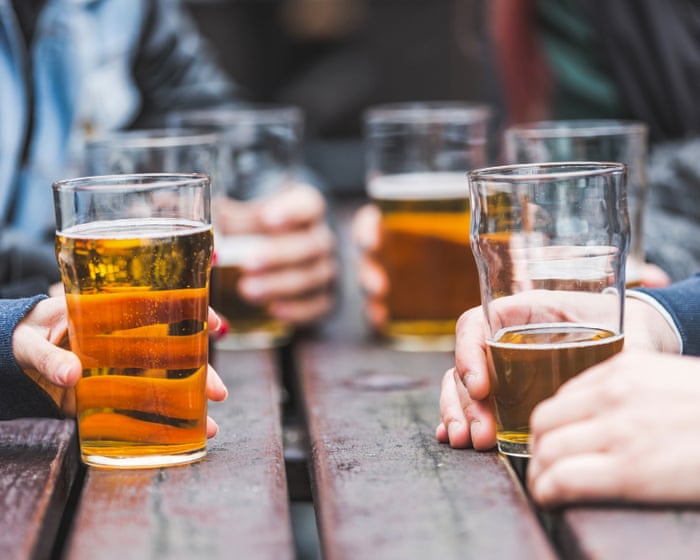
Heineken has warned British bars and pubs that the boom in popularity of weight-loss drugs could lead to a fall in sales of beer and cider.
The world’s second-largest brewer sent a presentation to British hospitality customers earlier this month that said the use of GLP-1 medication – such as Ozempic and Wegovy – could reduce the desire to drink alcohol. This in turn could result in “fullness and fewer serves” of pints in pubs and bars, it added.
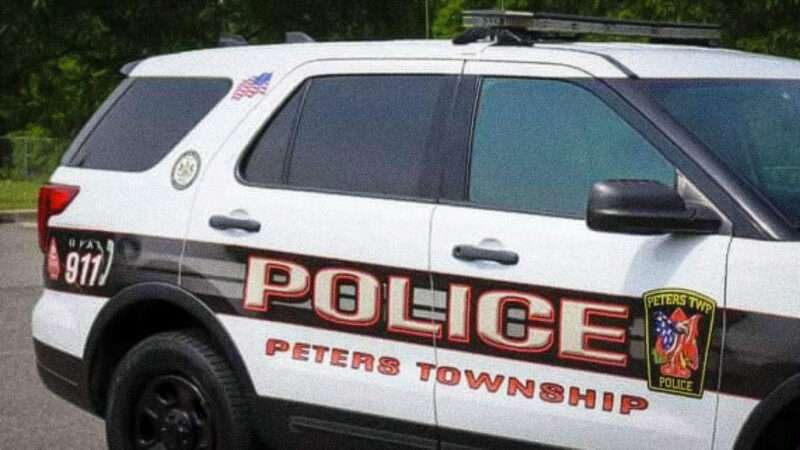
Katharine Viviano, a first-grade teacher at Pleasant Valley Elementary School in Peters Township, Pennsylvania, faces a charge of public drunkenness after officials said she became intoxicated at school and left her students unattended. According to police, Viviano left during the school day to buy alcohol, and when she returned, she hit another vehicle in the school parking lot. She later went into the bathroom attached to her classroom and refused to come out; another teacher found her in the bathroom semi-conscious. School staff initially believed Viviano was having a medical emergency, and they moved her students to another classroom and then to a playground while they dealt with the situation. Viviano reportedly smelled of alcohol, with slurred speech and bloodshot eyes. Authorities say she admitted drinking vodka earlier in the day.
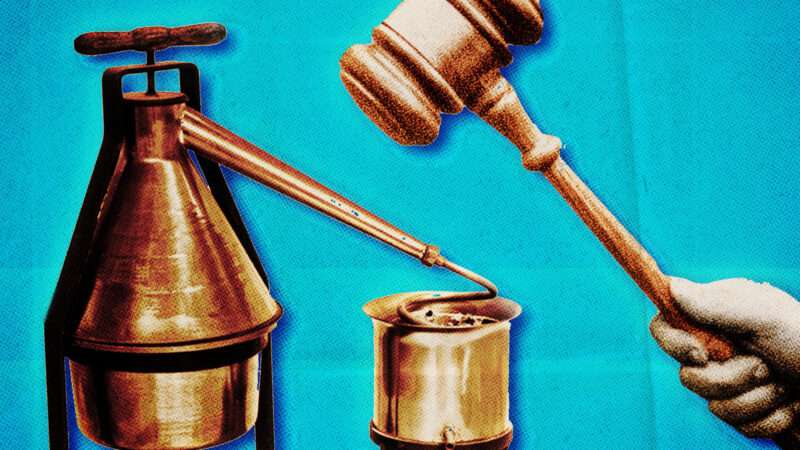
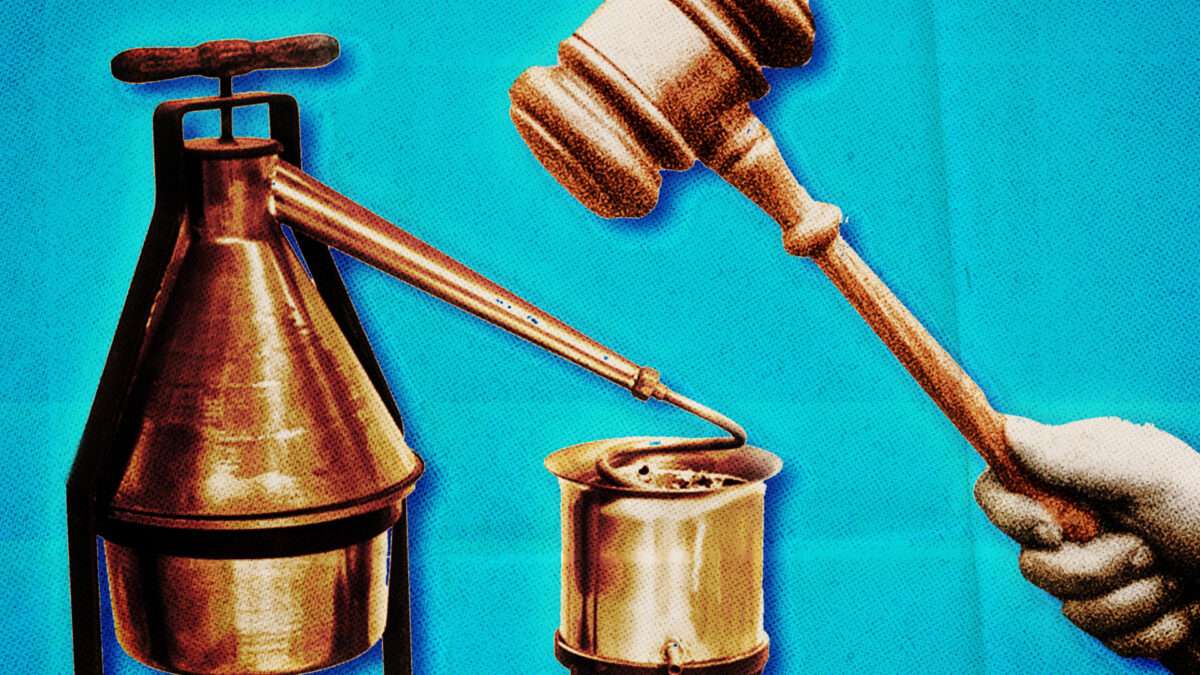
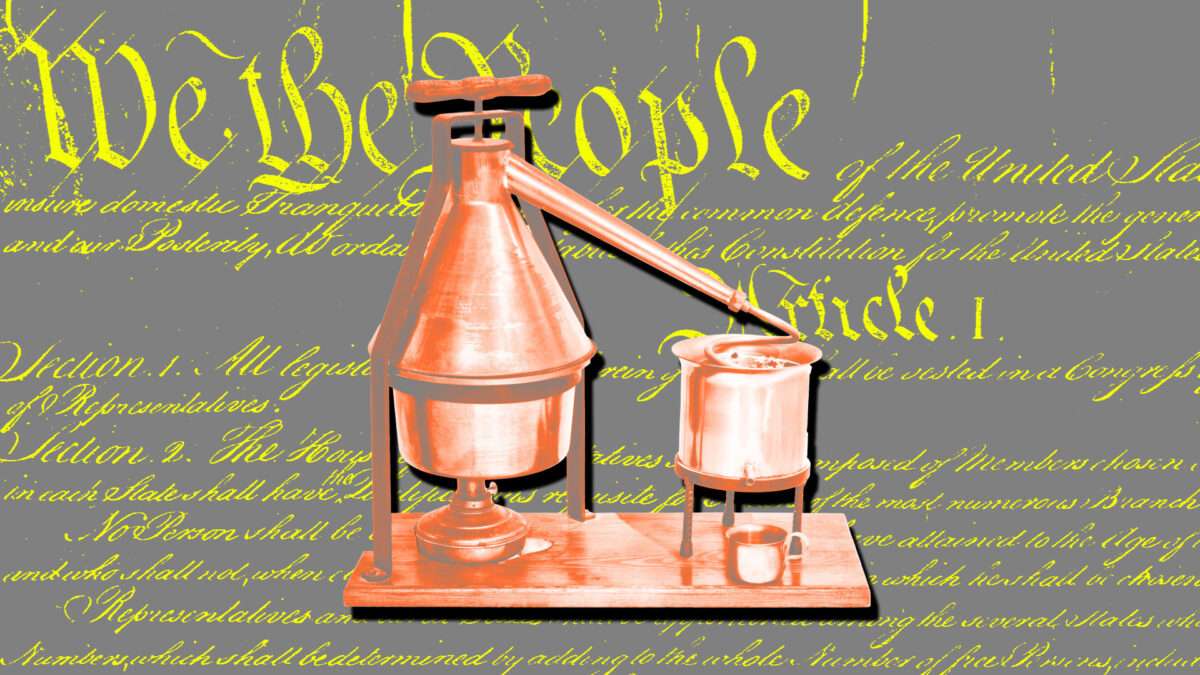
The U.S. Supreme Court's 2026–2027 term just got a whole lot boozier. On Monday, the justices agreed to hear arguments later this year or next in the case of Department of Justice v. McNutt. At issue is whether the 1868 federal ban on distilling liquor at home is unconstitutional because it exceeds the lawful regulatory power of the federal government. If any modern Supreme Court case ever deserved its own drinking game, this one is it.
In April, the U.S. Court of Appeals for the 5th Circuit found the federal ban on home distilling to be unconstitutional because Congress lacked the proper authority to issue such a ban in the first place. It was not a legitimate exercise of the congressional authority "To Lay and collect Taxes," the appellate court reasoned, because "the purpose of a tax is to raise revenue for the government;" yet this law "amount[s] to an anti-revenue provision" that only "prevents distilled spirits from coming into existence." And if it does not exist, of course, the government cannot tax it.
The 5th Circuit also denied that the federal ban on home distilling could be saved by the government's appeal to the Necessary and Proper Clause, which says that Congress has the authority "To make all Laws which shall be necessary and proper for carrying into Execution the foregoing Powers, and all other Powers vested by this Constitution in the Government of the United States, or in any Department or Officer thereof."
But the federal ban on home distilling cannot be "necessary" to the execution of the enumerated taxing power, the 5th Circuit argued, because the provisions of federal law at issue "tax nothing, and are distinct from the regulation of distilling alcoholic products that is permitted by federal tax law."
Nor did the 5th Circuit find the ban to be "proper." "By purporting to ban activity without a plain connection to the exercise of Congress's taxation power," it held, "Congress has essentially—and 'improperly'—invaded the reserved police and regulatory power of the states."
The Trump administration lost this case at the 5th Circuit and has now successfully urged the justices to hear its appeal. In its petition seeking review, the Trump administration faulted the 5th Circuit for its overeagerness to "second-guess" the "legislative judgment" of Congress. Instead, the Trump administration argued, the federal judiciary owes a great deal more deference to the federal government's regulatory priorities in a case like this. "A law is necessary and proper if it is 'convenient' or 'useful' for carrying an enumerated power into effect, and 'plainly adapted' to that legitimate end," the Justice Department's brief argued. "That is the case here."
This case may lead to an interesting divide among the Supreme Court's more conservative members. In United States v. Comstock(2010), a 7–2 Supreme Court embraced the Necessary and Proper Clause as sufficient constitutional grounding for the Adam Walsh Child Protection and Safety Act, which had empowered federal officials to order the indefinite civil commitment of "sexually dangerous" individuals who had already finished serving their prison sentences. Chief Justice John Roberts joined the majority opinion in that case, while Justice Samuel Alito voted in concurrence. In other words, they both endorsed a broad view of congressional power under the Necessary and Proper Clause. By contrast, Justice Clarence Thomas, joined by the late Justice Antonin Scalia, voted in dissent. The Comstock ruling, Thomas protested, "comes perilously close to transforming the Necessary and Proper Clause into a basis for the federal police power that 'we always have rejected.'"
Are we about to see a similar Alito-Thomas split over the proper reach of federal power in this case? And what about Justices Neil Gorsuch, Amy Coney Barrett, and Brett Kavanaugh? Will one or more of them play the Scalia part and similarly reject the Trump administration's broad reading of the Necessary and Proper Clause?
Today, the Supreme Court decided to review the case of Department of Justice v. McNutt, which challenges a federal law banning home distilleries. The key question in the case is whether the law in question is justified by the combination of the tax power and the Necessary and Proper Clause (which gives Congress the power to make laws "necessary and proper" for executing other powers granted to the federal government). This is likely to be most important Supreme Court Necessary and Proper Clause decision since at least NFIB v. Sebelius(2012), which ruled that a "proper" power permissible under the Clause is one that is "ancillary" to the implementation of an enumerated power; it cannot be a "great, substantive and independent" power. This case is likely to further clarify the meaning of "proper," perhaps by explicating in more detail what counts as a "great…and independent" power.
As explained in my earlier posts on the Fifth and Sixth Circuit decisions (linked above), I think this law is not "proper," and I hope the Supreme Court strikes it down. I summarize the reasons why in my post on the Fifth Circuit ruling:
The Fifth Circuit… concludes that the law in question exceeds Congress' authority under the Necessary and Proper Clause, which grants the power to makes laws "necessary and proper" for carrying into execution other federal powers. I think the court is right that the law in question is not "proper." The Supreme Court, in NFIB v. Sebelius(2012), ruled that a "proper" power permissible under the Clause is one that is "ancillary" to the implementation of an enumerated power. It cannot be a "great, substantive and independent" power. See my analysis in this article. The power claimed here is clearly "great and independent." As Judge [Edith] Jones notes, "[u]nder the government's logic, Congress may criminalize nearly any at-home conduct only because it has the possibility of concealing taxable activity."
I elaborated further in the post criticizing the Sixth Circuit decision:
[T]he Sixth Circuit is badly wrong to conclude that the law is "proper." As explained in my earlier post, the Supreme Court, in NFIB v. Sebelius(2012), ruled that a "proper" power permissible under the Clause is one that is "ancillary" to the implementation of an enumerated power. It cannot be a "great, substantive and independent" power. The power to ban any home-based activity that might serve a substitute for taxable activity outside the home is clearly a "great and independent power." As Judge Edith Jones explains in the Fifth Circuit ruling, "[u]nder the government's logic, Congress may criminalize nearly any at-home conduct only because it has the possibility of concealing taxable activity."
The Sixth Circuit tries to address this point by claiming alcohol is somehow special….
This distinction between alcohol and all other commodities is totally arbitrary. The same reasoning could justify banning home production of anything else that is more easily taxed if produced outside the home. And there is a long history of home production of all kinds of other commodities taxed or severely regulated by the government, ranging from cigarettes to illegal drugs, to pornographic videos.
While Judge Edith Jones (author of the Fifth Circuit decision) is one of that circuit's most conservative judges, the ruling was also joined by liberal Obama appointee Judge James Graves. On the other hand, the Sixth Circuit decision was written by prominent conservative Judge Raymond Kethledge. We shall see if the Supreme Court also divides on this issue in a way that cuts across conventional ideological and jurisprudential lines.
As noted in my post on the Fifth Circuit case, I think Judge Jones is not persuasive in arguing that the home distillery ban isn't "necessary," as well as improper. That argument is unlikely to prevail under the Supreme Court's expansive definition of "necessary, " dating back to McCulloch v. Maryland (1819), where Chief Justice John Marshall famously ruled that "necessary" includes any measures that may be "useful" or "convenient" for implementing an enumerated power.
As also noted in my posts on the two lower court rulings, I think the government has a better argument that this law is authorized by the Supreme Court's badly misguide precedent on federal power under Commerce Clause (which grants Congress power to regulate interstate commerce). But the Supreme Court is apparently not going to review that issue. The question presented submitted to the Court in McNutt is limited to the Necessary and Proper Clause.

 Login