A San Francisco Muni bus emblazoned with Micro1 advertising drives on Mission Street.
Stephen Council/BI
Micro1 pledged to spend $1 billion on licensing companies' data for AI developers.
The startup snags Slack messages, Canva files, Google Docs, and as much other data as it can get.
By selling company data, CEOs have a new revenue stream that popped up this year.
As AI labs go on the hunt for real-world data, Micro1 is throwing everything at getting it for them.
The startup is one in a new class of fast-moving data brokers, gobbling up companies' internal data and packaging it for the likes of OpenAI, Anthropic, and other model developers. The executives who sell their companies' data to Micro1 find themselves suddenly participating in a new sector of the economy, where terabytes of mundane workplace interactions can be worth hundreds of thousands of dollars.
Ilya Brotzky, the CEO and cofounder of the recruiting startup VanHack, told Business Insider he was shocked when he filled out a Micro1 survey about his company's data and received a "substantial" offer.
"I didn't believe it, to be honest," he said. "I felt like it was a little too good to be true."
Micro1 says it pays $100,000 to $2 million for a single midsize company's data. It recently announced plans to spend $1 billion on the project over the next year. Brotzky and the other executives Business Insider spoke to for this story wouldn't share the exact amounts their companies received.
For Micro1, the new focus on workplace data matches a broader evolution in the industry, as Business Insider has written about in The AI Data Grab, a series about how tech giants are increasingly turning to workers, users, and the physical world to get data to train AI.
First, AI companies gobbled up text from the internet and corpora of old books. Then they realized that humans grading AI responses could improve their models. And now, companies are using complex simulations, built on real-world data, to improve the tenacity and skill of their AI.
Micro1 CEO Ali Ansari.
Micro1
Gartner estimated that spending on AI data is likely to surge from less than $1 billion last year to almost $6.5 billion in 2027. Micro1's chief revenue officer, William Almeida, told Business Insider in September that his company has been explaining to prospective customers why their data is suddenly so valuable for those simulations.
"Every time I talk to companies, I tell them, 'Hey, I see this as a booming business,'" Almeida said.
Slack DMs, Google Docs, Canva files: Micro1 wants all it can get
Micro1 has three ways of working with AI model developers.
First, it can take a company's raw data, transform it to protect privacy, and license it to a lab. In addition, Micro1 provides an in-progress AI agent to companies and gets feedback on how it works. The third route is the simulation: Micro1 takes a company's data up to a certain timestamp, freezes it, and then provides that "environment" to a model developer trying to teach its AI how to work from existing context.
Micro1 pays more for larger, more complex datasets, as well as for data that represents a unique type of work or knowledge. It usually wants to license a company's entire data corpus, so that an AI model can replicate what it would be like to be a human employee.
"The connection, the diversity, the traceability of all of these data points, they matter a lot when you think about model training," Almeida said.
Brotzky also received an offer from AI data startup Mercor to buy his company's data, though he opted for Micro1. Once Brotzky dug into Micro1's privacy process, he said he felt comfortable sharing all the data they requested. That included VanHack's Google suite, Confluence data, Slack messages, and customer relationship management software.
Grant Gooley, the CEO of the marketing agency MyPortal Marketing, also views his deal with Micro1 as an innovation. He has sold internal design files from Figma and Canva, as well as checklists from Monday.com.
"When we were building these processes years ago, I didn't think that we would be using it to support AI learning," Gooley said. "But doing that, it's very fulfilling."
CEOs pitch the deals to their workers
Micro1 and its rivals are full steam ahead. Still, there are open questions. Former and current employees aren't likely to get any compensation from — or a voice in — their work becoming AI fodder. Ifeoma Ajunwa, a law professor at Emory University, previously told Business Insider that data sales are an "ethically gray area."
When pitching to potential customers, Almeida tells themthis business is in the early days.
"If you wait too much, you won't get the premium that the first companies are getting," he said.
VanHack's team got a confidence boost from the Micro1 deal, Brotzky said, because of the additional revenue stream it represents
Gooley said he's kept MyPortal Marketing's employees in the loop about the deal with Micro1 and hasn't heard any complaints.
"I told my team that this is something that you're going to tell your grandchildren about one day, because we are literally supporting the future growth of marketing agencies," Gooley said.
Have a tip? Contact this reporter via email at scouncil@businessinsider.com, or over text, Signal, Telegram, or WhatsApp at 415-757-8198. Use a personal email address, a non-work WiFi network, and a non-work device;here's our guide to sharing information securely.
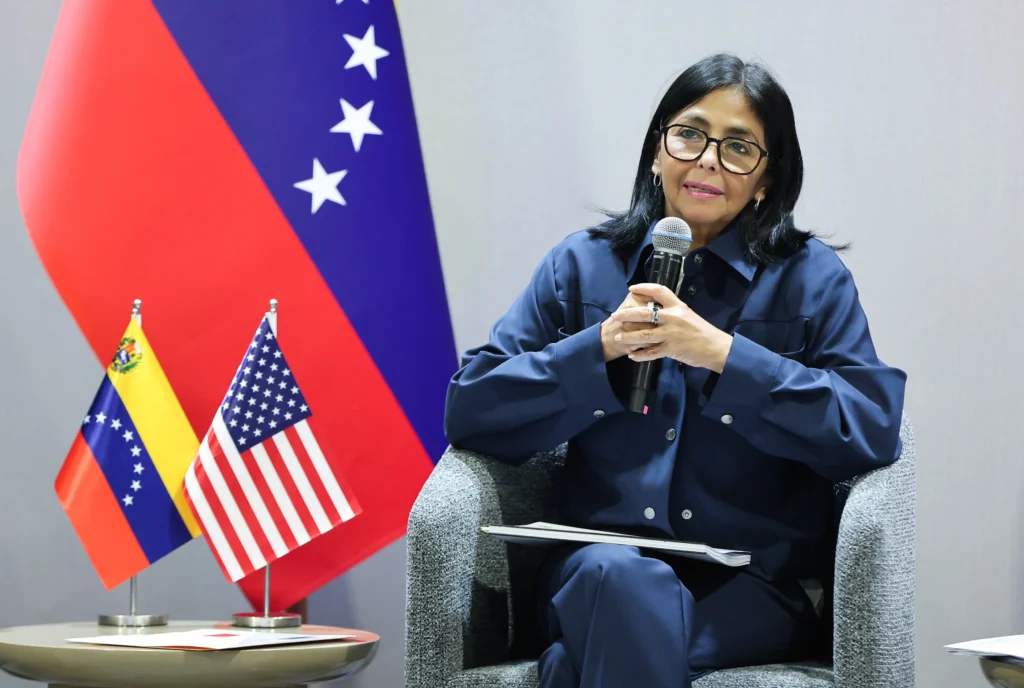
Venezuela’s Acting President, Delcy Rodríguez, inspected progress Friday on a package of 17 oil agreements signed with the United States, as the state of Zulia reported record output of 115,000 barrels per day.
The inspection covered joint projects aimed at extracting crude from national reserves. Eight of the 17 agreements involve the development of so-called green fields, new areas set aside for exploration and exploitation.
“We want to show the country the progress, to make clear that we do not leave things unfinished, that we go further: to action and to production. Once again, Zulia state broke its production record, reaching 115,000 barrels per day today,” Acting President Delcy Rodriguez said.
Rodriguez added that projections call for closing December at 120,000 barrels. The Acting President framed the tour as proof that the partnership has moved beyond paperwork into concrete output.
The cooperation framework was signed in August through North American Blue Energy Partners (NABEP). The 17 strategic agreements target the extraction of 65 million barrels of crude from Venezuela’s reserves.
On maritime infrastructure and logistics, Rodriguez said activity in Zulia will jump from 100 to 900 vessels, an increase of 800% in mobilized capacity. The figure signals a major expansion of port and transport operations tied to the oil sector.
The Acting President also outlined a plan for the progressive creation of jobs driven by industrial activity. Employment will begin in the food sector, continue in ironworks and industrial areas, and later extend to public accounts with the goal of raising working-class incomes.
Rodríguez said the central objective of the alliance is to develop the hydrocarbon industry and consolidate the country’s sovereign position. She stressed that Venezuela seeks to affirm itself as the nation with the largest oil reserves on the planet and to rank among the world’s leading producers and exporters. “We want to show the country the progress of these agreements,” she said.
Acting President Delcy Rodriguez insisted that rising production must translate directly into the welfare of the population. Following this, she pointed to concrete areas where the gains should appear: “In the daily life of Venezuelan men and women: in pay for workers, in health, public hospitals, schools, food, roads, water and public services. That is where Venezuela’s development goes,” she said.
The comments link oil revenue to social spending at a time when the government has promised greater transparency over hydrocarbon and mining income. The Acting President’s emphasis on hospitals, schools and food echoes longstanding official messaging that resource wealth should fund public services.
The Zulia figures mark a significant benchmark for the country’s oil industry, which has sought to recover output after years of decline. The jump from 100 to 900 vessels suggests broader commercial activity around the crude operations, beyond the wells themselves.
Eight green-field projects form part of the package, indicating that the partnership extends into undeveloped territory rather than relying solely on existing infrastructure. Rodríguez described the agreements as a path toward consolidating Venezuela’s position in global energy markets.
The inspection tour took place as the government pushes to showcase tangible results from the August accords. The Acting President’s visit to the field operations was intended to demonstrate that the agreements are generating activity on the ground, not only on paper.
The production target of 120,000 barrels by December would extend the record reported Friday. If achieved, it would reinforce the government’s narrative of recovery built around the US partnership and the state of Zulia’s role as the engine of national output.
Rodríguez closed her remarks by linking the oil gains to broader national development, arguing that the industry’s expansion must reach Venezuelans through wages and public services rather than remaining confined to export statistics.
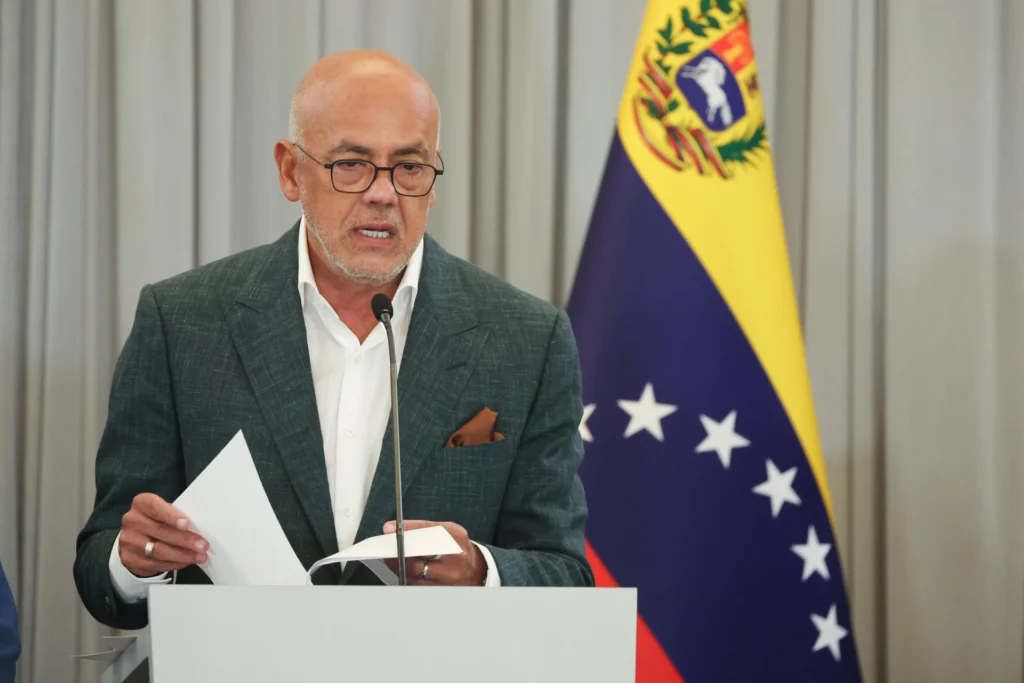
Venezuela’s National Assembly President reaffirmed sovereign control over the country’s oil revenues and reported 71 active energy agreements alongside 44 contracts under negotiation, framing the figures as evidence of a sector revival after years of financial restrictions.
The statements came amid what officials called a strategic reconfiguration of the Venezuelan hydrocarbon industry. After years of intense global financial restrictions, the gradual operational reactivation of agreements between state-owned oil company Petroleos de Venezuela (PDVSA) and international firms aims to restore a steady flow of foreign currency into the national treasury.
“No foreign agency or international financial entity administers or safeguards the public funds that enter the country from hydrocarbon sales,” National Assembly President Jorge Rodriguez said.
Rodríguez detailed that the money enters the public treasury under the supervision of authorized national banks, and he ruled out any external trust or any management of accounts by third parties outside the country’s institutions. In this sense, he called autonomy over foreign currency “a non-negotiable principle” for the country’s macroeconomic stability.
71 agreements are currently in force, while another 44 contracts are being negotiated. For the government, that volume confirms an operational momentum geared toward diversifying investment across the country’s main extraction fields.
The National Assembly President presented this dynamism as the result of a deliberate push to reopen the sector to international capital without surrendering control. Over the past several years, sweeping financial measures limited Venezuela’s ability to sell crude, collect payments and maintain production infrastructure. The current wave of deals represents a step-by-step return to commercial activity.
#EnVideo📹 | Coordinador del diálogo por el Gobierno Nacional, Jorge Rodríguez, aseveró que Venezuela mantiene el control sobre los recursos financieros obtenidos a través de la comercialización de petróleo hacia distintos países del mundo. pic.twitter.com/MUoEuwKXQI
— Ministerio de Comunicación e Información (@mippci_ven) October 22, 2026
Text reads: “Coordinator of the dialogue by the National Government, Jorge Rodríguez, asserted that Venezuela retains control over financial resources obtained through the marketing of oil to different countries in the world.”
Each reactivated agreement carries a single objective, officials indicated, the capture of hard currency for the public coffers. That revenue is meant to fund the productive apparatus and national infrastructure rather than remain subject to outside oversight.
By spreading investment across the country’s principal extraction zones, the government seeks to reduce dependence on any single field or partner.
Sovereign Control Defended
Reaffirming sovereign control over monetary flows stands as a central pillar of the government’s message. The leadership projected institutional stability at a moment when Washington continues to review and adjust the licenses it grants for oil operations.
Rodríguez also denounced continuous pressure and unilateral coercive measures against the country’s financial system by foreign powers. He said that, despite what he described as an economic siege, the government has consolidated alternative mechanisms to receive payments directly for oil-product exports.
Against that backdrop, the government is working to shield energy agreements legally, dismiss any suggestion of foreign tutelage and guarantee direct financing for public budgets.
Official strategy insists that autonomous management of oil income is an indispensable guarantee for preserving fiscal balance, defending the national currency and sustaining social development programs.
For the Bolivarian government, legal protection of the energy agreements goes hand in hand with financing priorities. The revenue is meant to flow directly toward the productive apparatus and public infrastructure, a framework that Rodriguez described as essential to institutional stability.
Apple’s Mac Mini M4 is one of the best mini computers you can buy, and it’s $150 off. While it’s a good deal on a new, older-generation model, it’s more expensive than it was at launch.
The Fellow Aiden Precision Coffee Maker is a smart, high-end machine that offers pour-over quality. You can get it refurbished from the brand for 25 percent off.
 Login