Lizards have been shedding tails to stay safe for 99 million years, Israeli research finds


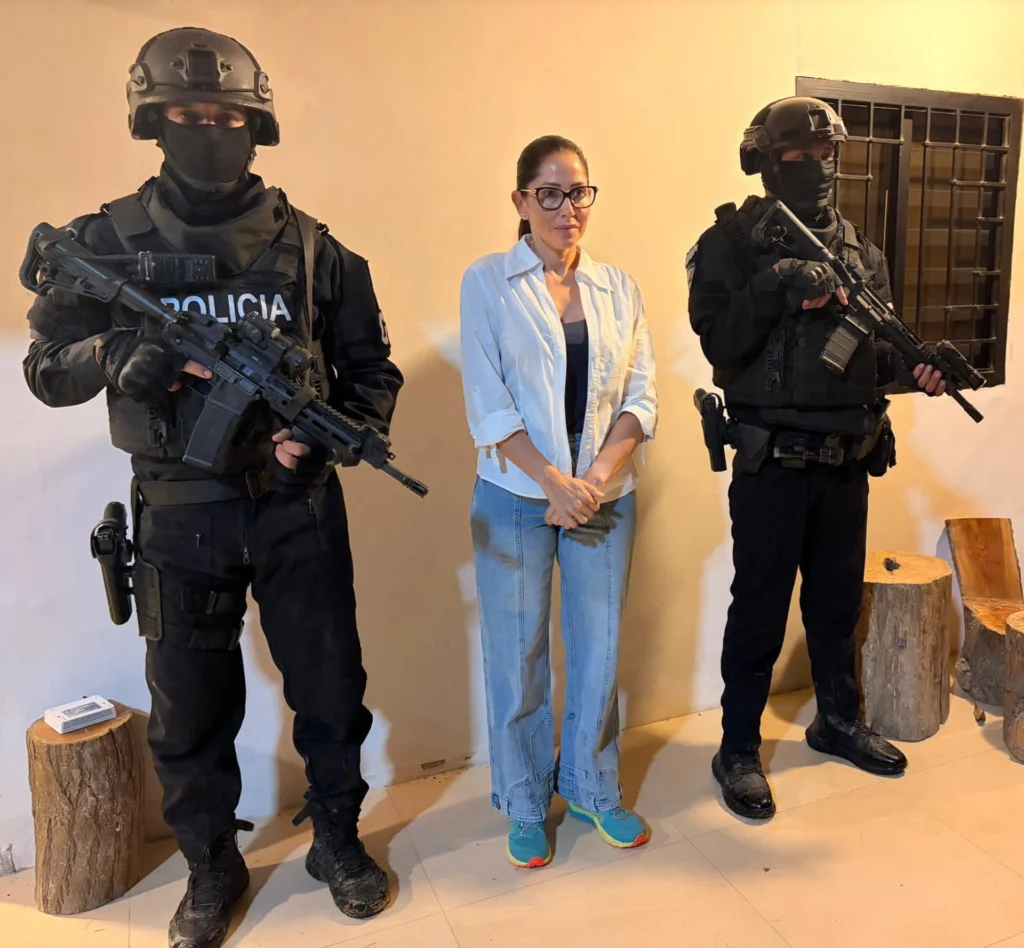
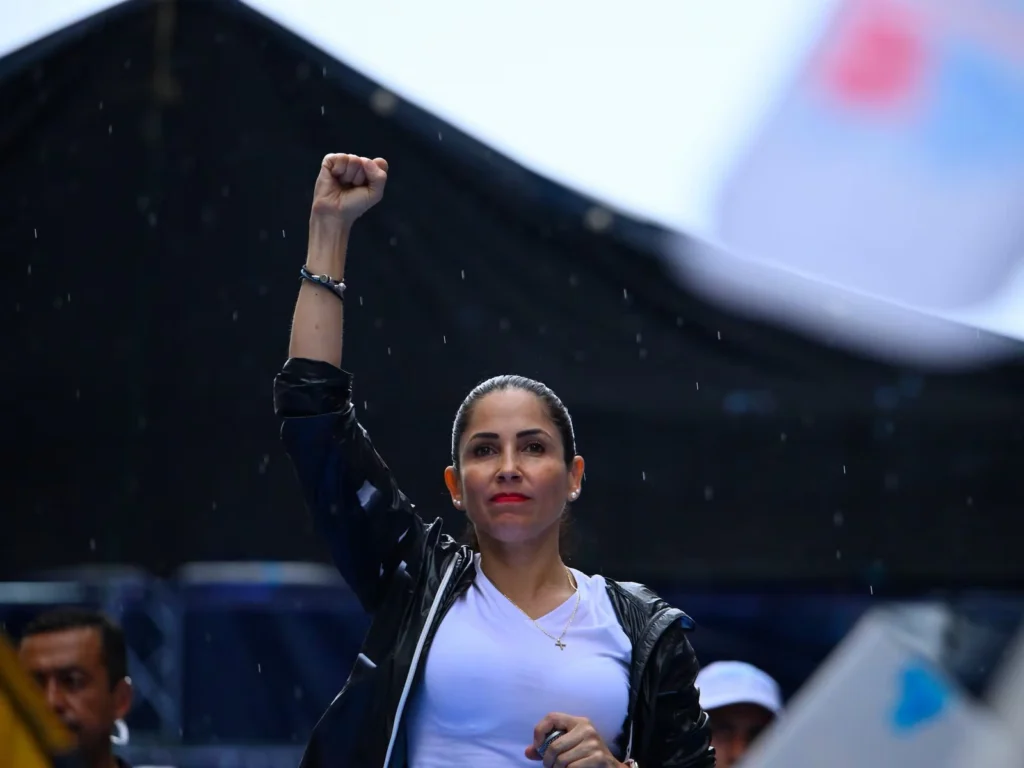
Ecuadorian opposition leader and former presidential candidate Luisa González was transferred to a prison in Riobamba on Friday night after a judge ordered her pretrial detention over alleged money laundering in the so-called Labyrinth case.
RELATED: Ecuador Prosecutors Seek Preventive Detention for Leftist Leader Luisa Gonzalez
A convoy of National Police and Armed Forces personnel arrived outside the detention center in Riobamba, in Chimborazo province, shortly after 9 p.m. local time on Oct. 23. Prison authorities had not officially confirmed González’s admission to the women’s facility at the time of the report.
The transfer began shortly after 4 p.m. from the Modelo barracks in Guayaquil, where González had been taken following her arrest Thursday in Canuto, Manabí province. Police transported her to an air base before she boarded a flight that landed at Latacunga airport in Cotopaxi province at 7:30 p.m.
Although initial reports indicated that González would be held at a prison in Cotopaxi or Quito, police ultimately arranged for her to travel by road to Riobamba in a heavily guarded convoy accompanied by patrol cars and tactical units.
Text Reads: 🛬 Luisa González, former presidential candidate for the Citizen Revolution (Revolución Ciudadana) movement, arrived at Cotopaxi Airport under the escort of military and police personnel, hours after a judge ordered her pretrial detention.
⚖️ This measure relates to alleged money laundering, as part of the “Laberinto” (Labyrinth) case. González was taken into custody early Thursday morning following a raid on her home in Chone, Manabí.
🏛️ The State Attorney General’s Office maintained its request for pretrial detention, which also applies to former assembly member Santiago Díaz and Wendy Onofre, secretary of the RETO movement.
📌 These judicial actions are part of a broader agenda of political persecution being carried out by the administration of Daniel Noboa against opposition figures and leaders.
The use of air transport for part of the journey was intended to reduce public-order risks amid tensions at several prisons across Ecuador. Interior Minister John Reimberg directly linked the unrest to reactions to González’s arrest.
González, the former leader of the Citizen Revolution movement, has rejected the allegations against her. The movement and her associates denounced the pretrial detention order as an act of lawfare and political persecution.
In a statement posted on social media, González reaffirmed her innocence and declared that she would remain in Ecuador to face the judicial proceedings.
Supporters gathered outside the Riobamba prison to hold a vigil, carrying flags and banners behind a security barrier erected by uniformed personnel. Patricia Núñez, a member of the National Assembly representing Chimborazo province, joined the gathering.
The court also ordered pretrial detention for former lawmaker Santiago D. and Wendy Onofre, secretary of the RETO movement, in connection with the same case. Onofre voluntarily surrendered in Guayas province and was admitted shortly after 8 p.m. to the Pichincha No. 3 detention center in Chillogallo, southern Quito.
Another defendant, Estefanía M., was granted alternative measures for the 90-day investigation period, including regular reporting to authorities, a ban on leaving the country and electronic monitoring.

The months-long protests in Albania have reached a new escalation, with university students strengthening their mobilization since mid-October.
Concerns about study expenses, poor employment prospects, and low wages have added impetus to a movement that has demanded the resignation of Prime Minister Edi Rama and urgent action on the widespread corruption weighing on the country.
“Students have brought the Flamingo Revolution into a new phase,” wrote the Solidarity Albania platform. “In a capital where living costs devour 170% of the median net wage, public universities are starved to force youth into economic exile.”
“When a generation rises for its basic rights, the only legitimate response is total solidarity,” they added.
“Tirana’s struggle stands shoulder-to-shoulder with student strikes in France and India, and with liberation struggles in Palestine, Sudan, and the Congo, and elsewhere.”
Mass mobilizations against elite tourism projects, the devastation of Albania’s natural resources, and corruption have been ongoing since May this year – evolving in what was dubbed the Flamingo Revolution.
For the past months, demonstrations have continued on a daily basis, Enriko Peçuli from the progressive party Lëvizja Bashkë told BreakThrough News. “Some days you saw more people on the streets, sometimes a bit less, but gatherings continued basically every night: the energy was there.”
On October 13, when the latest upsurge began, “you could sense in the city that something was going to happen,” Peçuli adds. When students assembled in large numbers near the Ministry of Education and part of the building caught fire, police violence erupted, Peçuli says – and has continued for ten days in a row.
The authorities’ violent response has drawn comparisons to the institutional response to youth mobilizations in France, yet it represents a new element in local mobilizations. During other significant demonstrations, including the student protests in 2018, it was not as pronounced, Peçuli says – possibly indicating Rama’s worsening position.
Ever since the beginning of the protests, the prime minister has tried to deflect responsibility and avoided the protesters’ core demand: his resignation.
When the Flamingo Revolution started, Peçuli describes, Rama tried to blame it on foreign powers. He has named the governments of Greece, Iran, and Russia as culprits for the mobilizations. “It’s only gotten worse with time,” the activist points out. “He’s becoming more and more arrogant, he uses a language of violence.”
After the escalation of the past days, Rama attempted – in a way – to establish dialogue with the students. This was resolutely rejected, as Peçuli notes that protesters will not agree to anything less than the government’s resignation.
“It’s spontaneous rage pushing people into the streets,” he said, nodding to the events’ decentralized character that some have credited for at least part of the demonstrations’ longevity.
“We don’t have trade unions or big student movements [like the ones in France], society is generally not organized in the same way,” Peçuli points out – but there’s no sign of backing down.
“Rama might have offered dialogue, but it’s difficult to take that seriously after the past 10 days. After you’ve sanctioned breaking people’s heads, your right to call for dialogue is a bit limited.”
The protesters cannot be dismissed as members of some particular social segment, being instead a cross-party movement from all sectors of society.
Join us on Telegram
, X
, and VK
.
Contact us: info@strategic-culture.su
Albania has returned to the news in recent days, with protests that eventually culminated in the destruction of the Ministry of Education, but the process that led to this chaos began some months ago because of the negotiations surrounding the construction of a gigantic luxury resort in the country, in a megaproject led by Affinity Partners, owned by Jared Kushner, the Zionist agent who is Donald Trump’s son-in-law and who occasionally acts as his ad hoc diplomat. Alongside Kushner in this project, there was also capital from three Arab petro-monarchies and local investors.
The first point of dissent, the spark, so to speak, of this fire, was the fact that the project would be built in an environmental protection area, in the marshy wetland zone of Albania, which is considered a natural paradise where flamingos, pelicans and other animals nest, some of them endangered. Nevertheless, Kushner obtained authorization from Edi Rama’s government to go ahead with the project, as well as the classification of strategic investor, which allows him to bypass local regulations.
The project itself is expected to reach the sum of 4.7 billion dollars and would be implemented on the island of Sazan (once a military base), on the island of Vjosa-Narta and on the island of Zvernec, which also have defensive characteristics. Kushner supposedly had the “idea” and “discovered” Sazan while traveling on the yacht of his friend Nathan Rothschild, a context in which he also met the Albanian prime minister.
Kushner’s other partners at Affinity Partners are Luis Videgaray, former Minister of Finance of Mexico, and Elad Gil, an Israeli investor, and the project involves the construction of hotels, marinas and private villas, in an effort that seems to point toward a “Dubai-ization” of Albania.
Since June, therefore, when these shady deals were revealed, Albanian citizens began going to the streets to protest, with slogans (“Albania is not for sale”) against Washington and Tel Aviv and calling for Kushner to be made persona non grata. The protests had already been following protests organized in February and March over corruption accusations against Edi Rama, as well as the fact that the Albanian prime minister had begun a campaign to encourage Israelis to move to Albania.
What has been most worrying for the Albanian government is the fact that these protesters cannot be dismissed as members of some particular social segment, being instead a cross-party movement from all sectors of society. And the protests continued, intermittently, until now in October, which points to a permanent dissatisfaction that is difficult to stifle.
The most recent protests are more focused on youth and on new corruption scandals, problems in education and the government’s attempts to “force” entry into the European Union, but the issue of Jared Kushner’s luxury resort remains on the agenda.
It is possible to analyze the case from the conspiracy-minded angle of “Epstein Island,” especially considering the Rothschild family’s ties to Epstein and to Kushner, but perhaps a more interesting angle points to the geopolitics of the Mediterranean and the power project of the State of Israel.
Israel has been expanding its activities in this area and expanding its presence. Israeli investors, for example, have been mass-acquiring properties in Cyprus and in the Greek port city of Kalamata. When we add up these ventures targeting properties in Cyprus, Greece and now Albania, we clearly perceive that there is an eastern Mediterranean focus in Israeli parastatal business activities. It is striking that these always involve islands and ports, which points specifically to the construction of a thalassocratic strategy on the part of the State of Israel.
Also striking is a specific theme of Albanian political-social reality, which is the fact that it has become common practice for Albanian investors, after being legitimized as strategic investors to secure approval for development projects, to resell their shareholdings for negligible amounts to other, more obscure actors. In many cases, we are talking here about “straw man” schemes used by the Albanian mafia. That would not naturally be the case for Kushner or the Arab petro-monarchies, but the suspicion raised affects the Albanian partners in this investment.
Perhaps that is why the violent repression of the protests has drawn less attention than elsewhere. It appears to be the authentic eruption of popular dissatisfaction in a country that for decades has been victimized by corrupt leaders, highly dangerous mafias and brutal terrorists.

Former President Rafael Correa (2007–2017) posted on X in the early hours of the morning in Ecuador that Luisa González, a two-time presidential candidate (2023 and 2025) for the Citizen Revolution (RC) party, had been arrested. “They arrested Luisa González. ENOUGH IS ENOUGH!” wrote the former progressive leader.
The National Police confirmed this to the media outlet PRIMICIAS. González was reportedly arrested on suspicion of money laundering. The National Prosecutor’s Office also confirmed this, reporting that the arrest is related to alleged irregularities in political financing and campaign spending in 2023.
González, who advanced to the runoff in both elections and lost both times to the current president, right-wing candidate Daniel Noboa, has repeatedly claimed that the legal proceedings against her are part of a broader campaign of political persecution targeting anyone who criticizes the current government.
A few hours after his arrest, González wrote on X: “We have reached an untenable situation. Noboa’s dictatorship has not only led our beloved country into economic disaster, with rampant violence and corruption, but attacks on civil liberties and political persecution are a constant reality. The dictatorship’s political prisoners are being mistreated and tortured.”
She added: “Today it is my turn to be arrested on an absurd charge. I will respond with the dignity of Ecuadorians who owe nothing and who are committed to securing Ecuador’s freedom and a better future for the country.”
In January 2026, the prosecutor’s office and the police raided Luisa González’s home as part of the case known as “Caja Chica,” which was investigating an alleged money laundering offense. The prosecutor’s office claimed there was evidence of money flowing in from Venezuela to fund González’s 2023 election campaign.
In August, González said she had been notified of a preliminary investigation into the alleged crime of demanding acts that entail receiving undue benefits.
In September, González was again notified by the Prosecutor’s Office of her inclusion in a preliminary investigation into an alleged crime of failure to report a crime due to her profession, position, or occupation – that is, for allegedly failing to report a crime in the course of her professional duties.
In all three cases, the former presidential candidate and leader of the largest opposition party has denounced these actions as political persecution carried out through the judicial system: “The harassment and persecution don’t stop, but neither does my hope for a better country. Giving up is not an option.”
In addition, González, who intended to run for the office of prefect of Manabí in the upcoming regional elections in November, was unable to register her candidacy due to a refusal by the electoral oversight bodies, citing alleged mismanagement of administrative matters.
The RC once again denounced this obstacle as part of a broader campaign of political persecution aimed at preventing opposition candidates who might win their positions in the elections from participating, whether through administrative sanctions or criminal proceedings.
Thus, according to these allegations, the government has managed to co-opt several oversight institutions with the power to impose sanctions—such as the prosecutor’s office and the electoral courts – and is using them to persecute and prevent the participation of opposition politicians who have a chance of challenging the executive branch for power.
For his part, Ecuadorian President Daniel Noboa has repeatedly denied that his administration has been behind the accusations, sanctions, and arrests targeting his opponents, and he asserted that these are proceedings carried out by institutions independent of his government. “We do not target individuals; we have no interest in targeting individuals – we pursue criminals. There is no political persecution of any kind here,” the Ecuadorian president said in early 2026.
Despite these statements, the opposition remains steadfast in its accusations against the Ecuadorian president, especially following cases in which mayors of the country’s largest cities – Guayaquil, Cuenca, and Quito, the capital – have faced imprisonment, criminal proceedings, and ongoing judicial investigations.
The most notorious case in Ecuador involves the mayor of Guayaquil (the country’s most populous city), opposition figure Aquiles Álvarez, who was arrested and imprisoned in a maximum-security prison several months ago on charges of illegal hydrocarbon trafficking and organized crime.
Similarly, in June 2026, the then-mayor of Cuenca, Cristian Zamora (also a member of the opposition) was suspended by the Contentious-Electoral Court over an alleged case of political violence. For its part, the prosecutor’s office requested that charges be filed against him in September of that same year for an alleged crime of illicit enrichment.
And while there are other high-profile cases in Ecuador, the RC has stated that there is a concerted effort to prevent the current mayor of Quito, Pabel Muñoz (who is seeking reelection) from participating in the electoral process at all costs. Muñoz has so far managed to evade the sanctions and constant accusations against him, but on October 21, the prosecutor’s office and the police raided the mayor’s offices as part of an investigation into an alleged embezzlement offense.
This has led several politicians to believe that the raid is a new ploy to prevent Muñoz—who leads in the polls – from participating in the elections and, even more so, to imprison him, as was done with his party colleague, Aquiles Álvarez. This is what the Prefect of Pichincha, Paola Pabón, said: “People’s lives do not improve by imprisoning opponents; citizens’ circumstances change for the better when there is a political class committed to the common good.”
In her first written message since the arrest, Luisa González rejected the accusations against her and described the country’s institutional situation as “unsustainable.”
“Today it is my turn to be detained over an absurd accusation,” she wrote on X. “I will respond with the dignity of the Ecuadorian men and women who owe nothing and who are committed to achieving freedom for Ecuador and a better future for the country,” she added.
RELATED: Former Ecuadorian President Correa Denounces the Arrest of Luisa Gonzalez
The leading figure of the Citizen’s Revolution movement also warned of mistreatment and torture inflicted on political prisoners held by the current far-right government of Daniel Noboa.
Faced with what she called a repressive escalation and a socioeconomic decline marked by violence and state corruption, González issued a call for unity to social organizations and leftist movements. “To my partners of the Citizen’s Revolution and all progressive forces, I say: it is time for unity, unity and unity to achieve freedom and democracy in the country,” she said.
A mi patria querida 💛💙❤️ pic.twitter.com/fJrIXAvG0B
— Luisa González (@LuisaGonzalezEc) October 22, 2026
She thanked communities across the country for their support and insisted that the people remain determined to overcome government censorship. González closed her statement by asserting that popular silence would eventually break the authoritarian siege and restore sovereignty and full democracy to Ecuador.
Luisa González was detained in the early hours of Thursday in the Canuto parish of Chone canton, Manabí province. National Police officers and state prosecutors carried out the operation under the name “Labyrinth case,” an inquiry authorities describe as targeting alleged electoral financing during the 2023 campaign.
The police deployment included simultaneous raids in Manabí and Pichincha provinces and ended with three people detained for the purpose of formal charges.
After the procedure, relatives and allies of González denounced uncertainty over her whereabouts. Officials have not clarified whether she remains in Manabí or is being transferred to Quito for a court hearing, a situation her supporters describe as a grave violation of due process guarantees.
The arrest is part of a broader judicial offensive against the Citizen’s Revolution movement, which is currently suspended for nine months following rulings by the Electoral Contentious Tribunal that critics say were designed to block its participation in sectional elections.
That institutional push previously prevented González from registering as a candidate for the Manabí prefecture. Quito mayor Pabel Muñoz, meanwhile, faced raids on his offices in the middle of his reelection campaign.
Ecuadorian Former President Rafael Correa denounced the detention of González in a separate statement, adding his voice to the growing criticism of the operation. The predawn arrest now places one of the government’s most prominent opponents at the center of a legal battle that her movement frames as political persecution rather than a legitimate investigation.
On Thursday, Former Ecuadorian President Rafael Correa denounced the arrest of Luisa Gonzalez, a former presidential candidate and one of the leading figures in the Citizen Revolution movement.
RELATED: Ecuadorian Youth Call Protest Over Healthcare and Insecurity
On social media, Correa criticized Gonzalez’s arrest and expressed his disapproval of the measure, accompanying his message with slogans of support for the leader and her political organization.
Andean Parliamentarian Virgilio Hernandez joined in the denunciation, asserting that Gonzalez has been the target of political persecution and expressing concern about the lack of official information regarding her whereabouts following her arrest.
Meanwhile, Ecuadorian media cited police sources who preliminarily “confirmed” the former candidate’s arrest, although authorities had not initially provided complete details about the procedure.
🔴 Gabriela Rivadeneira denuncia el secuestro de Luisa González y exige su liberación inmediata
— Elena Rodríguez Yánez (@ElenaDeQuito) October 22, 2026
La presidenta del movimiento Revolución Ciudadana, Gabriela Rivadeneira, denunció que la excandidata presidencial Luisa González ha sido secuestrada y exigió su inmediata liberación,… pic.twitter.com/77XQVmE70E
The text reads, “Gabriela Rivadeneira, president of the Citizen Revolution, denounced the kidnapping of Luisa Gonzalez and demanded her immediate release, following her arrest in the early hours of Thursday, October 22, in the Ecuadorian province of Manabi.”
The case comes weeks after the Electoral Disputes Tribunal upheld the disqualification that prevented Gonzalez from running for Prefect of Manabi, a decision that was challenged by her supporters and political allies.
Days before her arrest, the leader had publicly denounced international pressure and interference in Latin American political affairs, and warned of what she considers a strategy of judicial persecution against progressive sectors in the region.
The leadership of the Citizen Revolution movement demanded immediate information on Gonzalez’s condition and whereabouts, while also calling for guarantees that her rights will be respected during the ongoing legal proceedings.
#FromTheSouth News Bits | Ecuador: Delegations from all provinces participated in the first day of the National Convention of the Citizen Revolution Movement, which was held in Manta, Manabi province. pic.twitter.com/1bGT3DeLKo
— teleSUR English (@telesurenglish) January 21, 2026
teleSUR: JP
Source: teleSUR
Una docena de Estados ya han vivido –a veces con éxito– manifestaciones de la “generación Z”, y las que acaban de producirse en Francia abren la puerta a que la población sea manipulada. Los actos destrucción programados que se vieron en Francia el 17 de octubre tienen el aspecto de un montaje con vista a la proclamación de una especie de estado de emergencia que permita suspender la próxima elección presidencial, como viene sucediendo en Ucrania desde hace 2 años.
Thierry Meyssan
Únete a nosotros en Telegram
, X
y VK
.
Escríbenos: info@strategic-culture.su
En este artículo analizaré una docena de movimientos de protesta, más o menos organizados, de la llamada “generación Z”, o sea de la población de entre 14 y 29 años. Muchas de esas protestas han tenido lugar en otros países, pero la generación Z siempre ha denunciado la corrupción, el nepotismo y los abusos de poder, por encima de cualquier otra injusticia.
En todo momento tendré en mente el hecho que, aunque no se puede provocar la colera de una multitud, sí es muy fácil desviarla de su objetivo inicial. Esas manifestaciones siempre comienzan invocando un interés general pero pueden confundir sus objetivos una vez en marcha.
Una característica inicial de esos movimientos es que todos han estallado después de escándalos de corrupción y de represión. Los manifestantes no han enarbolado una ideología política en particular pero todos han expresado, ante todo, su exigencia de justicia.
• Mongolia, 11 de enero de 2025: Jóvenes se congregan en Ulan Bator para denunciar la vida de lujos de la familia del primer ministro Luvsannamsrai Oyun-Erdene. Rápidamente, el movimiento de protesta denuncia también la corrupción generalizada de la clase política y exige la renuncia de 33 diputados. El primer ministro dimite el 3 de junio.
• Indonesia, febrero de 2025: La isla Java es teatro de manifestaciones contra la corrupción. Un sindicato estudiantil se suma a las manifestaciones cuando el gobierno implica las universidades en varios proyectos de minería a cambio de comidas gratis para los estudiantes. Cesan las manifestaciones pero el descontento se extiende por todo el país mientras que el gobierno otorga privilegios a los militares y apoya públicamente el “traslado” de la población de la franja de Gaza, anunciando la posibilidad de que sea enviada al «Estado musulmán más grande del mundo».
Las manifestaciones se reanudan en agosto de 2025, respondiendo a un llamado de los camioneros y en protesta contra importantes alzas de los impuestos.
Es entonces cuando aparece en las manifestaciones la bandera de la “Banda Pirata del Sombrero de Paja”, que se convierte en símbolo de la lucha contra la corrupción. Portar esa bandera, que proviene originalmente de la serie manga One Piece, se convierte en motivo suficiente para ser enviado a los tribunales bajo la acusación de traición.
Finalmente, el presidente Prabowo Subianto reconoce que los jóvenes tienen derecho a manifestar su descontento y hace levantar las sanciones y la prohibición de portar la bandera pirata.
• Togo, 26 de junio de 2025: Estallan protestas contra el arresto del rapero Aamron, quien es además es torturado por la policía. Las protestas toman rápidamente un giro político ante el hecho que los policías habían filmado las torturas infligidas a Aamron, en momentos en que el presidente Faure Gnassingbé había iniciado un cambio de régimen con reformas a la Constitución. El movimiento dura hasta diciembre y acaba disolviéndose ante la represión, particularmente violenta, que deja saldo de muertos y heridos.
• Nepal, del 8 al 14 de septiembre de 2025: Se desarrollan en Katmandú grandes manifestaciones de jóvenes contra los hijos y las familias de los responsables políticos que exhiben sus lujos y privilegios en las redes sociales. El poder bloquea las redes sociales, pero esa medida exacerba las protestas. El primer ministro Khadga Prasad Sharma Oli dimite.
• Timor Oriental, del 15 al 17 de septiembre: Una organización estudiantil realiza en Dili, la capital, una serie de protestas contra las ventajas económicas de los miembros del parlamento. En definitiva, estos últimos acaban renunciando a los automóviles de lujo que estaban a punto de comprar.
• Filipinas, 21 de septiembre de 2025: Unos 100 000 jóvenes desfilan por las calles de Manila protestando contra la corrupción de los dos clanes que ostentan el poder en el país, la familia Marcos y la familia Duterte. El 70% de los fondos destinados a la lucha contra las inundaciones parece haber “desaparecido” de las cajas del Estado.
• Madagascar, septiembre de 2025: Un discurso desafortunado del presidente Andry Rajoelina sobre un progreso económico que la población no percibe en la vida diaria da lugar al inicio de protestas contra la repartición desigual del crecimiento económico. Las manifestaciones se generalizan y desembocan en un golpe de Estado militar y la huida del presidente Rajoelina.
• Marruecos, 27 de septiembre de 2025: Unos 200 000 jóvenes se lanzan a las calles en las principales ciudades del país para protestar contra la corrupción y el nepotismo. El movimiento de protesta comienza en momentos en que el reino dedica sumas importantes a la preparación de la Copa del Mundo de futbol… mientras que los hospitales se caen a pedazos. La represión pone fin al movimiento.
• Paraguay, 28 de septiembre de 2025: Se inician manifestaciones en las que los jóvenes protestan contra la corrupción y rechazan un intento de modificar la Constitución que daría al ex presidente Horacio Cartes la posibilidad de regresar al poder. La población amerindia se incorpora a las protestas al enterarse de que la sede del Instituto Paraguayo del Indígena (INDI) se traslada a una base militar. El movimiento de protesta se extingue el 3 de octubre, cuando el presidente Santiago Peña anula el traslado de la sede del INDI.
• México, 15 de noviembre de 2025: Después del asesinato de un alcalde a manos de un cártel de la droga, decenas de miles de jóvenes salen a las calles para protestar contra la inseguridad y la corrupción. Las manifestaciones cesan a mediados de diciembre, sin adopción de nuevas medidas.
• Bulgaria, 26 de noviembre de 2025: Se registran protestas masivas de jóvenes contra la corrupción y contra un proyecto de presupuesto que transfiere el financiamiento de las jubilaciones y de la seguridad social en las empresas al sistema fiscal. Las protestas cesan al cabo de un mes, después de la retirada del proyecto de reforma y la dimisión del gobierno Zheliazkov.
• Japón, 3 de mayo de 2025: Alrededor de 50 000 jóvenes inician protestas contra la remilitarización del país. Como en los conciertos de K-Pop y durante las protestas contra la proclamación de la ley marcial en Corea del Sur, los manifestantes esgrimen objetos lumínicos. Las protestas se extienden rápidamente por todo el país, pero el movimiento se disuelve por agotamiento.
• India, 15 de mayo: El presidente del Tribunal Supremo compara a los jóvenes desempleados con cucarachas. Un estudiante indio de comunicación de la universidad de Boston crea entonces, en la India, el “Partido de las Cucarachas” y organiza manifestaciones hasta forzar la renuncia del ministro de Educación. El Partido de las Cucarachas reaparece en octubre con un movimiento de protesta contra la revisión de las listas de electores, de las que se están viendo excluidas las personas más pobres. El movimiento se mantiene en este momento [1].
La manifestación del 17 de noviembre en Francia
En Francia, a partir del 18 de septiembre pasado comienzan a verse manifestaciones de los alumnos de la enseñanza media. Comienzan por Creteil, una comuna de los alrededores de París, rápidamente se extienden por la capital y después por todo el país. Pronto se unen a ellas los estudiantes universitarios. Los sindicatos del sector público no tardan en sumarse a las protestas.
Las primeras manifestaciones son pacíficas –los adolescentes denuncian inicialmente las malas condiciones de sus centros de estudio y la escasez de profesores– pero los desórdenes comienzan cuando algunos dirigentes de izquierda legitiman la violencia. Elementos violentos no vinculados a los manifestantes, pero bien organizados, se hacen presentes en las protestas causando daños materiales en los centros de estudios de los manifestantes. Mientras tanto, los policías en el terreno se interrogan sobre sus superiores al darse cuenta de que están recibiendo órdenes contradictorias que les impiden proteger a los verdaderos manifestantes y que los ponen a ellos en peligro ante los grupos violentos.
Las manifestaciones adquieren una envergadura nacional el 17 de octubre. Los “chalecos amarillos”, el movimiento informal surgido en 2018-2019 contra el alza de precios de los combustibles y en defensa de la Francia que vive en los barrios periféricos, en los suburbios de las grandes ciudades, se unen al movimiento, retomando su lucha contra el alza del costo de la vida.
La seguridad territorial de Francia, que habitualmente se caracteriza por la gran precisión de sus previsiones, esta vez subestima la cantidad de potenciales manifestantes situándola en unos 150 000 –en realidad, la cifra de personas que finalmente salió a las calles de Francia el 17 de octubre se sitúa entre 550 000 y 800 000. La dirección de los cuerpos policiales se asegura de que la cantidad de agentes en las calles corresponda al estimado extrañamente conservador de la inteligencia territorial.
Mientras tanto, los black blocs europeos envían a Francia miles de individuos, principalmente desde Italia, Suiza, Alemania y Bélgica.
El 17 de octubre las acciones violentas comienzan antes del mediodía, o sea antes de que se abra el cortejo de manifestantes aprobado por las autoridades, y se prolongan durante la madrugada del día 18. Se reportan más de 600 policías y gendarmes heridos –pero sólo 26 personas serán enviadas a los tribunales–, 1 500 establecimientos comerciales saqueados y destruidos y varios edificios históricos incendiados. Los daños estimados se elevant a cientos de millones de euros.
Análisis
En Francia, las protestas de los alumnos de la enseñanza media no fueron motivadas por un hecho en particular. Se trata de un malestar generalizado exacerbado por la sensación de abandono de toda una generación a la que se le explica que debe conformarse con estudiar en instalaciones mal preparadas, en las que se sufre por el calor o por el frio, según la época del año; que nadie enviará profesores sustitutos si sus profesores se enferman; que, a fin de cuentas nunca tendrá un empleo porque para los patrones la inteligencia artificial es más rentable… pero que, a pesar de todo, tendrá pagar la deuda que sus padres han acumulado y hasta los intereses de esa deuda.
Inicialmente, un partido político de izquierda trató de captar a los jóvenes manifestantes viniendo hasta las puertas de sus centros de enseñanza. Pero todo cambió el 17 de octubre.
Es evidente que ciertos responsables, en el seno de los mandos policiales, hicieron todo lo posible para que la gran movilización del 17 de octubre acabará cayendo en la violencia, a pesar de los manifestantes y de los policías. El 14 de octubre, un sindicato de los policías, Alliance, presentó una denuncia contra X por poner en peligro las vidas de otros. Ese sindicato está recogiendo testimonios por todo el país para identificar a los oficiales que propiciaron el caos.
Como lo hacen esos policías, tenemos que preguntarnos qué objetivo perseguían los instigadores ocultos de los actos de violencia. Es probable que se esté preparando una operación encubierta para perturbar la próxima elección presidencial, prevista para el 18 de abril y el 2 de mayo de 2027.
Es posible que esos instigadores ocultos estén en Francia, pero es igualmente posible que hayan actuado desde el extranjero, una hipótesis que se refuerza cuando se comprueba la participación de los black blocs europeos.
¿Es posible que hayamos olvidado que, en 2011, el candidato a la presidencia de Francia que aparecía a la cabeza en todos los sondeos, Dominique Strauss-Kahn, fue arrestado en Nueva York por la policía estadounidense, pero con ayuda del Pentágono, y acusado de “violación”, lo cual hizo posible la elección de Francois Hollande? [2]
¿Cómo es posible olvidar que, en 2017, otro candidato a la presidencia de Francia que también lidereaba los sondeos, Francois Fillon, fue objeto de un linchamiento mediático por haber contratado a su esposa como asistente parlamentaria? Lo cual abrió el camino a otro candidato salido prácticamente de la nada… el actual presidente Emmanuel Macron.
¿Cómo podemos entonces evitar pensar en la posibilidad de que, en 2027, el aspirante a la presidencia mejor posicionado en los sondeos, que no es otra que Marine Le Pen, pueda verse condenada por la justicia y despojada de sus derechos cívicos? ¿O que se cree una coyuntura bajo la cual se decida proclamar un “estado de emergencia” en el país? ¿O que, utilizando la nueva disposición incluida en la ley aprobada el 16 de agosto de 2026, se proclame un “estado de alerta de seguridad nacional”?
Al dirigirse a la Nación, menos de 24 horas después de las concentraciones del 17 de octubre, el presidente Emmanuel Macron hizo un rápido balance de las destrucciones registradas [3]. Y concluyó que los franceses son incapaces de enfrentar esos actos de violencia, antes de terminar diciendo que espera que se restablezca el orden… para poder realizar la elección presidencial.

[1] «Le “Parti du Peuple des Cafards” sonne la révolte des démunis à Bahrat», Red Voltaire, 15 de octubre de 2026.
[2] «Obama, la guerra financiera y la eliminación de DSK », por Thierry Meyssan, Komsomolskaïa Pravda (Rusia), Red Voltaire , 26 de mayo de 2011.
[3] «Allocution du Président de la République», Emmanuel Macron, Palais de l’Élysée, 18 de octubre de 2026.

Last March, the US justice system reopened a case regarding the alleged responsibility of former Cuban President Raúl Castro in the shooting down of small planes belonging to the organization Brothers to the Rescue in 1996.
Cuba has categorically rejected the US accusations. The Caribbean nation argues that the accusation is a distortion of the truth, given that Brothers to the Rescue is considered an organization linked to acts of terrorism and provocation against the country’s government.
According to Havana, the aircraft were conducting illegal flights over Cuban airspace. They were reportedly asked repeatedly to refrain from entering Cuban airspace, but these requests were ignored, according to the Cuban justice system. Furthermore, according to the Cuban Foreign Ministry, Havana asked Washington on 25 occasions to prevent these illegal flights. Subsequently, with no response from Washington or Brothers to the Rescue, Cuba proceeded to fire upon the aircraft flying over its territory.
However, the US justice system denies Cuba’s version of events and has sought a conviction for these acts. That is how, on October 19, Florida Attorney General James Uthmeier succeeded in having his state issue an arrest warrant for Raúl Castro, then Cuba’s Minister of Defense.
“Raúl Castro ordered the cold-blooded murder of four Florida residents, and the state will never stop pursuing accountability for that communist conspiracy,” Uthmeier said regarding the arrest warrant.
But the Cuban government maintains that Brothers to the Rescue had a different mission than the one it claimed. Cuban Deputy Gerardo Hernández stated: “Although [Brothers to the Rescue] was founded to spot and report the location of rafters to the US Coast Guard in the 1990s, its role shifted toward provocations following the change in immigration policies agreed upon between Washington and Havana in 1995, with the intention of hindering any diplomatic rapprochement and normalization of relations between the two countries.”
For his part, Cuban President Miguel Díaz-Canel condemned the Florida court’s decision: “The reprehensible action taken against the Army General this morning in a pathetic Miami circus, with an electoral agenda, has no legal basis whatsoever – nor will it ever have one – much less a practical one… In the face of every affront, [Raúl Castro] will always find the determination of a people to defend the Revolution.”
He added: “That maneuver, cloaked in legal pretense and orchestrated by anti-Cuban politicians against Raúl and against Cuba, deserves our firm condemnation. It is part of their aggressive agenda and a response to their failures in attempting to justify the Embargo and the collective punishment against our people.”
For its part, the Mexican government characterized the arrest warrant issued against one of the historic leaders of the 1959 Cuban Revolution as an “electoral maneuver.” This was explained by President Claudia Sheinbaum, who linked the judicial decision to the upcoming midterm elections: “The arrest warrant against Army General Raúl Castro, attributed to the Florida prosecutor’s office, seeks to win the support of segments of the US electorate.”
Russia also condemned the arrest warrant against Raúl Castro, calling it “baseless and false,” and linked it to a powerful political group in Florida: “[It is] revenge by the anti-Cuban lobby in Miami,” said the Russian Ministry of Foreign Affairs.
The decision is part of a series of measures by the Trump administration against the revolutionary government in Havana, which the US president himself has said he would like to see fall and has on some occasions suggested he might launch a military attack on Cuba.
Trump has imposed economic and trade sanctions that add to the historic economic and trade embargo the United States has imposed on the island for more than 60 years – an embargo that has caused losses amounting to tens of billions of dollars for a country with a population of just 10 million.
Added to this is the recent oil embargo imposed by the United States on the Caribbean island. As a result, throughout 2026, only one oil tanker entered Cuba, which has brought much of the country’s production, transportation, and electricity generation to a standstill. This has led to an increase in mortality rates and reduced access to basic services for the civilian population.
“As a child, I thought of the burrito as something predictable, filling, and reliable. It would be years before I saw it as a source of political conviction; something that once split my family’s loyalty between their hungry children and a revolutionary cause.” In this essay at Orion, Victoria Blanco writes about her Abuelita, whose family had owned a burrería in downtown Juárez during the Mexican Revolution, and how she worked hard there through childhood, making burritos for Pancho Villa’s troops—an army fighting for a better life for the next generation. “The food we ate was built for movement,” she writes, “the same way we were.” Blanco reflects on the burrito as a symbol resistance, the borderland, and belonging.
I found the unspoken parts of Abuelita’s childhood when I was working in a university archive as a student, examining photographs no one in my family had ever seen. One image stopped me completely: a rooftop terrace at the Paso del Norte hotel, where well-dressed Americans held cocktails and binoculars, watching the war across the river as though it were a form of entertainment. On the other side of that same river—a river with two names, Río Bravo on one bank, Rio Grande on the other—men were falling from gunfire while children went without food so that revolutionaries could have the sustenance they needed to keep fighting. I sat with that photograph for a long time, thinking about my abuelita, a girl somewhere in that city while Americans sipped cocktails and watched her world from a hotel roof.
For China Books Review, Zhang Er reflects on growing up in Beijing during the Cultural Revolution, and how she owes her love of reading to Auntie Zou, a librarian who stripped banned books of their covers and any pages marked with the library seal of the Workers’ Club, smuggled them home, and secretly loaned them to her. Even amid the chaos of that era, Er remembers this part of her childhood as magical, a time “where characters sprung from their pages and interwove with each other’s lives,” and she imagined worlds far beyond the one she lived in.
By the time I was 12 or 13, I could read fast enough to finish the weekly book loan in two days, so I had time to spare before returning it to Auntie Zou. By then I had made a good friend, Yu Ping, who loved reading too. Her home was three blocks from mine. I would bicycle to her place and deliver the book to her. Yu Ping would read day and night to finish the book and return it to me before the due date. We would keep the book wrapped in old newspapers, so that we could read in class without getting into trouble, while our teachers repeated the same quotations from Mao, week after week.