O candidato presidencial derrotado Flávio Bolsonaro afirmou, esta segunda-feira, que irá contestar a reeleição de Luiz Inácio Lula da Silva, alegando irregularidades e abuso de poder durante o processo eleitoral. O senador questionou ainda a decisão de prolongar o horário de votação e anunciou que pretende pedir a impugnação da candidatura do presidente reeleito.
Court records show a 37-year-old Illinois man is charged with sending threatening letters to members of Congress containing a white powder, including one with a note reading “HAH enjoy the gift.”
La infraestructura dispone de siete consultorios, laboratorio de citopatología, salas de atención oncológica, mamografía, mastología, ginecología infanto-juvenil, telemedicina, endocrinología, psicología, medicina interna y nutrición.
O consumidor brasileiro está comendo de outro jeito, e a indústria corre para acompanhar. Em entrevista ao programa Valor de Marca desta semana, a diretora de marketing da Seara, Tannia Fukuda, descreveu como a empresa tenta transformar mudanças de hábito em preferência de marca.
Há 13 anos na companhia, Tannia acompanhou o que chama de turnaround da marca – um processo estratégico e estrutural de reestruturação para reverter ou ampliar os focos de atuação de uma marca/empresa. A meta era fazer o consumidor perceber a Seara como “uma marca de alto valor”.
Hoje, quando os clientes são questionados sobre a marca, duas palavras aparecem primeiro, segundo a executiva: “qualidade” e “inovação”.
O movimento mais recente é o das canetas emagrecedoras. Tannia cita “números oficiais” segundo os quais 10% dos lares já têm algum usuário do medicamento. “Os impactos acabam sendo para a ingestão da família inteira”, afirma. “No final do dia, a proteína ganha o seu protagonismo.”
A linha Seara Protein, lançada em 2025 com três pratos prontos, foi desenvolvida com nutricionistas e médicos. Uma descoberta guiou o portfólio, conta a executiva: não adianta concentrar a meta proteica no jantar.
“O corpo humano tem um limite e uma tolerância por refeição”, diz. A empresa passou a trabalhar com uma porção de 20 a 40 gramas de proteína por refeição. Outra conclusão das pesquisas: “As pessoas não querem abrir mão do sabor, mas querem muito bater as suas metas de proteína.”
A diretora ainda compara o momento à pandemia, que acelerou o e-commerce de alimentos e bebidas. “Agora vem esse novo movimento das canetas emagrecedoras, e a gente imagina que vai existir uma nova readequação dessa ingestão”, diz.
A cozinha da air fryer
A air fryer é outro motor de inovação. “O micro-ondas demorou quase 50 anos para entrar nos lares brasileiros. A air fryer entrou nesses últimos cinco anos e hoje tem maior presença do que o próprio micro-ondas”, afirma.
A empresa ouviu de consumidores que eles iam “fazendo tentativa e erro até dar certo” ao adaptar congelados ao aparelho. A resposta foi uma linha pensada primeiro para a air fryer. A pizza foi desenhada para caber na bandeja do eletrodoméstico, e a lasanha ganhou embalagem própria.
Segundo Tannia, os dois produtos levaram a Seara à liderança nos mercados de pizza congelada e de prato pronto congelado. A linha já inclui pescados, aperitivos, frangos e suínos. Na mesma lógica, a empresa entrou recentemente no mercado de marmitas.
“As marmitas deixaram de ser algo muito das classes menos privilegiadas e se tornaram o dia a dia das pessoas. As pessoas querem comida de verdade, comida feita em casa, comida saudável”, ressalta.
Com juros e endividamento altos, o preço pesa na gôndola. Tannia, porém, defende a proposta de valor acima do desconto. “Quando a proposta de fato se confirma, o consumidor tem prazer em pagar mais por essa oferta”, afirma.
Para tirar o consumidor de uma marca habitual, ela resume a filosofia da casa: “Não existe marketing sem negócios e não existe negócios sem construção de marca”. A executiva também rebate a ideia de que o marketing é o primeiro a sofrer cortes.
“O marketing foi quem ajudou a viabilizar as escolhas de negócio da companhia”, diz. Na Seara, segundo ela, “construir marca é construir valor e conversão imediata”. A conversão rápida, explica, vem da presença das categorias nas casas.
Ela cita frango em 98% dos lares, margarina em 95% e linguiça em 80%. A empresa acompanha dois grupos de indicadores. De um lado, os de negócio, como volume, faturamento e giro na loja. Do outro, os de saúde de marca, como consideração e preferência nos lares.
Do Rock in Rio à gôndola
No campo das experiências, a aposta é a música. A Seara patrocina o Rock in Rio desde 2019 e está na quarta edição. “A música, assim como a comida, são agregadores”, diz Tannia. No último festival, a marca levou uma experiência de churrasco. Segundo a executiva, um em cada quatro produtos vendidos no evento foi de churrasco, e a Seara foi a marca mais comentada nas redes.
O trabalho começa antes do evento e termina no supermercado, quando o consumidor volta para reabastecer a sua geladeira. “Nesse momento, temos que ser a resposta”, afirma. Por isso o trade marketing, a equipe comercial e os varejistas trabalham de forma sincronizada.
Outras frentes seguem a mesma linha. Uma delas é a parceria com a Netflix em torno da série Bridgerton. Ela se apoia num dado da empresa: 90% de quem assiste a séries come enquanto assiste. Tannia brinca que a marca já está numa “última refeição”, o pós-jantar, que é o momento de maratonar.
Público por interesse, não por classe
A segmentação também mudou. “Não dá mais para codificar essas pessoas por classe social, por gênero, por idade”, diz. A Seara organiza o público por interesses, como música e esporte, e escolhe influenciadores e conteúdos para cada comunidade.
A divisão da verba entre TV, redes e eventos varia por categoria. Uma pesquisa recente mostrou que, no período do churrasco, o consumidor estava “mais offline do que online”. A inteligência artificial ajuda a mapear tendências, mas não substitui o julgamento, diz a executiva.
“A grande verdade é que a decisão ainda é do marketing.” Para separar tendência de modismo, ela olha para fora. Os Estados Unidos são, segundo ela, um grande reflexo do que virá ao Brasil. A Europa traz uma exigência maior com saudabilidade, e a Ásia, com praticidade e tecnologia.
A tendência que Tannia vê como permanente é a da indulgência. Na pandemia, as pessoas redescobriram a cozinha. Depois, buscaram equilíbrio, mas sem abrir mão do gosto. “O paladar não retrocede”, resume.
Far-right senator banned from leaving country as supreme court judge’s ruling cites money-laundering case
The far-right senator Flávio Bolsonaro was banned from leaving Brazil and ordered to surrender his passports just hours after his dramatic loss in the presidential election to the leftist president Luiz Inácio Lula da Silva.
The ruling was issued by Alexandre de Moraes, the same supreme court justice who oversaw the trial of the senator’s father, the former president Jair Bolsonaro, for attempting a coup.
US President Donald Trump on Monday pledged a $1 million reward for information on voter fraud leading to conviction ahead of the upcoming 2026 US midterms on November 3. The president gave no details of how the reward would be funded or administered. The comments follow his repeated false claims that he won the 2020 presidential election.
US President Donald Trump on Monday pledged a $1 million reward for information on voter fraud leading to conviction ahead of the upcoming 2026 US midterms on November 3. The president gave no details of how the reward would be funded or administered. The comments follow his repeated false claims that he won the 2020 presidential election.
O atual Presidente conseguiu ser o primeiro candidato a vencer a corrida eleitoral depois de ter sido derrotado na primeira volta. Contudo, o adversário Flávio Bolsonaro anunciou que vai pedir a anulação do escrutínio. Dúvidas sobre o programa económico de Lula da Silva penalizaram o mercado.
Segundo disse a ULSTMAD, com sede em Vila Real, numa resposta por escrito, esta é uma segunda situação de deteção de carraças, sendo que foi feita uma primeira desinfestação “após a qual o problema aparentava estar resolvido”.
A primeira situação aconteceu no início do mês de outubro.
“Perante a identificação de um novo foco, de dimensão reduzida, a ULSTMAD decidiu realizar uma nova intervenção de desinfestação, acompanhada de uma nova transferência temporária dos doentes para outra ala, de forma a garantir a continuidade da prestação de cuidados em condições de segurança”, explicou.
A Unidade Local de Saúde salientou que “não foram identificados doentes afetados por esta ocorrência”.
Adiantou que estão a ser realizadas as cirurgias urgentes/emergentes e que as programadas estão com alguns constrangimentos, referindo que estas serão remarcadas com a maior brevidade possível.
Na informação divulgada, a instituição disse que mantém o acompanhamento da situação e que adotará as medidas adicionais que se revelem necessárias, tendo “como prioridade a segurança e o bem-estar dos doentes e profissionais”.
O conselho de administração da ULSTMAD reafirmou o seu “compromisso com a qualidade e a segurança dos cuidados de saúde prestados” e garantiu “a adoção das medidas necessárias à resolução da situação”.
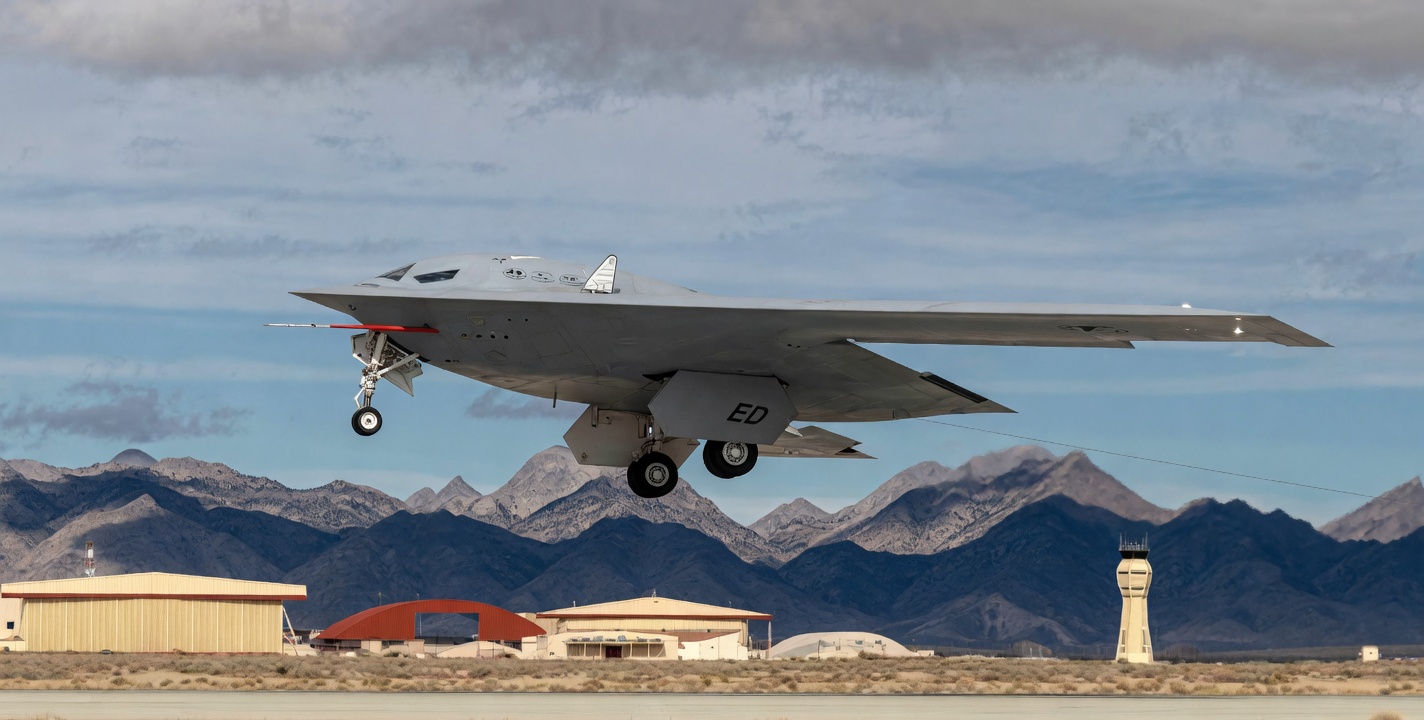
The US Air Force (USAF) is evaluating its bombers, including the next-generation B-21 Raider, for potential air-to-air combat roles, and they could also operate alongside Collaborative Combat Aircraft (CCA) drones.
So far, the USAF has used its bombers, including the B-52 Stratofortress, B-1B Lancer, and B-2 Spirit, for a variety of missions, including conventional ground strikes, nuclear deterrence, maritime anti-ship operations, and close air support roles.
However, adding air-to-air missiles to bombers and pairing them with CCAs would also enable them to perform air-superiority missions in a contested environment.
The plans are part of the USAF’s latest fighter force structure report, submitted to the US Congress for approval earlier this month.
The plan calls for adding hundreds of new fighters as the USAF increases its current fighter fleet from 1,288 aircraft, while also accounting for hundreds of F-16s, older F-15s, and F-22 Raptors due for retirement in the coming years.
The 2035 plan envisions a 60% stealth force, including 40% F-35A Joint Strike Fighters, 20% F-47s and F-22 Raptors, and 40% upgraded fourth-generation fighters, with an even mix of F-16s and F-15EXs.
The USAF will build the new fleet by procuring Lockheed Martin’s F-35s and Boeing’s F-47 and F-15EX fighters.
However, the report acknowledges that meeting its ambitious fighter procurement targets may not be achievable because of “fiscal realities and industrial production limitations.”
To meet the 2035 target, the USAF will need to add more than 70 fighters to its fleet each year for the next ten years.
The report therefore discusses other recapitalization options for the USAF, including acquiring an entirely new fighter, relying more on semi-autonomous drone fighters known as Collaborative Combat Aircraft, and giving bombers air-to-air roles and capabilities, Air & Space Force Magazine said after reviewing the report, which has not been released in the media.
“Accordingly, the USAF is also evaluating additional recapitalization options, including a new capacity fighter, increased reliance on CCAs, and developing air-to-air capabilities on bombers.”
As EurAsian Times reported last week, the new fighter could be Lockheed Martin’s upgraded F-16, termed F-16G, or Boeing’s already-in-production F-15EX variant. Lockheed Martin is also discussing adding new sixth-generation capabilities to the F-35 fighter.
However, the report’s most unusual suggestion is to add new air-combat munitions to the USAF’s bomber fleet, including the under-development B-21 Raider stealth bomber.
B-21 RAIDER
Air-To-Air Missiles For Bombers
The USAF’s fighters have long carried air-to-ground munitions, such as precision-guided JDAMs, laser-guided bombs, and Small Diameter Bombs (SDBs).
Bombers, however, have traditionally not carried air-to-air missiles, severely limiting their ability to conduct air-to-air missions.
For instance, during the recent Operation Epic Fury, the USAF employed B-2 Spirit, B-1B Lancer, and B-52H Stratofortress Bombers, but used them exclusively for long-range standoff ground strikes, penetrating stealth strikes, or stand-in ground strikes once Iranian air defenses were sufficiently suppressed.
These bombers therefore mostly flew in strike packages with F-35s and F-22s, as well as F-15s and F-16s, tackling aerial threats and conducting air superiority and SEAD/DEAD missions.
Adding air-to-air capability will allow USAF bombers to support air superiority missions.
Additionally, pairing them with CCAs will let the bombers serve as airborne nerve centers and communication nodes for a networked strike package, with a bomber aircraft at the center controlling multiple combat and reconnaissance drones.
The USAF plans to have at least 500 CCA drones in service by 2032.
The bombers, including the B-21 Raider, could therefore be programmed to launch air-to-air missiles and drones. Some of these drones could launch air-to-air missiles themselves, thereby greatly extending bombers’ combat range.
Given bombers’ size, payload capacity, and range, a single bomber could carry multiple air-to-air and air-to-ground missiles, as well as drones, a capability that could be crucial over the long distances of the Pacific theatre.
For instance, a B-2 Spirit bomber could carry over 27,000 kg of weapons payload, more than three times the F-35’s maximum payload capacity (8,200 kg).
B-2 Spirit Stealth Bomber.
Similarly, the B-2 Spirit’s unrefueled range of 6,000 nautical miles is nearly five times that of the F-35 (1,200 nautical miles).
Adding long-range air-to-air missiles and pairing combat drones with bombers will further extend their combat range.
Notably, the US is already developing several very long-range air-to-air missiles.
The US Navy has already fielded the AIM-174B air-launched version of the Standard Missile-6 (SM-6).
While the exact range of the AIM-174B is classified, widely cited estimates put it at 130 to 250 miles.
Separately, the US is also developing another very long-range AAM missile, the AIM-424 Malice, expected to reach over 250 miles.
In June, the USAF issued a call for a new anti-air missile with a range of at least 1,000 nautical miles.
Integrating such very long-range AAMs with bombers could redefine air warfare.
In addition, the Defense Advanced Research Projects Agency (DARPA) is working on the LongShot program to test the feasibility of an air-launched drone that can launch air-to-air missiles.
The air-to-air capability of the bombers could also include self-protection systems, such as carrying air-launched anti-missile interceptors. In fact, Northrop Grumman, the B-21’s prime contractor, has already patented an anti-missile defense system for stealthy aircraft that fires hard-kill interceptors.
Notably, this is not the first time the USAF has explored adding air-to-air munitions to its bomber fleet.
Former Air Force Chief of Staff Gen. David Allvin signaled in October 2024 that the B-21 Raider stealth bomber could play a greater role in the service’s air-dominance plans.
At the time, the USAF was reviewing its Next Generation Air Dominance (NGAD) fighter program, which Boeing eventually won in 2025 and named the F-47.
When asked whether the air superiority review could give the B-21 a more prominent role, Allvin said, “We have not taken that off the table.”
However, the USAF force structure report has not detailed what the bomber fleet’s potential air-to-air role would entail. Nor has it specified which USAF Bombers will be programmed for air-to-air combat roles.
However, because the B-21 Raider is still in early production, the bomber is best suited to be paired with AAM and CCA drones.
While the USAF initially planned to buy 100 B-21 Raiders, later reports suggested the force could increase that number to 140.
Besides, the USAF also has about 76 B-52 Stratofortresses, 44 B-1B Lancers, and nearly 19 B-2 Spirits.
The 2035 Force Structure Report suggests that the USAF is hedging on multiple options to maintain its dominance and fighter numbers, including buying a new aircraft (possibly F-16G), “increased reliance on CCAs,” and considering new air-to-air roles for bombers.
All these plans will compete for US funding. The US Congress will only know which programs are approved and funded when it approves the Force Structure Report.
Sumit Ahlawat has over a decade of experience in news media. He has worked with Press Trust of India, Times Now, Zee News, Economic Times, and Microsoft News. He holds a Master’s Degree in International Media and Modern History from the University of Sheffield, UK.
He can be reached at ahlawat.sumit85 (at) gmail.com
Celebrities having birthdays during the week of Nov. 1-7 include reality show personality and model Kendall Jenner, actor Sam Rockwell and celebrity chef Marcus Samuelsson
At a rally heavily featuring comments about the rapper’s ‘ass’, Trump and Minaj revealed something dark at the heart of modern-day MAGA, writes Holly Baxter

 Login