❌

Reading view

The feds made $627 million selling Anthropic stock from SBF's friends — but could have made billions

sam bankman-fried sdny
Sam Bankman-Fried and two of his co-conspirators held investments in Anthropic, the AI company that has since soared in value.

Bloomberg/Getty Images

  • The feds seized Anthropic shares last year from Sam Bankman-Fried's associates.
  • Several months later, the government sold them for $627 million.
  • If Anthropic IPO'd in November at $1.5 trillion, those shares would be worth nearly $4 billion.

Last year, the federal government made a windfall of $627 million when it sold Anthropic shares it had seized from associates of crypto fraudster Sam Bankman-Fried.

If it had held on to that stake, its windfall could have been a lot bigger.

The federal government last year sold shares of Anthropic that had belonged to Caroline Ellison and Nishad Singh, two co-conspirators in the FTX fraud case. The proceeds went to compensate victims of the fraud, a Justice Department spokesperson told Business Insider.

Anthropic's S-1 filing on Monday revealed how much the federal government made from the sale of those shares. The prospectus doesn't name Ellison and Singh specifically. It says the government in October 2025 sold 4,453,900 Series B shares of Anthropic that "had been forfeited by former holders in legal proceedings to which we were not a party."

The figure matches up exactly with the combined $50 million in shares that Singh and Ellison purchased for $11.2261 each in Anthropic's 2022 fundraising round, and later forfeited to the government.

The shares represent about a quarter of a percent of Anthropic today. But given the company's explosive growth, they are still worth a fortune.

Anthropic hasn't yet announced the stock price for its expected November initial public offering. At a $1.5 trillion valuation, the shares would be worth a total of about $3.94 billion. That would be six times as much as the government sold the shares for a year ago.

"One of the Justice Department's top priorities is returning forfeited funds to victims through the asset forfeiture program whenever the law allows," the DOJ spokesperson said.

The feds' stake in Anthropic

How the federal government came to own a chunk of Anthropic in the first place is a story involving a notorious fraudster and a complicated criminal forfeiture process.

Bankman-Fried participated in Anthropic's 2022 Series B fundraising round with Singh and Ellison. Singh purchased $40 million of the Series B shares, and Ellison acquired $10 million.

Singh and Ellison later pleaded guilty to crimes related to their work with Bankman-Fried and testified against him at his Manhattan federal criminal trial. The jury found Bankman-Fried guilty, and a judge sentenced him to 25 years in prison. The federal government took ownership of Singh's and Ellison's Anthropic shares by April 2025.

The US Marshals Service sold Singh's and Ellison's shares, rather than hold on to the red-hot Anthropic stock, Business Insider previously reported. The US Marshals Service Complex Assets Unit is typically tasked with dispensing shares of private companies acquired through criminal forfeiture.

Now we know that Anthropic purchased the stock from the feds in October 2025 at the price of $140.9676 per share, which is the same price Anthropic set for its Series F-1 stock in a fundraising round a month earlier.

Anthropic resold the shares to nine investors at the same $627 million total price it paid to purchase them from the federal government, so it didn't make a profit from the sale, according to the S-1 filing. It's not clear which nine investors purchased the shares originally owned by Singh and Ellison. Representatives for the US Marshals Service didn't immediately respond to a request for comment.

The Anthropic shares owned by Ellison and Singh took a different path than the $500 million in Series B shares owned by Bankman-Fried himself. His shares ended up as part of FTX's bankruptcy estate, which sold them in 2024 to a few dozen buyers for a total of $1.3 billion.

The federal government sent the proceeds from the sale of Ellison's and Singh's shares to the FTX bankruptcy estate, the Justice Department spokesperson said. Bankruptcy court filings show that the Justice Department transferred $638 million to the bankruptcy estate in late 2025.

The money has gone to repaying creditors, including FTX customers and investors who were scammed by the former crypto wunderkind.

Update: October 26, 2026 — This story has been updated to include a comment from the Justice Department.

Correction: October 27, 2026 — The federal government transferred the proceeds of the sale of Caroline Ellison's and Nishad Singh's Anthropic shares to the FTX bankruptcy estate, according to a DOJ spokesperson. An earlier version of this story misstated whether the funds had been transferred.


Read the original article on Business Insider

  •  

Why one VC firm is mentioned more than 50 times in Anthropic's S-1

Anthropic logo displayed on a laptop screen and Claude on App Store displayed on a phone screen are seen in this illustration photo taken in Krakow, Poland on October 16, 2026. (Photo by Jakub Porzycki/NurPhoto via Getty Images)

Jakub Porzycki/NurPhoto via Getty Images

  • Spark Capital is mentioned more than 50 times in Anthropic's S-1 filing, released Monday.
  • The reason Spark gets the most mentions is because partner Yasmin Razavi has a board seat.
  • Spark led the $450 million Series C round at a $4.5 billion valuation in May 2023.

Spark Capital's Yasmin Razavi has a reputation for refusing to make gut calls. Her methodical decision to invest in Anthropic is now set to generate one of the biggest fortunes in Silicon Valley history, as Anthropic prepares to IPO.

Many venture firms, including Lightspeed and Menlo Ventures, are major Anthropic investors, but Spark is the only traditional VC firm named in the filing. And it's not just a few mentions. Spark is named more than 50 times.

The reason Spark gets the most ink is because Yasmin Razavi has a board seat after being the first institutional investor in the company, leading the $450 million Series C at a $4.5 billion valuation in May 2023.

This was just six months after ChatGPT was released to the public, and the jury was out on whether a rival like Anthropic could catch up. Many balked at the price, calling it too expensive.

"It was a big leap of faith, but this was the team that built GPT-3," Razavi told Forbes.

The filing says that Spark has invested $777 million in Anthropic across six financings since then, including $75 million in the first pivotal round at $11.22 per share.

Spark was already known for making early bets on Postmates and Discord, but it was the Anthropic investment that transformed the firm's Silicon Valley reputation from a good venture firm to a great one.

Razavi said she has been continuously wowed by CEO Dario Amodei.

"Every year, he puts out outrageous numbers, but somehow they magically become true," Razavi told Forbes. "Dario never misses."

Soon, Amodei will face a greater test: the public markets.

Please send along your tips. Email Ben or Katie anytime or contact them on Signal at benbergman.11 and kroof.26. Sign up for Business Insider's weekly VC Insider newsletter here.

Read the original article on Business Insider

  •  

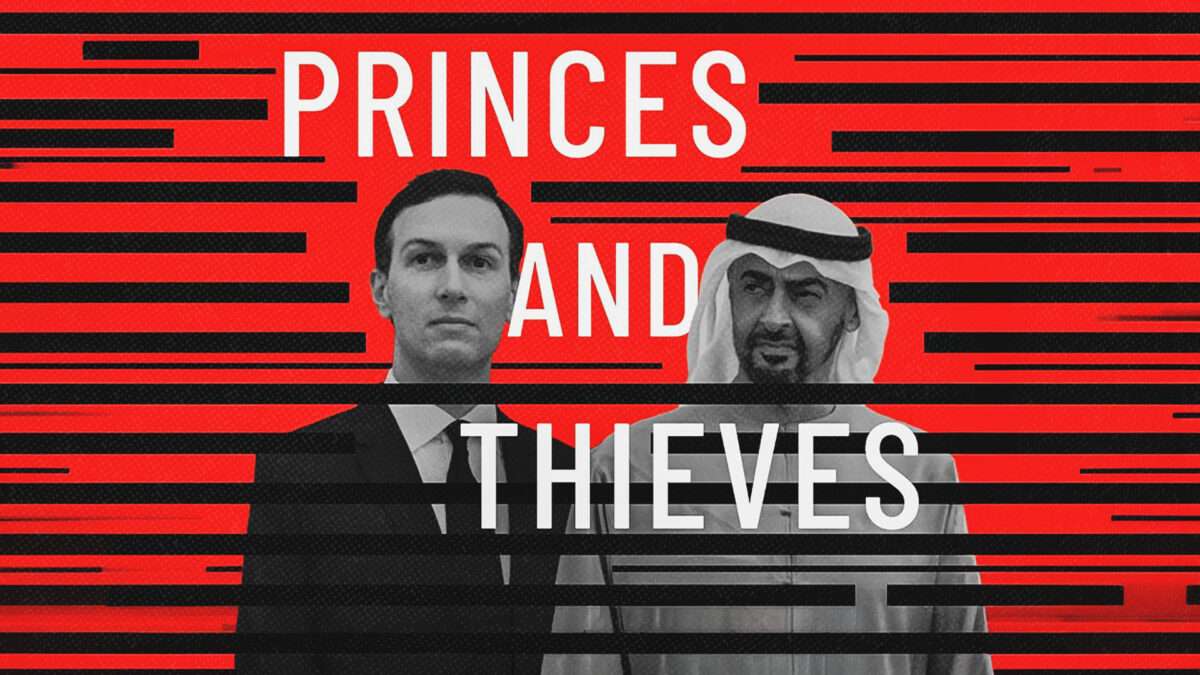
New Book Says Jared Kushner Funneled Money to Middle East Mercenaries. Kushner Denies It.

Cover of 'Princes and Thieves' with Jared Kushner (on the left) and Mohamed bin Zayed (on the right) | Illustration: Princes and Thieves/Matthew Cole/Atria/One Signal Publishers/

Princes and Thieves, a new book by investigative journalist Matthew Cole, may open a rabbit hole into financial connections between Middle Eastern dictators and President Donald Trump's family. Cole accuses Emirati monarch Mohamed bin Zayed (MBZ) of sending billions of dollars to various mercenaries and political operators, including Jared Kushner, son-in-law to President Donald Trump. Cole's reporting combines well-documented connections with secondhand accounts from anonymous sources.

On Thursday, Vanity Fair published an excerpt from the book, reporting that Dutch military intelligence hacked into Kushner's phone in 2018 and discovered hundreds of millions of dollars in bank transfers connected to MBZ. Also on Thursday, Kushner published a letter from his lawyers to Cole categorically denying the "incredible and false" allegations in the book. "Mr. Kushner never accessed foreign accounts and always followed all rules and regulations and only pursued goals that were in the best interest of the United States as directed by the President of the United States," they wrote.

Cole had originally written on his blog that the book was scheduled for release on October 27, but the publication date was pushed forward over the weekend.

The book purports to tie Kushner to a vast web of Emirati influence operations around the world. In Cole's telling, which matches other journalists' accounts, MBZ wants to reshape the Middle East and eastern Africa into an alliance of U.S.-backed dictatorships, where "tolerance" is enforced through high-tech surveillance and "democracy" is a synonym for terrorism. MBZ's use of mercenaries in pursuit of these goals is well-documented. So is Kushner's personal affinity with the Emirati monarch and his business ties with the Arab monarchies.

Soon after Trump won the 2016 election, MBZ held a widely reported meeting with Kushner. According to the book—and according to much of that earlier reporting—the monarch complained about the Obama administration's failure to back Arab regimes against popular revolutions, its decision to end the Iraq War, and its diplomacy with Iran.

Going much further than past reporting, Cole now claims Kushner was personally involved in MBZ's mercenary operations. MBZ and Saudi Crown Prince Mohammad bin Salman put a collective $2 billion into Emirati and Israeli bank accounts which were managed (but not technically owned) by Kushner, according to Cole's sources. Those same sources claim that parts of this secret "slush fund" went to Libyan warlord Khalifa Haftar, American military contractor Erik Prince, and Cuban hitman Felipe Vidal.

Haftar, a former CIA asset, became a general in Libya's 2011 revolution and then attempted to overthrow the new government with Emirati backing in 2014. Despite a 2020 ceasefire, his forces continue to control much of Libya. Prince, founder of the military contractor formerly known as Blackwater, moved to the UAE and helped build a secret army of Colombian mercenaries. He sued Cole for defamation after Cole reported on Prince's role in helping Haftar, but a judge threw out the case. Cole's sources claimed that Vidal, a self-described "hit man," helped the United Arab Emirates (UAE) fake an Iranian attack on oil tankers in May 2019, meant to provoke Trump into war.

Kushner's lawyers have denied any relationship with any of those three men, apart from a single meeting with Prince after the 2016 election. (According to Cole, both Vidal and Prince refused to comment for the book.) The position of the U.S. government is that the May 2019 incident was a genuine Iranian attack, not an Emirati false flag.

After the Vanity Fair article was published last week, Israeli negotiator Gershon Baskin pointed out in The Jerusalem Post that the Central Bank of Israel "does not offer private banking services to individuals," which would make it impossible for Kushner's money to be deposited in the Central Bank of Israel, as Cole claimed. The book addresses that argument, claiming that the money was deposited "in what would appear to be a government account," with Kushner and Israeli Prime Minister Benjamin Netanyahu jointly authorizing transactions.

The Abraham Accords, which include an alliance between Israel and the UAE, have often been touted as a way for the U.S. to "spend less time and less resources in the Middle East," in the words of Vice President J.D. Vance. But Cole argues that the UAE actually used its alliance to entangle American interests in a future conflict. The book states that Kushner set up "a rainy-day defense fund" for war with Iran, using Emirati money deposited in a separate Central Bank of Israel account.

Cole also claims to have evidence that Kushner was on the take from the UAE's regional frenemy Qatar. In 2017, the UAE and Saudi Arabia issued an ultimatum for Qatar to rein in its foreign policy and blockaded the small nation. The Intercept later reported that Kushner's father had sought a Qatari bailout for the family real estate business just before the crisis, and the Qatari-linked company Brookfield ended up providing the needed investment in August 2018, leading to a congressional investigation into the deal.

Democrats are still digging for information on Kushner's business ties to Qatar, but three sources told Cole that the Qatari royal family authorized and paid for the Brookfield deal. The Qatari government "asked the White House how to resolve the blockade. And the Kushners kept saying, 'We have this great property that needs investment.' Eventually, the Qataris realized the only way to settle the blockade was to buy the building," a former U.S. intelligence officer said.

Kushner's lawyers write that they have "no evidence that Qatar impacted the investment decision. Any suggestion of his involvement in the transaction or any allegation of quid pro quo with the Qatari government is false and defamatory."

Other parts of the book are better-documented. Cole obtained a draft of Prince's autobiography, text messages from one of Prince's colleagues, and emails from Emirati government adviser George Nader, who was convicted of fraudulently funneling money into Hillary Clinton's 2016 presidential campaign. If nothing else, the book is a comprehensive account of the UAE's unofficial empire and its American ties. But the most explosive claims about Kushner's involvement in those activities rest on anonymous sources, making it a matter of Cole's word against Kushner's.

"I considered the responses from Kushner's attorneys carefully and consulted multiple sources about them. During the five years I have spent working on this book, I have tried to keep an open mind, and I am confident that my reporting is accurate. Kushner's lawyers' responses did not change that conclusion," Cole writes in the book's epilogue.

The post New Book Says Jared Kushner Funneled Money to Middle East Mercenaries. Kushner Denies It. appeared first on Reason Magazine.

  •  

Il Pallone d’Oro costa fino a 600.000 euro, ma quanto vale davvero? Il triplo di un Oscar

Lunedì 26 ottobre, al London Palladium, viene assegnato il Pallone d’Oro 2026, il premio individuale più prestigioso del calcio, giunto alla sua 70ª edizione. Il trofeo ha un peso simbolico molto importante, ma il suo valore materiale è decisamente minore.

Il pallone dorato, realizzato a Parigi dalla Maison Mellerio fin dalla prima edizione del 1956, non è d’oro massiccio e non dà diritto ad alcun premio in denaro. Ciò non ha però impedito una valutazione stratosferica nel corso di un’asta divenuta ormai storica. In quel caso, infatti, il valore finale è salito di centinaia di volte rispetto al costo di realizzazione.

Di cosa è fatto il Pallone d’Oro

Il cuore del trofeo è in ottone pieno, modellato a mano dagli artigiani di Mellerio. Questa storica maison orafa di origine italiana, attiva in Francia dal 1515, firma anche altri trofei sportivi, tra cui quelli del Roland Garros dal 1981. Sopra l’ottone viene poi applicato un sottile strato d’oro. Ecco, quindi, come il pallone ottiene il suo colore caratteristico.

Quanto vale il trofeo

Secondo svariate stime, l’effettivo valore del trofeo, considerando materiali e lavorazione, si aggira intorno ai 3.000 euro. Spiccioli, se si pensa agli stipendi dei calciatori destinati a portare l’oggetto a casa. La cifra può variare con il prezzo dell’oro, ovviamente, ma resta contenuta proprio perché il metallo prezioso è presente solo in superficie.

France Football, che dal 2024 organizza la cerimonia insieme alla Uefa, non riconosce al vincitore alcuna somma in denaro. Il vero ritorno economico arriva dopo, tra bonus contrattuali, sponsorizzazioni e potere negoziale. Voci che pesano sugli ingaggi molto più del trofeo e che spiegano quanto guadagnano i calciatori di vertice.

Il Pallone d’Oro si può vendere?

A differenza di altri premi, il Pallone d’Oro resta di proprietà del vincitore, che può decidere di cederlo. I casi documentati sono però pochissimi e il più noto riguarda Cristiano Ronaldo.

Nel 2017 il portoghese ha ceduto il Pallone d’Oro vinto nel 2013 al miliardario israeliano Idan Ofer per circa 600.000 euro. Una somma in seguito interamente devoluti alla fondazione Make-A-Wish, che sostiene bambini con gravi malattie. La vicenda è però emersa solo nel 2023, grazie al Mirror. Le ricostruzioni in merito non coincidono, con alcune testate che ritengono sia stata venduta una replica del trofeo, mentre altre ribadiscono come la copia sia in realtà quella esposta nel museo di Madeira. Considerando la cifra record, il trofeo è stato pagato circa 200 volte il suo valore materiale.

Pallone d’Oro e Oscar a confronto

Il Pallone d’Oro è da molti considerando, a buona ragione, “l’Oscar del calcio”. È dunque interessante fare un confronto tra i due ambiti trofei. L’Oscar, prodotto dalla fonderia Polich Tallix nello Stato di New York, è in bronzo pieno placcato in oro a 24 carati. È alto 34,3 centimetri e pesa circa 3,85 chili. Il costo di produzione è stimato tra 400 e 1.000 dollari, a seconda del prezzo dell’oro.

Pallone d’Oro Oscar
Produttore Mellerio (Parigi) Polich Tallix (New York)
Materiale Ottone con sottile strato d’oro Bronzo placcato oro 24 carati
Costo stimato Circa 3.000 euro 400-1.000 dollari
Rivendita Libera Bloccata per i premi assegnati dal 1950

La differenza più grande riguarda proprio la rivendita. Dal 1950 chi vince un Oscar deve offrire la statuetta all’Academy per 1 dollaro prima di poterla cedere. Una regola che di fatto annulla il potenziale mercato. Possono circolare liberamente solo le statuette assegnate prima di quella data.

Ed è su quei pezzi che si concentrano le cifre più alte. Nel 1999 Michael Jackson acquistò l’Oscar per il miglior film assegnato a Via col vento per circa 1,5 milioni di dollari, mentre nel 2011 quello vinto da Orson Welles per la sceneggiatura di Quarto potere è stato venduto per circa 860.000 dollari. Valori ben superiori a quelli noti per il Pallone d’Oro.

  •  

AI helped me automate some of my wealth advisor job. Here's why I'm not worried about it stealing my edge.

Rick Nott, Senior Managing Director at Angeles Investments

Angeles Investments

  • Rick Nott has used AI to save himself a lot of tedious work as a wealth advisor.
  • He said new AI products may help other advisors save time too, but they won't replace humans.
  • Nott spoke to Business Insider about how he uses the technology to save him time now.

Rick Nott is a senior managing director and private wealth advisor at Santa Monica, California-based Angeles Wealth Management. He spoke to Business Insider about how he uses AI, and why he's excited and afraid when looking at AI-native financial planning platforms. The conversation has been edited for length and clarity.

When Claude first rolled out its solution for financial advisors, I felt fear and excitement. How complicated will it be? How will it work?

I'm not a software developer, but I have some basic tech skills. LLMs have allowed me to dig into coding, which I'd been avoiding learning because it's a lot of work. I know enough to know what I want, how it should look, and how to check the outputs, and now I can automate more of my process. AI has become the glue between the various systems we use and the different workflows we have.

I've shown some colleagues how I operate. One told me that I basically have another full-time employee's worth of output through the technology, by automating data collection processes and making it easier to analyze my clients' portfolios.

What AI unlocks

I started my career while still in college in the late 2000s doing data reporting work for a wealth firm. Between all of the software advisors use, there's a lot of manual work, typically done in Excel, to connect it together.

Previously, I could only provide balance sheet reporting for clients with more than $100 million because it took so much manual work. Now I can do it with someone with significantly less.

As a family's net worth grows, so does complexity. For many, understanding their overall financial system is their biggest pain point.

Banks and brokerage accounts are the easy part, but trusts, business ownership structures, and private investments, which all report differently and require cash on hand to make capital calls, can take huge amounts of manual work to analyze.

Imagine a wealth advisory business serving 30 families, each holding about 10 private investments. Each investment generates about 10 documents a year, including quarterly reports, capital calls, distribution notices, and tax documents. Each of these 3,000 documents takes a skilled analyst 15 to 30 minutes to analyze and distill into our reports.

That's 750 to 1,500 hours a year, most of it crammed into the few weeks after each quarter closes. With AI, that data is extracted and mapped as it arrives, and one analyst reviews the work instead of a team racing against a deadline.

Our goal is to create a one-page document or report on their phone that's as close to real-time as possible.

There's a lot you can do with all of your data in one place. For example, a two- or three-sentence prompt could expand into a full email to a client, with all relevant and accurate information already populated. You can then personalize that to fit the right tone for your client.

How AI changes the job

AI tools like Claude for financial advisors will be disruptive, and others will gain access to the same connectivity I've built.

I think of it as part of a dynamic that's been going on for years in my industry. Vanguard, ETFs, lower costs, and robo-advisors have all put a squeeze on financial advisors.

But if you believe a lawyer's only job is writing contracts, or a financial advisor's only job is putting together a portfolio, there's a fundamental kind of misunderstanding of what the actual job is.

As long as investing involves human judgment, financial advisors will have a job. AI doesn't improve investment decisions or results.

I tell my clients that my role is to be the architect of their financial operating system, and, as with an actual operating system, a centralized source of data is essential.

When you have a big-picture view of what your family's mission is, you can avoid getting distracted by market noise and news. From there, you can go a layer down to make strategic plans and ask if we're moving in the right direction, and what opportunities we may have. Another layer down, we work with a CPA to save money on taxes.

A full picture of a balance sheet makes it possible to actually know what liquidity you have available. Now I can spend more time developing relationships, the thing that runs our business. I get to know anything and everything about the clients I'm working with and those I'd like to work with.

The future of financial advisors and AI

I have a natural excitement around tech, and watching the Anthropic webinar was incredible. My main concern is that it's not a subscription-based plan; it's token-based, which could lead to surprise bills for users who don't yet know how to manage their token usage.

At small RIAs without the expertise, people will be uploading 100-page PDF documents just to ask basic questions, like the ages of kids in a trust. That will rip through tokens.

We priced it out internally, and we would have to pay significantly more for a token-based plan instead of the subscription-based licenses we have now. Maybe eventually everyone will have to pay for tokens that way, and the cost of tokens is going down.

We learn to do things faster and at lower cost, but in this industry, we do that for a particular reason: to spend more time with the people we serve.

The primary way that our clients give us information is still by talking. There's a significant amount of nuance. You may be able to understand something and infer what's really being said. But note-taking software is still wrong all the time. You have to review it.

Money is emotional, and I seriously question whether AI can replace our need to connect with another human being.

Do I see someone sitting across the table from AI on a speakerphone? Probably not.

Read the original article on Business Insider

  •  

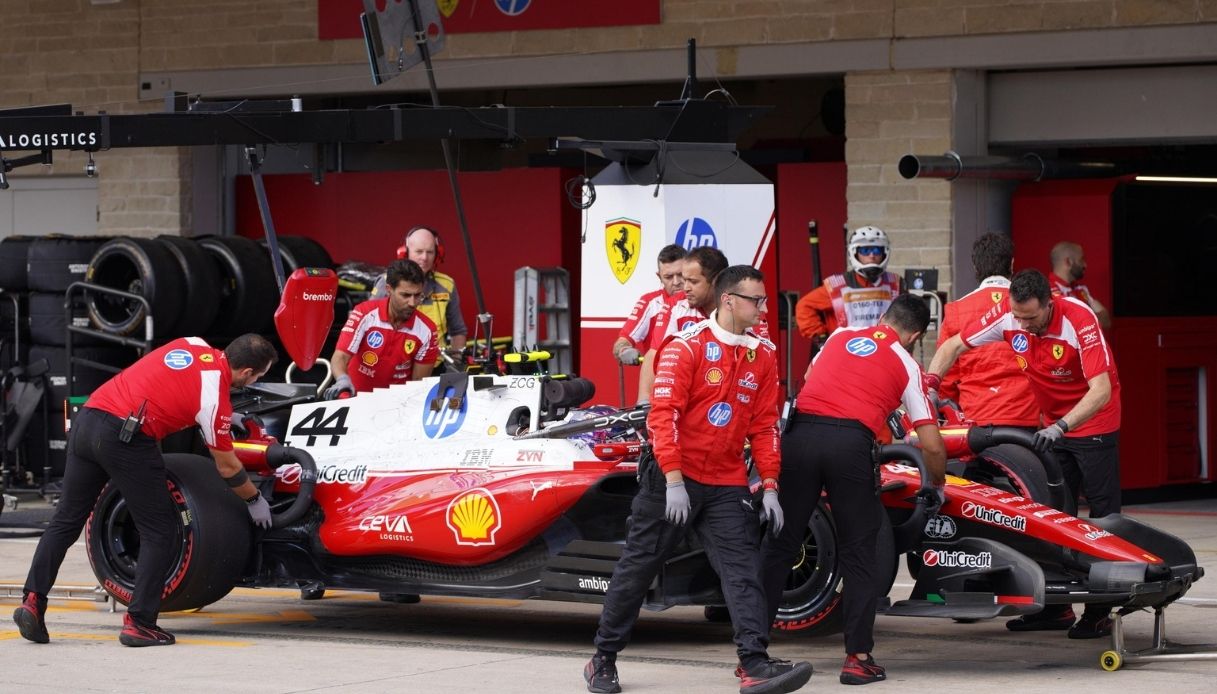
Quanto guadagnano i piloti di Formula 1 nel 2026: gli stipendi di tutti i campioni

Chi sono i piloti di Formula 1 più ricchi? Nel 2026, secondo le stime pubblicate da RacingNews365, Max Verstappen e Lewis Hamilton occupano le prime posizioni della classifica degli ingaggi in Formula 1, Charles Leclerc, George Russell e Lando Norris si collocano nella fascia alta del mercato. In fondo alla classifica Colapinto e Lidlblad.

Ecco quali sono i guadagni dei piloti di Formula 1 nel 2026, elaborati sulla base di informazioni raccolte nel paddock, indiscrezioni sui contratti e altre fonti del settore.

Chi sono i piloti di Formula 1 più ricchi

Secondo le stime pubblicate da RacingNews365, gli ingaggi annuali dei 22 piloti del mondiale 2026 vanno da circa 500.000 dollari a 70 milioni di dollari. Nella classifica viene considerato lo stipendio base stimato, senza aggiungere i bonus e gli introiti derivanti dagli sponsor personali.

Ecco la classifica:

  • Max Verstappen (Red Bull): 62,5 milioni di euro all’anno
  • Lewis Hamilton (Ferrari): 53,6 milioni di euro all’anno
  • Charles Leclerc (Ferrari): 30,4 milioni di euro all’anno
  • George Russell (Mercedes): 30,4 milioni di euro all’anno
  • Lando Norris (McLaren): 26,8 milioni di euro all’anno
  • Fernando Alonso (Aston Martin): 17,9 milioni di euro all’anno
  • Carlos Sainz (Williams): 11,6 milioni di euro all’anno
  • Oscar Piastri (McLaren): 11,6 milioni di euro all’anno
  • Pierre Gasly (Alpine): 10,7 milioni di euro all’anno
  • Alexander Albon (Williams): 10,7 milioni di euro all’anno
  • Lance Stroll (Aston Martin): 10,7 milioni di euro all’anno
  • Sergio Pérez (Cadillac): 7,1 milioni di euro all’anno
  • Nico Hülkenberg (Audi): 6,2 milioni di euro all’anno
  • Esteban Ocon (Haas): 6,2 milioni di euro all’anno
  • Isack Hadjar (Red Bull): 4,5 milioni di euro all’anno
  • Valtteri Bottas (Cadillac): 4,5 milioni di euro all’anno
  • Gabriel Bortoleto (Audi): 1,8 milioni di euro all’anno
  • Kimi Antonelli (Mercedes): 1,8 milioni di euro all’anno
  • Oliver Bearman (Haas): 893.000 euro all’anno
  • Franco Colapinto (Alpine): tra 446.000 e 893.000 euro all’anno
  • Arvid Lindblad (Racing Bulls): tra 446.000 e 893.000 euro all’anno

Bonus, sponsor e risultati sportivi: come si compone lo stipendio

Per comprendere le differenze tra i compensi dei piloti è necessario considerare che lo stipendio base rappresenta soltanto una parte della remunerazione. Nei contratti possono essere previsti premi per le vittorie nei Gran Premi, piazzamenti, punti conquistati ed eventuali successi nella classifica costruttori. Inoltre a queste somme possono aggiungersi i contratti pubblicitari personali, le collaborazioni commerciali e le attività legate all’immagine del pilota. Non tutti gli accordi sono però liberamente negoziabili: le scuderie hanno sponsor ufficiali e possono prevedere vincoli per evitare conflitti tra marchi concorrenti.

Il reddito complessivo può quindi essere molto diverso da quello che emerge osservando soltanto l’ingaggio garantito. Anche per questo le classifiche degli stipendi e quelle degli atleti più pagati non coincidono necessariamente.

Formula 1: perché i piloti guadagnano così tanto?

Gli stipendi elevati sono legati al valore economico del campionato, alla competizione tra le scuderie e alla capacità dei piloti più affermati di generare risultati sportivi, visibilità e ricavi commerciali. Per un team, assicurarsi un campione può rappresentare un investimento strategico: le prestazioni in pista contribuiscono ai risultati della squadra, mentre la notorietà del pilota può rafforzare le relazioni con gli sponsor.

Un elemento importante riguarda il budget cap, il tetto alle spese introdotto per contenere i costi della competizione. Gli stipendi dei piloti sono esclusi dal calcolo del limite di spesa applicabile alle scuderie. Questo consente ai team di negoziare ingaggi anche molto elevati senza imputarli alla stessa voce di costo soggetta al tetto regolamentare.  La differenza tra i compensi dei campioni e quelli dei debuttanti riflette infine il valore dell’esperienza, i risultati ottenuti e il potere contrattuale. Arrivare in Formula 1 non significa automaticamente guadagnare decine di milioni: gli stipendi più alti sono riservati a una cerchia ristretta di piloti, mentre per i giovani la crescita dei compensi dipende anche dalla capacità di dimostrare il proprio valore in pista.

  •  

I filed for bankruptcy after my wife died from cancer. I underestimated what grief would do to my business.

Brian Rooney and his late wife, Tina.
Brian Rooney and his late wife, Tina, who died in 2013.

Courtesy of Brian Rooney

  • Brian Rooney, 60, filed for Chapter 7 bankruptcy in 2024.
  • During his late wife's illness, he built up medical and credit-card debt.
  • After she died, the grief made it difficult for him to sustain his business.

This as-told-to essay is based on a conversation with Brian Rooney, the 60-year-old founder of Chapter7Reset.com, who lives in Conroe, Texas. He lost his wife in 2013. The essay has been edited for length and clarity, and the details verified.

When you're grieving, you're not thinking about how to move a business forward, capture new market share, or adapt to new technologies. You're not thinking straight because you're overwhelmed by a cloud of loss, pain, and sorrow. Some days, you're just trying to get through morning to night.

In 2013, I lost my wife, my partner, and my life. I still had to deal with the financial reality. I had underestimated what grief would do to my ability to run a business.

Tina was the yin to my yang

My wife, Tina, and I had 24 great years together. She was the yin to my yang. We met through a mutual friend, got to know each other, and fell in love. She was a strong, independent thinker. She was loving, kept me in check, and was an outstanding mother.

Our five kids were all born close together, and I was very involved in their lives. One of the reasons I started a business was because I wanted to be the dad who could be at home, coach my sons in basketball, and play in recitals with my daughter.

We'd tried both working early on, but Tina stopped early on in our relationship. I was the breadwinner, and she managed the kids.

I launched my email-marketing business in 2000. For a time, it did very, very well.

Brian and Tina Rooney
Brian Rooney and his late wife, Tina, were together for 24 years.

Courtesy of Brian Rooney

My wife was diagnosed with cancer

In 2011, things felt almost too good to be true. Then Tina noticed a little bump in the roof of her mouth. She went to the dentist; they did a biopsy, and we didn't think too much about it. Weeks later, I was sitting in my home office when she came over with the phone. With a very disturbed look, she said, "I have cancer."

Our lives turned upside down.

At first, because the cancer wasn't very aggressive, we tried homeopathic remedies. Then came chemotherapy, radiation, and major surgeries. The treatments were costly, and while the Affordable Care Act covered quite a bit, we still had high deductibles. Some hospitals wouldn't admit her until the deductible had been paid.

I would sit at the table with spreadsheets, trying to work out the finances. I was trying to be strong for my wife, but sometimes I'd go to the corner of the room and cry. The unspeakable thing to consider was that I might lose my wife because I couldn't afford to pay for it all.

The Rooney family pose for a photograph
Brian and Tina Rooney had five kids.

Courtesy of Brian Rooney

A lot of the medical bills were paid with credit cards, and we ran up a lot of credit-card debt. I had six mouths to feed, for which I relied mostly on credit cards. I sold my music gear, like my guitars and amps. We moved from a beautiful rental house in a nice area of Texas to a much less expensive apartment. We weren't going to shows, basketball games, or on trips. None of that bothered me. The focus was on getting Mama healthy.

Friends and family stepped in here and there to help out. My kids were approaching adulthood, so they didn't need much looking after, but working from home let me adjust my schedule as needed.

I couldn't keep the business moving forward

There were days when I couldn't touch the business. It was mostly automated, but there were things I needed to step in and manage. If a server went down, I'd need to stay up all night to fix it while checking on my wife in the other room.

I wasn't resting or sleeping. I wasn't able to drive the business forward.

During that time, the industry was changing. New technology became available, and we weren't able to keep up. I was so focused on Tina's care that we missed opportunities. We had contractors and a business partner, and I wish I'd outsourced a lot faster. I didn't realize how fast I was losing.

I became a widower at 47

Person in a white hoodie sits on rocky terrain holding a phone in an outdoor landscape.
Tina Rooney died at 49.

Courtesy of Brian Rooney

Tina died in November 2013. She was 49, and I was a 47-year-old widower.

Those first few weeks, I'd wake up, roll over, realize she wasn't there, and know that she never would be again. I would talk myself out of bed, one body part at a time.

The business was still there. My business partner was focused on the technical side, but I had the marketing and entrepreneurial mindset. A lot of things that needed to get done didn't get done. Honestly, at that point, I didn't care. It was a dark time for me

I wanted a clean slate

The business was declining, and meanwhile, I'd built up hundreds of thousands of dollars in credit-card and medical debt. I thought I could put everything on my credit cards, turn things around, and pay it down. Things never turned around, and as the business continued to decline, there was less money to draw from it.

I spoke with bankruptcy attorneys, but I was convinced I could fix the problem.

In 2021, I got remarried. My second wife knew about the financial mess I was in. The interest and penalties were compounding so quickly. There was constant pressure from phone calls, letters, and demands for payment. I wanted relief and a clean slate.

In early 2024, after speaking with my business partner, we decided to dissolve the business. Later that year, I filed for Chapter 7 bankruptcy.

I felt both relief and shame after filing for bankruptcy

When I filed for bankruptcy, I had no assets because I'd sold them all to pay my bills. When the debt was wiped out, I felt relief and shame, but the relief took over once I stopped getting phone calls and letters.

It was time to rebuild. I got a sales job, which I hadn't had in decades. I did AI certification training and started rebuilding my credit with credit-rebuilding cards. I launched ChapterSevenReset.com, a free guide to help people in a similar position.

One of the hardest lessons was that we didn't have a life-insurance policy on Tina. It never dawned on me because she wasn't contributing financially. I never considered how caring for her and my grief would take away from my generating income. My second wife and I both have life insurance policies for each other.

Nowadays, my friends say the "old Brian" is back. I've made peace, as best you can, with the fact that Tina is gone. I'm like an amputee. There's a part of me that's missing, and that part will always be missing. It itches. It's always there.

Read the original article on Business Insider
  •  

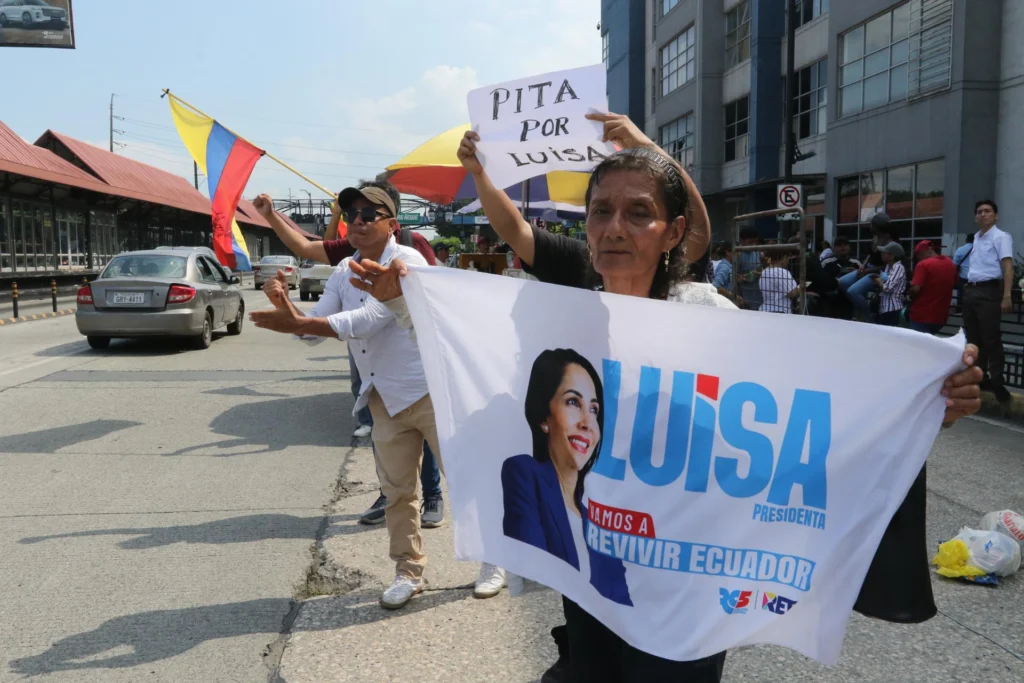
Ecuador Opposition Figure Luisa González Challenges Arrest

Luisa González, Ecuadorian opposition leader and former presidential candidate, faces legal proceedings following her arrest.

Luisa González’s lawyers allege arbitrary detention and procedural violations after her arrest on Oct. 22 in a case linked to campaign finances.


Ecuadorian opposition leader Luisa González’s arrest has prompted her lawyers to accuse President Daniel Noboa’s government of selective prosecution, citing alleged procedural violations and inconsistencies in the financial evidence underpinning the case.

RELATED: Ecuador Transfers Luisa González to Riobamba Prison

González, a former presidential candidate and leading figure in the Revolución Ciudadana movement, was arrested on Oct. 22. Her lawyer, Diego Guarderas, disputes the allegations linked to campaign finances and argues that authorities have treated similar cases involving the ruling party differently.

In an interview with CNN, Guarderas questioned figures attributed to Ecuador’s Financial and Economic Analysis Unit (UAFE), which he said changed at different stages of the investigation. According to the defense, the amounts cited ranged from $6,000 to $500,000 and $700,000, while the technical report recorded $204,000.

Bajo una fuerte granizada, la militancia de Revolución Ciudadana se mantiene en los exteriores de la Unidad de Flagrancia tras la retención de la líder política Luisa González.#Ecuador #Noboa #Alerta #Luisa #teleSUR pic.twitter.com/v4MHVWnSzN

— teleSUR TV (@teleSURtv) October 22, 2026

Text Reads: Under a heavy hailstorm, the militants of Revolución Ciudadana remain outside the Flagrancy Unit following the detention of political leader Luisa González.

The legal team argues that discrepancies in campaign accounting have been treated as evidence of money laundering without sufficient technical justification. Guarderas maintains that the shifting figures undermine the legal basis of the accusations against González.

He also pointed to what he described as unequal treatment of campaign-finance irregularities. Ecuador’s National Electoral Council identified inconsistencies exceeding $408,000 in the campaign of Acción Democrática Nacional (ADN), Noboa’s party. According to the defense, prosecutors have not opened an investigation into those findings.

Lawyers challenge arrest and transfer

González’s lawyers have also challenged the procedures leading to her arrest. They say she was informed of the charges only 30 minutes before the hearing at which they were formally presented.

The defense further disputes the jurisdiction of the judges who presided over the hearing, arguing that they failed to account for the provincial jurisdictional privilege of other defendants in the case.

Her legal team has also challenged her transfer from Quito to a prison in Riobamba, about four hours from the capital. Guarderas said a judicial order had required González to remain in Quito to protect the rights of her minor child and her father, who has kidney disease.

Convocan plantón en la Fiscalía en Quito, Ecuador, contra el Gobierno del presidente Daniel Noboa. Legisladores exigen el cese de la persecución política y reclaman información sobre el paradero de Luisa González, exigiendo justicia y debido proceso. 🇪🇨📢 #Ecuador #Quito #teleSUR… pic.twitter.com/F5DK2JzoDV

— teleSUR TV (@teleSURtv) October 22, 2026

Text Reads: Protest rally called at the Prosecutor’s Office in Quito, Ecuador, against the Government of President Daniel Noboa. Lawmakers demand an end to political persecution and request information on the whereabouts of Luisa González, calling for justice and due process.

Despite the order, authorities moved her during a nighttime operation, which Guarderas described as clandestine. He argued that the transfer obstructed the preparation of her defense and violated the judge’s instructions.

Opposition alleges political persecution

Revolución Ciudadana has described the case as political persecution intended to weaken the opposition and prevent González from competing politically. Guarderas likewise accused Noboa’s administration of using judicial proceedings to target prominent opponents.

These allegations remain the position of González’s defense and have not been independently established in the information available for this report.

González’s lawyers said they would file legal challenges seeking to reverse her transfer and report the alleged violations of due process. The case remains before Ecuador’s courts, with the defense contesting both the financial evidence and the procedures that led to her arrest and imprisonment.

  •  

A veteran tech investor says 'doom and gloom' over the AI boom is overblown, even though it has shades of the dot-com bubble

Paul Wick
Paul Wick is the CIO of Seligman Investments.

12/08

  • There are clear parallels between the AI boom and the dot-com bubble, tech investor Paul Wick says.
  • But solid demand, strong earnings, and less mania make for a "healthier" backdrop, Wick said.
  • Seligman's chief investor brushed off Michael Burry's worries but flagged some trends to watch.

The AI boom has shades of the dot-com bubble, but fears of an imminent crash and mass unemployment are overblown, a veteran tech investor says.

At the turn of this century, there was an explosion in dot-com startups being formed, and a huge infrastructure buildout with telecoms "aggressively" spending on wired and wireless networks, Paul Wick told Business Insider in an interview this week.

The chief investor of Seligman Investments — a group within Columbia Threadneedle Investments that manages over $40 billion of assets and comprises a hedge fund, a mutual fund, and a venture capital arm — said there were clear parallels between that period and the current boom in AI startups and data-center spending. He also noted that energy prices and interest rates jumped then as they've done this year.

But Wick noted there isn't the same IPO frenzy now, or the same "frenetic environment" where stocks soar fivefold or tenfold in a day. He also said that by late 2000, a slowdown in IT spending was being forecasted for 2001, whereas enterprise spending on AI remains strong and recent tech earnings have been robust.

Simply put, the situation seems "healthier" now than in 2000, he said.

Business Insider asked Wick about Michael Burry's warnings this year around AI. "The Big Short" investor has called out aggressive accounting, circular financing, hidden debt, and overinvestment in depreciating assets like microchips as reasons to be skeptical that the boom has legs.

Wick said that Burry, known for predicting and profiting from the collapse of the mid-2000s housing bubble, has been "early or downright wrong on many other things."

Burry has previously defended his track record, citing his correct predictions and sharing charts showing the timing of his market calls.

As for concerns about Nvidia's efforts to grow the AI ecosystem by investing in data center developers and software companies, Wick emphasized that the chipmaker is "extraordinarily profitable."

He cast doubt on whether Nvidia should spend its spare cash only on buybacks, rather than bolstering its customers, especially as several of the industry's biggest players are working to develop their own AI chips to reduce their reliance on Nvidia.

But he also flagged some industry trends to watch, including enterprise clients opting to use older models or build their own, and token pricing coming under pressure as users embrace open-source models, raising questions over the size of the market opportunity for the likes of OpenAI and Anthropic.

Navigating a new world

Wick weighed in on how a young person can get ahead in the AI era.

"It used to be that a degree in computer science was a ticket to success," he said.

A better option today might be to learn a trade, as there's "booming demand" for workers such as electricians and HVAC technicians, and they can make an "incredibly good living" without having to go to a four-year college, Wick said.

He also took aim at the "doom-and-gloom notion that AI is going to eviscerate demand" for human labor. He described that worry as a "little premature" as nobody knows for sure how AI will affect entry-level roles in the future, unemployment is yet to soar, and there's always inertia when it comes to businesses and consumers changing their behavior.

Read the original article on Business Insider
  •  

How housing affordability can be achieved at the state and local level

Former Sen. Jon Tester praised the passage of the bipartisan 21st Century Road to Housing Act, noting its success in balancing restrictions on Wall Street investors with incentives for professional housing providers to increase supply.

  •  

My husband and I have different risk tolerances and approaches to investment. Here's how we handle it.

The author and her husband
The author and her husband approach investing differently, but have figured out how to find a common ground.

Courtesy of Laura Leavitt

  • My husband and I have different approaches to investing.
  • He's risk-tolerant, and I'm a bit more risk-averse.
  • Still, we've managed to talk through financial decisions and find a common ground.

The conversation started because of a windfall: it was the first month that we didn't have the preschool tuition payment because my son was starting kindergarten. "I'd love for this money not to just disappear into the monthly budget," I said to my husband.

He nodded, and immediately had a suggestion. "What if we used it to start up a brokerage account? It'd be good to have some investments that are accessible without penalty before retirement."

Our approaches to investing differ

I knew, deep down, that this was a reasonable response to my point: we both already were on board with the idea of paying ourselves first, where we commit to an amount ahead of time for savings and retirement investments and then live on whatever we earn above that. This strategy served us well, and I wasn't opposed… exactly.

"I was actually hoping to use some of it to add to our emergency fund," I told him slowly. "And maybe getting some additional solar panels I've been looking at."

We have recently lived through instability that made me really appreciate the kinds of standard comforts that are currently easily accessible. Our family experienced the impact of a major hurricane only two years ago (Hurricane Helene), and when water, electricity, and telecommunications were interrupted for days and then weeks, I realized that a relatively modest amount of money and supplies would have made weathering a period of instability easier.

This is the place where my husband and I diverge: I tend to see things somewhat pessimistically, believing there's a good chance supply chains will be interrupted more than a few times during our lifetimes due to a variety of factors.

My husband has a generally optimistic, risk-tolerant approach to life. He knows we've made a solid plan for retirement, so he sees that a brokerage account offers promising returns (not guaranteed, but based on historical data) on funds that we've worked hard to earn. I'm sometimes fearful of the possibility of losing everything in a stock market crash.

I don't think either of us is truly at odds with the other person: my husband witnessed Helene and set to work setting up a battery backup system for our solar panels, an impressive feat and investment that falls more in line with my own risk-averse nature.

And I've never squashed his goals of investing for both short and long-term stability, even if, deep down, I want all our savings in high-yield savings accounts with FDIC protection.

We've learned how to figure out what's right for us

In order to make these conversations civil and positive, we tend to follow three steps.

First, we each get to make the case for why this investment, and why right now.

I think some of the way that we both get over our anxieties about spending or saving well is that we want to be heard, so he hears me out when I want to construct an expensive greenhouse on our property to grow more food, and I hear him out when he identifies that our current ages merit a somewhat risk-tolerant strategy so that we can reap the benefits when the market jumps higher.

Frequently, this process of hearing each other out helps us find an in-between pretty organically, and finding an in-between is the second step. Sometimes, we realize that, for instance, we are too busy to take full advantage of a greenhouse right now and should table it for a year or two. However, maybe this is a good year to invest in a higher-speed home charger for our electric car. Because many of his goals are "invest as much as possible," it's usually possible to buy some portion of the physical items I want while still contributing to our investments.

When I'm advocating for a deeper emergency fund, housed in a high-yield savings account rather than a market-invested brokerage account, I typically ask that we contribute in a percentage-based way. If I ask, for instance, for a windfall to be split 30/70, he gets to invest 70% of the money toward higher yields, and I get 30% in a very secure account. It's not exactly what either of us would like, but it ultimately gives us some benefits of both risk-averse and risk-tolerant strategies.

Finally, any time we find a split that really feels aligned for us, we see if we can make it a rule for the future, the third step. No one loves having to reinvent the wheel every time new money conversations come up. When that 70/30 split worked well for us once, I've returned to it for later money decisions, and while it sometimes needs to be adapted, it lets us balance each of our needs without a long discussion. My husband, famously of few words, likes when we can keep the conversations a little shorter and get back to playing a board game or watching a silly TV show to relax.

When we hear each other out, find a useful middle ground, and operationalize the result for future use, we find ways to invest in both a more secure and a more growth-focused future, favoring methods that work well for both our risk tolerance levels.

Read the original article on Business Insider

  •  

In Final Surge of Vast Midterm Spending, Parties Make Last-Ditch Appeals

A remarkable $1.4 billion worth of political ads are scheduled to air over the final two weeks as the parties fight for control of Congress.

© Callaghan O'Hare for The New York Times

James Talarico, the Democratic nominee for Senate in Texas, spent more than $22 million from his campaign account in the first two weeks of October, the most of any candidate in a competitive race.
  •  

Why China’s AI triumphs aren’t saving its flagging stock market

TOKYO – When Chinese stocks lose a South Korea-sized sum in five months, Beijing has a problem. The US$2.4 trillion plunge in market value since May sits between Korea’s $2.25 trillion GDP and Canada’s $2.49 trillion. Many factors could explain Chinese shares entering bear market territory, but a major one is a protracted slump in […]

The post Why China’s AI triumphs aren’t saving its flagging stock market appeared first on Asia Times.

  •  
❌