❌

Reading view

My husband and I moved abroad in our 50s after deciding there was no perfect time to relocate

Person in sunglasses sits at an outdoor café table holding red wine outside Theater Pepijn.
Leslie Hodgin and her husband moved to the Netherlands in January 2026.

Leslie Hodgin

  • Leslie Hodgin and her husband had dreamed of moving abroad.
  • They finally took the leap in January, deciding not to waste time in their 50s.
  • Hodgin said the move was expensive and time-consuming, but she's been happy with their relocation.

This story is based on an interview with Leslie Hodgin, a 55-year-old marketing consultant who moved from the US to the Netherlands with her husband, John Lyman, 52. It has been edited for length and clarity.

Until 2026, I was living in Richmond, Virginia, with my husband and our cat.

My dad was in the Army, so I grew up all over the world, but Richmond is my adopted home. I lived there for about 10 years.

During that time, I got an offer to move to Seoul, South Korea, for my marketing job. My husband, John, and I were dating at the time. We got married one week before moving to Seoul for two years.

After the contract ended, we returned to the States. I love Richmond, but it did feel small after I had been in Korea.

Some events happened in both of our families that made us want to move abroad again sooner rather than later. My dad died. My husband's mom died. We had a couple of dear friends pass away. It was all very quick. And it made me think, "What are we waiting for? We don't have promises for tomorrow. Now is the time."

We don't have kids, so that wasn't holding us back. We had some money in the bank to move, which I know is a privilege. It was like, "Let's just go and live our lives. We shouldn't just keep hoping for someday because there may not be someday."

Moving to the Netherlands

John had gone to graduate school in the Netherlands, so we'd visited before. Through my work in advertising, I also had a fairly large network of people living there.

There's a visa for Americans called the Dutch-American Friendship Treaty (DAFT) that allows freelancers and entrepreneurs to live in the Netherlands. It made the country seem like a great choice for us.

Two adults pose for a mirror selfie in a bright room with wood flooring and a sideboard behind them.
The couple moved in January 2026.

Leslie Hodgin

My husband works for himself, so it was easier for him to pick up and go anywhere. I started my own consulting business and left my agency. I knew there was an advertising community in the Netherlands, and I planned to freelance if my consulting business wasn't doing well.

My husband's dad is in his 90s, and my mom just turned 80. Moving far from them was probably the hardest part of the decision. I have a little guilt for that, but they're excited for us. I've promised my mom that I'll be home for any big family and important events.

That's a hard thing to do, but we felt it was right for us not to put our lives on hold.

Downsizing our lives

We moved in January. We did it in six months. We'd sold our house about a year before moving and were living in an apartment.

We decided to sell almost everything we owned to keep costs as low as possible. We shipped a half-crate over, which is quite small, so we had to get rid of a lot of stuff. We made close to $12,000 selling everything and used it to pay for the visas and help with some of the moving costs.

When we moved, we had nine suitcases, including a large piece of art. It was the largest oversize item that would fit on an airplane, and we had a special museum-packing company pack it. And our cat, of course, came on the plane with us.

Person wearing large glasses takes a selfie on a cobblestone street beside a bicycle and historic storefronts.
They sold most of their belongings before moving.

Leslie Hodgin

We live in a two-bedroom apartment. It's an old, old building, but the apartment is newly renovated and has a patio.

We do feel lucky that we found a place because there is a housing shortage, and it's quite hard to find housing, particularly if you're American or from another country and you don't have Dutch income. We had to pay six months' rent upfront to secure our rental.

Life in Europe

It still feels surreal that we live here. My husband and I will frequently look at each other and say, "Oh my God, I can't believe that we're here." I never want to lose that feeling.

Business seems to be going really well. I also already knew some friends, but I've met so many amazing people through social media and made some great friends with our neighbors.

Yellow Cube Houses tower over a paved courtyard with café seating and visitors below.
They love life in the Netherlands.

Leslie Hodgin

We love the sense of community. I appreciate the social contract that people afford each other in the Netherlands, from the opportunities the government provides to the respect and trust they show each other in general.

Recently, there was Open Monumentendag, or Open Monuments Day, with over a thousand monuments, churches, houses, farms, and historic places across the Netherlands open to the public for free. They do that every year, and it feels so special. It seems like every other weekend there's a festival.

There are always challenges. I'm very slow to pick up the language. Most people speak English, but I feel like I need to be better.

Moving also costs a lot more than you plan for. Even if you've tried to pad all the numbers, it still costs more than anticipated. Because our work was quite slow earlier in the year, we were like, "Gosh, what have we done?"

Our cost of living is fairly similar to what it was in the US. We don't have a car, so we don't have that expense. We would be paying double the rent in New York City for this same apartment.

A fresh start

I feel alive again. I felt a little stagnant in Richmond after living overseas, and moving has opened a lot of doors for my creativity.

On social media, I've documented trying one new thing a week. It's gotten us out to meet people and have some interesting experiences.

A seated person rests on a bench beneath red shutters on an ornate historic stone building facade.
It's a new chapter.

Leslie Hodgin

There's a risk in moving abroad. You have to get yourself over the hump, and you have to be brave.

Believe in yourself. If there's something you want to try, like moving overseas, going on a solo trip, or taking a cooking class, take a chance on yourself. You're never going to regret trying it if it doesn't work out. If you don't ever put yourself out there, you're going to look back in 20 years and be like, "That would have been great. Why didn't I give that a shot?"

Read the original article on Business Insider

  •  

I'm an American who signed a yearlong lease in the Netherlands, sight unseen

Emily stands on a bridge over a canal that's lined with homes and trees.
I moved to an apartment in another country without seeing it in person.

Emily Pogue

  • My husband and I moved from the US to the Netherlands without seeing our new apartment in person.
  • We encountered lots of surprises, like the lengthy Dutch application process.
  • Although we love our apartment, we've had to get used to a few cultural differences.

After living as digital nomads for nearly two years, my husband and I decided to move from the US to the Netherlands.

We'd visited several times and fell in love with the walkability and bike culture. Plus, I have a connection to the country, since my great-grandparents were Dutch.

With the help of a real-estate agent, we found an apartment remotely from the US, signing a yearlong lease in the city of Utrecht before ever setting foot in the home.

We encountered some surprises while looking for an apartment

A boat in a canal in the Netherlands.
Since we couldn't physically be in the Netherlands, our real-estate agent went to walkthroughs for us.

Emily Pogue

Since the process of finding an apartment abroad can often take months, we chose to search remotely from the US. To make things easier, we hired a Dutch real-estate agent with local connections who could view apartments for us in person.

The prep work was much more intense than I was used to. In the US, I've leased apartments in three different states, and the extent of the application typically included filling out a basic form and sometimes completing a background check.

That wasn't going to cut it in the Netherlands.

Our agent gave us a long list of materials to prepare, from 12 months of bank statements and links to our LinkedIn profiles, to a "get to know us" letter, which included our hobbies and photos of us. Then she went looking.

Rentals often get snatched up within a few hours or days, so my husband and I were regularly waking up at 4 a.m. in Colorado to read our agent's emails about the new listings each day.

When we finally found one that checked all our boxes, we asked her to schedule a walkthrough. Luckily, she recorded a video for us to review, so we didn't need to wake up early for this part of the process.

It was during the walkthrough, however, that we learned Dutch apartment listings aren't as detailed as the ones we were used to in the US. When our agent arrived, we discovered the listing had omitted several important pieces of information.

A cat laying in a fenced-in garden with a bench.
I was surprised that our beautiful back garden wasn't mentioned in the listing.

Emily Pogue

For example, there was a fully fenced-in back garden, complete with a shed, picnic table, and blackberry and rose bushes. The kitchen had a dishwasher. And there was a washing machine hidden away behind a cabinet door — and a dryer (which is not as common in Europe).

Score, right? So we jumped at the opportunity, put in our bid, and jumped for joy when our offer was accepted.

Despite a few setbacks, we fell in love with our apartment

A living room with large windows, a couch, a chair, a fireplace, and a keyboard piano.
Thankfully, we ended up loving our apartment once we saw it in person.

Emily Pogue

We arrived in the Netherlands a few weeks later, traveling directly from the airport to our rental. When we unlocked the door for the first time, hoping we'd fall in love with our new home, it was … freezing.

Turns out, the heat had stopped working, and the rental company couldn't send someone to fix it until the next day. So, we spent our first night in the Netherlands at a hotel.

Thankfully, the heat was fixed the following day, and then we could start unpacking. This is when we began to notice some of the more nuanced differences of a Dutch house compared to an American one.

The first thing to get used to? The alarmingly steep stairs (a hallmark of skinny, tall Dutch houses) which made moving furniture up to our second-floor office feel like a Herculean feat.

We also learned to accept moths and gnats as houseguests, since Dutch windows don't typically have screens. However, with no air conditioning and a 100-year-old house that was built to retain heat, we definitely want to keep those windows open.

Overall, aside from a few stowaway insects and some hot days, we've been very fortunate with our rental. I particularly love the neighborhood and how we can walk to a grocery store, bakery, or park within five minutes.

The biggest lessons have come from being part of a Dutch neighborhood

A street in the Netherlands lined with homes.
I love being part of the community in Utrecht.

Emily Pogue

Although finding our rental was a whirlwind process, I've found the most interesting parts of living here have come from the cultural differences between American and Dutch neighborhoods.

For example, shortly after arriving, our neighbor invited us to the neighborhood WhatsApp group. If you need to borrow a drill or lose your cat, you send a message to the group.

It's very active, and joining the group helped me feel like I was part of a community before knowing anyone here. Although I've heard of similar groups in the US, I've never been invited to join one.

Ordering packages is also very different. Back in the States, packages would be left by my door. In the Netherlands, however, they aren't left unattended.

Instead, the delivery driver will start ringing the neighbors' doorbells until someone is home. Then, they'll leave a digital note about which house has your package.

One place I didn't expect to feel such a contrast is the sidewalk. On sunny days, my Dutch neighbors bring out their dining room chairs, park them on the bricks outside their front door, and enjoy a cold drink. Sometimes, it'll feel like an impromptu block party — and I couldn't be happier to join in the festivities.

After leasing an apartment across the world, sight unseen, would I do it again? I sure would — especially if I could hire a real-estate agent to check out the home in person.

The quirks of our apartment and neighborhood are all part of the experience of living abroad, and although I may not have expected them, I've now grown attached to these cultural differences.

Read the original article on Business Insider
  •  

Gates, Bourla on Trial in Netherlands Accused of ‘Great Reset’ Scheme at Vaccine Injury Hearing

By Michael Nevradakis, Ph.D. | The Defender | October 23, 2026

An attorney for seven Dutch plaintiffs in a COVID-19 vaccine injury lawsuit against Bill Gates and Pfizer CEO Albert Bourla accused Gates and others of

orchestrating the pandemic to help usher in the “Great Reset,” a global economic, political and social system promoted by the World Economic Forum.

During oral arguments Thursday, attorney Peter Stassen told a packed courtroom that the COVID-19 vaccines were akin to a bioweapon, developed as part of a broader global effort to strip democratic and individual rights.

Speaking outside the courthouse in Leeuwarden, Netherlands, Stassen said Thursday’s hearing “was about publicly telling what is happening in this courtroom and what is the real case. The real case is that COVID-19 was not a disease but was a project.”

He accused Gates and Bourla of participating in that project, which he said was coordinated and undemocratic. He also accused the defendants of using censorship and propaganda to hide their intentions while promoting the COVID-19 vaccines as “safe and effective.”

COVID-19 vaccines were developed and procured as military countermeasures, bypassing the standard development and approval pipeline for such products. By developing the shots as military countermeasures, they bypassed traditional safety regulations, leading to widespread injury, Stassen said.

Stassen said that while this is a civil case, he believes the defendants’ actions constitute serious criminal offenses that violate global treaties and the Nuremberg Code.

For their part, attorneys for the defendants “claimed the shots saved millions of lives and that they were safe and effective,” said Joseph Sansone, Ph.D., a psychotherapist, critic of the mRNA shots and one of the expert witnesses for the plaintiffs.

“They basically said, like a parrot, that all of Stassen’s accusations were either conspiracy theory or based on medical reports that are from people who are not neutral in this case,” said Ido Dijkstra, a Dutch journalist and the editor-in-chief of De Andere Krant, who attended the hearing.

Dutch attorney Meike Terhorst said the defense did not respond to Stassen’s assertions that COVID-19 was a project. “There was no response to that at all, nothing.”

Journalist Penny Marie, who has reported on the case, told The Defender that Stassen’s arguments “mirror what so many people worldwide say and have experienced and investigated.”

The defendants’ legal team did acknowledge that they were “touched” by the suffering of the vaccine-injured plaintiffs. Terhorst said the five living plaintiffs face “immense problems” with their health.

Dijkstra said the presiding judge on the three-judge panel appeared to “support the mainstream narrative,” but “gave the impression that she wanted to understand Stassen’s reasoning.”

Thursday’s hearing stemmed from a lawsuit filed in 2023 by seven people injured by COVID-19 vaccines — including two who have since died — against Gates, Bourla and 15 other defendants, including former Dutch prime minister and NATO Secretary General Mark Rutte, the Dutch state, and several Dutch public health officials and journalists.

According to Dutch attorney Meike Terhorst, who is not connected to the case but attended the hearing, none of the defendants appeared in court.

A ruling is expected as early as December but may be delayed until February 2027.

Expert witnesses barred from testifying in person

During oral arguments, Stassen addressed the court’s refusal to allow his team’s expert witnesses to testify in person. Earlier this week, the court limited the witnesses to video statements presenting their arguments.

Defense attorneys attacked the credentials of some of the witnesses. For instance, they claimed that Sasha Latypova — a former pharmaceutical research and development executive — has only a bachelor’s degree and is unqualified to provide testimony on scientific and medical matters.

Latypova disputed the claims, telling those gathered outside the courthouse that she has a “graduate degree from Dartmouth College and 25 years of pharmaceutical R&D and regulatory experience” — including interacting with the U.S. Food and Drug Administration, European Medicines Agency and Japanese regulators “on behalf of my clients.”

Catherine Austin Fitts, founder and publisher of the Solari Report and another of the expert witnesses for the plaintiffs, told The Defender that Bourla’s attorneys questioned the credentials of another witness — Mike Yeadon, Ph.D. Fitts said she was “surprised” by their claims.

“Yeadon served as vice-president of Pfizer’s allergy and respiratory research unit and worked for many years at Pfizer. Does Pfizer make it a practice to staff the company with unqualified people in senior positions? Does this explain why Pfizer appointed a veterinarian to be the CEO?” Fitts asked, referring to Bourla.

Terhorst said it is “very strange” for Dutch courts to not allow oral testimony by plaintiffs’ witnesses, as otherwise, “it is not easy to substantiate your claims.”

Despite the limitation, Terhorst said the witnesses bolstered the plaintiffs’ case. “The case is important based on the evidence provided by key witnesses,” she said.

“I think we [gave] a very clear sign to the court that there can be not justice if the court is not willing to look further at this expert evidence, because you can come to a judgment based on truth and a real discussion between the parties,” Stassen said during the press conference.

Vaccine-injured were ‘misled’ about safety of COVID shots

In an interview with journalist Fiona Rose Diamond earlier this week, Stassen said the plaintiffs “felt misled” by the Dutch government and by those who promoted the COVID-19 shots in the media.

“They felt misled by the whole system … And they were misled because they were told that this was a safe and effective vaccine, and in fact, the only way out of [the] crisis,” Stassen said.

At Thursday’s press conference, Stassen added that the plaintiffs sued not just because of their injuries, but because “they want the truth.”

Fitts highlighted the significance of the case, noting that under the Dutch legal system, the vaccine-injured can file lawsuits in response to their injuries — contrasting this with legal restrictions the injured face in the U.S.

“The PREP Act has made it impossible for such lawsuits to be brought in the United States,” Fitts said, referring to the Public Readiness and Emergency Preparedness Act of 2005. Under the PREP Act, anyone who produces or administers emergency countermeasures, such as the COVID-19 shots, is shielded from legal liability.

Terhorst noted that the vaccine-injured in the Netherlands face other obstacles.

“Vaccine injury is not even recognized in the Netherlands,” she said. She noted that some vaccine-injured people briefly received treatment under public health programs that the Dutch state earmarked for long COVID patients. However, this treatment was later “terminated.”

Terhorst said lawyers for the Dutch state “said nothing” during the hearing about offering compensation to these victims, including the plaintiffs and their families.

This is one of several obstacles the plaintiffs have faced as this case has progressed. Last year, another attorney for the plaintiffs, Arno van Kessel, was arrested “with considerable force,” as part of a nationwide sweep by Dutch police against alleged members of a “sovereign citizen” movement with a “potential intent to use violence” against the Dutch state.

Terhorst said van Kessel spent seven months imprisoned in a high-security prison, lost his license to practice law, is not allowed to leave the country and was fitted with an ankle monitor — which was removed Thursday, in parallel with the hearing.


This article was originally published by The Defender — Children’s Health Defense’s News & Views Website under Creative Commons license CC BY-NC-ND 4.0. Please consider subscribing to The Defender or donating to Children’s Health Defense.

  •  

Covid-19 “Vaccine”: A Landmark Civil Lawsuit in The Netherlands

by The Narrative On Trial, Global Research: The Case at a Glance A definitive, historic legal proceeding marking an unprecedented confrontation over global pharmaceutical and institutional accountability. The historic civil lawsuit in the Netherlands is brought by seven Pfizer “vaccine”-injured individuals, represented by attorney Peter W.H. Stassen, seeking individual accountability from global figures like Bill […]
  •  

‘Help me. Now. He is killing me’ – Somali man arrested afrter Amsterdam woman’s body found in suitcase in Amstel River

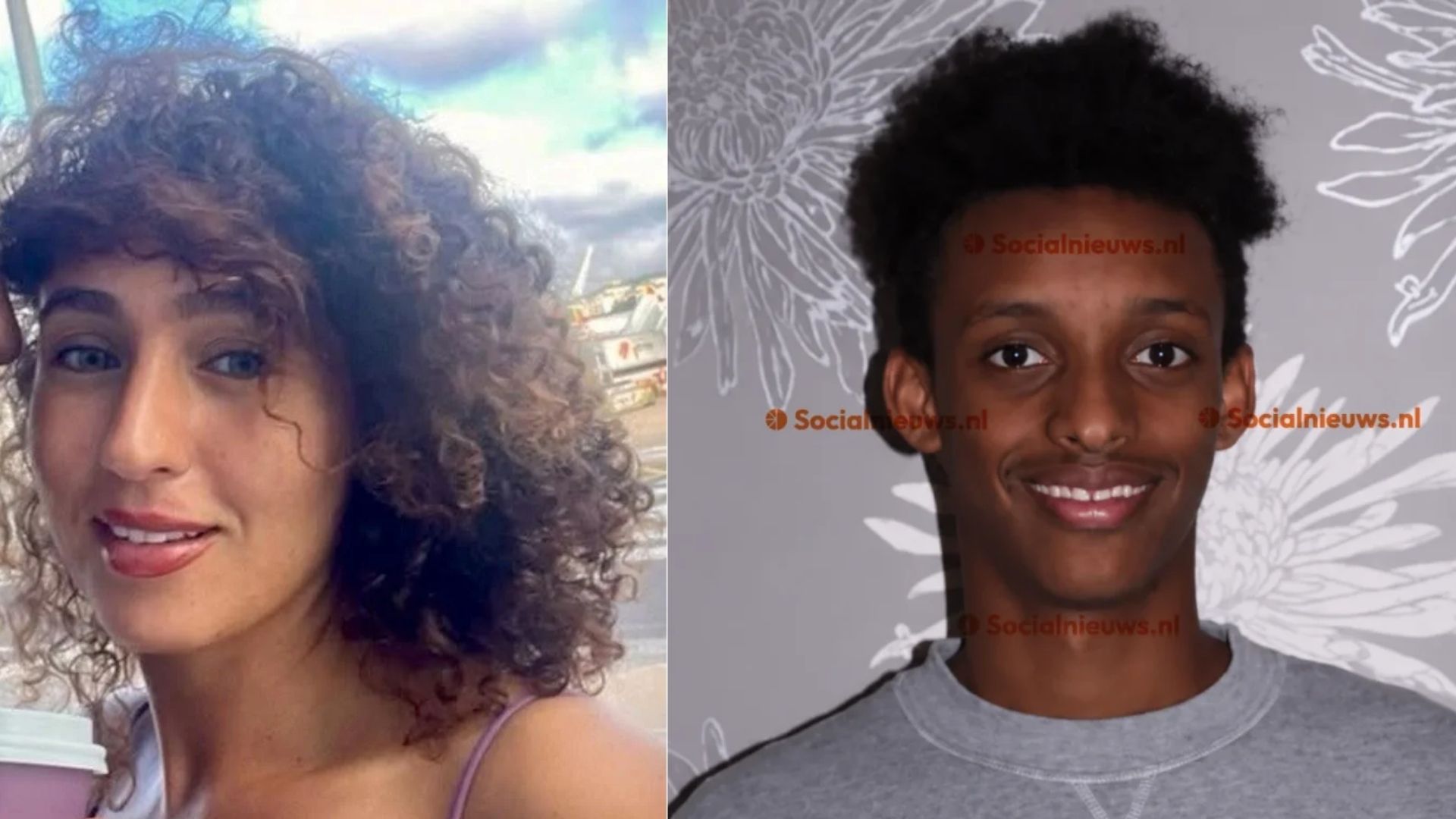
The body of 29-year-old Hajar was discovered on the morning of Oct.16 inside a suitcase in the Amstel River along the Amsteldijk in Amsterdam-Zuid, near Martin Luther Kingpark. She had been missing since Oct. 4, when she was last seen cycling away from the RAI convention center toward the Buitenveldert neighborhood with an unidentified man.

Hajar disappeared after sending a series of alarming text messages to a family member. According to reporting by De Telegraaf, one message read: “Help me. Now. He is killing me.”

The messages arrived around 11:15 a.m. on Oct. 4. Her family reported her missing that evening, but police initially classified the case as non-urgent. A public appeal for information was not issued until Oct. 13, nine days later.

🇳🇱🇩🇪 Women in the Netherlands and Germany are now trying to defend themselves with "Smurf spray" after an asylum seeker raped and murdered 17-year-old Lisa. "Since Lisa’s death, many of (self-defense) products have been sold out, including the Smurf spray." Pepper spray is illegal in both Germany and the Netherlands, which means women are desperate for self-defense options. Smurf spray paints a potential rapist’s face blue for days, making a suspect easy to identify. But can it really stop a determined rapist? "After the death of 17-year-old Lisa, practically every woman in Holland wants to carry it." 17-year-old Lisa was not the only victim. The asylum seeker had previously raped and sexually assaulted other women. (Video source: RTL)
— Remix News & Views (@RMXnews) September 2, 2025

On Oct. 20, Amsterdam police arrested a 23-year-old Somali national identified in reports as Abdi A. (or Abdi Anan). He has lived in the Netherlands since the age of six, holds permanent residency, and has no fixed address.

Authorities said he was first questioned as a witness after CCTV footage placed him with Hajar near the RAI on the day she vanished. He was arrested the following day after a separate violent incident at a home in Koggenland, Noord-Holland, in which a man, later identified as his foster father, was injured.

Police Chief Peter Holla told a press conference that “Hajar died fairly soon after her disappearance” and that “as far as is known, the suspect has no connection to the victim.”

🇳🇱First, a Dutch woman was raped and beaten. It was all caught on surveillance camera, but police never released the footage or an image of the suspect. A few days later, the African migrant Chris Jude raped and murdered 17-year-old Lisa. A complete failure of the Dutch police and larger immigration system. @rblommestijn : “The police and judiciary simply did not do their job properly.”

— Remix News & Views (@RMXnews) December 8, 2025

Chief Prosecutor René de Beukelaer said, “Once again we must pause at the violent death of a young woman.”

Amsterdam Mayor Femke Halsema confirmed the death was the result of a violent crime and noted the case alongside the prior murder of 17-year-old Lisa.

Investigators later searched an empty school building on De Klencke in Buitenveldert, where police believe Hajar was killed.

Holla described the circumstances of the disposal as “inhumane.”

Family members expressed anger that police did not treat the case as urgent sooner despite the text messages, telling LINDA.nl: “We already knew she had been murdered. That is what she messaged.”

Police said they assessed the initial report differently and have since spoken further with the family.

Hajar was described by acquaintances as vulnerable and known for leaving her home with a suitcase and going away for longer periods before returning.

The investigation remains ongoing, and the suspect is expected to appear before a judge.

The post ‘Help me. Now. He is killing me’ – Somali man arrested afrter Amsterdam woman’s body found in suitcase in Amstel River appeared first on Remix News.

  •  

PHP Security Flaw Sets Off Global Rush to Patch, Leaving Websites Offline

Governments and businesses around the world scrambled to prevent hackers from exploiting a vulnerability in PHP, a popular programming language.

© Geert Vanden Wijngaert/Associated Press

Prime Minister Rob Jetten of the Netherlands in Brussels last week. He said that his cabinet was closely monitoring the online vulnerability caused by a security flaw in PHP.
  •  

Ahold Delhaize Reports Malicious Cyberattack as Supermarket Deliveries Remain Disrupted

Dutch-Belgian supermarket group Ahold Delhaize has confirmed that malicious activity was responsible for the cybersecurity incident that disrupted its operations across Europe and the United States, forcing the company to take websites, applications and other computer systems offline.

In an official statement issued on Monday, 19 October, the company announced that it had filed a formal complaint with Dutch police and was cooperating with national cybersecurity authorities. Although physical supermarkets have remained open, the disruption has affected online shopping, deliveries and some distribution operations.

The company said investigators had so far found no evidence that sensitive information belonging to customers, employees or business partners had been taken. However, its investigation remains open, and the identity and objectives of those responsible have not been publicly established.

Online services interrupted across several countries

The disruption began on 12 October, when Ahold Delhaize detected suspicious activity within its information technology infrastructure.

The group responded by taking a number of systems offline as a precaution, affecting most of its retail brands in Europe and the United States. The consequences varied considerably between businesses, with some experiencing prolonged interruption to digital services while others were able to restore operations more quickly.

Albert Heijn, the Netherlands’ largest supermarket chain, has been particularly affected. Its website and mobile application have returned online, but home grocery deliveries are not expected to resume until Friday, 23 October.

Orders scheduled before that date have been cancelled, while the company continues preparations for a gradual restoration of its online delivery service.

The incident also interrupted some supply and distribution arrangements, resulting in shortages on supermarket shelves in parts of the Netherlands and Belgium.

In Belgium, Delhaize has restored its online shopping operations. Certain promotional and personalised services were still experiencing difficulties, although the parent company confirmed that its Belgian e-commerce business was operational again.

Dutch retailers Etos and Gall & Gall have also restored their websites. Meanwhile, several American supermarket brands owned by Ahold Delhaize have continued to experience service interruptions.

The group said it expected additional online services in the United States to become available over the coming days.

Dutch authorities investigate

Ahold Delhaize said it notified the Netherlands’ National Cyber Security Centre within 24 hours of detecting the malicious activity.

The company has subsequently provided updates to the authorities and, on Monday, confirmed that a formal police report had been submitted.

Chief executive Frans Muller defended the decision to shut down digital systems, arguing that the investigation had demonstrated the necessity of taking preventive action.

The company has not identified the perpetrators, confirmed whether ransomware was involved or disclosed the technical method used to gain access to its infrastructure.

These distinctions are important because malicious activity does not necessarily establish that information was stolen or that attackers obtained control over every system subsequently taken offline.

The retailer has instead described a controlled restoration process intended to ensure that affected systems can be brought back into operation without exposing the business to further risks.

Ahold Delhaize operates thousands of supermarkets and related retail businesses, including Albert Heijn, Delhaize, Food Lion, Giant Food, Hannaford and Stop & Shop.

Its geographical reach means that a disruption originating within shared corporate infrastructure can affect several national markets, even where individual retail chains maintain separate commercial operations.

Cybersecurity becomes a supply-chain concern

The attack comes amid increasing scrutiny of the vulnerability of European food retailers to digital disruption.

Earlier this month, investigators in France began examining cyberattacks against refrigeration control systems used by hundreds of supermarkets.

Those incidents reportedly affected equipment at chains including Carrefour, Intermarché and Monoprix, with some retailers forced to discard products after refrigeration systems malfunctioned.

There is no established connection between the French incidents and the attack affecting Ahold Delhaize.

Nevertheless, both episodes illustrate the dependence of modern retail operations on interconnected digital systems supporting stock management, refrigeration, logistics, payments and customer services.

The consequences of a serious cyber incident can extend beyond the loss of access to websites. Interruptions to inventory systems, warehouse operations or communications with suppliers can affect the availability of physical products.

This creates particular difficulties for food retailers, where delays in transport and storage can result in the loss of perishable goods.

European regulatory implications

The incident also draws attention to the European Union’s NIS2 cybersecurity framework, which establishes stricter risk-management and incident-reporting obligations for organisations operating in designated sectors.

Food production, processing and distribution are among the activities covered by the directive, although its application to particular companies and operations depends on the relevant legal definitions and national implementing arrangements.

The legislation requires organisations within its scope to establish appropriate cybersecurity protections, address supply-chain risks and notify competent authorities of significant incidents.

Separately, the General Data Protection Regulation establishes notification requirements where personal-data breaches meet the relevant reporting threshold.

Ahold Delhaize’s statement that it has found no evidence of sensitive data being taken does not conclude the technical investigation, but it means that a confirmed theft of personal information should not presently be presented as a fact.

For the company, the immediate challenge remains restoring online services while maintaining normal supermarket operations. The wider commercial consequences, including the cost of the interruption and its effect on sales, have not yet been quantified publicly.

  •  

Migrants skip the line for affordable housing, while Dutch people ‘can still live with their parents,’ says Dutch housing minister

Dutch Housing Minister Elanor Boekholt-O’Sullivan drew sharp criticism this week after defending priority access to scarce social housing for recognized refugees, arguing that many young Dutch first-time home seekers “can still live with their parents.”

In an interview with De Telegraaf, the D66 minister was asked why status holders — asylum seekers granted residence permits — should receive preference for social rental homes while Dutch “starters” face long waiting lists and delayed independence. She responded that “we see that a lot of starters can still, or are allowed to, live with their parents.”

🇳🇱 Migrants get affordable housing before Dutch natives. When asked why migrants receive access to affordable housing before young Dutch people looking for a "starter" home, the Dutch housing minister said that many Dutch first-time home seekers "can still live with their parents." Mass migration contributed to 60% of the increase in housing demand in the Netherlands since 2015, yet Minister Elanor Boekholt-O’Sullivan still believes in putting migrants first. "For me, the fundamental principle is that anyone who is allowed to and wants to live in the Netherlands gets a roof over their head," she said. In the Netherlands, Dutch natives are increasingly relegated to living with their parents while migrants get to skip massive waiting lists and gain "emergency" access to cheap social housing. Follow: @RMXnews

— Remix News & Views (@RMXnews) October 14, 2026

Dutch commentator and activist Eva Vlaardingerbroek wrote on X that the policy amounted to “systemic racism.”

“And not just the ‘new’ newcomers. A 25-year-old Syrian who came here with his parents years ago jumps the queue for a home when he decides he wants to live on his own. Meaning a 25-year-old white Dutch guy can forget about getting his own place and ends up on waiting lists for 10+ years,” she wrote, adding: “Putting the interests of foreigners above the interests of the native population needs to end.”

Talking about systemic racism: Young Dutch people can barely find a place to live, because migration drove 60% of the housing demand since 2015, regular prices are insane, and migrants get PRIORITY for the affordable social housing. And not just the “new” newcomers. A 25-year-old Syrian who came here with his parents years ago jumps the queue for a home when he decides he wants to live on his own. Meaning a 25 year-old white Dutch guy can forget about getting his own place and ends up on waiting lists for 10+ years. But according to our minister of housing that’s fine because they can just continue to “live with their parents.” Putting the interests of foreigners above the interests of the native population, needs to end. That’s why with the @SaveEuropeAct, apart from demanding closed borders and Remigration, we also demand 
Removing social welfare incentives and benefits that function as pull factors for migration.

— Eva Vlaardingerbroek (@EvaVlaar) October 13, 2026

Boekholt-O’Sullivan, an Irish-born former lieutenant general in the Dutch Air Force who took office earlier this year, claims that anyone who wants to live in the Netherlands should get a roof but does not address the major housing crisis brought on by mass immigration.

“For me, the fundamental principle is that anyone who is allowed to and wants to live in the Netherlands gets a roof over their head,” she said. She noted that status holders typically leave asylum reception centers and argued that alternatives such as remaining in centers, homelessness, hotels or cruise ships were unacceptable, so priority allocation should continue until other solutions exist.

The remarks landed amid fresh data underscoring migration’s outsized role in the Netherlands’ housing crunch. A report released this week by the Economic Institute for Construction (EIB) found that migration accounted for about 60 percent of additional housing demand between 2015 and 2024. Migrants who arrived in that period occupied roughly 435,000 homes by 2024, out of nearly 700,000 homes added to the stock.

In addition, data shows that migrants occupy 44 percent of the 2.2 million social housing units in the country.

The 44 percent figure of social housing units occupied by first or second-generation immigrants has doubled from 22 percent in 2000, and is forecast to rise to 51 percent by 2030.

A total of 92 percent of Syrian first-generation immigrants reside in social housing. In addition, 90 percent of those born in Somalia, Afghanistan, and Eritrea reside in social housing.

Asylum-related migration contributes disproportionately to lasting demand because status holders remain permanently at high rates, unlike many labor or student migrants who leave within a decade.

Critics said the minister’s comments minimized the burdens on young Dutch adults who have already spent years on waiting lists for social housing or who face high private rents and purchase prices that lock them out of independent living.

Social housing waiting lists in major cities often stretch many years; priority rules for status holders allow some recent arrivals to bypass ordinary queues. Dutch population growth in recent years has been driven almost entirely by net migration, amplifying pressure on an already constrained housing market marked by strict planning rules, nitrogen regulations and slow construction.

The latest debate about Dutch housing policy and mass immigration is only one aspect of the massive burden foreigners have been on Dutch society, which shows that Dutch taxpayers have spent €400 billion on migrants between 1995 and 2019.

The landmark study, entitled “Borderless Welfare State: The Consequences of Immigration on Public Finances,” shows that net costs of immigration to the Dutch public sector over the period 1995-2019 were an astounding €400 billion, averaging €17 billion a year, with a peak of €32 billion in 2016 due to the 2015 refugee crisis.

However, this is far from the total figure. Since 2019, Dutch taxpayers have paid tens of billions more, with no end in sight.

The post Migrants skip the line for affordable housing, while Dutch people ‘can still live with their parents,’ says Dutch housing minister appeared first on Remix News.

  •  

Doctors mobilize to hold Israeli Medical Association accountable

Doctors and healthcare workers gathered in parallel to the World Medical Association (WMA) General Assembly in Rotterdam on October 8-10, demanding the suspension of the Israeli Medical Association (IMA) over its breaches of medical ethics throughout the Gaza genocide. 

Activists held mobilizations warning against the IMA’s attempts to obscure attacks on Palestinian health workers and infrastructure. These actions included a petition demanding the organization’s suspension from the WMA signed by nearly 6,850 health professionals.

Read more: On Nakba anniversary, health workers call for boycott of Israeli Medical Association

“The petition demands that the IMA is suspended by the WMA for its gross violations of medical ethics over decades, concerning Palestinian patients and healthcare services and the complicity of Israeli doctors in the starvation, torture and medical neglect of Palestinian prisoners,” the IMA Out! coalition stated.

The coalition also called upon medical associations to follow the example of the South African Medical Association, the British Medical Association, and the Turkish Medical Association in severing ties with the IMA.

81 empty scrubs at the WMA assembly

On Saturday, October 10, 81 health workers simultaneously removed their scrubs and hung them in a line facing the WMA assembly. Each was marked with the name of a Palestinian healthcare worker currently held in illegal Israeli detention.

“These scrubs should not be empty,” said general practitioner Mejrem Ahmetaj from Artsen voor Gaza (Doctors for Gaza) in the Netherlands. “Our colleagues belong with their patients, not in Israeli prisons.”

Activists during protest actions near the WMA General Assembly in Rotterdam, October 2026. Source: Aziz Rhali/Facebook

The campaign to suspend the IMA over its breaches of medical ethics has been developing for months. In June this year, a report in The Lancet reported that a petition launched by the People’s Health Movement (PHM) to hold the IMA accountable collected over 1,100 signatures. Working together with other organizations and networks, including chapters of Healthcare Workers For Palestine and Teva boycott groups, the initiative was able to expand.

The IMA: more than a bystander

Since October 2023, at least 1,700 Palestinian health workers have been killed, and many more remain imprisoned in horrifying conditions in Israeli detention centers. Among them is Kamal Adwan Hospital Director Hussam Abu Safiya, whose mistreatment and imprisonment have caused international outcry.

These crimes have been extensively documented by UN experts and human rights associations, yet the IMA – which represents over 90% of Israeli physicians – took no action. Instead, some of its leading figures backed unfounded claims that Gaza’s hospitals are used for military purposes.

Read more: New PHM global coordinator: “Palestine is a symbol of resistance for a new world”

“The IMA has said and done nothing about these war crimes against health workers, patients and hospitals,” said Jonathan Fluxman from IMA Out!. 

Ahmetaj added that the IMA is not a bystander. “It defends these attacks and blocks international condemnation while Palestinian healthcare is being destroyed,” the physician said. “That is not medical neutrality. That is complicity.”

Hind Rajab Foundation: IMA involved “in the death, torture, and ill treatment of Palestinian detainees”

The protest coincided with a legal action initiated by the Hind Rajab Foundation (HRF). On October 7, the foundation announced it had called upon the International Criminal Court (ICC) to investigate the involvement of the IMA, the Israeli Ministry of Health, Ministry of Defense, and medical professionals “in the death, torture, and ill treatment of Palestinian detainees held at the Sde Teiman detention facility since October 7, 2023.”

The legal submission addressed the participation of Israeli medics in crimes perpetrated at Sde Teiman’s field hospital. There, health workers and detainees documented abuses spurring from directives issued by the Israeli Ministry of Health in December 2023.

According to the Hind Rajab Foundation, the Ministry of Health guidance instructed medical staff to treat prisoners while blindfolded and handcuffed and required them to sign medical documentation using only their professional titles. It also directed them to restrict transfers to civilian hospitals and authorized forced medical treatment without protections.

PHM Global Coordinator Aziz Rhali during protest actions near the WMA General Assembly in Rotterdam, October 2026. Source: Aziz Rhali/Facebook

“By November 2025, at least 29 detainees had died at Sde Teiman as a result of physical violence, medical neglect, or both,” the organization wrote. The IMA did not initiate any disciplinary proceedings against members involved in these practices – and even used international journals as platforms to obscure them.

“The evidence shows that medical participation in torture and abuse at Sde Teiman was structural,” Natacha Bracq of the Hind Rajab Foundation said. “The Israeli Ministry of Health built the field hospital, dictated the terms of medical treatment; doctors served under Military Police authority rather than the Medical Corps; and a professional association provided ethical cover.”

Read more: Israeli destruction of Gaza’s healthcare is a blueprint for future imperialist wars

“Israeli physicians abandoned their neutrality when they agreed to treat patients in chains and erase what was done to them,” Dyab Abou Jahjah from the same organization added. “The WMA must answer why an association that provided institutional cover for torture is still welcome at its table.”

People’s Health Dispatch is a monthly bulletin published by the People’s Health Movement and Peoples Dispatch. For more articles and subscription to People’s Health Dispatch, click here.

  •  

‘The Netherlands also has Islamic grooming gangs’ – 10 men gang raped and beat 18-year-old girl, mostly Syrians arrested

An 18-year-old woman has been gang raped and beaten by up to ten different men, many of them with a Syrian background, in the Dutch city of Dordrecht. Although the rape occurred in May 2025, the suspects are only now being arrested. In response to the rape, political leader Geert Wilders wrote that the Netherlands also has Islamic grooming gangs and called for all the perpetrators to be removed from the country along with their families.

Six suspects have now been arrested, aged 20 to 23. During the incident, the girl, who lived in a residential group home, was driven to two different parking lots and raped by several men, some of whom filmed the assault and shared it on Snapchat. Police say the woman was humiliated and beaten. 

“A bruise on the cheek, a tooth through the lip and a swelling on the knee,” described one source. “It is a very serious criminal offense where all boundaries have been crossed and the victim has been treated very disrespectfully. As if she were an object that everyone could use.”

The incident has already attracted attention from politicians in the Netherlands, including PVV leader Geert Wilders.

“Teen victim of gang rape by Syrians. Raped by ten boys at different parking lots. The Netherlands also has Islamic grooming gangs. The Netherlands needs an unprecedented cleanup. All that scum out. With their families. No mercy,” he wrote on X.

Tiener slachtoffer groepsverkrachting Syriërs. Verkracht door tien jongens op verschillende parkeerplaatsen.

Ook Nederland heeft islamitische grooming gangs.
Nederland heeft een ongekend grote schoonmaak nodig. Al dat tuig eruit. Met hun familie.

Geen genade. #PVV #Wilders https://t.co/qNVmRZHmcF

— Geert Wilders (@geertwilderspvv) September 24, 2026

The first introductory court hearing took place on Sept. 23, 2026. Only 23-year-old S.S., described by the prosecutor as having played a leading role, and identified in court reporting as Syrian-born, was required to appear. Of the other five suspects, two of them are S.S.’s brother and cousin, who were arrested that Wednesday morning. 

The investigation by the Rotterdam police Sexual Offences Team is still open, and prosecutors believe as many as ten men were involved.

According to the prosecution, the young woman accepted a lift to a train station from three strangers but they never brought her there. She was taken first to one parking lot, where S.S. raped her, and then to a second parking lot where, prosecutors say other men also raped her.

The Public Prosecution Service also told the court that the suspects “discussed and coordinated their statements in detail.” Even so, the accounts given by S.S. diverge from those of the others. His lawyer said that was because he did not want to inform against his brother and cousin.

S.S. himself told the judges the girl got into the car of her own accord. 

“We didn’t force her to do anything,” he told police.

He is requesting to be released while his court trial is pending.

“I don’t want to ruin my future. If I stay stuck, all I’m going to be in debt,” he said.

The court refused. Judges said the images, the statements, and conversations overheard by police were enough to keep him in custody for now. He is due back for another introductory hearing in early December. 

Remarkably, there was already a case in 2025 involving gang rape in the Netherlands involving ten suspects and a 15-year-old girl, mostly Syrians. Geert Wilders had also called attention to the case, writing: “50 percent of all suspects of sexual offenses are of foreign origin. Only the PVV will throw that criminal scum out of the country and immediately implement an asylum stop.”

The post ‘The Netherlands also has Islamic grooming gangs’ – 10 men gang raped and beat 18-year-old girl, mostly Syrians arrested appeared first on Remix News.

  •  

‘We were completely devastated’ – Ali A. kills pregnant 33-year-old Dutchwoman Elisabeth while driving double the speed limit, prosecution demands only 8 months in prison

Ali A. had just turned 18 when he decided to drive his brand new BMW X1 over double the speed limit, high on anti-dust spray, striking 33-year-old Dutchwoman Elisabeth in Rotterdam.

On Monday, prosecutors said in court that it was just two days after his eighteenth birthday, in March of last year, when Ali A. drove at 115 km/h in a 50 km/h zone, or 71 mph in a 30 mph zone, with the car which his father had just given him as a gift.

Prosecutors say they want him to be sentenced to eight months in prison and given a five-year driving ban.

Dutch news outlet NOS wrote that Ali A. was weaving his car, driving on the wrong side of the road, and is suspected of having been under the influence of propellant anti-dust spray, a kind of narcotic used by young people.

Video footage shows him overtaking a car at very high speed and barely avoiding an oncoming vehicle. Then, he hit Elisabeth’s car, who was on her way to her hockey club, which led her vehicle to slam directly into a tree.

Doctors tried to save her life but she died that same day. She was fourteen weeks pregnant with her first child, who also died.

The suspect, now 19, offered a different account of the accident in the Rotterdam court. He said he lost control of the car and was trying to avoid other cars, but one of his statements also appears to contradict this claim.

“I didn’t know the car well yet and wanted to test it out. I may have been overambitious and thought I was a better driver, but I couldn’t control it,” he said.

After the collision, Ali A. ended up in the ditch with his car. He claims he thought he was unconscious for a while and was “in terrible shock” after the accident.

The prosecution argues the man was high on anti-dust spray, but Ali strongly denies inhaling any drugs.

However, police have recorded him fleeing the scene of the accident and throwing away two aerosol cans. He claims that if police had discovered the aerosol cans, it would have given them the “wrong impression.”

“I am aware that the spray is used to get high. I was afraid they would suspect me of that if they had found the cans in the car,’ he stated.

When asked why he did not go help Elisabeth, or call emergency services, he said: “I was in shock.”

The prosecutor went on attack, saying that Ali A. is claiming he is too shocked to help Elisabeth or call emergency services but had the presence of mind to run away and toss the two anti-dust cans.

He had recently bought two cans of the spray because he saw — right after coming home from a short foreign birthday trip — that there was some dust on his PlayStation. He claims his plan was only to clean his PlayStation. When asked why he bought two cans, he said he had no idea how much cleaning product was needed.

The prosecutor rejected that explanation.

“I don’t see any shock, I see someone deliberately dumping evidence,” she said.

The attorney representing the family, Anne Bleeker, said that Ali A is, “Thoughtful, cunning, self-centered.”

She added that she does not believe a word of Ali’s story.

Incredibly, the alleged intoxication of Ali cannot be legally proven because the blood sample was destroyed due to a hospital error.

During police interrogations, Ali A. previously said that he could not remember the accident. He said he didn’t notice at all that he had hit someone.

“Temporary amnesia,” he said at the time.

Now, he can remember, he told the judge.

“This is the worst thing I’ve ever experienced,” he said, and added that he was also greatly affected by the accident. That claim was heard with disbelief in the packed courtroom.

When Ali said again during his closing words how much trouble and stress he himself had from the accident, several of Elisabeth’s relatives walked out of the room.

Elisabeth’s partner, mother and brother called on him in their victim statements to take responsibility.

“It is completely disrespectful to us. You say you were in shock after the accident and can’t remember anything. I was also in shock after hearing about the accident, but I can still remember everything exactly,” Elisabeth’s partner said, according to De Telegraaf newspaper.

Her mother said she should not have been in court at all today.

“I should have picked out a present for my grandchild’s first birthday…You drove like crazy. There are too many young people like you. Too much testosterone, too little brain.”

“We were happy to become grandparents again, it was [the other parents of the father] who were preparing to become grandparents for the first time. They had already prepared some old baby clothes,” she added.

Her brother also spoke, saying: “A beautiful vision of the future on a sun-drenched day. It turned into horror in the hospital. We were completely devastated.”

The court will rule in two weeks, on Sept. 28.

Various commentators and political figures are outraged by the case, including Eva Vlaardingerbroek.

“Ali A. (18) hit and killed Elisabeth (33) who was pregnant with her first child. He was driving 115 km/h in a 50 km/h zone and was high on laughing gas. The Dutch prosecutor is demanding 8 months in jail. That’s apparently all the life of a Dutch pregnant woman is worth,” she wrote on X.

🇳🇱 Ali A. (18) hit and killed Elisabeth (33) who was pregnant with her first child.

He was driving 115 km/h in a 50 km/h zone and was high on laughing gas.

The Dutch prosecutor is demanding 8 months in jail.

That’s apparently all the life of a Dutch pregnant woman is worth. https://t.co/NSJrCjnG7G

— Eva Vlaardingerbroek (@EvaVlaar) September 15, 2026

The post ‘We were completely devastated’ – Ali A. kills pregnant 33-year-old Dutchwoman Elisabeth while driving double the speed limit, prosecution demands only 8 months in prison appeared first on Remix News.

  •  

Commission inaugurates Europe's largest industrial carbon capture and storage facility in the Netherlands

The Yara Sluiskil plant, the largest commercial carbon capture and storage (CCS) project in Europe has started its operations in Sluikil, a village in the Zeeland province of the Netherlands.

The CO2 will be transported by ship and permanently stored under the Norwegian North Sea at the Northern Lights facility, funded by the EU under the Connecting Europe Facility. The industrial ammonia and fertiliser facility is expected to capture and liquefy up to 800 000 tons of CO₂ annually from ammonia production.

This cross-border project is a direct result of the EU-Norway Green Alliance signed in 2023 – a powerful example of the benefits of European cooperation, combining private investment and public support and bringing together industry, the EU, its Member States, and Norway. Today's inauguration ceremony, attended by Commissioner for Climate, Net-Zero and Clean Growth, Wopke Hoekstra, reflected this partnership with the presence of Norwegian Prime Minister Jonas Gahr Støre, Dutch Prime Minister Rob Jetten and President and CEO of Yara International, Svein Tore Holsether.

Yara's Sluiskil plant is a strategic investment in Europe's industrial decarbonisation and competitiveness. It is expected to capture and store around 12 million tons of CO₂ over the next 15 years. It will promote the reduction of emissions from energy intensive industries like fertilisers and ammonia. It will foster innovation, the creation of a strong industrial base and the development of this clean technology, as underlined in the Clean Industrial Deal and the recent proposal for the EU Emissions Trading System review. 


In his keynote speech at the opening ceremony, Commissioner Hoekstra (pictured) said:

"Europe needs practical climate solutions that deliver real emissions reductions while strengthening industrial competitiveness. The carbon capture and storage project at Sluiskil shows what is possible when innovation and cross-border cooperation come together. This is exactly the kind of project Europe needs to combine climate ambition with a strong and resilient industrial base."

You can follow the speech of the Commissioner on EBS.

Related links

  •  

‘Horrible violence’ – 1 security guard murdered and 2 police officers wounded after dozens of armed gang members open fire in quiet Dutch village

A suspected underworld revenge attack linked to fugitive drug trafficker Jos Leijdekkers, known as “Bolle Jos,” left a security guard dead and two police officers wounded in the quiet Dutch village of Overasselt in the early hours of Sept. 1, 2026. Surveillance cameras captured vans full of masked men carrying assault rifles during the attack, which is raising fears that Netherlands is devolving into a narco-state.

🇳🇱🔴 JUST IN: Shocking footage shows 1 security guard murdered and 2 police officers wounded in the Netherlands.
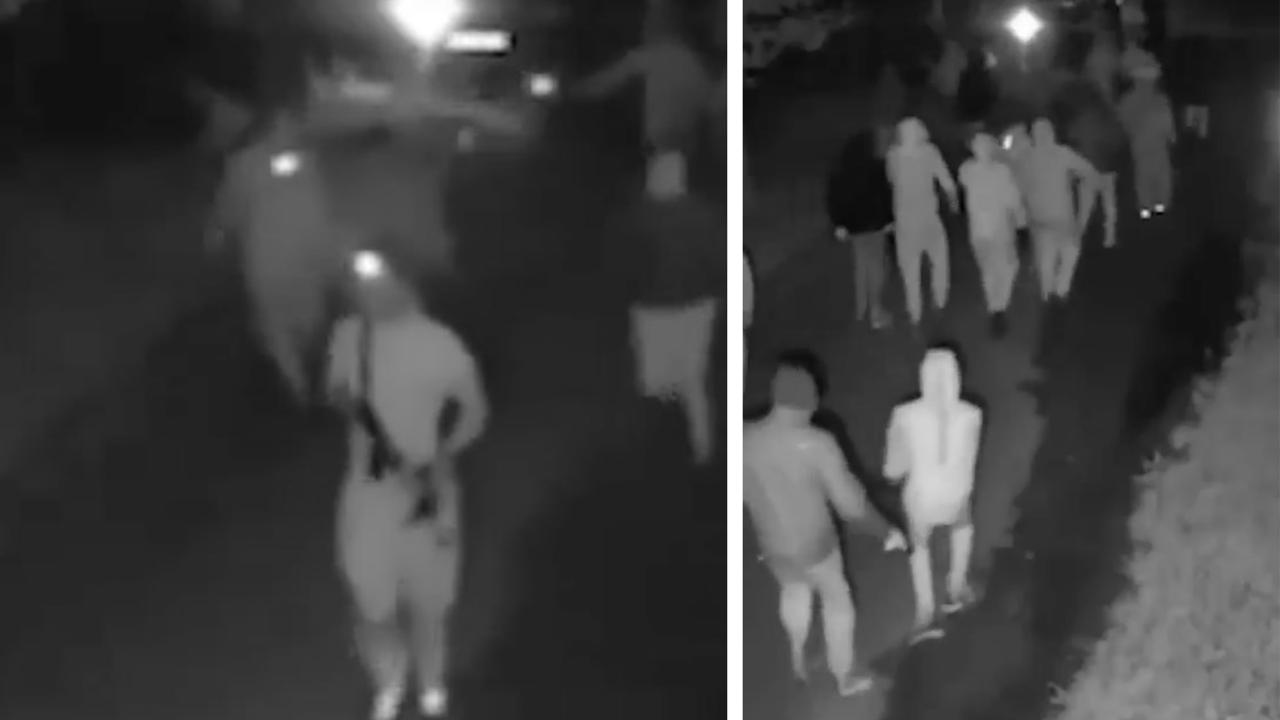
Dozens of armed drug gang members opened fire in the small Dutch town of Overasselt.

Footage shows multiple vans filled with masked men armed with assault rifles.… pic.twitter.com/ShudqYyHFg

— Remix News & Views (@RMXnews) September 2, 2026

Around 4:00 a.m., two vans pulled up and a large group approached a farmhouse previously tied to a drug lab. The surveillance footage shows the group approaching a parked car with its interior light on. Five shots were then fired, according to the Dutch police report on the incident.

A 51-year-old man from nearby Wijchen, hired as a security guard after an earlier attack on the property, was murdered. Neighbors reported hearing dozens of shots, with one neighbor telling Dutch media he heard 37 shots before police arrived.

The first officers responding to a report of a suspicious situation came under immediate fire. Colleagues dragged the wounded officers to safety while still being shot at. One officer initially suffered life-threatening injuries; both were later reported out of danger.

Police launched a nationwide manhunt involving helicopters, dogs, special intervention units, and roadblocks on the A73 and A76. Warning shots were fired during searches of cornfields, gardens, and other sites. The operation led to the arrest of 34 suspects at multiple locations, including a cornfield near the scene, Nijmegen train station, and highways in Limburg.

The suspects included Dutch, Belgian, French, and Algerian nationals. Weapons, vehicles, and data carriers were seized. A large-scale investigation team (TGO) has now been formed, with all detainees remaining in custody.

The incredible violence has sparked reactions all the way from local police officials to the country’s justice minister.

Deputy Police Chief of the East Netherlands unit Jolanda Aalbers described the night as “indescribable.”

“For colleagues this is a truly intense incident. Colleagues were wounded and they were brought to safety by other colleagues at risk to their own lives. It was a real act of heroism. We are grateful that the wounded colleagues are out of life-threatening condition.”

Justice Minister David van Weel condemned “horrible violence” and said “we do not tolerate this,” according to Dutch news outlet NOS.

He also described the scale of the violence as “unprecedented” for the Netherlands.

“The fact that you have hordes of dozens of young people walking through the streets of a village and immediately opening fire on the police is unprecedented and new,” he said. He spoke of a suspected criminal settling of accounts involving international drug cartels that operate across borders.

Deputy Chief Prosecutor Monique Vinkesteijn called it a “long-running conflict.”

She said that suspects face charges including murder or manslaughter, attempted murder, conspiracy, and preparation of a kidnapping. She described ten different crime scenes, underlining the sprawling and complex nature of the crime. She said investigators were working to link each suspect to specific locations.

Mayor Joerie Minses of Heumen municipality, which includes Overasselt, called the violence “un-Dutch,” “completely unacceptable,” and something that “goes beyond all bounds.”

“What happened last night does not fit Overasselt,” he stated.

He now says he may want to close the farmhouse entirely, which has a documented history of trouble.

In 2019, a professional drug lab was found in shipping containers near the farmhouse after a fire. In 2024, armed men were found at the gate of the house.

In July 2025, an attacker fired at least 25 rounds from an AK-47-style rifle at the house, resulting in the conviction of a 21-year-old from Amsterdam. Residents then hired private security.

What sparked the latest attack?

There are now questions about what prompted such a large-scale attack from the drug gangs. Dutch media, citing police sources, linked the attack to a dispute over an 812-kilogram cocaine shipment seized on Aug. 29 at the French-Spanish border. The drugs were in a Dutch-registered truck traveling from Africa via Portugal.

The masked gang members may have been seeking a missing portion of the load or confronting an intermediary connected to Leijdekkers’ network. Leijdekkers, one of the Netherlands’ most-wanted fugitives, has been convicted in both the Netherlands and Belgium, including a 14-year sentence in the Belgian Costa case involving Antwerp port cocaine trafficking. He faces decades in prison for other crimes as well. He is believed to be in West Africa. Police have not officially confirmed the Leijdekkers link.

The post ‘Horrible violence’ – 1 security guard murdered and 2 police officers wounded after dozens of armed gang members open fire in quiet Dutch village appeared first on Remix News.

  •  

This Doorway is a National Monument of The Netherlands

On Smedestraat, a shopping street in the historic center of Haarlem, in the Netherlands, is an unusual national monument. It’s not a house, church, or public building, but a 17th-century brick gateway with a wooden door. Its significance lies in both its architectural details and what it reveals about the historic urban fabric of Haarlem.

The gateway dates from the second half of the 17th century and is protected because it preserves a rare and attractive example of period brickwork. The most distinctive feature is the blind circular window (a decorative round opening that is not actually a window) incorporated into the masonry above the archway.


The doorway. Credit: Wikimedia Commons


© Amusing Planet, 2026

  •  
❌