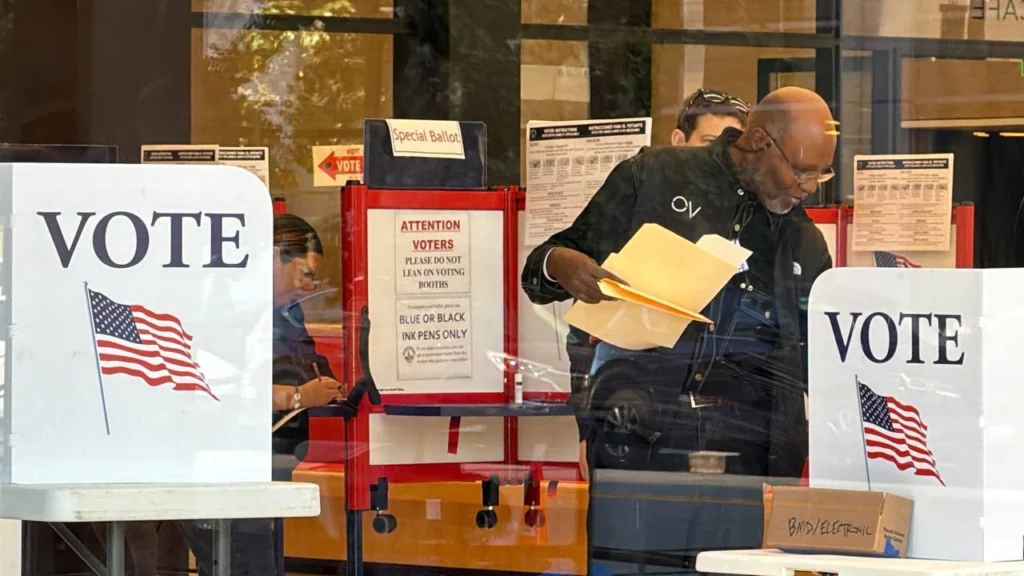
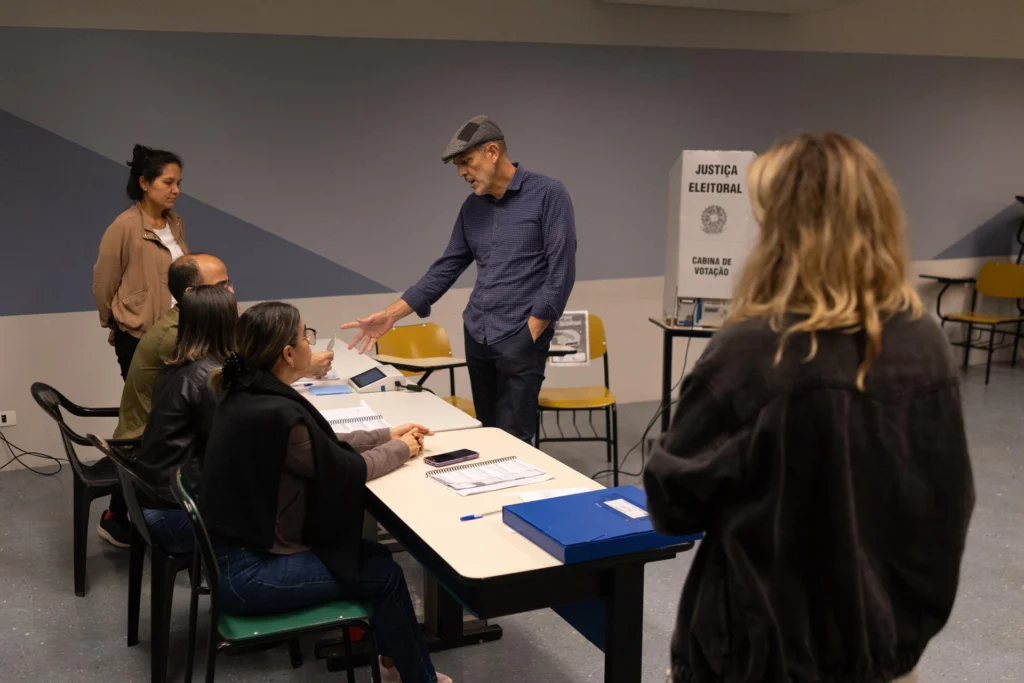
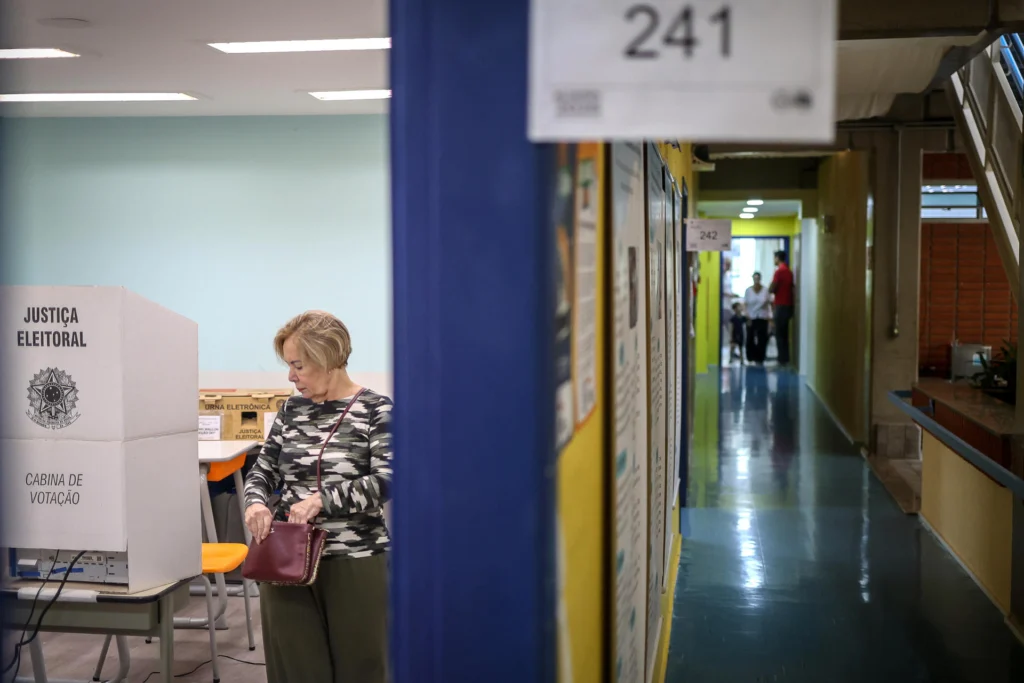
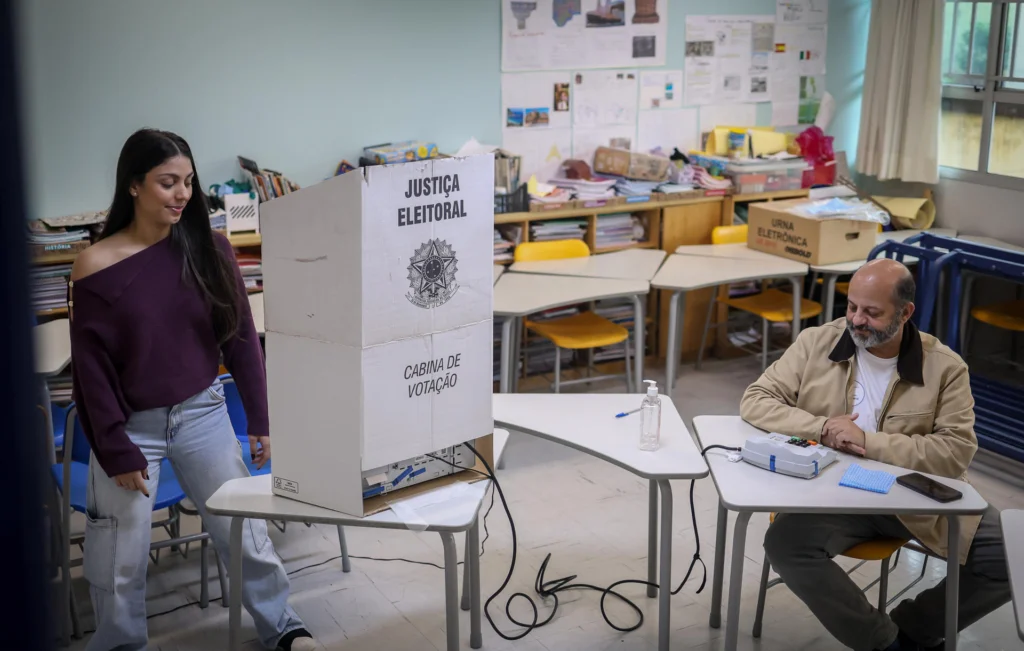
In-person early voting for the U.S. midterm elections began on Monday in Washington D.C., while more than 23 million people across the country had already cast ballots by October 25, far surpassing the 15 million recorded in 2022.
Early voting opened on October 26 across Washington D.C. and will run through every district until Sunday, November 1.
Residents who missed the online or mail registration deadline can still register directly at the polling center. That same-day registration requires a valid, recent proof of address, such as an official identification, a utility bill or a bank statement issued within the past ninety days.
District law also lets non-citizen residents who meet age and local residency requirements vote in municipal elections. They receive a separate ballot limited to district offices, including the Council, the Board of Education and the Advisory Neighborhood Commissions.
In neighboring Maryland, the early voting period runs through Thursday, October 29, with centers open daily from 7 A.M. to 8 P.M. local time. Voters there can also register the same day by showing a document that proves their current address.
Election authorities detailed the rules for those who prefer mail ballots or official drop boxes before the November 3 general vote. In Washington D.C., ballots must carry that date’s postmark or be deposited before 8 P.M.
Maryland set Tuesday, October 27, as the cutoff for requesting printed ballots at each county’s local offices.
Voters who miss the October 27 request deadline in Maryland can still cast a ballot in person during the early window or on November 3. The mail route, however, closes at that point for printed ballots.
The midterm cycle has produced a sharp rise in early participation. As of October 25, more than 23 million people had voted early nationwide, up from the 15 million recorded in 2022.
After two years marked by unilateral decisions, a hardline stance on immigration, rising living costs and involvement in the war against Iran, Donald Trump’s administration now faces a ballot test that could strip Republicans of their absolute control of Congress.
All 435 seats in the House of Representatives are being contested. Republicans hold 218 seats against 214 for the Democrats, along with two vacancies and one independent seat occupied by Kevin Kiley after his departure from the Republican Party. That narrow margin leaves the chamber within reach for the opposition, and the surge in early ballots is being read as a measure of how much ground the ruling party could lose.
The early vote will keep building through the final weekend before November 3, when the full contours of the midterm electorate will emerge.
U.S. President Donald Trump urged Israeli voters to reelect Prime Minister Benjamin Netanyahu and to press the military campaign against Iran until it is complete.
Donald Trump framed Benjamin Netanyahu’s return to power as a condition for finishing the offensive against Iran. “We have to finish the job we started,” he wrote on his social media, aiming the appeal squarely at Israeli voters three days before the legislative elections.
The U.S. President returned to an October 18 letter in which he called Netanyahu an “exceptional Prime Minister warrior” and praised their joint record in military operations.
As everyone knows, including the enemy, Bibi and I have had a great relationship to win together,” Trump stated, holding up Operation Epic Fury as proof of their cooperation.
Trump asserted that Iran had lost its navy and its air force and that its economy had fallen into a “state of chaos.” He placed inflation at 301% and claimed a naval blockade had stopped oil exports. Two tiers of Iranian leadership, military and civilian, had been eliminated, he added.
‘Netanyahu has done a VERY GOOD JOB as prime minister under very trying conditions’ — Trump pic.twitter.com/4VQJ2fR3mJ
In the October 18 letter, Trump described the Israeli leader as a “Great Warrior Prime Minister” and an “even greater partner for peace.” His latest post closed with an open call for Netanyahu’s reelection in the middle of the Iran offensive.
The appeal marks another attempt by the White House to steer another nation’s vote. It also arrives as Washington and Tel Aviv face sustained protests over the war on the Gaza Strip, where Israel’s conduct has been denounced as a policy of extermination.
Netanyahu and Trump met in Washington amid protests against the genocide in Gaza, and Trump has framed their alliance as a shared military project. Trump’s latest intervention draws Washington deeper into a vote that will decide not only Israel’s leadership but also the regional balance.
BREAKING: President Trump issues a second statement endorsing Israeli Prime Minister Benjamin Netanyahu.
This marks the first time a US President has publicly endorsed a candidate in the Israeli elections. pic.twitter.com/t4l0qtj3hi
The endorsement lands days before more than seven million voters renew the 120 seats of the Knesset, Israel’s parliament. Surveys project a fragmented legislature in which no bloc secures the 61 seats required to form a government. The threshold has rarely yielded a stable majority in recent cycles, and this campaign has only deepened the fragmentation.
That arithmetic has lifted the leverage of Israel’s Arab parties and pulled tens of thousands of expatriates back home to cast ballots. It has also sharpened a parallel demand for accountability.
On Saturday, tens of thousands of people marched in Tel Aviv to demand an independent state commission of inquiry into the October 7, 2023 Israeli attack. Organizers stressed that the gathering was civic in nature and did not endorse any party or candidacy.
The opposition bloc led by former army chief of staff Gadi Eisenkot is pressing for that independent commission. Netanyahu opposes the measure, while his supporters highlight his record on national security and regional operations. Neither camp has stopped to examine Israel’s conduct and its policy of extermination against the Gaza Strip.
Tuesday’s vote will determine whether Netanyahu secures the mandate Trump is urging. With no bloc near a majority, coalition negotiations are expected to follow, and the outcome will shape both Israel’s next government and the course of the Iran campaign.
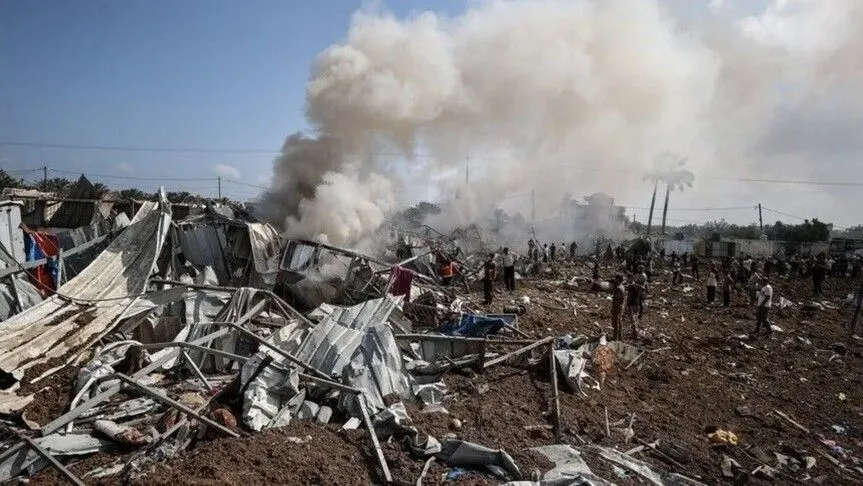
More than 800 Palestinians lost their homes after a fire gutted a displacement camp in the Shujaiya neighborhood of eastern Gaza City, in an attack the Gaza Ministry of Public Works and Housing blamed on Israeli military drones.
The blaze consumed the camp’s tents and nearly everything inside them, according to the Gazan Ministry, which said quadcopter drones operated by Israeli forces ignited the fire on October 26.
The fire affected more than 200 families, made up mostly of women, children, the elderly and people with vulnerable health conditions, the Gaza Ministry of Public Works and Housing detailed. The flames caused panic among residents, who have no housing alternatives.
The Shujaiya camp sheltered families who had already fled their homes in other parts of the territory. Many had moved more than once since the war began, carrying whatever they could salvage each time.
💢🇵🇸 Over 800 Palestinians have been forced to displace yet again from Shujaiya, an eastern neighborhood in Gaza City, after Israeli forces set fire to a displacement camp, according to Al Jazeera.
Israeli quadcopter drones set the camp ablaze at around 8 p.m. local time on… https://t.co/9nyw5g9DGe
Palestinian authorities called the fire a flagrant violation of international humanitarian law and the Geneva Conventions. They framed it as part of a deliberate policy of forced displacement designed to push people out of the territory.
The Ministry of Public Works and Housing demanded urgent action from the international community, the UN Security Council, and the United Nations, and it asked those bodies to halt the attacks on civilians without further delay. It also pressed humanitarian agencies to deliver tents, temporary shelters, and essential supplies immediately to families left without roofs or belongings.
Local spokespeople linked the persistence of military operations to the tense electoral climate inside Israel, where security politics have hardened. Security operations have long featured in Israeli campaigns, and commanders face domestic pressure to show results even as international criticism mounts.
A ceasefire agreement announced on October 10, 2025, never produced calm on the ground. Israeli forces have maintained recurrent bombings, shootings, and demolition work across different parts of the Gaza Strip. Official records show the zionist offensive launched in October 2023 has now surpassed 74,000 deaths and left 175,000 people wounded.
Human rights organizations renewed their demands for a halt to hostilities and for safe, unobstructed access for humanitarian assistance. The widespread destruction of civilian infrastructure has made recovery more difficult for communities worn down by repeated strikes. Hospitals, schools, and homes lie in ruins across the territory.
Aid agencies describe the situation as catastrophic. Clean water, medicine, and fuel remain scarce, and the latest fire has multiplied the need for emergency shelter in a place where almost every building is damaged.
Palestinian officials say the fire is not an isolated event but a symptom of a broader campaign against civilian life, insisting the international response so far has fallen short of the scale of the crisis.
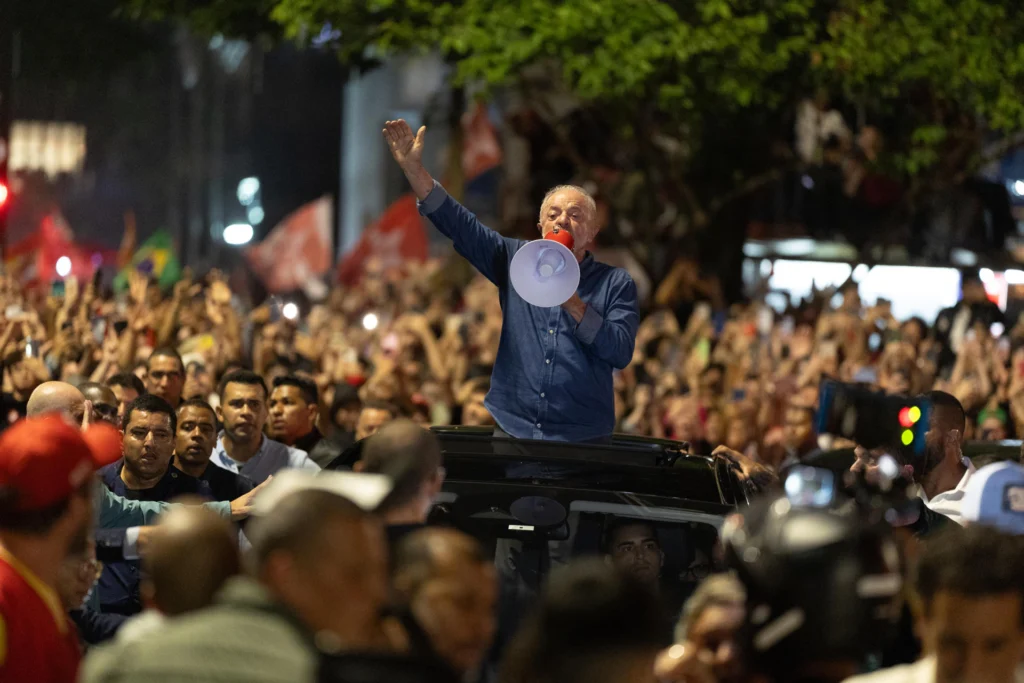
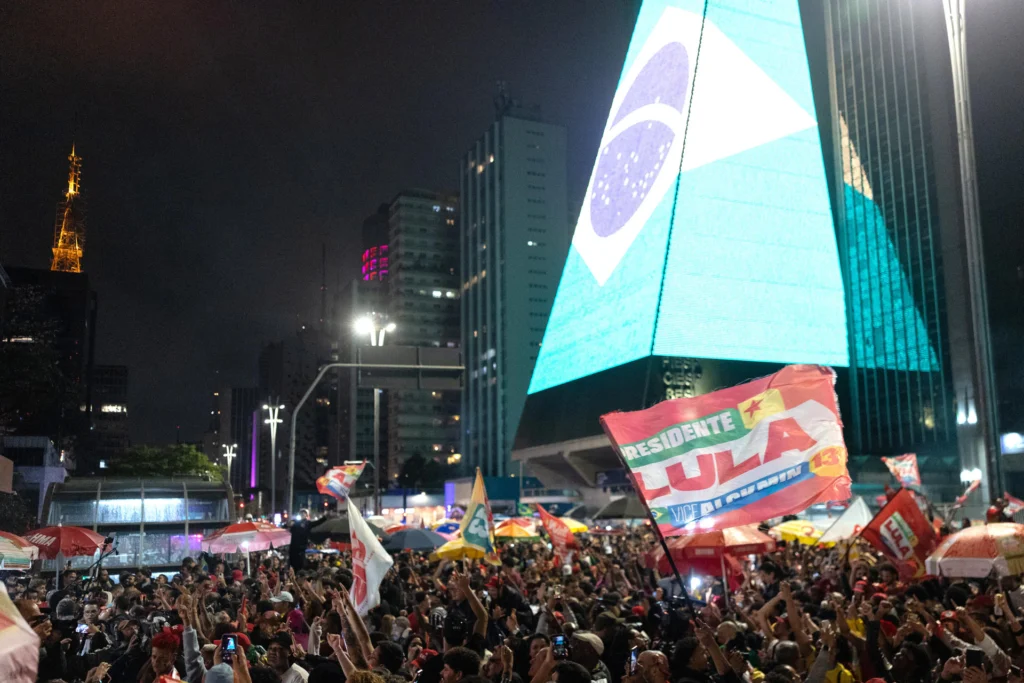
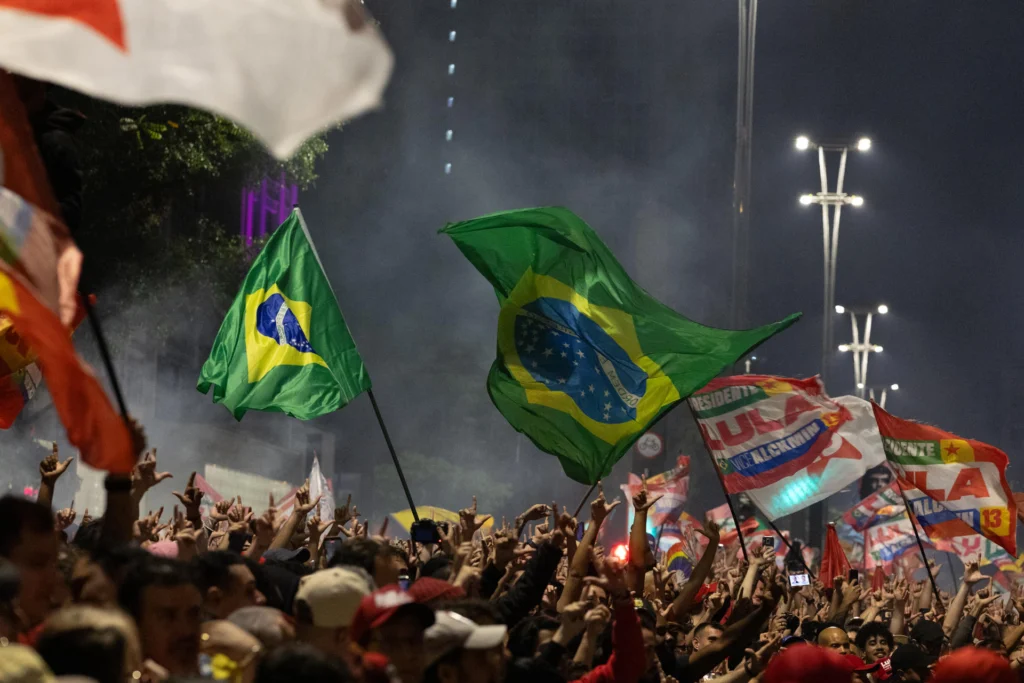
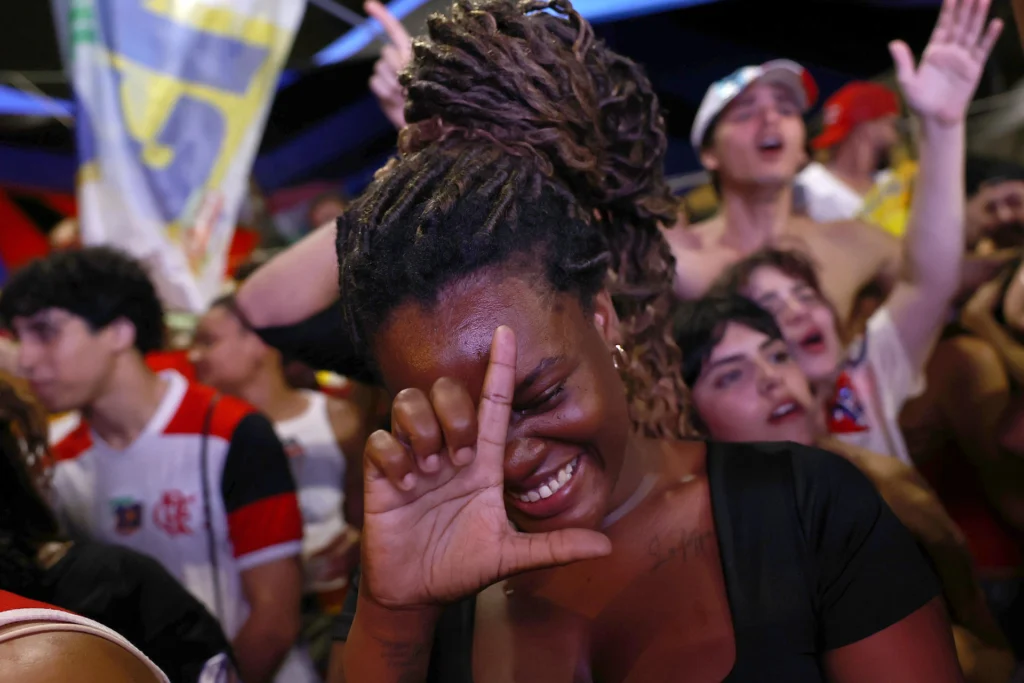
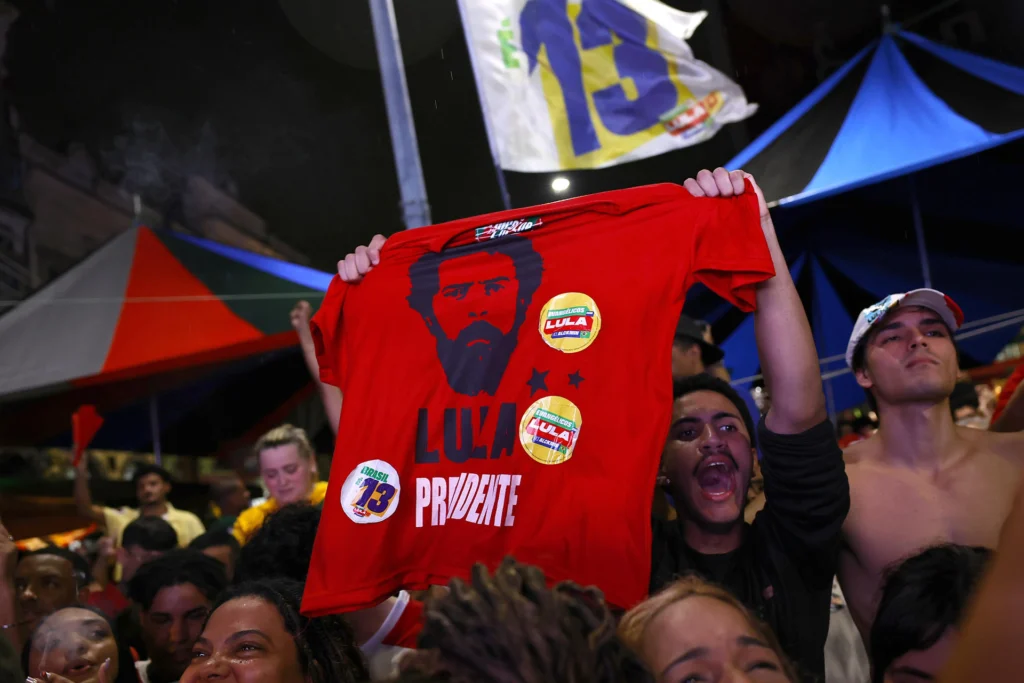
Hundreds of thousands of Brazilians poured into the streets of the country’s largest cities on Sunday night to celebrate Luiz Inácio Lula da Silva’s runoff victory, sealed with more than 64 million votes and a comeback without precedent in Brazil’s democratic history.
Hundreds of thousands of Brazilians filled the streets of the country’s main cities to celebrate the victory of Luiz Inácio Lula da Silva at the Presidential election on Sunday, October 25.
With 100% of the vote counted, the Superior Electoral Court (TSE) indicated that the current President obtained 51.79% of the votes against 48.21% for the ultra-right senator Flávio Bolsonaro.
According to the official tally, Lula exceeded 64 million votes, making him the first president elected four times in the country. The count turned out to be a historic comeback, with 10 million votes won by the leader of the Workers’ Party (PT) between the first and second round.
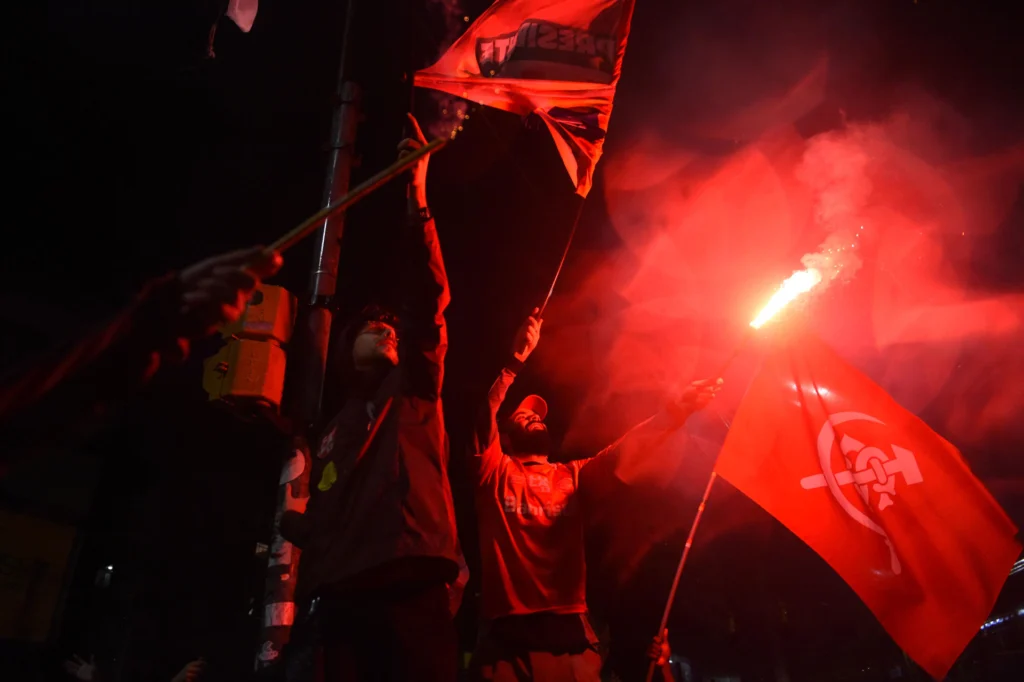
Salvador, the capital of Bahia state, erupted first. The Rio Vermelho neighborhood, a traditional gathering point for left-wing activists, was taken over by the celebrations. Largo da Dinha filled with Lula voters, and fireworks lit the night sky near the Casa de Iemanjá. In the Imbuí district, neighbors leaned from the balconies of their buildings to join the party. More festivities unfolded in Graça, Pituba and Vila Laura.
🇧🇷 | Festejos masivos en São Paulo: miles de personas colmaron la Avenida Paulista para celebrar la victoria de Lula da Silva tras imponerse en el balotaje frente a Flávio Bolsonaro. Banderas, cánticos y euforia tiñen el corazón financiero de Brasil. pic.twitter.com/67Ipi8gK8e
Bahia was decisive. The state contributed more than 6.4 million votes in the second round, 71% of its total, and almost 1.2 million in Salvador alone, 73% of the capital’s ballots, according to BNews. Those numbers helped reverse the first round, when Flávio Bolsonaro had finished ahead.
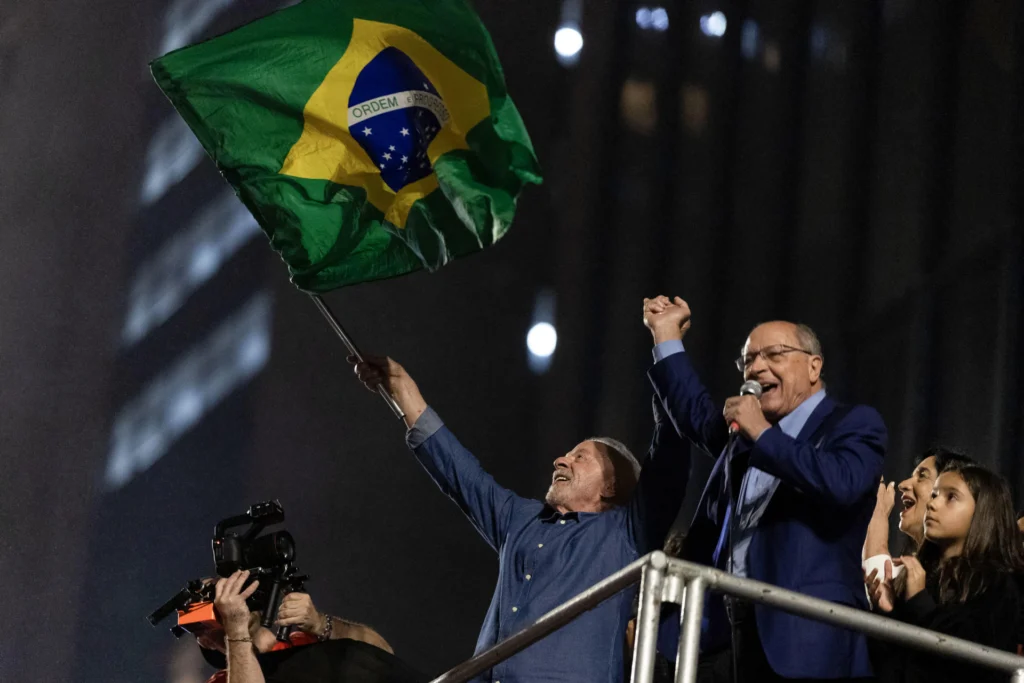
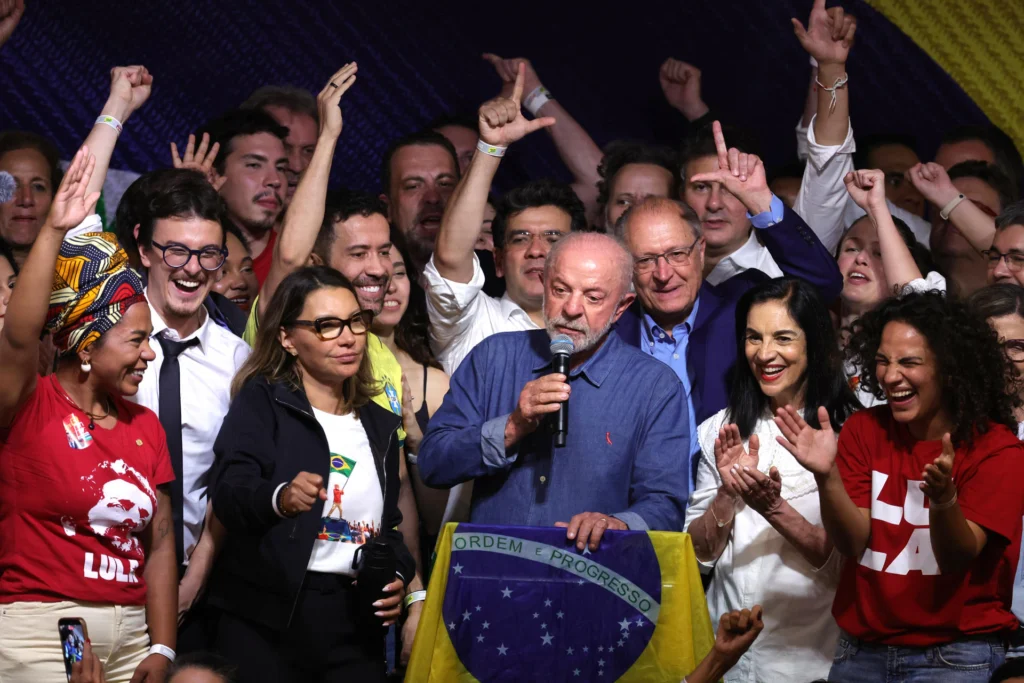
The President of Brazil, Luiz Inácio Lula da Silva, and the Vice-president, Geraldo Alckmin, celebrate the electoral victory along with the people in Sao Paulo / Photos: EFE.
A Red Sea of People
In the federal capital, block 405 of Asa Norte became the main concentration point for Lula’s supporters. A true “sea of people,” dressed in red and waving flags and umbrellas, vibrated when the official victory announcement arrived. Celebrations also spread to Águas Claras and Guará, where some drivers sounded their horns through the night.
Across the political divide, supporters of Flavio Bolsonaro and of reelected Federal District governor Celina Leão had planned a Victory Act at the National Museum of the Republic that same Sunday. The contrast between the two gatherings captured the split that defined the contest.
In Rio de Janeiro, crowds also took to the streets to mark the historic comeback, one that Datafolha described as unprecedented since 1989.
SEGUIDORES DE LULA SALEN A CELEBRAR SU REELECCIÓN EN BRASILIA
🇧🇷🎉 Simpatizantes del presidente Luiz Inácio Lula da Silva se congregaron en una zona de bares de Brasilia, la capital de Brasil, para festejar su victoria sobre Flávio Bolsonaro. pic.twitter.com/zRm57ipIzX
With this recent electoral victory, Lula, now 80 years old, returns for a fourth term after finishing second in the first round, and after the courts sentenced his previous rival, Jair Bolsonaro, to more than 27 years in prison for attempting to overturn the 2022 result. Flávio Bolsonaro, the imprisoned former President’s eldest son, carried the family banner this time and lost it.
The reelection also comes with a strengthened legislative position. The Workers’ Party (PT) gained more than 20 seats in the Chamber of Deputies compared with 2022.
The Brazilian result breaks with a regional trend that had favored right-wing candidates allied with Trump, and it repositions Brazil at the center of South American politics.
Luiz Inácio Lula da Silva celebrated his reelection on Sunday with a pledge to govern for all 215 million Brazilians and a warning that digital platforms will be regulated.
The triumph arrived with 51.79% of valid votes against 48.21% for Flavio Bolsonaro, with 99.99% of the votes countedcounted. Lula had finished second in the first round and secured a fourth term with the runoff.
Once the ballots were tallied, the Brazilian President affirmed that there are no more adversaries. “I have to govern for 215 million,” Lula said, promising to treat all citizens on equal terms and to give women greater respect in public policy.
The President promised to make full day schooling universal through high school and to extend the Pé-de-Meia incentive to all students at that level, a program that keeps young people from abandoning the classroom for work. He also announced a university version of the program.
Lula also announced that care policies for older people will be taken seriously, calling the elderly responsible for the existence of Brazilians. “I have no preference for any religion. I have preference for the faith of the Brazilian people,” he said, defending a secular state that guarantees full religious freedom.
The re-elected President framed the result as more than a win at the polls. “This election was a defeat of denialism. It was a defeat of the lie,” he declared. He confessed that the debates left him shaken, despite his long experience and a year of constant meetings with leaders of the G20, the BRICS and the G7.
None of that, he said, prepared him to face “a genuine representative of the militias in this country,” referring to Flavio Bolsonaro. “I never imagined that a person could lie so much with such shamelessness, as if he had not a bit of sincerity inside him,” he added.
Minha gratidão eterna ao povo brasileiro, à juventude que tomou as ruas em defesa da democracia e a cada pessoa que fez um esforço imenso para votar e defender o futuro do nosso país.
Vocês me emocionam e renovam minha esperança. Essa vitória é de um povo que acredita, que luta… pic.twitter.com/bYpKMdFgP0
Lula announced that digital platforms will be regulated and demanded that crimes committed online receive the same treatment as crimes in real life. He questioned companies that earn millions in Brazil without paying taxes while trying to steer the vote, and denounced foreign interference through those platforms during the campaign.
The President’s plan for technology carries a nationalist stamp. “I do not want to depend on North American artificial intelligence. I want to create a Brazilian one,” he said. To achieve it, he proposed using the country’s renewable energy to attract data centers, on the condition that companies reserve part of their capacity for Brazilian information.
That project feeds a larger ambition, to move Brazil from a developing country to a developed one, powered by the digital, green and creative economies. Lula credited the people’s creative potential rather than himself. “We want to be a central country in political and economic decisions and in the promotion of peace,” he said.
“We are going to teach the world how climate policies are handled in this country,” he promised, noting that this year Brazil will reduce deforestation for four consecutive years for the first time.
Lula thanked the people for their generosity in the second round and the young people who took to the streets to defend democracy. He recalled the elderly who reached the polls carried by their grandchildren and cancer patients who voted anyway, convinced their ballot was essential. To that conviction he attributed the lowest abstention and the fewest null votes in the country’s history.
Lula achieves his fourth term after an unprecedented comeback, and his party, the Worker’s Party (PT), gains more than 20 seats over what he achieved in 2022 in the Chamber of Deputies. The re-election, which term officially starts on January 1, 2027, represents a break with the regional trend of triumphs by right-wing candidates allied to U.S. President Trump.
Presidents and former leaders across Latin America celebrated Luiz Inácio Lula da Silva’s fourth term on Sunday after the official count confirmed his runoff victory in Brazil with 51.79 percent of valid votes.
Brazilian President Luiz Inácio Lula da Silva won Sunday’s presidential runoff against Senator Flávio Bolsonaro with 51.79% of valid votes, securing a fourth term, with 99.99% of precincts reported, and drawing congratulations from leaders across Latin America.
With nearly all precincts counted, Lula had 64,255,891 votes against 59,825,984 for Bolsonaro, a margin of 4,429,907 votes. Lula had finished second in the first round, and the pollster Datafolha described the turnaround as unprecedented since 1989.
Latin America Reacts
Former Argentine President Cristina Fernández de Kirchner was the first to write, addressing the Brazilian people before the candidate. She called the vote “an authentic electoral October 17,” a reference to the 1945 mass workers’ rally in Buenos Aires that secured the release of Juan Domingo Perón and is considered the founding date of Peronism. She added that Lula, in his seventh presidential election, “knew how to awaken feeling and meaning in his compatriots to win this battle.”
FELICITACIONES… primero al pueblo brasileño que hoy protagonizó un auténtico 17 de Octubre electoral y después… a usted, compañero presidente Lula, que en su séptima elección presidencial supo despertar en sus compatriotas sentimiento y sentido para ganar esta batalla.
From Havana, President Miguel Díaz-Canel spoke on behalf of the Cuban government and people. He celebrated a “historic victory that guarantees the continuity of the path of peace, sovereignty and social justice undertaken by the Brazilian people under your leadership.” He also offered Cuba’s support for Latin American and Caribbean unity and integration.
Estimado hermano @LulaOficial, te felicito en nombre del gobierno y pueblo cubanos por esta victoria histórica que garantiza la continuidad del camino de paz, soberanía y justicia social emprendido por el pueblo brasileño bajo tu liderazgo.
The President of Uruguay, Yamandú Orsi, communicated this Sunday with the Brazilian President, Luiz Inácio Lula da Silva, to congratulate him on his victory in the second round of elections and highlight the democratic holiday that the country lived.
“I just got in touch with Brazil’s president-elect, Luiz Inácio Lula da Silva, a friend. I congratulated him on the triumph and for the democratic holiday that represents an electoral process”, said Orsi in his social networks.
Acabo de comunicarme con el presidente electo de Brasil, Luiz Inácio Lula da Silva, un amigo.
Lo felicité por el triunfo y por la fiesta democrática que representa un proceso electoral.
For his part, the President of Paraguay, Santiago Peña, congratulated Luiz Inácio Lula da Silva for his victory in the second round of the presidential elections of Brazil, in which he defeated the ultra-right senator Flávio Bolsonaro.
“Congratulations @LulaOficial on your election as President of Brazil. Greeting the Brazilian people for this great democratic day”, published Peña on social network X.
The ruler affirmed that Paraguay and Brazil share “a common agenda of integration and development”, while promising to continue “working together for the well-being” of their peoples.
Felicidades @LulaOficial por tu elección como Presidente del Brasil. Saludo al pueblo brasileño por esta gran jornada democrática. El Paraguay y Brasil comparten una agenda común de integración y desarrollo. Seguiremos trabajando juntos por el bienestar de nuestra gente.
“I congratulate President @LulaOficial on his victory. Bolivia and Brazil are neighboring and fraternal countries, united by a shared history and common challenges,” stated the Bolivian President Rodrigo Paz,while he seeks to strengthen bilateral relationship and create more opportunities for both nations.
Felicito al presidente @LulaOficial por su victoria. Bolivia y Brasil somos países vecinos y hermanos, unidos por una historia y desafíos comunes. Seguiremos trabajando juntos para fortalecer nuestra relación y generar más oportunidades para nuestras naciones. 🇧🇴🤝🇧🇷
Bolivia’s former President Evo Morales chose a more intimate tone. “Brother of my soul and comrade in struggle, congratulations on this beautiful and heroic victory,” he wrote on social media.
For the Aymara leader, the Brazilian’s re-election reaches across the continent. “Your triumph renews the hope of the peoples who fight for social justice, dignity and sovereignty,” he added, closing with cheers for the Brazilian people and the Latin American region.
@LulaOficial ! Hermano del alma y compañero de lucha, felicidades por esta hermosa y heroica victoria!
Tu triunfo renueva la esperanza de los pueblos que luchan por la justicia social, la dignidad y la soberanía. Desde Bolivia, te enviamos un abrazo revolucionario y fraterno,… pic.twitter.com/XflrKlOz5F
Colombian Former President Gustavo Petro argued that Brazil had halted the advance of fascism in Latin America and credited a people who resisted a flood of fake bots. He also highlighted Brazil’s electoral system, which runs on public software and which, in his view, citizens guarded to prevent fraud.
Petro affirmed that the victory saves social justice and the country’s natural resources from foreign ambition. “Well done Lula,” he wrote. “This is a triumph for humanity and a strategic defeat for the forces of darkness.“
Se ha detenido el fascismo en America Latina en Brasil.
El pueblo brasileño libre logró frenar la avalancha de los bots falsos y el sistema electoral con software público y bien cuidado por la gente evitó fraudes, se salva la justicia social en Brasil y el intento extranjero de… pic.twitter.com/oETnxYC6Sq
Mexico’s President, Claudia Sheinbaum, also congratulated Lula. “Long live democracy, the people of Brazil won. Congratulations President Lula!” Sheinbaum noted in a social media post.
Viva la democracia, ganó el pueblo de Brasil. ¡Felicidades presidente Lula!
In the 2022 runoff, Lula beat Jair Bolsonaro by 50.90% to 49.10%. Jair Bolsonaro’s supporters then called for a military coup, and courts later sentenced the former President to 27 years in prison for trying to overturn that result. From prison, Bolsonaro named his eldest son, 44, as his candidate.
Earlier on Sunday, voting was extended by two hours, to 7 P.M., by Supreme Court justice Cristiano Zanin. The vote count was paused and then resumed.
On October 4, Flavio Bolsonaro had led the first round with 47.03% against Lula’s 45.16%. Surveys on the eve of the runoff showed a technical tie at 51 and 49 percent. The final tally reversed that picture and closed the door on the Bolsonaro family’s return to power.
Lula will be sworn in for his fourth term on January 5, 2027. His new victory is expected to have significant implications beyond Brazil’s borders. As the largest economy and most populous country in Latin America, Brazil plays a central role in regional diplomacy, trade, and environmental policy.
With 99.75% of the vote counted, Brazil’s presidential runoff was declared “mathematically defined,” putting incumbent Luiz Inácio Lula da Silva on track to defeat Flavio Bolsonaro.
Luiz Inácio Lula da Silva has secured reelection as Brazilian President, defeating Flávio Bolsonaro in a closely contested presidential runoff and winning an unprecedented fourth term in office, with a difference of over four million ballots and more than three percentage points.
The count, which surpassed 99 percent of polling stations, was declared mathematically defined well before the final numbers landed.
The result marks a significant political moment for the region’s largest democracy, signaling both continuity with Lula’s political legacy and a new chapter in Brazil’s evolving democratic landscape.
As vote counting progressed throughout the evening, Lula steadily maintained an advantage that ultimately became impossible for his rival to overcome. Electoral analysts and officials declared the race mathematically decided before the final ballots were counted, effectively confirming Lula’s return to the nation’s highest office.
The election represented one of the most consequential political contests in recent Brazilian history. Lula, a president known for his social programs and efforts to reduce poverty during his previous administrations, campaigned on promises of economic inclusion, institutional stability, and national reconciliation. Throughout the campaign, he emphasized the need to strengthen democratic institutions, expand opportunities for lower-income Brazilians, and restore Brazil’s international standing.
Flávio Bolsonaro entered the race carrying the political legacy of his father, former President Jair Bolsonaro, sentenced to 27 years in prison for attempting to overturn the 2022 election results. His campaign appealed primarily to conservative voters, highlighting issues related to public security, economic liberalization, and traditional values. The contest therefore became a referendum not only on competing political platforms but also on two distinct visions for Brazil’s future.
Voter turnout remained strong across much of the country, reflecting the high stakes of the election. Major urban centers, as well as many rural areas, reported significant participation levels as citizens headed to polling stations to determine the direction of the nation for the coming years.
Political observers noted that the campaign was marked by intense debates over economic policy, environmental protection, public spending, and Brazil’s role in international affairs. These issues dominated public discussions and helped mobilize millions of voters on both sides of the political spectrum.
Lula’s victory is expected to have significant implications beyond Brazil’s borders. As the largest economy and most populous country in Latin America, Brazil plays a central role in regional diplomacy, trade, and environmental policy.
One area likely to receive immediate attention is environmental policy, particularly regarding the Amazon rainforest. During the campaign, Lula reiterated commitments to environmental protection and sustainable development, issues that have attracted growing international concern in recent years. Global leaders and environmental organizations are expected to monitor how these commitments translate into government action.
Economically, investors and business leaders will be looking for signals regarding fiscal policy, market regulation, and social spending priorities. Lula faces the challenge of balancing economic growth with social programs designed to reduce inequality and improve living standards for millions of Brazilians.
The election also highlights the resilience of Brazil’s democratic institutions. Despite a highly polarized political environment and an intensely competitive campaign, the electoral process proceeded under established constitutional rules. The public security balance described a day characterized by widespread calm and a low rate of irregularities at voting centers.
Lula, the President re-elected, becomes the most popular presidential candidate in Brazil’s history and he will be sworn in for a fourth term on January 5, 2027. With the election effectively settled before the final count was completed, Brazil begins a new political era under the leadership of Lula, a figure whose return to power is likely to influence both national policy and regional politics for years to come.
Brazil’s final polling stations closed at 7 p.m. local time Sunday, ending a two-hour Supreme Court extension and clearing the way for the vote count to resume in the presidential runoff.
The official cutoff had been set for 5 P.M. local time but the Supreme Federal Court pushed it back two hours as the original deadline arrived. Under the decision, only precincts where balloting had not ended by 5 P.M. Brasilia time could keep receiving voters.
The last polling stations in Brazil shut their doors at 7 P.M. Brasilia time on Sunday, marking the end of an extraordinary two-hour window that the Supreme Court had ordered only minutes before the original deadline.
Once the extended voting period concluded, election officials formally closed the polls and resumed the nationwide vote count.
The Court’s notification arrived shortly after 5 P.M., when voting was already due to close. By that point, hundreds of polling stations had finished the day’s work, printed their ballot bulletins and even begun shipping equipment to the regional electoral courts.
The definitive shutdown shifted attention to the Superior Electoral Court, which prepared to restart the count. Officials had frozen it six minutes after it began, when only 0.25% of ballots had been processed.
With counting now underway once again, millions of Brazilians are awaiting the official results that will determine the country’s next President who will govern Brazil from 2027 to 2031. The outcome is expected to shape Brazil’s political direction, economic priorities, and international relations over the coming years.
For now, the process rests on the resumed tally. The coming hours will show whether the early lead holds as ballot bulletins arrive from across the South American country.
Brazil’s electoral authority said Sunday that voting in the presidential runoff will continue only at polling places still open past 5 p.m., with ballot records, counting and results resuming after 7 p.m. under a court order.
The Brazilian Superior Electoral Court (TSE) announced the measure on its official account, describing it as a response to a ruling by Supreme Federal Court justice Cristiano Zanin.
Under the decision, only precincts where balloting had not ended by 5 P.M. Brasilia time could keep receiving voters.
Election officials suspended the receipt of printed ballot records, the tally of votes and the release of results, and said all three would resume after 7 P.M. local time.
Voting in Brazil closes nationwide at 5 p.m. in every election. The order by Zanin gives electoral authorities room to let voters cast ballots where local conditions kept lines moving past the cutoff.
Almost all Superior Electoral Court ministers had gathered in the office of the court’s presidency to await the end of balloting, the statement added.
Esclarecimento sobre prorrogação da votação
O Tribunal Superior Eleitoral (@TSEjusbr) informa que, conforme decisão do ministro Cristiano Zanin, do Supremo Tribunal Federal, a eleição segue em andamento apenas nos locais em que a votação não havia sido encerrada às 17h.
The electoral authorities will resume the receipt of the ballot-box bulletins (known as BUs), the totalization of votes and the release of results after 7 P.M. local time. These bulletins are the printed summaries of each electronic voting machine’s tally, and they feed the national count.
Brazil conducts its elections entirely on electronic voting machines managed by the Superior Electoral Court and the regional electoral courts. The system has drawn criticism over transparency, although no case of fraud has ever been confirmed.
The Superior Electoral Court heads the country’s Electoral Justice, which handles voter registration, biometric identification, vote collection, tabulation and the final certification of results.
Sunday’s vote settles the presidency after the October 4 first round produced no outright winner. Senator Flávio Bolsonaro led with 47.03% of valid votes, ahead of President Luiz Inácio Lula da Silva at 45.16%, forcing the runoff held on the last Sunday of October.
Brazil’s two round model requires a candidate to win more than half (50+1) of valid votes in the first round. Otherwise the top two finishers meet again three weeks later. Flávio Bolsonaro (Liberal Party) is the eldest son of former President Jair Bolsonaro, who was barred from office and later endorsed him. Lula da Silva (Worker’s Party -PT) returned to the presidency in 2023 after courts restored his political rights.
Results are expected later Sunday night once tabulation resumes after 7 P.M. The Court has not indicated when it will publish the first partial totals, a schedule that now depends on the pace of the last polling places to close.
Brazil’s Supreme Federal Court ordered polling stations to remain open nationwide until 7:00 P.M. Brasilia time on Sunday, extending the runoff vote after both candidates asked for more time.
Federal Supreme Court Minister Justice Cristiano Zanin issued the ruling, which pushed the deadline back from the original schedule set for the second round between President Luiz Inácio Lula da Silva and Flávio Bolsonaro. The change applied across all of Brazil.
The precautionary measure, with immediate effect, extends by two hours the closing of the polling stations, which was set for 5:00 P.M. Brasilia time., and applies to all electoral sections in Brazil. The Superior Electoral Court (TSE) is responsible for executing it.
“Considering the gravity of the facts presented, which reached the Supreme Federal Court at 4:32:49 P.M. today, and given the evident urgency of the measure, I order a two-hour extension, until 7:00 p.m. Brasilia time, of the closing of vote reception at all polling stations in Brazil,” Zanin detailed.
The decision came after the campaigns of Lula and Bolsonaro had requested to extend the schedule due to transportation problems in some cities and difficulties due to rains in other areas of Brazil.
The request had spanned three states, reflecting concern that severe weather could depress turnout across a wide stretch of southern and southeastern Brazil. However, Zanin’s ruling went beyond the listed municipalities, extending the schedule across the entire country rather than only in the rain-affected locations.
Confira abaixo o Ofício da Presidência do @TSEjusbr sobre o cumprimento da decisão do Supremo Tribunal Federal sobre a prorrogação do horário das Eleições 2026. pic.twitter.com/1c3D0s3LhA
The extension added two hours to the voting day. Polling stations that would have closed in the late afternoon remained open into the evening, giving voters in affected regions more time to reach their designated locations.
The Supreme Court’s nationwide extension acknowledged that voters beyond those municipalities could also face obstacles reaching polling places before the original deadline. The ruling treated the request as grounds for a broader safeguard covering the whole electorate.
With the later cutoff in place, authorities reminded citizens that anyone already in line at 7:00 P.M, local time would still be allowed to cast a ballot.
Officials have described the unified national schedule as a way to reduce confusion in a country of continental scale. The legal maneuvering unfolded on a day already marked by isolated logistical incidents. The extension gave electoral authorities additional time to process voters in the states most exposed to severe weather, while keeping the process unified from north to south.
Brazil’s top electoral authority reported a generally calm second-round vote on October 25, as more than 158.7 million registered citizens chose the country’s next head of State and renewed regional executives across the nation.
The preliminary report had confirmed the preventive replacement of 900 ballot boxes that presented technical failures, a figure representing only 0.18% of the equipment installed nationwide. The electoral body also maintains more than 48,000 contingency devices ready for deployment in the event of any operational problem.
The public security balance described a day characterized by widespread calm and a low rate of irregularities at voting centers. Security forces counted 138 isolated events, including attempts to violate the secrecy of the ballot and three cases of alleged vote buying.
The second round follows the first-round vote held earlier in October. In the first round, on October 4, far-right senator Flávio Bolsonaro (Liberal Party) got 47.03% of the valid vote, while President Lula da Silva (Workers’ Party-PT), received 45.16%, in a process marked by extreme polarization. Brazil’s electoral system requires a runoff when no candidate secures an outright majority in the opening round, concentrating the contest between the two leading contenders.
The court highlighted that Brazil’s electronic ballot box system marked 30 years of uninterrupted operation. Following this, the court has emphasized that the electronic voting platform delivers preliminary results within hours of polls closing, a feature officials point to as evidence of the system’s efficiency.
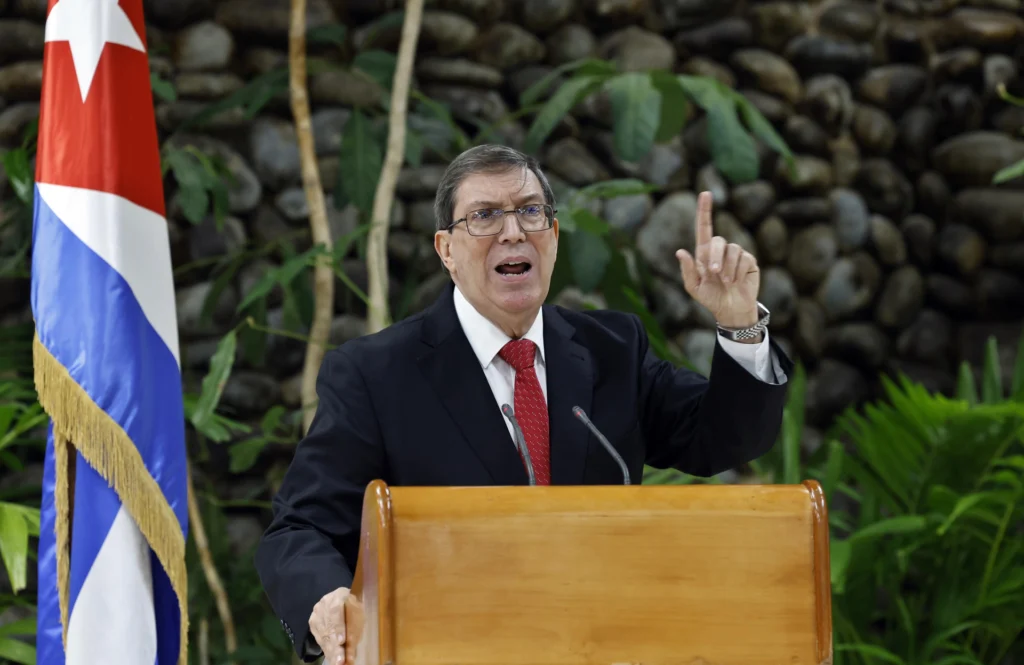
Cuban Foreign Minister Bruno Rodríguez Parrilla on Friday rejected a new threat from U.S. President Donald Trump, who said U.S. ships would make a “small stop” off the island on their return from Iran.
President Donald Trump has issued a new threat against Cuba as U.S. officials reportedly press ahead with military planning for the Caribbean country, an escalation that coincides with an intensified oil blockade and UN vote scheduled for October 28.
At a campaign rally in Fort Myers, the Republican President laid out his plan in vivid terms. “What we are going to do with Cuba is we are going to come back from Iran. Those beautiful ships, we will pass by Cuba, we will have one of them stop about 50 yards (45 meters) from the coast. They will raise their hands and then we will send Marco Rubio to close the deal,” he said.
The U.S. President closed the scene with a concrete promise: “We will take care of Cuba on our return from Iran. We will make a small stop.”
Cuba answered on X. “We reject all threats related to the ambitions of United States toward Cuba,“ wrote the Caribbean nation’s FM Bruno Rodriguez Parrilla.
He added a description of the coastline that carried an unmistakable warning. “Our coastline is full of beautiful beaches, but there ara also razor-sharp limestone spikes,” he said, referring to the karst rock formations along the shore. “Inhospitable to those who arrive with hostile intentions and dreams of domination,” he warned. The jagged coastal limestone, sharp and cutting, gave the response its edge.
We reject every threat related to US ambitions toward Cuba.
Our coastline is full of beautiful beaches, but there are also razor-sharp limestone spikes, an inhospitable environment for those who make it to our shores with hostile purposes and lust for domination.… pic.twitter.com/jrrBc1jR8S
Meanwhile, U.S. Secretary of State Marco Rubio used the same platform to urge those pushing for “change” on the island to engage in “discreet collaboration with the CIA.” In August, The New York Times reported that the intelligence agency had secretly set up a task force focused on Cuba.
The threat came amid a heated campaign in a state that is home to the largest Cuban community in United States. Its lawmakers and an influential segment of that community shape Washington’s decisions on Cuba.
Rodriguez Parrilla’s post also echoes another phrase from the current U.S. President. In March, speaking at the White House, Trump said he would have “the honor of taking Cuba” and that he “could do whatever he wanted with it.” He described Cuba then as a beautiful place, with “good land, landscapes, wonderful weather and great potential for tourism centers.”
On that occasion his unfamiliarity with the territory was on display. He argued that taking control would be good because the country is “not in the path of hurricanes.” “They won’t ask us for money for hurricanes every week,” he said in that time.
Passing by the island after Iran is not a new idea. In early May, while signing the Executive Order that launched an unprecedented wave of unilateral and illegal penalties against Cuba, Trump had already spoken of “taking control” once his military objectives in Iran were met. Following that, he has promised the war will end “immediately” after the November 3 elections, without explaining how.
The new threat coincides with the campaign Rubio himself is leading to sway the votes of UN member states on the resolution against the blockade against Cuba. In a recent press conference, Rodriguez Parrilla denounced the pressures and threats against governments to make them change their position.
In recent weeks the U.S. administration has seized fuel shipments bound for Cuba as part of an oil blockade. The campaign against Cuba’s international medical cooperation has intensified in parallel.
Elections Add Pressure
The escalation arrives at a difficult political moment for the U.S. President. Midterm elections take place on November 3, and the Republican Party could lose control of Congress. Trump’s approval has sagged, and a majority of voters now reject his management of the country’s main fronts, a rejection that cuts across every issue.
The domestic scenario is complicated further by the conflict with Iran. Tehran retains control of the Strait of Hormuz and has inflicted significant destruction on U.S. military bases in West Asia.
Fuel prices keep climbing in the meantime. The increase strikes U.S. households directly, and every rise deepens the damage to the President’s public standing at a moment when he can least afford it.
The pattern toward Cuba has hardened even as those pressures mount at home. The fuel seizures, the diplomatic campaign and the military planning all point in the same direction, toward an increasingly explicit posture of confrontation against the island.
With the United Nations vote set for October 28 and the U.S. midterm elections following days later on November 3, the coming weeks will reveal whether the planning described in U.S. media translates into further concrete action against Cuba, or whether it remains a lever of pressure in a campaign that already weighs heavily on the island.
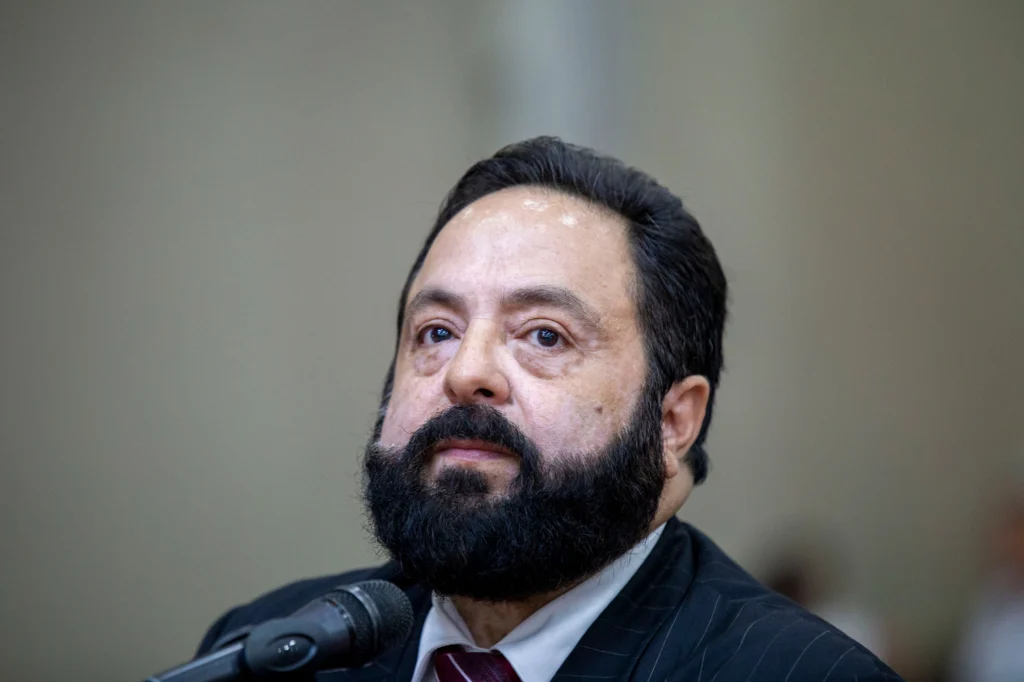
A Honduras’ court issued arrest warrants with international alerts against former Congress president Luis Redondo and former state printing manager Edis Moncada over a parliamentary order for a vote-by-vote recount of the 2025 general election.
A Honduran court ordered the international capture of former National Congress president Luis Redondo and Edis Moncada, former manager of the National Graphic Arts Company, attaching international alerts to both warrants.
The measure took effect after the deadline expired for their voluntary appearance before charges filed by the Public Ministry.
The prosecutorial request names 14 former members of the now-defunct Permanent Commission of the legislative power. The criminal case brought by the Prosecutor’s Office contains 21 charges against the former leadership of that parliamentary body, alleging disturbance of institutional functioning, usurpation of functions and violation of officials’ duties.
#HCHNoticias | En exclusiva HCH le muestra la orden de captura contra el expresidente del Congreso Nacional, Luis Redondo, quien está acusado de dos delitos de violación a los deberes de los funcionarios. FP pic.twitter.com/EzLfq095Wk
The charges target two central decisions adopted by the legislature. One was the installation and institutionalization of the commission itself. The other was the promulgation of a sovereign decree ordering a vote-by-vote recount of the 2025 general election.
Opposition sectors describe the prosecution as part of a campaign to criminalize officials and mechanisms that flagged irregularities in those elections. The parliamentary order to audit the ballot count challenged the authority of the National Electoral Council and drew the reaction of power groups opposed to democratic control of the vote.
The activation of international alerts and the prosecution of numerous former legislative officials shows, in the view of critics, the use of the punitive apparatus to intimidate state institutions. The case sets a precedent against the power of elected representatives to safeguard the legitimacy and transparency of electoral processes, they argue.
The 2025 elections remain at the center of the dispute. The legislative power had demanded verification of the tally sheets after the vote, a step that conservative sectors rejected. The recount order sought to audit what those lawmakers considered irregularities in the results.
Text reads: “Statement / LIBRE party: Requiring votes to be counted is not a crime! Defending democracy is not a crime! We denounce the political persecution against the deputies of LIBRE Party for demanding that the electoral count be completed and the popular will be respected. The defense of democracy cannot become a reason for persecution. Political persecution will not silence LIBRE or the Honduran people!”
Opposition Denounces Political Persecution
In September, former presidential candidate Rixi Moncada of the Freedom and Refoundation Party (LIBRE), publicly denounced what she called “systematic political persecution and the establishment of a judicial dictatorship” in Honduras.
Moncada questioned decisions by the National Congress and the judiciary that led to the abrupt dismissal of senior constitutional officials. Among those removed were the Attorney General, the President of the Supreme Court, a councilor of the National Electoral Council and a magistrate of the Electoral Justice Tribunal.
She also warned about regulations aimed at mass dismissals of public employees and an energy counter-reform designed to hand over the management of the National Electric Energy Company (ENEE, in Spanish), to banking corporations and private generators.
In her analysis, Moncada linked the parliamentary offensive to impunity rulings handed down by the courts. She highlighted the acquittal of former President Juan Orlando Hernández in the so-called Pandora Case, which investigated the diversion of 282 million lempiras (about 14,252,618 dollars) to parties of the traditional oligarchy of the country.
The international arrest warrants extend the reach of the judicial process beyond Honduran borders. The alerts would allow authorities in other countries to detain the former officials if they travel or are located abroad.
For now, the courts move forward with the charges while the opposition frames the case as retaliation against those who pushed to audit the 2025 vote. The next phase will determine whether the former officials appear before the court, are detained, or contest the prosecution as politically motivated.
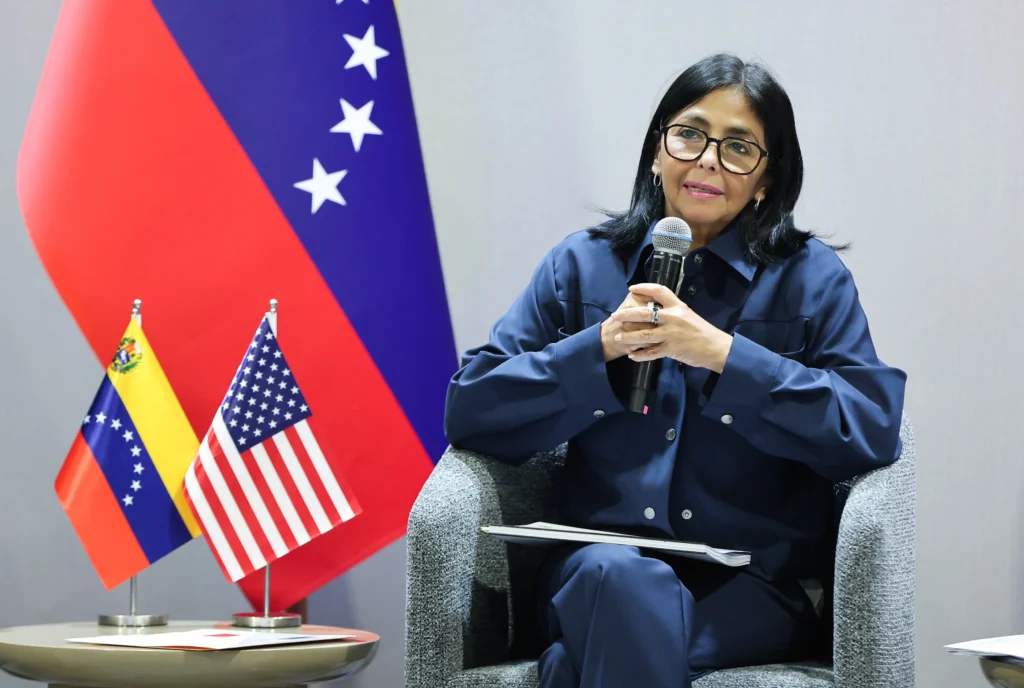
Venezuela’s Acting President, Delcy Rodríguez, inspected progress Friday on a package of 17 oil agreements signed with the United States, as the state of Zulia reported record output of 115,000 barrels per day.
The inspection covered joint projects aimed at extracting crude from national reserves. Eight of the 17 agreements involve the development of so-called green fields, new areas set aside for exploration and exploitation.
“We want to show the country the progress, to make clear that we do not leave things unfinished, that we go further: to action and to production. Once again, Zulia state broke its production record, reaching 115,000 barrels per day today,” Acting President Delcy Rodriguez said.
Rodriguez added that projections call for closing December at 120,000 barrels. The Acting President framed the tour as proof that the partnership has moved beyond paperwork into concrete output.
The cooperation framework was signed in August through North American Blue Energy Partners (NABEP). The 17 strategic agreements target the extraction of 65 million barrels of crude from Venezuela’s reserves.
On maritime infrastructure and logistics, Rodriguez said activity in Zulia will jump from 100 to 900 vessels, an increase of 800% in mobilized capacity. The figure signals a major expansion of port and transport operations tied to the oil sector.
The Acting President also outlined a plan for the progressive creation of jobs driven by industrial activity. Employment will begin in the food sector, continue in ironworks and industrial areas, and later extend to public accounts with the goal of raising working-class incomes.
Rodríguez said the central objective of the alliance is to develop the hydrocarbon industry and consolidate the country’s sovereign position. She stressed that Venezuela seeks to affirm itself as the nation with the largest oil reserves on the planet and to rank among the world’s leading producers and exporters. “We want to show the country the progress of these agreements,” she said.
Acting President Delcy Rodriguez insisted that rising production must translate directly into the welfare of the population. Following this, she pointed to concrete areas where the gains should appear: “In the daily life of Venezuelan men and women: in pay for workers, in health, public hospitals, schools, food, roads, water and public services. That is where Venezuela’s development goes,” she said.
The comments link oil revenue to social spending at a time when the government has promised greater transparency over hydrocarbon and mining income. The Acting President’s emphasis on hospitals, schools and food echoes longstanding official messaging that resource wealth should fund public services.
The Zulia figures mark a significant benchmark for the country’s oil industry, which has sought to recover output after years of decline. The jump from 100 to 900 vessels suggests broader commercial activity around the crude operations, beyond the wells themselves.
Eight green-field projects form part of the package, indicating that the partnership extends into undeveloped territory rather than relying solely on existing infrastructure. Rodríguez described the agreements as a path toward consolidating Venezuela’s position in global energy markets.
The inspection tour took place as the government pushes to showcase tangible results from the August accords. The Acting President’s visit to the field operations was intended to demonstrate that the agreements are generating activity on the ground, not only on paper.
The production target of 120,000 barrels by December would extend the record reported Friday. If achieved, it would reinforce the government’s narrative of recovery built around the US partnership and the state of Zulia’s role as the engine of national output.
Rodríguez closed her remarks by linking the oil gains to broader national development, arguing that the industry’s expansion must reach Venezuelans through wages and public services rather than remaining confined to export statistics.
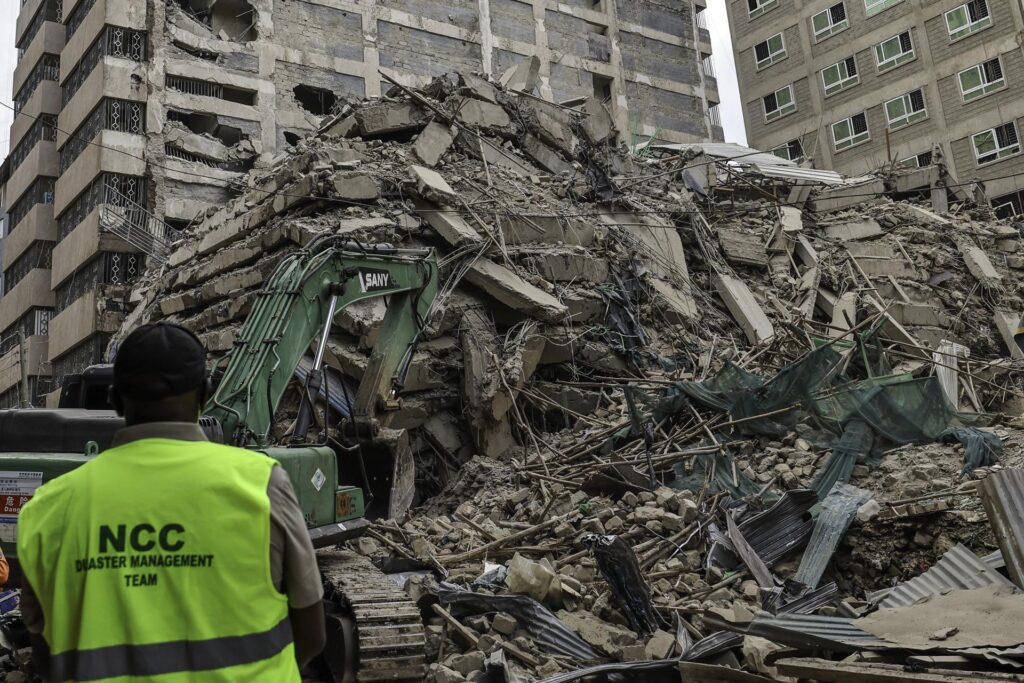
An 18-story building under construction collapsed Friday in Nairobi, Kenya, triggering an emergency operation as authorities feared workers and passersby were trapped beneath the rubble.
The structure gave way on Friday, October 23, near Yusuf Haji Avenue, inside the busy Eastleigh commercial district on the eastern side of the Kenyan capital. Security forces and the Kenya Red Cross deployed rescue brigades to the scene immediately.
Two people were pulled from the wreckage and rushed to Kenyatta National Hospital for specialized care, according to the latest report from relief agencies. The Kenya Red Cross confirmed that search and rescue operations continued without interruption at the collapse site.
The humanitarian organization located 26 people who had initially been reported missing. Tracking teams deployed across the sector found them safe and sound.
Given the heavy foot traffic in the commercial area, county security forces used tear gas to disperse crowds. The measure sought to protect nearby businesses from looting and to clear access routes for emergency vehicles.
🇰🇪 An 18-storey building under construction collapsed in Nairobi, Kenya
Numerous people, including construction workers and nearby pedestrians, are trapped under the rubble. pic.twitter.com/ErrXr9dzJE
Authorities asked residents to keep the perimeter clear so Red Cross teams and partner agencies could work safely. “Kenya Red Cross teams are working with partners from various agencies to support search and rescue operations,” the organization said in a statement.
Governor Deploys Machinery
Nairobi Governor Johnson Sakaja said relief agencies kept heavy machinery and specialized personnel on Yusuf Haji Avenue to remove debris and investigate possible failures in the construction project.
Sakaja also announced the installation of a guidance and information center at the site of the disaster. The facility aims to serve the families of workers and area residents directly, providing updated reports on the removal of materials and the status of the investigation into the responsible construction company.
The governor’s office described the operation as ongoing, with no timetable for when the rubble would be fully cleared or the cause determined.
The collapse added to concerns about construction safety standards in Nairobi, where rapid urban growth has pushed a wave of high-rise building across the city. The structure was still under construction when it fell, leaving questions about the materials, the design and the permits behind the project.
Rescue crews continued combing through the debris for any remaining victims. The Red Cross reiterated its call for the public to stay away from the area. “Clear the area to allow rescuers to work safely,” the organization urged.
Authorities have not yet confirmed whether anyone remains unaccounted for. The two injured patients were receiving treatment while investigators began examining the site for signs of structural failure.
The Eastleigh neighborhood, known for its dense commercial activity and large Somali community, sits in the eastern part of Nairobi. The collapse disrupted business operations across the district as authorities cordoned off streets around the disaster zone.
The investigation will look at the construction firm’s permits, the quality of materials used and whether the building met the standards required for an 18-story structure. Governor Sakaja said those findings would be shared with the families awaiting answers.
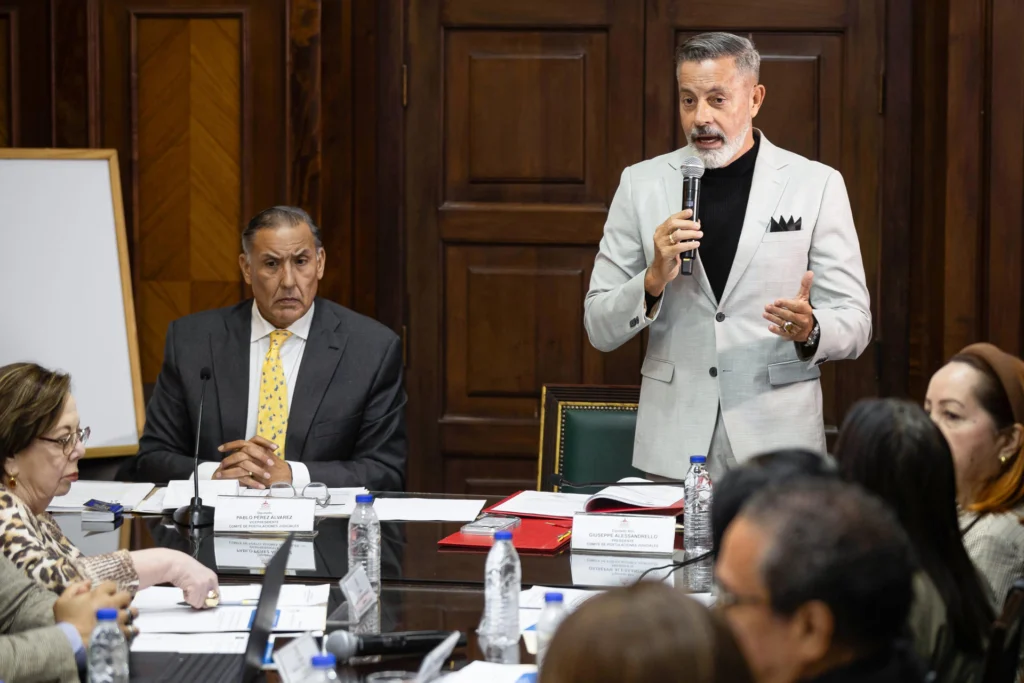
Venezuela’s National Assembly installed a Judicial Nominations Committee on Friday to evaluate and select new Supreme Court justices, a step lawmakers described as central to consolidating institutional stability.
The committee was formally established on October 23, at the Federal Legislative Palace in Caracas, one day after being sworn in during a legislative session.
Giuseppe Alessandrello, who presides over the body, announced that its immediate task is to draw up a work schedule under the Law of the Supreme Court of Justice.
Alessandrello said the law opened the selection process to ordinary citizens. Writing on social media, he stated that the legislation brought people into the work of “evaluating and selecting the leadership, in this case of the Supreme Court of Justice, to seek plurality.”
#23Oct || Desde el Palacio Federal Legislativo se realiza la Instalación del Comité de Postulaciones Judiciales. pic.twitter.com/MczZA2GxJ7
Text reads: “From the Federal Legislative Palace is carried out the installation of the Judicial Applications Committee.”
The committee operates within a broader national dialogue that authorities describe as “building a new Venezuela.” Officials have repeatedly framed the judiciary as the institution responsible for guaranteeing what they call true and just peace among citizens. “The judicial branch is the institution that will guarantee peace among us,” Alessandrello said.
The work schedule will set specific periods for the call for nominations, the evaluation of candidates, and the handling of challenges and responses.
The final goal is to present a definitive list of eligible candidates to the National Assembly.
Alessandrello stressed the weight of the assigned tasks, linking them directly to institutional stability. The committee’s operational work and the eventual delivery of the list will follow the terms and periods established by current law.
The process is governed by the Organic Law of the Supreme Court of Justice and the Constitution of the Bolivarian Republic of Venezuela. It covers the selection of both principal and alternate justices of the Supreme Court of Justice.
Subrayó el rol clave de la ciudadanía:
"La ley incorporó a los ciudadanos y ciudadanas de la sociedad en este trabajo de evaluar y seleccionar a las directivas, en este caso del Tribunal Supremo de Justicia, para buscar la pluralidad". pic.twitter.com/LhNVkaK6ov
Text reads: “The President of the committee, Giuseppe Alessandrello, highlighted the group’s harmony: “Everything we produce is decided unanimously and the auspices with the work of the committee are positive.” He also emphasized the importance of plurality in this process. He stressed the key role of citizenship: “The law incorporated citizens of society in this work of evaluating and selecting directives, in this case from the Supreme Court of Justice, to seek plurality.”
Selecting Court Leadership
The mandate extends beyond the high court itself. It also includes related judicial positions, among them the directorship of the National School of Magistrates.
The committee emerged from a process announced earlier this month. The National Assembly opened the nomination period between October 2 and October 9, allowing interested citizens and institutions to take part in the selection of the court’s leadership.
Once the schedule is finalized, the committee will move through successive phases, receiving nominations, reviewing candidates, and addressing any challenges filed against applicants. Each challenge will carry its own opportunity for a formal response before the list reaches the legislature.
The final list of selected candidates will be delivered to the National Assembly for consideration. The body’s work therefore functions as a preliminary filter within a process whose ultimate decisions rest with the legislature.
A new trial in the unified Hotesur and Los Sauces money laundering cases opened Friday in Buenos Aires against Argentine former President Cristina Kirchner, her son, Deputy Máximo Kirchner, and 17 other defendants.
Federal Oral Tribunal 5 allowed the former President and the deputy to attend the opening session virtually, with the favorable vote of judges José Michilini and Fernando Machado Pelloni. The ruling sought to coordinate the deputy’s parliamentary schedule and simplify transfer logistics from the home where the former president is serving a sentence.
The remote format was granted exceptionally, only for the formal reading of the indictment and the order sending the case to trial. The tribunal said later hearings will be in person for all defendants.
The case covers 19 people, including businessmen Lázaro Báez, Cristóbal López and Fabián de Sousa. Hearings are set for Mondays, Fridays and Saturdays, including the January 2027 judicial recess, when the defense lawyers must attend in person every day.
With over 300 witnesses initially slated to testify, the dynamics of witness credibility and testimonies would play a crucial role in shaping the outcome, but it was reduced by agreement between the parties.
[JUSTICIA] Terminó la audiencia por Hotesur y Los Sauces: solicitaron que Cristina Kirchner sea juzgada como "jefa de una asociación ilícita, coautora de lavado de activos y admisión de dádivas", y su hijo, Máximo, fue imputado como "organizador del entramado criminal". https://t.co/3s4n4ORbW3pic.twitter.com/VbWP9G9bve
The prosecution alleges that Kirchner’s family bought hotels and apartments, rented them to businessmen, mainly Báez, and laundered illegal money from public works.
The defense’s argument about the legitimacy of the funds is crucial. The defense, led by Carlos Beraldi and Ary Llernovoy, says the properties were bought with declared funds, including assets the family owned before Néstor Kirchner became Mayor of Río Gallegos, and that rentals were invoiced, banked and at market prices. The defense says similar claims were dismissed in three illicit enrichment cases. None of these claims has been tested at trial, and the defendants are presumed innocent.
Lawyer Carlos Beraldi maintained from the start that the hotels operated, collected and paid taxes like any other business. In September 2023, Chamber I of the Federal Chamber of Cassation revoked a previous dismissal and ordered that the trial go ahead.
The merged file brings together two fronts. Hotesur concerns the family’s hotel operation, while Los Sauces covers the real estate company at the center of the billing accusation.
The Cassation court removed the two judges who had dismissed the case and left only Palliotti, the magistrate who had voted to convict Cristina and Máximo Kirchner.
The same account recalls that in November 2021 judges Adrián Grünberg and Daniel Obligado dismissed the case against all defendants, with Adriana Palliotti dissenting, relying on an accounting expert report that found no harm. In September 2023, the Cassation Chamber overturned that decision and ordered a trial.
The opening of the process was preceded by an episode described as embarrassing. The Cassation court ordered the Federal Oral Tribunal 5 to merge the Hotesur and Los Sauces cases into a single proceeding and to begin it this Friday.
It is the first time in the country’s history that the Cassation court has dictated how a trial must be conducted, a power that normally belongs to each oral tribunal. Political pressure mounted after a Supreme Court resolution, and the judges had only 72 hours to unify the files. The order left the tribunal with no margin to set its own calendar.
The core of the Los Sauces case is the billing of the family’s real estate firm. According to the accusation, 88% of everything the company collected between 2009 and 2016 came from businesses controlled by Báez and from the Indalo Group.
The Hotesur portion of the merged case has not yet been read in court. The next hearings, set for October 26 and October 30, will determine how the combined process advances.
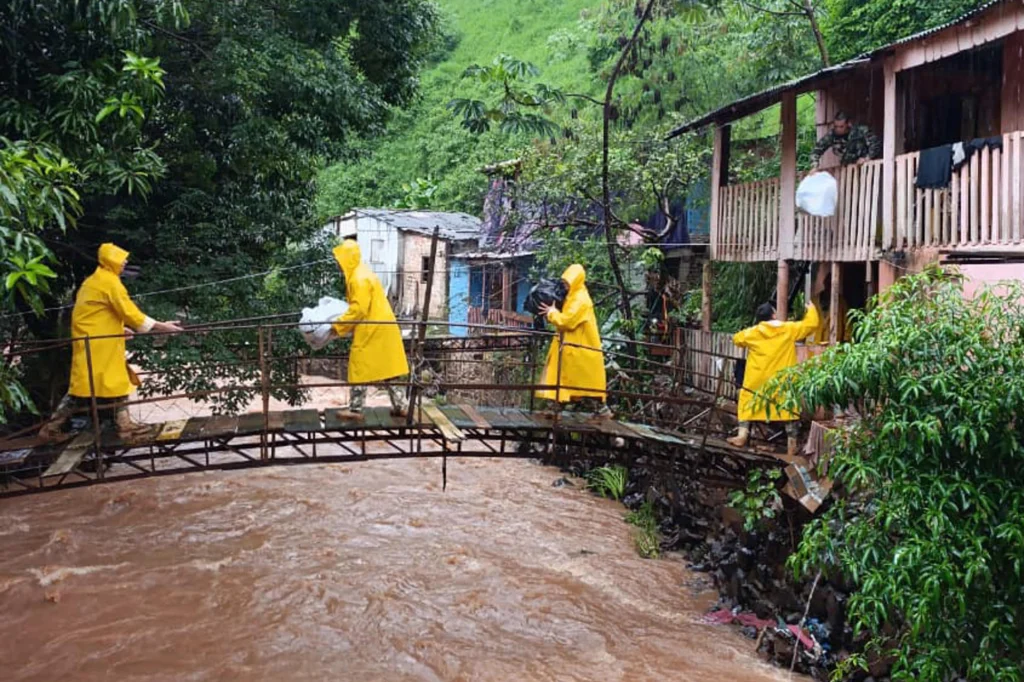
Severe flooding caused by heavy rainfall and the rising Parana River has forced the evacuation of some 4,200 families in eastern Paraguay, with local authorities monitoring vulnerable areas to move residents into temporary shelters.
More than 1,000 severely damaged homes are concentrated in the municipality of Ciudad del Este, where the rising waters have swallowed entire parcels of land. Remansito neighborhood was hit hardest. Around 35 families who work in recycling had to abandon houses submerged under the floodwater.
The emergency extends beyond that city. In the department of Ñeembucú, severe flooding has been reported in the towns of Ayolas and Cerrito. Local authorities and rescue teams continue to watch the most exposed areas as they coordinate the transfer of affected residents to temporary shelters.
The scale of the crisis has grown quickly. Just days earlier, official figures put the number of affected households at 3,000, a count that has now risen above 4,200 as the river keeps climbing.
Residents along the riverbank say the situation worsens considerably each time the gates of the Itaipu Binacional hydroelectric dam open. They argue that releasing the reservoir’s excess water has an immediate and direct impact on homes built along the coastal strip.
Representatives of the hydroelectric facility defended the maneuver. The gate openings, they said, respond strictly to technical safety protocols established for operational contingencies. The dam’s administration rejected the claim that these operations are the main cause of the river overflowing in the region.
The dispute places technical necessity against lived experience. For the communities watching water pour into their streets, the relationship between the releases and the flooding feels direct. For the dam operators, the gates are simply doing what they were designed to do under extreme conditions.
The national weather agency has offered little relief. Projections from the Directorate of Meteorology and Hydrology warn that rain will continue falling through the weekend across the country’s eastern zone. The agency urged the public and protection agencies to maintain precautionary measures amid the risk of new landslides.
#Paraguay | Families in La Rivera have been affected by flooding along the Paraná River, with rising water levels impacting homes and surrounding communities. Footage captures the extent of the flooding and the challenges faced by residents as they deal with its consequences.… pic.twitter.com/7GKTOoXEnB
Solidarity has also moved through the affected areas. Neighbors in working-class sectors have organized to supply community kitchens and distribute donations of basic goods. That support network has become essential for families who left their homes with little more than what they could carry.
The flooding follows a pattern familiar to the region. The Paraná River, one of South America’s largest waterways, regularly swells after sustained rains, but the current emergency has outpaced local capacity to respond.
With the forecast showing no break in the weather, the number of displaced families could continue to rise. Shelters are filling, and the most vulnerable households, including those who earn their living from recycling along the riverbank, face an uncertain wait before the waters recede enough to return.
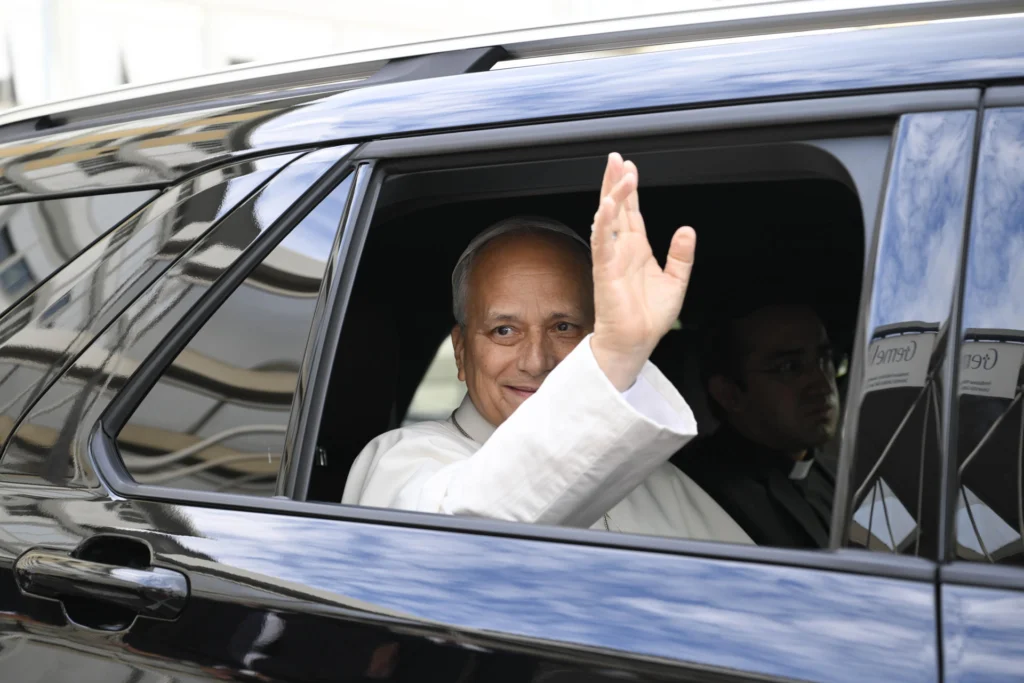
Pope Leo XIV confirmed his official visit to Argentina on Thursday, as he announced a four-day pastoral tour set to begin on November 8.
The Holy See press office released operational details of the journey after doctors cleared international travel, noting that the Pope requires no additional oncological treatment.
The Pope’s visit will include prisons, care homes for people with disabilities and meetings with workers’ organizations, reflecting an institutional intention to weigh in on debates over social justice, labor rights and the plight of the most vulnerable sectors.
His itinerary opens November 8 with a 4:30 P.M. local time arrival at Jorge Newbery Airport aboard a flight from Uruguay. From there he will pay tribute at the General San Martin Monument before attending a protocol reception hosted by President Javier Milei and meeting with diplomats.
The following day brings a packed schedule. Pope Leo will visit the Cottolengo in Don Orione, in Claypole, preside over a massive outdoor mass at the Monument to the Spaniards, meet with the labor sector at the Argentinean Catholic University, lead an interreligious gathering at San Martín Palace and dine with bishops at the Archbishopric.
During the welcoming session for newlyweds at the general audience, a couple said to Pope Leo XIV: “Papa, we’ll be waiting for you in Argentina!” The Pope replied enthusiastically: “Argentina—let’s go!” https://t.co/ut3jm7A7qB
On November 10 the tour moves inland to Cordoba province, where he will celebrate a liturgical ceremony at the Military Aviation School and walk through the of Nuestra Señora de la Asuncion Cathedral. He returns to Buenos Aires that night to preside over a youth vigil.
His final day, November 11, begins at the Federal Penitentiary Complex and continues with a mass at the of Lujan Basiliek. The trip concludes at 2:00 P.M. local time with a departure from Ezeiza International Airport bound for Lima.
Security and logistics teams from the Holy See are coordinating directly with Argentine authorities to finalize arrangements for the Pope’s movement at each public gathering on the schedule.
The visit unfolds in a political and social landscape shaped by the complex economic situation Argentina faces under the Milei’s administration. Structural tensions generated by fiscal adjustment policies and economic deregulation form the backdrop for a papal message that now carries deep political significance. The dignity of work and the protection of the vulnerable are expected to anchor his public remarks throughout the tour.
The confirmation also marks a decisive moment in the Pontiff’s recovery. Weeks after surgery, the international travel signals that his medical team considers the convalescence sufficiently advanced for the demands of a four-day, multi-city itinerary across two countries.
For Argentine faithful, the words delivered from St. Peter’s Square close months of uncertainty. The trip’s official schedule now stands, and preparations have shifted from speculation to logistics as November 8 approaches.
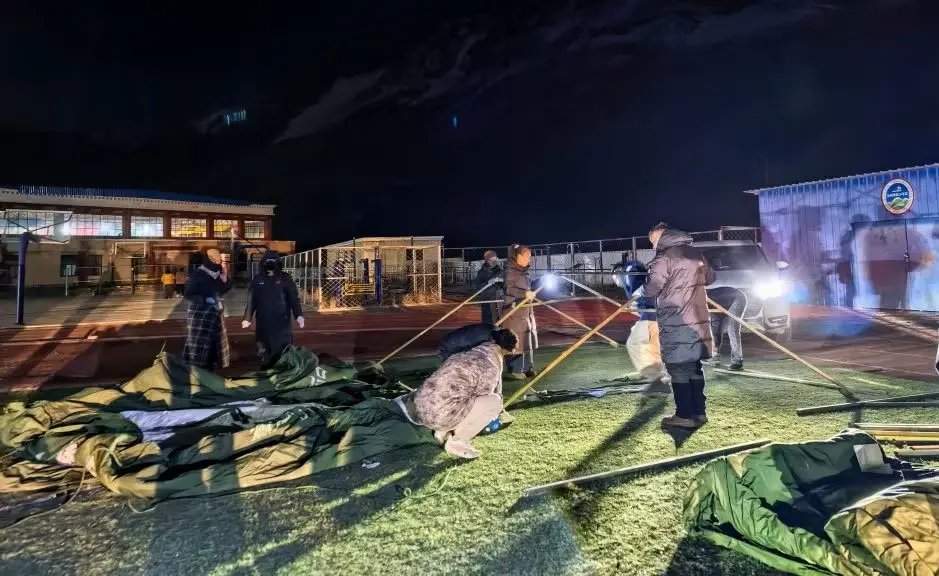
A magnitude 7.0 earthquake struck the Xizang and Qinghai regions of southern China on Thursday, killing at least 16 people and injuring 32 others.
Seismological monitoringplaced the epicenter 202 kilometers north of Nagqu prefecture-level city in the Tibet Region, at a depth of ten kilometers.
The shallow focus amplified the tremor’s destructive force, sending shock waves across the autonomous region and into border areas of neighboring countries.
The quake’s reach extended well beyond China’s borders, underscoring the scale of the event in a mountainous zone near the Himalaya range. Residents across the Himalayan chain felt the shaking, with alerts reported among populations in India, Myanmar and Nepal.
Rescue brigades and Chinese government agencies deployed immediately to the ground. Teams began assessing possible damage to infrastructure and attending to communities near the epicenter, where access routes and basic services could have been compromised.
A 7.0-magnitude earthquake struck Baqen County of Nagqu City in southwest China's Xizang Autonomous Region, at 10:33 p.m. Thursday (Beijing Time), according to the China Earthquake Networks Center (CENC). #XinhuaNewspic.twitter.com/ewln8dGEvn
Local authorities are conducting technical inspections in the Nagqu area, a settlement of about 30,000 inhabitants, and in Lhasa, the second-closest locality to the quake’s center. Emergency crews are checking the network of basic services and road structures in rural counties to rule out major damage from possible landslides.
Early Warning Network
China’s natural disaster response committees remain deployed as a preventive measure to coordinate logistical assistance and protect families living in zones of high seismic risk.
That response now leans on infrastructure the country has spent years building. In July, China consolidated the deployment of the world’s most extensive earthquake early warning system, a scientific network capable of issuing real-time alerts within seconds of detecting the first seismic movements.
The mechanism exploits a basic principle of physics, radio waves travel faster than seismic waves. That gap allows notifications to be triggered from magnitudes as low as 1.0, buying precious minutes for people to seek protection before the shaking arrives. The system covers more than 90% of the key risk areas across Chinese territory and generates intensity reports within minutes. Officials describe it as essential technical support for decision-making in rescue operations.
🇨🇳 A 7.0-magnitude earthquake in China's remote Tibet region has killed at least 16 people and injured dozens more, state media reports, with hundreds of houses collapsed. pic.twitter.com/IAH9IzVSHh
Emergency management institutions maintain permanent monitoring in the most vulnerable areas, linking cutting-edge research with direct operational response to natural disasters.
The quake arrives against a backdrop of recent tragedy in the region. A flood in Nepal and Tibet left at least 1,143 people dead and the mountainous terrain now faces a new emergency demanding the same mobilization of rescue resources.
With the preliminary toll still being updated, the priority has shifted to reaching remote settlements where landslides may have cut roads and interrupted communications. The full extent of the damage will depend on how quickly those rural counties can be reached and assessed.
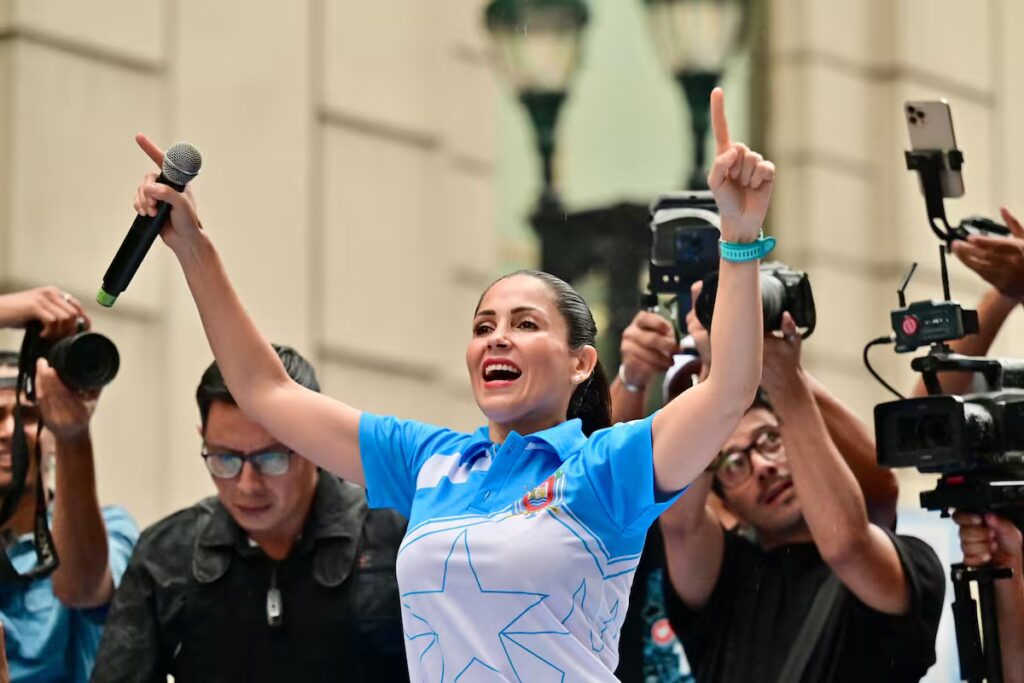
Former presidential candidate Luisa González denounced political persecution Thursday after security forces detained her in a predawn raid in Ecuador’s Manabí province, accusing the government of President Daniel Noboa of an authoritarian drift.
In her first written message since the arrest, Luisa González rejected the accusations against her and described the country’s institutional situation as “unsustainable.”
“Today it is my turn to be detained over an absurd accusation,” she wrote on X. “I will respond with the dignity of the Ecuadorian men and women who owe nothing and who are committed to achieving freedom for Ecuador and a better future for the country,” she added.
The leading figure of the Citizen’s Revolution movement also warned of mistreatment and torture inflicted on political prisoners held by the current far-right government of Daniel Noboa.
Faced with what she called a repressive escalation and a socioeconomic decline marked by violence and state corruption, González issued a call for unity to social organizations and leftist movements. “To my partners of the Citizen’s Revolution and all progressive forces, I say: it is time for unity, unity and unity to achieve freedom and democracy in the country,” she said.
She thanked communities across the country for their support and insisted that the people remain determined to overcome government censorship. González closed her statement by asserting that popular silence would eventually break the authoritarian siege and restore sovereignty and full democracy to Ecuador.
A Judicial Crackdown
Luisa González was detained in the early hours of Thursday in the Canuto parish of Chone canton, Manabí province. National Police officers and state prosecutors carried out the operation under the name “Labyrinth case,” an inquiry authorities describe as targeting alleged electoral financing during the 2023 campaign.
The police deployment included simultaneous raids in Manabí and Pichincha provinces and ended with three people detained for the purpose of formal charges.
After the procedure, relatives and allies of González denounced uncertainty over her whereabouts. Officials have not clarified whether she remains in Manabí or is being transferred to Quito for a court hearing, a situation her supporters describe as a grave violation of due process guarantees.
The arrest is part of a broader judicial offensive against the Citizen’s Revolution movement, which is currently suspended for nine months following rulings by the Electoral Contentious Tribunal that critics say were designed to block its participation in sectional elections.
That institutional push previously prevented González from registering as a candidate for the Manabí prefecture. Quito mayor Pabel Muñoz, meanwhile, faced raids on his offices in the middle of his reelection campaign.
Ecuadorian Former President Rafael Correa denounced the detention of González in a separate statement, adding his voice to the growing criticism of the operation. The predawn arrest now places one of the government’s most prominent opponents at the center of a legal battle that her movement frames as political persecution rather than a legitimate investigation.

 Login