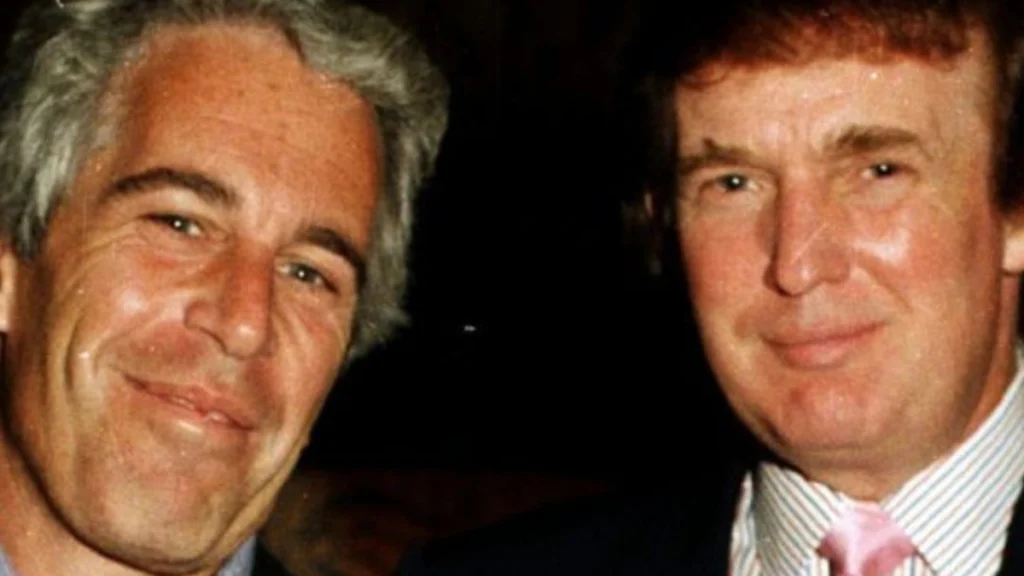
A House Judiciary Committee report alleges Donald Trump was actively involved in Epstein’s abuse of young women.
On Monday, Democratic lawmakers released a report calling for a special counsel to investigate possible ties between U.S. President Donald Trump and the late convicted sex offender Jeffrey Epstein, just over a week before the midterm elections.
The more than 50-page report by Democrats on the House Judiciary Committee alleges that Trump was an “active participant in Jeffrey Epstein’s abuse of young women in the mid-to-late 1990s.”
The document, titled “The Case Against Donald Trump Emerging From the Epstein Files and the Justice Department’s Desperate Efforts to Cover It Up,” includes the names of five women who have accused Trump of “raping or sexually assaulting them” in the company of Epstein.
Among the women’s accounts is one being made public for the first time. It describes an alleged rape by Trump during a pageant held in November 1993 at the Plaza Hotel in New York City, although the account provides no evidence beyond the woman’s statements.
“The women who survived Epstein deserve to be heard, Congress must have the full files that the law requires, and an independent special counsel must investigate Epstein’s accomplices and the Justice Department’s cover-up, and ensure that state and foreign prosecutors have the evidence they need to pursue justice,” said Rep. Jamie Raskin, the committee’s top-ranking Democrat.
🇺🇸 Rep. Ted Lieu says there is “ample evidence” in the full Epstein files alleging Donald Trump raped children.
Trump, for his part, has repeatedly denied committing any wrongdoing related to Epstein’s actions. He has also repeatedly said that he had a falling-out with Epstein years ago and barred him from Mar-a-Lago, his Florida residence, “for being a creep.”
The Democratic lawmakers’ report also calls for greater federal cooperation in legal proceedings against Epstein’s accomplices and increased congressional action to uncover all possible connections within his sex trafficking network.
With the document’s release, Democrats are signaling that they have no intention of backing down from their efforts to continue investigating the connections between Trump and Epstein’s sex trafficking network. They are doing so at a time when they could win a majority in the House of Representatives and even challenge Republican control of the Senate on Nov. 3.
The midterm elections will determine all seats in the House of Representatives and one-third of the seats in the Senate, as well as numerous state and local offices.
Student representatives dismissed the measures as insufficient and confirmed further protests and blockades.
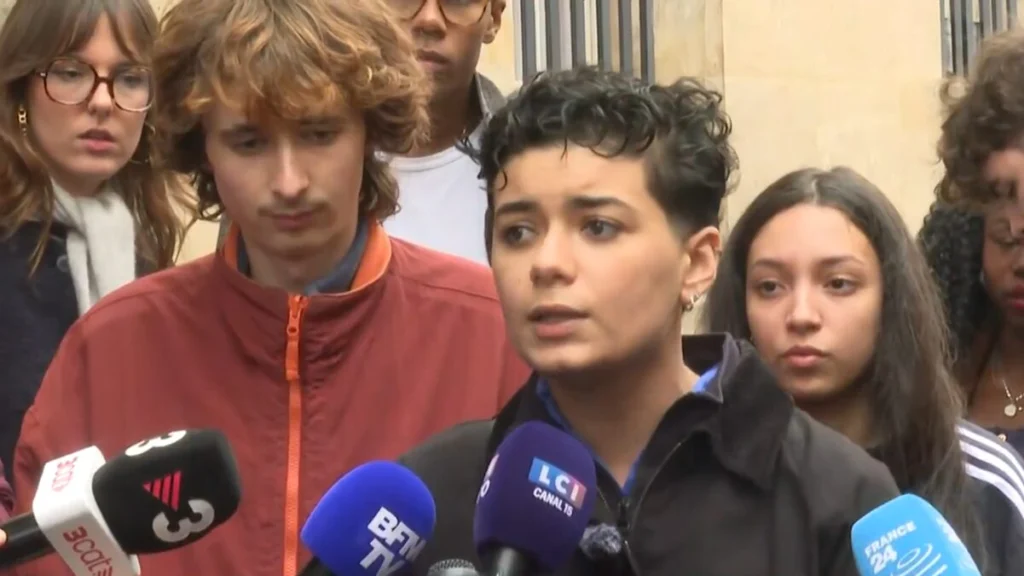
On Monday morning, French Prime Minister Sebastien Lecornu met with some students to brief them on measures he will announce during an afternoon meeting with high school student associations. The meeting, however, turned into a political setback for the administration of President Emmanuel Macron.
Student representatives said Lecornu was attempting to divide the protest movement by holding a meeting attended by people who lacked legitimacy and did not represent the movement.
The prime minister announced a reform of the university admissions system, with partial implementation in 2027 and more far-reaching changes in 2028. However, implementation of the proposal will depend on the government that emerges from the April-May presidential election.
Lecornu pledged to create 15,000 places in higher education, establish a 1-billion-euro investment plan to renovate high schools, and provide 4 billion euros in loans.
🔴️️ À Bordeaux, des manifestants lèvent les mains pour montrer leur caractère inoffensif, la police les charge et les gaze sauvagement
Partout en France, le mouvement populaire s'est amplifié. Les mêmes foules massives ont défilé pour exiger le blocage des prix, l'abrogation… pic.twitter.com/C9Cvuy2MB5
The text reads, “In Bordeaux, protesters raise their hands to show they pose no threat; the police charge at them and brutally gas them. Across France, the grassroots movement has gained further momentum. Massive crowds have taken to the streets to demand a price freeze, the repeal of the Parcoursup system, wage increases, and the inclusion in the budget of the 10 billion euros requested by high school and university students to address their demands.”
These measures come against the backdrop of a government seeking to gradually reduce the maximum number of students in high school classrooms to 28 and implement an emergency plan that will affect students in the country’s most disadvantaged areas.
Student representatives who questioned the legitimacy of the morning meeting stressed that their demands were more ambitious and dismissed the announcements made in advance as “crumbs.”
They are calling for the repeal of the current university admissions system, which they describe as opaque, and the creation of 250,000 places in higher education. “Our demand is clear: We want 10 billion euros and 10 measures that we have been calling for in various ministerial meetings,” they also emphasized.
Student representatives confirmed plans for protests on Oct. 31. Later, on Nov. 2, when classes resume after the school holidays, students will continue their high school blockades. On Nov. 5, student organizations will also join the general strike called by France’s main labor unions.
🔴 🗣 "10 milliards, 10 mesures, ni plus ni moins", clame Sabrine Kharbach, porte-parole de l'Union Étudiante. Les représentants de lycéens et étudiants s'expriment lors d'une conférence de presse en amont d'une réunion à Matignon #canal16pic.twitter.com/nmkMNERhZ3
The text reads, “’10 billion, 10 measures—no more, no less,’ declares Sabrine Kharbach, spokesperson for the Student Union. Representatives of high school and university students speak during a press conference held ahead of a meeting at Matignon.”
What French Students Are Demanding
In recent weeks, the High School Union (USL), the Student Solidarity collective, the National Union of Students of France (UNEF) and the Federation of General Student Associations (FAGE) have been the most determined groups in organizing mobilizations across France. They are demanding that the Macron administration implement the following 10 emergency measures:
1. An Emergency Plan to Renovate Schools and Universities
Launch an emergency plan to renovate dilapidated and unsanitary school and university buildings. Adapt educational institutions to the effects of climate change by installing air conditioning and cooling systems to cope with heat waves, as well as appropriate insulation and heating systems to withstand cold spells.
Ensure that every institution has the human and material resources necessary to maintain its facilities and provide clean, functional restrooms.
2. Mass Hiring of Education, Health, Support and Guidance Staff
Launch a large-scale recruitment plan for National Education personnel to guarantee, at a minimum, the following staffing levels at every institution: One nurse for every 500 students. One psychologist for every 500 students. One guidance counselor for every 500 students.
Create additional teaching positions rather than relying on contract workers, so that every class has a teacher and inequalities between institutions are eliminated. Also establish a formal employment status for support staff for students with disabilities (AESH) and create 800 additional positions.
3. Rethink School and University Schedules
Undertake a comprehensive overhaul of school schedules, building on the work of the Citizens’ Convention on Children’s Schedules for the National Education system, and launch a similar process for higher education to better respect students’ needs and well-being.
In particular, guarantee a lunch break of at least 1 1/2 hours so that every student can eat under appropriate conditions. Reverse the reforms of the baccalaureate and high school system.
4. End Selection Through Parcoursup and Mon Master. Create 250,000 Higher Education Places.
Eliminate selection through the Parcoursup and Mon Master platforms and create 250,000 additional places in higher education starting with the next academic year. This would allow high school students to access programs in their chosen fields without being subject to algorithmic selection and enable all students who wish to do so to continue their studies at the master’s level.
Retain centralized national application platforms to make available programs easier to identify, but eliminate selection. A high school diploma must guarantee access to a bachelor’s degree program, and a bachelor’s degree must guarantee access to a master’s program.
5. Overhaul High School Student Democracy to Ensure Genuine Participation in Decision-Making
Introduce list-based elections for the High School Student Council (CVL) and the Academic High School Student Council (CAVL) to ensure union representation, with representatives elected directly by all high school students in the relevant area. Increase the number of high school student seats on school boards. All high school students must be able to vote in CSE elections.
6. Increase Scholarships and Reinstate and Raise Housing Assistance for Everyone
Increase student scholarships by 200 euros per month, distribute them over 12 months and allow an additional 300,000 students to qualify for the scholarship system. Ultimately, establish a student autonomy income of 1,337 euros per month to guarantee every student the material resources necessary to pursue their studies. Abandon budgetary measures that reduce housing assistance for young people. Reinstate housing assistance (APL) for international students. Increase APL benefits and abandon changes to the calculation method that would deprive 147,000 students of this assistance.
7. Guarantee Effective Access to 1-Euro Meals for All Students
Guarantee effective access to 1-euro meals for students and provide the university services network with the resources necessary to meet demand.
8. Repeal the Welcome to France Plan, Which Introduces Differential Tuition Fees for International Students, and Eliminate the CVEC
Abolish the Welcome to France plan and its differential tuition fees for non-European students, which introduce a national-preference policy and a racist approach to higher education. Eliminate the Student and Campus Life Contribution (CVEC).
9. Freeze CROUS Rents, Make Rent Controls Permanent, and Massively Renovate and Build CROUS Housing
Reinstate the freeze on CROUS rents based on the rents frozen before 2023. Renovate unsanitary CROUS residences. Begin construction of 15,000 CROUS housing units starting in 2027. As an emergency measure, 10% of students must be able to obtain accommodation through CROUS.
10. End Repression and Police Violence Against the High School and Student Movement
End all forms of repression related to the high school and student movement. Ensure that law enforcement officers responsible for violence are prosecuted. Guarantee that absences related to mobilization are neither counted nor penalized.
More broadly, abandon all forms of repression in educational institutions and guarantee young people freedom of expression and freedom to organize, in direct contrast to the repression carried out in the struggle against the genocide in Palestine.
Previously, President De la Espriella formalized his country’s accession to Trump’s Shield of the Americas.
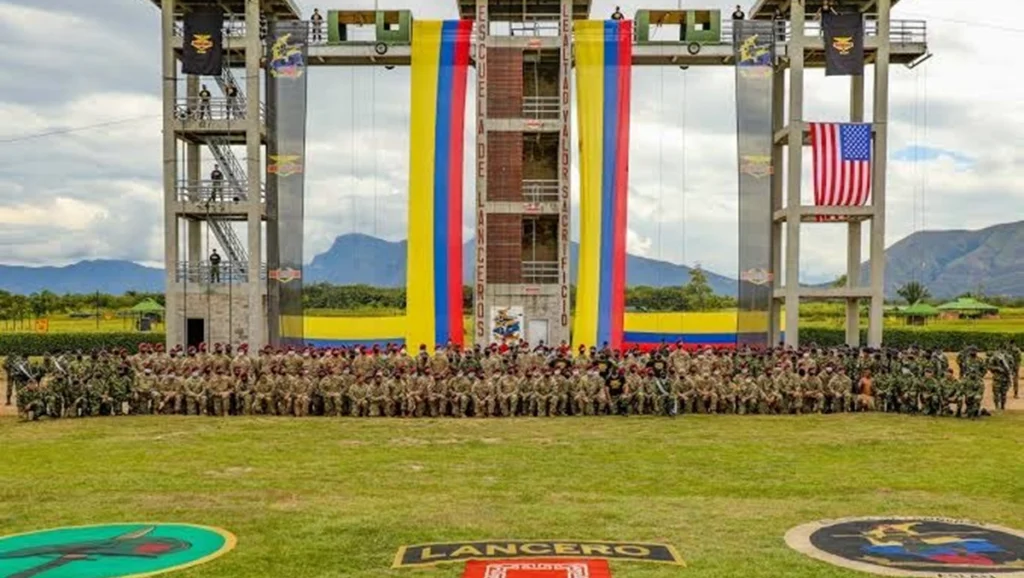
On Monday, the Colombian army announced that more than 300 U.S. soldiers will participate in joint military exercises in Colombia focused on combating drug trafficking, illegal mining and unmanned aerial systems.
The U.S. military personnel will arrive on Tuesday at the Tolemaida military base, located in the municipality of Nilo, in the department of Cundinamarca, where the fourth edition of the “Southern Vanguard 2026” training exercise will take place through Nov. 11.
During the exercises, members of the Colombian army’s No. 1 Counter-Narcotics Battalion will exchange tactics, techniques and procedures with light infantry soldiers from the U.S. Army Mountain battalion.
The training will begin on Oct. 30, with a simulated aeromedical evacuation from Tolemaida to the facilities of the Cavalry School in Bogota, using aircraft and specialized medical equipment.
“The objective will be to verify the medical care and first aid procedures used by medical personnel from both armies to assist a person who would have been injured in a mined area,” the Colombian army said.
🇺🇸🇵🇪🇦🇷🇨🇱 O Exército dos EUA concluiu no dia 18 de setembro o Exercício Southern Vanguard 2026, uma operação internacional que contou com 400 militares dos EUA, Argentina, Chile e Peru treinando em conjunto situações de combate na selva amazônica peruana. pic.twitter.com/bZcK6NALun
The text reads, “On Sept. 18, the U.S. Army concluded Exercise Southern Vanguard 2026, an international operation involving 400 military personnel from the U.S., Argentina, Chile, and Peru, who trained together in combat scenarios within the Peruvian Amazon rainforest.”
Colombian authorities explained that the exercises aim to strengthen “military cooperation and assess both forces’ ability to operate jointly, coordinate maneuvers and make decisions in operational scenarios.”
The arrival of the military personnel comes amid closer relations between Bogota and Washington since Colombian President Abelardo de la Espriella, a U.S. citizen, took office on Aug. 7, with security cooperation and the fight against drug trafficking as central pillars of the bilateral agenda.
The far-right president formalized Colombia’s accession to the Shield of the Americas, an initiative promoted by U.S. President Donald Trump to strengthen regional cooperation against drug trafficking and criminal organizations.
The rapprochement was evident on Sept. 8, when U.S. Secretary of State Marco Rubio visited Barranquilla and met with De la Espriella in the first high-level meeting between the two governments since the Colombian president took office.
Following the meeting, the two countries announced the so-called Barranquilla Accords, a road map that includes, among other issues, security cooperation and the fight against drug trafficking.
Progressive Leader Defeats Flavio Bolsonaro in Runoff, Blunting Washington’s Push for Regional Allies.
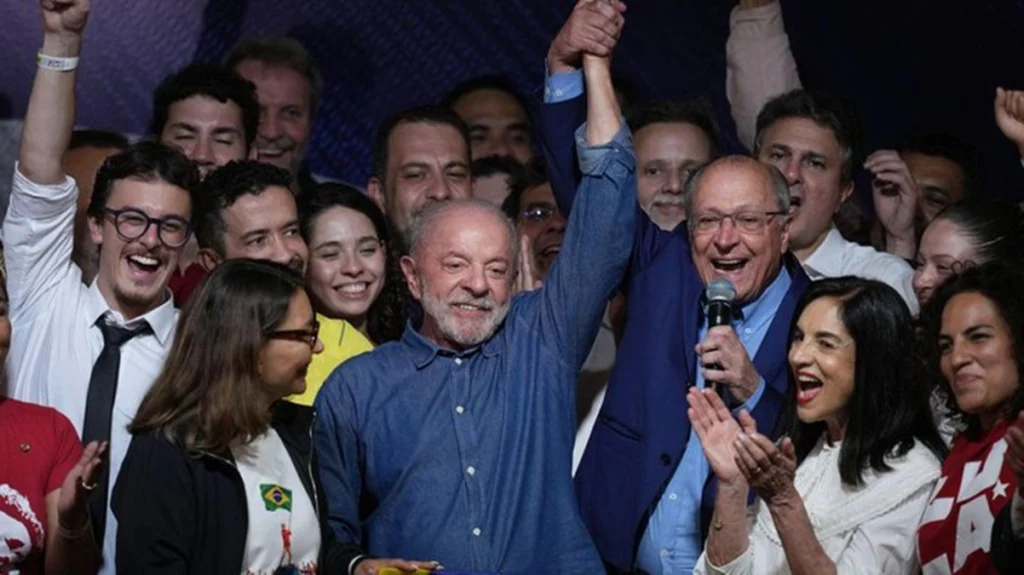
On Sunday, the unexpected reelection of Brazilian President Luiz Inacio Lula da Silva represents a setback for U.S. President Donald Trump’s plans to consolidate his influence in Latin America, at a time when the rightward shift of several countries seemed to be clearing his path.
The Workers’ Party leader prevailed with nearly 52% of the vote over far-right Senator Flavio Bolsonaro, son of former President Jair Bolsonaro (2019-2022), and became the first candidate to win a runoff after finishing second in the first round.
As Trump has yet to comment on the results, which Flavio has refused to recognize, Lula’s victory frustrates the possibility that Washington could add Latin America’s largest economy to its bloc of regional allies.
The setback for the MAGA leader comes just days before midterm elections in which polls indicate Democrats could wrest control of Congress from him.
A major hit for the Donroe Doctrine. Lula wins a fourth term in a historic comeback. https://t.co/PaxbXozabt
In his second term, Trump announced he would revive the Monroe Doctrine, a 19th-century policy he invokes to assert U.S. primacy in Latin America.
When he returned to the White House, his regional allies were few, among them Javier Milei in Argentina, Nayib Bukele in El Salvador, and Daniel Noboa in Ecuador.
Rightward shifts in Honduras (Nasry Asfura), Bolivia (Rodrigo Paz), Chile (Jose Antonio Kast), Peru (Keiko Fujimori), and Colombia (Abelardo de la Espriella) broadened that bloc. On repeated occasions, Trump boasted of having contributed to those victories.
The axis of Trump’s foreign policy toward Latin America is the “Shield of the Americas,” an alliance supposedly aimed at fighting drug trafficking but which in reality seeks to consolidate U.S. hegemony. Flavio Bolsonaro had promised to join that new U.S. geopolitical instrument.
Washington also seeks to counter China’s growing influence in Latin America, although a Flavio victory would hardly have altered Brazil’s economic ties with the Asian giant, given the weight of the agro-industrial sector in the Bolsonarist coalition and its dependence on the Chinese market.
Currently, Lula’s presidency in Brazil and Claudia Sheinbaum’s presidency in Mexico emerge as the main counterweights to Trump’s domination project.
This story is extremely important:
A whistleblower revealed that Brazil's far-right Bolsonaro family dynasty met with Meta to discuss US plans to interfere in Brazil's election, to prevent Lula from winning.
Despite what was at stake in Brazil, Trump avoided expressly supporting Flavio Bolsonaro, unlike what happened in Colombia, where he openly backed De la Espriella. His presence, however, was felt, and Lula’s campaign denounced interference from Washington.
Lula himself declared in his victory speech that the result demonstrates that in Brazil “we do not accept being anyone’s backyard.”
A Flavio victory would have meant “100 percent alignment with Trump in his culture war and security policy,” explained Benjamin Gedan, director of the Latin America Program at the Stimson Center think tank.
The Republican was “clearly excited about this possibility,” but an explicit endorsement could have “hurt” the candidate, he added. Trump, however, had already taken a stand through his actions. In 2025, his administration imposed high tariffs on Brazil in response to the trial against Jair Bolsonaro, who was sentenced to prison for attempting a coup d’etat against Lula in 2023.
In May, Trump received presidential candidate Flavio Bolsonaro in the Oval Office, an unusual gesture since he was not a head of state. Flavio asked him to designate the First Capital Command (PCC) and the Red Command as terrorist organizations.
The White House agreed to that request four days later, a decision Lula opposed out of fear that the measure would open the door to U.S. interventionism.
Washington also opened a trade investigation against Brazil over alleged unfair practices, revoked the visa of the Brazilian ambassador and suspended its consular services two days before the first round — in which Bolsonaro defeated Lula — citing security reasons.
That involvement also exposes Washington to the region’s political changes. For Oliver Stuenkel, a researcher at the Carnegie center, ideological alliances are a fragile bet in a scenario marked by frequent alternations in power. “The kind of ideological interventionism that the Trump administration is carrying out in the region is counterproductive. In the medium and long term, it will strengthen anti-American forces,” he said.
Lula’s reelection thus forces Washington to deal with a Brazil that does not share its agenda and highlights the limits of its strategy for Latin America.
The Mexican president praised Brazil’s election result after the leftist leader defeated far-right Senator Bolsonaro.
On Monday, Mexican President Claudia Sheinbaum celebrated Luiz Inacio Lula da Silva’s re-election in Brazil, after the leftist leader defeated far-right Sen. Flavio Bolsonaro in a runoff election.
“Very happy about Lula’s victory in Brazil. Many, many congratulations to President Lula and the people of Brazil. It is a breath of fresh air for Latin America and the Caribbean. We are very, very happy,” Sheinbaum said during her morning news conference.
Her remarks came a day after the Mexican president congratulated Lula through her social media accounts, celebrating the election result with the message: “Long live democracy, the people of Brazil won. Congratulations, President Lula!”
With the Brazilian president’s victory, Mexico and Brazil, the two largest economies in Latin America, will maintain leftist governments in a regional landscape marked by U.S.-backed far-right rulers.
Serei eternamente grato ao povo brasileiro. Cada gesto de confiança, cada voto e cada passo dado em defesa da democracia valeram a pena. A emoção dessa caminhada fortalece a certeza de que ainda temos muito a construir juntos.
The text reads, “I will be eternally grateful to the Brazilian people. Every gesture of trust, every vote, and every step taken in defense of democracy has been worth it. The emotion of this journey reinforces the certainty that we still have much to build together. This victory is not an end point, but rather a renewal of our commitment to Brazil, to social justice, to sovereignty, and to the hope for a better future for all. The path continues with an even stronger commitment to our people. Thank you very much, Brazil! This victory is ours!
Sheinbaum, who has expressed her political affinity with Lula, had ruled out Oct. 5 that a potential defeat for the Brazilian leader would lead to greater isolation for Mexico in Latin America.
On Sunday, the Workers’ Party leader defeated Flavio Bolsonaro with nearly 52% of the vote and staged an unprecedented comeback: Lula da Silva became the first candidate to win a presidential runoff after finishing second in the first round.
Democrats Need a Net Gain of Four Seats to Take Control of the Senate as Polls Show Tight Contests Across the Country.
U.S. President Donald Trump is fighting to maintain Republican control of the Senate, where his party currently holds 53 of the 100 seats, in the midterm elections on Nov. 3, which will feature 10 key races.
Although polls show Democrats with a lead of up to 10 percentage points in national voting intention, a Democratic victory in the Senate is far from guaranteed, as polling margins in each of those races remain narrow. Democrats need a net gain of four Senate seats to take control of the upper chamber for the final two years of Trump’s term.
With less than two weeks to go before voters head to the polls to elect senators to 35 seats in the upper chamber — 22 currently held by Republicans and 13 by Democrats — here are the 10 key Senate battles:
North Carolina (Republican)
Although some media outlets consider the Republican Party to have already written off the state’s Senate seat, Republican candidate Michael Whatley still has a chance to prevent former Democratic Gov. Roy Cooper from winning.
Ohio (Republican)
With controversy over data centers at the center of the campaign — many residents oppose their construction in their cities because of the resulting increase in electricity costs — polls give former Democratic Sen. Sherrod Brown a slight lead over Republican Sen. Jon Husted.
Trump says if Democrats "get in" during the midterms, he will be "the last Republican president" pic.twitter.com/tHw1xOPn8u
A popular Democratic candidate, independent voters willing to cross party lines and growing economic discontent over the rising cost of living have forced Republicans to defend a seat that, under different circumstances, would appear much safer. Former Democratic Rep. Mary Peltola is leading Republican Sen. Dan Sullivan in polls.
Maine (Republican)
Veteran Republican Sen. Susan Collins took office on Jan. 3, 1997, and is facing one of the closest races of her political career. In this midterm election cycle, she is the only Republican seeking reelection in a state Trump lost in the 2024 election. Collins and her opponent, Democrat Troy Jackson, the former president of the Maine Senate, are tied in polls.
Texas (Republican)
If there is one example of Democratic momentum in the congressional elections, it is Texas, a solid Republican stronghold until now. Democrats have not won a Senate seat in the state since 1988, so a victory by Democrat James Talarico over Republican Ken Paxton would end a 38-year losing streak. Polls show Talarico with a slight lead or the two candidates tied, but none show Paxton winning.
Michigan (Democratic)
The race is crucial for Democrats to secure a Senate majority because, if Abdul El-Sayed loses, they would have to win at least five seats currently held by Republicans. The race between Democrat El-Sayed, who would become the first Muslim senator, and former Republican Rep. Mike Rogers has no clear favorite less than two weeks before Election Day.
🤡🎙️Trump se félicite des centaines de milliards que les États-Unis gagneraient grâce au pétrole depuis l’escalade au Moyen-Orient. Il reconnaît au passage que les gens paient plus cher à la pompe et explique que son équipe lui avait conseillé de ne pas trop s’en vanter. Sa… pic.twitter.com/dMORvSUtvL
The text reads, “Trump expresses satisfaction over the hundreds of billions of dollars the U.S. stands to gain from oil following the escalation in the Middle East. He acknowledges, in passing, that people are paying more at the pump, and explains that his team had advised him not to boast about it too much. His response? ‘I couldn’t care less.’ The midterm elections are fast approaching. Keep this video handy.”
Iowa (Republican)
Polls have also failed to identify a clear winner in the quintessential American agricultural state, where rising fuel prices and discontent among rural voters threaten decades of Republican control. Democrat Josh Turek and Republican Ashley Hinson are competing for Iowa’s Senate seat.
Kansas (Republican)
The state, which has not elected a Democratic senator since 1932, could do so on Nov. 3. Democrat Adam Hamilton, a Methodist church pastor, describes himself as an “independent-minded Democrat” and faces a tight race against Republican Sen. Roger Marshall, with polls showing the candidates tied.
New Hampshire (Democratic)
Democratic Rep. Chris Pappas holds a modest lead in polls over former Republican Sen. John Sununu in a state where Trump’s popularity continues to decline.
Georgia (Democratic)
Although Trump won this Southern state in 2024, polls show Democrat Jon Ossoff consolidating his lead over Republican Rep. Mike Collins.
Inquiry Panel Reports Sharp Rise in Air Strikes, Forced Displacement and Violence Against Palestinian Children.
On Monday, the Independent International Commission of Inquiry on the Occupied Palestinian Territory reaffirmed that Israel has committed war crimes and crimes against humanity against the civilian population in the West Bank and Gaza, including crimes such as extermination, persecution, torture, rape and other forms of sexual violence.
The Commission will present a report to the United Nations General Assembly (UNGA), which tasked it with focusing this phase of its investigation on killings and physical and mental harm caused by state agents.
The report confirms the sharp increase in Israeli air strikes against the West Bank since Oct. 7, 2023, the date of Hamas’ large-scale attack on Israel.
The Commission notes that while between 2018 and Oct. 6, 2023 — the eve of the Hamas attack — six Palestinians had died in air strikes, between Oct. 7, 2023, and last Sept. 30, those killed numbered 254.
“The killing and deliberate injury of Palestinian civilians, as well as the destruction of homes in the West Bank, plus Israel’s refusal to assume its responsibility, form part of a broader strategy to exterminate and displace Palestinians and impose unbearable living conditions on them,” said the Commission’s chairman, Srinivasan Muralidhar.
"I'm not a target, I want to live like you"
Today she cries for her friend, tomorrow she fears she will be the news.
— Palestine Daily News✌️🇵🇸✌️ (@Palestinedaily1) October 25, 2026
From January 2025 through August 2026, military operations caused the displacement of over 34,000 Palestinians in the West Bank. This forced movement of people is the largest recorded since 1967, when Israel fought the Six-Day War against a coalition of Arab countries.
Children have been main victims of Israeli military violence, which has caused them “serious physical and mental harm,” not far from what minors suffer in Gaza, which for the Commission means Israel perpetrates “acts of persecution against Palestinian children on the basis of age.”
The Commission found that Israeli authorities and forces have continued to commit acts of genocide in Gaza even after the so-called cease-fire agreement of more than a year ago, and that they did so “with the intent to destroy the Palestinian people, in whole or in part.”
🎥 "I thought they forgot about me."
17-year-old Mohammed Ibrahim, a U.S. citizen who was released from Israeli military prison after ten months of detainment, came to the UNGA this week to advocate for hundreds of Palestinian children still held in Israeli military detention.… pic.twitter.com/7yTTPAYxrM
More broadly, the investigation reaches the conclusion that Israel’s will since its very creation has been to expand its territory and to that end displace Palestinians, which it considers one of the central causes of this prolonged conflict.
“The appropriation of as much land as possible, while minimizing the Palestinian population in terms of size, autonomy and viability, has its origin in Israel’s colonizing policies,” Muralidhar said.
In its conclusions, the UN Commission calls on Israel to immediately end the illegal occupation of Palestine and, among other actions, return land and all confiscated property to Palestinians.
The Commission also denounces the Palestinian Authority for persecuting Palestinians with dissenting opinions and for failing to effectively and impartially investigate the deaths or injuries suffered by journalists and human rights defenders in actions committed by Palestinian security forces.
The suspect acted out of racial hatred as French authorities investigate possible warning signs.
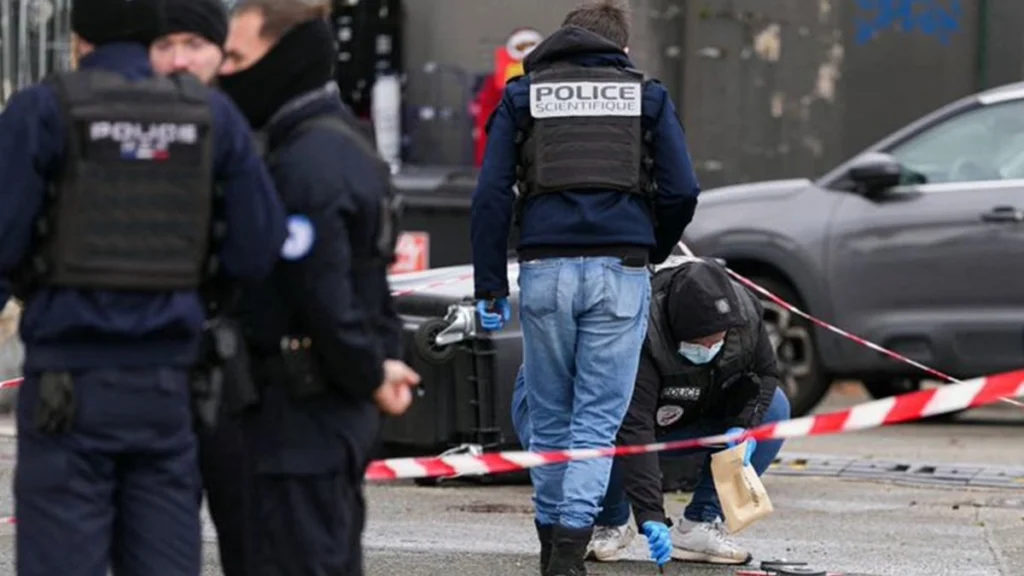
On Monday, French Interior Minister Laurent Nuñez said that the psychiatric evaluation of the suspect in Friday’s shooting, which left one person dead and five injured in Trappes, on the outskirts of Paris, does not change its classification as a “racist terrorist attack.”
Nuñez stressed that the 39-year-old man “acted to kill people who, in his eyes, should not integrate into French society because they were simply of foreign origin.”
The suspect’s police custody was temporarily suspended over the weekend so he could undergo a psychiatric evaluation. The decision raised questions from Yassine Bouzrou, the lawyer representing the family of the person killed, about the judicial handling of cases involving far-right terrorist violence.
“The seriousness of the act, the fact that it is a racist terrorist attack, does not change. There is no attempt to downplay it” because the alleged perpetrator of the shooting is undergoing psychiatric observation, Nuñez said.
The Interior Minister insisted that “he is an individual driven by hatred and racism, and that is why he killed.” Nuñez said he understood the family’s questions about a possible failure to prevent the attack and monitor the suspect, but noted that the man was not known to intelligence services.
#France 🇫🇷: A gunman carried out a racially motivated shooting attack in Trappes, Yvelines on October 23. As a result 1 person killed and 5 injured.
The perpetrator seemingly used a customized British 9x19mm “STEN” Mk II submachine gun fitted with a grip and foregrip. pic.twitter.com/M1DYz0N9uY
In this regard, Nuñez explained that some perpetrators carry out attacks suddenly, without authorities having detected any prior warning signs.
“They are somewhat isolated individuals, steeped in racist ideology, who feed on the prevailing discourse and suddenly take action,” Nuñez said, stressing that such cases are particularly difficult to detect in advance.
In any case, he promised that “everything will be brought to light in this matter to determine whether there were warning signs or not,” adding that the judicial authorities would have to answer the questions raised by the family.
Nuñez emphasized that part of the radicalization process can take place through social media and that platforms have an obligation to report content when they detect illegal material, particularly content related to terrorism.
Meanwhile, the National Anti-Terrorism Prosecutor’s Office reported that several members of the shooter’s family and circle of friends, who had been arrested as part of the investigation, were released on Sunday.
Disputes Over the 1.5-Degree Celsius Limit Highlight Deep Divisions as Countries Prepare for the Summit in Türkiye.
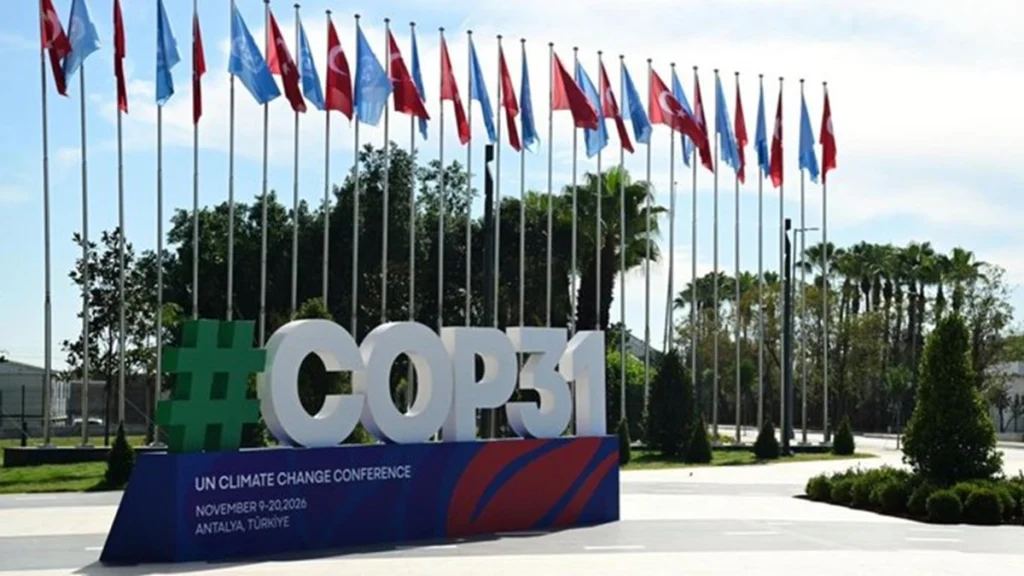
From Nov. 9 to 20, the 31st Conference of the Parties to the United Nations Framework Convention on Climate Change (UNFCCC) will take place in Antalya, Türkiye, bringing together world leaders, government negotiators, scientists and civil society representatives to coordinate international action against climate change.
The major event in global environmental governance will unfold amid efforts by major oil producers to delay the publication of new reports by the Intergovernmental Panel on Climate Change (IPCC) and prevent more ambitious measures to reduce emissions.
The divisions were already evident during the preparatory negotiations in June in Bonn, Germany, where countries such as Saudi Arabia clashed with the European Union (EU) and small island states, which defend maintaining the 1.5-degree Celsius threshold as the benchmark for assessing emissions reduction commitments.
At those meetings, representatives of countries vulnerable to the climate crisis denounced attacks on science by governments with interests in fossil fuels.
Fiji’s chief negotiator, Sivendra Michael, explained that some countries had tried to remove references to the IPCC, the leading authority on the subject, and the 1.5-degree Celsius limit from the documents.
“For Fiji and our Pacific neighbors, 1.5 degrees is not an abstract goal. It is the threshold that determines whether our islands will remain habitable. The IPCC allows the world to understand why that threshold matters and what is needed to avoid exceeding it. It is the backbone of our climate diplomacy. Removing science from the text does not change the science. It only weakens the decisions intended to respond to its findings,” Michael said.
Several sources agree that Saudi Arabia and India, among others, were among the countries that challenged those references, while Riyadh went so far as to invoke the goal of keeping warming below 2 degrees Celsius without mentioning the more ambitious 1.5-degree Celsius limit.
The difference is significant: The Paris Agreement, adopted in 2015 by nearly 200 countries, establishes a commitment to keep global warming well below 2 degrees Celsius above preindustrial levels and pursue efforts to limit it to 1.5 degrees Celsius.
Although both thresholds are part of the same agreement, scientists warn that every additional tenth of a degree of warming increases the risk of extreme weather events, biodiversity loss and irreversible damage to ecosystems.
The #UnitedNations said that the window has closed to stop the earth from heating above 1.5 degrees celsius, a target set by leaders at the #ParisClimateConference in 2015.
But, it says that it is still possible and worthwhile to limit the overshoot as much as possible, because… pic.twitter.com/ZdMlfzHSrG
The confrontation has also spread to the IPCC, the leading international scientific body on climate change, which on Friday, Oct. 16, suspended its meeting in Addis Ababa without reaching an agreement on the publication schedule for its next major report.
The deadlock, which has lasted nearly three years, threatens to prevent the scientific assessment from being available before the end of 2028, when countries will have to review their progress in meeting the Paris Agreement.
Countries such as Saudi Arabia, Russia and India, and at times China and Kenya, argued that more time was needed to prepare the reports and facilitate the participation of scientists from developing countries, which have fewer resources available to take part.
Opposing them, a coalition of European, Latin American and African states, along with small island states, called for an accelerated timetable so that upcoming negotiations would have access to the IPCC’s scientific findings.
Some analysts consider expanding the participation of scientists from developing countries a positive step but point out that countries such as Saudi Arabia, which has a record of resisting climate commitments, have used obstructionist tactics at IPCC meetings, where the timetable is adopted by consensus.
The window has closed; this year's #EmissionsGap report states that overshoot of 1.5°C is now inevitable.
What's needed to limit the overshoot to 1.7-1.8 °C & return to 1.5°C requires gov'ts to step up. 🌎greenhouse gas emissions must drop 45% by 2035 compared to 2025 levels.… pic.twitter.com/lH7uIoC3I2
The most vulnerable countries reject the idea that better scientific representation and the urgency of taking action are incompatible goals. “Delaying essential climate science is a betrayal of vulnerable developing countries,” said Adao Soares Barbosa, chair of the Least Developed Countries Group, which brings together more than 40 states, most of them in Africa.
“It is very concerning that the integrity of the IPCC and the available science are being eroded,” said Cosima Cassel, an expert at the E3G think tank. She called for the new reports to be available before the 2028 global stocktake to avoid relying on outdated assessments.
The dispute coincides with a warning from the United Nations Environment Programme (UNEP) that current climate commitments are insufficient and the planet will exceed 1.5 degrees Celsius of warming in the coming years. Under current policies, warming would reach 2.8 degrees Celsius this century.
UNEP considers it still possible to limit peak warming to between 1.7 and 1.8 degrees Celsius and return to 1.5 degrees Celsius or below by 2100, but doing so would require much deeper emissions cuts and the removal of CO2 from the atmosphere.
“Exceeding the threshold does not change the goal,” Michael said, warning that every additional tenth of a degree would mean more damage to the Pacific.
The storm is expected to bring heavy rain, gusty winds and high waves to the states of Guerrero, Michoacan, Colima and Jalisco.
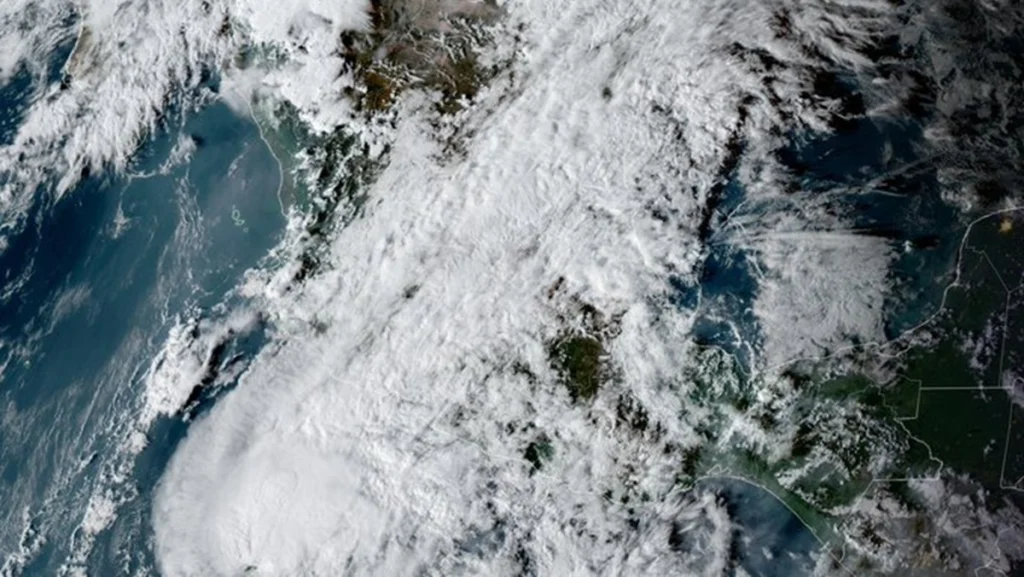
On Sunday, the Mexican government deployed a liaison and coordination mission to several Pacific coast states as Category 1 Hurricane Vance, on the five-category Saffir-Simpson wind scale, approaches the country’s western coast.
The National Coordination of Civil Protection said the storm is expected to bring heavy rain, gusty winds and high waves to the western states of Guerrero, Michoacan, Colima and Jalisco.
Authorities urged residents in those states to remain alert to official warnings. They also advised those living near or traveling close to riverbanks, streams, or water channels to assess their surroundings and evacuate immediately to higher ground at the first sign of rising water.
“It is crucial to avoid crossing—whether on foot or by vehicle—flowing water, flooded streets, or submerged bridges, as the force of the current can sweep away both people and vehicles,” stated the National Coordination for Civil Protection (CNPC).
Tracking the center of Category 1 HURRICANE VANCE on 2026-10-25 UTC from GOES-West (true color night + colorized infrared) pic.twitter.com/eeKxrTJfP9
At 9 a.m. local time, Hurricane Vance was located about 440 km southwest of the port of Lazaro Cardenas in Michoacan and 510 km southwest of the resort city of Acapulco in Guerrero.
The storm is moving northwest at 7 kph, with maximum sustained winds of 120 kph and gusts of 150 kph, and is expected to bring rain of 50 to 75 millimeters in the four affected states.
The rainfall could also trigger landslides, cause rivers and stream levels to rise, and lead to overflowing waterways and flooding in low-lying areas.
Voting results from abroad show split support as runoff count continues.
On Sunday, voting by Brazilian citizens residing in Asia and Oceania concluded with President Luiz Inacio Lula da Silva winning in five of the nine nations in the region.
Far-right Senator Flavio Bolsonaro, who is the presidential candidate of the Liberal Party (PL), secured victories in the four remaining jurisdictions.
Shortly after noon, the Superior Electoral Court (TSE) published a first report on votes abroad, where some 918,000 Brazilians are legally eligible to participate in the presidential runoff. So far the results are as follows:
Lula da Silva
The Workers’ Party leader won in Finland (74.83%), Estonia (82.90%), Cyprus (53.70%), Jordan (90.51%), Syria (90.60%), Kuwait (78.48%), Saudi Arabia (61.25%), Egypt (78.95%), Kenya (64.44%), China (73.67%), Singapore (63.77%), South Korea (64.35%), Australia (63.46%) and New Zealand (80.54%).
Brazilian voters living in Tokyo turned out on Sunday to cast their ballots in the tight presidential runoff. 🇯🇵🇧🇷
As polling stations opened abroad, members of the diaspora expressed contrasting visions for the future of South America's largest nation, covering topics ranging… pic.twitter.com/YVGHP0SBnI
The far-right senator have prevailed in Greece (54.95%), South Africa (57.92%), Mozambique (52%), Qatar (55.08%), the United Arab Emirates (54.56%), Thailand (51.72%), Indonesia (60.53%), Hong Kong (51.15%), Taiwan (58.04%), Malaysia (51.76%), the Philippines (59.09%) and Japan (80.08%).
Results Abroad Do Not Indicate a Trend
As of noon Sunday, Bolsonaro held a lead in eight countries and Lula in six. Nevertheless, information on electoral behavior in another 67 countries had not yet been incorporated into the official count.
“Portugal and the U.S., where important communities of Brazilians eligible to vote are concentrated, remained pending the closing of polls in the initial tally,” the outlet Cronica Digital reported.
“In the first round, Lula obtained 157,387 valid votes abroad, equivalent to 47.57 percent, while Flavio Bolsonaro received 143,900, equivalent to 43.49 percent,” it recalled.
Statistically speaking, voting abroad is not significant for drawing conclusions about the final direction of the runoff, since only 0.5% of Brazilian electors reside outside their country.
He attributed demonstrations in European cities to domestic economic and financial problems, including excessive public debt.
On Sunday, Russian President Vladimir Putin pointed out that European countries continue to receive Russian liquefied natural gas while simultaneously accusing his country of fomenting protests in Europe.
He recalled that Western countries had accused Russia of refusing to supply relatively inexpensive raw materials: oil, gas, coal and uranium. “But we have never refused anything to anyone,” Putin stressed.
The Kremlin chief stated that although Europeans are “planning to stop buying what they are still receiving from Russia,” they continue to receive substantial quantities of products.
“Our LNG accounts for 20% of the European market. That is a significant market segment,” he emphasized.
Russia’s President Putin talks about European energy prices and deliberate decisions which have increased prices to consumers.
“We used to sell natural gas to Europe for $150. Now they are paying $1000”
Putin also said that Russia agrees that the transition to renewable energy sources is necessary, but that it must take place gradually and as other sources become ready for rational and economically viable use.
“Let’s shut down nuclear power plants, Let’s close open-pit coal mines, and so on. I don’t even understand what they intend to use,” Putin said of European policies, which he described as the underlying causes of ongoing protests.
“What is their cause? Their own mistakes in various areas. In the economy and finance, there is excessive public debt, exceeding 100%,” Putin said.
“There is no need to blame anyone abroad,” he stressed, adding that Europeans must address the problems they themselves have created on their own territory.
“If this work is not done, things will get worse for Europe itself,” Putin said, adding that Europeans would fail to analyze the causes of their difficulties and would “shift the blame” to the United States and Russia.
They reject restrictions on demonstrations and partial curfews as a broader wave of protests spreads across France.
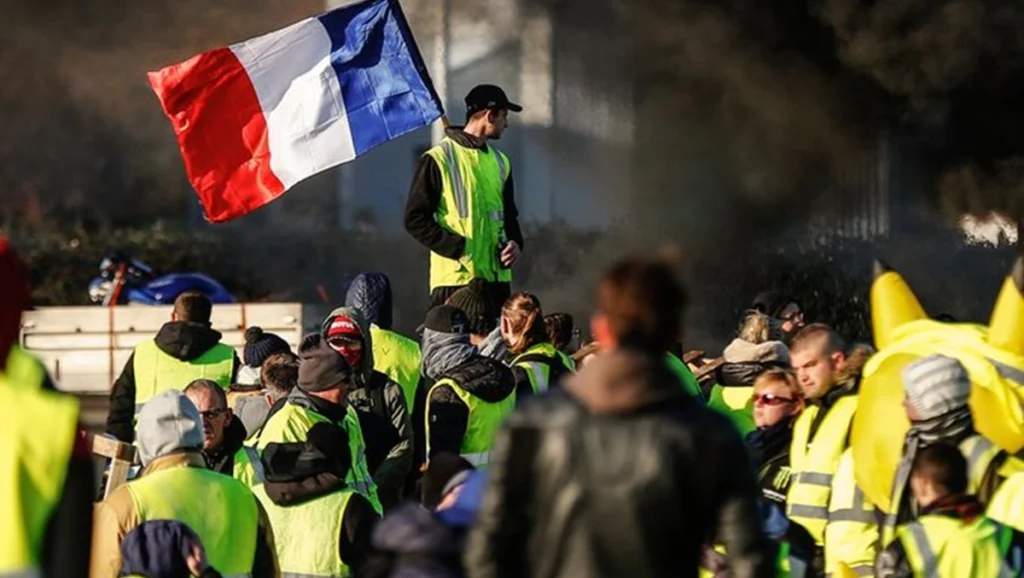
On Sunday, the Yellow Vests movement’s coordination group called for demonstrations featuring pot-banging protests outside the National Assembly on Friday, Oct. 30, to protest French President Emmanuel Macron.
“Macron and his administration have decided to take another step toward authoritarianism. They ban our demonstrations, impose curfews, and close city centers to protesters. We will make our pots and pans heard beneath the windows of lawmakers,” the Yellow Vests said.
The group, whose demonstrations shook France in 2018 during Macron’s first term, also called for the action to be extended to areas outside city halls in protest of restrictions on demonstrations and partial curfews in some cities.
These demonstrations are part of a wave of protests that began in September, when high school students took to the streets to demand improvements at their schools.
Le 24 octobre, manifestation dans la rue avec les étudiants et les gilets jaunes.
Des gens si différents, un même rythme. Pour le pouvoir d'achat, la dignité et l'avenir.
The text reads, “On Oct. 24, a street demonstration with students and the Yellow Vests. Such different people, yet sharing the same rhythm. For purchasing power, dignity, and the future.”
They later received support from college students, labor unions and the Yellow Vests, who added their demands for action against the rising cost of living and in defense of public services.
Organizers of the demonstrations held over the past two weekends have called for another day of protests on Saturday, Oct. 31, and are preparing a general strike for Nov. 5.
On Monday, in an effort to avert those events, Prime Minister Sebastien Lecornu will meet with representatives of student organizations, teachers, labor unions, business organizations, local authorities and lawmakers.
President of the BRICS New Development Bank received a warm welcome from Workers’ Party supporters.
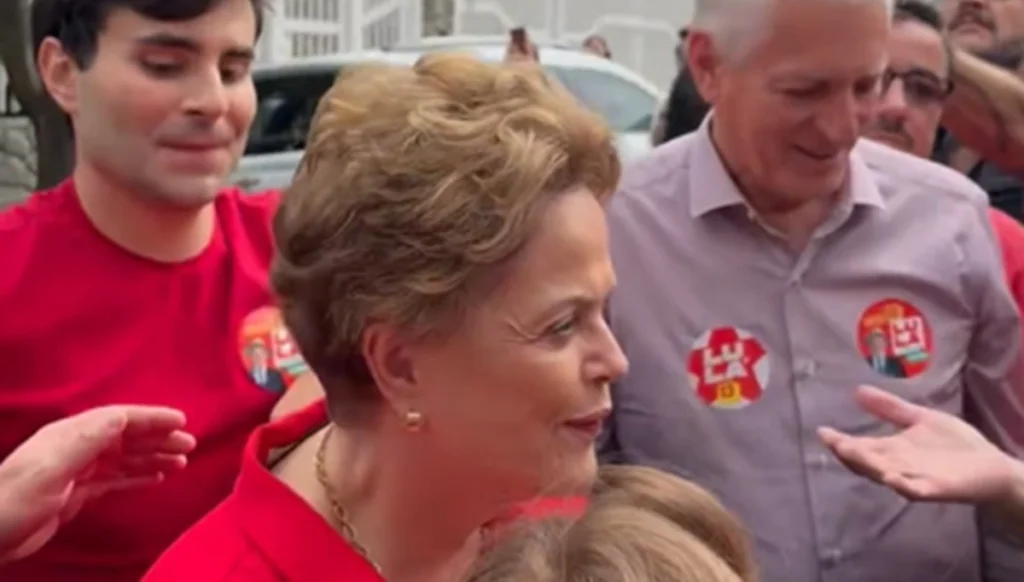
On Sunday, former Brazilian President and current President of the BRICS New Development Bank Dilma Rousseff exercised her right to vote at Santa Marcelina School, located in the Pampulha region of Belo Horizonte.
The progressive leader arrived at the polling station during the presidential election runoff and was warmly welcomed by supporters of the Workers’ Party (PT).
During the day, she was accompanied by her great-nephew and federal deputy-elect, Pedro Rousseff; federal deputy Rogerio Correia; and federal deputy-elect Bella Gonçalves.
Activists gathered at the site expressed their support for the former president through fighting slogans such as “Dilma, warrior of the Brazilian people” and popular chants in support of her political career. Rousseff greeted the supporters and posed with them before heading to the ballot boxes.
SAFTU Statement of Solidarity with Brazil’s Workers and People
Brazilian workers, Indigenous Peoples, landless families and all those who have struggled for dignity and social justice must come out in their millions to defend the gains won through years of struggle.
The welcome Rousseff received on Sunday differed substantially from the events of the first round of voting held Oct. 4. On that occasion, she faced a hostile atmosphere created by far-right groups, which forced her to leave the site as quickly as possible to prevent physical attacks by Bolsonaro’s supporters.
Currently, Rousseff resides in Shanghai, because of her responsibilities as head of the BRICS multilateral financial institution. However, she maintains her voter registration in the capital of the state of Minas Gerais.
Her in-person participation in the election reaffirms the commitment of the PT’s historic leaders to popular mobilization and the consolidation of democracy in Brazil.
In the first round, Flavio Bolsonaro received 56.1 million votes, or 47%, while Luiz Inacio Lula da Silva, garnered 53.8 million votes, or 45.16%. Abstention totaled 33.5 million, equivalent to 21.08% of registered voters, making this segment of the population the key battleground in the political contest in recent days.
At the closing rally of his campaign in Sao Paulo, Lula da Silva denounced ties between Rio de Janeiro criminal organizations and Flavio Bolsonaro, whom he described as a person “who does not have the political, moral or ethical qualifications to become president.”
Voters cast ballots for far-right senator Bolsonaro or incumbent Lula da Silva amid a mostly peaceful atmosphere.
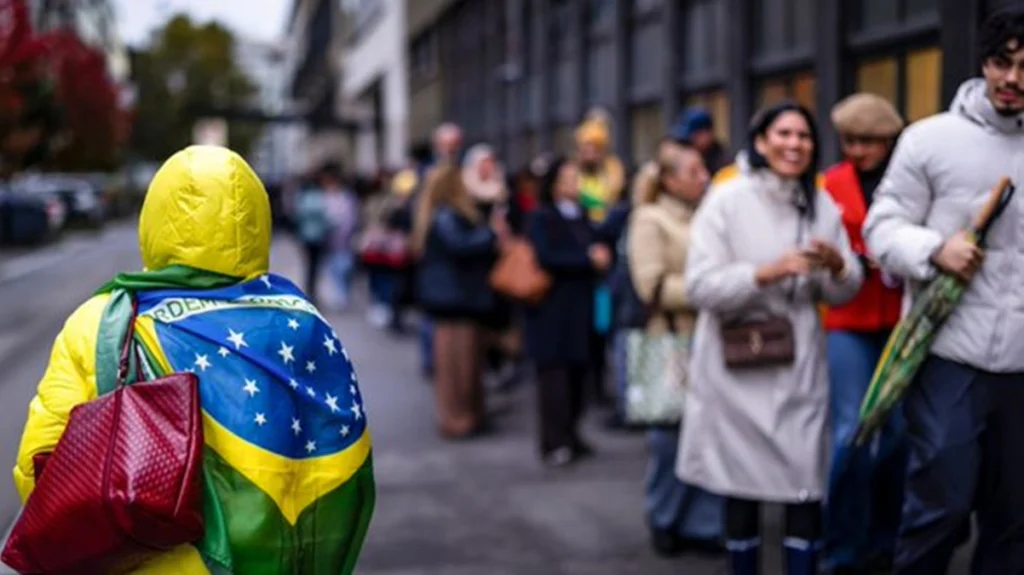
On Sunday, the second round of Brazil’s presidential election drew thousands of Braziliasn to polling stations in Madrid, where they voted for their next president, choosing between far-right senator Flavio Bolsonaro and incumbent Luiz Inazio Lula da Silva.
The second day of voting in the Spanish capital saw large, orderly crowds throughout the morning and a mostly peaceful atmosphere, although some voters clashed at the entrance to Blanca de Castilla School over their ideological differences. Workers organizing the lines had to separate them.
“The flow of voters is quite impressive compared with the first round. Many, many voters who did not come in the first round are here for the second,” said Brazilian Consul Maria Angelica Ikeda.
“The atmosphere has been very good, even though this is a very tense election. Here on the street, there are people who support one candidate and people who support the other, but they are all calm. Everything is going very well,” she added.
The text reads, “The left-wing wave in Brazil will reveal a new generation of leaders. Lula for Democracy!”
In the first round, held Oct. 4, the results in Madrid were 3,571 votes for Lula da Silva and 2,333 votes for Flavio Bolsonaro.
“I believe there is no such thing as a perfect society. We have an endemic problem with corruption, and unfortunately, that is something that will be very difficult to solve under any circumstances,” said Ana Paula Santos, a Brazilian woman who has lived in Spain for 25 years.
“There are universal values that Bolsonaro has shown, through his actions, that he does not uphold. The vote is individual, but the consequences are collective,” she stressed, explaining why she voted for Lula da Silva.
Santos was accompanied by Cristina Ana Perez, another Brazilian who said she does not share Bolsonaro’s “very radical” views and therefore voted in favor of Lula da Silva’s re-election.
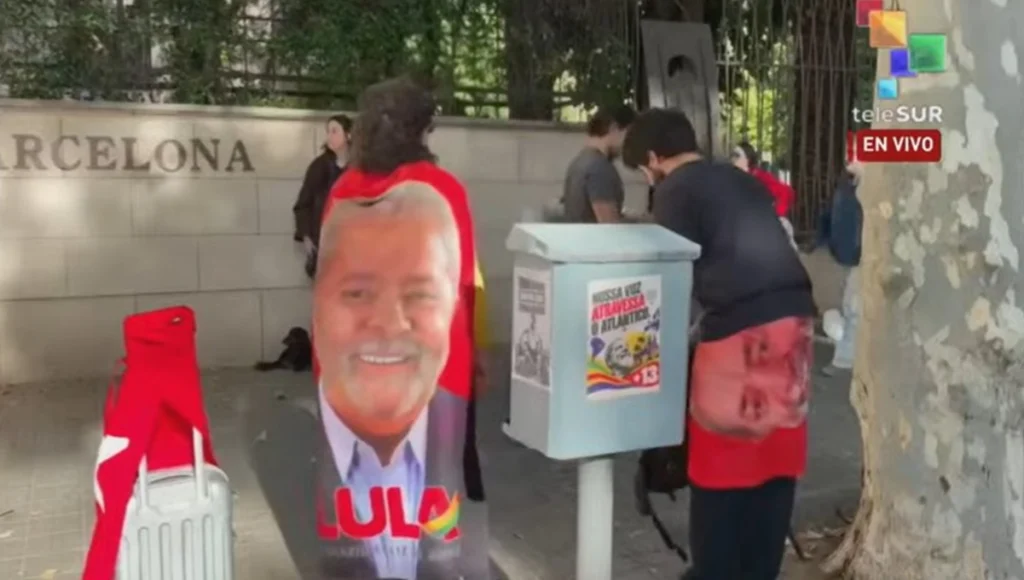
In Barcelona, more than 40,000 residents of Spain will be able to exercise their right to vote. In the Madrid consular jurisdiction, 23,520 Brazilians are eligible to vote, and polling is open until 5 p.m. local time.
Police operations left 31 people detained and more than 20 injured, prompting parties to criticize PM Montenegro.
Early Sunday morning, Portuguese police violently evicted housing rights encampments that had been taking place in Lisbon and Oporto. The police operations left 31 people detained and more than 20 people injured.
The police action prompted reactions from most opposition parties, which criticized Prime Minister Luis Montenegro and his convenient silence in the face of the events.
Socialist Party (PS) leader Jose Luis Carneiro demanded a “comprehensive explanation” from the Montenegro administration regarding the police action at the encampments. He emphasized that the solution to the housing problem “is political, never police-related.”
“Montenegro cannot, through his silence, continue to pit the police against citizens and citizens against the police,” the Socialist leader said.
Although the government has not yet commented on the police operation, one of the parties in the governing coalition, the Social Democratic Party (PSD), has spoken out.
Its spokesman, Sebastiao Bugalho, defended the “proportionality” of the police action, which took place “within the legal framework that is supposed to apply to protect the right to demonstrate.”
🇵🇹 Manifestação pacífica pelo direito à habitação, foi violentamente desmobilizada pela polícia de intervenção, no centro de Lisboa. O governo de direita português mandou evacuar a praça do Rossio durante a madrugada. Houve 31 detenções. pic.twitter.com/CgJBaD9cyU
The text reads, “A peaceful demonstration for the Right to Housing was violently dispersed by riot police in downtown Lisbon. The right-wing Portuguese government ordered the evacuation of Rossio Square in the early hours of the morning. There were 31 arrests.”
Meanwhile, far-right politician Andre Ventura, founder and leader of the Enough! party (Chega), defended the eviction, asserting that “the police have been very patient with these people camping out in the squares. Too patient, even!”
Nevertheless, even Ventura criticized the stance adopted by Montenegro and the Social Democratic Party, accusing the prime minister of hiding from problems and failing to come out publicly in support of the police.
In recent weeks, police violence against Portuguese citizens has drawn criticism from international humanitarian organizations such as SOS Racismo and from European left-wing parties, which have denounced the excessive use of force.
The housing movement has called for demonstrations in Lisbon and Oporto on Sunday to reject police violence, as well as another protest on Tuesday outside Parliament, where debate will begin on the 2027 state budget.
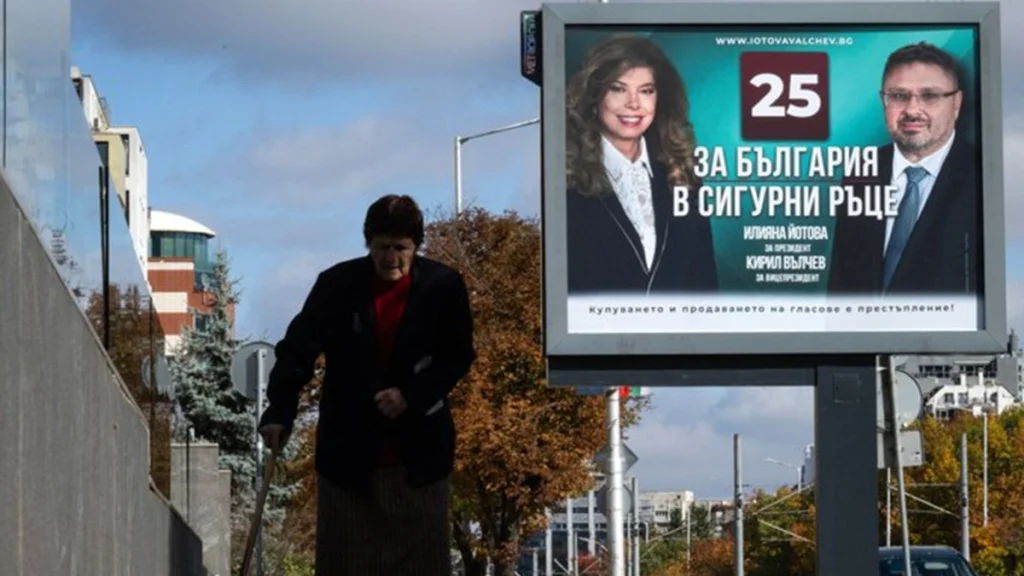
Iliana Iotova, the favorite to reach the second round, advocates for ending military aid to Ukraine.
On Sunday, Bulgarians went to the polls to elect their next president. As many as 6.59 million voters are eligible to choose from 27 candidates, including incumbent President Iliana Iotova.
Polling stations across the country opened at 7 a.m. local time and are scheduled to close at 8 p.m. The first exit polls may be released immediately after voting ends, while the official results must be announced no later than Tuesday evening.
The president is elected for a five-year term. To win in the first round, a candidate must secure more than half of all valid votes, provided that voter turnout exceeds 50%.
Pre-election opinion polls suggest that a runoff is inevitable, as turnout is expected to remain at or below 50% and no candidate is projected to secure more than half of the vote in the first round.
On Sunday, the first round of the presidential election proceeded normally, but voter participation was historically low, reaching just 5.8% of the electorate by noon.
According to the Central Election Commission, this figure was barely more than half the turnout recorded at the same time during the previous presidential election, held in 2021, when participation stood at 10.2%.
Acting President Iotova, a former journalist and former member of the European Parliament with socialist leanings, is the clear favorite to advance to the second and decisive round of voting.
She will most likely face former interim Prime Minister Andrey Gyurov, a former deputy governor of the Bulgarian National Bank and former lawmaker with pro-European leanings.
According to the latest polls, Iotova could win up to 47% of the vote, compared with 30% for Gyurov. Iotova was the right-hand woman of Rumen Radev, who served as president until January and is now prime minister.
. Support for Ukraine in Central and Eastern Europe
Public opinion across the region remains divided on military aid to Ukraine, according to the GLOBSEC Trends 2025 survey.
Strongest support for providing Ukraine with all the military assistance it requests comes from the… pic.twitter.com/6dGqS4JmDi
Iotova and Radev support ending military aid to Ukraine to prevent the conflict from dragging on and favor diplomacy as a means of ending the war.
Gyurov, by contrast, advocates greater military assistance to Ukraine, as well as a more active Bulgarian policy within NATO and the European Union in support of the invaded country. He believes a Russian victory would pose a threat to the security of all of Europe.
Political scientist Dimitar Ganev attributed voters’ lack of interest, on the one hand, to the parliamentary elections held April 19, which Radev won by a landslide, and, on the other, to Iotova’s substantial lead over her rival in the polls.
“I firmly believe that there will be a boom in Bulgaria and that there must be peace, stability and security. More than anyone else, we Bulgarians need dialogue, agreement, conversation, and unity,” Iotova told reporters after casting her ballot.
According to polling projections, turnout will not exceed 50%, and none of the candidates will win an absolute majority. As a result, a second and final round will be held Sunday, Nov. 1, between the two candidates who receive the most votes.
He highlights massive political demonstrations during the runoff campaign and warns of isolated incidents of political violence.
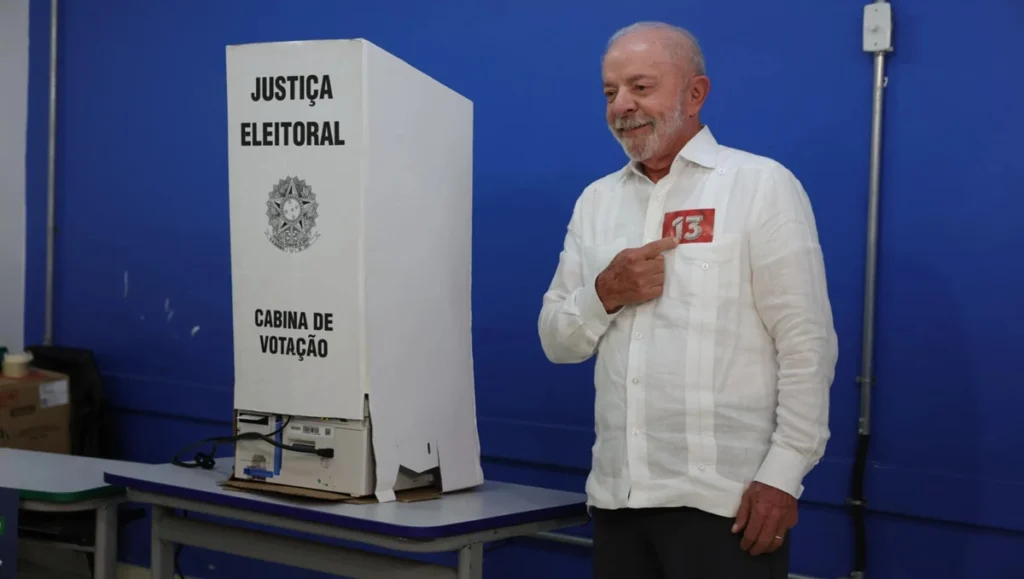
On Sunday, Brazilian President Luiz Inacio Lula da Silva, who is seeking reelection, voted in Sao Paulo in the presidential runoff, in which he is competing against far-right Sen. Flavio Bolsonaro.
“I am going to vote grateful to the Brazilian people. What the people have done for me in these days is so much that there is no way to repay it. It is so much generosity, so much affection and so much love. I will be eternally grateful for the people’s behavior,” he said minutes earlier as he left his home for the polling station.
At 10 a.m. local time, the Workers’ Party leader voted at João Firmino Correia de Araujo School in Sao Bernardo do Campo, a municipality bordering Sao Paulo where he rose to prominence as a union leader in the 1970s and began his political career.
After voting, Lula, who is seeking a fourth nonconsecutive term, highlighted the largest political demonstrations in Brazil in the past 50 years during the runoff campaign.
Mais uma vez, foi o povo brasileiro que me mostrou que nenhum sonho é grande demais quando a gente caminha junto. ❤️🇧🇷
Foram dias incansáveis. Cada caminhada, cada ato e cada passeata foram muito mais do que momentos de campanha. Foram encontros de sonhos que se transformaram em… pic.twitter.com/YdgeTlMzBK
President Lula da Silva’s text reads, “Once again, it was the Brazilian people who showed me that no dream is too big when we walk together. These were tireless days.
Every walk, every event, and every demonstration was much more than just a campaign moment. They were gatherings of dreams that transformed into concrete achievements—such as the end of the 6×1 work schedule.
Every outstretched hand and every smile reminded me why I have dedicated my life to the struggle for the working men and women of this country. We emerge from this journey stronger, more united, and more mobilized to secure a better future.
Thank you, Brazil, for every hug, every tear, every smile, and for never letting go of my hand. There are still many beautiful pages left to be written in our history. Tomorrow, October 25th, we will write another one. Together, for the Brazil we love and for the future our people deserve!“
“What I saw in this runoff was not about a political party or a union. The people took to the streets to defend their achievements,” the Workers’ Party (PT) candidate told reporters after casting his ballot.
The president also warned of isolated incidents of political violence reported in recent hours, including a brick thrown at a PT activist in the city of Montes Claros.
“This is a demonstration of what is at stake,” the progressive leader emphasized and criticized Bolsonaro, referring to him as “a militiaman” and a “morally and ethically unqualified person.”
Lula also said that on Sunday, voters would decide whether the Brazilian flag would be respected or whether to elect a political group that “wants to govern with the American flag.”
Lula, aos 33 anos, liderando junto ao sindicato dos metalúrgicos a greve que desafiou a ditadura militar no Brasil. Ele conquistou aumentos salariais e foi preso. Enquanto isso, a única profissão do Flávio foi ser vag4bundo político. #AposentadosComLulapic.twitter.com/34dsHpqtai
The text reads, “At the age of 33, Lula led the metalworkers’ union in a strike that challenged Brazil’s military dictatorship. He secured wage increases and was subsequently imprisoned. Meanwhile, Flavio’s only profession has been that of a political deadbeat.”
The Brazilian president, who will turn 81 next Tuesday, went to vote wearing a white guayabera shirt, accompanied by his wife, Rosangela Lula da Silva; Vice President Geraldo Alckmin; and five other current and former Cabinet ministers.
In the first round, held Oct. 4, Bolsonaro received the most votes, with 47% of the ballots, compared with 45% for Lula. Polling stations will close at 5 p.m., after which vote counting will begin.
The count is expected to be completed within a few hours thanks to Brazil’s electronic voting system, which was introduced three decades ago.
The violence left 15 police officers injured, including 14 Mossos officers and one Barcelona municipal police officer.
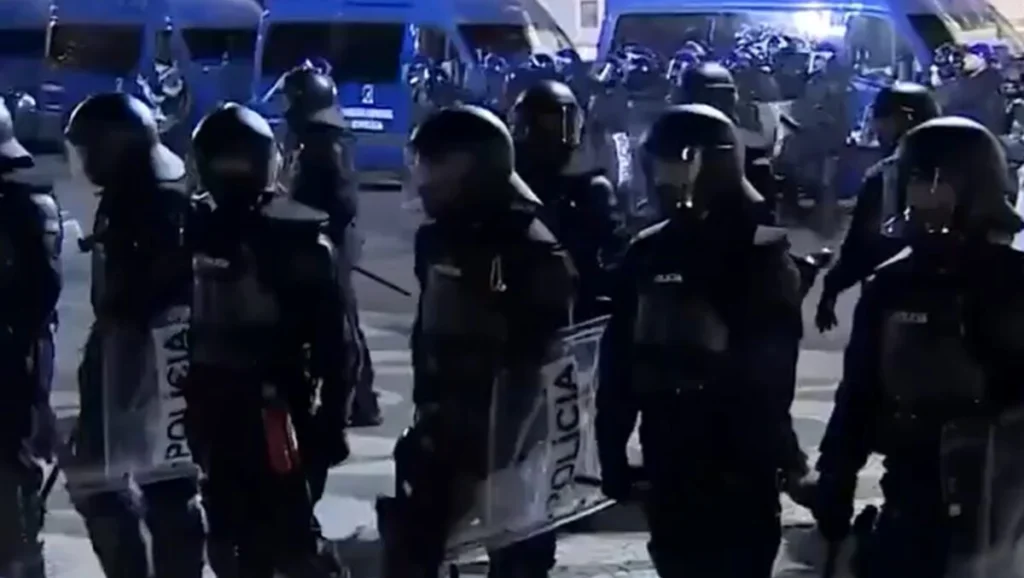
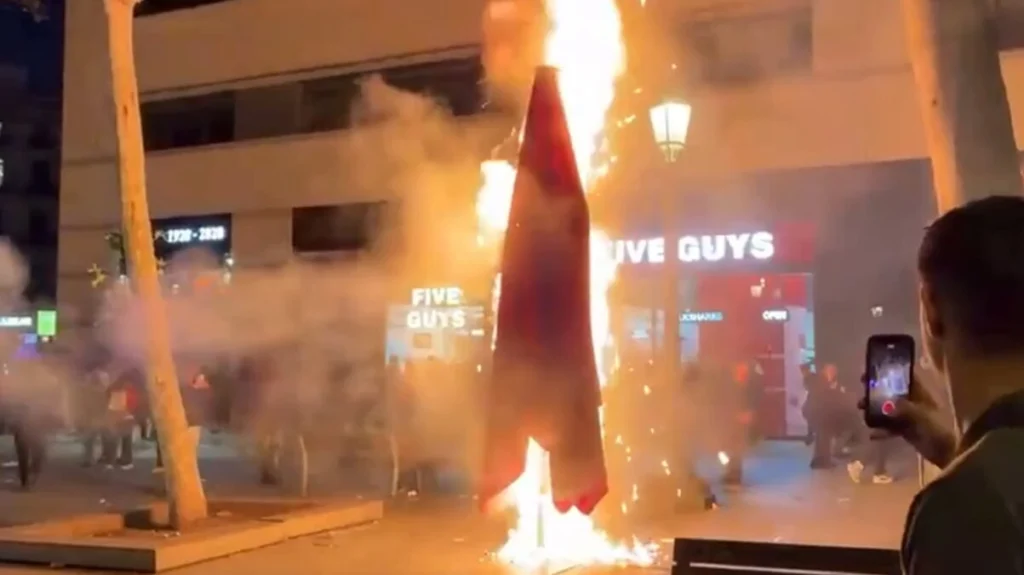
On Sunday, the Mossos d’Esquadra, Catalonia’s regional police force, confirmed that 128 people, including 72 minors, were arrested after a social media-organized gathering of young people in central Barcelona, Spain, turned violent on Saturday.
The violence left 15 police officers injured, including 14 Mossos officers and one Barcelona municipal police officer. Four officers were seriously injured. Shops were damaged, street furniture was set on fire and participants clashed with police.
The gathering, which had not been notified to the authorities in advance, took place at Placa de Catalunya on Saturday evening.
Most of the several hundred young people attending the event were dressed in black. The event followed calls circulating on TikTok and other social media and resembled recent protests in other European cities, particularly in France, some of which also turned violent.
🇪🇦🔸In Barcelona, approximately 100 people were detained by police following protests that escalated into large-scale youth unrest, involving the smashing of shop windows, the construction of barricades, and the setting of fires to trash containers. pic.twitter.com/ZBKSnqAj56
On Sunday, Mossos chief commissioner Silvia Cata said that police had been monitoring the social media calls for several days but were still surprised by the participants’ “gratuitous violence,” particularly toward officers.
She described the participants as “completely disorganized,” saying they gathered at Placa de Catalunya and then split into groups of four to six, without putting forward any specific demands.
The Mossos said officers made “selective” use of foam projectile launchers during the unrest, citing the force of the attacks and the need to restore public order. The violent incidents continued until 10 p.m. on Saturday, when the remaining fires on streets were extinguished.
Former Serbian President Vucic said that his party would respect voters’ will in the country’s snap parliamentary elections.
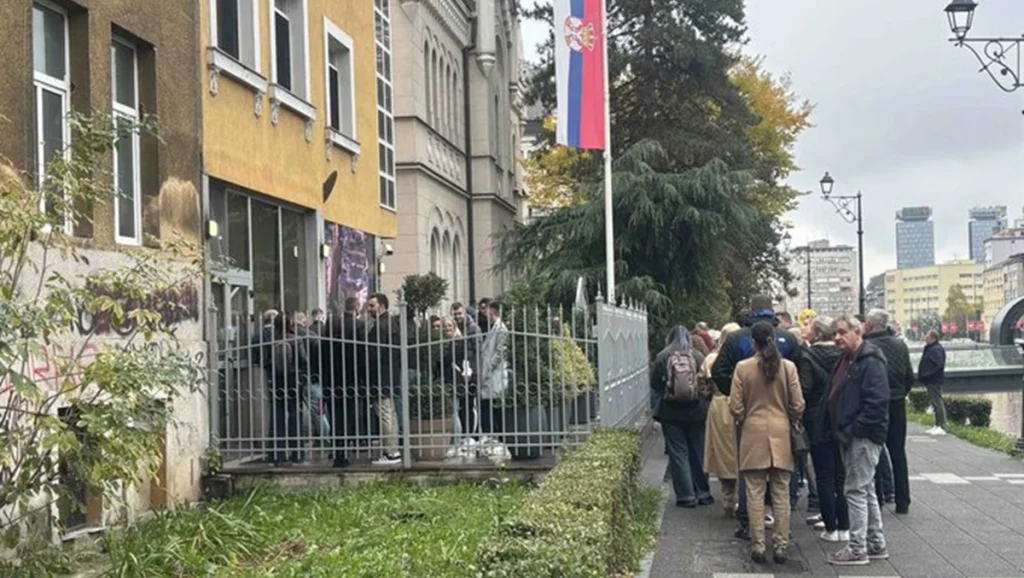
On Sunday, Polling stations opened across Serbia at 7 a.m. local time in snap parliamentary elections to elect the country’s 250-seat National Assembly.
About 6.45 million registered voters are eligible to cast ballots at nearly 8,400 polling stations, including over 90 abroad. Polls in Serbia are scheduled to close at 8 p.m. local time. More than 16,000 domestic and foreign observers are monitoring the vote.
Eighteen electoral lists comprising 2,418 candidates are competing for parliamentary seats. The competing lists include “Aleksandar Vucic – United Serbia” led by the Serbian Progressive Party, “Student List – Students Win” backed by student groups, and “Ivica Dacic – Stability Factor!” formed by the Socialist Party of Serbia and its allies.
Serbia elects its parliament through proportional representation in a single nationwide constituency, with voters choosing electoral lists rather than individual candidates.
Electoral lists generally need votes equivalent to at least 3 percent of the number of voters who cast ballots to qualify for seat allocation. At least 126 seats are needed for a parliamentary majority.
Under Serbia’s election law, election results must be published within 96 hours. The newly elected National Assembly must hold its first sitting within 30 days. If it fails to elect a government within 90 days, the assembly must be dissolved and new parliamentary elections called.
… 🚨
Voting is taking place in Serbia today. People have been lining up since 6 a.m. Among them is Aleksandar Vučić, whose rule students have been protesting against for the past two years.
Everyone is standing in line, yet no one approaches him to say hello, no one offers a… pic.twitter.com/YnGOLF2qeh
Vucic Pledges Responsible Approach to Election Results
On Sunday, Former Serbian President Aleksandar Vucic said that his camp would act responsibly and respect voters’ will in the country’s snap parliamentary elections.
Speaking to reporters after casting his ballot in Belgrade, Vucic said, “If we lose, we will recognize the electoral will; if we win, no one will take it away.” He added that he expected a high turnout and the Serbian people to express their will democratically.
“Whatever the outcome, we will remain courteous and polite,” Vucic said. Unlike some who had never congratulated their opponents, his camp would give no one cause for concern, he added.
“As for the result, let’s wait and see tonight,” he said. He expected preliminary results to emerge between 10 p.m. (2100 GMT) and midnight local time.

 Login