
 Login

Dominican Groups Protest Move to Ease Rice Import Tariffs
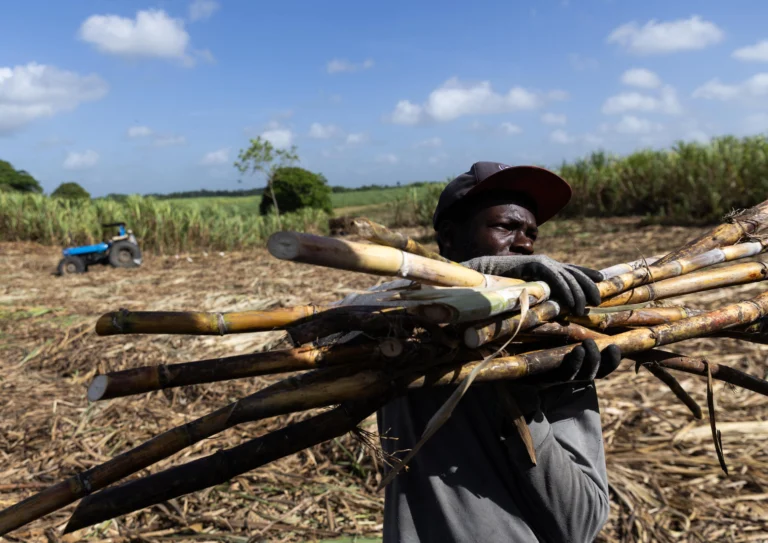
Organizers warn that weaker tariff protections could threaten domestic rice production, jobs and food security.
Social and political groups in the Dominican Republic are protesting a government decision to scrap tariff protections for domestically produced rice, warning that the move could expose local farmers to increased import competition.
RELATED: ICE Agent Shoots Dominican Man in New York, Sparking Protests
The Broad Front (Frente Amplio) and the Jesús Adón Popular Bloc (Bloque Popular Jesús Adón) have called for a march in Nagua on Sunday, Oct. 25, demanding stronger government measures to protect domestic rice production. The demonstration is scheduled to begin at 9:30 a.m. at the town’s main park, on the road toward San Francisco de Macorís. Organizers have urged farmers, agricultural workers, traders and social organizations across the northeastern region to take part.
The protest centers on Decree 635-26, issued by President Luis Abinader on Sept. 9, 2026, which repealed Decree 693-24. The previous measure established a tariff system intended to shield locally produced rice from international competition.
#DOMINICANA | Tras intensas presiones de Estados Unidos, el Gobierno dominicano derogó la medida arancelaria que protegía la producción nacional de arroz. Organizaciones sociales y productores denuncian que la eliminación de estas salvaguardas bajo el tratado DR-CAFTA vulnera la… pic.twitter.com/ZCVO0Om8iz
— teleSUR TV (@teleSURtv) October 23, 2026
Text Reads: Following intense pressure from the United States, the Dominican Government repealed the tariff measure that protected the national rice production. Social organizations and producers denounce that the elimination of these safeguards under the DR-CAFTA treaty violates the country’s food sovereignty.
Under the former rules, certain imports within the tariff-rate quota faced a 20% tariff, while imports exceeding the quota were subject to a 99% rate. The system allowed 23,300 metric tons of rice from the United States to enter the Dominican market duty-free, with imports above that volume subject to the higher tariff.
María Teresa Cabrera, president of the Broad Front, said the decision to remove the protections stemmed from external commercial pressure linked to bilateral negotiations with the United States over access to the Dominican agricultural market.
Cabrera warned that weakening tariffs could undermine a sector encompassing more than 30,000 producers and supporting tens of thousands of direct and indirect jobs. Rice production also sustains related economic activities, including transportation, supply and marketing.
“Rice is not just another commodity: it is an essential food for the Dominican people and the livelihood of thousands of farming and working families. Weakening domestic production to favor imports could have economic and social consequences extending far beyond the countryside. Food security is also a matter of national sovereignty,” Cabrera said.
The decision has also raised concerns among agricultural organizations, which are seeking clarity on the safeguards and competitiveness measures the government intends to introduce to protect domestic production.
The Dominican government has said it is pursuing diplomatic and commercial negotiations with international counterparts to renegotiate the terms while maintaining controls on rice imports.
The planned march comes as agricultural groups press the government for assurances that domestic rice producers will remain protected under any revised trade arrangements.
