❌

Reading view

Democrats Poised to Take House as Trump Faces Midterm Test
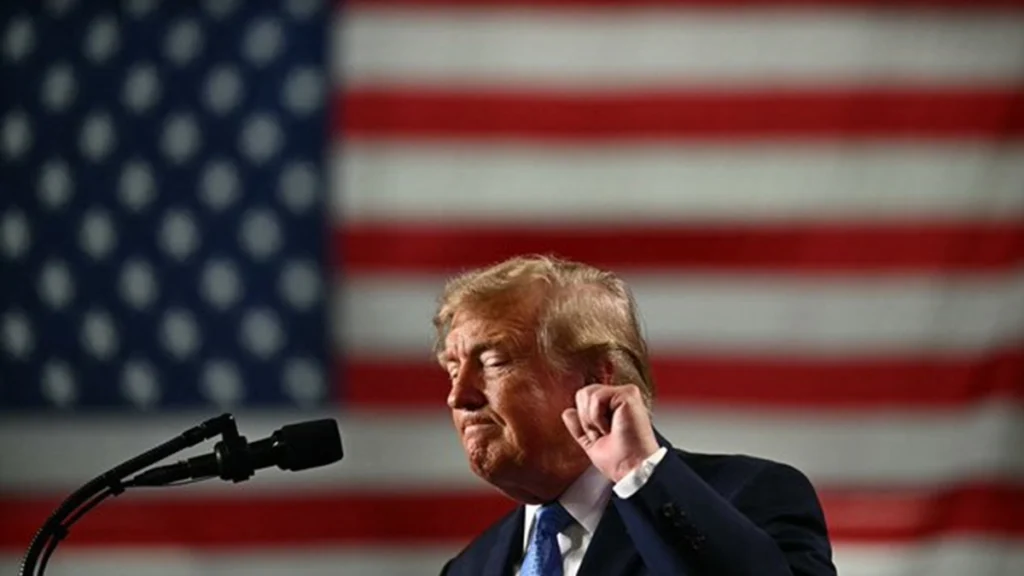
Polls Favor Democrats as the MAGA leader Ramps Up Campaigning to Help Republicans Retain Control of Congress.

U.S. citizens will head to the polls in one week for midterm elections that are shaping up as a referendum on President Donald Trump’s performance and will determine whether Republicans retain control of both chambers of Congress during the second half of his term.

RELATED:

Trump Backs Netanyahu’s Reelection for Tuesday Elections

Polls for the Nov. 3 elections point to a favorable outlook for the Democratic opposition, prompting Trump to throw himself into the campaign, with nearly daily rallies this week in key states.

According to an analysis by Decision Desk, based on polling averages, Democrats have a 79% chance of winning the House of Representatives, up 2 percentage points from last week, and a 57% chance of regaining control of the Senate, up 1 point from a week ago.

#USA #Trump #WEI #OIL #DXY #XAUUSD #GOLD #FED

With the U.S. midterm elections approaching (November 3), the war involving Iran has driven up oil prices and the cost of living, making these issues a focal point ahead of the vote.

Some of Donald Trump’s core supporters… pic.twitter.com/RtXAdDQncq

— Emily (@Emily_CFA) October 27, 2026

Republicans Set to Lose the House of Representatives

The House will see all 435 seats up for election for two-year terms. Republicans currently hold a narrow majority of 219 seats to the Democrats’ 214, meaning the opposition needs a net gain of three seats to take control.

According to RealClearPolitics’ polling average, Democrats hold a clear lead in House voting intentions, with 51.1% support compared with 42.8% for Republicans.

Over the past week, Cook Political Report has revised its forecasts in 19 districts in favor of Democrats, many of them in traditionally Republican states. The opposition is virtually assured of winning 220 seats, above the magic number of 218 needed for a majority.

Republicans face particular difficulties in Midwestern states that voted for Trump in 2024 but where dissatisfaction with his economic management, high gasoline prices and the U.S. war on Iran has grown.

It is common for the president’s party to lose control of the House in so-called midterm elections. This happened to Trump during his first administration, when Democrats took advantage of their gains to launch impeachment proceedings against him.

TRUMP DOESN'T WANT REPUBLICANS TO LOSE. HE'S TERRIFIED OF WHAT HAPPENS IF THEY DO.

Michael Tomasky's theory in The New Republic is provocative. It's also contradicted by Trump's own behavior.

Tomasky argues that Donald Trump secretly wants Republicans to lose the midterms… pic.twitter.com/u6mgoL8KSL

— Andre Robinson MS (@AndreDoctrine) October 27, 2026

Senate Race Is More Closely Contested

On Nov. 3, 35 of the Senate’s 100 seats will also be up for election. Republicans currently hold a majority of 53 seats to the Democratic caucus’ 47.

The opposition faces a somewhat more difficult path: It needs to wrest four seats from Republicans while holding on to its own to secure a majority in the upper chamber, which has among its responsibilities confirming Supreme Court justices.

According to polls, the race is close in seven states: Alaska, Iowa, Kansas, Maine, Michigan, Ohio and Texas. All the seats being contested in those states are currently held by Republicans, except for Michigan’s, which is held by a Democrat.

One of the races attracting the most attention is in Texas, long considered a Republican stronghold, where Democrat James Talarico now leads Ken Paxton, a Trump ally, by 1.8 percentage points, according to RealClearPolitics.

In Michigan, Abdul El-Sayed, from the Democratic Party’s more progressive wing, leads Republican Mike Rogers by 2.5 points. In Maine, Democrat Troy Jackson leads incumbent Republican Sen. Susan Collins by 1.2 points.

🚨WATCH: President Trump tells a crowd in Michigan it is “their fault” if Republicans lose the midterms

Polls have the Democrats ahead of the Republicans in both the Michigan gubernatorial and US senate races pic.twitter.com/YWhRwHixGa

— Politics US (@PolitlcsUS) October 26, 2026

Gubernatorial Elections

In addition, 36 states will elect governors, with Democrats starting as favorites in 20 of them and potentially winning a majority of the country’s governorships for the first time since 2010.

Expected Democratic victories include those of Xavier Becerra in California and Kathy Hochul in New York, while Republicans Greg Abbott and Byron Donalds lead in Texas and Florida, respectively.

The race is much tighter in three states: Georgia and Nevada, currently governed by Republicans, and Wisconsin, governed by a Democrat.

In Alaska, Cook Political Report identifies Democrat Jonathan Kreiss-Tomkins as the favorite. His victory would mark his party’s first gubernatorial election win in the state since 1994.

Trump’s Popularity at Record Lows

Against this backdrop, Trump is entering the final stretch of the campaign, which will take him to Texas, Ohio, South Carolina, Florida, Kansas and Iowa in a last-ditch effort to mobilize his MAGA movement base.

A Reuters-Ipsos poll released Monday puts Trump’s approval rating at 32%, a slight rebound from the record low of 31% recorded last week.

teleSUR/ JF

Source: EFE

  •  

How a Cheesecake Factory jab spurred a midterm spat

A Cheesecake Factory jab from former President Obama quickly spiraled into a midterm spat between the GOP and Democrats as the competitive election cycle nears its end. Obama quipped during a recent campaign stop in Cleveland that President Trump has the White House “looking like Saddam Hussein opened a Cheesecake Factory, it’s just gold everywhere.”…

  •  

Democratic senator: Trump is ‘laying the groundwork’ to steal Minnesota election

Retiring Sen. Tina Smith (D-Minn.) says that President Trump is “laying the groundwork” for MAGA allies to “steal” the Senate election after Trump said the federal government would be keeping an eye on the state. “He’s blatantly laying the groundwork to steal an election if his chosen candidate doesn’t win… Minnesota will not take kindly…

  •  

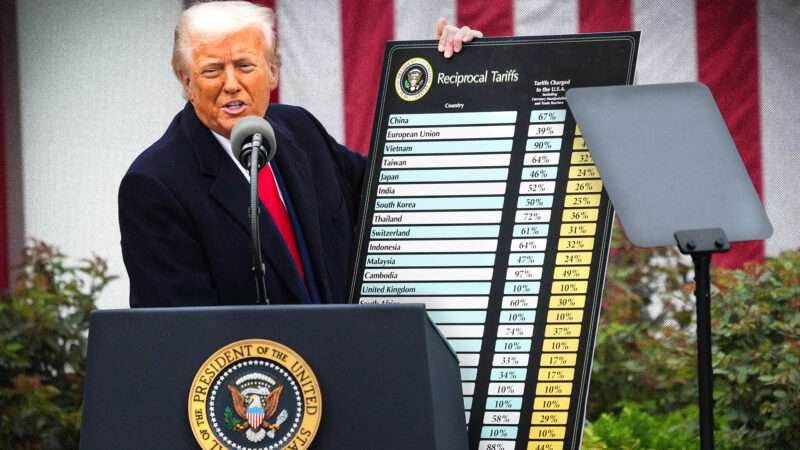
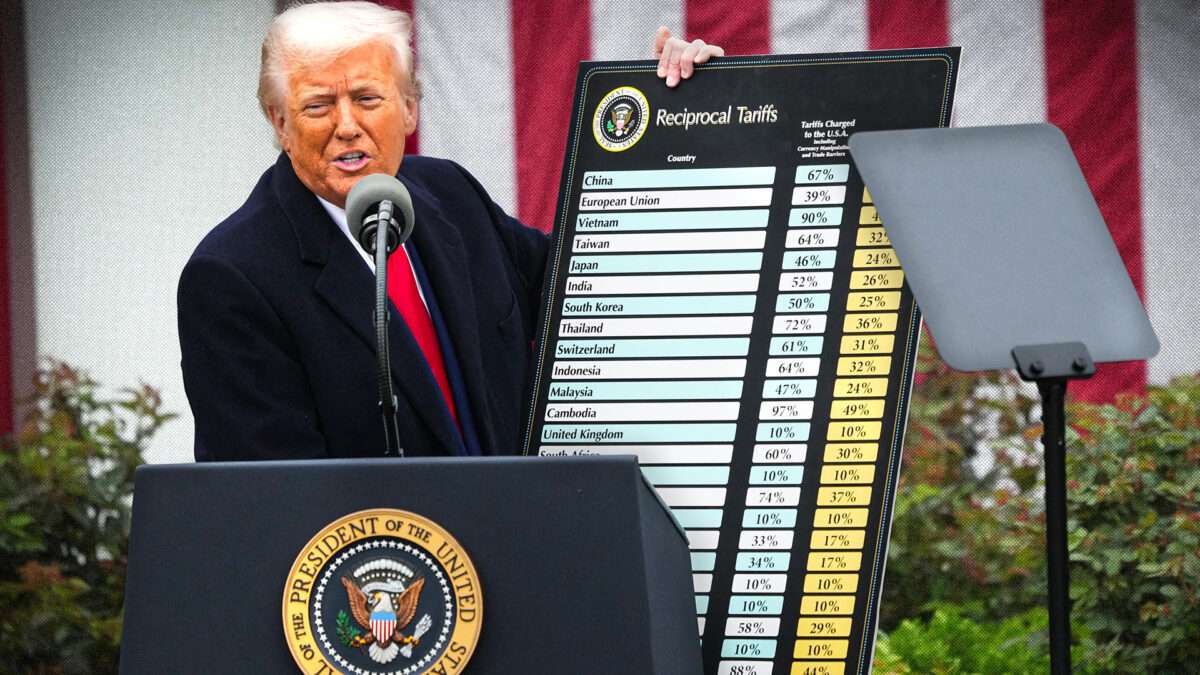
Trump's Tariffs Are Politically Toxic

Trump-Tariff-oct-26 | Chris Kleponis - CNP/Newscom

When the White House rolled back tariffs on coffee, fruit, beef, and farm equipment, it was effectively an admission that the tariffs were raising prices—and that Americans, not foreigners, had been paying for them.

Now, in the closing stages of the midterm campaign, the White House is once again rolling back some of those import taxes—and once again making an awkward implicit admission.

President Donald Trump's tariffs have become politically toxic.

The administration announced late last week that it would lift the 50 percent tariffs on some Canadian imports, apparently in an attempt to help Sen. Susan Collins (R–Maine) survive a tough reelection campaign in which the tariffs have played a significant role.

If this is indeed an attempt to sway voters in Maine, it is not a very convincing one. The Trump administration is removing tariffs on some agricultural and mechanical goods, as well as packaging and plywood, The Wall Street Journal reports. But Trump is also imposing new 50 percent tariffs on "other Canadian goods, including carpet, certain valves, and waste products."

Collins issued a statement thanking the White House for the changes. This is what members of the U.S. Senate have been reduced to—begging the president to cast his capricious, tariff-happy eyes toward products that will hurt people in other states more than in your own. (In fairness to Collons, she has voted repeatedly to roll back Trump's tariffs, but not enough of her fellow Republicans went along with it.)

Still, it's worth asking: What exactly is the pitch to voters here? Here's a tariff cut, now vote for Republicans so the president can continue to arbitrarily tax imports whenever the mood strikes?

It's easy to see why Trump's tariffs have become so unpopular. They are a huge and broad tax increase—the Tax Foundation estimates that 54 percent of imports are subject to Trump's tariffs, which are costing the average household about $1,000 annually—that was imposed without congressional authorization or popular support. They create more losers than winners, as downstream businesses and consumers pay the price for the protectionism offered to American manufacturers. Even the supposed "winners" of the tariff policy tend also to be "losers," since so much manufacturing depends on importing raw materials and intermediate goods.

Perhaps more surprising is how unwilling Republicans are to defend the president's signature economic policy. Or to even talk about it.

The Wall Street Journal's Greg Ip crunched the numbers and found that House GOP candidates have not run a single ad talking about the tariffs during this election cycle.

Just such a fun chart here from @greg_ip. If only we could tease out some meaning. Ah, well, nevertheless. 🤣 pic.twitter.com/1X4AWcWQMV

— Scott Lincicome (@scottlincicome) October 23, 2026

That silence speaks volumes. Trump says "tariff" is "the most beautiful word in the dictionary." But it is now "one of the most hated words in politics," writes Ip.

The only Republicans to mention trade or tariffs in a campaign ad, as far as I've seen, is former Rep. Mike Rogers, who is now running for the Senate seat in Michigan (and thus was not included in Ip's analysis). And he's calling for an end to the "tariff war."

There is a lesson here that hopefully will linger beyond the next week: If you support a policy that deliberately and unlawfully raises taxes and prices, voters will not reward you for it.

It's a lesson that the Republican Party learned long ago, but apparently forgot.

Against economists' advice, a Republican-led government in 1930 implemented a huge tariff hike intended to protect American farms and factories at the start of the Great Depression. Instead, those tariffs worsened economic conditions and triggered foreign retaliation.

When voters went to the polls in 1930, the first midterm after the Smoot-Hawley tariffs were passed, they registered their displeasure. The GOP lost 52 seats in the House that year. Two years later, an even larger landslide would sweep Democrats into power in Congress and the White House, ushering in the New Deal era that reshaped the federal government forever. The two lawmakers who lent their names to the legislation were among those who lost their seats, fittingly.

The most notable difference this time around is that Congress didn't actually pass a tariff bill. The trade barriers were instead imposed directly by the executive. Voters don't seem to care. Republicans were too cowardly to stand up to Trump's unilateral power grab, and now they seem too ashamed to try to defend that policy (and their largely complicit response) on the campaign trail.

As they say, those who don't learn from history are doomed to repeat it. And "doomed" may be a fitting way to describe the Republican majority in Congress right now, thanks in no small part to Trump's tariffs.

The post Trump's Tariffs Are Politically Toxic appeared first on Reason Magazine.

  •  

Democrats See a Rare but Fleeting Chance to Shake Up the Senate Map

Democrats are targeting G.O.P. strongholds that could set them up for new majorities. But if they don’t win those races now, it could be a long time before they have another chance.

© Clayton Steward for The New York Times

Protesters outside of an event for Senator Roger Marshall in Topeka, Kan. Soaring fuel costs and economic struggles have made some Republican senators like Mr. Marshall vulnerable on their home turf.
  •  

In Islamophobic Rant, Trump Seeks to Stir Republican Base in Michigan

The president contended that Dr. Abdul El-Sayed, a Muslim, would “invite hordes of jihadis to our shores” as he sought to bolster the G.O.P. candidate in a tight Senate race.

© Haiyun Jiang/The New York Times

President Trump’s comments, coming in a key midterm battleground nine days before the elections, underscored the dark themes and personal vilification he and his allies have embraced as part of their closing pitch.
  •  

In Texas Senate Race, Talarico Leans Into Growing Rivalry With Elon Musk

On the trail, James Talarico, the Democratic Senate nominee, has increasingly gone after Mr. Musk, a critic of his who has given big to a group aligned with the Republican candidate, Ken Paxton.

© Eric Lee/The New York Times; Joel Angel Juarez/Reuters

Elon Musk, left, is in an increasingly tense rivalry with James Talarico, the Democratic Senate nominee in Texas.
  •  

In Alaska, Some Early Voting Sites in Rural Villages Have Not Yet Opened

“There is no legal excuse” for the failure of 18 polling sites to open for early voting, a state lawmaker said.

© Kerry Tasker/Reuters

Senator Dan Sullivan finished second in the primary to Representative Mary Peltola and has trailed her in polls since.
  •  

Obama Issues Searing Attacks on Trump, Ramaswamy in Return to Campaign Trail

The 44th president sharply criticized Mr. Trump, who hit back later in the day. Mr. Obama also assailed Vivek Ramaswamy, the Republican nominee for governor of Ohio.

© Victor J. Blue for The New York Times

Former President Barack Obama sharply criticized President Trump on Saturday in Ohio.
  •  

A 2028 Presidential Poll Finds Vance, Rubio and Several Democrats in the Mix

The Democratic presidential primary race appears to be wide open, while JD Vance and Marco Rubio led among Republican voters, a New York Times/Siena survey found.

© Jillian Vordick/The New York Times

  •  

Why Democrats Could Find It Hard to Win the Senate Despite Their Strong Polls

Democrats are increasingly optimistic about the midterms. But they are being outspent by Republicans. And they are trying to compete in states that favored President Trump by large margins.

© Julia Demaree Nikhinson/Associated Press

  •  

How Vivek Ramaswamy’s Ruthless Ad in Ohio Divided Republicans

The fallout from Vivek Ramaswamy’s brutal spot targeting his Democratic rival in the Ohio governor’s race showed that even in the Trump era, a political attack can be seen as going too far.

© Shannon Stapleton/Reuters

Vivek Ramaswamy, a Republican, is facing a tight race for governor of Ohio against Amy Acton, a Democrat.
  •  

Why Legal Experts See the Justice Dept.’s Alaska Election Challenge as Dubious

No obvious legal authority supports a pre-emptive effort to block the certification of Alaska’s Senate election if the Republican incumbent narrowly loses.

© Kerry Tasker for The New York Times

Senator Dan Sullivan with Mary Peltola, his Democratic challenger, during a debate in Kodiak, Alaska, last month.
  •  
❌