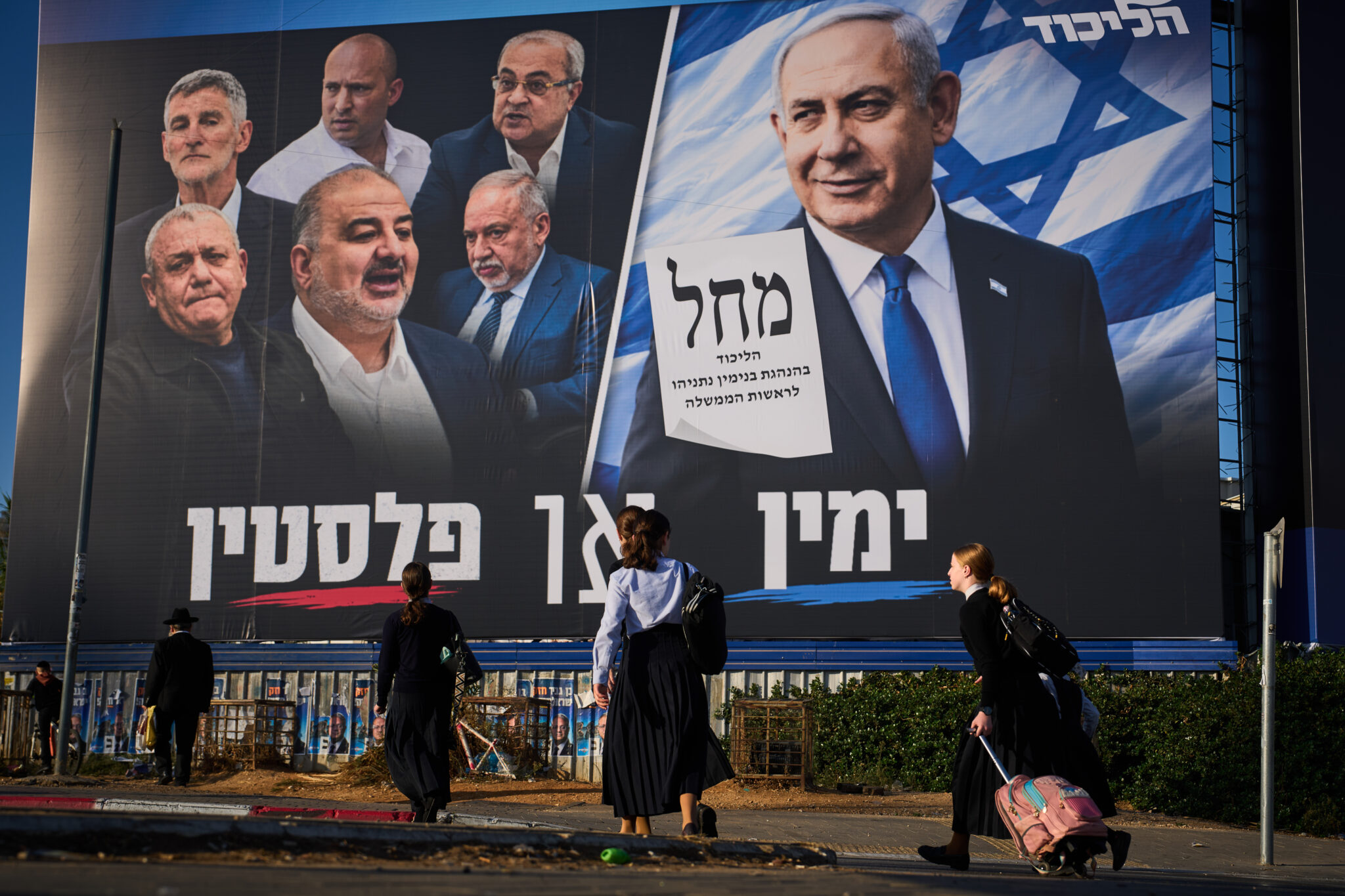
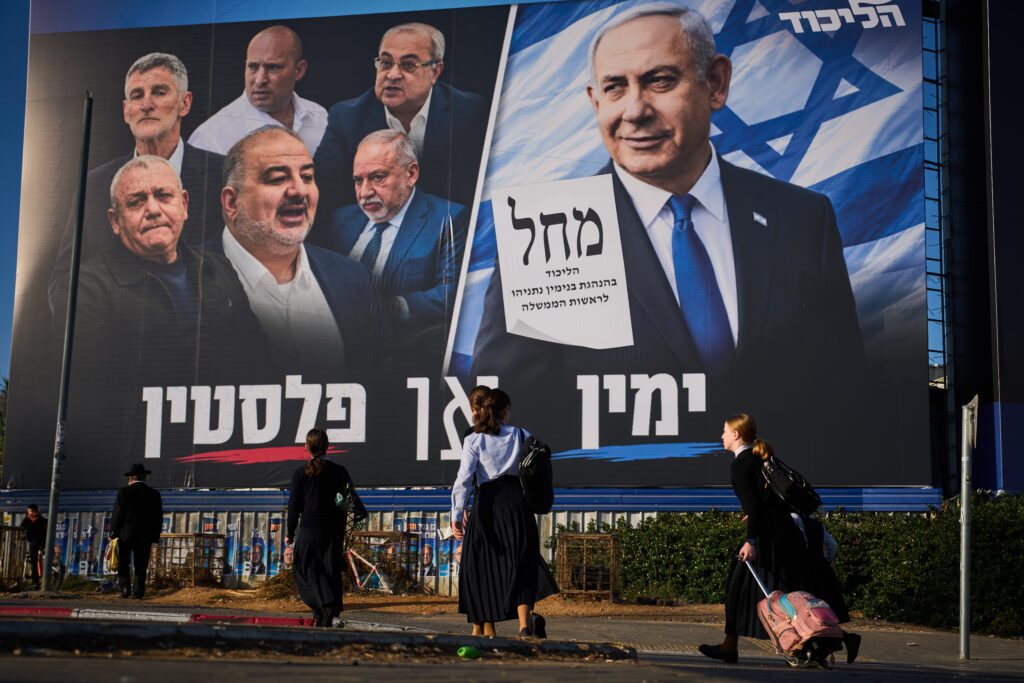
The Israeli elections have become a fight over October 7, but only Zionist opinions are allowed


At least nine people were killed and dozens of others wounded after masked gunmen opened fire on people attending a funeral procession at a church in the village of Hmoud, in Jordan’s southern governorate of Karak on Friday October, 23.
Jordanian Government Communication Minister and Official Government Spokesperson Mohammad Momani condemned the offensive as a cowardly terrorist action, asserting that “this crime is an assault against Jordan as a whole.”
He also described the attackers as “treacherous and extremists,” confirming that they will face “comeuppance thanks to the capabilities” of the Jordanian security forces.
“Jordanian Christians are an integral part of the country’s national fabric and have contributed to its past, present and future,” Momani asserted.
Meanwhile, Jordan’s King Abdullah II vowed that the attack “will be met with the harshest retaliation.”
“The terrorist attack against Karak will be met with the harshest retaliation. Those who delude themselves into thinking that they can divide Jordanians with their bullets have no chance in the face of our unity. All Jordanians, from north to south, are partners in land and fate, and nothing stands between them,” the king wrote on X.
“Every Jordanian life is precious, and we will strike with an iron fist against those who dare to threaten our nation,” he threatened.
In the early hours of Monday, October 26, the Jordanian authorities announced the arrest of the three suspected perpetrators, whose identity was revealed later as Hazaa Zeidan Mohammad, Mashal Zeidan Mohammad, and Ahmad Sami Hussein, two brothers and their relative, who are all Jordanian nationals.
Jordan’s Public Security Directorate (PSD) Director Major General Obeidallah Maaytah clarified that the three men did not plot the attack in advance, but decided to launch the attack when they saw the funeral procession. Yet, he noted that their motive was based on an “extremist ideology” and “terrorism.”
While preliminary investigation findings suggested the three suspects acted on their own, a statement released by the Jordanian Armed Forces (JAF) on Monday evening linked them to “terrorist” groups in southern Syria.
JAF declared that the Royal Jordanian Air Force carried out an operation dubbed “Jordanian Deterrence – Hmoud” in retaliation for the victims of the church in Karak.
According to the statement, the operation targeted “terrorist hideouts,” involving fighter jets that struck several sites and destroyed a number of vehicles belonging to the targeted groups in southern Syria.
The Jordanian army also noted that the operation, which was carried out in coordination with the Syrian government, resulted in killing and wounding numerous members of those groups.
It is worth noting that Friday’s assault marks the first attack on a church in Jordan.
Shortly after Jordan announced the launch of the operation, Syrian Arab News Agency SANA reported that eight civilians, including women and children, were killed in Jordanian airstrikes on Rural Daraa.
Meanwhile, the Syrian government affirmed that the operation was carried out “without prior coordination or notification with the Syrian side,” emphasizing “the need to uphold the sovereignty of the Syrian Arab Republic and preserve the security and stability of both brotherly nations.”

Two Palestinian men carried out a shooting attack, targeting a group of Israeli soldiers near the Farsh al-Hawa military checkpoint in the southern West Bank governorate of Hebron on Friday, October 23.
According to media reports, the attackers were assassinated by the Israeli forces after engaging in an exchange of fire for about 20 minutes. They were later identified as Firas al-Ju’ba and Hamoudah al-Ju’ba.
The attack also resulted in the killing of two Israeli soldiers and the injury of three others.
In response to the attack, Israeli Prime Minister Benjamin Netanyahu declared a full lockdown in the West Bank and a large-scale operation that will start from the city of Hebron and the neighboring city of Halhul, and further expand to the entire occupied territory.
Wearing a bulletproof vest, Israeli Prime Minister Benjamin Netanyahu threatened from Hebron that the Israeli military will apply the “successful and aggressive model” that the Israeli forces used in the Palestinian refugee camps in the north.
The operations in those refugee camps already resulted in the displacement of tens of the thousands of Palestinians, the killing of hundreds, the arrest of over 1,000, and severe damage and destruction of residential buildings, infrastructure, and properties.
“We will evacuate the residents, we will go house to house, remove the weapons there, and all terrorist infrastructure will be dealt with and destroyed,” Netanyahu threatened.
The Israeli military already began to demolish buildings and homes in Hebron shortly after the attack was carried out.
Referring to the West Bank as Judea and Samaria, Netanyahu continued:
“The defense minister and I have seen plans for a very extensive IDF operation in Judea and Samaria, the likes of which have not been carried out since the Six-Day War.”
The Six-Day War was a brief, intense conflict fought between Israel and a coalition of Arab states, primarily Egypt, Syria, and Jordan in 1967.
As a result of the war, Israel occupied Egypt’s Sinai Peninsula, Syria’s Golan Heights, the West Bank, and the Gaza Strip. It also forced 300,000 Palestinians and 100,000 Syrians to flee into neighboring countries.
It is worth noting that Netanyahu and Defense Minister Israel Katz have already threatened a possible war in the West Bank in the last couple of weeks.
These threats came hand in hand with an unprecedented escalation of settler violence under the protection of Israeli forces across the occupied territory, alongside intensified military raids.
Over 79 Palestinians have been killed in the West Bank in 2026, and more than 1,870 others have been injured since the beginning of 2026.
Analysts suggest that the escalation in the West Bank aims to push Palestinians towards a confrontation with the Israeli military, a few days before Israel’s legislative elections, scheduled for October 27.

Benjamin Netanyahu will almost certainly stay as prime minister after Israel’s elections on Tuesday, Miko Peled predicts – but he argues it won’t really matter if he doesn’t.
The Israeli-American author, activist and founder of Palestine House of Freedom in Washington, DC tells Rania Khalek and Zoe Alexandra who wins control of Knesset doesn’t really change things for Palestinians in Gaza and the West Bank; with challengers like Gadi Eisenkot, the ex-army chief behind the Dahiya doctrine of flattening civilian neighborhoods, and ex-premier and settlement champ Naftali Bennett who vows to block a Palestinian state, the war machine stays the same. But Peled says the ultra-Orthodox fight over the military draft and growing demands for an October 7 investigation are tearing Israeli society apart.
He explains why settler attacks on Washington Post photographer Heidi Levine and Congressional candidate (and liberal zionist) Brad Lander show the state’s true face, pointing out “it’s all settler violence, because they’re all settlers.” Peled warns that a new Israeli attack on Iran could finally test the limits of Tehran’s restraint – and that if Netanyahu falls, Democrats may rush to re-embrace Israel ahead of the midterms, but the honeymoon won’t last. Watch full episodes of BT Live, join breakthroughnews.org as a member today! #breakthroughnews

Trita Parsi puts the odds of a new round of US-Israeli war on Iran at 90% – and it could start as soon as this weekend. The US and Israeli militaries have plans for renewed strikes after the midterms, the New York Times reports; three aircraft carriers are en route to the region, and Netanyahu, trailing ahead of Tuesday’s elections, says he’s ordered Israel’s military and Mossad to topple Iran’s government. Parsi, executive vice president of the Quincy Institute for Responsible Statecraft, tells Rania Khalek and Zoe Alexandra why Trump’s third round will be far worse than the first two.
Parsi argues that Trump, initially driven by hubris, is now out for revenge against a Tehran he believes is deliberately dragging out the war to destroy his presidency. He explains why time is on Iran’s side; how Washington is spinning the war of attrition in the Strait of Hormuz; why soaring gas prices make the war impossible to tune out; and why even European conservatives say the protests sweeping the continent are fueled by the war’s economic fallout. Parsi warns Netanyahu may see escalation as the Hail Mary pass he needs to lock in his legacy, and says that if Democrats take control of Congress, they’ll have the power to stop this – and will be complicit if they don’t.
Watch full episodes of BT Live, join breakthroughnews.org as a member today!
#breakthroughnews
******
Rough transcript follows:
[Interviewer:]
It’s very difficult to see this war lead to a scenario in which the impact on the global economy is sufficiently insignificant for it not to translate to any political changes. If you look at the polls right now, the top issues motivating people in this election are inflation and gas prices. That’s all due to the Iran war. Nearly eight months ago, the US and Israel launched a very destructive war on Iran, killing the Supreme Leader and disrupting global oil markets. Trump wanted a quick knockout, but instead, he got a war he can’t contain, a stalemate that nobody seems able to break, and a deal to end it that looks further away than ever.
Somehow, this war has become background noise in the US, and the next round may already be on the calendar. The New York Times reports that the US and Israeli militaries have drawn up plans for renewed strikes on Iran after the midterms. This campaign would hit energy infrastructure, nuclear sites, and Iran’s missile and drone arsenal. They came close to doing this earlier this month before Trump pulled the plug at the last minute. Now, three aircraft carriers and thousands of Marines are on the way. Netanyahu, trailing in the polls ahead of next week’s elections in Israel, says he’s ordered the military to prepare for preemptive action and to topple the regime. Iran’s intelligence assessments suggest strikes could come even before Israel votes on Tuesday. The White House says nothing happens before the midterms. Meanwhile, the State Department has ordered non-emergency staff and their families out of Saudi Arabia, and the AFP cites a diplomatic source saying families of embassy staff in the UAE, Jordan, Qatar, and Bahrain have been ordered out as well.
Netanyahu is making big threats a week before elections. Trump says this time the fight will be neither quick nor limited, with no restraints. So what breaks this stalemate? Is escalation the only way out? And who can last longer, Iran or Washington? Joining us now to discuss all of this is Trita Parsi, executive vice president of the Quincy Institute. Trita, welcome back to BT Live.
[Trita Parsi:]
Good to be with you.
[Interviewer:]
You are putting the odds of a new round of war at 90%. That’s quite high. The New York Times says the plans are drawn up and carriers are on their way. Why are you and the New York Times so confident? Some US planners think that three days of intense strikes will manage to break Iran’s economy and force concessions. Is that a serious theory?
[Trita Parsi:]
First of all, it’s kind of insulting to say that the New York Times and I are on the same page on this. I’m just kidding. But look, I’ve been warning about this for more than five weeks now that a third round was extremely likely because of a couple of factors. What we’re seeing now is more the motions necessary to bring about this disastrous third round being put in place. The signs and the logic as to why we were going in this direction were clear to me several weeks ago because Trump, at the end of the day, his psychology does not allow for him to lose. He is willing to sacrifice everything to win.
Earlier on, he thought that the MOU and a diplomatic deal could end the story in a way that made the war look worth it or at least acceptable. But he had a bad experience with the MOU. He got attacked for it by Democrats, Republicans, the pro-Israel crowd, everyone. He realized the political cost was very high. So now he thinks diplomacy won’t end it acceptably. Blockade won’t end it acceptably, even though they’re putting forward this mythology that they’re winning on the blockade. And the limited amount of war he’s had won’t do it. So now the only thing he hasn’t tried is this all-out war that he threatened several times but never did—taking out Iran’s oil infrastructure, energy infrastructure, desalination plants, critical infrastructure. He avoided that, knowing it would lead to massive retaliation by the Iranians against GCC infrastructure, which would throw the global economy into a depression. But now he doesn’t seem to care. The midterms are over, and he’s just looking to do something that brings this to an end on his terms.
There’s another element that makes matters worse now, which is last time he went in with hubris. He thought he could do this in four days. The Israelis had sold him that mythology. He had managed to do Venezuela quickly, so he was very confident. This time, it’s not hubris bringing him back; it’s vindictiveness. He’s very angry about the war’s outcome so far. He believes the Iranians deliberately dragged things out to destroy his presidency, and to a certain extent, they have. Now there’s this new element of revenge. So we may very well go towards a third disastrous round of war, not because of a flawed geopolitical miscalculation, but because of one man’s desire for vengeance.
[Interviewer:]
It’s truly tanking the global economy, putting tens of thousands of lives at risk because of vengeance. Trump has previously vetoed a major return to combat, including at the last minute earlier this month. He’s pulled back from major threats repeatedly. The White House says no strikes before midterms. Iran’s intelligence says it could come before Israel votes on Tuesday. Which clock is correct? If the Republicans lose Congress, can Democrats stop a possible escalation? Will they?
[Trita Parsi:]
Unfortunately, not to the extent that they should be. It’s perhaps a different political calculation before the midterms versus after. But with the MOU, there were Democrats who should have known better, who played a fantastic role in the JCPOA, who now returned a favor to the Republicans by doing bad faith attacks against the MOU. It contributed to the MOU collapsing. It’s not the only reason, but it contributed to Trump’s conception that a deal with Iran is not a win because of the high political price, a conception every previous American president has had. It’s interesting that Trump didn’t have it. It’s part of why he was willing to strike a deal with Iran, willing to strike a deal with North Korea because he was immune to the idea of a political cost for such an agreement. But that’s changed, and the Democrats contributed to it.
After the midterms, it will be critical for Democrats to do everything they can, from using the power of the purse to other means, to put an end to this war. Once they’re in control of the House and particularly if they also control the Senate, they’re no longer bystanders. They’re complicit if this is allowed to continue because they will have the power to stop it.
[Interviewer:]
There’s so much damage incurred from this war, obviously not as much as the Iranian side, but it still stands to be seen just how deep that damage can go. Iranian officials are now talking about expanding targets to data centers and undersea internet cables. Iran analysts floated hitting Saudi refineries like Aramco to spike oil prices. A top adviser to Ghalibaf called the idea of that 72-hour war a fantasy. What does the next round look like from Iran’s side? How much more can they escalate? Why do you think Iran has decided to wait out Trump rather than cut any more deals?
[Trita Parsi:]
I spoke to a senior advisor to a European president who’s no longer in office, not particularly unsympathetic to Trump. I asked him about the protests around Europe, not just in France, but in many other countries. How much of that is driven by the economic consequences of this war? To my surprise, he said overwhelmingly, a lot of it has to do with the economic consequences of this war. The focus is often on immigration, but it’s not the driving force. Even someone from the right, more on the anti-immigrant side, said what we’re seeing in Europe is largely driven by the economic consequences of this war. The global repercussions so far, in the first two rounds, are going to be benign compared to the third round, which will become overwhelming.
The other part of your question, if you could repeat?
[Interviewer:]
I was wondering why Iran has decided to wait out Trump rather than cut any more deals.
[Trita Parsi:]
That’s a very good question. In this war of attrition, the Iranians have been comfortable—not in the sense that they’re not hurting, but because they believe time is on their side. The Trump administration is putting forward a different story, saying they’re winning. They won the battle of Hormuz, more volume is coming out of the Strait of Hormuz, and they’re winning the war of attrition. Yet, it’s the US and Israel about to start this war, which tells you something about who actually is winning that war of attrition. The administration has been successful not because of their brilliance but because of the lack of brilliance in the media and analytical core. They said focus only on the volume of oil coming out, not the cost or oil prices. The impression was that the war of attrition is being won by the American side, and if anyone wanted to escalate, it would have been the Iranians. But reality seems to be the opposite.
Israel goes to vote on October 27th. If Netanyahu loses, he’ll be a caretaker, and technically, it would be hard for him to launch a war. Some analysts think he could use the threat of an imminent strike to force his rivals into a unity government. Are these threats about Iran or about keeping his job, or is that essentially the same?
[Trita Parsi:]
I think they’re pretty much one and the same. I’m not convinced that being a caretaker would make it more difficult for him to start. There will be resistance from within the security establishment, but the resistance may be higher because they’re worried he’ll start this war to impact the elections or force their postponement. The chief of staff of the army has publicly said this. Once the elections are over, and it’s in the process of forming a coalition, I’m not convinced he won’t have the ability to start a war, and certainly not convinced he wouldn’t want to. If he feels he’s about to lose the coalition, this would be his last chance for his legacy to do what his secretary of defense said is the Israeli objective: bomb Iran back to the stone age, shift the balance of power in the region so dramatically that Israel will no longer have a problem with Iran providing any deterrence against Israel. That has been the Israeli objective, and the Israelis are so openly talking about it, yet it almost never translates to any real conversation in Washington.
[Interviewer:]
Lastly, before we let you go, this war has really fallen off the front page. It’s become so normalized, like background noise. Do you think there’s a risk that opposition to this war fades because it’s becoming a kind of forever war that people just tune out, or is it too damaging to the global economy to stay a forever war?
[Trita Parsi:]
Part of the reason the US could have forever wars was because the political cost of ending the war was higher than the political cost of continuing a losing war, which was because the cost of continuing the war was relatively low. In Afghanistan, it was not good, but as long as casualties were low, the anger never reached a critical mass. The wars in Iraq and Afghanistan had no significant impact on the economy or oil markets in the manner that this war has had. It’s difficult to see this war lead to a scenario where the impact on the global economy is insignificant enough not to translate to political changes. If you look at the polls, the top issues motivating people in this election are inflation and gas prices, all due to the Iran war. Corruption ranks even higher, but both sides believe the other is corrupt, whereas with the Iran war, there’s no debate about who started it and why. The risk of escalation is far greater than the opportunities for de-escalation, which does not lend itself to an endless, low-intensity war that just continues. It could be a long war with highs and lows, still costly, but not just simmering in the background.
[Interviewer:]
Real quick, put a number on it. You believe there’s going to be another round starting this weekend. Since you like percentages, put a percentage on it.
[Trita Parsi:]
I put it at 90%. It could only change if Trump changes his mind. He’s been on the point of approving something and changed his mind seven times. We can’t have a situation like this continue without him agreeing at some point. That’s why the odds are the way they are. He’s not going to constantly back off last minute. At some point, he’s going to say yes, go through with it, and all of us are going to pay the price for it.
[Interviewer:]
Trita Parsi, executive vice president of the Quincy Institute, always appreciate your analysis. Thank you so much for joining us.
[Trita Parsi:]
Thank you so much. Appreciate it.

Iran is ready to face any new aggression and will take the war to new levels, Iran claimed on Wednesday, October 21, after reports indicated the resumption of joint US-Israeli strikes on the country’s nuclear sites and other targets is imminent.
Several reports appeared on Wednesday and Thursday pointing towards the end of an undeclared ceasefire since July and growing possibilities of fresh US-Israeli strikes on Iran.
AFP reported on Thursday, that the US has asked its embassy staff and their family members in Saudi Arabia and family members of the embassy staff in several other countries in the region to leave.
Drop Site News has reported on Thursday that the US was currently involved in large-scale preparations, including the deployment of new warships and around 10,000 additional sailors and marines in the region.
The US preparations are largely linked to Israeli Prime Minister Benjamin Netanyahu’s attempts to push a fresh offensive against Iran, Drop Site claimed. It cited both the Iranian and US officials that the US-Israeli joint strikes against Iran may begin probably before the Tuesday Israeli elections.
Last week there were reports about Netanyahu pressing Trump to re-start the bombing of Iran, as it may boost his chances of winning the elections which he is reportedly trailing at the moment.
On Wednesday, Netanyahu again, without any evidence, alleged that Iran was developing nuclear weapons. He claimed he has directed the Israeli military and Mossad, its secret agency involved in various covert operations, to “topple the regime in Iran.”
An unnamed Iranian official also confirmed to Drop Site that the country has received an intelligence assessment about the resumption of joint US-Israeli bombing of the country’s strategic sites before Tuesday.
The Iranian official reportedly also claimed that the US may also carry out a “token” strike on Iran’s nuclear site such as the Pickaxe Mountain, to claim “victory.”
Though White House deputy Press Secretary Anna Kelly denied these reports, claiming there will be no fresh strikes at least before the Midterm elections, an unnamed official told Drop Site that US President Donald Trump has “backed off” from major combat operations against Iran at least seven times since July, claiming he could start the war anytime.
Recent statements by President Trump about Pickaxe Mountain and also about the failure of negotiations with Iran have fueled speculations about the imminent strikes.
On Wednesday, Trump told the press that the US is not negotiating with Iran and “something one way or the other” will happen “fairly soon.”
Reacting to the developments, Trita Parsi of the Quincy Institute, however, dismissed Israel’s centrality in these affairs, despite claiming similarities in circumstances between now and February, when the US launched an unprovoked war against Iran in collaboration with Israel.
Rather, he pointed out Trump’s “vindictiveness” as the main reason for the fresh overtures of war, claiming Trump blames Iran for “ruining his presidency” and the humiliation his Republican party may face in the upcoming Midterm elections.
Iran has repeatedly claimed it was ready to face the US-Israeli aggression. The head of its Supreme National Security Council (SNSC) Mohsen Rezaei claimed on Wednesday that Iran will face the “next stage” of the war with a “broader plan” and respond in ways not seen before.
In the event of fresh aggressions, Iran will expand the war and target all kinds of US assets in the region including its communication cables, and AI data centers, Rezaei claimed in dialogue with Drop Site.
Rezaei also warned the regional countries to not participate in the US aggression in any way if they want to avoid Iranian retaliation, claiming “those governments should not assume they can participate in warfare against Iran without putting themselves at risk.”
Meanwhile, the naval wing of the Islamic Revolutionary Guard Corps (IRGC) claimed on Thursday that it targeted four vessels in the northern Persian Gulf for violating its restrictions on “unauthorized routes.” The vessels caught fire and were burning, Press TV reported.
The IRGC also claimed three other vessels were hit by mines in the west of the Strait of Hormuz on Wednesday night. It claimed these vessels were forced by the US, despite Iran’s warnings, to cross the Strait of Hormuz through the “unauthorized route.”
The number of vessels hit after trying to cross the Strait of Hormuz has increased many fold this week, despite the repeated claims made by the US about it being in full control over the waterway.
The US has also claimed that the shipment of oil through the Persian Gulf has returned to the pre-war level and that the Iranian blockade was ineffective.
However, Iran has repeatedly denied the US claims. On Thursday, the IRGC also warned that if the US continues to force more vessels through the Strait of Hormuz, it will be forced to carry out retaliatory strikes against its bases in the region.

Days before Israel’s legislative elections, scheduled for October 27, Israeli forces escalated military activities across the West Bank. Observers speculate that the Israeli government may carry through with its threat to escalate its assaults on Palestinians in the occupied territory.
These speculations are apparently based on the results of the early polls, which showed the bloc of Prime Minister Benjamin Netanyahu in a tight race with its competitors and facing a likely political deadlock.
On Tuesday, October 20, the Israeli military announced a 24-hour military drill across the West Bank that involved gunfire, explosions, and increased movements of soldiers, aircraft, and military vehicles.
Concurrently, security measures against Palestinians and their supporters have been further tightened. On Tuesday, October 21, the Israeli forces briefly detained 80 US, British, and Israeli volunteers assisting Palestinians harvesting olives west of the southern West Bank governorate of Bethlehem.
The detainees included the New York Democratic congressional nominee Brad Lander, a group of rabbis, and Israel’s former deputy attorney general.
Commenting on the incident, Lander wrote in a post on X:
“I’ve been detained by the IDF, along with a group of rabbis & volunteers. We were simply harvesting olives in a grove near Nehalim in the West Bank.”
“The occupation is a crime under international law. Harvesting olives isn’t a crime under any law I know,” the congressional candidate continued, although he calls himself a “liberal Zionist.”
The Israeli military stated that the mass detention of activists was carried out because they did not submit requests to the relevant authorities in advance for necessary coordination “to ensure the security of the area and maintain public order.”
The incident occurred amid an unprecedented escalation of settler violence in the West Bank, particularly during the olive harvest season.
The last couple of weeks saw horrific settler attacks carried out under the protection of the Israeli forces. Those attacks caused injuries not only to Palestinians, but also international activists, journalists, and diplomats from other countries.
Damage to Palestinian agricultural lands and the looting of crops has also been reported over the same period.
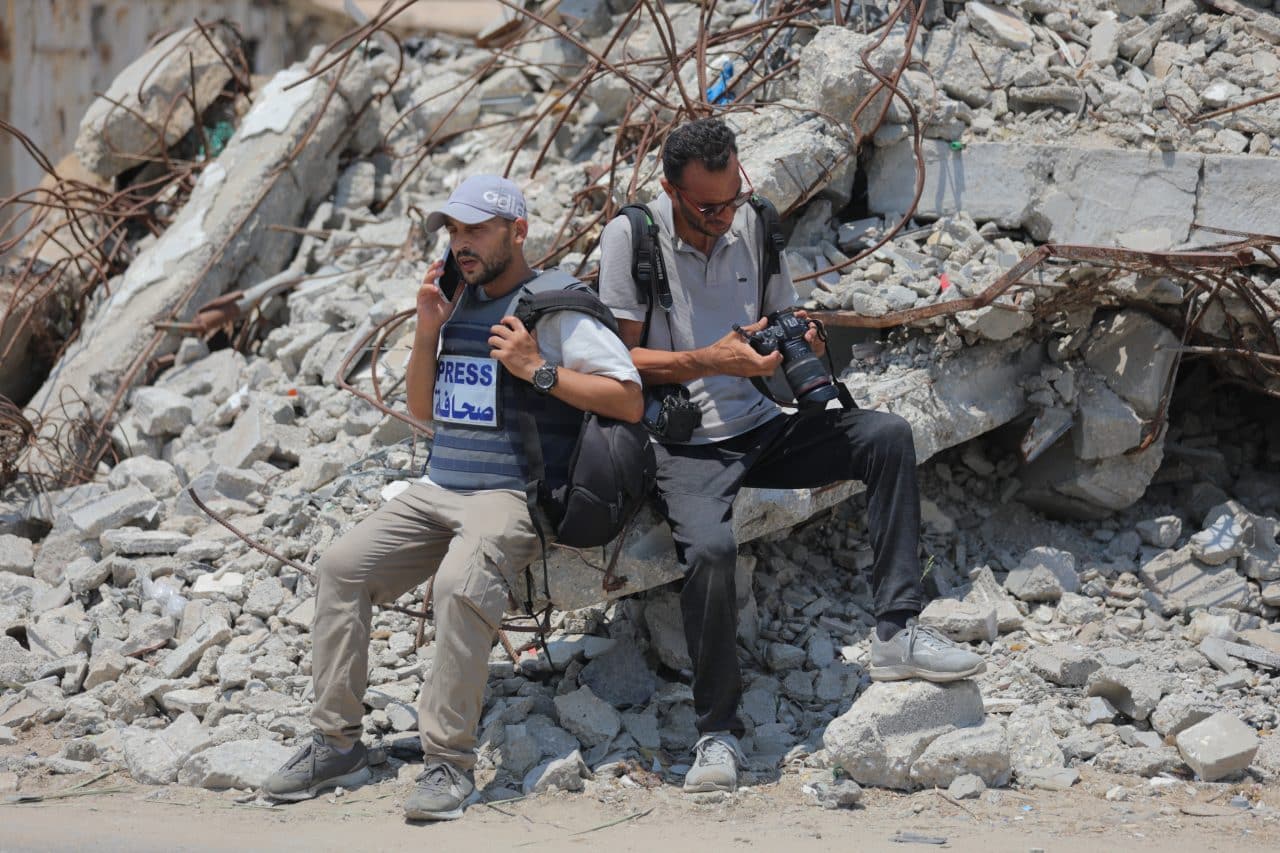
On Friday, October 16, veteran Washington Post photojournalist Heidi Levine (63) was beaten by a crowd of masked Israeli settlers, while covering the olive harvest in Abu Falah village northeast of Ramallah, although she was wearing a helmet and a protective vest clearly labeled “PRESS” on both sides.
One day later, a delegation of European diplomats was attacked by a group of masked colonists in the village of Taybeh, east of Ramallah, during a visit to the area to support Palestinian farmers harvesting olives.
The Israeli forces also intensified military raids in different parts of the West Bank in recent days, detaining Palestinian traffic police for hours.
Many believe the incident aimed to break the morale of the Palestinian people by exposing the helplessness of the Palestinian security apparatus in the face of Israel as an occupying power.
Meanwhile, others viewed it as a provocation of the Palestinian Authority and its security forces, in a bid to push them for an armed confrontation with the Israeli forces. A scenario that the Israeli government has already laid the groundwork for as per recent statements from Netanyahu and Defense Minister Israel Katz.

Iran demanded Israel’s expulsion from the Conference on Interaction and Confidence Building Measures in Asia (CICA) for its crimes against Palestinians and other countries, calling it “the most important source of insecurity and instability” in the region.
“If the international community does not stop America and Israel today, their aggression will spread to all independent countries … it is time for this [Zionist] regime to be expelled from the CICA mechanism,” Iran’s deputy Foreign Minister Kazem Gharibabadi said during its meeting on Thursday, October 15.
The seventh summit of the 29 member CICA process, formed in 1999 as an inter-governmental forum for establishing peace, security, and stability in Asia was held in Baku, Azerbaijan on Thursday.
Prior to Iran putting its demand for Israel’s expulsion, representatives of almost a dozen countries including Iran, Turkiye, Pakistan, Indonesia, Bangladesh, and Egypt walked out of the meeting once the Israeli President Isaac Herzog started speaking.
This was the second time this year that a top Israeli official faced mass boycott on international forums. Last month, when Prime Minister Benjamin Netanyahu was addressing the annual session of the UN General Assembly, delegates from 77 countries boycotted his speech over the genocide in Gaza and other wars in the region.
Representatives from Kuwait also joined the walk out on Thursday, contradicting recent reports in Israeli and US media about it being one of the probable countries to join the so-called Abraham Accords, devised by US President Donald Trump during his first term in office to end the isolation of Israel in the region.
Despite the Trump administration’s push, so far only the UAE, Bahrain, Sudan, and Morocco have joined the accords.
Gharibabadi mentioned how Israel has been involved in two illegal wars against his country within 16 months from its continued “occupation of Palestinian territories, violation of the rights of Palestinian people, and the escalation of tensions in Lebanon, Syria, as well as other parts of the region,” the IRNA reported.
Gharibabadi claimed that his country believes that “one cannot speak of sustainable security in Asia while remaining indifferent to occupation, aggression, military threats, and violation of the rights of the Palestinian nation.”
He also pointed out the broader challenges to regional and global peace and stability, claiming that the CICA meeting was held at a time when the international order is facing “one of its most significant challenges, namely; the “normalization of the use of force, alongside attempts to impose its political will upon independent nations through military aggression, sanctions and threats.”
Gharibabadi highlighted the combined role of Israel and the US, claiming each of the Israeli crimes against the Palestinians and other countries in the region is committed with the support provided by the US who acts as a “big brother” to the Zionist regime.
Answering the concerns raised by several delegates in the meeting, Gharibabadi underlined that peace in West Asia and safe navigation through the waterways in the region is only possible if there is a permanent end to all kinds of aggression and war and there is respect for its sovereignty and territorial integrity.
The CICA conference ended with the adoption of the Baku Declaration, which highlighted the need to address growing military, political, economic, and environmental risks.

At least eight Palestinians, including four children, were killed in Israeli assaults in different parts of the Gaza Strip over the last two days.
On Monday, October 19, Israeli forces launched drone strikes on north-central Gaza City and the southern city of Khan Younis, killing a Palestinian man and two children.
One day earlier, five Palestinians were killed and several others were injured in Israeli shelling and gunfire across the besieged enclave. This includes two children, who were shot dead by Israeli soldiers in separate attacks.
One of the slain children was identified as 13-year-old Tamer Soboh, who was killed in the northern city of Beit Lahia; the other was Misk al-Dalu, who died after Israeli troops opened fire at tents sheltering displaced people in al-Maghazi refugee camp in the central Gaza Strip.
Meanwhile, mass funerals remain common across Gaza as Palestinians dig through the rubble to recover the remains of their loved ones.
On Sunday, the remains of 75 Palestinians were buried in the Sheikh Radwan Cemetery in Gaza city, the majority of whom were children and women killed in Israeli airstrikes that targeted their homes during the three-year genocide.
While mass killings are underway in the war-ravaged territory, the humanitarian crisis further deteriorates not only because of Israel’s continued blockade and restrictions on the entry of goods and supplies, but also because of measures taken by some organizations concerned with providing aid to the population.
On Monday, the United Nations World Food Program (WFP) announced that it will reduce food assistance in Gaza by around one-third due to shortage of funding. This means that 500,000 people will lose access to critical assistance.
It is worth noting that since the beginning of Israel’s genocidal aggression on Gaza, the WFP provided food assistance for up to 90% of families in the Gaza Strip.


Two weeks before the Israeli legislative elections scheduled on October 27, 2026, the far-right Israeli government, led by Prime Minister Benjamin Netanyahu, has revealed its intentions to further perpetuate and expand its three-year multi-front war across West Asia.
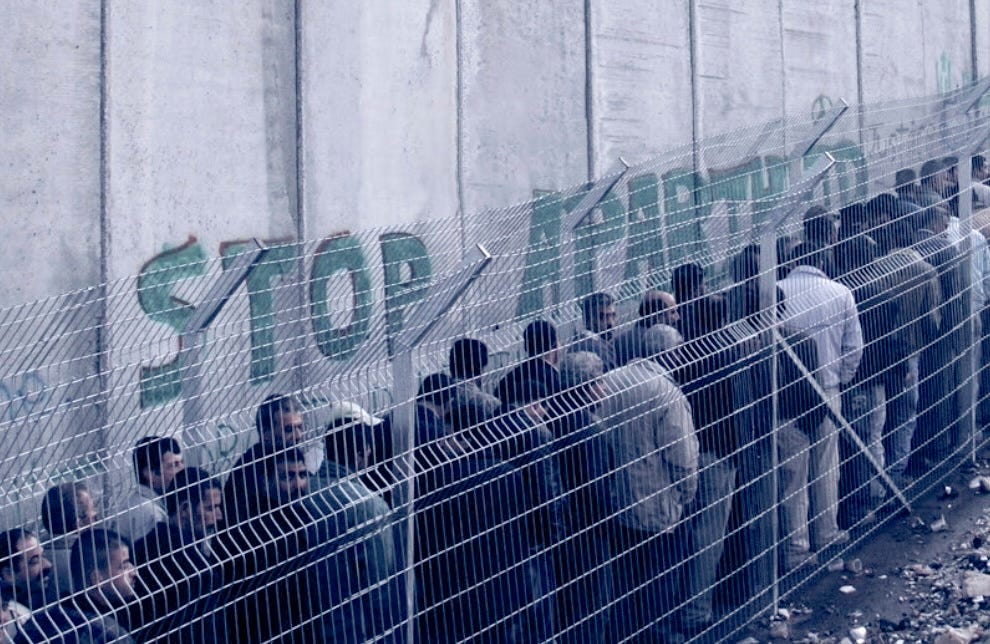
On Tuesday, October 13, Netanyahu appeared in a televised speech during a visit to the apartheid wall established inside the occupied West Bank, threatening the Palestinian Authority.
Standing near the Tulkarm refugee camp alongside Israel’s Defense Minister Israel Katz, the Israeli PM confirmed that the camp’s displaced residents, whom he described as “terrorists,” will not return to their homes despite an order from the Israeli Supreme Court authorizing their return.
The Tulkarm Refugee Camp was among the three largest Palestinian refugee communities in the northern West Bank targeted in the large-scale Israeli military operation dubbed “Operation Iron Wall.”
The operation resulted in the displacement of at least 33,362 Palestinians, the killing and injury of hundreds of others, and the arrest of over 1,000, according to UN estimates. It also caused severe damage and destruction of residential buildings, infrastructure, and properties.
The “Iron Wall,” which was launched in early 2025, was followed by another extensive operation at the end of the year.
Netanyahu’s government claimed that both operations aimed at eliminating Palestinian armed groups in the targeted areas. However, for many the outcome of the operations makes clear that their objectives reflect Israel’s ethnic-cleansing policy against the Indigenous Palestinian population.
As those operations have seemingly resulted in largely restraining resistance groups across the West Bank, no valid pretext has been left for Netanyahu’s government to further escalate military operations in the occupied territory.
Therefore, Netanyahu has sought to designate a new enemy posing a potential threat to Israel’s security: the Palestinian Authority (PA), whose security apparatus represents the only remaining armed force on the ground today.
The stance and actions of the PA under President Mahmoud Abbas have been, for over two decades, marked by compliance, reconciliation, and on some occasions blatant collaboration with the Israeli authorities.
Thus, accusing the entire political entity of orchestrating hostilities against Israel would not have sounded credible to the public. This arguably led Netanyahu and Katz to formulate the pretext for a justified potential war against Palestinians in the West Bank by alleging that personnel of the PA’s security forces, alongside members of the Fatah-affiliated Tanzim, may defect and launch “Jihadist attacks” against Israeli forces and settlers.
It’s worth noting that the majority of the PA’s security forces are affiliated with Fatah, the ruling and largest Palestinian faction in the West Bank. Meanwhile, the Tanzim represents Fatah’s grassroots and quasi-military field activity.
“Our enemies are thinking of testing us in these days leading up to the elections,” Netanyahu noted, referring to the PA, during his tour near the apartheid wall.
“I warn them: we are prepared for any scenario, including a so-called reversal of roles. In such a case, I do not suggest our enemies test us. You will face force here that you never dreamed of,” he continued.
Netanyahu’s statements came to reaffirm a “contingency plan,” which Katz revealed last week and said Netanyahu had approved in case the imagined scenario occurs.
Analysts believe a war in the West Bank ahead of the upcoming Israeli elections is not off the table, particularly if Netanyahu and his far-right coalition feel their victory is uncertain.
Early polling ahead of the election consistently shows Netanyahu’s bloc falling short of the 61 seats required to form a majority. It is currently positioned at just 51 to 53 seats.
Even if launching the war does not succeed in delaying the upcoming elections, it apparently aims to strengthen public support for his coalition, which gains much of its backing by pushing for ethnic cleansing to fulfill the “Greater Israel” project.
The last few weeks have made clear that Netanyahu’s government previously laid the groundwork for a desired war scenario in the West Bank.
Israeli forces escalated their raids in different parts of the West Bank, focusing on the de facto administrative capital of the PA, Ramallah, and Al-Bireh, which has simultaneously become a flashpoint for settler violence.
The Israeli military has also launched a campaign, destroying memorials of martyrs and late prominent Palestinian leaders all over the territory.
This included the demolition of a memorial displaying photos of the late Palestinian President Yasser Arafat and other deceased top Fatah leaders in the Al-Jalazone refugee camp north of Al-Bireh city on Wednesday, October 14 – a move that many interpreted as an attempt to provoke indignation, particularly among the movement’s grassroots.
The offensive on Al-Jalazone came one day after the Israeli military launched an expanded operation in Ramallah and Al-Bireh, shutting down Addameer and the Union of Palestinian Women’s Committees (two civil society organizations concerned with documenting violations committed by the Israeli occupation authorities against the Palestinian people).
Journalists were obstructed from covering the raid as Israeli soldiers threatened them with rifles, and fired rubber-coated metal bullets and teargas at them.
As part of the operation, the Israeli forces also raided the courtyard of the Palestine Medical Complex (previously known as Ramallah Hospital), arrested journalist Abdul Qader Hailan, and wounded journalist Yousef Shehadeh alongside two other Palestinian citizens.
While the likelihood of igniting a war in the West Bank is seen as higher and more immediate for Netanyahu and his cabinet, recent media reports indicate he has attempted to persuade US President Donald Trump to resume the aggression against Iran before the Israeli elections.
Even if Trump does not comply with Netanyahu’s demand regarding Iran, the situation in the West Bank foreshadows more tragic events for the Palestinian people and a predicament for the PA in the upcoming weeks.


As Apple gears up for one of the biggest launches in its history — its first foldable iPhone Duo, hitting stores October 23rd— former employees are asking you to say no to blood tech.
Apple is deeply embedded in Israel, says Tariq Ra’ouf, a Palestinian writer who worked for more than a decade in Apple retail before he was fired in 2024 for speaking out against the company’s silence on Gaza. He joins Rania Khalek and Zoe Alexandra to break down Apple’s ties to Tel Aviv, including its extensive R&D centers in Israel and its $2 billion purchase of an AI startup founded by Unit 8200 veterans. He also explains the systemic discipline faced by pro-Palestine Apple workers — fired for wearing keffiyehs while the company matched employee donations to Friends of the IDF — and warns that having Israeli military intelligence veterans integrated into the supply chain of the world’s most popular devices should terrify every consumer.
Ra’ouf also lays out how the minerals in your iPhone connect the company to genocide in Congo, why organizers are calling for pickets at Apple stores on launch day – and how customers and workers can and should get involved.
Watch full episodes of BT Live, join breakthroughnews.org as a member today!
#breakthroughnews
******
Rough transcript follows:
[Host:] Apple is gearing up for one of the biggest launches in its history, as I’m sure many have heard, with the iPhone Duo. It’s the company’s first foldable phone, which is hitting stores later this month with a starting price of $2,000, which is just wild. But a group of former Apple employees is asking you to skip the line. Their message is: “Say no to blood tech.” Behind that sleek branding about privacy, human rights, and inclusion, Apple is deeply embedded in Israel. It employs around 2,000 people there across R&D centers in Haifa, Herzliya, and Jerusalem, where Israeli engineers help build the chips inside your MacBook. Israel actually hosts Apple’s second-largest R&D facilities outside the U.S., so that’s no joke. And in January, in the middle of the ongoing genocide in Gaza, Apple bought the Israeli AI startup Q.ai for close to $2 billion. I think that’s the second-biggest acquisition in Apple’s history. It’s a company whose founders include veterans of Israeli military intelligence—basically, a bunch of spies. For years, Apple’s employee donation program matched gifts to groups like Friends of the IDF and organizations funding illegal settlements in the West Bank. Activists say the minerals inside your iPhone are tied to the war in Congo. We’ll get into that, too.
Meanwhile, Apple workers who spoke out for Palestine say they were the ones who got punished. They were disciplined for wearing keffiyehs or Palestine pins on the shop floor, and in some cases they were fired. Our next guest is one of them. Zaid Rauf is a Palestinian writer who spent more than a decade at Apple Retail before he was fired in 2024 for speaking out against the company’s silence on Gaza. He’s lost 49 members of his family in the Gaza genocide, and he’s now a leading organizer with Apple’s Against Apartheid, which is calling for pickets at Apple stores on iPhone Duo launch day, among other things. Zaid, welcome to BT Live. It’s really a pleasure to have you on.
[Guest:] Hi. Thank you so much for having me. I’ve been screaming about Apple Zionism for years, so it’s nice to have people listen.
[Host:] Well, scream as loud as you want over here. We have so many questions for you. As I mentioned in the introduction, you spent over a decade at Apple. After October 7, as we’re about to reach the three-year anniversary, you spent months pushing the company internally on Gaza before you were fired in July 2024. Walk us through what you were raising internally that got you fired. And, if you can, please expand a bit on Apple’s complicity in the Israeli death machine.
[Guest:] On October 9, Tim Cook sent an email to the entire company with a headline saying “Israel,” refusing to acknowledge Palestinians or even pretend that we existed in any capacity. His heart went out to all the victims in Israel, but not to any of the victims in Palestine. That made me really upset. I sent him an email begging him to say something about the Palestinians within the company. I was really naive, thinking, “Man, this guy just doesn’t know. He has to treat us equitably,” right?
I got a message from my manager saying he’d read my email. I was like, “Great. Oh my gosh, this is amazing. Is he going to make a statement? Is there anything?” Nothing happened. He remained completely silent. After that experience, a few comrades and I decided to write an open letter demanding that Apple at least treat its Palestinian employees as equitably as it treats its Israeli employees, which I don’t think is a hard ask. We had over 400 current and former Apple employees sign that letter. Again, still no response, still nothing.
So we decided to create Apple’s Against Apartheid, which is dedicated to creating campaigns to educate people. We understand that if they’re not going to do anything internally, what’s required is external pressure and education, because people don’t understand just how deep Apple’s ties to Israel are.
To answer your question about its complicity: your introduction was spot on. Apple’s second-largest R&D center is in Israel. It was the first R&D center the company opened outside California. Apple has massive ties to the Israeli military unit 8200. A bunch of former Israeli spies who worked in Unit 8200 are involved. For people who don’t know what Unit 8200 is, it’s Israel’s IDF tech unit. They’re responsible for planning things like the pager attack in Lebanon. Apple has employees who served in Unit 8200 currently working at its R&D centers in Israel. Apple silicon chips—the M1 chips, the newly designed C1 modem, and the N1 chip for Wi-Fi and Bluetooth—are all currently designed by Israel. It’s a little outrageous to believe Apple thinks it can get away with staying so silent on Israel and Palestine, knowing how deeply complicit it is in all the violence Israel has perpetrated against the Palestinian people.
[Host:] As part of the advocacy you were doing within and outside Apple, hundreds of employees signed a letter in 2024 saying coworkers were being disciplined or fired for things like wearing keffiyehs, Palestine pins, or bracelets, while other causes were openly celebrated in stores. How systematic is this discipline faced by employees who speak up for Palestine? Is it individual managers who overreact and over-enforce, or is there a companywide line on what Palestinian identity is allowed to look like at Apple?
[Guest:] It’s so systemic. It goes all the way down to the attire rules—what you can wear at work. In 2024, they banned scarves because they didn’t want people wearing keffiyehs. They say you can’t wear a Palestine pin, a Palestinian flag pin, or even a bracelet, even though nothing in the handbook says you can’t wear a pin. They’ll say that to you because it’s a Palestine pin.
There was a comrade who had a Palestinian flag in his Slack icon, and a manager reached out to him: “Hey, you have to change your flag. It’s breaking policy.” The employee asked, “Okay, well, what policy am I breaking?” The manager said, “I’ll let you know when I find it.”
In November 2023, there was a Muslim Apple Slack channel, because the company has multiple diversity-group Slack channels. Zionists were coming into the Muslim Apple Slack channel and mass-reporting anything that mentioned Gaza or the genocide. Those messages were removed without Muslim employees being told why. They would come in and harass the Muslim employees. The Muslim employees weren’t going into the Jewish Apple Slack channel and doing the same thing. They were minding their own business and asking these people to leave them alone.
Instead of moderating and punishing the people who were harassing others, Apple closed down the Muslim Apple Slack channel, along with the Jewish Apple Slack channel, for over a year. The company refused to listen to Muslim employees begging for empathy, asking to be heard, and asking it to say something about the incredible losses the Palestinian, Arab, and Muslim communities were facing.
[Host:] That’s wild. In contrast, let’s talk about how Apple treats its Israeli employees and those who support Israel. I mentioned Apple’s matching program, which lets employees route company money to groups like Friends of the IDF and settlement-funding organizations. This year, Apple also spent close to $2 billion on the Israeli AI company Q.ai, whose founders come out of Unit 8200, as you mentioned. What does that tell us about where Apple stands when it comes to Israelis, and about the feelings people who support them are allowed to express and the material support they’re allowed to give to the Israeli military?
[Guest:] It’s so racist and dehumanizing that Israeli employees at the company are allowed to express any sort of genocidal view or racist rhetoric they want on their Slack channels or within company offices, and they don’t get reprimanded nearly as much as Palestinians or pro-Palestinian employees who talk about the empathy and grief they experience.
There are so many cases of Zionist employees harassing Muslim, Arab, and Palestinian employees, but so few cases of those Zionists actually getting reprimanded, fired, or facing any sort of repercussions for their racism. The viewpoint within the company is so inherently Zionist that anytime you send an email advocating for our people and educating people about Zionism and the harm it has done to Palestinians, managers and others will call you antisemitic because you’re being anti-Israel. That’s the company’s line: if you are anti-Israel, you are antisemitic. They’re really good at marketing themselves as a company that claims to care about the world, so few people are seeing the racism at hand.
[Host:] Really shocking stuff. October 23 is when the iPhone Duo is set to drop, and you and other activists are calling on people to picket Apple stores that day instead of lining up for these bizarre smart flip phones. You’re also tying Palestine to Congo, the minerals in every iPhone, and the violence perpetuated in Congo to physically make the iPhone. Why link those two genocides? What are you demanding from Apple? And what can Apple customers or workers watching right now do to support this campaign?
[Guest:] We started working with Congolese activists because we recognized that we’re going through the same struggle: imperialism, colonialism, and white supremacy. People are taking over our lands to take over the resources. Specifically, we’re working with Team Congo and Friends of the Congo to educate people about what’s going on and the depth of the ways Apple’s business practices—and the tech industry’s business practices generally—are negatively affecting the Congolese people.
We’ve reached a point where you can’t expect Apple to pass off the responsibility of ensuring that minerals are ethically sourced to third parties, because everyone who has studied these things can tell you they are not ethically sourced and that the communities mining these minerals are suffering. Apple is one of the tech companies with the ability to change its business and sourcing practices and teach the tech industry what it looks like to mine ethically. It has the power, money, and resources to do so.
Our demands when we ask people to picket Apple stores on the 23rd are that the company research, report, and remediate all the harms its business practices have on marginalized communities, publicly report its findings, and create a meaningful plan to remediate the harm. We want Apple to listen to the community. We have people ready to speak with Apple executives and tell them exactly how harmful its business practices are and how it can help the communities that are literally pleading for its empathy.
We want Apple to get out of the occupation. It has offices in occupied Jerusalem, and on its job website it lists those offices as being in Israel, which is against international law. We want the company to close its offices in occupied territory. Most importantly, we want it to clean up its supply chain and not abandon Congo. It needs to do better because it has the power to do so.
[Host:] I want to pull out a thread of something you mentioned earlier, when we were talking about the ways Apple is complicit in the Israeli death machine. You talked about the Unit 8200 Israeli military intelligence people staffing these R&D facilities in Israel for Apple. Obviously, we should all be very upset about the complicity of Apple and other tech companies in the genocide in Gaza. But having Israeli employees tied to the Israeli military and spy apparatus so integrated into the supply chain of a widely used device by people all over the world is quite frightening.
When you think about what you mentioned—the pager attacks—nothing like that has ever happened in history. It was like a terrorist attack, where a country infiltrated the supply chain to booby-trap electronic devices. I wanted to ask you to expand on why it’s so devastating and scary to have a country whose government is full of genocidal lunatics, willing to do things no other government in history has done to get its way, so integrated into a massive global tech company that builds our phones and computers.
[Guest:] It’s terrifying. The public should be worried, and there should be mass concern over the fact that Apple is filled with Israeli spies—spies who worked in Unit 8200 and worked on… I mean, the fact that Unit 8200 was behind Pegasus—sorry, that it was behind the Lebanon bombings—is so concerning. Then you have employees from the same unit at tech companies.
One thing I need to make clear: Netanyahu was on 60 Minutes, right? He brought out his little iPhone. He was like, “You see this device? We can penetrate any one of these devices.” People like to think that Apple is so secure and so ironclad compared to Android or Google. Pegasus was Israeli-made. The same people who made the Pegasus software made the software and hardware that you’re holding in your hand. Who’s to say? Then you have Netanyahu saying that they can penetrate any one of these devices. Are you joking? They’re basically telling you to your face that they have the ability to hack you whenever they want.
The whole thing in Lebanon is truly terrifying. If Apple wants to control any of this narrative, it has to distance itself from the apartheid ethnostate of Israel—the state that is committing a genocide and blew up a bunch of pagers. That took years; it wasn’t something they just did. Who’s to say these new phones, with an M1, C1, or N1 chip, won’t blow up in your face? There should be mass concern over the safety of these products because of their links to Israel.
[Host:] Well, Zaid, I really appreciate you coming on. I guess the last thing I could ask is: Can you remind people how they can get involved in learning more about this campaign or being a part of it?
[Guest:] Of course. If you’re interested in picketing your local Apple store, we’ve made it really easy. We’ve created flyers, chat lists, and posters. We’ve made it simple for you to print what you want, go to your local Apple store, and make some noise. Just go to applesagainstapartheid.com. You’ll find the resources and fact sheets. Follow us on Instagram if you want to stay updated whenever we add more resources. Stay up to date, because for as long as Apple has links to Israel, we’ll always be here to protest them.
[Host:] Thank you so much for joining us. We really appreciate you.
[Guest:] Thank you very much. Have a good one.


United Airlines has been sending military hardware to Israel on passenger flights, right under your feet.
A new report from the People’s Embargo for Palestine, the Palestinian Youth Movement, and others documents 2,761 shipments of military cargo to Israeli weapons manufacturers and military institutions, including Elbit Systems, Lockheed Martin Israel, Nevatim Airbase, and the Israeli Ministry of Defense. Belal Elsiesy, organizer with the PYM and the People’s Arms Embargo, joins Zoe Alexandra to break down the findings.
With cargo including F-35 bomb release units used to drop 2,000-pound bombs on Gaza, Merkava tank sights, and “hunter-killer” machine gunner sights destined for Elbit, Elsiesy argues civilian airports are a critical point of intervention. He also discusses what’s behind Elbit’s US rebrand as 26 Defense, how campaigns against Maersk and FedEx have targeted the weak links in Israel’s weapons supply chain, and why the airline’s silence on the #NoWeaponsOnUnited campaign is a good reason to act now.
Watch full episodes of BT Live, join breakthroughnews.org as a member today!

Two years after Israel’s pager attacks on Lebanon killed dozens and maimed thousands, Lebanese investigative journalist Radwan Mortada’s new two-part Al Jazeera documentary, The Trap (Al-Mesyada), goes inside the September 2024 Mossad operation more than a decade in the making.
Mortada joins Rania Khalek to trace the web of front companies stretching from Taiwan to Bulgaria that enabled Israel to infiltrate Gold Apollo, a supplier Hezbollah had trusted for decades.
As a new Israeli propaganda film Paging Hezbollah heads for US theaters, Mortada reveals that Israel’s goal to kill as many as 20,000 Hezbollah fighters with booby-trapped walkie-talkies, in fact, fell far short. He also breaks down Hezbollah’s own fatal mistakes, and the lasting psychological toll of a terrorist attack that, contrary to US and Israeli narratives, was far from “precise” or “targeted,” destroying the lives of children, families, and medical workers.
“Hezbollah’s biggest mistake was forgetting Israel’s capabilities – forgetting how bloody and cruel they can be.”
Watch The Trap Part 1: aljazeera360.com/video/1017661
Part 2: aljazeera360.com/video/1017626
Watch full episodes of BT Live, join breakthroughnews.org as a member today!
******
Rough transcript follows:
[Rana:] And joining me to discuss this two-part investigative deep dive into the pager attacks is the producer himself, Redwan Mortada. Redwan, welcome to Breakthrough News Live.
[Redwan Mortada:] Thank you, Rana. Thank you for having me.
[Rana:] Well, it’s a real pleasure, and I got a chance to watch the documentary. I encourage everybody to go check it out. It’s available online. It’s also available with English subtitles, and it’s really worth the watch. I mean, you expose so much new information we didn’t know before. But before we get into some of the specifics, Redwan, I want to ask you, you’ve called this one of the most complex cases that you’ve ever worked on as an investigative journalist. And we have all watched Israel commit so many atrocities across Lebanon that have killed far more people than the pager attacks did. Yet, in your film, you call this the most devastating blow that Hezbollah has taken since its founding. So, two years on from this attack, why does this operation still loom so large that you felt it warranted a two-part investigative series?
[Redwan Mortada:] You’re right, Rania. Israel killed tens of thousands of Lebanese over the years. But in fact, this operation is different—the pager attack. I mean, because it came from a place Hezbollah thought was secure for years and years, for decades, if you want. There has been an intelligence war between the resistance, mainly between Hezbollah and Israel, in Lebanon and in the region. Israel assassinated several senior commanders of Hezbollah, carried out several operations against it, killing Abbas al-Musawi, the ex-secretary-general, and at the same time, Hezbollah carried out several operations against Israel. But this pager operation was different because it was one of the biggest blows to Hezbollah—an attack that only Mossad could imagine. No one could imagine this kind of operation and this kind of killing, because it didn’t only affect Hezbollah fighters. It affected tons of children and women, and it breaches all international and humanitarian rules across the world.
[Rana:] Yeah. And just for everybody who’s watching Breakthrough News and your organization, Blue House Films, you produced a documentary on the pager attacks and how they impacted civilians specifically that came out last year. People who are probably watching this have seen that documentary, and it shows the toll specifically on children and other civilians caught up in it—their faces totally maimed, destroyed, and blinded for those who did survive. I mean, just a horrific attack. But your documentary, this two-part series, really dives deep into the timeline of Israel plotting this attack. I mean, Israel spent years on this; it started back in 2015. And in your documentary, you lay out how Mossad built these front companies spanning Taiwan, Hong Kong, Hungary, and Bulgaria. They infiltrated the pager company that Hezbollah had grown to trust, they manipulated the Hezbollah representative that was dealing with that company, and they rigged the devices with small amounts of this powerful explosive substance hidden in the batteries that was so hard to detect, and then they detonated them at a moment of their choosing. I mean, the way you lay it out, it plays like a movie thriller. So walk us through some of that Israeli timeline—how did they pull this off?
[Redwan Mortada:] It is a long story. You have to watch the film and go deep into the details, the exclusive information, the exclusive data, and the interviews, because it also presents the story of Hezbollah. We post in the film the email communications between the company called Gold Apollo and Hezbollah. But in fact, if I want to go back to how this started, after the 2006 war, Israel started looking for ways to penetrate Hezbollah, especially its network and communication, because you know the result of the war in 2006 was that Hezbollah beat Israel, and Israel wanted revenge. So they started trying to penetrate Hezbollah. They tried to recruit the sales representatives in Taiwan; they failed. They tried to sell pagers to Hezbollah through several front companies, but they failed. And the story they distributed in the media about a blonde girl that manipulated a representative to sell him the pagers was not true. The truth is that they penetrated a trusted company that had a relation with this company over 20 years, starting in the 2000s—Gold Apollo. So they penetrated Hezbollah through this company. They recruited Teresa, the employee in the company, and through recruiting Teresa, they penetrated Hezbollah, and they sent these pagers. And it was not just one plan for Mossad; there was a Plan A and a Plan B. Plan A was to explode the walkie-talkies, and this operation started in 2014. I am not saying that Israeli officials declared that, but they succeeded in sending 15,000 walkie-talkies to Hezbollah. But these walkie-talkies were in storage, and Hezbollah did not decide to go into battle in full power, so they did not distribute all the walkie-talkies; they distributed around 800 walkie-talkies. So Mossad moved to the second plan, which is Plan B—detonating the pagers. This operation started in 2020, and they succeeded in sending 500 pagers to Hezbollah at the beginning, in 2023. Because of the necessity of the battle at the beginning, Hezbollah refused these pagers because this model—the new model—was different; he had ordered the old model. Gold Apollo sent Hezbollah the new model, and the representative of Hezbollah whose name was Mike said, “We don’t want to deal with you because we ordered the old version.” But because of the necessity of the battle and the urge of what was going on after October 7, it forced Hezbollah to receive 4,200 pagers, and they distributed around 3,000, of which only 1,850 exploded.
[Rana:] Yeah. And people really need to go watch this documentary, because you also lay out how the Israelis would find out that Hezbollah was on to them, and then they would stop scanners from Iran from coming to Lebanon that could have detected the substance by bombing a warehouse and another warehouse, and then claiming they were bombing this to kill somebody when it was really to stop Hezbollah from finding out about the pagers. I mean, it’s just really wild stuff. But I want to talk about Hezbollah’s mistakes here, because the attack did expose how deeply Hezbollah had been penetrated, which is what you’re talking about. And you mentioned 2006. After 2006, Hezbollah did build its own communications network, and you described in the documentary how this is precisely because Lebanon’s telecoms were so compromised by the Israelis. And then the war in Syria turned Hezbollah into a much larger and more exposed army that allowed for more penetration. At the same time, these failures come off as so shocking, because Hezbollah did have guardrails in place to try to detect if anything was messed with. What were some of Hezbollah’s mistakes? Again, people really should go watch the documentary because you go into deep detail on what those mistakes were. But if you had to give a brief explanation, what were Hezbollah’s mistakes, and could this have been prevented? And I guess I’d also add to that, has Hezbollah reckoned with this internally?
[Redwan Mortada:] I said it in the film, and I will repeat it: the biggest mistake was forgetting Israeli capabilities and forgetting how bloody and cruel they can be. This is one of the biggest mistakes Hezbollah committed. In fact, you’re right, the war in Syria exposed Hezbollah, and the capabilities and advanced technology Israel had also helped them to do this operation. But in addition to that, they used a new kind of technology, which is CL-20—a new kind of US explosive material manufactured by the United States of America. This kind of explosion is not detectable, and also when Hezbollah gave the pagers that did not explode to the Lebanese army, when they detected it… I put in the film that report that mentions this is an unknown material; it’s not listed in the explosive library. That’s why the airport scanners in Hong Kong, Turkey, and Lebanon couldn’t detect it.
[Rana:] That’s so scary. It’s so scary to think what else they’ve infiltrated.
[Redwan Mortada:] Especially, Rana, these pager devices are civilian devices; they are not military devices.
[Rana:] Yeah. Well, you also—I thought it was super interesting—mentioned in the documentary that Hezbollah’s Imad Mughniyeh used to cut open screws when he would take apart devices to make sure the screw hadn’t been messed with. I mean, one of the biggest mistakes that was mentioned was that Hezbollah operatives were asking questions—there was something weird about these pagers and walkie-talkies, and they were taking them apart and looking at the different pieces to see what was wrong with them, but they never cut open the batteries because…
[Redwan Mortada:] Okay, that shows a lot, by the way. That shows a lot, because even us at the time, when this happened, our question was: where was Hezbollah? Where was the protocol for experimenting on all of these? In fact, I mentioned in the film that there was like a mind race between Hezbollah and the Mossad officer, and it was one step… I mentioned two names in the film, and Jibril Jibril is a nickname for Hussein Bazi, an engineer inside Hezbollah. He was an officer who had doubts, and when he started to remove these pagers from small groups, Israel knew about that and decided to start the operation instead of losing the element of surprise.
[Rana:] So that they could do at least some damage, even though they didn’t get to kill as many people as they wanted. I wanted to ask you, though, obviously this did not destroy Hezbollah because they were able to go on and fight the war in 2024, but it did do a lot of damage to the organization. So can you explain, in terms of manpower, command, morale, and trust in their own systems, what was the damage of this operation to Hezbollah?
[Redwan Mortada:] For me, I think the biggest impact was psychological. The Israelis started this war by exploding the pagers. The first day they exploded the pagers; the second day they exploded the walkie-talkies. Then they carried out over 1,400 airstrikes on Lebanon in one day. After that, they assassinated the special forces commanders—the Radwan Force in Hezbollah—until they assassinated Hassan Nasrallah. For around 10 days, Hezbollah and Lebanese society experienced and went through one of the hardest days in our history. The goal and target for Israel was to destroy Hezbollah. But in fact, Hezbollah survived, and you can tell that if you do a comparison between the war in 2024 and the war in 2026, the level of assassination and the level of penetration wasn’t the same at all.
[Rana:] I want to ask you also, Redwan, you talked about this in your documentary, and I covered it in the documentary that I did with Blue House: Israel and its supporters continue to celebrate this as a marvel of precision. They call it surgical, targeted, and clean. And actually, I don’t know if you’ve seen, but the Israelis also have a movie coming out called Paging Hezbollah.
[Redwan Mortada:] A propaganda film, you mean? The propaganda film where they started swimming and they are at the beach, and you will hear another voice: “We are in a special area, but in fact, we are in a hostile environment where everyone wants to destroy us”? They are justifying why they went into a major operation.
[Rana:] Yeah. So this is going to be in American theaters on October 30th. It’s called Paging Hezbollah, an Israeli propaganda film that celebrates this attack. I encourage people, instead of watching that, to go watch Redwan’s documentary, which we’ll include a link to in the description. But I wanted to ask you, what was the actual impact of what Israel did on civilians? Israel and the US celebrate the pager operation as a major achievement, calling it precise and targeted. But they are lying. They are liars, because really it was a terrorist attack, a war crime, because it also hit civilians. And you met tons of civilians, women and children, in your documentary. But in fact, this is not just my word; Human Rights Watch said it was a war crime. Booby-trapped pagers used by civilians on a daily basis—when they exploded, they didn’t target only Hezbollah fighters, because you know they are a part of Lebanese society, and they chose a peak time when families were gathered, when children came back from school. So when they exploded, they targeted, killed, and injured children, women, families, doctors, nurses. They are not all military; part of them are civilians.
[Redwan Mortada:] And the injuries—I mean, just so people understand the injuries from this explosion. It exploded in people’s faces, so it was destroyed eyeballs, destroyed facial structure and bones, missing fingers. Really, really horrific stuff. I think you experienced—my colleague told me that when you wanted to give a neck mic to one of the children to start the interview, he ran away a bit because it was similar to the pager.
[Rana:] No, they were scared. Yeah, the kids I spoke to were scared, of course. They have PTSD from this device because it looked similar. It’s just horrible. And the other thing, too, is people blinded. If you’re blind, you usually learn to read with your fingers, with Braille, but the pager—the way it exploded, people were holding it, so it also cut off people’s fingers in addition to taking away their sight, so they can’t even learn to read Braille. There are just so many layers of horror that this has impacted, and people are still getting surgeries two years later to fix their faces, if they can ever be fixed. It’s just horrifying and should not be celebrated. But you noted—and again, I encourage people to go watch the documentary because it goes into detail—Israel’s real aim was to have these exploding walkie-talkies kill as many as 20,000 fighters, and it didn’t manage to do that. So obviously they did a lot of damage to Hezbollah, but their ultimate operation failed. But connected to all this: yes, Hezbollah was able to demonstrate it survived, especially watching it fight in 2026. Like you mentioned, there weren’t major assassinations because Israel doesn’t even really know who’s in charge anymore, and they were able to fight the Israelis. However, Israel has managed to occupy a huge portion of Lebanon, and right now Hezbollah is not really responding to Israel’s daily attacks, killings, and bombings—it’s blown up like 60 villages at this point. So where does the battle stand today? Hezbollah has lost ground, Israel is expanding its occupation, and people are wondering why Hezbollah is not responding right now. What, in your opinion, is Hezbollah’s real capability as it stands today, and is there any deterrence left against Israeli aggression?
[Redwan Mortada:] This question should be addressed to Hezbollah, but I will tell you my evaluation of how I’m looking at what’s going on now. In fact, the war did not finish yet. The war is still going on, and the war is not only in Lebanon—the war is in the region, the war between the United States of America and Iran, between Iran and Israel, between Hezbollah and Israel. We are part of this big war in this region. Until now, there are rules of engagement, and the last agreement is still going on, because if you can see in Lebanon, Israel doesn’t dare to target Beirut, to target the Beqaa, to target the Dahieh, because there are rules of engagement between the United States of America and Iran. I think we have to wait and see. During the past 15 months, if you remember, everyone went out and said Hezbollah is done, Hezbollah is finished. But when the battle erupted, we saw another equation on the ground. So I think we are still in the middle of the war; we cannot expect what will go on, whether there will be another round—and that’s what we think, there will be another round, the third round. And we hope that we can survive, we hope that we can kick the Israelis out of our country, because you know that they believe in their myth of Greater Israel, and they believe that and declared that they can take part of Lebanon and part of Syria to fulfill their dream and their myth. So we are fighting with these psychopaths who are now destroying our houses, destroying our lands, killing anyone in that yellow zone in the south of Lebanon. And the United States of America, unfortunately, is backing them and covering them, and our government is involved in this betraying. So let’s wait and see how things will go on.
[Rana:] Well, Redwan, I want to thank you so much for this incredible two-part documentary that you put together. Again, we’ll include a link to it in the description for people to watch, and also for all of the incredible work you do. You really are one of the best journalists we have here in Lebanon. So thank you for all of the wonderful work you do, and hopefully we can have you on again soon.
[Redwan Mortada:] Thank you. Thank you so much.

In late September, Israeli media reported that Netanyahu’s government intends to adjust access to key routes in the central West Bank. It plans to reopen Route 463 to settler-only traffic in the governorate of Ramallah and Al-Bireh.
Yisrael Gantz, the leader of the Yesha Council (an umbrella organization representing Israeli municipal councils across Israeli settlements in the West Bank and the Jordan Valley) confirmed that plans to reopen the road received preliminary approval and funding.
Preparations are also underway by the Israeli military to complete “the security, legal, and logistical” steps required to reopen the route (also known as Wallerstein Road).
The road was paved in 1994 under the directions of Pinchas Wallerstein, a founder of the settlement movement, to connect the illegal settlements of Beit El (north-east of Ramallah and Al-Bireh) and Dolev (north-west of Jerusalem).
However, following the outbreak of the Second Intifada in 2000, the Israeli army barred Israeli people from using the road for security reasons. They also placed a locked iron gate on its end near Ein Qiniya village, northwest of Ramallah.
Experts argue that Israel’s move will impact not only the governorate itself, but the entire occupied West Bank because of its central location, major metropolitan status, and role as a commercial hub.
To understand the repercussions of the route reopening, BreakThrough News spoke with Jamal Jumaa, a Palestinian activist, expert on Israeli settlement and apartheid-related issues, and coordinator of the Palestinian Grassroots Anti-Apartheid Wall Campaign (Stop the Wall).
Aside from dividing the governorate’s northern and southern halves, Jumaa noted that reopening the road is dangerous because it will block the center of Ramallah and Al-Bireh from two-thirds of its villages, which are situated to the west.
The prominent Palestinian activist added that when Israel builds such roads for settler traffic, it fences them off on both sides and prohibits the use of adjacent lands. The Israeli authorities consider those lands a buffer zone, citing the security of the settlers as their reason.
“This entails setting up military towers and checkpoints. The road will cut off continuously inhabited Palestinian villages north-west and south-west of Ramallah. Therefore, we are talking about the establishment of roughly four military checkpoints along the road,” he continued.
Jumaa pointed out that the road will complicate the life of Palestinians by restricting their access to vital healthcare and education facilities, including the Istishari Arab Hospital, Birzeit University, and the Arab American University.
He also noted that the intended reopening of the road “is part of dividing and dividing more Palestinians from each other.”
On the political level, Jumaa suggested that the road “hits the heart of the West Bank, which gives a clear signal to the Palestinian Authority that it has no sovereignty over anything.”
It is worth noting that since its establishment, the Palestinian Authority has designated Ramallah and Al-Bireh as a de facto administrative capital. Yet, this has not prevented the Israeli authorities from fragmenting and isolating the governorate by establishing illegal settlements, military outposts, checkpoints, and gates.