Healey hopes to give ‘hope for the future’ but only modest policies are expected with important decisions deferred
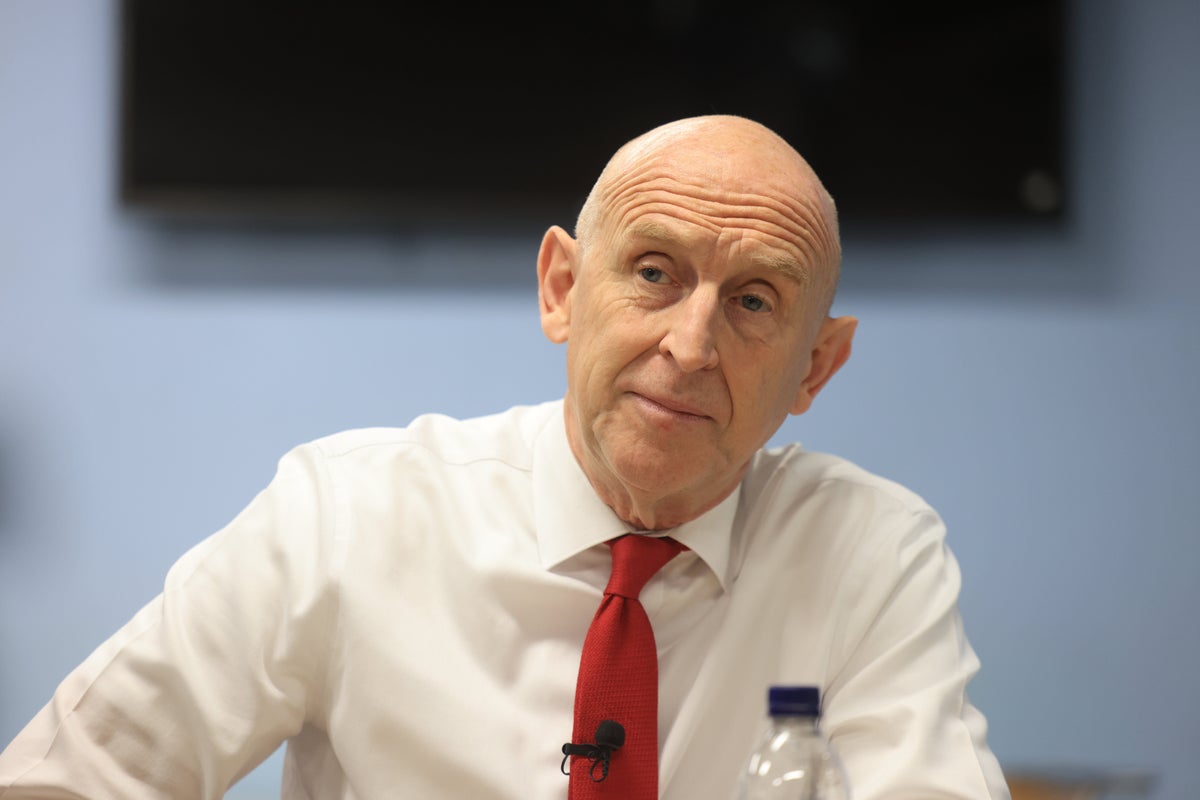
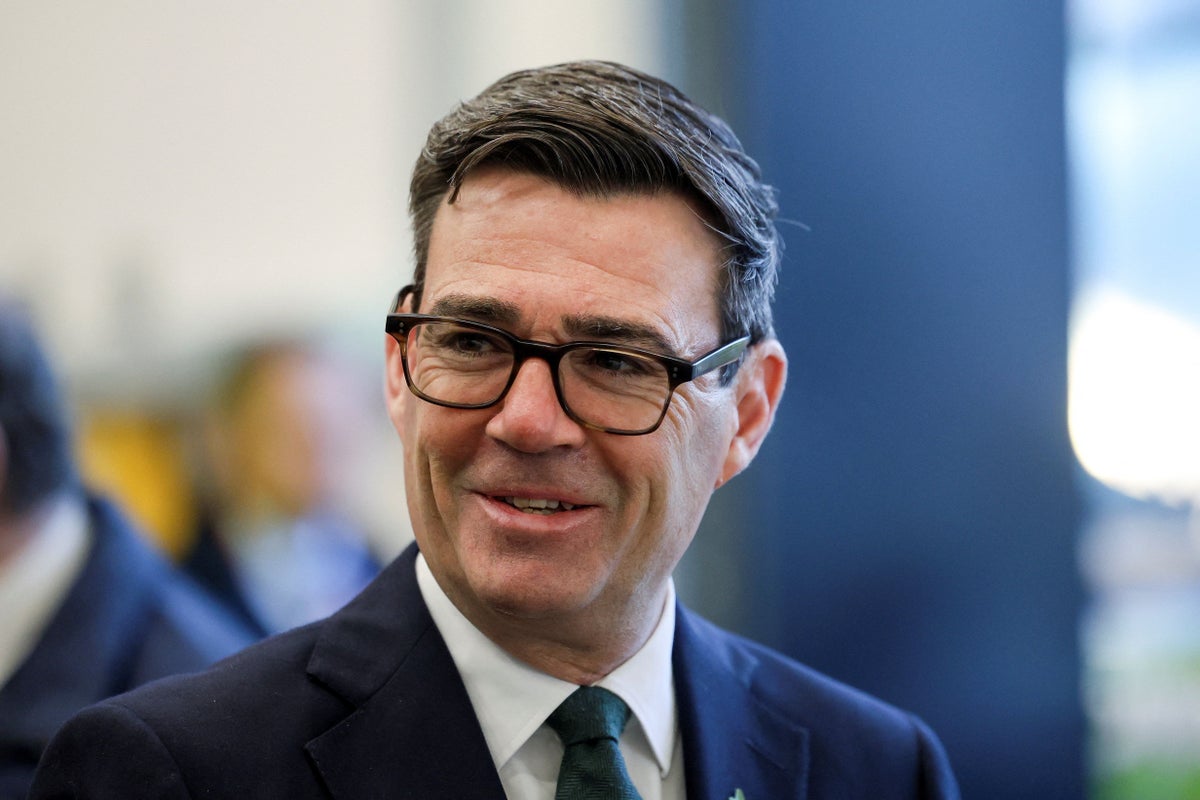
John Healey has acknowledged the UK faces a “difficult moment” but insisted he would put the country on a better path as he delivers his first budget on Wednesday against a turbulent global economic backdrop.
But despite the international uncertainty, the chancellor will signal “fresh hope for the future” as he attempts to sound a more optimistic note, by providing households with breathing space from rising cost of living pressures.
In breathless press releases and posts, the company has touted its models’ ability to deliver scientific breakthroughs. But its IPO filing taps the brakes on just how fast its AI will lead to big discoveries.
Online hate is spilling into the real world, AFP warns
AFP Commissioner KrissyBarrett began her late-night appearance at the Senate estimates hearing noting “a heaviness that hangs across Australia” after the alleged attack on independent MP HelenHaines.
Lone actors are being motivated by a convergence of personal grievances, mental health vulnerabilities and ideological concerns …
What helped keep us safe in recent times, such as our geography, analogue systems and far away criminals, has been impacted by fully integrated technology, social media and artificial intelligence.
We hear about the devastating impacts of racism from communities every day. But many experiences go unreported or uncounted, and our systems often do not capture the full picture.
This is not about collecting more data to prove racism exists. We already know it does. It is about making inequality visible, holding institutions to account and giving communities greater agency over their data to drive real change.
ISLAMABAD: The government has enhanced the currency transaction threshold by 50pc to Rs3 million for banks to trigger suspicious reports to the Financial Monitoring Unit (FMU) of the State Bank of Pakistan under the Anti-Money Laundering Act (AMLA).
The increase in threshold from Rs2m to Rs3m for Currency Transaction Reports (CTRs) under the framework for analysing Suspicious Transaction Reports (STRs) and CTRs was approved by the National Executive Committee (NEC) on Anti-Money Laundering and Countering Financing of Terrorism (AML-CFT).
An STR is reported when a suspicious transaction or activity involving money laundering and terrorism financing is indicated. However, a CTR is required to be reported when a cash transaction is equal to or exceeds the specified threshold — now raised to Rs3m.
The NEC, led by Finance Minister Muhammad Aurangzeb, is responsible for setting limits for banks, financial institutions or other agencies dealing with financial transactions to generate CTRs and STRs on the amount of currency transactions through notifications in the official Gazette.
It serves as a strategic forum for strengthening Pakistan’s AML-CFT framework and ensuring timely coordination, inter-agency cooperation and consistent monitoring for effective implementation of the measures discussed.
The committee also approved the inclusion of Section 28 of the Pakistan Maritime Zones Act 2023 in Schedule I of the AMLA, meaning that maritime piracy has been covered as a predicate offence.
Section 28 of the Maritime Zones Act 2023 defines “piracy” as any illegal act of violence, detention or depredation committed for private ends by the crew or the passengers of a private ship or a private aircraft and directed against another ship or aircraft or against persons or property onboard.
The NEC also approved the inclusion of the Pakistan Virtual Assets Regulatory Authority (PVARA) in Schedule IV of the AMLA, meaning that the crypto body would also have regulatory powers over virtual and digital assets to meet AML-CFT requirements, like the SBP, Securities and Exchange Commission of Pakistan and Federal Board of Revenue, among others.
Under the AMLA, the FMU is designated to receive STRs and CTRs from reporting entities, analyse them and, if need be, seek the entire record and information related to the transaction in question from any agency or individual in Pakistan.
All agencies and individuals are bound to promptly provide the requested record and information to enable the FMU to share its analysis on a confidential basis with the concerned investigating or prosecuting agencies, or with the financial intelligence units of other countries to make reciprocal arrangements to share, request and receive information relating to money laundering, the financing of terrorism and other offences.
An official statement said the meeting reviewed compliance with its past decisions and progress on Pakistan’s AML-CFT regime, including the performance of the FMU, institutional capacity and initiatives involving artificial intelligence and machine learning.
Aurangzeb emphasised the importance of regular and timely follow-up and stronger coordination among the relevant institutions to ensure effective implementation of the national AML-CFT framework. He also called for strengthening the FMU’s analytical and operational capacity through a clear implementation roadmap with defined timelines.
The NEC also highlighted the importance of keeping Pakistan’s AML-CFT framework responsive to evolving financial risks and emerging technologies, while strengthening the analytical capabilities of relevant institutions.
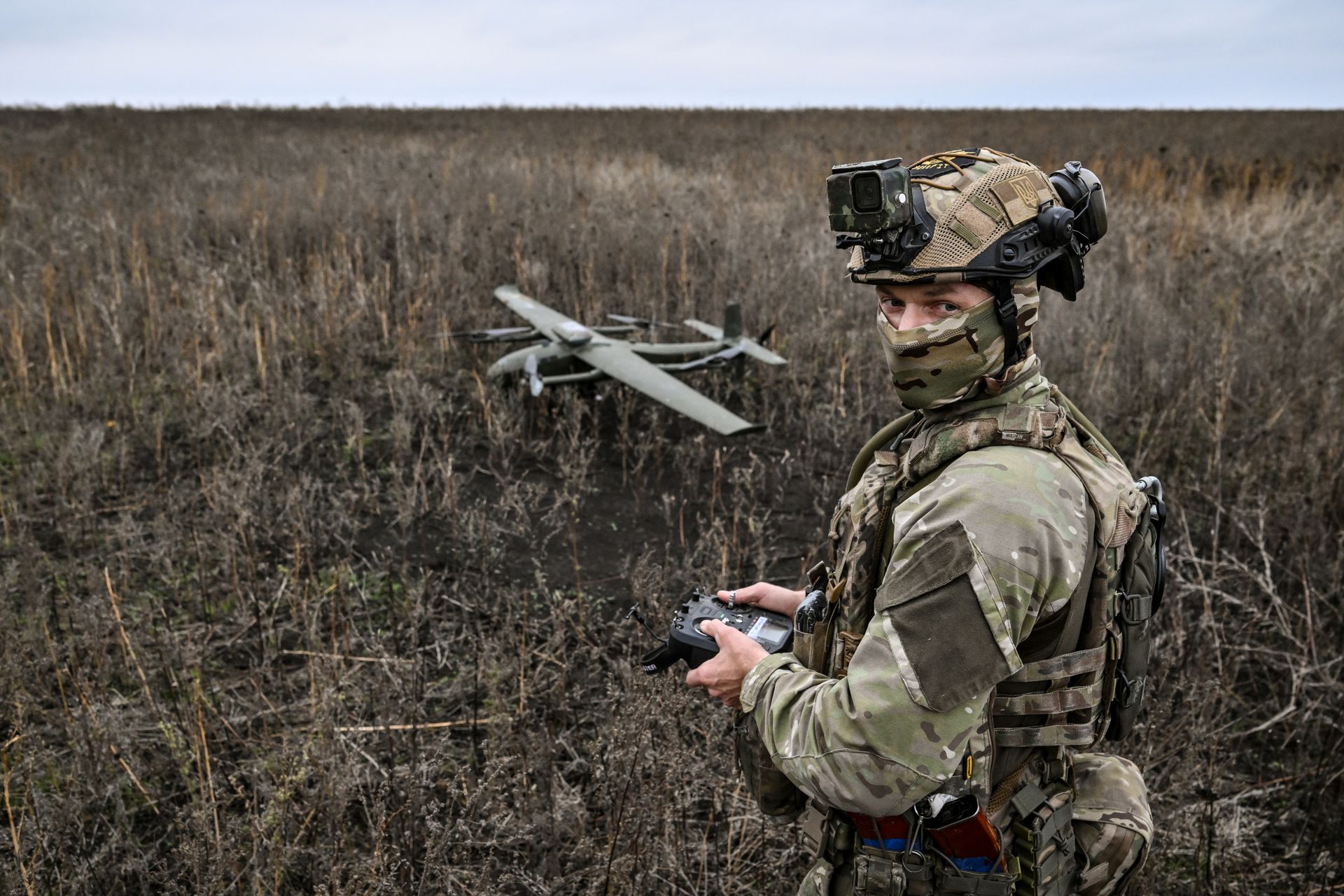
One morning in June, the head of export at Ukrainian drone company Stellarion found himself unexpectedly in need of a U-Haul outside the Detroit Metro Airport in Michigan.
Stellarion was set to test its drones in front of American soldiers at a competition organized by the Pentagon at Camp Grayling,
The data center buildout could cause a massive increase in gas prices as companies scramble for limited supplies and infrastructure fails to meet demand.
Trade between China and Cyprus grew to $1.44 billion (€1.29 billion) during 2025, while the future holds even greater prospects for economic cooperation, attendees at a forum heard on Tuesday.
Speaking at a business forum held in Nicosia and organised by the Chamber of Commerce and Industry (Keve), China’s ambassador to Cyprus Yang Yundong said bilateral trade in 2025 marked a 26 per cent year-on-year increase.
According to the ambassador, last year China became Cyprus’ fourth largest trading partner. Meantime more and more Cypriot products – like halloumi cheese, zivania and fresh juices – are finding their way to the Chinese market.
Yang noted the significant prospects for cooperation in shipping, tourism, green technologies and the digital economy.
He highlighted the role Cyprus can play as a bridge between China and the European Union.
On bilateral relations, the ambassador noted that the forum is part of events marking the 55th anniversary of the establishment of diplomatic ties between the two countries.
In his own address, Keve chairman Stavros Stavrou stressed the importance of transforming bilateral relations into specific business partnerships.
Cyprus, he said, can act as an entry point for Chinese businesses into the single EU market, making the most of its geography as it lies at the crossroads of Europe, Asia and Africa.
China is a major market and an international hub for technology, innovation, manufacturing and investment – offering opportunities for Cypriot entrepreneurs.
Stavrou cited the upcoming agreement between Cyprus’ Top Kinisis travel agent and China’s Zhejiang Overseas (Ningbo) International Travel Service Co.
For his part Marios Tannousis, director at Invest Cyprus, said ICT (information and communications technology) has become a main growth driver for Cyprus, with an annual contribution to the economy of €4 billion – corresponding to approximately 15 per cent of GDP.
Tannousis said Cyprus has recorded an increase in foreign direct investment from various geographical regions.
He cited data showing that the island ranks among the top ten countries globally in terms of FDI per capita.
Theodoros Parperis, chairman of the Cyprus-China Business Association, likewise spoke to the potential for growing trade and investment between the two countries.
The association currently numbers more than 200 members.
Established in 1995, the Cyprus-China Business Association operates under the auspices of Keve and the Chinese embassy in Cyprus.
Four in 10 Americans say their personal finances are deteriorating, according to a new poll released shortly before November’s midterm elections. In the NPR/PBS News/Marist Poll, 40 percent of people said their “personal family finances” have declined in the last 12 months, while 16 percent said the opposite. Forty-one percent said their personal family finances…
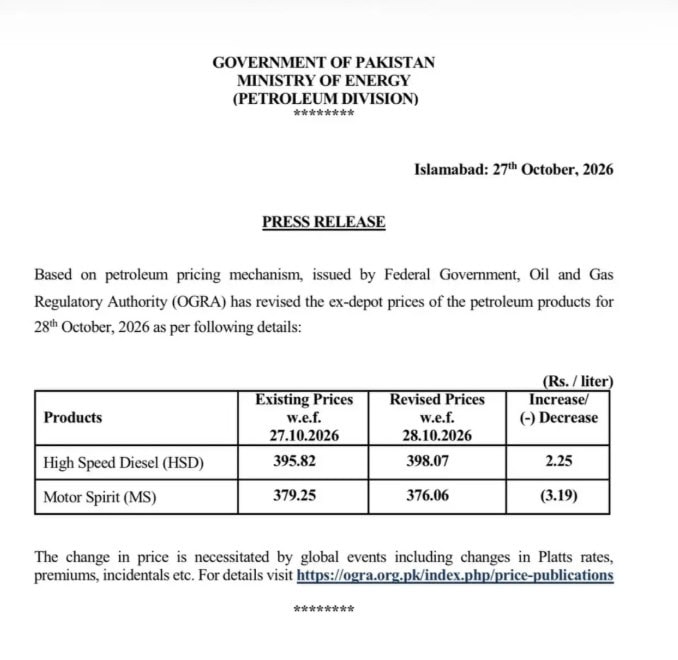
ISLAMABAD – Pakistanis get another cut in fuel prices as the federal government slashed petrol rates while making high-speed diesel more expensive, bringing mixed news for motorists, transporters and businesses already struggling with energy costs.
Under the daily pricing arrangement, petrol has been reduced by Rs3.19 per litre to Rs376.06. The relief has not extended to high-speed diesel, which has become Rs2.25 per litre more expensive. Its new price stands at Rs398.07, up from Rs395.82.
Latest Petrol Diesel Prices in Pakistan
Petroleum Division confirmed the changes through an official notification, stating that the revised ex-depot rates were determined by the Oil and Gas Regulatory Authority (OGRA) under the government’s existing petroleum pricing mechanism.
The fresh announcement comes just a day after consumers faced an increase in both major petroleum products. On Monday, authorities raised petrol prices by Rs1.54 per litre and diesel rates by Rs2.16 per litre, adding to concerns over the frequent adjustments in fuel costs.
The latest revision comes against the backdrop of uncertainty in international energy markets, where geopolitical tensions and shifting crude oil prices continue to influence petroleum costs.
Global crude prices, meanwhile, eased on Tuesday as investors assessed the prospects of renewed peace efforts in the Middle East. However, the broader energy market remained under pressure amid continuing hostilities involving Yemen’s Houthi movement and Saudi Arabia, alongside concerns about possible fresh US-Israeli military action.
Brent crude slips to $114.81 per barrel while US WTI crude moved down to $100.98 per barrel. Despite these declines, international oil prices remained near multi-month highs, highlighting the uncertainty surrounding global energy supplies.
Two associates of Sam Bankman-Fried invested in Anthropic. After they were sentenced for fraud, their shares entered a legal black hole.
ANGELA WEIS/Getty Images; Tyler Le/BI
Sam Bankman-Fried's Anthropic stake was liquidated in bankruptcy court two years ago.
The feds seized shares belonging to two co-conspirators, Caroline Ellison and Nishad Singh.
The government quietly sold those Anthropic shares last year. It's unclear where the money will go.
A little over a year ago, the federal government acquired a stake in Anthropic without paying a penny.
The shares were seized from associates of the crypto fraudster Sam Bankman-Fried. From there, they disappeared into a legal black hole.
As Anthropic rockets toward what could be the biggest IPO in history, those shares could now be worth billions of dollars.
Bankman-Fried's own Anthropic stake was liquidated in the bankruptcy of his failed cryptocurrency exchange. The Anthropic equity owned by Caroline Ellison and Nishad Singh, two associates who invested alongside him, took a different path. The government seized those shares and sold them to existing Anthropic shareholders, according to a person familiar with the sale.
It's still unclear whether the proceeds will be paid out to victims of the $11 billion fraud case, or if the feds will just keep the money.
It also remains a mystery which investors bought Singh's and Ellison's stock and how much they paid, but Anthropic shares have been on such a dizzying climb that it's likely those investors made a killing on them.
Bankman-Fried was convicted in 2023 on fraud and money laundering charges and sentenced to 25 years in prison after the collapse of his cryptocurrency empire. Prosecutors said he used his crypto hedge fund, Alameda Research, to siphon billions of dollars from customers of FTX, his crypto exchange.
The story of the crypto criminals' Anthropic shares is a tale with extraordinary elements, including one of the biggest financial frauds in modern history, a messy bankruptcy docket, and a company that experienced one of the fastest appreciations in business history as the world suddenly realized AI's existential importance.
An intelligent investment
Bankman-Fried, Singh, and Ellison each invested in Anthropic's 2022 Series B funding round. Bankman-Fried bought $500 million worth, which according to court records represented 13.56% of Anthropic at the time. Singh acquired $40 million in shares, and Ellison acquired $10 million in shares, court records reviewed by Business Insider show.
The Anthropic shares purchased by Singh and Ellison could together be worth between $4.17 billion and $5.03 billion today, based on the $965 billion valuation the company announced this May, according to Olav Sorenson, who teaches venture capital strategy at UCLA. Harrison Rolfes, an analyst at PitchBook, put the combined figure at $2.62 billion. If Anthropic went public at a $2 trillion valuation, the shares would be worth about $5.44 billion, Rolfes said.
Among Sam Bankman-Fried's many investments was a sizable stake in Anthropic, the AI company that has since soared in value.
Bloomberg/Getty Images
Four of Bankman-Fried's close friends and executives at his companies pleaded guilty as co-conspirators. Three of them, including Singh and Ellison, testified against him.
After the collapse of FTX, Bankman-Fried's Anthropic shares — which were owned by Clifton Bay, an entity affiliated with Alameda Research — ended up in bankruptcy court along with the other dredged-up remains of his companies. His Anthropic shares were liquidated to pay FTX's creditors.
The estate in 2024 sold Bankman-Fried's Anthropic shares to a few dozen buyers for a total of $1.3 billion, more than double what he paid. The largest stake went to an entity affiliated with a United Arab Emirates sovereign wealth fund, bankruptcy court filings show.
The feds take a stake in Anthropic
As part of their sentences, a judge required Singh and Ellison to forfeit their Anthropic shares, which prosecutors said could be considered proceeds of their crimes.
At Singh's sentencing hearing, one of his attorneys, Andrew Goldstein, said Singh purchased his shares before participating in the criminal conspiracy and "he actually may have had a legitimate legal claim" to the shares but agreed to give them up as part of his plea agreement "because it was the right thing to do."
Reached for comment for this story, Goldstein told Business Insider that Singh hopes the government is able to quickly distribute proceeds of the sale to FTX victims. An attorney for Ellison declined to comment.
Nishad Singh was required to give up his shares of Anthropic as part of his sentence.
Bloomberg/Getty Images
A federal judge ordered Ellison's and Singh's Anthropic shares to be transferred to the federal government, which took ownership of Ellison's shares in February 2025 and Singh's in April of that year, according to previously unreported court records.
Ordinarily, victims of crimes are compensated through a restitution process, which is overseen by courts. But the number of potential FTX victims could be in the millions, prosecutors said in court filings. As a result, the judge ruled, victim compensation would be handled through a process called remission, which is overseen by the Justice Department.
During Ellison's sentencing hearing, Justice Department prosecutors told the judge that the DOJ would either set up its own claims administration process to compensate victims, or work with the FTX bankruptcy process to identify victims and provide forfeited funds to them.
At the time, FTX's bankruptcy process was in full swing. A Delaware court appointed Sullivan & Cromwell, the elite Wall Street law firm, to untangle the company's assets, figure out who was owed money, and pay them.
The creditors in the FTX bankruptcy, prosecutors noted, largely overlapped with FTX's victims. They were generally depositors, lenders, and investors who were defrauded by Bankman-Fried and other executives. Prosecutors said the Justice Department could work with the bankruptcy estate's lawyers to get money back to them, as it had in previous large-scale financial frauds such as Bernie Madoff's Ponzi scheme.
There was an unusual twist that set the FTX bankruptcy apart. Bankman-Fried's investments — especially the Anthropic shares, along with some cryptocurrency — had grown substantially in value since FTX's collapse. Earlier in 2024, the Sullivan & Cromwell lawyers who'd taken over FTX projected that all the creditors would be repaid in full, with interest.
The Marshals take control
While prosecutors said they intended to use Singh's and Ellison's Anthropic shares for remission, the Justice Department could technically do whatever it wanted with them, according to Duncan Levin, a white-collar defense attorney who teaches a course on forfeiture at Harvard Law School.
"It's a very opaque process," he said. "It's completely at the discretion, by law, of the attorney general of the United States."
Typically, when the feds seize shares of private companies through criminal asset forfeiture, they send the shares to the US Marshals Service Complex Assets Unit for liquidation. The unit tries to value the shares as any other investor would, said Michael Bachner, a white-collar criminal and securities litigation attorney.
"They may look to: What would an institutional purchaser pay for these securities?" Bachner said. "Are there funds that are valuing the securities? Is there a secondary market already out there?"
For the sale of the Anthropic shares, timing was crucial. The Marshals Service is supposed to preserve as much value as possible, Bachner said. By the time the feds got hold of the shares, Anthropic had become an economy-shifting AI giant. In its March 2025 Series E fundraising round, Anthropic was worth $61.5 billion. By its Series G round at the start of 2026, it was worth $380 billion.
At the same time, each fundraising round diluted the Series B shares. The FTX estate told the bankruptcy court that Bankman-Fried's shares, which in 2022 represented 13.56% of Anthropic, represented 7.84% of the AI company in January 2024.
Sunil Kavuri, a victim of Sam Bankman-Fried who has advocated for FTX creditors, said it would be "diabolical" for the government to hold onto the proceeds.
David Dee Delgado/Getty Images
The Marshals Service sold Singh's and Ellison's shares to existing Anthropic investors sometime last year, according to the person with knowledge of the sale.
It's not clear when exactly the agency sold the shares, to which investors, how those investors were chosen, at what price the shares were sold, or how much money the government made in the sale. Depending on when they were sold in 2025, the combined shares could have been worth between $300 million and $1.1 billion, according to Sorenson, the UCLA professor. Rolfes, the PitchBook analyst, estimated a range between $250 million and $630 million, depending on the timing.
The Marshals Service declined to comment. A representative for the Justice Department said information about asset sales and victim compensation is confidential.
The revenue from the sale of Singh's and Ellison's Anthropic shares doesn't appear to have been transferred to the FTX estate as of the end of June this year, according to bankruptcy court filings from the estate, which continues to compensate victims and creditors.
The FTX estate received $638 million last year from assets seized by the Justice Department, according to the estate's annual report for 2025. It's not clear from the filings where those funds came from. The estate expects to receive about $400 million more from the government at some point in the future, according to the annual report. That would include proceeds from cryptocurrency and other investments made by Bankman-Fried.
One of Bankman-Fried's victims, Sunil Kavuri, told Business Insider that the Justice Department should use the proceeds of Ellison's and Singh's Anthropic shares to compensate victims. It would be "diabolical" for the government to hold onto the proceeds, he said.
Victims haven't actually been made whole, he said, because the bankruptcy court calculated the losses of FTX depositors using the time of FTX's bankruptcy declaration, when crypto prices were at a low ebb. Kavuri previously argued in bankruptcy court that the FTX estate should have held on to its Anthropic shares for longer to take advantage of the company's swift growth.
Representatives for the FTX estate declined to comment. The Justice Department spokesperson said the matter was ongoing, and that the DOJ "prioritizes victim compensation from forfeiture and takes all steps to ensure forfeited funds are provided to victims."
The government could end up just keeping the money, Bachner said.
"They've invested millions and millions and millions of dollars in prosecuting Bankman-Fried. And they want to get at least reimbursed for their costs, so sometimes they'll do that," he said. "It's really a unilateral government decision."
Jack Newsham and Katie Roof contributed reporting for this story.
Correction: August 31, 2026 — An earlier version of this story misstated the number of co-conspirators who testified against Sam Bankman-Fried. It was three.
Update: August 31, 2026 — This story has been updated to reflect Singh's role in the FTX fraud case.
Correction: October 27, 2026 — FTX bankruptcy court filings don't make clear where the Justice Department obtained the $638 million it transferred to the estate. A previous version of this story mischaracterized the filings.
Criticism of the Golden State's DEI program has emerged as a roadblock amid a global battle to host Hollywood projects. The manager of the project has countered, "This is not progress. This is a reversal."
Cyprus has the second smallest video game market among 36 European countries, with only Malta spending less, according to a report published on Tuesday by the European audiovisual observatory.
Consumer spending on video games in Cyprus reached €12.51 million last year, ranking 35th of the 36 countries included in the analysis, ahead of only Malta which recorded €8.31 million.
With a population of about 1.26 million, spending per person in Cyprus came to €9.93; The European average was €47.29, almost five times higher.
Across the 36 countries examined, the video game market totalled €27.73 billion in 2025.
The report places Cyprus, Luxembourg and Malta in a category of small European markets where mobile gaming dominates, with about 98 per cent of consumer spending in Cyprus last year being linked to mobile platforms.
The report says these markets have high smartphone use and a limited presence of traditional consoles and PCs in the recorded data, with revenue mainly stemming from in-game purchases as well as digital currencies.
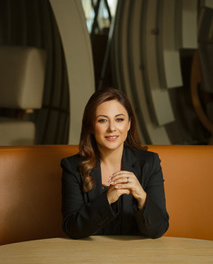
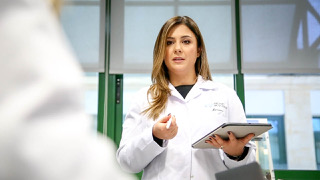
Cyprus may still be an unlikely place to build a biotechnology company, but Dr Marianna Prokopi-Demetriades, co-founder and director of Theramir, is increasingly convinced that this is precisely what gives the island something to prove.
At Theramir, that means developing precision-oncology technologies, building the manufacturing and regulatory foundations needed to move experimental therapies closer to patients, and trying to show that globally relevant biotech can emerge from a small ecosystem.
The work is slow by design. Cancer therapies cannot be rushed through validation, safety testing, manufacturing or regulation, and even strong laboratory results can take years to reach the clinic.
For Prokopi-Demetriades, that reality sits alongside a much bigger ambition. She wants Theramir to help prove that Cyprus can do more than support innovation from elsewhere. It can create it, retain the intellectual property and take it international.
From a small island to global biotech
That ambition received fresh recognition this year when Prokopi-Demetriades was named the 2026 Study UK Alumni Awards global winner for Business and Innovation, selected among 1,800 candidates from 120 countries.
For years, she said, Cyprus “was not a place people immediately associated with biotechnology”, even though its technology and innovation ecosystem has grown enormously over the past decade.
Being recognised internationally therefore felt “both like a very personal milestone and a huge surprise”, but Prokopi-Demetriades also sees it as an opportunity to put Theramir and Cyprus more firmly on the global biotech map.
She is careful, however, not to confuse recognition with progress itself. “Of course, awards do not suddenly bring deals or open doors,” she said, noting that in biotech, progress still depends on years of scientific R&D, validation, manufacturing and regulatory work.
What recognition can do is bring visibility to a field that often feels like “a long and lonely path”.
Her hope is that the award brings more confidence and excitement around biotechnology in Cyprus, inspires the next generation of scientists and helps strong science find “a real path to scale and, ultimately, reach patients”.
What Theramir is trying to do differently
The science behind Theramir starts from a simple but difficult reality. Cancer does not behave in the same way from one patient to another.
Each tumour has its own molecular profile and can evolve under treatment, Prokopi-Demetriades explained, particularly in metastatic and treatment-resistant disease, where cancer can activate several pathways in order to survive.
Theramir’s EVmiR® platform is designed around that complexity.
“We use extracellular vesicles (the body’s natural cellular messengers) to deliver microRNAs, small molecules that can regulate multiple cancer-driving pathways simultaneously,” she said.
The distinction lies in how those molecules act. “Rather than blocking one target, the aim is to interfere with networks controlling tumour growth, resistance and metastatic spread,” she explained.
The company’s lead programme targets triple-negative breast cancer, with expansion into bladder and pancreatic cancer. Because EVmiR® is a platform technology, different microRNAs can be selected for different tumour biology, creating what Prokopi-Demetriades described as “a potentially adaptable precision-oncology approach”.
Could a blood test help tell us what comes next?
Theramir is also developing companion biomarker tools alongside its therapeutics, bringing diagnosis and treatment closer together.
The aim, Prokopi-Demetriades said, is “to connect treatment with the biomarkers that can tell us who is most likely to benefit and how the disease is responding”.
Today, Theramir evaluates LCP-1 expression through tissue biopsy, while liquid biopsy allows the team to study circulating microRNAs and tumour-associated extracellular vesicles in blood.
The value comes from combining those sources of information. “Together, these markers could support patient selection and provide a more dynamic picture of treatment response, with future potential for real-time monitoring and earlier detection of progression, resistance or recurrence,” she explained.
When the laboratory is only the beginning
A new challenge begins when promising science has to leave the laboratory.
“A promising laboratory result is only the beginning,” Prokopi-Demetriades said, because before a therapy can reach patients, the science must be reproduced consistently, safety and efficacy confirmed preclinically and the product transferred into GMP manufacturing with strict quality control and batch-to-batch consistency.
“This is why biotech development takes years rather than months,” she said.
Medochemie’s involvement is therefore significant. As she explained, “Medochemie’s involvement is important because it brings pharmaceutical manufacturing, quality and regulatory expertise directly into this next phase.”
For Theramir, the next major milestone is to translate EVmiR® into a clinical-grade product, establish a robust GMP manufacturing process and generate the data required to support first-in-human clinical development.
The expensive patience of biotech
That timetable also changes the way a biotech company has to think about investment.
Unlike a software startup, which can launch, test and change direction in months, biotech may spend years generating evidence before conventional revenues appear.
“Biotech investors are backing scientific progress long before conventional revenues appear, so milestones look very different: reproducible data, preclinical validation, GMP manufacturing, regulatory progress and eventually clinical development,” Prokopi-Demetriades said.
Public funding, she explained, helps de-risk the early science, while private investors “mainly place trust in the founders, the vision and the potential to create something with real patient impact”.
Strategic partners such as Medochemie then add sector expertise alongside capital.
There is, however, a limit to what money can accelerate. “Money can accelerate execution, but it cannot shortcut biology, safety or regulation” is how Prokopi-Demetriades put it, adding that this patience is part of “building biotech for the greater good”.
What could Cyprus become?
The question for Cyprus is whether individual companies such as Theramir can eventually become part of something broader.
Prokopi-Demetriades said the country has “come a long way since Theramir started”, when it was only the second company approved as an innovative company locally.
Her ambitions for the sector are focused. “Competing directly with mature biotech hubs is still unrealistic, but we can build our own niche,” she said.
Instead, she sees a real opportunity in next-generation biomanufacturing, developing specialised GMP capabilities that can take innovation from the laboratory towards the clinic.
Equally important is “creating and retaining Cyprus-made intellectual property”, then scaling it internationally through strategic partnerships and licensing.
That, she believes, would allow Cyprus “not simply to host innovation, but to originate and export it”.
When the science becomes personal
Behind the science, however, there is also a more personal contradiction.
Prokopi-Demetriades has spoken openly about losing people she loves to cancer while spending years working on therapies for the disease.
“There is a painful contradiction in spending years working on cancer therapies while, at the same time, losing people you love to the disease,” she said.
That experience creates an instinct to move faster.
“It makes you want to move faster, but it also reminds you why you cannot take shortcuts,” she said, adding that patients deserve “evidence and safety, not just promising science”.
Through the slower periods, she remains focused on why Theramir began. “The long timelines can be frustrating, but I know why we started,” she explained.
Reaching the first patient with a Theramir therapy would therefore mean far more than another development milestone.
It would be, she said, “a major scientific milestone and, for me, an intensely personal one”.

 Login