Rothschild & Co assume privatização dos maiores bancos ucranianos. Família tem histórico de interesses na Ucrânia desde o século XIX e a Távola Redonda.
Essa semana, o Ministério da Finança da Ucrânia, liderado por Sergey Marchenko assinou um acordo com o grupo financeiro Rothschild & Co para fins de consultoria preparatória para a privatização dos bancos estatais ucranianos Ukrgasbank e Sense Bank, dois dos maiores bancos do sistema financeiro ucraniano. Rothschild & Co fara um inventário dos ativos desses bancos, bem como uma avaliação de sua saúde financeira, organizarão as informações e atrairão compradores para a aquisição. Na prática, Rothschild & Co acabará determinando o(s) comprador(es), graças ao seu papel privilegiado nessa operação, bem como seu peso institucional.
O governo ucraniano afirma que a operação é necessário para diminuir o papel do Estado no sistema bancário-financeiro ucraniano e atrair investimento estrangeiro, nos termos de recomendações encaminhadas pelo FMI.
Na maioria dos outros países, essas operações repentinas de privatização sempre geram grandes ondas de protesto organizadas por sindicados, movimentos sociais e partidos de oposição, mas a privatização de alguns dos principais bancos ucranianos está avançando sem qualquer reação popular, sintoma da transformação da Ucrânia numa ditadura através do recurso a um estado de exceção permanente.
Não é a primeira operação Rothschild na Ucrânia.
Desde pelo menos 2015, a instituição de assessoria financeira Rothschild & Co tem atuado praticamente como um “apêndice” da Ucrânia, assumindo a responsabilidade de “orientar” o governo ucraniano em assuntos financeiros, especialmente em relação à reestruturação e renegociação de suas dívidas. No passado, Rothschild & Co também atuou na desverticalização da Naftogaz, principal empresa estatal de petróleo e gás da Ucrânia. Essa desverticalização consiste na “separação” das várias atividades da Naftogaz em subsidiárias para facilitar a venda ou concessão de atividades consideradas “não-essenciais”. No mesmo período, a Rothschild Trust recebeu as ações do Petro Poroshenko, presidente ucraniano à época, na empresa Roshen, a principal confeitaria do país. “Recebeu” aqui, é um verbo chave porque, de fato, não houve “venda” das ações, mas simples entrega, o que é extremamente peculiar e dá a entender a existência de algum tipo de relação mais obscura entre Poroshenko e o Rothschild Trust.
Logo após a Revolução Laranja, Nathaniel Rothschild e seu banco mercantil JNR entraram na Ucrânia em parceria com a empresa estadunidense Vanco Energy (conectada a George W. Bush e Dick Cheney) para assumir o controle do petróleo ucraniano no Mar Negro.
Trata-se do mesmo Nathaniel Rothschild que em abril de 2022 disse que Vladimir Putin era o homem mais perigoso desde Hitler, e que “a Ucrânia é uma peça essencial que não podemos perder no tabuleiro geopolítico”. Ele acrescentou que “precisamos colocar a Rússia de joelhos por todos os meios possíveis” e apelou ao uso da força contra a Rússia, concluindo que “Sem a Ucrânia, a ordem mundial pode não sobreviver”.
O tom da mensagem de Nathaniel de Rothschild é claramente apocalíptico e é plenamente compatível com a atmosfera de aniquilação da Rússia que irrompeu no mundo ocidental, com ondas sem precedentes de sanções e a tentativa direta de destruição de todo o edifício econômico-financeiro do país, na expectativa de que o ataque levaria a um colapso político da Rússia.
Por que a Ucrânia é tão importante para Nathaniel de Rothschild? Trata-se de um mistério de difícil resolução.
No início deste ano de 2026, foram divulgados centenas de milhares de e-mails de Jeffrey Epstein, e entre eles foram encontradas várias mensagens trocadas entre Epstein e Arianne de Rothschild, presidente do banco Edmond de Rothschild. Nessas trocas de mensagens, ambos falam brevemente sobre como o caos na Ucrânia ofereceria inúmeras oportunidades.
O interesse Rothschild pela Ucrânia parece bem mais antigo, porém. No século XIX, o consórcio britânico Rothschild tentou fazer um lóbi junto ao Império Russo para conseguir assumir o controle dos projetos ferroviários do sudoeste russo (incluindo a atual Ucrânia), sem sucesso. Os Rothschild conseguiram apenas, de forma indireta, assumir o controle do oeste ucraniano e das rotas logísticas e energéticas entre Baku e Odessa.
Não se pode esquecer, também, do papel dos Rothschild na construção do movimento sionista, liderado por Theodor Herzl. Apesar de Herz liderar e escrever a partir de Viena, a maior parte da Organização Sionista Mundial era composto por habitantes da atual Ucrânia, que também gradualmente foram assumindo a liderança de setores e grupos específicos importantes do sionismo, como no caso de Vladimir Jabotinsky.
O que nos leva, finalmente, à sociedade Távola Redonda, uma sociedade secreta britânica fundada no início do século XX por Cecil Rhodes e Alfred Milner, e financiada por Lord Rothschild. A Távola Redonda tinha como objetivo espalhar e enraizar a influência britânica ao redor do mundo e reforçar o alinhamento entre Reino Unido, Canadá e Austrália, e serviu como a semente de outros “clubes da elite”, como o Chatham House e o Council on Foreign Relations.
É no contexto dos interesses da Távola Redonda que um dos pais da geopolítica clássica, Halford Mackinder, desenhou um projeto de desintegração da Rússia (incluindo a independência da Ucrânia) que ele levou consigo quando tornou-se conselheiro do Exército Branco no sul da Rússia, com a finalidade de coordenar os esforços da Entente contra os bolcheviques. O esforço de Mackinder fracassou em 1920.
Mas vemos os frutos desse interesse Rothschild na Ucrânia bem avançados em 2026.
Vulgo pelotudez. Vengo de tomar un café con Osvaldo, un amigo entrañable con el que compartimos el temor de estar volviéndonos cada vez menos inteligentes, entre otros motivos porque cada vez delegamos más nuestra memoria a los dispositivos electrónicos, compus, smartphones y nubes.
El llevaba consigo un ejemplar de Moisés y la religión monoteísta y yo un libro mio escrito hace más de dos décadas que le regalé diciéndole que a veces me creo incapaz de volver a escribir algo de esa calidad (sea la que fuere). Antes, él había recordado un comentario mio sobre la película Ideocracy de hace, también, dos décadas atrás. Por que hace tiempo habíamos recordado esta premonitoria pelicula y cavilado sobre la estulticia creciente que venimos detectando. En un momento él se fue al baño y yo abrí su libro en la parte en que Freud conjetura que Moisés era un noble egipcio ¡Que calidad la de su escritura! Recordé la prosa eximia de Trotsky y cuando mi amigo regresó nos preguntamos si las redes sociales y la IA están aplanando notoriamente las mentes, como parece probarlo la existencia de presidentes de las cataduras de Milei y Trump.
De vuelta a casa, me pongo a leer esta nota de otro gran amigo que, justo, qué casualidad, aborda este mismo tema, por suerte con mucha mayor profundidad. Me digo que todo tiene que ver con todo. Y recuerdo a mi amado Luis Alberto Spinetta cuando zahería a los necios del público que no se cansaban de pedirle a gritos que cantara Muchacha ojos de papel: «Tengan cuidado que en un ratito pasa el bobero».
La estupidez contemporánea
El sistema que controla la realidad política y social necesita al estúpido, así como el mercado necesita que la libertad individual se confunda con el acto del consumo. La estupidez que rige el capitalismo destruye fuerzas productivas, atacando capacidad industrial en decenas de países, en función de juegos especulativos. En el escenario de la crisis de 1929, solo el 3% de los estadounidenses estaba vinculado con la especulación bursátil. Ahora es superior al 60%. Y la crisis “in progress” ya no es solamente financiera, sino también energética, alimentaria, psicológica, ambiental.
POR ÁNGEL BECCASINO / LE MONDE DIPLOMATIQUE
En la Convención Republicana de Dallas (8-9-26), Trump anuncia que comprará votos. Promete 5.000 dólares a cada adulto estadounidense si sus votos permiten a los republicanos retener el control del Congreso en las elecciones de noviembre. ¿Seducirá la oferta a un país que suma millones de familias viviendo en la pobreza, y en el que la inflación está desbocada desde que el gobierno decidió atacar a Irán? Como un adelanto de posible respuesta, los asistentes a la Convención chillan y aplauden gritando “U.S.A!, U.S.A!”, y lanzan ovaciones cuando Trump les promete seguir bombardeando Irán.
Toda elección nos pone delante una foto de la sociedad, una radiografía política-ideológica de un momento dado. En la radiografía actual, el éxito de personajes como Trump, Bolsonaro, Milei, Kast, muestra una sociedad liderada por una identidad política que tiene como denominador común la exclusión violenta de todo aquel que piense diferente. Y también tiene en común algo que Umberto Eco desarrolló en una entrevista que publicó el diario turinés La Stampa, en junio de 2015, que “Las redes sociales le dan el derecho de hablar a legiones de idiotas que antes hablaban sólo en el bar después de un vaso de vino, sin dañar a la comunidad. Ellos eran silenciados rápidamente, pero ahora tienen el mismo derecho a hablar que un premio Nobel. Es la invasión de los idiotas”. Lo redondeó alguna vez el escritor de ciencia ficción Harlan Ellison: “Los dos elementos más comunes en el universo son el hidrógeno y la estupidez.”
“El cibercapitalismo aumenta su control gracias a la guerra neocortical, cuya capacidad para anular la conciencia y la reflexión eleva el grado de sumisión y acrecienta el socialconformismo”, comenta Marcos Roitman Rosenmann, en La democracia, una práctica política venida a menos. Y Arturo Pérez Reverte, sintonizado con aquello que observó el historiador económico Carlo Mario Cipolla, de que la estupidez no se corrige ni con la experiencia, ni con estudios, ni tampoco desaparece con el tiempo, por lo cual “la persona estúpida es el tipo de persona más peligrosa que existe”, aporta: “Yo pensaba cuando era jovencito que lo peor eran los malvados. No. Con el tiempo, la edad, la comprensión de causa-efecto, te das cuenta que lo peor son los tontos. El mayor mal del mundo son los idiotas, que son fácil presa para los malvados. Tú juntas un malvado con cien tontos y tienes 101 malvados. Dando un click en “salvar a las focas” sientes que ya no estás solo, formas parte de un conjunto, de un territorio moral en el cual te sientes arropado y te sientes importante. Es que es muy fácil para un tonto sentirse importante. Las redes sociales te lo facilitan.”
Encerrado en una celda de la Alemania nazi, poco tiempo antes de ser ejecutado por ese régimen el 9 de abril de 1945, el teólogo luterano Dietrich Bonhoeffer reflexionó sobre la imbecilidad de la sociedad de su tiempo, una característica que identificó como más peligrosa que la maldad. Porque la persona estúpida se siente tan segura de sí misma, que con ella no tienen ningún efecto ni los argumentos lógicos ni los hechos objetivos. Heredero de aquella observación, al igual que Pérez Reverte, Cipolla exploró el controvertido tema de la estupidez en un ensayo breve de 1988, titulado Allegro ma non troppo, observando a los estúpidos como un peligro mayor que la mafia o el complejo industrial-militar. Sus conclusiones aplican a la perfección y en múltiples sentidos a un momento en que, como parte de la normalidad, algunos gobernantes conjugan mafia, negocios militares y estupidez, seguros de que la historia los acariciará por haber arrojado toneladas de bombas sobre niños, al tiempo que un ministro israelí celebrado en su patria, aboga por asesinar cada noche 30 o 40 habitantes de Gaza. Y, en la vida cotidiana social, como muestra del poder adquisitivo, en una subasta alguien paga 3,35 millones de dólares por un balón que, como valor añadido, carga el haber sido aquel del gol hecho con la “mano de Dios” encarnada en Maradona, o alguna cifra más o menos similar por los calzones que usó una cantante, mientras miles se arrastran por una limosna en las calles y el hambre grita en el cuerpo de cientos de millones.
La gama de la estupidez contemporánea supera la de todos los tiempos, incluidos en ellos personajes como Calígula o los ideólogos nazis que creyeron ser parte de una raza superior, como la creen hoy los sionistas que llevan adelante el genocidio de palestinos. Estúpido es quien no aprende de lo que ha sufrido, como lo es quien repite errores porque es incapaz de autocrítica, y entonces siempre cree estar en lo correcto. Estúpido es el gobernante que, ante una devastadora tragedia, impide ayuda humanitaria por consideraciones ideológicas. Estúpido es quien no evalúa el efecto de sus decisiones más allá, o no, de lo inmediato. Estúpido es el que en una pandemia difunde consejos falsos, o llama a tener conductas perjudiciales para la salud, como Donald Trump. Estúpidos son quienes promueven discursos negacionistas sobre evidencias históricas, verdades objetivas y consensuadas, el caso de la negación de la tortura y el asesinato de miles de personas en Argentina y Chile por sus actuales gobernantes, aunque su estupidez opere desde el cinismo oportunista que implicaría una funcionalidad.
Estúpidos son quienes se llenaron de temores cuando en mayo del año anterior en el manga japonés El futuro que vi, un vidente, maestro de feng shui, predijo una catástrofe: el 5 de julio se abrirá una grieta bajo el lecho marino entre Japón y Filipinas, cuya consecuencia serán olas tres veces más altas que las que siguieron al terremoto de Tohoku en 2001. Y acto seguido se disparó esa versión de la estupidez que es la superstición, produciendo una crisis en la industria japonesa del turismo: los visitantes desde Hong Kong, Korea y otros países asiáticos se redujeron a la mitad. Porque el algoritmo refleja, y multiplica la reproducción de aquello de lo que más gente está hablando, construyendo certezas por repetición de una versión. En otras palabras, operando una vez más esa ley de la comunicación con intención persuasiva que dice que la clave para el logro del objetivo no es otra que el mensaje más su frecuencia de exposición. Lo cual tiene como segunda versión aquello de que la mentira repetida muchas veces termina siendo percibida como incuestionable verdad. Que es lo que ocurre con las versiones generadas por sectas paranoicas como la norteamericana Qanon que veían pederastas y niños en el sótano de una pizzería, o con aquellos que movidos por sus cámaras de eco, como una jauría de estúpidos tomaron el capitolio de Washington reclamando por unas elecciones que perdió Trump, como los brasileros que intentaron tomarse Planalto en Brasilia cuando ganó Lula. Estúpidos que se hacían selfies destrozando lo que encontraba a su paso, como turistas encandilados con lo que están haciendo, y colgaban las imágenes en tiempo real para que todos sepan que han sido ellos.
El gran problema es que cuando se intenta convencer al estúpido de su error, este se atrinchera en su estupidez como si fuera su mayor valor. Así como ocurre cuando se le ridiculiza detonando su resentimiento. Ni la razón, ni la exposición de los hechos, ninguna evidencia sirve para convencer a quien vive en la repetición del relato afín a sus creencias.
El algoritmo depredador de la singularidad
—“Así como un cordón umbilicalsatisface las necesidades de un feto antes de que pueda comunicarlas, las plataformas tecnológicas se esmeran para asociar nuestros deseos antes de que los hayamos expresado”. Mark Andrejevic, Automated Media.
Así como Google y Wikipedia hicieron desaparecer las enciclopedias, cuando se masificó el uso de smartphones o teléfonos móviles “inteligentes, la posibilidad práctica que ofrecían condujo a la delegación de una amplia gama de funciones cerebrales. Y llegó el confortable sometimiento al algoritmo decidiendo qué deseamos, qué nos interesa, cómo movernos por la ciudad, adónde ir a comprar algo, cuál restaurante elegir para comer, qué modelo de cualquier cosa escoger. Una suerte de vida en piloto automático, siguiendo Google maps.
Si el humano evolucionó por siglos poco a poco, y la sociedad otro tanto a través de la cultura y sus lentos ritmos, con la evolución de la tecnología y sus usos todo se aceleró, y la vida se fue “algoritmizando” velozmente. Respondiendo a las órdenes del algoritmo, y no a la realidad “natural” del mundo, se eliminaron diferencias unificándose mercados, generándose tendencias que estandarizan conductas, y se avanzó en la intervención sobre la biología eliminando particularidades para optimizar la explotación de seres vivos como fuentes de proteína. De orientarnos por nuestro sentido de ubicación y conocimiento del territorio, estando atentos a lo que ocurría a nuestro alrededor, pasamos a movernos obedeciendo al GPS y dejando atrás nuestro vínculo cerebral con la calle. Al igual que los niños delegando la función de sumar 2+2 en una calculadora o una tablet, nos entregamos a la facilidad que proporciona una máquina, y eso mismo ocurrió con nuestra forma de conectar con la información como búsqueda de conocimiento. Información cuyo flujo enorme pasó a ser una parte más del entretenimiento, y por tanto dejó de producir el efecto de atención, reflexión, conciencia que en otros tiempos producía.
No más que dos o tres décadas antes del presente, hablar de “algoritmo” era hablar de matemáticas. Hoy es hablar de tendencias, de conductas, de reacciones sobre lo que nos ocurre, sobre lo que nos interesa. El algoritmo se ha convertido en quien orienta nuestras vidas, ofreciéndonos la convergencia entre lo que buscamos y lo más popular en las búsquedas como guía. Es decir, el algoritmo nos integra a las corrientes dominantes de cada momento, haciéndonos sentir integrados, “parte” de ellas. El algoritmo nos hace sentir pertenencia, identidad. Y lo hace porque conoce de nosotros lo que nos interesa, los lugares donde estamos y donde planeamos estar, lo que hemos venido comprando, los que repetimos en nuestra escogencia (N. del E.: Acciónyefectodeescoger) y a partir de eso nos hace sentirnos parte, encajar en el mundo. Entonces nos pone delante ofertas en función de nuestras preferencias y nivel económico. Y juega con nuestra ansiedad, diciéndonos que hay otros mirando lo que nos están ofreciendo, amenazándonos con perder las oportunidades. Pero, además, nos gestiona dentro de contextos comerciales, porque no solamente cruza oferta con demanda, sino que evalúa disponibilidad de lo que se busca, la ansiedad que tenemos por llegar a tenerlo, la insistencia en la búsqueda, y en función de eso decide la relación, el precio. Por eso a dos personas de igual característica que preguntan en busca de un resultado, la respuesta les sorprende con dos precios diferentes para alcanzarlo.
Hoy que ya nadie lee la letra pequeña y se universaliza el “acepto término y condiciones”, así como el “acepto cookies” para poder acceder a casi cualquier página, se ha logrado instalar la idea de que la política es una idea pasada de moda y que todos los políticos son la misma cosa, sean de derecha o de izquierda, y que, finalmente, lo único que puede salvarnos somos nosotros mismos, cada uno por su cuenta. Y ahí juega el libre mercado, mostrándonos que ya no se trata de la lucha colectiva por el acceso a mayores niveles de igualdad y distribución de la riqueza, sino que todo depende de cada uno, y para muestra, la exhibición de algunos cuantos que, seg{un nos dicen, se han vuelto millonarios con solo proponérselo y ser constantes en lo que se han propuesto.
Refiriéndose a las plataformas digitales que “controlan todos los flujos de información, lo que en una sociedad digitalizada comprende una buena parte de las relaciones sociales”, en su texto La Sociedad Serializada, Edwin Cruz Rodríguez escribió en Desde Abajo, 19 de julio de 2024 que “dado que se trata de información cuantitativa en grandes cantidades y que circula a gran velocidad, las personas quedan sin posibilidad de dotarla de significado para convertirla en conocimiento, como hacían con los mensajes televisivos o radiales. Solo las grandes empresas tecnológicas disponen de los medios para convertir los datos en conocimiento y solo ellas se benefician de ese enorme poder.” El algoritmo cuenta con toda nuestra data, nuestros movimientos físicos por la ciudad, nuestros movimientos de tarjetas de crédito, nuestras repeticiones de compras, la comida que pedimos al domicilio, los espectáculos por los que nos interesamos, lo que miramos en las páginas, la música que escuchamos… Y así como se controla el consumo, se construyen tendencias en momentos electorales, guiando las decisiones del votante, y en general se gestionan las tendencias de opinión, tanto como de emoción política, en dirección al objetivo de proyectos que cuentan con los apoyos que se requieren para hacerlo.
La situación de los humanos (entre otros avances civilizatorios de la estupidez)
Desde hace décadas la estupidez es una política pública, comenzando por la educación, que forma a los niños priorizando la memorización sobre el pensamiento crítico, reflexivo. Es la biopolítica de la ignorancia, de que hablaba Michel Foucault. Es el trabajo del sistema para neutralizar cualquier rebeldía, cualquier motivación en dirección a cuestionar el sistema, de imaginar otra posibilidad. Y es el resultado de la manipulación sistemática de ese miedo que, como sensación, acompaña a la humanidad quizás desde siempre. Porque ese miedo que para Aristóteles era el resultado del diálogo entre las pasiones y las creencias, y que hacía a John Locke decir que es “la emoción más fuerte que la mente pueda sentir”, y por eso nos mueve más que el deseo, es hoy la máxima herramienta de cohesión social, rigiendo las relaciones de desequilibrio entre quienes tienen y quienes necesitan.
Haciendo equilibrio entre el miedo de Hobbes y esa ansiedad masiva ante la pérdida de control, a la que Montesquieu define como el terror, en medio de la desorientación que produce la rapidez con que cambian las cosas en la escena pública, Alexis de Tocqueville centra su mirada en el miedo político, que observa como algo que afecta a la masa produciendo un estado psíquico colectivo al que el individuo se somete. Entonces escribe que “vivimos en una época y en una sociedad democrática en que los individuos, incluso los más grandes, son muy poca cosa”. Y por eso necesitan de la autoridad para superar la angustia del sentimiento de estar solos. Tocqueville, que cree que cuanto más sentido del yo tiene una persona menos propensa es a sufrir ansiedad, ve en la masa el mal, y afirma en Democracy que un pueblo sumido en la desagradable ansiedad y pretendiendo estabilidad y orden con respecto a las cosas, temeroso del posible irrespeto por la propiedad, en suma, se convierte en un pueblo que aplaude la esclavitud, que deja que le quiten su libertad, y que “incluso con frecuencia la entrega él mismo”.
Hay un elemento nuevo en el territorio del miedo, y es la irrupción de un posible apocalipsis tecnológico como consecuencia del desarrollo de la Inteligencia Artificial y la robótica. En los primeros días de septiembre 2026, Evan Hubinger, jefe de seguridad de Anthropic, una de las empresas líderes en el desarrollo de la Inteligencia Artificial, escribe en X: “Creemos sinceramente que la IA podría acabar con la humanidad”. Días después Darío Amodei, CEO de la misma Anthropic, se manifiesta en el sentido de que es necesario frenar el desarrollo de la IA con el fin de evaluar mejor los riesgos derivados de sus crecientes capacidades que le permitirían “controlar toda internet”, esto es, superar la capacidad humana para controlarla. De inmediato recibe el apoyo de Sam Altman, cabeza de su competidora Open AI, y de Elon Musk, al tiempo que el rechazo de Donald Trump y otros de su círculo, entre ellos el presidente de la Cámara de Representantes, Mike Johnson, que argumenta a CNN que si el congreso intenta regular la IA “perderemos la carrera de la Inteligencia Artificial con China”, y eso no se debe permitir que suceda.
En otras palabras y hablando claro, no importa si la IA toma independencia y decide cualquier desastre sobre el mundo, porque la estupidez indica que lo único importante es la carrera de negocios sobre los usos militares de la IA y el potencial para desarrollar mayor poder destructor.
IA a un lado, Craig Gent, en su libro Cyberboss: TheRise of Algorithmic Management and the New Struggle for Control at Work (Cyberjefes: El auge de la gestión algorítmica y la nueva lucha por el control en el trabajo), observa que el problema para los trabajadores, además de la sustitución por robots, fáciles de ser afectados por el polvo y caros de mantener, y por tanto no tan funcionales en la mayoría de trabajos, es ser dirigidos por ellos mediante la gestión algorítmica. Esto es, el reemplazo del gestor humano como autoridad del sistema informático en la supervisión de la productividad de los trabajadores, tal como funciona en las cadenas de comida rápida o en el servicio de taxis. En los centros de trabajo logístico, tipo Amazon, los algoritmos gestionan a los trabajadores tanto como controlan los procesos de transporte de mercaderías: el trabajador interactúa con una pantalla, que organiza los pedidos, así como en la economía colaborativa interactúa con una aplicación. Las computadoras dirigen a los trabajadores optimizando su rentabilidad, al tiempo que los sustituyen. La tecnología reconfigura el trabajo, lo “optimiza” reorganizando procesos, controlando los tiempos del trabajador. Las computadoras no son humanas, por tanto, el trabajador no podrá exigir por su dignidad, pidiendo que sea respetado y, obviamente, esto conduce a implicancias de inhumanidad.
Por otra parte, de igual modo al que opera para intensificar el trabajo, esto es rentabilizarlo al máximo cuantificando la productividad sobre el tiempo, la gestión algorítmica opera también para incrementar el consumo, al tiempo que trabaja a otros niveles. El objetivo es que las mayorías acumulen cosas, en su mayor parte rápidamente desechables, para que unas mínimas minorías acumulen capital. Y hay cuestiones más de fondo, como lo que también ocurre en aquella “superestructura” de la que hablaba Gramsci, cuando en los Estados Unidos de la eugenesia o el supremacismo blanco anglosajón, se viralizan en las redes sociales mensajes publicitarios como el de American Eagle protagonizado por Sydney Sweeney y el slogan “Good Jeans” jugando con la homofonía entre “jeans” y “genes”, ya que la pronunciación de ambas palabras en inglés es muy similar.
La rubia de cuerpo deseable es portadora de buenos genes, decodifica el consumidor. Y así la marca de los “buenos jeans” marca la cultura aspiracional desde la hegemonía de los “buenos genes”. Y esto mientras millones utilizan diversos robots de asistencia sexual y “conversan” con la IA sobre sus vidas, sus deseos, sus traumas, sus fantasías, y en una nueva versión de la transferencia del psicoanálisis, le consultan qué decisiones les conviene tomar para resolver conflictos afectivos, o cómo resolver sus angustias, su depresión.
La economía de la estupidez
En su trabajo sobre el capitalismo y la contracción del sueño reparador en las personas, Jonathan Crary afirma que el tiempo medio dedicado al sueño en el último siglo ha disminuido dos horas: de ocho horas y media a seis y media. Y se pregunta sobre el efecto que el bombardeo de impulsos electrónicos, independiente del contenido, tiene en la mente humana y su capacidad de discriminar lo verdadero y lo falso, lo conveniente y lo inconveniente. Indiferente ante esto, y desde el pragmatismo que requieren sus intereses, el director general de Netflix, Reed Hastings, declara en una entrevista que el principal competidor de su negocio es el sueño. Si la persona duerme, no ve su oferta de entretenimiento. Como parte del deseo de colonizar horas de sueño por parte de las plataformas de streaming y del comercio en general, ante la fragilidad de la atención y la contracción constante del tiempo disponible para dejarse capturar por un estímulo, se observa la priorización de temas como los asesinos en serie, así como del impacto visual y la simplificación en la oferta de contenidos tanto como en la publicidad. Esto es, nuevos ingredientes para la profundización de la estupidez.
En su escrito sobre el Brutalismo Suprematista Libertario, Franco Berardi recuerda a Mc Luhan, que en 1964 escribió aquello de que cuando la comunicación interhumana pasa de la dimensión lenta de la técnica alfabética a la dimensión rápida de la técnica electrónica, el pensamiento se vuelve inadecuado para la crítica y el pensamiento mitológico se restablece. Ahí observa Berardi que, en la mirada libertaria, la empatía “no es compatible con la economía de la supervivencia; de hecho, es autolesiva.” Y escribe que “Mientras que la justicia social se condena como una intrusión aberrante del socialismo de Estado en la libertad de los individuos, la ferocidad competitiva se naturaliza: en la lucha por la vida, aquellos que no están a la altura de la ferocidad merecen morir.”
Entre el pesimismo de la inteligencia y el optimismo de la voluntad, que mencionaba Gramsci, se ha vuelto normal aceptar que esta será una generación que vivirá peor que la anterior. Lo contrario a lo que venía sucediendo. Un reciente estudio liderado por el Nobel de Economía Joseph Stiglitz, y encargado por la presidencia del G-20, que el mundo está atravesando una “emergencia de desigualdad” derivado de la alta concentración de la riqueza por parte de los más privilegiados. La definición de alta desigualdad que hace el Banco Mundial, aplica al 83% de los países, que representan al 90% de la población mundial, mientras que la riqueza de los multimillonarios equivale ya al 16% del PIB global, alcanzando el nivel más alto de la historia. En términos cotidianos, la situación es que, en el año 2025, 2.300 millones de personas se vieron obligadas frecuentemente a no ingerir alimentos, lo que representa 335 millones más que el registro correspondiente al año anterior a la pandemia Covid19.
«Medir la prosperidad en puntos de PIB es tan absurdo como pretender medir la felicidad en metros cuadrados.»
La prosperidad de los países se sigue midiendo a través de un indicador, el Producto Interno Bruto, que cuando sube se considera que la economía ha crecido, que las cosas están funcionando, que todo va de maravillas, en tanto cuando baja se encienden las alarmas. No entran en estas consideraciones los daños ambientales que genera en muchos países el crecimiento de ese PIB, lo que sugiere que medir la prosperidad en puntos de PIB es tan absurdo como pretender medir la felicidad en metros cuadrados. Entonces aparecen voces críticas que piden políticas de decrecimiento, reducir la producción y el consumo, acabar con la obsolescencia programada, deconstruir la lógica comercial-consumista, para con esto solucionar la crisis climática y otros problemas ambientales. Y se propone optar por una economía que contemple límites, aceptando el vivir bien con lo que tenemos, lo que se traduce en el concepto de simplicidad voluntaria, o de sobriedad feliz, de hedonismo alternativo, como alternativa a la búsqueda individual de más ingresos para así poder comprar más cosas.
El éxito del capitalismo que nos muestran los medios de comunicación a través de «alfombras rojas», vestidos largos, yates y mansiones, concursos de belleza y laureles de artistas, deportistas y monarquías, representa a una muy ínfima parte de la humanidad, menos del uno por ciento. Y nos tratan de convencer de que algún día podremos vivir como ese 1% que posee la mayor parte de la riqueza, y por tanto tiene acceso a las posibilidades de multiplicar esa fortuna de tal forma que algunos cuantos de ellos ganan cada día más de mil millones de dólares mientras, gracias a su poder de influencia, o distintas formas de lobby, casi no pagan impuestos. En tanto un trabajador de un país pobre entrega más de un 30, o un 40% de sus ingresos en impuestos directos o indirectos, los grandes millonarios no pagan más de un 3 o un 5%.
La voracidad capitalista que “optimizando costos” ha ido exterminando derechos laborales adquiridos tras largas luchas, que luego ha pasado a atacar al sistema pensional, que le quita a cada país sus recursos naturales, sus “commodities”, su patrimonio público, después de haberle robado los derechos a su pueblo, se ha enseñado como la lógica que debe regir el mundo. La lógica de la voracidad del deseo de lucro, que en su aprobación del egoísmo regente solo habla de crecimiento y progreso en términos de incremento de ese lucro, jamás de inclusión, de incorporar multitudes humanas a la posibilidad de vivir con lo que necesitan, como el camino para que industria y comercio se expandan.
La lógica de economías en que el Estado se sostiene endeudado y reendeudándose, y a su déficit constante debe sumar el creciente pago de intereses en los que se va la calidad de vida de sus ciudadanos. Un modelo evidentemente insostenible, pero que mientras siga implantado nos seguirá convirtiendo, generación tras generación, en aquellos “hombres degradados” a los que Hegel atribuía impotencia física y espiritual.
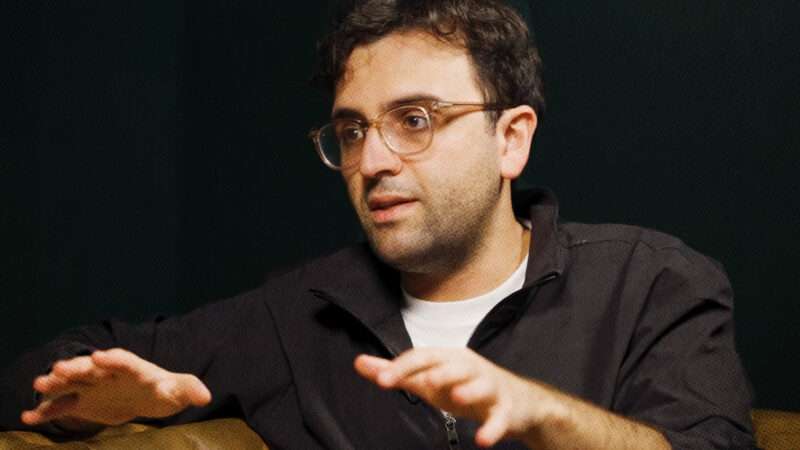
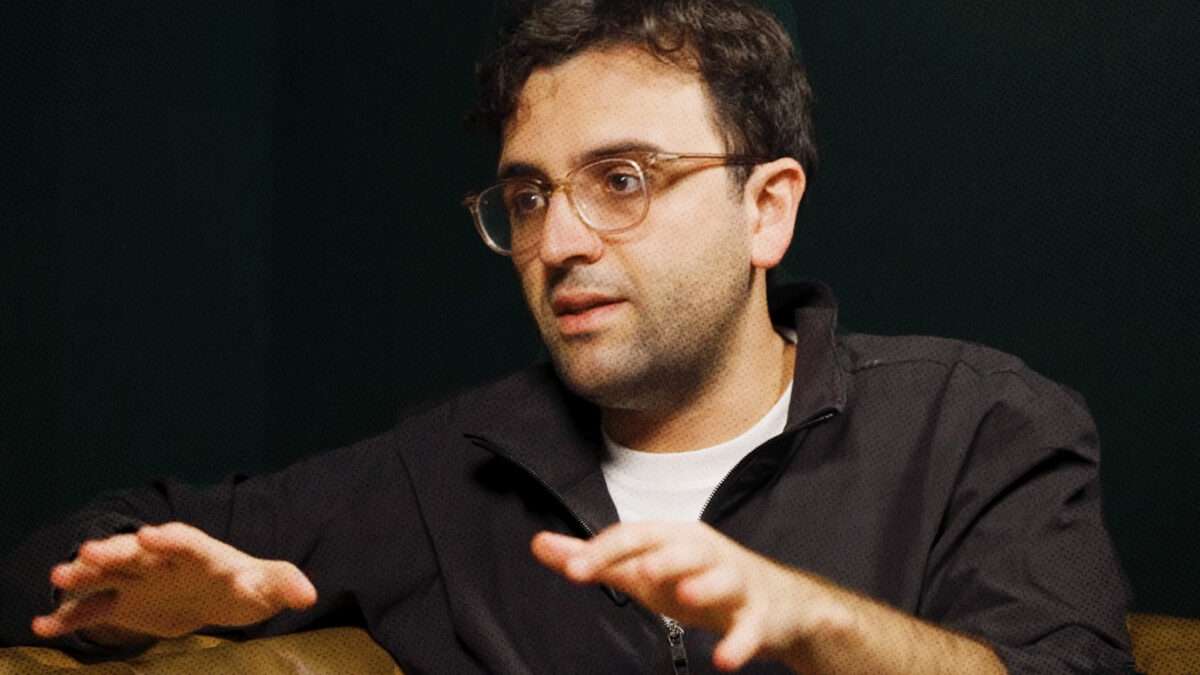
"I think capitalism is a good thing, but I think what we need to contend with and be aware of is that a lot of people are not part of it," Tarek Mansour, co-founder and CEO of prediction market platform Kalshi, recently toldReason's Nick Gillespie. "They don't feel like they're part of it. And that's a reality."
Mansour has set out to change that by making it easier for consumers to experience and participate in financial markets. Kalshi's premise is simple: Mansour says the platform matches traders with differing opinions on the outcome of future events, aggregating the "bits and pieces of information" siloed across the country, so long as that information isn't privileged or obtained illegally.
He's up against a rising number of federal and state lawmakers—not to mention the NFL, traditional sportsbooks, casinos, and other regulated gambling operations—who view Kalshi as yet another gambling app. "As of early 2026, more than 20 lawsuits and cease-and-desist actions are pending across the country, filed by state attorneys general, gaming regulators, tribal governments and private plaintiffs," according to the National Conference of State Legislatures. This includes Utah, whose attorney general, Derek Brown, escalated an ongoing legal dispute with Kalshi on Tuesday by filing a complaint against the prediction market in state district court. In his complaint, Brown called Kalshi an "unconscionable and illegal gambling operation." He accused the company of engaging in a "brazen pattern of unlawful conduct."
At the federal level, Bloomberg Lawreported last Friday that Sen. Ted Cruz (R–Texas) is preparing to introduce a bill after the midterm elections that would give state and tribal governments authority to regulate sports-related event contracts offered by prediction markets.
Cruz's state-by-state regulatory regime is exactly the kind of scheme Mansour wants lawmakers to avoid. Mansour recently toldReason that, ideally, there'd be a "federal uniform set of rules that apply across all 50 states." Those rules would then "promote and foster" a "multilateral, peer-to-peer idea," where, for example, someone in California, Oregon, or Washington could trade on an event's outcome based on information supplied by someone in Texas.
Mansour, who calls insider trading an "unfair dynamic that over time dries up liquidity," also argues that prediction markets are uniquely positioned to self-regulate because trades on Kalshi are "fully transparent," making it "easy to flag" suspicious trading patterns. The platform's users play a key role in that work. Mansour says that in February, when convicted fraudster and former Rep. George Santos (R–N.Y.) tried to engage in insider trading, Kalshi received "a hundred whistleblower complaints within a few minutes."
The company's public commitment to rooting out insider trading on its platform may be laudable. Still, it has done little to dispel the prevailing sentiment among state and federal regulators that Kalshi—and prediction market platforms writ large—is indistinguishable from traditional gambling markets.
Indeed, the legal cases against Kalshi are centered on state regulators' belief that the platforms' sports event contracts are the same as the bets offered by legal gambling operations like casinos and sportsbooks. Kalshi has argued that the U.S. Commodity Futures Trading Commission has exclusive jurisdiction to regulate the kinds of contracts it can offer under federal law, preempting states from exercising any gambling authority over prediction markets.
In March, Arizona became the first state to file criminal charges against Kalshi. Arizona Attorney General Kris Mayes accused the company of "running an illegal gambling operation and taking bets on Arizona elections, both of which violate Arizona law." Not everyone in the state shares Mayes' view. One Arizona resident, Zach, a 35-year-old man who makes a living trading sports-related event contracts on prediction markets, tells Reason he'd "move to another state" if Arizona succeeds in driving out prediction markets.
"There's nothing that is excluding other people from the profits that I'm making right now," he says. "I'm under no obligation to bet on Monday Night Football….I'm able to look at all the markets and decide which ones I want; I'm setting a limit order and just saying, 'OK, if I get my price, then hooray.' If I don't, then that's not something that I add to my portfolio."
Of course, not everyone acts as responsibly. Mansour knows that in any competition, including trading, "some people are going to win," while "some people lose." He believes in "individual freedom" and in the idea that "people should be able to choose" which financial markets they engage in, with "some regulations on irresponsible use" so that companies can't target people who exhibit addictive or destructive betting patterns.
The degree to which Kalshi and other prediction market platforms should be regulated will likely be a high priority for federal lawmakers after the midterm elections and in the next Congress. Mansour appears optimistic that there's enough bipartisan support for what he calls "sensible guardrails." He says there's a "big group" on both sides of the aisle that's "actually pro" prediction market platforms. There's reason to be skeptical of Mansour's claim, given that several members of Congress—such as Sen. Elizabeth Warren (D–Mass.), the ranking Democrat on the Senate Banking Committee—have said prediction markets need to be reined in.
In Mayes' case, her antipathy toward prediction markets might cost her at least one vote in Arizona's attorney general race. Zach says that with Mayes waging a legal battle against Kalshi, he'd have to take that into account "hypothetically, if someone knocked on my door tonight and they want me to vote for Kris Mayes to be reelected."
"If I'm not gonna vote on my own behalf, then who is, right?" he says. (Mayes might not be a fan of Kalshi, but with the platform's penchant for accurately predicting election winners, she can take solace in her current trading position, which shows an 84 percent chance she retains her position.)
Mansour says he's a "free market guy" who wants everyone to "have a shot in the competition." To succeed, he'll have to withstand a host of paternalistic government officials hell-bent on controlling financial decisions made by consenting adults.
Of all the arguments for protectionism, the infant industry argument probably has the strongest theoretical appeal. By protecting a new industry from its more developed foreign competition, the story goes, tariffs give domestic producers the time to grow, learn, and become efficient enough to stand on their own. Domestic consumers feel the short-term pains of higher prices, but they enjoy the long-term gains of job growth and lower prices as the new industry blossoms.
It's no secret that tariffs have driven significant price increases over the last year and a half. A study from the New York Federal Reserve finds that tariffs "contributed 2.9 percentage points to goods price inflation" and that without tariffs those prices would have slightly declined. Tariff defenders, looking for a new reason to claim these higher prices are only temporary, have reimagined the infant industry argument. Now it's being used to support trade barriers in industries that are over a century old, but the promise is exactly the same: Domestic firms need the protection so they can compete, innovate, and cut costs until prices come back down even further than they were before the tariffs.
Michael Brendan Dougherty recently made such an argument in National Review, arguing that "tariffs can, over time, bring prices below where they started." When economist Don Boudreaux called the argument "bizarre," Dougherty replied that critics had failed to acknowledge the dynamic process by which markets respond to tariffs "by adapting and cutting costs." Although he is light on specific details, he posits that the changed incentives of a "paradigm shift" in tariff policy will spur domestic competition, leading to the theorized price reduction. Of course, firms would still respond to the dynamic processes of domestic competition without a tariff wall, but the point stands.
From there, the reworked infant industry argument becomes the standard version advanced more than two centuries ago by Alexander Hamilton and his disciple Friedrich List. When Hamilton made this claim in 1791, his argument may have seemed suitable for a new nation seeking to firm up its economy and security against established European powers.
Others at the time pointed out that special interest groups—a manifestation of the "violence of faction" so thoroughly dissected in theFederalist Papers—had already begun to coalesce around the fledgling iron industry in Pennsylvania, clamoring for protective tariffs. Two years earlier, James Madison had warned about a "premature policy of stimulating manufactures" driving tariffs too high. In the end, Hamilton recommended and Congress enacted a far more moderate tariff schedule than his theoretical musings portended. American iron manufacturers received a consolation prize of a higher tariff on their competitors than the rate for most general imports. Hamiltonians have been touting the infant industry argument ever since.
Nearly 250 years later, those same infants apparently have yet to advance into adulthood. Steel, the direct successor to the founding-era iron manufacturers, remains a singular focus of President Donald Trump's protectionist tariff policies, just as it was under former President Joe Biden. And former President George W. Bush before him. Indeed, steel has been a recurring beneficiary of protectionism for most of America's existence.
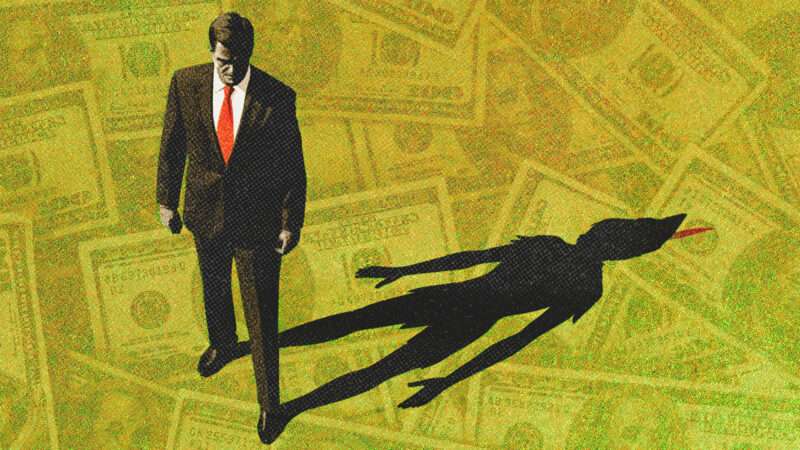
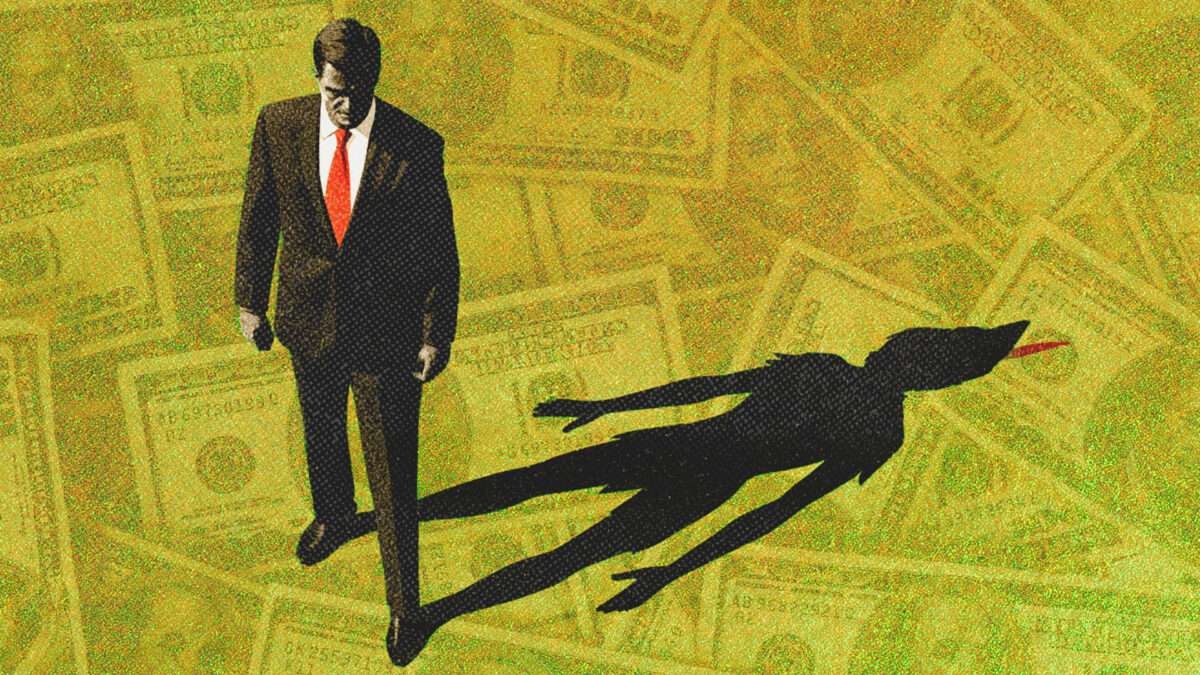
This extended period of protectionist infancy suggests that the argument needs a new name. We propose the "Peter Pan industry argument" for companies that never grow up because tariffs make sure they never have to.
The question tariff advocates rarely ask is: Why do some American producers have higher costs than foreign rivals even in the face of lower-cost foreign competition? The answer comes down to specific rules and choices within particular firms and industries. Tariffs, and protectionism in general, address none of these. No industry illustrates this like steel, but it is far from the only one.
In 1947, United Steelworkers won a contract provision known as Section 2-B. Among other things, this barred mill managers from changing established work practices unless new technology required it. Steel companies tried to get rid of this in 1959, finding it difficult (given union incentives) to establish that technology required change. In response, 500,000 steelworkers went on strike for 116 days. This strike sent buyers abroad, causing 1959 to be the first year the U.S. imported more steel than it exported. One of the then-new technologies that was delayed was basic oxygen furnaces, which could produce steel far faster and cheaper than the open-hearth furnaces that were so common. In 1965, only about 17 percent of steel made in the U.S. was made using the basic oxygen furnace. Japan produced 55 percent of its steel with this faster, more efficient method.
Change finally came from a steel customer. Vulcraft, a maker of steel joists, grew tired of paying Big Steel's prices and waiting for Big Steel's deliveries. In 1969, free from steel unions and preconceived notions, the company looked for new steel-producing technologies and found the answer in the electric arc furnaces that had been adopted in much of the world throughout the 1950s and '60s. Vulcraft's parent company later renamed itself Nucor, and minimills like the ones it pioneered now make most of America's steel.
So the modern steel industry was built by a frustrated steel buyer who found a way around protected companies. In other words, the U.S. steel industry has lagged behind the technologies found around the world.
We could go on, but the broad point here is that the "relatively higher domestic production costs that made the tariff 'necessary' in the first place," as one critic put it, are often the result of preventing competition in the first place. It's odd to suggest that further preventing competition through tariffs will somehow alleviate the ills of already-prevented competition.
Tariff advocates fail to acknowledge that the ability to import steel also comes with the benefit of access to cheaper steel for steel-using industries, such as manufacturing. A 50 percent tariff on steel further closes the release valve that imported steel offers. Buyers of steel are then left to purchase more of the more expensive domestic steel. Because new steel mills take years to bring online, this causes delays and longer delivery times for manufacturers.
We don't have to wonder what happens when a country lowers its tariffs on materials used by manufacturers. India did this in the '90s, and researchers found that newly available inputs accounted for 31 percent of the new products that Indian manufacturers introduced. And what happens when the U.S. imposes tariffs on steel? Downstream U.S. firms become less competitive. This is why American businesses clamor for exemptions to tariffs, especially for tariffs on materials like steel.
Perhaps all this could be forgiven if tariffs advanced national security concerns, as tariff advocates assert. They point out that an adversarial nation could cut off supplies of critical materials during wartime and cripple America's ability to defend itself. Unfortunately, tariffs fail there too.
First, this conflates production with access. While domestic production does ensure domestic access, access can be secured without production. In the case of steel, the Commerce Department reports that in 2025, the U.S. imported steel from 79 countries, with Canada being our top foreign supplier. The top 10 sources of steel are responsible for 77.8 percent of America's steel imports. None of those countries were considered adversaries—at least not until the tariff crusades pushed these friends away. What's more, according to the American Iron and Steel Institute, only 23 percent of finished steel in the U.S. was imported in 2024. Far from being exposed to foreign states' whims, American access to steel is incredibly resilient.
Second, this view ignores the positive effects of trade and globalization on national security. The Center for Strategic & International Studies finds that increased trade between countries reduces the likelihood that they'll go to war against one another. Globalization helps ensure that domestic access continues unabated should war break out, thanks to the diversity of trading partners.
When Hamilton made the infant industry argument, he at least assured us that the industry would at some point advance to adulthood and stand on its own. Steel, like so many other Peter Pan industries, has proven Madison right. These industries have refused to grow up, and it's time to stop pretending that tariffs will fix that.
Last week, New York state summoned me to jury duty.
I went, of course. It's the law, and my duty.
A jury may protect the innocent from government abuse. Ordinary citizens, not officials, decide if you are guilty.
But doing our patriotic duty shouldn't mean surrendering hours of our lives to bureaucratic indifference. Serving justice is important. Sitting around doing nothing isn't.
During my 50 years consumer reporting, I've watched greedy capitalists constantly make improvements and find better ways to do things. They use computers, adjust hours, reduce wait times.
If they don't, we consumers quickly switch to competitors who will.
But government bureaucracies—courts, the DMV, the passport office—have no competitors. So they don't try very hard.
Government is force.
My summons arrived on paper, in the mail.
Most businesses now communicate with customers instantly, by text or email. Airlines send boarding passes to our phones. Doctors text reminders. Restaurants send notifications when our table is ready.
But government sends paper.
We summoned jurors meekly arrive at the courthouse and wait. And wait.
I'm old; it's important I hydrate. At least government provides a water cooler and a drinking fountain. Oh, damn, neither works.
We sit another hour.
Eventually, a bored clerk drones through long instructions on how fill out a form. Printed instructions would be better—a video would be much better. But this is government, and government bureaucracies have little incentive to innovate.
Finally, clerks choose 80 of us to be considered for a criminal trial. "Wait in the hall," we're told.
We wait.
Then they tell us, "Go across the street to another building, and wait there."
We go.
After an hour, we're admitted into a courtroom, where another bureaucrat tells us, "Come back Monday."
Monday! This was the Thursday before. Imagine an airline telling 80 passengers, "Welcome to the airport. Your flight is in five days. Come back then."
No airline would survive doing that.
But courts don't have competition.
When court finally starts, a stenographer types away, recording what people say. Computers today transcribe speech instantly, accurately, at almost no cost. But New York taxpayers still pay someone to type every word.
Amazon experiments with faster delivery. Supermarkets install self-checkout machines. Banks let us deposit checks just by photographing them with our phones.
Capitalism protects your time while bureaucrats waste it.
Nobel Prize-winning economist Milton Friedman explained why by pointing out there are four ways to spend money:
No. 1: Spend your money on yourself. Then you're very careful about both cost and quality.
No. 2: Spend your own money on someone else. You're careful about the cost, but don't care as much about the quality.
No. 3: Spend someone else's money on yourself. You care less about cost, but still care about quality.
No. 4: Spend someone else's money on someone else. You don't care about cost OR quality.
That's what government does.
Some court workers work hard, and many want to help people. But they're stuck in a system where saving people's time brings them no rewards.
In my case, 80 prospective jurors sat around for at least six hours, just waiting—that's 12 40-hour work weeks lost. Some had to hire babysitters, reschedule doctor's appointments, tell their bosses they'll try to make up the work at night. Some lost income. Some missed opportunities.
For just one case. Multiply that by thousands of cases: countless hours of human progress vanish.
Why not stagger arrival times? Let jurors wait at home until needed? Use text messages to call people in?
Because innovation takes effort. So courts don't bother.
They act as if wasting our time is free. It's not.
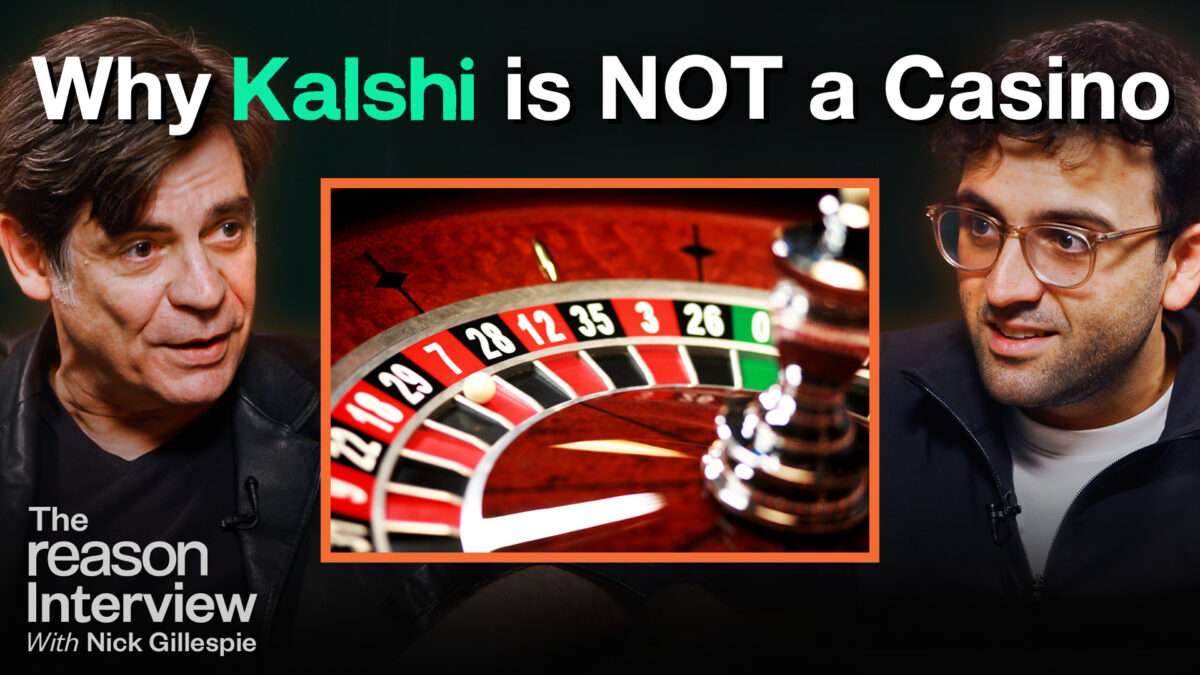
Today's guest is Tarek Mansour, the 30-year-old billionaire co-founder and CEO of Kalshi, the prediction market platform where users can trade on the outcomes of everything from elections and economic forecasts to sporting events and the weather. As prediction markets surge in popularity, Kalshi is facing legal challenges from states that argue it's operating an illegal gambling business. But Mansour insists that prediction markets are fundamentally different from casinos and sportsbooks and that efforts to restrict them threaten a powerful new source of information about the future.
Nick Gillespie talks with Mansour about Kalshi's battles with state regulators, why he believes the gambling industry is trying to stifle competition, and how prediction markets can help businesses manage risk. Mansour explains why ordinary people can sometimes forecast economic trends more accurately than Wall Street professionals. They also discuss Mansour's journey from growing up in Lebanon to building a multibillion-dollar American company and his concerns about rising inequality and the declining enthusiasm for entrepreneurship. Mansour argues that capitalism needs to give more Americans a stake in its success without sacrificing the innovation that makes it possible.
0:00—How prediction markets differ from casinos
4:55—Do prediction markets serve a public good?
8:18—Markets, price discovery, and the economy
11:36—Why does Kalshi ban insider trading?
14:06—CFTC and federal regulation
17:26—How Kalshi differs from Polymarket
22:30—Do prediction markets have a corrosive effect?
25:03—Kalshi's ban on athlete harassment
26:49—Arizona and New York lawsuits
31:30—State versus federal regulation
33:45—Why is Kalshi exploding in popularity?
35:57—Mansour's background and the American Dream
39:55—Wealth gap narratives and an inclusive economy
42:39—Will a Democratic Congress hurt Kalshi?
45:17—Mansour's prediction for Kalshi
47:48—Will state lawsuits require a Supreme Court decision?
This is an AI-generated transcript. Check all quotes against the audio for accuracy.
Nick Gillespie: This is The Reason Interview With Nick Gillespie. I'm talking today with Tarek Mansour. He's the co-founder of Kalshi, the prediction market platform that allows people to win or lose money, or invest or not money, on everything from election results to weather outcomes to who will win Dancing With the Stars and, of course, all sorts of sports. Thank you so much, Tarek.
Tarek Mansour: I'm excited.
You're 30 years old, you're a billionaire, and you are a big believer in prediction markets as truth machines. I want to talk about that in a minute. But first, Kalshi gives money to a lot of nonprofits, including Reason Foundation, the nonprofit that publishes this podcast. There are no conditions on this interview.
Tell me first, what is a prediction market, in the simplest terms possible, and why is it different than a sportsbook?
I think a prediction market, in the simplest terms possible, it really is like the stock market. We're matching buyers and sellers in an open marketplace that is competitive. The thing that they're trading is not a small, specific subset that Johnny Wall Street cares about, whether it's a stock or a bond or a credit default swap or all these kinds of sophisticated things. It's simple questions about the future.
Right. So everything is yes or no?
And some things are actually more like, is it going to go up or down? And there are more structures now. But I think a prediction market is just a generalization of the stock market. One way to think about the stock market is actually a prediction market on the prices of stocks on companies.
And you make money not on whether or not you bet right or wrong. You're not the house. You run the platform, so it's like you own the casino. And you're not staking anything…
No, it's exactly the opposite. We're exactly like owning the stock market. We're like the New York Stock Exchange, right? The New York Stock Exchange is not in the business of pricing a stock or setting the prices. They're in the business of matching buyers and sellers.
And so you may have an opinion that something's going to happen, and somebody else may think that something is not going to happen. And we match the two of you to settle that disagreement of opinion via trade.
Historically, that's about stocks. Someone thinks Apple stock is going to be worth more than the current price, more than $100 per share, and someone thinks it's not actually going to be, that it's overpriced. They make a trade as a way to settle that difference of opinion.
The difference in a prediction market is you're doing it on whether Brexit is going to happen or not. And you may think that it's very likely that Brexit happens, and someone else, your counterparty, may think that it's not very likely it's going to happen.
And let's say the market right now is trading at a 40 percent chance, 40 cents on the dollar. You may want to buy, and the other person wants to sell, and we match the two of you. And I take 0.7 percent. So if you put in $100, the other person puts in $100, I take 70 cents.
And now, very quickly, explain why that's different from a sportsbook, like why you're not Fanduel….
Here's how I'll explain it, and I'll get back to exactly the sportsbook analogy.
So when the first version of financial markets came around, and very few people know this, people think that the first financial market was the stock market, but actually it wasn't. It was the commodities market.
The first real example of a financial market was the rice futures exchange in Japan. And then in the U.S., it's really become very popular at the end of the 19th century. It was farmers, they were trading on the price of grain using grain futures, and then over time, it evolved to oil futures, etc.
And at the time, it was really interesting because when I tell you about grain futures right now, you don't think gambling. You think boring, mainstream financial markets.
But at the time, the states were suing the Chicago Board of Trade, saying this is gambling. And what was the claim? It was saying, "Well, farmers are betting on the price of grain. They're speculating, and so it looks and feels like gambling. What's the difference?"
And at the time, they didn't have sportsbooks or casinos. They had the bucket shops, which were different from the Chicago Board of Trade.
So what were the bucket shops? A bucket shop was a place where the shop, which was functioning like a casino, set the prices. They would say, here's the price of grain, and here's what I'll let you buy, and here's what I'll let you sell.
And then the purpose was basically, it was a casino. Farmers would come in, bet against the bucket shop, and then they would lose money. And if you made a little bit, if you were a smart, sophisticated trader, they would ban you. You know, the card counters get banned from the casinos.
It continues to happen on sports betting.
In sportsbetting or casinos, right? Like, if you're a smart, sharp trader, you get limited. And if you maybe have some addiction issues or you lose consistently, you get promos, and you keep coming back. That is the gambling business model. That is the end.
And when people were claiming that the exchange was gambling, at the time, the Supreme Court ruled in favor of the Chicago Board of Trade.
And the basis was very simple. It's like, yes, some people are speculating, which looks and feels like betting, sure. But the mechanism is different, and there's a public good that comes out of it.
The mechanism is a free, neutral platform that lets people trade against each other. And what it needs and incentivizes, it incentivizes the card counters, the smart traders, because the public good that it brings is the informational knowledge that it gives to people.
Talk a bit about this, because this is key to your argument, and we'll get into the regulatory structures and the cases against you, but that prediction markets serve a public good because they give more information about what is likely to happen or how actors are going about their business. How does that happen?
In particular, at a place like Kalshi, you can bet on whether it's going to rain tomorrow or how much. How does that in any way create information that is useful?
Yep. So our weather forecast, so when people are trading on whether it's going to rain tomorrow or not, what happens is you get price discovery.
Some people think the odds of rain are a little bit higher than the market, so they buy it, which moves it a little up. And then some people think it's lower, and it moves it a little down. And that continuous thing is how a stock moves. That's why we call it price discovery.
Price discovery is essentially, there's a quote from a Supreme Court decision in 1905. It's really neat. It's like this idea that speculation is the self-adjustment of society to the probable.
Which is like it's the self-adjustment of the market, the wisdom of the crowds, to what we think is going to happen.
There were papers actually a week or two ago that compared our weather forecast, like the forecast from the prediction markets on the weather, to the most accurate national blended average of weather station forecasts, and we were 10 percent more accurate.
I mean, just very quickly, how does that happen? Because Joe Schmo betting on the weather, he doesn't have satellite information.
So let me give you a little bit of history.
Prediction markets, I think the founder of prediction markets is Friedrich Hayek, the economist. He used to call them information markets, not prediction markets.
And what was the sort of central thesis? At the time, he was saying we have a knowledge problem. The knowledge problem is that our decisions in society, whether it's D.C., whether it's executives, are centralized.
It's you and I sitting in a room and making a very critical decision about the future of the country. But the information that's relevant to that decision is actually very decentralized. It's sitting with a bunch of different people, hundreds of thousands, millions of people distributed across the board.
So we need a magnet. We need the mechanism to bring that information from everyone so we can make better decisions over time.
That's what markets do.
That's exactly what markets do. Market prices are a very good aggregator of information.
Ok, so then the idea is that somehow the people who are betting on the weather have some kind of meaningful knowledge that otherwise would not be—
And by the way, people are not even usually, for example, for the Senate race right now, they don't buy Democrat or Republican and then hold it till maturity. They buy if they think the price is underpriced, and they sell if it's overpriced. They're constantly trading these things.
But the key thing here, when I started the company in 2018, a few years before that, Philip Tetlock did…
At the University of Pennsylvania.
He's actually at MIT.
Oh, I'm sorry. Ok.
And it's about superforecasters. And the whole thing, he was trying to figure out the science of forecasting. What are these people who are good at forecasting?
And he pitted a bunch of elites on geopolitics, the big pundits, and he pit them against a bunch of random dudes, basically, and had them predict geopolitical events. And guess which group did better? The random dudes.
And it was amazing because it tells you a little bit that actually there is a lot of wisdom in this idea of the wisdom of the crowds. The average people, if you add them all up, and all their bits and pieces of information, you end up getting a way better solution and result than the small group of elites.
And this gets reflected, I mean, the way Hayek talks about it in "The Use of Knowledge in Society" and throughout all Austrian school of economics, is markets and prices are discovery systems that transmit information.
That's exactly what it is.
And prediction markets are like transmitting information about a much broader… We used to care about— farmers used to care about what the price of grain is going to be. Why?
And I go back to the farmer. Imagine we had banned grain futures as gambling at the time. There's a very clear net impact on society today, which would be what? Why would it be important?
That price discovery that was happening was giving the farmer predictability on what the price is going to be of grain in September. So now I'm in March, I know how much I can invest, how much I can plant.
If you take that away from them, what would they do? They would plant less. They would just, because with less predictability, you can invest less. And so actually, our food supply would go down. That's how critical grain futures are.
So that makes total sense. And then just to press on this a little bit, as a libertarian, I like markets and everything. I like prediction markets, etc. But what is the positive social externality, other than people being able to express themselves or entertain themselves, with like betting on Dancing With the Stars?
Well, I think to me, some people may disagree on the lines, but a lot of people care about that. And I'll give you a lot of examples.
At a high level, it seems like we agree with the premise that getting smarter, even if it's a little smarter, about what's going to happen will enable us to make better decisions and allocate resources more effectively and manage risk more effectively, right?
Now, what's interesting is actually I always think of this as like, you want more markets on more things because like—
It's more information.
It's more information. It's just that simple.
And I'll give you an example. This was the same argument that was made. So there were two types of commodity derivatives that were banned. Onion futures, which I can tell you the story, there was a wild story.
The second one is box office futures. Box office futures, in 2010, there was an exchange that was trying to bring them to light, which is an idea to do price discovery on how successful a movie is going to be beforehand.
Guess who killed it?
I'm assuming the movie companies.
The big ones. Why? Because they wanted less information. And the argument was at the time, well, it's frivolous. What is the purpose of knowing if a movie is going to be successful? It's a frivolous thing…
And this is called a Keynesian beauty contest or something, where you're betting on what you think other people will say is going to happen or something.
Yeah, I mean, but in this specific one, it's more like they were saying, "Look, knowing if this movie is going to be successful or not, that seems frivolous. It's not like grain futures. We should ban it."
But they actually had an ulterior motive, and there's a reason they did not want price discovery, for two reasons.
Because one, if the market can predict ahead of time how successful a movie is going to be, it'll be harder for them to juice the three or four weeks of box office they get in a bad movie before the word gets out. And there was a second reason. If you have a market that will tell you upfront, actually, "This team is doing a good job, even though it's a small team with a smaller brand," you may attract more investment to the smaller studios, which was going to bring more competition to the space. You will get more efficient….
I mean, markets are democratizing, ultimately, or they push against centralization.
More information is always better, and oftentimes monopolies and incumbents want less information because, you know, the markets usually reduce…
Well now let me… I want to get to the regulatory structure you're currently under, plus what various states are trying to fit you into, a different kind of regulatory structure. But just on this moment, let's stop for a second.
If more information is always better, why do you ban insider trading? Because there is an argument that insider trading is absolutely the best information, and it changes prices very quickly and makes markets clear more—
And libertarians, that's the argument, and the free market side of me always tells you that you want more. You want as much as possible.
And you want, like, when Practical Magic 2 is coming out, you want people in the studio who have seen it, who know it sucks, to change, you know, to…
I would argue yes, in theory. I'll say where in practice.
But maybe right before, I want to just make, because you asked me about the gambling distinction, which we'll get to with insider trading.
The gambling business model is one where the thing they incentivize for their customers is fun and entertainment and to keep losing. That's why they give you the suites and the drinks, and they keep you losing.
Prediction markets, what they incentivize is going out there, like markets, seek knowledge, seek truth, and then come to get rewarded for it in the open market. That is why there is a fundamental difference.
And it doesn't matter what the topic is. It could be grain futures. It could be weather. It could be economics. It could be sports. It doesn't really matter. The structure, the former structure, is what really matters.
Now, on the other argument, I agree with you. It's like, well, the insiders, should they be allowed to trade? And the way I always answer the question is, why is insider trading banned in the stock market? Because in theory, we would get more accurate prices in the stock market.
And there's a very practical reason, and this is how markets should be regulated. And I strongly believe that. That's why we took a pro-regulatory-first approach to this.
Because markets can only exist if there are fair rules of the road and the competition is fair and equitable across all the participants. So I think actually…
And people need to believe that the market are not…
Otherwise, they stop trading.
Free markets, in my view, if you take the opposite of free markets, it's this idea that there's a privileged, closed circle that has access to specialized information. Right? And the key thing in the line I was drawing is, if the information is something you can access by doing research and work and putting in the effort, no matter who you are, then it's fair game.
But if it's information that you only will have privileged access to because, I don't know, you work in government or you're an executive at a team, then it's unfair. Then it creates an unfair dynamic that over time dries up liquidity and makes actually the market less efficient because nobody will trade. People won't trade.
So this helps explain, you noted you co-founded Kalshi in 2018. You went to the Commodity Futures Trading Commission to get licensed and regulated at the federal level. So when people say, "Oh, you guys are completely unregulated," that isn't accurate. But you're…
It's completely inaccurate.
Yeah. How does the CFTC regulate what you do? And then we'll get into how and why states might be trying to change that.
Yeah, I mean, I think they're two entirely different… There's a reason why the states are trying to change that, and we'll talk about that. It's fundamental protectionism.
So the beauty of the Commodity Exchange Act, why did it come? It actually got created after this whole fight that the Chicago Board of Trade was having with the states. And Congress, in '74, enacted the Commodity Exchange Act to actually preempt two types of laws: state insurance laws and state gaming laws.
And there's a reason why. Because on an open exchange, in grain futures or on Kalshi, there are two types of activity: speculation, which looks and feels like gambling, or hedging, which looks and feels like insurance.
The difference between those two is they're being done on an open market.
And why do you need the federal statute? Why didn't they let the Chicago Board of Trade be done state by state? It's because it didn't work. And here's the easiest way to explain it. Imagine we siloed the New York Stock Exchange, the stock market, state by state, where in New York, you can only buy Apple stock from New Yorkers.
Imagine we had 50 different New York stock exchanges, different prices, different rules, fragmented liquidity.
What would happen? Worse prices, a bunch of deadweight loss, lower liquidity. You probably won't be able to, if you're in Kansas, you won't be able to buy as much stock as you want.
It is a completely anti-market kind of structure.
What you want is a federal, uniform set of rules that apply across all 50 states that promote and foster this sort of multilateral, peer-to-peer idea. Someone in California is trading with someone in Texas, and you want as much information as possible. You don't want to silo information. That's the anti-market view.
And what does regulation mean, and why is it important for us, first, for us to really get regulated as commodities? It's because the rules that apply to trading on oil futures or interest rate swaps or politics on Kalshi are largely the same.
So what do you want to prevent against? You want to prevent against insider trading, prevent against market manipulation, so doing things that move the market price unnaturally for profit. You want to add sensible guardrails around knowing who your customers are and money laundering and that sort of thing.
And I believe in this, and I think this is where the regulation is very important. It's like all these products, whether it's grain futures or sports betting or prediction markets or trading options on Robinhood, most of the use is fine.
And it's not about people winning or losing. I think the competition, some people are going to win, some people lose.
But there's some degree of irresponsible use. I do believe in that. And I believe in individual freedom. People should be able to choose, but I think there should be some regulations on irresponsible use so that companies are not targeting those types of behavior.
The sportsbooks constantly target those types of…
Yeah, so let's just, real quickly, how do you guard against insider trading? I mean, you ban it, but how do you know whether insider trading is happening? How do you know whether or not somebody who has a problem is continuing to use Kalshi? How do you find out?
Yeah, so insider trading, I mean, it's the ever question for a stock market. How do you know? And it's largely a very similar mechanism.
So one, you have to verify all customers. It's like onboarding onto Schwab, opening a brokerage account. You have to…
Are you covered by know-your-customer rules?
Yeah, yeah, yeah. As a regulator.
And that is distinct from something like Polymarket, which is based offshore, and they're struggling with the idea that there may have been a member of the U.S. military who bet on Maduro being removed because he was part of the operation, which is kind of a classic case of insider trading.
It certainly is insider trading, for sure.
Because insider trading is like, are you trading on material nonpublic information? So do you have a piece of information that you're not supposed to disclose legally? And trading is a form of disclosure. You can't go say it, so you…
Ok, so you follow KYC, but then, yeah, and then how? So how do you…?
And then you have the same systems as the New York Stock Exchange, which basically flag suspicious patterns.
I mean, insider trading or market manipulation, the patterns are always weird. You always have an account that is trading hundreds of dollars, and now they're trading thousands of dollars all of a sudden on an asymmetric shot. What's happening, right?
And the last piece is you enforce. So when you find someone, we have, as a self-regulatory organization, we can impose fines all the way to referrals for criminal prosecution.
And the last piece that's so interesting about the prediction market, so I think it's even unique compared to some of the financial markets, all of our trades are public. It's all fully transparent.
So our customers, because why is insider trading bad? There's someone who gets harmed when someone commits insider trading. It's the person on the other side. That person is extremely incentivized to whistleblow, usually.
And so, George Santos basically tried to commit insider trading on Kalshi a few months ago. We had 100 whistleblower complaints within a few minutes because traders immediately tell us, "Oh, this is weird," and they can all see it publicly.
And that's actually kind of a curse because the press talks about insider trading cases on prediction markets all day because they're so easy to flag.
That's actually a blessing, if you really think about it, because it's so obvious. It's so clear.
So let's talk about…
You're committing a crime in broad daylight, right?
Yeah. So the state of Arizona, I mean, there's about 20 jurisdictions, I guess states, also some Indian tribes and things like that, that are bringing suits against Kalshi.
Arizona, earlier this year, launched a criminal indictment that you're running an illegal gambling operation. New York state, we're talking in New York, and you guys are headquartered in New York, right? It's saying that you are basically, I guess it's not a criminal indictment, but they think you owe them billions of dollars because you're essentially a gambling operation.
What do they get wrong? And what do they get wrong about your structure?
I mean, let me read to you something that I've sort of been looking at recently that I've been sort of really into.
I'll read you one of the court opinions, and here's how it sort of goes:
"We are clearly of opinion that dealing in these markets is void by the common law, for, among other reasons, that it is contrary to public policy. It is not only contrary to public policy, but it is a crime. A crime against the state, a crime against the general welfare and happiness of the people, a crime of religion and morality, and a crime against all legitimate trade and business. This species of gambling has become emphatically and pre-eminently the national sin. In its proportion and extent, it is immeasurable."
And they go on and on about how horrible this activity is.
This is the Illinois Supreme Court. It is from actually 1888. And it's about grain futures, not prediction markets.
And I think the same thing is playing out.
And is this simply, I mean…
It really is as simple because we have the same structure.
And the topic never mattered under the federal law. But states misunderstood it, and they just looked at grain futures at the time as like… Because people don't understand markets. Markets have always been something that people…
They're counterintuitive.
And I always think, imagine we had banned grain futures back in the day. We would have ruinous consequences. It's today one of the bedrocks of the U.S. economy. We would not be able to function without grain futures.
And everybody benefits. I mean, there are individual winners and losers, but you get a more stable supply of food, better planting, better forecasting.
I think about 100 years from now, when there's going to be the next generation of entrepreneurs coming around and expanding the universe, they're going to be looking at this and thinking, "Imagine we didn't have a good gauge on where elections are going to land, on where geopolitics are going, the weather, the climate, the hurricanes."
And you're starting to see today, our fastest-growing segment is actually businesses hedging on Kalshi.
How do they do that?
You can take a position because you want to make money, speculate, but a lot of people take positions because they want to reduce their risk toward an event.
So the same way that grain farmers would short the price of grain so that if the price of grain goes down in six months, they would offset their revenue loss, we see a lot of businesses do the same.
So one example, we have now hundreds of businesses that do the same, it's like sports bars hedge against their home team losing every game.
Why? Because if the team wins tonight, I will make $2,000 in revenue. If it loses, I'll make $800 in sales. And my cost is the same because I have to stock up on inventory. So it's $1,200, $1,200 no matter what.
So when the Knicks win tonight, I make $800. The Knicks lose tonight, I lose $400.
Unpredictability like that is very bad for small businesses. So they buy no on the Knicks. So they short the Knicks winning in a way that essentially compensates their P&L so they're up $300 no matter what.
And why is that important? Because predictability, it's a bit like how the airlines hedge their price fluctuations, predictability helps with investment, helps them make their decisions.
Quick question before we get to why the states are bringing these suits the way they are. Does the financialization, or does the prediction marketizing of everything, does that have a corrosive effect, say, on sports?
In leagues, and this goes back to the 1919 World Series in Chicago, the Chicago White Sox famously had some players who threw it. But when everything is being bet on, everything is being speculated, does that end up undermining something fundamental?
So one, it shouldn't be everything. Two, I just want to be clear, we are not adding anything to sports. Sportsbooks have existed, like DraftKings and FanDuel, and if you see all the cases of players doing bad things, they're actually on the sportsbooks.
Can I ask what percentage of your revenue, or…?
I mean, it's like 65, 70 percent now, but it's going down. So it was 96 percent nine months ago. So it's going down very quickly because sports is a great way to educate people about probability. They get it. It'sMoneyball. Our customer is the Moneyball type.
And then over time, they do politics and economics, and everything else is growing.
But I want to make a key point about this, which is very important. The notion that prediction markets all of a sudden now allow people to bet or trade on sports, it exists already. The question is, do you prefer it in an open and fair marketplace where everything is transparent, or do you prefer it in a closed marketplace where everything is opaque? That is the question.
And then I'm a pro-regulation guy, so I think there's war, terrorism, assassination, violence, wildfires, things that create moral hazards, that should not be traded on. We should not have markets on those things because the incentive is, it's too easy to go and create a fire.
But we also, as a market, we don't go… Most of the issues that you see is things…So we have standards that are more strict than the states' gambling rules around things not being very easily manipulated in the Commodity Exchange Act.
So we don't, for example, do markets on whether the next play is going to be a ball or a strike. The sportsbooks do these, and that's actually the vast majority of cheating cases, etc.
And that's also why we believe that regulation is very important, because when you set the right guardrails on what markets should be in, what markets should not be in, and how do you police those types of activities, and when you find someone that does it, how do you punish them very heavily? The last thing I'll say is we actually ban athletes from trading on anything that relates to their leagues.
I'm sorry, anything at all, or just on…?
Anything in their leagues. Yeah, the same way we ban politicians or members of Congress from trading on things that relate to Congress.
Yeah.
All of that goes into our…
That's like the only place where Congressmen can't bet on what they're about to legislate.
They can do it on the stock market, but not on Kalshi.
Kalshi was a sponsor of the U.S. Open, which is kind of interesting, and there's a growing acceptability.
And the NHL and MLB, and you're going to see a lot of other leagues.
But you've also recently you said that you are going to limit people who are abusive toward sports figures.
Yes.
Explain that, because now are you saying, as a condition of entering contracts on Kalshi, you're going to limit the speech of people? Or how does that work?
That's a great question. I mean, look, I think there are certain bad cases where, and by the way, it's not just about sports. It exists in really anything.
But I think the idea that someone… We always want to be careful about regulating the bad behaviors out of the system. And I believe that. I'm a very free markets guy, but I do believe in sensible guardrails. I do. And we may disagree on that point.
My view is the highway should be wide enough for people to compete and thrive and do all the great things you're going to do. You have to have a fence at the end of the highway to make sure people are not driving themselves off the cliff.
And I think it needs to be very delicate and needs to be very careful. You don't want to make the highway one car at a time because that's terrible. And so in this specific case, you have issues sometimes where people get over their skis and they go and harass…
Yeah, I mean, if you lose $2,000 or $10,000 or $200 because somebody dumps the fifth set at the U.S. Open, you're probably going to yell at the person who lost.
Yeah, yelling is one thing. Harassing and following them online and doing all the weird stuff that sometimes… And by the way, we haven't seen any evidence of that happening on Kalshi. That has historically happened on the online sportsbooks and some of the other mechanisms. I just want to be ahead of it. I don't like that idea.
Ok, so then here, is there any… When the state of Arizona says, "Ok, you're like a gambling operation, you're like the Mafia coming in and you're running this billions of dollars," New York is doing something similar.
In New York state, I think on a typical sportsbook, they take 51 percent of gross revenue. They make a lot of money by taxing and regulating this, and obviously they want money from you. Is there any other reason that they're doing this?
The casino lobby. I mean, the casino lobby is… The foundational thing is a few things.
So when an incumbent gets threatened competitively from a challenger, what does the incumbent usually do?
Go to the government.
It's litigate, then legislate, and then finally, when you realize that this is here to stay, you innovate, right? That's the basic 101. It's always been par for the course.
And why? Because incumbents, inevitably, when you get big enough, you want less competition. That's what you really want. And that's what's been playing out here.
And by the way, it's not just about sports. We launched perpetual futures recently, and CME, the Chicago Mercantile Exchange, the Board of Trade, sued us over it.
And usually the policy argument is never, "I'm losing some revenue due to competition." It's like you come up with a bunch of reasons, like, "Oh, it's too risky. It's too whatever," so they can get policymakers riled up.
And they usually have very orchestrated lobbies and comms functions that do these sorts of things.
But if we look at it foundationally, first, it's interesting. We have zero evidence of cannibalization between what we are doing and the gaming companies, but also the sportsbooks. Why? Because my core customer is a trader. It's the guy who has 17 monitors and like is doing math and stats, and that's 70, 80 percent of my volume. That person is banned in the sports world.
Ok, yeah.
Right? Because they're making money.
I mean, so do you think people are using Kalshi to make money, or is it a form of entertainment? Because casinos and sports betting is really entertainment…
Do you think some people use options in the stock market as a form of entertainment, like on Robinhood?
But there's a great, actually from Illinois, that was more recent actually, like a week or two ago, which is saying that just because something— financial, these prediction markets are swaps, they're financial instruments, they just happen to be fun.
And that's not… Fun is not a problem because when you look at the grain futures market, I always go back because the parallels are so clear, 95 percent of the transactions are speculative.
Sometimes I get farmers having fun. They're gambling, speculating on something.
But the key thing here is that you can win on Kalshi. The bulk is people who are doing sophisticated things, and it's a more sophisticated market.
What is the percentage overall of winners versus losers?
It's a zero-sum game. It's like the stock market or active trading in the stock market.
I'll ask you this question this way: How many hedge funds outperform the S&P every year?
Yeah, I mean, in a given year, I don't know how many.
What do you think is a number, roughly?
Uh, 50 percent?
50? It's like 20.
Ok.
It's amazing. Like 20 percent of hedge funds win. Yeah, like 20 to 30 percent—
And then over time, none of them do.
No, there are, I mean, there are big winners like Citadel and Renaissance. That are like really big winners.
Why? Because competition. Competitions are hard, right? Imagine that number was 50. What should that tell us? If it was 50-50, 50 percent win, 50 percent lose, it would just be a game of chance. There's no skill in this thing.
Anything that has skill, like how many people win the NBA Finals in their careers? It's a very small subset because competitive environments require skill, and when that happens, you're going to have…
So how are you…?
So the answer is actually, if 80 percent of hedge funds lose on the stock market, our numbers are closer to 60, 65 percent of people losing, which is actually more of an equalizer.
Because the one thing we see on Kalshi is actually a much larger diversity of people end up being winners. If you look at our top performers, 79 percent of them went to public school. Our top traders, they're 2x more likely to have worked in retail than worked on Wall Street.
It's kind of amazing if you think about it.
Our best inflation forecaster is a random guy in Kansas who's never traded in the financial markets, just likes…
How does he do it, then? Do you know?
He's read about the economy for 20 years, loves reading about it, very, very calibrated. He's been thinking about it a lot.
And this goes back to Hayek and Tetlock. It's the idea that information and knowledge sits anywhere. They're not sitting with the elites.
They compared the Wall Street forecasts, the Bloomberg, on inflation, economy, GDP growth, unemployment, against the Kalshi forecasts for those things, which is Main Street—- Wall Street vs. Main Street.
And the result was actually Main Street was more accurate than Wall Street, and it's also real time. We move in real time.
So is your strategy, obviously you're fighting lawsuits, but is it ultimately like you're going to come up with a number that you say to New York state and Arizona, and you say, "We're not going to give you 51 percent of gross revenue," but do you keep working until you get to a point where they're like, "Ok, we'll live with it"?
I mean, I like to take the optimistic view of things, which is I think there are some people who just don't understand it. So part of it is we're just sitting down and explaining what I just explained.
Right, right.
Because the superficial view on prediction markets, like any markets, it's always the same. Society has always had an affect reaction to prediction markets. It comes around, and they're like, "That feels like gambling. It feels wrong.
It's either random or it's rigged," right?
Exactly. It's either random or it's rigged, and it's financialization of stuff.
Not because they're bad or good, just because they are hard to understand. And when you explain it more and it gets a little bit more normalized, people, "Oh, that's actually pretty cool."
And you always see it. When I start with a meeting and I end with a meeting, the opinions on this go, "Oh, actually, it can make us think about the future a little bit better. It could depolarize us because now people are thinking more instead of saying stupid things on Twitter."
Clearly, you're not describing any meetings that you've had with the New York State Department.
Well, I mean, look, I can't speak about specific meetings, but my point is, over time, it requires education. There are parts that don't understand, parts that, yeah, there are lobby groups and casinos that are pushing really hard to protect their turf. Or I don't even think they're protecting it. They're not getting cannibalized. I think their view is like, "Oh, it's a big industry. We should have it, too." It's a little bit that sort of thing.
The thing that they're misunderstanding is that this cannot exist state by state.
Why not?
Because, you know…
Ok, because gambling does. And I know you make a big distinction.
With gambling, you go against the house, and you bet against the house. It's localized. That's fine.
But I'm a peer-to-peer market. You don't want the Californians to trade only against Californians, and Texas…
Again, why is New York… Do you prefer a national New York Stock Exchange or 50 different…?
I'm a citizen of the world. So, yeah.
But the point is, exchanges are peer-to-peer, and they require liquidity. They require a large diversity.
It's like Marketplace, Airbnb. Imagine eBay. You can only buy the bag that you want from people in the same state. That doesn't make any sense. You want diversity. The more diverse the participation, the more information, the more it works.
Why do you think prediction markets, and obviously there have been prediction markets probably for as long as humans have had language…
You know what the first one was, right?
I don't.
Pope elections.
Oh, ok.
In the 1400s.
Ok. Yeah, and well, Intrade, which was a predecessor, which was another business, or got run out of business in 2013, was very good at predicting who was going to be pope.
But why does it seem to be exploding now in popularity? Is it that the tech got better? Is it that people have more money?
I think it's two things. One, we approached it from a regulatory-first approach. I always wanted to create a financial market and broaden it into more things.
Prediction markets are just the financial markets. They're just on a different topic. That's it. People are complexifying this.
But the second thing is, when I started in 2018, I think the demand is because, I think it's the polarization that's happening in the country.
And we feel like there's more information than ever, but less truth than ever. Because the filters, the things that are filtering our information, are biased. They're partisan, they're extreme, they're polarized.
The social media algorithms, and you see, you look at two different Twitter feeds and they look entirely different. People have different conceptions of the truth, of what's happening on the ground.
Because if you write seven paragraphs of thoughtful analysis on Twitter, you get two likes. If you write something crazy, like something racist or something ludicrous, just straight-up stupid, you get 10,000 likes.
Because it's clickbaity. It's like the 10-second Reel on Instagram.
I was like, there will need to be, there was going to be a lot of demand for a source of information where the filtering mechanism is very transparent and it's very aligned with truth.
And that's markets.
We used to always joke, when I did my master's at MIT, and I was doing a Ph.D. or working on Wall Street are mostly the same thing, except that you have to be right on Wall Street. You have to do analysis in both.
But my point here is about the incentive structure of the prediction market. It's very, very simple. The seven-paragraph thoughtful analysis probably makes money, and the stupid, extreme takes probably lose money. And all you have to trust is that people like making money and they dislike losing money. That's it.
It's interesting to me that, Kalshi, you were born in California, but you grew up in Lebanon. Your co-founder was born and raised in Brazil.
Can we read anything into that, that these are the two founders, people from countries that are peripheral to, in a way, certainly to America, but kind of to the global economy?
I just think it's naive. It's like the American dream.
I mean, my mom, when we… So I was born in California, moved back to Lebanon. My mom, I grew up with a single mom, and she's kind of a tiger mom. Not kind of. She was very much a tiger.
It would be a lion, right, in Lebanon?
In Lebanon, it would be a lion.
But the whole thing was, like, "You have to go back to the U.S. because that's a country that will, if you have good ideas and you're smart and you work hard," and she knew I was always, like, a math nerd…"You're going to make it, it will reward you for doing that."
And she was right.
She was a ballerina, but also a lot of similar sort of thinking in our household.
And we showed up here, and we're so excited. There are so many different things you can build, and you can challenge the status quo. It's a country that lets you challenge the status quo in a way that no other country lets you.
And that's amazing. That's something we should really cherish, and like keep….
Do you worry about that? I mean, again, we're in New York, which elected a democratic socialist as mayor. You have Donald Trump Jr. as a special adviser. Who you hired, or you announced, a week before the inauguration of Donald Trump Sr. in a second term…
That's not right. That's actually what happened.
Ok. Well, I mean, the press release went out, I think
I don't know, but we actually had done it before the elections. It was not a political decision.
Well, what I'm getting at, though, is that MAGA, Donald Trump has nationalized the economy or socialized it in ways that were unthinkable since FDR.
So on both sides of the aisle, we seem to be pulling away from free market ideology or belief in free markets or belief that America is a place where you can define yourself.
But the people on the left say, "No, you're defined by who your parents were, what race you belong to, what gender or sexual minority." People on the right want to kick out people like you, right? I mean, they don't want Middle Easterners coming to America, even if you're an American citizen.
So, I mean, look, I…
So are you worried about the America that you've moved back to?
Yes, I am worried. I don't think it's necessarily a political thing. I just think it is a structural thing that's happening in the economy that we have to kind of contend with.
I'm 30, so I was going through school like 10 years ago, and when I was going through school, there was still this energy. People were excited. They were pumped. They wanted to build, they wanted to do things, they wanted to start companies.
And my cousin now is going to Columbia, and you don't feel that energy anymore. That, to me, is the most concerning part.
Where did it go?
I think part of it is there is structural changes happening that society is battling, where there's AI, there is wealth disparity that's being created that is extreme.
And then that is also not… When I think about free markets, I always say the foundation of free markets is everybody needs to have a shot in the competition, right? Everybody needs the same rules, the same rights, and the same obligations.
And if people stop believing that, the competition is tilted. The competition is not a level playing field. I think that's kind of an opposite view to fair markets.
And I'm not here to say, look, the solution is simple. But I think we would argue that capitalism is a good thing, but what we need to contend with and be aware of is that a lot of people are not part of it. They don't feel like they're part of it.
And that's a reality. That's a truth on the ground that we cannot just…
Is it that they're not part of it, or is it that they don't feel they're part of it?
It's equivalent, though.
Yeah. I mean, because one of the arguments about social media, which clearly has a lot to do with this type of stuff, is that the median household income, the median individual income in America, is at all-time highs. It keeps going up, despite the financial crisis, despite COVID, despite geopolitical Sturm und Drang.
But people feel like, "I'm not getting as much as Donald Trump Jr. has, so I feel ripped off," even if they're doing better. I mean, is it important to know what the narrative is and what the facts on the ground are?
And frankly, I do think, because I don't want this to sound partisan, I do think it's bipartisan. I think people on both sides…
Yeah, no, I agree with you completely.
And we engage. Kalshi has engaged. People have talked about Don. We have advisers on the other side of the aisle, Democrats, across the board. And I frankly talk equally to Republicans and Democrats. And there is a lot of thought on both sides about how do we deal with this?
And my view is we may be being a little bit too ideological about capitalism versus socialism.
And to me, it's more like, I think most people would agree that we want a free, competitive economy. We want people to have a shot. We want people to feel part of the system.
And my view is a little bit more practical. It's like, "Look, if the wealth inequality is too out of whack, we need a little bit of a dampening mechanism. Just bring it back."
Is that mechanism, is it heavy taxation? Is it regulation that prevents the formation of new businesses? Is it…?
I don't think we should ever prevent or slow down innovation or prevent the formation of new businesses. My view is more that we need to think about ways to bring the people who feel they're out of the system into the system.
There are simple, kind of naive ways to think of it. I always think, could you have the most successful companies in America, or the rising top 200 tech companies, take a small 1 or 2 percent of their stock, voluntarily?
And I do believe, actually, you sit down with a big enough group of founders and give it to, let's call it whatever, you can define a set of households in America and put it in their children's accounts.
And the thing I love about that idea is all of a sudden people feel, they understand, actually, ok, AI, space, tech, fintech, all these different things that feel completely distant and far removed from you right now, they're tangible.
And it's actually, oh, it moves up over time. And as we're creating value as a society, we're doing the thing that America does: innovate, push the boundaries, take risks. There's tangible value that basically accrues over time.
And to me, it's like we don't need to… Capitalism, it's too much ideology versus, how about the middle ground? Let's make sure we bring people along. And it's not going to hurt the very top that much to do a little bit on the margin.
So you're facing a huge amount of regulatory uncertainty. There's also a huge amount of political uncertainty that's kind of bigger than that.
My view is all companies, tech companies, are facing a lot of that. AI as well…
Well, and technological uncertainty, all of this kind of stuff. But for the midterms, is there an outcome that is better for Kalshi or worse?
I'm frankly, not sure. The idiom is like, "Well, what are you going to do when the Democrats take over?"
And I don't know. Frankly, the internal view is, to me, we've built relationships on both sides. I found actually there's a big group of people on both sides that actually are largely are where we are, which raises my second point.
Who are some of the Democrats? I mean, I think I know some of the Republicans, but many of them are anti-prediction market. But who are some of the…?
I know, it's many. I mean, I think there are some on both sides of the aisle, but I think there's a big group on both sides that is actually pro.
But without naming names, to me, the thing that we're really focused on is what we've been focused on from day one.
We're a company that spent the first four years of our company getting regulated upfront, which is very unusual for Silicon Valley. It's very, very unusual.
And I always say I'm pro-sensible regulation. Banning something is not a form of regulation. It's actually the ultimate deregulation because you're moving it offshore, and you're just closing your eyes and letting it go crazy. And that's what happened with crypto. We banned a bunch of stuff onshore, it went offshore, and people lost their money.
To me, it's always be sound on policy, truly. Try to actually, let's put the ideology aside. Let's actually get it right and communicate that over and over and educate what is right.
And I always say there are certain types of markets that shouldn't exist because those are moral hazards that could create issues. Like the military strike market should not have existed. And we never did it because we're regulated in the U.S., but no one should be able to do it.
Number two is ban insider trading. We have to, because if there's a privileged set that has access that the rest of America does not have, that ruins the markets over time. It destroys trust in the system. We don't want that.
And three, sensible guardrails. There's going to be irresponsible use for any of these products, whether you're trading options on Robinhood or crypto on Coinbase.
Or you're going to the neighborhood bar. You want somebody to send you home when you've had too much.
That's right. Most people who drink alcohol, it's fine. It's great, actually. It is a social lubricant. I mean, there's a small percentage, sub-1 percent, that end up destroying their lives. You want to regulate that out of the system. I believe in that.
And it's like any technology. You have upsides, the steam engine, and then you have your carbon dioxide emissions. Regulation reduces the emissions and optimizes the upside.
And it's always delicate. It has to be delicate and balanced. But it's usually not the best thing for getting a bunch of clicks on social media, right? That's the…Policymaking is boring.
So about 15 years ago, or I think it was 2013, Intrade, an Irish-based prediction market, was regulated out of existence in the U.S.
They were unregulated.
Ok. Well, they were, but they had a CFTC license.
No, they didn't.
Oh, ok.
So we're the first to have gotten the CFTC…That's the difference.
That's the difference. Thank you.
But what would you put the odds on of you, in five years, Kalshi being bigger than ever and in a clear regulatory market, or…?
I think they're very high. They're very, very high. I mean, we have 30 million customers in the market, right? I mean, it's very big.
And again, the choice is, if you were to ask me whether prediction markets exist in five years, that's 100 percent.
Yeah, of course.
Because it's not a question of whether they're going to exist or not. It's just whether we're going to regulate them the right way.
You think they will be legal and public and transparent.
Certainly, yes. I mean, I think it's because they're here. I think the question is now, do we regulate it? Do we add the sensible guardrails? Do we just drive it offshore and close our eyes?
But I think usually, again, time is with us because even if you compare it today versus six months ago, way more people understand it. There's much less energy than before.
And the one thing I'll say, the media, you know this, the media just loves the scandals. When the insider trade happened on Maduro, that was like a three-month cycle. It was never-ending, right?
That's what all people would hear about it. And they wouldn't say Polymarket, they'd say prediction markets. They would lump us in.
But it's going to take some time for people to understand that actually, that was a one-off. There are like 30 million customers who are using these things. And yes, there's some bad in any system, and we're going to have to regulate it, but the positives are exciting.
Because to me, you're seeing now, we have thousands of businesses that rely on this.
I mean, people in the Keys around hurricane season start calling in and buying yes on hurricanes in their town because insurance companies don't insure their homes anymore. We have so many insurance use cases that are proliferating right now on sports, on weather, on esoteric things.
Like, there's this bill. I don't know if you saw the story about the goat herder in California. There's a bill in the legislature that was being passed that was going to move. He has 3,000 goats, move goat-herding wages from $70,000 to $40,000, which is going to drive him out of business.
He started calling insurance companies to underwrite this risk. They're like, "We're not going to. I mean, this is crazy."
And so he came to us, and we set up a market. Within two or three hours, the market said there's a 10 percent chance of it happening. Then he bought a $50,000 hedge that would pay out $500,000 if the bad thing happens, and it happened.
So now he has the war chest to go and diversify his business and stay afloat and all that. More of that is basically going to happen.
I guess a final question is, are the lawsuits against you at the state level or at the nonfederal level, is that going to require a Supreme Court decision, do you think?
You know, I just think, for us…
Because the Supreme Court has, I mean, some of these suits are proceeding, so you have a legal argument, which strikes me as pretty solid, but I'm not a lawyer. But is it going to take a Supreme Court decision? I don't know what this is all…
I think maybe. I mean, I think that we'll see. I think there are a lot of things that are in flux because some of the courts where we lost, it was based on a rule that has been changed now.
There are a number of new rules that are regulated that the federal agency, the CFTC, has put forth now. So that's kind of changed. It invalidates a lot of these opinions for good reason.
So it's a bit of a reset that's going to happen.
How important is the actual head of the CFTC to your future?
It's very important, but these things, it's like a push and pull, and some people may disagree with this regulator, right?
My point is that Congress explicitly gave the authority to the CFTC to regulate market structure this way, no matter what the topic is. That's really the law.
And they even say if something is gaming, which you can say the sports game is a game, the CFTC can decide what to do with it. That's the law, and they can decide to allow it and regulate it in a certain way.
You may disagree with the regulations. Some people tell me, well, maybe they're not stiff enough on this or not stiff enough on that.
But that's why you have the separation of powers. Congress delegated their authority to the agency. If you're unhappy with the agency, there may be a shift in two years. There'll be another agency that might be more strict or more loose.
And that's the natural, it's par for the course, natural course of history.
But to me, it's like, as we learn and as data surfaces, as we understand these things better, the better for us. Because the truth and the data is on our side. The best way to tell a good story is to have a good one, and I think we have a good one.
All right. We're going to leave it there. Tarek Mansour of Kalshi, thanks so much.
Nick Gillespie appears on the left. Kalshi CEO Tarek Mansour appears on the right. An image of a roulette wheel appears in the center square. Bold text across the top of the screen reads "Why Kalshi is NOT a Casino."
On Monday, the U.S. Department of Agriculture (USDA) announced it would "make $8 billion available for one-time payments to American farmers this harvest season to provide relief during temporary market disruptions and increased input costs."
Using a formula derived from the USDA's production, yield, and price estimates, the Harvest Fuel Relief program will "provide simple, proportional support to producers." It will only cover a "portion of modeled losses during the 2026 crop year." The Farm Service Agency—an office within the USDA that administers credit and loan programs—will administer the $8 billion in one-time payments using funds from the Commodity Credit Corporation, a federal entity authorized to draw up to $30 billion from the U.S. Treasury to fund agricultural initiatives. Payment rates won't be released until November, and the USDA's notice leaves open the possibility of additional payments for "non-Title I commodities, including specialty crop growers and fishermen."
A fiscally questionable decision, the program comes at a time when farmers are feeling a significant price pinch. The dyed diesel American farmers and ranchers use is exempt from state and federal highway taxes, but that has done little to offset skyrocketing fuel prices. In September, the American Farm Bureau Federation projected that fuel expenses would reach $22 billion this year, up 29 percent from 2025. The Farm Bureau estimates that total production expenses will reach nearly $500 billion in 2026. According to its own predictions, the USDA doesn't expect the situation to improve anytime soon.
In its latest Commodity Costs and Returns report, released in June, the USDA projects farmers and ranchers will face record production costs in 2027—higher than during the COVID-19 supply chain disruptions—driven by higher prices for necessary inputs such as fuel, fertilizer, seeds, machinery, and labor.
While the USDA has blamed "temporary market disruptions" for these cost hikes, the blame more accurately falls to President Donald Trump, thanks to his illegal war in Iran. As of Tuesday, Trump's war—and the subsequent shocks it has caused to the global diesel supply—have pushed the national average price in the U.S. up $2.70 per gallon from a year ago, a 74.6 percent increase, according to AAA data.
Unfortunately, the war in Iran is just one of several Trump administration policies making life more expensive for everyone, including the nation's farmers and ranchers. Tariffs on imported fertilizer, which began in 2020 during the first Trump administration, have made it difficult for American farmers to afford what they need. By the Farm Bureau's estimates, fertilizer costs for 2026 are projected to reach a record $40 billion, up 15 percent from the previous year.
The $8 billion program is part of a windfall of taxpayer money the Trump administration has sent to farmers as relief for harms caused by the president's actions. Last December, the USDA sent $11 billion in one-time bridge payments to more than half a million farmers nationwide. Earlier this month, the USDA announced it would provide a record $13.8 billion in gross payments to agricultural producers to cover revenue losses.
In a speech in Kansas touting the program, Trump claimed that the state's residents would see a "plunge" in prices once the war ends. That's likely an exaggeration, given the host of questionable economic policies he seems hell-bent on implementing.
Still, that shouldn't discredit the president's suggestion. Ending the war would benefit farmers, ranchers, and consumers, without doling out billions in another government bailout for a favored industry.
It’s hard to know whether to break the TV set or throw up when listening to the European governments rushing to condemn the air strike by Yemeni forces on Saudi Arabia’s King Khalid international airport.
The blast from a ballistic missile that slammed into the airport at the weekend, October 12, killed at least 13 civilians and injured scores of other travellers. Horrific video footage shows the moment the missile explosion ripped through a terminal lounge.
European leaders immediately in a coordinated fashion trotted out condemnations of Yemeni “terrorism” and vowed solidarity and support for Saudi Arabia. U.S. President Donald Trump called it “a terrible thing.” (As if bombing schoolchildren is not quite a terrible thing.)
Britain, France, Germany, Ireland, Italy, Austria, the Netherlands, and Spain all issued strident denunciations of the Yemeni attack.
The strike on the Saudi capital came after the Ansar Allah-led Yemen Armed Forces had given ample warning to the Saudis that their airports would be targeted and for civilians to avoid the areas. The airports were kept open for business as usual. The Yemenis have said that the attack on Riyadh and other Saudi airports are retaliation for weeks of multiple air strikes by the Saudis on Yemeni civilian centers.
Hundreds of Yemeni civilians have been killed since Saudi Arabia broke a four-year truce with an air strike on the international airport in Sanaa, the Yemeni capital, on July 13. Saudi warplanes, U.S.-supplied F-15s and European Typhoon jets, have been continously bombing homes across Yemen. This week, two days after the Riyadh strike, at least nine people including five children were killed in air raids on houses in Taiz city and in northern al Jawf province. Al Masirah TV footage showed a distraught father holding up a child’s shredded body amid rubble. There was no condemnation of that atrocity from any European leader.
As Mick Wallace and Clare Daly, former Irish Members of the European Parliament, point out in their podcast this week, the official European reaction is utter hypocrisy and a cynical distortion of the conflict on the Arabian Peninsula.
Britain and France in particular, along with the United States, have backed the Saudi aggression against Yemen beginning in 2015. Over seven years, that aggression killed up to 400,000 Yemenis through air strikes and a blockade on humanitarian needs.
The European Union remained largely silent for seven years. No protests were made to Washington, Paris or London. Ambassadors were not summoned, sanctions were not imposed.
The return to hostilities that began with Saudi air strikes on Sanaa in July have been enabled by U.S. and Britain supplying warplanes, military advisors and intelligence.
None of the European governments have bothered to condemn this recent U.S. and UK-backed slaughter.
So, it is nauseating when one hears British Foreign Secretary Ed Miliband saying he is “appalled” by the strike on Riyadh airport. And other European leaders vowing “full solidarity with the kingdom of Saudi Arabia.”
Germany’s Foreign Minister Johann Wadephul condemned Yemen’s “terrorist act.”
His French counterpart said France stood with Saudi Arabia “in defending its territory and infrastructue.” (No mention of what the Saudis have been doing for years to Yemen’s territory.)
Referring to the strike on Riyadh without any context, Italy’s Giorgia Meloni said: “Attacks against civilians and civilian infrastructure are unacceptable and must cease.” (Yes, indeed, so why not tell that to the Saudis who are doing it deliberately on a massive scale with support from Washington and London?)
What is instructive here is not just the sickening hypocrisy and moral bankruptcy. It is the manifestation of a systematic corruption and criminal responsibility. This is not just one more example of a flawed European political class whose judgement is suspect. What is increasingly apparent is the totality of the corruption.
The same European supporters of Saudi monarchs waging a genocidal war on Yemen are also contemporaneously supporting the Israeli Zionist regime in its extermination of Palestinians. They are complicit in enabling the U.S. aggression against Iran, Cuba and Venezuela. They are sponsors of the NeoNazi regime in Kiev to keep fighting a proxy war against Russia despite more than one million Ukrainian military casualties and the risk of nuclear conflagration.
The death cult of Western capitalism is on full display in multiple theaters, exposing the organic evil at work. There is sense that all of Western imperialist history is now on display in one final orgy of barbarity.
In previous times, the death cult operated discreetly in seemingly disparate conflict scenarios. Wars on different continents seemed somehow unconnected. The Western media would in the past reliably cover up the crimes by distorting the motives and objectives with false narratives and (laughable) claims of noble purpose. The West was “defending democracy,” “fighting communism,” “protecting human rights,” or “waging war on terrorism,” or some other pretext that in isolation and with loads of media propaganda managed to fool a lot of people as somehow plausible.
What’s happening now, it seems, is a concatenation of wars that ultimately exposes the essential system that drives the violence, and its insatiable lust for human suffering.
It is impossible to work for such a vile system, the death cult of capitalism, without also being oblivious to its evil ways. To remain oblivious necessitates denial or lies. That deception might be tenable for occasional and seemingly disparate scenarios. But not when the system is exposed in its infernal entirety.
American and European wars in the past might have succeeded in being sold to the Western public as one-off wars and misadventures. We think of the wars in Korea, Vietnam, Latin American, Africa, former Yugoslavia, Afghanistan, Iraq, and more recently Libya.
In more recent years, as consciousness evolved, the public began discerning and decrying “endless wars”.
But now the world is witnessing a totalizing of the war machine that goes by the name of “Western democracy”.
What’s happening in Ukraine, Gaza, Iran and Yemen is not coincidence. It is the death cult on display and unable to hide itself. It manifests too in attacking and locking up Western citizens who condemn genocide or who simply call for peace.
Capitalism, fascism, wars, the Epstein class, endemic poverty and suffering – it’s a death cult in a theater near you.
The politicians, governments, media and pundits who promote it or serve it are seen for what they are.
Tech giants like Alphabet, Amazon, Meta, Microsoft, and Oracle are betting over $4 trillion on data centers, chips, and AI models – but the profits aren’t there yet, and the cash is running out. Michael Roberts, economist and author of The Next Recession blog, joins Zoe Alexandra to break down the reality behind the AI boom – what he calls the biggest economic gamble in US history – and who will pay the price when the house of cards comes down.
Roberts explains how circular financing keeps AI companies afloat, what Chinese open-source models undercutting OpenAI and Anthropic mean for US workers, and why grassroots opposition to data centers is a reasonable response to hyperscale projects that drain power and water while creating few jobs. He warns of a 2008-style recession on steroids, and explains why following the money today matters more than the “shock message” of a coming AI apocalypse.
For more deep dives into the global economy, tech monopolies, and the real-world impact of AI – and to watch full episodes of BT Live, join breakthroughnews.org as a member today!
#breakthroughnews
******
Rough transcript follows:
[Speaker 1 (Zoe):]
Is the US economy growing incredibly fast in the last year or is it a bubble that is about to burst? Tech giants like Alphabet, Amazon, Meta, Microsoft and Oracle are expected to pour more than four trillion into data centers, chips, and AI models by 2029. Brookings estimates total data center spending could reach 10.3 trillion by 2032. And that’s more relative to the GDP than railroads, the highway system, or the internet. Up to July, 37 billion has actually been spent on private data centers with most still not operating. In contrast, US private construction spending on everything else that it does, houses, apartment buildings, shopping centers, and so on was about 46 billion dollar below the levels in the year prior in the first seven months just of this year. So that’s a marked difference and a marked contrast. All of this is part of what experts have been referring to as the AI bubble. And so to discuss this, what does it mean for everyday people in the United States and the world, we are joined by Michael Roberts, socialist economist, author of several books on the world economy, and the author of a blog called The Next Recession. Thank you so much, Michael, for joining us today here on BT Live.
[Speaker 2 (Michael Roberts):]
Pleased to be with you, Zoe. An important matter to discuss, I think.
[Speaker 1 (Zoe):]
Extremely important. And your latest article, AI, the biggest bet in US history, was very important. We’re going to link it in the show notes because I highly recommend that everyone read this article. But of course in this article, you start out by saying that AI is the biggest economic bet in US history. As you report in this article, spending is set to pass 1 trillion next year. However, the free cash flow funding is falling below 100 billion. So, explain to us what does that gap mean? How does that impact ordinary people and is this something that we should be worried about?
[Speaker 2 (Michael Roberts):]
Well, it seems that American institutions, the financial institutions, companies, government are absolutely placing a huge bet on AI delivering faster growth for the United States, better wages for everybody, higher profits for companies. In fact, a whole new wonderful world is going to come from this AI, artificial intelligence. And that in order to do that they want to spend huge amounts and are spending huge amounts of money. Both the banks are lending money, private credit institutions are putting money into AI labs and into data centers dotted across the United States and there’s still more to come. This is a massive investment. Will it come off is the question. And also before it even does come off, will the money run out? Because already most of the money that’s been provided for this investment up to now has come from the profits from the big tech media companies who were making lots of profit from previous businesses, cloud businesses, internet businesses. Now they’re running out of how much money they can put in. So they’re now borrowing money. So the debt is rising to cover these AI investments which are taking place. And now within the next month or so, one of the big AI labs called Anthropic is going to launch a share issue where it wants to raise $2 trillion, a massive amount of money which it claims if it gets it will be able to deliver fantastic AI models that companies can use in every sort of part of their business and transform the situation, probably at the expense of a lot of jobs unfortunately for people who are currently working in them.
[Speaker 1 (Zoe):]
Well, I want to touch on something that you illustrate in the article with a slightly complicated graph, but you explain it very well, which is this concept of circular financing, and you explain how AI companies are essentially staying afloat because of this issue that you illustrated of lack of free cash flow funding. And you explain how firms are lending and buying from each other, and it seems that everyone is essentially dependent on each other’s spending. So can you exactly explain how this works and why is this actually a risk instead of a normal business practice?
[Speaker 2 (Michael Roberts):]
Well, it is in a way a normal business practice to lend money to companies in the hope that they will produce sales and revenues and that then they will get their money back. But that’s not the sort of lending that’s going on now. What’s happening is that the big companies in tech are lending money to the artificial intelligence labs as they’re called. The people who are making these models and these models are then claiming they’re making huge amounts of revenue. But the only way they’re making huge amounts of revenue is they’re getting loans from the other tech companies. So for example, Nvidia which makes all the chips for all these AI companies and for these data centers basically invested in all the AI companies and are lending the money to all the companies. So the result of course is that the companies appear to have plenty of cash but they have an obligation to deliver at some point huge amounts of revenues back to Nvidia. In the meantime this money keeps circulating around and we call it circular financing in the most complex way. That graph shows how much connection there is between all these different companies at all different levels not just in the US but right across the world now. And so if one company particularly a big one starts to lose confidence in making those investments or loses revenue and can’t achieve the targets that it has to make then the whole of this web could start to crumble and cause the bubble to burst and we see a massive reduction in the value of all these companies on the stock market and that will produce losses of jobs, losses of income for large numbers of people and we could then slip into a recession in the United States. That’s the risk. It’s so we have one huge bet now on the US economy that AI is going to work. It’s going to deliver huge profits for the companies that have made these loans and it’s going to deliver greater productivity for the economy as a whole. That’s a huge risky bet.
[Speaker 1 (Zoe):]
Well, you know, it’s interesting your piece comes out and we’re discussing it right now in the midst of this whole AI news crisis where we’ve seen several whistleblowers, so to speak, come forward and say, you know, AI could kill us all. AI could end humanity. We are racing towards a point of no return, talking about the possibilities that their AI models are unleashing on the people of the world. And it’s interesting because what you’re outlining in this article is that there’s a very real risk that will come before all of that, which is the economic impact. And so what do you think could be the fallout of any of this starting to collapse, whether it’s the circular financing or some of these investments not returning?
[Speaker 2 (Michael Roberts):]
Yeah. Well, I think an estimate was made by the IMF recently and they reckon that it could reduce the stock market value by up to 25%. It could knock back our national output in the US and in other major economies by four or 5%. If you remember the great recession that some of us remember back in 2008-2009 knocked about 3 or 4% off the national output of major economies for several years. This would be just as bad if not worse if we get into that situation. That’s the risk.
Now I have to say that at the moment stock market investors, financial institutions, AI labs, the big tech companies are completely optimistic. That’s not going to happen. They say they’re going to be able to deliver much better models which companies can use right throughout their businesses, get rid of a lot of costs, and dramatically increase their productivity and therefore sell more goods and services, and it will transform the situation for the US. The chairman of the US Federal Reserve said this is the most important thing. It’s going to keep prices down. It’s going to increase productivity. It’s going to transform the economy. That’s the optimistic message that remains.
Who actually mentioned, Zoe, the pessimistic message is it’s so powerful this AI apparently, it’s going to take over human beings’ jobs, but is actually going to control human beings and even annihilate them. I think that’s a sort of shock message which I think tells you two things: one is that the AI labs want to convince you that this is absolutely powerful and will work, and secondly, if it’s dangerous they’d like to slow down the process a little bit, so they want it both ways at the moment. They don’t want to spend too much more money. On the other hand, they want you to believe that it’s going to deliver. And that’s the big question we have now.
So I could call it a $64,000 question, but what we’re talking about is a four or $5 trillion question, which is if you know that the US economy produces labor and machines produce about $30 trillion a year, you can see that if that happened the loss of $5 trillion every year for the next five years that would be a disaster for the US economy.
[Speaker 1 (Zoe):]
No, that’s duly noted. And you know, let’s talk about data centers a bit because in your piece you wrote about how $37 billion has been spent on private data centers, and notably you included a graph showing that a lot of these are not operational yet. And across the United States and in many parts of the world, the construction of data centers has been met with mass grassroots opposition. Recent polling in the United States shows that not only do progressives and Democrats oppose the construction of data centers in their neighborhoods and their areas, but it’s actually something that’s a bipartisan issue for voters. Even Republican voters have joined in this mass opposition to the construction of data centers. How does that factor play into this? Because again $37 billion, it’s not $4 trillion, but it’s still a significant amount. Will the grassroots opposition to the construction of these centers have an impact on how this is playing out in the economy? Is that—we’ve seen a lot of vilification by these tech billionaires against people who are protesting the data centers saying that they’re anti-American. Break down a bit of this for us.
[Speaker 2 (Michael Roberts):]
Well, there are genuine worries for people who have got data centers near them. Data centers consume huge amounts of water. Why is that? Because there are computers and chips buzzing away in these data centers, increasing dramatically the temperature of what’s going on inside. So, they need to be cooled all the time. So they need a large amount of water to keep cooling the center down so that nothing catches fire or breaks down. At the same time they’re using huge amounts of electricity. They’re sucking in electricity in order to keep these computers going. And this is obviously going to have an effect both on the power situation and the water situation in many parts of the country wherever these data centers have been built. And that’s a perfectly reasonable, genuine grievance that people have: do we need this massive expenditure that’s going on in these centers sucking away power and water for us? And remember, people are getting jobs by constructing them, but once they’re built they don’t really have many people working in them. So they’re not going to increase employment dramatically at all.
Worse than that, Zoe, as you saw in that graph, large numbers of data centers that have been promised to be built haven’t been built. But companies have bought huge amounts of chips from Nvidia and other companies to put in these data centers because these semiconductor chips, that’s what really is going into them. And then they can’t put them in because the centers haven’t been built. So they’re sitting in warehouses just sitting there waiting to be used over the next 5 years maybe, because it takes about 3 to 5 years to complete a data center. So in that situation this is a real risk. Large amounts of money have been spent on computers, on chips, and started to construct data centers. But will people use them? Will companies use the AI models that are being produced to run their businesses and therefore use the data centers as a result? It remains to be seen. If they don’t, then there’s going to be a huge loss not only for companies that have invested in the data centers and the people looking to sell goods to people through the data centers, but also the people living next to the data centers will find that these things have been built for no reason whatsoever because they can’t deliver.
[Speaker 1 (Zoe):]
And you know, another aspect of this whole AI economy risk is the fact that the US is not the only country that is producing AI. It’s not only these US tech giants that are producing cutting-edge AI models, and you note the rise of Chinese open-source models, which are significantly cheaper in terms of the cost invested into creating them, but also the number of data centers etc. Overall, it’s a much cheaper investment in these open-source models, and this is overall driving prices down. And you refer to this as a classic contradiction, because there may be a rise in productivity, but the profits will also be kind of destroyed to be able to pay for this. So talk a bit more about this: what role do these open-source models play in this kind of drive to invest and this AI bubble in the United States?
[Speaker 2 (Michael Roberts):]
Two things. Open source means that basically if you’re a computer expert—not like me or you—you can go into the model and you can work out how it works, and you can get all the programs and algorithms out of it, and you can build your own model or use it for free. The models that the American companies are selling like Anthropic and OpenAI are not open source; you have to pay large amounts of money if you want to get control of that model—it’s proprietary and to use it.
Also, that means that Chinese companies, but not just Chinese companies, but other open-source companies in France and in other parts of Europe can sell their time when you go and prompt an AI model. You buy a token to use something in your business or for your information, and they can sell their tokens at virtually nothing at all because they’re not really charging any money for the source models that they’ve produced. This undercuts the position of OpenAI and Anthropic dramatically. They’ve had to reduce their charges for tokens, as they’re called in this business, for information and algorithms that companies can use in their businesses.
So there are two things here. Companies can set up their own open-source models to use in their companies; they don’t have to use OpenAI or Anthropic maybe, and also they can use the Chinese models or the open-source models very cheaply. So as you correctly say, this may improve the productivity of companies that are buying these things and using them, but it means that the profitability of the existing AI companies and the people who have made all these investments and loans to them may not be delivered as a result.
[Speaker 1 (Zoe):]
And you know, just before we let you go, I wanted to ask you one last question. It feels like we’re kind of on a precipice here, as you’ve laid out in terms of this bubble. What—of course you don’t have a crystal ball, neither do I—what should we be looking for in terms of triggering events which could change the current situation? It feels quite tenuous right now. What should people be paying attention to in terms of reports or things that could change this balance that you describe?
[Speaker 2 (Michael Roberts):]
Well, this boom, this bubble, if we want to call it that, could continue for another year, maybe longer—can’t be sure. So that’s why actually we can’t be sure. But what we should be looking for, for example, is if there’s suddenly a downturn in the demand to build more data centers, or if the share issue that Anthropic is making in November turns out to be a bit of a dud—they don’t raise the money they expect to do so, or if they raise the money then the price of the shares afterwards drops sharply. That would indicate a lack of confidence in the possibility of these AI models delivering what they claim they can deliver over the next few years. And if they don’t start changing the levels of productivity—if companies don’t adopt these AI models, and sometimes that can take a long time before they get round to doing it, putting it through their own companies and using it in an effective way—if that takes a long time, in the meantime all this money is being spent and it’s not getting a return, we will begin to see a fall in the profitability prospects for those companies and a withdrawal by the investors about making more investments. We see that beginning to happen. That tells you that the turn towards a bust from a boom in the AI stock market and elsewhere is beginning to happen. So it really depends on all of us, all the workers, company owners—not us, but—to embrace this for it not to be a boom-and-bust.
So at the moment they are embracing it. Don’t worry there, if you go into the mainstream media, it’s going to be fantastic. And I hope they’re right in some ways. We don’t want massive numbers of jobs to be lost, we don’t want a huge decline in output or people’s incomes because of this bust. But as we know in the history of capitalism, in the history of stock markets, that’s what happens quite often. And the example at the very beginning of the show when you showed the railway mania that happened in the 19th century, that collapsed before we got the railways; the dotcom bubble collapsed in the early 2000s, then we got the internet. This time we could have a huge AI bubble that collapses. We may still be left with artificial intelligence machines afterwards that we can use, but it’s going to be at a cost to us all, not only in the US, but across the world.
[Speaker 1 (Zoe):]
Well, Michael Roberts, thank you so much for joining us here on BT Live. Definitely recommend to anyone who’s watching, please check out his piece, follow his blog; you will thank us later. So, Michael, thanks for being here.
From the heinous crimes of the Epstein class to the Cornell 7, from the toxic cultures of the “manosphere” to the increase of antisocial relationships with online pornography and AI bots, we need to talk about what is going on with men in our society. We speak with renowned scholar, author, and commentator Dr. Mark Anthony Neal about his new book Save a Seat for Me: Notes on American Fatherhood, and about the ways American capitalism damages everyone and trains boys to become monstrous men.
Credits:
Post-Production: Cameron Granadino
Transcript
The following is a rushed transcript and may contain errors. It will be updated.
Maximillian Alvarez:
I’m here at Red Emmas at the Baltimore Book Festival, and I’m sitting with Dr. Mark Anthony Neal. Brother Mark, it’s so great to have you back here in Baltimore, man. I know I only got you for a second, and we’re talking about your incredible new book, Save a Seat for Me, Notes on American Fatherhood. And I was thinking as another father in America in 2026, I wanted to ask you, it doesn’t take PhDs like we have to know that we’ve got a real fricking crisis in this country with men and masculinity and masculine culture and fatherhood, or we have a whole lot of crises that men are experiencing but aren’t dealing with well. So what do you make of all this? What do we do about it? And how can your book help us get there?
Dr. Mark Anthony Neal:
I think we have tried, America has tried to raise generations of warriors, if you will, to be on the front lines of American imperialism. And you can’t be human to do that. You can’t think, you can’t question, you can’t be vulnerable. So what we have done is raise two or three generations of men in America who don’t know how to be human, who don’t know how to lead into full range of who they are. We’ve been socialized to show up only certain kinds of ways, anger, rage, the ability to follow directions. Things like vulnerability are made fun of at the highest levels.
Maximillian Alvarez:
And those of us who are very vulnerable people have been made fun of.
Dr. Mark Anthony Neal:
Because of that.
Maximillian Alvarez:
Because of that.
Dr. Mark Anthony Neal:
We’ve been made to think that our responsibility in a capitalist system has literally been reduced to only making money, that our only value. And I think about this a lot as a Black father, my own father, that I’m sure he thought that his only value to me was making sure that I was fed and clothed and taken care of. And I get all of that, but I needed much more from him. As a father, I needed to be more than that for my daughters. And so I think when we look at young men who are clearly feeling so much with no outlet, their outlets become dangerous behaviors, self-directed violence,
Maximillian Alvarez:
Toxic online cultures,
Dr. Mark Anthony Neal:
All kinds of addictions, alcohol, Percocet, weed, porn. I mean, we can name all these things and understand it. And the fact that so many of the young men in the world today, their lives are what they can connect with on their handheld device. They don’t actually have relationships with people in the real world, don’t see a value in that. And I don’t know how we sustain that. I don’t know how we sustain our humanity in a situation where we don’t value human relationship anymore.
Maximillian Alvarez:
Well, and it’s like you see that the path that we’re on as a society or what’s left of a society is being driven by the sociopathic, psychopathic, bloodthirsty –
Dr. Mark Anthony Neal:
Or just plain evils.
Maximillian Alvarez:
Just plain evil maniacs who want a future where they get all the benefits of human society, but don’t have to deal with any of the humans in it. Whether they’re thinking of like, oh, AI is going to replace all their jobs and we’re going to get all the money. They’re not thinking about what the heck that’s going to mean for us. They’re just going to push us into slums and prisons and police us, hunt us, surveil us. That’s their big goddamn plan. And I think you put it so powerfully that it’s like so many men out there have the same human needs that we all have and we’re feeling them so acutely the more isolated we are, but we’re looking to find, we’re seeking inhuman avenues.
Dr. Mark Anthony Neal:
I mean, think about all the folks who are in relationships with chat bots. I mean, it’s surreal. I can’t have a relationship with an actual person. I don’t desire a relationship with an actual person. I need to have a relationship with some facsimile, some avatar that somehow that’s more meaningful to me than having a relationship with a person.
Maximillian Alvarez:
Yeah. And I think even as a editor in chief and co-ED of a media network, as a media star, we recognize there’s only so much you can do online. You got to get the hell offline and you got to meet each other back on that level of shared humanity and shared reality because that’s the only way we’re going to deal with anything, anything in this country.
Dr. Mark Anthony Neal:
And that’s why the Baltimore Book Festival is really important. First of all, not only just a reminder, someplace that’s celebrating the written word, obviously, but folks coming together in community. We have to get back to a culture where we share in community. We read together, we listen together, we debate together instead of these media silos. I’m going to have this debate over here on this network and you’re going to have this debate over there and never the twain shall meet.
Maximillian Alvarez:
Well, and final question, but it goes really to the heart of your book. Here in Baltimore, I see this every day. I feel it as a father, but right down the street from where I live in Mondamin, earlier this summer, there were six youth who were caught on camera just beating the hell out of an elderly member of the community, a former Black Panther. It was horrific. I’ve interviewed this man and the community that’s trying to help him, but clearly everyone who is showing up to help is seeing in that video the deficit of guidance, of fatherhood, of love.
Dr. Mark Anthony Neal:
Of respect. Basic respect.
Maximillian Alvarez:
So what can we do about that in our everyday lives at the person to person level?
Dr. Mark Anthony Neal:
We have to be willing not just to be witnesses to these experiences or commentators.
We have to intervene and feel comfortable enough to intervene. Whoever sat down with those young men, first of all, to explain, because the easy part is to say, no, this man was important to our movement in the past. The more difficult thing is like, no, this man is important because he’s another human being and you should value life and his humanity. But if they are young men who do not value their own humanity, don’t see their own humanity, they’re going to reproduce that behavior over and over again. And so we have to have the willingness because it’s real easy to go, I’m just going to build my life in this silo and protect my family and I get it. But to take that next step to say, okay, I might not be able to talk to all six of these brothers, try to talk to two of them.
Begin that process, that one-on-one conversation that can blossom into something that’s much more significant.
“America has tried to raise generations of warriors to be on the front lines of American imperialism… So what we have done is raise two or three generations of men in America who don't know how to be human.”
If you spend your day in front of a computer, you may ask yourself, at times, why you do it. What’s it all for? Who benefits? For Noēma, Aaron Horwath suggests that the crisis confronting knowledge workers these days isn’t strictly economic, it’s also existential. He explores the pitfalls of work-as-performance and wonders whether the “messy middle,” which embraces human interaction and collaboration over an army of agents, might offer more for workers and employers alike.
But perhaps the most powerful action of all is simply to maintain an awareness (and remind others) that Workism is a spectacle. For most employees, we owe it to each other to remind one another that this work is not, in the grand scheme of things, all that important. It is illusory. No one has ever died over a spreadsheet. The world does not wait with bated breath for product launches. A marketing campaign will not change the world. Almost no one will remember all the work we do. But they might remember the types of people we were, the relationships we had and how we treated the people we worked with.

 Login

 , X
 e VK
 .