Microsoft is offering buyouts, according to a memo Chief People Officer Amy Coleman sent to employees Monday.
"The Voluntary Exit Offer reflects an important part of how we're evolving our approach to change: creating greater flexibility and, where possible, more ways for employees to shape their next chapter," Coleman wrote.
Microsoft's voluntary exit offer is the company's latest attempt to slim its workforce without another round of involuntary cuts. After spending heavily on AI infrastructure and reducing headcount this year, Microsoft is offering remaining employees a chance to leave, testing whether voluntary departures can cut costs.
Eligible employees in the U.S., Canada, India, and the U.K. at level 70, which includes senior leaders at the company, and below, will receive an email later Monday with the terms of the offer. Only some teams are participating, excluding sales organizations, some engineering, and some corporate functions.
Around 60,000 employees — or more than a quarter of the company's workforce — about will be eligible, a spokesperson told Business Insider, and the terms will be similar to Microsoft's standard severance.
The US severance package offered when Microsoft laid off employees earlier this year included a minimum of 60 days of base pay, during which employees will remain on the payroll, and, for most employees, up to a maximum of 39 weeks of base pay, based on seniority and tenure.
Employees at internal levels 64 and below received one week of base pay per six months of service, for example, and employees at levels 65 to 67 will receive two weeks of base pay per six months of service, according to offers reviewed by Business Insider.
Eligible employees will have until early December to decide whether to take the offer and exit at the end of the year, and there are no plans for another buyout at this time, Microsoft's spokesperson said.
The buyout offer follows Microsoft's Voluntary Retirement Program, which offered a retirement buyout to about 9,000 eligible employees based on age and tenure.
About one-third of eligible employees took the buyout, in line with expectations, a person familiar with the turnout told Business Insider in June. That buyout allowed Microsoft to lay off a lower percentage of its workforce compared to last year, the person said at the time.
Read the memo:
Introducing a Voluntary Exit Offer
Today, we're introducing a new Voluntary Exit Offer (VEO) to eligible employees within participating organizations. This offer gives eligible employees who may be considering a future outside the company a new choice to make that transition now with support. It also gives participating orgs another way to adapt their workforce to changing needs.
The Voluntary Exit Offer reflects an important part of how we're evolving our approach to change: creating greater flexibility and, where possible, more ways for employees to shape their next chapter. This builds on what we learned earlier this year through the Voluntary Retirement Program.
What employees should know
This offer will be available to eligible employees in participating teams in Canada, India, United Kingdom and United States at level 70 and below. This is a time-limited, voluntary program that gives those who are eligible the opportunity to leave Microsoft with financial support and career planning resources. Some organizations are providing the Voluntary Exit Offer, and some are not. Participation varies based on each business's priorities, customer commitments, and workforce needs.
Eligible employees will receive an email with a link to their Voluntary Exit Offer details within the next few hours.
Looking ahead
The Voluntary Exit Offer is new for us. We'll learn from it. At the same time, we'll keep helping people focus on the work that matters most, build new skills, and, where it makes sense, find new opportunities across Microsoft. There is no one-size-fits-all approach for every team or every employee. These are a few of the ways we're trying to meet different business needs while continuing to create opportunities for our own people to grow and contribute.
My promise is to continue to provide clarity, listen and learn, and keep improving.
Thank you for everything you continue to do for our customers, Microsoft, and for one another.
Ahead of what could be the largest public listing ever, Anthropic said revenue soared to $16.3 billion in the first half of the year, and it planned to spend $807 billion on A.I. infrastructure.
Company ordered to stop work at two sites in country, which has found itself at forefront of tech firms’ latest push
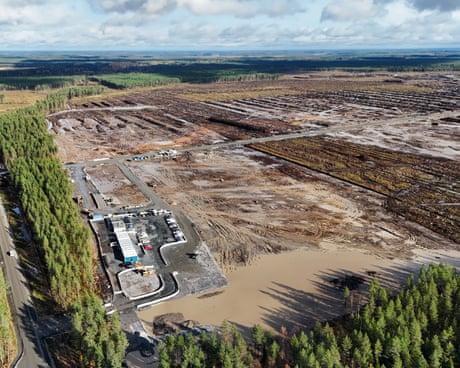
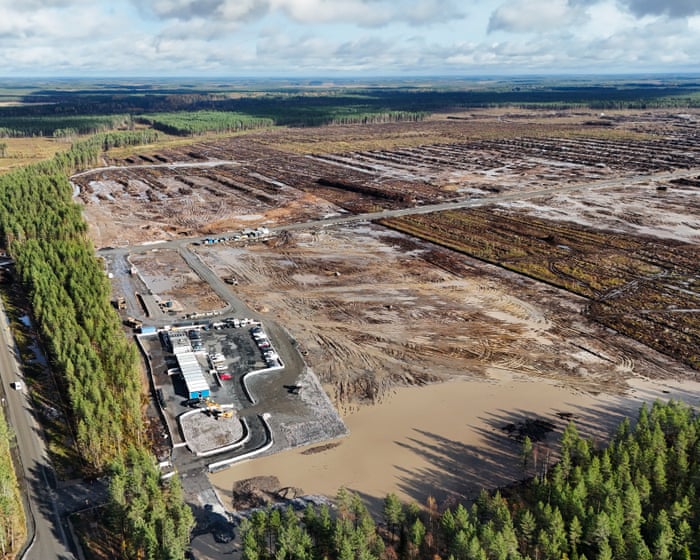
Behind a wire fence lies a vast gaping wound of earth. Before Google’s arrival a few months ago, an estimated quarter of a million trees occupied the 330 hectares (815 acres) of forest near the town of Muhos in rural northern Finland. Now they are all gone.
After the tech company illegally stripped the entire area to build a datacentre – taking even the top soil with it – all that remains is a vast expanse of mud indented with the trail marks of machinery, puddles and mounds of earth, roots and branches. Residents say that brown water flowing off the site is going into a stream that feeds the Oulujoki River.
“We have fallen into habits that are steadily deskilling the human body,” writes Melanie Challenger. “This is a strange turn of events for an animal whose success comes mostly from the extraordinary ability to learn through experience.” For Aeon, Challenger explores how modern technologies, from GPS to AI, are eroding our body’s physical skills by replacing the embodied experiences through which we learn.
After all, the brain is itself a physical organ, continually shaped by what the body does and encounters. Once we decide that the mind is the real human and the rest of the body only hardware, it becomes easier to disregard the physical work, including the neurocognitive work of a biological brain, through which we move, find our way, put thoughts into words, and recognise our own needs. A machine may do some of that work faster, but each act it takes over is one that the body no longer performs and that the body, including the brain, no longer learns through. The irony is that a project motivated by the desire to overcome bodily fragility is helping to produce more fragile bodies.
 Login