Serbia has released the first footage of its TSMB M-25 heavy self-propelled mortar in action, revealing an unusual artillery system that puts a massive 203mm weapon on a comparatively light, six-wheeled truck. The system is designed to hurl projectiles weighing around 220 pounds at targets up to approximately seven-and-a-half miles away, bringing super-heavy firepower to a platform that looks surprisingly modest for the job.
The Serbian Ministry of Defense published the brief footage in a larger video montage, seen immediately below, but has not disclosed when or where the firing tests took place or what they demonstrated. Regardless, the M-25’s configuration alone makes it stand out.
A TSMB M-25 heavy self-propelled mortar in a firing position. Serbian Ministry of Defense/screencap
The Teški Samohodni Minobacač (TSMB, translated as heavy self-propelled mortar) M-25 was developed by Serbia’s state-owned Military Technical Institute and first appeared publicly at the Partner 2025 defense exhibition in Belgrade. Its design lineage stretches back to the Yugoslav M-65 155mm howitzer, itself a licensed copy of the widely used American M114, first introduced in World War II.
Artillerymen of the 24th Infantry Division, U.S. Army, fire 155mm howitzers in the Korean War. Public Domain
The M-25 takes that heritage in a different direction, with a 203mm barrel measuring 24 calibers in length and an automated loading mechanism for mortar projectiles. The mortar barrel has an elevation range from 0° to 75°, and the barrel must return to 0° in elevation for the next round to be loaded from the muzzle end.
The standard 203mm mortar bomb weighs around 220 pounds, including approximately 60 pounds of explosive material. This results in a claimed destruction radius of around 250 feet, using impact fuzing.
The system is intended to fire both high-explosive and concrete-piercing ammunition, making it particularly suited to attacking hardened positions and fortifications. Developers have also provided for rocket-assisted projectiles to extend its range and precision guidance kits to improve the accuracy of compatible rounds.
The weapon is mounted on a FAP 2026 three-axle truck in a 6×6 configuration, a general-purpose off-road type made by Serbian vehicle manufacturer Fabrika automobila Priboj. This platform provides a range of 500 miles and a top speed of 50 miles per hour on the road. The vehicle has an armored cab for a crew of four, while its fire-control suite includes an inertial navigation system, a ballistic computer, communications equipment, and a dedicated gunner’s computer. The same truck has also been adapted to mount a 152mm gun/howitzer, under the name NORA B-39.
The NORA B-39 mounts a 152mm gun/howitzer on the same FAP 2026 three-axle truck chassis. Serbian Ministry of Defense
The wheeled chassis is the defining feature of the M-25. While a weapon of this size would normally be either towed or mounted on a large tracked vehicle, Serbia has opted for a lighter truck-based arrangement. This offers advantages in road mobility and makes the system easier to move between firing positions, using “shoot and scoot” tactics. A general-purpose truck is cheaper to acquire and operate, and easier to maintain. It can also be more easily transported by air, although out-of-area operations are not generally on the Serbian Armed Forces’ agenda. However, its cross-country performance and overall survivability will be reduced compared to a tracked chassis.
TSMB M-25 heavy self-propelled mortar firing a round. Serbian Ministry of Defense/screencap
The M-25 is intended to deliver heavy fire against targets such as bunkers and other fortified positions, then relocate before an opponent can respond. Its relatively short stated range compared with many modern 155mm howitzers makes it a specialized system rather than a direct replacement for conventional long-range artillery. Its appeal lies instead in combining a very large projectile with a comparatively compact and mobile platform.
Mortars have a long and grim history in the Balkans, particularly during the wars that accompanied the breakup of Yugoslavia in the 1990s. The steep trajectories of mortar rounds made them useful in the region’s mountainous terrain and in fighting around fortified positions and during sieges, while their ability to deliver indirect fire meant crews could engage targets without a direct line of sight.
A visitor looks at infantry mortars at an exhibition of Serbia’s armed forces in Nis, southern Serbia, on February 14, 2024. Photo by SASA DJORDJEVIC / AFP SASA DJORDJEVIC
As far as we know, the M-25 is the only 203mm mortar in current development and/or production. There are a few larger mortars on mobile platforms, notably Russia’s 2S4 Tyulpan, a 240mm self-propelled mortar, but this is on a significantly bigger tracked chassis.
At approximately 19 metric tons, the M-25 is substantially lighter than the 2S4 Tyulpan, which weighs around 27.5 metric tons. Its tracked platform reflects a very different approach to moving super-heavy mortar firepower around the battlefield. The Tyulpan can deliver a 300-pound standard mortar round to a range of around six miles, or up to 11 miles away when using rocket-assisted rounds.
Crewmen load a mortar projectile in a Russian-operated 2S4 Tyulpan. Russian Ministry of DefenseRussian artillerymen fire a 2S4 Tyulpan during a live-fire exercise. Russian Ministry of Defense
Serbia claims the M-25 has a rate of fire of up to three rounds per minute, thanks to the automated loading mechanism. In contrast, the Tyulpan can hurl a maximum of one round every 62 seconds. Indeed, its sluggish rate of fire is one of the reasons that saw it fall from more widespread Russian use.
There are still important unknowns. The newly released footage does not establish whether the advertised firing rate was achieved, how the weapon performs under sustained fire, or whether the system has entered operational service. Serbia has shown the M-25 at an exhibition and now in live-fire footage, but detailed test results have not been made public.
Still, the concept is striking: a high-mobility wheeled truck carrying a 203mm mortar is a distinctly different take on super-heavy firepower, but one that might just find a niche in the Balkan environment.
Author’s note: An earlier version of this article included a photo of the 2S5 Giatsint-S self-propelled gun, rather than the 2S4 Tyulpan.
DIA included the higher-resolution image of the Chinese spaceplane in a new unclassified report on global security challenges outside of the Earth’s atmosphere, which was released yesterday. A satellite belonging to Maxar Technologies (now Vantor) captured the image, but when exactly remains unclear. It does have a 2024 copyright date.
The image shows a miniature space shuttle-like design with small wings and twin vertical tails. It also has upward-opening doors above a central payload bay. There is also an extension at the tail end with solar panels seen deployed on either side. There are what look to be side-by-side ventral bays, which are likely for the main gear in a tricycle landing gear configuration. Overall, the core design is extremely similar to that of the U.S. X-37B, which also features tricycle landing gear and can also be fitted with an extended payload module at the tail. One major difference is that the wings on the Chinese design have a much longer chord compared to the X-37B.
A side-by-side comparison of the on-orbit shot of the experimental Chinese reusable spaceplane (at left) and a U.S. X-37B fitted with an extended payload module being prepared for launch (at right). Vantor/U.S. Space ForceAnother look at an X-37B, seen here sitting on its tricycle landing gear after returning from a mission in space. USAF The X-37B used on the OTV-6 mission on the flight line at the Kennedy Space Center after its return to Earth on November 12, 2022. USAF
“A key capability for reusable space activities are spaceplanes like this PRC [People’s Republic of China] Spaceplane captured by Maxar. Spaceplanes can launch into orbit to place objects in space or even test them and return to earth [sic],” reads the caption to the picture in DIA’s report.
As noted, the basic fact of the existence of this image is not new. U.S. Space Force Col. John Patrick, then head of U.S. Space Forces-Korea (SPACEFOR-KOR), included a much lower-resolution version in a presentation at the Open Space Forum in South Korea in 2024. It was also not immediately clear at that time whether or not the picture simply showed an X-37B. TWZ had reached out at the time to the U.S. Space Force and Maxar for more information, and both had declined to comment. Two X-37Bs were built, and they have been sent on eight orbital missions, in total, since 2010. The Orbital Test Vehicle 8 (OTV-8) mission was launched on August 22, 2025.
China is understood to have conducted four separate orbital spaceplane missions using the same experimental vehicle since 2020. Three of those missions had concluded before Col. Patrick gave his presentation. The most recent launch occurred on February 7 of this year, and the vehicle has not yet returned, at least as far as we are aware.
On the third mission, which lasted from December 14, 2023, to September 6, 2024, the Chinese spaceplane was observed releasing multiple smaller objects into orbit. What those payloads may have been remains unknown, but they could have been released from the main payload bay, which is seen open in the on-orbit image. The bay could have opened without any subsequent release of objects on either of the two prior missions, as well.
DIA’s report also says that “China has two primary spaceplane models: the Shenlong and Tengyun,” but does not specify which one is seen in the image. The name Shenlong has been commonly used to refer to the spaceplane China has been experimenting with to date. Images said to show a prototype or test article of this design slung underneath an H-6 bomber for testing purposes had emerged in 2007.
Images that emerged in 2007 of a reusable spaceplane prototype, or a related test article, referred to as Shenlong, underneath an H-6 bomber. Chinese internet
Images showing wind tunnel testing of a Chinese two-stage-to-orbit concept. Chinese internet
There have been other spaceplane developments in China in recent years. This includes designs from the China Aerospace Science and Technology Corporation (CASC) and Aviation Industry Corporation of China (AVIC) subsidiary Chengdu. The design from Chengdu is called Haolong and has been in development officially as an option for resupplying the country’s Tiangong space station.
In general, “spaceplanes are … reusable and feature enhanced maneuverability, making them more suitable for certain missions than traditional satellites,” DIA’s report notes.
As we often mention in the context of the X-37B, spaceplanes also have distinct advantages when it comes to rendezvousing with and maneuvering very close to other objects in space. They can execute course changes and other maneuvers in ways that traditional satellites cannot. All of this only underscores their potential as weapon systems, as well as for gathering intelligence. The fact that a Maxar (now Vantor) satellite took an on-orbit picture – a service the company is known to offer – of a Chinese spaceplane further highlights the kind of cat-and-mouse games that are increasingly emerging in space. The general risks posed by these kinds of activities were recently thrust into the public eye by the unprecedentedly close shadowing of a commercial radar imaging satellite tied to Ukraine by another satellite belonging to Russia.
China has been making massive investments, in general, in new space-based intelligence and other capabilities in recent years. Chinese space developments have now also extended into reusable space launch rocket boosters. Space launch company LandSpace became the first in China to achieve a successful recovery of a reusable space launch rocket booster on land in August. That followed CASC’s successful recovery of a reusable space launch rocket booster at sea using a specially configured ship the month before.
In general, “access to space traditionally requires expendable spacecraft: single-use launch vehicles, satellites, and one-time use capsules designed to maximize performance. Reliance on expendable vehicles has made access to space expensive and exclusive,” DIA’s report explains. “Reusable technologies, while even more difficult and expensive to develop and build, stand to greatly reduce the cost of spaceflight by recovering, refurbishing, and reusing rocket stages, fairings, and capsules.”
Chinese spaceplanes, one of which we have not definitively gotten a view of in orbit, look set to become an increasingly important part of this growing ecosystem.
Update: 6:32 PM ET –
Vantor has now provided an additional copy of the image of the Chinese spaceplane, elements of which look to be redacted, and some additional details. The company has confirmed it was taken on May 28, 2024, by the WorldView-3 satellite at a range of just under 56 miles (90 kilometers).
“There is a separate satellite docked to the aft section of the vehicle whose structure and solar arrays are visible,” Vantor also told us. “The spacecraft’s payload bay doors are visibly open.”
A military airfield in Crimea has been transformed into a hub for drone launches, new satellite images sourced by RFE/RL show. We spoke to one Crimean military insider about why Ukraine has been unable to take the site out of action.
Aleksandar Vucic’s election defeat has ended more than a decade of political dominance and handed victory to Serbia’s student-led opposition movement. RFE/RL's Balkan Service spoke with Ilija Srdanovic, the top candidate for the Student List party on what comes next for the country.
Walter Koenig died in October 2026, making William Shatner and George Takei the last two living members of the original series' cast.
Jason LaVeris/FilmMagic/Getty Images
"Star Trek" debuted 60 years ago on September 8, 1966.
After the show, the cast of the original series remained sci-fi icons.
Only two main cast members of "The Original Series" are alive; Walter Koenig died in October 2026.
When Gene Roddenberry popularized the Vulcan phrase, "Live long and prosper," he had no way of knowing that he was predicting the future of his little sci-fi show that premiered on NBC 60 years ago.
In the six decades since, "Star Trek" has become one of our most enduring franchises, with 13 feature films (plus one direct-to-streaming movie), 13 television shows, and millions of fans all over the world — and perhaps the galaxy.
To celebrate "Star Trek's" big anniversary, we're reflecting on the original crew of the USS Enterprise, how they changed the world, and what the surviving cast members are doing now.
William Shatner led the crew of the USS Enterprise as Captain James T. Kirk.
William Shatner as Captain James T. Kirk on the Star Trek: The Original Series episode "Space Seed." Original air date February 16, 1967
CBS/Getty Images
"Star Trek" was originally going to be focused on a different captain, Captain Christopher Pike, played by Jeffrey Hunter.
A pilot, called "The Cage," was even filmed, but it didn't make it to airwaves until the '80s. Gene Roddenberry, the creator, eventually retooled the show and cast Shatner as a new captain, Kirk. Some footage from "The Cage" was reused for a season one episode called "The Menagerie."
Before "Star Trek," Shatner was famous for his role in an iconic "Twilight Zone" episode, "Nightmare at 20,000 Feet," in which he played a man recently released from a mental hospital who becomes convinced he can see a creature on the wing of the plane he's flying on. It aired in 1963, three years before "Star Trek."
Shatner also acted in "T.J. Hooker" and "Boston Legal," hosted "Rescue 911," and has written numerous books. He made it to space in 2021.
William Shatner speaks onstage during FanExpo Chicago 2026 on August 15, 2026 in Rosemont, Illinois.
Barry Brecheisen/WireImage/Getty Images
Though he's 95 years old, Shatner has shown no signs of slowing down. After "Star Trek" was canceled in 1969, he briefly returned to voice Kirk for the "Star Trek" animated series. In 1979, he again reprised his role as Kirk in "Star Trek: The Motion Picture." He'd continue to do so regularly until 1994's "Star Trek Generations."
He even directed one of the "Star Trek" movies: "Star Trek V: The Final Frontier."
Besides "Star Trek," Shatner starred as the titular police officer on the '80s procedural "T.J. Hooker" and narrated "Rescue 911," a show that consisted of dramatic reenactments of real crimes and emergencies.
Other roles that you might recognize Shatner from: a pageant host in "Miss Congeniality," attorney Dennis Crane in "The Practice" and its spin-off "Boston Legal" for which he won two Emmys, and in the 2016-2018 reality show "Better Late Than Never," in which Shatner, Henry Winkler, George Foreman, and Terry Bradshaw traveled around the world and experienced different cultures.
He also finally made it to space himself during a Blue Origin flight in October 2021, making him the oldest person to go into space at 90.
In July 2026, he started a podcast with his daughter, "No Time But Now," inspired by how they had both overcome stage IV cancer diagnoses in the early 2020s.
Shatner has written multiple books, both fiction and non-fiction, over the course of his career. His 2016 book, "Leonard: My Fifty-Year Friendship with a Remarkable Man," was about his friendship with "Star Trek" costar Leonard Nimoy, who played his on-screen better half, Commander Spock.
Most recently, in 2022, he published a collection of essays called "Boldly Go: Reflections on a Life of Awe and Wonder."
George Takei played Lieutenant Hikaru Sulu, a helmsman on the Enterprise.
LOS ANGELES - SEPTEMBER 20: George Takei as Hikaru Sulu in the STAR TREK episode, "Spock's Brain." Original airdate, September 20, 1968. Season 3, episode 1.
CBS/Getty Images
Over the course of the show, Sulu was revealed to have many interests outside of Starfleet, most famously fencing. At the time, Sulu was one of the first Asian characters on TV who wasn't explicitly a villain but rather a fully formed hero.
"Up until the time I was cast in 'Star Trek,' the roles were pretty shallow — thin, stereotyped, one-dimensional roles. I knew this character was a breakthrough role, certainly for me as an individual actor but also for the image of an Asian character: no accent, a member of the elite leadership team," Takei told Mother Jones in 2012.
Takei was originally supposed to play Sulu as an astrophysicist, but the role was changed to helmsman. Before "Star Trek," Takei also appeared in "The Twilight Zone," like Shatner, among other '50s and '60s procedurals.
Takei is still acting to this day, though many people know him now for his social media presence.
George Takei attends the 2026 Comic-Con International: San Diego - "Star Trek" 60th Anniversary Celebration Press Line at Hilton Bayfront on July 25, 2026
Matt Winkelmeyer/Getty Images
Who says an 89-year-old doesn't know how to use social media? Takei's Facebook page has 9.6 million likes to date, and he has 2.8 million followers on X — though he recently switched to BlueSky, where he has 1.3 million followers.
In addition to his continued acting in films like "Paws of Fury: The Legend of Hank," "Kubo and the Two Strings," and "Mulan," and TV shows like "Heroes," "Supah Ninjas," "Blue Eye Samurai," and "Star Wars: Visions," Takei is an activist. He came out as gay in 2005 and began working as a spokesperson for the Human Rights Campaign.
Takei also starred in the 2012 musical "Allegiance," which was based on his and his family's experiences during Japanese internment in World War II.
Walter Koenig was cast as Ensign Pavel Chekov because of his resemblance to the Monkees' Davy Jones.
LOS ANGELES - MARCH 29: Walter Koenig as Pavel Chekov in the STAR TREK: THE ORIGINAL SERIES episode, "Assignment: Earth." Season 2, episode 26. Original air date was March 29, 1968
CBS/Getty Images
While Chekov was Russian, Koenig was born in the US and based his accent on his parents' accents — they were Russian immigrants. Koenig was cast because, according to legend, he was supposed to help attract young girls as viewers due to his resemblance to teen idol Davy Jones. He even wore a Davy Jones-esque women's wig for the first seven or eight episodes, he told TV Insider in 2016.
Koenig was mainly recognized for his on-screen role as Chekov, though he became a prolific screenwriter in the '70s. He wrote episodes for the "Star Trek" animated series, the anthology series "What Really Happened to the Class of '65?" and the children's series "Land of the Lost."
Koenig died in October 2026, about a month after his 90th birthday.
Walter Koenig attends Los Angeles premiere of "Raging Midlife" at Laemmle Royal on March 16, 2025 in Los Angeles, California.
Victoria Sirakova/Getty Images
Koenig made frequent appearances on the "Star Trek" convention circuit and acted in the occasional film well into his twilight years.
He appeared in 12 episodes of "Babylon 5" in the '90s, voiced himself in an episode of "Futurama," and also voiced Mr. Savic on the Netflix animated series "Stretch Armstrong and the Flex Fighters."
In 2025, he appeared in the film "Raging Midlife" as Otis.
While not all of the "Star Trek" cast were on great terms, Koenig and his costar George Takei remained close. Koenig was even the best man in Takei's wedding in 2008.
News of his death was confirmed by his agent on October 26, 2026, per The New York Times. He had just celebrated his 90th birthday on September 14.
Nichelle Nichols played Lieutenant Nyota Uhura, a translator, communications officer, and linguistics expert.
LOS ANGELES - JANUARY 19: Nichelle Nichols as Lt. Nyota Uhura in the STAR TREK: THE ORIGINAL SERIES episode, "Arena." Original air date January 19, 1967.
Nichols stayed with the show for all three seasons, but it wasn't without drama. She was tempted to leave during the first year, but none other than Martin Luther King Jr. convinced her to stay.
She told the New York Post in 2011 that when she told him that she wanted to leave, he told her, "You can't do that. You have the first non-stereotypical, non-menial role on television. You have created strength and beauty and intelligence. For the first time, the world sees us as we should be seen. It's what we're marching for. You're a role model, and whether you like it or not, you belong to history now."
She also released an album in 1967, "Down to Earth." In between "Star Trek's" cancellation and its return on the big screen, Nichols starred in the 1974 blaxploitation film "Truck Turner," as Dorinda, a madam.
Nichols died in 2022 at the age of 89. She had retired from public appearances in 2018.
LAS VEGAS, NV - AUGUST 01: Actress Nichelle Nichols attends the 17th annual official Star Trek convention at the Rio Hotel & Casino on August 1, 2018 in Las Vegas, Nevada.
Gabe Ginsberg/Getty Images
Nichols became involved in Women in Motion in 1977, a NASA recruiting program aimed at increasing women's participation in the space program. In July 2020, a documentary about the program finally secured distribution and was released in 2021, Deadline reported.
"Nichelle Nichols not only was a trailblazer in Hollywood, she was a trailblazer for the future of our society," said executive producer Ben Crump. "She took the fight for Civil Rights, diversity and inclusion and gender equality to new frontiers with NASA which continue to serve America's space program today. She was ahead of her time."
Nichols also appeared in "The Young and the Restless," "Heroes," and "Futurama." She was diagnosed with dementia in 2018 and subsequently retired from public appearances.
Leonard Nimoy played Captain Kirk's first officer and close friend, Commander Spock.
Leonard Nimoy in 1967.
CBS/Getty Images
Spock was the only alien member of the original crew, as he was half-human, half-Vulcan — an alien race from the planet Vulcan whose residents operate solely from a point of logic rather than feelings.
Much of the show's comedy came from Spock and Kirk's differences and their amusement at each other. His frequent farewell, "Live long and prosper," accompanied by the Vulcan Salute, is among the most recognizable pieces of the "Star Trek" canon.
Nimoy had multiple small parts in B-movies and TV shows before booking "Star Trek," including an episode of "The Man from U.N.C.L.E." alongside Shatner and an episode of "The Twilight Zone."
But once "Star Trek" premiered, Nimoy would be forever linked with his Vulcan counterpart, and he did voice work after the show ended. He also reunited with Shatner for an episode of his show, "T.J. Hooker."
Nimoy died in 2015 at the age of 83. He played Spock for the final time in 2013's "Star Trek Into Darkness."
LOS ANGELES, CA - MAY 01: Actor Leonard Nimoy attends the 2014 LA Asian Pacific Film Festival opening night for 'To Be Takei' at Directors Guild Of America on May 1, 2014 in Los Angeles, California.
Imeh Akpanudosen/Getty Images
Nimoy reprised his character in 2009's "Star Trek" and its 2013 sequel, "Star Trek Into Darkness," as an older version of Spock who was trapped in an alternate universe. It meant he played the role for almost 50 years.
In addition to acting, Nimoy was a photographer, recording artist, author, and director. He directed two "Star Trek" movies ("The Search for Spock" and "The Voyage Home"), and "Three Men and a Baby," which became the highest-grossing film of 1987.
Nimoy died in 2015 at the age of 83 due to chronic obstructive pulmonary disease (COPD).
DeForest Kelley played the ship's curmudgeonly chief medical officer, Dr. Leonard "Bones" McCoy.
LOS ANGELES - NOVEMBER 17: DeForest Kelley as Dr. Bones McCoy in the STAR TREK episode, "Journey to Babel." Season 2, episode 10 originally broadcast November 17, 1967.
CBS/Getty Images
Bones, as he was affectionately called, was one of the oldest members of the crew, and thus got to be a bit more obnoxious than the rest of them. His frequent catchphrase, "I'm a doctor, not a ___," is one of the most parodied lines of dialogue from the show.
Like his character, Kelley was older than the rest of the cast, and he was a more established actor. Before the show, he had appeared in Westerns and historical films like "Gunfight at the O.K. Corral," "Warlock," and "Raintree County" in the '50s.
Kelley died in 1999 at the age of 79, nine years after playing McCoy for the last time.
DeForest Kelley during "Star Trek: 30 Years and Beyond - A Live Tribute" at Paramount Studios in Los Angeles, California, United States
SGranitz/WireImage/Getty Images
Kelley essentially retired from acting, besides playing McCoy, after the success of "Star Trek." He appeared in all six films starring the original cast, and he appeared in an episode of "Star Trek: The Next Generation" as McCoy, as well.
While he wasn't much of a sci-fi fan, Kelley was proud of his "Star Trek" legacy. When asked what he thought his legacy would be, he explained that his character inspired people to enter the medical field.
He told The Houston Chronicle in 1998, "These people [fans] are doctors now, all kinds of doctors who save lives. That's something that very few people can say they've done. I'm proud to say that I have.''
He died in 1999 at the age of 79 due to stomach cancer.
Majel Barrett had a recurring role as Nurse Christine Chapel.
LOS ANGELES - NOVEMBER 17: Leonard Nimoy as Mr. Spock and Majel Barrett as Nurse Christine Chapel in the STAR TREK episode, "Journey to Babel." Season 2, episode 10 originally broadcast November 17, 1967.
CBS/Getty Images
Barrett was originally cast in the first version of "Star Trek" as Pike's first officer, but when that episode was scratched, so was her character. However, due to her romantic relationship with "Star Trek" creator Gene Roddenberry (whom she later married), she was brought back as Nurse Chapel, a divisive character.
Before the show, Barrett had various bit parts in '50s and '60s shows, but her big break was "Star Trek," in which she stayed involved for the rest of her life.
Barrett died in 2008 when she was 76 years old.
LAS VEGAS - AUGUST 20: Actress Majel Barrett-Roddenberry, widow of Star Trek creator Gene Roddenberry, speaks at the fifth annual official Star Trek convention at the Las Vegas Hilton August 20, 2006 in Las Vegas, Nevada. (
Ethan Miller/Getty Images
Barrett reprised her role as Chapel in "Star Trek: The Motion Picture" and "Star Trek IV: The Voyage Home."
She also appeared in "Star Trek: The Next Generation" and "Star Trek: Deep Space Nine" as Lwaxana Troi, the mother of Deanna Troi, a main character in "Next Generation." Her other involvement in the series was the voice of the computer in many of the other "Star Trek" films: "Generations," "First Contact," "Nemesis," and 2009's reboot.
Her involvement with every "Star Trek" series led fans to call her the first lady of "Star Trek."
She died in 2008 at the age of 76 due to leukemia.
James Doohan played Chief Engineer Montgomery "Scotty" Scott.
LOS ANGELES - JANUARY 3: From left: James Doohan as Chief Engineer Montgomery 'Scotty' Scott and George Takei as Lieutenant Hikaru Sulu on the Star Trek: The Original Series episode, "Whom Gods Destroy." Originally aired January 3, 1969.
CBS/Getty Images
Contrary to popular belief, the phrase "Beam me up, Scotty" is never actually uttered in the original series — and the man on the other end of that command, Scotty, was played by Doohan, who was Canadian in real life, not Scottish.
Before "Star Trek," Doohan served in the Canadian military and was even on the beaches of Normandy during D-Day. He was a pilot as well.
After the war, he began acting and became a successful radio actor. Like his costars, he also appeared in an episode of "The Twilight Zone," and other popular procedurals.
In the animated series, Doohan proved indispensable, thanks to his talent for voice acting and accents. He voiced over 50 characters during the show's run.
James Doohan died at the age of 85 in 2005.
James Doohan during James Doohan Honored With A Star On The Hollywood Walk Of Fame for His Achievements in Television at 7021 Hollywood Blvd in Hollywood, California, United States. 2004
Albert L. Ortega/WireImage/Getty Images
Doohan didn't find much success outside of the world of "Star Trek," and thus embraced his role as Scotty. He appeared in the film "Generations" as well as an episode of "The Next Generation."
However, his impact on the field of engineering cannot be overstated. He was awarded an honorary doctorate from the Milwaukee School of Engineering "after half the students there said that Scotty had inspired them to take up the subject," according to the BBC.
Doohan suffered from Parkinson's and Alzheimer's, and he retired from public life in 2004. He died the following year, at 85, due to complications from pneumonia.
Grace Lee Whitney appeared in the first season of the show as Yeoman Janice Rand.
LOS ANGELES - SEPTEMBER 15: Robert Walker Jr. as Charlie Evans in the STAR TREK episode, "Charlie X." Season 1, episode, 2. Original air date September 15, 1966.
CBS/Getty Images
Rand appeared in eight of the show's first 15 episodes of the season as a clerical and administrative worker aboard the ship, before Whitney was released from her contract.
At the time, the story was that the show didn't have enough money to keep everyone, but years later in her autobiography, Rand accused an unnamed executive producer, whom she called "The Executive," of sexually assaulting her.
"I tried to do what he wanted me to, so I could get it over with. I knew, deep down inside, that I was finished on 'Star Trek.' At that moment, however, I didn't care about that. Nothing else mattered — not my tarnished virtue, not my career, not my role on 'Star Trek.' The only thing that mattered was getting out of that room alive," she wrote.
Whitney died in 2015 at the age of 85.
LAS VEGAS, NV - AUGUST 08: Actress Grace Lee Whitney attends the 12th annual Star Trek convention at the Rio Hotel & Casino on August 8, 2013 in Las Vegas, Nevada
Gabe Ginsberg/FilmMagic/Getty Images
After getting written off the show, Whitney struggled with her career and alcoholism. She credited costar Leonard Nimoy with helping her get back on her feet and involved with "Star Trek" once again. She reprised her role in four of the original "Star Trek" films and in an episode of "Star Trek: Voyager" alongside George Takei.
She died in 2015 due to natural causes at the age of 85.
Ukraine’s 475th Separate Assault Regiment, known as CODE 9.2, says it has used the StarGate uncrewed aerial platform to evacuate two seriously wounded soldiers from the battlefield in the span of a week. Reportedly, this is the first time the specialized drone has been used for an operation of this kind. It is not, however, the first instance of Ukraine using an aerial rescue drone on the battlefield, with the more extemporized heavy hexacopter also having been used recently, as you can read about here.
Taken together, the missions underscore Ukraine’s efforts to develop alternative casualty evacuation capabilities as Russian drone threats, electronic warfare, and harsh terrain increasingly complicate conventional recovery operations, including those using uncrewed ground vehicles (UGVs).
According to CODE 9.2, on its Facebook page, the regiment’s personnel carried out two complex evacuation missions using StarGate, a platform developed and manufactured by Ukrainian company SkyFall. The two wounded servicemen were 25-year-old Yevhen, callsign “Izyum,” and 24-year-old Artem, callsign “Kolobok.” Both belonged to adjacent units and had suffered severe limb injuries while occupying positions in a so-called gray zone approximately three miles from the Russian border.
Difficult terrain, including water obstacles, and the threat posed by Russian first-person-view (FPV) drones prevented ground vehicles from reaching the casualties, the regiment said. Air evacuation was the only available option.
Drone operators watch as two soldiers carry their injured comrade to the SkyFall drone for evacuation. CODE 9.2/screencap
The missions were planned and executed by CODE 9.2 personnel with support from SkyFall. They required coordination among multiple units, additional forces and equipment, and dedicated fire support — much like a more traditional casualty evacuation effort involving crewed helicopters. Vampire heavy strike drones were employed to suppress enemy positions during the operations.
“The injury tore off half of my foot, so a lot of blood was lost already,” Izyum said in a video interview from his hospital room. “I think if that incredible little bird hadn’t flown in, well, getting out from there would have been unrealistic.”
During one of the missions, StarGate reportedly flew nearly 20 miles to reach the casualty before covering approximately the same distance on the return leg with the wounded serviceman aboard. CODE 9.2 said Russian electronic warfare systems were actively attempting to suppress satellite navigation signals in the area.
An injured soldier is helped out of the drone after recovery to a safe area. CODE 9.2/screencap
Despite the reported interference, the platform completed the mission using its onboard artificial intelligence-based navigation system, according to the regiment. The statement did not specify the navigation technologies involved.
StarGate was designed specifically for casualty evacuation, or CASEVAC, when conventional ground transportation cannot reach wounded personnel or would expose them to unacceptable risks. Its stated specifications include a payload capacity of up to 330 pounds and a maximum speed of approximately 65 miles per hour. The evacuation module is based on a covered, medical-grade stretcher.
StarGate on the ground. SkyFall
Oleksandr Nastenko, commander of CODE 9.2, callsign “Flint,” said the regiment intends to use the experience gained from the two missions to train crews and make aerial evacuation a more established capability. The regiment also plans to set up a dedicated aerial medical evacuation unit within its medical company.
The StarGate missions follow a separate reported operation involving the 92nd Assault Brigade, which says its personnel helped evacuate a wounded soldier using a heavy-lift hexacopter drone, produced by Gurzuf Defense, with the casualty suspended beneath it, as seen in the video below:
This drone was reportedly an Audag-6 model, which is said to be capable of carrying a 200-pound payload over a distance of up to 15 miles.
In that incident, the soldier had been wounded while holding his position. Once again, aerial extraction was judged the only suitable option; in this case, due to the presence of mines and intense Russian drone activity.
This was a more improvised approach, which the brigade described as the world’s first frontline aerial drone evacuation of a wounded soldier. Compared to Stargate, the Gurzuf drone brings some drawbacks with it, including casualty stability, exposure to the elements, the risk of swinging during flight, and the difficulty of safely lifting and lowering a severely injured person. It subsequently emerged that the soldier involved, Kostiantyn Vlasenko, had been forced to amputate his own foot as part of a 491-day ordeal on a frontline position.
A soldier clipped to the underside of a Gurzuf drone via a harness is flown to safety. 92nd Assault Brigade/YouTube screencap
This was not the first time that Ukrainian forces have adapted existing drone technology to effect battlefield evacuations.
TWZ also previously reported on a Ukrainian soldier who managed to escape from the Russians that surrounded him after an electric bike was dropped to him by a large aerial drone.
As a purpose-built platform, StarGate offers a more standardized way to secure and transport casualties, and to transport them protected from the elements, in a secure, prone position. However, StarGate still faces the challenges of flying in contested airspace and navigating under electronic warfare conditions. Once again, depending on the degree of injuries, the casualty may need assistance being put on the stretcher and, regardless of the degree of medical care that can be provided, StarGate is only an option if already available in proximity to the victim.
Close-up view of the StarGate stretcher. SkyFall
The fact that the StarGate missions also needed strike drones for fire support underscores that casualty recovery, whatever the platform being used, typically requires coordination across multiple combat elements.
Despite the limitations, CODE 9.2’s plan to create a dedicated medical aviation element indicates it wants to move beyond one-off missions toward a repeatable capability.
StarGate in flight. SkyFall
As with other emerging technologies from the war in Ukraine, this is likely to be studied by other armed forces, too. The U.S. military, for example, has long looked at the potential of uncrewed aerial systems to effect casualty evacuation missions, as you can read about here.
Meanwhile, the challenges of that conflict mean that Ukrainian troops continue to explore different ways to recover wounded troops from positions that more conventional evacuation methods can no longer safely reach.
“The participants agreed to continue the dialogue to strengthen cooperation amongst the four regional countries, including for peace and security in the region,” the four nations said in a joint statement after the hastily called, last-ditch meeting concluded.
The meeting was the first meeting between Iran and the other three countries since they formed a new military alliance in August called the Mecca Joint Defense Agreement. The attendance of Saudi Arabia is of particular note as Iran struck Saudi Arabia repeatedly during Operation Epic Fury and Saudi Arabia hosted U.S. forces that attacked Iran. Iran’s proxies in Yemen, the Houthis, have been pummeling the Kingdom with drones and missiles as of late, too.
Regardless, details about the conclave are sparse, with officials saying this was just the first of what is expected to be a series of such efforts.
“Very good discussions took place between us,” Mohsen Rezaei, Secretary of Iran’s Supreme National Security Council, told Iranian state television. “I feel that a new atmosphere is emerging in the region… I sensed a very positive atmosphere in the discussions among the gentlemen.”
“We have reached an understanding with Pakistan, Turkey, and Saudi Arabia that the security of the region is achieved through its countries,” Rezaei added.
#عاجل | أمين مجلس الأمن القومي الإيراني: توصلنا لتفاهم مع باكستان وتركيا والسعودية بأن أمن المنطقة يتحقق عبر دولها pic.twitter.com/ILuUTH9k2r
The Tehran visit was called “as part of the continued efforts by the Makkah Joint Defense Agreement countries for de-escalation between parties involved in the ongoing crisis, and promoting dialogue and diplomatic solutions, in support of the mediation efforts carried out by the State of Qatar and the Islamic Republic of Pakistan,” Saudi Deputy Minister for Public Diplomacy Rayed Krimly said Monday on X before the meeting began. He used an alternative English spelling of the Saudi holy city.
HRH Prince Khalid bin Salman bin Abdulaziz Al-Saud, Minister of Defense, leads the Kingdom’s delegation to the meetings that will be held today in Tehran, capital of Iran, between Makkah Joint Defense Agreement countries and officials from the Islamic Republic of Iran, with…
Both Qatar and Pakistan have been key to previous efforts to find a diplomatic solution to the U.S.-Iran conflict. The two countries helped broker a 14-point Memorandum of Understanding (MoU) signed on June 17. The MoU provided a 60-day extension of the ceasefire to iron out an agreement to end fighting throughout the region, including Lebanon, prevent Iran from seeking nuclear weapons, end U.S. sanctions, and resume the flow of traffic through the Strait of Hormuz among other points.
That effort soon fell apart as the U.S. and Iran resumed striking each other. It has been more than a month, however, since the two nations traded direct blows.
“The visit underscores the pivotal role of Makkah Joint Defense Agreement countries in reinforcing regional security and stability, and working with all countries in the region to achieve that goal,” Krimly added about today’s Tehran meeting.
The Mecca Joint Defense Agreement was created as a pact designed to assist the Kingdom in its fight against the Houthis. An attack on one is supposed to be considered an attack on all. However, the agreement has evolved to take on the larger issue of overall regional stability amid concerns about the individual members’ own national security interests.
The Tehran meeting was attended by high-level officials, Krimly noted. Saudi Prince Khalid bin Salman bin Abdulaziz Al-Saud, Minister of Defense, led the Kingdom’s delegation, he stated. In addition, Field Marshal Asim Munir, Pakistani Chief of Army Staff, and Ibrahim Kalin, Director of the Turkish National Intelligence all met with the President of the Islamic Republic of Iran Dr. Masoud Pezeshkian, and Rezaei.
Before the meeting, Iranian Foreign Ministry spokesperson Esmaeil Baghaei said the discussions on regional security would include “Israel’s expansionist policies, developments in the Palestinian territories and Lebanon, and the repercussions of U.S. and Israeli military action against Iran,” according to Reuters.
Baghaei said the meeting, proposed during a visit by Munir to Tehran last week, could be a first step towards establishing regional security mechanisms based on the interests of countries in the region.
Baghaei:
Regional security can only be ensured through trust and cooperation among the countries of the region. pic.twitter.com/6Sxi2soMXB
Iranian officials told Munir ahead of today’s meeting that there would be no talks with Washington until Tehran’s demands were met, Reuters reported, citing Iranian media.
It is unclear at this point whether any results from this round of meetings will change whatever plans U.S. President Donald Trump is drawing up for Iran. Before the meeting began, a senior U.S. official downplayed it to us when we asked about it.
“The United States is in a very strong position with control of the Strait of Hormuz and the Iranian economy collapsing,” the senior U.S. official told us in response to our question about whether the Tehran meeting will influence any decisions by Trump on his next moves toward the Islamic Republic. “Iran has been decimated, and one way or the other, the conflict in Iran will be over very soon. President Trump holds all the cards and will do whatever is best for the United States.”
The Tehran talks took place after Trump once again claimed he was at an inflection point on deciding his future approach toward Iran. On Sunday, the American leader said it’s “getting to be decision time” on whether he will make a new deal with Tehran or resume attacks as Iranian and Houthi threats against Americans in the Middle East continue to grow.
“I have a decision to make: Do I finish it off, which would be very easy to do, or do I make a deal? That’s all,” Trump said in an interview with Fox News’ Sunday Morning Futures. “We don’t play games.”
“There won’t be a strike today,” he told reporters later Sunday as he left the White House. On Friday, U.S. Ambassador to Turkey Tom Barrack suggested the U.S. could strike Iran as early as this past weekend, but that failed to materialize.
U.S. forces in the Middle East “are prepared to launch new, potentially major, military operations against Iran ‘within 96 hours of receiving’ an order from President Donald Trump,” CNN reported on Sunday, citing two U.S. officials.
“Sufficient forces are now deployed in the region to carry out the potential attacks,” the sources told the network. “The scope of new U.S. military operations would likely go beyond efforts to simply ‘mow the lawn’ or maintain the status quo by striking radars, launchers and other Iranian assets that can be quickly reconstituted — as has been the case since Trump halted full combat operations earlier this year.”
You can read more about how the U.S. is deploying additional Navy, Marine and Air Force assets to the Middle East in our report about that here.
The aircraft carrier USS Theodore Roosevelt and its carrier strike group are reportedly being deployed to the Middle East. (USN)
Adding to U.S. concerns, on Saturday, The Wall Street Journal reported that “U.S. intelligence suggests Iranian preparations to attack Americans throughout the Middle East have reached ‘advanced stages,’ prompting a sudden exodus of personnel from embassies and military bases throughout the region.”
Jay Clayton, the director of national intelligence, “summarized that finding in a brief memo Friday to Secretary of State Marco Rubio,” the newspaper added.
“Iran has substantially increased efforts to target U.S. personnel. The lethal plotting efforts by the Iranians against U.S. citizens have reached advanced stages in both the Middle East and certain other countries,” Clayton wrote.
The U.S. in recent days also “ordered the departure of diplomats and staff from the embassy in Saudi Arabia and other countries, initially citing threats from the Iran-backed Houthi militants in Yemen,” the Journal noted. “The U.S. also has evacuated personnel from military bases across the region in preparation for renewed fighting, according to U.S. officials familiar with the planning.”
Trump on Sunday told reporters that there “are two very different sets of intelligence reports on Iran. I have them both. They are very different.”
Trump on Iran:
There are two very different sets of intelligence reports on Iran. I have them both.
Israel too appears to be continuing its planning for renewed hostilities with Iran. Its previous attacks during Operation Epic Fury were carried out in close coordination with the U.S., a cooperative effort that is ongoing.
Prime Minister Benjamin Netanyahu on Sunday repeated his warning that Iran or its proxies could launch an attack before the close election to disrupt the vote, citing intelligence.
“The (military) is ready both to defend and to strike,” he said in a video statement. “You will suffer disproportionate blows far greater than you can imagine.”
Israeli Prime Minister Benjamin Netanyahu warned Sunday that Iran and its regional allies could launch attacks intended to disrupt Israel's October 27 election, declaring that the Israeli military is prepared for both defensive and offensive operations.
In addition, Netanyahu and Israeli Defense Forces (IDF) Chief of Staff Lt. Gen. Eyal Zamir “clashed over a military action that could renew the conflict with Iran days before Israel’s elections,” according to the Jerusalem Post.
“Recently, Zamir received a directive from the political echelon to carry out an action, which security officials told N12 would ‘trigger a rapid escalation into a confrontation with Iran,’” the newspaper added. “Due to the sensitive nature of the action, N12 reported that Zamir requested an in-depth discussion and formal authorization before moving forward with the action.”
Israeli Defense Minister Israel Katz disputed those reports.
“I state unequivocally that there was no intention on Israel’s part to initiate an attack on Iran before the elections in Israel—when we made clear that if Iran attacks Israel, we will respond with great force, and all reports on the matter are entirely false,” Katz stated on X. “The attempt by opposition figures to exploit these reports to attack the Prime Minister and me and to cast doubt on our judgment—at a time when we are prevented for understandable reasons from addressing the details of the Iranian issue—is shameful and irresponsible. We will overcome this too.”
הפרסומים על פערים בין הדרג המדיני לצה"ל בנושא איראן הם מופרכים ושקריים לחלוטין.
מאז כניסתי לתפקיד שר הביטחון התיאום בין רה"מ וביני לבין צה"ל בנושא איראן הוא מלא – עם הישגים היסטוריים חסרי תקדים לטובת ביטחון מדינת ישראל.
Last Monday, in a phone call with Trump recorded live on Monday and posted on his X account, Netanyahu suggested future operations against Iran.
“Donald, we have a job to finish [in Iran]…and we’ll finish it together,” the Israeli leader told Trump. “We’ll finish it, and no one else will do it.”
That post appears to have been since been deleted.
Actions by both Trump and Netanyahu are taking place against a backdrop of heated domestic politics in their respective countries.
With continued Republican control of Congress on the line, the Nov. 3 midterm elections are a huge factor in Trump’s plans. The president has previously said the war with Iran would end “immediately after the election” and has reportedly told aides he expects to resume strikes on the Islamic Republic after the midterms. Domestic U.S. polls show the ongoing conflict continues to be deeply unpopular with voters, who are also eager to see it concluded.
Meanwhile, Netanyahu faces a vote on his future tomorrow in a nationwide parliamentary election, and there are concerns, as we noted last Friday, that the Israeli leader could use a new conflict with Iran to bolster his hold on office. Given the fractious nature of Israeli politics, election results will not necessarily immediately determine who Israel’s next prime minister will be.
“Coalition negotiations can take weeks or even months as parties attempt to reach agreements on who will govern and under what terms,” The National noted. “Israel has a history of political deadlock. Between 2019 and 2022, the country held five elections as parties repeatedly struggled to form stable governments.”
Israel’s Prime Minister Benjamin Netanyahu speaks to his supporters during a Likud Party meet-and-greet held as part of the campaign ahead of Israel’s legislative election. (Photo by JACK GUEZ / AFP) JACK GUEZ
Iran isn’t just threatening the U.S. and Israel.
“Following the intensification of Berlin’s anti-Iranian stance, Tehran has warned of the consequences should Germany directly enter the military conflict, emphasizing that facilities and military installations associated with Germany in the region could become targets within the scope of Iran’s legitimate defense,” the semi-official Iranian Fars News Agency reported on Sunday.
BIG: Iran has warned Germany that all German military bases and facilities across the region will be considered legitimate targets if Berlin openly joins military action against Iran.
Source: Iran’s Fars, citing information obtained by its security and defense correspondent
As mentioned earlier in this story, officials meeting in Tehran also addressed the ongoing fighting between the Houthis and Saudi Arabia and its proxies in Yemen.
“The urgency of the initiative was underscored by fresh explosions in Riyadh overnight and warnings of a hostile aerial threat, as the Houthis claimed another attack on the Saudi capital’s international airport,” Gulf News reported. In addition, the Houthis are expanding their attacks on oil infrastructure in Saudi Arabia, including a recent strike near the Shaybah oilfield. Combined with a spike in Iranian attacks on shipping in the Strait of Hormuz, the Houthi strikes on Saudi oil interests have sent the price of Brent crude rising. However, the Tehran talks may be tempering things. According to OilPrice.com, the per-barrel price of Brent crude was over $115 as of Monday evening, a slight drop from Friday, when it was more than $117.
With the issue of oil flow in mind, Adm. Brad Cooper, the commander of U.S. Central Command (CENTCOM), visited the Strait of Hormuz on Oct. 25 as U.S. forces reached “the milestone of assisting Gulf partners in exporting more than 1.5 billion barrels of crude oil since summer,” Cooper said.
Cooper “observed the current operational environment while flying in a U.S. Army CH-47 Chinook over the international waterway,” according to a CENTCOM post on X. “More than 3,000 commercial vessels have successfully transited the Strait of Hormuz with support from CENTCOM forces over the last six months.”
U.S. Navy Adm. Brad Cooper, commander of U.S. Central Command, observes a commercial vessel transiting the Strait of Hormuz while flying in a U.S. Army CH-47 Chinook over the international waterway, Oct. 25, 2026. (U.S. Central Command photo) Senior Chief Petty Officer Amanda Dunford
“We continue to stand shoulder to shoulder with our Gulf partners and the shipping industry,” said Cooper. “This visit underscores our strong commitment to continued freedom of navigation through the Strait of Hormuz.”
CENTCOM added that “American forces successfully cleared the strait’s international shipping lanes of sea mines laid by Iran’s Islamic Revolutionary Guard Corps (IRGC).”
“Today, primary transit routes in the Strait of Hormuz remain free and clear of Iranian sea mines thanks to incredible efforts by our people,” said Cooper. “We remain intensely focused on keeping commercial traffic flowing as we work with our teammates in the U.S. interagency, Gulf Cooperation Council, and shipping industry.”
In recent months, “over 95% of ships navigating the Strait of Hormuz have sailed through safely despite the IRGC’s unwarranted aggression, clearly demonstrating that the United States and regional partners control the international waterway,” CENTCOM claimed. TWZ cannot independently verify this.
That the four-way meetings between Iran, Saudi Arabia, Pakistan and Turkey will continue to seek a peaceful way forward is a positive sign. Still, how much, if at all, this effort changes the threat picture are open questions and the answers will be provided by Washington, Jerusalem and Tehran in the coming days and weeks.
The Pentagon is reportedly aiming for U.S. military installations to be able to continue essential operations for at least 90 days, or roughly three months, without any external support. The installation of new small nuclear reactors and other infrastructure is key to this part of a larger plan called Fortress America. The main intent is to ensure America’s armed forces can remain functional and ready to protect the homeland in the face of any massive disruptions to power grids and other supply chains due to major conflicts or other crises. For years, TWZ has been sounding the alarm about the glaring vulnerabilities of America’s critical civilian energy infrastructure, including to drone swarms and cyberattacks, which could cripple key military capabilities right where they live.
Fox News was first to report on the 90-day base resiliency goal yesterday, citing documents it said it reviewed. This is part of the extremely wide-reaching Fortress America initiative the Pentagon announced last month, which covers everything from improved physical and cyber defenses at facilities to securing reliable access to critical defense industrial resources. The “Fortress” in Fortress America is technically an acronym that stands for Federal Operations for Resilience, Troop Resources, Energy Supply, and Survivability.
Today, at Secretary Hegseth’s direction, the Department of War is announcing FORTRESS America—a national insurance policy for the American homeland.
Every major military installation in America will generate its own power.
“Under FORTRESS, every major military installation in the continental United States would be expected to sustain essential operations independently for at least 90 days, including access to electricity, water, fuel and communications,” according to Fox.
Fox News’ story also includes comments about Fortress America from Pentagon chief spokesperson Sean Parnell, but it is unclear if he explicitly confirmed the 90-day target. TWZ has reached out for more information.
“Power is combat now. Without electricity, you lose communications, water, logistics, assembly lines and just basic military command structures,” Parnell told Fox. “We don’t want to rely on standard civilian municipal infrastructure to run our national defense. We just simply can’t. It’s an intolerable risk.”
A train seen delivering coal to the power plant at Eielson Air Force Base in Alaska. USAF
Secretary Pete Hegseth made similar comments when he first unveiled the Fortress America initiative during a speech to service members at the U.S. Marine Corps’ base in Quantico, Virginia, in September.
“We are launching Fortress America, a national insurance policy for the American homeland,” Hegseth said at that time. “Every major military installation in America is going to generate its own power, independent of the civilian grid. If an adversary takes down the grid by cyber attack, by sabotage, or by any means, our bases stay lit, our aircraft keep flying, our command centers never go dark.”
Fox News’ report says that “portable nuclear reactors,” as well as “large-scale battery storage and microgrids capable of disconnecting military installations from the civilian electrical grid,” are key elements of the plan to achieve this independence when it comes to generating electricity.
The U.S. military, in cooperation with the Department of Energy, has already been heavily investing in the development and installation of so-called microreactors at bases across the country. In August, the U.S. Army, in partnership with the Pentagon’s Defense Innovation Unit (DIU), notably cut new deals with five companies as part of a plan to install more than 20 microreactors at bases, starting in 2028. This effort, called the Janus program, is not limited to Army installations.
The video below offers an overview of one of several microreactor designs the U.S. military is currently pursuing.
Establishing new microgrids and other supporting energy infrastructure has also been an important focus for the U.S. military in recent years.
Details about how bases are expecting to maintain supplies of water and fuel, as well as communications connectivity, for 90 days or more are, as yet, still not entirely clear. All branches of the U.S. military have already been exploring new and novel options for ensuring the availability of water and fuel in future contingencies, though generally with more of an eye toward tactical operations. Relevant developments, including the possibility of using a process called carbon transformation to turn ambient air into fuel, could easily be applicable in a homeland defense scenario.
Fox News’ story also makes no mention of how sufficient food for personnel at these facilities would be sustained, but that would have to be part of the equation. In his remarks in September, Secretary Hegseth also made clear that making sure supply chains delivering munitions, medicine, and even blood would be unbroken in any future crisis was part of the Fortress America vision. As already mentioned, the initiative also extends much more broadly into matters of physical force protection, cyber defense, and the resilience of America’s defense industrial base.
“For decades, we built the most powerful military in the world,” Hegseth said at Quantico. Then we “regrettably made it dependent on foreign mines for rare earths, on overseas factories for microchips, on foreign supply chains for weapons, and on a civilian power grid to keep the lights on at our bases.”
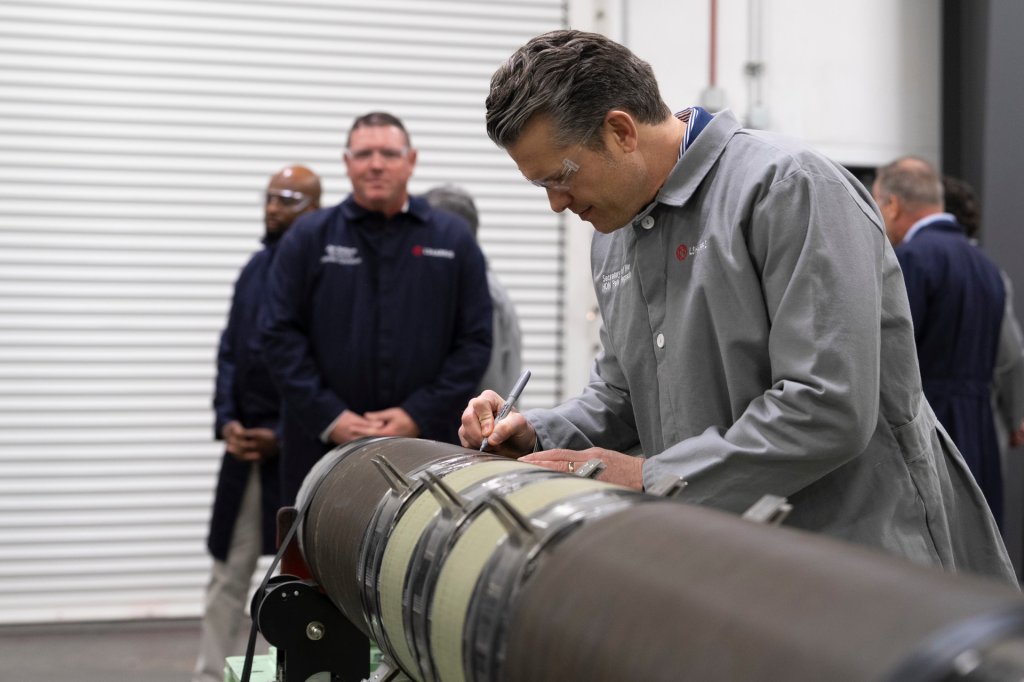
Secretary Pete Hegseth signs a missile component during a visit to a defense contractor’s facility in Febraury 2026. US Military
“We’re bringing our critical supply chains home: the rare earths, the specialty metals, the semiconductors, the propellants, mined in America, refined in America, built in America by American workers,” he added at the time. “We are building long-overdue strategic reserves, deep enough to fight through disruption.”
More specific details about how the Pentagon now intends to pursue these aims have yet to be more fully defined.
“The Under Secretary of War for Acquisition and Sustainment is directed to stand up the FORTRESS America Program Office within thirty (30) days,” according to a memo dated September 30, which was released after Hegseth’s September speech. “The Program Office shall report directly to the Under Secretary of War for Acquisition and Sustainment who will appoint a member of the Senior Executive Service to lead the day-to-day operations, assisted by a two-star Military Advisor, and shall begin as a lean core cell that scales to full operating capability within months – delivering results in weeks, not years.”
There is also a question of how much of the Fortress America initiative will actually be new. As mentioned, just when it comes to increased energy resiliency, including through the installation of new microreactors, this is something that has already been top of mind for the U.S. military for years now. In 2022, the U.S. Army had a publicly stated goal for every one of its bases to have its own microgrid by 2035 as part of a larger plan to reduce dependence on fossil fuels. In 2024, the Department of the Air Force rolled out its own Installation Infrastructure Action Plan (I2AP) that included a target to have new microgrids in place at 16 bases by Fiscal Year 2030. In May, the U.S. Navy announced plans to demonstrate the ability of the supercarrier USS Gerald R. Ford to act as a floating nuclear power plant as part of broader “energy resilience and mission assurance” plans.
A stock picture of the USS Gerald R. Ford. US Navy
“The [Fortress America] program aligns basing and infrastructure projects to ensure they are collectively advancing toward greater independence,” the aforementioned September 30 memo itself notes.
There are additional questions to be answered as to how the U.S. military expects to fund its expansive Fortress America ambitions and the schedules for implementing them. This will all be heavily influenced by how much the initiative leverages efforts that were already ongoing. At the same time, concerns about underinvestment in infrastructure modernization, in general, across America’s armed forces, and the worrisome cascading impacts thereof, are hardly new.
There are still key elements of the Fortress America initiative that have yet to be fully proven out. This is particularly visible when it comes to microreactors, which hold the promise of being simpler and safer to build and operate compared to traditional nuclear power plants. Despite significant progress with this technology just in recent years, environmental, proliferation, and other concerns continue to be raised. You can read more about all of this here.
Today, the Department of War will execute Operation Windlord, the first C-17 airlift of a nuclear reactor, in partnership with the Department of Energy and Valar Atomics.
Three C-17s Globemasters carrying the 8 modules of the Ward250 reactor will fly from March ARB to Hill AFB. pic.twitter.com/uIL7LMxACQ
— Isaiah Taylor – making nuclear reactors (@isaiah_p_taylor) February 15, 2026
On top of all this, it should be noted here that the U.S. military and the rest of the U.S. government already have mechanisms in place to ensure key functions can continue, even in the midst of the gravest of crises, such as a limited nuclear attack. This is known as continuity of government planning, and includes a network of hardened and otherwise resilient facilities designed to support continued military operations and other activities in those ‘doomsday’ scenarios. But these facilities are few in number and focus on strategic capabilities compared to what the Fortress America plan envisions.
At the same time, the dangers posed to civilian power grids in the United States, in particular, are only growing in scale and scope, both in the physical and cyber domains. Existing domestic U.S. energy infrastructure is aging and has been increasingly strained to meet routine day-to-day demands for decades now.
The potential for uncrewed aerial attacks on power plants and power lines has been real for years. The basic barrier to entry when it comes to weaponized drones, including converted commercial types, is also already low. Drone threats, broadly speaking, are only set to expand as swarming technology and artificial intelligence-driven capabilities continue to proliferate, as you can read more about in this past TWZ feature. A well-informed enemy could concentrate a small number of resources on highly critical points in the grid to have vastly outsized effects, using drones or any other kinetic means.
The threat of various types of cyberattacks is also no longer limited to blockbuster movies and other popular media. This was made clear all the way back in 2021 with the ransomware attack on Colonial Pipeline, a key American oil pipeline system, and has only become more evident since then, including in the course of the war in Ukraine. U.S. authorities have run major exercises to help prepare for exactly these kinds of threats in the past. These are also capabilities where the barrier to entry has been steadily lowering over the years. Increasingly open access to powerful artificial intelligence agents with the ability to overwhelm networks and software to find critical vulnerabilities faster than humans can react is perhaps the most concerning layer of risk.
We have been reporting on this coming together for some time, it’s incredibly important. More so than a new fighter or an additional destroyer every couple years. Absolutely critical, and becoming more so with each passing day. Yes it’s scary, but it’s far scarier not doing this https://t.co/u09x0PeHZ7
If a major conflict with a global competitor like China were to break out, physical and cyberattacks on energy infrastructure would be an extremely attractive avenue to hobble U.S. military forces, including airpower, before they can even leave their bases. The capacity to threaten grids in the United States, at least to certain degrees, has become worryingly within reach of smaller nation-states, as well as non-state actors and even lone wolf attackers, too. Firmly attributing cyberattacks to a nation-state, at all, can be challenging.
There is also a secondary component to all of this for responding to major natural disasters, which are another way U.S. grids can end up being knocked out for extended periods of time. These same circumstances could easily leave military bases, as well as their surrounding communities, without access to fresh water and other supplies. The U.S. military routinely plays a key role in responding to such crises.
“This is not a wait-and-see kind of a thing. We want to move out pretty quickly to get to that energy [resilience]. Those solutions can include investments in microgrids, battery backup storage,” a senior U.S. defense official said last week at a Defense Writers Group roundtable, according to a separate report from Air & Space Forces Magazine. “First and foremost, it’s doing the assessments of the installations to make sure we understand power generation and where we’re going to go with that, and then getting those deployed.”
The Pentagon is certainly making a new push now to make sure that, as Secretary Hegseth put it last month, “America cannot be starved out, shut down, or cut off.” However, there is clearly still work to be done to meet a goal of bases being able to go three months without outside help and the many other aims of the Fortress America plan.
The ‘Smile 2’ standout gets the biggest dramatic part of his career in Netflix's gritty war film, and says it's changed his outlook on working in the industry he grew up surrounded by: “I want movies to live forever, and I want to be a small part of that.”
Denzel Washington in 1996, George Clooney in 1997, and Noah Wyle in 2026.
Steve Granitz/WireImage; Sven Arnstein/NBCUniversal via Getty Images; Jeff Lipsky/People
People magazine has awarded 38 men the coveted title of Sexiest Man Alive.
Mel Gibson was the first to receive the title in 1985. Noah Wyle currently holds the crown.
Brad Pitt, George Clooney, Johnny Depp, and Richard Gere have each been selected twice.
Noah Wyle has been named the Sexiest Man Alive by People magazine.
People published its inaugural Sexiest Man Alive issue in 1985. Since then, 38 different men have received the title, with four of them being named Sexiest Man Alive twice.
The vast majority of the men on this list are white actors; only five men of color have been selected for People's famous cover. They're joined by a few musicians, one star athlete, and one Kennedy.
Continue reading for a list of every man who's received the title, listed in reverse chronological order.
2026: Noah Wyle
Noah Wyle attends a cancer benefit in 2026; Wyle's People cover in 2026.
Chris Frawley/Getty Images; Jeff Lipsky/People
Noah Wyle rose to fame as Dr. John Carter in NBC's medical drama "ER," alongside former Sexiest Man Alive cover star George Clooney.
Wyle was nominated for outstanding supporting actor in a drama series at the Emmys several times in the 1990s, though he never won.
Two decades later, Wyle returned to the world of medical dramas as Dr. Michael "Robby" Robinavitch in HBO Max's "The Pitt" — and finally won his first Emmy for outstanding lead actor in 2025. He also won for outstanding drama series as an executive producer.
"You get into this because you are a natural observer. Then that privacy is immediately taken from you if you get any notoriety," Wyle told People of his acting career. "It could be a hard thing to reconcile. It took me a long time. 'The Pitt'gives me the opportunity to do it differently than I did the first time — with a little bit more presence and a little bit more composure."
2025: Jonathan Bailey
Jonathan Bailey attends Time100 Next in 2025; Bailey's People cover in 2025.
Bailey has since received an Emmy nomination for his role in the Showtime series "Fellow Travelers," made his big-screen debut in the 2024 musical hit "Wicked," and landed a leading role in the 2025 summer blockbuster "Jurassic World: Rebirth."
Bailey received the Sexiest Man Alive title ahead of the premiere of "Wicked: For Good," in which he reprises his role as Prince Fiyero. He is the first out gay man to grace People's most famous cover.
"It's a huge honor. Obviously, I'm incredibly flattered. And it's completely absurd," Bailey told People.
"When I was really young, I was very confident about who I was, and maybe I lost that as I grew up," he continued. "We're all sort of trying to get back to the origin, aren't we? But I was swimming in the sea about an hour ago with a good gang, and I felt all right in my skin."
2024: John Krasinski
John Krasinski attends the 2024 Golden Globes; Krasinski's People cover in 2024.
Amy Sussman/Getty Images; People
John Krasinski rose to prominence as Jim Halpert on NBC's hit sitcom "The Office," which wrapped its nine-season run in 2013.
Three years later, Krasinski transitioned from supporting roles in rom-coms like "It's Complicated" and "Something Borrowed" to the leading man in Amazon's action series "Jack Ryan."
"I had to pitch the studio like 54 times before they said yes," Krasinski told People. "I'm pretty sure someone said, 'Sorry, is Jim from 'The Office' going to direct this?' And I went, 'Oh, it's John, but we'll get there.'"
2023: Patrick Dempsey
Patrick Dempsey attends the 2023 Venice International Film Festival; Dempsey's People cover in 2023.
Maria Moratti/Getty Images; People
Patrick Dempsey starred as Derek Shepherd, aka "McDreamy," for 11 seasons on "Grey's Anatomy." The role drew a passionate following, including many supporters of his character's will-they-won't-they relationship with Meredith Grey, played by Ellen Pompeo.
Although Dempsey had been featured in People's Sexiest Man Alive issue several times before, he didn't take the crown until 2023, eight years after he left the hit show.
"I'm glad it's happening at this point in my life," he told People of the honor. "It's nice to have the recognition, and certainly my ego takes a little bump, but it gives me the platform to use it for something positive."
The actor founded The Dempsey Center to make comprehensive cancer treatment more accessible. He has also starred in beloved movies like "Sweet Home Alabama," "Enchanted," and its 2022 sequel "Disenchanted."
He has also starred in celebrated films like "Scott Pilgrim vs. the World," "Snowpiercer," and "Knives Out."
"This whole thing is tough to be interviewed about. It feels like a weird form of humble bragging," Evans told People of the honor.
"My mom will be so happy," he added. "She's proud of everything I do but this is something she can really brag about."
2021: Paul Rudd
Alexi J. Rosenfeld/Getty Images; People
Paul Rudd's breakthrough role came in 1995, starring opposite Alicia Silverstone in the popular coming-of-age drama "Clueless."
He rose through Hollywood primarily as a comedic actor, starring in films like "Wet Hot American Summer," "Knocked Up," and "Anchorman." He also portrayed prominent recurring characters in beloved TV shows "Friends" and "Parks and Recreation."
More recently, Rudd is widely known for his role as Ant-Man in the MCU, as well as the critically acclaimed Netflix original series "Living With Yourself."
"I'm hoping now that I'll finally be invited to some of those sexy dinners with Clooney and Pitt and B Jordan," he told the magazine. "And I figure I'll be on a lot more yachts. I'm excited to expand my yachting life."
He continued: "And I'll probably try to get better at brooding in really soft light. I like to ponder. I think this is going to help me become more inward and mysterious. And I'm looking forward to that."
2020: Michael B. Jordan
Michael B. Jordan speaks at a Black Lives Matter protest in 2020; Jordan's People cover in 2020.
Rich Fury/Getty Images / People
Michael B. Jordan is the fifth man of color to receive People's honor.
He first rose to fame playing quarterback Vince Howard on NBC's "Friday Night Lights," but his Hollywood breakthrough came in 2013, when he starred in Ryan Coogler's directorial debut, "Fruitvale Station."
That same year, at the age of 26, he was featured in People's first annual Ones to Watch portfolio.
"When my grandmother was alive, it was something that she collected, and then my mom naturally reads it a lot and my aunts as well," he told People. "This is one that they're definitely going to have a special place for."
2019: John Legend
Paras Griffin/Getty Images / People
John Legend is only the fourth man of color to be chosen and the third-ever musician — all three of whom have starred as coaches on NBC's "The Voice."
At the time of his crowning, the "All Of Me" singer had released five critically acclaimed R&B albums, two of which had been certified platinum. His Sexiest Man Alive title came shortly after the release of "A Legendary Christmas Deluxe," the deluxe edition of his sixth studio album and first Christmas album.
Legend's wife, Chrissy Teigen, had an extremely on-brand reaction to her husband's announcement: "all downhill from here," she tweeted.
"She's proud of me," Legend told his fellow coaches on "The Voice." "You know, she makes fun of me almost all the time, but she hasn't even been snarky about this. She's like legit proud of me. I finally impressed my wife!"
2018: Idris Elba
Samir Hussein/Samir Hussein/WireImage / People
Idris Elba became the third man of color to be given the honor. He rose to fame for his role as Baltimore drug kingpin Stringer Bell on HBO's "The Wire" in the early 2000s.
The actor also appeared in multiple Marvel Cinematic Universe films as the keeper of the Asgardian bridge, Heimdall. There has even been a fan-fueled campaign to crown him as the next James Bond.
"I was like, 'Come on, no way. Really?'" Elba told People about being named Sexiest Man Alive. "Looked in the mirror, I checked myself out. I was like, 'Yeah, you are kind of sexy today.' But to be honest, it was just a nice feeling. It was a nice surprise — an ego boost for sure."
2017: Blake Shelton
Jason Kempin/Getty Images / People
Blake Shelton is the second musician ever to be given People's highest honor.
One person quipped: "I don't think he's even the sexiest man named Blake Shelton."
Still, Shelton's love life hasn't seemed to suffer since he received the Sexiest Man moniker. He and singer Gwen Stefani wed in 2021.
2016: Dwayne "The Rock" Johnson
Jeff Spicer/Getty Images / People
Former professional wrestler and current actor Dwayne Johnson became the second man of color to be named Sexiest Man Alive after his celebrated voiceover role in Disney's "Moana."
When he heard of his Sexiest Man title, he told People, "I said, 'That's awesome.' And then what went through my mind was just how cool and exciting it is. And then I thought, 'Wow, we've pretty much reached the pinnacle.' I'm not quite too sure where we go from here. I've done it all, this is it."
2015: David Beckham
Cameron Spencer/Getty Images / People
Despite being the first and only athlete to be honored with the annual cover, David Beckham told People, "I never feel that I'm an attractive, sexy person."
In 2019, the couple's son, Brooklyn Beckham, was also featured in People's Sexiest Man Alive issue.
2014: Chris Hemsworth
Carlos Alvarez/Getty Images / People
Chris Hemsworth has stolen hearts as Thor throughout Marvel's "The Avengers" franchise, which made him a natural pick for 2014's Sexiest Man Alive after "Thor: The Dark World" hit theaters the year before.
2013: Adam Levine
Kevin Winter/Getty Images / People
Maroon 5 frontman Adam Levine became the first musician and second non-actor — out of only five total — to grace People's Sexiest Man Alive cover.
Levine made headlines in 2022 after Instagram model Sumner Stroh came forward and said that she'd had an affair with the singer. Stroh said that Levine, in fact, had asked her if he could name his next child with wife Behati Prinsloo "Sumner."
Levine denied having an affair with Stroh but admitted that he had "crossed the line."
George Clooney became the third man, after Brad Pitt and Richard Gere, to win People's honor twice.
2005: Matthew McConaughey
Roy Rochlin/Getty Images / People
Matthew McConaughey scored the cover for People's 20th anniversary of Sexiest Man Alive after he became known for starring in popular romantic comedies, like "The Wedding Planner" and "How to Lose a Guy in 10 Days."
2004: Jude Law
Charley Gallay/Getty Images / People
Jude Law scored People's most famous cover in the early 2000s.
"He's the most beautiful man who ever walked the earth — an absolutely perfect oil painting," Naomi Watts told People in 2004.
2003: Johnny Depp
Thomas Lohnes/Getty Images / People
In 2003, Depp had charmed the world as Captain Jack Sparrow in "Pirates of the Caribbean: The Curse of the Black Pearl."
"Chicks gravitate to him," Affleck's friend Kevin Smith, a director, told People at the time. "The word on the street is that he's the ideal man, chatty, gorgeous, generous, and intelligent."
2001: Pierce Brosnan
Matt Winkelmeyer/Getty Images / People
Pierce Brosnan was known as James Bond when he landed on People's coveted cover.
2000: Brad Pitt
Jason Kempin/Getty Images / People
In 2000, Brad Pitt was already a movie star — but coming off his wedding to Jennifer Aniston and his iconic role in "Fight Club," People decided to bestow Pitt with his second Sexiest Man Alive title.
1999: Richard Gere
Rich Polk/Getty Images / People
When Richard Gere was named the Sexiest Man Alive in 1999, his ex-girlfriend Diane Von Furstenberg spoke glowingly of the decision.
"He walked like a biker, and that attracted me," she told People. "I knew I was going to get my hands on him."
1998: Harrison Ford
Nicholas Hunt/Getty Images / People
Harrison Ford's 1998 cover recognized his role as a blockbuster heartthrob thanks to "Star Wars" and "Indiana Jones."
1997: George Clooney
Kevin Winter/Getty Images / People
Clooney secured his first Sexiest Man title while portraying the brooding Dr. Doug Ross on "ER."
1996: Denzel Washington
Jenny Anderson/Getty Images / People
Denzel Washington became the first man of color — and the first of only five total — to grace the Sexiest Man Alive cover.
In 1993, People forwent the Sexiest Man Alive cover in favor of naming a Sexiest Couple Alive. The magazine chose the newly married couple Cindy Crawford and Richard Gere, who split one year later.
1992: Nick Nolte
Kevin Winter/Getty Images / People
In 1992, People explained Nick Nolte's appeal as his being a "big-lug Adonis with the heart of gold."
1991: Patrick Swayze
Kevin Winter/Getty Images / People
In 1991, Patrick Swayze had become one of Hollywood's most popular leading men, thanks to "Dirty Dancing" and "Ghost." The actor died in 2009.
Sean Connery was 59 when he scored the coveted cover, making him the oldest Sexiest Man Alive to date.
1988: John F. Kennedy Jr.
Anne Sherwood/Getty Images / People
John F. Kennedy Jr. — known in 1988 as political royalty, but something of a rebel — is one of only two winners to have died in the years since his cover. Kennedy was killed in a plane crash in 1999 with his wife, Carolyn Bessette-Kennedy, and his sister-in-law, Lauren Bessette.
1987: Harry Hamlin
Frederick M. Brown/Getty Images / People
Harry Hamlin made the cover during his five-year stint on the NBC legal drama "L.A. Law" as attorney Michael Kuzak.
Mark Harmon received the second annual honor — largely thanks to his starring roles on two hit shows, "St. Elsewhere" and "Moonlighting."
1985: Mel Gibson
Frazer Harrison/Getty Images / People
Mel Gibson was named People's first-ever Sexiest Man Alive after his star-making turn in the original "Mad Max" trilogy.
In the years since, Gibson has become a controversial figure thanks to rampant antisemitism, racist rants, and a recording of him making a death threat against his ex-girlfriend.
Ahead of his 2025 inauguration, President Donald Trump named Gibson as one of his ambassadors to Hollywood, tasking them with bringing business back to the film industry.

 Login


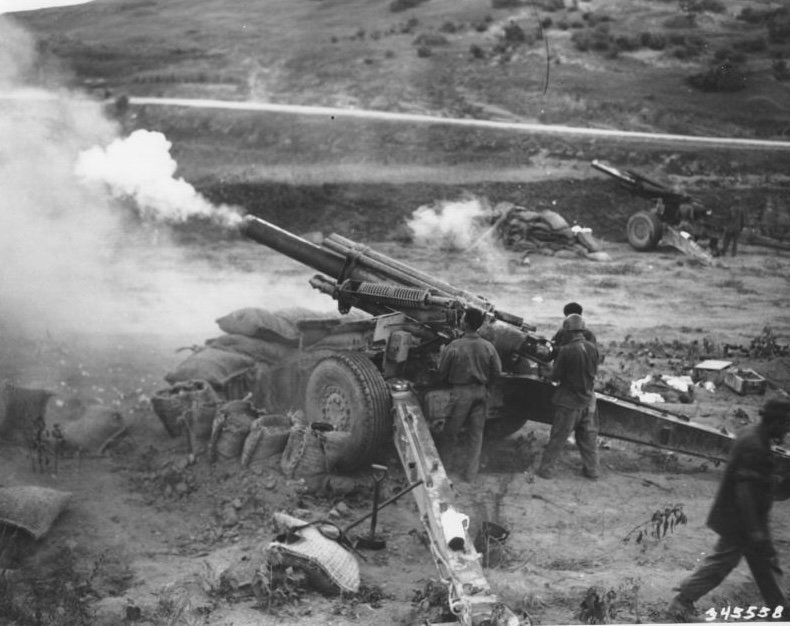

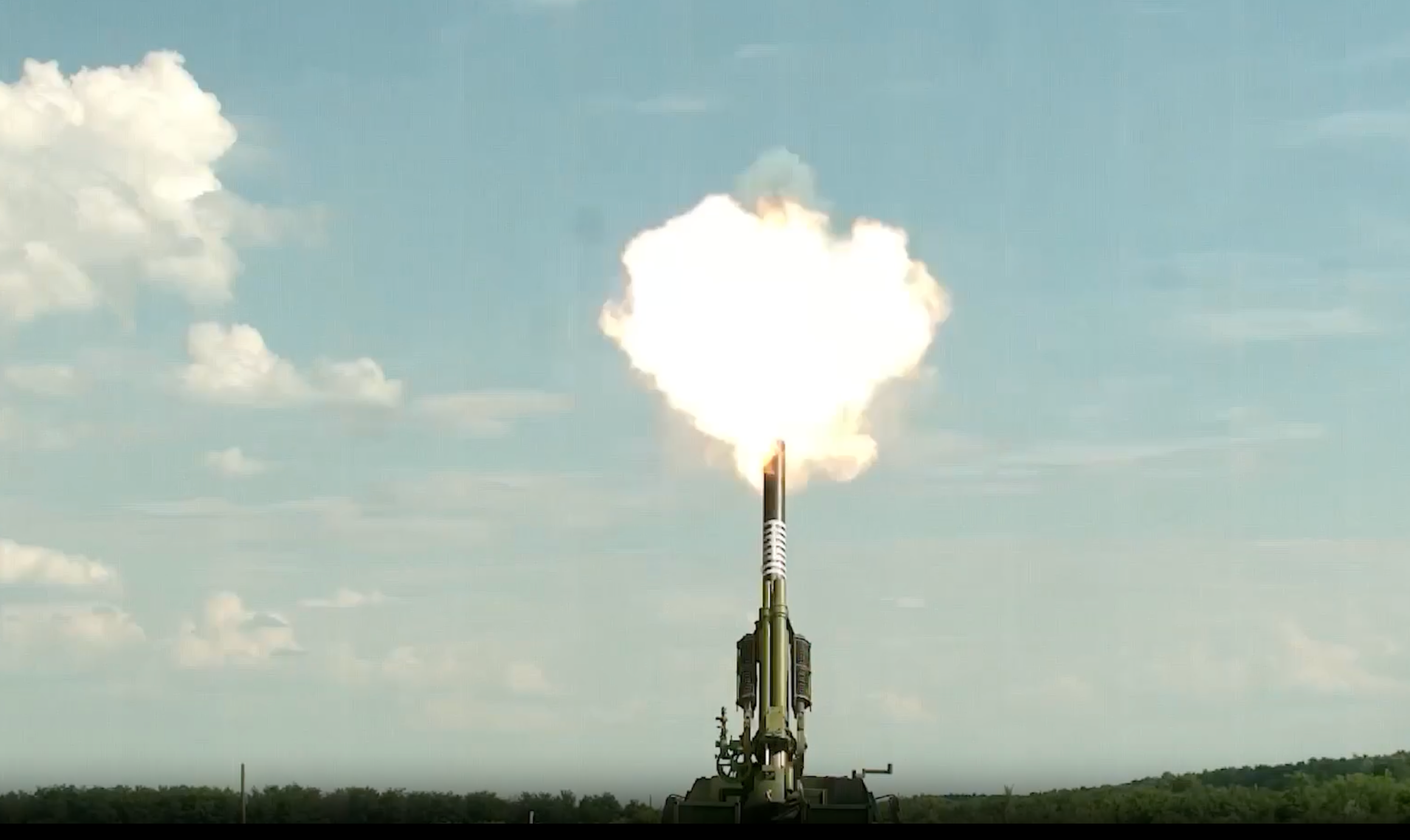
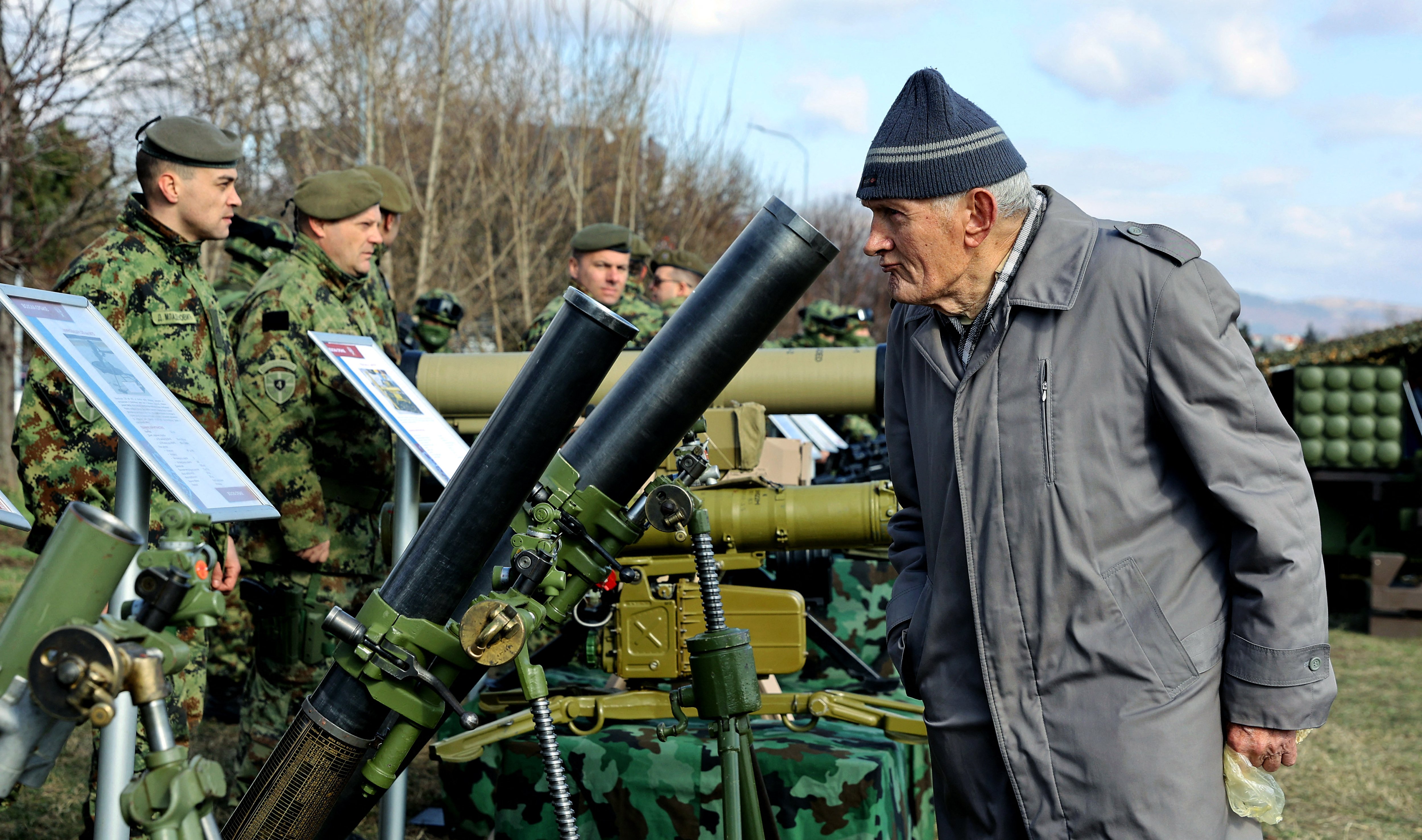




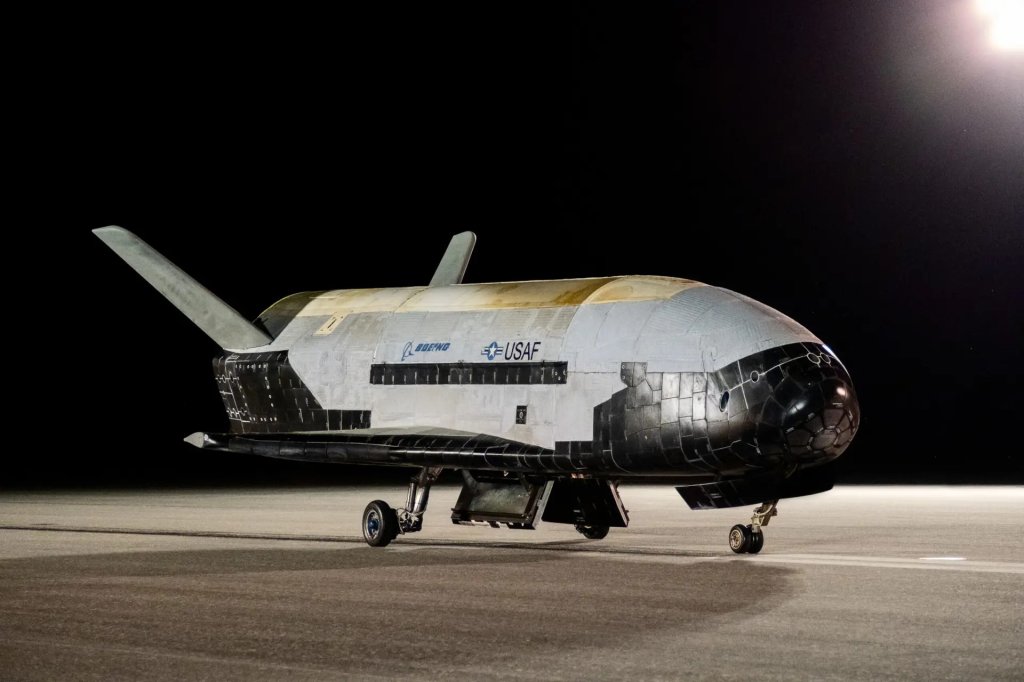


 They seem not only got a model but also a full-scale prototype.


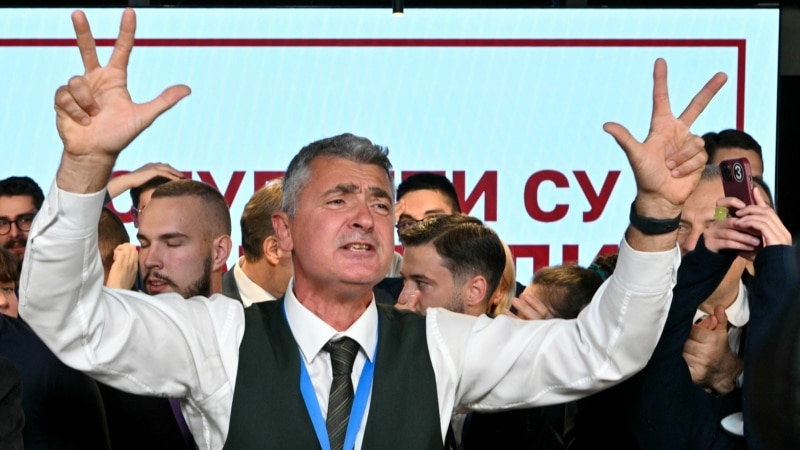









 Israeli Prime Minister Benjamin Netanyahu warned Sunday that Iran and its regional allies could launch attacks intended to disrupt Israel's October 27 election, declaring that the Israeli military is prepared for both defensive and offensive operations.