❌

Reading view

Russia replaces Ukrainians with Russian settlers in occupied Kherson Oblast; only 10–20% of pre-war population remains, Ukraine says

A street in Oleshky, Kherson Oblast, in 2007. Under Russian occupation since 2022, the settlement has since descended into a severe humanitarian crisis amid Russian restrictions and attacks. Photo via Wikimedia Commons

Ukraine’s military intelligence estimates that only 10–20% of the prewar population may remain in the Russian-occupied left bank of Kherson Oblast, accusing Moscow of forcing Ukrainians from their homes while relocating Russian citizens to the area.

Russia’s efforts to displace Ukrainians and bring Russian citizens into occupied Kherson Oblast are part of Moscow’s broader campaign to consolidate control over occupied territory, impose Russian institutions, and erode Ukrainian national identity. Similar practices have been documented in other occupied Ukrainian territories, including the resettlement of Russians into homes in Mariupol and efforts to replace Ukrainian education with Russian curricula.

The Main Intelligence Directorate of Ukraine’s Defense Ministry (HUR) said Russia was creating intolerable living conditions for Ukrainian residents and unlawfully seizing private property to displace them. The agency said Moscow was simultaneously using financial incentives to recruit Russian teachers, doctors, and other professionals to work in occupied areas.

Russia brings in Russian workers as Ukrainians are pushed out

Before Russia’s full-scale invasion in February 2022, around 500,000 people lived on the left bank of Kherson Oblast, according to HUR. The agency estimates that only 10–20% of that population may remain.

Moscow is using state-backed recruitment programs, including “Zemsky Teacher,” “Zemsky Doctor,” “Zemsky Feldsher,” “Zemsky Cultural Worker,” and “Zemsky Coach,” to attract Russian citizens to occupied Ukrainian territory, HUR said.

Under these programs, Russian teachers and doctors who agree to work in occupied areas are offered one-time payments of 2 million rubles, while junior medical staff can receive 1 million rubles. The incentives also include higher salaries and other benefits, with contracts lasting at least five years.

HUR said hundreds of Russian teachers and doctors had already been brought to occupied Ukrainian territories from regions across Russia, including Krasnodar, Khabarovsk, Stavropol, and Perm Krais, as well as Rostov, Kursk, and Leningrad oblasts.

According to Ukrainian intelligence, Russian medical personnel are needed primarily to serve occupying forces, while Russian teachers are being brought in to undermine Ukrainian children’s national identity.

Ukraine accuses Russia of war crimes and genocidal practices

HUR said Russia’s efforts to displace Ukrainian residents and bring in Russian citizens bore signs of war crimes and genocidal practices against the Ukrainian population.

The agency’s allegations concern both the coercive removal of Ukrainians from occupied territory and the replacement of local residents with people brought from Russia. Ukrainian authorities say these policies are part of Moscow’s broader effort to consolidate control over occupied Ukrainian land and impose Russian identity and institutions.

Kherson Oblast faces displacement, attacks, and a humanitarian crisis

Russian forces occupied much of Kherson Oblast in the early months of the full-scale invasion in 2022. Ukrainian forces liberated the oblast’s right-bank areas, including the regional capital, in November that year, but Russia continues to occupy the left bank of the Dnipro River.

Russian forces regularly attack Ukrainian-controlled areas of Kherson Oblast with artillery and drones, killing and injuring civilians. Ukrainians have described repeated drone attacks on civilians as a “human safari.” In May 2025, a UN commission of inquiry concluded that Russian forces’ repeated drone attacks on civilians along the Dnipro’s right bank amounted to crimes against humanity of murder.

The occupied town of Oleshky, on the left bank, has also faced severe shortages of food, medicine, and medical care amid restrictions on movement and continued fighting.
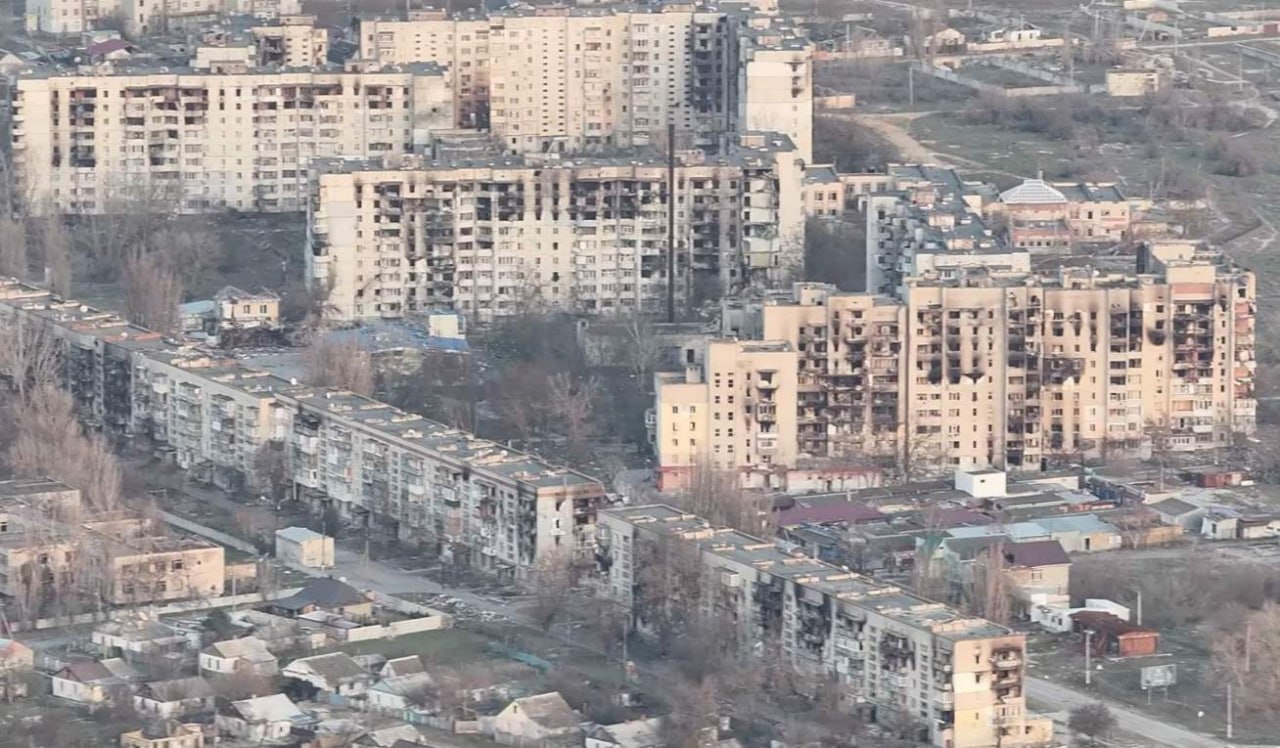
Oleshky, Kherson Oblast, has been under Russian occupation since 2022, following Russia’s capture of the city during the initial phase of its full-scale invasion of Ukraine.
Explore further

Thousands are starving in occupied Oleshky. People have no food, no way out, and Russian forces bomb incoming aid

Russia’s occupation has also exposed residents of Kherson Oblast to major humanitarian disasters. The destruction of the Kakhovka Dam in June 2023 flooded settlements along the Dnipro, including Russian-occupied communities on the left bank, damaging homes and forcing residents to flee. Russian forces’ restrictions on access and evacuation further endangered civilians in the affected areas.

While Russia occupies the left bank of Kherson Oblast, its forces continue to target civilians on the Ukrainian-controlled right bank. Across the oblast, residents face the consequences of Russia’s invasion, from forced displacement and property seizures under occupation to deadly drone and artillery attacks.

  •  

He drove a taxi in Jakarta and once worked in the US. Russia trained him as a machine gunner for a week and a half, then sent him into his first and last battle

drove taxi jakarta once worked russia trained machine gunner week half sent first last battle · post taufiq muhammad indonesian citizen ukraine’s military intelligence says recruited died fighting donetsk oblast

An Indonesian taxi driver who went looking for work abroad ended up in Russia's army and died in his first battle in Ukraine, Ukraine's military intelligence (HUR) said. Russian recruiters found him through a job application, and he reached the front in Donetsk Oblast within weeks of signing. HUR calls him one more foreigner drawn into Russia's war through deception.

Russia's war against Ukraine consumes men faster than the Kremlin is ready to replace them through another mobilization at home, so it keeps hiring abroad. Ukraine has identified nearly 46,000 foreigners who signed with Russia's army since 2022. On 26 October, a UN commission found “compelling evidence” that Russia trafficked men from 29 countries into its forces.

A résumé that reached Russian recruiters

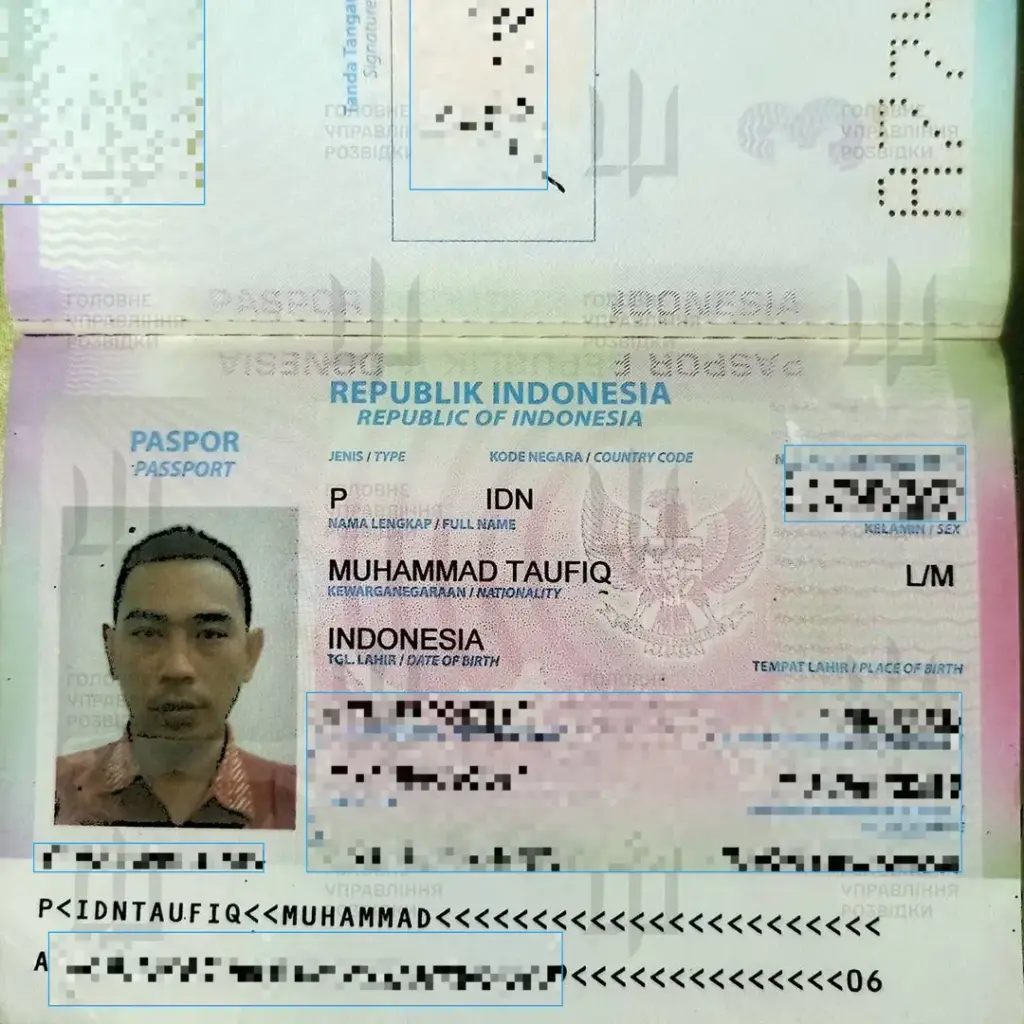
Taufiq Muhammad, born in 1978 in Sorong, Indonesia, drove a taxi in Jakarta and had once worked in the US. Russian recruiters found him through a résumé he had sent out while looking for work, the agency said. He probably believed promises of “easy money” and traveled to Moscow. HUR sees his case as part of a pattern.

“In fact, he became yet another victim of Russia's scheme of recruiting foreigners for the criminal war through deception,” HUR said.

A week and a half of training, then the front

Muhammad signed a one-year contract with Russia's army in Korolyov, near Moscow, on 19 April 2026. HUR called that term typical for foreigners Russia uses as “disposable” infantry. Russia made him a machine gunner and gave him only a week and a half at a training center near Voronezh, Army Inform reported, citing HUR.

Passport of Taufiq Muhammad, an Indonesian citizen Ukraine’s military intelligence says Russia recruited, with his personal data pixelated by Euromaidan Press
Passport of Taufiq Muhammad, an Indonesian citizen Ukraine’s military intelligence says Russia recruited, with his personal data pixelated by Euromaidan Press. Photo: HUR

Russia moved him to occupied Ukraine in early May. He died almost at once, in his first battle. Russian troops were trying to advance from the village of Zelena Dolyna toward Novoselivka and Drobysheve in Donetsk Oblast, Militarnyi reported.

Indonesia is the newest recruiting ground

Russia's recruiters have been working in Indonesia for months. In August, Ukraine's Foreign Intelligence Service said it held documents on at least eight Indonesians recruited into Russia's army.

Another Indonesian, Rendi Apriyanto, 30, was reportedly killed in September, his family learned from an Indonesian fighting for Russia. Rendi had told his family he was recruited for logistics work, The Jakarta Post reported.

HUR has traced the same fast track before. In January, it identified a Filipino recruit killed in a Donetsk Oblast assault after one week of training. A Nigerian, 34, died in Kharkiv Oblast after a similar week of training, HUR said in May.

Russia courts Africa ahead of a summit

Ukraine's Foreign Ministry has counted at least 2,982 Africans recruited into Russia's army, and 486 of them have died. Ahead of a Russia–Africa summit on 28–29 October, Moscow plans military and port-access deals with a string of African states, HUR said. The deals would help expand the campaign of Russia's Africa Corps, the Defense Ministry-controlled force on the continent, Army Inform reported, citing HUR.

Each recruit Ukraine identifies gives his home government a documented case to act on. Jakarta has said citizens shown to have been deceived will get its protection, while those who enlisted by choice could lose their citizenship.

  •  

Ukrainian intelligence: Russia can probably add 10–15 Su-34 bombers a year, but no new Tu-95s or Tu-22M3s

russia kept its fifth-generation su-57 stealth fighter near urals — ukrainian drones found anyway · post two fighters one su-34 apron shagol airbase russia's chelyabinsk oblast satellite exilenova+ два су-57

Russia’s aircraft plants still turn out modern fighter-bombers and fighters, enough to partly cover its losses, Ukraine’s military intelligence agency HUR told Ukrainian news agency UNIAN, which published the reply on 23 October. Its older bombers are a different story. Russia has no serial production of new Tu-95s, Tu-22M3s, or Su-24s and keeps them flying through repairs and upgrades, so each one lost for good leaves a lasting gap, HUR said.

Ukraine’s Navy said its Neptune missiles hit six Su-34M bombers at Borisoglebsk airbase in Russia’s Voronezh Oblast overnight into 15 October. Zelenskyy later said four were destroyed and two damaged. The Su-34 is one of the jets that drop Russia’s glide bombs, heavy bombs fitted with wing-and-guidance kits, on Ukrainian positions and towns.

How fast Russia replaces its jets

Russia can probably deliver 10–15 Su-34s a year now, HUR estimated. Deliveries grew from eight in 2022 to 11 in 2023 and 12–14 in 2024. But the agency said that trend does not confirm the same pace today.

For the Su-35S fighter, HUR pointed to an average of about 11–12 a year in 2021–2025. It called that a rough benchmark, not an established 2026 output. Su-30SM2 and Su-57 production continues, but reliable rates cannot be determined. Su-30 figures also mix new builds with upgrades of older Su-30SMs, HUR noted.

What Russia had, and what it lost or saw badly damaged in 2026

By the end of 2025, Russia had about 125 Su-34 and Su-34M bombers, which HUR counts together. It also had 140–145 Su-30 jets of various versions, 135–140 Su-35S, and about 20 Su-57s, HUR estimated. These are only fleet estimates, not a guaranteed number of jets Russia can send on combat missions at the same time, the agency cautioned. Some are under repair or upgrade, and HUR is not disclosing the current fleet size.

Satellite image from 13 October shows six Russian Su-34 fighter-bombers parked in the area later struck at Borisoglebsk airbase
Satellite image from 13 October shows six Russian Su-34 fighter-bombers parked in the area later struck at Borisoglebsk airbase. Image: Exilenova+

HUR also named specific 2026 cases of Russian aircraft destroyed or critically damaged. A Tu-22M3 crashed in Irkutsk Oblast on 15 June. Strikes on Engels airbase on 17 July and 28 August hit two Tu-95MS. The first suffered critical damage to its tail section, and HUR treats the second as a probable irrecoverable loss.

The list also includes a Su-35 that Ukraine’s military says it shot down on 8 July, a claim backed by published materials showing debris. It adds a Su-57 crash in Moscow Oblast on 23 July and a collision of two Su-35S over Kursk Oblast on 7 September. Full official details on those two incidents are still missing, HUR noted. Strikes on several Su-57s and a Su-34 at Shagol airbase on 25 April, and on a Su-24 in Crimea on 7 September, were also reported, but the state of those jets is unknown, so counting them as destroyed would be premature, HUR said. The list, as published, leaves out the Su-34s at Borisoglebsk and the Tu-95MS that Russia’s defense ministry said crashed on takeoff in Amur Oblast in late September.

  •  

Acton’s mother was convicted of theft, animal cruelty: What to know

A GOP campaign ad featuring the estranged mother of Ohio gubernatorial candidate Amy Acton (D) received blowback this week after it was revealed Acton’s mother stood by her husband after he was charged with sexually abusing Acton as a child. Court records show that the mother, Donna Arthur, has faced legal troubles of her own,…

  •  

Russia may stage sabotage in Eastern Europe, but wants Kyiv blamed, Ukraine’s Intelligence warns

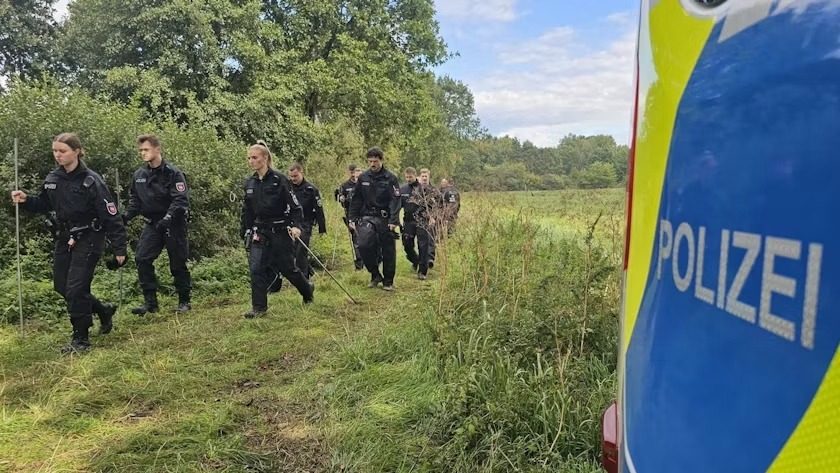
explosives found meters drone crashed near bundeswehr air base—investigators say matches gru's leipzig attack devices · post police officers search debris wunstorf base lower saxony germany 15 2026 german dpa

Ukraine’s Defense Intelligence (HUR) warned that Russia may stage sabotage in Central and Eastern Europe, including the Baltic states, and blame Ukraine for the attacks, in a Telegram post on 23 October.

The warning comes three days after The Wall Street Journal reported that US intelligence traces Europe’s sabotage wave to Putin’s personal order. If Russia stages new attacks and pins them on Ukraine, as HUR warns, European anger could turn on Kyiv rather than the Kremlin. This goes further than HUR’s statement on 2 October, which named potential Russian targets in Europe but did not mention a plan to blame Ukraine for attacks.

HUR says Moscow wants to discredit Ukraine’s army

Russia is stepping up its hybrid strategy to destabilize the European Union, according to HUR. The agency identified two aims: reducing foreign support for Ukraine by discrediting its Defense Forces, and intimidating European governments and societies.

The accusations would be spread through Russian propaganda channels and international platforms accessible to the Kremlin.

Potential targets include infrastructure and Russian Orthodox Church sites

HUR listed several potential targets for Russian provocations:

  • critical infrastructure and areas bordering Russia;
  • the Kaliningrad exclave;
  • areas of EU countries with Russian-speaking populations;
  • Kremlin-controlled sites, including properties belonging to the Russian Orthodox Church network;
  • historical sites associated with Russia.

The list reflects HUR’s assessment of potential targets, not confirmation that attacks at these locations are planned.

Earlier warnings and reported sabotage

On 2 October, HUR said Russian intelligence services had been ordered to increase activity in EU and NATO countries. It named military facilities, critical infrastructure, communications systems, and Starlink ground stations as potential targets and said it had alerted partners.

Warnings of Russian false flags on NATO’s eastern flank predate HUR’s. In August, Bloomberg reported, citing an unnamed European intelligence official, that Russia might expand hybrid attacks against Poland and the Baltic states, including false-flag attacks. A European government official separately told the agency that the CIA had warned countries in the region of a possible Russian attack. Lithuania’s military intelligence had warned earlier in August that Moscow might reassemble captured Ukrainian drones for false-flag strikes on critical infrastructure in the Baltic region.

Meanwhile, The Wall Street Journal reported on 20 October that US intelligence agencies believe the attempted drone attack on Leipzig-Halle Airport in Germany in early August was among the opening shots of a sabotage campaign ordered by Russian President Vladimir Putin. The Journal cited European officials briefed on the intelligence findings.

According to the newspaper, at least three drones carrying military-grade Semtex explosives were involved. One struck an Antonov cargo plane used to transport military aid to Ukraine but failed to explode. Another collided with a different aircraft, while a third detonated near the airport perimeter. German newspaper Welt am Sonntag has since named two suspects, citing German investigation files. Earlier German media reports described the sequence differently.

The Journal also reported sabotage attacks on Starlink stations in Poland, Lithuania, and Bulgaria in recent weeks. In August, Slovak authorities said they had foiled a planned arson attack on a Ukrainian drone factory, the Journal reported.

Russia denies involvement in sabotage in Europe. Responding to Berlin’s accusations over the Leipzig incident in early September, Putin asked where the evidence was.

  •  

Russians try to sneak toward Zaporizhzhia through the dried-up Kakhovka Reservoir. Ukrainian intelligence captures three

Ukrainian Bratstvo Battalion fighters capture a Russian serviceman on the dried-up bed of the Kakhovka Reservoir during counter-sabotage operations. October 2026. Screenshot: Defense Intelligence of Ukraine/Telegram

Fighters of the Bratstvo Battalion, part of the Timur Special Unit of Ukraine’s military intelligence agency (HUR), captured three Russian servicemen and gave first aid to one of them, HUR reported on 19 October. They also found and destroyed Russian sabotage groups, HUR said, adding that counter-sabotage operations in the Zaporizhzhia direction are ongoing.

Russian forces have spent months trying to get closer to Zaporizhzhia, one of Ukraine’s largest cities. They may try to use the dried-up bed of the Kakhovka Reservoir to infiltrate north toward it as autumn fog and dense vegetation set in, the Institute for the Study of War reported on 26 September. Ukrainian troops are now clearing the area of Russian saboteurs trying to get into the rear of Ukrainian positions, according to HUR.

HUR’s video shows the fighting and the captures, with one dead Russian soldier blurred. At the end, a captured Russian says two of the three men in his group were killed by a “Baba Yaga,” the nickname Russian troops use for Ukraine’s heavy bomber drones.

HUR described what the Russian groups are trying to do:

“Using small sabotage groups, the enemy is attempting to penetrate deep into the rear positions of Ukraine’s Defense Forces, build up forces to destabilize the situation, disrupt logistics, and neutralize Ukrainian defenders’ combat crews.”

Russia seeks to bring the front closer to Zaporizhzhia

Russia’s objective in the Zaporizhzhia direction is to advance within artillery range of the city, hold forward positions, and protect its rear from Ukrainian strikes, the Institute for the Study of War noted.

In January, Russian forces were trying to capture Stepnohirsk and advance along the shore of the former Kakhovka Reservoir toward Zaporizhzhia. Taking the settlement would let Russian troops place long-range artillery or fiber-optic drones there to strike the city’s outskirts, Southern Defense Forces spokesperson Vladyslav Voloshyn told Ukrinform on 14 January.

Site of a Russian drone strike on a Zaporizhzhia residential area, 20 January 2026. Photo: Zaporizhzhia Regional Military Administration
Explore further

Russia drained the Kakhovka Reservoir. Now it hides in the dry bed to creep toward Zaporizhzhia

On 22 September, Anastasiia Shevchenko, spokesperson for the Southern Forces Group, said there were no signs of preparations for a direct offensive on Zaporizhzhia and that Russian forces lacked the troops and means to advance directly toward the city.

Dense vegetation and limited visibility: combat on the reservoir bed

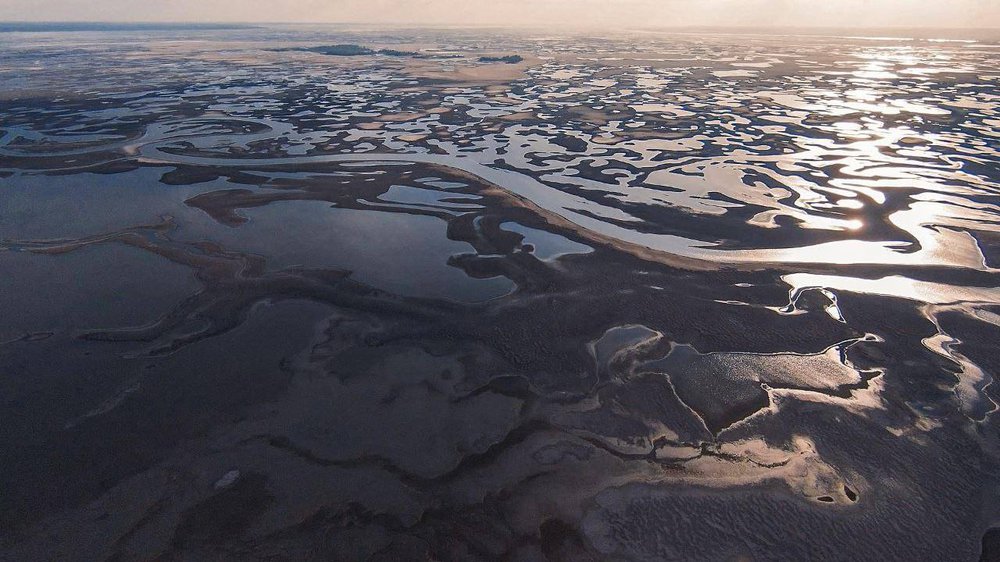
The Kakhovka Reservoir was a vast artificial body of water on the Dnipro River in southern Ukraine that supplied water to millions of people, as well as to agriculture and industry. On 6 June 2023, Russian forces blew up the Kakhovka Hydroelectric Power Plant, the Southern Operational Command reported.

The bed of the Kakhovka Reservoir has nearly dried out after the dam was destroyed on 6 June 2023.
The bed of the Kakhovka Reservoir has nearly dried out after the dam was destroyed on 6 June 2023. Photo: Maksym Pavlovsky/Dumska

After the dam was destroyed, the bed of the former reservoir quickly became overgrown with willows, poplars, and shrubs, creating a new battlefield. Ukrainian troops have fought there before.

In November 2025, fighters from the same Bratstvo unit carried out a reconnaissance and sabotage operation 7 kilometers from the shoreline of the former reservoir, HUR said. They found and eliminated Russian troops, then raised the Ukrainian flag over the islands there and took control of the area.

In April, the Bratstvo unit’s chief of staff, who goes by the call sign “Dyviziia,” described the conditions on an earlier raid across the reservoir bed:

“You’re just constantly moving through these thickets, with no way to figure out which direction to go. You can literally see everything just two meters ahead of you.”

  •  
❌