German defense AI firm Helsing has unveiled Contra, an AI-run air defense system and two interceptor missiles designed to chase Russia’s jet-powered Geran drones, the company announced on 26 October. Officials pitch it as cheap, but it won’t reach the market this winter.
That leaves Ukraine on its own defenses as Russia shifts to jet drones. By early October, jet models made up about 40% of Russian drone launches, and Ukraine’s own interceptors for them won’t arrive in needed numbers before late November, Air Force Deputy Commander Yurii Cherevashenko said.
Two missiles, one AI brain
Contra is the command layer of air defense: it links radars and other sensors, tracks incoming drones and missiles, and assigns a weapon to each target, while people keep control over decisions, Helsing said. Besides the company’s own missiles, it can also use other firms’ interceptors, lasers, guns, or nets. AD-1 Inferno is jet-powered and designed to loiter, swarm, and re-engage targets, while AD-2 Ambush, a solid-fuel rocket, is designed to reach Mach 2.5, over twice the speed of sound, and a range of more than 20 km, the company said.
Inferno, with a 700 km/h speed and a 20-km range, would be the everyday shooter. Ambush would handle “leakers,” drones about to hit the ground, said Maxwell Adams, Helsing’s senior product director. Each shot should cost under $100,000, company officials said.
Built for the faster Gerans
Ukraine once downed 90% of Russia’s slower, propeller-driven Gerans, copies of Iran’s Shahed, Defense News reported. Russia has since fielded thousands of jet Geran-4s and Geran-5s flying at 400–700 km/h, and almost half now get through, Helsing co-founder and co-CEO Gundbert Scherf said.
Ukraine’s own nightly rates swing widely. On 28 September, President Zelenskyy put the shoot-down rate for jet drones at 57%. Overnight on 7 October, it exceeded 82%, National Security and Defense Council Secretary Ihor Klymenko said. Russian output of the two models has reached 4,000 a month, Helsing said, citing unspecified intelligence reports.
Explore further
German company introduces AI-powered HX-2 drone for Ukrainian military
Helsing has signed one Contra contract, Scherf said, but the system is still in testing, and he expects it on the market in the second half of 2027. Ukraine already uses Helsing’s HX-2 strike drones. Scherf said they should be integrated into a system like Contra.
Iranian President Masoud Pezeshkian met with Qatar Emir Sheikh Tamim bin Hamad al-Thani in Moscow on Tuesday, Iran’s PressTV has reported. The meeting, which took place on the sidelines of the 8th Gas Exporting Countries Forum (GECF) summit, marked the second day in a row of high-level engagement between Iran and a Gulf Arab state, […]
The constituents of the recently created Mecca Defence Alliance held their maiden meeting with Iran in Tehran on Monday, October 26, seeking ways to end the ongoing conflict between Saudi Arabia and Yemen and a larger understanding over regional security.
The participants agreed “to continue the dialogue to strengthen cooperation among the four regional countries, including for peace and security in the region,” a brief joint press statement, issued after the meeting said.
Saudi Arabia, Pakistan, and Türkiye created the Mecca Pact in August amidst the ongoing US-Israeli war on Iran and the growing fear of Israeli expansionism. The members have claimed the pact is based on the principle of collective security and was defensive in nature. Some of them have also hinted they are seeking to expand its membership.
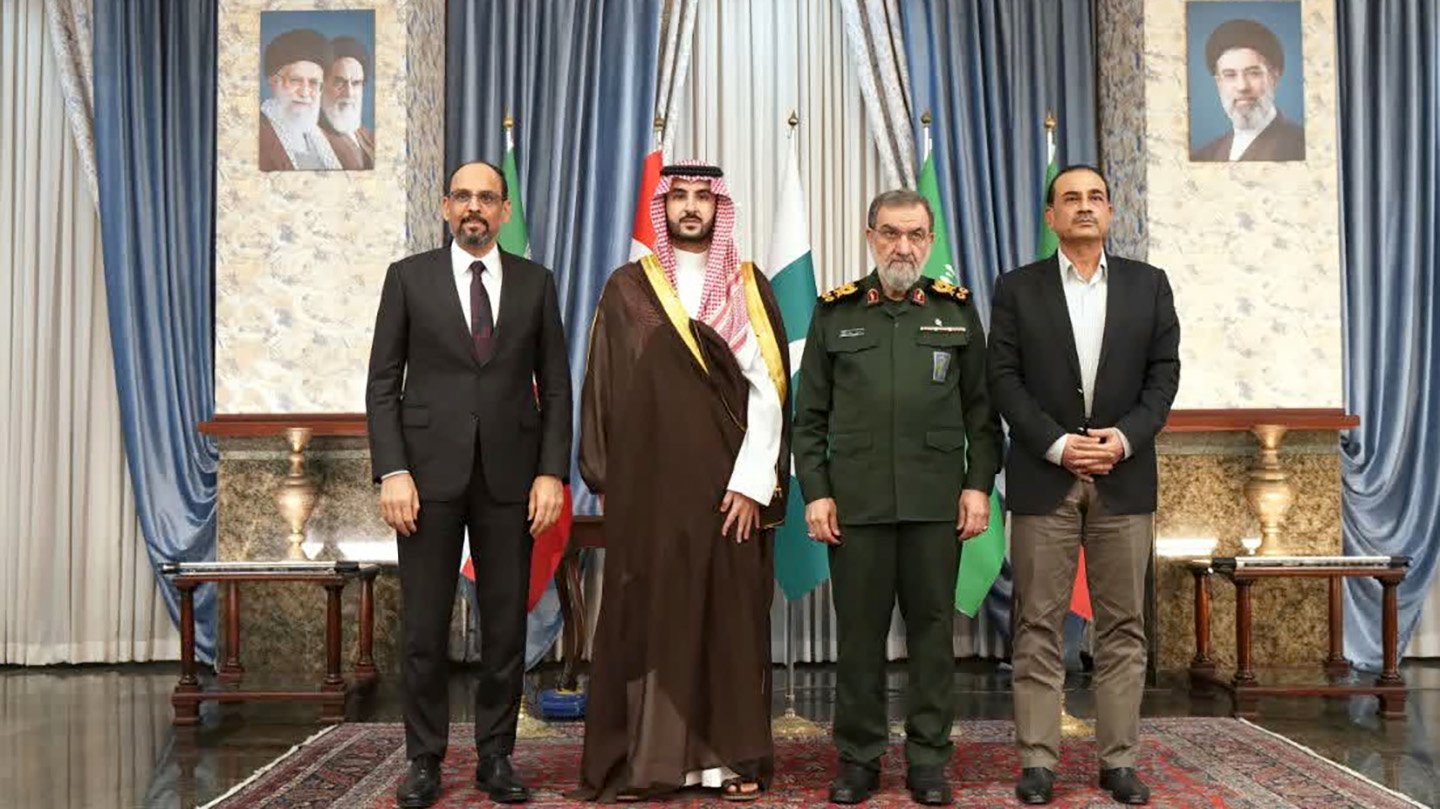
On Monday, Defense Minister of Saudi Arabia Khalid Bin Salman, Pakistan Army Chief Asim Munir, and Türkiye’s National Intelligence Organization Director Ibrahim Kalin met with the head of Iran’s Supreme National Security Council (SNSC) Mohsen Rezaei and Foreign Minister Abbas Araghchi.
The Mecca Pact officials also met separately with Iranian President Masoud Pezeshkian earlier in the day.
The meeting came at a time when there is a growing speculation about the renewal of US-Israeli aggression on Iran which has ceased since August. It also coincides with escalation in Saudi Arabia’s conflict with Ansar Allah in Yemen.
Saudi Arabia has faced increased retaliatory attacks from Ansar Allah forces in Yemen after it violated a 2022 UN-sponsored ceasefire and attacked Sanaa International Airport in July. Ansar Allah seeks the end of Saudi interference in the country and the lifting of over a decade-long Saudi blockade on the country.
Pakistan and Türkiye have since announced the deployment of their forces in Saudi Arabia.
Citing unknown Pakistan officials, Reutersclaimed that the negotiations between the four countries also featured fresh proposals to end the US-Israeli war on Iran.
Regional cooperation on peace and security
Informing about the meeting, Esmail Baghaei, official spokesperson of Iran’s Ministry of Foreign Affairs had earlier said that it could be a prelude to establishing endogenous security in the region.
“From our perspective, the fact that regional countries are seeking to establish, or at least consider, regional security mechanisms based on their own interests and concerns is a welcome development,” Baghaei said, underlining that Iran has long advocated for ending external reliance and building a regional security mechanism.
Iranian resilience against the joint US-Israeli aggression has “shown that sustainable and reliable security in our region can only be achieved through building trust and cooperation among regional countries,” Baghaei had claimed.
After the meeting, Rezaei announced that all the participants have agreed that “the security in West Asia must be endogenous and that any foreign interference must be prevented.”
SNSC’s Deputy Secretary Bagheri Kani also claimed that though there were differences in priorities and approaches, the quadrilateral meeting “reflected a shared understanding among the four parties of the need for cooperation,” Press TVreported.
Reacting to the development, Trita Parsi of the Quincy Institute claimed that though the meeting had the immediate objective of the Mecca alliance seeking Iranian help to resolve the ongoing conflict between Yemen and Saudi Arabia, it also reflects a changing security dynamic in the region.
Contrary to “Washington’s conventional wisdom,” the countries in the region “are showing greater agency and taking responsibility for the region’s security themselves” as the US pulls back militarily following the humiliation faced in its eight-month-long war against Iran, Parsi claimed.
US is not a reliable partner
“Some regional countries once imagined that by aligning themselves with a major power like the US they could shield themselves from any threat. In practice, however, they discovered that this notion did not align with reality,” he said.
Saudi Arabia and Türkiye have several US military bases in the country. Pakistan has maintained a close military partnership with the US for decades.
Some of the US bases in Saudi Arabia were damaged during Iranian retaliation earlier this year. The US has reportedly refused to come to Saudi’s aid despite it seeking the same to counter Ansar Allah’s advances in Yemen.
The meeting on Monday was a result of the realization “that there is no alternative but to rely on regional engagement and to establish security based on cooperation and synergy among the countries of the region,” Kani said.
He also claimed that the members felt the urgency for the meeting as the Zionist regime has “demonstrated its savagery and an unbridled appetite for expansion” in recent years, indicating the ongoing Israeli genocide in Gaza and its aggression and occupation in other Palestinian territories, Lebanon, and Syria.
It was reported that all parties of the meeting demanded that Israel must end its genocide in Gaza and end its occupation in Lebanon and Syria.
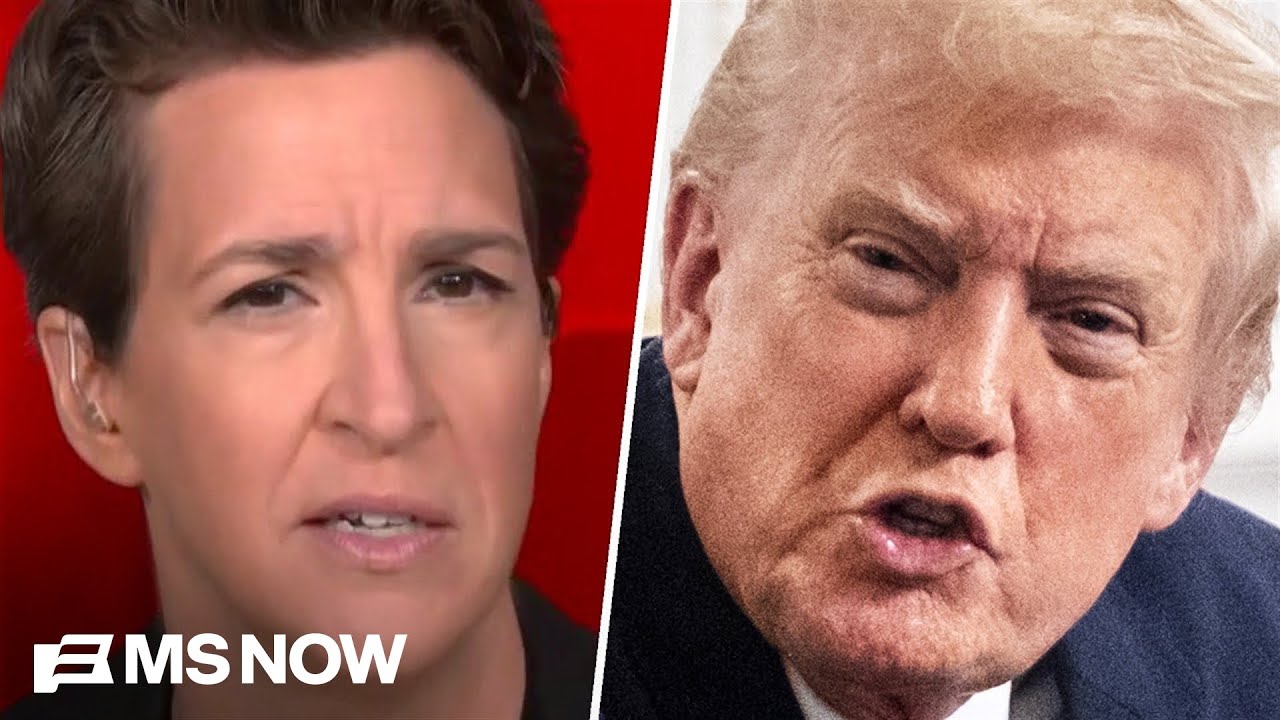
If there’s one story MSNOW’s Rachel Maddow is known for, it’s her tenacious, years-long focus on a broad theory that Trump is a compromised agent of Russian intelligence installed by Russia via a shady patchwork of direct funding, loose connections, opaque meetings, election interference, Facebook ads, innuendo, and genuinely strange behaviors. From 2016 to 2025, Maddow mentionedRussia 6,126 times on her primetime program The Rachel Maddow Show.
This analysis isn’t a commentary on the validity of the “Russiagate” story, as such. I think it was inflated, and served the ends of some of the worst elements in the US security state, but there was certainly an element of truth to it. (Trump is brazenly venal, and would presumably take bribes from anyone). At the same time, the conspiracy mongering veered into Loose Change territory and was, ultimately, contradicted by Trump’s own policies which—while rhetorically critical of Ukraine—have largely continued to arm and support the country in its four-year-and-a-half war against Russia’s aggression.
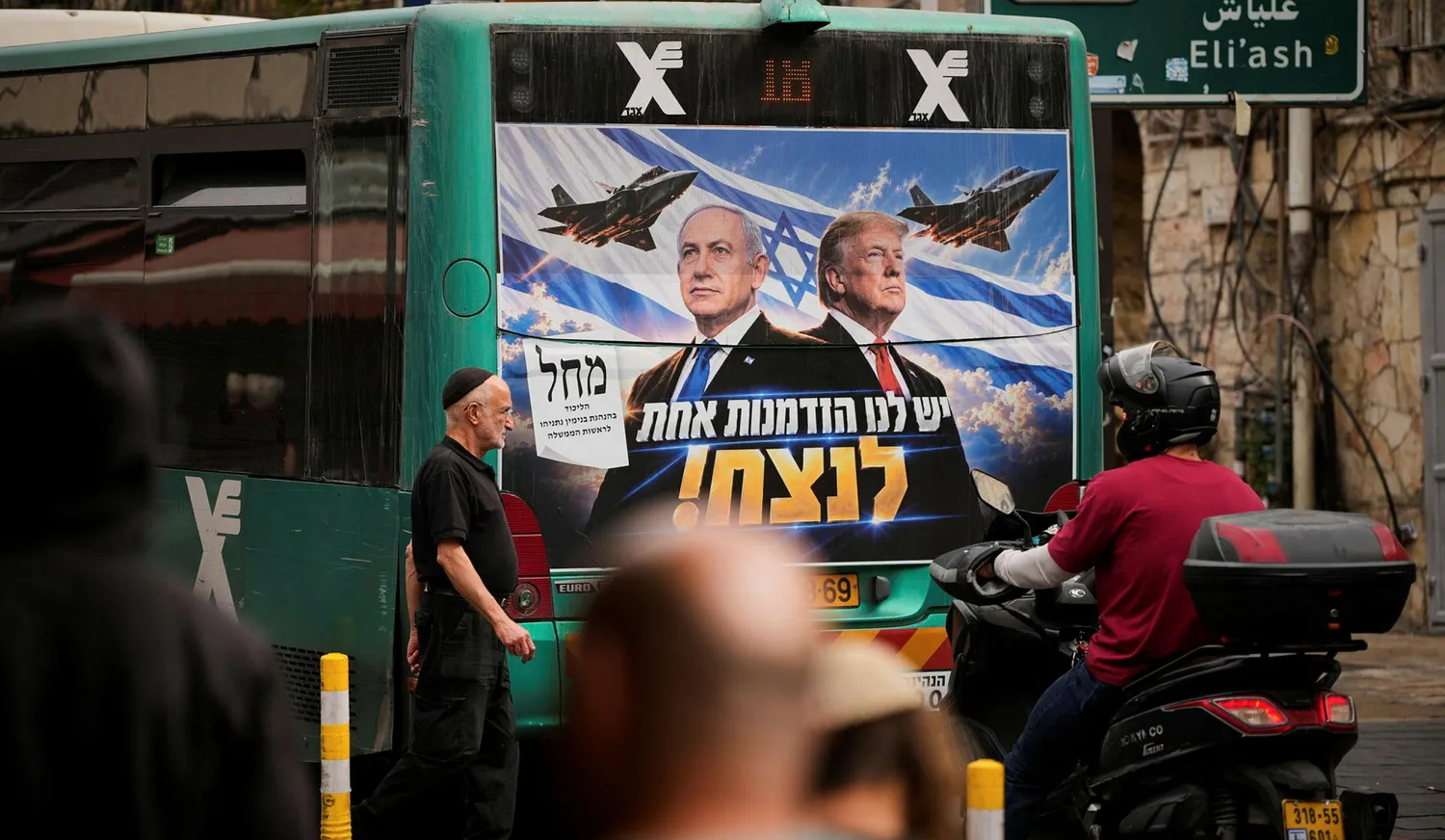
The state of Israel is running what could very well be construed as GOTV commercials for the Republican Party during an election season.
What’s noteworthy is less that Maddow has covered Trump’s connections with Russia, and the associated seemingly weekly breathless developments. It’s that, over the past two years in particular, she has very conspicuously avoided a major story about another country influencing domestic politics in service of Trump and a pernicious reactionary agenda: that of Israel’s influence over the president, and its broader attempts to influence politics in the US. A report in Zeteo last week details how Israel is directly funding ads in swing states that not only advertise Israel’s alleged security benefits to the US, but show images of Trump’s 250 year celebration, the White House, and Trump’s ambassador to Israel, painting them in a heroic light. In other words: the state of Israel is running what could very well be construed as GOTV commercials for the Republican Party during an election season.
This is, of course, just the tip of the iceberg. A Quincy Institute report in June calculated $1 billion in influence operations since 2023 directly backed by the state of Israel targeting the American public via lobbyists, TV ads, media campaigns, AI output-altering fake websites, propaganda delegations, building “business ties” with Silicon Valley, and a host of other, more opaque efforts. Israel’s attempt to influence US politics has exploded in recent years, and this is just what is disclosed:
And all of this is one top of the decades-long multibillion dollar informal network of pro-Israel propaganda groups like the Anti Defemation League (ADL), the American Israel Public Affairs Committee (AIPAC), and Christians United for Israel (CUFI), organizations largely funded by American donors with ideological commitments to Israel, though not directly by the state of Israel. These groups frequently align messaging with and coordinate with the Israeli government, but there was always a thin veneer of plausible deniability. These latest efforts are not even bothering to maintain this veneer: Israel is, increasingly, directly funding influence operations—many of which have explicit ties to the Trump White House. Indeed, Trump has taken the unusual step of openly endorsing Netanyahu in his upcoming election, and several of Trump’s advisors, including his own son-in-law, are heavily invested in Israeli companies. His former campaign manager Brad Parscale literally runs one of the aforementioned Israeli influence operations. Put another way: Trump’s “ties” to Israel and the influence the state of Israel has over Trump is far better documented, much clearer, and much more consequential than any ties he has or ever had to Russia.
Yet Maddow only covers one of these angles.
Maddow rarely talks about Israel in general—much less its influence over Trump. And, on the rare occasion she does, it’s safely within the confines of “Netanyahu Bad/Israel Good” or “Netanyahu wants Trump to win the election” safe pseudo-criticism. As Mondoweiss’ Michael Arria noted in 2021, even before Oct. 7, 2023, Maddow understood how avoiding the topic would benefit her burgeoning career, mentioning Israel only six times from 2011 to 2021 in over 2,000 shows. As I document in my book on liberal media’s role in helping destory Gaza, How To Sell a Genocide, Maddow largely avoided the subject in the first year of the Gaza genocide, and didn’t mention it at all for seven of the first twelve weeks of the Gaza assault, despite over 3,000 Palestinians being killed a week by American bombs. And when she did bring up Gaza, unlike her broad, deep, and sympathetic portrayal of Russia’s war crimes in Ukraine, Maddow’s coverage was superficial and hurried. The one major exception among MSNBC primetime stars who did have the courage to center Palestine as something more than a box to check, Joy Ann Reid, was subsequently fired for what she says was her coverage of the genocide.
Trump’s “ties” to Israel and the influence the state of Israel has over Trump is far better documented, much clearer, and much more consequential than any ties he has or ever had to Russia.
The most Orwellian moment of Maddow’s conspicuous silence on Israel was when she did a long, detailed segment on foreign powers’ influence on Trump’s attack on Iran on the first day of the bombing, entitled “Follow the money.” To kick off the segment, Maddow bizarrely handwaved away Israel’s involvement, telling her viewers, “There’s a lot of attention on Israel, and indeed Israel and the United States have worked together in the bombing campaign… but it is the Gulf Arab states that are arrayed against Iran.” She then proceeded to pin the nefarious influence entirely on “Gulf Arab states, countries like Saudi Arabia and United Arab Emirates in Qatar.” This isn’t to say these countries don’t unduly influence the Trump clan—this is well documented—but their influence is relatively small compared to that of Israel and the Trump family connection with Israel and pro-Israel donors and it’s not particularly close.
Maddow’s defenders could argue that the major difference is that Israel is an “ally” of the US, whereas Russia isn’t. But, despite the fact that the majority of Americans do not agree with this sentiment in the normative sense, the “Gulf Arab states” Maddow accuses of corrupting Trump are also US allies, so this is obviously not the reason. The real reason is that she knows discussing the elephant in the room of Israeli influence over both Trump and US body politic more broadly would pretty much spell the end of her career, as it did with Reid and, to a lesser degree, other MSNBC/MSNOW personalities that were demoted or pushed out after October 7 for having the temerity to veer off the safe script of pseudo-criticisms of Israel. As I also document in my book, the first, last, and only time MSNBC/MSNOW’s parent corporation (then Comcast) directly intervened in MSNBC/MSNOW’s coverage was to dress down network executives for letting anchors Ayman Mohyeldin and Ali Velshi attempt to contextualize the October 7 on the day of the attack. Saying anything meaningfully critical of Israel would also compromise Maddow’s access to high status arch-zionists like Hillary Clinton, with whom Maddow is doing an event in two weeks at the pro-Israel Streicker Center. Whatever the reason, the liberal media personality who built her large, intense media following sowing paranoid visions of dark, reactionary foreign influence operations is clearly determined to not mention the most brazen, obvious, and deleterious one.
Israel has spent $1 billion to influence US politics and is directly paying for ads promoting MAGA. Why isn't MSNOW's “foreign influence” sleuth covering it?
The Egyptian Parliament on Monday voted to give President Abdel Fattah el-Sisi the authority to deploy troops to Saudi Arabia, where they would help the kingdom repel attacks from the Iran-backed Houthi insurgents of Yemen.
Satellite info has aided strikes by Houthis and Iraqi militias, according to intelligence firm and Saudi and Houthi sources; targets included crucial Saudi pipeline
For nearly half a century, Iran’s adversaries have tried to isolate it, intimidate it, sanction it into submission and bomb it into irrelevance. Now, in a remarkable inversion of regional power politics, three countries historically invested in its containment have arrived in Tehran to discuss their security with the very state they were supposed to marginalise.
The country they could not defeat is becoming the country they cannot afford to ignore.
Yesterday, Saudi Defence Minister Prince Khalid bin Salman, Pakistan’s army chief Field Marshal Asim Munir and Turkish intelligence chief Ibrahim Kalın met Iranian officials in an encounter whose diplomatic courtesies barely concealed its strategic significance.
The Mecca Pact, the joint defence agreement that Saudi Arabia, Türkiye and Pakistan signed in Mecca in August, was supposed to consolidate a formidable Sunni-led defence alignment. Yet its representatives have come to Tehran confronting an inconvenient reality: Iran cannot be excluded from regional security merely because Washington and its partners find its independence intolerable.
Apparently, the Islamic Republic has become considerably more respectable since demonstrating that it cannot be conveniently eliminated.
This is the distinction between military destruction and strategic defeat that Washington and Israel persistently confuse. Overwhelming firepower can devastate infrastructure, assassinate officials and inflict enormous suffering. It cannot manufacture political submission.
Iran has survived military confrontation, retained retaliatory capabilities and forced neighbouring governments to reconsider the potentially catastrophic consequences of another war.
Survival becomes strategic victory when your adversaries must reorganise their calculations around it.
For Saudi Arabia, the reckoning is particularly humiliating. Riyadh spent decades treating American military supremacy as an insurance policy against Iranian influence. Yemen exposed the bankruptcy of that assumption.
Ansar Allah, Yemen’s Houthi movement, demonstrated that superior arsenals cannot guarantee security against an adversary capable of imposing disproportionate costs. The Saudi monarchy possesses spectacular weaponry, immense wealth and powerful patrons. Yet none of these has eliminated its vulnerability to Yemeni retaliation.
Now Riyadh finds itself seeking Tehran’s cooperation to manage a conflict that its military superiority has failed to resolve.
Pakistan’s predicament is scarcely less revealing. Munir presides over a military establishment accustomed to presenting strategic dependency as diplomatic sophistication. Islamabad’s defence commitments to Riyadh now threaten to entangle Pakistan in confrontations with Iran and Yemen that serve neither its geography nor its national interests.
The Mecca Pact promises collective security. Its less advertised feature is collective exposure to somebody else’s strategic miscalculations.
Munir must now reconcile his obligations to Saudi patrons with the inconvenient realities of Iranian power. It is an awkward assignment for an establishment that has repeatedly mistaken proximity to foreign power for genuine strategic independence.
Türkiye confronts a different calculation but reaches a similar conclusion. Ankara understands that NATO membership, military capabilities and regional ambitions cannot abolish geography. No credible security architecture can be constructed by pretending Iran is dispensable.
The deeper contradiction, however, lies within the Mecca Pact itself.
Its members seek the reassurance of collective defence while attempting to avoid being dragged into another American-Israeli confrontation. An attack on one may formally constitute an attack on all. But such commitments become considerably less attractive when Iranian retaliation, Yemeni escalation and vulnerable Gulf infrastructure enter the equation.
Collective defence sounds magnificent until someone presents the collective bill.
Iran’s achievement is not that its neighbours have embraced its revolutionary worldview. They have not. Saudi Arabia remains deeply connected to Washington, Pakistan continues its elaborate balancing act, and Türkiye remains embedded in NATO.
The significance runs deeper: these governments increasingly recognise that excluding Iran from regional security may expose them to greater dangers than engaging it.
That realisation strikes at the foundations of the American security paradigm.
For decades, Washington cultivated regional dependence on American protection while organising strategic anxieties around Iranian power. Now those same governments are exploring cooperation with the country they were encouraged to regard as an existential threat.
The irony is devastating. Decades of attempting to contain Iran may have helped establish its indispensability.
And Tehran, displaying the composure of a state conscious of its diplomatic leverage, has welcomed its visitors graciously. No triumphalist declarations are necessary. The spectacle speaks adequately for itself.
The Mecca Pact arrived ostensibly to discuss regional stability. What it encountered was the strategic consequence of its own failed assumptions.
Iran did not have to join the alliance. The alliance had to come to Iran.
The Cannes-winning ‘It Was Just an Accident’ director, having returned to Iran after the Oscars, also had a Tehran Revolutionary Court confiscate his assets and impose a travel and social media ban.
“The participants agreed to continue the dialogue to strengthen cooperation amongst the four regional countries, including for peace and security in the region,” the four nations said in a joint statement after the hastily called, last-ditch meeting concluded.
The meeting was the first meeting between Iran and the other three countries since they formed a new military alliance in August called the Mecca Joint Defense Agreement. The attendance of Saudi Arabia is of particular note as Iran struck Saudi Arabia repeatedly during Operation Epic Fury and Saudi Arabia hosted U.S. forces that attacked Iran. Iran’s proxies in Yemen, the Houthis, have been pummeling the Kingdom with drones and missiles as of late, too.
Regardless, details about the conclave are sparse, with officials saying this was just the first of what is expected to be a series of such efforts.
“Very good discussions took place between us,” Mohsen Rezaei, Secretary of Iran’s Supreme National Security Council, told Iranian state television. “I feel that a new atmosphere is emerging in the region… I sensed a very positive atmosphere in the discussions among the gentlemen.”
“We have reached an understanding with Pakistan, Turkey, and Saudi Arabia that the security of the region is achieved through its countries,” Rezaei added.
#عاجل | أمين مجلس الأمن القومي الإيراني: توصلنا لتفاهم مع باكستان وتركيا والسعودية بأن أمن المنطقة يتحقق عبر دولها pic.twitter.com/ILuUTH9k2r
The Tehran visit was called “as part of the continued efforts by the Makkah Joint Defense Agreement countries for de-escalation between parties involved in the ongoing crisis, and promoting dialogue and diplomatic solutions, in support of the mediation efforts carried out by the State of Qatar and the Islamic Republic of Pakistan,” Saudi Deputy Minister for Public Diplomacy Rayed Krimly said Monday on X before the meeting began. He used an alternative English spelling of the Saudi holy city.
HRH Prince Khalid bin Salman bin Abdulaziz Al-Saud, Minister of Defense, leads the Kingdom’s delegation to the meetings that will be held today in Tehran, capital of Iran, between Makkah Joint Defense Agreement countries and officials from the Islamic Republic of Iran, with…
Both Qatar and Pakistan have been key to previous efforts to find a diplomatic solution to the U.S.-Iran conflict. The two countries helped broker a 14-point Memorandum of Understanding (MoU) signed on June 17. The MoU provided a 60-day extension of the ceasefire to iron out an agreement to end fighting throughout the region, including Lebanon, prevent Iran from seeking nuclear weapons, end U.S. sanctions, and resume the flow of traffic through the Strait of Hormuz among other points.
That effort soon fell apart as the U.S. and Iran resumed striking each other. It has been more than a month, however, since the two nations traded direct blows.
“The visit underscores the pivotal role of Makkah Joint Defense Agreement countries in reinforcing regional security and stability, and working with all countries in the region to achieve that goal,” Krimly added about today’s Tehran meeting.
The Mecca Joint Defense Agreement was created as a pact designed to assist the Kingdom in its fight against the Houthis. An attack on one is supposed to be considered an attack on all. However, the agreement has evolved to take on the larger issue of overall regional stability amid concerns about the individual members’ own national security interests.
The Tehran meeting was attended by high-level officials, Krimly noted. Saudi Prince Khalid bin Salman bin Abdulaziz Al-Saud, Minister of Defense, led the Kingdom’s delegation, he stated. In addition, Field Marshal Asim Munir, Pakistani Chief of Army Staff, and Ibrahim Kalin, Director of the Turkish National Intelligence all met with the President of the Islamic Republic of Iran Dr. Masoud Pezeshkian, and Rezaei.
Before the meeting, Iranian Foreign Ministry spokesperson Esmaeil Baghaei said the discussions on regional security would include “Israel’s expansionist policies, developments in the Palestinian territories and Lebanon, and the repercussions of U.S. and Israeli military action against Iran,” according to Reuters.
Baghaei said the meeting, proposed during a visit by Munir to Tehran last week, could be a first step towards establishing regional security mechanisms based on the interests of countries in the region.
Baghaei:
Regional security can only be ensured through trust and cooperation among the countries of the region. pic.twitter.com/6Sxi2soMXB
Iranian officials told Munir ahead of today’s meeting that there would be no talks with Washington until Tehran’s demands were met, Reuters reported, citing Iranian media.
It is unclear at this point whether any results from this round of meetings will change whatever plans U.S. President Donald Trump is drawing up for Iran. Before the meeting began, a senior U.S. official downplayed it to us when we asked about it.
“The United States is in a very strong position with control of the Strait of Hormuz and the Iranian economy collapsing,” the senior U.S. official told us in response to our question about whether the Tehran meeting will influence any decisions by Trump on his next moves toward the Islamic Republic. “Iran has been decimated, and one way or the other, the conflict in Iran will be over very soon. President Trump holds all the cards and will do whatever is best for the United States.”
The Tehran talks took place after Trump once again claimed he was at an inflection point on deciding his future approach toward Iran. On Sunday, the American leader said it’s “getting to be decision time” on whether he will make a new deal with Tehran or resume attacks as Iranian and Houthi threats against Americans in the Middle East continue to grow.
“I have a decision to make: Do I finish it off, which would be very easy to do, or do I make a deal? That’s all,” Trump said in an interview with Fox News’ Sunday Morning Futures. “We don’t play games.”
“There won’t be a strike today,” he told reporters later Sunday as he left the White House. On Friday, U.S. Ambassador to Turkey Tom Barrack suggested the U.S. could strike Iran as early as this past weekend, but that failed to materialize.
U.S. forces in the Middle East “are prepared to launch new, potentially major, military operations against Iran ‘within 96 hours of receiving’ an order from President Donald Trump,” CNN reported on Sunday, citing two U.S. officials.
“Sufficient forces are now deployed in the region to carry out the potential attacks,” the sources told the network. “The scope of new U.S. military operations would likely go beyond efforts to simply ‘mow the lawn’ or maintain the status quo by striking radars, launchers and other Iranian assets that can be quickly reconstituted — as has been the case since Trump halted full combat operations earlier this year.”
You can read more about how the U.S. is deploying additional Navy, Marine and Air Force assets to the Middle East in our report about that here.
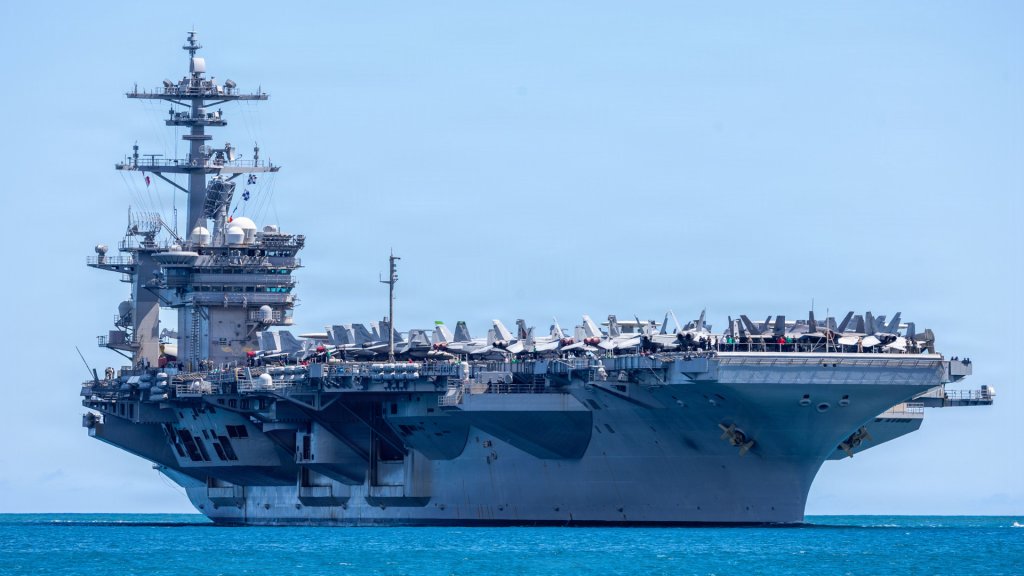
The aircraft carrier USS Theodore Roosevelt and its carrier strike group are reportedly being deployed to the Middle East. (USN)
Adding to U.S. concerns, on Saturday, The Wall Street Journal reported that “U.S. intelligence suggests Iranian preparations to attack Americans throughout the Middle East have reached ‘advanced stages,’ prompting a sudden exodus of personnel from embassies and military bases throughout the region.”
Jay Clayton, the director of national intelligence, “summarized that finding in a brief memo Friday to Secretary of State Marco Rubio,” the newspaper added.
“Iran has substantially increased efforts to target U.S. personnel. The lethal plotting efforts by the Iranians against U.S. citizens have reached advanced stages in both the Middle East and certain other countries,” Clayton wrote.
The U.S. in recent days also “ordered the departure of diplomats and staff from the embassy in Saudi Arabia and other countries, initially citing threats from the Iran-backed Houthi militants in Yemen,” the Journal noted. “The U.S. also has evacuated personnel from military bases across the region in preparation for renewed fighting, according to U.S. officials familiar with the planning.”
Trump on Sunday told reporters that there “are two very different sets of intelligence reports on Iran. I have them both. They are very different.”
Trump on Iran:
There are two very different sets of intelligence reports on Iran. I have them both.
Israel too appears to be continuing its planning for renewed hostilities with Iran. Its previous attacks during Operation Epic Fury were carried out in close coordination with the U.S., a cooperative effort that is ongoing.
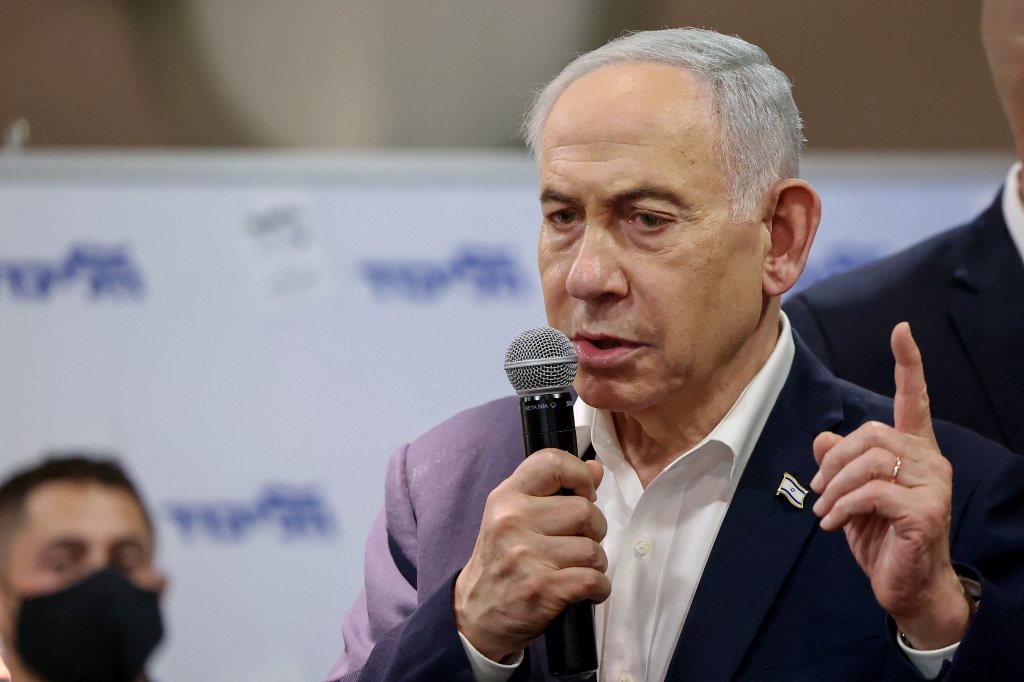
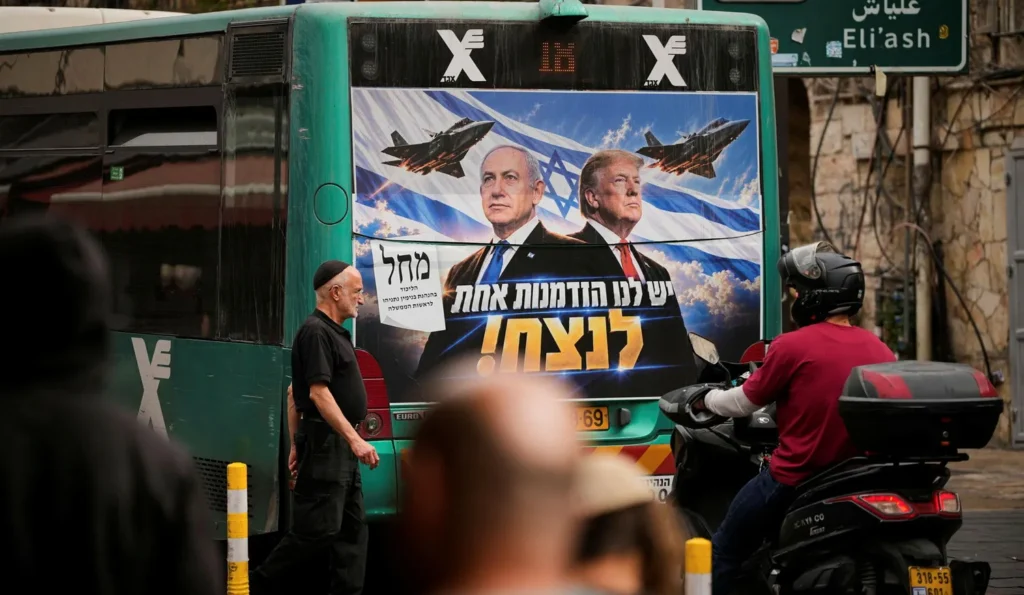
Prime Minister Benjamin Netanyahu on Sunday repeated his warning that Iran or its proxies could launch an attack before the close election to disrupt the vote, citing intelligence.
“The (military) is ready both to defend and to strike,” he said in a video statement. “You will suffer disproportionate blows far greater than you can imagine.”
Israeli Prime Minister Benjamin Netanyahu warned Sunday that Iran and its regional allies could launch attacks intended to disrupt Israel's October 27 election, declaring that the Israeli military is prepared for both defensive and offensive operations.
In addition, Netanyahu and Israeli Defense Forces (IDF) Chief of Staff Lt. Gen. Eyal Zamir “clashed over a military action that could renew the conflict with Iran days before Israel’s elections,” according to the Jerusalem Post.
“Recently, Zamir received a directive from the political echelon to carry out an action, which security officials told N12 would ‘trigger a rapid escalation into a confrontation with Iran,’” the newspaper added. “Due to the sensitive nature of the action, N12 reported that Zamir requested an in-depth discussion and formal authorization before moving forward with the action.”
Israeli Defense Minister Israel Katz disputed those reports.
“I state unequivocally that there was no intention on Israel’s part to initiate an attack on Iran before the elections in Israel—when we made clear that if Iran attacks Israel, we will respond with great force, and all reports on the matter are entirely false,” Katz stated on X. “The attempt by opposition figures to exploit these reports to attack the Prime Minister and me and to cast doubt on our judgment—at a time when we are prevented for understandable reasons from addressing the details of the Iranian issue—is shameful and irresponsible. We will overcome this too.”
הפרסומים על פערים בין הדרג המדיני לצה"ל בנושא איראן הם מופרכים ושקריים לחלוטין.
מאז כניסתי לתפקיד שר הביטחון התיאום בין רה"מ וביני לבין צה"ל בנושא איראן הוא מלא – עם הישגים היסטוריים חסרי תקדים לטובת ביטחון מדינת ישראל.
Last Monday, in a phone call with Trump recorded live on Monday and posted on his X account, Netanyahu suggested future operations against Iran.
“Donald, we have a job to finish [in Iran]…and we’ll finish it together,” the Israeli leader told Trump. “We’ll finish it, and no one else will do it.”
That post appears to have been since been deleted.
Actions by both Trump and Netanyahu are taking place against a backdrop of heated domestic politics in their respective countries.
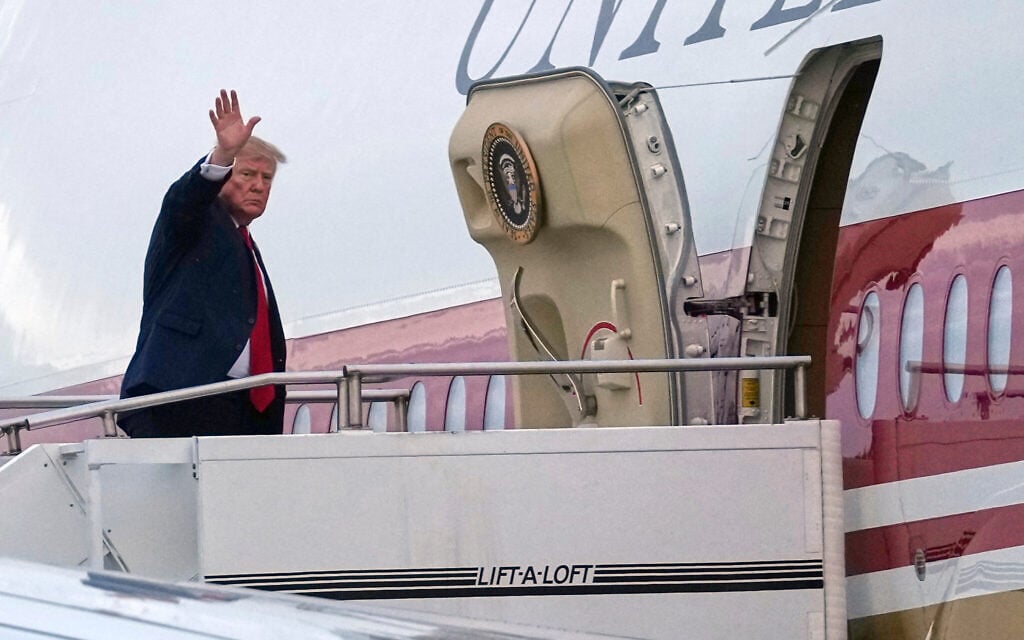
With continued Republican control of Congress on the line, the Nov. 3 midterm elections are a huge factor in Trump’s plans. The president has previously said the war with Iran would end “immediately after the election” and has reportedly told aides he expects to resume strikes on the Islamic Republic after the midterms. Domestic U.S. polls show the ongoing conflict continues to be deeply unpopular with voters, who are also eager to see it concluded.
Meanwhile, Netanyahu faces a vote on his future tomorrow in a nationwide parliamentary election, and there are concerns, as we noted last Friday, that the Israeli leader could use a new conflict with Iran to bolster his hold on office. Given the fractious nature of Israeli politics, election results will not necessarily immediately determine who Israel’s next prime minister will be.
“Coalition negotiations can take weeks or even months as parties attempt to reach agreements on who will govern and under what terms,” The National noted. “Israel has a history of political deadlock. Between 2019 and 2022, the country held five elections as parties repeatedly struggled to form stable governments.”
Israel’s Prime Minister Benjamin Netanyahu speaks to his supporters during a Likud Party meet-and-greet held as part of the campaign ahead of Israel’s legislative election. (Photo by JACK GUEZ / AFP) JACK GUEZ
Iran isn’t just threatening the U.S. and Israel.
“Following the intensification of Berlin’s anti-Iranian stance, Tehran has warned of the consequences should Germany directly enter the military conflict, emphasizing that facilities and military installations associated with Germany in the region could become targets within the scope of Iran’s legitimate defense,” the semi-official Iranian Fars News Agency reported on Sunday.
BIG: Iran has warned Germany that all German military bases and facilities across the region will be considered legitimate targets if Berlin openly joins military action against Iran.
Source: Iran’s Fars, citing information obtained by its security and defense correspondent
As mentioned earlier in this story, officials meeting in Tehran also addressed the ongoing fighting between the Houthis and Saudi Arabia and its proxies in Yemen.
“The urgency of the initiative was underscored by fresh explosions in Riyadh overnight and warnings of a hostile aerial threat, as the Houthis claimed another attack on the Saudi capital’s international airport,” Gulf News reported. In addition, the Houthis are expanding their attacks on oil infrastructure in Saudi Arabia, including a recent strike near the Shaybah oilfield. Combined with a spike in Iranian attacks on shipping in the Strait of Hormuz, the Houthi strikes on Saudi oil interests have sent the price of Brent crude rising. However, the Tehran talks may be tempering things. According to OilPrice.com, the per-barrel price of Brent crude was over $115 as of Monday evening, a slight drop from Friday, when it was more than $117.
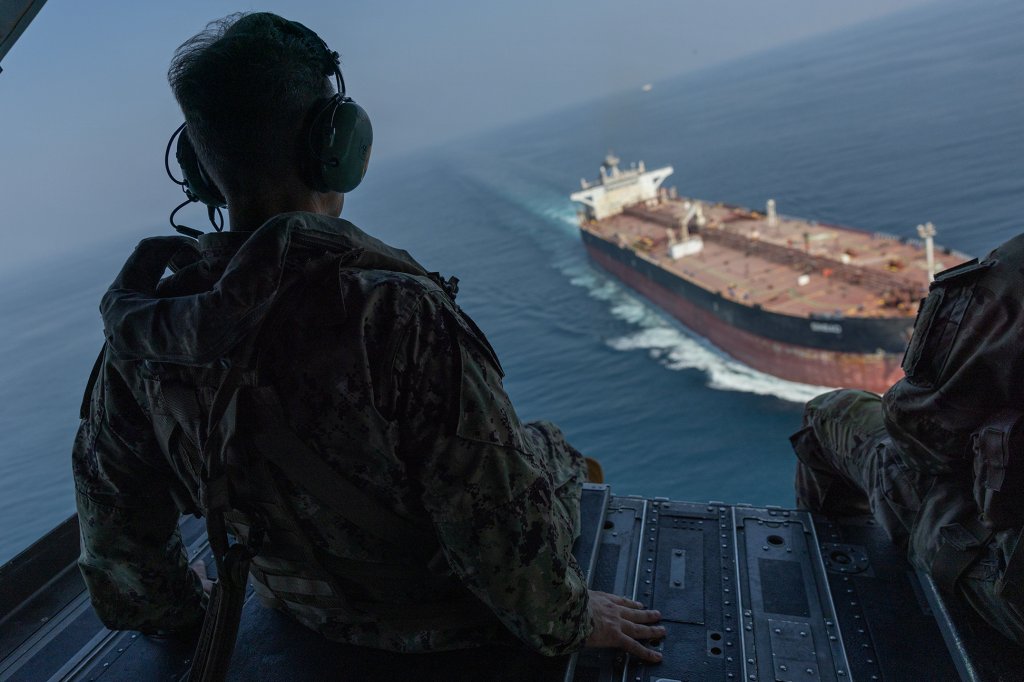
With the issue of oil flow in mind, Adm. Brad Cooper, the commander of U.S. Central Command (CENTCOM), visited the Strait of Hormuz on Oct. 25 as U.S. forces reached “the milestone of assisting Gulf partners in exporting more than 1.5 billion barrels of crude oil since summer,” Cooper said.
Cooper “observed the current operational environment while flying in a U.S. Army CH-47 Chinook over the international waterway,” according to a CENTCOM post on X. “More than 3,000 commercial vessels have successfully transited the Strait of Hormuz with support from CENTCOM forces over the last six months.”
U.S. Navy Adm. Brad Cooper, commander of U.S. Central Command, observes a commercial vessel transiting the Strait of Hormuz while flying in a U.S. Army CH-47 Chinook over the international waterway, Oct. 25, 2026. (U.S. Central Command photo) Senior Chief Petty Officer Amanda Dunford
“We continue to stand shoulder to shoulder with our Gulf partners and the shipping industry,” said Cooper. “This visit underscores our strong commitment to continued freedom of navigation through the Strait of Hormuz.”
CENTCOM added that “American forces successfully cleared the strait’s international shipping lanes of sea mines laid by Iran’s Islamic Revolutionary Guard Corps (IRGC).”
“Today, primary transit routes in the Strait of Hormuz remain free and clear of Iranian sea mines thanks to incredible efforts by our people,” said Cooper. “We remain intensely focused on keeping commercial traffic flowing as we work with our teammates in the U.S. interagency, Gulf Cooperation Council, and shipping industry.”
In recent months, “over 95% of ships navigating the Strait of Hormuz have sailed through safely despite the IRGC’s unwarranted aggression, clearly demonstrating that the United States and regional partners control the international waterway,” CENTCOM claimed. TWZ cannot independently verify this.
That the four-way meetings between Iran, Saudi Arabia, Pakistan and Turkey will continue to seek a peaceful way forward is a positive sign. Still, how much, if at all, this effort changes the threat picture are open questions and the answers will be provided by Washington, Jerusalem and Tehran in the coming days and weeks.
President Pezeshkian Says U.S. Naval and Air Blockades Destabilize Global Energy Markets.
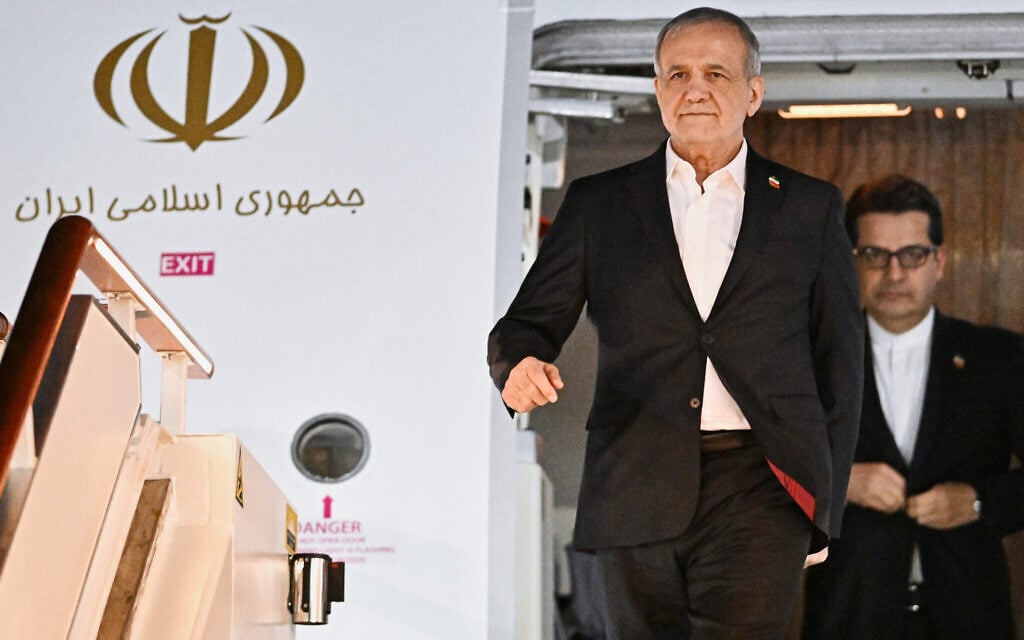
On Tuesday, Iranian President Masoud Pezeshkian branded U.S. actions that cause dangerous surges in hydrocarbon prices on the world market as “economic terrorism.”
“Economic terrorism, in the form of the U.S. naval and air blockade against Iran, in addition to Washington’s pressure on other countries to comply with this blockade, are illegal actions that seriously destabilize energy markets,” he said during his address at the summit of the Gas Exporting Countries Forum (GECF), the so-called “gas OPEC.”
Pezeshkian also pointed out that U.S. military interventions in the Persian Gulf region not only affect regional actors but also disrupt the process of energy pricing, supply and transportation, which threatens global economic growth.
The Iranian leader then invited international investors to do business with the Persian nation. “Foreign investors can, without running any risk, take advantage of incentives and benefits that we offer in the oil, gas and petrochemical sectors,” he stressed.
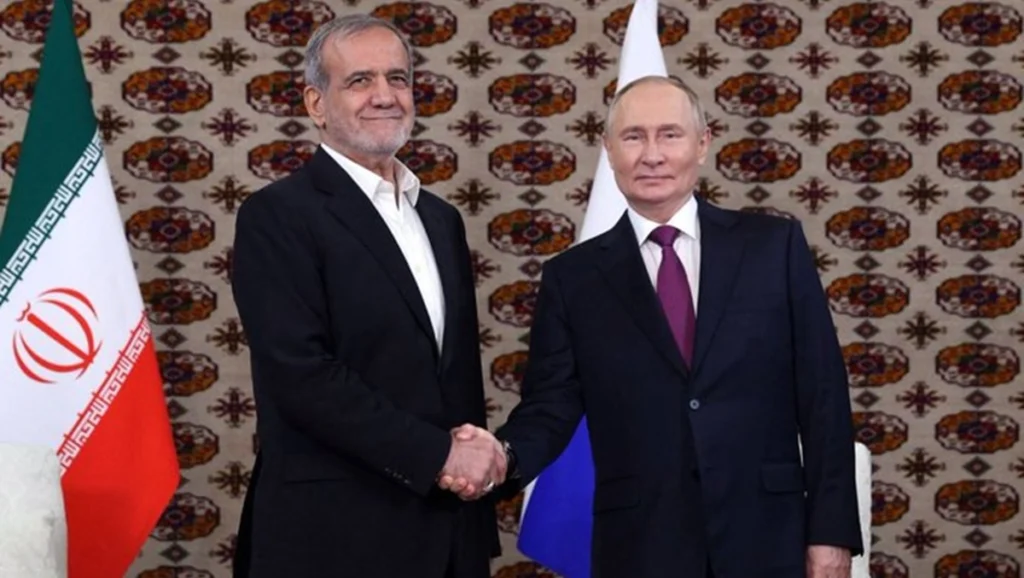
🇶🇦🇷🇺🇮🇷 Qatar’s Emir Tamim joins Vladimir Putin and Iranian President Masoud Pezeshkian at the eighth Gas Exporting Countries Forum summit in Moscow. Ahead of the group photo, Tamim held separate talks with Pezeshkian: Qatar’s published account lists Hormuz, energy supplies and… pic.twitter.com/g1ipI3Z0Ux
Pezeshkian highlighted that, despite the sanctions imposed on Tehran, Iran was able to increase its natural gas production capacity to 300 billion cubic meters per day.
Commenting on the Iranian leader’s speech, Russian President Vladimir Putin agreed that “illegal sanctions” only have harmful consequences.
“You drew attention to the illegal sanctions that some countries impose in the energy sector. I completely agree that they only have harmful consequences for all market actors, both producers and gas exporters,” he said.
Israelis are voting Tuesday in the first national election since the Oct. 7, 2023, attack and the war in Gaza. Polls close at 4 pm Eastern Standard Time. A winner is unlikely to be clear Tuesday night, and coalition talks will likely take weeks… A roundup of election news from diverse sources
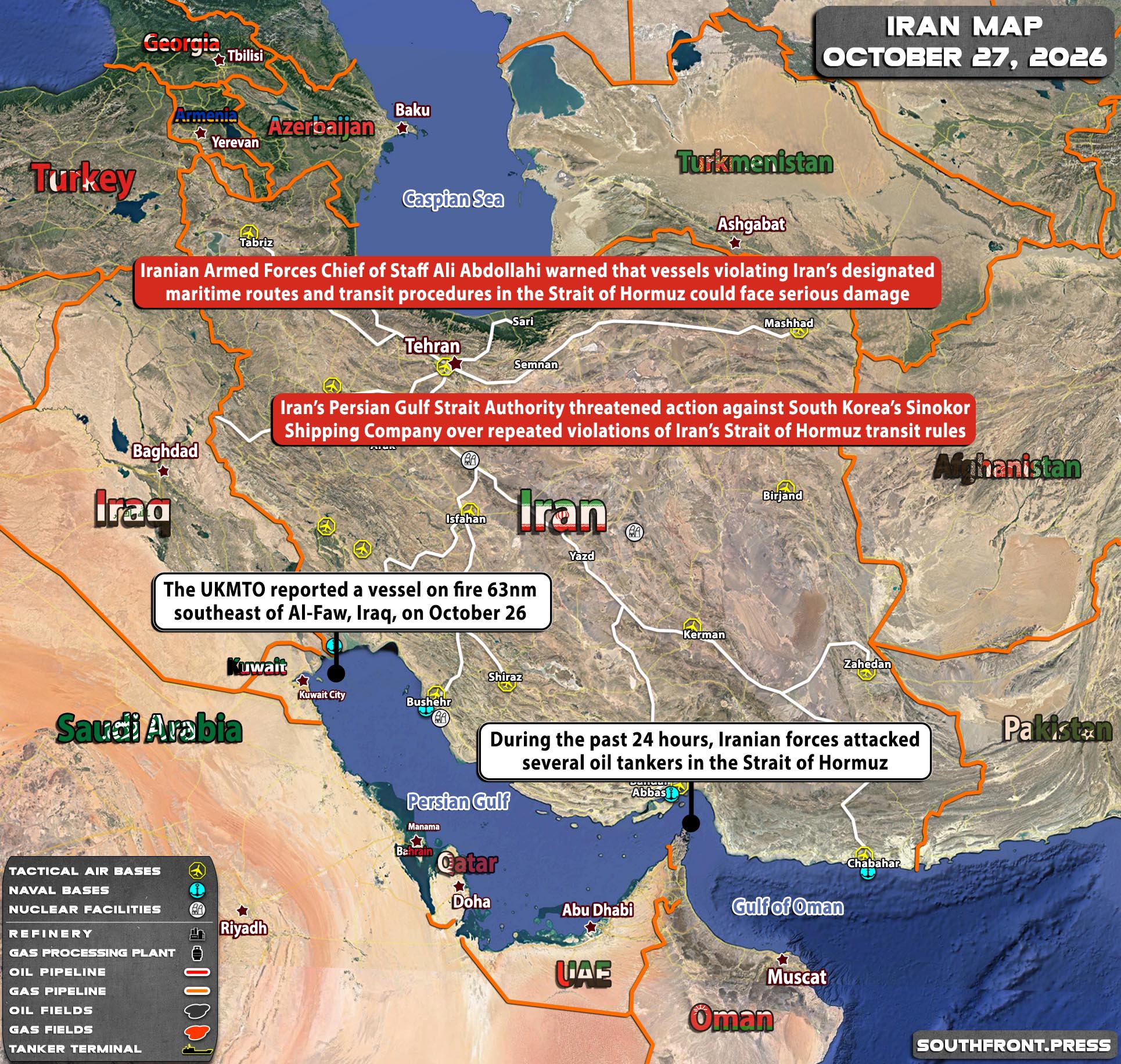
During the past 24 hours, Iranian forces attacked several oil tankers in the Strait of Hormuz;
Iranian Armed Forces Chief of Staff Ali Abdollahi warned that vessels violating Iran’s designated maritime routes and transit procedures in the Strait of Hormuz could face serious damage;
Iran’s Persian Gulf Strait Authority threatened action against South Korea’s Sinokor Shipping Company over repeated violations of Iran’s Strait of Hormuz transit rules;
The UKMTO reported a vessel on fire 63nm southeast of Al-Faw, Iraq, on October 26.
Behind the scenes, Netayahu has been waging a fight against Israel’s defense establishment & the US administration. He recently made a huge effort to reignite the war with Iran, which sparked a direct clash with the Israel Defense Forces' top brass…
If Netanyahu's opponents win they must make it clear that they won't allow the outgoing government to embark on any last-minute military adventures and embroil the country in more wars before a well-thought-out strategy has been developed…
The war, at the eight-month mark, has spiked gas prices and left voters frustrated, imperiling continued Republican control of Congress after Nov. 3 vote; Trump downplays concerns
On Monday’s broadcast of MS NOW’s “The Last Word,” Democratic Alaska U.S. Senate nominee Mary Peltola stated that people are “just being crushed by corporate greed” and also argued that it is “this war in Iran that is driving all
Oman’s Foreign Minister Badr Albusaidi has called for the formation of a non-aggression security pact involving six Persian Gulf states plus Iran and Iraq, slamming US attempts to demonize the Islamic Republic as a threat.
Speaking at Girton College, Cambridge, on Monday, Albusaidi stressed that Washington has promoted for almost half a century the false image of Tehran as a threat to the Persian Gulf states, holding back West Asia’s ability to solve its own problems.
The Omani foreign minister, speaking to break the deadlock over the region’s future, stressed that the US would no longer be the region’s primary security provider.
“Issues such as the Strait of Hormuz have become impossible to resolve because external powers continue to define the terms of engagement, while regional powers are unable to take collective responsibility for making their own security arrangements and reach a consensus on them,” Albusaidi noted.
Iran has so far refused to ease its restrictions on transit through the strategic Strait of Hormuz, saying the key international energy waterway will be fully reopened once the US permanently ends its aggression and lifts its maritime blockade and sanctions against Iran.
Iranian authorities have also indicated that the country would not back down from its conditions and would respond decisively to any new act of aggression against its territory.
“What holds us back is that issues which ought to be handled at a regional level by the states of the [Persian] Gulf themselves, are made more complex, more intractable and sometimes simply impossible to resolve because the region’s security arrangements are insufficiently developed,” Albusaidi further stressed.
“And they are insufficiently developed because they have relied for too long on the involvement of external powers,” he added.
Oman’s top diplomat noted that the Islamic Republic “had been systematically excluded from playing any meaningful role in the security arrangements of the region.
Albusaidi also stressed that such exclusion had led to “profoundly negative consequences, not just for Iran, but for the region as a whole”, including the imposition of priorities on the region by external powers such as “the entirely false perception that there is a fundamental regional antagonism between Iran and the Arab states of the [Persian] Gulf.”
According to the Omani foreign minister, the most “damaging” of the priorities imposed on the Persian Gulf region from the outside has been the requirement that the Islamic Republic be excluded.
“Not just excluded. Worse. Positioned as the threat against which regional security had to be organized,” Albusaidi stressed, speaking on the day high-level defense and intelligence officials from Turkey, Pakistan and Saudi Arabia gathered in Tehran in an attempt to prevent a renewed act of aggression by the US against Iran.
Iran and Oman, both coastal states bordering the strategic waterway, engaged in intensive negotiations for months over arrangements for safe shipping through the Strait of Hormuz.
Tehran and Oman finally reached a temporary agreement on how shipping traffic should be managed in the strait, but the plan is on hold as Iran keeps the waterway closed due to US acts of aggression and violations.
Roughly one-fifth of global oil demand passes through the Strait of Hormuz, making the waterway one of the world’s most strategically important maritime chokepoints.
Oman’s foreign minister, without mentioning by name, also challenged US President Donald Trump’s case for a further war of aggression against Iran by saying that he believed the previous round of Oman-mediated negotiations between the US and Iran in February were “making significant progress, and that an agreement was within reach. We still stand by that judgment today.”
The US and the Israeli regime waged their first war of aggression against Iran, which lasted 12 days, in June 2025. Their second aggression began on February 28, 2026, and came to a halt in early April after 40 days.
Iran has been defending itself by targeting US bases and energy infrastructure in the Persian Gulf states with missile strikes and drone attacks.
British prosecutors charged two men Tuesday under the U.K.’s National Security Act following an incident at RAF Fairford, a key base used by the U.S. military’s heavy bombers.
Mohmed Abdulkarim, 24, of London, was charged with assisting a foreign intelligence service. Nouman Essghir, 24, was charged with entering a prohibited place for a purpose prejudicial to the United Kingdom, according to the Crown Prosecution Service.
British counterterrorism police said they believe the foreign country Abdulkarim was assisting was Iran, Reuters reported.
The charges follow a September incident near RAF Fairford in Gloucestershire, England. British police arrested five men outside the base in the early hours of Sept. 27, according to Reuters.
The base had been used by U.S. bombers to carry out strikes against Iran. About a dozen B-1 bombers were among the aircraft later withdrawn from RAF Fairford and returned to their home stations in the United States on security grounds, according to previous Fox News reporting.
RAF Fairford serves as a key European operating location for U.S. heavy bombers and has supported American military missions.
Frank Ferguson, chief crown prosecutor for the CPS Special Crime and Counter Terrorism Division, said the agency decided to prosecute the two men following a "complex" counterterrorism investigation.
"We will continue to work closely with our partners as this complex investigation continues," Ferguson said.
Both men were expected to appear Tuesday at Westminster Magistrates’ Court.
US President Donald Trump has again resorted to brazen falsehoods while defending Washington’s ongoing war of aggression against the Islamic Republic of Iran, claiming Tehran initiated the war and dismissing an earlier ceasefire as a “waste of time.”
Speaking at a campaign rally in Corinth, Mississippi, on Monday, ahead of the November midterms, Trump echoed the talking points of hardline Republicans by asserting: “We didn’t start the war with Iran. Iran started the war with us.”
He further claimed the Islamic Republic had developed missiles capable of striking American cities, declaring that “they’d hit San Diego, they’d hit Los Angeles, they’d hit our cities too,” and argued that the military offensive “should’ve been done a long time ago.”
Trump’s remarks stand in stark contradiction to the established record. On February 28, the United States and the Israeli regime launched the unprovoked so-called “Operation Epic Fury,” a coordinated assault that assassinated Leader of the Islamic Revolution Ayatollah Seyyed Ali Khamenei, senior military commanders, and hundreds of civilians, including schoolchildren in Minab.
The aggression followed months of escalating threats and came amid stalled diplomatic efforts, consistent with the pattern of the earlier 12-day US-Israeli war in June 2025.
Iran responded immediately and decisively with Operation True Promise 4. In successive waves of precision missile and drone strikes, the Islamic Revolution Guards Corps and allied resistance forces targeted US military installations across West Asia, including bases in Qatar, Bahrain, the UAE, Saudi Arabia, and Kuwait.
These retaliatory operations inflicted significant damage on American radar systems, tanker aircraft, command facilities, and naval assets, exposing the vulnerability of the US military footprint in the region and forcing a recalculation in Washington.
A ceasefire was secured in early April after nearly 40 days of intense fighting, largely on Iranian terms and in the face of sustained resistance. Far from a “waste of time,” the pause reflected the failure of the initial US-Israeli maximalist objectives — unconditional surrender, elimination of Iran’s defensive missile capabilities, and control over the Strait of Hormuz.
Trump’s own administration has repeatedly shifted its stated justifications for the war, from preventing a nuclear weapons program (despite Iran’s longstanding fatwa and the absence of evidence of a military nuclear effort) to claims of imminent attack, regime change, and reopening the Strait of Hormuz, which Tehran had restricted only to vessels linked to the aggressors.
Trump’s missile claims are equally baseless. Iran’s ballistic missile inventory, while advanced and regionally capable, consists primarily of systems with ranges of roughly 1,000–2,000 kilometers. These weapons have proven effective against US bases and Israeli targets in West Asia. They do not include intercontinental ballistic missiles capable of reaching the continental United States.
Independent assessments and US intelligence have consistently confirmed that Iran does not have the missiles to strike cities such as Los Angeles or San Diego. Trump’s assertion appears designed to manufacture fear and justify continued aggression rather than reflect military reality.
The economic consequences Trump now seeks to downplay stem directly from the US-initiated war of aggression and the resulting disruption in the Persian Gulf. Iranian officials have repeatedly stated that any naval blockade or further attacks on civilian and energy infrastructure will be met with proportional and stronger responses.
President Masoud Pezeshkian and Foreign Minister Abbas Araghchi have emphasized that diplomacy remains possible only on the basis of mutual respect and an end to aggression, while warning that renewed strikes will not alter Iran’s positions.
Trump’s latest comments also highlight a deeper hypocrisy. He campaigned as a president who would avoid new wars, yet authorized a major military offensive that has neither achieved its shifting goals nor ended.
His repeated declarations of victory earlier in the year have been contradicted by Iran’s continued ability to conduct retaliatory operations and the persistence of the conflict more than seven months after it began.
As midterm elections approach, such rhetoric appears aimed at deflecting domestic criticism over rising costs and the lack of a clear exit strategy rather than presenting an accurate account of events.

 Login





 Israeli Prime Minister Benjamin Netanyahu warned Sunday that Iran and its regional allies could launch attacks intended to disrupt Israel's October 27 election, declaring that the Israeli military is prepared for both defensive and offensive operations.