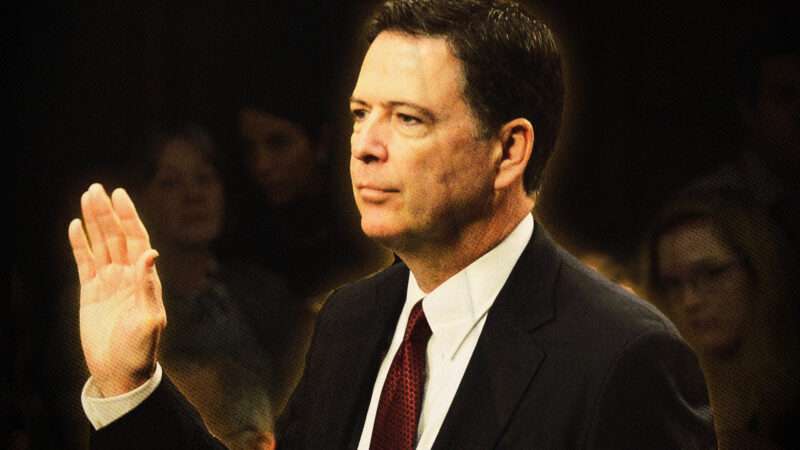
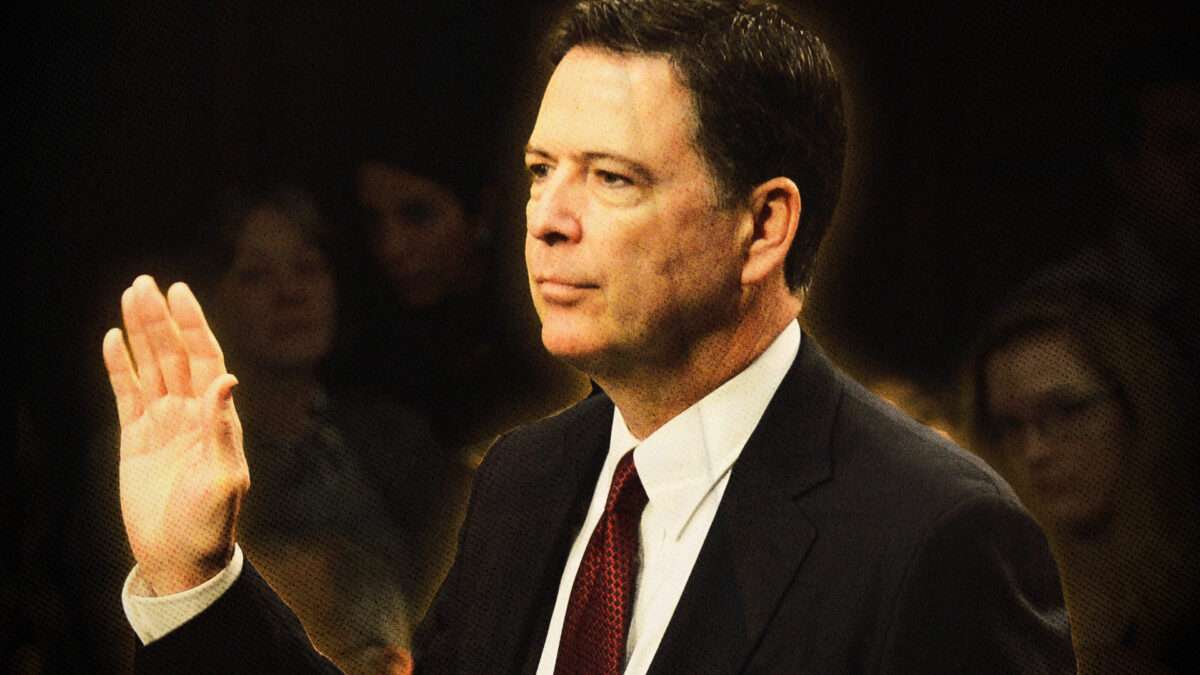
A little more than a year ago, President Donald Trump publicly demanded that Pam Bondi, then the attorney general, find a crime to pin on former FBI Director James Comey. Trump's underlings have repeatedly tried to do that, first charging Comey with lying to Congress and then accusing him of threatening to assassinate the president. But the first indictment was dismissed because Trump had illegally appointed the prosecutor who obtained it, and the second was doomed right out of the gate because it aimed to punish constitutionally protected political speech.
The Justice Department's latest attempt to follow Trump's marching orders was revealed on Monday, when U.S. District Judge Trevor McFadden unsealed a "criminal information" that claims Comey illegally shared classified information with The New York Times on October 5, 2016. In an attempt to meet the statutory deadline for that charge, prosecutors filed it exactly 10 years after the alleged disclosure. But Comey's lawyers argue that federal law required the government to obtain a grand jury indictment within 10 years of the alleged offense, which it failed to do.
Whatever you make of that dispute, the president has made it clear that he wants to imprison Comey, a longtime nemesis because of his role in the "Russiagate hoax" during Trump's first term, and does not much care about exactly how that happens. Justice Department officials, meanwhile, are keen to pursue Trump's personal vendetta by using their prosecutorial powers as an instrument of his revenge.
The new case "would almost be funny if it weren't such an appalling abuse of the Department of Justice," Comey said in an online video on Monday. "I'm still innocent. I'm still not afraid of these people, and I still believe in the independent federal judiciary."
In the New York Timesstory at the center of the case, Charlie Savage and Nicole Perloth reported that Yahoo had adapted "a system intended to scan emails for child pornography" to comply with a Foreign Intelligence Surveillance Court order seeking "messages containing a computer 'signature' tied to the communications of a state-sponsored terrorist organization." Savage and Perloth cited "two government officials who spoke on the condition of anonymity."
Dustin Farahnak, a special U.S. attorney for the District of Columbia, says that story included "first-time disclosures of classified information not intended for the public domain." According to Farahnak, the government has evidence that Comey "directed staff" to discuss "specific accuracy concerns" about a prior Reuters report on the same subject with Savage. In the process of doing that, Farahnak says, those FBI officials "illegally transferred classified information."
Comey's attempt to set the record straight, according to Trump's henchmen, was a felony punishable by up to 10 years in prison under 18 USC 793(d), an Espionage Act provision that applies to an official who "willfully" shares "information relating to the national defense" with an unauthorized recipient when he "has reason to believe" it "could be used to the injury of the United States." Comey also faces a charge of conspiring to violate Section 793, which likewise carries a maximum 10-year sentence.
If Comey's alleged disclosure was such a grave crime, you might wonder, why did it take a decade to charge him? Because two prior investigations of the same incident concluded that criminal charges were not warranted.
Beginning in March 2017, John Durham, the U.S. attorney for the District of Connecticut, looked into the genesis of the Times article. The investigation found that James Baker, then the FBI's general counsel, was one of the anonymous sources. Baker said he had acted under instructions from FBI Chief of Staff James Rybacki, whom he understood to be conveying Comey's wishes. Durham's investigation included interviews, emails, phone records, and consideration of the relevant statutes. In December 2018, Comey's lawyers note, Durham "wrote a classified memorandum outlining the investigation and recommending 'NO prosecution for Baker or anyone else.'"
The following month, the U.S. Attorney's Office for the District of Columbia "opened an investigation into the same subject matter," Comey's lawyers say. That investigation "was closed without any charges in February 2020" after the office "declined to prosecute."
Given the outcomes of those two investigations, the decision to charge Comey now stinks of desperation to slake Trump's thirst for revenge. According to Comey's lawyers, the tardiness of the charges also fatally undermines the case.
Federal law generally requires that prosecutors file charges within five years of the alleged crime. But the Internal Security Act of 1950 made an exception for Section 793, saying "an indictment for any violation" of that provision "may be found at any time within ten years next after such violation shall have been committed."
The charges against Comey "should be dismissed as time barred," his lawyers argue: "Section 19 of the Internal Security Act gives the government an extended ten-year limitations period in which to charge Section 793 offenses. But as Section 19 unambiguously states, the government may invoke that extended period only by obtaining a grand jury indictment. A criminal information—which the government can issue unilaterally without grand jury involvement—does not suffice. Because the default five-year statute of limitations for federal felonies has long since elapsed on the alleged offenses, and the government's information does not meet the express statutory requirement for an extended ten-year limitations period, the information is untimely and must be dismissed."
Whichever side prevails on that issue, no one should have any illusions that the Justice Department is pursuing the mission suggested by its name. "It remains unclear what [McFadden] will do with the matter and whether DOJ will even be able to secure an indictment—as required by the Constitution," Cato Institute legal fellow Mike Fox says in an emailed press release. "Should the matter proceed, it is unequivocally clear that this case is a vindictive prosecution—a classic case of lawfare by a weaponized Justice Department."
Expanded land seizures, military restrictions, mass displacement, and over 100 new Jewish settlements have transformed an already fragmented territory — and the very fabric of Palestinian life.
More than 420,000 leaked emails have reopened a controversy over illegal donations to Germany’s Alternative for Germany party, while newly examined correspondence reveals previously undisclosed disagreements within its leadership. The revelations could also influence the continuing debate over the party’s constitutional status.
Germany’s Alternative for Germany (AfD) is facing renewed scrutiny after hackers published a substantial archive of internal correspondence, exposing details of party finances, political strategy and disputes among senior officials.
The material, released on 19 October 2026, comprises approximately 421,000 emails and nearly 50,000 accompanying documents, amounting to some 281 gigabytes of data. The files cover more than a decade of party activity, including correspondence involving co-leader Alice Weidel, former chairman Alexander Gauland and other senior figures.
The identity of those responsible remains unknown.
The documents are being examined by several investigative teams, including ZDF, Der Spiegel and Austria’s Der Standard, with technical assistance from the Organised Crime and Corruption Reporting Project (OCCRP).
The Swiss donations controversy returns
The most consequential findings so far concern Weidel’s knowledge of illegal campaign donations received during Germany’s 2017 federal election.
At the time, approximately €132,000 was transferred through Swiss companies into accounts belonging to the AfD’s Bodensee district organisation. The payments were designated for Weidel’s election campaign, particularly its social media activities.
When the transactions became public in 2018, Weidel maintained that she had not known about the money until September 2017 and described the donations as unsolicited.
In an email dated 10 July 2017, attributed to Weidel, she told her district treasurer that campaign donations had been promised and requested that the party’s bank account be checked twice weekly.
She also asked to receive confirmation of incoming payments so that campaign expenditure could be planned.
Four days later, the first payment arrived from Switzerland.
Further correspondence indicates that Weidel arranged a separate campaign account and obtained authority to direct expenditure from donations earmarked for her election activities.
The leaked correspondence also reportedly includes invoices relating to the purchase of approximately 25,000 Facebook followers for Weidel’s campaign. The extent to which those accounts were automated, and their influence on voters, has not been established.
The AfD was previously ordered to pay approximately €396,000 for accepting the unlawful donations. Criminal proceedings involving Weidel and other district officials were discontinued in September 2021 because prosecutors found insufficient evidence of criminal wrongdoing.
Weidel’s spokesman has rejected suggestions that she misrepresented events. He maintains that she had discussed possible contributions with several potential supporters but had neither anticipated specific amounts nor expected the payments from the Swiss companies concerned.
The new material does not establish that Weidel knew the identity of the ultimate donor or participated in concealing the source of the funds.
Emails reveal divisions over the party’s radical wing
Another development concerns Weidel’s earlier relationship with Björn Höcke, the influential leader of the AfD’s Thuringia organisation.
According to correspondence examined by WELT, Weidel expressed serious reservations between 2015 and 2017 about the influence of nationalist and extremist elements within the party.
She warned colleagues that associations with the anti-Islam Pegida movement and the far-right National Democratic Party risked alienating mainstream conservative voters, particularly in western Germany.
Her private concerns contrast with her subsequent accommodation of Höcke’s influence within the AfD.
The correspondence provides evidence of the internal disagreements that accompanied the party’s transformation from an initially Eurosceptic political movement into one centred increasingly on immigration, national identity and opposition to Germany’s established parties.
The revelations are particularly relevant because Weidel now promotes proposals for substantial changes to Germany’s relationship with the European Union.
As EU Today previously reported, she has advocated withdrawing Germany from the euro and the Schengen passport-free travel area.
Could the material influence an AfD ban?
The leak arrives amid continuing legal and political arguments over whether the AfD threatens Germany’s constitutional democratic order.
In May 2025, the Federal Office for the Protection of the Constitution classified the party as a confirmed right-wing extremist organisation. However, a Cologne court issued an injunction in February 2026, preventing that classification from taking effect pending a final judicial decision.
The court acknowledged evidence of anti-constitutional tendencies within the AfD but found that the material presented was insufficient at that stage to establish that they characterised the party as a whole.
The leaked emails could potentially become relevant to future assessments.
Germany’s Interior Ministry has confirmed that domestic intelligence authorities can, in principle, consider available information when evaluating possible threats to the constitutional order.
Nevertheless, whether unlawfully obtained correspondence could be admitted as evidence, and what weight it would carry, would require separate legal examination.
A party ban can be imposed only by the Federal Constitutional Court. The present disclosures do not themselves establish the legal conditions necessary for such a decision.
Questions over authenticity and data protection
The scale of the archive introduces further complications.
The material reportedly contains bank statements, membership records, personal correspondence and other confidential information involving thousands of individuals.
Journalists have verified portions of the correspondence by comparing messages with independently retained originals. Handelsblatt’s examination, for example, identified previously exchanged emails whose contents matched records held by its own reporters.
However, verification of individual communications does not establish the authenticity of every document in the archive. Fabricated messages have also circulated online.
In an official statement on 21 October, the AfD described the breach as criminal data theft and said it would not authenticate individual documents for journalists.
The party has also reported the incident to the authorities.
For Germany’s political institutions, the affair now presents several distinct questions: whether historical campaign finance arrangements were accurately disclosed, what the correspondence reveals about the party’s internal decision-making, and whether any of the documents provide evidence relevant to ongoing constitutional scrutiny.
Those questions remain open as investigators and journalists continue examining the archive.
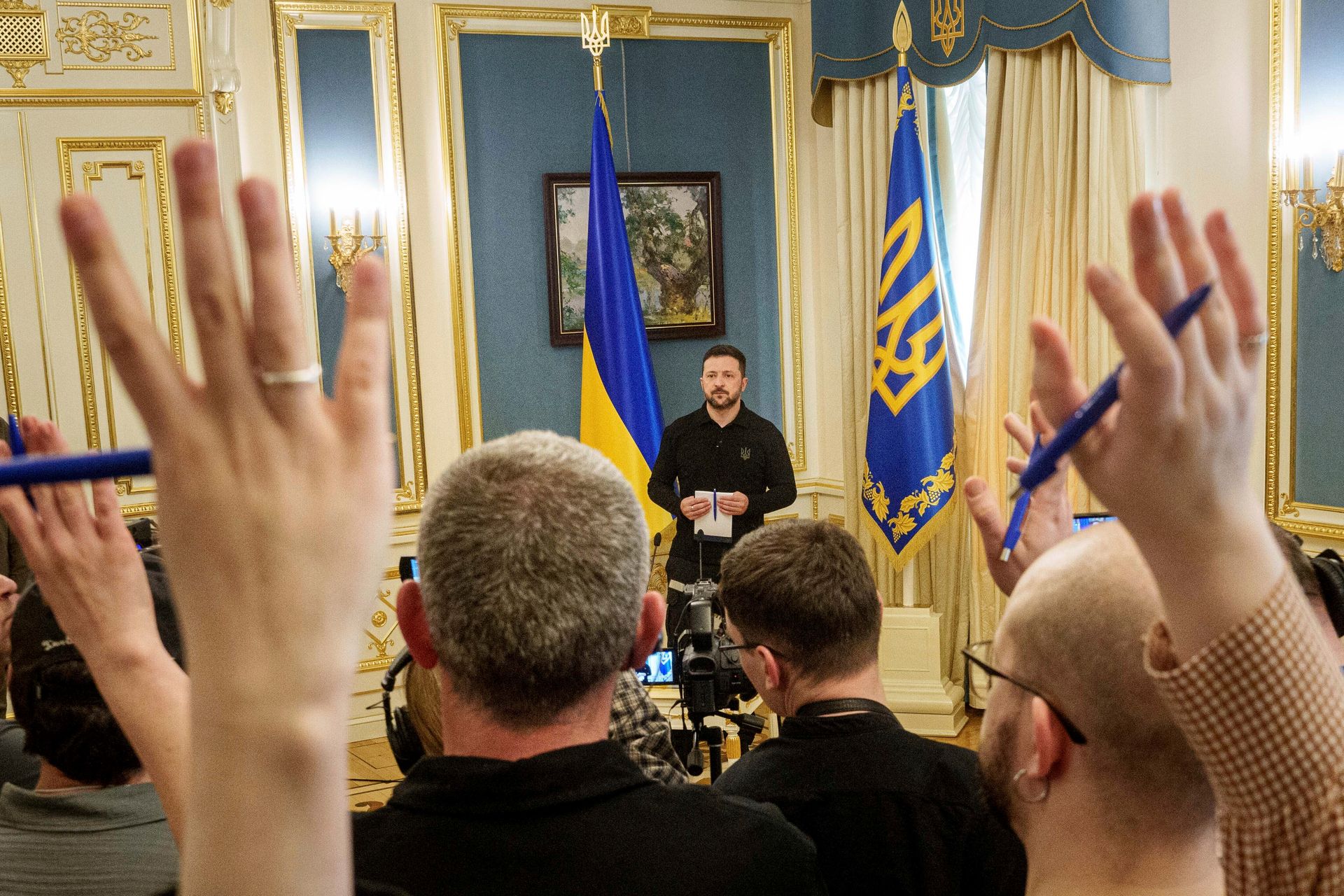
"An environment is gradually taking shape in which it is becoming increasingly difficult for journalists to do their jobs," Inna Vedernikova, a journalist at the Ukrainian newspaper Dzerkalo Tyzhnia, told the Kyiv Independent. "The space for freedom of speech is shrinking."
Is Nathan Fielder interested in making something innovative and great, or does he only really care about making money?
That's technically the question You Can See Everything, the new A24 documentary co-directed by Fielder and Lance Oppenheim,asks about its subject, Elizabeth Holmes, the Theranos founder and convicted fraudster currently in federal prison.
As the documentary progresses, however, it's a question one increasingly asks about Fielder himself.
You Can See Everything was billed as an intimate look at the day-to-day life of Holmes, her romantic partner Billy Evans, and their two children, in the days before she reports for her 11-year prison sentence.
In truth, that only describes the first half of the three-hour-long film, in which Fielder and his camera crews are embedded in Holmes and Evans' cramped San Diego beach house in the month preceding her incarceration.
In part one, we truly do see everything, from Holmes making breakfast for the kids and talking to lawyers about last-minute appeals to Evans showering naked.
All the while, Fielder obsessively explores in his own meta-comedy style a question many have asked about Holmes: Were the lies she told about Theranos' diagnostic machines merely a scam to rip off investors? Or had she actually convinced herself that these falsehoods were at most white lies in the service of a great and revolutionary technology on the cusp of becoming a reality?
Then, after 90 minutes of this exploration, Holmes checks in to prison, and Fielder's primary subject disappears from the film. The focus then shifts to Evans and whether or not he's solely responsible for a new unethical scheme Holmes has found herself enmeshed in.
In a Fielderesque reenactment, it's revealed to the audience that Evans conditioned the documentary's access to him and Holmes on the couple being paid a percentage of the film's profits.
Any ethical documentarian would have to say no to this ask.
Subjects being economically disinterested in the films they're appearing in is what separates real documentaries, which are supposed to accurately portray real life, from fictional films and public relations puff pieces.
Incredibly, however, Fielder, Oppenheim, and A24 eventually agree to Evans' demand for a cut of the film's profits.
Once this crooked bargain is made, You Can See Everything then shifts to exploring whether Holmes was aware that she'd be profiting from the film or whether this was a deal the domineering Evans secured without her knowledge.
Fielder tells us that he believes the answer will shed light on whether Holmes actually sees herself as a world-changing inventor or whether she really is just out for the money.
Fielder eventually makes this point directly to Evans during an on-camera confrontation and in a reenactment of his unfilmed meeting with Holmes in prison. By accepting payment for the documentary, the two are undercutting their case that Holmes is more than a wealth-obsessed fraudster, he tells them.
And by forfeiting their rights to back-end profits, they can make the audience more sympathetic to their case that Holmes did have motivations beyond a paycheck.
As a humble viewer, I confess I found this investigation somewhat boring. For starters, it seemed obvious to me that Holmes was in on the scheme to get paid for the documentary from the beginning.
Moreover, it's all kind of beside the point. Once the deal to pay Evans was inked, the documentary has been irrevocably changed into an elaborate rip-off. The only question remaining is whether the subjects or the audience will be the ultimate sucker.
When Fielder pointedly pushes Evans and Holmes to surrender profits they're contractually entitled to, he's no longer a disinterested filmmaker exploring the couple's psyches. He's an economically interested party pressuring business partners to back out of money they've been contractually promised or else risk extreme embarrassment in the film he's making.
If Fielder fails to convince the couple to surrender their rights, moviegoers are left with the knowledge that a portion of their ticket revenue is benefiting a convicted fraudster.
If the director does succeed in his pressure campaign, it means that there's more profit to go around for the makers of the film.
A documentary about conmen itself becoming a con would not be an uncharacteristic Fielder bit.
His projects frequently feature a deliberate, escalating blurring of the lines between art and reality. See, for instance, the second season of his show The Rehearsal, in which an investigation into airline pilots' mental well-being culminates in Fielder becoming a licensed 737 pilot while waiting on an autism diagnosis.
Something similar can be said for the connection between the themes in the documentary and co-director Oppenheim's recent feature film Primetime about the making of the reality show To Catch a Predator. That movie was also about how TV producers can script reality and invent crimes all for the benefit of a show that's allegedly meant to merely document them.
You Can See Everything pulls off something similar. Its investigation into Holmes' motives leaves one seriously questioning the filmmaker's probity. Perhaps that makes it a genius bit of meta commentary on the unreality of documentaries.
Ultimately, it doesn't really matter. There's no getting around the fact that Fielder made a crooked bargain to get his documentary made and then used his power as a director who did, in fact, see everything to screw people out of money they had been promised.
One can imagine that the victims of Holmes' Theranos scam will find You Can See Everything a frustrating film to watch. At the end of the day, this woman defrauded them of hundreds of millions of dollars. Her precise motives for doing so probably aren't all that interesting to them.
I certainly feel a similar way as a paying viewer of the unethical travesty that is You Can See Everything.
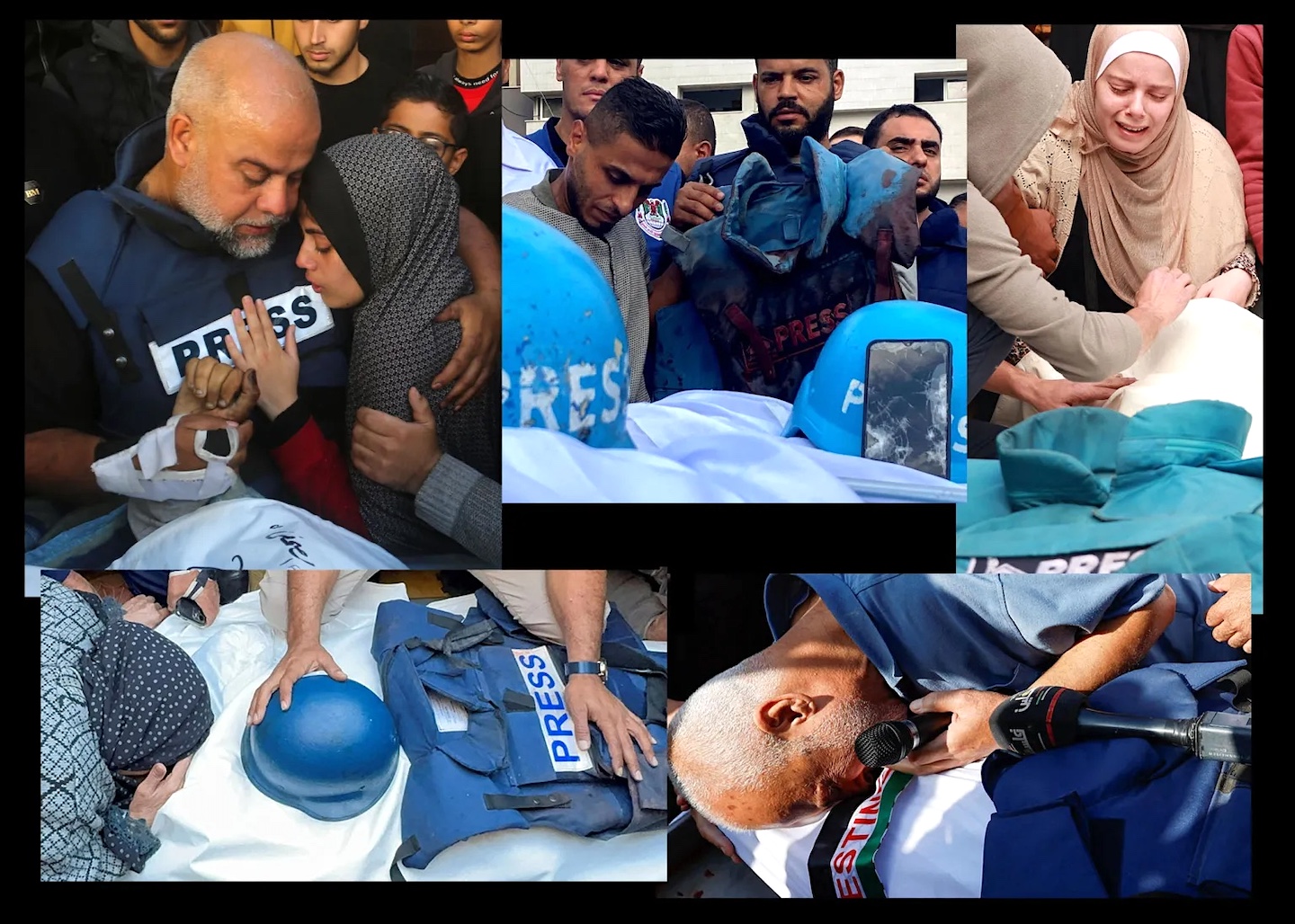
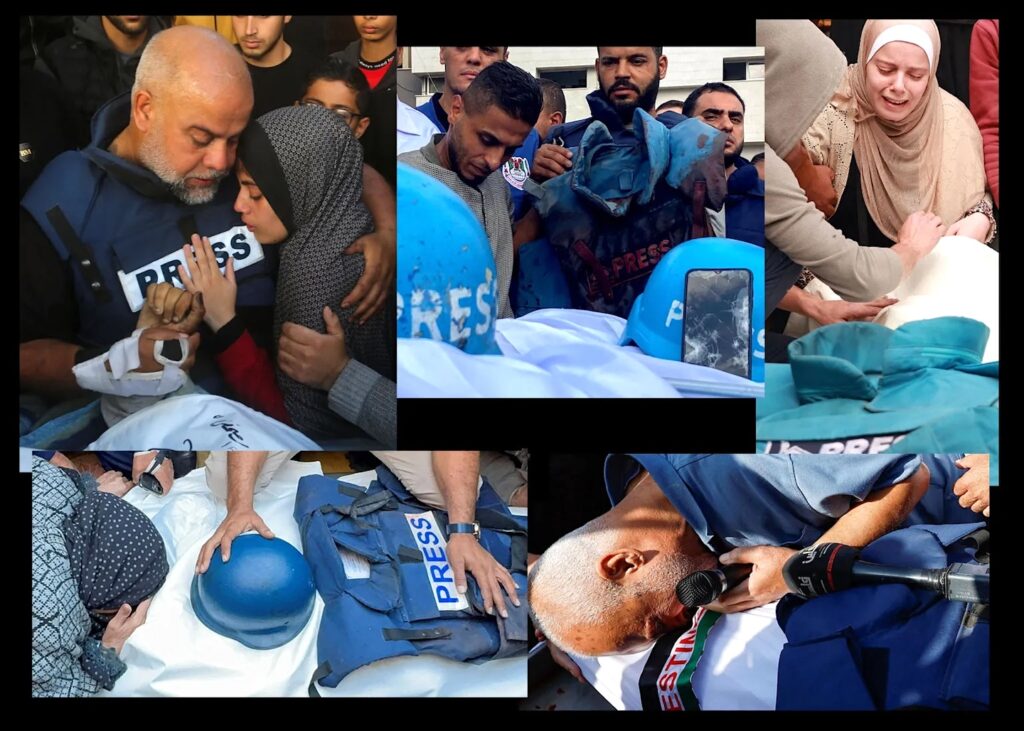
Of the 68 Palestinian journalists killed by Israel in the first 3 months of its war on Gaza, the majority were targeted while at home with their families –In depth research on the"Where's Daddy" AI program & Israel's uniquely massive killing of journalists
Service members, contractors, and military families share photos, videos, and firsthand accounts of the Iran war that they say the Pentagon has kept from the American public
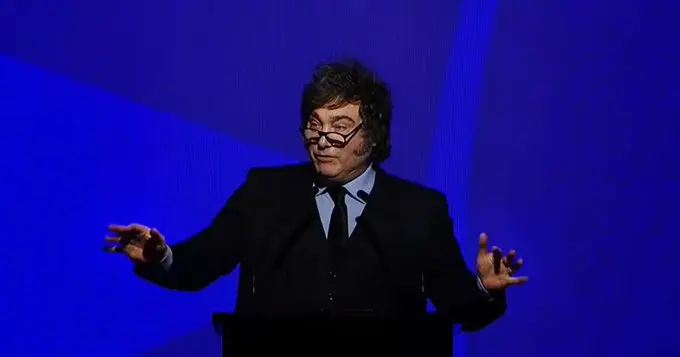
Press freedom groups condemn Javier Milei’s threats against journalists who investigated the $LIBRA cryptocurrency case, warning of rising hostility toward the media.
Argentine press freedom and human rights organizations have condemned President Javier Milei for threatening journalists who investigated the $LIBRA cryptocurrency scandal, warning that his remarks could expose media workers to violence and undermine freedom of expression.
Speaking at a dinner hosted Friday by the Fundación Faro think tank, Milei attacked journalists who covered the $LIBRA case, accusing them of spreading false information and coordinating a political operation against his administration.
The remarks came hours after a court dismissed the judicial case involving the cryptocurrency, a digital asset promoted by Milei in February 2025 whose sharp price fluctuations harmed thousands of investors.
Text Reads: 🗣️ Argentine President Javier Milei stated on Friday that “the ones who should be burned at the stake are the sons of b*tches,” after publicly singling out media figures who covered the investigation into the cryptocurrency $LIBRA. ⚖️ These remarks were made during a dinner hosted by the Fundación Faro, just hours after the judiciary dismissed the case. Milei specifically mentioned journalists from La Nación, Perfil, and A24. 📢 FOPEA (Forum for Argentine Journalism) denounced an “unprecedented escalation,” warning that such language “legitimizes violence.” The CELS (Center for Legal and Social Studies) described his comments as an “authoritarian escalation,” while the union SiPreBA called for an immediate response from the political and media spheres. 🔴 “The State has an obligation to protect journalists, not to turn them into targets,” FOPEA stated.
During his speech, Milei threatened those he accused of wrongdoing with being “burned at the stake” and singled out five journalists by name: Hugo Alconada Mon, Carlos Pagni and Paulino Rodrigues of La Nación newspaper; Natalia Volosín of Perfil; and Luis Novaresio of A24 television.
“Let it be known that the sons of bitches in Argentina will receive no mercy,” the president declared. “Those who deserve to be burned at the stake are the sons of bitches.”
The remarks drew condemnation from press freedom and human rights organizations, which warned that publicly identifying journalists while using such threatening language could increase the risks they face in their work.
The Argentine Journalism Forum (FOPEA) said the reference to burning journalists at the stake, coupled with the president’s naming of specific media professionals, marked a significant escalation in government hostility toward the press.
“The state has an obligation to protect journalists, not turn them into targets,” the organization said. It urged Milei to stop stigmatizing journalists and called on political leaders, lawmakers and other institutions to publicly respond to the incident.
The Center for Legal and Social Studies (CELS) described the episode as an “authoritarian escalation” in a statement published on X. The organization warned that when a head of state publicly casts critics as enemies, it can encourage attacks and undermine democratic debate. It also argued that insults and defamatory attacks against journalistic work must have limits.
❌ESTO NO ES UN REPUDIO, ES UN LLAMADO A LA ACCIÓN
🔊FRENEMOS LA INQUISICIÓN DE MILEI
El presidente Milei volvió a cruzar un límite gravísimo. La instigación a “quemar en la hoguera” a un grupo de periodistas debe generar una reacción inmediata de todo el arco político y… pic.twitter.com/XrXOohrVDe
— SiPreBA – Sindicato de Prensa de Buenos Aires (@sipreba) October 24, 2026
Text Reads: ❌THIS IS NOT A REJECTION, IT’S A CALL TO ACTION 🔊LET’S STOP MILEI’S INQUISITION President Milei has once again crossed a gravely serious line. The incitement to “burn at the stake” a group of journalists must provoke an immediate reaction from the entire political and media spectrum to halt the attacks on our profession. There will be no room for regrets if the violence promoted by the President ends up turning into facts. This government, which nearly killed photographer Pablo Grillo in a savage crackdown, now calls, in the voice of its highest representative, to assault our colleagues, as has already happened. We send our solidarity to @halconada, @CarlosPagni2, @nataliavolosin, @paulinor76and @luisnovaresio and place ourselves at their disposal. With threats on social media, repression in the streets, and attacks on rights in Congress, they seek to silence the press. From SiPreBA, we call to defend the Journalist’s Statute and to respond with more democracy in the face of the return to the Inquisition proposed by the Executive Branch.
CELS said the incident was part of a broader pattern of hostility toward media workers, including harassment, attacks on digital platforms and repression of journalists covering public demonstrations.
The Buenos Aires Press Union (SiPreBA) also condemned the president’s remarks, calling for an immediate response from political and media figures to stop the attacks. The union expressed solidarity with the journalists targeted by Milei and warned of the possible consequences of his rhetoric.
“There will be no room for regret if the violence promoted by the president ends up turning into actual incidents,” SiPreBA said.
The organizations called for political and institutional action to protect journalists and counter hostility toward the press following Milei’s public targeting of reporters who investigated the $LIBRA case.
There has been much consternation this week about the use of fake polls in the media, with some government officials promising swift, and legally dubious, punishments for broadcasters that use them.
The use of these fake polls came to light on Wednesday, when The New York Timesreported that "well-known polling aggregators," including the paper itself, had been citing fake surveys by Wedgewood Polls. The fake polling scheme was revealed when the outlet FivePlusOne contacted Wedgewood Tuesday for comment about an investigation into the pollster. That night, Wedgewood posted a now-deleted statement declaring that it was an "experimental project to demonstrate the vulnerabilities, lack of oversight, and overall barrier to entry in the modern polling industry." The fake pollster claimed it was "far too easy" to be taken seriously in media and public commentary.
A similar "social experiment" was revealed in August, when the Los Angeles Times reported that a poll by Median Strategies showing Mayor Karen Bass "leading ahead of Councilmember Nithya Raman by a wide margin" was "bogus." An earlier poll by Median Strategies showed Francesca Hong, who lost her race for Wisconsin governor, up by more than 20 percentage points. Median Strategies told the Times that the firm was "created as a short term social experiment to examine how purported polling information could enter and spread through the political information ecosystem without independent verification."
If Wedgewood's polling stunts were in fact social experiments (pollster Nate Silver is very skeptical of this explanation), then the experiment worked. Nobody is completely immune to deceit. And while savvy media consumers have become more attuned to detecting AI writing and video fakes, masses of people still fall for more than fake polls, as they have for a long time.
In 2018, when the word "slop" meant food for pigs and before anyone wrote posts using ChatGPT, the Intelligencerasked the question: "How much of the Internet is fake?" The answer, the outlet concluded, was "a lot."
At the time, Reason's Nick Gillespie noted that the article was a "sobering and obvious revelation that much of what we browse, engage, and interact with is in some fundamental way, total bullshit." Gillespie solemnly observed, "we're living not in the disintermediated, utopian world chronicled in the early days of Louis Rossetto and Jane Metcalfe's Wired, but something closer to the endlessly creative, weird, off-kilter, semi-insane world imagined by Philip K. Dick and, later, Neal Stephenson."
Eight years later, the "semi-insane" world is no less insane, and humans, as they always have, are falling prey to increasingly intricate schemes and hoaxes. In September, Semafor's Max Tani revealed that a large number of YouTube videos—several of which garnered hundreds of thousands of views—were made by "ghost creators." In these videos, presented as news reports, real actors were paid to read AI-written scripts "laced with misleading claims and outright falsehoods." According to Tani, these "accounts appear to be run not by political operatives trying to win, or foreign intelligence efforts seeking to destabilize the US, but by engagement junkies detached from the stakes of politics." While any semi-media-literate person in 2026 could tell you that not all YouTube videos should be taken as fact, the scale of the operation was staggering.
The deception crisis plagues the media as well. Recently, the platform Qwoted, which connects journalists with sources, had to remove a supposed art therapy expert from its website after her "details were found to be false," reported thePress Gazette. According to the Gazette, the fake therapist's insights had been cited in several outlets, including Psychology, Forbes, Glamour, and Vice. I have also raised concerns about news outlets and commentators citing polls published by EduBirdie, a Cyprus-based company that sells human-written academic papers to students for $8 a page (ethics aside, what a bold business model in the AI age).
So what is to be done? As Gillespie wrote in 2018, there are existing legal levers to root out fraud, but any top-down approach to squashing online lies "will be poorly applied, repressive, and ultimately arbitrary." Government-led crackdowns on COVID-19 "misinformation" have proven him right. Outsourcing the arbitration of truth would only diminish our access to information, and no one entity, particularly the government, should be trusted to determine what is true or false. Unfortunately, the Trump administration has not learned much from the pandemic era and has instead repeatedly tried to crack down on media coverage it doesn't like.
Ideally, media organizations would act as B.S. detectors, but clearly, they often fail to do so. So, consumers are left to wade through lies, AI hoaxes, and so-called "social experiments." This may be tedious work, but it is necessary for consumers to evolve as technologies change. This sleuthing for scams may even be enjoyable. Why pay to have your brain scrambled by Nathan Fielder's Elizabeth Holmes documentary when you can drive yourself insane by tracking down and scrutinizing widely cited statistics and polls?
A letter to its supporters announced that instead of high profile endorsements and PAC donations, it will quietly mobilize individual donors for direct contributions
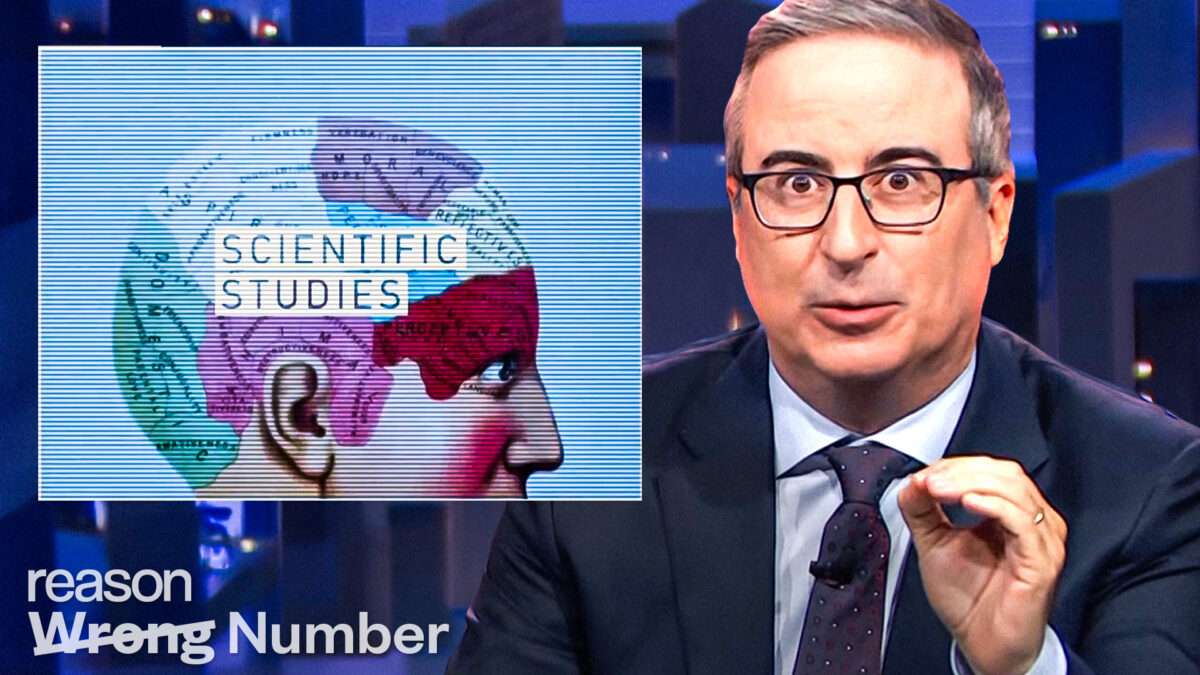
In 2016, the HBO comedian and political commentator John Oliver produced a terrific segment on how TV pundits routinely cite garbage science. After showing clips of newscasters and commentators making absurd claims such as, "A new study showing that drinking a glass of red wine is just as good as spending an hour at the gym," and The TodayShow's Al Roker commenting, "You find the study that sounds best to you, and you go with it," Oliver commented, "No! No, no, no, no, no, no, no! You don't just get to cherry-pick the parts that justify what you were going to do anyway."
Then Oliver added a useful rule: "If they are going to keep saying 'a study says,' they should have to provide sourcing and context or not mention it at all." (Though the segment specifically targeted the misuse of "scientific" studies, all the same principles apply to the social sciences.)
What's so noteworthy about that 2016 segment is that in his other monologues, on issues ranging from SWAT teams to homelessness, Oliver has routinely ignored the principles he laid out. In his overly simplistic takes on complex policy issues (often designed to dunk on his ideological opponents for comedic effect), he often fails to provide appropriate context and appears to be guilty of choosing research "that sounds best," as Roker put it, or at least that supports whatever point he's determined to make.
Oliver is one of America's most influential pundits, so he should be held to the highest of journalistic standards. And Last Week Tonight is indeed more diligent than many TV news programs. The show employs researchers who interview the authors of the studies it cites. Oliver is a comic, not an academic, so we can excuse him for not posting footnotes, and he routinely cites his sources on screen. When we emailed the show's producers to point out problems with their research, to their credit, they sent back a detailed response that we'll quote from in this article. (In a few cases, they pointed to Reason articles using some of the same studies, albeit with full citations and more context. In cases in which their criticisms were correct, we've annotated the original articles.)
Many of the show's researchers are former reporters and editors who abide by journalistic standards. Nevertheless, the show has a long track record of citing social science findings without the appropriate context, massaging them to support whatever point Oliver is trying to make.
Rent
In his excellent 2016 segment on scientific studies, Oliver noted: "There is a lot of bullshit currently masquerading as science. Not all scientific studies are equal. Some may appear in less-than-legitimate scientific journals, and others may be subtly biased because of scientists feeling pressured to come up with eye-catching positive results."
Cut to a 2022 segment titled "Rent," and we find Oliver citing a study that his wiser self would have characterized as "bullshit."
"Right now, there is not a single county in the U.S. where a worker earning minimum wage can afford a modest two-bedroom rental home," he said. He was citing a study designed to produce an "eye-catching" result. It was published not by a reputable journal, but by the National Low Income Housing Coalition, an advocacy group that lobbies for government spending on housing and rent subsidies, including expanding the National Housing Trust Fund and increasing federal appropriations to the Department of Housing and Urban Development.
The biases are not particularly subtle. Why would a minimum-wage worker need a two-bedroom home? In the study, "can afford" doesn't mean "have enough money to buy the cheapest available," as most English speakers would interpret it. The authors use it to mean renting a two-bedroom home at the 40th percentile price point of the local market (that is, a little cheaper than the median unit), using no more than 30 percent of their income, excluding government benefits, pensions, or other nonearned support.
Oliver also didn't mention who these minimum-wage workers are. In 2025, according to the Current Population Survey, a third of hourly workers paid the federal minimum or less lived in a parent's or grandparent's home, a fifth were married and living with a spouse, and only one in eight lived alone.
When we asked the show's producers why they failed to disclose that their source was an advocacy group seeking government funds, they pointed to the onscreen credit and responded: "We trust our viewers' intelligence enough to think they might be able to read it and conclude that the National Low Income Housing Coalition is interested in building low-income housing, nationwide, possibly even as part of a coalition."
I don't share their confidence that most viewers can read the onscreen source line and tell from the organization's name whether it's an advocacy group. There's a double standard here: When Oliver doesn't like what a study says, he's not content to just trust his viewers; he makes it explicit, as he did with the "ethanol lobbying groups" mentioned above.
Oliver's producers wrote us: "When we rely on studies from advocacy groups, we look at the underlying data and speak to researchers to better understand it; we discard many studies as a result."
This one belonged in the trash.
Sports Betting
In a 2025 segment, Oliver cited an eye-catching statistic about how sports betting was driving a spike in bankruptcies. "Unsurprisingly, the rise of online sports betting has been found to correlate with a rise in gambling harms, with one study showing that in states that allowed it, there was a 28 percent increase in bankruptcies, translating to about 100,000 extra bankruptcies a year."
I'll give Oliver credit for saying "correlate with" rather than "cause," but the rest of that sentence ("in states that allowed it, there was a 28 percent increase") implies direct causality.
The bigger problem is that the "100,000" figure is clearly wrong. When I contacted the study's authors, they told me they don't know where that figure came from, and it doesn't appear anywhere in the study. Last Week Tonight's producers told us they pulled it from a Business Insider article, but in the video, Oliver said it came from the study.
If Oliver's researchers had done the same calculation as the authors, multiplying the per-person effect by the at-risk population, they'd have found about 30,000 extra bankruptcies a year, not 100,000, and a 6 percent to 7.5 percent increase, not 28 percent.
Oliver also left out important context: He was citing an unpublished working paper. The peer-reviewed version appeared after the Last Week Tonight segment aired, and it included substantive changes. Working papers from credible researchers, like this one, are valuable, but Oliver should have made it clear he was citing a preliminary draft circulated to other researchers for comment, not a published study.
Homelessness
In 2021, Oliver did a segment making a case for a policy called "Housing First," which includes placing more homeless people in permanent supportive housing. The problem is that building and maintaining these units is expensive, so permanent supportive housing doesn't scale easily. Oliver set out to dismiss that objection by citing research showing the alternative is even more costly.
"One study in Florida," Oliver said, "found that, just between money spent on incarceration and emergency medical treatment, their communities and local governments had spent an average of just over $31,000 per person per year, when the estimated cost of providing them with permanent supportive housing would have only been around $10,000 per year."
The Florida study's finding was an outlier. The Central Florida Commission on Homelessness commissioned it, and Housing First advocates promoted it because it produced the headline they wanted. I give Oliver credit for noting that the study "tracked a decade's worth of spending on just 107 chronically homeless people," but he left out additional context.
In 2018, a committee convened by the National Academies of Sciences, Engineering, and Medicine evaluated permanent supportive housing. It concluded that there is "no substantial evidence that [it] contributes to improved health outcomes" and "insufficient evidence" that it's cost-effective.
Studies exist on both sides of this issue, and we can debate whether permanent supportive housing is more cost-effective than the alternative, but Oliver cited one study and implied it was conclusive.
Oliver also neglected to mention that the paper was written by a consulting firm led by a supportive-housing advocate, though if you looked closely, you could see the organization's name on the screen as he delivered his monologue.
Ethanol
Oliver and I agree that the federal government shouldn't be subsidizing ethanol. But in a 2024 segment titled "Corn," Oliver pointed to a study claiming that ethanol is more harmful to the environment than gasoline and implied that only self-interested lobbyists say otherwise.
"While ethanol lobbying groups have long argued that it slashes greenhouse emissions," he said, "one recent study found that corn ethanol produced under the renewable fuel standard has a carbon footprint at least 24 percent higher than regular gasoline."
What Oliver doesn't mention is that the 2022 study he cited was highly contested. It was challenged not only by "ethanol lobbying groups" but also by the U.S. Department of Agriculture under the Biden administration. The study's claim that ethanol has a higher carbon footprint than gasoline also contradicts a 2010 Environmental Protection Agency projection that ethanol would be about 20 percent cleaner than gasoline. Argonne National Laboratory, running the government's standard model, credits ethanol with cutting greenhouse emissions by more than 500 million tons in 15 years.
The problem isn't that Oliver is wrong; it's how he presented this study. Whether ethanol mandates are good or bad for the environment is a complicated, contested issue, with strong studies on both sides (and plenty of weak ones). Plucking one from the pile and reporting its findings is misleading.
Ethanol subsidies are bad because they involve politicians using mandates to buy farmers' votes, and top-down mandates generally lead to less optimal decision-making. But it's not clear that ethanol increases carbon emissions.
SWAT Raids
In a 2014 segment on police militarization after the fatal shooting of Michael Brown in Ferguson, Missouri, Oliver said, "There has been a massive rise in both the number and the use of police department SWAT teams," and showed a news clip that stated: "The number of SWAT raids has gone up by 1,400 percent since the 1980s. An estimated 50,000 now take place every year." Instead of mocking the clip, as he often does, Oliver cited it approvingly.
So where did the claim of a 1,400 percent increase come from? It's based on a voluntary mail-in survey, which isn't a reliable way to gather data. No official count of SWAT raids exists, and almost nobody tracks them, then or now, so the figure rests on departments' self-reporting of how often they "deployed," with no shared definition of what that means.
The 1980s figures that form the baseline for the 1,400 percent increase in SWAT raids come from a mid-1990s survey, making them especially unreliable. No one was counting SWAT raids at the time, and there's no way to verify them.
Oliver followed that clip by citing another study: "Just keep that clip in mind," he said, "when I tell you that 79 percent of SWAT deployments are now for executing search warrants, and most of those were for drug investigations."
Again, there's missing context. That 79 percent figure comes from a small, nonrandom sample generated by an American Civil Liberties Union records request; the organization could get data from just 20 of America's roughly 18,000 police agencies.
When we pointed out to Oliver's producers that the data on SWAT teams were stripped of their context, they replied that since this segment aired, "We've become more diligent about critically interrogating the sourcing on studies in our shows." They also argued that more "recent studies," if anything, suggest that the studies they cited "understated the true scope of things." And they pointed to instances of Reason citing the same data.
I agree with Oliver's position on SWAT raids, but he really should be agitating for better data. We're permitting state violence without anyone keeping the detailed records that could help us understand the costs and benefits. But that doesn't excuse citing two studies based on weak data and presenting them as fact.
Tipping
In a 2025 segment on tipping, Oliver said, "Recent analyses have found that poverty rates for tipped workers are over twice as high as for nontipped workers."
Twice as high as for which nontipped workers? The analysis he's citing included all nontipped workers in the U.S., including CEOs and neurosurgeons. Oliver, who reportedly makes $30 million a year, also pulled up the nontipped average. The right way to evaluate tipping is to match tipped and untipped workers by job: Waiters have about the same poverty rate as fast-food workers, and hotel maids about the same as other cleaners. If you control for job, age, and hours, the gap closes.
It's another study designed to generate a talking point, which isn't surprising since it was published by the Economic Policy Institute, a progressive, left-of-center think tank. The organization's name appeared onscreen as Oliver delivered his monologue, but, once again, viewers would need to hit pause to look it up and figure out what the Economic Policy Institute stands for.
Oliver's 2016 segment on "scientific studies" shows that he should know better. It's possible to construct arguments by citing good research responsibly, while providing the proper context and sourcing. It's possible to follow research where it leads, instead of retrofitting it to preconceived ideas. You just have to be willing to present data that capture reality in all its messiness, even if that means it won't generate an easy laugh line.
To keep up with our video series Wrong Number featuring Aaron Brown, and to receive bonus content and more, click here to enter your email address.
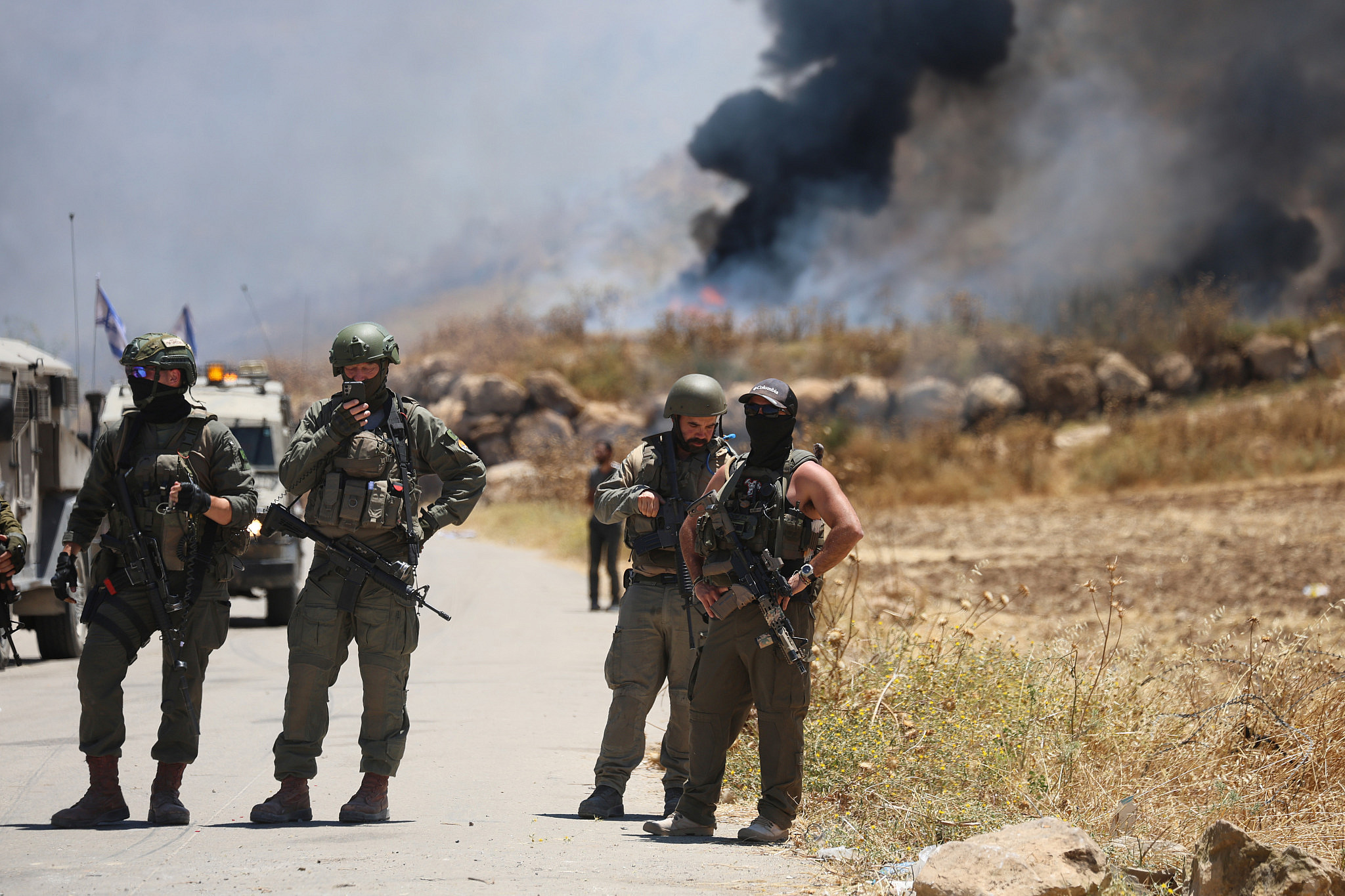
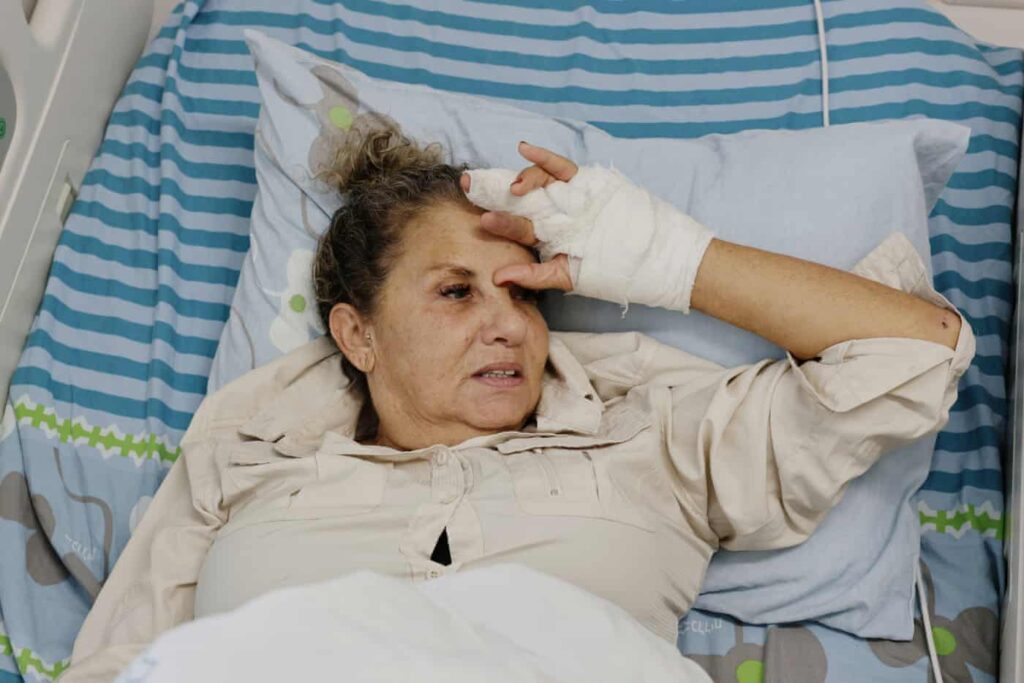
Without the protective gear, “I probably would have been dead,” Levine said, pointing out that Palestinians do not have such protection, and more than 20 had been killed by settlers this year.
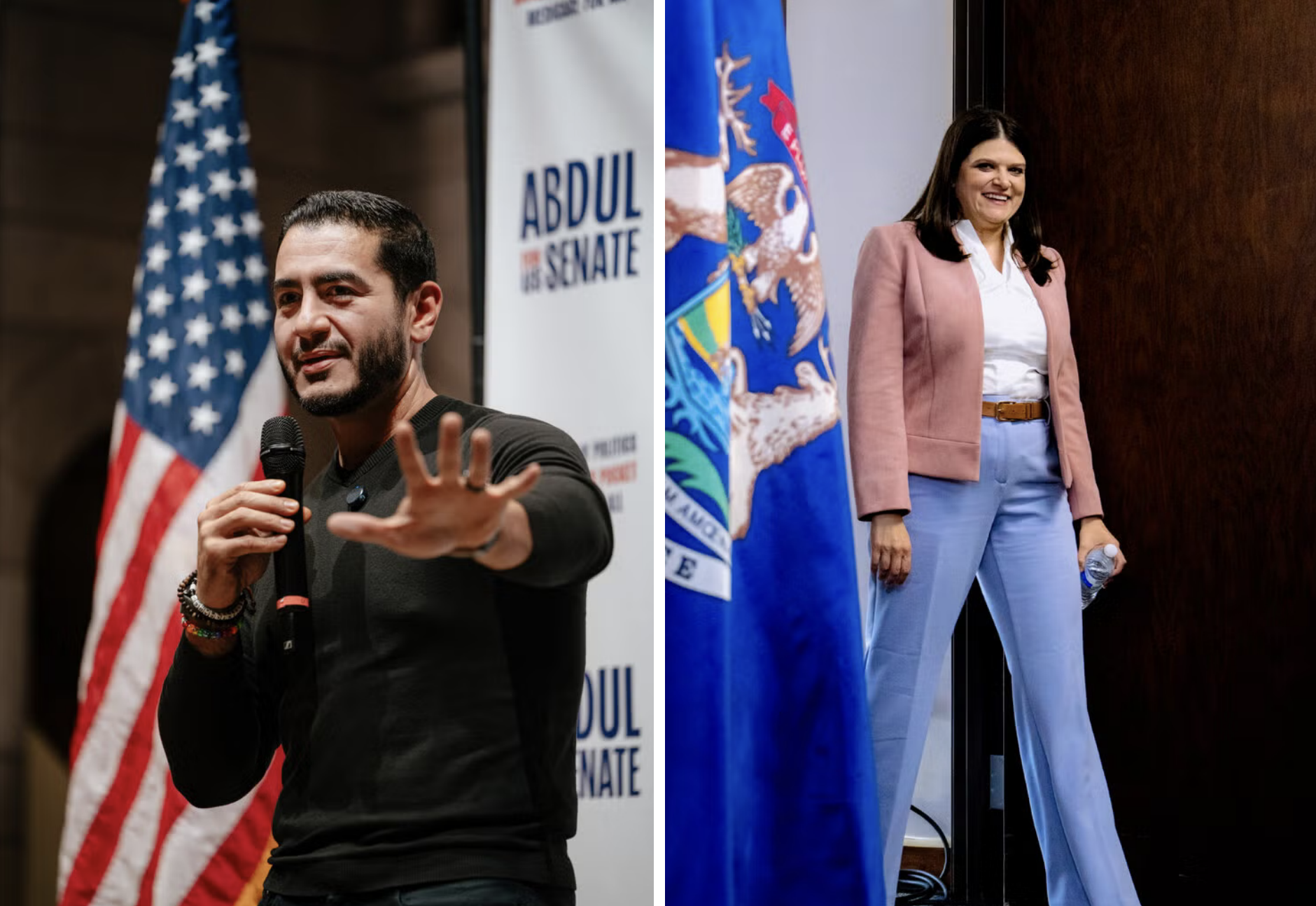
Voter clips supporting pro-Israel Rep. Haley Stevens drew millions of views, but the funders are unknown. While the bots originate from India, the campaign appears likely to have been tied to groups that sought to help Stevens defeat opponent Abdul El-Sayed.
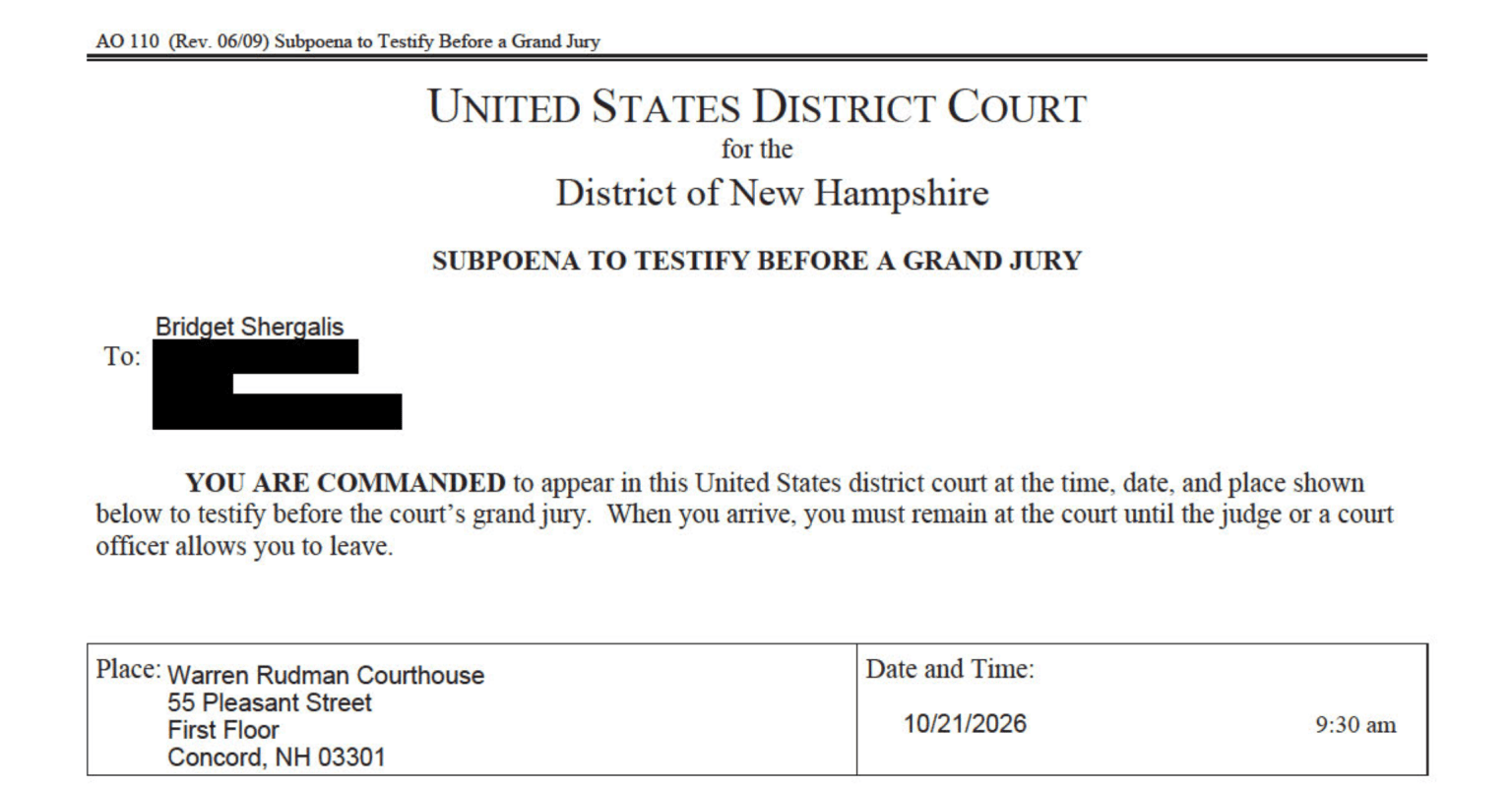
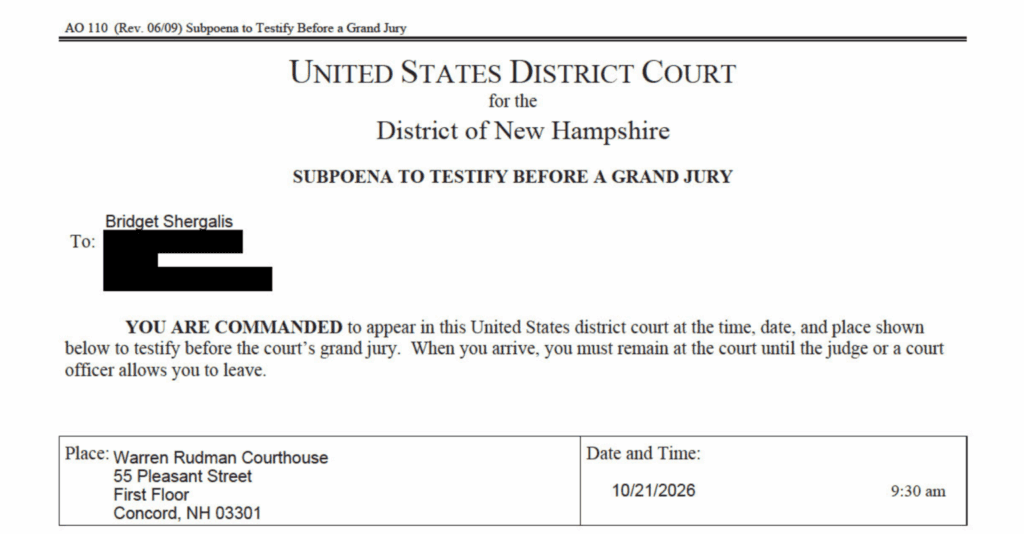
Two activists have been ordered by DOJ to testify in mysterious grand jury proceedings regarding their involvement in efforts to deface an Israeli weapons manufacturing facility in New Hampshire, after feds had sought in an earlier trial to obtain sentences of 37 years for them.
After David Ellison acquired CBS to make it Israel friendly, he hired Bari Weiss, an equally devoted Israel partisan, to do the job. She pushed staff to smear anti-genocide candidates, meddled in a report that exposed Israeli settlers, and her handpicked foreign editor threatened to fire staff who didn't go along
They're a common feature at US shopping malls: skincare kiosks staffed by charming Israeli salespeople. Some customers were hit with thousands of dollars in charges they never authorized and products they didn't want and can't return. Many victims were elderly, disabled or otherwise vulnerable
Britain is clamping down even harder on critics who consider Western foreign policy to have been a catastrophic failure. We are fast approaching the point where expressing an alternative opinion can land you in jail.
On the night of October 2, while exiting a flight from Moscow via Istanbul, I was detained by UK counter-terrorism police for three hours under the Counter-Terrorism and Border Security Act 2026. I had no right to remain silent, my person and possessions were thoroughly searched, I provided fingerprints and a DNA sample, and was required to give up my electronic devices and provide my passwords or face arrest.
This was a “suspicionless” detention. I was not suspected of anything, yet police officers were empowered to subject me to an intrusive examination to assess whether I was planning a “hostile act” against the United Kingdom.
An officer approached me and immediately took me into custody after I informed him that I had been to a conference in Russia to discuss geopolitics. I was not told why I was being detained, except that he wanted to ask me “a few questions.” Bizarrely, he pointed out that the “counter-terrorism” powers he was using “aren’t as scary as they sound.”
I had attended the International Valdai Discussion Club Conference in Moscow Region from September 27 to October 1, including attending President Vladimir Putin’s keynote address. I participated at the invitation of the Valdai Club, which provided my flight and accommodations, as is standard practice for foreign guest attendees at such international conferences.
The Valdai Club, founded in 2004, is primarily a meeting of academics from all over the world. Before the Russian invasion of Ukraine, it was attended by a former Head of MI6, former British Ambassador to Russia Sir Tony Brenton, and Fiona Hill.
Valdai has found itself in the British government’s crosshairs. Throughout September, a host of journalists and academics have received letters from the UK Home Office inviting them to register with the Foreign Influence Registration Scheme, if they are “being directed to carry out relevant activities in the UK as part of an arrangement with a foreign power.”’ Non-compliance with the scheme is considered a criminal offense.
British journalist Mary Dejevsky, who was The Times Bureau Chief in Moscow in the 1990s, is the latest to receive such a letter as a publicly listed contributor to the Valdai Discussion Club, though she has not attended since the war began. The idea that if you attend an academic conference you are being directed by a foreign power is patently absurd. Nevertheless, and given the obvious risks, I wrestled with the dilemma of whether I should accept the invitation from Valdai and make my first visit to Russia since I drove out of that country in February 2019 at the end of my four-and-a-half year diplomatic posting there.
My primary role then was as the Economic Counsellor responsible among other things for sanctions policy. After my return to the UK, I authorized around 1000 sanctions against Russians, including after the war broke out.
I had some concerns that my role in sanctions may cause me problems once inside Russia (indeed, I was subjected to an extremely stressful four-and-a-half-hour detention and interrogation by the FSB upon arrival in Moscow).
Sir Tony Brenton, with whom I had consulted, suggested that I should attend, saying that Valdai was an “excellent event.” Upon his advice, I notified the UK Foreign Office, underscoring my commitment to abide by my obligations under the Official Secrets Act before I left for Moscow. This included confirmation that while Valdai had paid for my flights, I had not received any payment for my attendance.
I served as a British diplomat for 24 years and I take seriously my ongoing commitments to preserve the secrets that I had access to during that time. The suggestion that I might plan a hostile act against Britain is offensive and wrong. However, since my retirement in 2023, I have been an outspoken critic of the direction of UK foreign policy towards Russia, notably the departure from diplomacy in favor of war.
The important and necessary precautions that I had taken were insufficient to prevent me from being detained with fewer rights than had I been formally arrested and cautioned. I am of the view that security figures in London had authorized the action against me ahead of time. Indeed, Russia commentator Mark Galeotti suggested on his podcast that the system was “making a statement” by acting in this way.
(Editor’s Note: A request by RS to the UK’s Counter Terrorism Policing for comment about the author’s detention — for which he provided RS with documentation – went unanswered as of this writing.)
My detention marks the latest escalation in the British state’s war on free speech. Increasingly, people who speak out publicly against forever wars — not only in Ukraine, but also in the Middle East and elsewhere — are seen as a threat to national security that must be quashed.
Airport detentions are one step short of full-blown imprisonment, of course, but this pattern of intimidation has been spreading over the past four years.
British conservative academic and author John Laughland was detained at an airport for one hour in 2022. The late Robert Skidelsky, a member of the House of Lords and esteemed British economist, and investigative reporter Kit Klarenberg were subject to more lengthy and rigorous detentions in 2023. Klarenberg still has not received back an SD memory card that was confiscated at the time.
Professor Richard Sakwa, Emeritus at Kent University, was detained for three hours at Heathrow in 2025; he has only been able to return to Russia since that time following an intervention by his lawyer. George Szamuely, a Hungarian-born British political analyst, was detained in March 2026.
In 2023, Craig Murray, former British ambassador to Uzbekistan, was detained for an hour at Glasgow Airport under the tougher provisions of the Terrorism Act 2000, which is concerned with activity related to the commission, preparation and instigation of acts of terrorism. His phone was not returned to him afterwards.
Investigative journalist Richard Medhurst was arrested for making statements in support of a proscribed pro-Palestine organization and held for 24 hours before his release. His home and office in Austria were subsequently raided in February 2025 and he was accused of membership of Hamas. To date, no charges have been laid against him.
More broadly, in Britain, the group Palestine Action has been proscribed as a terrorist organization following widespread protests against the gross violations of international humanitarian law by the Israeli state in Gaza. Elderly people, including Holocaust survivors, have been arrested at Palestine Action protests for the crime of holding cardboard placards.
The practice of suspicionless airport detention is uncommon in European states, although alternative, more insidious forms of repression of free speech are employed. Former Swiss military intelligence officer and author Jacques Baud remains in Brussels, de-banked and unable to travel home, having been sanctioned by the European Union for “pro-Russian propaganda.”
This past week, Russian-born journalist and former BBC reporter Leonid Ragozin was declared persona non grata by Latvia, where he has lived since the onset of the Ukraine crisis. Having criticized the direction of Western foreign policy toward the war in Ukraine, he has also been a regular Putin critic and described the 2022 invasion of Ukraine as “criminal and irrational.”
This pattern of repressing free speech in Britain and more broadly in Europe is growing. I fear that the more obvious it becomes that the war in Ukraine cannot be won by the West and that Israel cannot remain insulated from international censure over its actions in Palestine, actions by the British state may become even harsher.
We are reaching the point where offering an opinion on the perilous state of Western foreign wars can land you in prison.
I thought I had been careful in notifying the British government before my sole visit to Russia since 2019. If the UK is at the point where former diplomats can be detained and have their property temporarily confiscated, then no one is safe from the long arm of lawfare.
Upon my return from Valdai, I wrote again to the Foreign Office, offering to brief them in full on the insights I gained while I was in Russia. To date, they have not replied.
“I’m okay.” That was the last message I sent my mother before an Israeli strike hit us, a group of seven journalists reporting in southern Lebanon.
Three years ago, on 13 October 2023, my colleague Dylan Collins and I headed to the southern border of Lebanon to cover the situation following cross-border shelling between Israeli forces and Hezbollah. We spent the morning filming UN peacekeeping force patrols along the blue line dividing Lebanon and Israel. The atmosphere was calm and nothing suggested that the day was about to change and upend our lives. We went to a coffee shop near a UN post where journalists from different outlets had gathered and there we met our friend and Reuters colleague Issam Abdallah.
Around 4:50PM, we heard a bombardment in a nearby town so we moved to an exposed hill in Alma Al-Shaab, where Al-Jazeera journalists Carmen Joukhadar and Elie Brakhya were positioned. Together with colleagues from Reuters, we were a group of seven journalists, all wearing press vests, reporting next to a car marked “TV”. We were clearly identifiable as press and spent about an hour filming while an Israeli drone hovered above us. At 5:57 I finished filing my photos and sent a message to my mother to tell her I was okay. Seconds later, I found myself on the ground, bleeding and screaming for help. Dylan rushed over with a tourniquet, but before he even had the time to put it, another strike hit.
Everyone disappeared and I was left alone, unable to move and the heat of the flames creeping closer to my face. I was terrified of burning alive, so I started crawling away with the camera still hanging from my neck and its strap tightening around my neck with every move. Two weeks later, I woke up from an induced coma with one leg missing, the other severely damaged, and Issam dead.
Not an isolated attack
What followed was as horrific and brutal as the attack itself and it didn’t stop there. What happened to us was not an isolated incident — for three years I watched journalists being killed in Lebanon and Gaza by Israeli forces in ways that felt painfully familiar.
In October 2024, Israeli forces struck a compound in Hasbaya where journalists were staying and killed media workers Ghassan Najjar, Mohammed Reda and Wissam Kassem, while they slept.
Human Rights Watch found no evidence of military activity at the site and concluded that the strike was deliberate and should be investigated as war crime.
Then in April 2026, journalist Amal Khalil was killed in southern Lebanon after an Israeli strike hit the building where she had taken shelter with her colleague Zainab Faraj, leaving both women trapped under the rubble. Investigations found that Israeli forces repeatedly obstructed rescue efforts.
Since our attack, dozens of journalists have been killed in Lebanon, and nearly 200 journalists have been killed in Gaza by Israeli forces.
Many have been mired by Israel with the same false allegations that they were “terrorists.” The dead can’t defend themselves against such accusations, but I survived and I can speak about what happened to us.
In June 2026 in an interview on France 2, Israel’s ambassador to France described the 13 October attack as a “mistake” saying that we were not targeted because we were journalists, but because Israeli forces had mistaken us for “terrorists.” The evidence tells a different story.
Five independent investigations by Agence France-Presse, Amnesty, Human Rights Watch, Reuters, and UNIFIL found no indication of fighters or military activity at the site, and no cross-border exchange of fire for more than 40 minutes before we were struck with a 120mm tank shell.
These investigations matter because they establish with certainty evidence beyond my own personal account.
What remains unanswered is who gave the order, who fired the double-tap strike, and why no one has been held accountable. These are basic questions that can be answered by Israel if they were sought by EU member states.
Three years on, Issam’s family and the survivors of this attack deserve to know: Who gave the order?
Evidence alone cannot deliver justice, someone must be willing to act on it. In the face of this attack, including the targeting of four of its own citizens on Lebanese soil, the Lebanese government has failed us.
Neither Lebanon nor Israel are party to the Rome Statute, meaning that the International Criminal Court does not have jurisdiction to prosecute those responsible for the attack.
In 2024, Lebanon approved a special declaration that would have allowed the Court to investigate war crimes committed after 7 October 2023, only to later reverse its decision for political reasons.
And now, making our legal path even more complicated, in June 2026 Lebanon signed a new framework agreement with Israel whereby Clause 13 commits both sides to cease “all hostile and adverse actions in international and legal fora.”
EU urged to act
I have no hope left that we will ever get justice for what we lost, but I will not rest before I know the names and faces of those responsible.
Our case is the most documented instance of Israeli forces targeting the press on record. The October 13 targeted attack was perpetrated by Israeli forces on a group of journalists clearly identifiable as press.
If we cannot get answers in the face of such overwhelming evidence, what does it mean for the hundreds of journalists killed by Israeli fire throughout the region for which there is no such evidence?
This is where the European Union must act. The EU has repeatedly said that journalists must not be attacked and that violations of international law must be met with accountability. Today, we demand actions not just words and statements. The EU must demand that Israel provide a full account of the 13 October attack, including who ordered, authorized and carried out the strikes.
For me, this is not an abstract question of foreign policy. Issam was my friend. I survived that attack with one leg missing. I know what it means when the people responsible for an attack are allowed to remain unnamed and unaccountable.
I am asking the EU not simply to stand with journalists in words, but to stand with us in action.
The EU has political, diplomatic, and legal leverage. It should use it. If Israel refuses to fully explain what occurred and disclose those responsible for killing and maiming journalists who were visibly identifiable as press, EU member states should use every available mechanism to pursue accountability, including further targeted sanctions or suspending trade with Israel.
I refuse to believe that a military with advanced surveillance could have simply mistaken us for fighters and attacked us in a double-tap strike, a tactic repeatedly used by Israel in this war. But, if that’s truly what happened, then Israel must still answer for how such incompetence and failure was possible.
For now, justice evades us, but the truth of who gave the order is within reach and we must demand it.
Quando si torna indietro e si osserva davvero la rappresentazione storica delle «realtà russe» nei media di lingua inglese, si nota che Putin è sull’orlo della destituzione dal 2000 e da allora anche l’economia russa è sull’orlo del collasso. Tutto ciò che viene scritto sulla Russia in inglese in Occidente è una menzogna.
Parleremo dei vari aspetti della presunta “epidemia” in Russia, ma emerge una tendenza più ampia quando si esamina l’interpretazione data dai media a questo evento, che sia reale, falso o una sorta di enigma. Chiunque abbia familiarità con il mio lavoro mi avrà sentito affermare qualcosa del tipo: «Tutto ciò che sapete sulla Russia, scritto in inglese, è una menzogna», e continuo a credere in questa affermazione. Quando i politici occidentali dichiarano che «la Russia ha il potenziale economico della Spagna» o che «la Russia è la Nigeria con la neve», o fanno altre affermazioni simili, non stanno mentendo in modo diretto e consapevole.
Sulla base di tutti i dati e le informazioni di cui dispongono «laggiù» riguardo all’economia russa, questa visione era logicamente «vera». Se si analizzano i numeri basandosi sui dati occidentali, immagino che la Russia sia semplicemente un’economia enigmatica avvolta nel mistero, delle dimensioni di una nazione dell’UE di secondo piano, ma ovviamente nella realtà non è così. La Russia è terribilmente draconiana e repressiva, perché ovunque si legge che è proprio così. I calcoli secondo cui la Russia avrebbe ceduto immediatamente e il «rublo sarebbe crollato» dopo l’inizio dell’Operazione Militare Speciale non erano falsi, erano semplicemente basati su dati errati. Se si esaminano le informazioni occidentali sulla Russia, sembrerebbe davvero che l’economia del Paese poggi esclusivamente sui prezzi del petrolio, che la popolazione attenda una sola scintilla per ribellarsi al tiranno e che, nel complesso, il castello di carte sia pronto a crollare da un momento all’altro. Ma, come hanno dimostrato gli anni di guerra, non è stato così; tuttavia, le stime iniziali erano «corrette» sulla base dei dati su cui si fondavano.
Persino la famosa citazione di Lenin secondo cui «una menzogna ripetuta abbastanza spesso diventa verità» – ironia della sorte – potrebbe non essere mai stata pronunciata da lui, ma questa pseudo-affermazione getta un’ombra negativa sulla Russia, per cui l’Occidente continua a ripeterla. In Russia, poiché alcune persone sono state arrestate per attività online dall’inizio dell’Operazione Militare Speciale – tra cui l’organizzazione di atti terroristici – ciò viene considerato «negativo»; tuttavia, il fatto che nel Regno Unito vi siano 70 volte più persone dietro le sbarre per ciò che hanno espresso online non viene preso in considerazione, poiché si tratta di una situazione diversa e non è mai stata nemmeno presa in esame da un giornalista britannico. Gli arresti per dichiarazioni e azioni online si applicano solo a coloro che sono considerati «cattivi», a riprova della loro cattiveria.
Se l’esercito russo è forte, si tratta di militarismo; se l’esercito russo è debole, è prova di corruzione e inettitudine. Se vi sono processi per corruzione, ciò dimostra che il regime autoritario di Putin sta eliminando i propri nemici; se invece non vi fossero processi per corruzione, ciò costituirebbe prova della corruzione e del controllo totalitario del regime. Non esiste alcuna possibilità di vittoria per la Russia nella stampa occidentale; persino durante il presunto trattamento mediatico favorevole riservato a Eltsin nei «bei vecchi tempi», l’intero establishment si è abbandonato a un’orgia di schadenfreude per la caduta dell’URSS e per lo stato di umiliazione della Russia degli anni ’90.
Per dirla senza mezzi termini: se accade qualcosa o si dice che sia accaduto qualcosa in relazione alla Russia:
– Se i media russi lo avallano, ciò è prova che la Russia è cattiva
– Se i media russi si oppongono, ciò è prova di un insabbiamento del misfatto che dimostra che la Russia è cattiva
– In definitiva, qualsiasi azione o inazione da parte della Russia è negativa e costituisce prova della sua malvagità.
La posizione della CNN su questa questione è la classica russofobia
E, puntuale come un orologio, ecco che la CNN interviene per sostenere questa narrativa sulla peste che sembra essere fondamentalmente falsa. Parleremo di ciò che sta realmente accadendo con questa «epidemia» un po’ più avanti, ma per ora concentriamoci sull’aspetto mediatico della questione. Già nel titolo dell’articolo della CNN in questione «Liste di controllo, mascherine e mistero: cosa sappiamo sull’allarme peste in Russia» si nota chiaramente come la propaganda stia prendendo piede.
«Le autorità russe hanno cercato di placare le preoccupazioni globali in merito alla morte di una giovane donna che lavorava in un laboratorio siberiano specializzato nella lotta alla peste. Tuttavia, le misure adottate per isolare i suoi contatti e introdurre nuove misure di controllo della malattia negli ospedali locali hanno suscitato preoccupazioni tra le persone che temono di non essere informate su tutta la verità.»
Per quanto riguarda il paragrafo precedente, come potete vedere, la parte russa è vista in modo negativo perché presenta una versione dei fatti diversa e ha l’audacia di condividerla con il mondo. Tuttavia, se i media russi avessero taciuto su questa vicenda, ciò sarebbe stato ugualmente negativo, in quanto avrebbe costituito una prova di colpevolezza per omissione. Il fatto che le autorità russe stiano adottando alcune misure per cercare di fermare un’epidemia è negativo perché tali misure generano paura o qualcosa del genere, ma quantomeno ciò è sufficiente per giustificare una condanna. Tuttavia, se il governo adottasse misure estreme, queste sarebbero «draconiane», mentre se non adottasse alcuna misura, ciò sarebbe «terribilmente irresponsabile». Pertanto, adottare misure di livello medio «induce paura» o qualcosa del genere e, naturalmente, ciò è negativo e assolutamente inaccettabile.
«Ulyana Gavryunina, una blogger ventinovenne di Angarsk, città della regione di Irkutsk, ha dichiarato alla CNN di aver dovuto cambiare ospedale ostetrico alla quarantesima settimana di gravidanza, poiché le restrizioni di quarantena appena imposte impedivano a suo marito di stare con lei durante il travaglio.»
Pertanto, poiché l’amministrazione locale dispone di strutture limitate, purtroppo questa donna ha dovuto partorire in condizioni tutt’altro che ideali. È una situazione spiacevole per lei e sono certo che sia stata piuttosto frustrante, ma ancora una volta la CNN sostiene che l’intervento delle autorità russe sia negativo perché ha avuto ripercussioni negative sulle persone; tuttavia, se non avessero fatto nulla, sarebbe stato altrettanto grave. Se le persone non fossero state messe in quarantena in quella struttura, ciò sarebbe stato «pericoloso e irresponsabile» o qualcosa del genere.
«Mercoledì l’autorità sanitaria russa ha affermato che non sussiste alcun rischio epidemico a seguito della morte della donna e che sta riducendo gradualmente l’intervento. Rospotrebnadzor ha dichiarato che il monitoraggio medico è stato completato per “oltre il 90%” dei contatti della ricercatrice deceduta e che non sono stati rilevati agenti patogeni “pericolosi”. Tuttavia, permangono alcune domande senza risposta».
L’espressione «ma rimangono domande senza risposta» è stata utilizzata in questo contesto per negare l’opinione del governo russo. Se questo paragrafo si fosse concluso senza queste parole, avrebbe fatto apparire pienamente legittime le opinioni delle autorità locali. Quando «rimangono domande», si allude a una cospirazione, al fatto che la versione ufficiale non corrisponda alla realtà. Ancora una volta, indipendentemente da ciò che le autorità russe avrebbero dichiarato pubblicamente, la reazione sarebbe stata negativa perché la CNN le considera nemiche. Il nemico non può fare nulla di giusto. E le azioni della Russia sono quelle di un nemico e, pertanto, sono universalmente negative agli occhi di qualsiasi giornalista che si rispetti.
“Secondo il proprio sito web, l’Istituto Antipeste impiega circa 95 ricercatori ed è un’importante struttura sanitaria pubblica responsabile del monitoraggio e della prevenzione dei focolai di infezioni batteriche e virali ad alto rischio in tutta la Siberia e nell’Estremo Oriente russo.
L’istituto è stato fondato nel 1934 per combattere la peste e continua a studiare la malattia poiché la Yersinia pestis, il batterio che causa la peste, circola ancora naturalmente nella fauna selvatica in alcune zone della Siberia e nelle regioni limitrofe».
Sorprendentemente, la CNN non ha definito la struttura di ricerca in cui lavorava la signora Shipilova come un «laboratorio biologico» né ha utilizzato altri termini infamanti. In realtà, si è limitata a «crederle sulla parola» e a riportare semplicemente le informazioni presenti sul sito web. Ciò è risultato veritiero e piacevole da leggere.
Cosa è realmente accaduto, quindi?
Passiamo ora ad analizzare la situazione reale relativa a una potenziale epidemia di peste e alla misteriosa morte della ricercatrice che stava lavorando per combatterla. Esiste un video realizzato da una donna americana anonima residente a Irkutsk (nome del canale: American in the Motherland) sull’intera vicenda che, in meno di 15 minuti, analizza l’intera storia con fonti, fatti e filmati provenienti direttamente dalla regione. Per brevità, condividerò i punti salienti delle sue argomentazioni. Come potete vedere, ancora una volta una sola giornalista cittadina smonta punto per punto la versione dei media mainstream. L’immagine qui sotto è tratta dal video e mostra la «genialità» della stampa internazionale e le sue reazioni affrettate su questo tema.
I punti chiave del video erano:
Non vi sono lockdown di massa a Irkutsk né in nessun’altra parte della Russia; le uniche persone sottoposte a quarantena hanno avuto contatto diretto con la donna deceduta (Daria Shipilova) e il loro numero è inferiore a 200.
La Shipilova non lavorava in un laboratorio biologico militare, bensì in un istituto di ricerca sulle epidemie e sulle malattie, progettato per combattere le patologie. La sua ubicazione e la sua attività non erano né segrete né di natura militare.
La signora Shipilova è stata ricoverata in un ospedale fuori da Irkutsk perché in quella sede era presente una struttura progettata per gestire questo tipo di focolai epidemici dell’era Covid, e non nell’ambito di una qualche cospirazione.
Non si è verificato nessun altro decesso per la stessa causa di quello della signora Shipilova.
La causa della morte di Daria Shipilova è stata una «polmonite di origine sconosciuta».
La storia della «provetta rotta» è un mito, poiché è stata inventata da un blogger russo. Quando si lavora con malattie gravi, non si va in giro in un ambiente simile a un ufficio con provette fragili. La Russia non opera secondo la stessa metodologia della Umbrella Corporation, agitando a casaccio fiale fragili contenenti agenti patogeni.
La parte russa non ha trovato alcuna prova di un incidente presso la struttura di ricerca.
La ricercatrice non si era recata in Buriazia prima della sua morte. Pertanto, non ha contratto la malattia da marmotte locali o da altri tipi di roditori.
Al momento della stesura di questo articolo o della realizzazione del video collegato sopra, non si sono verificati altri casi simili a quello che ha causato la morte della signora Shipilova.
La peste è curabile, poiché è causata da un batterio che continua a esistere in tutto il mondo. Ogni anno, negli Stati Uniti e in altri paesi, una manciata di persone la contrae ancora. Gli antibiotici rappresentano una contromisura efficace contro questa malattia; pertanto, ciò non sembra costituire motivo di panico internazionale.
Perché la peste si diffuse nella Russia medievale?
Un aspetto importante da sottolineare a questo proposito è che, storicamente, sebbene la peste bubbonica abbia mietuto vittime anche al di fuori dell’Europa occidentale, ha avuto effetti devastanti solo all’interno di quest’ultima. I russi continuano ancora oggi ad andare fieri di possedere un elevato livello di igiene culturale che risale al Medioevo. I russi del Medioevo e altri popoli al di fuori dell’Occidente sembravano aver «capito da soli» la necessità di lavarsi regolarmente e di lavarsi le mani. Si ritiene che questa cultura igienica sia la ragione per cui la Russia, nel XIX secolo, vantasse una popolazione così numerosa rispetto alle nazioni circostanti. Molti in Russia ritengono che, se non fosse stato per errori madornali quali la Prima guerra mondiale, la Rivoluzione, la Seconda guerra mondiale e gli anni ’90, la popolazione attuale sarebbe molto più vicina a quella della Cina o dell’India.
Pertanto, da un punto di vista culturale russo, ciò appare chiaramente come un’altra campagna di proiezione: un terzo della popolazione inglese morì a causa della peste, mentre in Russia ne morirono solo pochi. Di conseguenza, la peste nera non ebbe in realtà alcun impatto culturale sulla Russia e, a giudicare dagli scritti del XIX secolo, la tubercolosi sembra essere stata un problema molto più persistente e fastidioso per questa società, che ancora oggi riveste una certa rilevanza. In tutta la Russia esistono strutture antitubercolari e non è possibile immigrare nel Paese se si presentano sintomi della malattia. L’intera questione del «vivere con i parassiti» non era una realtà quotidiana per i russi né nel Medioevo né in epoca moderna; tale primato spetta all’Occidente liberale e illuminato.
I media sono il vero problema.Abbiamo esaminato solo un particolare articolo su questo tema, ma vi sono numerose riflessioni assurde da parte della stampa occidentale che seguono la formula «maledetti i russi se lo fanno, maledetti se non lo fanno». Titoli come questo del Daily Mail ne sono l’esempio perfetto:
«Trump offre a Putin un’ancora di salvezza mentre la Russia si affanna a contenere una mortale epidemia trasmessa per via aerea dopo la morte di un ricercatore di laboratorio».
Ancora una volta, se «Putin» non facesse nulla sarebbe cattivo, ma sta facendo qualcosa, quindi si sta «affannando» in preda al panico, il che è altrettanto negativo. Il fatto che Trump gli offra un «ancora di salvezza» implica che Putin non abbia altra scelta se non quella di accettare questo aiuto, qualunque esso sia, altrimenti sarebbe cattivo. Ma indovinate un po’? Se accetta l’ancora di salvezza, ciò significa sicuramente che è debole o qualcosa del genere, il che significa che è cattivo.
Quando si torna indietro e si osserva davvero la rappresentazione storica delle «realtà russe» nei media di lingua inglese, si nota ovunque questa manipolazione narrativa isterica e nietzschiana da «untermensch». Putin è sull’orlo della destituzione dal 2000 e da allora anche l’economia russa è sull’orlo del collasso. Tutto ciò che viene scritto sulla Russia in inglese in Occidente è una menzogna.

 Login