THE government’s plan to distribute 500,000 Chromebooks to students over two years could help narrow Pakistan’s digital divide. The devices, which will come with MiFi internet connectivity, are meant for students handpicked under the scheme. In a country where access to computers and reliable internet still depends heavily on family income and location, that matters.
A student who cannot afford a laptop should not be locked out of online learning, digital skills or job opportunities. But the value of the scheme will depend on how it is carried out. The state should publish clear eligibility criteria, ensure that poorer students are not crowded out by those who already have devices, and explain how the refurbished Chromebooks will be procured, tested and distributed.
The total cost should also be disclosed, along with safeguards against political influence in selecting recipients and suppliers. There should also be a plan for repairs, replacement and technical support. A device that stops working after a few months, or cannot connect reliably outside major cities, will do little to close the gap it was meant to address.
More importantly, access to hardware is only one part of Pakistan’s education problem. A Chromebook cannot compensate for weak teaching, poor literacy, overcrowded classrooms or schools without dependable electricity and internet access. Nor will handing out devices automatically improve learning. Teachers need training to use digital tools well, students need access to useful content, and schools need systems that can blend technology with ordinary classroom instruction.
The government should therefore set measurable goals for the scheme: whether students use the devices regularly for learning, whether their digital skills improve, and whether this leads to better educational outcomes. Independent evaluation would help determine if the programme deserves expansion. There is also a case for giving students in remote and low-income areas greater weight, since they stand to benefit most from access they currently lack.
Pakistan has launched laptop schemes before; what matters now is whether this one produces more than a distribution ceremony. Technology can widen opportunity, but only when it is tied to good teaching, reliable connectivity and clear educational purpose.
The apparent rise in murder-suicide cases among young, middle-class families in Karachi cannot be attributed solely to social transition or inadequate mental healthcare. Amid sluggish growth, persistent inflation and unemployment, the government cannot escape scrutiny over its mounting tax burden on middle-class households and the economic distress that may push vulnerable towards desperate extremes.
Experts urge the government to abandon ad hoc economic policies and inequitable taxation that force ordinary Pakistanis to shoulder the cost of inefficient utilities and FBR’s failure to adequately tax powerful agriculture, trading and real estate interests and curb corruption in tax machinery.
“Unless the state becomes fairer and stops squeezing an already exhausted blue and white-collar workforce, isolated tragedies could give way to wider public unrest, potentially ignited by a seemingly minor trigger,” warns an analyst requesting anonymity.
The inability of average families to deal with the consistently rising cost of living and unfairly high taxes and stressors, such as rent, utility bills, fuel hikes, rising education and healthcare cost, chips away at a family’s emotional baseline until a minor shock feels like catastrophic triggering sometimes dangerous actions.
Are poor economic conditions, flawed govt policies pushing middle class to murder-suicides?
Traditional family and neighbourhood support networks are fraying, institutional alternatives remain weak, mental healthcare is largely inaccessible, and bank credit to tide over financial distress is often out of reach. These tragedies in Ahsanabad in September and Gulshan-e-Hadeed this month, where fathers allegedly killed their dependents before taking their own lives, have heightened anxiety across cosmopolitan Karachi and beyond. They raise troubling questions about mounting economic pressures, fears of downward social mobility and growing despair among young family heads struggling to sustain families.
Media reports indicated that both families involved in reported incidents were middle-class. One was headed by a doctor, the other man’s profession was unreported, though he lived in rented accommodation and was reportedly building his own house. Together, the two tragedies claimed 10 lives, including five unsuspecting children.
Some officials and analysts have dismissed attempts to link such tragedies to economic conditions and government policies as overstretched. Yet, global evidence establishes economic distress as a significant suicide risk factor. Debt, business failures and insolvency feature prominently in India, Bangladesh and Sri Lanka, while unemployment and corporate restructuring contributed to rising suicides in Japan, South Korea and Hong Kong, following the 1997-98 crisis. Studies in Iran and Egypt highlight similar risks. Western economies, including the US, Australia and parts of Europe, also recorded increases during economic downturns, notably the 2008 global financial crisis, when job losses, foreclosures and declining living standards intensified psychological distress.
The middle class in Pakistan, earning Rs100,000 to Rs250,000 a month, faces a disproportionate tax burden, stagnant wages and shrinking job opportunities, the pressures that are repeatedly highlighted but inadequately addressed. Queries to federal and Sindh government officials went unanswered by the deadline, while State Bank of Pakistan’s response on middle-class access to credit was awaited. Political leaders of major parties, economists and corporate leaders were approached for views on measures to prevent such tragedies from reoccurring.
Senior Sindh government sources privately expressed concern that such tragedies damage Karachi’s reputation. They cautioned against portraying isolated incidents as evidence of broader economic or government failures without considering the complexities of a megacity of over 20 million people. They suggested that mental health challenges, rather than economic pressures alone, may be involved in individual cases, currently under investigation. They also criticised a section of the media for allegedly sensationalising human suffering for commercial gain.
According to official records shared by Sindh Additional IG Police Azad Khan, Karachi reported one murder-suicide case each in 2022, 2024 and 2025. In 2026, however, two such tragedies have already occurred, barely a month apart.
Abdul Moiz Jafery, a founding member of the Awaam Pakistan Party, blames the mounting financial strain on middle-class families on chronic mismanagement and the government’s failure to broaden the tax base and distribute burden equitably. He argues that the problem dates back to Pakistan’s inception and has worsened as successive governments expanded opportunities for rent-seeking while financing entrenched privileges through regressive taxation. The result, he says, “is a system that disproportionately squeezes the poor and middle classes while leaving much of the wealthy elite undertaxed or entirely undocumented”.
Younus Dagha, former federal secretary and chairman of the Policy Research and Advisory Council, Karachi Chamber of Commerce and Industry, advocates a multipronged strategy addressing both immediate mental health needs and underlying socioeconomic distress.
In the short to medium term, he urges the Sindh government to collaborate with mental health professionals and community organisations to provide accessible treatment for depression, establish suicide prevention helplines and launch intensive awareness campaigns. Community engagement, sensitive to local cultural values, was essential for effective intervention.
Long term solutions, he argues, require identifying the roots of despair and helplessness, particularly the widening gap between aspirations and opportunities. “The government must prioritise education, empowerment and meaningful public participation, enabling people to voice grievances and regain control over their lives rather than feel trapped by circumstances beyond their control”.
Muhammad Aslam Soomro, special secretary Sindh, speaking in his personal capacity, advocates a transparent, community-based social protection system offering immediate, dignified and confidential assistance to distressed families, including middle-class households facing temporary crises. He proposes government grants to credible NGOs for identifying and supporting beneficiaries, backed by independent audits to ensure accountability without compromising privacy. Unlike direct government interventions, potentially vulnerable to political influence, community-led mechanisms could better identify genuine cases and facilitate beneficiaries’ eventual exit from assistance.
Soomro also urges effective utilisation of substantial Zakat funds alongside government grants and community contributions. He stresses that public cooperation in identifying deserving households and discouraging fraudulent claims is essential to prevent misuse and ensure the system’s credibility and sustainability.
Published in Dawn, The Business and Finance Weekly, October 26th, 2026
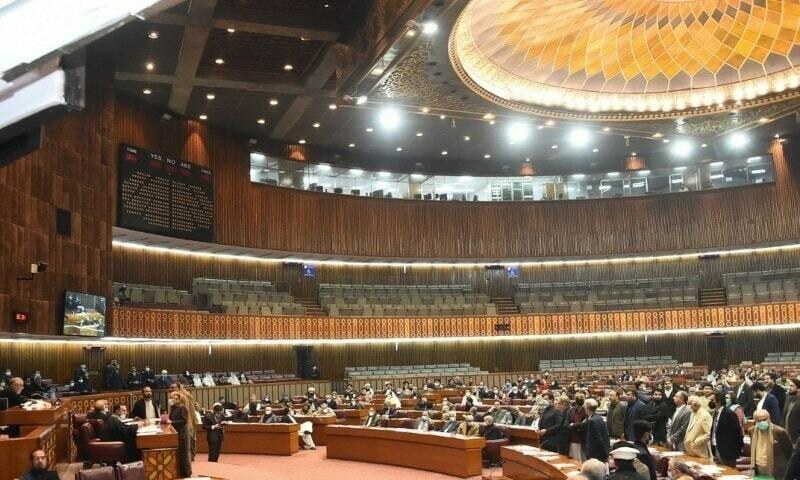
ISLAMABAD: The National Assembly was apprised on Monday that closure of Pakistan-Iran border was one of the main reasons of sky rocketing price of Liquefied Petroleum Gas (LPG) in the country.
“Closure of Pak-Iran border is one of the main reasons of high prices of LPG and now we are trying to get the fuel from sea route,” said Federal Minister for Petroleum Ali Pervez Malik while responding to a calling attention notice in the house.
The notice, which was jointly moved by Ms Aliya Kamran, Shahida Begum and Naeema Kishwar Khan, invited the attention of minister to a matter of urgent public importance regarding unprecedented increase in the prices of LPG causing grave concern among the public.
A mover of the bill Aliya Kamran said in remote and northern areas of the country the LPG was selling at Rs 700 to Rs 800 per kg against its official price, set by Oil and Gas Regulatory Authority (Ogra) of Rs 280 per kg.
LPG is largely consumed fuel in remote and far flung areas of the country where pipe gas is not available. The consumption of LPG and its price increase in winter.
Naeema Kishwar questioned that why the government has suspended trade with Iran through border.
On this the minister said 50 to 60pc LPG was imported from Iran and rest of the required fuel we get from Qatar. He said due to United States-Iran war LPG supply from Qatar has been suspended.
He said the government was reviewing the whole system and that it has a policy to acquir the gas from other sources abroad.
The minister also agreed the official price of LPG, prescribed by Ogra was Rs 280 per kg. However, it has been observed that even during surplus supply of LPG, the gas is nowhere sold at the government rate.
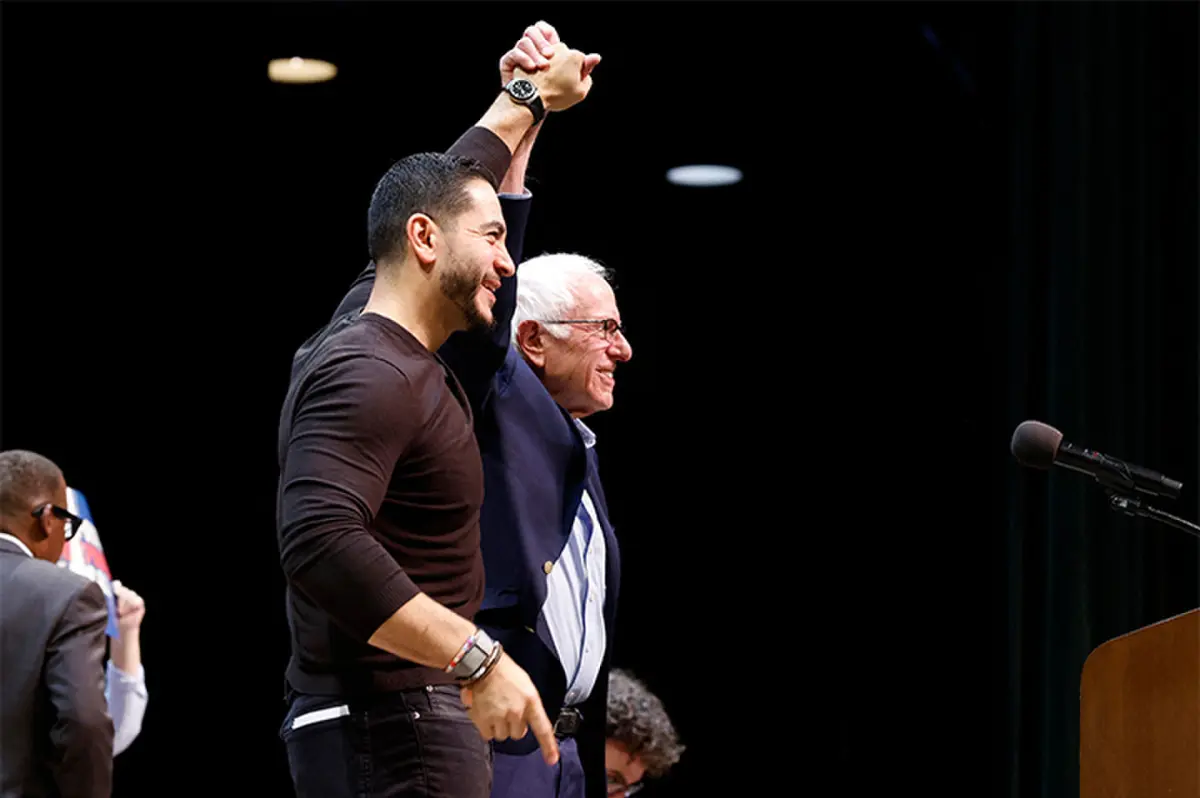
Senator Bernie Sanders joins hands with Democrat senatorial candidate Abdul El-Sayed at a campaign rally in Grand Rapids, Michigan.—AFP
PORT HURON: President Donald Trump at a Sunday campaign rally ratcheted up his push to link US Senate candidate Abdul El-Sayed to Muslim extremists, comparing him to the 9/11 attackers while saying Democrats would let violent anti-American terrorists into the United States.
“I’m here to keep a jihadist, Muslim Brotherhood member from becoming a United States senator,” the president told a receptive audience in Port Huron, which is in a Michigan area where 66pc of the vote went to Trump in the 2024 presidential election.
If El-Sayed wins, he would be the first Muslim elected to the US Senate. Trump has sought to paint him as an anti-American Muslim radical, and on Sunday he took the rhetoric to a new level, likening El-Sayed to the attackers who took over United Flight 93 during the Sept 11, 2001, attacks.
Michigan has one of the nation’s most competitive US Senate contests going into the Nov 3 midterm elections, with former US Representative Mike Rogers, a Republican, and El-Sayed vying for an open seat that will help to decide control of the chamber.
The president on Sunday compared voting against El-Sayed to the actions of Michigan native Todd Beamer and others who fought back against the Flight 93 hijackers. “Twenty-five years later, Michigan needs to stand up and fight, just like Todd did, to stop a jihadist from walking into the Capitol,” said Trump.
If El-Sayed wins, “he would be the only senator that will have to go through a metal detector before he’s allowed to go in the Senate,” Trump said.
El-Sayed has dismissed the accusations against him, and at a Sunday night event, he suggested that Trump’s frequent emphasis of El-Sayed’s name contains a measure of hypocrisy. “I get that the president of the United States takes personal offence to my first name,” El-Sayed told an audience in Grand Rapids, Michigan. “He doesn’t mind as much when it’s a shared name from the Saudis who are funding his son-in-law’s private equity, doesn’t seem to mind as much when it’s the Qataris who are giving him a $400 million private jet.” Affinity Partners, Trump son-in-law Jared Kushner’s investment fund, has reportedly received billions from a Saudi Government entity. Qatar gifted Trump a Boeing 747 jet.
The mostly White crowd at Sunday’s rally cheered Trump’s comments on El-Sayed. Some attendees yelled traitor and others yelled deport, although El-Sayed was born in Michigan. Terrance Camburn, a 52-year-old disabled Army veteran from Sandusky, Michigan, said he supported Trump’s criticism because of El-Sayed’s political beliefs.
“I’ve been down to Dearborn and I’ve seen many of the things he agrees with,” Camburn said when asked about Trump’s 9/11 comments. Dearborn, Michigan, has the highest per-capita concentration of Muslims of any US city.
As he left the venue after the rally, Rogers did not respond to questions about Trump’s invocation of 9/11. But earlier on Sunday, he said on NBC’s “Meet the Press” that he did not agree with the notion that El-Sayed is a violent terrorist. “I’ve never called him a terrorist,” Rogers told NBC.
Rogers has alleged without evidence that El Sayed has ties to the Muslim Brotherhood, one of the Arab world’s oldest and most influential Islamist groups. El-Sayed has denied affiliation with the Muslim Brotherhood, saying it is “shameful” for Rogers to question his allegiance to the United States.
Rogers told “Meet the Press” that El-Sayed had not sufficiently responded to questions about the allegations. “He’s a Democrat Socialist of America-aligned candidate who has these pretty radical support groups that don’t like America,” he said.
Trump’s speech in eastern Michigan on Sunday came a day after former President Barack Obama campaigned for Democrats in the state, underscoring its importance in next week’s elections. At a Saturday rally in Detroit, Obama framed the attacks by El-Sayed’s opponents as an attempt to make him look “less American than they are.”
The former president compared them to his own experience as the target of false claims that he was born in Kenya. “This stuff didn’t work on me,” Obama said. “Not in Michigan. It’s not going to work on Abdul.” Democrats need to gain just a handful of seats each in the US Senate and House of Representatives to overturn Republicans’ narrow 53-47 and 218-214 majorities.
THE massive Reliance refinery in Jamnagar abutting the Arabian Sea from its perch in Gujarat was inaugurated in December 1999. There may be absolutely no connection between the refinery’s birthday and India’s nuclear tests of May 1998. But it’s difficult also to ignore the high stakes involved in its presence facing Pakistan, which too became a nuclear power that year.
History shows a pattern of power play associated with such critical and strategic assets. It was on the eve of World War I that Churchill decided that the Royal Navy should switch to oil and away from Welsh coal to make the fleet faster and more efficient. But with no oil of its own, Britain turned to the Abadan refinery, which would eventually become the world’s largest such facility, except that it was needlessly close to the border with Iraq. The refinery was at the heart of the 1953 coup against Mohammad Mossadegh when the elected prime minister nationalised the oil industry. It was the first scalp for Saddam Hussein in the long war he launched against Iran in 1980.
The Jamnagar refinery is said to be the world’s largest facility to process the most difficult of crude oils, including hugely discounted volumes imported from cash-strapped Venezuela. Given its proximity to Pakistan, the facility has figured in comments by analysts and voluble generals alike as a potential target, a veritable sitting duck.
The Ambani family on its part has played an active role in seeking to improve ties with Pakistan. They reportedly played a role in pleading through a former US president close to the family in pressing Gen Pervez Musharraf to allow Nawaz Sharif to be able to leave Pakistan to live in exile. The refinery has also featured as a potential bridge between the implacable rivals, at one point offering to transport refined products to Pakistan through the Punjab border.
Given the fact that India has only suspended the war it launched against Pakistan under the sobriquet of Operation Sindoor and not brought it to a closure, the tense ties are expected to continue to keep a range of targets in the crosshairs of both sides. In the prevailing circumstances of a global economic meltdown mocking the poor and the rich alike, it’s probably just a question of a nudge that the proverbial ice is broken between the two, and last week may have offered a sliver of such a hope.
The day US Secretary of State Marco Rubio came to visit the Reliance oil refinery in Jamnagar, President Mohamed Muizzu of the Maldives was landing in Islamabad where he would give an unusual call to revive the frozen South Asian Association for Regional Cooperation (Saarc). Muizzu’s call had a strange ring to it given that he was elected to lead his archipelago nation in 2023 on the openly anti-India slogan of “India out”.
The US wants to dry up Moscow’s wartime oil revenues by pushing India toward alternative heavy crude markets.
Seen as close to Beijing and pointedly hostile to New Delhi at the time, Muizzu preferred a mellow approach in Pakistan when Prime Minister Shehbaz Sharif broached the two issues he routinely raises: Kashmir and Indus water sharing with India.
Leading the first Maldivian state visit to Islamabad in 11 years, Muizzu kept his sights on sweeping maritime security and defence pacts. For both Pakistan and the Maldives, a stronger bilateral relationship is seen as serving as a necessary strategic counterweight to balance India’s regional dominance.
Rubio’s visit to Jamnagar was not only aimed at sending more stolen oil from Venezuela for refining with a view to easing the enormous pressure put by the reckless Israel-US war on Iran on global fuel markets. Rubio’s primary objective apparently was to convince Reliance to buy more Venezuelan crude while aggressively cutting its intake of Russian oil.
Following Western sanctions on Russia, India became Russia’s top oil buyer. The US wants to dry up Moscow’s wartime oil revenues by pushing India toward alternative heavy crude markets. Gleaning from Rubio’s description, the US sees Jamnagar as the only facility globally with the sheer muscle to offset Russian volumes.
Before the visit ended, however, unflattering news came trickling in from Arunachal Pradesh, an Indian-ruled province China claims as South Tibet. The paramilitary patrol keeping vigil for India had had recent face-offs with Chinese counterparts at several parts of the border where they had held their ground valiantly. Or so claimed the paramilitary chief Shatrujeet Kapur. His comments were said to have been taken down and the government denied anything at all was really amiss.
Only a couple of days or so before the reported transgressions around Arunachal Pradesh and their denial by New Delhi, the two countries had gone through a notably high-decibel exchange over the naming of geographical features in Ladakh. The Global Times, considered close to China’s ruling Communist Party, wrote a long editorial reminding India of the need to avoid disturbing the agreement on peace and tranquillity along their border.
A bird’s-eye view of the South Asia chessboard, therefore, reveals a fraught cross-section of forces at play. Pakistan appears agreeable in its ties with the three big powers — the US, China and Russia. Whereas India has struggled to keep the US in good humour, which makes it even more of an ordeal to avoid annoying Russia, a traditional ally in countless ways. With China, the relations require a greater quotient of tender care but with scant quantities in sight.
Add to the mix the Indian youth mobilisation that’s rocked the over 12-year-old government of Prime Minister Narendra Modi. Has Rubio created more trouble for Modi, including by not even meeting him during the visit, or has he by visiting Jamnagar set the grounds for a diplomatic entente with neighbours? Which would leave Modi elbowroom to address the domestic crisis with any degree of composure or hope to endure the pickle he is in.
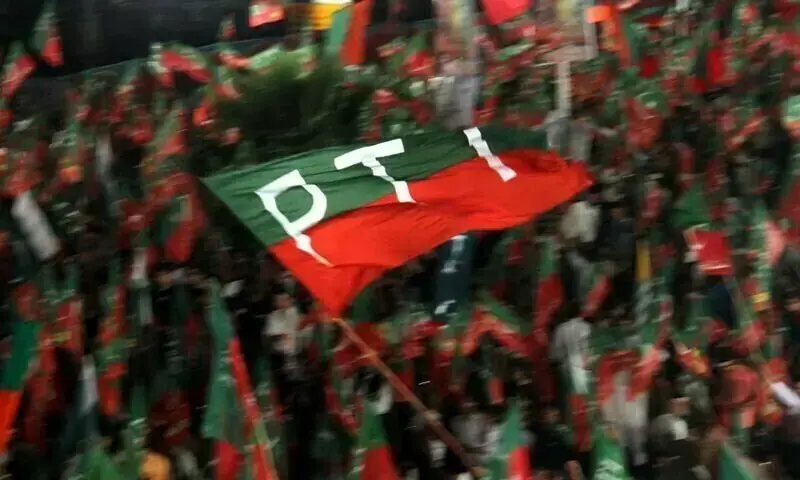
THE future of Khyber Pakhtunkhwa remains unclear, whether it’s as a single entity or as a democratic one. PTI, we are told, has been made PNG — once again. And the south of KP is reportedly being carved out rapidly to be a new province or to simply reverse the amendment that made the former Fata part of KP. No one is really sure what the coming days hold.
Amid this confusion, a newly appointed member of the Area Representative and Development Council (ARDC) for the special emergency-hit districts of the south has created another storm in a teacup. In a video statement he spoke of reaching out to the Afghan Taliban to bring peace to Pakistan. Considering that this preference for dialogue over conflict with the fitna-across-the-border ostensibly has been the reason the PTI government was sent home, a similar message of love from the new advisory council just wasn’t cricket. But before we could get our breath back at this audacity, the new spokesman of the region, Mehmood Jan Babar, added to the mess by not denying the idea altogether.
Eventually Samar Bilour, who represents the Peshawar-led advisory council, had to enter the fray to diss the notion of talks. As an aside, we now have a Peshawar council and a Southern council.
Be that as it may, the point is these statements have simply added to the confusion surrounding the province. And terrorism, despite the frequency of the attacks and the statements of the government, has taken a backseat.
The focus is more on what the grand plan for KP is. Is it simply to close the doors on PTI? Is it to conduct an experiment on the efficacy of newer, smaller provinces? Or is it simply to reverse the Fata merger? Or perhaps it was to give the governor the chance to clear encroachments, a favourite problem for most non-elected officials these days. As the Urdu saying goes, there are as many rumours as there are mouths.
We appear to be using the same old playbook put together in the post-Musharraf period.
But none of these rumours seem to be highlighting the basic issue — how to address the decades-old problem of militancy in these regions. Other than vague promises of fighting the problem, there is little that has been shared with the people to explain what the new government is doing or planning to do.
And this is where the problem lies.
Militancy is going from bad to worse. The intensity of the attacks is worrying and impacts the entire country, especially one looking for more foreign investment. But while the state is clear on its decision to fight its way to victory, it doesn’t seem to have a clear strategy or path for this — or so it appears to those on the outside.
Any strategy to succeed must take into account the current environment.
However, we appear to be using the same old playbook put together in the post-Musharraf period when the TTP was controlling large swathes of land in what is now former Fata. In order to flush the Taliban out, military operations were conducted after the ordinary residents were persuaded to leave their homes and villages before the clearing out was done. And once the area/s were cleared, the displaced people were allowed to return to their homes and businesses.
However, nearly two decades later, the TTP is no longer controlling areas; it seems to appear only to conduct attacks or block roads, or carry out other activities and then melt away. And yet, it seems, our strategy remains the same — of wanting to clear out areas, be it at the level of villages and so on.
But if the TTP is not controlling these areas and the plan is to clear out the residents before launching operations, surely the TTP will also vacate the areas along with the residents and simply return later. How is this effective? And this is all the more difficult now because 20 years earlier, the TTP escaped to an Afghanistan run by a hostile government, which is no longer the case. But these questions are really not being discussed.
The intelligence-based operations (IBOs) are also offered as an alternative. Though once again, there is little clarity on how effective these are; they only become public when they lead to deaths of troops, which is tragic. But once again, there is little information available on why there is even one fatality during an IBO. And if they are effective, then why has the problem simply grown?
The second problem with this strategy is the public sentiment, which is against military operations because of the displacement and suffering that comes in the wake of this. But more than that, the displacements were not accompanied by the compensation the people had been promised — for the damage to their property and business. This has been a major reason for their reluctance to support operations this time around. And yet, this also does not seem to have led to any kind of brainstorming about what to do differently.
More worrying still is the distrust or alienation of the people in general from the state as well as the TTP. In many anecdotal accounts, it is suggested the local residents of the affected areas see the activities of the TTP and the state as alienating. These gaps with the state, ideally, should be bridged before operations are launched. It is rather obvious that kinetic operations cannot succeed without the people’s support. And yet the state seems to be doing little to earn this support or trust.
And along with all this comes the larger issue of why the kinetic operations, whenever they have succeeded, are not followed by a successful handover to strong functioning civilian institutions which can then govern effectively. In other words, the build-and-transfer part has eluded us for decades.
Indeed, the reduction of the debate over terrorism to a simple one of using force or not is a very one-dimensional one. The problem requires a lot more depth and nuance than is realised.
THE proposed merger of the Privatisation Commission and the Public-Private Partnership Authority (P3A) into a single institution is a sensible move. It will end the duality of functions and provide a more coherent framework for mobilising private capital to manage public assets and develop physical infrastructure for which the state has limited resources to spare.
Although the two bodies operate under separate laws, their mandates intersect in bringing private capital and expertise into areas dominated by the state. A unified entity could offer a common platform for evaluating these options.
Privatisation involves transferring ownership or control of state assets, while public-private partnerships (PPPs) allow governments to enlist private capital for projects they cannot finance. Both approaches require sound financial assessments and clear risk allocations.
With Pakistan facing persistent fiscal constraints, the state cannot afford to finance loss-making enterprises indefinitely. Private investment can help ease these pressures, but it is not an end in itself. Poorly structured transactions can leave the state with inadequate returns or costly contractual obligations.
The proposed legislation envisages four public funds to support privatisation and PPP transactions. These instruments could help prepare viable projects and attract investment. However, they must not become vehicles for subsidising commercially unsound ventures. Government guarantees and liabilities should be disclosed and assessed before deals are approved.
The proposed legal protections for serving and former officials acting in good faith also require careful rethinking. Officials should be protected against frivolous litigation when making decisions in the public interest. Such protection must not, however, become immunity from accountability.
Making PPP agreements accessible as public documents is also positive. Public scrutiny is particularly important when private investors enter long-term arrangements that may impose financial obligations on taxpayers and successive governments.
The new arrangement offers an opportunity to improve the management of state assets and infrastructure investment. Its success will depend on securing fair value for public property, attracting credible investors and ensuring that partnerships deliver tangible benefits.
The bill proposes a majority-independent board with private-sector representation to strengthen commercial decision-making. Its effectiveness will require transparent appointments, relevant expertise, political independence, clear performance benchmarks, strong accountability, and enforceable conflict-of-interest rules to ensure effective governance.
The state must now ensure that commercial discipline, transparency and accountability guide its implementation.
• Pakistan’s army chief, Saudi defence minister, Turkish spymaster meet top Iranian officials • Pezeshkian backs understanding ‘to strengthen unity among Muslim nations’ • Saudis say visit aimed at supporting Qatari, Pakistani mediation efforts • Halting Houthi attacks, reopening Hormuz among main concerns
ISLAMABAD: Iran on Monday expressed support for efforts to promote security and development as President Masoud Pezeshkian met senior officials from Pakistan, Saudi Arabia and Turkiye, the three signatories to the Makkah defence pact, with both sides agreeing to continue dialogue on regional peace and security.
“The Islamic Republic of Iran supports any understanding aimed at strengthening the unity and cohesion of Islamic nations,” President Pezeshkian was quoted as saying in an official statement.
He added that regional countries could set an example of justice and development by pooling their resources and capabilities.
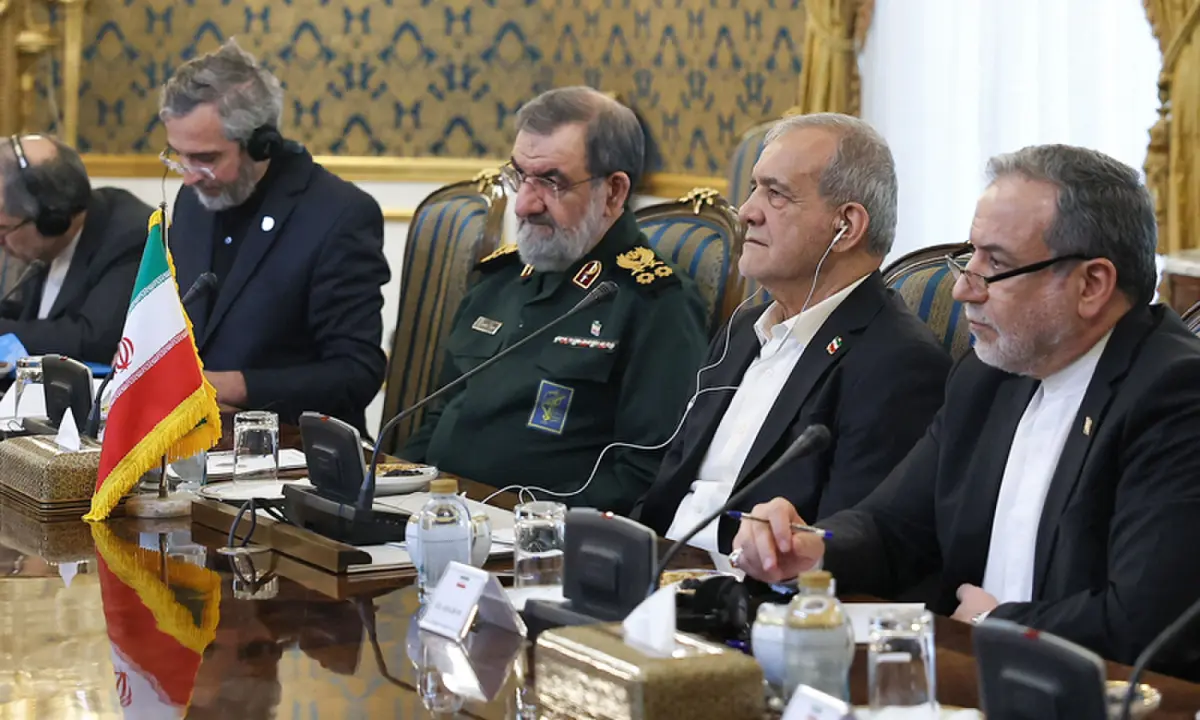
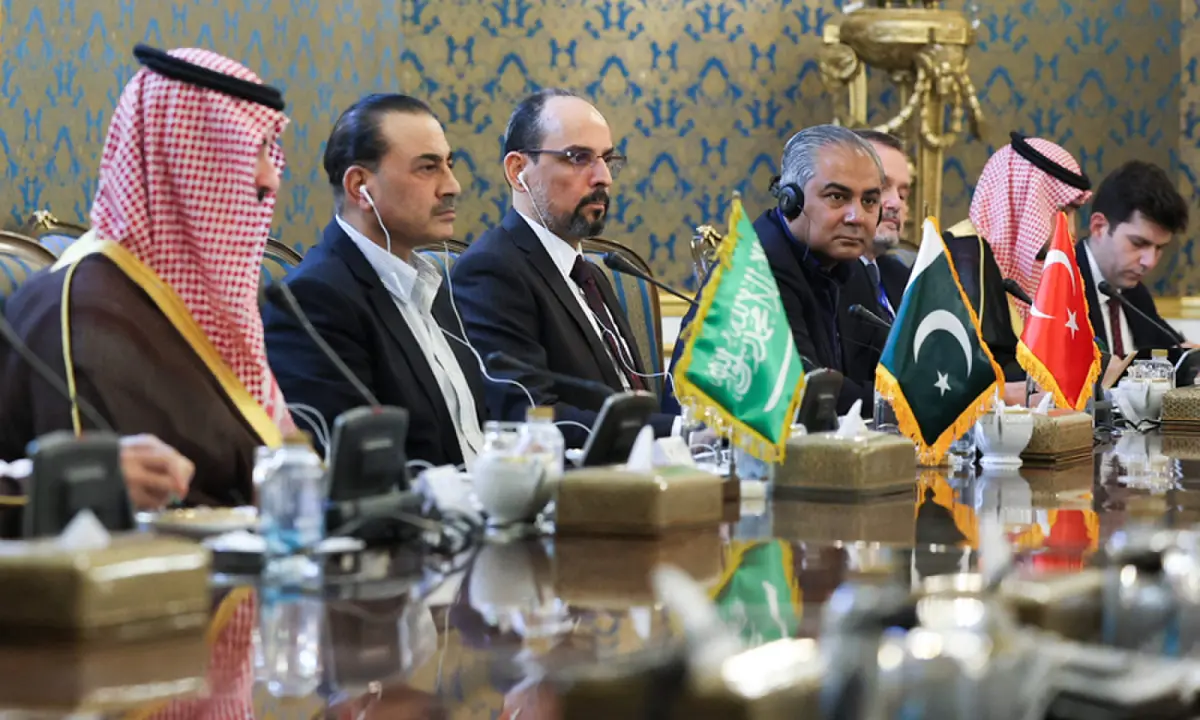
The meeting brought together Saudi Defence Minister Prince Khalid bin Salman, Pakistan’s Chief of Army Staff and Chief of Defence Forces Field Marshal Asim Munir, and Turkish intelligence chief Ibrahim Kalin. Iran was represented by senior officials, including Foreign Minister Abbas Araghchi and Supreme National Security Council Secretary Mohsen Rezaei.
The visiting officials met with Mr Rezaei separately ahead of their meeting with President Pezeshkian.
During the preliminary meeting, it was decided that they would “continue their dialogue to bolster cooperation among the four regional nations, including in the areas of regional peace and security.”
The talks followed Field Marshal Munir’s visit to Tehran last week, where he had proposed the meeting, according to Iranian Foreign Ministry spokesman Esmaeil Baghaei.
The first meeting of the Makkah Joint Defence Agreement countries with Tehran reflected the realisation that regional tensions need to be addressed through diplomacy, even as the participating countries strengthen their own defence cooperation.
(RIGHT) Iranian National Security Council head Mohsen Rezaei, President Masoud Pezeshkian and Foreign Minister Abbas Araghchi during talks between Makkah pact members and Iran in Tehran.—AFP
Saudi Arabia’s Foreign Ministry described the visit as part of continuing efforts by the agreement’s members to reduce tensions, promote dialogue and support diplomatic solutions. The visit, it said, was aimed to support the mediation efforts of Qatar and Pakistan.
Abdul Aziz Hamad Al-Uwaisheq, assistant secretary-general for political affairs and negotiations at the Gulf Cooperation Council, similarly identified de-escalation, dialogue and support for Pakistan and Qatar led mediation as key objectives of the initiative.
A Qatari delegation had immediately preceded the visit by Makkah pact officials to Tehran, suggesting coordination between the diplomatic initiatives.
The discussions took place against a backdrop of heightened concern over the escalating conflict between Yemen’s Ansar Allah rebels against Saudi Arabia, the security of the Strait of Hormuz and the prospect of renewed US and Israeli military action against Iran.
Moreover, the meeting coincided with Egyptian parliament authorising its president to provide defensive military support to Saudi Arabia in its conflict with Yemen’s Ansar Allah movement. Cairo has, meanwhile, maintained contacts with Iran, the United States and other regional partners in an effort to prevent the conflict from widening.
In a way the meeting was also an extension of the R4 initiative, with Cairo conducting its diplomacy with Tehran in parallel and the other three going over to Tehran to see Iranian leaders.
Iran has long argued that regional security should be managed by countries in the region rather than outside powers. Monday’s meeting offered Saudi Arabia, Pakistan and Turkiye an opportunity to convey their concerns directly to Iranian leaders, while exploring whether regional cooperation could help contain the risks of a wider conflict.
Media reports said the discussions included the possibility of a regional non-aggression framework, along with the resumption of US-Iran negotiations, halting Ansar Allah attacks, the reopening of Strait of Hormuz and the US naval blockade of Iranian ports. Other issues reportedly raised included the consequences of US and Israeli military actions and developments in Palestine and Lebanon.
There was no immediate indication that the participants had reached an agreement on these issues after their meeting that lasted about two hours.
Mr Rezaei, however, speaking to the media later, said, “a new and positive atmosphere has emerged within the region as reflected in the dialogues held with senior officials from Turkiye, Pakistan, and Saudi Arabia.”
For Pakistan, the initiative offers a means of maintaining its defence partnership with Saudi Arabia while keeping channels open with neighbouring Iran. Islamabad has also sought to facilitate communication between Washington and Tehran, an effort that would become more difficult if regional hostilities resumed.
Saudi Arabia, meanwhile, faces the task of strengthening protection for its territory and critical infrastructure from Houthi attacks and fallout of US/Israel-Iran conflict. Its participation in the talks suggests that closer defence cooperation with Pakistan and Turkiye is not precluding engagement with Tehran.
KARACHI: Foreign investors welcomed the State Bank of Pakistan’s (SBP) 50bps rate hike to 12 per cent on Monday, but the business community called it counterproductive for stabilisation, industrial growth and export competitiveness.
M. Abdul Aleem, Secretary General of the Overseas Investors Chamber of Commerce and Industry, acknowledged the SBP’s move, saying it was needed to contain inflationary pressure and safeguard macroeconomic stability amid global energy price risks.
However, with large-scale manufacturing growth recovering to 1.9pc in July-August FY26 and private-sector credit expanding 14.1pc year-on-year, it is equally important to sustain the emerging momentum in investment and economic activity, he said.
As inflationary pressures are significantly influenced by external energy prices and domestic supply constraints, he emphasised that monetary tightening must be complemented by targeted supply-side reforms, fiscal discipline, competitive energy tariffs, broader tax-base coverage and predictable taxation and regulatory policies.
Foreign investors back SBP’s move to curb inflation, while industry says it will hurt exports and growth
In contrast, FPCCI President Atif Ikram Sheikh said raising the policy rate to an uncompetitive 12pc would further inflate borrowing costs for manufacturers already grappling with unprecedented high overheads, soaring utility tariffs and liquidity constraints.
Instead of curbing inflation — driven largely by supply-side bottlenecks, energy costs and fiscal anomalies rather than excess demand — tight monetary policy has crippled domestic manufacturing, he said, urging the government and the State Bank to recalibrate the framework and bring the policy rate to single digits to make credit affordable for trade, SMEs and large-scale manufacturing.
High interest rates also place an unmanageable debt-servicing burden on the exchequer and private borrowers, creating a cycle of fiscal distress and stagnant output, he said, asking the SBP to align rates with regional benchmarks.
KCCI President Talat Mahmood warned that the hike would further raise the cost of doing business, discourage private-sector investment and undermine growth. He said Pakistan needs to strengthen its productive capacity, attract investment, generate employment and accelerate export-led growth but the policy rate hike will send the wrong signal to businesses planning to invest and expand.
SITE Association of Industry President Abdul Hadi said the move would further aggravate industry problems at a time when factories are operating far below capacity and barely surviving.
The business community has long demanded a single-digit policy rate, but industry’s real problems have again been ignored, he said, adding that high rates will not only make fresh funding harder but also increase the burden on existing loans.
He said the rate hike would burden manufacturers, forcing formal businesses to shut down or scale back, as costlier borrowing would hit new investment, expansion and production.
Korangi Association of Trade & Industry President Sheikh Umer Rehan said the hike could hurt industry, business growth, and recovery, adding that inflation could also be curbed by cutting energy costs, fixing taxation, improving the business climate, and implementing effective industrial policies.
Pakistan Textile Exporters Association Chairman Rehan Naseem Bharara said the rate hike would raise working-capital costs, constrain investment and weaken global competitiveness at a time when industry is already grappling with expensive energy and financing.
ISLAMABAD: Pakistan’s trade deficit with nine neighbouring countries widened by 26.62 per cent to $4.97 billion during the first quarter of 2026-27 compared to $3.93bn in the corresponding period last year.
The widening gap reflects a contraction in Pakistan’s exports to regional markets, largely due to reduced shipments to Afghanistan and Bangladesh.
Trade with Afghanistan, including exports, has remained suspended since Oct 10, 2025, further weighing on overall export performance.
Imports from China rose sharply during the July-September quarter, contributing significantly to the widening imbalance. Consequently, the bilateral deficit with China widened by $858.808 million, accounting for approximately 82.18pc of the increase in the combined deficit with the nine countries.
Gap with nine neighbours rises 26.6pc to $4.97bn in July-September
Exports to China rose marginally, while exports to Nepal also grew in percentage terms, though the increase remained negligible in dollar value.
In contrast, shipments to Afghanistan, Bangladesh and Sri Lanka declined, according to the latest data compiled by the State Bank of Pakistan.
Exports to nine countries—Afghanistan, China, Bangladesh, Sri Lanka, India, Iran, Nepal, Bhutan and the Maldives—fell 6.72pc to $944.24mn in July to September of FY27, down from $1.01 billion in the same period last year.
By contrast, imports surged 19.79pc to $5.92bn in 3MFY27 from $4.94bn in the same months of the previous fiscal year.
Further analysis showed that imports from China grew 19.76pc to $5.82bn in 3MFY27, up from $4.85bn over the same period last year. Pakistan’s exports to China grew 17.95pc to $663.57m in 3MFY27 from $562.56m in the same months of the preceding fiscal year.
Imports from India increased by 68.90pc to $61.74m in 3MFY27 from $36.55m over the last year. Meanwhile, no exports to India were recorded in the first quarter of FY27.
Exports to Afghanistan fell 88.34pc to $18.86m in 3MFY27, down from $161.76m last year. Imports stood at $0.25m in 3MFY27, compared with $4.52m in FY26, a decline of 94.40pc.
Pakistan’s exports to Bangladesh declined by 2.96pc to $174.77m in 3MFY27 from $180.12m over the last year. Imports dipped 36.11pc to $13.88m in 3MFY27 from $21.73m over the last year.
Ten suspected criminals killed in Karachi police ‘encounters’ in two days should trouble anyone concerned about public safety and the rule of law.
Seven died in separate incidents on Thursday and another three on Friday. In each case, police reported armed resistance, exchanges of fire, and the recovery of weapons.These accounts may be accurate, but cannot be accepted without scrutiny. Officers confronting armed criminals have every right to defend themselves and others.
Karachi’s residents, long exposed to street crime and violent robberies, deserve protection. Yet the frequency of these so-called encounters raises questions about how operations are conducted and whether suspects are given an opportunity to surrender.
Whether the police actions were legitimate or unlawful can only be established through credible investigations. There must be forensic examination of weapons, independent verification of police accounts, and proper documentation of injuries and evidence.
Such scrutiny should be routine whenever police gunfire causes death, regardless of the victim’s alleged criminal history. Otherwise, the public must rely entirely on the version offered by those who pulled the trigger. The concern extends beyond Karachi.
In Punjab, where the Crime Control Department faces allegations of staged encounters, the political response has exposed a dangerous willingness to equate police killings with justice. After a suspect in the killing of a teenage worker in Multan died in an alleged encounter, PML-N lawmaker Hina Parvez Butt celebrated it as “justice served immediately”. She deleted the post but defended her remarks as public sentiment.
Anger over a child’s murder is understandable. But an elected representative ought to know that public outrage cannot substitute for a trial, and that a police killing is not a judicial verdict. Punjab Information Minister Azma Bokhari criticised the comments, though the issue is larger than one politician’s embarrassment.
Governments must make clear that police performance will be judged by crimes prevented, offenders lawfully arrested, and cases successfully prosecuted, not bodies counted. Independent inquiries into disputed encounters should publish findings and establish responsibility if unlawful force is proved. Police officers need training, equipment and supervision that make arrest a realistic option where possible. A force that can shoot but cannot build a case offers little lasting security. The police are duty-bound to protect lives. They do not have a licence to kill.
THE nature of Pakistan’s role in global politics is once again the subject of much debate. Several officials are ferrying messages between Iran and the US for an end to the conflict, having helped organise a short-lived peace agreement earlier in the year.
Based on these and past events, there are a series of judgement calls that observers make about the Pakistani state and its position in the world order.
One set of views sees Pakistan as a client state of the US, that is, one that’s subservient to America’s imperial interests and its immediate allies in the region, the Gulf monarchies. This view is shared by sections of the left — globally, in the region, and within Pakistan — and disgruntled opponents of the current regime, who furnish as evidence for it the country’s role in global anti-communist politics in the 1950s and 1960s, its partnership with the US against the Soviets in Afghanistan, its role during the ‘war on terror’ between 2001 and 2013, and the proximity of ties with the Trump administration in recent months.
Ironically, conservatives and Islamists also cite the 1950s/1960s and the experience of US-Pakistan relations during the war on terror and especially in the last few years, as evidence of successive regimes siding with global secularist interests in subjugating both Islamic movements in the region and Muslim political identity at home.
The other view, held in the same time-space continuum, sees the country as ideologically fundamentalist, and simultaneously, a client of China and an unpredictable ally of the US — one that is capable of undermining the global hegemon on its own or in collaboration with the Chinese. This view is shared by much of the American and Indian mainstream, who cite CPEC and close military relations as an example of Chinese clientelism, previous support to the Taliban during the invasion of Afghanistan as an example of duplicity, and its approach to Kashmir, its recent diplomatic support for Iran, and the broader sociocultural and ideational life of its citizens, as an example of (religious) fundamentalism.
As with most sweeping observations, many may detect a kernel of truth in these otherwise clearly contradictory positions. Close proximity to American imperial interests has characterised many passages in Pakistani political history. Similarly, the relationship with China remains remarkably consistent since the 1970s. However, in an effort to account for Pakistan’s global and regional behaviour, these observations lapse back to the rather broad and imprecise categories of ‘client state’ or ‘fundamentalist state’.
The reality, just on the basis of the actions listed above, is that the state’s geopolitical and ideational positioning has varied considerably, which makes it hard to pin it down as a US ‘client’ of the same ilk as Japan/ South Korea or the Gulf monarchies, or as a Chinese client like North Korea.
There are a series of judgement calls that observers make about the state’s position in the world order.
What is consistent though is the subordinate role that the state here plays in global affairs, not just in terms of geopolitics but also — and more fundamentally — in terms of international economic processes.
How does ‘subordinate’ differ from ‘client’? Beyond mere semantics, a substantive difference is that a subordinate actor may have limited agency, but it retains the capability of understanding and developing its own interests. A client, on the other hand, would, by and large replicate the interests of its patrons.
On the evidence of the last seven decades, it would be incorrect to assert that the Pakistani state elite has not developed a sense of its own interests, even though some may disagree with the content of those interests or how those interests were developed.
There is, for example, a long-standing recognition of being in a ‘tough’ geography, with insecure borders on at least three sides. There is also a persisting notion that it faces a periodically existential threat from a much more powerful eastern neighbour and that this threat should be countered by a military deterrent. This in turn can only be obtained by forging reciprocal relations with more powerful states.
The presence of these interests/ ideas does not invalidate the fact that the state’s own actions and responses may have hastened insecurities in various ways. Nor can it paper over the fact that the processes through which the state recognises its context and develops its response are heavily skewed towards a largely insulated military-bureaucratic state apparatus. Both, in turn, lead to other domestic problems, including frequent civil-military political conflict and law and order insecurity in the peripheries.
However, while some reduce Pakistan’s subordination to its geography or the original conditions of its creation, one can make the more substantive case that it remains in that place by the nature of the global economic order since the 1970s and due to its own economic dysfunction.
With basic processes of capital accumulation stagnating or being rendered highly inefficient, the dollar requirement to ensure subsistence-level growth under global conditions of economic liberalisation can only be met through wilful subordination to varied benefactors. Periodic balance-of-payment crises since the 1980s have precipitated this pattern, and geopolitical posturing to extract IMF concessions or rents in other forms has cemented it.
Each successive crisis of the last four decades has found resolution via subordination in the geopolitical domain: favour garnered with the Gulf monarchies via military assistance or labour provision in exchange for reserve deposits; providing the US with regional geopolitical support in exchange for IMF approval, or allowing Chinese capital to make infrastructure investments to kickstart (fleeting) economic growth. Ultimately, each temporary staving off of an economic crisis has pinned down the state’s subordinate position. And in the process little has been done to fix the underlying issue of domestic economic dysfunction.
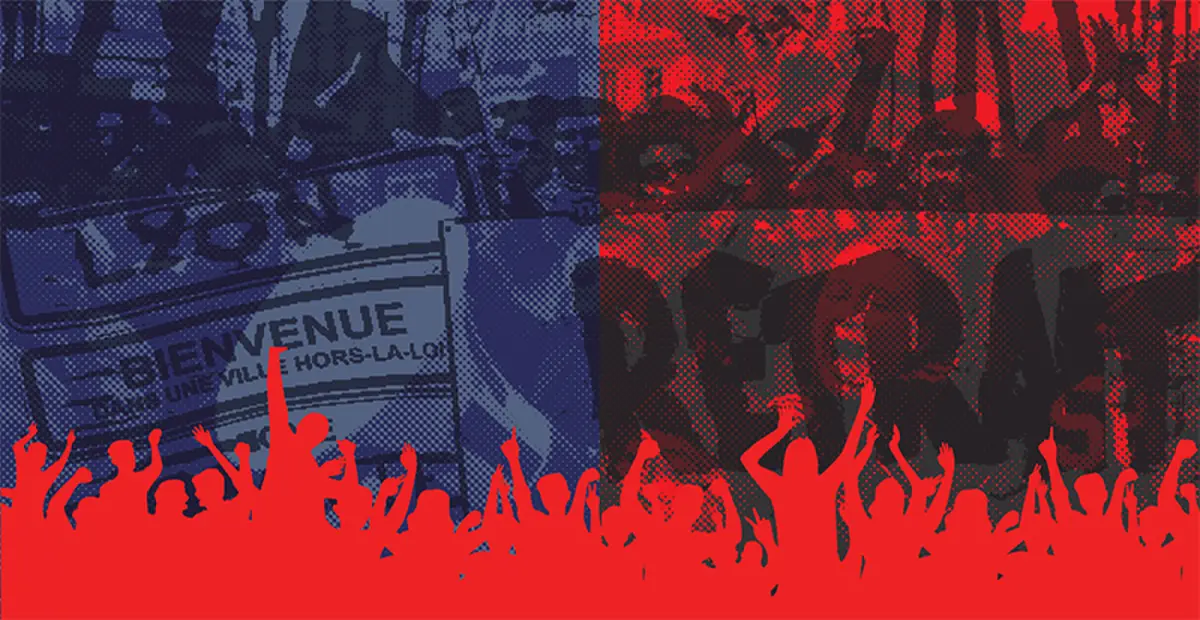
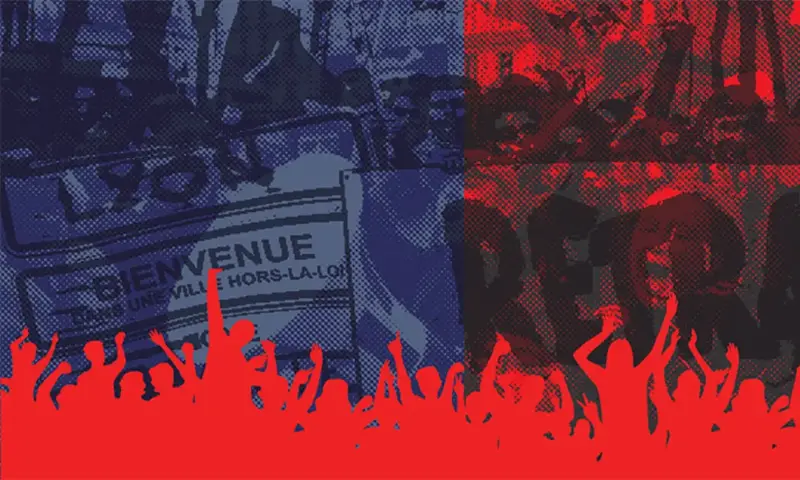
A WAVE of protests is sweeping across the world in a season of unrest. From West to East, the street is confronting the state. Led predominantly by students and young people, protests have been widening to encompass other disaffected groups in society. In some cases, they are morphing into a nationwide movement. On almost every continent, governments are being put on notice that there will be a price to pay for misgovernance and being indifferent to public demands.
India’s Gen Z has been in the streets in anti-government protests against the controversial revision of electoral rolls. Students in France began protesting against deteriorating school conditions with other groups, including trade unions, joining demonstrations over high living costs and inequality. In Italy, students, farmers and truckers took to the streets in protests driven by education costs, economic grievances, and anti-war sentiment. In Brussels, students marched over education funding. Spain saw protests over a housing crisis. In Albania, student-led demonstrations occurred over living costs and a controversial tourism project linked to Jared Kushner, President Donald Trump’s son-in-law. In Portugal, protests erupted over housing and falling living standards. There were education protests across Greece. In Brazil, thousands joined a student march against the election bid of far-right candidate Flávio Bolsonaro. Tunisia’s capital witnessed protests demanding the president’s resignation and democratic rights.
The triggers vary, as do the underlying causes. Each protest is rooted in its own political context. But there are common themes. All reject the status quo and indicate disenchantment with traditional political parties. All voice anger against unresponsive governments and the state failing them on their socioeconomic demands.
The context for most protests is a cost-of-living crisis and deterioration or cuts in public services compounded by the state’s inability to deliver on education and jobs. Economic grievances and resentment of inequality are a driving force of the protests. A sense of disenfranchisement is another common thread.
The heavy-handed response by governments to the protests and draconian crackdowns further fuelled the unrest and sparked violent clashes in several places. But it energised demonstrators to keep returning to the street. Unfortunately, in France protests degenerated into looting and rioting.
Protests in Europe and India share a defining feature. They are propelled by a wave of student activism. At their core is youth frustration in a generation that sees broken promises and an uncertain future. It feels betrayed by the lack of educational and economic opportunities. Protesters have also been venting rage against political leaders who have ignored public needs and are seen as venal. Initiated by young people, protests have expanded into broader movements as other disaffected groups, with their own set of demands, joined the demonstrations. Social media has been a key mobilisation tool in all the protests.
Governments have been put on notice that misrule and ignoring public needs will have consequences.
None of the protests or movements have been party-led. Political parties have largely been sidelined, even as they tried to leverage the demonstrations; France’s left aligned itself with the protesters. In several European countries, protests are playing out in an environment of deep polarisation, which parties of both the left and right are trying to exploit. This is especially because elections are due next year in many countries including France, Spain, and Italy.
In India, the youth ‘Cockroach’ movement has spearheaded the protests and mounted the most significant challenge to Prime Minister Narendra Modi’s government so far. The ongoing protests came against the backdrop of student protests led by the Cockroach party over the leak of exam papers in May, which forced the resignation of the education minister. This time, the catalyst was the revision of voter lists by India’s election commission, which apparently involved the removal of around 130 million voters.
The government and the election commission’s claim that this was aimed at eliminating duplicate and ineligible entries was widely rejected. It was instead seen as a step towards mass disenfranchisement. It became the trigger for youth protests, demanding the resignation of the chief election commissioner and scrapping the revision. India’s opposition parties also joined the demonstrations and decried the move as a politically motivated purge to benefit the ruling BJP.
The Cockroach Janta Party used the opportunity to broaden its campaign. The government’s strong-arm tactics to suppress the popular upsurge only inflamed the demonstrators who accused Modi of “stealing democracy”. While these protests did not pose an existential threat to Modi, his jittery and increasingly autocratic government behaved as if they did — with arrests and a harsh clampdown. The scale of the protests and the government’s repressive response eroded Modi’s authority, weakened his grip on power, and dented his credibility and image.
The mass protests signified much more than opposition to the voter roll overhaul. They have been about democratic rights and democratic accountability and against pervasive injustice. As Indian academic Sudhir Kumar Suthar has argued, they have been driven by the quest for dignity as much as for rights. The message from the young is clear: “they deserve a more dignified life than what they have received from the system so far.”
The central question is what will be the outcome of mass protests and what will they achieve? A definitive assessment has to wait until the protests play themselves out as most are still unfolding. But one unintended consequence of the current wave of discontent in some European countries, especially France but to a degree also in Spain and Portugal, may be to strengthen the far-right. The far-right has led none of these protests but it stands to benefit from their fallout.
In a political landscape where the political centre is being hollowed out and centrist parties have lost touch with young people, unrest advantages the most organised opposition force that promises order. In France, that force is Marine Le Pen’s Rassemblement National. Where the hard-right is in power the advantage works differently. It enables governments to cast the protests as a law-and-order issue fuelled by migrants to justify harsher measures.
More generally, youth-led protests may force governments to take more seriously the needs and aspirations of young people which have rarely been a priority. What the streets are signalling is a breakdown of trust that can no longer be brushed aside. For now, the protests have put governments on notice: misrule has consequences.
The writer is a former ambassador to the US, UK and UN.
THE announcement of an indicative wheat price of Rs4,500 per 40 kilograms may have come too late for Sindh farmers, but it is welcome as far as it goes. That is not far.
The figure is Rs1,000 higher than last year’s and, by the government’s account, reflects rising production and fuel costs. It is also Rs500 short of what farmers demanded. And there is no word on who will buy the grain or when.
An indicative price is a signal, not a guarantee. Since April 2025, when the government dropped the support price and suspended large-scale procurement, farmers have been promised a market-based system that would serve them better. It has not.
The crop now being sown is the third to go into the ground without a floor. Punjab’s experience this April shows what happens when a procurement price is announced without a mechanism to enforce it. The province tried to revive buying through bank-backed private aggregators. The banks doubted the scheme’s viability, and the aggregators bought only 160,000 tonnes against a target of 2.5m tonnes. Prices fell anyway.
A price no buyer is obliged or financially equipped to pay is only a number. Growers seem to have grasped this before the government did.
Consumers, meanwhile, are not being spared. Over five years the price of wheat has gone up by 150pc, and that rise goes straight to the price of flour. Punjab has used the price as its only tool instead of working on the cost of farm inputs, which the federal government’s policies have kept high.
Flour in cities is selling for Rs160-190 per kilogram, which is hard on poor households. Even the government’s stocks are expensive. Sindh began selling government wheat this month at Rs12,500 per 100kg, or Rs5,000 per 40kg. That is more than the prime minister has offered farmers.
The test of wheat reform is not whether the government can step out of the market. It is whether the system that replaces government buying shares the risk fairly among farmers, traders, millers, banks, and the state, keeps flour affordable, and protects the country’s food supply.
For now, farmers carry most of the risk while everyone else looks after their own interests. With sowing already underway, the government should say in plain terms what it will buy, through which agency, with what money, and by when. It should adapt its imports to that plan. It should look at the cost of fertiliser and other inputs, instead of relying on price alone. And it should help poor households directly, instead of keeping flour cheap for all by squeezing the grower.
A price announcement with no buyer behind it will not persuade anyone to sow, and a market that works for only one side is not worth defending.
Pakistan’s new auto policy was meant to take effect on July 1. It is yet to be finalised. Meanwhile, the automotive industry continues pricing vehicles, opening letters of credit, and signing dealer agreements in the dark — unaware of the tax burden those cars will carry next year.
The latest bottleneck arose during the International Monetary Fund’s fourth review of the Extended Fund Facility. In late September, the Ministry of Industries and Production presented its draft Auto Policy 2026-31 to the IMF mission, but talks concluded without an agreement. The primary sticking point is the proposed one per cent sales tax on new energy vehicles. The Fund wants the standard 18pc rate. On a Rs10 million car, that single disagreement represents the difference between a tax of Rs100,000 and Rs1.8mn.
Low tax rates matter, but the rate itself is only half the story. The crucial second half is defining what this policy is actually for.
In FY26, Pakistan spent $16.9 billion on petroleum imports, a major portion of which was burnt on its roads. The government aims for 30pc of new vehicle sales to be electric by 2030, a transition estimated to save about $1bn annually in foreign exchange, 2bn litres of fuel, and 4.5mn tonnes of carbon emissions. For a nation recovering from devastating floods and choking on severe winter smog every year, these are not side benefits. They are the entire point.
Low tax rates matter, but defining the policy is also crucial
Both sides of the current argument are partly right. The Fund has watched Pakistan repeatedly carve up a narrow tax base through special rates and Statutory Regulatory Orders (SROs), knowing temporary concessions almost invariably become permanent. The ministry is equally right that electric vehicles cost more upfront, charging infrastructure remains thin, and buyers harbour deep anxieties about battery life and resale value. Imposing the standard tax rate overnight would reduce the 30pc EV target to a line on paper.
However, the draft policy has a glaring weakness of its own. Customs duties on conventional cars are scheduled to fall sharply, but reports suggest this gap will simply be refilled through higher Federal Excise Duty and floor prices on imported vehicles – essentially building the same protective wall with different bricks.
In the meanwhile, tax rates keep moving by notification. The concessional 8.5pc sales tax on most hybrids expired on June 30 with the expiry of the last auto industry development and export policy, causing taxes on locally made hybrids to jump to 25pc. Then, in September, the Federal Board of Revenue issued SRO 1525(I)/2026, bringing locally manufactured hybrids up to 2,000cc back down to 18pc.
The relief was welcome, but the same car underwent three distinct tax rates in as many months, and the final adjustment came through SRO rather than any transparent policy. An investor deciding whether to establish an assembly plant does not mainly ask whether the tax is 1pc or 18pc. They ask what the tax will be in 2029, and whether that answer will survive the next budget cycle.
A better structure would rest on five sensible pillars:
First, agree on 18pc as the ultimate destination and legislate a clear roadmap to get there. Keep the 1pc tax rate until June 2027, when current concessions lapse, then step it up incrementally each year to reach the standard rate by FY2030. Low taxes in the early years build the market: China exempted electric cars from purchase tax for nearly a decade, and Norway waived VAT before both began phased rollbacks. Support should be generous at the start, but bound by a firm expiration date.
Second, target the relief. A Rs30mn luxury import does not need the same fiscal cushion as a compact car, a taxi, or a rickshaw. Capping concessions by price or battery size concentrates public money where the public benefit actually lies.
Third, set a clear tech ladder. The combined burden of duty and tax should be highest on conventional petrol cars, lower on hybrids, lower still on plug-in hybrids, and lowest on fully electric vehicles. Battery electric vehicles and range-extended EVs should share one tax structure at the bottom because their powertrain is fundamentally the same.
Fourth, follow the National Tariff Policy honestly. Bring duties on fully built imports down as announced, eliminate additional and regulatory duties by FY30, and do not rebuild protectionism through excise duty. Maintain a moderate, transparent gap between duties on built-up imports and kits for local assembly, fixed for the life of the policy.
Fifth, reward localisation through component tariffs, not sales tax exemptions. Offering low duties on battery packs, electric motors, and controllers for a fixed period from the start of local production is a far cleaner incentive that directly rewards genuine investment.
The last important point is that established assemblers and vendor networks support over a million livelihoods, as per PAAPAM, and their fear of a uniform tariff cut is legitimate: localisation that took decades to build can be dismantled in a year. But ‘raw’ protectionism alone has failed to deliver scale or competitiveness. Local content in Pakistani passenger cars averages about 58pc, compared to roughly 80pc in India.
The electric transition is a chance to rewrite that story. Localisation incentives should go to value added whether the carmaker is old or new, and vendors, who retool for electric components, should receive the same parts concessions and long-term financing.
The government has a short window before the revised draft goes to the Cabinet. The right path forward is simple to state: agree on the end-state with the Fund, publish a binding dated schedule, target support where it moves the most people and goods, classify tax tiers by technology, and leave the rules alone long enough for someone to build a factory around them.
Every day of delay is paid for in lost foreign exchange, dirtier air, and a target that slips further away. Low taxes will start the market. Only predictable taxes will build the industry behind it.
The writer is an energy finance professional with over 20 years of experience.
Published in Dawn, The Business and Finance Weekly, October 26th, 2026
Pakistan’s agricultural crisis is generally framed around water scarcity, rising input costs, declining productivity and profitability and climate change. Yet another structural problem – the subdivision of agricultural land into smaller and scattered holdings – is worsening silently. Despite implications for farm efficiency, rural incomes and national poverty, the issue has received far less attention.
The seventh Agricultural Census released in July has come up with figures that must ring alarm bells. The number of farms has increased from 8.26 million in 2010 to 11.10m in 2024 – a rise of 34.4 per cent. Over the same period, average farm size fell from 6.4 acres to 5.3 acres, a decline of 17.2pc. Even more significant is the number of fragmented farms, which rose from 2.83m in 2010 to 4.98m in 2024 – an increase of 2.15m, or more than 76pc. The average division of separate plots held by each fragmented farm increased from three in 2010 to seven in 2024 – an increase of more than 133pc.
The general distribution of landholdings reinforces the picture. In 2024, 59pc farms were smaller than 2.5 acres, compared with 43.5pc in 2010. The proportion of farms below five acres rose from 64.7pc to 78pc, while more than 95pc are under 12.5 acres, up from 89.5pc in 2010.
This skewed structure has implications for all; individual farms, sectoral performance and policy makers. For farms, smaller and increasingly dispersed holdings make mechanisation next to impossible, raise cultivation and supervision costs, limit access to credit and modern technologies, and reduce farmers’ capacity to generate marketable surpluses and cash for themselves.
For many smallholders, farming is becoming less of a commercial enterprise than a means of meeting household subsistence needs
At the sectoral level, it risks slowing productivity, weakening commercial agriculture and increasing rural poverty as families turn to off-farm employment to supplement their incomes.
The policy implications are equally significant: improving agricultural performance requires more than addressing water scarcity and input costs. It demands initiatives to help smallholders overcome the disadvantages of scale, shared machinery services, equipment suited to small plots, accessible agricultural credit, cooperative farming arrangements, zoning and cluster development and incentivising voluntary land consolidation.
For many smallholders, farming is consequently becoming less of a commercial enterprise than a means of meeting household subsistence needs. Muhammad Nadeem, a three-acre farmer from Okara, describes the transition: “When a plot falls below a certain size, subsistence farming and traditional rural practices – growing one’s own staple and fodder for livestock – take precedence.”
Nadeem owns three buffaloes and divides his land between fodder, wheat and vegetables to meet his family’s basic needs. As the land is ancestral, he shares a return with his brother and sister. Farming is now a part-time activity: Nadeem and his brother work as labourers in Okara city, while his sister teaches at a local private school.
“The land generates virtually no income because the yields are barely enough to meet our needs,” he says. It is also because of expensive fertilisers. Credit is another obstacle. Even local middlemen, who typically finance inputs, are reluctant to lend as they know the limitations of the family’s landholding. “For us, farming is no longer a viable source of income. We continue to cultivate only for it provides a staple for family and fodder for animals.”
Nadeem’s experience shows how shrinking holdings can turn farming into a part-time survival activity, forcing families to seek off-farm employment while leaving no money for agricultural investment.
The challenge becomes greater when land is divided into scattered, non-contiguous plots. Five consolidated acres at one location are very different from the same size spread across several parcels. Dispersed holdings increase the time and cost of land preparation, irrigation, crop protection and harvesting. They also complicate supervision, delay essential operations and make machinery less efficient to deploy.
Former irrigation minister and south Punjab farmer, Mohsin Leghari, is deeply concerned about this trend. “Five acres in one place and five scattered across several locations are two completely different propositions. The latter increases cultivation costs, complicates mechanisation, makes supervision difficult, and delays critical farming operations,” he says. The shrinking average holdings could accelerate poverty and urban migration.
Mechanisation presents a particular challenge with multiplying division of land. While machinery can reduce labour requirements, improve efficiency and help farmers complete time-sensitive operations, the high cost of purchase and maintenance is difficult to recover from smaller acreage, especially if scattered across different locations.
Agricultural economist Mirza Irfan Baig argues that this problem extends beyond affordability. “For small farms, mechanisation is not simply a question of affordability or commercial viability; it is also a question of whether appropriate machinery is available in the first place,” he says.
Baig explains that modern agricultural mechanisation largely evolved to serve large-scale farming, particularly in the West, where extensive, contiguous holdings allow machinery to operate efficiently across large areas.
“Such machinery is not scale-neutral. Equipment designed for large, consolidated farms cannot be used efficiently on small, scattered plots. Its size, operating costs and capacity are not suited to smallholders. There is little incentive for manufacturers to develop specialised machinery for such a limited and fragmented market.”
This creates a structural barrier to modernisation. Even if money is available, farmers may not find machines suited to their holdings. Buying large equipment individually is often uneconomical, while the lack of affordable, appropriately sized alternatives limits mechanisation and productivity.
Addressing the problem does not necessarily mean the disappearance of small farms or the forced consolidation. Shared services, equipment rental markets, cooperative arrangements, zoning and clustering of land, and better coordination among farmers could help them acquire efficiencies of larger operations. Improved access to credit and technologies designed for small plots would also be essential.
The policy makers now need to look beyond cultivated area and the immediate pressures of water scarcity, input costs and climate change, and deal with this structural issue. It is also necessary because subdivision of agricultural land is not merely a farming problem; it is also a question of rural livelihoods and national poverty. If millions of farmers struggle to earn a viable income from land, the consequences extend from rural dwellings to national poverty.
Published in Dawn, The Business and Finance Weekly, October 26th, 2026
• Spox rejects reports about core committee being ‘sidelined’ • ‘Strengthening’ of parliamentary body suggested, but not decided, says Panjutha
ISLAMABAD: Amid a deluge of reports suggesting a change in the party’s decision-making structure, the PTI on Sunday rejected the notion that its core committee had been ‘sidelined’, or its powers re-designated to another body.
Sheikh Waqas Akram, the party’s central information secretary, said the core committee, the political committee and the parliamentary party were separate forums, each with their own, distinct responsibilities.
Organisational and political decisions fell within the remit of the core and political committees, while the parliamentary party dealt with legislative and parliamentary issues.
He said the parliamentary party’s recommendations were given due consideration and could be referred to the relevant committees, adding that final authority over all decisions rested with PTI founder Imran Khan, who had delegated powers to the committees.
PTI leader Naeem Haider Panjutha told Dawn that during a meeting, Barrister Ali Zafar had suggested strengthening the parliamentary committee, but it was just a recommendation and no such decision was made.
“Imran Khan had entrusted the political committee with the authority to make decisions, while directing that the core committee should also be… taken into confidence before decisions were finalised. The core committee had a large membership, which made decision-making difficult. That was one of the reasons for forming the political committee — to facilitate decisions and reduce the chances of discussions being leaked,” he said.
He said that there was also a proposal to include heads of the party’s organisational bodies in the political committee.
“Subsequently, the mandate for the movement and negotiations was given to Mahmood Khan Achakzai and Raja Nasir Abbas, while Sohail Afridi was entrusted with the authority to lead the street movement. How can any change be made without Imran Khan’s approval?” he questioned.
Furthermore, the PTI also rejected a statement attributed to PTI interim chief Barrister Gohar Ali Khan suggesting that the KP chief minister could have avoided detention by staying in Mardan but he travelled to Peshawar as part of a “pre-planned master plan”.
Imran, Bushra’s ‘ordeal’
Meanwhile, in a separate statement, the party condemned the prolonged detention of its founder and his wife, the denial of their fundamental and constitutional rights, and the use of state machinery to intimidate political opponents.
The party warned that continued disregard for constitutional safeguards, due process and the sanctity of private homes was setting an alarming precedent that could threaten rights and freedoms of all citizens.
In a statement, Mr Akram claimed that Imran Khan had spent 1,177 days in detention at Adiala Jail, including 356 days in solitary confinement, while Bushra Bibi had remained behind bars for more than 911 days.
He said that the prolonged detention of both, restrictions on their meetings with family members, lawyers and party leaders, and growing concerns about Mr Khan’s health and medical care required immediate attention.
He demanded that Imran Khan and Bushra Bibi be granted all their legal, fundamental and constitutionally guaranteed rights, including regular meetings with family members, lawyers and the party leadership.
He called for appropriate medical care under the supervision of Imran Khan’s personal physician and a comprehensive examination by qualified medical specialists.
He also condemned the continued detention of Imran Khan’s sisters, despite the completion of their reported 30-day detention under the Maintenance of Public Order (MPO) law.
He demanded their immediate release, along with that of detained PTI leaders, elected representatives and party workers, adding that preventive detention must not become an instrument for punishing political dissent or silencing opposition voices.
• Proposed legislation aims to merge Public-Private Partnership Authority and Privatisation Commission
• Seeks to provide immunity to incumbent, former chairmen, secretaries and other officials
ISLAMABAD: The government has introduced a bill in the National Assembly, for the establishment of a Privatisation and Public-Private Partnership Commission (PPPPC), by merging the existing Public-Private Partnership Authority (P3A) and Privatisation Commission, to prevent duplication of institutional functions and processes.
The proposed law that seeks amendments to both legal instruments — the Privatisation Commission Ordinance 2000 and Public Private Partnership Authority Act 2017 — also provides legal and investigation immunity to the current and all former chairmen, secretaries, board members, officials and consultants from any act of omission or commission in good faith and in personal capacity and commits public funds to contest any such cases.
The all-powerful commission will be led by the incumbent chairman Muhammad Ali and will comprise a majority of members from the private sector, including two women directors. It will collectively administer four public funds — privatisation fund, public contributory fund, viability gap fund and PPP project development funds — created through allocation in the federal budget, receipts from international lenders, income from investments or any other source.
The government claims that the PC Ordinance dealt with privatisation of SOEs under the government policy while P3A Act governed a separate body. Both frameworks were concerned with mobilising private sector capital and expertise in relation to public assets, infrastructure and services and their administration through two separate institutions entailed duplication of institutional functions and processes.
Therefore, the government’s policy decision was needed for establishing a single institutional framework and mechanism for carrying out privatisation and public private partnership transactions in an efficient manner. For this, it seeks to reconstitute the Privatisation Commission as the Privatisation and Public-Private Partnership Commission, to repeal the Public Private Partnership Authority Act 2017 and dissolve the P3A.
The bill provides for the reconstitution of the board with a majority of independent members, including members with public private partnership experience and at least two women, fixed terms of office and clear grounds for disqualification and removal. The bill also empowers the proposed reconstituted commission to conduct functions of advising on, appraising, structuring, facilitating and monitoring public private partnership projects and the establishment of the viability gap fund, the PPP project development facility, and the public contribution fund.
The draft claims that it provides a comprehensive legal framework for public private partnerships, including the contractual framework for PPP agreements, a federal PPP pipeline, the approval process, the risk management unit and PPP transaction execution committees. It also empowers the commission to set up PPP nodes within government agencies, settlement of disputes and an alternative process for below-threshold projects.
The proposed law enables the commission to utilise public contribution fund to meet any government obligations with respect to PPP projects, including land acquisition, site handover, right of way and any such other enabling actions as may be required in connection with the project. All these funds would be non-lapsable.
The PPP agreement between the public and private parties shall be a public document and any interested person shall be entitled to obtain its copy subject to applicable laws, and the government or the commission or the government agency shall not be held liable for any claim of the private party for a risk which is not specified in the PPP agreement. All existing contracts signed by P3A would stand transferred to the new commission without any disadvantage to the private parties.
The proposed law empowers the commission to require in writing from any government agency to submit a complete list of its existing, proposed and planned projects, including projects under consideration or development, whether or not identified as PPP projects within fifteen days. The agencies shall be obligated to comply with such a requirement with full accuracy and completeness. Where a government agency fails to comply with any such requirement, the PC chairman may refer the matter to the ministry or division concerned for compliance.
There will be a committee to review potential PPP projects proposed for inclusion in the federal PPP pipeline and shall provide its recommendations, which shall be placed before the board for consideration and decision.
All officers, consultants, advisers, auditors, employees and other staff of the P3A shall upon the dissolution of the P3A be retained by the commission for a period of six months or until the expiration of their respective contracts, whichever is earlier, on terms and conditions not less favourable than those applicable to them immediately before the dissolution.
SINCE early 2025, Pakistan’s relations with the US have taken an upturn after years of mutual disenchantment. Why did the US opt for this reset? And will this bonhomie last?
Historically, Pakistan and the US have come close only when their interests converged. America has preferred a transactional relationship with Pakistan based on specific issues of its geopolitical agenda.
The recent thaw in ties can, therefore, be better understood in terms of how global geopolitics is evolving. It is no longer a unipolar world led by the US. Since the dawn of this century, several centres of power have arisen while the US remains entangled in long, distant wars. The US reliance on its military might to subdue adversaries has taken a heavy toll on America’s world standing.
Into this evolving geometry of global power politics stepped Donald Trump, who has ruptured the trans-Atlantic alliance, pulled back support for Ukraine in its war against Russia, and sought to stabilise America’s ties with China. However, nothing has compromised America’s domestic and international standing more than the recent US-Iran war.
As for Pakistan-US ties, three developments seem to have contributed to the recent thaw. First is Pakistan’s role in countering terrorism. In March 2025, President Trump thanked Pakistan in his State of the Union address to Congress for apprehending the mastermind of a bombing in Kabul on the eve of the US exit from Afghanistan.
Three developments seem to have contributed to the recent thaw.
Second, the US, like the rest of the world, saw Pakistan robustly counter Indian aggression in May 2025. The US mediated a ceasefire on May 10. Pakistan acknowledged America’s positive role. New Delhi, on the other hand, was reluctant to acknowledge Trump’s role, even though India itself had asked the US to secure a ceasefire.
Third, Pakistan’s mediatory role in the recent US-Iran conflict has convinced Washington of Pakistan’s important role as a net stability provider in the region.
Meanwhile, America’s distrust of India has deepened because the latter has bought Russian oil while ignoring US sanctions, and has maintained continued economic ties with China while pretending to be a US partner to counterbalance China. America is no longer convinced that India can be a trustworthy counterweight to China.
How will this reset impact Pakistan’s other key relationship?
Islamabad’s close ties with Beijing are not unknown to Washington. The Chinese leadership is also well aware of the strategic nature of Sino-Pak relations. In an era where cooperation and confrontation coexist, Pakistan has ample space to pursue mutually beneficial relations with both China and the US based on its own national interest.
India is upset at the uptick in Pakistan’s ties with the US, and its own failure to isolate Pakistan diplomatically. As for Afghanistan, the US has not shown any interest in it, even as the country is on the cusp of becoming a safe haven for world terrorists. The US is also aware of the fine balance that Pakistan has always maintained in its ties with both Iran and Saudi Arabia.
How should Pakistan use this reset in its relationship with the US, even if it was transactional, for mutual benefit?
Several promising areas can be identified: Pakistan must ensure that its share of flourishing trade with the US is maintained and enhanced. The US offers bright prospects for Pakistan’s young, tech-savvy entrepreneurs, IT exports, startups, software development, growing digital adoption, and e-commerce.
American companies should be encouraged to invest in Pakistan’s shale oil potential and minerals sector, especially lithium, rare earth elements, and copper — crucial for the semiconductor industry, defence technology and robotics, among others. Other promising areas of cooperation include defence, security, and counterterrorism. Agriculture has been a legacy area of cooperation since the 1950s, as have education and public health.
However, all this will only be possible if Pakistan addresses its policy and regulatory hurdles, cost of doing business, security risks, and infrastructure issues.
Today’s Pakistan stands tall as a competent, self-confident power that can contribute to regional peace, stability, and development. However, this window of opportunity may be limited because global geopolitics is constantly evolving. What matters most is making the best use of the recent thaw in Pakistan-US ties while preserving our other key relationships, including with China.
The writer is a former ambassador to the US and is currently serving as chairman of the Sanober Institute.
Political radicalism sits uneasily within the paradigm of mainstream politics. Interestingly, this phenomenon has increasingly manifested among the middle classes.
The lineage of both left and right ideological extremes can be traced to two historical junctures. Left-wing radicalism finds its genesis in the 18th century French Revolution and right-wing extremism in the ascent of Nazism in 1930s Germany. In both instances, the working classes served primarily as foot soldiers. They were mobilised by middle class concepts and aspirations. The French Revolution was animated by the theories of ‘enlightened’ middle-class intellectuals and Nazism was built upon convoluted race theories conceived by middle-class thinkers.
In 18th century France, radical philosophies emerged from an ascending and fledgling middle class that felt its economic and social progress impeded by the remnants of the ancien régime, such as decadent monarchs, landed nobility and an exploitative clergy. These were overthrown through bloody upheaval, driven largely by downtrodden mobs. However, when this triumph’s middle-class architects attempted to translate their radical philosophies into governance, they plunged the nation into further turmoil.
This instability was checked by the rise of Napoleon Bonaparte, who established a dictatorship. The resultant political trajectory finally matured into the secular democratic system that endures in France till today. The maturation was a synthesis of clashing ideas, crystallised by an overwhelming need for moderation and stability in a country that had been turned on its head.
From revolutionary France to contemporary Pakistan, radical movements have repeatedly demonstrated how the pursuit of political absolutism can become an instrument of self-destruction
By the 1930s, Europe’s middle class was expanding its influence within this evolving arrangement. But the arrangement was suddenly unsettled by the expansion of socialist movements following the 1917 Bolshevik Revolution in Russia. As socialist ideologies gained political traction among the growing working classes, the middle class began to experience severe insecurity. They felt they were being squeezed between entrenched elites and increasingly active working class constituencies.
In Germany, this middle class anxiety manifested as hostility toward democracy. It began being blamed for Germany’s economic ruin, military humiliation and the perceived infiltration of communism. To the middle classes, communism threatened the socio-economic hierarchy through which their own aspirations were sustained.
As a result, in 1933, a significant portion of the German middle class cast its ballots for Adolf Hitler’s radical far-right Nazi party, viewing it as a bulwark against communism. Many middle class intellectuals, professionals and jurists aligned themselves with traditional economic and religious elites to elevate a fanatic to power. But Hitler’s ensuing radical agenda plunged Germany into catastrophic warfare and widespread devastation, underscoring the destructive capacity of radicalism when integrated into mainstream statecraft.
Political radicalism in mainstream politics often operates through a self-consuming dynamic, ultimately destroying the very leaders and movements that champion it. According to American political scientists Steven Levitsky and Daniel Ziblatt, when radical movements enter the political mainstream, their rejection of political norms invites counter-mobilisation and their own downfall. Radical actors trigger a chain reaction that eventually dismantles their power, fractures their movements, and leaves them vulnerable to judicial and political prosecution.
Levitsky and Ziblatt suggest that the main problem with bringing radical ideas into mainstream politics is that they simply do not work with normal governance or the art of working together. Governing effectively requires making deals and knowing when to compromise. Radical political figures who refuse to compromise or work within institutional rules eventually undermine their own ability to govern.
They view political rules and traditions not as guidelines, but as traps set by their ‘corrupt’ rivals. Their strict ‘no-compromise’ attitude makes it nearly impossible to build stable alliances. Moderate voices inside the party are slowly pushed out or silenced. This leaves the leader surrounded only by yes-men and extreme loyalists, destroying the party’s ability to think pragmatically or adapt when a major political crisis hits.
On a social level, political radicalism creates deep divisions in society and leaves the public exhausted. Indeed, tapping into anti-establishment anger can be an effective way to turn economic frustration into massive street rallies, but keeping that radical momentum alive requires the constant sustaining of the outrage. This leads to protest fatigue.
According to the Dutch political scientist Cas Mudde, radical populism splits society into hostile camps, turning normal debates over policy into dramatic ‘us versus them’ battles. Over time, average citizens, the more thoughtful voters, and the business community grow weary of the continuous turmoil. The country becomes politically exhausted and economically fragile.
The researchers Erica Chenoweth and Maria J. Stephan concluded that when society begins to crave stability, radical politics rapidly loses its broad electoral appeal. Its practitioners become isolated. When radical leaders urge their followers to confront state authorities directly, public sentiment gradually begins to move toward the desire for order and security, legitimising the state’s countermeasures.
In 1972, the British psychologist Irving Janis demonstrated that radical movements are driven by collective arrogance and a charismatic leader’s illusion of invincibility. Such leaders often develop “hubris syndrome”, mistaking mass rallies for absolute mandates. They believe they are immune to legal or institutional limits and begin to couple their personal political survival with the destiny of the nation itself. This prompts them to make constant strategic blunders.
A modern illustration of all this is Imran Khan’s Pakistan Tehreek-i-Insaf (PTI). PTI entered mainstream Pakistani politics by mobilising public discontent against established political parties. Khan put forward a radical agenda that mostly attracted the middle classes. However, after bumbling across his three-year government, and losing parliamentary support in 2022, he and his party escalated their anti-establishment rhetoric to unprecedented levels, framing the struggle for Khan’s political survival as a ‘national liberation’ movement.
This radical route culminated in the violent events of May 2023, and November 2024, where party supporters targeted state and military installations. The state responded with crackdowns, mass arrests and judicial trials. Khan’s strategic reliance on populist radicalism and uncompromising confrontation resulted in his imprisonment, and then his party’s gradual organisational paralysis, demonstrating how mainstream radicalism provokes its own undoing. PTI’s undoing now seems complete with the sidelining of its one remaining provincial government in Khyber Pakhtunkhwa. What’s more, the party’s core middle class constituency followed it all the way till it crumbled into a political black hole.
Radical populists destroy their own political longevity by rejecting formal and informal political norms, and confusing their irrational bullheadedness as an uncompromising commitment. The German sociologist Max Weber warned of a mindset where leaders prioritise absolute moral purity over pragmatic political outcomes.
Weber argued that political figures driven by radical moral conviction inevitably produce catastrophic results and trigger their own downfall, whereas enduring statesmanship requires an “ethic of responsibility”, grounded in compromise, foresight and restraint.

 Login