ISLAMABAD: Supreme Court’s (SC) Justice Ayesha Malik on Tuesday challenged victim-blaming assumptions that suggested that women ‘invite’ rape and called for such attitudes to be re-examined.
The judge was addressing participants at the launch of a bench book on the adjudication of rape cases for judges of gender-based violence (GBV) courts in Islamabad. The event was held in collaboration between the Ministry of Human Rights (MoHR), the Legal Aid Society (LAS) and the United Nations Population Fund (UNFPA).
Delivering the keynote address at the event, Justice Malik expressed concern that sexual violence had become so routine that it no longer provoked sufficient outrage.
She challenged assumptions that blamed female victims of sexual violence by suggesting that they ‘invite’ rape, calling for a fundamental re-examination of attitudes towards women that allowed such assumptions to persist.
The bench book provides a practical reference to support fair trials and judicial decisions grounded in law and evidence, according to a statement by the MoHR. It was launched alongside a national study on low conviction rates in GBV cases.
The two publications address connected challenges across the criminal justice process, the statement said.
Director general of the MoHR’s Child Protection Institute, Rabeea Hadi, presented the study on low conviction rates, prepared by the ministry alongside the Senate’s Functional Committee on Human Rights. The study examined “where cases falter, from the first report through investigation, medico-legal examination, prosecution and trial”.
Meanwhile, LAS Director of Gender, Inclusion and Development, Advocate Maliha Zia, presented the structure of the bench book and its intended use during court proceedings.
The bench book brings together applicable law and judicial guidance in 10 chapters following the sequence of a trial, and supports judges in assessing evidence that is placed before them, according to the rights ministry.
“The bench book takes what Parliament enacted, together with what the superior courts have held, and places it within reach of the judge who has to apply it,” she said.
LAS Chief Executive Officer Barrister Haya Emaan Zahid illustrated the survivor’s journey by highlighting the pressures survivors face and the need to assess delayed reporting, gaps in medical evidence and family power dynamics in their proper context.
UNFPA Pakistan’s Representative Dr Luay Shabaneh linked fair adjudication to Pakistan’s international human rights commitments, noting: “A judgment that is correctly reasoned protects everybody in and outside the courtroom.”
The British High Commission’s Senior Governance Adviser Mary Kate Thomson highlighted that public trust was shaped by how everyday cases were handled, and influenced whether survivors came forward.
Opening the event, Abdul Khalique Shaikh, secretary of the Ministry of Human Rights, affirmed the ministry’s custodianship of both documents.
“The honest position is that the word on paper and the practice on the ground have not yet converged,” he said, calling for attention to be drawn to how legal protections were delivered in practice.
The event brought together the judiciary, prosecutors, parliamentarians, senior government officials, legal practitioners and development partners, “with a shared focus on translating legal protections into consistent practice throughout the justice process”, the ministry’s statement said.
A total of 3,172 GBV cases were reported across Pakistan during the first half of 2026, including 18 cases involving transgender persons, according to Sahil’s Six Months Cruel Numbers Report (January-June 2026).
The report, available with Dawn, documented 644 murders, 514 cases of torture, 462 abductions, 363 suicides, 280 rapes, 175 injuries, 132 honour killings, and 21 other crimes, including harassment, gang rape and pornography.
ISLAMABAD: Power Minister Awais Leghari told the Senate on Tuesday that the government has decided to scrap the electricity slab system that punishes consumers for crossing the 200-unit threshold even by one unit, and to provide targeted subsidy only to those deserving.
Under the current mechanism, consumers using up to 200 units per month fall under the “protected” category and avail a subsidy of around Rs13 per unit. However, any consumer exceeding the limit by even one unit has to pay up to Rs33 per unit and is then not allowed to avail the facility for six months.
Speaking in the Upper House, Leghari said work was being expedited to abolish the system under which a consumer crossing 200 units has to pay a much higher cost per unit and remains ineligible for relief for the next six months.
The minister was responding to a calling-attention notice moved by PML-N Senator Abid Sher Ali regarding tariffs charged by distribution companies (Discos)and the financial burden on consumers.
Ali highlighted that when monthly consumption increased from 200 to 201 units, the tariff jumped from Rs15 to Rs30 per unit, forcing a consumer to pay bills under the 400-unit slab for just one extra unit.
“The cruel slab system effectively punished the poor and drained the common man for months,” he said.
Acknowledging it as a genuine problem, Leghari said the ministry was seriously working to abolish the six-month bar.
He said the government was considering two options: raising the threshold from 200 to 250 units; or abolishing the six-month penalty by allowing consumers to get the protected category benefit for the month in which they restrict consumption to 200 units.
“It will take one and a half months to finalise the plan,” the power minister outlined, adding that the government was working on a new system to provide relief based on income rather than consumption.
He pointed out that the number of protected consumers had increased from 10 million to 20-25m during the last two years due to the use of solar energy. Many of them, including consumers using 700 to 800 units, were limiting grid consumption to 200 units by installing solar panels and availing relief meant for lower-income households.
“It would not be appropriate to offer equal discount to everyone using less than 200 units,” Leghari said, adding that the government was providing a 65 per cent subsidy to protected consumers which was being availed by rich and poor alike.
The new mechanism would restrict subsidy to those living below the poverty line and lower-middle income groups, he explained.
Turning to the power sector’s financial situation, Leghari said circular debt had declined to around Rs1.67 trillion and was no longer increasing every year.
The government had set a target to eliminate it within the next four years under the reprofiling of the financing scheme, and the debt servicing surcharge of Rs3.23 per unit would also be abolished during the same period, the minister added.
Leghari recalled that when Prime Minister Shehbaz Sharif took office in 2024, the annual losses of Discos, including theft and non-recovery, were Rs591bn. The losses had come down from Rs360bn last year to Rs325bn this year due to efforts to improve efficiency.
He maintained that the Power Division was getting Rs1.18tr in budgetary support from the finance ministry in 2024, which was expected to come down to between Rs700bn-750bn this year, reducing the burden on the annual budget by about Rs200bn.
However, Leghari acknowledged that since consumers did not bear the losses of companies, and it was the finance ministry that bore the burden, the benefit of reduced losses had not yet been passed on to consumers.
He said preventing electricity theft remained the government’s top priority, but consumers would not be burdened arbitrarily.
Govt to implement national AI ecosystem
The Senate was also informed today that the government is implementing a national artificial intelligence (AI) ecosystem, encompassing AI infrastructure, human capital, research, startups, financing and responsible AI governance.
Minister for Parliamentary Affairs Tariq Fazal Chaudhry told the House during Question Hour that the National Artificial Intelligence Ecosystem Development Programme — approved earlier this year — was one of the government’s most significant upcoming interventions for AI development.
He added that the government had announced a $1bn investment for Pakistan’s AI Ecosystem by 2030, and was also implementing the National AI Advancement Initiative to accelerate AI adoption and build practical AI capacity.
Responding to a supplementary question, Deputy Prime Minister and Foreign Minister Ishaq Dar informed the House that the first council meeting of the World AI Cooperation Organisation is expected in mid-December.
The organisation is a China-led initiative aimed at promoting transparency, openness and cooperation in artificial intelligence. Pakistan had joined the body in July as a founding member.
Dar said around 50 members had joined the organisation, which would be headquartered in Shanghai.
For nearly half a century, Iran’s adversaries have tried to isolate it, intimidate it, sanction it into submission and bomb it into irrelevance. Now, in a remarkable inversion of regional power politics, three countries historically invested in its containment have arrived in Tehran to discuss their security with the very state they were supposed to marginalise.
The country they could not defeat is becoming the country they cannot afford to ignore.
Yesterday, Saudi Defence Minister Prince Khalid bin Salman, Pakistan’s army chief Field Marshal Asim Munir and Turkish intelligence chief Ibrahim Kalın met Iranian officials in an encounter whose diplomatic courtesies barely concealed its strategic significance.
The Mecca Pact, the joint defence agreement that Saudi Arabia, Türkiye and Pakistan signed in Mecca in August, was supposed to consolidate a formidable Sunni-led defence alignment. Yet its representatives have come to Tehran confronting an inconvenient reality: Iran cannot be excluded from regional security merely because Washington and its partners find its independence intolerable.
Apparently, the Islamic Republic has become considerably more respectable since demonstrating that it cannot be conveniently eliminated.
This is the distinction between military destruction and strategic defeat that Washington and Israel persistently confuse. Overwhelming firepower can devastate infrastructure, assassinate officials and inflict enormous suffering. It cannot manufacture political submission.
Iran has survived military confrontation, retained retaliatory capabilities and forced neighbouring governments to reconsider the potentially catastrophic consequences of another war.
Survival becomes strategic victory when your adversaries must reorganise their calculations around it.
For Saudi Arabia, the reckoning is particularly humiliating. Riyadh spent decades treating American military supremacy as an insurance policy against Iranian influence. Yemen exposed the bankruptcy of that assumption.
Ansar Allah, Yemen’s Houthi movement, demonstrated that superior arsenals cannot guarantee security against an adversary capable of imposing disproportionate costs. The Saudi monarchy possesses spectacular weaponry, immense wealth and powerful patrons. Yet none of these has eliminated its vulnerability to Yemeni retaliation.
Now Riyadh finds itself seeking Tehran’s cooperation to manage a conflict that its military superiority has failed to resolve.
Pakistan’s predicament is scarcely less revealing. Munir presides over a military establishment accustomed to presenting strategic dependency as diplomatic sophistication. Islamabad’s defence commitments to Riyadh now threaten to entangle Pakistan in confrontations with Iran and Yemen that serve neither its geography nor its national interests.
The Mecca Pact promises collective security. Its less advertised feature is collective exposure to somebody else’s strategic miscalculations.
Munir must now reconcile his obligations to Saudi patrons with the inconvenient realities of Iranian power. It is an awkward assignment for an establishment that has repeatedly mistaken proximity to foreign power for genuine strategic independence.
Türkiye confronts a different calculation but reaches a similar conclusion. Ankara understands that NATO membership, military capabilities and regional ambitions cannot abolish geography. No credible security architecture can be constructed by pretending Iran is dispensable.
The deeper contradiction, however, lies within the Mecca Pact itself.
Its members seek the reassurance of collective defence while attempting to avoid being dragged into another American-Israeli confrontation. An attack on one may formally constitute an attack on all. But such commitments become considerably less attractive when Iranian retaliation, Yemeni escalation and vulnerable Gulf infrastructure enter the equation.
Collective defence sounds magnificent until someone presents the collective bill.
Iran’s achievement is not that its neighbours have embraced its revolutionary worldview. They have not. Saudi Arabia remains deeply connected to Washington, Pakistan continues its elaborate balancing act, and Türkiye remains embedded in NATO.
The significance runs deeper: these governments increasingly recognise that excluding Iran from regional security may expose them to greater dangers than engaging it.
That realisation strikes at the foundations of the American security paradigm.
For decades, Washington cultivated regional dependence on American protection while organising strategic anxieties around Iranian power. Now those same governments are exploring cooperation with the country they were encouraged to regard as an existential threat.
The irony is devastating. Decades of attempting to contain Iran may have helped establish its indispensability.
And Tehran, displaying the composure of a state conscious of its diplomatic leverage, has welcomed its visitors graciously. No triumphalist declarations are necessary. The spectacle speaks adequately for itself.
The Mecca Pact arrived ostensibly to discuss regional stability. What it encountered was the strategic consequence of its own failed assumptions.
Iran did not have to join the alliance. The alliance had to come to Iran.
ISLAMABAD – Pakistan could be heading into another difficult winter this year, with authorities considering gas supply plan that would leave domestic consumers without natural gas for up to 16 hours a day.
As demand for heating and cooking rises in winters, the government is working on winter gas management strategy aimed at addressing the growing mismatch between supply and demand. Under the proposed arrangement, households would receive natural gas for just eight hours in a 24-hour cycle, potentially forcing families to reorganise their daily routines around limited supply windows.
For millions already struggling with soaring utility bills and the rising cost of living, the prospect of spending most of the day without gas could bring fresh financial and domestic challenges. Ministry of Petroleum reportedly completed its groundwork for the winter gas supply plan and is preparing to brief Prime Minister Shehbaz Sharif.
The proposed schedule prioritises cooking hours, with gas expected to be available around breakfast, lunch and dinner. Outside these periods, households could face prolonged interruptions, leaving consumers with little flexibility to use gas whenever they need it.
However, the exact timings have not yet been announced. The proposed restrictions would be managed separately by the country’s two major gas distribution companies, Sui Northern Gas Pipelines Limited (SNGPL) and Sui Southern Gas Company (SSGC). Both companies are expected to announce their own supply schedules for domestic consumers in their respective regions once the government finalises its winter management strategy.
SNGPL is presently supplying approximately 487 million cubic feet of natural gas daily to household consumers, while SSGC is delivering around 286 million cubic feet per day. Together, the two companies are supplying roughly 773 million cubic feet of gas daily to domestic consumers, but growing winter demand could put further pressure on the distribution network.
The gas restrictions come at a particularly difficult time for consumers, who are also facing concerns over rising liquefied petroleum gas (LPG) prices. For households that depend on LPG cylinders as an alternative to piped natural gas, any further increase in prices could make cooking and heating significantly more expensive.
The situation could become especially challenging during the coldest weeks of winter, when demand for gas traditionally increases sharply. Despite growing concerns, the government has not yet formally approved the proposed eight-hour supply schedule.
ISLAMABAD – A stern warning against anti-state content turned into unexpected trolling for Pakistan’s National Cyber Crime Investigation Agency (NCCIA) officer after a video of him struggling with English went viral.
The officer, apparently attempting to deliver strong message about agency’s crackdown on anti-state propaganda, became centre of attention for his slip of the tongue and fumbling. In the viral clip, NCCIA official can be heard saying in a serious tone that anti-state material will not be tolerated.
Referring to department responsible for keeping an eye on online activities, the officer appeared to describe its cyber patrolling unit as “Cyber Petroleum.” He went on to explain that the agency established a dedicated unit that continuously monitors online activity, struggling through another English phrase: “What’s going on social of media.”
این سی سی آئی اے کے افسر کی شدید انگریزی میں سخت وارننگ
اینٹی سٹیٹ میٹرل ٹالوریٹ نہیں کیا جائے گا
ہماری ساءبر پٹرولیم کا ادارہ ہے یونٹ بنایا ہوا ہے جو ہروقت منیٹر کر رہا ہے۔۔واٹس گوینگ آن سوشل آف میڈیا https://t.co/vXKOFKSaSQ
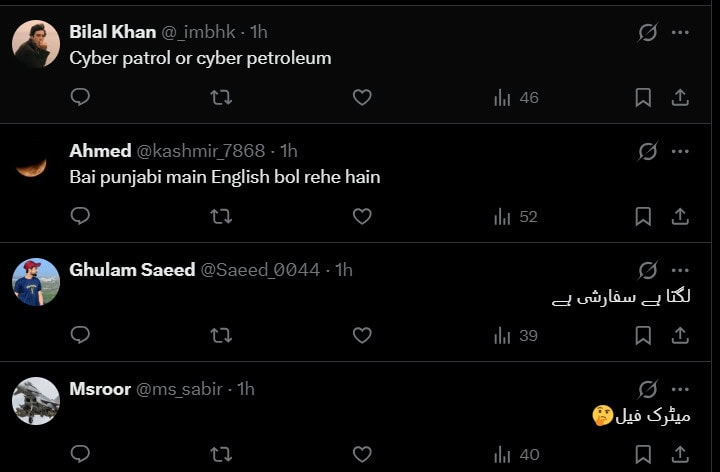
Although the officer apparently intended to highlight the agency’s surveillance capabilities and its determination to act against unlawful online content, his choice of words quickly overshadowed the warning itself. The expression “Cyber Petroleum,” apparently mistaken reference to “Cyber Patrolling,” caught the attention of journalists, social media users, who wasted little time turning it into a viral joke.
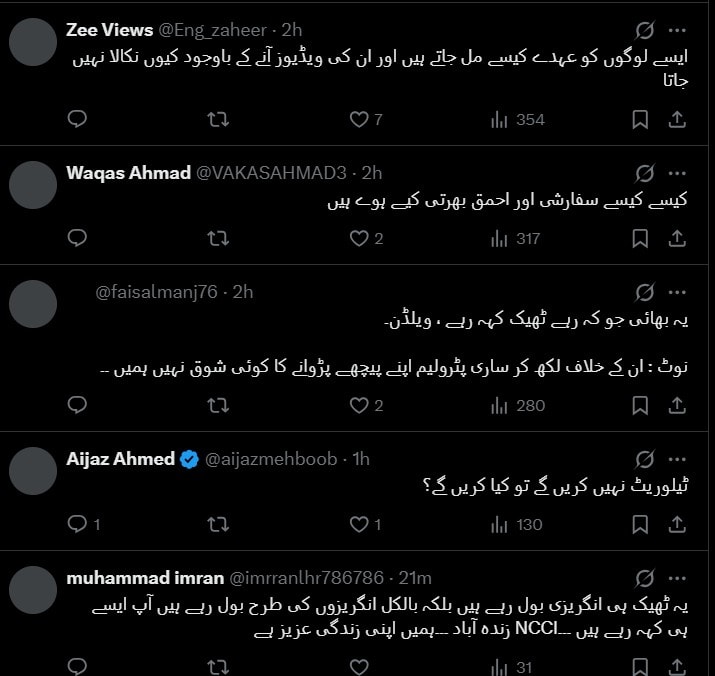
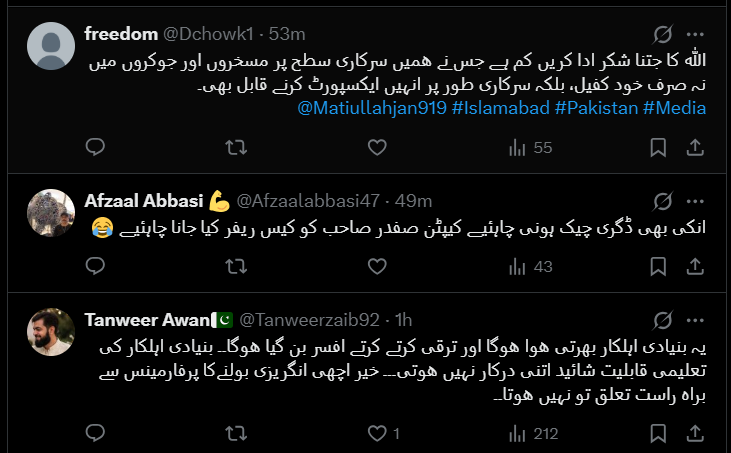
As the clip went viral, social media users started questioning not only the officer’s communication skills but also the process through which individuals are appointed to responsible positions in government institutions. One user questioned how such officials managed to secure important posts in the first place. “How do such people get appointed to these positions, and why are they not removed even after their videos surface?” the he asked.
Another social media user quipped, “Whatever this brother is saying is absolutely correct. Well done!” the user wrote. We have absolutely no desire to write anything against him and have the entire Petroleum department come after us, he said.
The controversy comes as NCCIA intensifies its scrutiny of social media accounts accused of spreading anti-state propaganda, misinformation and material targeting state institutions. The agency has been stepping up efforts to identify individuals allegedly involved in online campaigns against national institutions, while its actions against certain critics of the ruling alliance and state authorities have also attracted public attention.
NCCIA DG Syed Ali Nasir Rizvi previously stressed zero-tolerance approach towards fake news and anti-state propaganda. The agency officials also highlighted the role of specialised cyber patrolling units tasked with monitoring digital platforms and identifying potentially unlawful online activity.
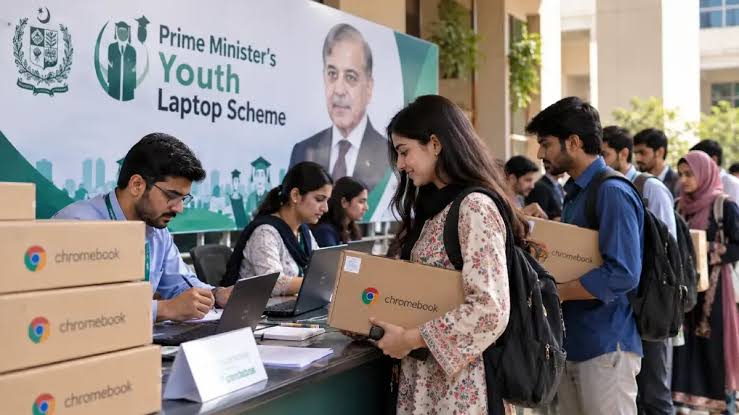
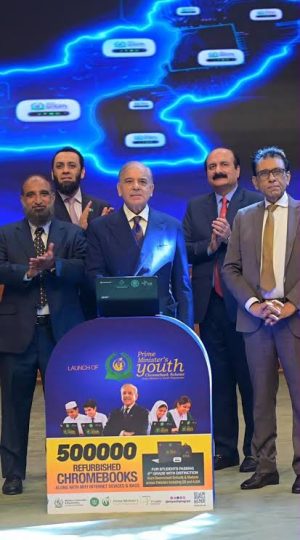
ISLAMABAD – Prime Minister Chromebook Scheme 2026 gets started to distribute 500,000 devices among deserving students, with eligibility requirements, regional quotas and application procedures now coming to light.
The initiative aimed to promote digital education by providing students with portable computers and internet connectivity, enabling them to access online classes, digital libraries and educational resources from home. The scheme primarily targets students who have performed well in their Class 9 (SSC-I) examinations, with selection based on academic merit and predetermined provincial and regional quotas.
Who is Eligible for PM Chromebook Scheme 2026?
Students hoping to secure a free Chromebook must have obtained at least 50 percent marks in their latest Class 9 examinations. However, meeting the minimum marks requirement does not automatically guarantee a device, as selection will depend on merit within the student’s province or region, educational board and academic stream.
Inter Boards Coordination Commission (IBCC) will be responsible for verifying examination results to ensure transparency in the selection process. The scheme covers students studying in government schools, private educational institutions operating in partnership with provincial governments or provincial education foundations, and registered religious seminaries.
Chromebooks Quota
Region
Chromebooks
Punjab
181,090
Sindh
85,925
Khyber Pakhtunkhwa
51,170
Balochistan
31,815
Islamabad
100,000
Azad Jammu and Kashmir
25,000
Gilgit-Baltistan
25,000
Total
500,000
Under the proposed distribution arrangement, 80 percent of each region’s allocation will go to school students, while the remaining 20 percent will be reserved for students enrolled in registered madrasas. The allocation also provides a 70 percent share for science-stream students and 30 percent for arts-stream students.
Free Internet Device, Bag
Each student will get Chromebook carrying bag and a MiFi portable internet device, helping students access digital learning facilities outside their classrooms. The equipment is intended to facilitate online education, access to e-libraries and independent learning, particularly for students who lack suitable digital resources at home.
How to Apply for the PM Chromebook Scheme 2026?
Students can use the designated IBCC application portal to check their eligibility and submit the required information once their respective educational boards have announced the Class 9 examination results.
The reported application procedure involves visiting the portal, checking the student’s academic record, providing personal information and uploading the required documents.
Applicants will need a recent photograph, their Class 9 examination marksheet and copies of their B-Form or Computerised National Identity Card (CNIC), where applicable.
Students should ensure that their information matches their official educational records, as discrepancies could affect verification and selection.
Before any device is dispatched, the student’s educational institution will verify examination results, current enrollment and continued affiliation with the school. Once the verification process is completed, Chromebooks will be delivered through a courier service equipped with a tracking mechanism.
Complaint committees will also be established to address issues involving merit selection, verification and delivery delays. The system is intended to ensure that the devices reach verified beneficiaries while providing students with a mechanism to report problems during the distribution process.
SOUTH WAZIRISTAN – Security forces unleashed powerful retaliatory response against Afghan Taliban border positions on Tuesday after alleged unprovoked firing triggered a fierce confrontation along the Pakistan-Afghanistan frontier in the Angoor Adda sector.
The latest escalation saw heavy weapons and artillery brought into action as Pakistani troops responded to gunfire directed at their border posts, according to security sources. Pakistani security sources claimed that the intense counterfire forced Afghan Taliban fighters to abandon several positions across the border in Afghanistan’s Paktika province.
According to security sources, the confrontation began when Afghan Taliban personnel allegedly targeted Pakistani military posts in South Waziristan with sniper fire, automatic weapons and other heavy weaponry.
The firing prompted Pakistani troops to launch an immediate and forceful response against positions identified as the sources of the attack. Pakistani forces reportedly used artillery alongside small and heavy weapons to target Afghan Taliban border outposts, mortar installations and defensive positions across the frontier.
Security sources maintained that the retaliatory action placed Taliban positions under intense pressure, compelling several fighters to withdraw from their posts.
The confrontation reportedly intensified at approximately 2:30 pm after a projectile was allegedly fired from the Afghan side towards Pakistani positions. Heavy exchanges followed, with reports of artillery and gunfire emerging from the Angoor Adda crossing and surrounding border areas.
Residents in South Waziristan and Afghanistan’s Barmal district of Paktika province reported hearing sustained exchanges of heavy weapons. Afghan local media also acknowledged the outbreak of fighting, reporting that the confrontation had begun after midday and involved heavy weapons on both sides.
The fresh confrontation has also raised concerns for civilians living near the international border. Unconfirmed reports circulating on social media suggested that shells fired from the Afghan side struck populated areas on Pakistani territory, potentially damaging property and threatening nearby marketplaces.
The renewed confrontation comes amid growing tensions between Islamabad and Kabul over cross-border militancy and repeated armed incidents.
Pakistan continues to raise alarm about militant groups, especially Tehreek-e-Taliban Pakistan (TTP), of using sanctuaries inside Afghanistan to plan and execute attacks on Pakistani soil. Islamabad repeatedly demanded that the Afghan Taliban administration take meaningful action against militant organisations operating from its territory. Kabul has rejected allegations that it harbours anti-Pakistan militants.
Angoor Adda sector has witnessed several confrontations in recent months, including another reported exchange of heavy fire around October 19 and 20.
Pakistani security sources insisted that troops remained firmly positioned along the frontier and were prepared to respond to any fresh attack. Although the exact military losses and battlefield outcomes remain unconfirmed, the latest reports underscore Pakistan’s determination to protect its border positions and respond to threats against its territorial security.
ISLAMABAD: A sub-committee constituted by the prime minister has set a 120-day deadline to prepare a roadmap to expand shrimp farming, improve value addition and boost exports.
Maritime Affairs Minister Junaid Anwar Chaudhry on Tuesday chaired a meeting of the sub-committee on aquaculture and the shrimp value chain, according to a press release.
The 120-day deadline was set as part of a broader 24-month implementation and review process.
The meeting brought together provincial fisheries officials and relevant federal institutions to develop a “coordinated strategy” for transforming aquaculture into a competitive, export-oriented industry.
PM Shehbaz has termed achieving export-led economic growth as the government’s top priority, with the federal budget for the current fiscal year (FY27) formulated with the same objective.
The sub-committee will prepare a comprehensive report based on verified data and stakeholder recommendations, Tuesday’s statement said.
“The exercise will establish a baseline for the sector, identify bottlenecks across the value chain and propose measures to improve production, processing and export competitiveness,” it added.
Furthermore, the sub-committee approved seven technical working groups and a projection and costing cell to prepare 14 reports and export projections, assigning responsibilities to the relevant institutions.
It also adopted a common framework for data collection and validation, prioritising challenges, developing reform proposals and monitoring progress.
An initial 14-day action plan was approved, with participating institutions directed to complete their assigned tasks within the stipulated deadlines.
The meeting was attended by representatives of the fisheries departments of Punjab, Sindh, Khyber Pakhtunkhwa, Balochistan, Azad Jammu and Kashmir, and Gilgit-Baltistan. Officials from the Trade Development Authority of Pakistan and the ministries of food security and maritime affairs were also present.
According to the statement, Chaudhry said the exercise would identify constraints and develop practical solutions to expand shrimp farming, strengthen value addition and increase exports.
He added that the federal government would work with provincial governments and other stakeholders to pool expertise and develop a coordinated approach to harness the country’s potential in shrimp farming.
Sindh’s secretary for livestock and fisheries was quoted as saying that a feasibility study was being prepared for a 3,500-acre shrimp farm in the province. He also highlighted the need to address challenges in value addition and traceability.
Meanwhile, Punjab’s Aquaculture and Fisheries Secretary Rana Saleem Afzal said that relevant departments of the provincial government were working to introduce shrimp farming in Punjab.
“Many areas in Punjab were non-cultivable due to high salinity in the underground water, and efforts were under way to establish hatcheries in such areas,” he was quoted as saying.
However, he acknowledged that establishing an effective value chain remained a major challenge.
Other participants presented proposals to improve shrimp processing and value addition for exports as well as local consumption, as shrimps and prawns remain in high demand in Punjab and KP.
It was agreed that the next meeting would review identified bottlenecks as well as available baseline data essential for promoting shrimp farming.
In April, Punjab Chief Minister Maryam Nawaz noted that progress had been achieved in developing infrastructure for shrimp farming projects in Sargodha Estate, Aliwala and Shahgarh.
Punjab had launched the Blue Economy Programme to develop unused lands and introduce a modern scientific system for shrimp farming.
Earlier this year, the federal government said Pakistan’s exports of fish and fish preparations had reached a record $568 million in the previous fiscal year (FY26). Seafood exports are mainly shipped to China, Thailand, Malaysia, the United Arab Emirates, Japan, Vietnam, Saudi Arabia, South Korea, Indonesia and the United States.
KARACHI: A man accused of stealing over 50 mobile phones from women after luring them to a farmhouse in Gadap under the pretext of job interviews was beaten by the aggrieved during a court appearance on Tuesday.
The suspect was arrested by the police on Monday for his alleged involvement in stealing the mobile phones of 59 women, who were brought to the farmhouse in October under the pretext of a job interview.
He was presented before the Malir judicial magistrate on Tuesday. During the hearing, the investigating officer (IO) informed the magistrate that the suspect was arrested yesterday and mobile phones had been recovered from his possession.
The officer said that more mobile phones needed to be recovered, while the suspect’s accomplices were also at large. He requested physical remand of the suspect, which the court approved, granting police one-day physical remand.
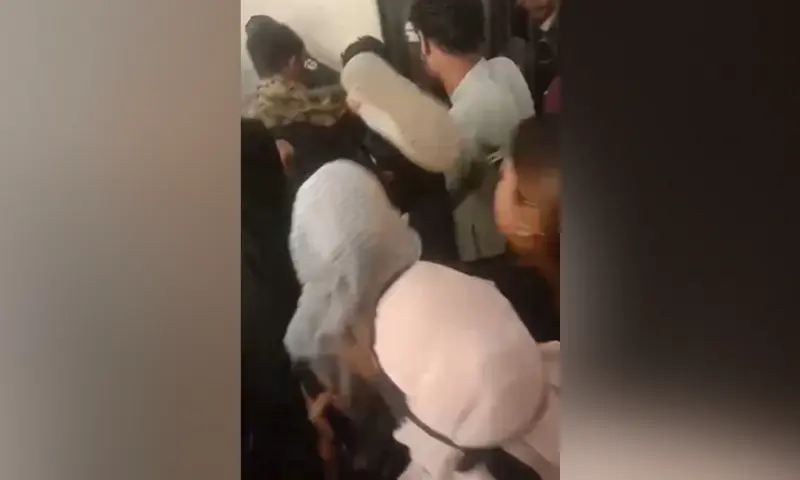
Meanwhile, a number of the affected women were present at the premises. In a video seen by Dawn, the women could be seen asking the police to show the suspect’s face, gathering around him and then proceeding to beat him with slippers and slap him.
As the suspect tried to move away, the group of women could be seen chasing him until the police took the suspect inside a room.
A day earlier, Malir Senior Superintendent of Police Dr Abdul Khaliq Pirzada told Dawn that the police had recovered 40 mobile phones from the suspect’s possession.
Acting on a tip-off, police arrested the prime suspect while he was on his way to sell 40 mobile phones in an attempt to “destroy” evidence.
Pirzada said police had obtained clues suggesting that the remaining 19 mobile phones were in the possession of another absconding suspect. Concerted efforts were underway to arrest him, he added.
The Malir SSP said the main suspect, allegedly with a female suspect’s help, had created a WhatsApp group and placed job advertisements to lure the women. He subsequently hired a bus and took them to the farmhouse.
A first information report, invoking Section 379 (punishment for theft), Section 420 (cheating and dishonestly inducing delivery of property), and Section 34 (acts done by several persons in furtherance of common intention) of the Pakistan Penal Code was registered with the Gadap City police station on the complaint of one of the victims.
Shock and anger greeted the Pakistani Supreme Court's decision to uphold the conviction and death sentence of a Christian man accused of blasphemy against the Prophet Muhammad.
Supporters say the decision has far-reaching implications for human rights in Pakistan and for the country's standing on the international stage. The Open Doors 2026 World Watch List included the Asian nation in its top 10 list of countries where Christians face the most extreme persecution.
CeCe Heil, senior counsel and international legal director for the American Center for Law and Justice (ACLJ), told Fox News Digital the case against brothers Amoon and Qaisar Ayub began in 2014.
Qaisar was arrested after a WordPress site displayed the Ayub brothers’ contact information and shared content that insulted the Prophet Muhammad. Amoon was arrested the following year. Heil says that in the 12 years of legal wrangling that followed, the Pakistani legal system has never presented evidence proving that either brother was truly affiliated with the offending WordPress blog site.
The ACLJ, through its Pakistani counterpart, the Organization for Legal Aid (OLA), began representing Amoon shortly after his arrest in 2015. Both brothers were sentenced to death in 2018. They unsuccessfully sought appeal in the Lahore High Court in 2022. After a continuation at the Supreme Court in 2025, Qaisar asked the OLA to represent him.
Following years of arguments and 13 postponed hearings, an Oct. 7 verdict from the Supreme Court saw Amoon acquitted after some 10 years in prison, while Qaisar’s conviction and death sentence was upheld.
Heil said a threatening atmosphere now attends many blasphemy hearings, where she says "mobs" commonly show up in courtrooms.
In one trial, she said a mob filmed themselves saying that "if the judge does not enforce death by hanging, we will kill him by our own hands." She said another video shows a prominent lawyer involved in numerous blasphemy cases celebrating the 15-year journey that led to Qaisar’s sentencing. A translation of the description reads, "There is only one punishment for one who insults the Prophet: The death penalty for Qaisar Ayub."
Heil said the precedent set by the Supreme Court’s decision could impact "every single person that is sitting in prison right now on blasphemy charges," which includes at least three OLA clients.
Other Christian men facing death include Shahzad Masih, who was 16 years old when he was accused of blasphemy in 2017. He was sentenced to death five years later. His appeals have repeatedly been postponed since 2022.
Intizar Masih is awaiting trial for a blasphemous post he is said to have shared on WhatsApp in 2023. Ahsan Masih was accused of posting blasphemous content to TikTok in 2023, and was sentenced to death the following year. His appeal hearings have also been postponed.
The OLA plans to file a review petition with the Supreme Court as early as this week, addressing the lack of evidence convicting Qaisar. They also plan to reach out directly to the Government of Pakistan to request support, including a presidential pardon for Qaisar.
Heil said she finds it "very strange" for a country posturing itself as a "more tolerant" negotiator between world powers in the ongoing conflict in Iran to fail to protect the religious freedoms of its people.
The Pakistani Embassy in Washington, D.C., did not respond to Fox News Digital’s questions about the possibility of a presidential pardon for Qaisar, or whether the Supreme Court’s decision could impact Pakistan’s perception in the West, or if justice can prevail in courtrooms mobbed with threatening onlookers.
A State Department spokesperson told Fox News Digital that the U.S. "is concerned about religious freedom in Pakistan and throughout the world" and "we regularly discuss this concern with Pakistan, as we would with any country."
Heil said the ACLJ has requested that Morris Tidball-Binz, the United Nations special rapporteur on extrajudicial, summary or arbitrary executions, intercede on Qaisar’s behalf.
Tidball-Binz did not respond to Fox News Digital’s questions about whether he held concerns about the precedent set by the Supreme Court upholding Qaisar’s conviction.
The Human Rights Council secretariat provided a letter that Tidball-Binz and other U.N. officials wrote to the Government of Pakistan in September 2025, emphasizing their concerns about the cases of the Ayub brothers and Shahazad Masih.
It stated, "Without making any judgment as to the accuracy of the information made available to us, we would like to express our grave concern about the imposition of the mandatory death penalty for blasphemy related charges against Mr. Shahzad Masih, Mr. Qaiser Ayub and Mr. Amoon Ayub, despite an apparent lack of conclusive evidence against them for acts and for offenses which do not qualify as ‘most serious crimes.’"
The U.N. officials concluded, "If the above allegations prove to be accurate, they would be in contravention of Mr. Shahazad Masih´s, Mr. Qaiser Ayub’s and Mr. Amoon Ayub’s rights to life, not to be subjected to torture or to cruel, inhuman or degrading treatment or punishment, not to be deprived arbitrarily of their liberty and to be afforded fair proceedings before an independent and impartial tribunal, to freedom of thought, conscience and religion or belief, the right to express their opinion in a peaceful manner and the right to be equal before the law and are entitled to the equal protection of the law without any discrimination."
The Government of Pakistan responded earlier this year, and outlined how "Under Pakistan's Constitution, such matters fall within the judicial domain, and the Executive is constitutionally prohibited from intervening in individual cases."
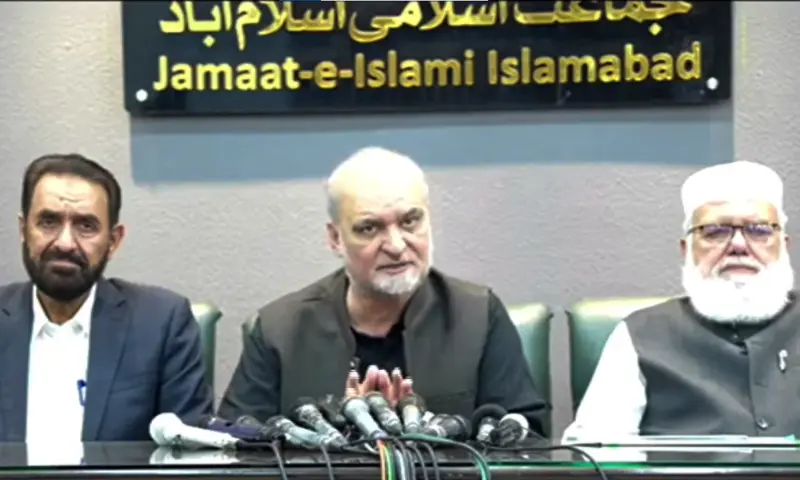
ISLAMABAD – Jamaat-e-Islami Pakistan chief Hafiz Naeem ur Rehman has announced that his party will hold a long march to Islamabad in mid-November.
Speaking at a press conference in Islamabad after meeting Prime Minister Shehbaz Sharif, the JI chief said the party would no longer postpone the march. He said the government should put in place a mechanism to abolish the levy before the march, adding that the burden of the levy is being borne by the middle class and the poor.
He said it had been agreed that relief on petroleum products would be increased. “We say abolish the levy, they say they will give relief in phases. We will talk to the government further, but the march will take place in mid-November. The government has asked for another seven to ten days,” he said.
Hafiz Naeem said the government should announce a package before the march begins. The levy, which he described as extortion, must end, he said, adding that the relief package is not benefiting the public much.
He added that it might be necessary to sit down and talk on the road. “We want relief in the petrol price, and we also want the levy abolished,” he said.
Hafiz Naeem asked whether the government would have given this relief on petrol had Jamaat-e-Islami not protested. “They were going to raise the Rs80 levy to Rs160. When we protested, they backed down. Our pressure on the government is there, and we will increase it. We want people to get relief and the levy to be abolished as well. Had Jamaat-e-Islami not protested, there would have been no relief package either,” he said.
He said talks are always held with whoever is in government, whether it is a “Form 47” or “Form 48” government. “If a hijacker takes over a plane, you have to talk to him,” he remarked.
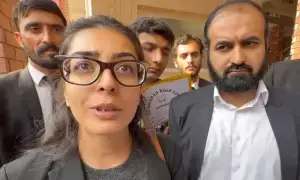
ISLAMABAD: The trial of human rights lawyer Imaan Zainab Mazari-Hazir and her husband, Hadi Ali Chattha, in the security breach case concluded at Adiala Jail on Tuesday, with the anti-terrorism court (ATC) reserving its verdict.
Imaan and Hadi are facing a jail trial in a 2024 case pertaining to the alleged disruption of an international cricket team’s security route and incitement to public unrest. The couple, accused of removing barriers from the route, was indicted on October 7.
On Tuesday, both accused recorded their statements under Section 342 (power to examine the accused) of the Code of Criminal Procedure, while final arguments by the state counsel also concluded during the proceedings.
Following the completion of the trial and final arguments, the court reserved its verdict and said that it would be pronounced on October 29.
A day prior, the couple approached the Supreme Court to challenge the Islamabad High Court’s (IHC) Oct 19 order refusing to stay the trial in the case.
The IHC had heard their appeals last week against an Oct 10 ATC order dismissing petitions challenging the framing of charges and the inclusion of terrorism-related provisions. The high court issued notices and said it would decide how to proceed after receiving responses from the parties.
The couple has been in jail since their arrest on Jan 23 in a case registered against them for protesting outside the IHC and allegedly manhandling the high court Bar Association president. The arrest prompted criticism by rights bodies, politicians and journalists, who stressed the couple’s right to a fair trial.
On Sept 17, following months of litigation before the courts, the Supreme Court suspended their sentences in the case. The SC ordered their release pending the IHC’s final verdict on their appeals against the trial court’s decision.
However, the reprieve was short-lived as hours later, Islamabad police arrested the couple again in connection with the security breach case. The case was registered at the federal capital’s Kohsar police station on March 22 last year on the complaint of City Magistrate Ghulam Murtaza Chandio.
Kashmiris across the world are observing Black Day on Tuesday to mark 79 years since Indian troops entered Srinagar on October 27, 1947, with protests and demonstrations planned on both sides of the Line of Control (LoC), in Pakistan and abroad.
The All Parties Hurriyat Conference and other pro-independence organisations have called for a complete shutdown in Indian-occupied Jammu and Kashmir. Demonstrations are also planned to draw international attention to the longstanding dispute and demand the Kashmiri people’s right to self-determination.
Kashmiris and Pakistan regard the arrival of Indian troops in Srinagar as the beginning of an illegal occupation that disregarded the aspirations of the people of Jammu and Kashmir. The anniversary is observed each year as Black Day.
Kashmiris living in different countries are also organising rallies to call for a peaceful settlement of the dispute in accordance with United Nations resolutions.
In Muzaffarabad, a march towards the LoC is planned along Srinagar Highway. Participants are also expected to hold a protest in Hattian Bala, in Jhelum Valley district.
Dar calls for international efforts
In his Black Day message, Deputy Prime Minister Ishaq Dar said the Kashmir dispute remained unresolved despite the passage of nearly eight decades.
He called for effective international efforts to address the issue and reaffirmed Pakistan’s commitment to raising the concerns of the Kashmiri people at international forums.
Dar reiterated Pakistan’s support for the Kashmiri people and their demand for a resolution of the dispute.
Punjab Chief Minister Maryam Nawaz also condemned India’s control over occupied Jammu and Kashmir in her message, describing October 27 as a dark chapter in history.
She said the Kashmir dispute was a matter of international concern and reaffirmed solidarity with the Kashmiri people, saying Pakistan would continue to support their struggle.
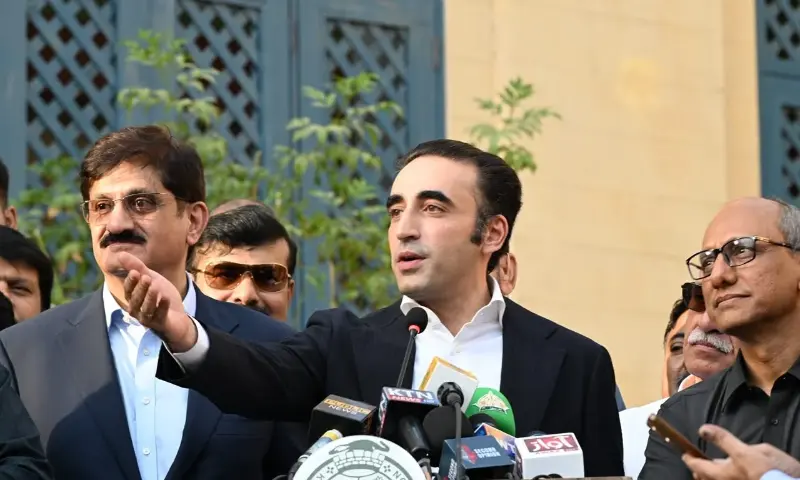
PPP Chairman Bilawal Bhutto-Zardari on Tuesday called for a “full stop” to conversations regarding the creation of new provinces.
He made the remarks while speaking to the media at Spencer Eye Hospital in Karachi’s Lyari alongside Sindh Chief Minister Syed Murad Ali Shah.
Reiterating his party’s stance in response to a question over “pressure” the PPP was facing regarding the creation of new administrative units and the possibility of rolling back the 18th Amendment, Bilawal said the people of Sindh and their elected representatives had presented their decision and “now we should put a full stop to this conversation”.
He said the Sindh Assembly had also made its stance in the matter evident for “at least seven to eight times now”.
“The people here can determine the fate of this province and the city,” Bilawal asserted.
“I think we should close this topic because the people themselves have closed it,” he said.
When asked about ongoing conversations regarding a 28th constitutional amendment and whether the government had spoken to him in this regard, Bilawal simply replied: “No.”
The PPP chairman was also questioned about the recent dispute between the Karachi Metropolitan Corporation (KMC) and Pakistan Railways and the federal government’s lack of interest in the city.
“The federal government should definitely pay attention to this city. Karachi is the country’s economic hub. Everyone else should pay attention to it,” he said.
Bilawal’s remarks come amid an ongoing debate across the country about the creation of new administrative units, sparked by Interior Minister Mohsin Naqvi’s proposal for a dialogue among all political parties to bring about reforms to the current governance system and call for new provinces and urgent administrative reforms in July.
At the time, the PPP had referred the question to its top decision-making forum, while the Sindh chief minister flatly rejected it; Lahore’s lawyers also called it unconstitutional and Sindhi nationalist groups have been demanding the minister’s resignation.
However, since Naqvi’s remarks, various political parties have also spoken in favour of it and called for the creation of more provinces or administrative units for better governance.
The Muttahida Qaumi Movement-Pakistan (MQM-P) — an ally of the PML-N-led ruling coalition — has been demanding that Karachi be designated a province separate from Sindh.
However, the PPP, which rules Sindh and is also an ally of the PML-N government at the Centre along with MQM-P, has strongly opposed the suggested move.
In September, the Sindh Assembly adopted a resolution rejecting all attempts to divide the province or create new administrative units, with the CM Murad declaring that “there will be no compromise on Sindh’s geographical unity”.
LAHORE – An anti-terrorism court (ATC) on Tuesday turned down a police plea for more physical remand of PTI leader Hammad Azhar in the Jinnah House attack case, and ordered him held in jail on judicial remand.
Sarwar Road police had registered a case against several PTI leaders and workers for attacking and vandalising Jinnah House during the May 9, 2023 protests that followed the arrest of former prime minister Imran Khan.
Azhar’s family says he was picked up on Sept 5, but police said the following day that they had no knowledge of any arrest. He was presented before an ATC on Sept 7. The initial 21-day physical remand was later extended at least twice.
After the most recent 12-day remand expired, Azhar was brought before ATC Judge Sardar Muhammad Akram Khan on Tuesday.
The investigating officer asked for additional physical remand of the former finance minister so that a polygraph, or lie detector, test could be carried out.
Azhar’s lawyer, Barrister Abuzar Salman Niazi, countered that such a test cannot be done without the suspect’s consent. Citing a Lahore High Court ruling, he said the procedure must take place during judicial remand, and that the suspect must also tell a magistrate whether he agrees to it.
Azhar himself told the court that, if the law permitted him to decline, he did not wish to take the test. He argued that a suspect should not be made to suffer because the prosecution was allegedly unaware of the legal requirements.
After hearing both sides on the proposed test, Judge Akram rejected the police request and remanded Azhar to jail on judicial custody.
Welcoming the decision in a post on X, Barrister Niazi wrote that his client’s “50-day physical remand finally ends”, adding that Azhar had been sent to Kot Lakhpat jail.
Azhar held several federal portfolios during the PTI government, including finance, industries and energy.
After the May 2023 unrest, when the state moved against the party’s leadership, he went into hiding and resurfaced publicly a year later, on May 22, 2024.
In 2025, he repeated his decision to step down as president of the PTI’s Punjab chapter, citing lack of access to Imran Khan.
The government and Jamaat-i-Islami (JI) on Tuesday decided to form a joint committee to recommend proposals for expanding the ongoing fuel relief scheme, while JI warned of marching to Islamabad next month if no relief “package” was announced by then.
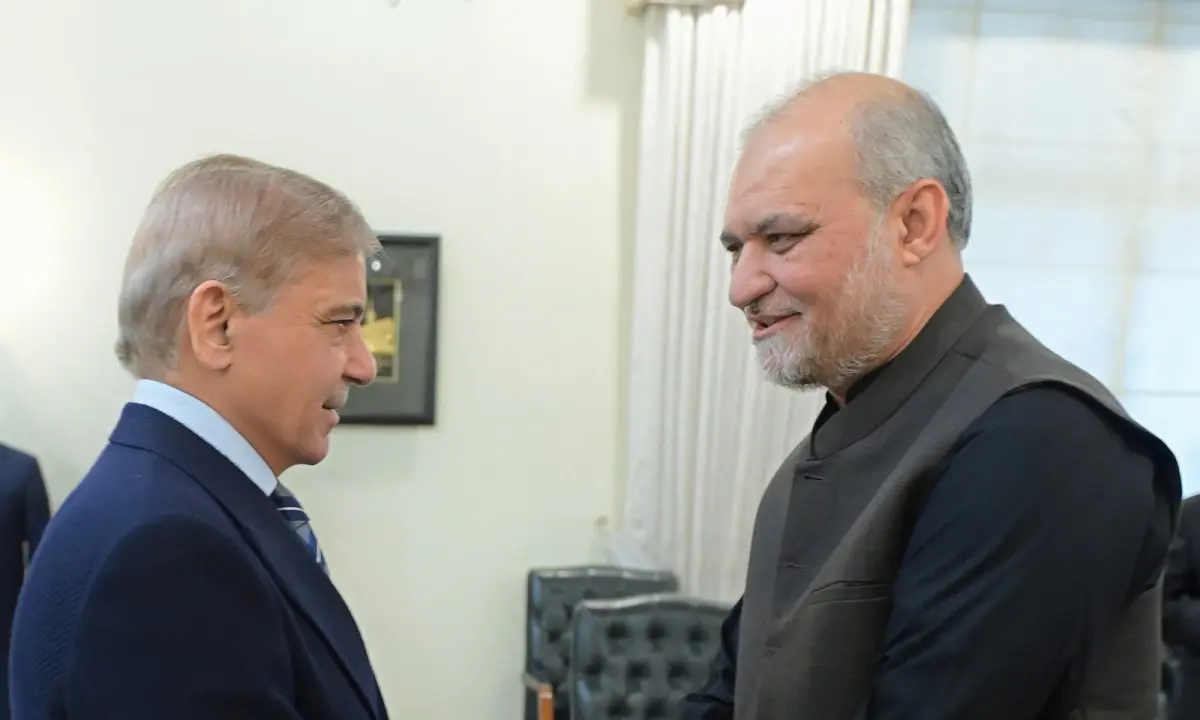
The decision was made during a high-level meeting between Prime Minister Shehbaz Sharif and JI chief Hafiz Naeemur Rehman at the PM House, according to a press release issued by the PM Office (PMO).
The meeting was offered by PM Shehbaz last month when urging JI to postpone its Islamabad march, which it had accepted. JI has been demanding the abolition of the petroleum levy to reduce the burden of heightened fuel prices on the public.
Tuesday’s meeting decided that a committee, comprising three members each from the government and JI, will present final recommendations on the following two measures:
Expansion of the scope of the ongoing relief scheme on petrol for the public so that the maximum number of deserving people can benefit from it
Preparation of feasible proposals for the budget for a phased reduction in the petroleum levy
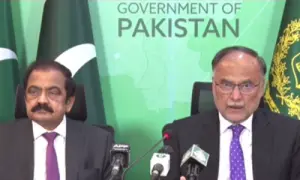
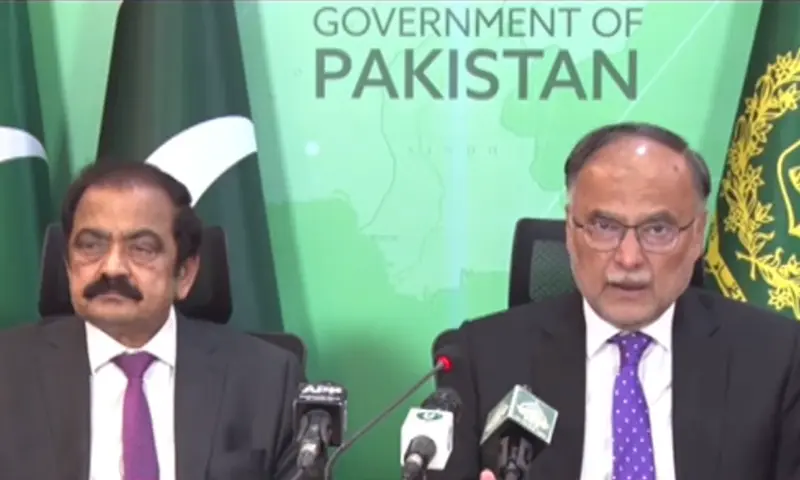
Deputy Prime Minister and Foreign Minister Ishaq Dar, Planning Minister Ahsan Iqbal and the PM’s political adviser Rana Sanaullah will represent the government in the joint committee, PMO stated.
The premier informed the JI delegation in detail about the relief provided so far by the government in the petroleum products quota for the low-income segment, noting that 12.7 million people have registered in the subsidy scheme so far.
The relief scheme for owners of motorcycles, rickshaws and vehicles of up to 800cc was rolled out across the country on Sept 17. PM Shehbaz had announced the subsidies to ease the public’s burden amid rising fuel prices due to the Middle East situation.
During the meeting, the prime minister conveyed to JI that he “fully understands the burden on the public due to the increase in prices of petroleum products”, PMO said.
He highlighted the government’s effort to provide relief through the subsidy scheme and asserted that Islamabad was “making all-out diplomatic efforts to resolve the regional crisis so that the situation can return to normal”.
“The current crisis is not related to government policies but to the increase in oil prices in view of regional and international situations. However, according to financial capacity, the government is providing relief to the public and will continue to do so,” he was quoted as saying.
The prime minister thanked JI for adopting the path of negotiations regarding the prices of petroleum products. PMO noted that the JI delegation “expressed its stance on the abolition of the petroleum levy and relief for the public”.
JI Deputy Emir Liaquat Baloch, Deputy Secretary General Syed Farasat Shah, Islamabad Emir Nasrullah Randhawa and Inayatullah were also part of the party delegation.
From the government, Dar, Iqbal, Sanaullah, Economic Affairs Minister Ahad Khan Cheema, Finance Minister Muhammad Aurangzeb, Petroleum Minister Ali Pervaiz Malik, and Minister of State for Finance and Railways Bilal Azhar Kiani were also present.
‘Cannot simply accept peanuts’
In his press conference in Islamabad, the JI chief affirmed that his party will not postpone its march any further.
He stated: “It will now take place in mid-November, and it certainly will take place. Let them announce this package, provide this relief, and devise a mechanism to abolish this extortionate levy before that, [but] if they do not do so, we might have to sit on the road to talk.
“We are prepared for anything,” Rehman declared.
Asked about the outcome of his meeting with PM Shehbaz, the JI emir refrained from terming it “inconclusive”.
He noted that two sides had consensus on expanding the scope of relief, but there were disagreements over the “modalities” and “procedure”.
“We say eliminate the levy; they say we can move towards it phase by phase,” Rehman elaborated.
Rehman, apparently referring to the new joint committee, said Baloch, Shah and Randhawa would be part of it.
“We cannot simply accept peanuts,” the JI chief said when asked about a reported government offer to reduce the levies by Rs20-30. He stressed that his party stood firm on its stance.
He maintained that JI would continue its preparations and would begin nationwide mobilisation for its planned march to the federal capital, while negotiations would also continue at the same time.
“Our preparations are already complete; we will prepare further [and] we will talk to them (the government) further. However, we will also hold the Islamabad march in mid-November,” Rehman said.
Asked whether JI had presented any alternative to abolishing the levy, he responded in the affirmative, asserting that his party had comprehensive preparations.
Rehman highlighted that all past governments vowed not to take loans from the International Monetary Fund (IMF) but then entered into programmes with it after coming into power.
He said his party pointed this out, adding, “Give relief to the people; do not take retribution for your incompetence from the nation.”
Providing details of his party’s demands, the JI chief said it had also raised the issue of refineries’ margins increasing as well when oil prices rose in the international market.
“That should have decreased, people should have gotten relief,” he said.
Rehman acknowledged that JI was aware of the fluctuations in international oil prices due to the ongoing conflicts in the Middle East, but “we want relief to be provided to the people in this regard as well, and this levy should also be abolished alongside”.
He went on to claim credit for the relief schemelaunched by the government in mid-September. “If Jamaat-i-Islami was not protesting, do you think this relief package would have come?”
Rehman further said, “We have restrained them a little by continuing to push, by taking a stand, stepping onto the field and protesting; otherwise, it is easy money that you just take advantage of this opportunity.”
The JI emir recalled that in April, the government had hiked the levy on petrol to Rs160 per litre from Rs105, but widespread criticism prompted it to reduce the levy by Rs80.
“It is JI that has raised awareness, protested, and built pressure,” he claimed.
Iqbal calls for ‘durable, sustainable path’
After attending the meeting, Iqbal and Sanaullah addressed a press conference and assured the public that the government wanted to ease the burden of the fuel prices.
“The prime minister and JI emir agreed that they share one purpose and intent: they want to reduce the difficulties of the public,” Iqbal said.
“However, for this, we will have to adopt a path that is durable, sustainable, and the cost of which we can afford.”
The planning minister expressed hope that the committee would be able to work together on the topics to find a solution to these issues.
Simultaneously, while acknowledging that every political party had a right to protest, he stressed that the regional conditions warranted that everyone maintain peace and internal stability in the country.
Iqbal assured the public that the government was aware that the increase in international oil prices, and the consequent fuel price hikes, affected ordinary citizens.
He emphasised that PM Shehbaz was “continuously concerned about how to reduce the difficulties of the most affected and vulnerable classes” and said the soaring costs were a result of a global crisis that was not in the government’s control.
The minister stressed that Pakistan was playing its diplomatic role in resolving the Middle East crisis, including facilitating negotiations between the US and Iran, so that reduced regional tensions could lower global oil prices and the relief could be passed on to the public.
The PML-N leader went on to take a jibe at the previous PTI government, saying it reduced fuel prices for “cheap popularity” even as international oil prices rose, bringing the country to the brink of fiscal default.
He contended that if a government made decisions merely to hype its popularity among the masses, that irresponsibility could come back to it as a “nightmare”.
Therefore, he added, the government, including the prime minister, wanted to help people as much as possible “while staying within our resources”.
Addressing the media alongside Iqbal, Sanaullah said, “The government, to whatever extent possible, is providing relief to the common man, the poor man, and is trying to advance it further.”
He said the number of people benefitting from the fuel subsidy scheme was likely to reach 20m in the coming days.
He appreciated the JI’s efforts and its belief that the common man should be provided relief, stressing that this relief should be taken forward “in such a manner that it is targeted, and that maximum relief be given to those people who deserve it more”.
At the same time, Sanaullah urged all political parties to strengthen the position of Pakistan’s military and political leadership, and to create an environment that lent strength to the efforts made by PM Shehbaz and Chief of Defence Forces and Chief of the Army Staff Field Marshal Asim Munir to end the US-Iran conflict, as well as to maintain good relations within the Muslim world.
He called for “complete solidarity and complete unity” in the country “so that Pakistan can succeed in playing an effective role in the world”.
“It is our hope, and indeed our belief, that the Jamaat-i-Islami leadership, keeping in view these delicate and sensitive matters, will certainly play their role,” he said.
The PML-N leader emphasised that the government had listened to the JI’s suggestions “very carefully” and held the talks with “complete sincerity of intention and good faith” so that the current relief could be made more effective.
JI protests so far
The JI has been demanding for over two months that the Centre abolish petroleum levies, as fuel prices have skyrocketed due to conflicts in the Middle East since March.
The Centre and JI had agreed to form committees in early September — when the latter had planned a nationwide strike — to recommend measures to reduce the levy.
Rehman on Monday warned that the party would march to Islamabad in mid-November if the premier did not abolish the petroleum levy.
On Aug 16, the JI announced sit-ins in all the provincial capitals of Pakistan against the petroleum levy and had called for a nationwide strike on Sept 3.
On Sept 20, the party launched a protest march towards Islamabad, warning that if the government failed to abolish the petroleum levy, the protest could turn into one to oust the government.
On Sept 22, the JI emir said his party, whose convoy had reached Multan, was postponing its long march at the request of PM Shehbaz, who had assured the other side of a meeting to discuss the matters.
However, in a press release issued last week, the party alleged that the government had made no further contact regarding the planned meeting.
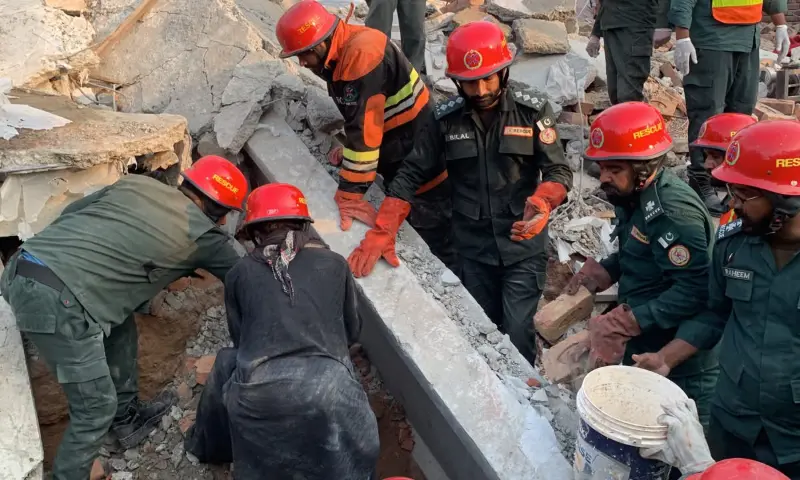
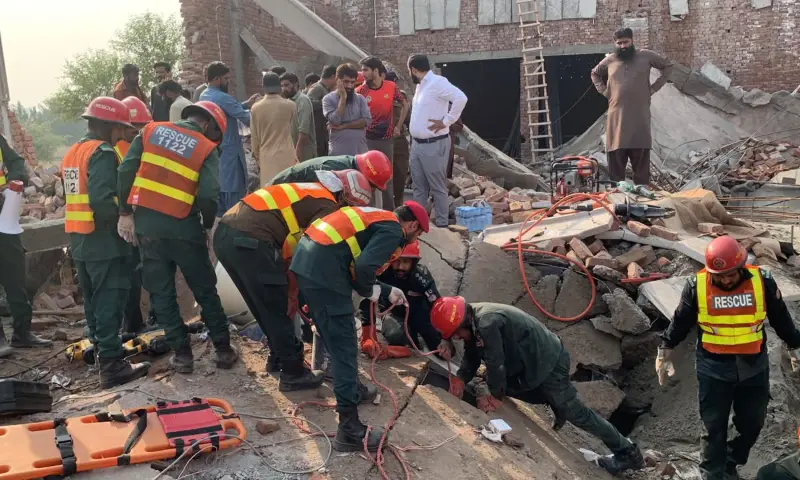
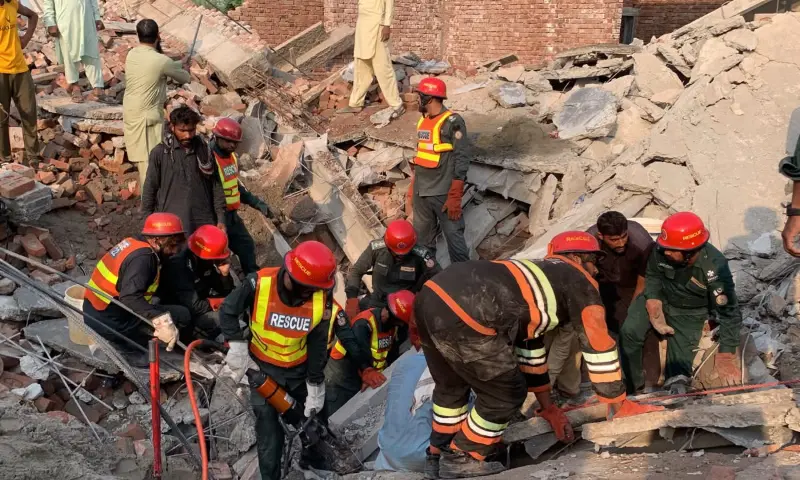
LAHORE: At least one individual was killed, while seven others were injured on Tuesday when the roof of an under-construction building collapsed near Multan’s Northern Bypass, Rescue 1122 said.
In a statement, the rescue service said the roof of an under-construction plaza had collapsed near the National College of Business Administration and Economics on Northern Bypass.
The agency said that so far, seven injured individuals had been rescued and shifted to Nishtar Hospital, adding that one person was killed in the collapse, whose body had also been shifted to the hospital.
It added that a Rescue 1122 team would remain at the site until the salvage operation was completed.
A spokesperson for Nishtar Hospital, citing hospital records, also confirmed that an individual had been brought dead.
Rescue officials launch a search and rescue operation after building collapse in Multan on October 27, 2026. — Photo via Rescue 1122
A rescue official confirmed to Dawn that eight labourers were present on the site when the incident occurred. However, the presence of any other individual trapped under the debris could not be ruled out until the wreckage was removed and the site was cleared.
In an earlier statement, Rescue 1122 said its teams “reached the incident site within three minutes” of receiving information about the incident.
The statement said 10 vehicles had been actively engaged in the relief operations, comprising five ambulances, three rescue motorbikes, one rescue vehicle and one fire vehicle.
Rescue officials launch a search and rescue operation after building collapse in Multan on October 27, 2026. — Photo via Rescue 1122
According to the Nishtar Hospital spokesperson, three persons suffered head injuries — whose nature and criticality were unknown — while the other three sustained minor injuries.
The spokesperson said doctors and paramedical staff had been placed on high alert in the emergency room, and the best medical facilities were being provided to the injured.
Building and roof collapses are common in Pakistan, often attributed to poor safety standards and the use of substandard construction materials.
A teacher and 30 students were killed when a school’s roof collapsed in Peshawar earlier this month.
In September, two men died in Pakpattan after the roof of their house collapsed during heavy rain and a windstorm.
On June 30, 14 children lost their lives when the roof of a private tuition centre collapsed in Lahore’s Kahna area.
MANDI BAHAUDDIN – Punjab Chief Minister Maryam Nawaz said on Tuesday that people attacked in the province should answer violence in the same way, adding that she had personally advised victims to do so.
Speaking at a ceremony in Mandi Bahauddin where scholarships and laptops were handed out under the Hon’haar programme, she warned that anyone found guilty would face action, even if they belonged to her own party.
She also rejected rule by intimidation, saying that fear is not a substitute for governance and that leaders should hold to one principle and apply it consistently.
Recalling a deadly case in Multan in which an orphaned teenager was run over, she said the tragedy still weighed on her mind.
The chief minister also spoke about two other incidents: the abuse of a woman on a motorcycle and an attack at a petrol station.
The first involved video footage from Lahore, in which a man cut off a woman riding a scooty on a busy road, blocked her with his motorbike, and then brutally beat her. Police traced and arrested him using footage and data from dozens of cameras run by the Punjab Safe Cities Authority (PSCA). A Lahore court, however, directed that he be freed if no other case was pending against him.
In the second case, a man attacked a worker at a filling station in Jubilee Town. Reports say the attendant asked the customer, who had come to fill his tank, not to smoke on the premises. The man then got out of his SUV, allegedly beat the attendant and drove away.
Maryam Nawaz reiterated that her government now stands with the “oppressed”, adding that she is not worried about any case that may be filed against her in future.
BAHAWALNAGAR – Another case of alleged sexual assault reported from Southern Punjab, where Punjab Enforcement and Regulatory Authority (PERA) Force officer has been booked for allegedly raping young woman after getting her trust through promises of marriage.
City B Division Police registered case under Section 376 of the Pakistan Penal Code (PPC) on October 26, 2026, following a written complaint submitted by the victim. According to First Information Report (FIR), the accused, identified as Hussam Baloch, son of Muhammad Yousaf, allegedly developed a relationship with the complainant approximately one year ago. The two remained in contact over the telephone, during which the suspect repeatedly expressed his intention to marry her.
بہاولنگر، تھانہ بی ڈویژن
پیرا فورس کے اہلکار نے لڑکی کو زیادتی کا نشانہ بنا ڈالا۔ پولیس نے مقدمہ درج کرلیا۔ https://t.co/X13MwT5SF1
The complainant alleged that she believed the suspect’s promises and trusted him. The incident reportedly occurred around 2 months ago back when accused took the woman to accompany him to Model Town, Bahawalnagar, claiming that he wanted to introduce her to his family.
According to the FIR, the suspect took the woman on his bike to a house located around 2 kilometres south of City B Division Police Station. However, upon entering the premises, the woman discovered that the house was empty. When she questioned the suspect about his family members, he allegedly assured her that they would arrive shortly.
The situation reportedly took a terrifying turn when the suspect closed the room’s door, leaving the woman frightened. The complainant alleged that the accused attempted to calm her by saying they were planning to get married soon. She further alleged that when she tried to escape, the suspect threatened and physically assaulted her before forcing her onto a bed and raping her against her will.
After alleged sexual assault, the accused reportedly dropped her back at her residence. The complainant told police that she informed her family about the incident, identifying Muhammad Kashif Ali, son of Muhammad Latif, among the witnesses she had informed. Despite the alleged assault, she said she repeatedly approached the accused and demanded that he fulfil his promise of marriage.
The suspect refused to marry her, prompting her to seek police intervention. In her complaint, the woman maintained that the accused had exploited her trust through false promises of marriage and subjected her to sexual violence, threats and physical assault.
Police registered a case under Section 376 of the Pakistan Penal Code, which deals with sexual assault, and initiated investigation into the allegations.
The case sparked concerns because the accused has been described in initial reports as an official of the PERA Force, a provincial enforcement body.
ISLAMABAD – Pakistan’s lawmakers backed Kashmiri people with a single voice, as the National Assembly unanimously adopted a resolution declaring that South Asia cannot have lasting peace until the Kashmir dispute is settled fairly.
The resolution tied regional stability directly to the Kashmir question. A just and peaceful settlement, it said, must rest on UN Security Council resolutions and on what the Kashmiris themselves want, as reported by 24NewsHD.
It was tabled jointly by Minister for Kashmir Affairs Engineer Amir Muqam and Rana Muhammad Qasim Noon, chairman of the Parliamentary Committee on Kashmir.
NA paid tribute to generations of Kashmiris who, the resolution said, have shown extraordinary courage and resilience and have made enormous sacrifices over the years. It condemned what it described as continuing, systematic human rights violations in Indian Illegally Occupied Jammu and Kashmir.
Lawmakers also reaffirmed Pakistan’s moral, political and diplomatic support for Kashmiris in what the resolution called their just and legitimate struggle. The Assembly firmly rejected India’s unilateral steps of 5 August 2019 and the measures that followed. It said these were meant to change the internationally recognized disputed status and the demographic character of the territory.
It called on India to end the human rights violations in the occupied territory, stop efforts to alter its demographic makeup, release jailed Kashmiri leaders, and allow international human rights organizations and independent observers unhindered access.
The resolution urged the international community, the United Nations in particular, to keep its commitments to the people of Jammu and Kashmir. It asked for concrete steps to implement Security Council resolutions and to hold India accountable for abuses in the occupied region. The House said the final status of Kashmir must be decided in line with those resolutions and the freely expressed will of its people.
The Assembly also urged the government to keep pressing the issue at the UN, the Organisation of Islamic Cooperation and other international forums, and to keep advocating for the Kashmiris’ right to self-determination.

 Login