❌

Reading view

Kashmir’s springs are drying up. Scientists say saving them starts uphill

Shafeeqa, a 40-year-old resident of Cherwan village in Ganderbal district, north of Srinagar in Kashmir Valley, remembers a spring that once flowed with enough force to make diverting its water toward agricultural fields a difficult task. During her teenage years, she recalls, the water rushed so powerfully that her brother was once carried along by the current. Over the past 5-6 years, however, Shafeeqa said the spring’s flow has diminished step by step. What was once a dependable source of water has become a reminder of how much the village may be losing. “Nature has blessed us with a great source, but it is we who have destroyed it with our own hands,” she said. Shafeeqa says she believes climate change has contributed to the spring’s decline. Research in the Sindh Basin lends support to her concern, although the reasons springs lose their flow can vary from one location to another. The answer may lie some distance uphill, beyond the spring’s visible outlet and in the landscapes where rainwater and melting snow seep into the ground. Springs are an essential water source for communities in the Kashmir Himalaya, particularly in mountain settlements where rivers run through deep valleys and are difficult to access. Their water supports households, livestock and agriculture. But changes in spring flow can threaten all three. A Kashmiri Muslim man prays beside a stream on the outskirts of Srinagar, 2020. Image by AP Photo/Mukhtar Khan. A 2023 study in Environment, Development and Sustainability by researchers at the…This article was originally published on Mongabay

  •  

Saudi Arabia, Türkiye, and Pakistan seek security cooperation with Iran

The constituents of the recently created Mecca Defence Alliance held their maiden meeting with Iran in Tehran on Monday, October 26, seeking ways to end the ongoing conflict between Saudi Arabia and Yemen and a larger understanding over regional security.

The participants agreed “to continue the dialogue to strengthen cooperation among the four regional countries, including for peace and security in the region,” a brief joint press statement, issued after the meeting said.

Saudi Arabia, Pakistan, and Türkiye created the Mecca Pact in August amidst the ongoing US-Israeli war on Iran and the growing fear of Israeli expansionism. The members have claimed the pact is based on the principle of collective security and was defensive in nature. Some of them have also hinted they are seeking to expand its membership.

On Monday, Defense Minister of Saudi Arabia Khalid Bin Salman, Pakistan Army Chief Asim Munir, and Türkiye’s National Intelligence Organization Director Ibrahim Kalin met with the head of Iran’s Supreme National Security Council (SNSC) Mohsen Rezaei and Foreign Minister Abbas Araghchi.

The Mecca Pact officials also met separately with Iranian President Masoud Pezeshkian earlier in the day.

The meeting came at a time when there is a growing speculation about the renewal of US-Israeli aggression on Iran which has ceased since August. It also coincides with escalation in Saudi Arabia’s conflict with Ansar Allah in Yemen.

Saudi Arabia has faced increased retaliatory attacks from Ansar Allah forces in Yemen after it violated a 2022 UN-sponsored ceasefire and attacked Sanaa International Airport in July. Ansar Allah seeks the end of Saudi interference in the country and the lifting of over a decade-long Saudi blockade on the country.

Pakistan and Türkiye have since announced the deployment of their forces in Saudi Arabia.

Citing unknown Pakistan officials, Reuters claimed that the negotiations between the four countries also featured fresh proposals to end the US-Israeli war on Iran.

Regional cooperation on peace and security

Informing about the meeting, Esmail Baghaei, official spokesperson of Iran’s Ministry of Foreign Affairs had earlier said that it could be a prelude to establishing endogenous security in the region.

“From our perspective, the fact that regional countries are seeking to establish, or at least consider, regional security mechanisms based on their own interests and concerns is a welcome development,” Baghaei said, underlining that Iran has long advocated for ending external reliance and building a regional security mechanism.

Iranian resilience against the joint US-Israeli aggression has “shown that sustainable and reliable security in our region can only be achieved through building trust and cooperation among regional countries,” Baghaei had claimed.

After the meeting, Rezaei announced that all the participants have agreed that “the security in West Asia must be endogenous and that any foreign interference must be prevented.”

SNSC’s Deputy Secretary Bagheri Kani also claimed that though there were differences in priorities and approaches, the quadrilateral meeting “reflected a shared understanding among the four parties of the need for cooperation,” Press TV reported.

Reacting to the development, Trita Parsi of the Quincy Institute claimed that though the meeting had the immediate objective of the Mecca alliance seeking Iranian help to resolve the ongoing conflict between Yemen and Saudi Arabia, it also reflects a changing security dynamic in the region.

Contrary to “Washington’s conventional wisdom,” the countries in the region “are showing greater agency and taking responsibility for the region’s security themselves” as the US pulls back militarily following the humiliation faced in its eight-month-long war against Iran, Parsi claimed.

US is not a reliable partner

“Some regional countries once imagined that by aligning themselves with a major power like the US they could shield themselves from any threat. In practice, however, they discovered that this notion did not align with reality,” he said.

Saudi Arabia and Türkiye have several US military bases in the country. Pakistan has maintained a close military partnership with the US for decades.

Some of the US bases in Saudi Arabia were damaged during Iranian retaliation earlier this year. The US has reportedly refused to come to Saudi’s aid despite it seeking the same to counter Ansar Allah’s advances in Yemen.

The meeting on Monday was a result of the realization “that there is no alternative but to rely on regional engagement and to establish security based on cooperation and synergy among the countries of the region,” Kani said.

He also claimed that the members felt the urgency for the meeting as the Zionist regime has “demonstrated its savagery and an unbridled appetite for expansion” in recent years, indicating the ongoing Israeli genocide in Gaza and its aggression and occupation in other Palestinian territories, Lebanon, and Syria.

It was reported that all parties of the meeting demanded that Israel must end its genocide in Gaza and end its occupation in Lebanon and Syria.

  •  

In Pakistan’s Punjab, toxic air threatens wildlife amid a monitoring blind spot

Each November, a suffocating blanket of particulate matter envelops Pakistan’s Punjab province, turning the sky into a hazardous grey canopy. While the public health catastrophe for more than 20 million residents rightfully dominates headlines, a silent crisis unfolds across the region’s agricultural fields, urban green spaces and remaining wetlands. We know exactly what this toxic air does to human lungs, and we even track its precise impact on agricultural assets. A 2023 baseline study closely monitored 10 livestock farms, each housing 90-275 animals across the Lahore and Kasur districts, tracking the exact micrograms of fine particulate matter, carbon dioxide and potentially toxic trace elements inside cattle sheds. Researchers even screened the air for opportunistic bacterial pathogens like Staphylococcus aureus to safeguard the health of livestock. Yet, if a wild bird or mammal landed directly outside those monitored facilities, science would suddenly turn a blind eye. In a region choked by seasonal pollution, wildlife is suffering in a massive monitoring void. Sidra Safdar, associate professor of Wildlife and Ecology at the University of Veterinary and Animal Sciences (UVAS) in Pakistan and a co-author of the 2023 livestock study, explicitly identifies the root of this discrepancy: lack of funding and political will. “One reason for a massive data gap in wildlife monitoring associated with poor air quality is the lack of suitable resources and specialized equipment,” Safdar notes, emphasizing that real-time air quality tracking demands costly annual calibration. Pakistani farmers working in their field blanketed by smog in Peshawar, November 2019. Image…This article was originally published on Mongabay

  •  

Spanish Judge Requests Government Declassification of CNI Reports on Ceuta

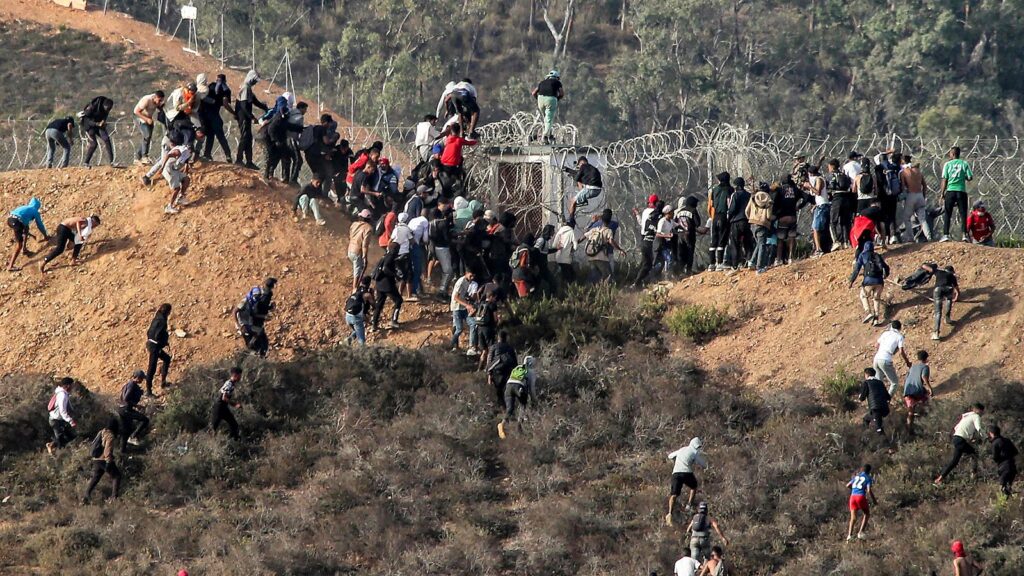
On Tuesday, National Court Judge María Tardón requested that the Spanish government urgently declassify all reports from the National Intelligence Center (CNI) concerning the mass entry of migrants into Ceuta from Morocco, which took place on July 30 and 31, 2026. The magistrate set a maximum deadline of 15 calendar days for the submission of the documentation.

RELATED:

Ceuta Migrant Camp Evacuation: 5 Key Facts on Spain’s Latest Operation

In her request, Tardón asks for all notes and reports produced by the CNI and distributed to authorities from July 30, 2026, onwards, regarding investigations into the events. She also requests any documents pertaining to the actions taken by Moroccan authorities up to the present date.

Furthermore, the judge demands the disclosure of the list of authorities who received the declassified notes from July 27 and 30, as well as any subsequent communications. The requested documents include a note sent by the CNI to Moroccan intelligence services, along with any alerts regarding irregular migration from Morocco to Spain issued throughout the month of July.

In the magistrate’s view, this information is essential for clarifying the facts. The objective is to determine which authorities were aware—and from what point in time—of the planned mass entry scheduled for July 30, 2026, as well as what decisions were taken or, conversely, failed to be taken.

Tardón maintains that these documents will shed light on the actions taken by the authorities of the Kingdom of Morocco. The judicial request notes that the government had already declassified information regarding the migration crisis—including CNI notes and communications—on September 8; therefore, she argues that this new disclosure is entirely compatible with the requirements of state security and defense.

#Spain’s government will declassify around 40 intelligence and security documents related to the mass entry of migrants into #Ceuta from Morocco on July 30 and 31, seeking to clarify what authorities knew ahead of the crisis and whether #Morocco played a role in the unprecedented… pic.twitter.com/fYfEDCzDd9

— Morocco World News (@MoroccoWNews) September 9, 2026

The judge argues that state security may have already been compromised in the context of the events under investigation: “Determining who was responsible for this attack on state security is the objective of the ongoing investigation,” the judicial document states.

In addition to the declassification of information, Judge Tardón has requested that the government urgently authorize CNI (National Intelligence Center) officials to provide testimony in court regarding the events in question. This measure is part of the judicial inquiry into the mass arrival of people in the autonomous city.

On July 30 and 31, more than 80,000 people entered Ceuta from Morocco, either by swimming or on foot. While most subsequently returned to Moroccan territory, an indeterminate number of migrants—from both the Maghreb and sub-Saharan Africa—remained in the city.

Since then, Ceuta has been grappling with a socioeconomic crisis, marked by expressions of discontent toward the government regarding its handling of the emergency. The judicial investigation seeks to establish what information was available prior to the events and what responsibilities may have existed on both the Spanish and Moroccan sides.

#Spain | A Moroccan naval incursion near Ceuta has renewed concerns over maritime sovereignty and border security.
The incident highlights longstanding sensitivities between Madrid and Rabat.#Morocco #Ceuta #teleSUREnglish pic.twitter.com/EBjubtX4rp

— teleSUR English (@telesurenglish) October 14, 2026
  •  

Global framework urgently needed to assess emerging health risks of novel chemicals, experts say

Over the past century, humanity has invented a dizzying array of novel chemicals for industrial, commercial and domestic use. These synthetic chemicals have been manufactured and released into the world with little caution for the harm they might cause to human health or to ecosystems that we depend on for life as we know it. An estimated 350,000 synthetic chemicals had been registered for production as of 2020, and for the vast majority, we know next to nothing about their health effects. Even their chemical compositions are often hidden as proprietary trade secrets. “The world today is full of manufactured chemicals,” says Philip Landrigan, public health physician and director of the Program for Global Public Health and the Common Good at Boston College in the U.S., who spoke to Mongabay via video call. But “we have really good data on the health effects for only 30 or 40 of these chemicals,” he warns. Only a handful of chemicals have been banned or restricted in U.S. markets in the last 50 years. The evidence base for some classes of chemicals is more developed than others, but what we know so far gives serious cause for concern, experts say. From thalidomide-induced birth defects to the pesticide DDT’s ecological impacts and cancers linked to polychlorinated biphenyls, the chemical industry has a long history of rushing new synthetics to market while largely asking questions about toxicity later. “I would think of it as an iceberg — there’s a little bit of ice visible above…This article was originally published on Mongabay

  •  

The Philippine lawyer who beat an oil giant: Rose Liza Eisma-Osorio on defending Tañon Strait

CEBU CITY, Philippines — At a coffee meeting in 2007, Philippine environmental lawyer Rose Liza Eisma-Osorio and four other law professors in Cebu City sat laughing at an idea: representing marine mammals in court. Despite their laughter, they were dead serious about their goal: Stop the oil exploration led by Japan Petroleum Exploration (JAPEX) in Tañon Strait. The protected seascape between the islands of Cebu and Negros in the central Philippines is home to 14 whale and dolphin species, as well as coral reefs and mangrove forests, according to advocacy group Oceana. In 2007, the Japanese energy company performed seismic surveys and drilled an exploration well in the strait, driving away cetaceans. It was an ambitious plan, as animals had never been named as petitioners. Eisma-Osorio and fellow lawyer Gloria “Golly” Estenzo Ramos filed the first petition representing the resident marine mammals in December 2007. Their colleagues filed a second petition on behalf of the fishing communities who had been directly affected by the exploration activities. The case, Resident Marine Mammals of the Protected Seascape Tañon Strait v. Secretary Angelo Reyes, went on for several years. In April 2015, the Philippine Supreme Court ruled to void the contract that allowed the exploration, development and exploitation of petroleum resources within the Tañon Strait. Eisma-Osorio joined Oceana Philippines as a consultant in 2015, a year after the NGO was established. At 56, she now leads the campaign and legal departments as senior director of Oceana Philippines. On Oct. 24, 2025, a major…This article was originally published on Mongabay

  •  

Five new mussel species reveal how much biodiversity US rivers still conceal

For 20 years, researchers snorkeled through rivers across the southern U.S., feeling along muddy bottoms for mussels. Many of the shells they pulled up looked like familiar species, but their DNA told a different story. Scientists from Shedd Aquarium, Arkansas State University, and the U.S. Geological Survey (USGS) have described five new species of freshwater mussels from rivers in the states of Missouri, Arkansas, Mississippi, Alabama, Louisiana, and Texas, in a study published in Zootaxa. Several are rare and confined to single river basins, the authors write. “Our discovery and descriptions of these new freshwater mussel species demonstrate how much we still have to learn about the biodiversity in our rivers,” Nathan Johnson, a study co-author and research biologist at the USGS Wetland and Aquatic Research Center, said in a press release. Mussels are hard to identify from their shells. For example, mussels in headwater streams tend to grow flatter shells, while the same species downstream grow rounder ones. Males and females differ as well. So the researchers turned to genetics. In many cases, they clipped a bit of tissue or took a swab, then returned the mussel alive to the river, according to the study. The team sequenced three genes and compared more than 440 shell outlines. Each major river basin turned out to hold its own genetic lineage. Researchers named the new species for where they live. The Mobile hickorynut (Obovaria sipseyensis) is named for Alabama’s Sipsey River, from a Choctaw word meaning “swamp.” It now survives only…This article was originally published on Mongabay

  •  

‘Influence without enforcement’: Indonesia’s fires test Singapore’s anti-haze law

SINGAPORE — As Singapore comes off its longest streak of unhealthy air since the 2015 Southeast Asian haze crisis, authorities have served notices to 20 firms linked to Indonesia’s fires, but have stopped short of taking further legal action. Half of the notices were sent to concession holders in Sumatra and Kalimantan where the fires originated, while the other half went to Singapore-based entities with ties to them. Of the 10 Indonesian plantation companies identified, three of them — PT Bumi Andalas Permai, PT Bumi Mekar Hijau and PT SBA Wood Industries — have had separate investigations open against them by Singaporean authorities since 2015, with no public outcome. All three are tied to the Asia Pulp & Paper (APP) conglomerate, as is PT Buana Megatama Jaya, which was also issued a notice to extinguish fires in its concession. The other six companies issued the notices requiring them to act against fires are PT Paramitra Mulia Langgeng, PT Sumatera Alam Anugerah, PT Hutan Lestari Raya, PT Bangkanesia, PT Mananjung Hayak and PT Baratama Putra Perkasa. A spokesperson from Singapore’s National Environmental Agency told Mongabay by email it could not disclose further details into existing investigations. The agency did not respond to questions as to whether it would escalate against repeat offenders. Based on the government’s current investigations, Singapore-headquartered APP, Singapore-listed First Resources and Bumitama Agri, and privately held First Borneo Plantations, whose ownership is tied to Singapore, already appear to be linked to the haze-causing fires in Indonesia, Singapore’s senior…This article was originally published on Mongabay

  •  

Who Is Making Billions From the Iran War?

At a campaign rally over the weekend, President Trump dismissed Americans’ concerns over high oil and gas prices, claiming that it’s a small price to pay for the hundreds of billions of dollars “we” are making from these higher prices. “We’re making a fortune,” he said. “Hundreds of billions of dollars. Trillions of dollars.” People […]
  •  

Japan’s Disputed Islands May Cause a Headache for Washington

As if the world did not have enough geopolitical flashpoints, the dormant 150-year-old territorial dispute between Russia and Japan over the Kuril Islands has resurfaced.  The latest phase of the bilateral spat began in mid-August 2026 when Russian president Vladimir Putin visited four islands that the Kremlin had seized during the closing days of World […]
  •  

Canadian-backed potash mine in Brazil has dried up sacred Amazon springs, say residents

The construction of an access road for a potash mining project in Autazes, in Brazil’s Amazonas state, has caused at least two sacred springs to dry up, according to the Indigenous Mura people. It is the latest in a series of controversies spanning a decade that has plagued the Potássio Autazes project. “There is a profound sense of loss,” Filipe Mura, chief of the affected Lago do Soares village, told Mongabay via WhatsApp. “We realize we may be losing what belongs to us — our territory, our culture, and, above all, the very life that exists in this place.” In Mura traditional cosmology, all springs, rivers, lakes and forests have a guardian, or owner, who must be treated with respect, residents tell Mongabay. “If a spring dries up, it means its keeper has departed — and when the keeper leaves, they take with them the animals, the fertility of the soil, and all the blessings of that region,” Willian Rodrigues Filgueira, a professor from the Mura Baixo Madeira Indigenous territory, which neighbors the affected Lago do Soares/Urucurituba territory, and member of the Organization of Mura Indigenous Leaders of Careiro da Várzea (OLIMCV), told Mongabay via WhatsApp. The loss of a spring, therefore, disrupts the spiritual balance that sustains life in the territory. Residents also said that the company behind the project has begun to clear-cut the area — the process of cutting down all trees in a section of forest at the same time — where it intends to build…This article was originally published on Mongabay

  •  

A rare victory for multilateralism in the fight against environmental crime (commentary)

Multilateralism has had a miserable few years. International institutions are under strain,  geopolitical rivalries are intensifying and governments struggle to agree on even the most elementary rules. Governments struggle to agree on even elementary rules. Yet last week in Vienna, there was an unexpected breakthrough. Countries agreed to begin negotiating a global treaty to tackle environmental crime. It is a modest but important victory for international cooperation, and one that could help turn the tables on some of the world’s most destructive criminal enterprises. The breakthrough came at the 13th Conference of the Parties to the United Nations Convention against Transnational Organized Crime (UNTOC). By 83 votes to 12, governments backed a resolution establishing a committee to design a new protocol targeting illegal trade in wildlife and timber, illicit mining and trafficking in minerals, and waste trafficking. The outcome was hardly assured. The United States, Argentina, Saudi Arabia and Iran sought to dilute the initiative. They failed. The vote showed that international rules can still advance despite determined opposition. Illegal logging in Indonesian Borneo. Photo by Rhett Ayers Butler Brazil deserves considerable credit. Working with a coalition spanning Latin America and Africa, its diplomats turned years of technical discussions into political momentum. Civil society organizations, including the Igarapé Institute, helped build the evidence and sustain pressure for stronger international action. The breakthrough also signals a wider shift in global diplomacy. Countries across the Global South are increasingly becoming norm-makers rather than simply norm-takers. On issues ranging from climate and biodiversity…This article was originally published on Mongabay

  •  

Amazon fires trap Manaus in smoke as authorities target arsonists

MANAUS, Brazil — Midway through the conversation with Mongabay, Otacílio Farias, a 75-year-old farmer, stops to read a message on his phone: “Right now, there’s a fire near a friend’s house.” Farias has lived his entire life near the Autaz Mirim River, near Manaus, Brazil’s largest city in the Amazon. Forest fires have affected the area for more than 30 days. “Nearby, Lake Miriti was shrouded in haze at dawn, but it wasn’t morning mist: It was smoke,” he said. Farias says the nearby municipalities of Autazes and Careiro da Várzea are experiencing the worst fire crisis of his lifetime. “My throat and nose are in terrible shape,” he said. Farias’ community WhatsApp groups are packed with pleas to save crops and reports of elderly residents rescued as flames approached. Farias was at home on Oct. 1 when friends of his 18-year-old son, Fabrício, arrived on motorcycles, calling for help against fires approaching homes. Around 100 community members joined the effort. It wasn’t until Oct. 10, however, that the Amazonas state government declared an emergency in 36 municipalities, paving the way for federal assistance. Between Oct. 1 and 19, Brazil’s space agency, INPE, recorded 1,921 fire hotspots in Amazonas, up 202% from the same period in 2025. The daily average also rose 51.5% compared with late September 2026. Of these, 584 (30.4%) were in the Manaus metropolitan area: 197 in Autazes, 134 in Itacoatiara and seven in Manaus. Hotspots also spiked after the first round of Brazil’s presidential election: INPE…This article was originally published on Mongabay

  •  

Guardia Civil and National Police Point to Morocco Regarding the Mass Entry of Migrants

On Monday, two high-ranking officers from the Spanish security forces testified before the judge investigating the mass entry of migrants into Ceuta, stating that Moroccan agents stood idly by during the events of July 30 and 31, and that some actively facilitated the passage of people into the Spanish city. According to legal sources cited by EFE, more than 72,000 people entered from Morocco over those two days.

RELATED:

Morocco Tightens Ceuta Border Security Amid Calls for New Mass Crossing

A lieutenant colonel of the Guardia Civil—who serves as head of operations for the Ceuta Command—and a chief inspector of the National Police in the autonomous city provided testimony to the magistrate overseeing the case regarding the migration crisis. Both linked the actions of the Moroccan authorities to the mass influx of migrants.

The National Police chief inspector asserted that Moroccan agents facilitated the crossing into Ceuta. He described uniformed personnel—dressed in gray and khaki—as well as individuals in plainclothes, gesturing for the migrants to move forward. He also claimed to have seen people directing a very long line from Morocco toward Spain.

For his part, the Guardia Civil lieutenant colonel maintained that Moroccan military personnel stood by with their arms at their sides during the influx. He noted that while they took an active stance toward sub-Saharan migrants attempting to cross, they remained passive when it came to their own compatriots.

The Guardia Civil officer recounted that other agents allegedly directed people from the beach toward the breakwater that separates Ceuta from Morocco. He indicated that the Moroccan military steered migrants into the water, forcing Spanish security personnel to pull individuals from the sea to save their lives.

MASS MIGRATION: Insane footage shows thousands of migrants entering Spain from Morocco pic.twitter.com/WHDbDEmPML

— Insider Paper (@TheInsiderPaper) July 30, 2026

Furthermore, he claimed to have seen Moroccan vessels picking up people during the influx and subsequently dropping them off on the beach. He explained that these were small craft, as larger vessels could not approach the coast.

On the night before the mass entry, the lieutenant colonel stated that he had spotted six Moroccan vessels: two patrol boats, two interceptors, and two smaller craft. The officer noted that it was striking that, on a day with fog, there were six Moroccan Navy vessels in the area.

He also stated that he had received no warning regarding a mass entry planned for July 30. He pointed out that prior coordination meetings were not held for that purpose, and that it was never communicated to him that there was a planned influx for Throne Day—a national holiday in Morocco.

A National Police inspector explained that, overall, the arrival of migrants had increased three- to fourfold compared to previous years. However, he noted that in the days leading up to the events, the increase had been exponential.

The investigation seeks to clarify the circumstances surrounding the mass entry of migrants into Ceuta—one of the most significant border crises between Spain and Morocco in recent years.

  •  

At Yerevan’s COP17 biodiversity summit, a steep climb ahead for ‘30 by 30’ target

GAYE TOWN, Liberia – Deep in the Liberian bush, there’s a dispute about what to do with a big swath of rainforest. The conservation group Wild Chimpanzee Foundation (WCF) and Liberia’s Forestry Development Authority (FDA), backed by the EU, are looking to establish a new 172,000-hectare (425,000-acre) national park. However, advocacy NGOs say they’re bypassing the land rights of nearby communities. It’s an argument with potentially serious repercussions for biodiversity in Liberia. The proposed Kwa National Park would be one of just a handful of strictly protected habitats for chimpanzees (Pan troglodytes), forest elephants (Loxodonta cyclotis) and pygmy hippos (Choeropsis liberiensis). The land it would protect is under real threat — commercial cocoa farming is destroying forests in the region at an accelerating pace. Some people from the surrounding villages have sent migrant workers inside Kwa’s proposed boundaries to build new cocoa farms. They now want the Liberian government to excise these areas from the park. “We want the [Forestry Development Authority] to push the boundary line back small,” said Tommy Yarkpawolo, an elder from the tree-ringed village of Gaye Town. He has a 600-hectare (1,482-acre) farm with 30 workers inside Kwa that just earned him more than $400 — enough to start building a new mud-brick house, he said. Cacao saplings underneath burned trees in the proposed Kwa National Park. Photo by Ashoka Mukpo / Mongabay. Many of his neighbors oppose the idea of moving the boundary back. They told Mongabay the negotiations with WCF and the FDA were…This article was originally published on Mongabay

  •  

Solar initiative brings power to clinics and jobs to displaced youths in Cameroon

In Cameroon’s Northwest and Southwest regions, where a civil war has dragged on for 10 years, abundant sunshine has become a source of hope and opportunity for hundreds of young internally displaced people, and a lifeline for the next generation. The fighting has choked off job opportunities for youth and worsened the collapse of basic public services. Rural communities here face acute electricity shortages and have very limited access to quality health care. Mothers often give birth in the dark, and their children risk missing vital vaccines because clinics lack reliable power to provide lighting or appropriate cold storage for vaccines. To address these threats to newborn survival across local health centers, Cameroonian clean-energy company Solar Bright Future, a subsidiary of local NGO, Community Action for Advancing Sustainable Development (CAASDEV), set out to equip maternity wards with solar power in crisis-affected facilities through a program that trains young people displaced by the conflict. The company installs solar power systems for maternity lighting and solar-powered vaccine cold-chain systems for safe vaccine preservation, with temperature monitoring. Their systems can also support equipment such as echography or ultrasound machines and sterilization devices, depending on system capacity. Equipment that runs on solar power at the Tugi integrated health centre in the Northwest region of Cameroon. Image courtesy of Ndze Noel Lifogha/Solar Bright Future. The tragedy of the twins Ndze Noel Lifogha, chief executive of Solar Bright Future, said in an interview with Mongabay that the initiative grew out of a tragedy at a clinic…This article was originally published on Mongabay

  •  

Rare bird finding strengthens case to protect Congo rainforest across borders

When ecologist Jean Semeki installed camera traps along a forest trail in the Luki Biosphere Reserve in the west of the Democratic Republic of Congo to survey its mammals, he and his colleagues weren’t prepared for what they’d find when they downloaded the images. Alongside video footage of inquisitive apes — members of the reserve’s remnant population of endangered central chimpanzees (Pan troglodytes troglodytes) — were videos of a strange, long-legged bird, hopping across the leaf litter. It was a grey-necked picathartes (Picathartes oreas). “When I first saw the video, I couldn’t believe my eyes,” said Semeki’s co-author, Hugues Dethier, when he analyzed the camera trap data. “I asked my colleague Guillaume Baltus to take a look, and he confirmed the identification.” Picathartes are large slender grey and white birds with vivid blue and red patches on their bald heads. They’re known to lead secretive lives in the understory of rainforests in Cameroon, Equatorial Guinea, Gabon and the Republic of Congo — the DRC’s northern neighbor, building their cup-shaped nests from mud on the walls of caves and rocky overhangs. But until now, they weren’t known to live this far south. Camera trap image of a grey-necked picathartes in the Luki Biosphere Reserve, Democratic Republic of Congo. Image courtesy of Hugues Dethier et al. The discovery, reported recently in the journal Ostrich, extends their previous range by nearly 400 kilometers (249 miles). For a species already considered by the IUCN to be near threatened with extinction due to its small…This article was originally published on Mongabay

  •  

Bangladesh’s hornbills face hunting risk during breeding season

Hornbills are being targeted during their breeding season in Bangladesh, with rescue records over the last several years showing a concentration of cases between May and August, when the forest dwellers are nesting, breeding and raising chicks. Analyzing rescue data from the Forest Department and Bangladesh Police, Mongabay found at least 26 birds, including 14 great hornbills (Buceros bicornis) and 12 oriental pied hornbills (Anthracoceros albirostris), were rescued in 12 separate cases between May and August from 2023 to 2026. (The reporter collected the data manually; hence we have no links) Eight of these cases were recorded in the southeastern part of the country, where hornbill habitats are located. A 2018 Wildlife Conservation Society (WCS) Bangladesh report also found that hornbills were collected in the Chattogram Hill Tracts during the nesting season. According to a 2021 study published in Scientific Reports, this species’ breeding season runs from March to mid-August. “The risk to hornbills during this period is closely tied to their unique breeding behavior. The female seals herself inside a tree cavity with mud or vegetation and cannot leave the nest during the breeding period. The male stays outside and repeatedly brings food to the female, and later to the chicks, inside the cavity. This makes the nest easier for hunters to trace, while reaching the cavity gives them access to both the female and the chicks,” said hornbill researcher Humayra Mahmud, an assistant professor of zoology at Noakhali Science and Technology University. A male oriental pied hornbill at…This article was originally published on Mongabay

  •  

Taiwan’s tea growers let nature take back control as climate pressures mount

MEISHAN TOWNSHIP, Taiwan — Lin Kuang-li’s tea plants blend in among the dozens of others that blanket this tea-producing village in Alishan, a mountain range in Taiwan. Yet the leaves he produces are slightly different from those of his neighbors. The 60-year-old is the sixth generation of his family to grow tea, primarily high-mountain Ch’ing-hsin (Qing Xin) oolong, in Longyanlin village, in Meishan township, Chiayi county. In 1976, his late father, Lin Yun-fa, started the business to boost the village’s struggling economy. Today, it has been half a century since the hills of Longyanlin began to be intensively cultivated. The plantations are aging, and the soil is becoming depleted. It seems fortunate that 30 years ago, Lin Kuang-li decided to switch to natural farming and stopped using pesticides. It was a risky bet, but he is proud of the results. The farmer takes a handful of soil and squeezes it in his hands. “My soil is now in excellent health,” he tells Mongabay. Alishan, in the central part of the island, is famous for producing Taiwan’s highly prized high-mountain tea, known as kao-shan cha in Mandarin. These oolong tea varieties, grown at elevations higher than 1,000 meters (3,300 feet) in Alishan and other misty alpine regions, are famous for their fragrant aroma, smooth texture and low bitterness. Lin Kuang-li stands among his Ch’ing-hsin oolong tea plants in Longyanlin village, Meishan township, Chiayi county, in Taiwan’s Alishan tea-growing region, on Sept. 24, 2026. Image by Aylin Ho for Mongabay. However, tea…This article was originally published on Mongabay

  •  

Corals keep a record of pollution, pointing to a new monitoring method: Study

Maui, an island in the isolated Hawaiian archipelago, isn’t in one of the world’s most heavily developed or polluted coral-reef regions. Yet even there, human activity leaves an imprint in the very tissue of corals, altering their biochemistry, a recent study shows. The study, published in July in the journal Nature Communications, found 25 contaminants from cosmetic products, medicines and agricultural runoff, among other forms of pollution, in coral tissues at many Maui reef sites. Contaminant levels were higher at the sites subject to greater human influence. The research was done by analyzing corals’ metabolomes — the collection of small molecules in their tissues, such as sugars, lipids and amino acids, that does not include larger molecules like DNA or proteins. The study is among the first to use coral-tissue metabolomics to monitor chronic human-caused stress on corals in the wild. Whereas a water sample of a coral reef site provides a snapshot of what contaminants are present, coral tissue can reveal those that have accumulated over time. “We propose that this may be a way that you can actually evaluate how much impact humans are having on different sites,” Zachary Quinlan, research biologist at the University of Hawai’i at Mānoa and lead author of the study, told Mongabay in a video interview. A coral reef in 2020. Image courtesy of Tiara Stark/TNC. Under threat globally, corals are particularly vulnerable to local stressors because of their immobility. “If there’s a site that has a lot of contamination, they can’t move…This article was originally published on Mongabay

  •  
❌