❌

Reading view

Apple's iPhone Duo is getting roasted over screen cracks

An iPhone Duo is displayed in an Apple Store in Athens, Greece, on October 26, 2026. (Photo by Nikolas Kokovlis/NurPhoto via Getty Images)
Apple's new iPhone Duo is inspiring viral internet memes about its T-shaped screen cracks and its doomscrolling potential.

Nikolas Kokovlis/NurPhoto via Getty Images

  • Apple's new iPhone Duo is inspiring viral internet memes.
  • Social media is buzzing about cracked screens and doomscrolling potential.
  • Here are some of the most creative memes about Apple's latest creation.

Apple's long-awaited iPhone Duo is here, and while a folding phone is nothing new, it's the company's first, and it has a waitlist a mile long.

However, Apple diehards with Duo already in hand are reporting issues with the folding screen, and some have posted about their buyer's remorse online.

The cracking screen

Early owners have reported cracks along the Duo's center fold, sometimes accompanied by a bright line of stuck pixels across one side of the inner display. Apple said the issue affects a "small number" of units and directed affected customers to AppleCare for replacements.

The reports have also generated crack-themed jokes and wallpapers online — though some widely shared images of damaged Duo screens have been altered or AI-generated.

Apple should just make this an official stock wallpaper for the Duo pic.twitter.com/VpbF5S0LN5

— Aditya (@AdityaKTech) October 25, 2026

Apple made this logo just to celebrate the Duo 😭 pic.twitter.com/RNhEuxALVI

— Aditya (@AdityaKTech) October 25, 2026

One X account made a wallpaper for those who could not afford the Duo but would like to experience the crack.

Here is the iPhone Duo crackgate wallpaper for anyone who is feeling left out 🤣🤣 pic.twitter.com/m5WsZHd77L

— I Hate Apple (@iHateApplee) October 25, 2026

In a statement to Business Insider, Apple said that the response to iPhone Duo from early users has been "incredibly positive."

"If users experience issues with their iPhone Duo display, they should contact AppleCare for a replacement," Apple said.

The crypto memes

The crypto world made a connection to the iPhone Duo when the official Crypto.com account posted earlier in October about how the folding phone would be perfect for traders.

If your weekend doesn't look like this on the new iPhone Duo, what are you even doing? pic.twitter.com/MwkLKY6GAm

— Crypto.com (@cryptocom) October 17, 2026

The association soon became memes playing on the stereotype that crypto traders are delusional and unemployed.

Me checking my portfolio on my brand new iPhone Duo pic.twitter.com/LHPlm3Cypl

— Luceee💧 (@nft_lucee) October 23, 2026

Highly recommend a broken screen iPhone Duo for traders. pic.twitter.com/fN7daOz25B

— Bold (@boldleonidas) October 27, 2026

the iPhone Duo is actually so tuff pic.twitter.com/ohgWRqLLVO

— Luminaries (@luminaries) October 24, 2026

The multi-screen design

Many believe that the iPhone Duo's multi-screen design will be hazardous to our already short attention span by allowing multiple activities at once.

While the Duo's 7.6-inch inner display supports two apps side by side, its 5.4-inch outer display can be used when the phone is closed.

That setup has also prompted jokes about what is known as a "performative male," referring to men publicly pretending to enjoy certain niche genres of books and music in order to attract women.

Another post, more of a real video than a meme, demonstrated the iPhone Duo's potential to exacerbate doomscrolling.

this generation is actually cooked 😭 pic.twitter.com/MxZz6Uejjb

— juju 💰 (@ayeejuju) October 24, 2026

For anyone worried that one screen wasn't enough for your nightly scroll, Apple has a $1,999 solution.

Read the original article on Business Insider

  •  

Apple vai trocar iPhone Duo com problemas no ecrã

Dias depois de o primeiro dobrável da Apple chegar às lojas, há clientes com queixas sobre o ecrã interior. A Apple afirma que "problema afeta um pequeno número" de telefones.

© Bloomberg via Getty Images

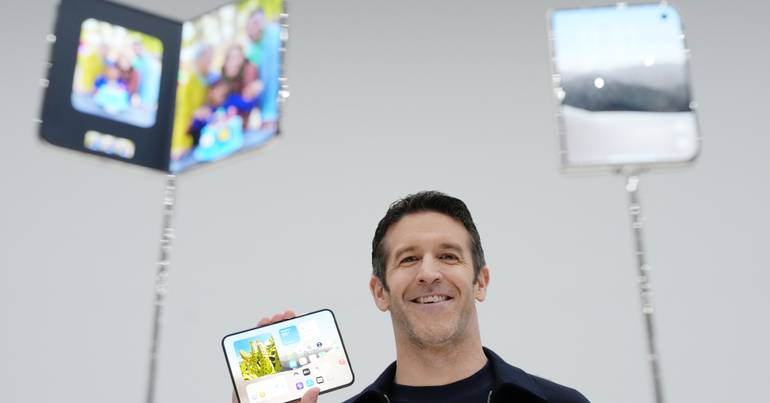
O iPhone Duo é o primeiro telefone dobrável da Apple e também a primeira grande aposta de John Ternus como CEO
  •  

Apple vai consertar iPhones Duo com telas quebradas

Dias após lançar seu primeiro iPhone dobrável, a Apple reconheceu na segunda-feira (26) que alguns dos dispositivos apresentam problemas na tela e se comprometeu a substituí-las.

A empresa começou a enviar o iPhone Duo na semana passada, com clientes em todo o mundo formando filas para garantir o estoque limitado após os pedidos iniciais online esgotarem em minutos. Analistas afirmaram que a Apple provavelmente enfrentará restrições de fornecimento porque o modelo, que se desdobra como um passaporte, é complexo de fabricar.

Durante o fim de semana, publicações nas redes sociais mostraram o iPhone Duo com rachaduras e linhas na tela interna, ao longo da dobradiça central onde o celular se dobra.

A Apple reconheceu os problemas, afirmando que as unidades afetadas tendem a apresentar o problema rapidamente.

“Estamos cientes de um problema que afeta a tela interna de um pequeno número de unidades do iPhone Duo”, disse a Apple em comunicado. “Se os usuários estiverem enfrentando problemas com a tela do iPhone Duo, devem entrar em contato com o AppleCare para obter uma substituição”.

A companhia não revelou o que poderia estar causando o problema.

iPhone Duo recebeu relatos de telas quebradas

A iFixit, empresa que publica relatórios de desmontagem de dispositivos eletrônicos juntamente com guias sobre como repará-los, afirmou ter usado imagens da desmontagem, patentes e tomografias computadorizadas para construir uma simulação 3D da dobradiça do iPhone Duo, que foi comparada com os locais de danos relatados.

A iFixit afirmou que suas simulações encontraram os danos relatados concentrados logo abaixo de onde um cabo da tela passa por baixo dela, perto de uma barra de suporte central. Essa barra pode não estar se afastando o suficiente da tela quando o telefone é dobrado, “criando um pequeno ponto de tensão próximo ao local da quebra relatada”, disse a empresa.

A Apple não comentou imediatamente as conclusões da iFixit, que também afirmaram que o iPhone Duo é o telefone dobrável mais fácil de reparar entre os que testaram.

Francisco Jeronimo, vice-presidente da empresa de pesquisa de mercado IDC, afirmou que a oferta de substituição rápida da Apple foi o “primeiro passo certo” para responder aos problemas.

“Todos nos lembramos de quando a Samsung enfrentou problemas com o Galaxy Fold original em 2019, mas isso também mostrou que uma resposta rápida e transparente pode conter os danos a uma categoria”, disse Jeronimo.

  •  

Apple anuncia MacBook Pro e iMac com IA mais rápida; veja preços no Brasil

A Apple anunciou nesta terça-feira (27) um novo MacBook Pro e um iMac de 14 polegadas equipados com seu mais recente chip M6. A empresa promete desempenho mais rápido para executar tarefas de IA diretamente nos dispositivos.

O MacBook Pro de 14 polegadas tem preço inicial de US$ 1.999, enquanto o iMac começa em US$ 1.499.

No Brasil, o MacBook varia entre R$ 24.999 (14 polegadas) e R$ 37.999 (16 polegadas). Já o iMac sairá por a partir de R$ 17.999.

Os clientes poderão pré-encomendar os dois produtos a partir de quarta-feira em 35 países e regiões, incluindo os EUA, com disponibilidade a partir de 6 de novembro. A disponibilidade no Brasil ainda não foi anunciada.

Novo processador e mais IA

A Apple afirmou que o MacBook Pro com processador M6 oferece gráficos até 30% mais rápidos e desempenho de IA até 25% mais rápido do que seu antecessor com M5, além de até 24 horas de duração da bateria, a maior já vista em um Mac.

O novo iMac oferece desempenho de IA no próprio dispositivo até cinco vezes mais rápido do que o modelo M4 anterior, afirmou a Apple.

Os lançamentos acontecem um dia antes do evento “Pro and Tell” da Apple, que acontecerá em Los Angeles no dia 28 de outubro e, segundo a Bloomberg News, deverá apresentar o primeiro MacBook Pro com tela sensível ao toque da Apple.

*Com informações da Reuters

  •  

El iPhone Duo, el primer plegable de Apple, recibe quejas de clientes por roturas de pantallas

El iPhone Duo está recibiendo un número creciente de quejas de usuarios que aseguran que la pantalla plegable se les ha agrietado. Las primeras denuncias aparecieron en foros como Reddit y en redes sociales como X o TikTok. El medio Bloomberg News se ha hecho eco de estos incidentes y ha verificado con más de media docena de clientes los hechos. Apple ha reconocido en un comunicado un problema que “afecta a un número reducido de unidades”. Recomienda, en estos casos, contactar con AppleCare para solicitar una sustitución. La compañía no ha explicado qué provoca las grietas ni si tiene previsto solucionar el problema de forma general.

Seguir leyendo

💾

© EPV

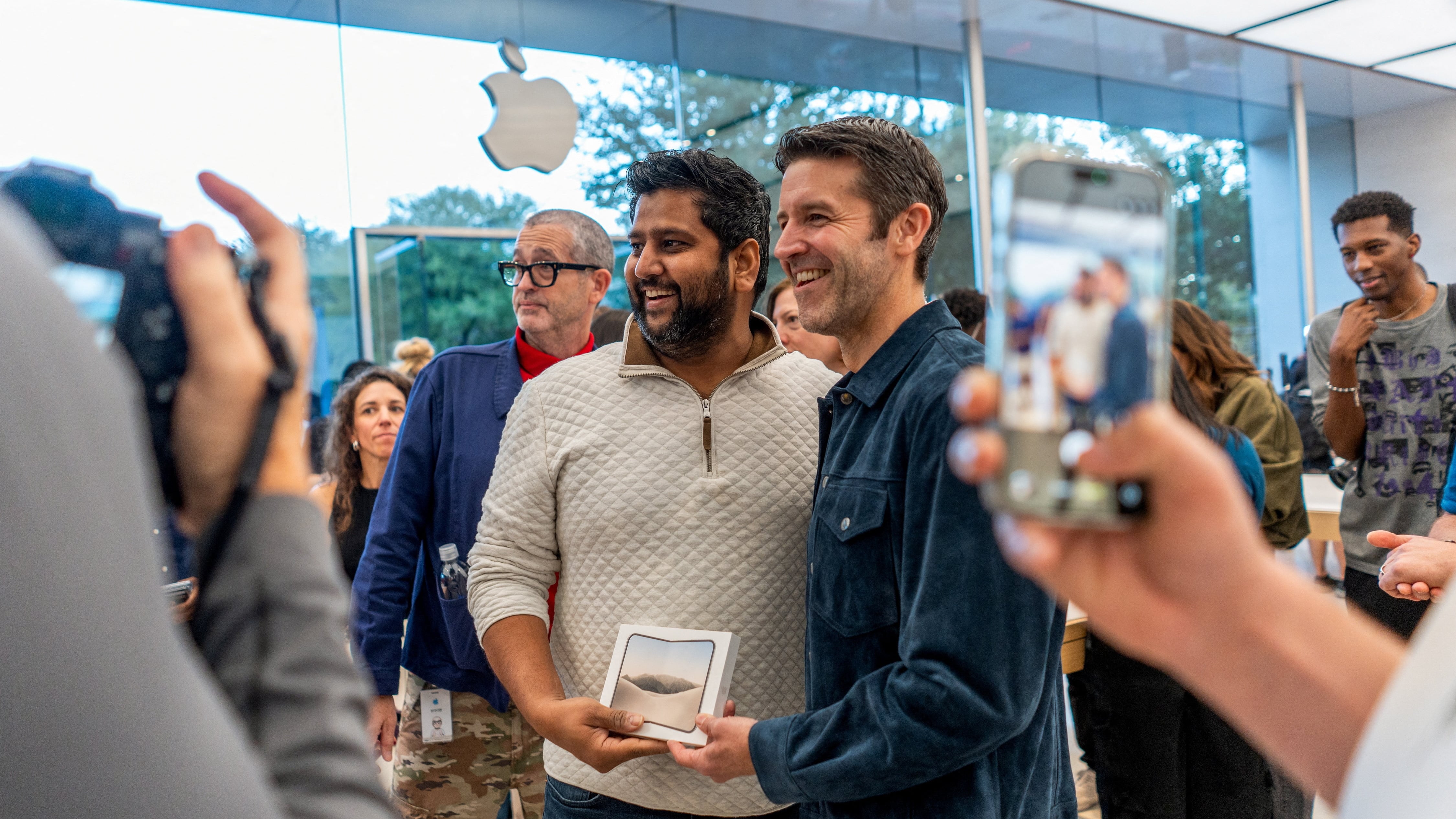
John Ternus, consejero delegado de Apple, en una tienda de la compañía en Austin, Texas, el pasado 23 de octubre, día del lanzamiento de su nuevo modelo
  •  

Apple hands baton to iPad mini

Apple maintained device launch momentum by revealing its latest iPad mini would go on sale later this week, destined to reach customers early next month.

In the US prices start at $699 for a Wi-Fi only model and $849 for those also equipped with mobile connectivity. Storage options are 128GB, 256GB and 512GB, with midnight and starlight the colours on offer.

Apple emphasised the device “fits in the palm” and is a “huge leap in performance”, wireless connectivity, and resistance to water or dust ingress, for which it carries an IP67 rating.

A light-coloured tablet is shown in profile, displaying a screen with abstract orange and pink curved light shapes. The back of the device features a circular camera lens and a small flash, set against a plain white background.

It features an 8.5-inch OLED offering two-times greater peak brightness than previous iPad mini models. Apple’s A20 Pro processor is on board, which the vendor highlighted offers advantages in performing AI-related tasks.

The model runs iPadOS 27, along with the latest iterations of Apple’s Intelligence and Siri assistant, which are configured to tailor responses to individual users.

Dave Pakula, VP of Hardware Engineering, said past models are “beloved” by “creators and small business owners” along with “doctors, field service workers and gamers”.

Apple promises “punchier bass” and greater volume from upgraded speakers featuring custom tweeters.

It emphasised a 12MP camera “on the landscape edge” is configured for video duties, with an equivalent-sized unit on the rear geared towards photo and videography.

The company’s N1 wireless networking chip is compatible with Wi-Fi 7, Bluetooth 6 and Thread, described separately by a namesake working group as a “secure, low-power mesh networking protocol” for IoT.

Apple stated the latest iPad mini is 5.4mm thick: GSM Arena pegs the remaining dimensions at 195.3mm by 132.6mm.

The post Apple hands baton to iPad mini appeared first on Mobile World Live.

  •  

Uma catástrofe em forma de L. O ecrã do iPhone Duo está a rachar no mesmo estranho formato

A Apple tem sido rápida a substituir os Duo com ecrã rachado. Mas não se sabe quanto tempo vai durar a generosidade. Quando a Apple apresentou o iPhone Duo, o seu primeiro dobrável, muita gente se perguntou como aguentariam a dobradiça e o ecrã. Aparentemente, mal. Poucas horas depois do lançamento, começaram a circular nas redes sociais imagens de ecrãs rachados. E os estragos não se ficam pela dobra, diz o TechSpot. Só o subreddit do iPhone Duo já tem vários tópicos de utilizadores a queixarem-se de ecrãs rachados e a partilhar fotografias. Alguns dizem que, até agora, a Apple

  •  

Peter Thiel says Apple has done 'nothing new' after Steve Jobs

SAN FRANCISCO - JANUARY 27: Apple Inc. CEO Steve Jobs holds up the new iPad as he speaks during an Apple Special Event at Yerba Buena Center for the Arts January 27, 2010 in San Francisco, California. Apple introduced its latest creation, the iPad, a mobile tablet browsing device that is a cross between the iPhone and a MacBook laptop. (Photo by Justin Sullivan/Getty Images)
Peter Thiel said that after Steve Jobs died in 2011, Apple hasn't innovated.

Justin Sullivan/Getty Images

  • Peter Thiel said Apple hasn't innovated since the iPhone.
  • Thiel said Tim Cook hasn't taken the company in new directions.
  • The billionaire venture capitalist said eccentric CEOs like Elon Musk "are way better for society."

Peter Thiel, evidently, isn't a fan of the iPhone Duo.

In fact, the billionaire PayPal cofounder and tech investor said he hasn't been very impressed with much of anything that Apple has done since its eccentric founder, Steve Jobs, died of cancer in 2011.

"In my telling, it did nothing new after Jobs," Thiel said of the iPhone maker in a September interview with author Walter Isaacson for the "Builder's Podcast," which was released on Thursday.

"It turned out, yeah, the mobile phone was this giant invention — there was not that much more to do," he said. "Then it was just scaling and branding and building it out over 15 years or whatever."

Indeed, Apple has faced criticism for failing to innovate beyond the mobile phone and tablet, especially in the age of AI, where its "Siri" product is not as advanced as rivals from ChatGPT or Anthropic.

Jobs unveiled the first iPhone back in 2007 at a conference in San Francisco. Nearly 20 years later, Apple released the 18th iteration this week, with one slight caveat: This one folds.

That said, MacBooks are the de facto laptops for many an AI-nerd and normie alike. iPhones are ubiquitous, and the sleek AirPods design took hold when they were released in 2016.

Though Thiel told Maureen Dowd of The New York Times in 2017 that Apple's era was over, the company's stock price has grown steadily since then.

Thiel didn't pooh-pooh Apple entirely. He called it a "pure, well-run value stock," but lamented what he described as the loss of vision after Jobs' death.

"I would still say somehow Elon or Steve Jobs are way better for society than Tim Cook," he said.

Apple didn't immediately respond to a request for comment sent on Saturday.

Read the original article on Business Insider

  •  

iPhone Duo hits stores

Apple shrugged off widely-reported delays to shipments of iPhone Duo models by delivering the first units to eager customers worldwide.

Pictures from various of the vendor’s retail locations showed a clamour for its first foldable model, which hit stores on time based on the release schedule Apple gave when it unveiled the device in September.

Apple stated it is offering a range of trade-in and leasing options on the devices, which have a starting price of $1,999 for versions with 256GB of storage.

The vendor may be particularly pleased with the turnout at a store in Shanghai, China, given the nation is one of its biggest markets.

A diverse crowd waits in a long queue outside an Apple store, their faces illuminated by the smartphones they hold whilst standing beneath a glowing white apple logo on the glass facade.

Bloomberg journalist Vlad Savov wrote the iPhone Duo could ignite a so-far muted foldable smartphone market, though also cautioned the sector may remain niche if Apple fails to shift enough of the devices.

Reports last week pointed to significantly longer waiting times for customers ordering the devices online compared with previous Apple smartphones, with shipments tipped to take up to three months instead of the roughly six weeks of past devices.

Apple highlighted there are “exceptional” deals to be had purchasing iPhone Duo models through mobile operator channels.

The post iPhone Duo hits stores appeared first on Mobile World Live.

  •  

Mexican prosecutors locate Alfonso ‘N’, the ‘perfect man’ on a dating app who scammed over 15 women

Paulina Montesinos met a man named Baruc, an Italian in his thirties with an attractive profile, on the dating app Bumble. After they matched, their story moved quickly: they chatted for days, went out on a few dates and soon he started showing strong affection and lavish gestures. “I’ve met the perfect man,” she thought. He also presented himself as vulnerable, neurodivergent and with an intense past that aroused deep empathy in Montesinos.

Seguir leyendo

© Mike Blake (REUTERS)

The fraudster regularly used dating apps like Bumble and Tinder.
  •  

Apple pledges $100M to US titanium supplier for iPhone Duo

Apple added a US titanium supplier for the iPhone Duo, committing up to $100 million to Pennsylvania-based Perryman Company while expanding domestic production of camera technology for the iPhone 18 Pro.

As part of its American Manufacturing Program (AMP), Apple said today (20 October) the deal with Perryman is over the next three years for titanium used in its products, including the iPhone Duo, which starts at $1,999.

The announcement follows reports of tight supply for Apple’s first foldable. The phone is due in stores on 23 October, but online delivery estimates slipped to January 2027 within minutes of preorders opening on 16 October.

Apple stated Perryman will melt, forge, and roll grade 5 titanium, which it said will contain at least 80% recycled material. Titanium is used for the Duo’s enclosure, providing durability, according to the iPhone maker.

It is also expanding its partnership with Qnity Electronics, headquartered in the US state of Delaware, to produce technology for the new variable aperture in the iPhone 18 Pro camera system.

Apple said nearly 100 components used in the iPhone Duo and iPhone 18 Pro, from wireless chips to the silicon which powers key functions across the devices, are produced by US companies across more than a dozen states.

Taiwan Semiconductor Manufacturing Company’s (TSMC) Arizona plant will produce more than 100 million chips for Apple in 2026, while ​Corning’s Kentucky facility ​will make ⁠all cover glass for iPhones and Apple Watches sold worldwide by year end.

Apple also highlighted investments with other AMP partners, including Broadcom for US-made chips and Amkor Technology, which is building a semiconductor packaging and testing facility in Peoria, Arizona.

“We’re thrilled to expand our work with companies producing advanced materials and components for our newest iPhone lineup right here in America,” stated Apple COO Sabih Khan.

The post Apple pledges $100M to US titanium supplier for iPhone Duo appeared first on Mobile World Live.

  •  

Apple iPhone Duo delivery dates slip into 2027

Apple’s first foldable smartphone is facing a supply crunch within minutes of preorders opening, with delivery estimates for the iPhone Duo slipping into January 2027.

Preorders opened at 8am in New York on 16 October, ahead of the device’s scheduled retail launch on 23 October. By then, Apple’s online store was showing delivery dates that crossed into late January across both colour options and all storage tiers, from 256GB to 2TB.

Customers across social media platforms including Reddit and X reported delays despite following Apple’s advice to reserve their preferred colour and storage configuration in advance. According to Bloomberg, retail stores also exhausted their initial preorder stocks almost immediately.

It remains unclear whether the delays reflect unanticipatedly strong demand, limited supply or a combination of both. Apple typically reserves some units for walk-in customers on launch day, potentially offering buyers a way to secure the device sooner.

Unveiled last month as part of its first major product launch under new CEO John Ternus, the iPhone Duo marks Apple’s long-awaited entry into the foldable smartphone segment, which has so far remained a relatively niche category despite offerings from established rivals. The device starts at $1,999 for the 256GB model, making it the vendor’s most expensive iPhone to date.

Last month, Counterpoint Research estimated Apple could sell around 6 million iPhone Duo units in 2026, potentially providing fresh momentum for the foldable market. At the time, Counterpoint Research senior analyst Ivan Lam noted the number was “contingent on how well the company ramps up production of the new hardware”.

The post Apple iPhone Duo delivery dates slip into 2027 appeared first on Mobile World Live.

  •  

The Friday File: Apple HomeView; AT&T Mexico; Nokia ECE

Mobile World Live (MWL) brings you our top three picks of the week as Apple ramped up its smart home ambitions, AT&T agreed a $2 billion sale of its Mexican business and Nokia offloaded its Enterprise Campus Edge unit.

Apple revamps smart home strategy with HomeView

What happened: Apple unveiled a new smart home hub and a range of connected devices as it stepped up efforts to challenge Amazon and Google in the market.

Why it matters: The centrepiece of its launch was the HomeView Hub, a smart display featuring the company’s upgraded Siri AI. Apple also partnered with LG Electronics and Schneider Electric to introduce the Apple Home Collection, covering indoor and outdoor cameras, a video doorbell, thermostats and door locks.

Ben Wood, chief analyst at CCS Insight, said that despite its “cautious approach”, Apple had been waiting for the upgraded Siri to launch its home range, “given how important the voice interactions are with this product”. He also pointed to the partnerships as a way to reduce installation issues, saying they address “one of the category’s biggest barriers: the complexity of getting things working”.

Meanwhile, analysts at ABI Research said the launches represent “a more serious push into the smart home” by Apple but noted it “still trails Amazon and Google on smart home maturity”, arguing tighter integration with other devices and a personalised user experience will be central to its prospects. They also stated, “Apple’s long-term position will depend on how open it becomes to third-party devices, services, and possibly external AI agents.”

AT&T strikes $2B sale to exit Mexico

What happened: AT&T agreed to sell its Mexican business to Grupo Televisa and Fintech Holdings for $2 billion, ending its decade-long attempt to challenge America Movil’s dominance in the country.

Why it matters: Grupo Televisa and Fintech Holdings will each take an equal stake in the operation. AT&T Mexico had 24.7 million wireless subscribers as of 31 December 2025, equivalent to around 16% of the market. Meanwhile, incumbent America Movil’s Telcel held approximately 58%.

LightShed Partners analysts Walter Piecyk and Joe Galone described the move as part of a wider strategic shift under CEO John Stankey, noting AT&T is increasingly focused on “US wireless and highly durable fibre business”. They said the $2 billion sale proceeds represent less than five weeks of AT&T’s annual capital investment, arguing the Mexican operation has limited relevance to its future priorities. They also pointed to America Movil’s resilience, noting that “Telcel still controls nearly 60% of the market, while AT&T and Telefonica are heading for the exits”.

The analysts further highlighted a potential competitive threat from SpaceX, whose combination of terrestrial spectrum and satellite capacity could challenge traditional wireless economics.

Nokia offloads Enterprise Campus Edge unit

What happened: Nokia agreed to sell its Enterprise Campus Edge (ECE) business to investment firm Aurelius Group, as it continues to offload assets and streamline its core strategic focus.

Why it matters: ECE serves almost 900 customers across manufacturing, mining, logistics, airports, ports and power generation. Its portfolio spans private wireless networks, industrial devices, on-premises operational technology, edge computing and software for industrial AI applications. Nokia said the sale would allow it to focus capital and resources on areas offering greater long-term value. ECE will operate as a standalone company under Aurelius, with employees expected to transfer when the deal closes. Earlier this month, Nokia sold its fixed wireless access customer premises equipment business to US broadband vendor Inseego.

Future Wireless principal analyst Pablo Tomasi called ECE sale “the end of a bold chapter” in Nokia’s history, arguing the vendor had abandoned its push to become an industrial vendor. Kyung Mun, principal analyst at Mobile Experts noted ECE was “a smaller part of its overall private networks business”, which also includes railway and defence. He noted Nokia held more than 50% of core and RAN equipment sales in 2025 including both industrial and enterprise segments, adding: “The ECE business grew in the low double digits. Let’s see how it does under the new owner.”

The post The Friday File: Apple HomeView; AT&T Mexico; Nokia ECE appeared first on Mobile World Live.

  •  

Apple, Nvidia, Ergen each give $25M for Trump project

Apple, Nvidia and EchoStar chair Charlie Ergen reportedly committed $25 million each for the construction of US President Donald Trump’s White House ballroom project, which has raised $333 million to date in private donations.

The Washington Post reported “the vast majority of the funds raised came from companies and wealthy individuals with interests before the federal government” after obtaining an internal spreadsheet used to track contributions for the fundraising effort.

The Post noted more than three-quarters of the funding was pledged in amounts of at least $5 million, with Amazon, Comcast, Microsoft, and T-Mobile US among the largest corporate donors.

It stated Nvidia and Ergen, among others, requested their donations be kept anonymous

The news site noted companies or executives of firms that have had contracts with the federal government during Trump’s second term accounted for about half of the total funds raised for the project which also includes office space and an underground military facility.

According to internal contractor documents obtained by the Post, the total cost of the project is now $600 million after Trump initially stated he and wealthy donors would pay the estimated $400 million project, although Reuters reported he later unsuccessfully asked Congress for $1 billion. The Post noted Trump’s name did not appear on the list of 67 donors who contributed $10,000 or more to the project.

The funds for the project are administered through a complex, multi-step pipeline involving a private nonprofit, federal agencies and direct oversight by the Trump administration.

The news agency reported Nvidia became “a top contributor to the ballroom in October 2025, nearly three months after it struck a groundbreaking pact with Trump to sell advanced microchips to China despite national security concerns”.

“As an American company, our support for the United States is paramount, and independent of any business interests,” a representative for Nvidia told Mobile World Live. “We were proud to be able to make a donation to a nonpartisan trust that serves all Americans and have said so publicly since the donation was made.” 

Apple and EchoStar did not reply to requests for comment on their contributions.

The post Apple, Nvidia, Ergen each give $25M for Trump project appeared first on Mobile World Live.

  •  

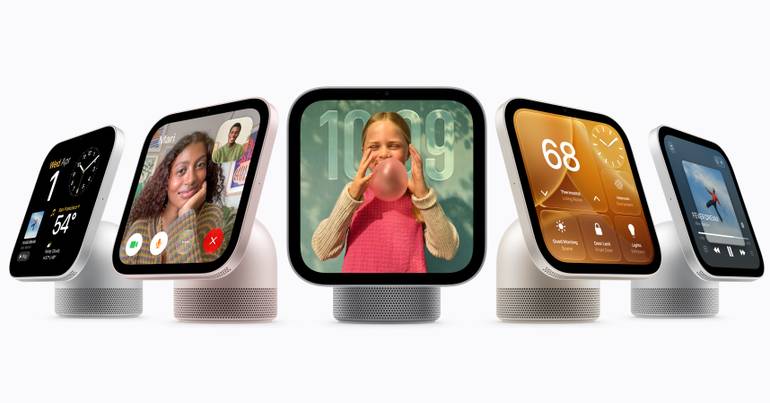
Apple revamps smart home strategy with HomeView

Apple expanded its smart home portfolio of devices as it looks to better compete against rivals including Google and Amazon, which included the debut of its $299 HomeView hub.

HomeView Hub, which is available from 13 November, recognises users by their faces to allow them to give hands-free commands to access personal content across Messages, FaceTime, Calendar, Reminders, and Find My.

It is available in two distinct configurations: a tabletop design powered by a standard USB-C cable or a wall-mounted version which connects via various options, including Ethernet or Power over Ethernet (PoE) wired mounts, with the latter available in early 2027.

HomeView Hub, which includes a 7-inch LiquidRetina display, does not have buttons, instead it relies on the new Siri AI to enable users to access apps or content. With a built-in, front facing FaceTime camera, it can recognise up to six different users by voice or appearance. It then gives personalised responses to each one for tasks such as accessing calendars, videoconferencing, viewing cooking recipes or listening to music through its speakers.

CCS Insight chief analyst Ben Wood, who attended today’s (13 October) event in New York City, told Mobile World Live HomeView “has quite a distinctive design compared to rival smart home devices”.

“It will be immediately familiar to anyone who has used an Apple Watch, and Apple has the advantage that it can use Apple ID to easily and securely identify individuals in a household to provide information specifically about them,” he said. “It is little surprise that the HomeView coincides with Apple’s renewed push on Siri AI and Apple Intelligence.

“The company has undoubtedly been waiting for the upgraded Siri experience, given how important the voice interactions are with this product,” he added.

To increase its presence in the smart home sector, the iPhone maker partnered with LG Electronics Inc. and Schneider Electric SE to release a lineup of Apple Home Collection accessories, including indoor and outdoor cameras, a video doorbell, thermostats, and door locks.

Wood noted these partnerships signalled a willingness by Apple to go outside of its own ecosystem to develop new products and services.

“However, looking closely, it appears like there has been very deep collaboration between Apple and these partners to ensure the design, engineering and experience closely match what users would expect,” he explained.

While Apple’s tie-ups with LG Electronics and Schneider Electric mark a shift from its traditional strategy, Wood argued they give consumers a single source for a smart home set-up.

“By making cameras, a lock, thermostats and a doorbell as easy to connect as AirPods, the companies address one of the sector’s biggest hurdles: “the complexity of getting things working,” he said.

Availability for the Home Collection products starts in December, with select accessories available beginning early 2027. The prices range from $199 to $399.

“Since Apple is calling the suite of new products the Apple Home Collection, I’d expect it to dedicate space in its extensive network of Apple Stores to showcase a turnkey smart home solution,” Wood stated. “Given that many technology enthusiasts have already adopted smart home products from other manufacturers, I suspect Apple’s new lineup will appeal to customers who have considered investing in a smart home device but have been apprehensive about the category’s complexity.”

Under the leadership of CEO John Ternus, who took over in September from Tim Cook, Wood argued Apple is taking a cautious approach to the smart home market where rivals such as Amazon’s Ring, Google’s Nest and Arlo and others “already have a strong profile”.

“But Apple may benefit from making the experience seamless, building on its trusted reputation and focus on privacy while giving existing customers yet another reason to stay inside its extremely strong ecosystem,” he said.

More devices
Alongside HomeView, Apple unveiled an updated Apple TV 4K set-top box with built-in microphones and a remote control which is easier to locate. It also features Siri AI which enables users talk to Siri hands-free.

Customers in the US and 29 other countries and regions can pre-order Apple TV 4K starting today from Apple’s online and in the Apple Store app, with availability in stores beginning 13 November. It cost $299 or $9.83 per month for six months.

It also introduced the HomePod mini 2 speaker, which comes in a fresh range of colours, including pink, green, blue, white, and midnight, and features lighting animations which reflect the album artwork of the song being played.

The speaker can provide room-filling sound on its own, as part of a stereo pair or in a multiroom audio set-up. When connected to the new Apple TV 4K, four HomePod Mini 2 speakers can create a surround-sound home cinema system which Apple claims is its most immersive home theatre setup to date. Multiple users can also control smart home accessories and automations securely through voice commands.

HomePod Mini 2 can be pre-ordered starting today with availability beginning on 30 October. It is priced at $149.

The post Apple revamps smart home strategy with HomeView appeared first on Mobile World Live.

  •  

Apple lança HomeView, um gadget para a casa com ecrã

A Apple apresentou vários gadgets para o lar, onde se destaca o HomeView, que quer ser uma peça "central" da casa. Combina uma coluna e um ecrã, com capacidade para reconhecer pessoas diferentes.

© Apple

A Apple revela que o HomeView não vai estar disponível na União Europeia, "já que a Siri AI não está atualmente disponível no iOS da UE". Mas fala em "trabalho construtivo com a UE"
  •  

Ex-Apple worker warns: ‘The company is filled with Israeli spies’

As Apple gears up for one of the biggest launches in its history — its first foldable iPhone Duo, hitting stores October 23rd— former employees are asking you to say no to blood tech.

Apple is deeply embedded in Israel, says Tariq Ra’ouf, a Palestinian writer who worked for more than a decade in Apple retail before he was fired in 2024 for speaking out against the company’s silence on Gaza. He joins Rania Khalek and Zoe Alexandra to break down Apple’s ties to Tel Aviv, including its extensive R&D centers in Israel and its $2 billion purchase of an AI startup founded by Unit 8200 veterans. He also explains the systemic discipline faced by pro-Palestine Apple workers — fired for wearing keffiyehs while the company matched employee donations to Friends of the IDF — and warns that having Israeli military intelligence veterans integrated into the supply chain of the world’s most popular devices should terrify every consumer.

Ra’ouf also lays out how the minerals in your iPhone connect the company to genocide in Congo, why organizers are calling for pickets at Apple stores on launch day – and how customers and workers can and should get involved.

Watch full episodes of BT Live, join breakthroughnews.org as a member today!

#breakthroughnews

******

Rough transcript follows:
[Host:] Apple is gearing up for one of the biggest launches in its history, as I’m sure many have heard, with the iPhone Duo. It’s the company’s first foldable phone, which is hitting stores later this month with a starting price of $2,000, which is just wild. But a group of former Apple employees is asking you to skip the line. Their message is: “Say no to blood tech.” Behind that sleek branding about privacy, human rights, and inclusion, Apple is deeply embedded in Israel. It employs around 2,000 people there across R&D centers in Haifa, Herzliya, and Jerusalem, where Israeli engineers help build the chips inside your MacBook. Israel actually hosts Apple’s second-largest R&D facilities outside the U.S., so that’s no joke. And in January, in the middle of the ongoing genocide in Gaza, Apple bought the Israeli AI startup Q.ai for close to $2 billion. I think that’s the second-biggest acquisition in Apple’s history. It’s a company whose founders include veterans of Israeli military intelligence—basically, a bunch of spies. For years, Apple’s employee donation program matched gifts to groups like Friends of the IDF and organizations funding illegal settlements in the West Bank. Activists say the minerals inside your iPhone are tied to the war in Congo. We’ll get into that, too.

Meanwhile, Apple workers who spoke out for Palestine say they were the ones who got punished. They were disciplined for wearing keffiyehs or Palestine pins on the shop floor, and in some cases they were fired. Our next guest is one of them. Zaid Rauf is a Palestinian writer who spent more than a decade at Apple Retail before he was fired in 2024 for speaking out against the company’s silence on Gaza. He’s lost 49 members of his family in the Gaza genocide, and he’s now a leading organizer with Apple’s Against Apartheid, which is calling for pickets at Apple stores on iPhone Duo launch day, among other things. Zaid, welcome to BT Live. It’s really a pleasure to have you on.

[Guest:] Hi. Thank you so much for having me. I’ve been screaming about Apple Zionism for years, so it’s nice to have people listen.

[Host:] Well, scream as loud as you want over here. We have so many questions for you. As I mentioned in the introduction, you spent over a decade at Apple. After October 7, as we’re about to reach the three-year anniversary, you spent months pushing the company internally on Gaza before you were fired in July 2024. Walk us through what you were raising internally that got you fired. And, if you can, please expand a bit on Apple’s complicity in the Israeli death machine.

[Guest:] On October 9, Tim Cook sent an email to the entire company with a headline saying “Israel,” refusing to acknowledge Palestinians or even pretend that we existed in any capacity. His heart went out to all the victims in Israel, but not to any of the victims in Palestine. That made me really upset. I sent him an email begging him to say something about the Palestinians within the company. I was really naive, thinking, “Man, this guy just doesn’t know. He has to treat us equitably,” right?

I got a message from my manager saying he’d read my email. I was like, “Great. Oh my gosh, this is amazing. Is he going to make a statement? Is there anything?” Nothing happened. He remained completely silent. After that experience, a few comrades and I decided to write an open letter demanding that Apple at least treat its Palestinian employees as equitably as it treats its Israeli employees, which I don’t think is a hard ask. We had over 400 current and former Apple employees sign that letter. Again, still no response, still nothing.

So we decided to create Apple’s Against Apartheid, which is dedicated to creating campaigns to educate people. We understand that if they’re not going to do anything internally, what’s required is external pressure and education, because people don’t understand just how deep Apple’s ties to Israel are.

To answer your question about its complicity: your introduction was spot on. Apple’s second-largest R&D center is in Israel. It was the first R&D center the company opened outside California. Apple has massive ties to the Israeli military unit 8200. A bunch of former Israeli spies who worked in Unit 8200 are involved. For people who don’t know what Unit 8200 is, it’s Israel’s IDF tech unit. They’re responsible for planning things like the pager attack in Lebanon. Apple has employees who served in Unit 8200 currently working at its R&D centers in Israel. Apple silicon chips—the M1 chips, the newly designed C1 modem, and the N1 chip for Wi-Fi and Bluetooth—are all currently designed by Israel. It’s a little outrageous to believe Apple thinks it can get away with staying so silent on Israel and Palestine, knowing how deeply complicit it is in all the violence Israel has perpetrated against the Palestinian people.

[Host:] As part of the advocacy you were doing within and outside Apple, hundreds of employees signed a letter in 2024 saying coworkers were being disciplined or fired for things like wearing keffiyehs, Palestine pins, or bracelets, while other causes were openly celebrated in stores. How systematic is this discipline faced by employees who speak up for Palestine? Is it individual managers who overreact and over-enforce, or is there a companywide line on what Palestinian identity is allowed to look like at Apple?

[Guest:] It’s so systemic. It goes all the way down to the attire rules—what you can wear at work. In 2024, they banned scarves because they didn’t want people wearing keffiyehs. They say you can’t wear a Palestine pin, a Palestinian flag pin, or even a bracelet, even though nothing in the handbook says you can’t wear a pin. They’ll say that to you because it’s a Palestine pin.

There was a comrade who had a Palestinian flag in his Slack icon, and a manager reached out to him: “Hey, you have to change your flag. It’s breaking policy.” The employee asked, “Okay, well, what policy am I breaking?” The manager said, “I’ll let you know when I find it.”

In November 2023, there was a Muslim Apple Slack channel, because the company has multiple diversity-group Slack channels. Zionists were coming into the Muslim Apple Slack channel and mass-reporting anything that mentioned Gaza or the genocide. Those messages were removed without Muslim employees being told why. They would come in and harass the Muslim employees. The Muslim employees weren’t going into the Jewish Apple Slack channel and doing the same thing. They were minding their own business and asking these people to leave them alone.

Instead of moderating and punishing the people who were harassing others, Apple closed down the Muslim Apple Slack channel, along with the Jewish Apple Slack channel, for over a year. The company refused to listen to Muslim employees begging for empathy, asking to be heard, and asking it to say something about the incredible losses the Palestinian, Arab, and Muslim communities were facing.

[Host:] That’s wild. In contrast, let’s talk about how Apple treats its Israeli employees and those who support Israel. I mentioned Apple’s matching program, which lets employees route company money to groups like Friends of the IDF and settlement-funding organizations. This year, Apple also spent close to $2 billion on the Israeli AI company Q.ai, whose founders come out of Unit 8200, as you mentioned. What does that tell us about where Apple stands when it comes to Israelis, and about the feelings people who support them are allowed to express and the material support they’re allowed to give to the Israeli military?

[Guest:] It’s so racist and dehumanizing that Israeli employees at the company are allowed to express any sort of genocidal view or racist rhetoric they want on their Slack channels or within company offices, and they don’t get reprimanded nearly as much as Palestinians or pro-Palestinian employees who talk about the empathy and grief they experience.

There are so many cases of Zionist employees harassing Muslim, Arab, and Palestinian employees, but so few cases of those Zionists actually getting reprimanded, fired, or facing any sort of repercussions for their racism. The viewpoint within the company is so inherently Zionist that anytime you send an email advocating for our people and educating people about Zionism and the harm it has done to Palestinians, managers and others will call you antisemitic because you’re being anti-Israel. That’s the company’s line: if you are anti-Israel, you are antisemitic. They’re really good at marketing themselves as a company that claims to care about the world, so few people are seeing the racism at hand.

[Host:] Really shocking stuff. October 23 is when the iPhone Duo is set to drop, and you and other activists are calling on people to picket Apple stores that day instead of lining up for these bizarre smart flip phones. You’re also tying Palestine to Congo, the minerals in every iPhone, and the violence perpetuated in Congo to physically make the iPhone. Why link those two genocides? What are you demanding from Apple? And what can Apple customers or workers watching right now do to support this campaign?

[Guest:] We started working with Congolese activists because we recognized that we’re going through the same struggle: imperialism, colonialism, and white supremacy. People are taking over our lands to take over the resources. Specifically, we’re working with Team Congo and Friends of the Congo to educate people about what’s going on and the depth of the ways Apple’s business practices—and the tech industry’s business practices generally—are negatively affecting the Congolese people.

We’ve reached a point where you can’t expect Apple to pass off the responsibility of ensuring that minerals are ethically sourced to third parties, because everyone who has studied these things can tell you they are not ethically sourced and that the communities mining these minerals are suffering. Apple is one of the tech companies with the ability to change its business and sourcing practices and teach the tech industry what it looks like to mine ethically. It has the power, money, and resources to do so.

Our demands when we ask people to picket Apple stores on the 23rd are that the company research, report, and remediate all the harms its business practices have on marginalized communities, publicly report its findings, and create a meaningful plan to remediate the harm. We want Apple to listen to the community. We have people ready to speak with Apple executives and tell them exactly how harmful its business practices are and how it can help the communities that are literally pleading for its empathy.

We want Apple to get out of the occupation. It has offices in occupied Jerusalem, and on its job website it lists those offices as being in Israel, which is against international law. We want the company to close its offices in occupied territory. Most importantly, we want it to clean up its supply chain and not abandon Congo. It needs to do better because it has the power to do so.

[Host:] I want to pull out a thread of something you mentioned earlier, when we were talking about the ways Apple is complicit in the Israeli death machine. You talked about the Unit 8200 Israeli military intelligence people staffing these R&D facilities in Israel for Apple. Obviously, we should all be very upset about the complicity of Apple and other tech companies in the genocide in Gaza. But having Israeli employees tied to the Israeli military and spy apparatus so integrated into the supply chain of a widely used device by people all over the world is quite frightening.

When you think about what you mentioned—the pager attacks—nothing like that has ever happened in history. It was like a terrorist attack, where a country infiltrated the supply chain to booby-trap electronic devices. I wanted to ask you to expand on why it’s so devastating and scary to have a country whose government is full of genocidal lunatics, willing to do things no other government in history has done to get its way, so integrated into a massive global tech company that builds our phones and computers.

[Guest:] It’s terrifying. The public should be worried, and there should be mass concern over the fact that Apple is filled with Israeli spies—spies who worked in Unit 8200 and worked on… I mean, the fact that Unit 8200 was behind Pegasus—sorry, that it was behind the Lebanon bombings—is so concerning. Then you have employees from the same unit at tech companies.

One thing I need to make clear: Netanyahu was on 60 Minutes, right? He brought out his little iPhone. He was like, “You see this device? We can penetrate any one of these devices.” People like to think that Apple is so secure and so ironclad compared to Android or Google. Pegasus was Israeli-made. The same people who made the Pegasus software made the software and hardware that you’re holding in your hand. Who’s to say? Then you have Netanyahu saying that they can penetrate any one of these devices. Are you joking? They’re basically telling you to your face that they have the ability to hack you whenever they want.

The whole thing in Lebanon is truly terrifying. If Apple wants to control any of this narrative, it has to distance itself from the apartheid ethnostate of Israel—the state that is committing a genocide and blew up a bunch of pagers. That took years; it wasn’t something they just did. Who’s to say these new phones, with an M1, C1, or N1 chip, won’t blow up in your face? There should be mass concern over the safety of these products because of their links to Israel.

[Host:] Well, Zaid, I really appreciate you coming on. I guess the last thing I could ask is: Can you remind people how they can get involved in learning more about this campaign or being a part of it?

[Guest:] Of course. If you’re interested in picketing your local Apple store, we’ve made it really easy. We’ve created flyers, chat lists, and posters. We’ve made it simple for you to print what you want, go to your local Apple store, and make some noise. Just go to applesagainstapartheid.com. You’ll find the resources and fact sheets. Follow us on Instagram if you want to stay updated whenever we add more resources. Stay up to date, because for as long as Apple has links to Israel, we’ll always be here to protest them.

[Host:] Thank you so much for joining us. We really appreciate you.

[Guest:] Thank you very much. Have a good one.

  •  
❌